Friday, November 21, 2025


'Disquieting horror': NYT analyst exposes how ICE has 'shattered' lives of legal residents

David McAfee
November 21, 2025 
RAW STORY
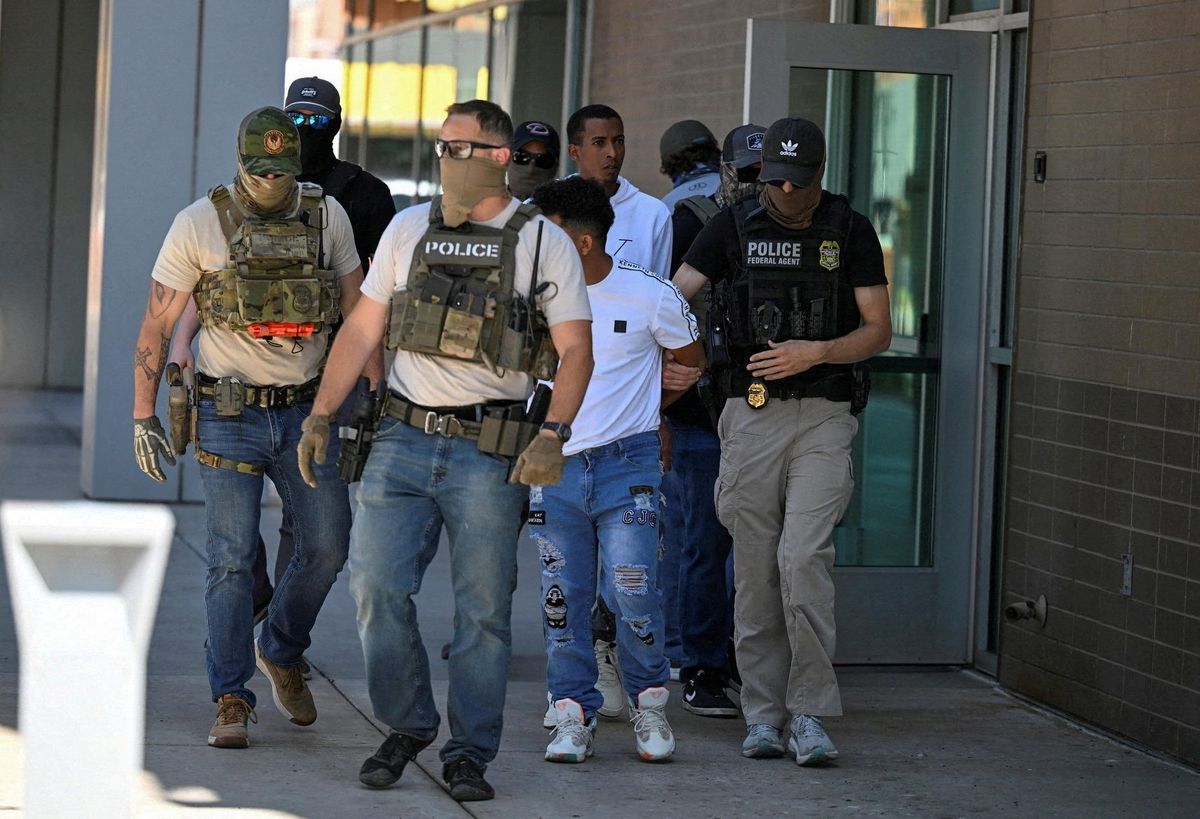

Officers including HSI and ICE agents take people into custody at an immigration court in Phoenix. REUTERS/Caitlin O'Hara

People who are here legally have had their lives "shattered" by ICE, too, according to interviews conducted by an analyst with the New York Times.

Sarah Wildman, a staff writer and editor in Opinion for the NYT, spoke "to a half-dozen people and their families who have been taken into Immigration and Customs Enforcement detention." According to Wildman, "Each was re-entering, or was already in the country legally. No one was smuggled across the border."

"None of the people we spoke to had a recent criminal record. (Three had minor nonviolent brushes with the law, all in the distant past; one received a pardon.) All were treated like suspected violent criminals, forced into tiny cells, dressed in prison uniforms, manacled for transfer. Those we spoke to were held for anywhere from 10 days to over 70 days. The experience shattered their equilibrium," the analyst wrote. "Immigration and Border Patrol officers have long held extremely broad discretionary powers to welcome or reject noncitizens arriving in the United States. And this is far from the first wave of xenophobia to hit America. But something different is happening now in the breadth and ferocity of efforts to change the makeup of this country."

Wildman went further in calling attention to viral videos of brutal ICE operations.

"The videos circulating on social media are brutal and terrifying — the often violent arrests, people pulled screaming from their cars, out of day care centers, away from their children and their spouses. What should give Americans equal pause is the inhumanity happening beyond the cameras, away from the view of judges and lawyers and the media. Due process is not a constitutional right afforded only to citizens; legal restrictions on unlawful detention apply to all people on U.S. soil," she wrote. "The stories we were told call into question both the constitutionality and the morality of how the Trump administration is directing immigration policy. That immorality, once unleashed, may ultimately be aimed at others in this country, regardless of immigration status. If a woman returning from vacation with her young children can be suddenly removed from her family and her life, how can we believe that any of us will remain safe?"

According to Wildman, "There was a disquieting sameness to the horror that was described to us."

"Those we interviewed despaired at how the detention centers were kept purposefully, horrendously cold, forcing some of them to huddle up against strangers. They spoke of lights left on 24 hours a day and of interstate transfers that came without notice. They described food that was inadequately distributed and made them unwell," she wrote. "Of being forced to urinate and defecate in front of fellow detainees and guards. Of being humiliated and mocked by officers. All referred to a destabilizing lack of information, the dreadful understanding that they could be held for weeks or months without anyone informing them why they were being held at all."

Read the piece here.
DOGE staffers lament 'mistakes' that 'turned into fear and revulsion and hatred': report

Robert Davis
November 21, 2025
RAW STORY


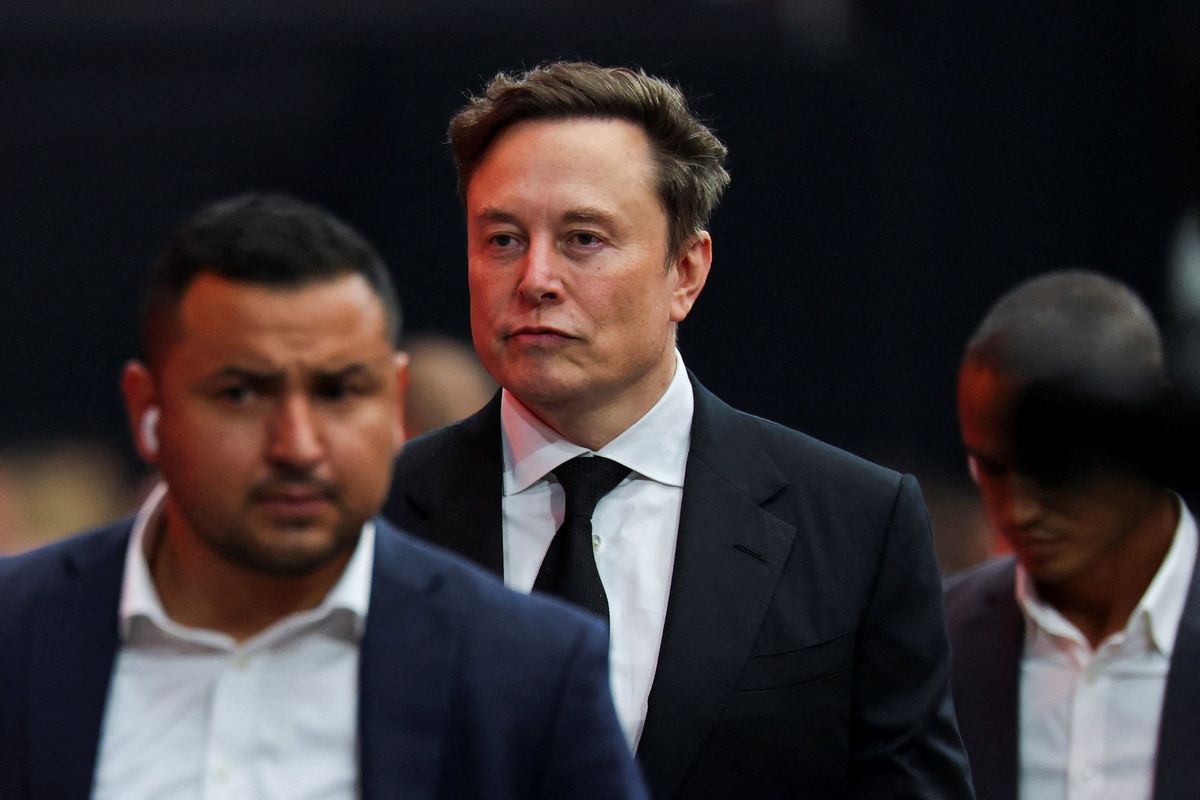
Tesla CEO Elon Musk attends a memorial service for slain conservative commentator Charlie Kirk at State Farm Stadium, in Glendale, Arizona, U.S., September 21, 2025. REUTERS/Daniel Cole

Some DOGE staffers lamented "mistakes" the agency made while it tried to slash federal spending, which caused the department to become hated by its colleagues, according to a new report.

One of President Donald Trump's first actions in his second term was to create the Department of Government Efficiency, which was led by SpaceX and Tesla founder Elon Musk. The purpose of DOGE was to decrease federal spending by up to $2 trillion, according to the agency, although the amount of money the department saved the government is still unknown.

Nine former DOGE staffers spoke to Politico about their experience working for Musk's agency. They noted multiple missteps the agency made, which put them squarely at odds with people who could have helped them fulfil their mission.

“The height of our power was the five-bullets email,” a DOGE official told Politico, referring to the "Fork in the Road" email Musk sent to government employees asking them to accept deferred resignations. The officials described the email as a "mistake" that "pitted DOGE against departments and agencies who were increasingly frustrated by Musk’s lack of communication and heavyhandedness," according to the report.

“Then it turned into fear and revulsion and hatred," the staffer said.

Other mistakes the agency made include allowing Steve Davis, a Musk ally, to direct DOGE's work even after Davis left the federal government.

“It wasn’t just a couple, it was like a lot of people asking what do we do about this?” an official told Politico.

Read the entire report by clicking here.
Trump State Department to Focus on God-Given Rights

 November 20, 2025 
By David Badash


President Donald Trump’s State Department is revising its country-by-country human rights reports to emphasize rights “given to us by God, our creator” and “moral law,” while shifting away from the traditional focus on discrimination and persecution against groups and minorities.

The Washington Post describes it as “radically” altering the reports, and as an “unapologetically U.S.-centric and religiously tinged view of human rights around the world.”

The State Department has directed all U.S. embassies and consulates to use the new guidelines, which include a focus on individual liberties.

“The State Department’s emphasis on so-called natural rights and de-emphasis on rights enshrined in the U.S. Constitution and other legally binding instruments suggest an intentional effort to limit rights,” Uzra Zeya, a top official for human rights at the State Department during the Biden administration, told the Post.

The new focus appears to echo an attempt by Secretary of State Mike Pompeo during the first Trump administration to focus on “unalienable rights,” along with property rights and religious rights while “downplaying the rights of women and gay people,” the Post noted.

The most recent reports, issued in August under Secretary Marco Rubio, had “significant details cut, particularly in regards to gender-based violence and the persecution of LGBTQ+ people.”

Human rights activists said those reports “had been edited to limit the criticism placed on key foreign policy allies with poor human rights records.” President Trump has defended nations and leaders with poor human rights records, most recently declaring Saudi Arabia Crown Prince Mohammed bin Salman had an excellent record on human rights.

“I’m very proud of the job he’s done. What he’s done is incredible in terms of human rights and everything else,” Trump said on Tuesday.

MBS, according to a CIA report, authorized the gruesome murder of Washington Post journalist Jamal Khashoggi.

A senior State Department official told CNN that they “are moving away from group identities, group labels, and focusing on the fact that when a person is persecuted for whatever reason, that is a violation of the moral law.”

“We’re making sure that we’re promoting individual freedom not based on some group identity,” they said.
'Immoral': Trump slammed by experts as protesters hit with 'false' charges

Robert Davis
November 21, 2025
RAW STORY


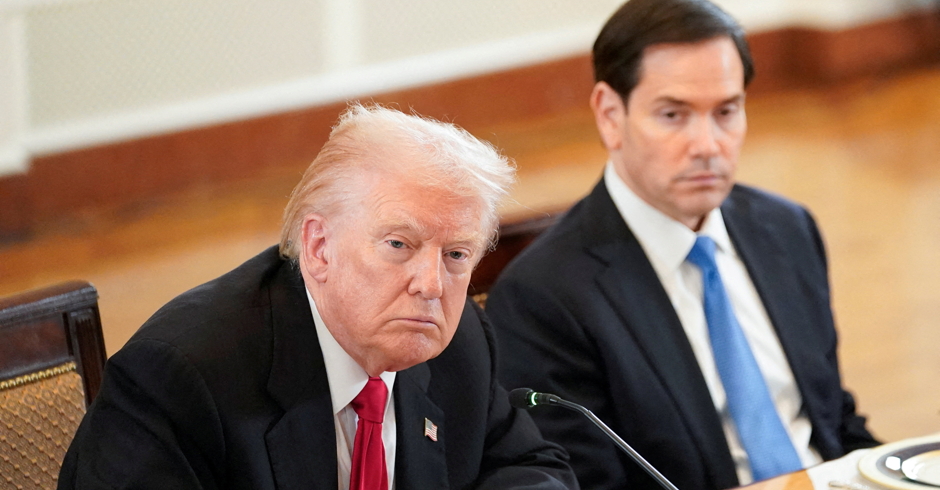
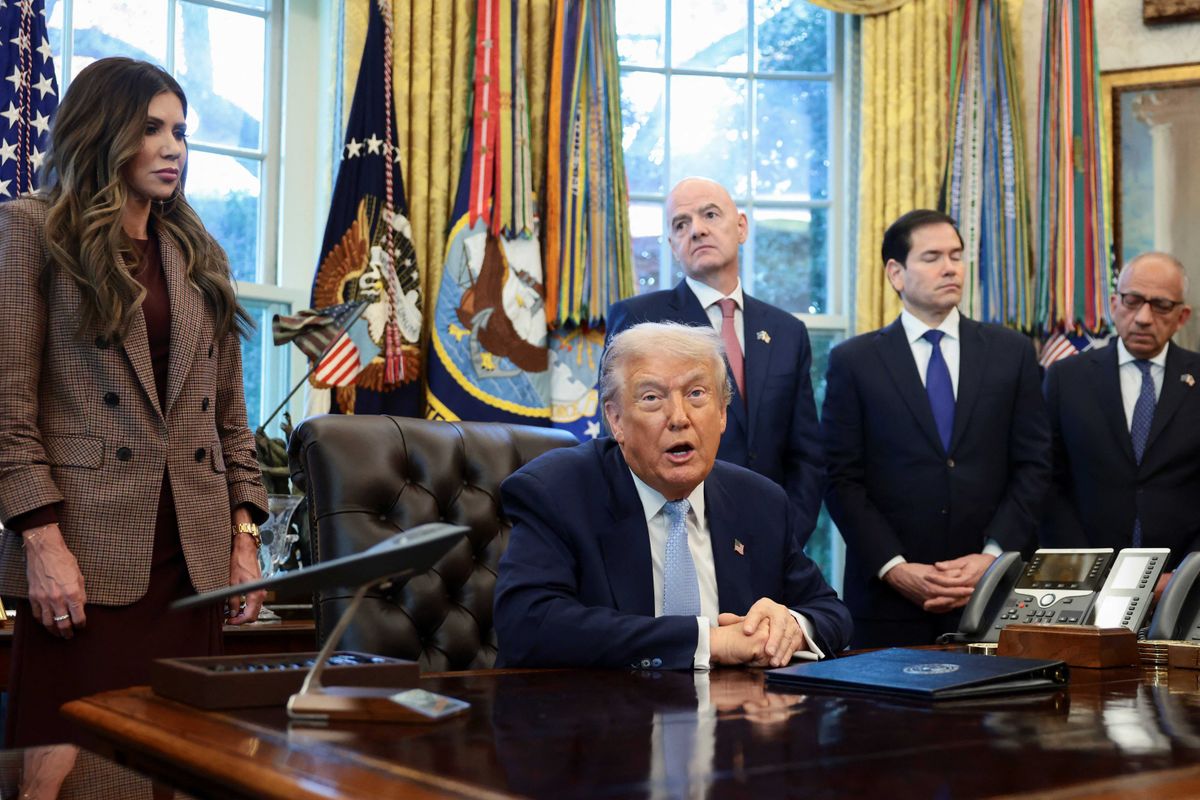
President Donald Trump speaks while U.S. Homeland Security Secretary Kristi Noem, FIFA President Gianni Infantino, U.S. Secretary of State Marco Rubio, and Senior advisor to FIFA president Carlos Cordeiro stand near him, as he meets with the White House Task Force on the FIFA World Cup 2026 in the Oval Office at the White House in Washington, D.C. on Nov. 17, 2025. 
REUTERS/Evelyn Hockstein

A pair of legal experts slammed President Donald Trump for attempting to prosecute people who protest against his administration during a new podcast episode that aired on Friday.

The Trump administration is currently pursuing charges against a slate of protesters, including Sen. Adam Schiff (D-CA), New York Attorney General Letitia James, Federal Reserve Governor Lisa Cook, and former FBI Director James Comey. The president has also threatened Democratic lawmakers who made a video telling U.S. military members that they don't have to follow illegal orders.

Benjamin Wittes, editor-in-chief at Lawfare, and Mona Charen, policy editor at The Bulwark, discussed these charges on a new episode of "The Mona Charen Show."

"That is a very deep abuse of power," Wittes said about Trump's attempt to prosecute James for mortgage fraud.

"It is so much ratcheting up the stakes here that not only is it immoral and evil for the government to bring a false criminal case against someone, but to do it against people for the simple act of criticizing the president, to do it just because you are a dissenter or you are a you are what he calls an enemy," Charen said. "That goes to the very heart of our most basic liberties."

"That was the case that Comey's lawyers were pressing on the federal judge, that if you look at the timeline of when Trump started making noises about prosecuting Comey, it was always in response to a speech that Trump didn't like," she added. "It was when Comey spoke out and criticized the president."


Trump hosting $1 million per-plate fundraisers while Americans struggle with high prices


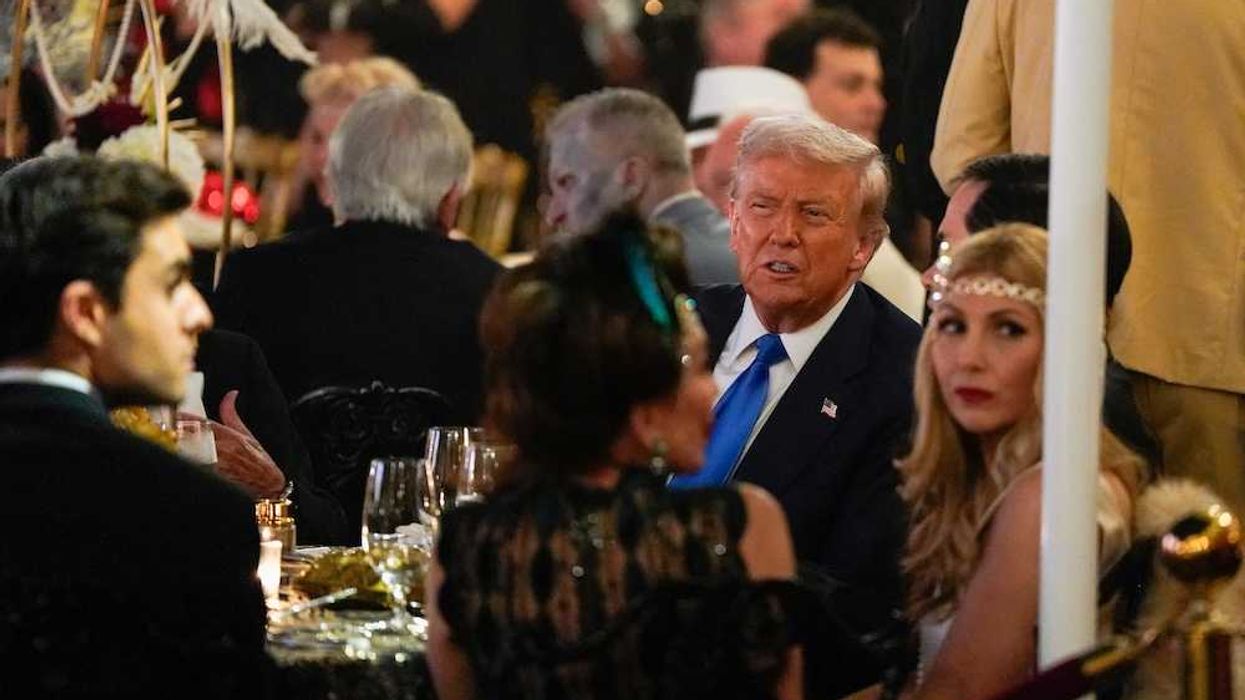
U.S. President Donald Trump attends a Halloween party at Mar-a-Lago in Palm Beach, Florida, U.S., October 31, 2025. REUTERS/Elizabeth Frantz
November 21, 2025 
ALTERNET

As President Donald Trump and his administration continue their focus on touting affordability — insisting prices for many everyday food items have dropped while consumers lament grocery store prices — the President will be hosting two one-million-dollar-a-plate fundraisers for his super PAC early next year.

Inflation remains high at 3.0%. The unemployment rate is now the highest it’s been in nearly four years. Prices for items like beef, coffee, and bananas have increased by double-digit percentages. Major corporations have announced plans to lay off thousands or tens of thousands of workers. And millions of Americans are seeing their health care premiums for next year skyrocket, as Congress leaves D.C. for Thanksgiving break.

The president, meanwhile, has insisted there is little to no inflation, and calls affordability a Democratic “con job,” as he hosted the crown prince of Saudi Arabia this week for a lavish black-tie White House dinner.

“President Trump, who has been hosting fund-raising dinners at a pace unseen by any second-term president, is scheduled to hold two more early next year, according to copies of the invitations seen by The New York Times,” the Times reported on Friday. “Mr. Trump is slated to attend two high-dollar ‘candlelight dinners’ — one at Trump National Golf Club near Washington on Jan. 31, the second at Mar-a-Lago, Mr. Trump’s private club in Palm Beach, Fla., on Feb. 27.”

The Times also reports that politicians’ super PACs generally spend funds on the politicians’ own elections, but Trump is term-limited, according to the U.S. Constitution. While he has flirted with running for a third term, he recently acknowledged it is not permitted.

The White House has said Trump will be more focused on the cost of living in the new year.

Last month, a local CBS affiliate reported that “President Trump is expected to headline a $1 million-per-person candlelight dinner at his Mar-a-Lago estate on Oct. 17. The event is hosted by the Trump-aligned super PAC, MAGA, Inc., which raised $177 million in the first half of the year. The event is expected to have an impact on next year’s midterm elections.”


Family food costs hit record high despite Trump touting cheaper Thanksgiving dinner


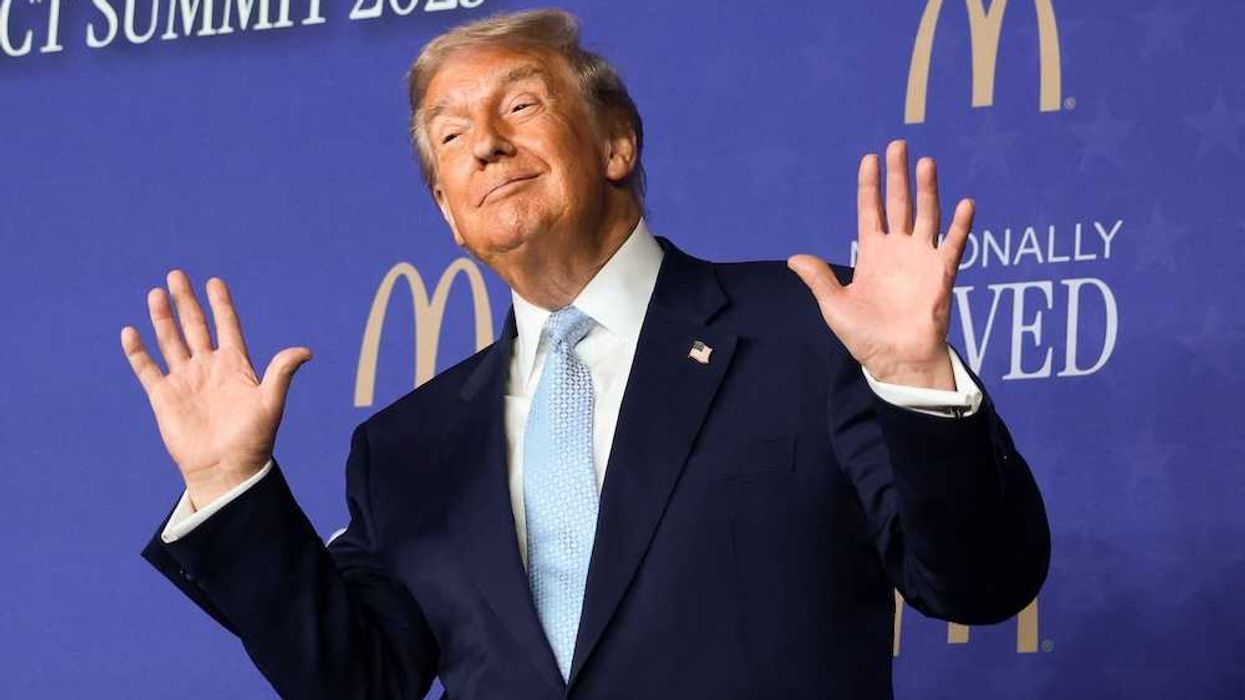
U.S. President Donald Trump gestures at the McDonald's Impact Summit at the Westin Hotel in Washington, D.C., U.S., November 17, 2025. REUTERS/Evelyn Hockstein

November 21, 2025
ALTERNET

As Americans prepare for Thanksgiving, President Donald Trump is promoting Walmart’s 25 percent cheaper holiday meal as evidence that grocery prices are falling. But the discount reflects a smaller, bargain-focused menu with fewer items and fewer name-brand products — lowering the cost of a one-time holiday feast without addressing the broader fact shoppers are seeing at the checkout line, that overall food prices have hit a record high this year.

The fact-checkers at Snopes reported on Friday that the cost of feeding a family of four for one month hit an all-time high of $1,030 this year. Snopes cited data from the Urban Institute, a Washington, D.C. think tank, whose October American Affordability Tracker compiled figures from the U.S. Department of Agriculture and the Bureau of Labor Statistics.

A separate report released Friday by Groundwork Collaborative, The Century Foundation, and the American Federation of Teachers (AFT) found that many Thanksgiving basics have risen sharply, contradicting the claim that the Thanksgiving holiday meal is generally cheaper.

“The full holiday meal is up nearly 10 percent this year, more than triple the overall rate of inflation,” the report found. It stated that onions are up 56 percent, creamed corn is up more than 20 percent, butternut squash and collard greens have risen over 12 percent, and french-fried onion topping for a green bean casserole has climbed 15 percent.

Meanwhile, citing “the highest inflation in decades,” CNN reported on Friday that the “Trump administration’s unprecedented tariffs, the immigration crackdown and global natural disasters have rattled the food supply chain. Grocery prices rose in August at their fastest pace in three years and increased again in September, according to the Bureau of Labor Statistics.”

“This is coming on the heels of the highest inflation in decades,” the news network noted.

Americans should not expect grocery prices to drop before Thanksgiving, The New York Post revealed on Friday.

“Grocery prices will remain stiff across the board through Thanksgiving despite President Trump’s recent cancellation of tariffs on beef, bananas and more — and coffee drinkers shouldn’t expect relief until after Christmas.”
'Intense backlash' sweeps conservatives off US school boards nationwide

Travis Gettys
November 21, 2025 
ALTERHET


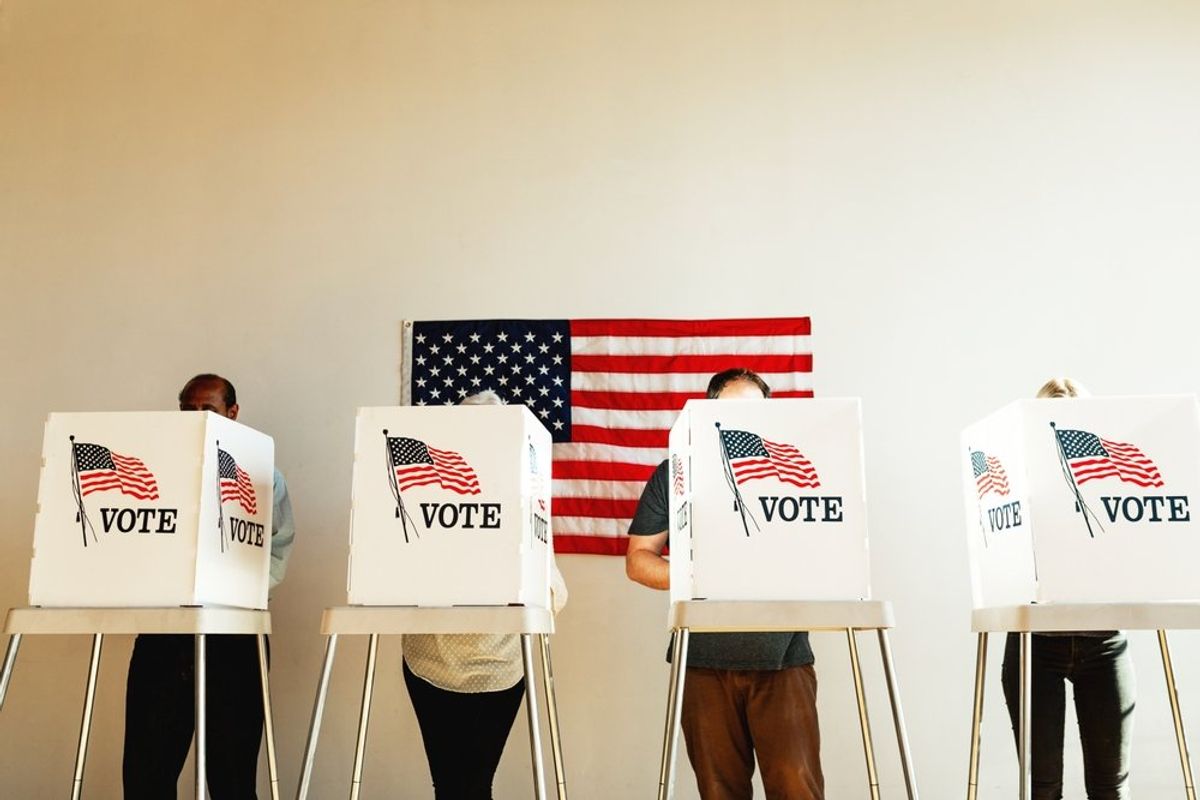
US election day, Diverse people at voting booth at US election station with American flag in background. Diverse people in line to vote at US election day. Vote for American democracy. (Photo credit: Rawpixel.com / Shutterstock)

Democrats invested heavily in sweeping Republican culture warriors off school boards across the country, and their efforts paid off.

Republicans lost school board seats in local races in Ohio, Pennsylvania and Texas after seizing onto educational culture war issues in the post-COVID era, as Democrats recruited candidates to run professional campaigns infused with money from the national party, reported Politico.

“Folks just want their school boards to be boring again,” said Lesley Guilmart, who was one of three Democrats to take back the majority in the Cypress-Fairbanks school board in the Houston, Texas, area. “They want normalcy. Once the board was taken over by a super partisan extremist majority, folks across the political spectrum were dismayed.”

Conservative groups like Moms for Liberty got candidates elected who opposed school closures and mask mandates during the pandemic and argued that public schools promoted progressive values, and Republicans used the energy around those battles to leverage wins in state and national elections.

Florida Gov. Ron DeSantis elevated Moms for Liberty and attempted to use his "war on woke" as a springboard for his presidential campaign, and Donald Trump's anti-trans rights attacks on Kamala Harris proved to be one of his most effective ads during his 2024 re-election campaign, but those issues seem to be fading as voters continue worrying about rising costs.

“Covid went away, and the dissatisfaction with school districts abated," said Neal McCluskey, director of the Cato Institute’s Center for Educational Freedom. It’s not totally gone, but it lessened. I think we’re more at a fatigue level.”

Democratic-aligned group Pipeline Fund, which is recruiting candidates for school board and state legislative races, are targeting states all over the map, and its founder and executive director, Denise Feriozzi, argued that success in those races will help change negative perceptions about the party.

“When you have a Democratic brand that is suffering, you can show people what it actually looks like to be a Democrat in Mobile, Alabama, and Anchorage, Alaska,” Feriozzi said.

Democrats notched wins in this month's off-year elections in New Jersey, Virginia and elsewhere, and some believe voters prefer local politics in school board races than national issues, with GOP candidates in New Jersey's Ocean City Board of Education race losing despite touting endorsements from Moms for Liberty and Turning Point USA.

“For many parents, those endorsements signaled a strong commitment to parental involvement and transparency in public education,” said Robin Shaffer, who was on the losing slate along with two incumbents, said in an email.

Shaffer said he and his fellow Republicans were "proud" of the endorsements but conceded they may have been a drag with some voters.

"For others, those associations carried national-level baggage and triggered intense backlash based on misconceptions about our actual views," he said.
'International incident': 'Terrifying standoff' as US troops mistakenly invade Mexico

David McAfee
November 20, 2025 
RAW STORY


The U.S.-Mexico border fence sprawls up to Fresnal Peak, a mountain that may be destroyed to continue building the border fence, near Sasabe, Arizona, U.S. January 22, 2025. REUTERS/Rebecca Noble

American troops "pulled up on a Mexican beach" and created a "terrifying standoff," according to a new report.

According to at least one news report, "American troops pulled up on a Mexican beach in a dramatic escalation of tensions after Donald Trump threatened to bomb the country."

"US 'contractors' arrived by boat on Monday at Playa Bagdad, driving signs into the sand near where the Rio Grande empties into the Gulf of Mexico," the Thursday report states. "Alarmed witnesses quickly alerted officials and heavily armed Mexican security personnel rushed to the scene on trucks mounted with machine guns in a terrifying standoff."

The report continues:

"The Pentagon, in a deeply embarrassing statement, admitted that its troops were mistaken when they landed on the beach. The Mexican personnel watched as the Americans drove six signs into the ground, which said: 'Warning: restricted area.' Written in English and Spanish, they claimed that the beach was the property of the US Department of Defense and had been declared restricted by 'the commander.' They also said unauthorized access or photography was not allowed in that area and that 'if you are found here, you may be detained and searched.' Mexico's foreign affairs ministry said its navy removed the signs from the sand, which it believed were on Mexican territory."


Ex-prosecutor Ron Filipkowski chimed in on social media on Thursday:

"Apparently dips--- Hegseth’s 'lethal warfighters' landed inside the Mexican border by mistake and created an international incident."


Mexico’s president rejects Trump’s suggestion of US strikes on cartel targets

Mexico’s President Claudia Sheinbaum on Tuesday firmly ruled out allowing any US military strikes on Mexican soil, after President Donald Trump said he would support such action to curb drug trafficking. She reiterated that Mexico will co-operate on intelligence but will not permit foreign intervention.


Issued on: 19/11/2025
By: FRANCE 24

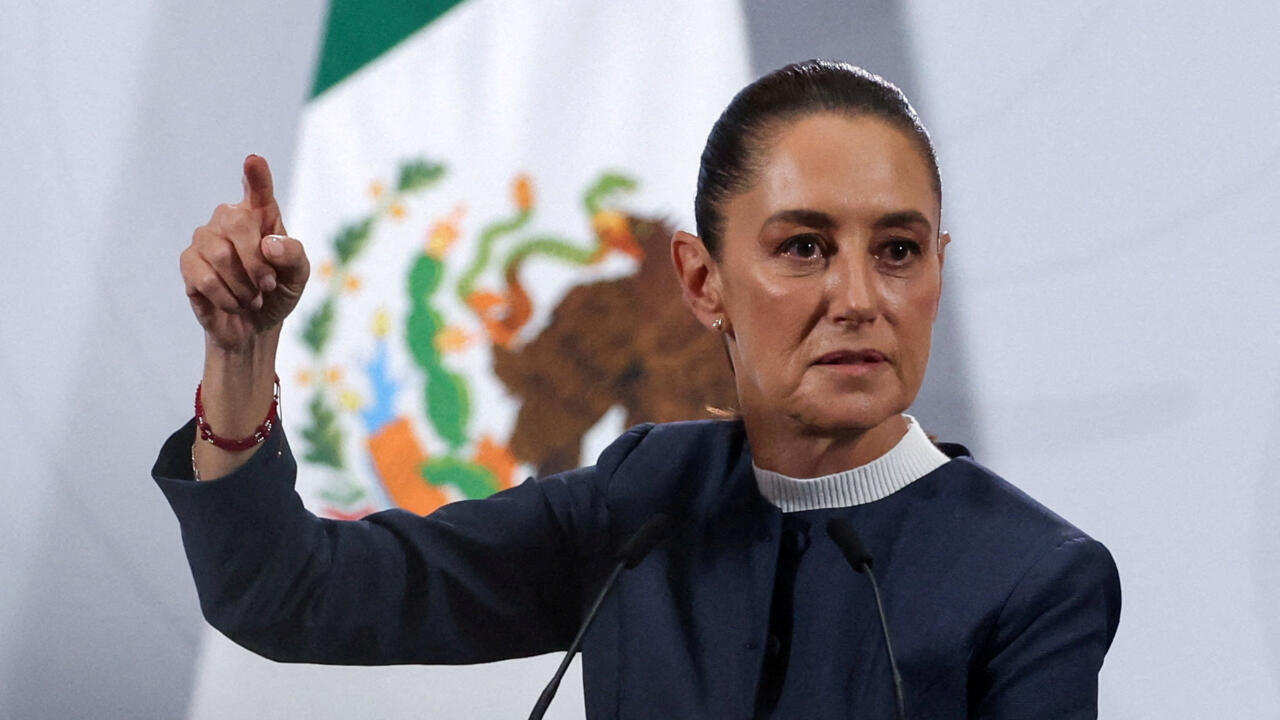
Mexico's President Claudia Sheinbaum speaks during a press conference at the National Palace in Mexico City, Mexico November 3, 2025. © Henry Romero, Reuters, file photo

Mexico's president on Tuesday ruled out allowing US strikes against cartels on Mexican soil, a day after President Donald Trump said he was willing to do whatever it takes to stop drugs entering the United States.

“It’s not going to happen,” President Claudia Sheinbaum said.

“He (Trump) has suggested it on various occasions or he has said, ‘We offer you a United States military intervention in Mexico, whatever you need to fight the criminal groups,’” she said. “But I have told him on every occasion that we can collaborate, that they can help us with information they have, but that we operate in our territory, that we do not accept any intervention by a foreign government.”

Sheinbaum said she had given this message to Trump and to US Secretary of State Marco Rubio on previous occasions and that they had understood.


“Would I want strikes in Mexico to stop drugs? OK with me, whatever we have to do to stop drugs,” Trump said Monday, adding that he’s “not happy with Mexico”.

The US embassy in Mexico shared a video on X later Monday that included previous comments from Rubio saying that the United States would not take unilateral action in Mexico.

Meanwhile, Mexican and US diplomats were trying to sort out Tuesday what may have been an actual US incursion.

On Monday, men arrived in a boat at a beach in northeast Mexico and installed signs designating land that the US Department of Defense considered restricted.

Mexico’s foreign affairs ministry said late Monday that the country’s navy had removed the signs, which appeared to be on Mexican territory. On Tuesday, Sheinbaum said that the International Boundary and Water Commission, a binational agency that determines the border between the two countries, was getting involved.

The signs, driven into the sand near where the Rio Grande empties into the Gulf of Mexico, caused a stir after witnesses reported men in a boat arriving at Playa Bagdad and erecting them.

The signs read in English and Spanish, “Warning: Restricted Area”, and stated that the land was department of defense property declared restricted by “the commander.” They prohibited unauthorised access, photography or drawings.

The US Embassy in Mexico on Tuesday shared a Pentagon comment confirming that contractors putting up signs to mark the “National Defense Area III” had placed them at the mouth of the Rio Grande.

“Changes in water depth and topography altered the perception of the international boundary’s location,” the statement said. “Government of Mexico personnel removed six signs based on their perception of the international boundary’s location.”

The Pentagon said the contractors would “co-ordinate with appropriate agencies to avoid confusion in the future”.

Mexico had contacted its consulate in Brownsville, Texas, and then the US Embassy in Mexico City. Eventually, it was determined that contractors working for a US government entity had placed the signs, Sheinbaum said.

“But the river changes its course, it breaks loose and according to the treaty you have to clearly demarcate the national border,” Sheinbaum said during her daily press briefing.

The area is close to the SpaceX Starbase, which sits adjacent to Boca Chica Beach on the Texas side of the Rio Grande.

The facility and launch site for the SpaceX rocket programme is under contract with the department of defense and NASA, which hopes to send astronauts back to the moon and eventually to Mars.

In June, Sheinbaum said the government was looking into contamination from the SpaceX facility after pieces of metal, plastic and rocket debris were reportedly found on the Mexican side of the border following a test explosion.

The area also carries the added sensitivity of Trump’s push to rename the Gulf of Mexico as the “Gulf of America”, a proposal Mexico has also rejected.

(FRANCE 24 with AP)
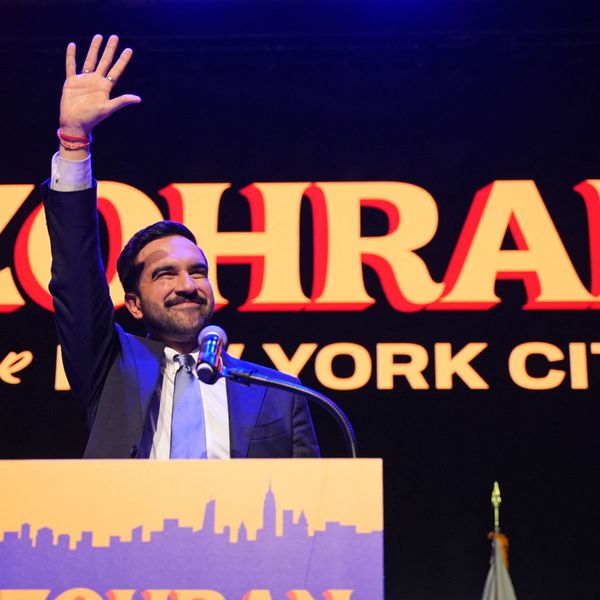
After Threats Throughout NYC Campaign, Trump Lauds Mamdani at White House


“Donald Trump endorsed Zohran Mamdani before Chuck Schumer,”

“I feel very confident that he can do a very good job,” Trump said of Mamdani after their White House meeting. “I think he is going to surprise some conservative people, actually.”


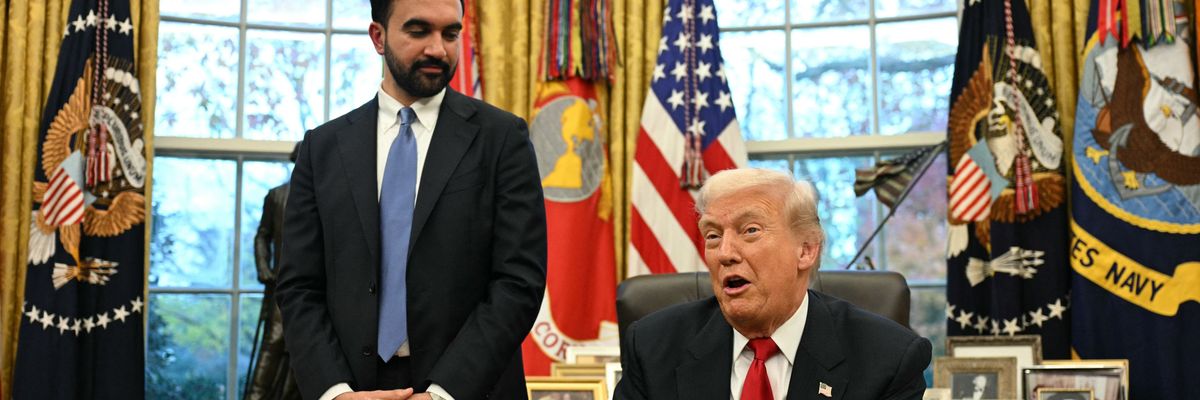
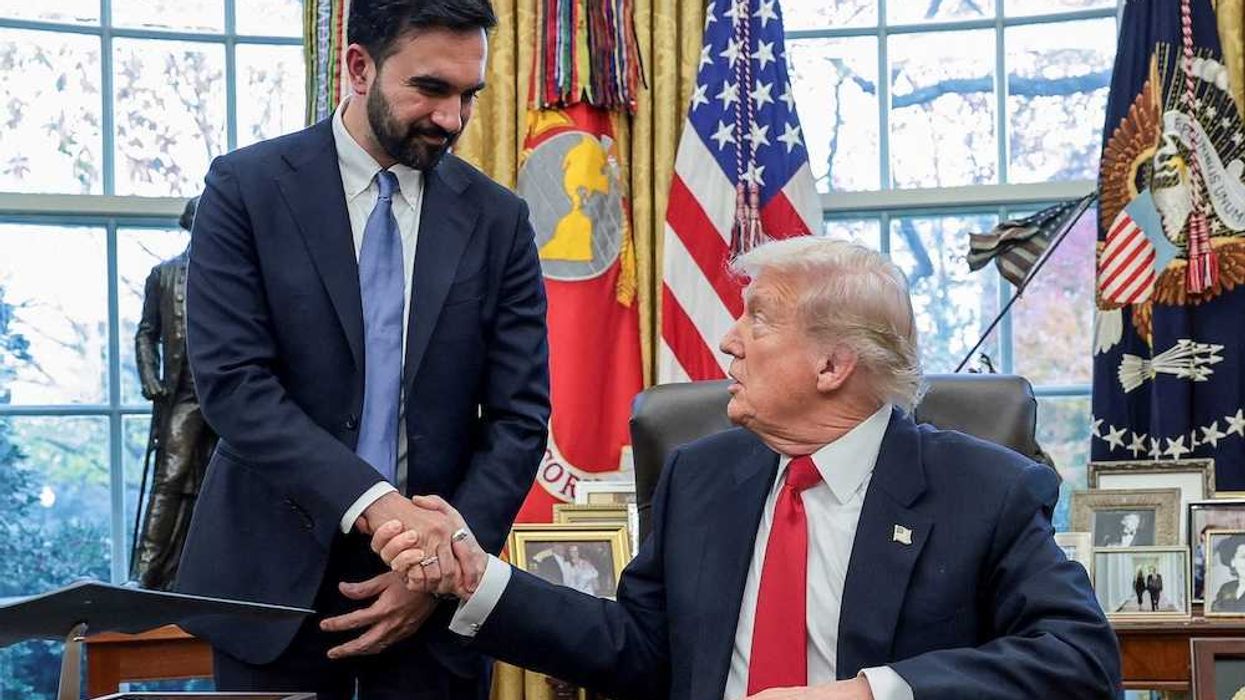
US President Donald Trump meets with New York City Mayor-elect Zohran Mamdani in the Oval Office of the White House in Washington, DC, on November 21, 2025.
(Photo by Jim Watson/AFP via Getty Images)


Brett Wilkins
Nov 21, 2025
COMMON DREAMS

While Gothamist‘s characterization of Friday’s White House meeting between President Donald Trump and New York City Mayor-elect Zohran Mamdani as “a surprising bromance” was likely an overstretch, the far-right US leader did offer copious praise for the democratic socialist during their amiable encounter.

Asked by a reporter if he would feel comfortable living in New York City under Mamdani, Trump—with Mamdani standing beside him in the Oval Office—replied: “Yeah, I would. I really would. Especially after the meeting.”


“We agree on a lot more than I thought,” the president continued. “I want him to do a great job, and we’ll help him do a great job.”

Asked by another reporter if he was standing next to a “jihadist”—as Rep. Elise Stefanik (R-NY) called Mamdani over his support for Palestinian liberation and opposition to Israel’s genocide in Gaza—Trump said, “No... I met with a man who is a very rational person.”

“I met with a man who really wants to see New York be great again,” the president added. “I think you’re going to have, hopefully, a really great mayor. The better he does, the happier I am. And we’re going to be helping him to make everybody’s dream come true. Having a strong and very safe New York.”


Comparing Mamdani to another prominent democratic socialist, who represents Vermont in the US Senate, Trump added that “Bernie Sanders and I agreed on much more than people thought.”

The pair reportedly discussed contentious issues including Trump’s anti-immigrant crackdown and federal invasion of several US cities including Los Angeles; Washington, DC; Portland, Maine; Chicago; and Memphis.

However, they also discussed common-ground issues including the affordability crisis, which has hit New Yorkers particularly hard.

“It was a productive meeting focused on a place of shared admiration and love, which is New York City and the need to deliver affordability to New Yorkers,” Mamdani told reporters.

Friday’s friendly meeting was a stark departure from previous acrimonious exchanges between Trump and Mamdani. The president has called Mamdani a “communist lunatic” and a “total nut job,” and repeatedly threatened to cut off federal funding to the nation’s largest city if the leftist was elected. Trump also threatened to arrest Mamdani after the then-mayoral candidate said he would refuse to cooperate with his administration’s mass deportation campaign.

Asked Friday about calling Mamdani a communist, Trump said: “He’s got views that are a little out there, but who knows. I mean, we’re going to see what works. He’s going to change, also. I changed a lot.”

“I feel very confident that he can do a very good job,” the president added. “I think he is going to surprise some conservative people, actually.”

For his part, Mamdani has called Trump a “despot” and the embodiment of New York City’s problems, decried his “authoritarian” administration, and called himself the president’s “worst nightmare.” He also called Trump a “fascist” on numerous occasions.

“I’ve been called much worse than a despot,” Trump quipped Friday.

After their meeting, a reporter asked Mamdani if he still thought Trump is a fascist. The president interrupted as Mamdani began to respond, patting him on the arm and saying, “That’s OK, you can just say yes.”

Mamdani did not compliment Trump nearly as much as the president lavished praise upon him. He did say that their meeting was “cordial and productive,” and that he anticipated partnering with Trump to “improve life in New York,” highlighting their agreement on issues like housing affordability, food and energy costs, and reducing the cost of living—issues which he said motivated voters to support both men.

Observers expressed surprise over the affable meeting, with Rep. Rashida Tlaib (D-Mich.)—one of Trump’s staunchest congressional critics—asking on social media, “What the heck just happened?”

Some social media users noted that Trump offered Mamdani a more ringing endorsement than even some prominent Democrats, with one Bluesky account posting, “Donald Trump endorsed Zohran Mamdani before Chuck Schumer,” a reference to the Senate majority leader—who never endorsed his party’s nominee to lead the city they both call home.


'The GOP will lose the midterms': MAGA 'thrown' by Trump's praise of NYC mayor-elect


U.S. President Donald Trump and New York City Mayor-elect Zohran Mamdani shake hands as they meet in the Oval Office at the White House in Washington, D.C., U.S., November 21, 2025. REUTERS/Jonathan Ernst

November 21, 2025
ALTERNET


President Donald Trump's complimentary tone toward New York City Mayor-elect Zohran Mamdani caught many Republicans off guard — and some are worried about what that could mean for the GOP's hopes in next year's pivotal midterm elections.

"I expect to be helping him, not hurting him," Trump said, adding that he would feel "really" comfortable living in New York City with Mamdani as mayor.

"Especially after the meeting, absolutely," the president said.

On Friday, Fox News took note of numerous young White House staffers awaiting Mamdani's arrival. Business Insider reporter Bryan Metzger tweeted: "it says *something* about Mamdani that a bunch of 20-something Trump admin staffers were camped out hoping to catch a glimpse of his arrival at the [White House]."

Punchbowl News founder Jake Sherman observed that the president "showering praise on Mamdani in the White House may throw House Republicans for a loop."

"The House GOP has signaled their entire 2026 campaign plan is to tie Democrats to Mamdani," Sherman wrote.

DC Examiner conservative columnist Tiana Lowe Doescher offered a different theory, suggesting that while Trump may not be enamored with Mamdani's politics, he nonetheless views him as a kindred spirit given that the president remains a New Yorker at heart.

"Saying this as someone who thinks Zohran Mamdani is an economically illiterate communist who has never held a real job in his life," Doescher wrote on X. "[T]he reason Trump is so chummy w/ a guy who hates him is because game recognizes game. Trump & Mamdani are both charismatic TV stars who love NYC."

In response to a post from conservative podcaster Clay Travis — who referred to the Trump-Mamdani meeting as a "bromance" — MAGA influencer Laura Loomer was apoplectic, writing: "So are we just going to normalize communism?"

"The GOP will lose the midterms," Loomer lamented.

"What is the GOP going to campaign on ahead of the midterms if the GOP is saying Mamdani is good?" Loomer added in a separate post.

New York Times Michael M. Grynbaum noticed a quip from Fox News host Brian Kilmeade, who said: "I think JD Vance is jealous."

"I know influencers want to try to make 'Trump owned Mamdani' a thing for engagement, but given it was Trump who said he had his mind changed and that he now thinks Mamdani will do a good job, that's not really viable. Is what it is," tweeted Red State writer Bonchie. "Mamdani got what he wanted."

'Very rational person': Trump dismisses MAGA ally's claim Mamdani is a 'jihadist'

Erik De La Garza
November 21, 2025 
RAW STORY


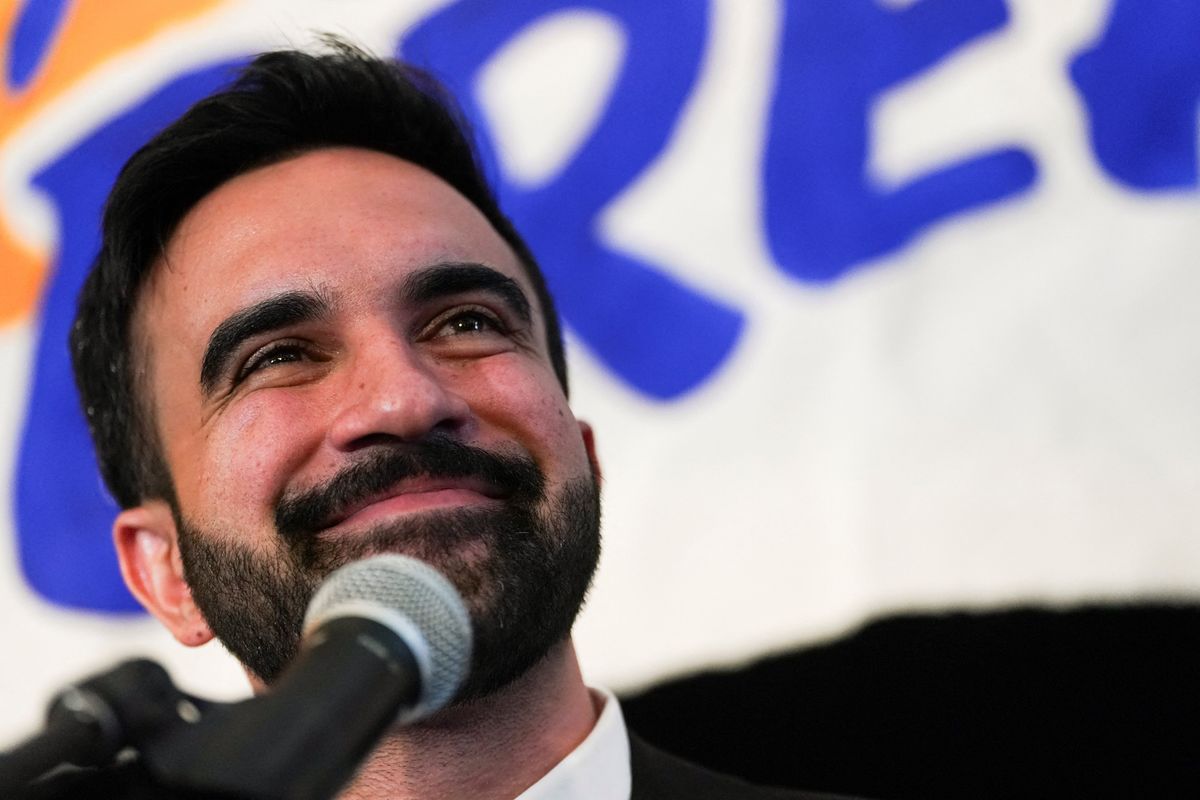
Zohran Mamdani speaks during a watch party for his primary election, which includes his bid to become the Democratic candidate for New York City mayor in the upcoming November 2025 election, in New York City, U.S., June 25, 2025. REUTERS/David 'Dee' Delgado

President Donald Trump on Friday distanced himself from Republican attacks portraying New York mayor-elect Zohran Mamdani as a “jihadist,” brushing aside the smear during the pair’s first-ever meeting in the Oval Office.

The moment unfolded when a reporter asked Trump directly whether he believed he was “standing next to a jihadist right now,” a reference to repeated claims made by GOP gubernatorial candidate Rep. Elise Stefanik that Mamdani – a Democratic Socialist – is a threat to public safety.

“No, I don’t,” Trump said flatly. “But she’s out there campaigning and, you know, you say things sometimes in a campaign. She’s a very capable person, but you really have to ask her about that.”

Trump went on to add warm words for Mamdani after what reporters described as a cordial meeting.

“I think I met with a man who’s a very rational person. I met with a man who wants to see – really wants to see – New York be great again. And I say again because New York was great.”

The moment instantly created buzz in the New York gubernatorial race and on Capitol Hill, where Stefanik, one of House Republican leadership's most die-hard MAGA loyalists, has spent months trying to cast Mamdani as an extremist. The mayor-elect is set to take office Jan. 1.


DEADLY ANTI-SEMITISM
France promotes Jewish soldier Alfred Dreyfus, 130 years after wrongfully convicting him of treason

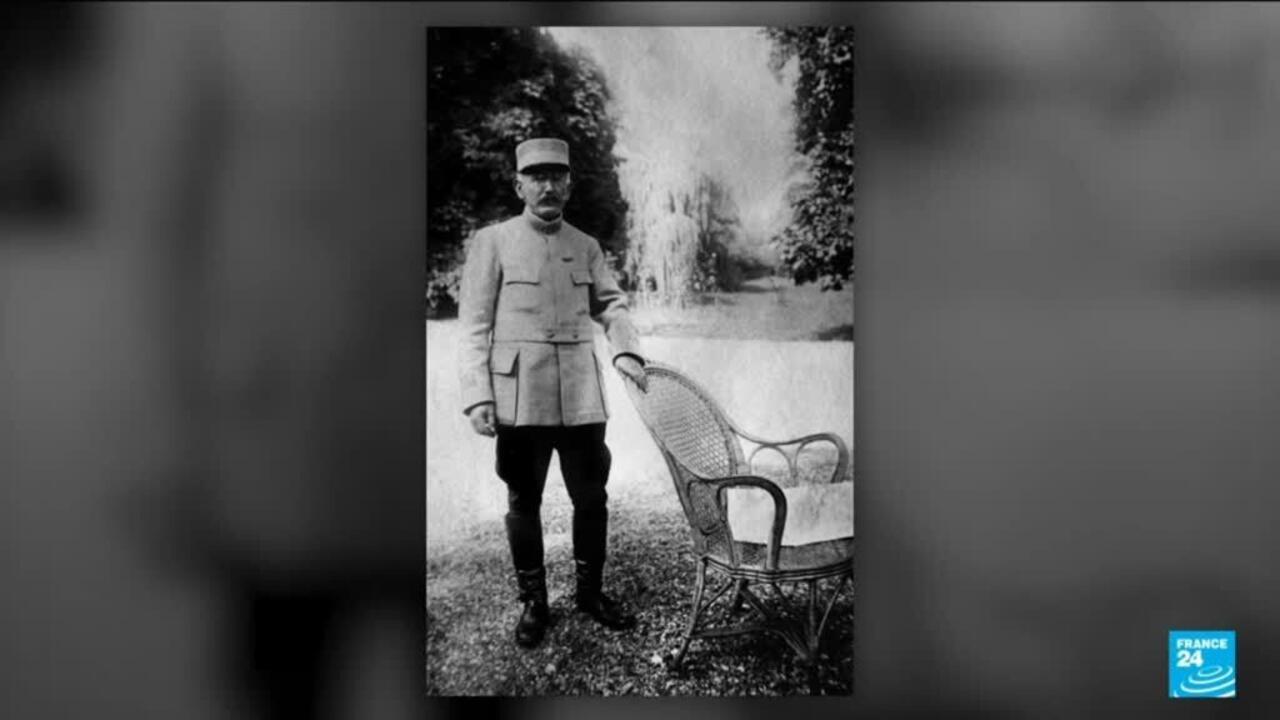
French army captain Alfred Dreyfus was posthumously promoted to the rank of brigadier general on Tuesday, 130 years after he was wrongly convicted of treason in one of France's most notorious cases of anti-Semitism.


Issued on: 18/11/2025 
By: FRANCE 24

Alfred Dreyfus (second right) was reinstated and awarded the Legion d'Honneur in 1906
. © AFP file photo


France Tuesday promoted Alfred Dreyfus, a Jewish army captain wrongly convicted of treason in 1894, to the rank of brigadier general as an act of reparation in a notorious case of anti-Semitism that has caused outrage for generations.

The law is seen as a symbolic step in the fight against anti-Semitism in modern France, at a time of growing alarm over hate crimes targeting Jews in the country in the context of the Gaza war.

President Emmanuel Macron and Prime Minister Sebastien Lecornu signed the promotion into law on Monday, and it was published in the so-called Official Journal of new legislation on Tuesday.

"The French nation posthumously promotes Alfred Dreyfus to the rank of brigadier general," the law reads.

Parliament's lower house unanimously approved the legislation in June, and the Senate backed it earlier this month.

© France 24
01:53


Dreyfus, a 36-year-old army captain from the Alsace region of eastern France, was accused in October 1894 of passing secret information on new artillery equipment to a German military attache.

The accusation, based on a comparison of handwriting on a document found in the German's wastepaper basket in Paris, kicked off what would become known as the "Dreyfus affair".

Dreyfus was put on trial amid a virulent anti-Semitic press campaign. But novelist Emile Zola then penned his famous "J'accuse...!" ("I accuse") pamphlet in support of the captain.

Despite a lack of evidence, Dreyfus was convicted of treason, sentenced to life imprisonment in the infamous Devil's Island penal colony in French Guiana and publicly stripped of his rank.

Novelist Emile Zola wrote his famous 'J'accuse...!' ('I accuse') pamphlet in support of the captain. © Ludovic Marin, POOL/AFP


But Lieutenant Colonel Georges Picquart, head of the intelligence services, reinvestigated the case in secret and discovered the handwriting on the incriminating message was that of another officer, Ferdinand Walsin Esterhazy.

When Picquart presented the evidence to the general staff of the French army, he himself was driven out of the military and jailed for a year, while Esterhazy was acquitted.

In June 1899, Dreyfus was brought back to France for a second trial. He was initially found guilty and sentenced to 10 years in prison, before being officially pardoned – though not cleared of the charges.

Decorated veteran


Only in 1906, after many twists, did the high court of appeal overturn the original verdict, exonerating Dreyfus.

He was reinstated with the rank of major and decorated with a Legion d'Honneur award.

He served during World War I and died in 1935, aged 76.

Those who pushed for the law believe that if Dreyfus had been able to pursue his career under normal circumstances, he would have risen to the top of the French army.

France is home to the largest Jewish population outside Israel and the United States, as well as one of the largest Muslim communities in the European Union.

There has been a rise in reported attacks against members of France's Jewish community since Palestinian militant group Hamas attacked Israel on October 7, 2023 and the Israeli military responded with a devastating military offensive on the Gaza Strip.

(FRANCE 24 with AFP)

UKRAINE CAPITULATION PLAN

'Absurd and obscene': Expert trashes Trump's 28-point peace plan


Robert Davis
November 21, 2025 
RAW STORY


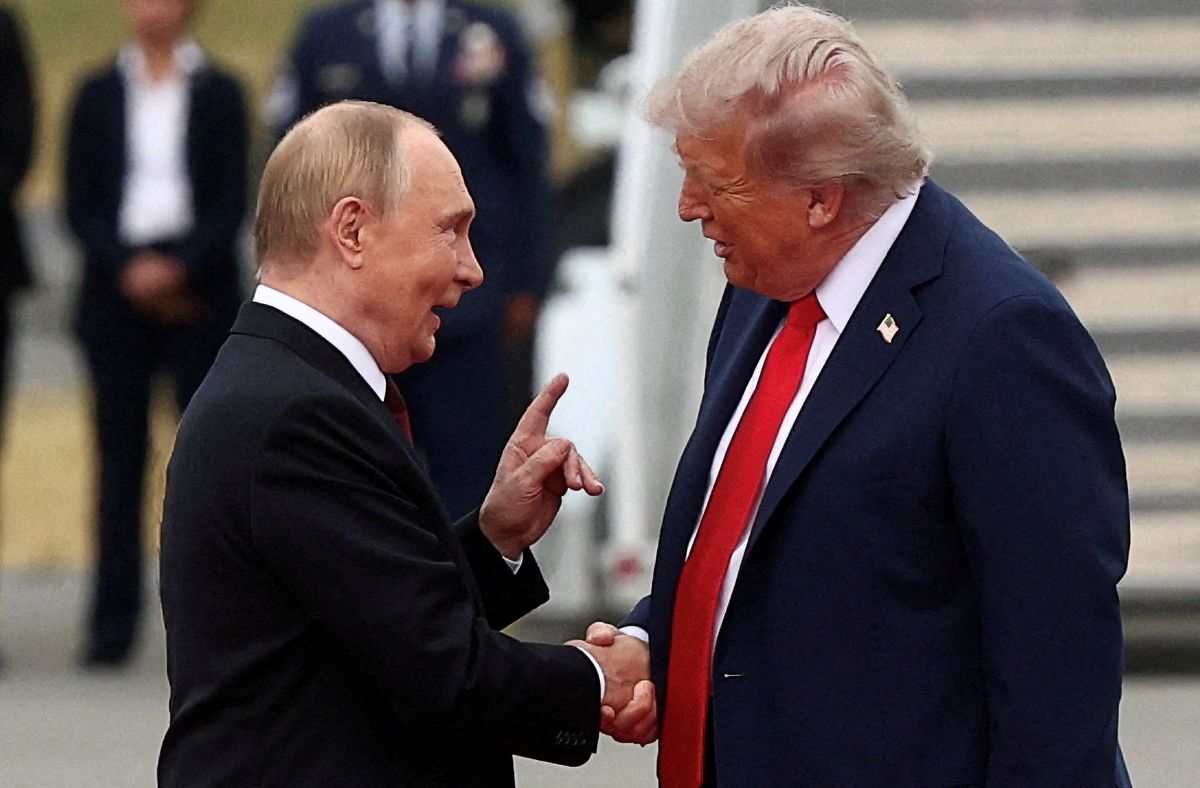
FILE PHOTO: U.S. President Donald Trump shakes hand with Russian President Vladimir Putin, as they meet to negotiate for an end to the war in Ukraine, at Joint Base Elmendorf-Richardson in Anchorage, Alaska, U.S., August 15, 2025. REUTERS/Kevin Lamarque


An analyst bashed President Donald Trump's latest 28-point peace plan for Russia's war in Ukraine on Friday, calling it "absurd" and "obscene."

Ukrainian President Volodymyr Zelensky met with senior administration officials on Thursday to discuss the plan, which includes demands that Ukraine cut its military by over 600,000 troops, give up long-range missiles that can strike Moscow, and give up land occupied by Russian forces, according to reports.

Michael Bociurkiw, nonresident senior fellow at the Atlantic Council's Eurasia Center, discussed the leaked plan in a new interview with Times Radio on Friday.

"This so-called plan...is something that could have been easily scripted by the Kremlin," Bociurkiw said. "It has mostly everything that they've asked for, and it's absurd and obscene what's being asked for, including limiting the size of Ukraine's military, saying Ukraine can't get into NATO, and no NATO troops on the ground. So there goes the coalition of the willing."

Experts have often criticized Trump for parroting Russian talking points about the war and presenting peace plans that seem to favor the Russians.

"I think I also heard something right down to the micro level of Western diplomats not being able to come to Ukraine," he continued. "So if you take all of that together as well as some of the other elements, it's game over for Ukraine as we know it. The key elements of this deal are nothing any Ukrainian president could ever sign."

Europe uneasy as leaked US plan urges Ukraine to give up Donbas

A leaked US peace plan to end the war in Ukraine has unsettled European governments by calling for Kyiv to cede the whole Donbas region to Russia and sharply reduce its armed forces. The move comes as Ukraine says it is ready to work with Washington.


Issued on: 21/11/2025 - RFI

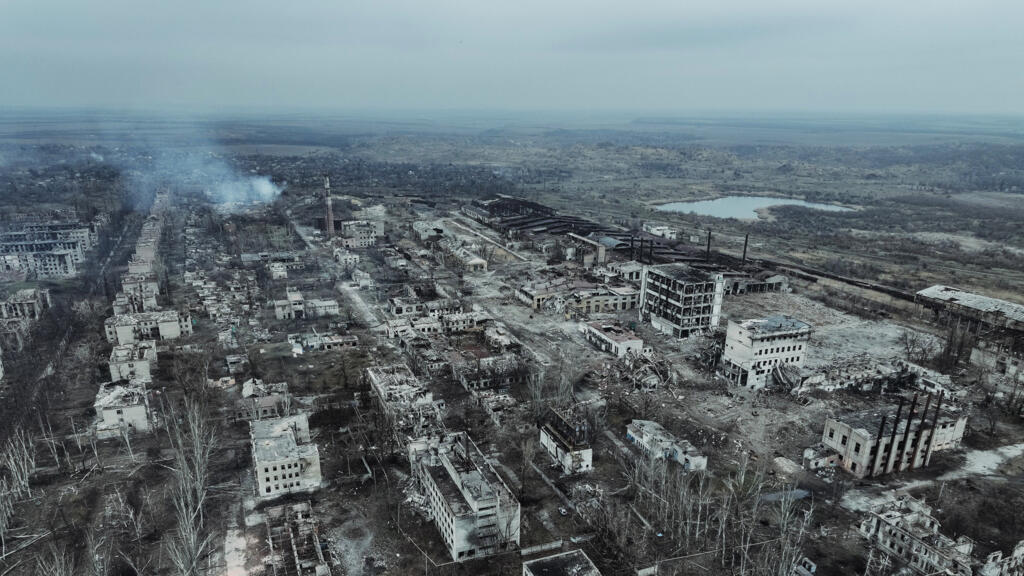
Destroyed buildings in Chasiv Yar in Donetsk, one of the two regions that make up the Donbas area, which the leaked US plan says Ukraine should cede to Russia. AFP - HANDOUT

President Volodymyr Zelensky said Ukraine is ready for “constructive” and “honest” work with the United States on the draft plan, even as key European allies warned against any deal that demands sweeping concessions to Moscow.

His comments followed a meeting in Kyiv on Thursday with US Army Secretary Daniel Driscoll after details emerged of a US-backed proposal that would require Ukraine to give up the entire Donbas region and cut its army to 600,000 troops.

The plan, a 28-point document not yet released in full, also promises as-yet-undefined “robust security guarantees”.

Major concessions

The proposal includes US recognition of Crimea, Luhansk and Donetsk as de facto Russian territory and calls for Ukrainian troops to withdraw from the remaining parts of Donetsk they still control.

It was reportedly drafted after discussions with Rustem Umerov, one of Zelensky’s top advisers, who “agreed to the majority of the plan” after making several changes. Umerov then presented it to the president.

Zelensky’s office said he had received the draft and that US and Ukrainian teams would now work on its elements. Writing on Telegram, the president said: “We are ready for constructive, honest and prompt work.”

While not commenting directly on the leaked content, Zelensky’s office said he had set out the “fundamental principles that matter to our people”.

It added that he expects to discuss “existing diplomatic opportunities and the key points required to achieve peace” with President Trump in the coming days.

The draft also proposes a non-aggression pact between Russia, Ukraine and Europe, a freeze on NATO expansion and a ban on stationing alliance troops in Ukraine.

Ukraine seeks $43bn in climate compensation from Russia over war


Economic reintegration

In exchange, Russia would be eased back into the global economy as sanctions are lifted “in phases and on a case-by-case basis”.

The plan also raises the possibility of inviting Moscow back into what was once the G8 and creating a broad US-Russia economic and technological partnership covering energy, infrastructure, artificial intelligence, data centres and rare earth extraction in the Arctic.

White House press secretary Karoline Leavitt said Secretary of State Marco Rubio and US special envoy Steve Witkoff had worked on the plan for a month, which she said President Donald Trump supports.

“This plan was crafted to reflect the realities of the situation,” she said, calling it a possible “win-win scenario”.

European resistance

In Brussels, EU foreign ministers avoided direct comment on the leak but signalled resistance to any deal based on one-sided concessions.

“Ukrainians want peace – a just peace that respects everyone’s sovereignty, a durable peace that can’t be called into question by future aggression,” France’s foreign minister Jean-Noel Barrot said. “But peace cannot be a capitulation.”

The diplomatic push comes as Ukrainian forces face pressure on several fronts and Zelensky’s government deals with a corruption scandal that led to the dismissal of two cabinet ministers last week.

Rubio said on X that the United States would continue developing “potential ideas” based on input from both sides and said any peace would require concessions from both Kyiv and Moscow.


Russia plays it down


The Kremlin moved to cool speculation of movement. Spokesperson Dmitry Peskov said there were “contacts, of course, but no process that could be called consultations”, adding that Russia’s position remains what President Putin set out during his August summit with Trump.

As winter approaches and the war enters its fourth year, Russian forces hold nearly a fifth of Ukraine and continue slow advances while striking energy sites and front-line cities.

On Thursday, Moscow said Putin had visited the command post of Russia’s “West” grouping, meeting General Valery Gerasimov and other senior officers. Gerasimov claimed Russian troops had captured the city of Kupiansk.

Ukraine’s military rejected that claim and also denied that Russia controls 70 percent of Pokrovsk, a shattered railway hub in the east.

(with newswires)

US to present a 28-point ceasefire plan to Ukraine as a fait accompli

US to present a 28-point ceasefire plan to Ukraine as a fait accompli
US President Donald Trump and Ukrainian President Volodymyr Zelenskiy at a tense press conference in Washington in February.
By Ben Aris in Berlin November 20, 2025

A new US 28-point plan to end the war in Ukraine suddenly burst on to the scene on November 20, as the White House hopes to use the growing pressure on Ukraine to force terms on Kyiv as soon as this week.

After the Alaska summit on August 15 between US President Donald Trump and Ukrainian President Volodymyr Zelenskiy and the subsequent failure to organize the Budapest trilateral meeting with Russian President Vladimir Putin, the ceasefire talks have been dead in the water. Despite suggesting that he is open to talks, Putin has stuck to his maximalist demands that are tantamount to a demand for Ukraine to capitulate and contain no significant concessions at all.

The existence of the "secret deal” was independently confirmed today by PoliticoFinancial Times and Axios, although the details are not know but the plan's 28 points fall into four general buckets, sources told Axios: peace in Ukraine, security guarantees, security in Europe, and future U.S. relations with Russia and Ukraine. The FT confirmed the broad brush strokes speaking to Ukrainian officials that have seen the text:

-        Reduce the size of the military by at least half;

-        Ban certain powerful western-supplied weapons;

-        Ban on deployment of foreign peacekeeping troops in Ukraine;

-        Exit and hand over the remaining territory in Donbas that is not held by Russia;

-        US security guarantees;

-        Recognition of Russia as an official language;

-        Russian Orthodox Church given permission to operate in Ukraine; and

-        Zelenskiy replaced as president.

There has been no mention of Nato in the deal and reportedly the Trump administration is still debating what position to take on this question. The Kremlin has from the start insisted that the West provide legally binding ironclad guarantees that Ukraine never applies for membership.

More details emerged by evening. Specifically, Russia will agree to recognize the part of Donbas not actually occupied by the Armed Forces of Russia (AFR) as a demilitarized zone and not deploy troops there, Axios reports.

In the Kherson and Zaporizhzhia regions, the front line is expected to be largely frozen, but negotiated territory swaps are not ruled out.

The deal also specifies that the US and other countries recognize Crimea and Donbas as Russian territory, but will not demand the same from Ukraine, effectively kicking the Crimea question down the road.

A Kremlin-connected source told The Bell that the US proposals are "not a plan, but a mixture of real points with good intentions," noting that some of them are completely unacceptable to Ukraine. However, the Kremlin believes that the plan's appearance is a step forward, although peace is still a long way off.

The plan is inspired by Trump's successful push for a deal in Gaza, Axios reported. Dmitriev said the new effort was entirely unrelated to the UK-led push to draft a Gaza-style peace plan for Ukraine, which he said had no chance of success because it disregards Russia's positions.

Parallel talks

The deal has emerged from talks between Special Envoy to the Middle East Steve Witkoff and Kirill Dmitriev, the head of Russia’s sovereign wealth fund, who met in Miami between October 24 and 26.

Dmitriev expressed optimism about the deal's chances of success in comments to Axios because, unlike past efforts, "we feel the Russian position is really being heard."

According to reports, Witkoff also talked to Ukraine’s Defence Minister Rustam Umerov, who is currently in the US with his family. According to the FT, Witkoff conveyed the plan to Ukraine through Umerov.

The White House is upbeat about the prospects for the plan, saying it could be agreed by the end of this month, or “even this week.”

Kyiv and Brussels were caught out by the announcement of the plan, which appears to have been leaked to the US press by Dmitriev. They have not been consulted and Politico reported that the White House intends to present the plan to Ukrainian President Volodymyr Zelenskiy as a fait accompli.

“It seems that Trump and Putin thought that events in Pokrovsk and the Energoatom affair have weakened Ze to the point that he is now desperate for a deal - hence the effort to cram him into this bad deal for Ukraine. It is not going to happen,” Timothy Ash, the senior sovereign strategist at BlueBay Asset Management in London, said in an emailed comment.

Zelenskiy was in Istanbul on November 19 to discuss "revitalizing negotiations" and a "just peace" with Turkish President Recep Tayyip Erdogan, who is offering to intermediate. Witkoff was supposed to join that meeting, but cancelled after Zelenskiy made it clear that he would reject the US plan.

Turkey participated in the preparation of the American plan, according to Axios, which also reported that Zelenskiy has an alternative plan that has been worked out with his EU allies, but it is totally unacceptable to Moscow.

Same deal as before

The new US plan appears to be very similar to both the terms of the Istanbul peace deal agreed in April 2022, but later rejected by Zelenskiy after the West refused to provide Ukraine with security deals. US President Donald Trump also pushed a revived version of the same proposals with his “final offer” in April this year, which again largely contained all of Russian President Vladimir Putin’s maximalist demands, which Zelenskiy also refused.

The new plan highlights the growing disconnect between Washington and Brussels which appear to be working on different tracks. The White House is bullish on this matter: it believes Ukraine should approve the plan as a whole, as it is "reasonable" and acceptable to them.

"We're not particularly interested in what Europe thinks," Politico quotes its source as saying. "The question is whether Ukraine will accept it."

Trump has clearly become frustrated with the lack of a deal that he claimed he could close on his first day in office during his election campaign last year. He finally upped the pressure on the Kremlin earlier this month with his first new oil sanctions on Russia, but as bne IntelliNews reported, he remains keen to do business with Russia as part of his minerals diplomacy that has driven foreign policy so far.

The feeling in Washington is that a weakened Zelenskiy will have no choice and will have to accept any terms offered to him. Ukraine is still suffering from a chronic lack of men, money and materiel but in addition, Bankova has been hit by the debilitating $100mn Energoatom corruption scandal that was perpetrated by close friends of the president, some of whom immediately fled the country.

The scandal continues to expand. National Anti-Corruption Bureau of Ukraine (NABU) that carried out the investigation said on November 19 that a total of 40 government officials are implicated and confirmed that Zelenskiy and head of Ukraine’s presidential office, Andriy Yermak, are both included in the evidence, but has given no details year. Calls for Zelenskiy have already begun amongst his political opponents and the scandal could potentially bring the government down.

Military delegation

In parallel to the diplomatic shell game being played out on a ceasefire deal, on the same day a US military delegation led by US Army Secretary Dan Driscoll and several senior US army generals arrived in Kyiv for talks with the Ukrainian leadership.

Officially, on a fact-finding mission, but The Wall Street Journal reported that the generals were acting on Trump's instructions and may have met with Russian representatives on terms to end the war.

Driscoll has played a key role in the war, overseeing all arms shipments from US arsenals to Ukraine. Before leaving for Kyiv, he received instructions from Witkoff, CNN reports. Furthermore, he is a classmate and close friend of US Vice President J.D. Vance, the agency notes. Zelenskiy will meet with Driscoll on Thursday, November 20.

Zelenskyy: Ukraine faces choice between 'loss of dignity' or losing key ally over US-Russia plan


By Sasha Vakulina
Published on 

“Ukraine may now face a very difficult choice: either loss of dignity, or the risk of losing a key partner,” Ukrainian president said on Friday, as Kyiv is “under tremendous pressure” over the latest draft proposal by the US and Russia, which mainly includes concessions from Ukraine and not Russia.

Ukraine must do everything to make sure the end of the war does not mean "the end of Ukraine", President Volodymyr Zelenskyy said on Friday, admitting that the country is currently undergoing “one of the most difficult moments in our history”.

“The pressure on Ukraine is now one of the most severe”, he stated. Referring to the 28-point plan drafted by the US and Russia, Zelenskyy said he will fight to “ensure that at least two points are not overlooked in the plan.”

“These are the dignity and freedom of Ukrainians, because everything else is based on this,” he pointed out.

Zelenskyy emphasised the country “may now face a very difficult choice: either loss of dignity, or the risk of losing a key partner.”

“Either 28 difficult points, or an extremely harsh winter, the most difficult one yet, and further risks," he said. “A life without freedom, without dignity, without justice. And we are expected to trust someone who has attacked us twice already.”

The US and Russia are pressing Kyiv with a new draft for ending Moscow’s war against Ukraine.

The framework, reportedly approved by US President Donald Trump earlier this week, includes numerous concessions from Ukraine and hardly any from Russia.

Russia wants Ukraine to cede territory

According to the leaked plan, Russia demands Crimea, Luhansk and Donetsk to be “as de facto Russian, including by the United States”.

It is unclear if Washington agreed to this demand as well because the draft includes Moscow’s demands of “international recognition of all of Ukraine’s Donetsk region as territory belonging to the Russian Federation.”

Russia wants Ukraine to withdraw its forces from the Donetsk region and says this “withdrawal zone” will be considered a “neutral demilitarised buffer zone, internationally recognised as territory belonging to Russia." Russian forces would not enter this zone, according to the plan.

Russia has been trying to occupy all of the Donetsk and Luhansk regions – known together as Donbas – since its first invasion of 2014. Until now, Moscow's troops have not fully controlled these areas.

The Kremlin would in return agree to a ceasefire in the regions of Kherson and Zaporizhzhia along the current contact line.

Kherson city was the only regional capital Russia managed to briefly occupy in 2022. Ukrainian forces liberated the city eight months later and pushed Moscow’s troops across the Dnipro to the left bank. Since autumn 2022 the contact line has hardly moved here.

In the Zaporizhzhia region, the contact line has not changed much until recently, when Russia renewed its assault in eastern Zaporizhzhia.

Ukraine together with the EU and previously the US, suggested freezing the fighting at the current contact line across all of Ukraine’s frontlines and only after the ceasefire to have further negotiations.

The Kremlin also wants Ukraine to scale down its military force to 600,000 personnel, with European fighter jets stationed in neighbouring Poland, as well as plans for Ukraine to forgo many of its weapons.

Russia 'expected' not to invade neighbouring countries

The leaked plan also includes rather vague indications that Moscow will not invade other countries, apart from Ukraine.

“It is expected that Russia will not invade neighbouring countries”.

“Russia will enshrine in law its policy of non-aggression towards Europe and Ukraine”.

In return Moscow demands NATO “not to expand further” and “not to station troops in Ukraine”.

Moreover, Russia wants Ukraine to agree “to enshrine in its constitution that it will not join NATO” and the alliance “to include in its statutes a provision that Ukraine will not be admitted in the future”.

Seems like it is only Ukraine’s NATO aspirations which Russia strongly protests against.

Finland and Sweden both joined the defence alliance after Russia’s full-scale invasion of Ukraine without any comment from Moscow.

The Kremlin also wants the US to mediate a “dialog” between Moscow and NATO “to resolve all security issues and create conditions for de-escalation in order to ensure global security and increase opportunities for cooperation and future economic development.”

Russia wants to be back in the global arena

The leaked plan clearly states that Russia wants to be “reintegrated into the global economy” with the sanction lifting to be “discussed and agreed upon in stages and on a case-by-case basis”.

Moscow’s renewed push for negotiations with the US is largely driven by the tough sanctions imposed by Washington on its oil giants Lukoil and Rosneft in October.

The Kremlin says it wants the US to “enter into a long-term economic cooperation agreement for mutual development in the areas of energy, natural resources, infrastructure, artificial intelligence, data centres, rare earth metal extraction projects in the Arctic, and other mutually beneficial corporate opportunities”.

On top of that Moscow wants to be invited back to the G8. Russia was expelled in 2014 after the annexation of Crimea.

The draft also includes several points regarding Russia’s accountability and responsibility for its actions in Ukraine and beyond.

“All parties involved in this conflict will receive full amnesty for their actions during the war and agree not to make any claims or consider any complaints in the future”, the draft framework suggests.

This would mean that Moscow’s troops will not be held accountable for the atrocities committed in Ukraine against the soldiers and the civilians.

Moscow also demands “a comprehensive non-aggression agreement” to be concluded not only with Ukraine, but also with Europe. “All ambiguities of the last 30 years will be considered settled.”

This could possibly include Russia’s actions in Moldova, another EU membership candidate, where Moscow-backed separatists have been occupying and controlling Transnistria since the early 90s.


'This sounds ominous': Foreign ally told to


'buckle up' for new peace deal being


imposed


Travis Gettys
November 19, 2025 
ALTERNET


FILE PHOTO: Republican presidential nominee and former U.S. President Donald Trump and Ukraine's President Volodymyr Zelensky meet at Trump Tower in New York City, U.S., September 27, 2024. REUTERS/Shannon Stapleton/File Photo

New details have emerged about a Ukraine peace plan secretly worked up between the U.S. and Russia – and how Trump administration officials intend to impose its conditions.

President Donald Trump's special envoy Steve Witkoff has been drafting the 28-point plan with Russian envoy Kirill Dmitriev, according to reporting from Tuesday night, and Politico Playbook reported Wednesday the White House will soon unveil the agreement to end the three-and-a-half year war to an end.

"So this is one way to distract from the Epstein files," Playbook reported. "A senior White House official [says] they expect a framework for ending the conflict to be agreed by all parties by the end of this month — and possibly 'as soon as this week.'"

"Buckle up," the report added.

Army Secretary Dan Driscoll, along with a pair of four-star general and other senior U.S. military officials, made a highly unusual trip to Kyiv on Wednesday to meet with Ukrainian President Volodymyr Zelenskyy ahead of his talks with Turkish President Recep Tayyip ErdoÄŸan, and Trump administration officials said a plan was on the table to end the Russian invasion.

"But here’s the thing: This new peace plan has seemingly had no direct input from Ukraine, nor from America’s allies in Europe," Playbook reported. "And we have no sense yet of the details, of what’s been hammered out on the thorniest questions around Russia’s seizure of vast swathes of Ukrainian territory, the kidnapping of tens of thousands of Ukrainian children or the security guarantees being offered to Ukraine in the aftermath."

The White House feels confident an agreement will be reached because, as administration officials said, Zelenskyy is under too much pressure to turn it down.

"What we are going to present is reasonable," a senior White House official said.

Russian officials apparently agree, and Playbook noted "this sounds ominous."

“We feel the Russian position is really being heard," Dmitriev, the Russian envoy. "[This is a proposal] to address the Ukraine conflict, but also how to restore U.S.-Russia ties [and] address Russia's security concerns. It's actually a much broader framework, basically saying, 'How do we really bring, finally, lasting security to Europe, not just Ukraine.'"

A senior White House official was asked to comment on Europe's possible input on the agreement and dismissed the issue entirely.

“We don't really care about the Europeans,” the official told Playbook. “It's about Ukraine accepting.”


What is the US-backed, 28-point peace plan for Ukraine?


EXPLAINER


A draft 28-point plan backed by US President Donald Trump would require Ukraine to cede Crimea and areas of the Donbas to Russia and permanently give up its NATO ambitions in exchange for US security guarantees. Russia would codify in law a promise not to invade Ukraine or the rest of Europe in exchange for holding onto parts of east Ukraine and a reintegration into the global economy.


Issued on: 21/11/2025 - 
By: FRANCE 24
Video by:Solange MOUGIN

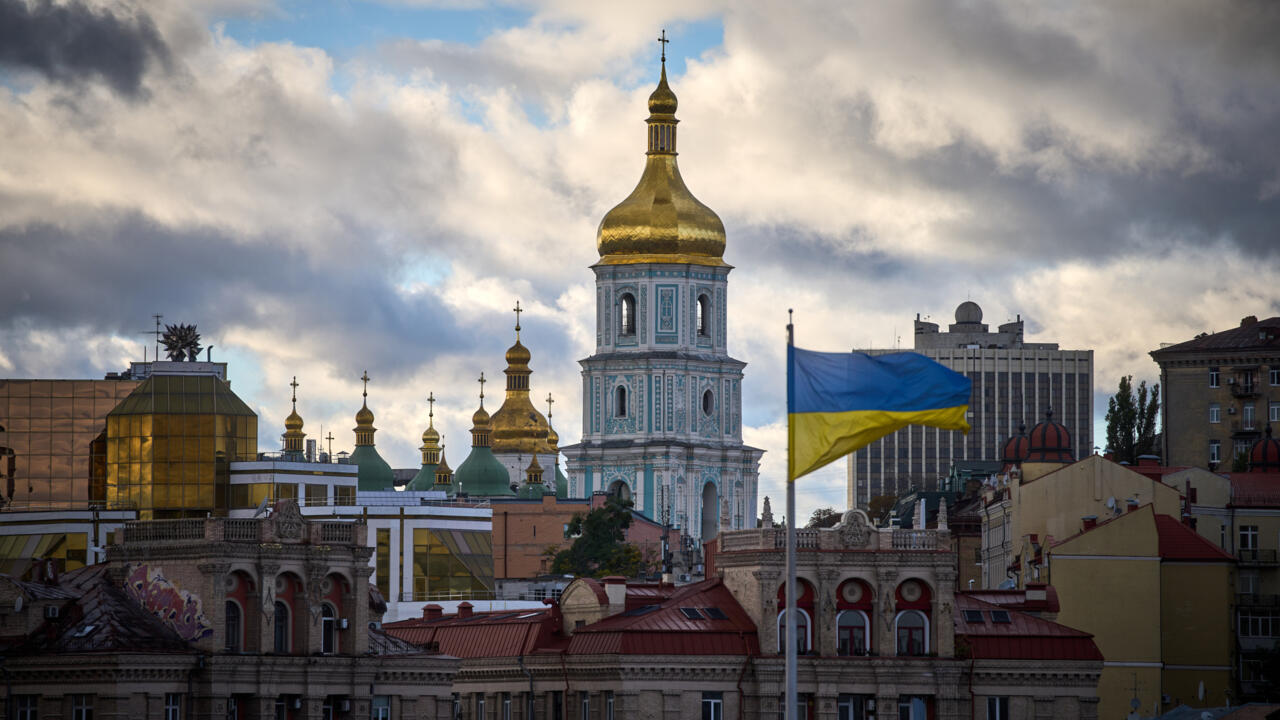
The Ukrainian flag on Independence Square in central Kyiv with the St. Sophia Cathedral in the background on October 13, 2025. © Efrem Lukatsky, AP
01:50


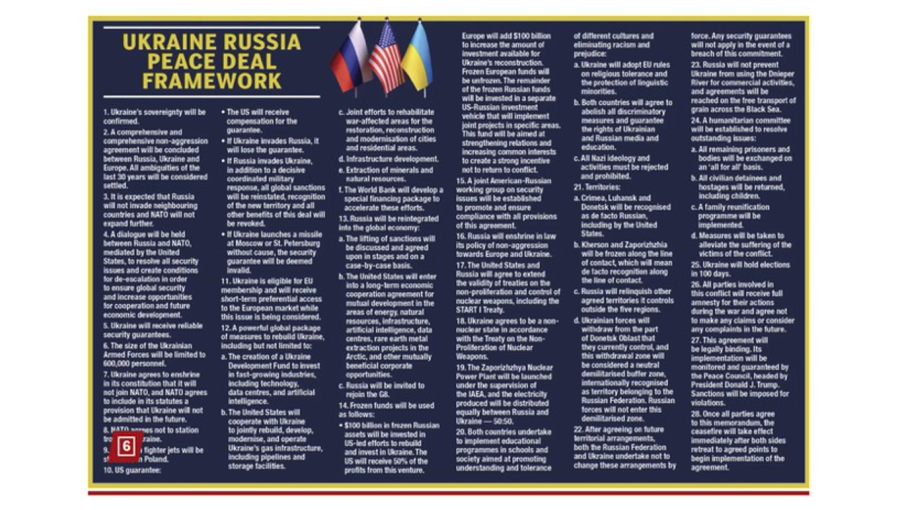
A draft of the 28-point plan reviewed by AFP:

1. Ukraine's sovereignty will be confirmed.

2. A comprehensive non-aggression agreement will be concluded between Russia, Ukraine and Europe. All ambiguities of the last 30 years will be considered settled.

3. It is expected that Russia will not invade neighbouring countries and NATO will not expand further.


4. A dialogue will be held between Russia and NATO, mediated by the United States, to resolve all security issues and create conditions for de-escalation.

5. Ukraine will receive reliable security guarantees.

6. The size of the Ukrainian Armed Forces will be limited to 600,000 personnel.

7. Ukraine agrees to enshrine in its constitution that it will not join NATO, and NATO agrees to include in its statutes a provision that Ukraine will not be admitted in the future.

8. NATO agrees not to station troops in Ukraine.

9. European fighter jets will be stationed in Poland.

10. The US will receive compensation for the security guarantees it provides. If Ukraine invades Russia, it will lose the guarantee. If Russia invades Ukraine, in addition to a decisive coordinated military response, all global sanctions will be reinstated and recognition of its new territories and all other benefits of this deal will be revoked. If Ukraine launches a missile at Moscow or St. Petersburg without cause, the security guarantee will also be deemed invalid.

11. Ukraine is eligible for EU membership and will receive short-term preferential access to the European market while this issue is being considered.

12. A powerful global package of measures to rebuild Ukraine will be established, including the creation of a Ukraine Development Fund, the rebuilding of Ukraine's gas infrastructure, the rehabilitation of war-affected areas, the development of new infrastructure and a resumption of the extraction of minerals and natural resources, all with a special finance package developed by the World Bank.

13. Russia will be reintegrated into the global economy, with discussions on lifting sanctions, rejoining the G8 group and entering a long-term economic cooperation agreement with the United States.

14. Some $100 billion in frozen Russian assets will be invested in US-led efforts to rebuild and invest in Ukraine, with the US receiving 50 percent of the profits from the venture. Europe will add $100 billion to increase the amount of investment available for Ukraine's reconstruction. Frozen European funds will be unfrozen, and the remainder of the frozen Russian funds will be invested in a separate US-Russian investment vehicle.

15. A joint American-Russian working group on security issues will be established to promote and ensure compliance with all provisions of this agreement.

16. Russia will enshrine in law its policy of non-aggression towards Europe and Ukraine.

17. The United States and Russia will agree to extend the validity of treaties on the non-proliferation and control of nuclear weapons, including the START I Treaty.

18. Ukraine agrees to be a non-nuclear state in accordance with the Treaty on the Non-Proliferation of Nuclear Weapons.

19. The Zaporizhzhia Nuclear Power Plant will be launched under the supervision of the UN's International Atomic Energy Agency (IAEA), and the electricity produced will be distributed equally between Russia and Ukraine.

20. Both countries undertake to implement educational programmes in schools and society aimed at promoting understanding and tolerance.

21. Crimea, Luhansk and Donetsk will be recognised as de facto Russian, including by the United States. Kherson and Zaporizhzhia will be frozen along the line of contact, which will mean de-facto recognition along the line of contact. Russia will relinquish other agreed territories it controls outside the five regions. Ukrainian forces will withdraw from the part of Donetsk Oblast that they currently control, which will then be used to create a buffer zone.

22. After agreeing on future territorial arrangements, both the Russian Federation and Ukraine undertake not to change these arrangements by force. Any security guarantees will not apply in the event of a breach of this commitment.

23. Russia will not prevent Ukraine from using the Dnieper River for commercial activities, and agreements will be reached on the free transport of grain across the Black Sea.

24. A humanitarian committee will be established to resolve prisoner exchanges and the return of remains, hostages and civilian detainees, and a family reunification programme will be implemented.

25. Ukraine will hold elections in 100 days.

26. All parties involved in this conflict will receive full amnesty for their actions during the war and agree not to make any claims or consider any complaints in the future.

27. This agreement will be legally binding. Its implementation will be monitored and guaranteed by the Peace Council, headed by US President Donald Trump. Sanctions will be imposed for violations.

28. Once all parties agree to this memorandum, the ceasefire will take effect immediately after both sides retreat to the agreed points to begin implementation of the agreement.

(FRANCE 24 with AFP)


Text of US 28-point Russia-Ukraine war peace plan released

Text of US 28-point Russia-Ukraine war peace plan released
The text of the US 28-point peace plan was released that the Trump admiinistration hopes will bring the war in Ukraine to an end. / bne IntelliNews
By Ben Aris in Berlin November 21, 2025

The full text of the US-Russian 28-point peace plan was released on November 20 that the White House hopes will bring the war in Ukraine to an end.

The proposal was leaked earlier this year and thrashed out in talks between Special Envoy to the Middle East Steve Witkoff and Russia’s special envoy and sovereign fund manager head Kirill Dmitriev in secret and without the participation of either Ukraine or the EU.

Bankova (Ukraine’s equivalent of the Kremlin) has yet to comment on the plan, but it is widely expected that Ukrainian President Volodymyr Zelenskiy will reject it.

The list contains most of Russian President Vladimir Putin’s maximalist demands and few concessions to Ukraine. It also includes a demand that Ukraine in effect cede some 20% of its territory to Russia and reduce its military by half – both red lines for Bankova. Reportedly he has been working on an alternative plan together with his European partners, who have taken over the entire burden of supporting Ukraine since Trump pulled out.

The EU has also pushed back against the plan. In comments to journalists on November 20, EU foreign policy chief and former Estonian Prime Minister Kaja Kallas said the EU had a much simpler 2-point plan: weaken Russia and support Ukraine.

Land: The controversial plan concedes the Donbas territories that Russia does not already occupy, which will become demilitarized zones, but freezes the frontline in Zaporizhzhia and Kherson. The Crimea will also be ceded to Russia and all these territorial claims will be recognized by the US, but Ukraine is implicitly not required to recognize the claim. Zaporizhzhia nuclear power plant (ZNPP), the largest in Europe, will be returned to Ukraine, but half its power will be sold to Russia.

Sanctions: Russia will be reintegrated into the global economy with a phased sanctions relief. It will also be invited to join the G8.

Nato and security guarantees: Ukraine will alter its constitution and return to neutrality that was part of its basic law prior to 2014. Nato’s charter will be changed to preclude Ukraine’s membership and expansion will be halted. Instead, Ukraine will be offered security guarantees by the US, which will demand compensation for its services. In effect, the deal would be a step towards the pan-European post-Cold War security deal that Russia first proposed in 2008. The US also commits to renewing the Cold War-era missile agreements, long a top ask by the Kremlin, starting with the renewal of the START II missile agreement, which is due to expire in February.

Reconstruction: Ukraine’s EU accession will be fast-tracked. The European part of the frozen Central Bank of Russia (CBR) funds will be returned and the rest will be invested in a joint US-Russian fund. A $100bn US investment fund will be set up to pay for reconstruction with the US taking half of its returns. Europe will also raise a $100bn fund to help with reconstruction. The Trump administration specifically includes mineral deals that are part of his minerals diplomacy foreign policy. The US will engage in extensive, but undetailed, business deals with Russia covering minerals, energy and technology.

Culture: Russian will become a second official language and restrictions on language and the operations of the Russian Orthodox Church will be lifted.

Politics: all sides will receive a full amnesty for any war crimes committed. Fresh presidential elections will be held within 100 days (with the implication that Zelenskiy will be replaced with someone like General Valerii Zaluzhnyi, a preferred US candidate to take over.)

Text of the 28-point peace plan

1. Ukraine’s sovereignty will be confirmed.

2. A full and comprehensive non-aggression agreement will be concluded between Russia, Ukraine, and Europe. All ambiguities of the last 30 years will be considered resolved.

3. Russia will not invade neighbouring countries, and Nato will not expand further.

4. A US-mediated dialogue will be held between Russia and Nato to resolve security issues, create conditions for de-escalation, ensure global security, and improve opportunities for cooperation and future economic growth.

5. Ukraine will receive reliable security guarantees.

6. The size of Ukraine’s Armed Forces will be limited to 600,000 personnel [down from about 1mn currently].

7. Ukraine will enshrine in its Constitution that it will not join Nato, and Nato will adopt a provision stating that Ukraine will not be admitted at any time in the future.

8. Nato will not deploy its troops in Ukraine.

9. European Nato forces will be stationed in Poland.

10. US security guarantees:

a. The US will receive compensation for providing guarantees.

b. If Ukraine invades Russia, it will lose the guarantees.

c. If Russia invades Ukraine (except for a rapid coordinated military response), all global sanctions will be restored and recognition of new territories will be revoked.

d. If Ukraine unintentionally fires a missile at Moscow or St. Petersburg, the guarantees become invalid.

11. Ukraine may apply for EU membership and will receive short-term preferential access to the European market pending review.

12. A global reconstruction package for Ukraine will include:

a. A fund for investing in high-tech sectors (transport, logistics, data centres, AI).

b. US–Ukraine cooperation on restoring and operating gas infrastructure (pipelines, storage).

c. Joint efforts to rebuild war-affected territories, cities, and residential areas.

d. Infrastructure development.

e. Extraction of minerals and natural resources.

f. A World Bank financing package to accelerate reconstruction.

13. Russia will be reintegrated into the global economy:

a. Sanctions relief will be discussed and agreed individually and gradually.

b. The US will sign a long-term economic cooperation agreement with Russia covering energy, resources, infrastructure, AI, data centres, Arctic rare-earth mining, and other corporate opportunities.

c. Russia will be invited to return to the G8.

14. Frozen Russian assets:

a. $100bn will be invested in US-led reconstruction projects in Ukraine.

b. The US will receive 50% of profits from these projects.

c. Europe will add another $100bn for Ukraine’s reconstruction.

d. European frozen assets will be unfrozen.

e. Remaining Russian assets will be invested in a special US–Russia investment instrument for joint projects aimed at strengthening mutual interests and long-term stability.

15. A joint US–Ukraine–Russia working group on security issues will be established to monitor compliance with the agreement.

16. Russia will legally adopt a policy of non-aggression toward Europe and Ukraine.

17. The US and Russia will extend nuclear non-proliferation and nuclear arms control treaties, including START-1.

18. Ukraine will remain a non-nuclear state under the NPT.

19. The Zaporizhzhia Nuclear Power Plant will be restarted under IAEA supervision, with electricity output divided equally (50/50) between Russia and Ukraine.

20. Both countries will implement educational programs fostering cultural tolerance, understanding, and the elimination of racism and prejudice:

a. Ukraine will adopt EU standards on religious tolerance and minority protection.

b. Both sides will lift discriminatory measures and guarantee equal access for Ukrainian and Russian media and education.

c. Nazi ideology and activity will be banned in both countries.

21. Territorial arrangements:

a. Crimea, Luhansk, and Donetsk will be recognized de facto as Russian, including by the United States.

b. Kherson and Zaporizhzhia will be frozen along current front lines.

c. Russia renounces claims to any other territories it controls beyond these five regions.

d. Ukrainian troops will withdraw from the part of Donetsk region they currently control; this zone becomes a demilitarized neutral buffer internationally recognized as Russian Federation territory. Russian forces will not enter the demilitarized zone.

22. Future territorial arrangements cannot be changed by force; security guarantees will not apply if violated.

23. Russia will not obstruct Ukraine’s commercial use of the Dnipro River, and agreements will be reached on free grain shipments via the Black Sea.

24. A humanitarian committee will resolve outstanding issues:

a. Prisoners and bodies exchanged under “all for all.”

b. All civilian detainees and hostages returned, including children.

c. Family reunification program.

d. Measures to alleviate suffering of conflict victims.

25. Ukraine will hold elections within 100 days.

26. All parties to the conflict will receive full amnesty for wartime actions and agree not to file claims or pursue grievances.

27. The agreement will be legally binding. Its implementation will be monitored and guaranteed by a Peace Council chaired by Donald J. Trump. Sanctions will apply to violators.

28. After all sides agree, the ceasefire will take effect immediately once both sides withdraw to the agreed starting lines.


The Nestor Makhno Archive - index