Saturday, August 30, 2025


Where are they? ¿Dónde están?

Today, August 30th, is designated International Day of the Victims of Enforced Disappearances. To explain its importance, Helia López Zarzosa considers the experience of the Chilean dictatorship.

The purpose of enforced disappearance is to erase the very existence of unwanted human beings. The enforced disappearance of people is above all a brutal practice that constitutes the most serious form of torture of all the crimes against humanity. In this way, the disappearance of a loved one turns into one of the worst psychological torture techniques. It is superior to the cross, the guillotine, the electric chair and, I would say, even the gas chambers of the Nazi genocide. There are neither explanations nor corpses to honour or say goodbye to, no successful legal dealings to pursue or even perpetrators to prosecute. For many years there is only silence and uncertainty and no one knows about the forced disappeareds’ whereabouts.

Many dictatorial and authoritarian regimes have practised, and are practising, the enforced disappearance of those people they consider internal ‘enemies’ and a threat to national security. Southern Cone Latin American right-wing dictators of the 1970s were no exception. They used enforced disappearance as a tool of terror, which played a key role in the structuring of violence as state terrorism in those societies. Augusto Pinochet in Chile was one of them.

After the September 11th 1973 civil-military coup d’état in Chile, mass detention without trial in military establishments and detention camps was an extensive practice. In December 1973, by Decree Law N° 228, the Military Junta granted itself the powers (retrospectively) to make such mass arrests. From that fateful day until June 1974, when the DINA was created, there was total arbitrariness and widespread random repression.

The DINA, the National Intelligence Directorate, was characterised by its systematic and secret repressive activities and was equipped with an infrastructure of secret agents, unmarked vehicles, the creation of numerous nationwide clandestine torture centres and total freedom of action for its agents. The DINA started a more targeted phase of repression.  Its ‘politicide’ started with the intended extermination of the MIR (Movement of the Revolutionary Left), then the Socialist Party and the Communist Party. Between 1974 and 1977, the DINA was responsible for national and international repressive actions and would be the intelligence service with greatest responsibility for the gross violation of human rights.

In September 1974, the DINA assassinated General Carlos Prats, former head of the Army, and his wife Sofía Cuthbert in Buenos Aires. In September 1976, the DINA assassinated Orlando Letelier and his American secretary Ronni Moffit in Washington D.C. Letelier had been Allende’s Foreign Affairs, Interior and Defence Minister. With the recent release and re-imprisonment of ex-Army Brigadier and DINA agent José Zara, a key perpetrator of these assassinations,  the DINA is in the news again.

Enforced disappearance of people, along with extrajudicial executions, became a ‘game’  for the extermination of ‘enemies’. It was during this chaotic and terrorising first stage of repression that our family relative, Héctor Roberto Rodríguez Cárcamo, my sister’s fiancé, was arrested by Carabineros (Chilean police) at around midnight from his parents’ house and made to disappear on September 19th 1973. His ID number was 258.835, Concepción.

A new category of citizens had emerged in Pinochet’s Chile, the relatives of the disappeared, who would bravely form the Agrupación de Familiares de Detenidos Desaparecidos (AFDD) in 1974 that was formally constituted in 1975. They were the first in Chile to denounce the atrocities of the dictatorship.

During the Pinochet dictatorship, lies and misinformation became one of the ideological underpinnings of his civil-military regime. Lies justified their denial of the gross violations of human rights that were taking place in Chile and their de facto legislation. We must remember that after the 1973 civil-military coup, the Chilean Constitution of 1925 was virtually superseded by over 3,500 decree laws and Constitutional Transitory articles. The purpose of this de facto legislation was supposedly to guarantee national security, legitimise the dictatorial regime, act ‘legally’ in public and suppress opposition. To illustrate the degree of authoritarianism, between  September 11th 1973 and November 6th 1973, the Junta promulgated one hundred decree laws. The political and human cost would be catastrophic, something never experienced on such a scale before in Chile.

Confronted with such repressive architecture and the ensuing tortuous silence, relatives desperately tried to find out the fate and whereabouts of their loved ones. There were 1,469 cases of enforced disappearances in Chile. According to the Servicio Médico Legal, out of all the victims of enforced disappearance certified by the Truth Commissions, the remains of 307 victims have been recovered, identified  and returned to their relatives. This means that there are still 1,162 disappeared persons whose circumstances of disappearance and/or death has not yet been clarified.

In each case, the relatives’ painful journey started with the search (‘La Búsqueda’). They enquired at police stations, hospitals, jails, military headquarters and Registration Offices. When answers were negative, they went to nationwide ad hoc detention centres like the National Stadium  and Estadio Chile in Santiago. In all these places authorities denied their relatives’ arrest and usually told them either to “don’t look for him/her anymore!” or to “go to the morgues”.

As Roberto’s family was so distraught and my sister close to a nervous breakdown, my father decided to go to the  morgue and asked me to go with him. I agreed. What I saw there in the midst of a potent stench of the unclaimed piles of corpses has stayed with me ever since. Some of the victims lying there had been so badly tortured that they would only be identified from their teeth. As the mortuary attendant showed us the teeth of some of the victims we could not see Roberto but saw people we knew. We kept the macabre scenes we saw to ourselves, and only said to the family and my sister that Roberto wasn’t there. It was a most overwhelming experience, yet again, there were no answers. Our quest to find Roberto and that of many other relatives who had visited the morgues was chillingly mirrored in Costa Gavras’ 1982 film Missing. This Hollywood thriller wasbased on Thomas Hauser’s book The Execution of Charles Horman. An American Sacrifice (1978).

Given this agonising silence, relatives embarked on lengthy, risky and futile legal proceedings such as ‘complaint for presumed misfortune’ (querella por presunta desgracia) and writ of habeas corpus (recurso de amparo), but the judiciary and the Chilean Supreme Court were complicit. They allowed the Carabineros and all branches of the Armed Forces through their respective intelligence services, in collusion with right-wing civilians, to continue with their savage repression.

Writs of habeas corpus were also interfered with by the Home Office (Ministerio del Interior). In November 1973, a response letter by the Intendente (highest regional authority) to Roberto’s mother stated: “It has been impossible to find your son. I was informed that it was necessary to identify your son with other detained members of the MIR. Your son was released the following day and he was advised to leave Concepción in order to avoid a vendetta that could put his life at risk from other members of the MIR.” This was a misleading lie.

In June 1977, Roberto’s parents received a letter from the Foreign Office Minister Patricio Carvajal. It informed them that their son had been killed on September 19th 1973 in Santiago. According to the forensic pathologist, Roberto had been killed at 10.25am that day and his body arrived at the morgue in Santiago September 19th 1973 at 22.30pm. His ID card number was 289.515 from Santiago. Indeed, this ID did not correspond to his real ID.

This and other types of false and contradictory versions or accounts appeared in misleading official reports that reached courts, foreign embassies and even the United Nations. Amnesty International UK reported that “information provided to the UN in 1975 claimed that many names of supposedly ‘disappeared’ prisoners did not correspond to names of people whose existence had ever been officially recorded and suggested that the names were assumed or invented.”

Throughout this long and painful search, relatives encountered only cynical and hurtful lies as responses. There was always a refusal to acknowledge the fate of the disappeared or their whereabouts. When relatives asked: “Where is my son?’” “Where is my daughter?’” “Where is my husband?’” “Where is my fiancé?” “Where is my brother or sister?’” – WHERE ARE THEY? – they were ordered to keep calm and told cruel lies. These falsehoods ranged from “He/she ran away with a lover”, “He/she is in exile abroad now”, “He/she committed suicide” or the classic ‘vendetta’ argument: “He/she was killed by his/her own comrades!”

Regarding the latter, the security Operación Colombo or the ‘Case of the 119’, as it is also known, was a case of fake news. The mutilated bodies of 119 missing people who had been detained in 1974 (mainly MIR) were discovered in 1975 in Argentina and other countries. The right-wing press El Mercurio, La Segunda and La Tercera printed sensationalist stories blaming deadly vendettas.

However, extreme cruelty did not stop there in Chile. On one occasion when Roberto’s mother, whose psychological survival strategy was the religious cleaning and airing of her son’s room, went to the Registry Office with her husband to get a copy of Roberto’s birth certificate, she was asked “Are you sure you had that son?” Behind this despicable question was the Office’s ‘failure’ to find Roberto’s birth certificate which, we all thought, was intentional. They wanted to erase his existence; he had ‘disappeared’.

In fact, when victims were arrested, mothers, sisters, wives, fiancés, fathers and other members of the family, ignored what was behind the regime’s lies. There were only rumours. Their loved ones had been tortured, interrogated, moved from prison to prison, assassinated and then buried in secret graves. Other times they were assassinated abroad or, under the effect of the drug Pentothal, thrown alive from Puma helicopters into the Pacific Ocean, a French practice during the Algerian War (1954-1962) known as the infamous “death flights”.

Unbelievably, one  of these Puma helicopter’s empty hulk, the H-255, is being used for ‘recreation’ at the Dogtag Airsoft Park in Horsham, UK! (“Participants use low-power airguns to simulate combat”. See “How a Pinochet ‘death flight’ helicopter became UK gamepark prop”, The Guardian, Friday August 4th 2023.) A campaign for the repatriation of the fuselage started in January 2024.

But Chile’s dictatorship went further. In 2000, when it was revealed that two companies (shipping and haulage) were linked with the disappearance of political dissidents, Viviana Díaz, the President of the AFDD whose father was disappeared in 1976 and thrown into the Pacific Ocean, commented on the “monstrosities” revealed by Pastor Enrique Vilches during the ‘Month of Dialogue’. (Mesa de Diálogo: following the arrest of Pinochet in London in October 1998, the Chilean government convened a Mesa de Diálogo de Derechos Humanos (1999-2001) in which members of the Armed Forces, human rights lawyers, religious, culture and science representatives discussed the unresolved human rights issues in Chile. The objective was to revisit the seriousness of human rights violations during the Pinochet dictatorship but above all to know the whereabouts of the forcibly disappeared.)

Pastor Vilches had testified that, in the case of those victims thrown into the sea, in order “to cut costs, the perpetrators didn’t use lead to weigh the bodies down, they used rail sleepers instead and sprayed their bodies with a liquid so that fish would eat them quickly and also that the bones would dissolve in less than five days.” (Patricio Guznán’s documentary film El Botón de Nácar deals with the horrors of both the ravages of colonialism and Pinochet’s dictatorship in Chile. The button, in the purchase of an indigenous young man (‘Jeremy Button’) and the encrusted button of a disappeared person, whose tied body to a railway sleeper had been thrown into the sea from a helicopter, connected the horrors in Chilean history. The film is available here.)

Heinous crimes such as these, perpetrated in Pinochet’s Chile, should not be emulated elsewhere, never, ever! The disappearance of a loved one is perverse both ethically and juridically. It is also a horrific historic and political tragedy, a hurtful truth in Chile. For the relatives it is a continuous psychological torture that should never be forgotten, let alone forgiven.

Today, when there is a government Plan Nacional de Búsqueda de Verdad y Justicia (National Plan to Seek Truth and Justice) for forcibly disappeared persons in progress in Chilebiological impunity is running against justice. Many perpetrators are dead. Those who are still alive and old, still refuse to contribute with truth and justice. Older relatives have died as well. That is the case of our beloved Roberto. His parents and elder sister have died and there is only one sister who can once again contribute with her DNA to the Plan.

A true democracy would be achieved only when human rights atrocities such as the enforced disappearance of people is no longer practised and when the fate and whereabouts of those who are disappeared are clarified and justice and accountability are achieved for them.

As the fight for justice for the disappeared has been an extremely long one, on this August 30th, the International Day of the Victims of Enforced Disappearances, let’s honour their lives and memory and make sure that we will never forget them!

Helia López Zarzosa is a sociologist and former refugee from Chile. She is a former co-ordinator of the Association of the Relatives of the Disappeared Prisoners in Chile, UK Section.

Image: Images of three of 119 people forcibly disappeared in Chile between 1974 and 1975 1 , taken from a protest in Santiago in July 2023. Source: https://www.pressenza.com/2023/08/a-montage-in-three-acts-a-crime-unresolved-in-48-years-links-argentina-and-chile/ Creator: Paulo Slachevsky  Copyright: Paulo Slachevsky Licence: Atribución – NoComercial – CompartirIgual 3.0 Chile CC BY-NC-SA 3.0 CL Deed (CC BY-NC-SA )

UK

Ed Davey will boycott Donald Trump’s state banquet to send a message on Gaza

28 August, 2025 
Left Foot Forward

Priti Patel tried to attack the Lib Dem leader’s decision but it backfired spectacularly


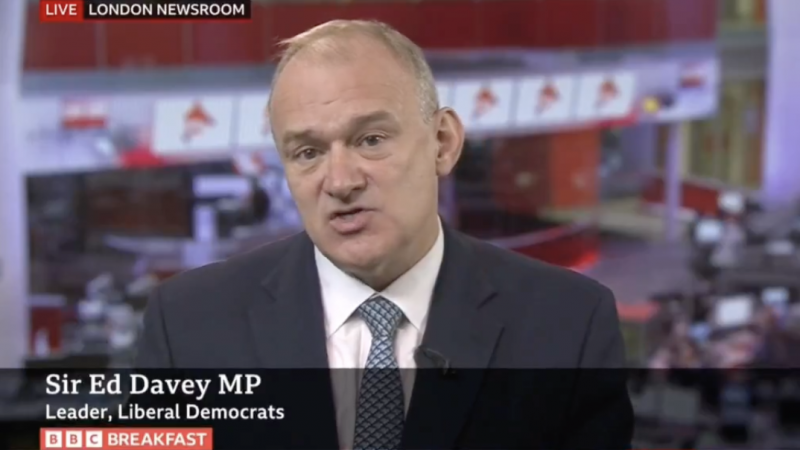
Ed Davey has said he will boycott a state banquet that will be hosted by King Charles for President Donald Trump next month.


The Lib Dem leader has said he will not attend the banquet to protest against Trump and Keir Starmer’s failure to use their influence to end the war in Gaza.

Since October 7, over 60,000 Palestinians have been killed by Israeli attacks on Gaza. In addition, Israel is continuing to target journalists, killing five media workers in a military strike last week.

Meanwhile, a famine is spreading across Gaza as Israel continues to obstruct food from entering the territory.

Davey said: “If Donald Trump tells Benjamin Netanyahu to stop this, it ends tomorrow.

“If Donald Trump uses his influence over Qatar and other Gulf states that Hamas relies on, all the hostages could come home tomorrow.

“Boycotting the banquet is the one way I can send a message to Donald Trump and Keir Starmer that they can’t close their eyes and wish this away. We have to speak up, they have to act. Donald Trump has to end this humanitarian crisis.”

Shadow foreign secretary Priti Patel tried to criticise Davey of disrespecting the royal family. However, it backfired tremendously.

Patel said: “This is an act of deep disrespect to His Majesty the King. It shows appalling judgment.”

“America is our closest ally and security partner, and the world’s biggest economy. Ed Davey has once again proved he is not a serious leader and more interested in pathetic gesture politics.”

In 2017, Patel was forced to step down as international development secretary after she used the cover of a “holiday” to go to Israel for secret meetings with Israeli ministers and businesspeople.

A Lib Dem source hit back: “Priti Patel has a brass neck to talk about disrespecting the royal family. The Conservatives partied in Downing Street while our Queen mourned her husband.”

They added: “Ed deeply respects the King and hasn’t taken this decision lightly.

“He has had to weigh up the most effective way to send Donald Trump a message on Gaza. This is about principles, not gestures, so it’s no wonder the Conservatives don’t understand it.”

Olivia Barber is a reporter at Left Foot Forward
UK Windfall tax on bank profits could raise £8bn a year, report says

29 August, 2025 

IPPR says these two policies could save the taxpayer over £100 billion over the course of this parliament giving the government much needed fiscal headroom and allowing them to support households.


Chancellor Rachel Reeves has been told that a tax on bank profits could raise up to £8 billion a year for public services.

The Institute for Public Policy Research says that the move would give the chancellor much needed fiscal headroom, should a levy on the windfalls from major firms such as Barclays, Lloyds, HSBC and NatWest be imposed.

The Independent reports: “The think tank argues the UK is an international outlier in having its Treasury pay for central Bank losses on its bond-buying quantitative easing (QE) programme.

“After a period of making profits on this programme, the Bank of England is facing record losses, estimated to cost the taxpayer £22 billion a year, as interest rates have risen since 2021, it warned.

“This money is then partly being funnelled to bank shareholders due to a “flawed” policy design, boosting profits while millions across Britain continue to face cost-of-living pressures, the report says.”

The IPPR recommends that the Treasury introduce a “QE reserves income levy” to raise much needed funds which can then be used to improve public services and balance the books.

In addition, the IPPR also recommends that the Bank of England slow down its sale of bonds – so-called quantitative tightening (QT) – to save more than £12 billion a year.

IPPR says these two policies could save the taxpayer over £100 billion over the course of this parliament giving the government much needed fiscal headroom and allowing them to support households.

Carsten Jung, associate director for economic policy at IPPR, said: “The Bank of England and Treasury bungled the implementation of quantitative easing. What started as a programme to boost the economy is now a massive drain on taxpayer money. Public money is flowing straight into commercial banks’ coffers because of a flawed policy design. While families struggle with rising costs, the government is effectively writing multi-billion-pound cheques to bank shareholders.

“This is not how QE was meant to work – and no other major economy does it this way. A targeted levy, inspired by Margaret Thatcher’s own approach in the 1980s, would recoup some these windfalls and put the money to far better use – helping people and the economy, not just bank balance sheets.”

Basit Mahmood is editor of Left Foot Forward
Reform UK would allow MAGA-linked fossil fuel company to open fracking site in Lincolnshire


29 August, 2025 


Farage's party has had meetings with the Trump donor’s company


Reform would allow a fossil fuel firm owned by a Donald Trump donor to open a huge fracking site in Greater Lincolnshire.

The investigative environmental newspaper DeSmog has reported that the Reform mayor of Greater Lincolnshire Andrea Jenkyns recently met with Egdon Resources, an oil and gas company owned by Texas-based Heyco Energy.

George Yates, who owns Egdon and Heyco, has donated more than $130,000 to Trump and other MAGA politicians since the beginning of 2019, according to DeSmog’s analysis.

The firm says it has discovered huge deposits of natural gas which is trapped in rock formations in the Gainsborough Trough basin, and would need to be extracted through hydraulic fracturing, or fracking.

Jenkyns has said a Reform government would allow companies to extract the gas via fracking.

Fracking may be even worse for the environment than oil and gas extraction, as it uses toxic chemicals that release pollutants into the air and water.

The process can also cause small earthquakes that cannot be controlled, which was what led to it being banned in 2019, despite Liz Truss’ government briefly lifting the ban in 2022. The ban was then reinstated under Rishi Sunak’s government.

Fracking has also been banned by previous governments since 2011.

Yet Reform, which received £2.3 million in donations from fossil fuel interests between the 2019 and 2024 elections, is in favour of it. No surprise, given Reform has repeatedly said it would scrap net zero policies.

Tessa Khan, executive director at the research and campaign group Uplift, told DeSmog: “Reform’s pledge to hand out fracking licences to a Trump donor’s company shows exactly whose interests they serve – and it’s certainly not ordinary people. Fracking is dangerous, unpopular and has next to no chance of improving our energy security or bringing down bills”.

Olivia Barber is a reporter at Left Foot Forward
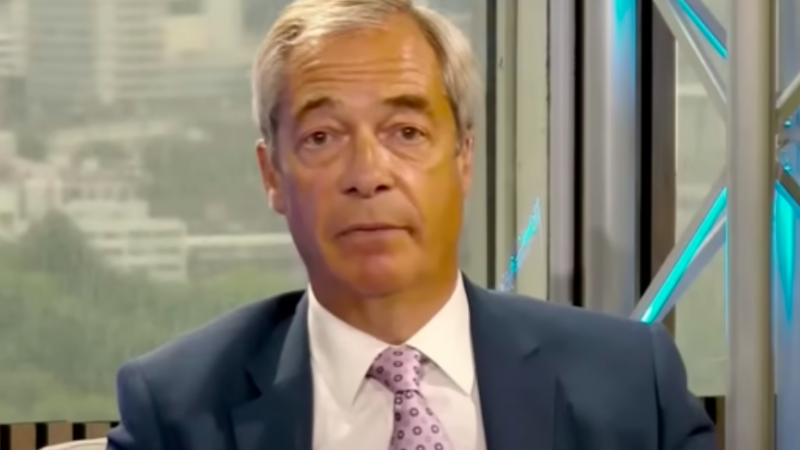
Christian leaders condemn Nigel Farage’s REFORMUK mass deportation plans: ‘Beneath us as a nation’, top bishop says

29 August, 2025 

'It is the Christian way to meet those asking for help with compassion and understanding'


Nigel Farage’s plans for the mass deportation of asylum seekers have been condemned by church leaders, with the country’s most senior bishop saying it was ‘beneath us as a nation’.

Earlier this week, Farage set out his plans for mass deportation of asylum seekers, including pledging to leave the European Convention on Human Rights, scrapping the Human Rights Act, and vowing to deport all illegal immigrants, saying that even women and children would be detained. As part of his policy offer, he also said he would be fine with Britain funding despotic regimes in Iran and Afghanistan, in order to negotiate return agreements to take refugees fleeing their regimes.

The Archbishop of York – who is the Church of England’s most senior figure until a new Archbishop of Canterbury is appointed – told The Mirror: “We cannot simply close the door on people fleeing war, violence and persecution. ‘Send them all back’ is not a sensible or compassionate response, and is beneath us as a nation.

“We need a system that is fair and functional and works well for everyone – including those living near hotels and other asylum accommodation. But this debate also goes to the heart of who we are.

“It is the Christian way to meet those asking for help with compassion and understanding, and it has long been the British way to give shelter where we can to those escaping violence and conflict abroad. It should remain that way.”

The Archbishop of York’s criticisms come after Steven Croft, the Bishop of Oxford, also criticised Farage’s plans, calling the Reform UK leader ‘deeply disturbing’ for seeking to play on the fear of the stranger to ‘stoke division for political advantage’.

Basit Mahmood is editor of Left Foot Forward


‘Reform’s ‘British Bill of Rights’ puts your freedoms at risk, not just asylum seekers’


© Sean Aidan Calderbank/Shutterstock.com

This Tuesday, Nigel Farage announced that in order to push through his proposed Illegal Migration (Mass Deportation) Bill, a Reform UK government would scrap the European Convention on Human Rights (ECHR) to be replaced by a British Bill of Rights.

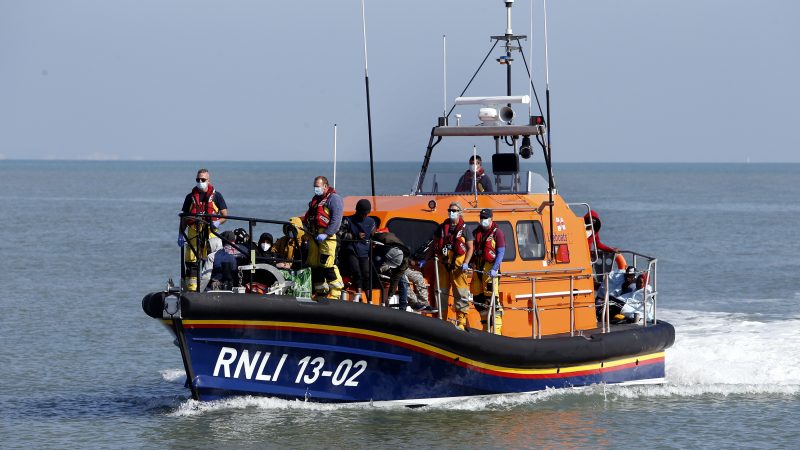
Reform UK has claimed that within the span of one parliament, if they came to office, they would deport between 500,000 and 600,000 immigrants currently living in the UK and refuse to grant asylum to anyone arriving by crossing the Channel via small boat. In effect, this would mean that an Afghan woman fleeing Taliban persecution, a child escaping the war in Sudan, or a queer person facing the death penalty upon return to their country of origin would be denied life-saving refuge in the UK under a Farage-led government.

In legal terms, this policy would breach, at least, Articles 2, 3, 5, 6, 8, and 13 of the ECHR, which guarantee rights such as life, liberty, security, and freedom from torture, rendering Reform UK’s proposals incompatible with our existing legal framework.

Farage’s desire to scrap the ECHR is a cheap, disingenuous and inhumane answer to the real problems around immigration in this country, and the public see right through it. A recent YouGov poll found that 51% of British adults surveyed believed we should remain a member the ECHR, to just 27% who believed we should withdraw.

Subscribe here to our daily newsletter roundup of Labour news, analysis and comment– and follow us on BlueskyWhatsAppX and Facebook.

In the dog whistle culture of modern political media, we have come to associate the ECHR almost exclusively with the subject of immigration and asylum, failing to fully comprehend the purpose it serves for all of us. While today’s political conversation, and the 27% against the ECHR, may fail to recognise this, the reason that we co-signed the ECHR in 1950 was to protect against regression to tyranny and oppression, in view of the recent horrors of the Second World War and Nazi Germany.

The ECHR exists to safeguard all of our rights, shielding us from being killed by the state, from torture, slavery, and from punishment without due process. It enshrines our rights to private and family life, our freedom of thought, expression, assembly and marriage, and outlaws discrimination. Leaving this Convention risks the rights of all of those who live in the UK.

As it stands, we know nothing about what Farage’s British Bill of Rights would contain, meaning by clapping along as he sermonises about withdrawing British membership of the ECHR, we are cheering in support of risking our own rights being stripped away with no clarity as to what would replace them. Farage’s unsubstantiated policy plans indicate his desire to win power at any cost, using divisive politics and language to get himself and his friends through the door at Number 10 at all of our peril.

A modern vision for Britain includes honouring our history by continuing to uphold unanimous and inimitable human rights, while recognising the need to adapt to modern problems. As this country’s parties of government debate how we can meaningfully address domestic issues associated with immigration, it is ever clearer that by undermining the rights that underpin our democracy and failing to offer alternatives, Farage’s party poses only risk and no remedy.

Holly Huntrods

Holly Huntrods is a Labour Parliamentary Researcher with a background in feminist theory and international politics.View all articles by Holly Huntrods

Reform’s fear-mongering headlines: How would WE want to be treated if we had to flee for our lives?

Opinion
Lisa Matthews 
29 August, 2025 
Reform Watch
Left Foot Forward

Farage's mass deportation policy would rip families apart and directly threaten children and young people's safety


Earlier this week, Nigel Farage unveiled Reform’s “Operation Restoring Justice” – a “five year
emergency programme” if the party gets into office, which includes leaving the European Convention on Human Rights, repealing the Human Rights Act and disapplying the Refugee Convention.

They propose to carry out mass deportations of people seeking asylum by making it impossible for people who enter the country irregularly to get asylum, introducing a legal duty to remove anybody who comes irregularly, and to detain any migrants in the UK who don’t have leave to remain.

The plans are a fundamental attack on the right to safety – and we’ve seen them before. Many of the measures in the so-called “emergency programme” echo the Conservative government’s Illegal Migration Act. That piece of legislation similarly attempted to introduce what amounted to an asylum ban, undermining the very principle of protection in the UK. And both hinge on the idea that irregular entry to the UK somehow negates someone’s need for protection, ignoring the fact that there is virtually no way to enter the UK by regular means.

Nobody wants to make a dangerous journey to the UK, but people don’t have any other choice because this government has actually shut down safe routes to the UK rather than introduce any new ones. While governments or political parties talk of stopping the boats or smashing the gangs, they have failed to take the steps that would mean people would not be forced to use smugglers: safe routes.

People fleeing war and persecution do what they have to do to keep themselves and
their families safe, and none of these measures will stop that basic human instinct. It’s what we all would do if faced with the risk of death, torture, or imprisonment for our political, religious or other identities.

At Young Roots, we work with young people who have had to leave everything behind in order to be safe. While Farage has said in later interviews that Reform does not plan to deport women and children, his measures would mean ripping families apart and would directly threaten the majority of the young people we support – young men who are mostly here without their families, alone for the first time in their lives. Young men also need to be safe, and to be able to rebuild their lives and look to the future.

The young people we work with have hopes and dreams like the rest of us. As one young person told us, “What you want is a stable place to feel safe, where I can live without being scared, so I can do the basic things – study, work, live my life without stress and without being scared I will be harmed.

Policies like those proposed earlier this week, and all the anti-immigration rhetoric that goes along with them, make young people feel extremely unsafe when they have already had their childhoods and youth taken away by fear.

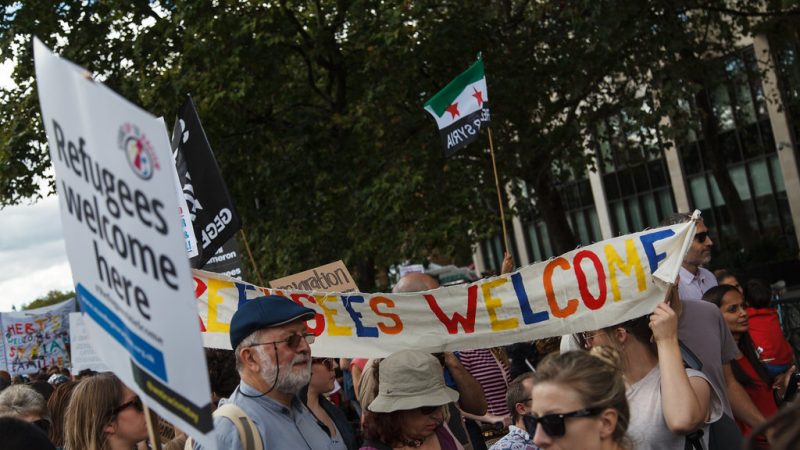
We all deserve to feel safe – and we must give no ground to policies that use human beings as political pawns. What would we want for ourselves and our families if we had flee for our lives? Surely the very opposite of the inhuman and cruel plans making the headlines these days: welcome, humanity, community and safety. Let’s be vocal about that instead.

Lisa Matthews is Policy and Campaigns Manager at Young Roots, a London-based charity that provides young refugees and asylum seekers aged 11-25 with practical and emotional support, legal advice and skills development, including English-language support.


4 worrying takeaways from Nigel Farage’s plans backing torture, locking up kids and paying despotic regimes

27 August, 2025 
Left Foot Forward


Sections of the right-wing press seem completely relaxed about Farage’s plans to strip away constraints on state power

Yesterday Nigel Farage let loose, exposing his contempt for democratic institutions and legal constraints, as he pushed a hard-line message on refugees, immigration and asylum seekers, normalising rhetoric that previously would’ve been considered beyond the pale.

He described irregular migration as an “invasion” and a “scourge”, referring to men who cross the Channel repeatedly as being of “fighting age”. As the Guardian summed up so succinctly in its editorial yesterday: “This is not a policy contest. It is an attack on democratic norms – the kind that paves the way for repressive rule by and for economic elites, under the guise of national restoration. That’s Donald Trump’s game. It’s Mr Farage’s too.”

The most worrying trend of all, is that sections of the right-wing press seem completely relaxed about Farage’s plans to strip away constraints on state power, and rather than holding him to account over his attack on democratic norms and institutions, they’re more concerned about how his plans will be implemented. In this, they have abdicated their responsibility to hold power to account.

At LFF, we will do all we can to expose Farage for what he really stands for. Here are four worrying takeaways from the Reform UK leader’s speech.

1.Scrapping the Human Rights Act

Farage made clear his intention yesterday to scrap the Human Rights Act, which would remove protections against state power not just for asylum seekers but for each and every single one of us.

As Labour’s Stella Creasy made clear yesterday: “The Human Rights Act protects everyone. Including you. He wrecked your economy with Brexit, don’t let him wreck your freedoms with this.”

The ECHR has helped British citizens by providing legal protection against torture, discrimination, and breaches of rights like freedom of expression and a fair trial.

2. Farage is happy to pay despotic regimes like the Taliban in Afghanistan and Iran to secure a migrant deportation deal, despite their appalling human rights record


The Reform UK leader said he wasn’t bothered by people being deported to regimes where they would be at risk of being tortured and killed.

3. Locking up women and children

Farage confirmed that under his plans women and children would be detained and deported in a bid to stop small boat crossings in the Channel. That as a democracy we would be willing to lock up vulnerable children, should alarm all progressives.

4. Threatening peace in Northern Ireland

Farage accepted that pulling out of the European Convention on Human Rights would create significant problems with the Good Friday Agreement, which ended decades of violent sectarian conflict known as The Troubles, and which requires the ECHR to be incorporated into Northern Ireland law.

The party has been warned that its plan to withdraw the UK from the European Convention on Human Rights risks disturbing the agreement that brought relative peace to Northern Ireland when it was signed in 1998.


Richard Tice confirms Reform UK is open to migrant deportation deal with Taliban

27 August, 2025 
Left Foot Forward News


“Is it moral?”


Reform UK’s Deputy Leader Richard Tice has confirmed that his party is open to paying the Taliban to secure a migrant deportation deal, despite their appalling human rights record.

Farage set out plans yesterday to deport 600,000 illegal immigrants in five years if it wins the next election. In order to do so, the Reform UK leader said anybody who arrived illegally would be immediately detained, including women and children, and that he would pull Britain out of the Human Rights Act as well as the European Convention on Human Rights. The Reform UK leader also said that his party was open to doing deals with despotic regimes such as Iran and Afghanistan to agree deportation deals, even if it meant people being sent back to be tortured.

Appearing on Sky News following Farage’s speech, Tice was asked: “You said you would do deals with despotic governments in Afghanistan and Sudan and send them straight back. Is that the moral thing to do?”

Tice replied: “Sometimes, you do business with people you may not get on with, who may not be your friends. That’s life. Leadership is tough.”

Sky’s presenter then asked again: “Is it moral?”

Tice replied: “I’ll tell you what is not moral, that is putting the safety of our women and girls, British citizens, at risk. That is completely immoral.”

Pushed once more on whether a Reform UK government would do a deal with the Taliban, he said: “We will do whatever is necessary to protect the safety and security of British citizens.”

But the presenter told him the Taliban “do far worse to women and girls than anything that happens in this country”.

Tice, having a meltdown replied: “Whose side are we on? Are you on the side of international lawyers and the likes?”


Basit Mahmood is editor of Left Foot Forward
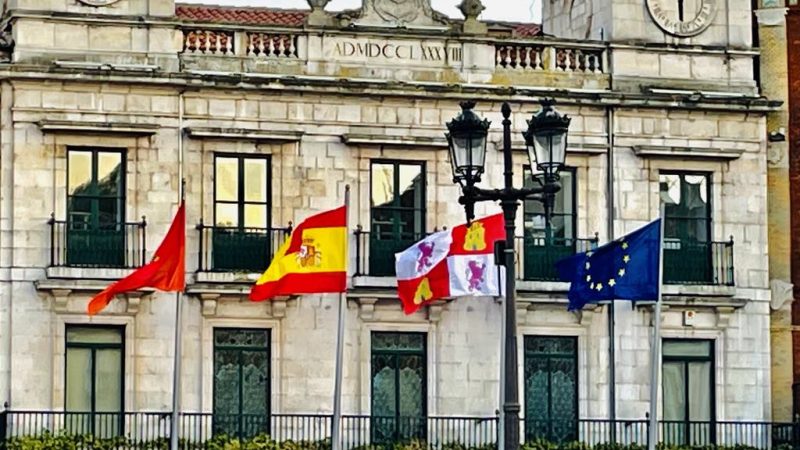
Pro-immigration policies and green energy adoption behind socialist Spain’s burgeoning economy


Spain's welcoming and liberal approach to immigration is paying economic dividends.


Spain’s economy is outpacing its European neighbours, with GDP expected to grow by 2.5 percent this year, far surpassing the economies of Italy, France and Germany, which are poised to expand 0.7 percent, 0.6 percent and 0 percent respectively. Meanwhile, in the UK, where a summer of anti-migrant protests and nationalist flag-flying has dominated the headlines of predominantly anti-immigration newspapers, the EY ITEM Club Summer Forecast predicts economic growth of 1% in 2025, up from the 0.8% projected in April’s spring forecast.

So, what’s driving this exceptional growth in Spain, which is governed by a left-wing coalition under socialist prime minister Pedro Sánchez?

A key and often underappreciated factor is immigration.


While much of Europe tightens its borders, Spain is doing the opposite. It plans to welcome nearly a million new migrants over the next three years through expanded work visa schemes and the granting of residence permits to undocumented workers. This liberal approach is paying economic dividends.

According to Miguel Cardoso, chief economist at BBVA Research, 90% of the increase in the labour force since 2021 comes from immigration.

“This is allowing the service sector to expand. This is keeping firms relatively competitive in terms of containing the increase in labour costs, and it’s allowing, for example, the prices in services to remain relatively contained in a high inflationary environment.”

Last year, most people migrating to Spain came from Colombia, Venezuela and Morocco.

“Latin American economies, some of them are not doing relatively well, so there is this push factor. There is also the fact that immigration to the United States has become more difficult, and therefore people are turning around and seeing alternatives,” added Cardoso.

Low energy costs

Immigration, however, is only one part of the story. Unlike in Britain, where energy costs have spiralled following Russia’s invasion of Ukraine in 2022, Spain has benefited from low energy costs and has seen less impact from the European energy crisis, which has been pinned on the country’s heavy investment in renewable energy.

“The increase in the renewable share in the electricity mix over the past five, six years has implied a drop of 40% in wholesale electricity prices,” Spain’s finance minister Carlos Cuerpo told CNBC.

Foreign investment is following. In 2024, Chinese-founded photovoltaic technology company Arctech opened its European headquarters in Madrid, citing Spain’s dominant position in the solar energy sector as a key factor. Photovoltaic cells convert sunlight directly into electricity. It’s a burgeoning renewable energy source that can lead to lower electricity costs.

“Spain is probably the location in Europe where the most PV has been done,” Arctech’s EU and NA Markets general manager Pedro Magalhaes told CNBC.

Tourism boom

Tourism remains a major contributor, accounting for roughly 12 percent of GDP. The sector has benefited from a post-pandemic recovery, along with Spain’s relatively affordable prices compared to other Western European nations. In 2024, the tourism workforce grew by 9.7 percent compared to the previous year, reaching nearly three million people.

But according to Cuerpo, the country is now exporting more non-tourism services, such as IT, accounting, and financial services, than tourism itself, with exports in these areas reaching €100 billion in 2024, compared to just under €95 billion in tourism.

“So that’s an element of modernisation of the Spanish economy,” said Cuerpo.

Spain’s willingness to embrace immigration stands in contrast to many of its European neighbours, where political and social resistance to immigration often blocks the kind of labour market expansion that Spain is currently benefiting from.

In the words of Finance Minister Cuerpo: “Spain is a great outlier now in terms of growth. It’s also a great place to invest.”
International scientists reject UK research jobs due to soaring visa fees, putting vital cancer research at risk


Yesterday
Left Foot Forward

“It’s the equivalent of saying the Premier League cannot hire any footballers who come from overseas. What would that do to high-quality football? It would disintegrate – and that is exactly what they are doing to us in science.”


Vital research into diagnosing and curing cancer is facing serious delays as international scientists increasingly turn down job offers due to prohibitively high visa costs.

Since 2019, the cost of immigration for scientists coming to the UK has risen by 126 percent, making it up to 17 times more expensive than in comparable countries such as the US, France, Australia, and South Korea. This financial burden is deterring world-class researchers from relocating to the UK, despite earlier hopes that Britain could attract top talent, particularly from the US, following cuts to American research funding under the Trump administration.

“What we are doing is slapping a huge immigration tax on them,” warned Sir Paul Nurse, Nobel Prize-winning geneticist and director of the Francis Crick Institute in London. “It’s the equivalent of saying the Premier League cannot hire any footballers who come from overseas. What would that do to high-quality football? It would disintegrate – and that is exactly what they are doing to us in science.”

Cancer Research UK, one of the country’s largest private funders of medical research, reports that its spending on visa fees and related surcharges nearly doubled between 2022–23 – from £477,244 to £872,044. According to Dr Iain Foulkes, executive director of research and innovation at Cancer Research UK, that amount could instead fund training for 40 PhD students.

Scientists have to pay the entire cost of the visa upfront, and it is later reimbursed by charities like Cancer Research UK. A scientist arriving on a five-year skilled worker visa would need to pay £6,694, and, with a five-year global talent visa, the cost is £5,941. Researchers with a family of four would therefore need to cover costs of more than £20,000.

At the Cancer Research UK Manchester Institute, 12 job offers were rejected by international candidates in 2024 alone. One research project investigating liquid biopsies for early detection of lung cancer was delayed for more than six months after a scientist turned down a role due to the financial strain of relocating his family to the UK.

In Scotland, a study using T-cells to attack colon cancer cells, research that could lead to breakthrough immunotherapies, was put on hold after another international hire fell through.

“High visa fees are putting off some of the world’s most talented scientists from coming to the UK,” Foulkes told the Observer.

Dr Ed Roberts, a group leader at the Cancer Research UK Scotland Institute, described how he lost a top candidate from Hong Kong in 2022 due to immigration costs. The role involved developing a genetic probe to identify vulnerabilities in tumours, critical work that was delayed for over two years.

“We had this very well-qualified candidate from Hong Kong,” Roberts said. “The salary was competitive, but the visa fees [and] the NHS surcharge gradually eroded what we were offering.

“He said ‘it doesn’t make sense for me to move my family from Hong Kong based on that’. So we had to put out another advert and recruit again.”

Eventually the team recruited a researcher from Brazil with no children. “Everything just got frozen and put away for a bit more than two years. We’ve now got several probes that are promising, but it is several years after,” Roberts added.

A government spokesperson told the Observer it was “committed to ensuring the UK remains the home for world-leading science and research.”

“Visa fees remain under ongoing review and all revenue generated is strictly ringfenced for funding the UK’s migration and borders system.”


TatuyTV (Venezuela): Unity and criticism in times of imperial siege

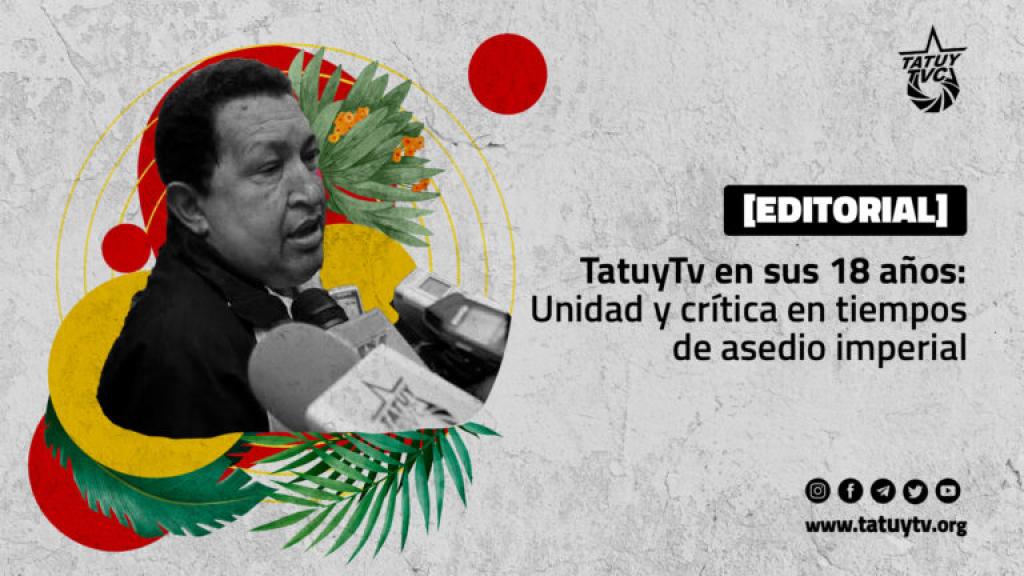
Tatuy TV graphic 18 years

First published in Spanish at TatuyTV. Translation by Federico Fuentes for LINKS International Journal of Socialist Renewal.

Tatuy Community Television celebrates its 18th anniversary on August 31. This editorial recalls the ongoing relevance of our mission, and reaffirms the commitment and struggle that drives us in a world so full of challenges.

The genocide of our times

It is almost impossible to begin an analysis without thinking about Palestine. For almost two years, the State of Israel has perpetrated an incessant genocide against the Palestinian people, with levels of cruelty that were thought impossible.

Under helpless or complicit gazes, Palestinian families have suffered war crimes, deliberate starvation, and endless attacks against their humanity. Their resistance and resilience continues to inspire us, but there are many signs that the situation will continue to worsen.

For decades, Palestine, and Gaza in particular, have done us the “favour” of exposing and unmasking multilateralism. The United Nations is nothing more than an empty shell of good intentions, without the slightest capacity to stop the daily deaths of hundreds of children while diplomats cling to the ridiculous two-state solution.

The few who have consistently defended the Palestinian people have paid a high price for their stance. Globally, pro-Palestinian actions are multiplying in opposition to governments’ complicity, mainly Western ones. But the political cost is not yet high enough to provoke more than symbolic reactions.

Here, as in many other cases, the example of dignity set by Commandante Hugo Chávez stands out, breaking relations with Israel because one must act on principles, not only on interests.

The current period is marked by conflict on a global scale, with a declining empire clinging to its destructive hegemony. In this context, there is no shortage of prophets praising the virtues of multipolarity, especially through BRICS. But the conflict takes place within the framework of capitalism, and in the absence of any real alternatives. In the end, the price is paid by the peoples of the Global South.

Venezuela and the blockade

“Zooming in” on our country, reality continues to be overdetermined by the US imperialist blockade. More than 10 years have passed since the infamous “Obama Decree” [declaring Venezuela an “unusual and extraordinary threat”]. That represents a decade of being bombarded with unilateral coercive measures [sanctions] designed to suffocate our country.

The first thing to say is that the sanctions have not achieved the desired “regime change.” At the macroeconomic level, Venezuela is set for its fifth consecutive year of economic growth. However, the economy is nearly three times smaller than in 2014.

The first eight months of the new Trump administration have been a roller coaster ride with an almost schizophrenic policy toward Venezuela. During that time, for example, Chevron’s license has been ratified, suspended, extended, withdrawn, and then changed. Sanctions should be seen as a policy that is here to stay, but adjusted to [US] interests at any particular time. Iran is a clear example of this, having been subject to sanctions for more than four decades.

At the same time, the most hawkish factions in Washington have rehashed their “narco-terrorism” narrative to justify a military deployment on Venezuela’s borders. While the most reactionary elements of the [Venezuelan] opposition dream of an invasion of their homeland, these actions should be seen as a pressure tactic, without underestimating the risk.

Similar situations occurred in 2019 (with tensions on the border with Colombia) and 2020 (with a similar deployment in the Caribbean). Today there is added tensions in the Essequibo, as well as the servile attitude of several governments in the region, which could serve as a potential source of provocation. Our call is to not lose sight of the historic and strategic enemy, but to keep thinking about the best ways to resist, build solidarity, and defend sovereignty.

Internal contradictions

Any revolutionary process is plagued by contradictions, even more so when faced with a permanent imperialist blockade. But ignoring these contradictions, or presenting them as if they were advances, is not the solution.

In Venezuela, the “cost” of the sanctions has been paid by the vast majority, the ordinary people. Purchasing power has vanished, migration has fractured families, and horizons have been trampled by the struggle to survive.

No one doubts the seriousness of the attacks and their impact on the economy, but responses need to be analysed and debated. The national government’s reaction has been to constantly offer concessions and benefits to private capital, both domestic and foreign, in the hope that this will stimulate investment to get us out of the crisis.

Whether due to the sanctions, the parasitic nature of Venezuelan capitalists or some other reason, these investments have been slow to arrive. Meanwhile, opportunities abound to extract profits under opaque “strategic alliances.” In many cases, the result is more short-term depredation, with dire long-term consequences for the people.

The danger is that the seemingly “exceptional” will become the new “normal”. That wages will be relegated to history, replaced by bonos [non-salary benefits known as bonuses] that allow workers to survive but destroy decades of labour gains. That the state will continue gradually withdrawing from strategic sectors, including oil. Resisting the blockade, in our case, is not simply about preserving political power, but maintaining a horizon consistent with the revolutionary project.

Loyalty and criticism

Having assessed the international and domestic context, it is fair to ask: what role should organisations such as TatuyTV play?

Ultimately, the answer is quite simple: reaffirm who we are. We are Chavistas. We are Bolivarians. We believe that imperialism is unacceptable. We believe that socialism is a strategic horizon more relevant today than yesterday.

We do not have a recipe, but we are deeply convinced that the solution lies in the organised people, in popular power. There is no shortage of speeches by Commandante Chávez explaining that we cannot build socialism with the blunt weapons of capitalism. There is no lack of examples of communes and other types of popular organisations that, even in the worst circumstances, find solutions by prioritising the common good.

Debate and criticism are fundamental on the left and among revolutionaries. Criticism is not about being right on social media, about offending, delegitimising or even criminalising person (or organisation) X or Y. It is a mechanism for questioning reality on the basis of certain principles, in order to then take collective action.

In this sense, we believe that closing down spaces for debate and silencing critical voices is as dangerous as it is anti-revolutionary. Only by upholding these practices [of debate and criticism] can we guarantee the possibility of unity, of joining forces to defend the homeland and the process. Responding to dissent by casting suspicion or criminalising the messenger undermines the foundations of the process, creating a complicit silence within which the real traitors and opportunists have free rein.

As for TatuyTV, our agenda is defined by its militants and no one else, under the principles we have built over these 18 years of struggle in defence of the Bolivarian Revolution. The organisation has never received funding from foreign organisations. In fact, we spend much of our time performing miracles to sustain our militancy with almost no resources, in the same situation as the working class.

Those who fight

So, returning to the question, we reaffirm what we have always been. Our role is to stand alongside the people who fight, who denounce, who organise and who do not give up in the face of exploitation and oppression.

We have consistently done so throughout our 18 years of existence, with dozens of committed men and women participating in TatuyTV. We have done everything, from traveling film forums to videos for social media, as well as countless training sessions with various grassroots organisations, but our mission has not changed. That is why, in the face of all the challenges, we are still here.

From our modest media trench, we will continue to raise awareness about the genocide in Palestine. We will continue to collaborate with communes and other organisations in training processes. We will continue to document the advances and contradictions inherent in a revolutionary process under siege. We will continue to defend the thinking and actions of Commander Chávez. We will not lose sight of the historic enemy, but neither will we forget the socialist horizon along the way.

Cuba: The Communist Party shows no signs of life

PCC graphic La Joven

First published in Spanish at La Joven Cuba on July 8. Translation and endnotes by LINKS International Journal of Socialist Renewal.

Judging by the press accounts of the 10th Plenary Session of the Central Committee, the Partido Comunista de Cuba (Cuban Communist Party, PCC) seems to live more in another country than in the Cuba of 2025. While public discontent is growing and material conditions continue to deteriorate, the country’s highest political authorities gather without live broadcasts of their debates, in a concert of unanimous opinions and without displaying a proper sense of urgency. Instead of being a forum for deliberation, the Plenary Session seems to be more like a symbolic reaffirmation rather than a mechanism for reaching agreement on public policies in an increasingly adverse environment.

The session of the Central Committee that took place on July 4–5 offered the party leadership an opportunity to frankly acknowledge the scale of the current crisis. But it failed to do so. In spite of the country’s economic collapse, widespread social unrest, and a loss of confidence in the official rhetoric, the party — while superficially acknowledging some of these problems — continues to complacently look inward. Insufficiently critical of itself, it is trapped in its own formulas and unwilling to undertake structural changes.

Even so, there is still time. Instead of retreating into isolation, the party could choose another path, that of engaging in real politics. It could reclaim its vocation to represent, to engage in dialogue, and to persuade. But at this critical juncture, what is impossible to ignore is that it has chosen not to do so. Even worse, it continues to promote a discourse that divides Cubans into patriots and enemies, showing neither the ability nor an interest in governing on behalf of all Cubans. That is the image that its critics have historically sought to portray of it. The party now deliberately reinforces their arguments.

For decades, the party’s authority rested on a peculiar balance: it was neither truly democratic nor was it entirely illegitimate. Some of its legitimacy stemmed from tangible achievements in healthcare, education and equality, but also from its outright opposition to an external enemy with little moral standing in the region: the United States.

Over time, that relationship has evolved. The Special Period1 marked a profound fracture. Even so, some of these social guarantees were maintained. But after Fidel Castro left the scene — first due to illness and later his death2 — the party was left without its central figure. Since then, the gap between official rhetoric and everyday life has become impossible to hide.

Today, fewer and fewer Cubans believe in the revolutionary epic. The party no longer represents a promise of the future. In fact, quite the opposite; for many, it is now an obstacle to achieving it. And that discredit is not solely the result of the US blockade and the international context. It is the direct consequence of a chain of clumsy decisions by the leadership, an inability to listen, and a systematic denial of the signs of wear and tear.

The most radical political transformation in Cuba has occurred not within the state’s structures but in the thinking of its people. Exhaustion, frustration, and mass emigration are symptoms of a rupture that has already taken place.

The party has lost its monopoly on hope. Its narrative no longer defines the present, let alone the future. And the most serious thing is that it seems to be unaware of this. Having inherited a political culture that punishes internal criticism, it has fallen into a dynamic of institutional self-deception, masking problems with euphemisms and always claiming that solutions are “underway.”

The situation is so dire that, in certain areas of the country, the state has retreated to the point that churches and religious communities, previously marginalised or under surveillance, now fill the void by listening, assisting and providing meaning to people. In many cases these institutions maintain conservative agendas that are at odds with the Cuban revolutionary ideal of social progress and rights. In distant places where the party can no longer reach, other actors are taking its place, offering what the political system can no longer provide: a vision of life and the resources to achieve it.

The fact that the party has lost legitimacy does not mean that the opposition is ready, united or deserves to replace it. Most of the dissidents still lack a clear strategy. Many seem more focused on hoping that the system will collapse than on building viable alternatives.

Government repression is not necessarily the main reason for the opposition’s weakness. There is inertia among the forces opposed to the PCC. Inside Cuba, the opposition can only increase its ranks when popular desperation grows. Outside the country, the most visible exile community continues to be dominated by a political class with dubious democratic credentials and a long history of aligning itself with authoritarian agendas and disrespecting national sovereignty.

Rather than a democratic project, much of the opposition offers nostalgia and revenge. And so the political vacuum grows.

In his time, Fidel Castro embodied charismatic and foundational leadership. Now, nearly a decade after his death, his absence leaves a model dependent on the leader, but without a leadership able to sustain it.

The new generation of leaders is unable to mobilise or inspire people. They rely on repression to accomplish what they cannot through politics. Raúl Castro, though less charismatic [than Fidel], at least made an effort to carry out some reforms. But his legacy was stifled by the inertia of the system, resistance from his peers, and international developments beyond his control.

José Ramón Machado Ventura is one figure who is closely associated with the problem of stagnation. He was in charge of the party’s Organisation Department for many years, and so he directed its cadre development policy. Many blame his influence for having left the organisation devoid of meaningful renewal, isolated from Cuban society, and incapable of outreach. Still, it is hard to judge his role fairly. We may never know how many decisions were his own and how often he carried out the wishes of others.

However cynical one may be about the organisation, it is only fair to recognise that many of its grassroots members sacrifice a great deal when they carry out their duties. I prefer not to speculate about [the conduct of] the top leadership. However, at the mid- and rank-and-file level, working within the party structure is a thankless vocation, sustained only by the personal conviction of these militants. Yet all that sacrifice is in vain if those who lead the organisation are not able to make it even somewhat competitive against other political options.

The outcome of this meeting leaves the impression of an exhausted party that is unwilling to make the necessary and urgent decisions that could save it in the eyes of its own people.

In a country that is experiencing a huge brain drain, the PCC allows itself the luxury of assigning René González3 to lead an aviation club (González led Cuba’s last successful symbolic mass solidarity campaign, spontaneously filling the country with yellow ribbons); keeping Cristina Escobar4 — an ideal spokesperson for the Presidency — absent from the mass media; leaving a magazine like Alma Mater5 — which had managed to capture the attention of young people like no other state-run media outlet — practically without an editorial team after the forced departure of its director Armando Franco6; and a Ministry of Economy that, since the departure of José Luis Rodríguez7 has not been led by an economic expert, and which continues to ignore the steady flow of proposals that professional economists have been making.

Time is moving faster than the structures or the thinking of those in charge. Technology also threatens to leave the Party behind. VPNs are already a part of everyday digital life on the island, but satellite networks such as Starlink are going to render current censorship mechanisms increasingly useless. Meanwhile, generative artificial intelligence will be able to create fake news, simulate protests, and publish apocryphal speeches that generate real reactions among the population.

And in the near future, generative artificial intelligence will be able to segment moods, manipulate public discourse and orchestrate campaigns from afar with surgical precision. For a party without a coherent communication strategy or capacity to adapt, this is not a risk — it is a death sentence.

With the 10th Plenary Session just concluded, it is clear that there is no major shift on the horizon. Even so, a (narrow but real) window remains open for the party to reconnect with society. This is about more than economic reforms. It is about returning to functioning politically. Representing, listening and competing.

The plenary session reveals the exhaustion of the current model. These days most political parties around the world flaunt their internal differences as proof of their democratic vitality. Meanwhile, the PCC — anchored in a false sense of strength — prefers to hide its debates and present unanimity as unity. The state-run media coverage of the gathering featured the usual uniformly raised hands rather than a debate on the country’s real problems. The contrast between this echo chamber and an increasingly diverse and outraged civil society speaks volumes. The result is a poorly staged and (badly) rehearsed performance, not true deliberation.

According to the press, there was talk of “improving” the cadre development policy. But reality requires transformation, not marginal adjustments. The accountability report, described as “critical and grounded in reality,” was instead a collection of euphemisms. Mistakes were not acknowledged. Instead, we heard of “undesired rhythms” or a “lack of comprehensiveness.”

The closing speech by President Miguel Díaz-Canel Bermúdez met the party’s standards. Had it been delivered a decade ago, it might have even been considered bold. But in 2025, it falls far short of what is needed. And this reveals another key problem: that Raúl Castro, previously, and Díaz-Canel now, remain the most critical voices within the party leadership speaks volumes about the conservative dynamic that prevails within the organisation. The fact that no other official dares to point out the country’s problems more clearly than the top leader does reveals a structure that is more concerned about obedience than about insight.

In his speech, the president appeared to acknowledge the severity of the situation. But in Cuba those who hold official positions are not the only ones who wield power. With entities like GAESA8 operating in parallel and the dynamics of power groups that are invisible, the president’s scope for action is, at best, uncertain.

Meanwhile, daily life is becoming unbearable. Even party members are irritated by the blackouts. The government has failed. It cannot find solutions to the country’s problems. Nor can it explain clearly the role that US economic sanctions play in the current crisis using solid arguments that do not sound like excuses.

The lack of empathy and self-criticism, coupled with the failure to recognise the gravity of the situation, are also counterrevolutionary traits, because they contradict the founding pact of the revolutionary project, which is to stand with the Cuban people. And most tragically, even if the party wanted to change, it does not seem to know how to do it. It does not know what it should change or where to start.

Postscript

It is too late for the party to build the society that it once dreamed of. The context has changed and the people are too disillusioned. Right-wing ideas are gaining ground in hearts and minds, not because they are correct, but because of the void left by a party that claims to be the vanguard of the left, a party that in fact lost its drive to change what should have been changed long ago. Although the PCC remains in power, Cubans are now living in a post-revolutionary era. Managing the changes that are taking place, to minimise damage and regain some credibility would require a radically different party than the one that we saw at this meeting.

And that is a tragedy. Many people shed their blood and many others are still sacrificing their lives today, for a revolutionary dream that is being squandered by an apparatus that is no longer up to the task. History reminds us of what happened in the Soviet Union. There, it was not the people who failed, but their leaders. When people have a voice, they are usually right.

If the party does not change, history will not absolve it. It will simply stop judging it. Because the party will no longer matter. Neither as a power nor as a symbol.

  • 1

    Special Period. The decline and fall of the Soviet Union and its eastern European allies had a devastating impact on Cuba. Almost overnight the country lost most of its trading partners and a reliable supply of fuel and other necessities on favourable terms. The Cuban government declared a state of emergency, a “Special Period during peacetime” and began reorienting the economy and social measures toward survival and eventual recovery. The deep crisis lasted from 1990 to 1999, approximately. It left a deep mark on Cuban society.

  • 2

    Fidel Castro Ruz. In 2006 a severe illness made it impossible for Fidel Castro to continue leading the country. His official responsibilities were assigned to Raúl Castro on a provisional basis. In February 2008 Raúl was duly elected president. He continued in this role until April 2018, when Miguel Díaz-Canel was elected to the post. Fidel Castro died on Nov. 25, 2016.

  • 3

    René González Sehwerert. In February 2015 President Raúl Castro awarded the Medal of Hero of the Republic of Cuba to René González and the four other members of the Cuban Five group, in recognition of their contribution to the security of Cuba and their loyalty to the revolution. For more information about René González and the Cuban Five, watch this Democracy Now! presentation, “Exclusive Interview with Freed Cuban 5 Member René González in Havana”.

  • 4

    Cristina Escobar Domínguez was at one time a prominent, widely followed media personality on Cuban TV, often commenting on US-Cuban relations.

  • 5

    Alma Mater was founded in November 1922 by the revolutionary student leader Julio Antonio Mella. It is the oldest continuously published youth magazine in Cuba. It is also the official organ of the Cuban national student federation, the Federación Estudiantil Universitaria. Alma Mater is primarily written for Cuban university students but in its prime its influence has extended to other sectors of Cuban society.

  • 6

    Armando Franco Senén was appointed as director of Alma Mater in December 2019. Under his direction and with the active participation of a team of young journalists, the magazine adopted an open-minded editorial policy that distinguished it from the staid and dogmatic policy of other state-sanctioned publications. As Harold Cardenas notes, many young people welcomed the fresh approach.

    On April 26, 2022, Alma Mater announced on its Facebook page that Franco had been “released” from his position as director, following a decision of the National Bureau of the Union of Young Communists (UJC). No other explanation was provided. The decision was widely seen as a manifestation of political censorship. Prominent media and cultural figures such as Silvio Rodríguez voiced their concern. The editor-in-chief of the magazine, Yoandry Ávila Guerra, resigned. Other journalists quietly left the publication.
     

  • 7

    José Luis Rodríguez García was Cuba’s Minister of Economy and Planning from 1995 to 1998.

  • 8

    GAESA, the Grupo de Administración Empresarial S.A., is a Cuban military-led enterprise with vast holdings in economic sectors such as tourism, financial investment, import and export of goods, and remittances from abroad. GAESA’s portfolio includes businesses that are incorporated in Panama and other locations to avoid restrictions of U.S. law that limit Cuba’s control of the country’s assets. Details of GAESA’s operations and holdings are generally not publicly available, to shield them from U.S. sanctions.