Monday, December 01, 2025

What Right Does Japan Have to Pronounce about Taiwan?


Chinese chairman Xi Jinping met with Japanese prime minister Sanae Takaichi, at her request in Gyeongju, on 31 October, in the Republic of Korea.

The recently ensconced Japanese prime minister Sanae Takaichi began her early leadership with a major diplomatic gaffe when she said a Chinese attack on Taiwan could constitute “a survival-threatening situation” for Japan requiring the use of force.

Beijing is apoplectic. Fu Cong, Beijing’s ambassador to the UN, accused Takaichi of committing “a grave violation of international law.”

Chinese Foreign Minister Wang Yi said, “It is shocking that Japan’s current leaders have publicly sent the wrong signal of attempting military intervention in the Taiwan issue, said things they shouldn’t have said, and crossed a red line that should not have been touched.”

Takaichi seems oblivious of Article 9 of Japan’s constitution which renounces war and forbids Japan from using force to settle international disputes.

Moreover, two of the principles agreed to in the 1972 Japan-China Joint Communiqué read:

2. The Government of Japan recognizes the Government of the People’s Republic of China as the sole legal Government of China.

3. The Government of the People’s Republic of China reiterates that Taiwan is an inalienable part of the territory of the People’s Republic of China. The Government of Japan fully understands and respects this stand of the Government of the People’s Republic of China, and it firmly maintains its stand under Article 8 of the Potsdam Proclamation.

Not only is Takaichi oblivious of the country’s constitution and the joint communiqué, she is also seemingly oblivious of Japanese history.

A modernized and expansionist Japan went to war and defeated the Qing dynasty. One requirement of the Treaty of Shimonoseki, 1895, was that China cede Taiwan to Japan.

Japan’s further expansionism and militarism led to its defeat after WWII. Thus, Japan would have to relinquish ill-gotten territories. The Cairo Declaration of 1943 states:

[A]ll the territories Japan has stolen from the Chinese, such as Manchuria, Formosa, and The Pescadores, shall be restored to the Republic of China.

This is affirmed by the Potsdam Proclamation of 1945:

The terms of the Cairo Declaration shall be carried out and Japanese sovereignty shall be limited to the islands of Honshu, Hokkaido, Kyushu, Shikoku and such minor islands as we determine.

The major historical documents clearly point to Chinese sovereignty over Taiwan.

Despite China having asked for clarification and a retraction of Takaichi’s erroneous remarks, no such clarification or retraction has been forthcoming.

Why would Takaichi even make such ignorant remarks? What did she hope to gain? Assuredly not an economic rupture of the economically challenged Japan from China.

A Thai news website headlined “Japan hit hard as China imposes tourism sanctions amid diplomatic tensions.”

China’s travel sanctions following diplomatic tensions with Japan have triggered mass flight cancellations, severe tourism losses and a projected ¥2.2tn annual economic impact.

Japan has expressed remorse for its WWII atrocities, but no official government apology has ever been issued. Meanwhile, Japanese politicians, including Takaichi (although she skipped such a visit during the 2025 autumn festival) have continued to visit the Yasukuni Shrine, said to house the kami of Japanese dead including class-A war criminals eliciting anger among countries violated by Japan during WWII.

Among the heinous crimes are the recruitment of ianfu (comfort women; i.e., sex slaves for Japanese military); the Rape of Nanking, the gore of Japanese militarism archived in the the Memorial Hall of the Victims in Nanjing, China; and the gruesome experimentation on humans exhibited at the Unit 731 Museum in Harbin, China.


Evidence of Japanese atrocities during the Rape of Nanking in a trailer for 2025 movie Dead to Rights

Japan has much to apologize and atone for. Yet Takaichi’s remarks indicate an apology and atonement is not soon forthcoming from Japan. This reflects poorly on the loser of WWII, a nation still occupied by the US military, a nation considered by many a vassal state — also echoed by US media.

Hanging onto American apron strings is unlikely to resurrect the Japanese economy, whereas entering into a mutually respectful relationship with the nearby soaring economy of China should bode well for a future prosperous Japan.

However, the nascence of a sovereign Japan starts with a sincere apology to all those nations and peoples Japan violated during WWII.

Kim Petersen is an independent writer. He can be emailed at: kimohp at gmail.com. Read other articles by Kim.


Trump Commands Venezuela’s Heavens Closed


US President Trump ordered the airspace above and surrounding Venezuela “closed in its entirety” on November 29.

Yet the US has as much legal and moral authority to shutter the skies over Venezuela as the Venezuelans have to close the putting greens at Mar-a-Lago. Yes, that’s ridiculous – but not any more so than Washington’s phony pretext of drug interdiction for their deadly regime-change offensive against Venezuela.

To date, the Yankee military has murdered over 80 people in alleged “drug boats” in the southern Caribbean and eastern Pacific but has yet to confiscate a single milligram of narcotics from Venezuela. The Venezuelan authorities, in contrast, have seized 64 tons of cocaine this year that were being transited through their country and have done so without killing a single person.

However, Venezuela’s interdiction pales in comparison to the 400 tons of cocaine smuggled into the US enabled by one Juan Orlando Hernández, according to the US Department of Justice. Hernández is a former Honduran president and right-wing Washington ally. He was convicted in a US jury trial for running his country like a narco state, taking bribes from Sinaloa Cartel kingpin Joaquín “El Chapo” Guzmán.

The day before Trump “closed” Venezuela’s airspace as part of his so-called “crackdown on drug cartels,” he announced his intention to pardon convicted cartel-enabler Hernández, who is serving a 45-year sentence at a penitentiary in West Virginia.

If Washington succeeds in blocking air travel to Venezuela, the action has an added cruelty. It coincides with the winter holidays, when overseas Venezuelans would return home to visit family. Many of these migrants are economic refugees, driven from their homeland largely by the US’s unilateral coercive measures designed to asphyxiate Venezuela’s economy.

The CEO of America’s empire has ambitions for vast powers and now claims dominion over the firmaments. Yet the US Congress has not approved his no-fly zone, nor has any international authority such as the United Nations – and certainly not the host country, which under international law has sole control over its airspace. Even David Deptula, the retired general who enforced a no-fly zone in Iraq, questioned Trump’s declaration.

Such an act constitutes a blockade and, as such, is considered an act of war; more precisely, an escalation of an ongoing hybrid war against Venezuela.

The offensive has taken many forms – unilateral economic sanctionscoup and assassination attempts, a dual governmentdiplomatic intrigueelection interference, an astroturf opposition, and a psychological pressure campaign by compliant corporate press. The hybrid war is as deadly as a hot war, having taken over 100,000 lives by denying essential food, medicines, and fuel to the most vulnerable, according to a United Nations special rapporteur.

But Washington’s quarter-century siege of Venezuela has “failed” in its objective of regime-change. For the imperial hegemon, the success of the Venezuelan resistance has led it to push its campaign to the brink of military invasion with the no-fly zone declaration serving as an ominous harbinger.

The political leadership of Venezuela’s Bolivarian Revolution includes President Nicolás Maduro, Interior Minister Diosdado Cabello, and Defense Minister Vladimir Padrino López. These officials are distasteful to Trump and Rubio. The US State Department State Department designated them as leaders of a “foreign terrorist organization,” the Cartel de los Soles.

But then again, the current US president is distasteful to 60% of his constituents. And the so-called Cartel de los Soles doesn’t exist.

In 2002, the US backed an abortive coup that attempted to overthrow then Venezuelan President Hugo Chávez, who was restored to power by a spontaneous uprising of the people. That event had a century-old precedent, as Venezuelan-Canadian sociologist María Paez Victor recalls:

In 1902, English and German gunboats attacked Venezuela and their marines invaded. The Europeans were demanding payment of outrageous loans their banks had forced upon the country. The president, Cypriano Castro, had no money and hardly any armed forces. But he appealed directly to the people in a Proclamation that became a historic monument to the love of Venezuelans for their country.

Its opening sentence is a call to defend the land from invaders: “Venezuelans, the insolent foot of the Stranger has profaned the sacred soil of our Homeland.”

People rushed with whatever arms they could lay their hands on. Even our newly sainted doctor, José Gregorio Hernández, a veritable man of peace, rushed to give aid to the wounded. The foreign marines were routed – they had never expected such a firm, unbeatable stand. They thought it would be a piece of cake; they were deadly wrong.

Washington now stands at a crossroads of its own making. Having failed to crush Venezuela through sanctions, coups, diplomatic isolation, economic strangulation, and psychological warfare, it now toys with measures that violate the Zone of Peace, proclaimed by the 33 members nations of the Community of Latin American and Caribbean States (CELAC).

The US attempt to impose a no-fly zone exposes a desperate imperial drive for domination. The Bolivarian Revolution, having endured more than 25 years of siege, remains rooted in the same collective resolve that once repelled foreign gunboats and reversed the 2002 coup. Should Washington escalate further, it will not confront a compliant colony, but a nation prepared to defend its airspace, institutions, and sovereignty – joined by a genuine international community in solidarity.

Meanwhile CNN reports “massive disapproval” of Trump’s Venezuela policy, and the Simón Bolívar Airport is operating normally.

Roger D. Harris was an international observer for Venezuela’s 2024 presidential election. He is with the US Peace Council and the Task Force on the AmericasRead other articles by Roger.

Soldiers of Solidarity — Part III

No Truth in the World


Our soldiers did not go to Africa to conquer, but to liberate.” — Fidel Castro1

Read Part I and Part II.


In late 1975, as Angola prepared to cast off Portuguese rule, its fragile independence was threatened by apartheid South Africa’s armies and CIA‑backed mercenaries. Into this storm stepped Cuba. Within weeks, Havana launched Operación Carlota, named after an enslaved woman who led a rebellion in Cuba in 1843. Though Carlota was killed, her spirit lived on — carried across the Atlantic as a symbol of resistance.2

Cuba’s intervention was not driven by material gain. Thousands of Cuban lives were lost, yet Havana demanded no oil, diamonds, or gold. Fidel Castro made clear the mission’s purpose: “We are fulfilling our duty to humanity. We are not seeking oil, diamonds, or gold. We are seeking justice.”3

Historians have emphasized the significance of this choice. Piero Gleijses, a leading scholar of the conflict, concluded that “Cuba’s role in Angola changed the course of African history.”4 His research shows how Cuban solidarity altered the balance of power in southern Africa.

Nelson Mandela himself recognized this sacrifice. Speaking in Havana in 1991, he declared: “The defeat of the apartheid army at Cuito Cuanavale was a turning point for the liberation of our continent — and of my people — from the scourge of apartheid.”5

Over sixteen years, more than 337,000 Cuban soldiers and advisors served in Africa. They fought alongside liberation movements in Guinea‑Bissau, Mozambique, and Namibia, living among the people and sharing their hardships.67 Their presence offered protection against colonial aggression and apartheid expansion.

The decisive moment came at Cuito Cuanavale in 1987–1988. Cuban, Angolan, and Namibian forces halted South Africa’s advance in what became the largest battle on African soil since World War II.8 The confrontation forced Pretoria to the negotiating table, opening the road to Namibian independence and accelerating the demise of apartheid. Vijay Prashad later summarized: “Cuba’s role in Angola changed the course of African history.”9

By the early 1990s, apartheid was crumbling, Namibia stood free, and Angola had preserved its sovereignty. Cuba’s soldiers had acted as midwives of freedom, their sacrifice woven into the liberation of nations.10

The legacy of this internationalist mission is not carved in monuments but written in the independence of peoples. From Carlota’s rebellion in Cuba to the victory at Cuito Cuanavale, the thread of solidarity remained unbroken. Cuba’s “young flowers” — its soldiers of conscience — shed their blood far from Havana, leaving behind a river of justice that nourished Africa’s liberation.

ENDNOTES:

  • 1
    Fidel Castro. “Speech in Havana on Angola.” December 1975. Transcript in Granma archives; reprinted in Pathfinder Press collections.
  • 2
    “Operation Carlota.” Radio Grito de Baire archives, 1975.
  • 3
    Fidel Castro. Speech on Cuba’s Duty to Humanity. Havana, 1980. Transcript in Pathfinder Press collections.
  • 4
    Piero Gleijses. Visions of Freedom: Havana, Washington, Pretoria, and the Struggle for Southern Africa, 1976–1991. Chapel Hill: University of North Carolina Press, 2013.
  • 5
    Nelson Mandela. Speech Recognizing Cuba’s Role at Cuito Cuanavale. Havana, July 26, 1991. In How Far We Slaves Have Come, by Nelson Mandela and Fidel Castro. New York: Pathfinder Press, 1992.
  • 6
    See note 3
  • 7
    Edward George. The Cuban Intervention in Angola, 1965–1991: From Che Guevara to Cuito Cuanavale. London: Routledge, 2004.
  • 8
    “Battle of Cuito Cuanavale.” South African History Online.
  • 9
    Vijay Prashad. “Cuba’s Role in Angola Changed the Course of African History.” Jacobin, March 19, 2021.
  • 10
    Cuban Intervention in Angola.” Wikipedia. Last updated 2025.
Sammy Attoh is a Human Rights Coordinator, poet, and public writer. A member of The Riverside Church in New York City and The New York State Chaplains Group, he advocates for spiritual renewal and systemic justice. Originally from Ghana, his work draws from ancestral wisdom to explore the sacred ties between people, planet, and posterity. Read other articles by Sammy.

As Public Support for ICE Drops, Women’s March WIN Launches Campaign Urging Agents to Walk Away


Stop Ice Raids. #StopICERaids Info Hotline 646-290-8720. Families for Freedom. ICE-Free NYC. Source: ice raids https://palabrasderesistencia.tumblr.com/post/136541094769/as-ice-raids-targeting-people-who-entered-the-us

As the Trump administration enters its eleventh month pushing aggressive immigration crackdowns, public sentiment appears to be shifting. A new YouGov survey finds growing discomfort with the broad and aggressive methods being employed by the U.S. Immigrations and Customs Enforcement (ICE). According to the poll, a majority (53%) of Americans somewhat or strongly disapprove of how ICE is handling its job, while 39% approve of ICE.

YouGov’s Alexander Rosell Hayes noted that “About half of Americans say that ICE’s tactics are too forceful and are concerned that someone they know could be mistreated by ICE. One half or more of Americans think that ICE wrongfully arrests, deports, and uses unnecessary force against both U.S. citizens and immigrants. Americans are more likely to approve than to disapprove of protests against ICE.”

In recent months, ICE’s increasingly visible raids — including forced entries, collateral arrests, and detentions of families — have sparked demonstrations across the country. Independent voters, immigrant communities, and moderate or liberal-leaning respondents are expressing rising doubts about the administration’s escalated enforcement. A mix of nationalism fatigue, enforcement overreach, and growing public awareness of abuses appears to be weakening prior blanket support for ICE.

While ICE raids will no doubt continue, so will demonstrations against ICE, Women’s March / Women’s March WIN has come up with a new approach; one not aimed at policymakers, but aimed at the conscience of ICE agents. It recently launched a new ad campaign titled “What Will You Say?” that directly targets ICE agents and urges them to “walk away.”

The ad opens on a child greeting her father (an ICE agent) coming home from work, asking “Daddy, how was your day?” Then it cuts to disturbing images — forced-entry raids, families being detained, smashed windows, and similar enforcement scenes. The ad then asks: “What will you say when she asks about your day?”

The narrator warns that “a mask can’t hide you from your neighbors, your children, and God,” and tells ICE officers they can avoid “shame” by leaving the job before “the violence follows you home.”

The ad campaign is explicitly described by Women’s March WIN leadership (via a press release quoted in media coverage) as a conscious effort to counter ICE’s own recruitment pushes and to highlight what the group sees as the moral costs of enforcement.

The ads are airing across multiple channels and streaming platforms — including major news networks and streaming services — in selected markets (e.g. Charlotte, Palm Beach, Chicago).

Since at least 2017–2018, there has been a strong movement advocating for abolishing or radically reforming ICE — typically via protests, legislation, and public pressure. The Women’s March WIN campaign is different in that it targets agency personnel rather than just institutions or policies. Instead of only calling for abolition/de-funding or systemic change, it’s trying to persuade individual agents to leave — reframing the crisis as a moral and personal one, not just political or systemic.

This mirrors somewhat earlier efforts by another activist group, Never Again Action, which offered “career support services” to ICE agents wishing to quit — providing job-search guidance to make leaving the agency more feasible.

Whether this new moral-pressure campaign will persuade ICE agents to resign remains to be seen. But as public opinion increasingly sours on ICE’s tactics — including among some Hispanic voters who backed Trump in 2024 — the political stakes may grow. A question now is whether escalating enforcement will continue to push voters away from the GOP and toward the Democrats.

Bill Berkowitz is a longtime observer of the conservative movement. Read other articles by Bill.
Disability groups hail 'revolution' as France fully reimburses wheelchairs

France has introduced full reimbursement for all wheelchairs, ending what disability advocates long described as an “obstacle course” of partial funding and heavy out-of-pocket costs. The reform is expected to benefit more than a million users but has raised concerns about possible delays and bottlenecks.


Issued on: 01/12/2025 - RFI

Wheelchairs in France will be entirely reimbursed by the public health system from 1 December, 2025. A "first in Europe" according to President Emmanuel Macron. 
© Andersen Ross Photography Inc / Getty Images

From 1 December, France's national health insurance will cover 100 percent of the cost of wheelchairs for people with disabilities or older adults experiences loss of autonomy.

It delivers on a pledge by President Emmanuel Macron at the National Disability Conference in 2023.

“You called on me to tell me the sometimes exorbitant cost you have to pay. It was a huge injustice,” the president said in a video posted on Instagram on Sunday.

According to the presidency the reform is a first in Europe. It covers all wheelchairs adapted to disability-related needs (from birth, acquired or accident-related) or to loss of autonomy associated with ageing.

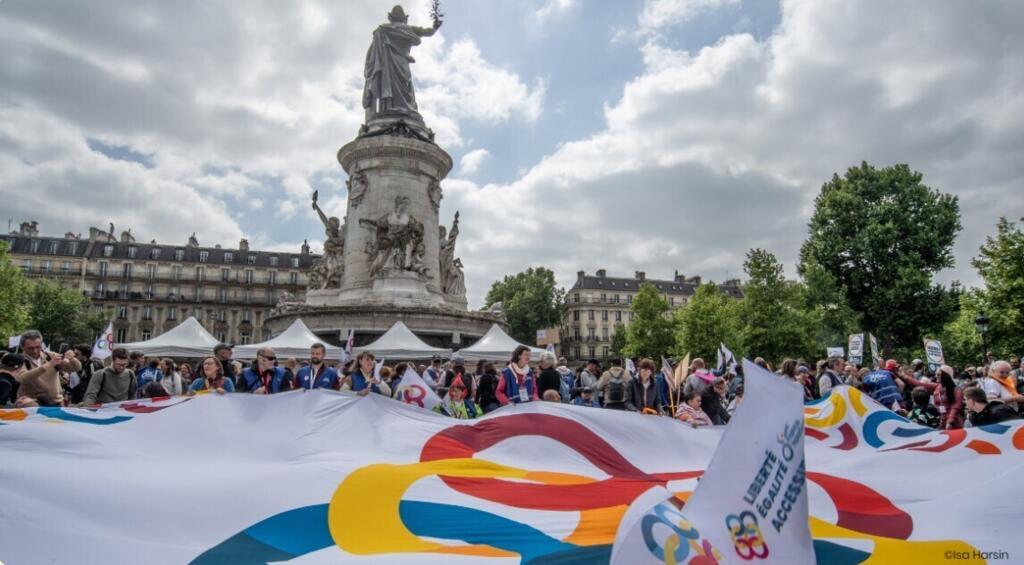
“It’s a really revolution for people's autonomy, you no longer have to advance a single euro," Pascale Ribes, head of APF France handicap, told RFI.


APF France Handicap has been campaigning for free access to wheelchairs for some 20 years. © Isa Harsin/APF France Handicap

Disability often 'rhymes with poverty'

Ribes has been campaigning for more than 20 years on the cost of wheelchairs.

Until now, reimbursement for the most advanced wheelchairs was extremely low. Active, lightweight models costing up to €10,000 were reimbursed at around €600, while complex electric chairs priced at €40,000 to €50,000 were capped at €5,200.

Users often had to seek top-ups from complementary insurers, departmental disability services, local authorities, associations, relatives or online fundraising campaigns.

Ribes notes that “disability too often rhymes with poverty”, forcing many people to scramble for funding or risk having to abandon essential equipment.

The new system simplifies and centralises the process: users receive a prescription from a doctor or a multidisciplinary team for complex cases, then contact a distributor who handles trials and submits a quote to national health insurance.

A 15-day “silence equals consent” rule – extended to two months for highly specific options – means the chair can then be provided without any advance payment or remaining charge.

According to the ministry responsible for people with disabilities, there are 1.1 million wheelchair users in France. Each year, 150,000 new wheelchairs are acquired.

The Elysée said the move “puts an end to an unjust and intolerable situation”, estimating annual costs could rise from €300 million to “€400 or 500 million”.


Risk of supply shortages


A new national classification imposes price caps across 17 categories, from €360 for standard chairs to €21,000 for electric vertical-standing models.

Early negotiations were “tough” and risked excluding certain models, said Mazhoura Ait Mebarek of the National Union of the Medical Technologies Industry (Snitem), but the sector has since adapted. By late November, more than 430 approval requests had been submitted, with around 120 still pending.

Providers warn, however, that parts of the reform may strain the system. Short-term rental, used for temporary mobility needs and around 500,000 chairs annually, will be restricted to six months, with weekly rates cut from €16 to €11, less than €4 of which will be reimbursed.

“The risk is that, in time, fewer providers will offer rentals because the activity is costly,” said Julia Crépin of the distributors’ union UNPDM.

Long-term rental for people whose conditions progress rapidly, and the refurbishment of second-hand chairs, will not be operational immediately.
Lack of specialists

Technical approvals for some models may also take longer than planned. “The objective will be achieved, but not necessarily by 1 December,” said Nathalie Creveux of UPSADI – a new trade union for small and medium-sized home healthcare providers.

But the biggest constraint could be the availability of specialists. Complex chairs must be prescribed jointly by rehabilitation doctors or assistive-device specialists and occupational or physiotherapists.

“We live in a country with 'medical deserts' at every level,” said Malika Boubékeur of APF France handicap, calling for a national map of qualified centres.

A monitoring committee led by disability minister Charlotte Parmentier-Lecocq will meet monthly to oversee implementation of the reform.

(with newswires)

French energy major sells stake in Nigerian exploration blocks to Chevron

French energy group TotalEnergies announced on Monday that it had signed an agreement to sell a 40-percent stake in two Nigerian offshore exploration licences to Star Deep Water Petroleum Limited, a subsidiary of US oil major Chevron.


Issued on: 01/12/2025 -RFI


View of a Total Nigeria offshore oil and gas production platform at Amenam in the Niger delta 18 May 2005 (illustration) AFP/ Pius Utomi Ekpei

The sale concerns the PPL 2000 and PPL 2001 exploration areas, located in the prolific West Delta basin and covering a combined 2,000 square kilometres.

TotalEnergies obtained the exploration rights in September after winning them in the 2024 licensing round organised by the Nigerian Upstream Petroleum Regulatory Commission.

Under the agreement, which remains subject to regulatory approval and customary conditions, TotalEnergies will retain a 40-percent stake and continue as operator of the two blocks.

Chevron, through its subsidiary, will hold 40 percent, while Nigerian partner South Atlantic Petroleum will maintain its existing 20 percent interest.

“This new joint venture reinforces TotalEnergies’ global offshore exploration collaboration with Chevron,” the French group said, recalling that it had taken a 25-percent stake earlier this year in a portfolio of Chevron-operated offshore exploration blocks in the United States.

Nicola Mavilla, TotalEnergies’ Senior Vice-President for Exploration, said the partnership “aims at derisking and developing new opportunities in Nigeria, in line with the objectives of the country”.

The company described the West Delta basin as a key region for expanding exploration activities in West Africa, where both TotalEnergies and Chevron have long-standing interests.

The agreement marks another step in TotalEnergies’ strategy to optimise its exploration portfolio and strengthen cooperation with major international players in frontier basins.

TotalEnergies and South Atlantic Petroleum had signed a production sharing contract for the two licences on 2 September, formalising rights that could pave the way for future discoveries in the deepwater zone.

The planned stake sale, once completed, will consolidate a trilateral partnership between French, American, and Nigerian energy players as the sector seeks to balance investment opportunities with regulatory and environmental considerations.

(With newswires)
VR headsets take war-scarred children to world away from Gaza

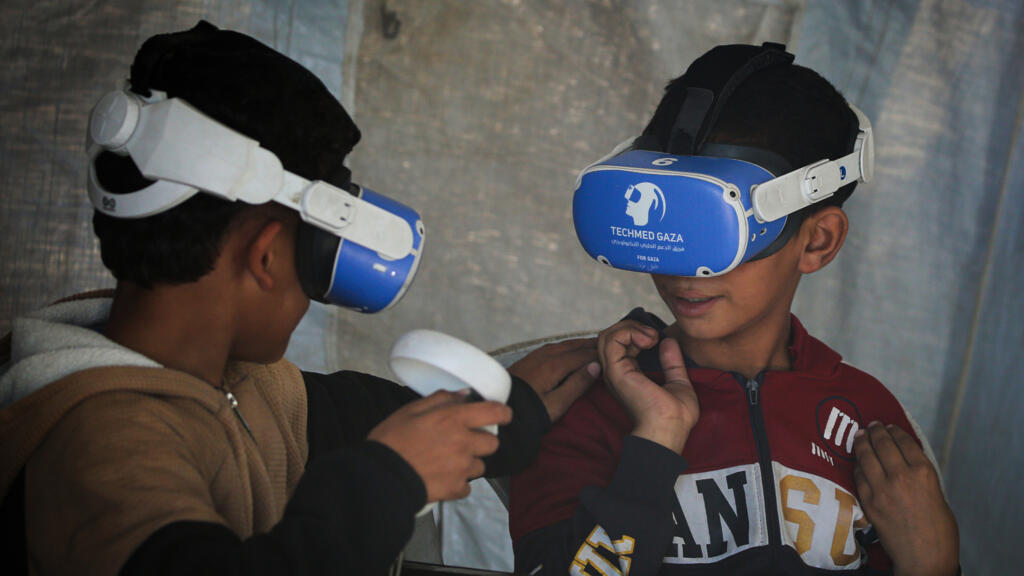
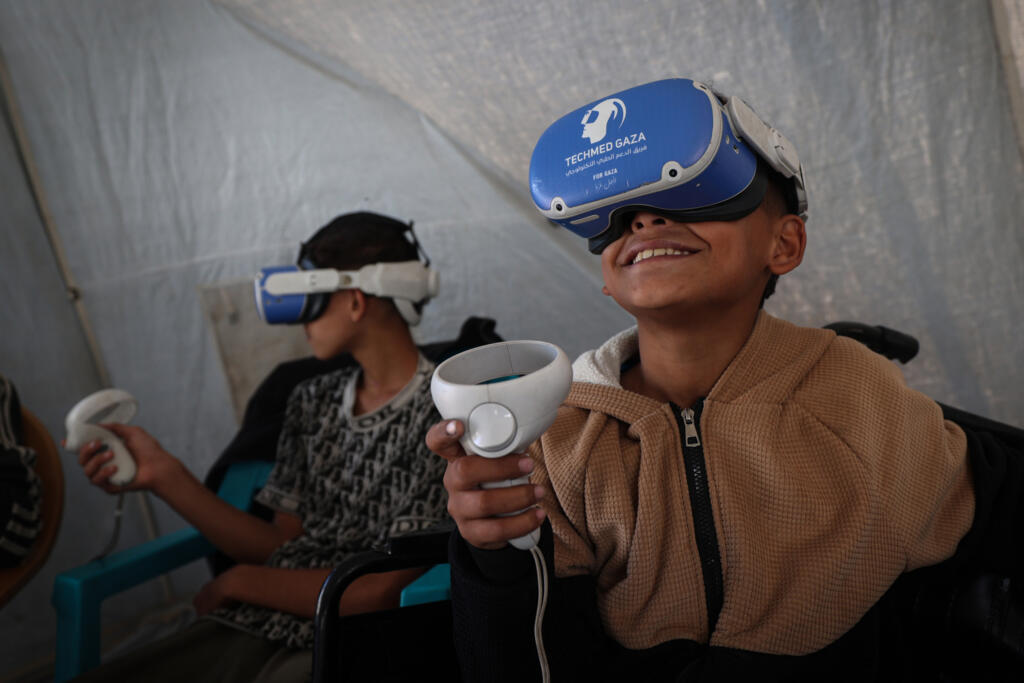
Al-Zawayda (Palestinian Territories) (AFP) – Children scarred by the war in Gaza are undergoing a therapy programme using virtual reality headsets that transport the youngsters to a world far away from the destruction around them.


Issued on: 02/12/2025 - RFI

Palestinian children using goggles and a joystick experience virtual reality as part of a therapy programme © Eyad Baba / AFP

The VR therapy is aimed at improving the children's psychological wellbeing, with operators saying it can achieve results more quickly than traditional therapy sessions.

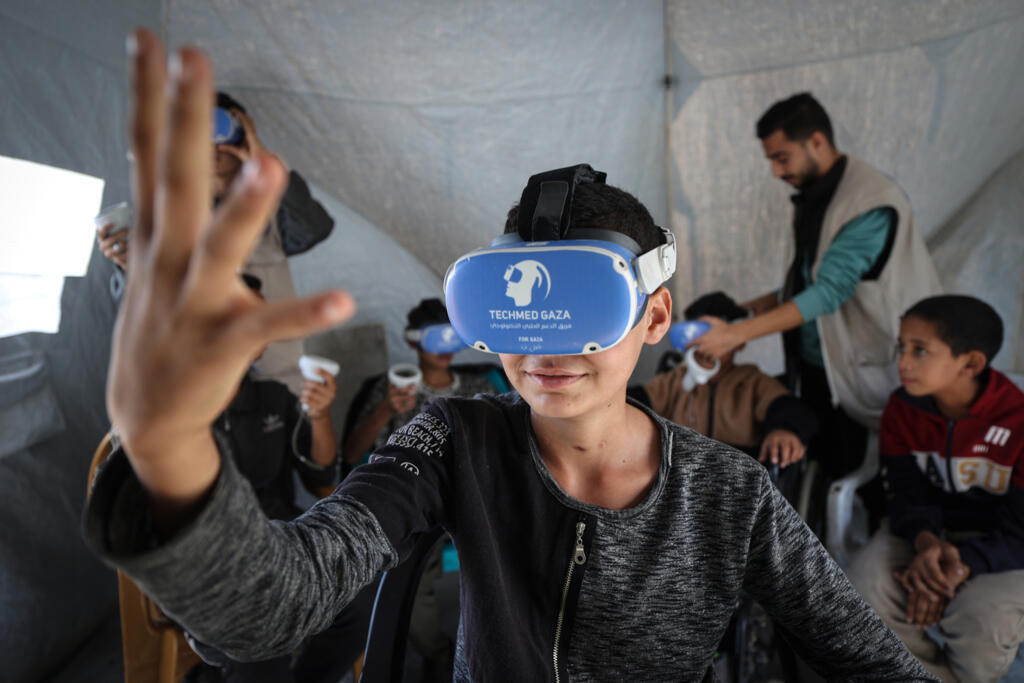
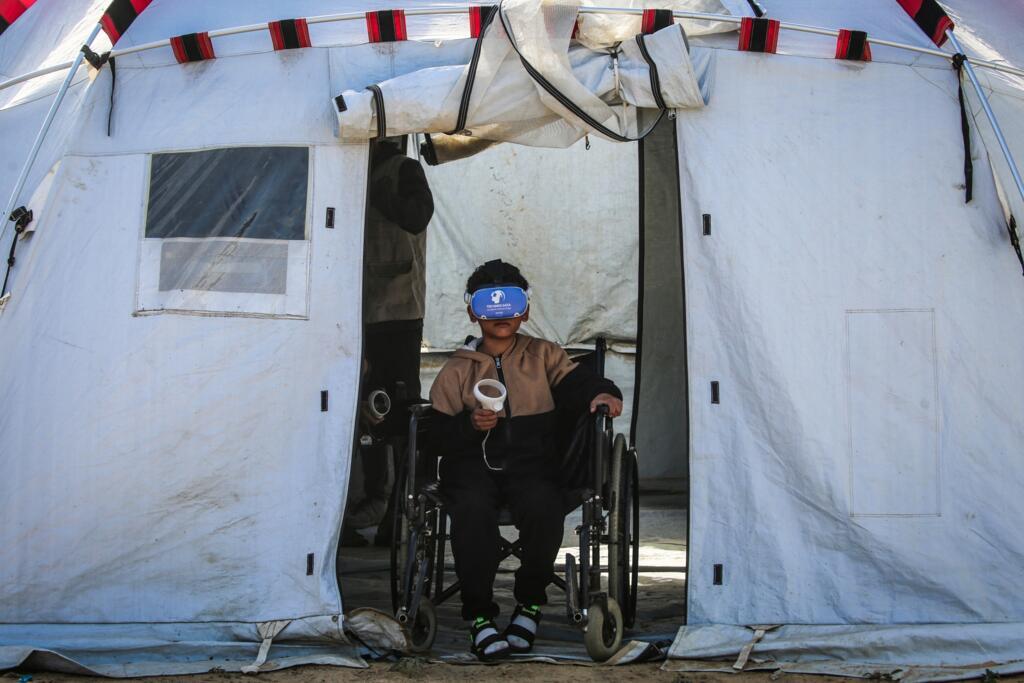
Inside a white tent pitched on a sandy patch of ground in Al-Zawayda, in central Gaza, excited chatter swelled as five boys roamed around a virtual world.

The youngsters, one in a wheelchair and the others on plastic seats, turned their heads, exploring the new surroundings inside their goggles: a land of green gardens, tranquil beaches and safe cities.

The VR sessions utilise programmes specifically designed for traumatised children © Eyad Baba / AFP

One boy reached out and clapped his hands together, as if swatting a fly. Another, smiling, with his hand held up in front of his face, reached out to touch the scenery.

One said a dog was running towards him, and beckoned to it, calling out: "Come! Come!"

"I see birds," the boy in the wheelchair told an operator, looking around.

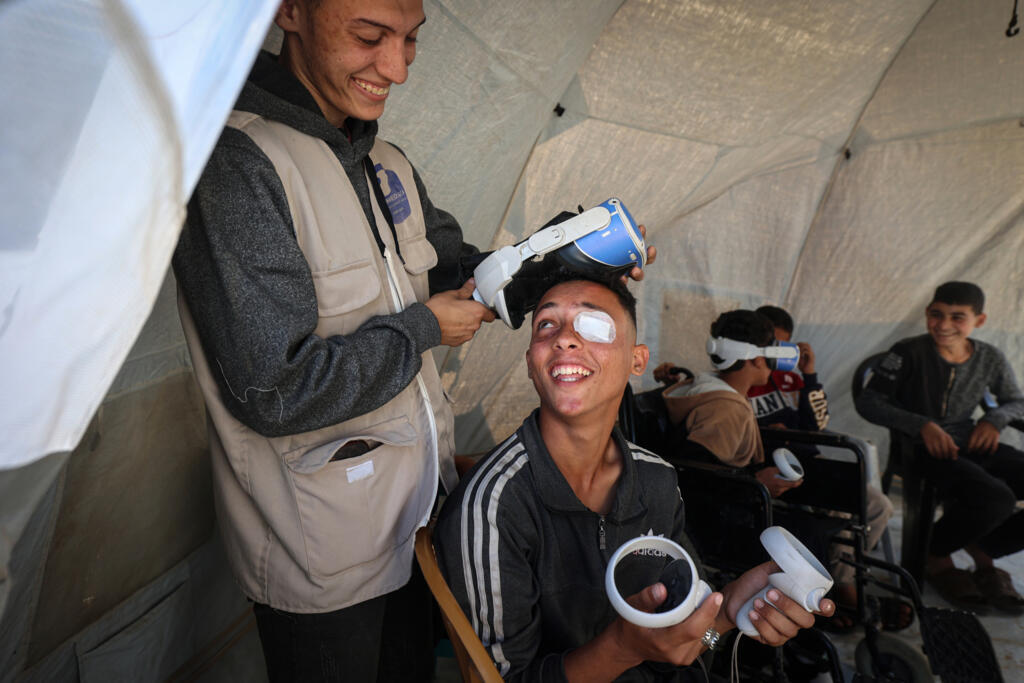
One of the operators delicately put the blue TechMed Gaza headset on 15-year-old Salah Abu Rukab, who sustained a head injury during the war, asking if he could see the VR properly as he adjusted the buckles.

A medical technology support team member gets ready to fit the VR headset 
© Eyad Baba / AFP


"We feel comfortable in it, we enjoy it, and through it we enter a garden, we enter spaces with animals and similar experiences," the teenager told AFP.

Asked by the operator what he saw, he replied: "It's all trees. Nothing but trees, grass and flowers."

'Positive results'

Mental health supervisor Abdalla Abu Shamale explained there was more to the VR headsets than simply escape.

"Through programmers, we are able to design games with therapeutic, preventive and developmental goals that help prepare the child or enable them to cope and manage their life more effectively," he told AFP.

The virtual reality programme helps children rebuild positive perceptions of the world © Eyad Baba / AFP


"This method has proven its effectiveness over a full year of working with many children, including war-amputee children, injured children and those exposed to extremely traumatic events."

A fragile ceasefire in the war between Israel and the Palestinian militant group Hamas has held since October 10.

The World Health Organization says conflict-related injuries carry a mental health toll, and survivors struggle with trauma, loss and daily survival, while psychosocial services remain scarce in Gaza.

Jonathan Crickx, spokesman for the UN children's agency UNICEF, told AFP that around one million children, or in other words, "all children in the Gaza Strip, are in need of mental health and psychosocial support after two years of horrendous war".

Inside the VR goggles lies a world of safe cities, mountains and greenery 
© Eyad Baba / AFP


The VR sessions rely on programmes specifically designed for traumatised children, taking into account their physical and psychological condition, and help them rebuild positive perceptions of the world.

Abu Shamale said the children were "treated and accompanied through VR sessions, and when we integrated them into these techniques, they showed a very, very strong response and extremely positive results.

"The speed of treatment, recovery and reaching stability using VR techniques was faster than in regular sessions. In regular sessions without VR, we usually need about 10 to 12 sessions, while with VR we can achieve results in just five to seven sessions," he said.

© 2025 AFP


How South Korea's brief martial law upended lives


Seoul (AFP) – When South Korea's leader declared martial law a year ago, one young woman blocked a tank, a civil servant resigned in protest and a lawmaker switched sides to remove him from office.


Issued on: 02/12/2025 - RFI


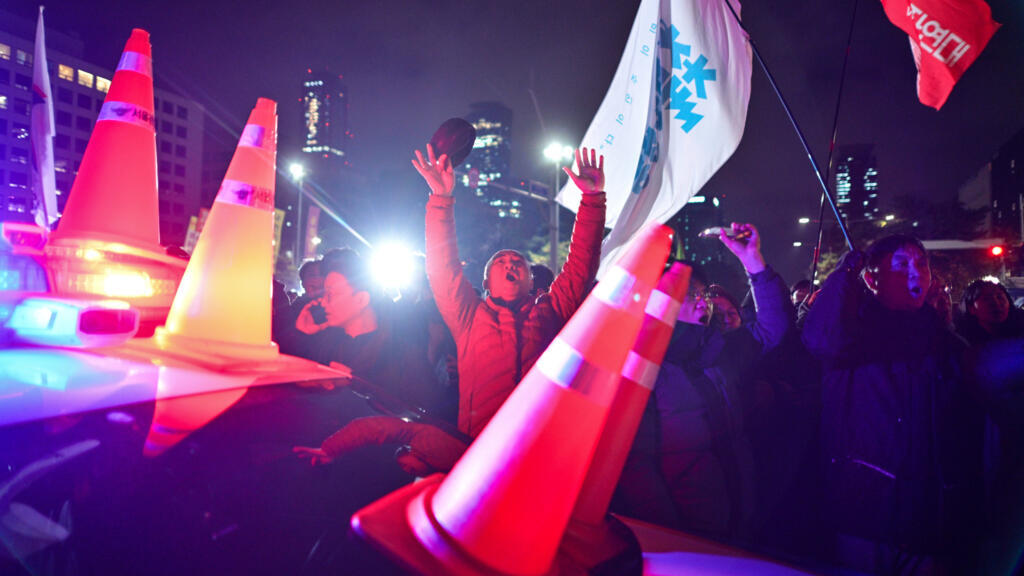
Thousands of protesters, as well as soldiers and tanks, filled Seoul's streets shortly after leader Yoon Suk Yeol declared martial law © Anthony WALLACE / AFP/File

They are among the many South Koreans whose lives were transformed on December 3, 2024.

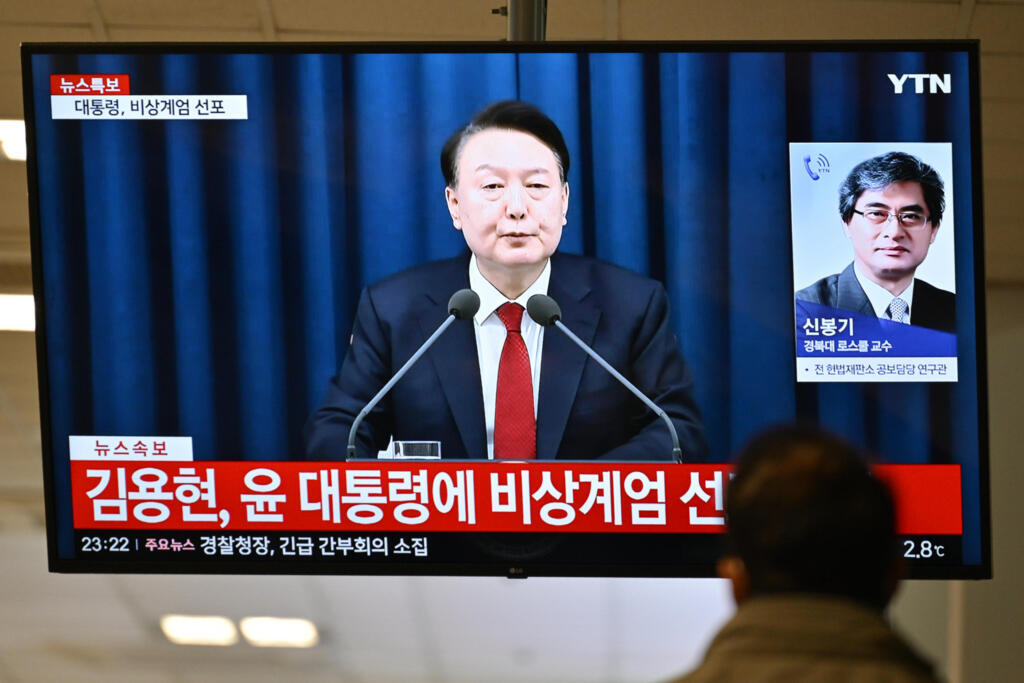
That wintry night, then-president Yoon Suk Yeol interrupted national television broadcasts to suspend civilian rule for the first time in more than four decades.

Soldiers and tanks deployed in central Seoul. Troops landed by helicopter, smashing windows and storming parliament as lawmakers fought to overturn the decree.

With thousands of protesters filling the streets, the National Assembly voted within hours to nullify Yoon's order.

A year on, AFP spoke to three people who were there fighting to protect democracy, and whose lives will never be the same.
Lawmaker with 'nowhere to go'

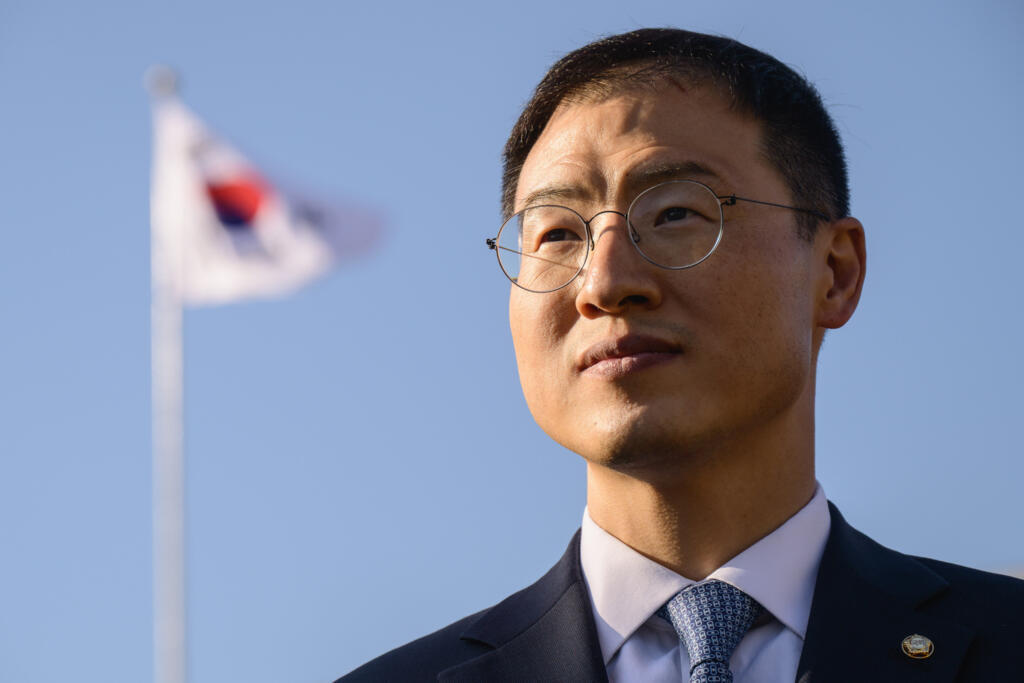
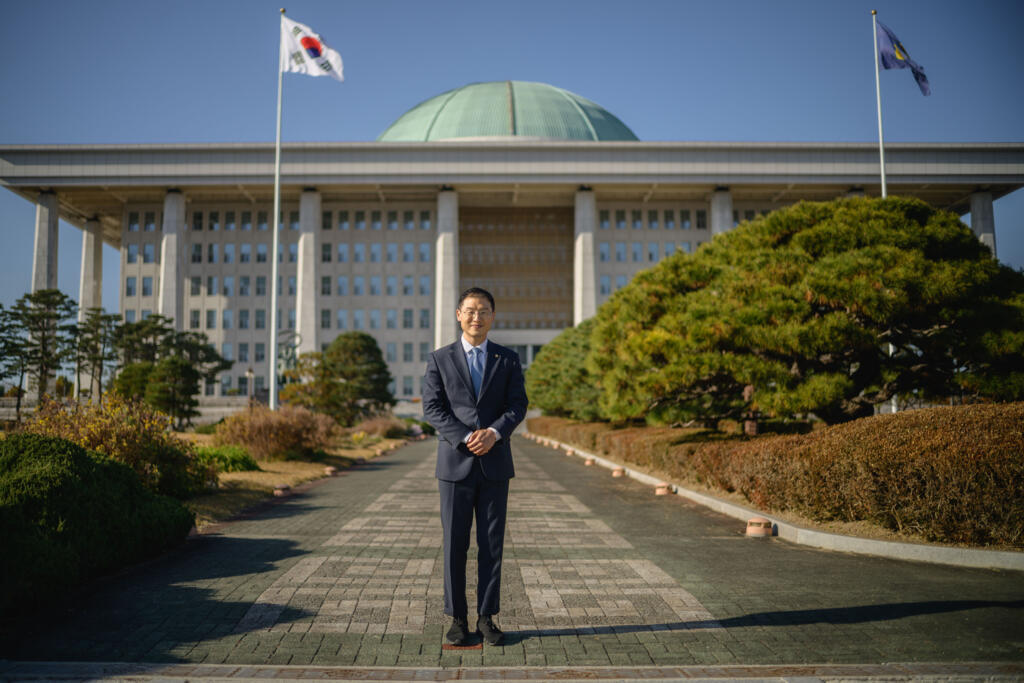
Freshman lawmaker Kim Sang-wook rushed to the National Assembly, where he faced down armed soldiers.


South Korean lawmaker Kim Sang-wook says the short-lived martial law 'gave my life and my politics a direction' © Anthony WALLACE / AFP


"I shouted, 'The National Assembly is not a place for you to enter!'" he told AFP.

Kim was a member of Yoon's conservative People Power Party party, but he felt martial law had to be undone.

After helping to halt the decree in an emergency vote, Kim found himself working with the opposition to impeach the president.

They were eight votes short, and Kim took the lead in persuading his colleagues.

Just over a week after the short-lived martial law, on December 14, a dozen lawmakers from Yoon's ruling party helped pass the impeachment measure.

"The first thought was relief -- we had stopped it," Kim said.

"The next thought was, 'What do I do now, what happens now?'" he added, saying he had "nowhere to go".


South Korean lawmaker Kim Sang-wook sided with the opposition to block his party leader's martial law bid © Anthony WALLACE / AFP


As members of his party stormed out and the opposition cheered, Kim felt he "had been left completely alone in the world".

A photo of him sitting alone and crying in the chamber went viral.

After weeks of reflection, Kim publicly backed opposition leader Lee Jae Myung, who later became president.

Kim then also joined the party he once opposed.

"What happened after December 3 gave my life and my politics a direction," he said.

"I now know clearly where I should go, and for that, I am grateful."
Lone civil servant

Ryu Hyuk, then inspector general at the justice ministry, made his way to the office as soon as he heard Yoon's stunning decision.

Officials had already gathered there to discuss the martial law.


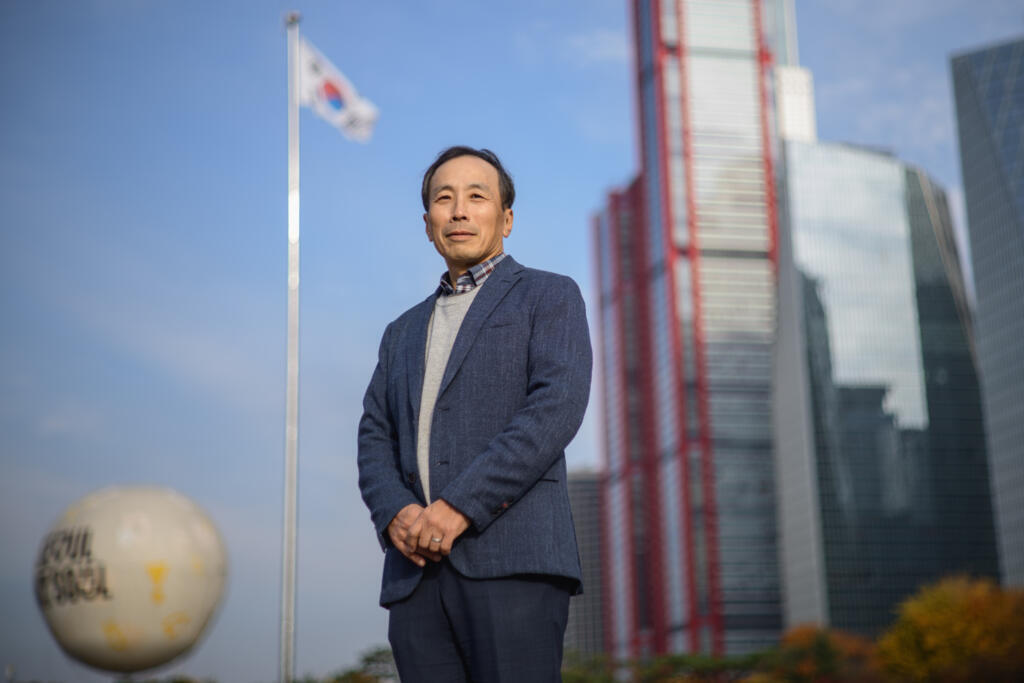
Ryu Hyuk was the first and only civil servant to resign during last year's martial law in South Korea © Anthony WALLACE / AFP


As the ministry's internal watchdog, 57-year-old Ryu told AFP he was convinced "it would not be appropriate to carry out any work related to that declaration".

He decided to quit, and as he scribbled a resignation letter, his anger surged.

Bursting back into the meeting room, he shouted: "No matter your political views, martial law is not acceptable."

He then walked out -- the first and only civil servant to resign during the crisis.

Ryu said with certainty that "if martial law had continued, many public officials would have shared my views".

Nearly a year later, he still has not decided where to turn next.

A registered lawyer, he could reopen his practice, but now usually spends his days scuba diving and running.


The woman who 'wasn't afraid'


When Korean student Kim Da-in saw a military tank turning towards the National Assembly, she ran at it without hesitation 
© Anthony WALLACE / AFP

Kim Da-in had only just learned how to drive but found herself speeding toward the National Assembly with her parents as martial law was declared.

"I think my family felt the weight of what martial law meant," Kim told AFP.

They arrived after parliament had struck it down, but the streets were still in chaos.

The 25-year-old then saw a military tank turning to the National Assembly, and ran towards it without hesitation.

"I wasn't afraid," she told AFP.

After that night, she joined protesters who took to the streets in the freezing cold and rallied outside Yoon's residence.

Seeing "the culture, the energy" that activists had created "made me think they can do anything", Kim said.


"And it made me want to be among them."

As South Korea's president, Yoon Suk Yeol suspended civilian rule for the first time in more than four decades © Anthony WALLACE / AFP/File

She is now preparing to switch from online university studies to a physical campus, where she can attend classes with some of those who had inspired her.

Kim has become known as "the woman who stopped the tank" after a video of her action went viral.

"I didn't think about gender when I stepped in front of the tank," she said.

"What I want to say... is simple: I intend to keep standing my ground."

© 2025 AFP