Monday, September 08, 2025


Foreign actors amplifying calls to 'block everything' in France

French authorities say they have not detected any large-scale, coordinated foreign interference ahead of nationwide "Let's block everything" protests on 10 September, though some overseas actors are attempting to amplify the mobilisation online.


Issued on: 08/09/2025 - RFI
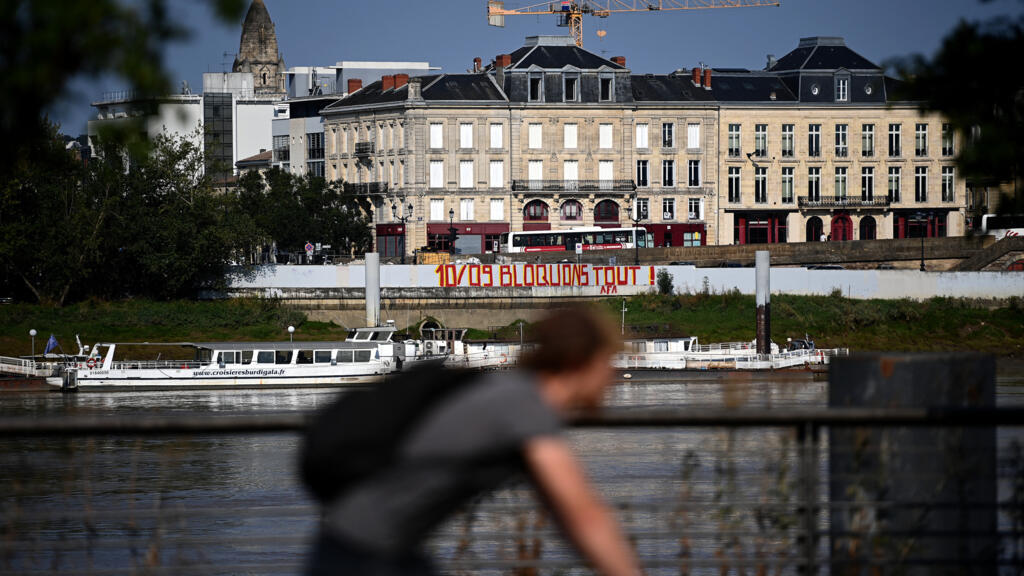
Un cycliste passe devant un graffiti «10 septembre, bloquons tout» à Bordeaux, le 25 août 2025, France. AFP - CHRISTOPHE ARCHAMBAULT

In April, France formally accused Russia’s military intelligence agency of carrying out cyberattacks against French institutions, including President Emmanuel Macron’s 2017 presidential campaign and organisations linked to the Paris 2024 Olympics.

Questions are now being raised over whether foreign countries are trying to interfere in the Bloquons Tout! (Let's block everything) protests planned for 10 September.

A government source specialising in digital affairs has told public broadcaster Radio France there was no evidence of a “massive” campaign, but pointed to “opportunistic amplification” by networks linked to Iran, Russia and Algeria.

Analysts from French digital intelligence group Projet Fox have tracked hundreds of fake accounts, mainly on X (formerly Twitter), that are attempting to boost hashtags such as #10septembre2025 and #MacronDémission (Macron resign).

A cluster of accounts, attributed to Iran, includes profiles with AI-generated images and repeated calls for blockades or the French president's resignation.
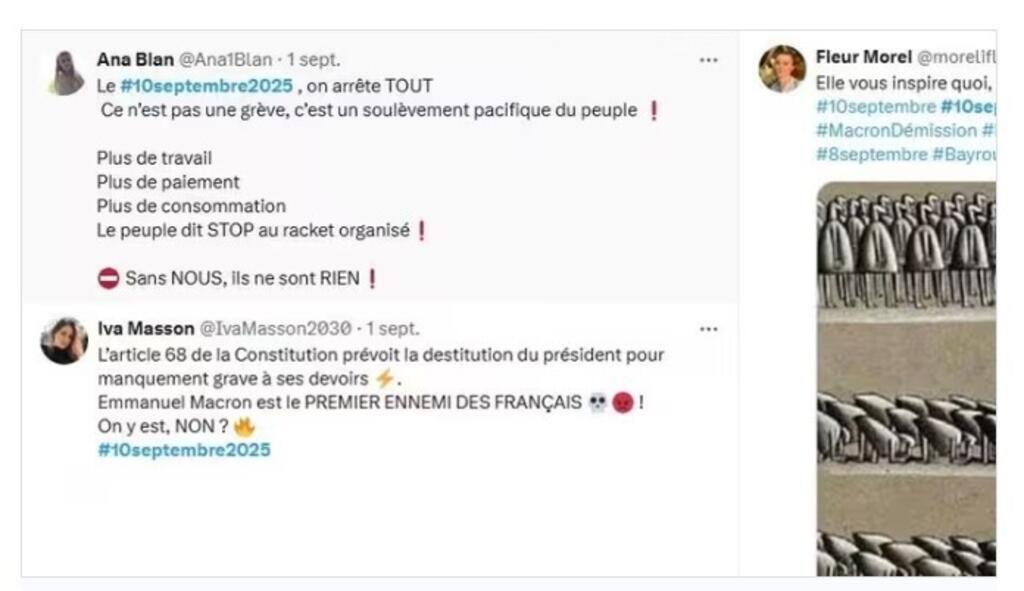
X accounts, from Iran, relaying hashtags aimed at amplifying the 10 September protests. 
© Screenshots X

French authorities also cited “influence activities” from pro-government media in Azerbaijan, Russia, Turkey, Iran and Algeria. Outlets such as Caliber in Azerbaijan and Alfadjr in Algeria have recently highlighted Macron’s low popularity and warned of possible unrest. An article on Alfadjr’s website described a “besieged France” threatened by IMF control and rising poverty.

“Everything exploitable is exploited,” an official told France Info, adding that the aim was not so much to interfere directly but relay narratives portraying France as unstable.

Movement calls for September shutdown across France to protest budget cuts
Largely a domestic movement

Officials stress the protests planned for 10 September remain primarily a domestic movement, with French activist networks such as Les Essentiels and local Indignons Nous groups on Telegram and Signal driving calls for action since May.

Social media monitoring platform Visibrain recently noted signs of “astroturfing”, where content purportedly from grassroots movements, but actually funded and organised by corporations or political groups, is created to sway public opinion. But it found the activity largely centred on French left-wing and far-left circles.

The impact of foreign involvement is unclear. “A post with a million views may have no effect, while a hundred views in the right circles could be significant,” said one expert. “So far, these attempts have limited visibility because the mobilisation is already a national topic.”

The 10 September protest, organised under the banner Bloquons Tout, aims to “paralyse” France with strikes, blockades and demonstrations. It is being held just two days after parliament is expected to vote down Prime Minister François Bayrou over his 2026 austerity budget.

While it has been compared to the anti-government Gilets jaunes ("Yellow Vests") protest movement of 2018-2019, it appears far less structured and emerged online only in July this year. It is supported by some trade unions including the CGT and SUD, as well as the hard-left France Unbowed party.

Domestic intelligence services warn of potential blockades targeting transport, energy and defence sites.
ICC opens war crimes case against Ugandan rebel leader Joseph Kony

The International Criminal Court will open hearings against fugitive Ugandan warlord Joseph Kony, in a landmark step for international justice nearly two decades after issuing its first-ever arrest warrant for him.


Issued on: 08/09/2025 - RFI

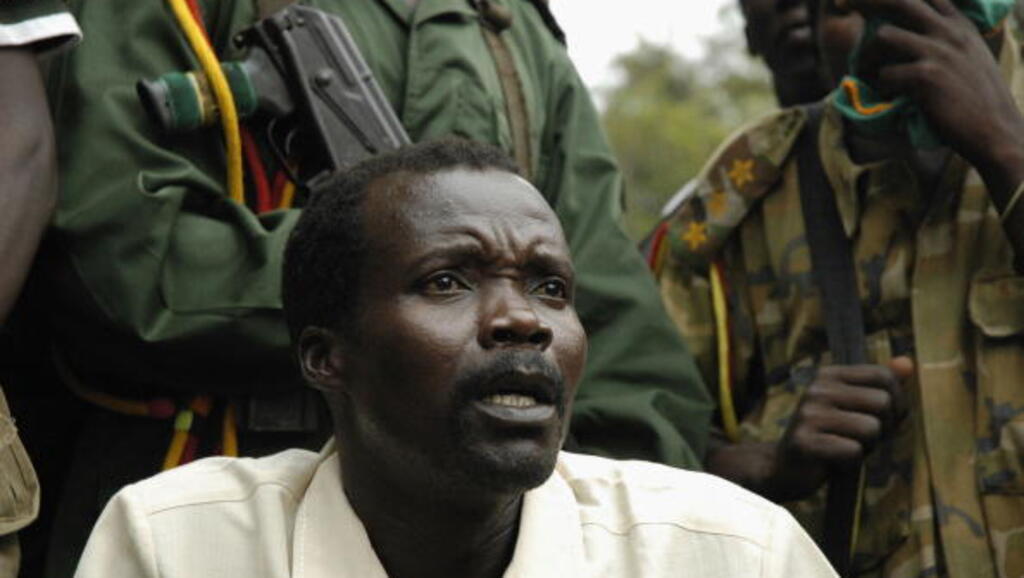
Joseph Kony, leader of the rebel group the Lord's Resistance Army that has been fighting a war against the Ugandan government for decades. Getty Images/Adam Pletts

On Tuesday, judges in The Hague will examine 39 counts of war crimes and crimes against humanity against Kony, including murder, torture, rape, sexual slavery and pillaging.

The proceedings, known as a confirmation of charges hearing, will be the court’s first ever in absentia.

Although ICC rules forbid full trials without the accused present, prosecutors argue the hearings are critical to ensure a trial can proceed swiftly should Jospeph Kony finally be caught.

They also say that bringing his alleged crimes before an international court offers a measure of recognition for victims, even in his absence.

Once a Catholic altar boy and later the self-proclaimed prophet of the Lord’s Resistance Army (LRA), Kony has eluded capture for decades.

His brutal insurgency against President Yoweri Museveni’s government left at least 100,000 dead and saw some 60,000 children abducted, according to UN estimates.

The LRA’s trail of atrocities – massacres, mutilations, and abductions –spread far beyond Uganda into Sudan, South Sudan, the Democratic Republic of Congo and the Central African Republic.
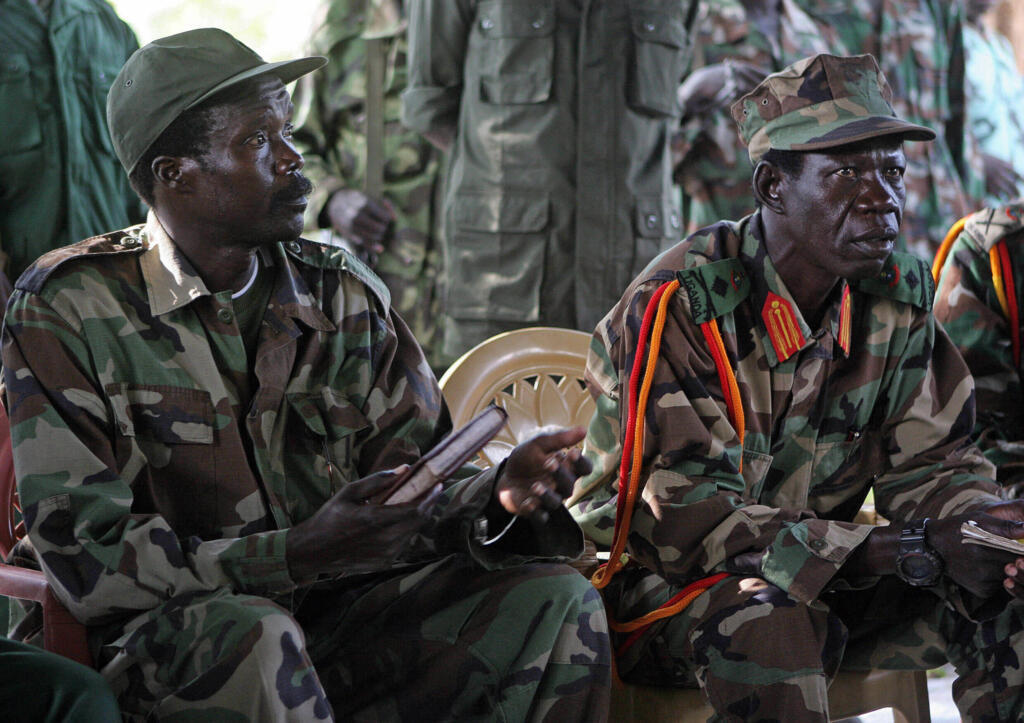
Leader of the Lord's Resistance Army, Joseph Kony, left, and his deputy Vincent Otti sit inside a tent at Ri-Kwamba in Southern Sudan, 12 November 2006. AP - Stuart Price


Courtroom test

Over three days of hearings, ICC judges will assess whether the charges against Kony are sufficiently credible to advance to trial.

His defence team has dismissed the process as “an enormous expense of time, money and effort for no benefit at all”, stressing that no trial can take place unless Kony is apprehended.

But for prosecutors, the exercise has both practical and symbolic importance.

“By hearing the accusations now, the court ensures that justice will not be delayed if he is ever arrested,” one official explained, highlighting the ICC’s duty to victims as well as to the record of international law.

Kony’s case has long been central to the ICC’s identity. The 2005 arrest warrant against him was the first the court ever issued, signalling its mission to tackle the world’s worst atrocities.

Since then, several of his lieutenants have faced justice, including Dominic Ongwen, a former child soldier turned commander who was sentenced to 25 years in prison in 2021.

In April this year, the ICC ordered €52 million in reparations for Ongwen’s victims.


An elusive fugitive

Despite international efforts, Kony remains at large. In 2012, he became globally infamous after the viral “Kony 2012” campaign, which drew more than 100 million views on YouTube.

The campaign prompted then US president Barack Obama to send 100 special forces to support regional militaries in the hunt. Yet the mission ended in 2017 without success.

Recent UN reports suggest Kony has shifted between Sudan and the Central African Republic, pursued at times by defectors, regional armies and even Russian mercenaries.

His following, once several thousand strong, has dwindled to a handful of fighters scattered across remote terrain.


Justice deferred, not denied


For communities scarred by the LRA’s violence, the hearings are a chance to see the world’s attention return to their plight.

Survivors in northern Uganda say the process may not deliver immediate justice but remains meaningful.

“Even though we have passed through a lot, we cannot lose hope,” said Stella Angel Lanam, a former abductee who now runs a victims’ support network. “At least I will get justice.”

The ICC is not expecting Kony to appear in court this week. But the fact that the judges will hear evidence against him – two decades after first issuing his warrant – sends a clear signal that the international community has not given up, and that his alleged crimes will remain on the record until justice is done.


European Commission doubles financial support to Greenland to gain influence in the Arctic


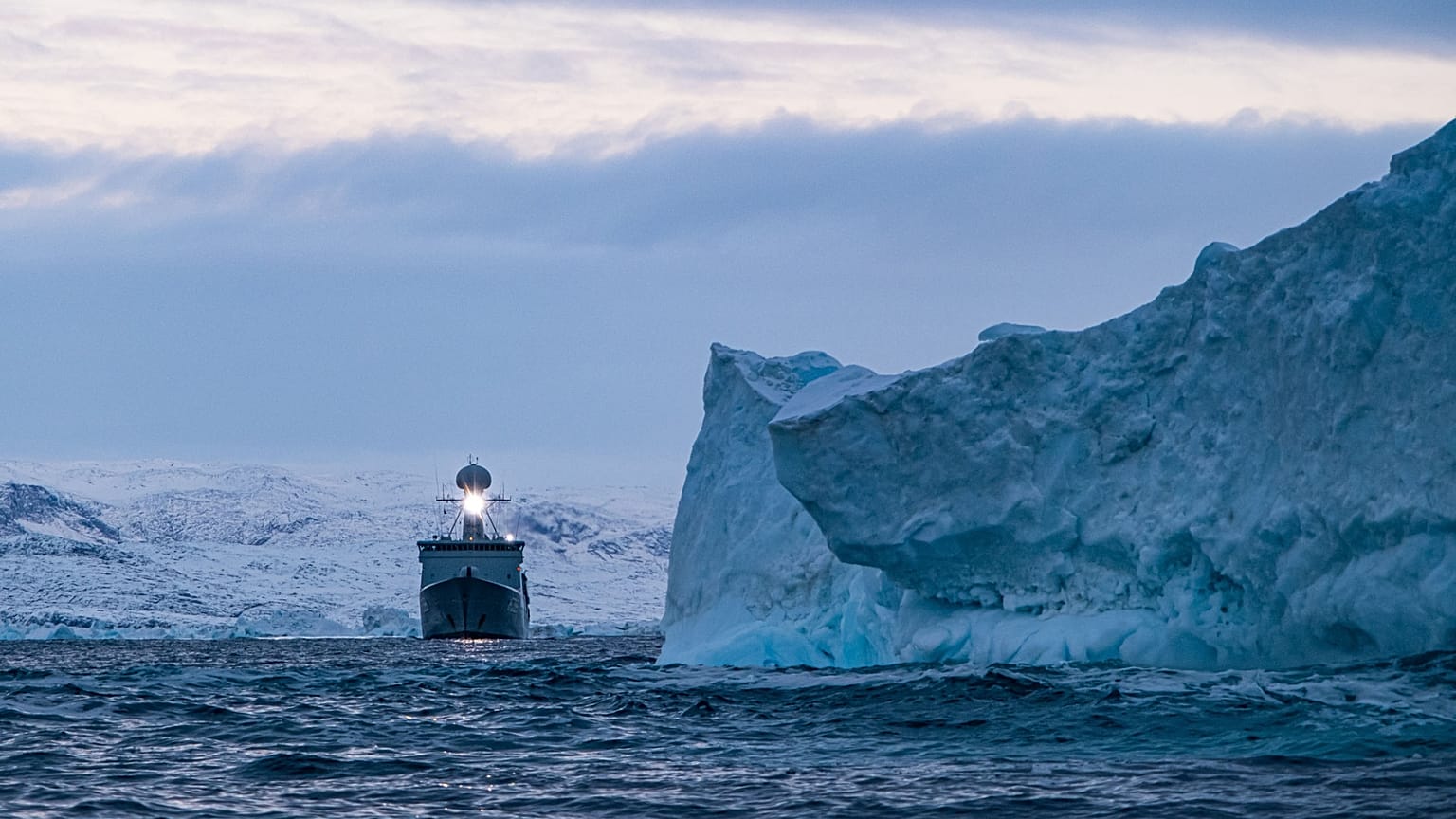
Copyright NATO, 2022


By Gregoire Lory
Published on 08/09/2025 
EURONEWS


The European Commission's proposal to double its financial support for Greenland marks a turning point in defending the EU's strategic interests in the Arctic region in the face of Russian, Chinese and American ambitions.

It's a strong signal that speaks volumes about Europe's ambitions in the Arctic region. Last week, the European Commission proposed doubling its financial aid to Greenland as part of the next EU budget

Under the multi-annual financial framework for 2028–2034, the Commission is proposing over €530 million in funding for Nuuk.

But Greenland is just one part of the picture. The entire Arctic region has become a focal point of global commercial and geopolitical interests. The melting ice caused by global warming is reshuffling the political landscape.

A new maritime route

As climate change is making it easier to navigate the Northern Sea Route, goods can be transported without the use of icebreakers. This passage could significantly shorten the shipping distance between Europe and Asia. In 2023, the route saw a record of 35 million tonnes transported.

e route through the north is much more convenient between Beijing and Rotterdam than the traditional route through the Strait of Malacca, the Suez Canal and the Gulf of Aden, which is of course 30 to 50% longer and takes 14 to 20 days longer than the Arctic route," Yan Cavalluzzi, security and defence analyst for NCT Consultants, explained to Euronews.

However, some analysts see the growth created by this northern maritime route as moderate in comparison with the Suez Canal, which saw 1.6 billion tonnes pass through it over the same period.

Nonetheless, the fact remains that China considers itself to be a country close to the Arctic. In fact, Beijing launched its "Polar Silk Road" strategy in 2018.

For the European Union, cooperation with China in the Arctic is strategically important, despite ongoing geopolitical tensions. In 2024, China was the EU’s largest import partner, accounting for 21.3% of all imports.

But this route is not as open as it seems. 53% of this northern maritime route runs alongside Russia, and the Kremlin is seeking to extend its exclusive economic zone, challenging international maritime law.

A geostrategic waterway

Since Russia's invasion of Ukraine in February 2022, the militarisation of the Arctic has intensified. The region was already home to Russia's Northern Fleet. But NATO has now moved a step closer to Russia with the accession of Finland and Sweden.

"In fact, one of the reasons why the United States wanted Finland and Sweden to join NATO was that it had scaled back its own Arctic capabilities after the end of the Cold War and were no longer investing in warfare there," Yan Cavalluzzi said.

"Their NATO membership therefore guarantees them [the United States] quicker and easier access to Arctic warfare technologies and capabilities," he continued.

In order to defend its interests, the Union therefore cannot rely solely on its Member States present in the region.

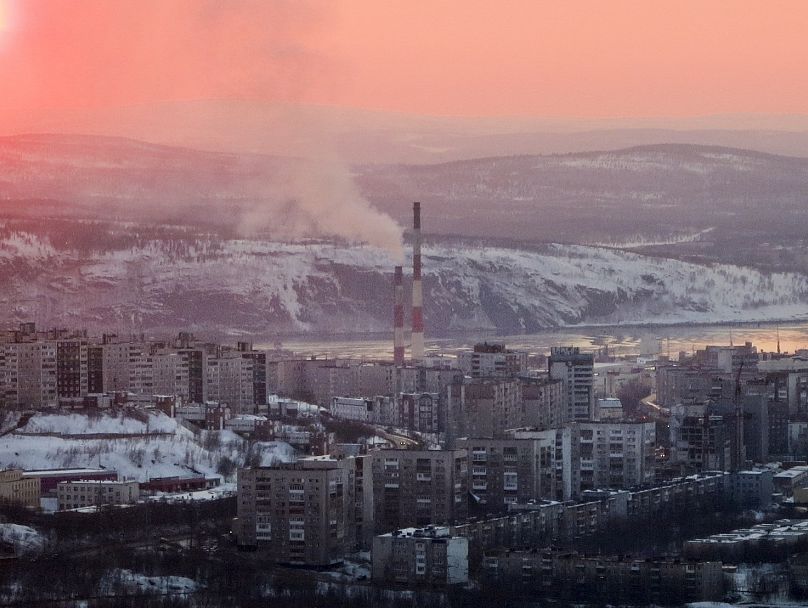
ARCHIVE: Russia's Arctic port of Murmansk and it's harbor, the base of the Arctic motorised rifle brigade of Russia's Northern Fleet. Dmitry Kozlov/Copyright 2017 The AP. All rights reserved.

"Think of submarine infrastructures, such as fibre-optic cables. It is easy to see why it is so important to have a presence in the region," Ivan Zaccagnini, researcher at the Centre for Security, Diplomacy and Strategy at the VUB (Free Flemish University of Brussels) noted.

Zaccagnini suggested the EU should consider "Greenland or other territories in the region as platforms for setting up what is known as an early warning system, or even deploying air, naval or even robotic units directly to the Arctic."

The EU adopted an Arctic strategy in 2021, but since the start of the war, it seems to have changed its stance, according to Ivan Zaccagnini,

"Overall, the EU is moving from a rather passive observer role to a more active and committed position, as well as a geopolitical position in the region."

Reflecting European weaknesses

The Arctic’s vast hydrocarbon reserves have become a strategic focus for the world’s major powers. According to estimates, the region holds 13% of undiscovered oil reserves and 30% of gas reserves. For the EU, access to these resources would enable the bloc to diversify its supplies and strengthen its strategic autonomy.

However, the EU faces significant challenges in asserting its influence in the Arctic. The bloc is faced with Russia's growing influence, supported by China. In addition, the EU's military dependence on the United States limits the scope of its actions in the northern region.

Complicating matters further is the expansionism of US President Donald Trump, who seeks to strengthen his position in the region. Trump has openly expressed, on several occasions, a desire to annex Greenland.

To move beyond a purely diplomatic role, Zaccagnini suggests that the EU should "continue to invest in platforms and capabilities in order to have a presence in the region, for example in terms of patrols, by deploying patrol units in the region to ensure security and to intervene in the event of any disruption to underwater infrastructures."

Still, the road ahead is long. For now, the EU may need to rely on its strengths in diplomacy and negotiation to assert its voice and interests in the region.


Norway's Labour Party claims victory in general election

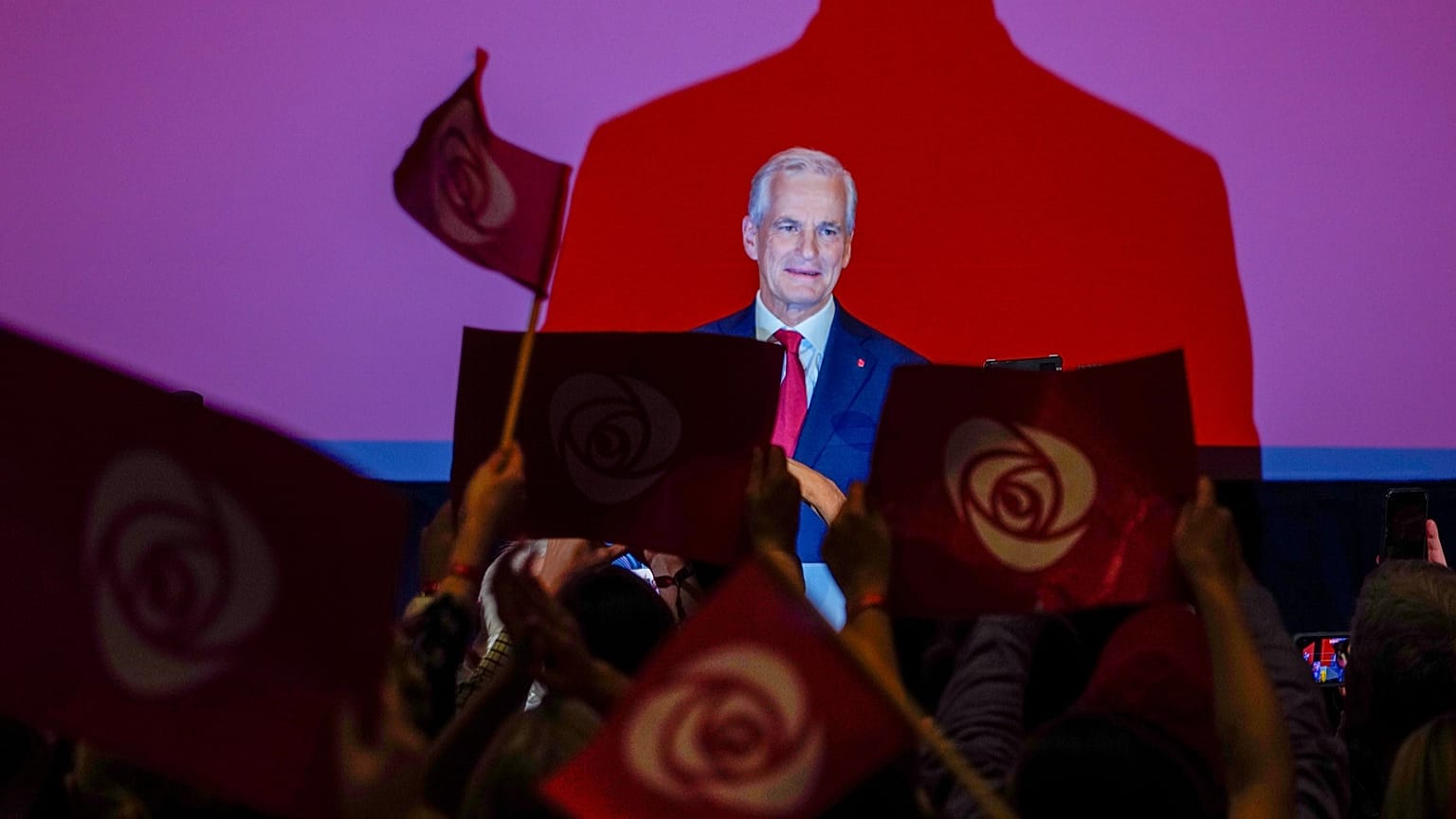
Party leader Jonas Gahr Støre speaks during the Labour Party's election vigil at the People's House during the 2025 general election, in Oslo, Norway, Monday, Sept. 8, 2025.
Copyright AP Photo

By Tamsin Paternoster
Published on 

The country's centre-left bloc retained power despite a strong showing from the anti-immigration Progress Party.

Norway's Labour Party led by Prime Minister Jonas Gahr Støre claimed victory in the Scandinavian country's general election on Monday in a narrow but clear win by the centre-left bloc.

With most votes counted the left-wing bloc — comprised of four parties — is set to hold a majority of 89 seats, surpassing the 85-seat threshold. The centre-right alliance, led by the Progress Party and Conservatives, currently holds 80 seats.

Støre thanked his supporters cheering in Oslo on Monday evening and said the victory showed it was possible for Social Democratic parties to win elections in Europe, despite right-wing parties on the rise.

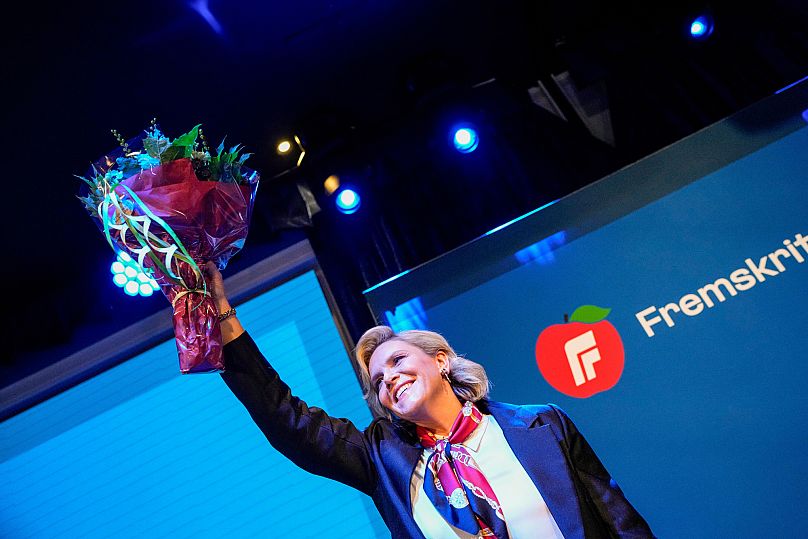
Sylvi Listhaug at The Progress Party's election vigil at Hotel Bristol during the 2025 general election in Oslo, Norway, Monday, Sept. 2025.
Sylvi Listhaug at The Progress Party's election vigil at Hotel Bristol during the 2025 general election in Oslo, Norway, Monday, Sept. 2025. AP Photo


The anti-immigration Progress Party saw its best-ever result, coming in second place. Its leader, Sylvi Listhaug, was pleased with her party’s result but lamented what she called “four tough years ahead for people and businesses.”

They were bolstered by an energetic social media campaign driven by influencers calling for the abolition of the country's traditional wealth tax.

Conservative Party Leader Erna Solberg apologised for the performance of her party, which fell to third place in parliament.

Coalition negotiations ahead

Around 4.3 million people in the Scandinavian nation were eligible to vote for the country's 169-member parliament.

Final results are expected on Tuesday and likely to be followed by weeks of negotiations to build a coalition agreement and agree on key Cabinet spots. Norway's King Harald traditionally swears in a new government.

Labour campaigned on a platform to retain the wealth tax that has been a mainstay of Norwegian policy since 1892. The rich country applies a levy of up to 1.1% on assets and shares worth more than 1.76 million kroner (€150,101), though there are various reductions and discounts.

The Progress Party wanted the tax scrapped, whilst the Conservatives campaigned on a platform calling for its reduction.

“I think it is fair that the most wealthy among us pay their contribution,” Gahr Støre said after he voted on Monday. “It’s been the parties of the right who wanted to take that entirely away, benefiting 1% of the population."

"I think that goes against the deep sense of fairness and solidarity from Norwegians,” he added.


Poland faces political paralysis as leadership divide deepens

Poland faces political paralysis as leadership divide deepens
Tension is growing between President Karol Nawrocki and Prime Minister Donald Tusk. / Polish presidency/government
By Wojciech Kosc in Warsaw September 8, 2025

Poland’s mounting conflict between nationalist President Karol Nawrocki and pro-EU Prime Minister Donald Tusk is paralysing governance and undermining credibility abroad.

The divide was thrown into sharp relief last week, when Nawrocki met US President Donald Trump at the White House, securing the latter’s assurances of a continued, or possibly even enlarged, US troop presence. 

For Nawrocki, who campaigned with explicit support from Trump’s political base, Trump’s promise - however flaky it might turn out eventually - showcased his foreign policy ambitions, underpinned by his political camp’s strategy of winning power in 2027, the year of the next general election. 

The Washington optics contrasted sharply with domestic turmoil, which - despite apparent accord across the political spectrum that Nawrocki’s Washington trip was a success - is already damaging Poland’s standing in Europe and spooking investors.

Make Poland Great Again

Nawrocki, inaugurated on August 6, has pursued a broad “Poland first” agenda, accentuating opposition to migration, declaring he would demand war reparations from Germany, and ruling out support for Ukraine’s Nato drive. On the home front, he has ruled out new taxation and reforms to further cultural changes, such as more rights to the LGBT people (with the Tusk government also deeply divided on the issue).

Tusk, who returned to office two years ago on a pro-EU platform and whose party deputy narrowly missed on defeating Nawrocki in June, is facing an opposed president who is ready to derail the government’s agenda by vetoing key legislation, which the prime minister-led majority lacks votes to override.

That has set the scene ready for two years of intense political power struggle that threatens stabilisation in the wake of paralysed legislative and “two foreign policies”, as Nawrocki’s camp claims it is exclusively fitted to handle Trump.

In that vein, the foreign ministry was excluded from preparations to Nawrocki’s visit in the White House while the ministry’s briefing for the president was first leaked to the media and disparaged by the president’s officials as useless dilettantism. 

Adam Bielan, one of Nawrocki’s aides, went as far as to state neither Tusk nor Foreign Minister Radosław Sikorski are welcomed in Washington.

“I don’t think Donald Tusk has entry to the White House. He is a persona non grata,” Bielan said. “Radosław Sikorski is certainly well known at the White House and a fairly recognisable figure, but he is not the most welcome,” he added.

Negative outlook

The impression of dysfunctionality is feeding through to the financial world and investors. On September 5, Fitch Ratings revised Poland’s sovereign outlook to negative from stable, even though the agency affirmed the country’s long-term foreign-currency rating at A. 

Fitch cited swelling deficits, which it expects to reach 6.5% of GDP in 2025, among the highest in the EU. It forecast government debt rising to 55% of GDP by 2027 from 49% in 2024, narrowing fiscal space. 

Crucially, however, Fitch singled out political conflict between the president and the government as damaging policy predictability and undermining the credibility of consolidation plans.

“The start of President Karol Nawrocki's term highlights likely challenges for the coalition government to implement policy,” Fitch said.

“In an environment of high political polarisation … the influence of domestic political considerations on policy choices is likely to increase ahead of the next parliamentary elections, due by October 2027. This could reduce the room to implement politically challenging measures before 2028, including those supporting fiscal consolidation,” Fitch also said.

The downgrade sparked exactly more of what it warned against. 

Finance Minister Andrzej Domański said Fitch’s warning reflected Nawrocki’s “blocking of key legislation, which limits the scope for strengthening the economy's foundations and necessary fiscal consolidation.”

“[Fitch] assessed a deficit of PLN272bn, growing debt, a declared deficit of 6.5% of GDP – and not PLN16bn zloty from tax bills that can be vetoed. How does PLN16bn compare to PLN272bn?” Leszek Skiba, Nawrocki’s economic advisor and a former deputy finance minister under the PiS government, responded.

The fiscal outlook is indeed challenging, coming on the back of ballooning defence spending, earmarked at 4.7% of GDP for 2025, the highest ratio in Nato. The government will also be wary not to reduce social expenditure ahead of the 2027 general election. Some of that spending is pressing and necessary to improve public services and prevent the unravelling of social cohesion (while some other, like helping Ukrainians who fled the war to Poland, is being targeted as the government is giving in to the anti-immigration sentiment).

Tusk’s coalition has pledged to consolidate gradually, but, Fitch notes, “increased political challenges to implement fiscal measures and the lack of a credible fiscal consolidation strategy will likely complicate Poland's ability to meaningfully reduce fiscal deficits before the next elections.”

Macroeconomic fundamentals are solid for now. Fitch expects GDP growth of 3.2% in 2025, well above the projected peer median of 2.3%. Growth will be driven by household consumption, wage gains and EU transfers. 

Meanwhile, inflation has cooled, with headline CPI at 2.8% in August, near the central bank’s 2.5% target. But wage growth remains elevated, and fiscal stimulus could rekindle price pressures. The National Bank of Poland has cut its reference rate three times this year to 4.75%, but has warned that loose fiscal policy and strong domestic demand complicate its task.

Hooked on Trump

Political dynamics make fiscal correction even harder. In just four weeks in office, Nawrocki has positioned himself as a veto-wielder, his opposition resonating with PiS supporters, who see him not simply as a check on Tusk’s liberal coalition, but their representative in a wider and deeply penetrating culture war that has long gripped Poland. 

Tusk, reliant on a fragile parliamentary majority, cannot override vetoes, leaving him unable to enact reforms, not just those needed to stabilise the deficit.

The standoff has international consequences. Poland is become the EU’s fifth-largest economy and a frontline state against Russia - the only EU country with land borders to all main actors in the east: Russia, its close ally Belarus, and the war-torn Ukraine, totalling over 1,160 kilometres.

The disunity at home threatens to sap Poland’s influence abroad even more as domestic political risks are only expected to increase. 

If Tusk fails to push through his agenda, voter fatigue could open the door for a PiS comeback, aligning Poland with a continental drift toward illiberal parties. Some of them take more conciliatory stances toward Moscow - although Nawrocki said he had told Trump “he never trusted Putin and Poland’s experience with Russia is that Russia has always wanted to destroy its neighbours.”

Still, that outcome could reshape EU decision-making and undermine cohesion on sanctioning Russia and military aid to Ukraine. Poland’s far-right - a possible coalition partner in either the Tusk-led or PiS-led next government - has expressed those views ever more openly as it both rode and helped foment war fatigue. The far-right’s 20% or so support in the polls could skew the political dynamics in Poland to less unity over Russia and Ukraine.

For now, Nawrocki is leveraging his relationship with Trump, whose return to the White House has upended US-European relations. Their rapport underscores Poland’s internal divide: a nationalist president aligning with a Republican administration, and a pro-European prime minister seeking continuity with Brussels. The image of Nawrocki in the Oval Office, absent the foreign ministry, encapsulates the dual-track diplomacy that critics say risks isolating Warsaw.

Despite Trump’s pledge on troops, questions linger over the long-term US commitment to Europe. Trump has previously questioned Nato’s value and pressed allies to shoulder more costs. 

Some commentators also posed questions about what happens to Nawrocki’s love of Trump if, the newspaper Rzeczpospolita wrote recently “Poland’s interests suddenly diverge from those of the United States? Will President Karol Nawrocki risk becoming a hostage to external pressures? And what price will he pay if he must defend Polish priorities in a clash with his MAGA boss?”

The next months appear decisive. Fitch has warned that without credible consolidation, further downgrades could follow. Investors already demand higher yields on Polish bonds than on many EU peers, reflecting risk premia. 

At the same time, the clash between president and government shows no sign of abating, with Nawrocki signalling more vetoes and Tusk insisting on reforms, his strategy being to put the odium on the president for the drift. 

But it will be just as convenient for Nawrocki to paint the Tusk government as stalling change and in need of replacement in 2027. The tug-of-war’s consequences could be reaching from financial markets to Europe’s security architecture.

Major social media sites back online in Nepal after deadly protests


Kathmandu (AFP) – Nepal rolled back its social media ban on Tuesday, a day after at least 19 people were killed in protests demanding the government lift its restrictions and tackle corruption.


All major social media apps were working, an AFP reporter in Kathmandu said.

Nepal's Minister for Communication Prithvi Subba Gurung was quoted by local media as saying that the government has withdrawn its ban following an emergency cabinet meeting.

Several social media sites -- including Facebook, YouTube and X -- were blocked on Friday in the Himalayan nation of 30 million people, after the government blocked 26 unregistered platforms.

The ban sparked widespread fury, especially among the younger generation who rely heavily on the apps for communication.

It also fed into anger at the government in a country where unemployment hovers around 10 percent and GDP per capita at just $1,447, according to the World Bank.

Crowds held protests on Monday in the capital, and other cities.

Police in Kathmandu used rubber bullets, tear gas, water cannon and batons when the demonstrators pushed through barbed wire and tried to storm into a restricted area near parliament.

Amnesty International said live ammunition had been used against protesters.

Police said 17 people died in the capital and two more in Sunsari district in eastern Nepal, according to local media.

Since Friday, videos contrasting the struggles of ordinary Nepalis with the children of politicians flaunting luxury goods and expensive vacations have gone viral on TikTok, which was not blocked.

Popular platforms such as Instagram have millions of users in Nepal who rely on them for entertainment, news and business.


Nepal’s market weakens as violence grips country

Nepal’s market weakens as violence grips country
/ Maxim Hopman - Unsplash
By bno Chennai Office September 9, 2025

Nepal’s equity market slumped on September 8, 2025, as the NEPSE index fell 35.99 points, or 1.32%, to close at 2,672.25, extending losses from the previous week’s 30.05 point decline, according to a report by state owned The Rising Nepal.

The sell off unfolded against the backdrop of violent Gen-Z protests triggered by a government ban on popular social media platforms. Demonstrations escalated on September 8, with police firing into crowds in Kathmandu. At least 20 protesters were killed and hundreds injured, deepening political uncertainty and rattling investor sentiment.

The sensitive index, which tracks group A firms, also slipped 2.32 to 467.51. Sectoral performance was broadly negative, with the life insurance sub-index plunging 51.64 points. Hotels and tourism fell 33.11 points, hydropower 23.45, non-life insurance 22.86, trading 9.89, microfinance 9.43, banking 9.34, the category labelled others 8.71, development banks 4.90 and investment 0.08.

Manufacturing and processing gained 3.27 points, finance rose 2.39 and mutual funds edged 0.08 higher. Turnover reached NPR5.23bn ($62.7mn) through 59,704 trades involving 11,714,543 shares, compared with NPR4.40bn and 11,124,845 shares in the prior session. Of the companies traded, 229 declined while 22 advanced. Among notable movers, Panchakanya Mai Hydropower dropped 4.62%, Bikash Hydropower slid 3.92% and ICFC Finance Debenture 2083 lost 3.88%.

On the upside, Him Star Urja surged 9.99%, NIBL Samriddhi Fund-2 rose 5.83% and Universal Power climbed 5.12%. Other risers included NCC Debenture 2086 up 4.35%, Union Hydropower up 3.08% and Garima Debenture 2085 advancing 2.92%.

Nepal Gen-Z protests turn deadly as police open fire

Nepal Gen-Z protests turn deadly as police open fire
/ Michael Starkie - Unsplash
By bno Chennai Office September 8, 2025

Nepal’s capital Kathmandu witnessed deadly clashes on September 8, 2025, as police fired on demonstrators from the Gen-Z movement, leaving 14 people dead and more than 200 injured. The protests, centred around Baneshwar, escalated after authorities used water cannons, tear gas and live ammunition to disperse crowds rallying against corruption and restrictions on social media, Kantipur reported.

Hospitals across the city have reportedly been overwhelmed with hundreds of gravely wounded with several in critical condition and likely to expire in the coming hours according to testimony of hospital staff cited by local Nepali media.

The demonstrations, spearheaded largely by young Nepalis - popularly dubbed “Gen-Z protest” by both vernacular language and English media in Nepal, erupted over widespread frustration with government corruption and a nationwide clampdown on online platforms.

Authorities have yet to release an official statement on the fatalities. However, the growing casualties and heavy-handed police response are expected to intensify public anger.

While Nepal has been rocked by violence related to the restoration of monarchy in the country as well as political disputes between nationally and regionally relevant groups and parties, protests related to internet freedom are a new phenomenon for the small Himalyan country.


 PERMANENT ARMS ECONOMY

Hungary's 4iG announces landmark acquisition of automaker Raba in partnership with Czech CSG

Hungary's 4iG announces landmark acquisition of automaker Raba in partnership with Czech CSG
State-owned automotive and axle company Raba is one of Hungary's oldest industrial groups. / raba.hu
By bne IntelliNews September 8, 2025

Hungary's 4iG has struck a landmark deal to acquire control of state-owned automotive and axle company Raba, one of the country's oldest industrial groups, in partnership with Czech defence conglomerate Czechoslovak Group (CSG) to expand its defence unit.

The Budapest-listed technology and defence group said on September 8 its defence and space subsidiary (4iG S&D) would purchase a 74% stake in the 129-year-old manufacturer for HUF25bn (€64mn), financed through a combination of equity and bank debt, and also announced a mandatory public purchase offer for the rest of Raba's shares at the regulatory price, or HUF1,789 per share.

The acquisition is the centrepiece of 4iG's strategy to integrate ground mobility into a defence portfolio that already spans aerospace and satellite technologies. Jászai Gellert, 4iG's chairman, said the deal would allow the group to create a "comprehensive defence capability" and open new export markets.

As part of the transaction, Czech-based Czechoslovak Group (CSG), one of Europe's fastest-growing privately owned defence conglomerates, will join as a strategic partner. CSG Defence, its armoured vehicle and mobility subsidiary, has signed a non-binding agreement that could see it take up to 49% in 4iG's project company, translating into an indirect 37% holding in Raba.

The tie-up gives 4iG exclusive rights in Hungary to distribute, assemble and service Tatra military trucks, a flagship CSG brand known for its heavy-duty, all-terrain vehicles. The parties plan to establish a new regional manufacturing and development hub in Gyor, Raba's home city, to make the Hungarian company Tatra's second-largest global supplier. Gyor is also the home of Volkswagen's largest engine factory, operated by Audi.

For Hungary, the deal is both a rescue and a relaunch. Raba has long been regarded as a strategic asset but has struggled with falling revenues, rising debt and the loss of state contracts in recent years, feeling the impact of lower demand in its key markets. The company launched a modernisation programme and carried out cost cuts that helped its earnings swing to a HUF2.1bn profit in H1 2025 from a HUF0.4bn loss a year earlier, despite lower revenues.

According to 4iG, the entry of CSG Defence as a minority shareholder could strengthen Raba's international expansion, leveraging the Czech group's expertise, capabilities and network to secure new orders whilst preserving national sovereignty and supply security.  The agreement also offers Raba an opportunity to reaffirm its role in Hungary's defence industry.

CSG has key manufacturing capacities located in the United States, the United Kingdom, Spain, Italy, Germany, the Czech Republic, Slovakia, Serbia, Greece and India. The company, with more than 14,000 people and ranked amongst the world's top 100 defence contractors, recorded €5.2bn in revenue last year.

Jan Marinov, chief executive of CSG Defence, said the partnership was "a key step in strengthening Central Europe's defence industry", adding that the combination of Raba's manufacturing base with CSG's technology and Tatra's global footprint would enable the group to supply modern, competitive solutions to Nato and EU allies.

The transaction also fits into the Hungarian government's broader push to revitalise the country's defence-industrial base, which has seen the state transfer ownership stakes in key assets to a strategic investor. By ceding control of Raba, the state is wagering that private investment and foreign expertise can achieve what public ownership has struggled to deliver.

If successful, the acquisition could restore Raba's position as a cornerstone of Hungary's defence industry and provide 4iG with a unique platform spanning land, air and space. For CSG, it cements its role as a regional consolidator, expanding its footprint beyond Czechia and Slovakia into one of the EU's newest defence growth markets.

4iG is set to continue its expansion in the defence industry, as Jaszai held talks in Turkey with Nurol Holding, owner of the Gidran armoured vehicle maker, and with Haluk Görgün, head of the Defence Industry Agency (SSB) before the latest announcement, according to a LinkedIn post by the Hungarian businessman.

Discussions centred on deepening technological and investment ties between Hungary's defence sector and Turkish industry. The visit highlights Budapest's push to integrate more closely with Ankara's fast-growing military technology base.

Hungary first announced in December 2020 that it would introduce more than 300 Gidran 4x4 armoured vehicles into service, with local production to start later. Hungary has so far taken delivery of 56 vehicles and a joint venture was set up in 2023 between Raba and Nurol Makina Hungary, the local arm of the Turkish defence group.

In a statement published on the Budapest Stock Exchange (BSE) website, Raba said that the board would commission a financial advisor to evaluate the offer and would publish the board's opinion and the expert evaluation within the statutory deadline.

In a separate statement, the National Economy Ministry said the sale of the state's 54.3% stake in Raba should support the automotive industry supplier's integration into international markets and strengthen its stability and 4iG Group can support its existing project portfolio and the development of 8x8 vehicle platforms, it added.

4iG shares surged 6% after the announcement, which came before the bell. Year-to-date, the share price of the ICT group has risen 142%.