Saturday, October 25, 2025


USS Gerald R. Ford is Sent to Caribbean as Drug Smuggling War Intensifies
FALSE FLAG FOR PLANNED INVASION OF VENEZUELA

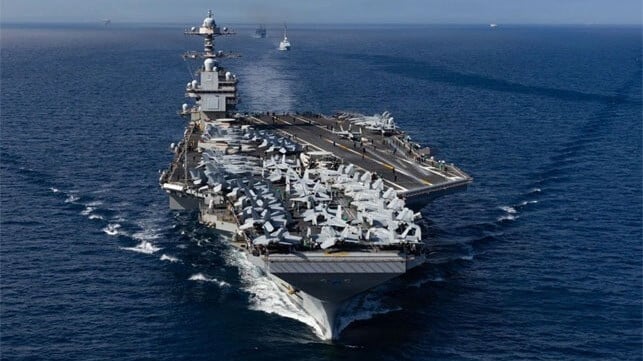
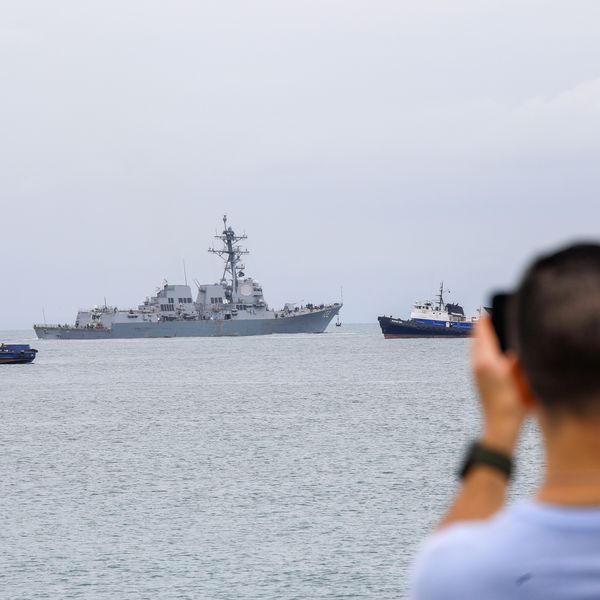
Gerald R. Ford carrier
Gerald R. Ford transiting the Strait of Gibraltar at the beginning of October (US Navy)

Published Oct 24, 2025 4:05 PM by The Maritime Executive


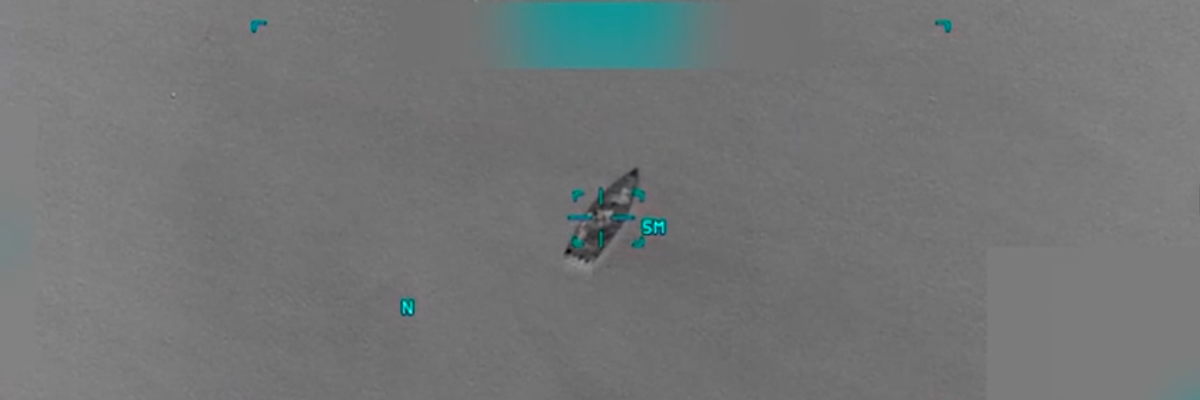
The United States confirmed that it is taking a series of additional steps to combat drug smuggling, including redirecting the world’s largest aircraft carrier, USS Gerald R. Ford, into the U.S. Southern Command. The announcement of the deployment came just hours after the Pentagon confirmed another attack on a boat in the Caribbean.

The Ford and its carrier strike group have been deployed since June, making various stops in Europe. Reports place the carrier in the Eastern Mediterranean, having made a stop in Croatia. At the beginning of October, the Navy released pictures of the strike group transiting the Strait of Gibraltar. USNI News speculates it will require at least one week to reposition the carrier into the Caribbean, and it reports that it is unclear which vessels will be accompanying the carrier.

A Pentagon spokesperson said in the prepared statement that the presence of Gerald R. Ford in the region would “bolster U.S. capacity to detect, monitor, and disrupt illicit actors and activities…” 

The U.S. is believed to have directed as many as eight warships, including at least one nuclear submarine, into Southern Command’s area of responsibility. Reports say there are as many as 10,000 troops that have been positioned in the region. The Air Force is also believed to have repositioned assets to the Caribbean.

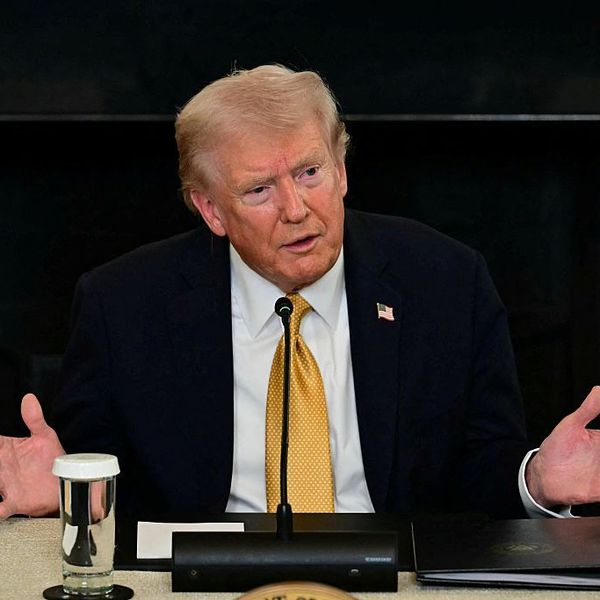
Speaking to reporters yesterday, October 23, Donald Trump said the U.S. continues to have concerns with Venezuela and called President Nicolás Maduro an “illegitimate leader.” Trump, however, denied the reports circulating online based on flight tracking data that the U.S. had sent B-1 bombers toward Venezuela. He called the reports false while online speculation was that the U.S. was scoping out the country’s air defense systems. Trump said the U.S. would continue to kill drug smugglers and said the “land is next,” but insisted he did not require a declaration of war from Congress.


Pete Hegseth, this morning, October 24, announced that overnight the U.S. struck another boat in the Caribbean, which he associated with one of the drug cartels, Tren de Aragua. Like the previous strikes, he wrote that intelligence identified the boat on a known drug smuggling route and that it was carrying narcotics. 

The strike came after two earlier this week in the Eastern Pacific. It is the ninth announced by Hegseth and the first strike conducted at night. The death toll is up to at least 43 people based on the statements, with only two survivors. Hegseth said “six terrorists were killed” during the overnight strike, which was conducted in international waters.

Hegseth said, “Day or NIGHT, we will map your networks, track your people, hunt you down, and kill you.”

Maduro has called the U.S. actions a “crazy war” and says the U.S. has long tried to destabilize his government. It is widely believed that the administration is seeking to force regime change in Venezuela through its current actions.


Trump’s Escalation Against Venezuela Continues as Hegseth Deploys Aircraft Carrier Strike Group to Latin American Waters

An aide to Brazil’s president warned that a US regime change operation in Venezuela “could inflame South America and lead to radicalization of politics on the whole continent.”
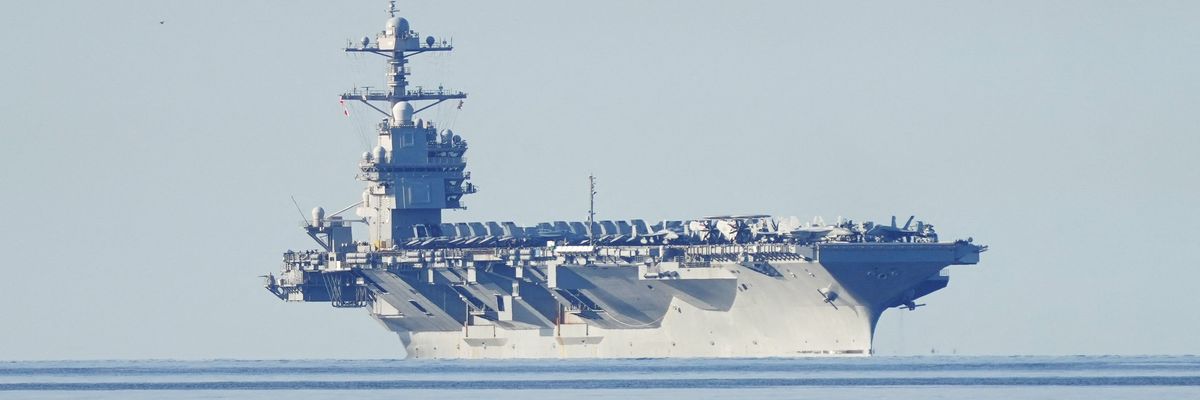


This photograph, taken on May 24, 2023, shows the US aircraft carrier USS Gerald R. Ford cruising near Jeloya Island, in Moss, south of Oslo.
(Photo by Terje Pedersen/NTB/AFP)


Stephen Prager
Oct 24, 2025
COMMON DREAMS


The Trump administration said Friday that it has ordered the Gerald R. Ford Carrier Strike Group, which contains the largest warship in the world, to waters off the coast of Venezuela, marking another major military escalation after a new surge of extrajudicial boat bombings in the region this week.

“In support of the president’s directive to dismantle transnational criminal organizations (TCOs) and counter narco-terrorism in defense of the homeland, [Defense Secretary Pete Hegseth] has directed the Gerald R. Ford Carrier Strike Group and embarked carrier air wing to the US Southern Command.”
RECOMMENDED...


UN Experts Decry Trump Warmongering Against Venezuela as ‘Extremely Dangerous Escalation’


‘They’re Going to Be, Like, Dead’: Trump Says Land Strikes on Venezuela Are Next

The announcement came shortly after the administration announced its 10th strike on what Hegseth claimed to be a drug-running boat, killing six people and bringing the death toll from the operations up to 43. As usual, the claim came with scant evidence.

The narrative that these boats have been transporting drugs to the US has been critically undermined in recent days after two of the alleged “narco-traffickers” who survived one of the Trump administration’s strikes were released back to their home countries: One of the survivors, an Ecuadoran man, was set free shortly after returning to his country as officials stated there was no evidence to charge him.

In several other cases, the relatives or home governments of those killed in these bombings have contested that they were not drug smugglers but fishermen.

The strikes have been met with increasing criticism in recent days, not just from Democrats, but from Republican lawmakers—including Sens. Rand Paul (Ky.) and Lisa Murkowski (Alaska)—who co-introduced a war powers resolution last week to require congressional input before carrying out acts of war against Venezuela.

A group of former national security officials—including Rear Adm. Bill Baumgartner of the Coast Guard and Retired Navy Rear Adm. Michael Smith—meanwhile issued a statement on Thursday condemning the strikes as “illegal” and “ineffective.”

The International Crisis Group, a nongovernmental organization dedicated to preventing armed conflict, warned Thursday that “what began purportedly as a campaign to stop illicit drugs from getting to US shores looks increasingly like an attempt to force Venezuelan President Nicolás Maduro and his allies from power.”

According to several reports, Caracas has allegedly floated proposals that would allow the US to take a dominant stake in Venezuela’s oil and mineral wealth.

President Donald Trump’s deployment of the Ford strike group, which is currently en route from the Mediterranean Sea, notably comes shortly after the president threatened to begin carrying out strikes on the Venezuelan mainland without seeking authorization from Congress, which led dozens of elected officials throughout Latin America to issue a letter denouncing military aggression in the region.

“The Trump administration is planning to lead a new ‘War on Drugs,’” the leaders warned. “That war may start with regime change in Venezuela, but we know that it will not end there. Already, the US is threatening illegal drone strikes on Mexican soil in the name of its ‘national security.’ If we do not stand for peace now, we risk a new wave of armed interventions across the region, unleashing a humanitarian crisis of unimaginable scale in all of our home countries.”

Celso Amorim, an aide to Brazilian President Luiz Inacio Lula da Silvasaid on Friday, following the announcement of the ship’s deployment, that “we cannot accept an outside intervention because it will trigger immense resentment,” adding that it “could inflame South America and lead to radicalization of politics on the whole continent.”

Trump Is Gunning for War in Venezuela, Raising Fears of US-Backed Regime Change

Venezuelans fear US strikes on boats in the Caribbean could be a leadup to US backing for a Pinochet-style dictatorship.

October 21, 2025

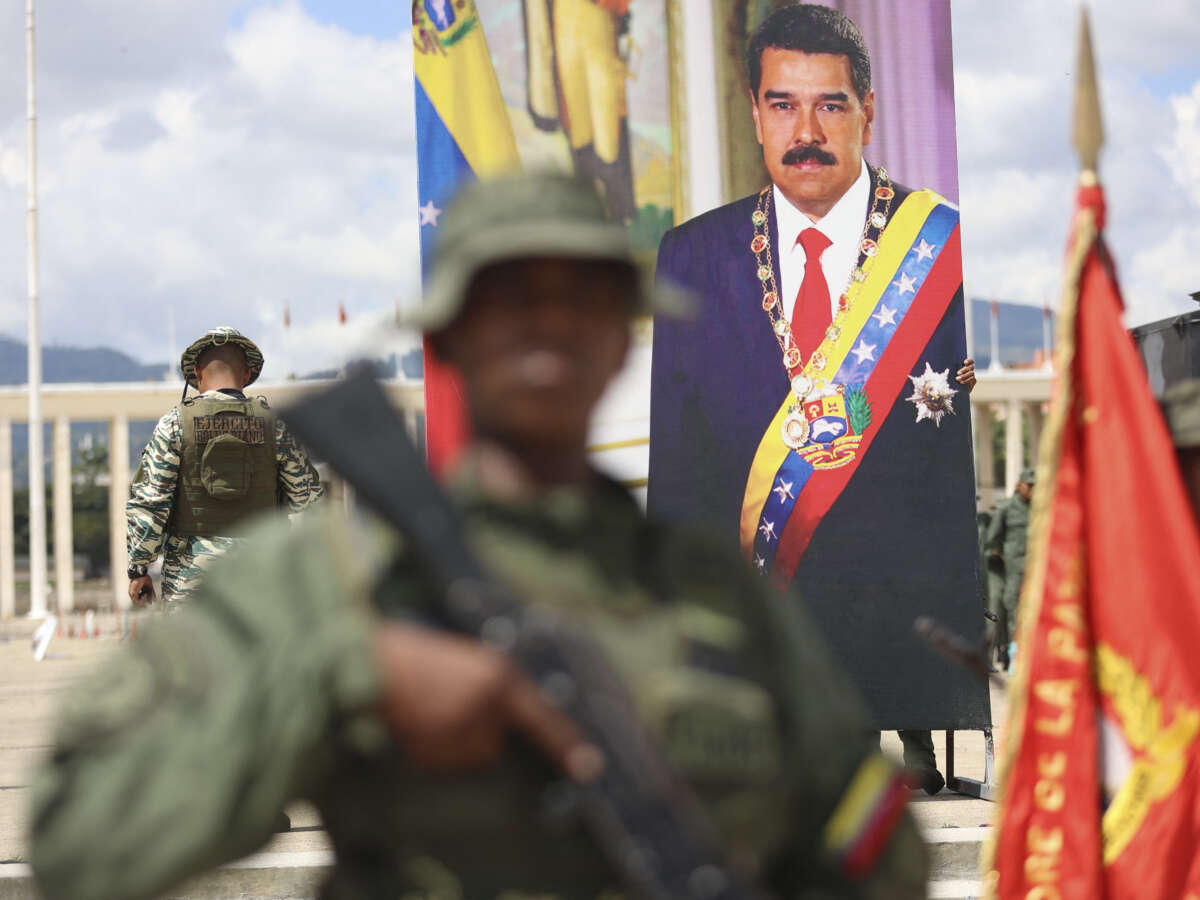
Members of the Bolivarian Armed Forces take part in a military exercise at Fort Tiuna in Caracas, Venezuela, on September 20, 2025.PEDRO MATTEY / AFP via Getty Images

The Trump administration is attacking boats in the Caribbean Sea with such frequency that it may blow up another between the publication of this article and your reading of it. The administration has so far failed to produce any hard evidence behind its allegations that the seven speedboats destroyed by U.S. airstrikes were carrying narcotics. As of October 21, reports indicate that 32 people have been killed in these attacks. On October 3, a speedboat reportedly carrying Colombian citizens was destroyed in one such missile strike, prompting Colombian President Gustavo Petro to post on X that a “war scenario” has emerged in the Caribbean.

This week, Colombia recalled its ambassador to the United States while accusing the Trump administration of “murdering” the fisherman while labelling another strike that took place in mid-September as a “direct threat to national security.” Donald Trump for his part has called Petro an “illegal drug dealer” while saying that the President of Venezuela Nicolás Maduro “doesn’t want to fuck around” with the U.S. — a reference to a report in The New York Times that alleged Maduro has tried to cut a resource deal with Washington in order to avoid a military conflict.

The legality of these strikes has been questioned by several experts. Dan Herman, senior director at the Washington-based think tank Center for American Progress, said Trump has “no legal authority to conduct these strikes” and noted that the U.S. government has “presented no evidence for its claims.” Herman believes these attacks are unlikely to have any meaningful impact on the influx of drugs into the United States.

Former army captain and army lawyer Margaret Donovan concurred in a recent MSNBC interview, stating that Trump has “no domestic or international legal authority to conduct these strikes.” Donovan, a visiting lecturer at Yale Law School, added: “When you don’t have domestic or international legal authority to conduct these types of strikes, what you are doing is murdering people.”

As of October 21, reports indicate that 32 people have been killed in these attacks.

Similarly, James Story, who served as U.S. ambassador to Venezuela from 2018 to 2023, said Trump’s strikes place the United States in “contravention with international law and it undermines our ability to work in the hemisphere.”

The current U.S. military buildup in the Caribbean Sea commenced on August 14, with the Trump administration alleging it was due to threats from Latin American drug traffickers. Based on available media reports, there are approximately 10 U.S. Navy ships in the Caribbean Sea, with three directly off the coast of Venezuela. According to Military.com, there are also currently “10,000 U.S. troops now operating in the Caribbean [who] were sent to interdict drug boats.”

U.S. foreign policy toward Venezuela, under both Democratic and Republican administrations, has long aimed at regime change. In April 2002, the administration of President George W. Bush quickly endorsed the leadership of Pedro Carmona, head of the national business federation Fedecámaras, after a faction of the military kidnapped President Hugo Chávez for 47 hours, until he was rescued by loyalist armed forces.

There are approximately 10 U.S. Navy ships in the Caribbean Sea, with three directly off the coast of Venezuela.

Since then, the United States has implemented increasingly harsh economic sanctions against Venezuela. In 2015, then-President Barack Obama declared Venezuela a threat to U.S. national security, a move that prompted foreign ministers from a coalition of 12 South American nations to call on Washington to revoke the decree. By 2017, U.S. sanctions had tangible effects: a low-income Venezuelan family of five could expect to consume only 6,132 calories per day — 1,226 per person if divided equally. Earlier this year, The Lancet reported that U.S.-led sanctions contribute to an estimated 564,000 deaths across the world each year, with a significant proportion occurring in Venezuela.

After Hugo Chávez’s death from cancer in 2013, President Nicolás Maduro initially struggled to fill the political vacuum. Between 2013 and 2019, Venezuela saw an 80 percent drop in imports, devastating its import-dependent economy. In 2019, the Trump administration continued the U.S. trend of throwing its weight behind opposition leaders, this time backing Juan Guaidó, who challenged Maduro’s 2018 reelection. Trump’s choice to formally recognize Guaidó as interim president signaled a renewed push by the U.S. to overturn the Bolivarian government.
y
Democrat Says Trump Admin Still Lacks “Any Evidence” to Back Caribbean Strikes
The administration is now openly targeting Colombia while refusing to provide evidence to back their determinations. By Sharon Zhang , Truthout October 20, 2025


Former Secretary of Defense Mark T. Esper, in his autobiography A Sacred Oath: Memoirs of a Secretary of Defense During Extraordinary Times, revealed that for Trump, regime change in Venezuela “seemed to be a bucket list item” and that the U.S. should “get the oil.” In addition to holding the largest proven oil reserves in the world — approximately 303 billion barrels, or roughly 17 percent of global reserves — Venezuela also holds significant gold, iron ore, bauxite, coltan, and diamond deposits.

In a 2022 interview with “60 Minutes,” Esper recounted how during his first term Trump repeatedly asked the Department of Defense about taking more aggressive measures to remove Maduro, including direct military action.

Eventually, Trump settled on deploying a U.S. naval fleet to the Caribbean under the supposed auspices of fighting drug trafficking. In March 2020, the Southern District of New York charged Maduro with narco-terrorism and offered a bounty of up to $15 million for information leading to his arrest or conviction. In July this year, the U.S. Department of Treasury’s Office  of  Foreign  Assets  Control (OFAC) designated the Cartel de los Soles (Cartel of the Suns) as a terrorist organisation. As of August 7, 2025, the bounty on Maduro stands at $50 million, despite the fact that most international experts — including the authoritative 2025 United Nations World Drug Report — consider Venezuela a minor player in the narcotics trade.

With the Trump administration back in power, the U.S. president appears determined to remove the Venezuelan head of state.

With the Trump administration back in power, the U.S. president appears determined to remove the Venezuelan head of state, potentially through direct military action. María Corina Machado, a right-wing opposition leader who was recently awarded the Nobel Peace Prize, could be seen as a figure acceptable to Washington in a transitional government. Having been an avid supporter of the 2002 coup against Chávez, Corina Machado is a strong supporter of the privatization of Venezuela’s state oil company Petróleos de Venezuela, S.A. (PDVSA). In 2018, Machado wrote a letter to the ex-president of Argentina Mauricio Macri and Israeli Prime Minister Benjamin Netanyahu insisting they use their “strength and influence to advance the dismantling of the criminal Venezuelan regime,” which, in her view, were connected to “drug trafficking and terrorism.”

In Caracas, Ricardo Vaz, writer and editor at Venezuelanalysis.com, says life continues as normal, though “there is tension and concern with this U.S. military buildup on Venezuela’s doorstep.” He notes that while there is awareness of U.S. military might, “there is also defiance,” particularly among the government’s core supporters. Vaz warns that while the current U.S. presence in the Caribbean is insufficient for a full-scale regime change, it has “a lot of potential for destruction, be that from cruise missiles or aircraft, aimed at triggering some internal collapse.”

Adding to these tensions, the Trump administration has granted the CIA authorization to conduct covert operations in Venezuela, according to The New York Times.

In September, ministers from the Community of Latin American and Caribbean States (CELAC) held a virtual meeting, denouncing the deployment of U.S. military vessels near Venezuela. CELAC, unlike the U.S.-dominated Organization of American States (OAS), provides a forum for regional countries to discuss issues without Washington’s presence, with Venezuela, Brazil, and Mexico playing leading roles.

Should the United States carry out direct attacks on Venezuelan territory, Caracas could expect strong diplomatic support from the region despite no longer enjoying the political influence it held under Chávez.

Venezuela’s economy has grown for 17 consecutive quarters since 2021, aided by liberalization measures that have not always been popular with the government’s base. In early September, China Concord Resources Corp installed a self-elevating offshore platform in Lake Maracaibo, marking the first significant infrastructure investment in the area in many years. The Alala jackup rig is expected to increase production from 12,000 barrels per day (bpd) to 60,000 bpd by 2026 in the Lago Cinco and Lagunillas Lago oilfields in the state of Zulia, in western Venezuela. A major U.S. military strike could damage the economy, but China’s significant investments might complicate any potential targeting of infrastructure.

Joel Linares Moreno, a Caracas-based fixer for international media outlets, notes that if the Trump administration deployed full military force, organized resistance might only last a few days given the huge imbalance of power between the United States military and Venezuela’s army, air force, and navy. However, Linares Moreno adds that removing government supporters — known as Chavistas — would likely require a force willing to carry out serious human rights abuses. “They know what awaits them is a Pinochet-style dictatorship, and that’s precisely why they would fight hard, even after the Venezuelan military is neutralized,” he said. He warns that the U.S. could “overplay its hand.”

The coming weeks and months will reveal the Trump administration’s plans for Venezuela and whether Maduro and the Chavistas can remain in power. It will also highlight whether the governments of Venezuela, Colombia, Brazil, and Mexico can gather enough international diplomatic support to halt a U.S.-led war in Latin America, which has not been seen since the U.S. invasion of Panama in late 1989. That military operation, like the current one in the Caribbean Sea, was based on a string of falsehoods.

A correction was made to clarify that the platform in Lake Maracaibo was not the first of its kind but rather the first significant infrastructure investment in the area in many years.


Support justice-driven, accurate and transparent news — make a quick donation to Truthout today!

This article is licensed under Creative Commons (CC BY-NC-ND 4.0), and you are free to share and republish under the terms of the license.

Rodrigo Acuña holds a PhD on Venezuelan foreign policy from Macquarie University. Together with journalist Nicolas Ford, last year he released his first documentary Venezuela: The Cost of Challenging an Empire. Rodrigo has been writing on Latin American politics for close to 20 years and works for the NSW Department of Education. He can be followed on X (Twitter) @rodrigoac7.


I met Chávez and Maduro. I know drugs are not the reason Trump wants war with Venezuela

Oil and diamonds. How much blood are they worth?

Greg Palast
October 25, 2025 
RAW STORY


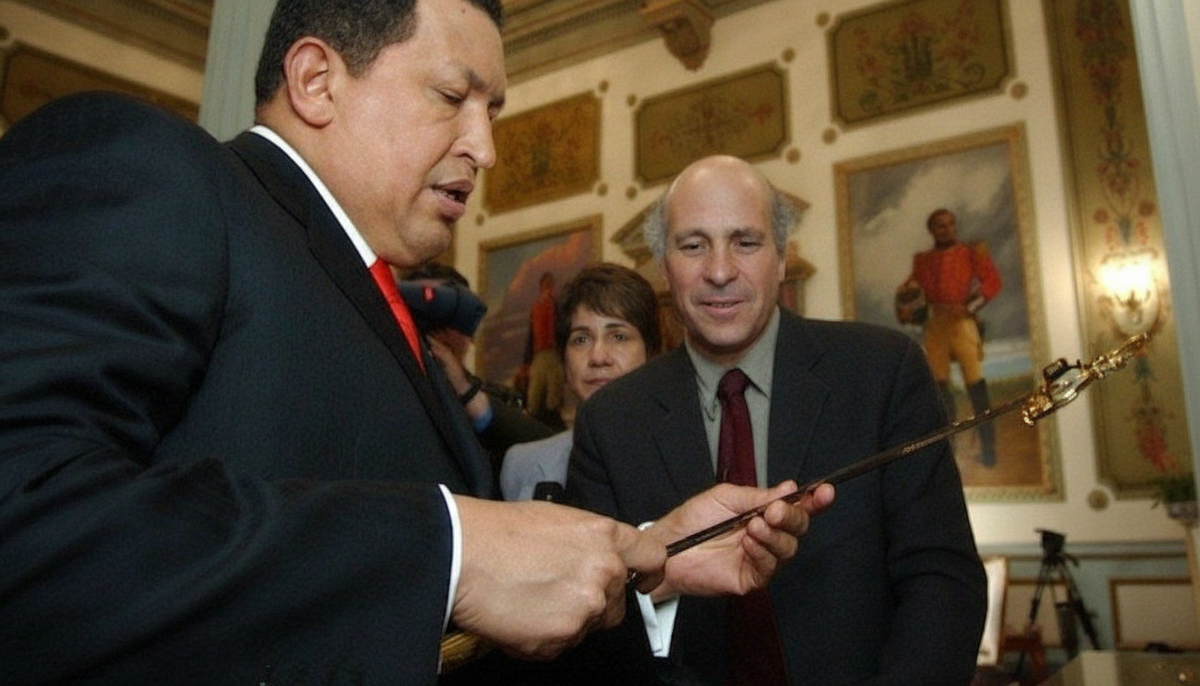
Venezuelan President Hugo Chávez shows Greg Palast Simon Bolivar’s sword. Picture: Palast Investigative Fund 2002.


I met with Venezuela’s President Hugo Chávez just days after he was kidnapped. I’ll tell you about that, and the current President Nicolás Maduro’s visit to my New York office. But first you must know three things about Venezuela, to understand why Donald Trump has ordered a covert operation to overthrow their government.

1.Venezuela has the largest reserves of oil on the planet.
2.Venezuela has the largest reserves of oil on the planet.
3.Venezuela has the largest reserves of oil on the planet.

Look it up: According to OPEC’s own site, Venezuela’s 303 billion barrels in proven reserves are four times the reserves of Saudi Arabia.


(By the way, Donald, when you announce a “covert” operation, it’s no longer covert. But never mind.)


For years, I was BBC Television’s correspondent covering Venezuela and US attempts to overthrow their elected government. Trump invented nothing. This is at least the fourth US-backed attempt at overthrow and assassination of a Venezuelan president.

The first attempt was in March 2002 when I was tipped off that Chávez would be overthrown in a military coup. Indeed, in April of that year, he was kidnapped by renegade officers who had the fantasy, shared by the US State Department, that the public hated Chavez and would celebrate his overthrow.

But it turned into another Bay of Pigs after tens of thousands of angry Venezuelans surrounded Miraflores Palace while the coup leaders “inaugurated” Exxon Oil’s lawyer as “president.” George W. Bush’s Ambassador to Venezuela attended this wacky inauguration of the faux president.

But then the plotters, with Exxon’s man and the US ambassador, fled the Presidential Palace after the coup leaders, fearing for their lives, returned Chávez, by helicopter, safely to his Oval Office.

(Download the film of my BBC reports, The Assassination of Hugo Chávez, produced with Oscar-nominated cinematographer Richard Rowley. If you’d like to make a tax-deductible donation, we would truly appreciate it.)

I met days later with Chávez, who told my BBC audience that while he was in the helicopter, he clutched his rosary because he expected to be pushed out into the sea.

Instead, he was returned safely by the frightened coup leaders back to his office. Chávez then chose to let his kidnappers escape without punishment.

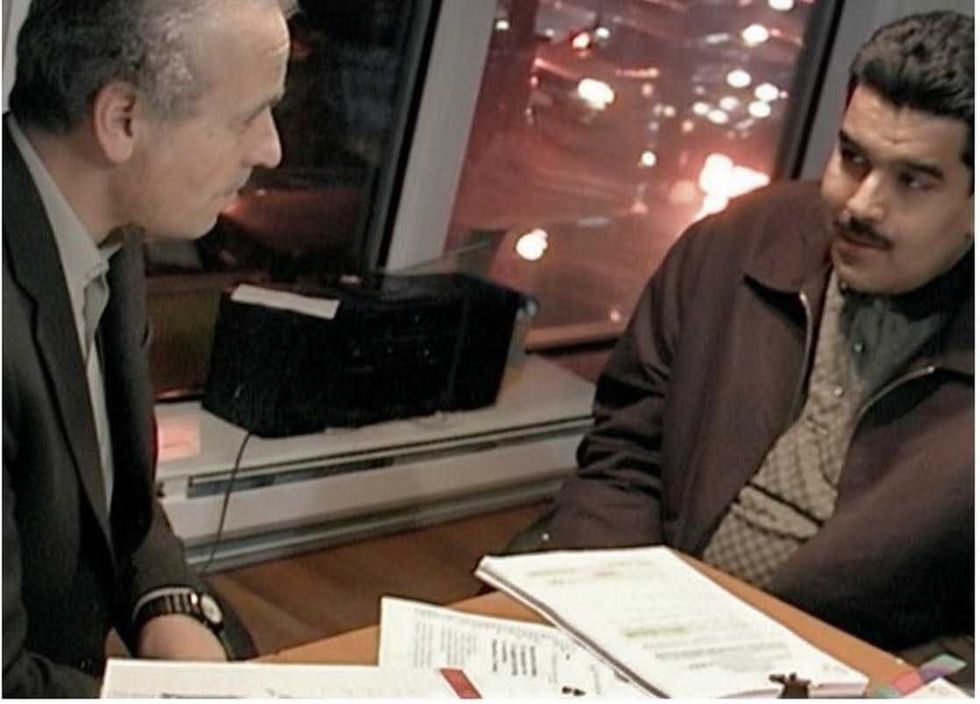
In 2004, Maduro, the future president, was sent by Chávez to meet with me at my office in New York to review the evidence that Wackenhut Corporation (now called GEO, a major operator of ICE detention centers) had planned to assassinate Chávez.

Venezuelan intelligence had secretly taped US Embassy contractors in Caracas talking in spook-speak: “That which took shape here is a disguised kind of intelligence… which is annexed to the third security ring, which is the invisible ring.” (“Invisible Ring”? Someone at the State Department has read too many John le Carré novels.)

The State Department under George W. Bush also tried to purge voters from Venezuela’s election files (and those in Argentina and Mexico) using the very same company, Choicepoint, that purged voter files in Florida in 2000 to hand Bush his baloney election “victory.”

Third try: During Trump I, the US attempted to bully Venezuelans into electing a white guy named Juan Guaidó (who lived in the US) whom Trump hoped would defeat Maduro in an election. But the Black and Indian population of Venezuela, after they finally elected one of their own, Chávez, were not going back to white minority rule which had crushed them for 400 years. Guaidó never even ran for president, but the US government nevertheless declared him the true president and gave this grifter all the US assets of CITGO, the Venezuelan oil company

Today, we are at the fourth attempt to overthrow Venezuela’s government by kidnap (again?!) or assassination.

This time is different, because President Maduro really did lose his third re-election bid for the presidency but has simply refused to leave office. (Hey, you’d think Trump would admire that.)

No question, Maduro has become a dictator. But if the US thinks it can invade Venezuela, or appoint Maduro’s replacement, you don’t know Venezuelans. They are patriots and they are all armed. How many Americans will Trump send to their deaths to get his hands on Venezuelan crude?

Democracy

The saddest thing is that Maduro has corrupted and destroyed the robust democracy that Chávez brought to Venezuela. In 2006, I joined Chávez’s opponent Julio Borges, a decent guy, on the campaign trail. Borges would get just two or three supporters in a town. Then I joined Chávez who, in the same town, would appear and draw thousands.

Chávez was wildly popular because, as an opposition journalist told me, derisively, “Chavez gives them bread and bricks!” — that is, he gave the public food, housing and medical care by using the nation’s massive oil proceeds for public services. Under the old regime, the oil wealth was siphoned into the pockets of wealthy Venezuelans in Miami.


I have little sympathy for Maduro, who like Trump has taken office through vote manipulation. But the invasion or assassination of either head of state should scare and horrify us all.

Why not Saudi Arabia?

Trump and our National Security Advisor, Marco Rubio, have said that Maduro must go because he has threatened democracy in Venezuela and is trafficking fentanyl into the US.

Think about it. If Trump wants to save democracy, why attack Venezuela, not the dictatorships of Saudi Arabia or Abu Dhabi or the Emirates? Let’s not forget that Arabian Peninsula “royals” are merely dictators in bathrobes.


Why Venezuela and not the Arabian Peninsula potentates?

Let me count the ways: Qatar has bought $2 billion of Trump crypto coins that will go into Trump family pockets. And there’s that little gift from Qatar of a 747 jet for The Donald, not the US government. And there’s the $2 billion in easy squeezy from the Saudis for Jared Kushner.

A 'narco terrorist'?


Trump has accused Maduro of running a cartel dumping fentanyl into the US, an accusation as credible as Trump’s claim against that other alleged narco-terrorist nation, Canada.

I am no fan of my once-friend Maduro, now a brutal authoritarian and vote thief, a Venezuelan Putin. But drug lord? No sane drug dealer would run drugs from Caracas to Miami. In fact, according to the latest UN World Drug Report, Venezuela is neither a major drug producer nor a key trafficking corridor to the US.

Trump’s troops have slaughtered more than two dozen people who were supposedly running drugs from Caracas to Miami. While Trinidad’s president is a Trump ally, that government stated that the two dead who could be identified, Chad Joseph and Rishi Samaroo, were simply commuting from work, like many workers, across the seven-mile strait between the countries. Even our Secretary of State, “Little Marco,” said the boat was merely heading to Trinidad then changed his statement to “Miami” after Trump announced their supposed destination.

And did you notice? Every time a US prosecutor interdicts a drug shipment, they proudly display the drugs and cash and the names of the dealers obtained in the haul. Yet after these little commuter boats were attacked, not sunk, we were never shown the drugs, the evidence.

There was indeed a drug boat, a submersible, attacked by the US. But American media generally failed to mention that, unlike the fishermen and commuters killed coming from Venezuela, the one real drug haul came from Colombia and was captured in the Pacific Ocean, not the Caribbean.

So where are the drugs coming from, if not Venezuela or Canada? According to a New Yorker investigation, one of the world’s largest and most violent cocaine cartels, the Kinahan Organized Crime Group, is run out of — you guessed it — Abu Dhabi.


Act of war

There’s no doubt why most Venezuelans want to see Maduro go. The economy is on its deathbed. Why? Because a US blockade, basically a siege of Venezuela, has caused the near total collapse of Venezuela’s source of wealth, its oil industry. By blocking oil equipment from going in, and an embargo of oil going out, the nation is being strangled. An embargo is a globally recognized act of war which Americans (let alone Venezuelans) never authorized.


Greg Palast meets Nicolás Maduro. Picture: Palast Investigative Fund 2004.


The idea that Maduro wrecked the economy is b------t through and through. Imagine if America laid siege to Texas, allowing no goods in, blocking oil from going out.

Nevertheless, the public, hoping the embargo would lift, voted out Maduro. He must go. But by Venezuelan ballots, not American bullets.

And let me tell you as an energy economist that the embargo of Venezuelan oil, cutting the nation’s exports 74 percent from 2.4 million barrels a day to 735,000, has easily added nearly a dollar to the price paid by Americans at the gas pump.

Chávez told me that he knew the limit of how far he could push the US and its oil companies. “I’m a good chess player,” he told me. Not Maduro. For example, Maduro turned down British Petroleum’s request to take over the oil fields once operated by the French national oil company. Britain later seized $10 billion in Venezuela’s gold reserves held in the British Exchequer.

As you’ll see at the opening of my film The Assassination of Hugo Chávez, the whacko idea of murdering Venezuela’s president was first floated on television by none other than televangelist Pat Robertson, whom inside sources told me was furious that he was turned down in his request to the Chávez government for a diamond mining concession.

To his TV audience, Robertson said, “You know, I don't know about this doctrine of assassination, but if [Chávez] thinks we're trying to assassinate him, I think that we really ought to go ahead and do it. It's a whole lot cheaper than starting a war.”

That’s true, I suppose. But why start a war at all?

Oil and diamonds. How much blood are they worth?

May I suggest that we return democracy to Venezuela with ballots, not bullets.Greg Palast is an investigative journalist and filmmaker, author of New York Times bestsellers including The Best Democracy Money Can Buy. Sign up for his reports at https://gregpalast.substack.com/
Could Trump order the military to kill Americans? It might be closer than you think

Robert Reich
October 25, 2025 
RAW STORY


The United States is now executing people on the high seas whom Trump calls “enemy combatants.” He’s doing so without a declaration of war, without input from Congress, and without any findings that they pose a threat to the United States.


At this moment, Secretary of Defense (or Secretary of War, as Trump prefers) Pete Hegseth is positioning warships, including an aircraft carrier, and planes, in waters off Latin America.

Hegseth has already bombed 10 boats, eight of them in the Caribbean and two others this week in the eastern Pacific.


So far, the death toll is 43.

Neither Trump nor Hegseth has offered any evidence to support their claims that the vessels have been smuggling drugs to the United States or were “operated by” Tren de Aragua, a group that Trump has designated as a terrorist organization.

It is illegal, under domestic and international law, to deliberately target civilians who are not directly participating in hostilities — even if they are suspected criminals.

Before Trump, the United States dealt with suspected maritime drug smuggling by using the Coast Guard, sometimes assisted by the Navy. If the suspicions proved accurate, the boat’s crews were arrested. They might then stand trial. The penalty for being convicted of drug trafficking was time in prison.

Now, Trump is summarily executing people suspected of being drug dealers, without any proof.

Trump claims that the attacks are are not murder because he has “determined” that the boats are smuggling drugs, that they are being run by drug cartels, that drug trafficking by cartels constitutes an armed attack on the United States, and that the United States is now engaged in a formal armed conflict with the cartels.

As a result, he reasons, the boat crews are “enemy combatants” and can be executed.

Every step in this so-called logic is questionable.

It’s also dangerous. What if Trump “determines” that anyone he dislikes — immigrants, Democrats, student protesters — is an “enemy combatant?”

He has already referred to the “enemy within” the United States — in characterizing domestic political opponents, including government officials, critics, activists, and protesters.

In his Sept. 30 speech to U.S. military’s top brass, Trump discussed using the military against this so-called “enemy from within.”

Trump has sent troops into Washington, D.C., Los Angeles, and Chicago — over the objections of mayors and governors. He plans to send more troops into more cities. He claims he’s doing it to deal with crime or to protect ICE agents or to protect ICE facilities. Again, the evidence is flimsy or non-existent.

ICE now holds 59,762 people in detention. Some of those detained have been American citizens. ICE made a mass arrest of 15 New York State elected officials. It has arrested members of Congress, active-duty firefighters, a child it accused of being a convicted adult in the MS-13 gang, a disabled military veteran, and a United States marshal — all of whom were shown to be U.S. citizens wrongfully held by ICE.

Trump’s Justice Department is now prosecuting people whom Trump has ordered it to prosecute — people who have tried to hold him legally accountable, such as New York Attorney General Letitia James and former FBI director James Comey.

Put it all together. How close are we to Trump ordering the execution of Americans he considers opponents?

Robert Reich is a retied professor of public policy at Berkeley and former secretary of labor. His writings can be found at https://robertreich.substack.com/.

Robert Reich's new memoir, Coming Up Short, can be found wherever you buy books. You can also support local bookstores nationally by ordering the book at bookshop.org.
Fears grow that Trump is entering 'war crimes territory': ​NYT Pentagon reporter

Sarah K. Burris
October 24, 2025 
RAW STORY


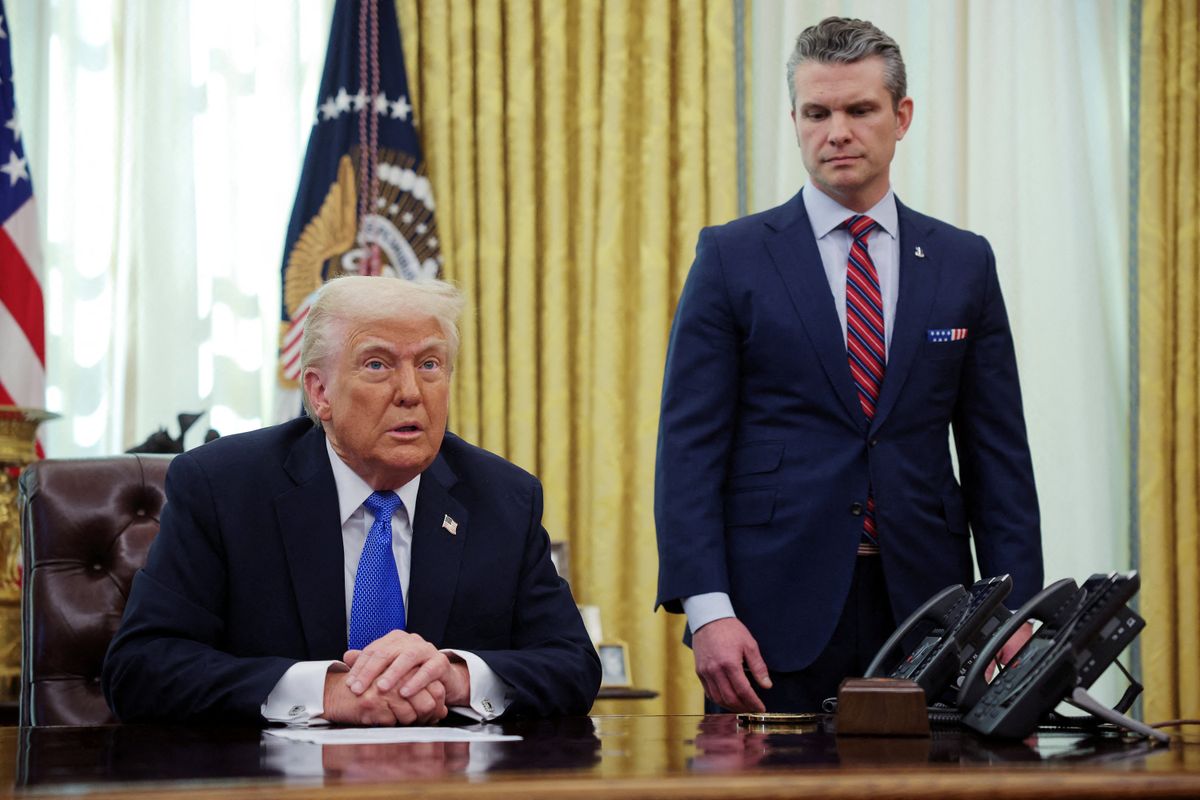
FILE PHOTO: U.S. President Donald Trump delivers remarks with Defense Secretary Pete Hegseth in the Oval Office at the White House, in Washington, D.C., U.S., March 21, 2025. REUTERS/Carlos Barria/File Photo

President Donald Trump deployed the USS Gerald R. Ford to the Caribbean as part of his ongoing war with what he calls "narco-terrorists" in the country. The bombing of unidentified boats in the waters off the coast of North and South America is entering "war crimes territory," one Pentagon reporter said on Friday.

There have been 10 "known" bombings of boats killing nearly four dozen people, The New York Times reported Friday.

Sending such a ship near Venezuela is an escalation, said the Times' Pentagon reporter Helene Cooper.

"An aircraft carrier is a ginormous projection of American power. We have been sending aircraft carriers to the Middle East, where we had been for 20 years at war. And to turn now and deploy an aircraft carrier, sending the Gerald Ford towards Venezuela is a huge statement of intent with an aircraft carrier, American sailors, American troops, American airmen, Navy fighter pilots are better able to strike targets in Venezuela," she said.

"That's sort of like parking a giant Howitzer on the doorstep of, you know, of Nicolas Maduro," Cooper described. "It's a really big deal. It's going to probably take seven days, seven to 10 days for them to get from Croatia to the Caribbean, the southern Caribbean," Cooper continued.

She noted it was a "massive statement of intent for the Trump administration" without going to Congress to ask for authorization to go to war. Only Congress can declare war. Trump, however, said he has no intention of asking for authorization.

“I’m not going to necessarily ask for a declaration of war,” Trump said on Thursday. “I think we’re just going to kill people that are bringing drugs into our country. Okay? We’re going to kill them, you know, they’re going to be like, dead.”

Cooper said she spoke with a general who told her that after the Supreme Court gave Trump immunity, he may not have to ask Congress for permission.

"And at some point, there is a lot of worry that, you know, that we are verging close now to what could be war crimes territory," she continued. "So, there's a lot of worry and there's almost — several officers I talked to today — two of them brought up, 'When is Congress going to step in and sort of exercise its own authority?'"

Some Republicans are starting to speak out on the matter, but only two were willing to support a measure ordering a stop to the bombings.

US hits Colombia's leader with drug sanctions, sparking sharp rebuke

Washington (AFP) – Washington slapped unprecedented sanctions on Colombia's leftist president, his wife, son and a top aide Friday, accusing them of enabling drug cartels -- and rocking a decades-old alliance.


25/10/2025 - FRANCE24

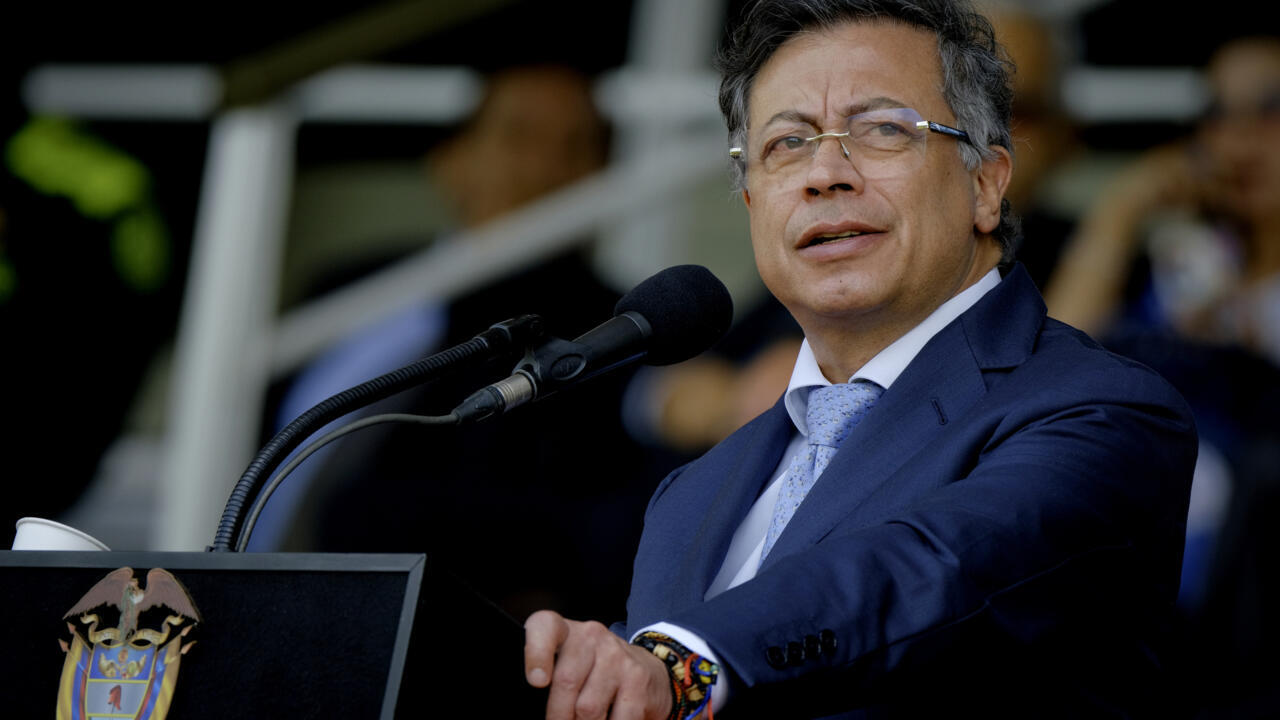
Colombia's President Gustavo Petro is now under US sanctions -- rocking a decades-old alliance between Washington and Bogota © Ovidio GONZALEZ / Colombian Presidency/AFP


The US Treasury blacklisted Gustavo Petro, first lady Veronica Alcocer, his eldest son Nicolas, and Interior Minister Armando Benedetti, banning them from travel to the United States and freezing any US assets they hold.

It was an unusual move. The US sanctions list is usually reserved for drug kingpins, terror operatives and dictators involved in widespread human rights abuses.

The rupture caps months of personal friction between President Donald Trump and Petro over US deportations and strikes on suspected drug boats off the coast of South America.

"President Petro has allowed drug cartels to flourish and refused to stop this activity," claimed US Treasury Secretary Scott Bessent.


Since taking power in 2022, Petro has opted to engage well-armed cocaine-producing groups in talks, rather than conduct open warfare.

Critics say the policy has allowed cartels and guerrilla groups to flourish, seizing territory and producing record amounts of cocaine.

Much of the cocaine ends up in the United States -- the world's biggest consumer.

The US government provided no evidence linking Petro directly to drug trafficking.

Petro's son is accused of accepting money from an alleged drug trafficker for his father's campaign, but the case has not yet been decided in court.
'Gringos go home'

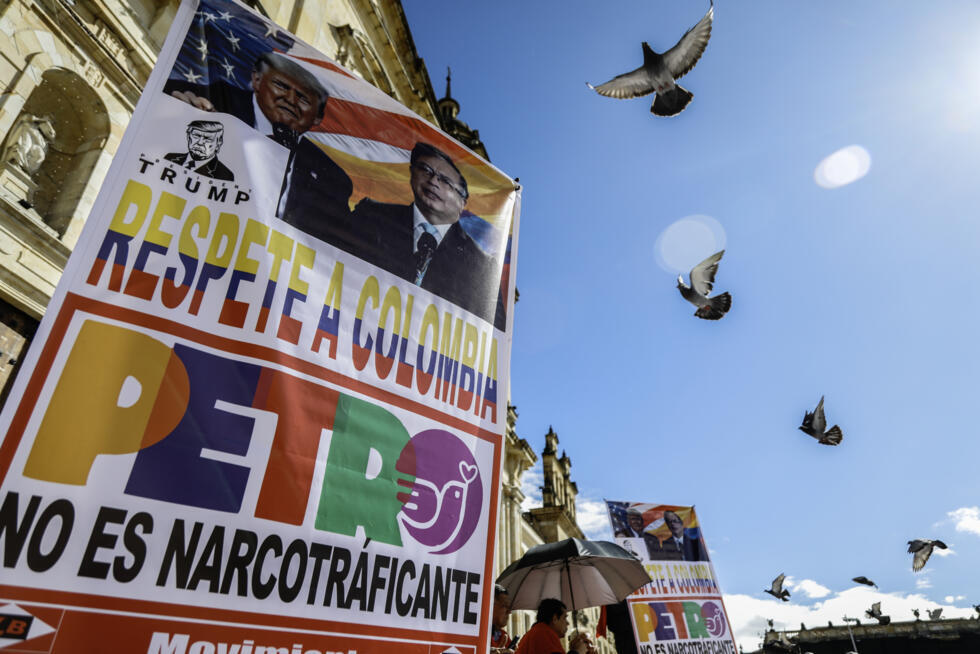
A poster reading 'Trump, respect Colombia, Petro is not a drug trafficker' is pictured during a rally called by Colombia's President Gustavo Petro in Bogota © John Vizcaino / AFP


The sanctions announcement was met with a furious response in Bogota.

Petro, a former guerrilla, channelled the defiant messages of famed Latin American revolutionaries.

"Not one step back and never on my knees," he posted on social media.

Benedetti, the powerful interior minister, was even more defiant, lobbing anti-US slogans and denunciations.

"This proves that every empire is unjust," Benedetti said in a social media tirade against the decision.

"For the US, a nonviolent statement is the same as being a drug trafficker. Gringos go home."

Petro had already called for a mass protest against Trump's policies to be held in Bogota on Friday.

The United States has destroyed 10 vessels and killed at least 43 people in under two months of strikes off South America, according to an AFP tally based on US figures.

Petro has called the operations "extrajudicial killings" and used a recent trip to New York to call on US soldiers to disobey Trump's orders.

Trump has bristled at Petro's open criticism of his policies and fiery anti-Washington rhetoric.

Saying Petro was "a thug" with a "fresh mouth," Trump announced a freeze on hundreds of millions of dollars in aid to Colombia.

He had already stripped Petro of his US visa before Friday's announcement.

Analysts warn the spat between the two mercurial leaders could have a profound impact on security in the hemisphere.

Colombia has long been a US bulwark against cocaine flows and leftist insurgencies, and Washington's chief ally in South America.

© 2025 AFP

Former Caribbean Leaders Denounce Trump’s Military Escalation in the Region


“The gravity of the present signals demands that we use all existing channels for dialogue to perpetuate a Zone of Peace,” said the elder statesmen in a joint letter.


The USS Sampson, a US Navy missile destroyer, docks at the Amador International Cruise Terminal in Panama City, Panama, on September 2, 2025.
(Photo by Daniel Gonzalez/Anadolu via Getty Images)

Julia Conley
Oct 24, 2025
COMMON DREAMS

Ten former leaders of Caribbean nations on Friday called on the current governments across the region to unite in a diplomatic effort to counter President Donald Trump’s unprovoked escalation, in which the US has struck at least 10 vessels in less than two months—claiming without evidence that the Trump administration is fighting “narco-terrorists” from Venezuela.

Former prime ministers of Antigua and Barbuda, Belize, Barbados, Dominica, Grenada, Guyana, Jamaica, and St. Lucia signed a joint statement titled “Caribbean Space: A Zone of Peace on Land, Sea and Airspace Where the Rule of Law Prevails,” and called on current leaders to recall the 1972 regional meeting at Chaguaramas, Trinidad and Tobago.


‘We Have Lived This Nightmare Before’: Latin American Lawmakers Condemn Trump Extrajudicial Killings


UN Experts Decry Trump Warmongering Against Venezuela as ‘Extremely Dangerous Escalation’

At the summit, noted the St. Vincent Times, “peace was enshrined as the guiding principle of Caribbean development.”

The former leaders wrote that “from this platform our region has always maintained that international law and conventions not war and military might must prevail in finding solutions to global challenges.”

“We are impelled to urge a pullback from military buildup to avoid any diminution of peace, stability, and development within our regional space,” the statement reads. “Our region must never become a pawn in the rivalries of others.”

They called on Caribbean leaders to avoid hosting foreign military assets.

“Our cooperation with international partners must never override our collective sovereignty or the principles of international law.”

“The gravity of the present signals demands that we use all existing channels for dialogue to perpetuate a Zone of Peace,” the leaders said. “We fully support our current heads of government in assisting the peaceful resolution of all conflicts and disputes.”

“We must not endanger our citizens in any crossfire, nor risk economic and human loss from wars that are not ours,” they added.

They noted that Caribbean nations have Shiprider Agreements with the US to “ensure that illicit drug traffickers could be tracked, pursued, searched, and lawfully apprehended without extrajudicial killing and the destruction of that which could provide conclusive evidence of criminal operation.”

“Our cooperation with international partners must never override our collective sovereignty or the principles of international law,” they wrote.

Since early September, the Trump administration has killed at least 43 people by striking vessels in the Caribbean and Pacific. Officials have claimed the boats have been operated by drug traffickers with the Venezuelan gang Tren de Aragua and other groups, but have provided no evidence for the claims. Fentanyl, which kills thousands of people per year in the US from overdoses, is not trafficked out of Venezuela, according to US and international drug and crime agencies.

“Although the United States Coast Guard interdicts staggering quantities of illegal drugs in the Caribbean each year, it does not encounter fentanyl on the high seas,” wrote Nick Miroff at The Atlantic. “South American cocaine and marijuana account for the overwhelming majority of maritime seizures, according to Coast Guard data, and there isn’t a single instance of a fentanyl seizure—let alone ‘bags’ of the drug—in the agency’s press releases.”

On Friday, the Pentagon revealed that it had deployed the USS Gerald Ford, an aircraft carrier, to the southern Caribbean Sea to “disrupt narcotics trafficking.”

Venezuelan President Nicolás Maduro has accused Trump of seeking regime change in his country, and the former officials urged regional leaders to reject any such efforts.

“We have remained steadfast in our repudiation of external intervention to effect regime change,” they wrote. “Military action in our maritime waters must always be governed by international law—not might.”


Don’t Let a Fascist Like Trump Act as Judge, Jury, and Executioner

What makes these strikes so appealing to President Donald Trump is that it gives him the godlike power to look down from above and smite anyone who displeases him. But that won’t stop the flow of drugs.


President Donald Trump announced a US military strike on a fifth boat in the Caribbean on October 14, 2025.
(Image: screenshot/Donald Trump/Truth Social)

Sanho Tree
Oct 24, 2025
OtherWords

The Trump administration has been blowing up fishing boats in the Caribbean—and now one in the Pacific—claiming without evidence that they’re “drug boats.”

These are extrajudicial executions outside any system of law. And there’s a reason we shouldn’t allow drug warriors to act as judge, jury, and executioner: because over the years, they’ve made many, many tragic mistakes and killed lots of civilians.

I’ve seen countless tragedies like these in my decades studying drug policy. Two were particularly egregious.

In 2001, the United States was using local air forces to shoot down alleged trafficking planes over the Peruvian Amazon. In this case, a surveillance plane flown by CIA contractors misidentified a pontoon plane and had it shot down. Instead of traffickers, they killed a missionary from Michigan named Veronica Bowers and her infant daughter.

Would it be okay for the Mexican military to blow up a US fishing boat because they believed it was smuggling deadly guns into Mexico, even if they offered no evidence? Would that be acceptable to this administration?

The second case was an incident in Honduras in 2012, where the Drug Enforcement Administration and local forces mistakenly opened fire on a water taxi, killing four people—including two pregnant women—and then tried to cover it up.

What makes these strikes so appealing to President Donald Trump is that it gives him the godlike power to look down from above and smite anyone who displeases him, without consequence. He’s even told sick jokes about local fishermen in the Caribbean now being afraid to get in their boats.

If he’s allowed to normalize this kind of international extrajudicial killing, I don’t think it’s a far leap for him to try it domestically.

Imagine a cop chasing a guy down the street, getting hot and tired, and shooting the suspect in the back. The cop probably wouldn’t tell a judge, “Well your honor, I didn’t want to chase him, so I just shot him.” But here’s the president declaring on the international stage: We’re not going to do police work. We’re just going to kill people.

Now imagine the shoe’s on the other foot. Most of the killings in Mexico are done by guns smuggled from the United States. They call it the “River of Iron,” and it’s responsible for literally hundreds of thousands of killings in the country in the past 20 years.

So would it be okay for the Mexican military to blow up a US fishing boat because they believed it was smuggling deadly guns into Mexico, even if they offered no evidence? Would that be acceptable to this administration?

The drug war acts as a price support for drug dealers. That’s why no one wants the drug war to continue more than the smugglers themselves.

Here’s what drug warriors don’t understand: The US isn’t under armed attack from drug traffickers. It’s actually the opposite.

Most drugs cost pennies per dose to manufacture. But the higher the risk to the individual smuggler—like the risk of getting arrested, shut down, or blown up—the more they can charge as drugs move down the smuggling chain.

By the time drugs reach users, they’ve snowballed in value. But consumers in the US have proven more than willing to pay hyper-inflated prices, and even risk arrest, for drugs—just as drinkers were once willing to pay bootleggers huge sums for booze during Prohibition.

In short, our policies create tremendous value for substances that are relatively cheap. We’re making trafficking more profitable, not less.

So if the US bombs a trafficker—or an alleged trafficker—we escalate the risk premium for everyone else in that industry. It’s a bad deal for you if you’re the one who’s killed, but it creates a “job opening” for others in the operation, or a rival cartel, to take over that turf—which is now more lucrative.

The drug war acts as a price support for drug dealers. That’s why no one wants the drug war to continue more than the smugglers themselves. This was ultimately why the US ended alcohol prohibition.

Addiction is a public health problem and requires public health solutions, not allowing someone like Trump to play judge, jury, and executioner—at home or abroad.

Tensions rise in Caribbean as families of fallen men accuse Trump of unjust killings

Issued on: 24/10/2025 - FRANCE24

Relatives of a Trinidadian man who say he was killed in a US military strike in the Caribbean are demanding evidence to back up Trump's allegations that those who died were trafficking drugs. Alice Brogat and Siobhan Silke tell us more.


US Threatens Invasion of Venezuela, Expands ‘Drug’ War to Colombia


Devin B. Martinez24 Oct 2025


As US warships inch towards Colombia and Venezuela, Petro denounces Trump’s airstrikes in the Caribbean as “extrajudicial executions”


The world’s largest aircraft carrier, USS Gerald R. Ford (CVN 78), has just been deployed to the Caribbean by "Secretary of War" Pete Hegseth. Photo: US Navy

As the US continues to escalate threats and military pressure against Venezuela and now Colombia as well. On Friday, October 24, “Secretary of War” Pete Hegseth announced the deployment of aircraft carrier USS Gerald R. Ford (CVN-78), to the Caribbean. The most capable and lethal strike platform in the world adds to the already massive military buildup in the Caribbean of 10,000 US troops, at least eight war ships, P-8 surveillance planes, and F-35 jets deployed amid the Trump administration’s alleged counter-narcotics operations. US troops are also reportedly deploying to Trinidad and Tobago, mere miles from Venezuela, for five days of coordinated “military exercises”.

“It’s past time for Maduro to go. Keep it up, President Trump,” said Senator Lindsay Graham in an X post on Friday, October 24.

Venezuela is “a candidate for decisive military action on land, sea, or air” because it has for years been “a safe haven for drug cartels poisoning America,” Graham added.

During a White House address on October 23, US President Donald Trump said, “Now they’re coming in by land … I told them the land is gonna be next.”

“It’s very hard to find any floating vessel right now. In the Pacific or in the gulf,” Trump added.

Acknowledging the escalation that a land invasion would represent, Trump said, “We may go to the Congress and tell them about it but I can’t imagine they’ll have any problem with it.

On October 21 and 22, the US military also expanded their maritime operations to Colombia’s Pacific Coast, striking two boats near the South American country. The attacks marked the eighth and ninth such vessels blown up by the US, allegedly targeting drugs, but the first beyond the Caribbean Sea. Colombian President Gustavo Petro has called these attacks “murders” and violations of the country’s sovereignty.

At least 43 people have been extrajudicially executed in a total of ten boat bombings since September.

Petro defies Trump

Colombian President Gustavo Petro has been one of the most outspoken defenders of Venezuela amid the latest bout of US aggression, condemning the US military attacks in the region. At the UN General Assembly in September, Petro said the passengers on the boats were not narco traffickers but rather “poor young people from Latin America”. He went as far as to call for legal investigations into the US President for the extrajudicial killings:

“Criminal proceedings must be opened against those officials, who are from the US, even if it includes the highest-ranking official who gave the order: President Trump.”

Friction was already present then, especially after the US revoked the Colombian president’s visa over his remarks at the UNGA. Yet the tension sharply escalated this week. In a press conference last weekend, Petro declared, “Oil greed is behind the strategy that is firing missiles at fishermen.”

The Colombian head of state asserted that the US military aggression in the Caribbean and against Venezuela has nothing to do with fentanyl or drugs.

“What they want is Venezuela’s oil.”

To that end, the leftist president accused, the US is conducting “extrajudicial executions” in the Caribbean, in violation of international law. He also made a post on X, directly implicating the White House in the killing of a Colombian fisherman, in one of its missile strikes on a Caribbean vessel in mid-September.

“US government officials have committed a murder and violated our sovereignty in territorial waters,” Petro wrote.

The Latin American leader said that fisherman Alejandro Carranza “had no ties to the drug trade”, and emphasized that the small Colombian vessel had experienced an engine failure and “had its distress signal up”, seeking help when it was targeted by the US.

Trump unleashes threats on Colombia, and bombs off its coast

Petro’s comments aggravated US President Trump, who took to his Truth Social platform to call the Colombian president an “illegal drug leader” on Sunday.

In an apparent threat of direct military confrontation, Trump said Petro “better close up these killing fields immediately, or the United States will close them up for him, and it won’t be done nicely.”

In response to Trump’s threats, Colombia recalled its ambassador to the US and asserted that Colombian troops would not support a potential military intervention in Venezuela.

“What Colombian would help invade where their own family lives, only to see them killed like in Gaza?” Petro said.

The diplomatic row continued through the week, with Trump announcing on Wednesday that all funds to Colombia had been cut and threatening higher tariffs.

“What happens if they take away aid? In my opinion, nothing,” Petro said in a news conference on Thursday. Confident in his country’s ability to mitigate the effects of tariffs, he claimed that Trump is unlikely to raise tariffs on oil and coal because of the potential consequences. Since these industries represent 60% of Colombia’s exports to the US, the majority of their trade is relatively safe, while alternative markets exist for other industries that may be more vulnerable.

Trump also doubled-down on his characterization of the Colombian president as a drug leader this week, as well as his threats of military confrontation.

“They’re doing very poorly, Colombia. They make cocaine. They have cocaine factories … he better watch it or we’ll take serious action against him and his country,” Trump said.

On October 24, US Treasury Secretary Scott Bessent announced that he was levying sanctions against Petro and members of his family, alleging “cocaine production in Colombia has exploded to the highest rate in decades, flooding the United States and poisoning Americans.” Bessent insisted that “President Petro has allowed drug cartels to flourish and refused to stop this activity.”

In response, Petro declared that he would take legal action in the US justice system against Trump’s accusations.

“I will defend myself judicially with American lawyers in the American justice system” from the ‘slanders’ by high-ranking officials, said the leftist leader.

Although Washington decertified Colombia’s efforts to combat drug trafficking in September, claiming that the country is not doing enough in counter-narcotics, Petro says 17,000 cocaine factories have been destroyed under his government.

He has also pointed out that drug trafficking is concentrated in Ecuador. “It already seems that most of the export of cocaine through the Pacific is being made from the ports of Ecuador” turning it into the “largest cocaine export platform in the region.”

Amid the threats and accusations from the White House against Petro and his country, the US military targeted two small boats off the coast of Colombia this week, expanding its war at sea from the Caribbean into the Pacific.

Attempts to bolster the Colombian far-right ahead of elections

Another significant accusation that President Gustavo Petro has levied against the US, is that Trump’s military and diplomatic pressure against Colombia aims to boost far-right forces in the country ahead of elections.

Colombia’s presidential election is scheduled for May 31, 2026, and legislative elections will be held in March.

Petro, Colombia’s first leftist president, was elected in 2022. Since Colombia’s constitution doesn’t allow consecutive re-election, Petro will be leaving office next year. While his administration pursued major reforms in labor, social welfare, and foreign policy, many of those reforms have struggled in a divided Congress and a deeply polarized country.

In this context, the nation’s next president could have a major impact on whether Petro’s agenda and direction for the country continues, is slowed, or totally reversed.

Leading up to the elections, voters are undoubtedly paying close attention to how well this administration manages diplomatic crises, economic policy, and security. At such a critical time, threats, condemnations, and mischaracterizations from the US could feed opposition narratives about a leftist government being incompetent, “soft” on security, or uncooperative with counter-narcotics and the US military. Cuts in aid also represent a form of pressure, reducing the state’s capacity and even security in some cases, opening opportunities for the far right.

On the other hand, Washington’s aggression also risks provoking deeper unity in the country behind the leftist, sovereigntist direction. As Petro frames the US missile strikes as “violations of sovereignty” while the US continues to threaten confrontation or invasion, an anti-imperialist sentiment could quickly grow among his base.

At a critical moment for Colombia, Petro has argued that the purported “drug-trafficking operations” are instead a political tactic that aims to tip the scales internally in favor of US interests.

Regional solidarity with Colombia and Venezuela 

The solidarity between Colombia and Venezuela has taken center stage this week as both countries find themselves under increasing pressure from the US. But there is a wave of solidarity growing across Latin America and the Caribbean and the rest of the world amidst the escalating aggression.

“The U.S. president has unleashed a series of lies and falsehoods aimed at linking President Petro and his government to illicit drug production,” denounced the Bolivarian Alliance for the Peoples of Our America (ALBA-TCP) in a statement released October 21.

The US is launching “threats of military action and unilateral coercive measures that constitute a flagrant violation of Colombia’s national sovereignty,” the regional forum declared.

On October 22, Venezuela’s Minister of Defense Vladimir Padrino Lopez announced that Colombia has the full support of the Bolivarian National Armed Forces.

“Anyone who refuses to kneel before US imperialism risks being called a narcotrafficker,” he said. The insult “offends not only [Petro] but also the Colombian people.”

In a televised address, Nicólas Maduro said, “Colombia knows that we are one … If they touch Venezuela they touch Colombia, we are one homeland of the heart.”

Courtesy: Peoples Dispatch

Baghdad to Caracas: Washington Manual on Sanctions & War


Manolo De Los Santos 


The recent US airstrikes in the Caribbean and military threats against Venezuela are a continuation of decades (or even centuries) of US policy on the region, not a departure from it.

Over the last several weeks, Washington has escalated threats and hostilities against Venezuela, and US President Donald Trump openly confirmed that he authorized the CIA to carry out covert action against the country. These actions are concerning and represent a serious intensification of the war drive against the Caribbean country, and they also confirm what many have been saying for years, the US is heavily invested in what happens in Venezuela and is not afraid to use all tools at its disposal to impose its interests.

“Can anyone really believe the CIA hasn’t already been operating in Venezuela for 60 years?” Venezuelan President Nicolás Maduro asked, after Trump announced the authorization of CIA activity in his country.

The answer, when viewed through the historical record of two centuries, confirms a pattern of continuous interference aimed at asserting US dominance over the entire hemisphere. The escalating threats of war emanating from the Trump administration against Caracas represent not a new policy, but the culmination of a longstanding project of regime change, one that bears profound and disturbing similarities to the drive for war against Iraq under the Bush administration.

Washington has always viewed Latin America and the Caribbean through the lens of the Monroe Doctrine, unilaterally reserving the region for US geopolitical dominance. The last two hundred years confirm a pattern of repeated, aggressive intervention. The most notorious recent examples, where US involvement spanned political support, intelligence operations, and direct military intervention, include the 1954 coup against Jacobo Arbenz in Guatemala, the 1965 invasion of Dominican Republic that thwarted the return of a progressive government led by Juan Bosch, the 1973 coup that dismantled Salvador Allende’s socialist project in Chile, the 1983 plot to overthrow the government of Maurice Bishop and the invasion of Grenada, and the repeated overthrow of Haitian President Jean-Bertrand Aristide in 1991 and 2004. The 2009 coup in Honduras against the government of Mel Zelaya continued this tradition.

However, Venezuela has become the definitive target, facing more US-backed attempts at regime change than any other Latin American country in the last quarter-century. The obsession with reclaiming control over the country began shortly after Hugo Chávez’s election in 1998, a victory that signaled a radical shift away from US-sponsored neoliberal policies and the beginning of a period of major transformations from poverty reduction to regional integration led by a wave of left governments in Latin America. Washington actively supported numerous efforts to remove Chávez, notably a military coup in 2002 that was defeated by a mass uprising and the crippling 2002–2003 oil lockout aimed at shutting down the country’s most important source of revenue.

Under both George W. Bush and Barack Obama, millions of dollars were funneled to drive Venezuela’s right-wing groups, often lacking a social base, into direct confrontation with the Venezuelan government through tactics that ranged from assassination plots to terrorist actions. This funding stream supported groups and leaders who, while posing as democratic opposition or non-governmental organizations, have consistently advocated for the violent removal of the country’s democratically elected government. One notable recipient of US funds, María Corina Machado, the far-right leader who was recently awarded the Nobel Peace Prize, built her political career on decades of advocacy for US and Israeli foreign intervention.

The pattern of support for regime change continued after Chávez’s suspicious death in 2013, which prompted many to wonder about a CIA plot. After the election of Nicolás Maduro, the Obama administration backed a violent protest wave in 2014, called guarimbas, marked by racist lynchings of Black supporters of the government by right-wing mobs. Maduro faced another sustained period of US-backed violent protests in 2017. A 21-year-old Afro-Venezuelan Orlando Figuera, was attacked and burned alive in Caracas by opposition activists in May 2017.

Economic siege intensified

In 2015, President Obama escalated rhetorical and economic pressure by declaring Venezuela an “extraordinary and unusual threat to US national security.” This charge was widely recognized as having no factual basis and was initially rejected even by some Venezuelan opposition leaders. Yet, the declaration provided the legal pretext for the imposition of sanctions, which initiated the collapse of the oil industry and devastated the Venezuelan economy.

Within a year of Trump’s first term, the US imposed even harsher sanctions, directly targeting Venezuela’s oil sector. Prior to the 2017 sanctions, the average monthly decline in oil production was approximately 1%. Following the August 2017 executive order to block Venezuela’s access to US financial markets, the rate of decline plummeted, falling at more than three times the previous rate. The August 2019 sanctions created the “legal” framework to seize billions in Venezuela’s foreign assets and specifically targeting the state oil company PDVSA and prohibiting exports to the US market, which previously absorbed over a third of Venezuela’s oil, delivered a catastrophic shock.

The Washington Office on Latin America (WOLA) documented that these sanctions caused the Venezuelan state to lose between USD 17 billion and USD 31 billion in potential oil revenue. This loss of hard currency directly reduced the state’s capacity to import food, medicine, and essential goods, increasing mortality rates and creating a real humanitarian crisis. The intensification of US sanctions, particularly those beginning in 2017, contributed to Venezuela experiencing the largest economic contraction in recorded Latin American history, with its Gross Domestic Product shrinking by an estimated 74.3% between 2014 and 2021.

The Iraq playbook, updated: sanctions as economic warfare

The first Trump administration applied a policy of “maximum pressure” to topple Maduro, formalizing the goal of regime change with unparalleled aggression. Apart from the application of punishing oil sanctions, it also led to the farcical backing of Juan Guaidó’s self-declaration as president in January 2019. This also led to the deployment then of US warships and the designation of the Maduro government as a “narco-terrorist” entity, echoing the pretexts for the 2003 invasion of Iraq. This culminated in the subsequent financing of Operation Gideon, an inept maritime invasion by US-backed mercenaries in May 2020 that is now remembered as a “bay of piglets”.

The rhetorical parallels between the two campaigns are striking. In 2003, the Bush administration justified war on the basis of fabricated claims regarding Saddam Hussein’s possession of “weapons of mass destruction” (WMD) and alleged links to terrorism. Similarly, the Trump administration has sought to justify military and covert action in Venezuela by invoking the “narco-terrorism” narrative. Both were attempts to transform a political conflict into a pre-emptive security threat requiring military response.

Yet, the most profound similarity lies in the strategy of economic strangulation used against both nations. From 1990 until the 2003 invasion, comprehensive multilateral sanctions were imposed on Iraq, devastating its civilian population while failing to remove Saddam Hussein. These measures placed severe restrictions on Iraq’s oil exports and strictly controlled the import of goods. The effect was a humanitarian catastrophe, with studies estimating that the sanctions contributed to the deaths of hundreds of thousands of children under the age of five due to malnutrition and a lack of clean water and medicine. Former Assistant Secretary of the United Nations, Denis Halliday, who resigned in protest, called the sanctions “genocidal.” The policy’s brutality was infamously summarized by then-US Ambassador to the UN Madeleine Albright, who, when asked if the deaths of half a million Iraqi children were “worth it,” replied, “We think the price is worth it.”

The sanctions on Venezuela, particularly those imposed in 2019 targeting the oil industry, replicated this collective punishment strategy with even greater initial severity. Unlike Iraq, which eventually received some relief through the UN-administered Oil-for-Food Program (despite US and UK efforts to block vital humanitarian supplies under a “dual-use” rationale), the Venezuelan government was immediately cut off from its primary source of foreign exchange. The Center for Economic and Policy Research (CEPR) argued that the sweeping nature of the 2019 sanctions created a near-total trade embargo that was possibly “more draconian” than the pre-war Iraq sanctions, noting the absence of any comparable humanitarian mechanism to mitigate the loss of billions in oil revenue.

Hegemony and the ideological challenge

The US interest in Venezuela extends beyond just taking control of the world’s largest oil reserves. The primary objective is ideological and political: overthrowing an independent government in Venezuela that has been both a source of support for other progressive governments and a stumbling block for US plans to impose far-right governments in the region. Venezuela’s government represents a node of resistance, and its successful overthrow would reassert the dominance of US foreign policy in the region, sending a clear message to other nations considering charting an independent political and economic course. The threat of intervention is thus not only about economics, but about defending the ideological integrity of the Monroe Doctrine in the 21st century.

The latest round of escalation of hostility toward Venezuela under Trump represents an acute and dangerous phase, marked by recent extrajudicial strikes in the Caribbean and explicit threats of land strikes. So far, at least 32 people have been killed in at least seven such attacks since early September. Some of the victims have been confirmed as citizens of Colombia and Trinidad and Tobago. The administration has accused the victims of being “narcoterrorists” without providing concrete proof, with their families asserting those killed were fishermen.

The campaign against Venezuela is fundamentally a continuation of a two-century effort to maintain imperial control over the region. Trump’s mad, relentless drive to topple Nicolás Maduro as part of a historical compulsion to assert dominance, not only through sanctions and support for internal unrest, but now through extrajudicial killings at sea and threats of land operations, has brought the region to the brink of a massive conflict. Such a war would not only be a disaster requiring a vast deployment of troops, but would almost certainly destabilize all of Latin America and spill far beyond Venezuela’s borders. However, a majority of the American people have shown they oppose using military force to invade Venezuela and a bipartisan resolution was raised by California Senator Adam Schiff and Kentucky Senator Rand Paul to block Trump from using force against Venezuela. Yet, the ultimate check on this dangerous adventure may yet rest with the American public, who must demand transparency and an immediate end to the march toward another disastrous war.

Manolo De Los Santos is Executive Director of The People’s Forum and a researcher at Tricontinental: Institute for Social Research. His writing appears regularly in Monthly Review, Peoples Dispatch, CounterPunch, La Jornada, and other progressive media. He coedited, most recently, Viviremos: Venezuela vs. Hybrid War (LeftWord, 2020), Comrade of the Revolution: Selected Speeches of Fidel Castro (LeftWord, 2021), and Our Own Path to Socialism: Selected Speeches of Hugo Chávez (LeftWord, 2023).

Courtesy: Peoples Dispatch


Trump Chooses War Over Diplomacy in the Caribbean


Devin B. Martinez 


After killing 21 people in a series of airstrikes on boats off the coast of Venezuela, the US closes all diplomatic channels and prepares for further military aggression in the region.

On October 6, US President Donald Trump ordered the termination of diplomacy with Venezuela. Richard Grenell, special presidential envoy, was directed by Trump to halt all diplomatic outreach and talks with Venezuelan President Nicolás Maduro.

The move follows multiple US missile strikes on boats in the Caribbean Sea. Washington claims the operations target drug traffickers, but regional leaders and legal experts say they are escalating into an undeclared war against Venezuela.

Caracas calls for diplomacy, US abandons it for war

Grenell had previously been the primary negotiator between the two governments and was involved in US-Venezuela policy decisions in general.

Back in September, President Maduro sent a letter directly to Trump, calling for diplomacy and refuting the drug-trafficking accusations the White House has levied. He pointed out how crucial Grenell’s work had been in overcoming false reports and misunderstandings that had emerged around deportation flights from the US.

“This issue was swiftly resolved and clarified during discussions with Mr. Richard Grenell. This channel has functioned flawlessly to date,” the letter stated.

Maduro cited UN data demonstrating the country’s “impeccable record in the fight against international drug trafficking”.

“This and other matters will always be open for direct and frank discussion with your special envoy Grenell, so that we can overcome media noise and fake news.”

Weeks later, Grenell’s communication with Caracas was ceased completely by President Trump.

Washington’s total diplomatic disengagement suggests that hardliners like Secretary of State Marco Rubio, who have openly called for regime change in Venezuela, are now freely leading a more aggressive, militaristic approach toward the most oil-rich nation on earth.

On Thursday, October 9, Maduro filed a complaint with the UN Security Council, requesting an emergency session over US military actions in the Caribbean.

Airstrikes at sea

The US military has now carried out airstrikes on at least four small boats in the Caribbean, raising the reported death toll of Washington’s current military aggression in the region to 21. Officials say the campaign aims to combat alleged drug trafficking but have provided no evidence for the claim.

Airstrikes began on September 2, when 11 people – later identified as fishermen – were killed in a missile strike on the first targeted ship off the coast of Venezuela.

Colombian President Gustavo Petro recently announced that the fourth bombed boat was a Colombian vessel, accusing Trump of opening a “war scenario” in the region.

“This is no war against smuggling,” Petro said. “It is a war against oil and it must be stopped by the world.”

The Trump administration has denied Petro’s allegation that the vessel was Colombian, however, an anonymous US official confirmed to the New York Times that Colombian citizens were on board.

The uncharged, untried, and largely unidentified victims of the last month of US aggression are accused of being narcotraffickers by the Trump administration.

The US has deployed at least eight warships, a nuclear-powered attack submarine, several P-8 surveillance planes, and 4,000 military personnel to the waters of the Caribbean, as well as F-35 fighter jets to Puerto Rico.

The scale and level of aggression, combined with the lack of evidence for drug trafficking accusations, has raised questions about Washington’s true intentions with Venezuela. Sources inside the Trump administration told NBC News in September, “The goal is to force Maduro to make rash decisions that could ultimately lead to his ouster – without American boots on the ground.”

US is waging an “armed conflict” against “unlawful combatants”, declares Trump

Legal experts, US lawmakers, and anti-war groups have asserted that military force in international waters is illegal, violating both international and US law, bypassing due process and law enforcement norms, and lacking any clear justification.

In an apparent attempt to provide some legal basis for the hostilities, President Trump sent a report to Congress last week declaring that the US military is engaged in a “non-international armed conflict” with drug cartels and has killed “unlawful combatants” in the Caribbean.

The president has “designated [cartels] as terrorist organizations, and determined that their actions constitute an armed attack against the United States,” Earl Matthews, the Pentagon’s general counsel told lawmakers, as reported by CNN.

The report sent to Congress is required by law (Section 1543a United States Code) whenever US military forces are engaged in hostilities, but it doesn’t automatically grant or expand the legal basis for a military campaign.

However, Secretary of War Pete Hegseth already cited the recent “legal justification” by President Trump when pressed on Sunday about the most recent airstrike at sea. “We have every authorization needed,” Hegseth told Fox News. “These [cartels] are designated as foreign terrorist organizations.”

Although some senators have questioned “the legal rationale, the mission itself, and the intel surrounding the strikes”, a war powers bill that would have limited Trump’s power, halting further airstrikes on boats without authorization from Congress, was voted down on Thursday, October 9.

The White House insists that its “armed conflict” is legal and constitutional. Yet experts and critics say Trump is waging a secret war against undefined enemies, without fully informing Congress or the people of the US – who overwhelmingly reject US intervention in Venezuela. Polls show that only 16% of Americans would support a US invasion of the country.

Threats of land strikes

Despite widespread opposition, President Trump has openly threatened a direct US attack on Venezuela. During an event on October 5 at Naval Station Norfolk in Virginia, he praised the Navy for how successful the missile strikes on alleged drug boats have been.

“We’ll have to start looking about the land because they’ll be forced to go by land,” he said.

The threat came days after NBC News reported that US military officials had in fact already drawn up plans for drone strikes within Venezuelan territory.

Venezuela belongs to Venezuelans, declares Maduro

Caracas has attempted to open dialogue with special envoy Richard Grenell, President Trump himself, and now the UN Security Council. Amid its diplomatic efforts, the country has also made massive efforts to increase its security and defense capabilities.

On October 6, Maduro announced that Venezuelan security forces had foiled a “false flag” plot by local extremists to bomb the US embassy in Caracas, in an apparent attempt to justify US military provocation. Maduro assured that his administration would reinforce security measures to protect the embassy “despite all the differences we have had with the governments of the United States.”

As soon as the US military deployment was announced by Marco Rubio in August, Venezuela mobilized its 4.5 million members of the Bolivarian National Militia. However, after enlistment campaigns calling on the Venezuelan people to defend the country’s sovereignty against US aggression, 8 million people signed up to join the militia, raising the total size of the force to over 12 million civilian combatants, according to the government. The country has conducted advanced training across the entire territory and the Caribbean Sea to consolidate its defense forces and prepare for any US attack.

“What they want is war in the Caribbean and South America. For a regime change to impose a puppet government and steal the oil, gas, and gold,” the president of the Bolivarian Republic proclaimed during the inauguration of a massive hospital in Caracas.

“But we have news for the North American empire,” he continued. “That oil, that gas, that gold, this land, and this people will continue to belong to Venezuelans. And we will never allow our homeland to be violated or touched. Never!”

Courtesy: Peoples Dispatch