Sunday, July 20, 2025

UK move to lower voting age sparks renewed calls from Israeli youth

'This generation matured with the country through national crises': Inspired by Britain’s decision to extend voting rights to 16-year-olds, Israeli student leaders urge similar reform ahead of national elections

Tamar Trabelsi-Hadad|07.19.25 | YNET

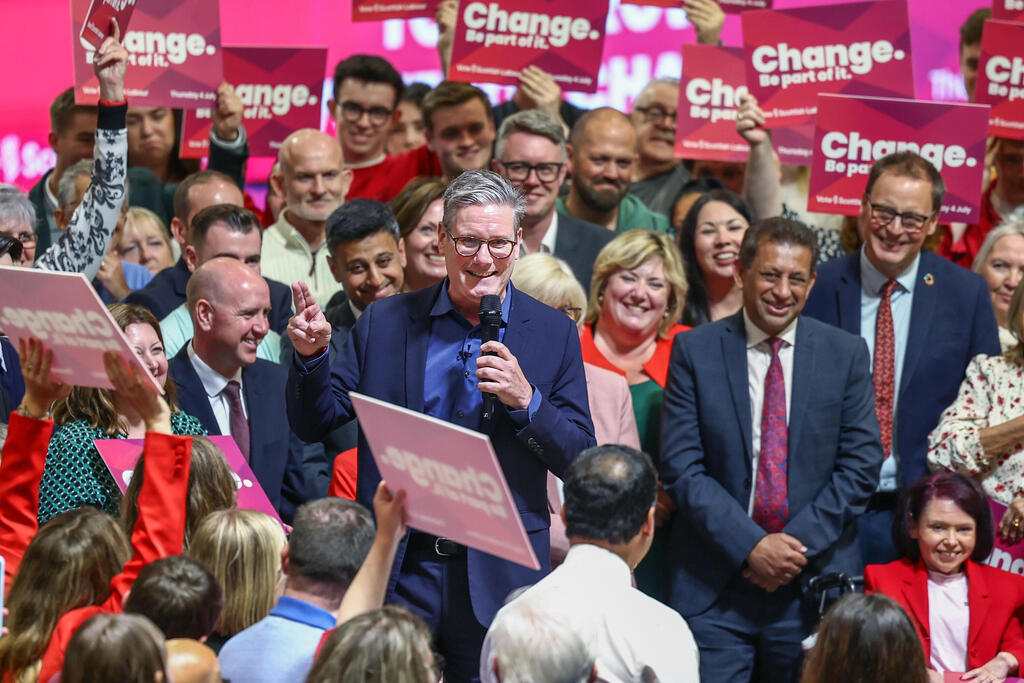
British Prime Minister Keir Starmer’s announcement this week that the voting age will be lowered to 16 has reignited calls among Israeli youth leaders for a similar move ahead of future national elections.

Starmer, citing low voter turnout in recent elections, said it was time to allow 16- and 17-year-olds to help shape their government. “I think it’s really important that 16- and 17-year-olds have the vote, because they are old enough to go out to work, they are old enough to pay taxes, so pay in," Starmer said. "And I think if you pay in, you should have the opportunity to say what you want your money spent on, which way the government should go.

 
British Prime Minister Keir Starmer
(Photo: Jeff J Mitchell / Getty Images)

The change, which still requires parliamentary approval, would expand rights already granted in Scotland and Wales, where 16- and 17-year-olds can vote in local and regional elections.

In Israel, the National Student and Youth Council has lobbied for over a decade to lower the voting age, at least in local elections, but without success. The announcement from Britain has fueled renewed optimism.

“We are citizens of this country at 16, we have duties and rights,” said outgoing Council Chair Roni Kamai, echoing Starmer’s argument. “It’s important that we are seen as an integral part of Israeli society, in elections and in public life.”

Kamai added that years of student lobbying to lower the voting age in municipal elections had already led to “significant changes” in how mayors engage with youth, especially around education policy and local needs.

“This generation matured with the country through national crises,” she said. “It’s time we are treated accordingly.”


From left to right: Yuval Dgani, Dror Cohen and Roni Kamai
(Photo: Moti Kimchi)

Dror Cohen, a high school senior from Petah Tikva and incoming chair of the national student council, said the British decision shows how political inclusion can empower youth. “It puts young people at the center of the public conversation,” he said, adding that it would help advance issues important to teens by making them visible to elected officials. “It’s a way for them to see us as the future and act for us.”
Cohen pledged that the council would continue pushing for change in the coming year. “We want to make sure that whenever people talk about youth, they talk with youth.”

Yuval Dgani, a high school senior from Haifa and incoming vice chair of the council, said political discussions already take place in schools, “but they are unstructured.” Lowering the voting age, she said, would encourage informed engagement. “It’s a way to teach teens how to conduct political dialogue and choose responsibly.”

Dgani echoed her colleagues’ hopes that a change would force politicians to take younger voices seriously. “It would help them see us, our daily concerns, our future, as a legitimate part of the decision-making process.”

Most countries set the voting age at 18. If Britain’s Parliament approves the change, the UK will join a small group of nations—including Austria, Brazil, Argentina, Cuba and Ecuador—that allow voting at 16. Some EU countries, such as Belgium, Germany and Malta, permit 16-year-olds to vote in European Parliament elections.
Jerusalem Post 
Investigation exposes X, WhatsApp as hotbeds for arms trade involving Houthis, US weapons

TTP identified 130 Yemen-based X accounts that were advertising a range of weapons, including high-powered rifles, grenade launchers, and other military-grade arms.

Protesters, mainly Houthi supporters, mark the annual al-Quds Day on the last Friday of Ramadan, in Sana'a, Yemen, March 28, 2025
(photo credit: REUTERS/KHALED ABDULLAH)

JULY 19, 2025

A recent investigation by the Tech Transparency Project (TTP) has revealed that Elon Musk’s platform X and Meta-owned WhatsApp are hosting a thriving arms trade linked to Houthi terrorists in Yemen. The investigation exposes how these tech giants are failing to enforce their own policies against weapons trafficking and undermining US national security interests.

TTP identified 130 Yemen-based X accounts that were advertising a range of weapons, including high-powered rifles, grenade launchers, and other military-grade arms. A significant portion of these accounts, over half, were based in Sana'a, Yemen’s capital, which has been under the control of the Houthi movement for over a decade. Many of the accounts displayed allegiance to the Houthis, with some even prominently featuring the Houthi emblem in their posts.
US-branded weapons found for saleAmong the weapons offered by these accounts were items clearly marked as “Property of US Govt.,” raising serious concerns about the origins of the firearms. While the accounts did not specify how they came into possession of US-branded weapons, such items have been a known source of concern, particularly following the US withdrawal from Afghanistan.

During the chaotic exit, a large amount of US-manufactured weapons were left behind, some of which have made their way into the global black market. The arms were likely being sold to fund the activities of the Houthi terrorists, who continue to pose a threat to regional stability.

The arms trade extended beyond X. TTP found that several accounts used WhatsApp or Telegram, encrypted messaging platforms, to facilitate direct communication between buyers and sellers. WhatsApp, a business communication tool owned by Meta, was actively used for arms sales, despite the platform’s stated policy prohibiting such transactions

.
A 3D-printed miniature model of Elon Musk and the X logo are seen in this illustration taken January 23, 2025 (credit: REUTERS/DADO RUVIC/ILLUSTRATION/FILE PHOTO)

Clear violation of platform policiesBoth X and WhatsApp have policies that prohibit weapons sales. However, these platforms seem to have either overlooked or failed to enforce their own guidelines. The arms trade continued openly on X, with accounts explicitly offering military-grade rifles and rocket launchers for sale.

In addition to the weapon listings, X also ran ads beneath some of the posts featuring firearms, raising further concerns. Ads from unrelated companies, such as the Conservative Political Action Conference (CPAC) and even Tesla, appeared in the comment sections of posts offering weapons for sale. This indicates that X might be generating revenue from these policy-violating posts, even though the company has publicly stated that it does not run ads alongside such content.
The role of X's business accountsMany of the arms trader accounts found on X were listed as business accounts, a feature designed to allow businesses to engage with customers. These accounts, which often had professional categories such as "Gun Store" or "Shopping & Retail," were used to promote weapons and military equipment. In total, TTP identified over 50 such accounts that had been given business classifications, some of which were apparently paying for premium services on X.

Several accounts were seen using the extended video features available to X Premium subscribers, with one showing an individual unboxing a “M249 SAW,” a light machine gun used by the US military. These accounts had access to enhanced features, such as longer video uploads and access to analytics dashboards, further blurring the line between legitimate business activity and illegal arms dealing.
Houthi-linked X accounts and their operationsAmong the X accounts involved in this trade was @yeusaf_mm, which identified itself in Arabic as a platform for buying and selling weapons. With over 2,700 followers, the account frequently posted about various weapons, including AK-47-style rifles and a Polish-made AK-47. The account shared pro-Houthi content, including videos from Houthi media and posts celebrating the movement’s military activities.

Another account, @mslslnsln1, also based in Sana'a, advertised a variety of weapons, including Soviet-made RPGs and Turkish-made M4 carbines. The profile image was a logo of a rifle, and posts frequently featured military equipment for sale, with prices and details listed. One of these posts offered AK-47s for about $1,500, indicating the type of weapons on sale and the organized nature of these illegal transactions.

The presence of US military weapons, particularly the M4 carbine, was noted by TTP. Some of the rifles were still marked with “PROPERTY OF US GOVT,” raising further questions about how these items made their way to Yemen. The M4 carbine, used by US forces, was sold alongside grenades, ballistic helmets, and night-vision goggles, with some items being offered at prices upwards of $10,000.

TTP’s findings point to a serious security risk, as these weapons could be used not only by the Houthis but also by other terrorist groups in the region, further exacerbating tensions and undermining international stability.
WhatsApp’s role in the tradeWhatsApp, owned by Meta, also played a key role in this arms trade. More than half of the Yemen-based X accounts investigated by TTP had links to WhatsApp business accounts. These WhatsApp business profiles were used to facilitate the sale of weapons, with several accounts listing their wares in product catalogs. One such account, linked to the X account @AlqhylyM, offered a range of military equipment, including rifles and accessories, and clearly indicated its location in Sana'a.

WhatsApp’s business accounts are intended to facilitate customer service and promote products, yet in this case, they were used to market weapons. Despite WhatsApp’s policy against the sale of firearms, these business accounts were able to advertise and transact openly without apparent intervention from Meta’s monitoring systems.
Meta’s failure to enforce its own policiesWhile Meta claims it cannot monitor the encrypted content of WhatsApp messages, the company does review business account profiles and images posted to catalogs. However, TTP found that several of the business accounts violated both WhatsApp’s and Meta’s broader policies on firearms sales. The failure to detect and remove these profiles and catalogs raises serious concerns about Meta’s commitment to enforcing its own rules and preventing the misuse of its platforms.

The investigation also uncovered that many of the arms traders linked their WhatsApp business accounts to Instagram or Facebook profiles, which further violated Meta’s commerce policies. Despite the platform’s prohibitions on firearm sales, these accounts were able to operate openly for months, if not longer.
X's ongoing responsibilityThe investigation into X’s role in facilitating the sale of weapons linked to the Houthis is a reminder of the challenges faced by tech companies in regulating content on their platforms. Despite having clear policies against weapons trafficking, X appears to have failed in both enforcement and detection of policy violations.

Paris unveils mural of Josephine Baker to honor her legacy

Published : July 20, 2025 -
Korea Herald

The mural of Josephine Baker in Paris, Saturday (AP-Yonhap)

PARIS (AP) — Paris is reviving the spirit of US-French entertainer and civil rights activist Josephine Baker with a new mural.

Fifty years after her death, Baker now gazes out over a diverse neighborhood of northeast Paris, thanks to urban artist FKDL and a street art festival aimed at promoting community spirit.

Born in St. Louis, Missouri, Baker became a megastar in the 1930s, especially in France, where she moved in 1925 as she sought to flee racism and segregation in the United States.

In addition to her stage fame, Baker also spied on the Nazis for the French Resistance and marched alongside Martin Luther King Jr. in Washington. She died in Paris in 1975.

"I feel moved and I feel happy, because this is part of a memory of my mother," her son Brian Baker told the Associated Press at the unveiling of the mural Saturday. He was one of 12 children Josephine Baker adopted from around the world that she called her "rainbow tribe" and what her son called "a little United Nations."

The mural of Baker, meant to symbolize freedom and resistance, is among several painted in recent days in the neighborhood and organized by the association Paris Colors Ourq.

The artist FKDL said he focuses on "bringing women back into the urban landscape."

"Josephine Baker has always been, for me, a somewhat iconic figure of that era. Both wild and free-spirited, but also deeply connected to music, musicals, and dance," he said. "She was an extraordinary character, an incredible woman."

Baker was the first Black woman inducted into France's Pantheon, joining such luminaries as philosopher Voltaire, scientist Marie Curie and writer Victor Hugo.

"My mother wouldn't have liked words like iconic, star, or celebrity. She would have said, no, no let's keep it simple," her son said.

khnews@heraldcorp.com
Azerbaijan leader says he wants Russia to admit it accidentally shot down passenger plane killing 38


People mourn at the grave of flight attendant Hokuma Aliyeva during the funeral of the crew members of Azerbaijan Airlines Flight J2-8243 that crashed near the Kazakh city of Aktau, in Baku, Azerbaijan, on Dec 29, 2024.
PHOTO: Reuters file

July 19, 2025 

KHANKENDI, Azerbaijan - Ilham Aliyev, the president of Azerbaijan, on Saturday (July 19) said he wanted Russia to publicly acknowledge that it had accidentally shot down an Azerbaijani passenger plane in December last year, killing 38 people on board, and to punish those responsible.

President Vladimir Putin apologised at the time to Aliyev for what the Kremlin called a "tragic incident" over Russia in which an Azerbaijan Airlines plane crashed after Russian air defences opened fire against Ukrainian drones.

But he stopped short of saying Russia had shot down the aircraft.

Aliyev, speaking at a news conference in the city of Khankendi during an event called The Global Media Forum, made clear that he wanted much more from Moscow whom he accused of inaction following the downing of the airliner.

"We know exactly what happened - and we can prove it. Moreover, we are confident that Russian officials also know what happened," Aliyev said.

"The real question is: Why didn't they do what any responsible neighbour should do?"

He said Azerbaijan expected the incident to be formally acknowledged, for those responsible to be held accountable, for compensation to be paid to victims' families and those injured, and for Moscow to reimburse the cost of the destroyed aircraft.

"These are standard expectations within the framework of international law and good-neighbourly relations," he said.

Flight J2-8243, en route from Baku to the Chechen capital Grozny, crash-landed near Aktau in Kazakhstan after diverting from southern Russia, where Ukrainian drones were reported to be attacking several cities. Thirty-eight people were killed and 29 survived.

Ties between Moscow and Baku have seriously deteriorated in recent months after Russian police detained a group of ethnic Azerbaijanis living in Russia and accused them of various historic crimes.

Speaking at the same event, Aliyev said he wanted a transit corridor to be opened between Azerbaijan and its exclave of Nakhchivan that would run via Armenia.

Aliyev said: "We are talking about unimpeded state access from Azerbaijan to Azerbaijan. And we understand this literally - we are talking about a connection between parts of one country."

He said that, if and when it is set up, that Azerbaijani train passengers should not be exposed to physical danger from Armenian civilians whom he accused of throwing stones at such trains in the Soviet era and called for "reliable and verifiable" security guarantees.

"This is an absolutely legal and fair demand," Aliyev said.

Armenian Prime Minister Nikol Pashinyan said on July 16 that the US had offered to manage the potential transport corridor.

The potential corridor, which Baku is keen to secure, would run roughly 32km through Armenia's southern Syunik province, linking the majority of Azerbaijan to Nakhchivan, an Azerbaijani exclave that borders Baku's ally Turkey.

The transit link is one of several stumbling blocks to a peace deal between Azerbaijan and Armenia, neighbours in the South Caucasus region who have fought a series of wars since the late 1980s and remain arch rivals.

The countries said in March they had finalised a draft peace deal, but the timeline for signing it remains uncertain.

By 

By Ulviyya Asadzade


(RFE/RL) — As Russia remains preoccupied with its war in Ukraine, its influence is weakening along its southern border, particularly in Armenia and Azerbaijan.

This power shift is opening the door for other players, including Turkey, the European Union, and the United States, to expand their presence in the region, analysts told RFE/RL.

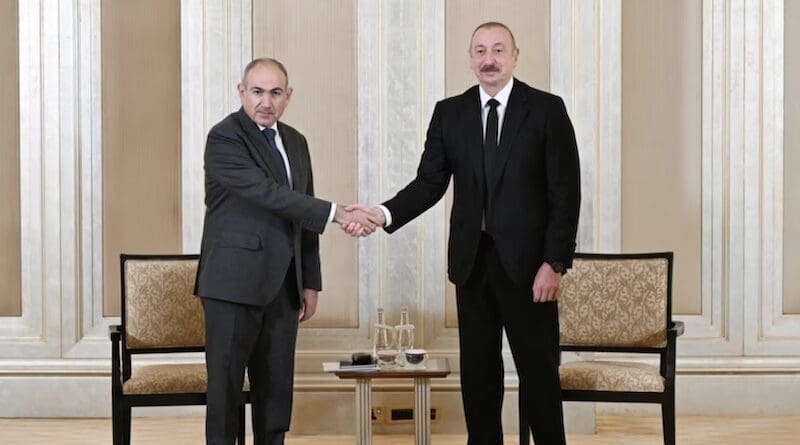
On July 10, Armenian Prime Minister Nikol Pashinian and Azerbaijani President Ilham Aliyev met in Abu Dhabi to discuss a potential peace deal, notably without any mediators — including Russia.

Although no breakthrough was reached, a joint statement reaffirmed both countries’ commitment to bilateral negotiations and continuing “confidence-building measures.”

Just five years ago, however, the dynamics were starkly different.


After a 44-day war between the two countries in 2020 over Nagorno-Karabakh — a mostly ethnic Armenian region internationally recognized as part of Azerbaijan and long at the center of the two countries’ mutual animosity — Russian President Vladimir Putin mediated a cease-fire, reinforcing Moscow’s traditional role as the region’s power broker.

But the truce has since contributed to what Rauf Mirgadirov, an analyst with the Ayna-Zerkalo newspaper in Baku, calls “a historic shift.”

“The two countries — after more than 30 years of conflict over Karabakh — are now closer to one another and distancing themselves from Russia,” he told RFE/RL. “Both want to be free from Russian influence, and this is their opportunity, as Russia is very busy with the war in Ukraine.”

Ruben Mehrabian, an analyst at the Armenian Institute of International Relations and Security, agrees that Yerevan views the current situation as a chance to loosen Moscow’s hold on the country.

“Russia wanted Armenia to remain in eternal conflict so that it could continually rescue us to justify its indefinite presence,” he said. “But Armenia wants to resolve these disputes and remove any Russian presence from our country. Now Russia doesn’t like that.”

Mounting Tensions And Accusations

In the eyes of some analysts, Yerevan’s ties with Moscow began to deteriorate in 2016 during a brief bout of hostilities between Armenia and Azerbaijan over Nagorno-Karabakh.

The conflict concluded with a Russian-brokered cease-fire and some territorial gains for Azerbaijan, fueling Armenian frustration over Moscow’s limited support for its traditional ally.

According to Richard Giragosian, founding director of the Regional Studies Center in Yerevan, this moment marked “the beginning of Armenian erosion and loss of confidence in Russia as a security partner.”

“Russia’s position and policy beginning with the 2016 war began to shift to Azerbaijan,” he said.

Relations plunged further after the 2020 conflict, when Baku regained control over Nagorno-Karabakh and Russia again failed to back Yerevan.

Recent events have highlighted how strained the bond between the two countries has grown.

On June 17, Russian-Armenian billionaire Samvel Karapetian was arrested on charges of calling for the unlawful seizure of power.

In Giragosian’s view, the arrest was “a move by the Armenian government to preempt any Russian interference” in next year’s parliamentary elections.

“But at the same time, it was more about pushing against Russian interest or influence within Armenia itself,” he added. “This man is a product of Moscow; he is widely perceived as pro-Putin.”

Just days later, on June 25, Armenian authorities arrested Archbishop Bagrat Galstanian, a prominent cleric in the Armenian Apostolic Church, accusing him of plotting to overthrow the government.

Russia responded angrily, with Foreign Minister Sergei Lavrov calling for an end to “unjustified attacks” against the church, describing it as “one of the key pillars of Armenian society.”

Armenian Foreign Minister Ararat Mirzoyan fired back, accusing Moscow of meddling in Armenia’s internal affairs.

Azerbaijan Also Turns Away From Moscow

The shifts aren’t limited to Armenia.

Relations between Baku and Moscow have also deteriorated sharply this summer.

In late June, Aliyev suspended high-level meetings, barred Russian Deputy Prime Minister Aleksei Overchuk from visiting and canceled Russian cultural events in Baku.

These actions followed the deaths of two ethnic Azeris during a police raid in Yekaterinburg, Russia, amid allegations of torture.

Russia’s Zangezur Dilemma

Five years ago, Russia had other ambitions for maintaining influence in the region — specifically through a military presence.

The 2020 cease-fire agreement signed by Russia, Armenia, and Azerbaijan called for reopening economic and transportation routes. It also stipulated that Armenia would ensure secure transit between Azerbaijan proper and its Naxcivan exclave via the so-called Zangezur corridor, with Russia’s Federal Security Service (FSB) assigned to oversee it.

“Perhaps the Zangezur corridor is Russia’s only viable option for maintaining a presence in the region,” Kirill Krivosheev, a Russian analyst at the Carnegie Foundation, told RFE/RL’s Azerbaijani Service in 2023.

However, Armenia sees the corridor as a threat to its sovereignty.

While negotiations continue, it remains unclear whether Russian FSB oversight will be part of any final deal.

In March, Pashinian said there would be no foreign deployments along the Armenia-Azerbaijan border after a treaty is signed, and the idea is also not really attractive to the Azerbaijanis either, according to Vadim Dubnov, a correspondent for RFE/RL’s Echo of the Caucasus.

Deploying FSB forces may have made sense for Azerbaijan before the Karabakh conflict was resolved,” he said. “But now, direct negotiations with Armenia — and not Russian involvement — are more beneficial to Baku.”

Control over Zangezur also ties into a larger geopolitical picture: the Middle Corridor, a route linking China to Europe and bypassing Russia.

“Zangezur is part of the Middle Corridor,” Mirgadirov explained. “Russia doesn’t just want to control Zangezur; it wants to dominate all land and air routes in the South Caucasus. But I think Turkey is well-positioned to lead regional security efforts.”

New Regional Players

While analysts agree that Russia’s influence is waning, they caution that deep economic and historical ties cannot be severed overnight.

However, since Russia’s full-scale invasion of Ukraine in 2022, this economic dependence has also begun to shift, Russian analyst Krivosheev noted in his 2023 interview with RFE/RL’s Azerbaijani Service.

“Turkey has become a key import partner for Russia. Many goods are transported via Turkey and Azerbaijan,” he said. “The Istanbul straits are vital, and Azerbaijan is now a crucial hub for Russian gas. We sell oil and gas to Azerbaijan, which then sells it to Europe. This is legal and does not violate sanctions.”

Paul Goble, senior fellow at the Jamestown Foundation, highlighted Azerbaijan’s rising importance.

“Aliyev has finally realized that Moscow needs Azerbaijan at least as much as Azerbaijan needs Russia,” he said. “When you realize that the other side needs you more than you need it, that changes how you make calculations.”

Meanwhile, Yerevan is rebuilding ties with Istanbul while distancing itself from Moscow.

Long strained over the Nagorno-Karabakh conflict — in which Turkey supported Azerbaijan, closing its borders with Armenia in the 1990s — and historical grievances, relations between the two countries are cautiously improving.

In June, Pashinian visited Turkey and met President Recep Tayyip ErdoÄŸan — the first political working visit aimed at bilateral negotiations.

“Armenia is economically dependent on Russia because most of our communication with external markets runs through Georgia to the Russian market,” said Mehrabian. “Our border with Iran is open but limited in capacity. Opening the Turkish border would allow Armenia access to European markets.”

Yet Armenia is not putting all its hopes on Turkey. Mehrabian said Yerevan is also strengthening ties with the US and EU.

“We are working with the EU and the US to elevate cooperation,” he said. “With the US, we have already signed a charter of strategic partnership. With the EU, we have passed legislation aligned with potential membership — even though we know it’s a long road ahead.”

  • Ulviyya Asadzade works as a journalist in RFE/RL’s Central Newsroom. Prior to this role, she spent nearly two decades with RFE/RL’s Azerbaijani Service, where she reported extensively on corruption, human rights, and the geopolitics of the South Caucasus, Russia, Turkey, and Iran. In addition to her work with RFE/RL, Asadzade has contributed to Eurasianet.org, The Bulletin, and Caucasus Edition, covering regional politics and cross-border issues.
RFE RL

RFE/RL journalists report the news in 21 countries where a free press is banned by the government or not fully established.


Security Competition Intensifies On The Caspian – Analysis

File photo of Russian Navy's Caspian Flotilla holding military drill. Photo Credit: Alex omen, Wikipedia Commons

By 

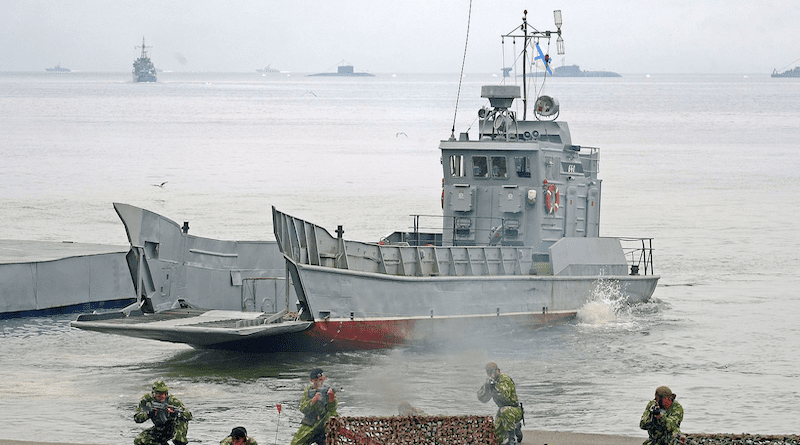
The Caspian Sea is rapidly ceasing to be a Russian lake. The other littoral countries have grown their navies and increased cooperation amongst themselves, upending the Russian Flotilla’s preeminence in the Caspian (see EDM, June 24, 2021).


Over the last few years, Azerbaijan, Kazakhstan, and Turkmenistan have all significantly expanded their fleets. The three Turkic countries bordering the Caspian are forming more security cooperation agreements and increasing their individual and collective leverage relative to Russia. Türkiye’s backing also increases the three countries’ bargaining power vis-à-vis Russia and countries, including the People’s Republic of China and the European Union, who want to use the Caspian for transit or development (Kaspiyskiy Vestnik, July 8 [1], [2]).

In a transparent effort to recover some of its former influence, Russia announced on July 14 that it will be expanding naval cooperation with Iran (Izvestiya, July 14). This announcement sets the stage for competition in the Caspian between the three Turkic countries and Türkiye, on the one hand, and Moscow and Tehran, on the other (see EDM, April 11,August 1, September 5, 2023).

The Soviet navy was the only force that mattered on the Caspian before the Soviet Union disintegrated. Since 1991, Moscow has worked hard to maintain that position, securing an agreement on territorial delimitation in 2018, which stipulated that the littoral countries would cooperate in the Caspian but not allow others to participate in naval operations (Window on Eurasia, June 23, 2018; see EDM, September 16, 2021). In the years since 2018, however, the four other littoral states have expanded their navies, with Türkiye facilitating the naval expansion of the three Turkic countries of Kazakhstan, Azerbaijan, and Turkmenistan (see EDM, August 1, September 5, 2023, January 21).

The increase in the Turkic littoral states’ naval power has intensified since Russian President Vladimir Putin’s full-scale invasion of Ukraine in 2022, and the Kremlin can no longer take their deference for granted. The three Turkic countries have expanded their ties with outside powers, most notably Azerbaijan, which earlier this year became a member of the North Atlantic Treaty Organization Maritime Security Center (NATO MARSEC), based in Türkiye (Ministry of Defense of Azerbaijan, February 25; Kaspiyskiy Vestnik, July 16).

Cooperation among the three Turkic littoral states, excluding Russian involvement, has been a significant development in the Caspian Sea in recent years. Some of this cooperation has been directed at other countries, most commonly Russia and Iran. Azerbaijan and Kazakhstan conducted joint naval maneuvers on the Caspian near the Russian border, and Azerbaijan and Turkmenistan are moving to do the same (see EDM, April 24, July 3; Caspiyskiy Vestnik, July 8). These steps have eclipsed earlier Russian efforts to promote naval cooperation among the littoral states (Vestnik Kavkaza, July 22, 2024). While relations between Russia, its neighbors, and the West have deteriorated since 2022, the three Turkic littoral countries have expanded their cooperation on the Caspian. In response, Moscow is expanding its partnership with Iran despite past friction, including when Tehran signed but did not ratify the 2018 Caspian delimitation accord (Window on Eurasia, July 22, 2022).


Azerbaijan and Kazakhstan conducted joint exercises in May and June to improve the coordination of their fleets, especially in the context of increased drone use and the need for defense against them (Kaspiyskiy Vestnik, May 19,June 18). These joint exercises build on earlier cooperations and, as a result, have attracted less attention than might otherwise be the case (see EDM, April 24, July 3). More recent developments in the naval relationships between Azerbaijan and Turkmenistan, as well as between Moscow and Tehran, may represent a more significant shift.  

On July 3, Azerbaijani President Ilham Aliyev received Turkmenistan’s Foreign Minister, Rashid Meredov, to discuss a wide range of issues. Media reports focused on humanitarian discussions, but also mentioned the development of expanded protection for pipelines and oil and gas platforms on the Caspian (Kaspiyskiy Vestnik, July 8). These reports suggest that Baku and Ashgabat will use their joint naval forces to protect pipelines on the floor of the Caspian and platforms on its surface against attacks or other disruptions. Just a few years ago, Azerbaijani–Turkmen cooperation would have been unthinkable, given the bilateral disputes over oil and gas fields. Now, partnership has become essential, given the changing relationship with Russia and Iran. Ties between Azerbaijan and Turkmenistan are warming as they seek to cope with Tehran’s plans to resume oil drilling on the Caspian after a 30-year hiatus and accordingly expand Iran’s navy (Kaspiyskiy Vestnik, May 19).

Moscow and Tehran’s July decision to conduct joint naval exercises is the most dramatic recent development in the Caspian littoral region (Izvestiya, July 14). While official government spokesmen claim that the exercises will be for “search and rescue” procedures, pro-Kremlin commentators stressed that the decision to hold joint maneuvers is a response to recent attacks by Israel and the United States on Iran’s nuclear facilities (Izvestiya, July 14).

The Russian experts with whom Izvestiya spoke noted that similar joint maneuvers have been held, asserting that they are entirely normal for neighbors sharing a common sea. The analysts, however, explicitly contrasted the seriousness of the Russian–Iranian relationship with their more distant ties with the other littoral states, particularly Azerbaijan and Turkmenistan (Izvestiya, July 14).

This comparison suggests Moscow now views Iran, rather than the former Soviet republics, as its key ally in the Caspian region. This shift raises the possibility that Russia and Iran, two international outcasts, are preparing for potential clashes with the three other littoral states, which are Turkic and Türkiye-backed.

There is a very real risk of naval conflict between these two growing alliances, especially as Iran expands its economic and military presence on the Caspian. Moscow sees Tehran, rather than Baku, Ashgabat, or Astana, as its more reliable partner. This attitude could become a kind of self-fulfilling prophecy, especially if the three Turkic states believe they can rely on their growing ties to Türkiye and the West. Shifting allegiances may put another nail in the coffin of the post-Soviet order as Moscow increasingly relies on a non-Soviet country to try to keep the Turkic Caspian littoral states in line.


Paul Goble

Paul Goble is a longtime specialist on ethnic and religious questions in Eurasia. Most recently, he was director of research and publications at the Azerbaijan Diplomatic Academy. Earlier, he served as vice dean for the social sciences and humanities at Audentes University in Tallinn and a senior research associate at the EuroCollege of the University of Tartu in Estonia. He has served in various capacities in the U.S. State Department, the Central Intelligence Agency and the International Broadcasting Bureau as well as at the Voice of America and Radio Free Europe/Radio Liberty and at the Carnegie Endowment for International Peace. Mr. Goble maintains the Window on Eurasia blog and can be contacted directly at paul.goble@gmail.com .