How Trump Is Stalling Solar and Wind Projects
Trump’s “One Big Beautiful Bill Act” and new executive orders strip financial incentives from wind and solar while boosting coal, gas, and nuclear.
Federal permitting for renewables is now subject to expanded political review, creating major delays and uncertainty for developers.
Critics warn that these moves will slow clean energy deployment just as U.S. electricity demand surges due to AI and data center growth.

United States President Donald Trump announced plans in July to tighten federal permitting to restrict solar and wind energy development. This follows the passing on Trump’s One Big Beautiful Bill Act, which seeks to expand the fossil fuel and nuclear power sectors while also halting renewable energy progress in the U.S. These moves could lead energy companies to pause investments in renewable energy projects due to the uncertain outlook for the industry, as developers face more red tape and fewer financial incentives in establishing new solar and wind projects.
It may become even harder to develop solar and wind projects that require federal permitting, as the Trump administration has put Interior Secretary Doug Burgum in charge of deciding which projects may proceed on federal land. Burgum now has the “final review” of leases, rights-of-way, construction plans and all other aspects of the Interior Department’s federal permitting process for wind and solar projects, according to an internal memo.
The Interior Department said in a statement that it was “levelling the playing field” for coal and natural gas “after years of assault” by the Biden administration. This follows recent moves by the Trump administration to encourage new coal developments and boost production to supposedly drive down energy costs.
Burgum’s office will now be responsible for reviewing 68 types of agency actions, including federal permits, environmental reviews, lease sales, site plans, wildlife impact assessments and numerous smaller decisions and consultations related to solar and wind energy developments. This is expected to lead to bottlenecks and delays for many renewable energy projects.
Jason Grumet, the CEO of the lobby group American Clean Power (ACP), said, “The Interior Department adds three new layers of needless process and unprecedented political review to the construction of domestic energy projects.” Grumet added, “This isn’t oversight. It’s obstruction that will needlessly harm the fastest-growing sources of electric power.” Approximately 5 percent of solar projects and 1 percent of wind projects are situated on federal land, according to ACP.
While only a small percentage of wind and solar projects are developed on federal lands and waters, many projects situated on private lands consult with the Interior Department to determine whether they require federal permits to comply with wildlife protections or other laws. Several industry groups have criticised the move for hindering the development of U.S. solar and wind power, which has accelerated in recent years.
The new measures are expected to restrict the development of solar and wind energy projects and, therefore, slow the speed of new clean electricity generation at a time when the U.S. electricity demand is expected to soar. As tech companies invest heavily in the rollout of data centres to support complex technologies such as artificial intelligence, experts worry that the U.S. will not be able to meet the growing electricity demand. President Trump has regularly been criticised as experts say his restrictions on the development of renewable energy projects are at odds with his claims that the U.S. is facing an energy emergency to meet growing demand for electricity.
The recent passing of President Trump’s One Big Beautiful Bill Act also threatens green energy progress in the U.S., as it scraps several financial incentives for renewable energy development. Another executive order from July called for the Interior Department to “eliminate preferential treatment for wind and solar facilities compared to reliable, dispatchable energy sources,” referring to coal, natural gas and nuclear power.
Several House Republicans had previously lobbied for the bill to bring an end to green energy subsidies even faster than the final Act stipulates. Upon voting for a watered-down version of the bill, in terms of renewable energy restrictions, some lawmakers said that Trump had promised to address their concerns through executive action.
And it seems like Trump has followed through with his promise by signing an executive order to end market-distorting subsidies for unreliable, foreign-controlled energy sources on July 7. The order directed the Treasury Department to consider revising its guidelines for how and when renewable energy projects would need to commence development in order to be eligible for tax breaks.
Adam Suess, the acting assistant secretary for lands and minerals management at the Interior Department, said, the “actions further deliver on President Trump’s promise to tackle the Green New Scam and protect the American taxpayers’ dollars.” Suess added, “American energy dominance is driven by U.S.-based production of reliable base load energy, not regulatory favouritism toward unreliable energy projects that are solely dependent on taxpayer subsidies and foreign-sourced equipment.”
In recent months, it seems that Trump has waged a war on renewable energy development in the U.S., while also stating the need to rollout more electricity to meet the rising national demand. Through several executive orders and the Big Beautiful Bill, Trump has favoured fossil fuels and supported a reversal of the U.S. energy agenda, as he aims to move away from renewable energy to oil, gas, coal and nuclear power.
By Felicity Bradstock for Oilprice.com

Vineyard Wind 1 Expects to Reach Full Commercial Operations by End of 2025
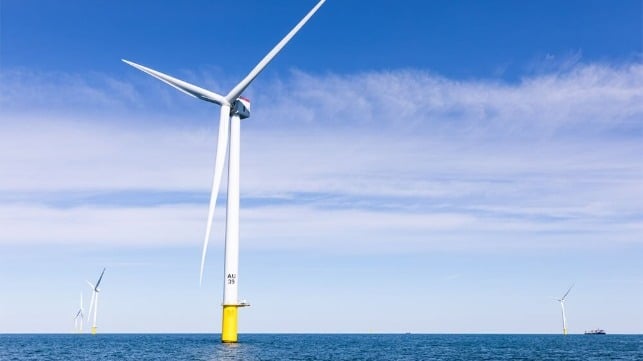
One year after GE Vernova confirmed it had found “materials defects” in the wind turbine blades for the Massachusetts offshore wind farm, new reports reveal the project is making steady progress. Iberdola, parent company of Avangrid, the investors along with Copenhagen Infrastructure Partners, told shareholders it now expects Vineyard Wind 1 to reach its commercial operations date “at the end of 2025.”
Iberdrola said in its mid-year financial presentation that 17 turbines out of 62 planned for Vineyard Wind 1 are already exporting power. It reported that 23 are fully installed, which is up from the four that it highlighted in May 2025. Currently, it says the project is supplying approximately 30 percent (241 MW) of its full capacity of 806 MW.
This marks a significant recovery for the project, which had been stopped in its tracks a year ago due to the manufacturing problem with the blades discovered after one blade failed in July 2024. The local newspaper, New Bedford Light, reports that the pace of activity at the installation site has accelerated this summer. It says that the barges carrying materials out to the installation have made at least 15 trips since June, moving turbine components to the installation vessels. It also reports that the project, however, extended the lease on the New Bedford Marine Commerce Terminal, which is being used as a base and staging area, until June 2026.
A year ago, in June 2024, Vineyard Wind had reported that the offshore wind project had 10 operating turbines and was delivering more than 136 MW to the electric grid in Massachusetts. The companies also said that 47 foundations and transition pieces were installed, as well as 21 turbines, with the installation of the 22nd turbine underway.
The newspaper points out that while it appears 40 of the turbines are now in place, it is unknown how many have completed their inspections and replacement of the blades. As part of the project’s agreement with U.S. regulators, all the blades manufactured at GE Vernoa’s facility in Canada had to undergo inspections after one blade fractured. The company has agreed to replace the blades and is now using blades manufactured in France for the project.
Vineyard Wind 1 is one of the few offshore wind projects underway in the United States, in part due to the Trump administration’s efforts to derail the industry. Nearby, Ørsted’s Revolution Wind (704 MW) is also proceeding with construction, while others planned for the New England region remain stalled.
Iberdrola highlighted to investors that it has all the necessary federal permits for its second project, New England Wind 1 (791 MW), but it still has to conclude agreements with the states and has not indicated a potential timeline for construction. Massachusetts confirmed in March that both New England Wind 1 and SouthCoast Wind, which is being developed by a partnership between EDP Renewables and ENGIE, had not yet completed their power purchase agreements. It said both projects were seeking to delay the timing due to market uncertainties.