It’s possible that I shall make an ass of myself. But in that case one can always get out of it with a little dialectic. I have, of course, so worded my proposition as to be right either way (K.Marx, Letter to F.Engels on the Indian Mutiny)
Wednesday, June 11, 2025
Barrick Mining removes Mali gold complex from 2025 output forecast, sources say
This undated file photo shows Barrick Goldstrike Mines' Betze-Post open pit near Carlin, Nev. (Adella Harding/The Daily Free Press via AP, File)
TORONTO/DAKAR — Barrick Mining has removed its Mali gold complex from its overall output forecast for 2025, four sources told Reuters, adding to fallout from a two-year dispute over new mining legislation aimed at boosting the West African country’s revenue.
Operations at the Loulo-Gounkoto gold complex, one of the Canadian miner’s largest gold assets in Africa, have been suspended since January after the military-led government blocked gold exports by the world’s third-largest miner of the precious metal, detained staff and seized three metric tons of stock during separate negotiations over a new mining contract with Barrick.
At stake for both sides is the opportunity to realize revenues worth at least US$1 billion this year due to record high gold prices. Mali risks repelling potential investors, while Barrick shares have lagged those of its peers.
The sources spoke on condition of anonymity as they were not authorized to speak publicly.
Spokespersons for Barrick did not immediately respond to a request for comment, nor did a spokesperson for Mali’s Mines Ministry.
Barrick has not made its Mali output forecast public, but Morningstar analysts had predicted Mali would contribute around 250,000 ounces in 2025.
Mali’s government, a shareholder in the complex, asked a domestic court in May to appoint a provisional administrator to reopen the complex, which would effectively see Barrick lose control over the mines that accounted for 14 per cent of its total output, according to Jefferies.
A court hearing on the matter is scheduled for Thursday.
Negotiations are ongoing in parallel with the court case. In a significant concession, Mali has agreed to allow Barrick to repatriate 20 per cent of its earnings into an international bank account, an exception that was not made for any other foreign miners who recently renegotiated contracts with the state, two people familiar with the matter said.
However, one remaining point of contention between Barrick and Mali is that authorities would like all future disputes to be handled in domestic courts. Barrick said any new mining contract should be covered under an international treaty and, in case of future disputes, be settled through international arbitration, according to one of the people and another source familiar with the matter.
While strong gold prices have supported Barrick’s global revenue, the threat of a provisional administration worries investors, one of the sources said, noting that even if the miner later regains control of the complex, it could be left with depleted gold reserves.
In December, Barrick launched international arbitration proceedings against Mali. In May, it asked the World Bank’s arbitration court to halt court proceedings in Bamako over provisional administration. According to two people aware of the development, the tribunal rejected that request.
The president of the arbitration tribunal for the case declined to comment.
In the first nine months of 2024, production in Mali contributed us$949 million to Barrick’s revenue. Jefferies, in an analyst report last December, estimated that if the Mali complex remains idle, Barrick would lose 11 per cent of its expected 2025 earnings before interest, taxes, depreciation, and amortization.
Mali is Africa’s third-largest gold-producing country.
Malian authorities, which seized power in coups in 2020 and 2021, say their current agreement with Barrick is unfair.
The state has negotiated new agreements with other multinational miners. The chief executive of Australian miner Resolute was detained for more than a week amid negotiations last year.
---
Reporting by Divya Rajagopal in Toronto and Portia Crowe in Dakar; Editing by Veronica Brown and Rod Nickel.
Ottawa’s GST rebate on new homes would save typical first-time buyer $27K: PBO
Houses for sale in a new subdivision in Airdrie, Alta.
THE CANADIAN PRESS/Jeff McIntosh
OTTAWA — An eligible first-time homebuyer could save an average of $26,832 in sales tax on the price of a newly built home under Ottawa’s latest housing proposal, the parliamentary budget officer said in a new report on Wednesday.
But the PBO’s estimate of the plan’s total cost is substantially lower than the federal government’s estimate, and ministers responsible for the file have not offered an explanation for the gap.
In a new analysis released Wednesday, the federal fiscal watchdog predicts that 71,711 new builds would qualify for GST relief over the lifetime of the program.
The proposal would see the federal portion of the sales tax eliminated on a new home worth up to $1 million if it’s bought by a qualifying first-time homebuyer.
The GST rebate would be phased down as the price of the home approaches $1.5 million.
Homes bought from May 27 through to 2031 can qualify for the rebate, as long as construction starts before 2031 and finishes by 2036.
With some exceptions, Canadians who have owned a home already are not eligible for the GST relief. Neither are investors.
The PBO forecasts the program will cost $1.9 billion over six years, about $100 million lower than the estimate it presented during the spring federal election campaign. It attributes that gap to a later implementation date and a different definition used for first-time homebuyers.
The federal government, meanwhile, estimated the “tax savings” for Canadians at $3.9 billion over five years when the legislation was tabled on May 27. The Liberals’ spring election platform costed the GST rebate at around $1.6 billion over four years.
A PBO spokesperson said in an email that any difference in figures is likely due to assumptions about the share of homes ultimately bought by first-time buyers, but deferred to Finance Canada for questions about the government’s figures.
Finance Minister François-Philippe Champagne did not stop for questions about the cost discrepancy on his way out of the Liberal caucus meeting Wednesday. His office did not respond to a request for clarification.
Housing Minister Gregor Robertson also did not comment about the PBO report when asked Wednesday. He told reporters he would answer questions “tomorrow.”
A Desjardins Economics analysis of the proposal released Monday offered one explanation for the discrepancy between the PBO’s cost estimate and the government’s figure: Ottawa might think its program will be more popular than the PBO does.
A higher cost estimate suggests more first-time homebuyers purchasing qualifying new builds, in other words.
The GST rebate, which is not yet law, was included in the Liberals’ spring election platform as a way to help Canadians break into the housing market.
A home priced at $1 million would receive the maximum rebate of $50,000. Homes priced below that amount would still get the full rebate — but since the sales tax is a taken off a lower overall cost, the size of the rebate would be reduced accordingly.
The rebate also would be lower than $50,000 for homes sold above $1 million because the rebate gradually ramps down until it zeros out at a purchase price of $1.5 million.
The Desjardins report by economist Kari Norman said that if the program proves popular with first-time buyers, it could spur additional housing construction to meet higher demand.
The PBO said it does not include possible behavioural responses to the program in its analysis.
Norman noted in her report that it’s also possible increased demand from homebuyers will push up home prices in the near-term.
She estimated that 85 per cent of new homes built in Canada over the program time frame will be eligible for the full GST break of up to $50,000.
In cases where the GST portion of a new home sale is rolled into the mortgage principal, the typical owner could expect to save $240 per month on mortgage payments, she said. The savings are more direct when a developer charges the GST upfront.
The measure is packaged in legislation that also includes the Liberals’ promised income tax cut, which is set to take effect July 1.
---
Craig Lord, The Canadian Press
This report by The Canadian Press was first published June 11, 2025.
Dollarama earns $273.8M Q1 profit, up from $215.8M a year ago, sales up 8.2 per cent
A person cycles past a Dollarama store in Montreal
THE CANADIAN PRESS/Christinne Muschi
MONTREAL — Tariff tensions don’t appear to be weighing on Dollarama Inc. sales yet, but executives at the discount goods retailer are bracing for that to potentially change because consumers are “fragile.”
Market chart of DOL:CT DOL:CT $192.99+17.23+9.80% As of:June 12, 2025 at 3:45 AM
The Montreal-based business reported Wednesday that its first-quarter sales increased by 8.2 per cent to $1.52 billion. Its profit during the period ended May 4 soared by 27 per cent to $273.8 million, up from $215.8 million a year earlier.
Dollarama chief financial officer Patrick Bui framed the increases as a sign that shoppers still see his retailer as providing value, even while they’re more generally cutting back on discretionary purchases.
But given the “unpredictable trade environment”, he is taking nothing for granted.
“When you go back to February and March, we all saw the data on consumer confidence and it was at an all-time low,” he said on an earnings call with analysts.
“As we moved through the quarter, we did see a resilient consumer in the back half ... but we do sense the consumer being fragile and with all the uncertainty in the market, it’s very hard to see how that will evolve.”
Bui’s remarks came roughly a week after the U.S. doubled Canadian steel and aluminum tariffs to 50 per cent. This week saw officials from the U.S. and China to London to try to reach some semblance of a truce after the world’s two biggest economies spent recent months volleying eye-popping duties at one another before reaching a 90-day détente.
Dollarama, which sources goods from all over the world, has previously said it sees the tariffs as being “manageable” for its business but “consumer confidence will be a major challenge.”
It stuck with that messaging Wednesday, when it indicated it has been “working extremely hard” to boost consumer confidence by holding its prices for as long as possible.
“Price adjustments are always a last resort for us,” CEO Neil Rossy said on the same call as Bui, while pledging to maintain Dollarama’s existing price point range.
As part of those efforts Dollarama executives visited China in April, when tariffs between the country and the U.S. were intensifying.
At first, Dollarama was able to use the drama to negotiate some advantages with FOB — a shipping term that’s short for Free on Board and refers to agreements between buyers and sellers dictating, when the ownership and liabilities of goods transfer between them.
However, “the vendors were reticent to pass on any discounts or to sell any of the goods that were being held for their American customers,” Rossy said.
“They were waiting to see what would happen and possibly change with U.S. policies and they were right to do so because U.S. policies changed,” he said referring to the 90-day reprieve. “In the end they shipped their goods, and it was pretty much back to business as usual.”
His comments were made a few hours after the retailer released its latest financial results, showing its first-quarter profit amounted to 98 cents per diluted share, up from 77 cents per diluted share a year earlier.
Excluding an unrealized gain from a derivative on equity-accounted investment, Dollarama said it would have earned 95 cents per diluted share in its most recent quarter.
The increase came as comparable store sales for the quarter increased by 4.9 per cent, including a 3.7 per cent increase in the number of transactions and a 1.2 per cent increase in average transaction size.
The quarter covered a period when it announced Dollarama announced it will buy Australian discount retailer, the Reject Shop.
The deal valued at $233 million is expected to see Dollarama expand the Australian acquisition’s footprint to about 700 stores by 2034.
Rossy expects the transaction to close by the end of July, assuming it lands necessary Australian approvals.
---
Tara Deschamps, The Canadian Press
This report by The Canadian Press was first published June 11, 2025.
Heineken to invest over US$2.7B in Mexico through 2028
MEXICO CITY — Beer maker Heineken will invest US$2.75 billion in different projects in Mexico, the company’s CEO in the country said on Wednesday.
Oriol Bonaclocha said during Mexican President Claudia Sheinbaum’s morning press conference that the investment will include the construction of a new factory in the country’s southeast.
The new plant in the state of Yucatan will have an initial production capacity of 4 million hectoliters and that amount is expected to be doubled in the future depending on the company’s needs, Bonaclocha said.
“We do not plan to close any factories, this is an expansion,” he added.
In April, Grupo Modelo, the producer of Corona and other Mexican beer brands, announced it would invest more than $3.6 billion in Mexico, despite concerns over water shortages in the country.
The relationship between beer makers and other industries like agriculture has been a longstanding issue in Mexico.
Almost three years ago, the construction of a Constellation Brands brewery in Mexicali was halted to protect local water resources and moved to Veracruz in eastern Mexico.
(Reporting by Raul Cortes and Aida Pelaez-Fernandez. Editing by Chizu Nomiyama and Mark Potter)
GM to invest US$4B to shift some production from Mexico to the U.S.
Vehicles move along the 2023 Chevrolet Bolt EV and EUV assembly line at the General Motors Orion Assembly June 15, 2023, in Lake Orion, Mich.
(AP Photo/Carlos Osorio, File)
Shares of General Motors rose before the opening bell after announcing plans to invest $4 billion to shift some production from Mexico to U.S. manufacturing plants as the automaker navigates tariffs that could drive prices higher.
President Trump signed executive orders in April, relaxing some of his 25 per cent tariffs on automobiles and auto parts, a significant reversal as the import taxes threatened to hurt domestic manufacturers.
Automakers and independent analyses say the tariffs could raise prices, reduce sales and make U.S. production less competitive worldwide. Trump portrayed the changes as a bridge toward automakers moving more production into the United States.
GM said late Tuesday that the investment will be made over the next two years and is for its gas and electric vehicles. The company will add production of the gas-powered Chevrolet Blazer and Chevrolet Equinox, which are made in Mexico, to two American plants starting in 2027. The Blazer will be produced at GM’s Spring Hill, Tennessee plant, while the Equinox will be made at its Kansas City, Kansas facility.
GM will also begin making gas-powered full-size SUVs and light duty pickup trucks at its Orion Township, Michigan plant, which was previously being reconfigured to make electric vehicles until demand for such cars weakened.
The new investment will give GM the ability to assemble more than 2 million vehicles per year in the U.S.
CEO Mary Barra said in a statement on Tuesday that GM is committed to building vehicles in the U.S. and supporting American jobs.
GM has 50 U.S. manufacturing plants and parts facilities in 19 states, including 11 vehicle assembly plants. The company says that almost 1 million people in the U.S. depend on it for their livelihood, including employees, suppliers, and dealers.
Last month GM lowered its profit expectations for the year as it braces for a potential impact from auto tariffs as high as $5 billion in 2025. The automaker now foresees full-year adjusted earnings before interest and taxes in a range of $10 billion to $12.5 billion. The guidance includes a current tariff exposure of $4 billion to $5 billion. GM previously predicted 2025 adjusted EBIT between $13.7 billion and $15.7 billion.
Shares of General Motors Co. rose almost 1 per cent before the opening bell Wednesday.
Michelle Chapman, The Associated Press
ArcelorMittal closing wire drawing mill in Hamilton in latest industry blow
A steel worker works at the ArcelorMittal Dofasco steel plant in Hamilton, Ont., on Wednesday, March 12, 2025.
THE CANADIAN PRESS/Nathan Denette
HAMILTON — Canada’s steel industry was hit with further layoff news Wednesday as ArcelorMittal Long Products Canada announced it is closing its wire drawing mill in Hamilton.
The decision puts 153 employees out of work and adds to the hundreds of workers in the industry already hit by a combination of tariff concerns, market demand and cheap imports coming into the market.
ArcelorMittal did not mention the 50 per cent tariffs the U.S. has imposed on Canadian steel products in its decision to consolidate its wire operations in Montreal, but did cite the wider pressures.
“Despite our best efforts, the ongoing economic challenges, increased steel imports in Canada, and market conditions made it clear that we needed to reduce our operating footprint,” said spokesman Jean-Philippe Grou in a statement.
He said the decision came after the company thoroughly looked at the alternatives, and the focus is now on supporting employees.
Mike Hnatjuk, president of United Steelworkers Local 5328 that represents workers at the mill acknowledged the operation was already facing challenges, including steel dumping from China. He said the U.S. tariffs were “a nail in the coffin” for the mill, but that the company said it could have happened anyway.
“They were saying even without, even if the tariffs weren’t here, there is a high possibility that this was going to happen.”
He noted the company relies heavily on the automotive sector, which in Canada is also under intense pressure from tariffs.
Hnatjuk, who expects to begin talks with the company regarding a closure agreement next week, said he’s been told the company plans to stop operations by the end of the month.
“We have stuff in our collective agreement that we hope that they’re going to follow and they’re going to offer and are we most definitely going to try to get what’s best for all this,” he said.
Hamilton Mayor Andrea Horwath said in a statement that she is deeply concerned for the workers affected.
“This is a serious blow to our community, with immediate and lasting impacts on people’s lives,” said Horwath.
“This closure underscores the urgent need for action from the federal government.”
The Canadian Steel Producers Association has been pushing the federal government to fully reinstate retaliatory tariffs on the U.S. after it doubled tariffs on Canadian steel and aluminum to 50 per cent last week.
Efforts to reverse the tariffs hit a setback Tuesday after a U.S. federal appeals court agreed that U.S. President Donald Trump’s sweeping global tariffs will remain in place while a case is heard. The decision extends an emergency stay granted after a lower court found the devastating duties unlawful.
The steel producers group says more than 700 workers had already been laid off since the 25 per cent tariffs were imposed in March.
Along with countering U.S. tariffs, the group is also pushing for the government to put tariffs on steel products that originate in China because of allegations of unfair government support.
ArcelorMittal Long Products Canada chief executive Stéphane Brochu said the company’s decision to shut the Hamilton line was necessary to ensure the sustainability its wire drawing business.
“It will allow us to improve our operational efficiency and secure our long-term competitiveness in the demanding wire drawing market,” he said in a statement.
ArcelorMittal Long Products Canada has more than 2,000 employees with operations at multiple sites in Quebec.
The company produces more than two million tonnes of steel that is used in such things as rebar for the construction industry and for leaf springs in light and heavy-duty trucks.
---
This report by The Canadian Press was first published June 11, 2025.
Trigon gives green light to LPG export facility in Prince Rupert, B.C.
The bulk carrier Unicorn Ocean is seen loading coal at Ridley Terminals, part of the Prince Rupert port system, March 8, 2013. Ridley Terminals was renamed Trigon Pacific Terminals in April 2022.
THE CANADIAN PRESS/Robin Rowland
PRINCE RUPERT — Trigon Pacific Terminals is giving a green light to a new $750-million liquefied petroleum gas export facility in Prince Rupert, B.C.
Trigon chief executive Rob Booker says the company now needs the federal government to expedite the shovel-ready project that he says is in the national interest.
Subject to all necessary legal and regulatory approvals, Trigon says the facility is expected to start exports in late 2029.
It will have annual capacity of 2.5 million tonnes per year.
The company says the final investment decision comes with support from the Lax Kw’alaams and Metlakatla First Nations.
Trigon already operates a multi-commodity bulk export terminal at the Port of Prince Rupert.
This report by The Canadian Press was first published June 11, 2025.
Alberta premier says province is looking to entice private-sector pipeline builder
Alberta Premier Danielle Smith speaks at the Global Energy Show in Calgary on Wednesday, June 11, 2025.
THE CANADIAN PRESS/Lauren Krugel
CALGARY — The Alberta government is working to entice a private-sector player to build a major crude pipeline to coastal waters, Premier Danielle Smith said Wednesday.
“We’re talking to all of the pipeline proponents; anyone who has had success in building a pipeline in Canada and has an interest in perhaps coming together as a consortium. Or, if one emerges as being a principal proponent, then we’ll be interested in talking to them, too,” Smith told reporters following a speech to the Global Energy Show.
“But we know that it’s a chicken and egg problem, that no one’s going to come forward with a project without some guarantee that it is going to be approved.”
Alberta could help the project along by committing barrels of physical bitumen received in lieu of cash royalties from oilsands producers, Smith said.
She has been enthusiastic about reviving a plan to ship oilsands crude to the northern B.C. coast for export to Asia, and the end point she sees making the most sense is Prince Rupert, B.C.
Enbridge Inc. had once planned to ship crude to another northern B.C. port, Kitimat, via its proposed Northern Gateway pipeline. That project was nixed in 2016 when the federal government banned tankers off the northern B.C. coast.
Enbridge CEO Greg Ebel has said it would take a major overhaul in federal regulations for his company to revisit such a proposal.
Smith said Prince Rupert might be a more viable choice than Kitimat, as it has a less treacherous route out to the open Pacific and many other commodities already move out of there.
Smith said no company will agree to build a pipeline to the northern B.C. coast as long as there is a tanker ban, and oilsands companies aren’t going to expand their production as long as there’s a federal emissions cap.
The premier urged conference attendees to keep up the pressure on Prime Minister Mark Carney’s government to do what needs to be done to get “nation-building” projects built.
“Anything less than success means failing to act for Canada. It means failing to stand up for democracy and peaceful global development,” she said.
“And most importantly, it means a loss of economic prosperity that future Canadian youth and families cannot count on to enhance their standard of living locally and to eliminate energy poverty globally.”
With U.S. President Donald Trump’s tariffs throwing the Canada-U.S. trade relationship into disarray, there have been growing calls for Canada to tap into other markets for its resources.
The only way meaningful amounts of Canadian oil can currently flow to customers outside the United States is via the federally owned Trans Mountain pipeline to the B.C. Lower Mainland, whose expansion started up about a year ago.
Carney recently met with provincial and territorial premiers to hear about what projects they’d like to see fast-tracked under new legislation, but has not said which have made the cut.
Smith said she’ll give the Liberals until the fall legislative session to determine whether Carney is serious about his pledge to make Canada an “energy superpower.”
Smith is also keen on accessing global markets via the East Coast or a pipeline to the Port of Churchill in northern Manitoba, which would give tanker access to Hudson Bay.
Smith heaped praise on Manitoba Premier Wab Kinew — a New Democrat of a much different political stripe than her United Conservative Party — for being open to that idea.
“He has been very vocal in saying that he wants Churchill to be a major export hub, including oil and gas, and he’s been unequivocal about that,” Smith said.
B.C. NDP Premier David Eby, on the other hand, has been skeptical about pursuing a Northern Gateway-like proposal while Trans Mountain, already in operation, is not running full at full capacity and could be further expanded to meet producers’ needs.
Smith did not appear deterred. In an onstage interview with former CBC anchor Peter Mansbridge at the conference, she said with a chuckle: “I’ll convince David Eby.”
---
Lauren Krugel, The Canadian Press
This report by The Canadian Press was first published June 11, 2025.
New Nuclear Plant to Power Six Million British Homes
The UK government is investing $19.3 billion to build a new nuclear power plant, Sizewell C, which is expected to power six million homes and create thousands of jobs.
This move is part of a broader strategy to secure energy independence and support clean energy initiatives, with renewed interest in nuclear power across Europe.
The government has also selected Rolls-Royce SMR to develop small modular reactors, further diversifying the UK's nuclear energy portfolio.
Weeks after Germany decided to reverse course and 're-embrace' nuclear power following their supreme idiocy on the matter, the UK government announced on Tuesday that it would invest 14.2 billion pounds (US$19.3 billion) to build a new nuclear plant in the southeast of England.
The move was revealed by the Department for Energy Security and Net Zero as part of its broader spending review, which will lay out priorities for the next four years.
The new plant, named Sizewell C, will be located in Suffolk county, and is predicted to create around 10,000 jobs during construction, according to a government statement. Once operational, it will create enough electricity power roughly 6 million homes.
"We need new nuclear to deliver a golden age of clean energy abundance, because that is the only way to protect family finances, take back control of our energy, and tackle the climate crisis," said Energy Minister Ed Miliband. "This is the government’s clean energy mission in action, investing in lower bills and good jobs for energy security."
As the Epoch Times notes further, the UK has also been tapping up new investors to fund the construction of Sizewell C, but no new partners were mentioned in the announcement.
Neither the total cost of construction nor a date for expected completion has been announced.
Sizewell C was originally an EDF Energy project but is now majority-owned by the British government, with EDF Energy a minority shareholder.
EDF Energy is the British arm of Électricité de France (EDF), which is wholly owned by the French state.
The UK government’s stake was 83.8 percent and EDF’s stake was 16.2 percent at the end of December, EDF’s financial results showed in February.
Sizewell C would be just the second new nuclear plant built in Britain in more than 20 years, after another EDF project, Hinkley Point C, which was first announced in 2010.
Sizewell C would be the third power station built on the site after Sizewell A and Sizewell B, both of which are currently in the process of being decommissioned.
The Department for Energy Security and Net Zero also announced that it had picked Rolls-Royce SMR to build Britain’s first small modular reactors (SMRs).
About 2.5 billion pounds ($3.4 billion) of government funds will be dedicated to the SMR program over the next four years, in a bid to get one of Europe’s first small-scale nuclear industries going.
SMRs are usually around the size of two football fields and composed of parts that can be assembled in a factory, making them quicker and cheaper to build than conventional plants.
The moves by Britain come amid a renewed interest in nuclear power across Europe, sparked by spiraling energy costs due to the ongoing war between Russia and Ukraine, which is hampering the continent’s supply of natural gas.
European Commission President Ursula von der Leyen said in a keynote speech in August 2024 that the European Union needed more nuclear power.
By Zerohedge.com
Rolls-Royce SMR named as UK's selected technology
Tuesday, 10 June 2025
Following a two-year competition, Rolls-Royce SMR has been selected as the preferred bidder to construct the UK's first small modular reactors.
A rendering of a Rolls-Royce SMR power plant (Image: Rolls-Royce SMR)
The UK aims to grow nuclear energy capacity to 24 GW by 2050, with a mix of traditional large-scale power plants and small modular reactors (SMRs). In July 2023, the Great British Nuclear arms-length body, set up to help deliver that extra capacity, began the selection process for which SMR technology to use. There were initially six companies shortlisted, with four shortlisted companies - GE Hitachi, Holtec, Rolls-Royce SMR and Westinghouse - entering negotiations last September. In February, the four SMR vendors were issued with an Invitation to Submit Final Tenders, three of which were submitted in April, with Westinghouse withdrawing.
Great British Nuclear, which has now been renamed Great British Energy - Nuclear as it moves to its delivery phase, today announced that Rolls-Royce SMR has been selected as its preferred partner to develop SMRs, subject to final government approvals and contract signature.
It said it is aiming to sign contracts with Rolls-Royce SMR later this year and will form a development company. It will also aim to allocate a site later this year and connect projects to the grid in the mid-2030s. A final investment decision is expected to be taken in 2029.
"This announcement is a defining moment for the UK's energy and industrial future," said Simon Bowen, Chairman of Great British Energy – Nuclear. "By selecting a preferred bidder, we are taking a decisive step toward delivering clean, secure, and sovereign power. This is about more than energy - it's about revitalising British industry, creating thousands of skilled jobs, and building a platform for long-term economic growth."
Rolls-Royce SMR CEO Chris Cholerton said: "This is a day to celebrate a milestone achievement. This success is testament to our incredible team which has developed a world-leading technology and worked tirelessly over the last two years to ensure we could provide a winning tender to GBN.
"As well as delivering affordable, clean energy to support our nation's energy independence - deploying three of our units will drive domestic growth by creating thousands of highly skilled, well-paid jobs and supply chain opportunities. We are the only SMR company with multiple commitments to build projects in Europe, testament to our differentiated design and compelling offer."
The company noted it has already been selected by Czech utility ČEZ to deliver up to 3 GW of electricity in the Czech Republic and that in Sweden Rolls-Royce SMR is in the final two SMRs in their technology selection process.
The Rolls-Royce SMR is a 470 MWe design based on a small pressurised water reactor. It will provide consistent baseload generation for at least 60 years. 90% of the SMR - measuring about 16 metres by 4 metres - will be built in factory conditions, limiting on-site activity primarily to assembly of pre-fabricated, pre-tested, modules which significantly reduces project risk and has the potential to drastically shorten build schedules.
The Rolls-Royce SMR design is progressing through the final stage of the assessment by the UK nuclear regulators, the only SMR design to have so far reached that stage. The Generic Design Assessment is a three-step process carried out by the Office for Nuclear Regulation (ONR), the Environment Agency (EA) and Natural Resources Wales to assess the safety, security, and environmental protection aspects of a nuclear power plant design that is intended to be deployed in Great Britain. Successful completion of the GDA culminates in the issue of a Design Acceptance Confirmation from the ONR and a Statement of Design Acceptability from the EA.
The selection of Rolls-Royce SMR as the winner of the UK Small Modular Reactor competition was welcomed by the Nuclear Industry Association, with its Chief Executive Tom Greatrex saying: "This is a hugely significant moment for Rolls-Royce SMR and for the British nuclear programme. These SMRs will provide essential energy security and clean power alongside large scale reactors, all the while creating thousands of well-paid, skilled jobs, opportunities for growth right across the country and significant export potential. We look forward to working with Rolls-Royce SMR and all other potential SMR vendors, including those not successful today, on making Britain the best place to build new nuclear anywhere in the world."
The original plan had been for two or three SMR technologies to be selected in the process. And in a statement in the House of Commons Energy Secretary Miliband said that other SMR technology companies may be part of private sector projects in the UK that "may want to come in and build sooner" than the government-backed scheme.
Reaction from Holtec
In response to the announcement on Tuesday, one of the two other shortlisted contenders, Holtec International, said it was disappointed and said its plans for a manufacturing facility in South Yorkshire "will now be scaled back in size and jobs while being delayed in terms of timeframe".
It congratulated Rolls-Royce SMR and said: "Despite the outcome from this competition, Holtec remains resolute in its belief that Holtec’s SMR-300 is among the most advanced, safe, and deployable reactor designs in the world. Our participation in the tender has further reinforced the global interest in our technology, and we are grateful for the opportunity to showcase our capabilities."
"Looking ahead, Holtec is intensifying its focus on partnerships with private-sector clients in the United Kingdom that can move at pace and international stakeholders who are seeking proven, scalable SMR solutions," its statement added.
Large plant plans
The selection of Rolls-Royce SMR came as Chancellor Rachel Reeves announced the UK government will make a GBP14.2 billion (USD19.2 billion) investment to build Sizewell C nuclear plant in Suffolk as part of its Spending Review. The EDF-led plan is for Sizewell C to feature two EPRs. It would be a similar design to the two-unit plant being built at Hinkley Point C in Somerset, with the aim of building it more quickly and at lower cost as a result of the experience gained from what is the first new nuclear construction project in the UK for about three decades.
Miliband told members of parliament that Wylfa, in North Wales, was being considered by Great British Energy - Nuclear for potential future nuclear use, for either a further gigawatt-scale plant, or as a site for multiple SMRs.
What is an SMR?
Small modular reactors - also known as SMRs - are smaller nuclear power plants and are intended to be designed so that their parts can be factory-produced and assembled on site in a modular way allowing costs to fall as increasing numbers of the same SMR design are built.
The widely-accepted definition of an SMR is that it is a nuclear power reactor which has an output level of up to 300 MWe, which is about one-third of the power generated by a traditional-sized nuclear power plant unit. Each SMR could power about 600,000 homes, probably for 60-80 years.
There are more than 70 different SMR designs in development, with Russia, China and Argentina leading the way in terms of constructing them so far with many other countries having hopes and plans for fleets of SMRs during the 2030s.
Iran announced that Russia will build eight nuclear power plants in the country, with two already under construction in Bushehr.
The move underscores a growing Russia-Iran alliance shaped by military cooperation, sanctions evasion, and shared global opposition to U.S. pressure.
Critics argue that the deal may be more political theater than substance, citing past delays and cost overruns in Russian-led nuclear projects in Iran.
It's been no secret that Russia has been getting more heavily involved in Iran's nuclear program, and interestingly at a moment Moscow has offered to mediate between Washington and Tehran on the question of uranium enrichment and a new nuclear monitoring deal.
On Monday, in a surprise headline given the massive, ambitious scope, Iranian state sources have said Russia will construct eight nuclear power plants in Iran, two of which are already under construction.
"Russia is contracted to build eight nuclear power plants in Iran, including four in the southern city of Bushehr," Ebrahim Rezaei, spokesman for the national security and foreign policy committee, announced on Monday.
This marks a monumental leap forward in the Iran-Russia relationship, after the two have deepened military cooperation in relation to the Ukraine war (where Russian forces have heavily relied on Iranian Shahed drones), given that a mere several years ago, Moscow was not even ready to sell Iran nuclear fuel.
But EIGHT? Some critics have denounced this as but PR nonsense and a disservice to the Iranian people, given that by some estimates Russia has already taken over a billion dollars from Iran for rebuilding just one Bushehr nuclear site with hardly any progress to show.
For example, of prior problems and severe timeline setbacks one industry source described:
Iran has one operating nuclear reactor, a 1,000-MW Russian-designed VVER unit at the southern port city of Bushehr, on the coast of the Persian Gulf. Two more VVER-1000 units are under construction at the site. Work on Unit 2 began in 2019, with commercial operation now expected in 2029 after earlier reports said the unit could come online last year. Iranian media reported that installation of safety equipment in Unit 2 began earlier in February, along with excavation works for the water cooling pump houses of both units.
Russian state media appears to also be confirming the announcement and hugely ambitious agreement, with Russia Today tweeting:
Russia to build EIGHT nuclear power plants in Iran — Tehran’s National Security spox pic.twitter.com/7lgx5ycSUE
According to a broader background on Iranian and Russian energy cooperation from the Arms Control Association:
The conclusion of an agreement in which Russia will supply Iran with nuclear fuel for a 1,000-megawatt light-water nuclear power reactor marks the latest step in a decade-long controversy.
Russian Federal Agency for Atomic Energy Director Alexander Rumyantsev announced Feb. 27 that Tehran and Moscow had finally signed off on a deal to supply fuel for the reactor near the southern Iranian city of Bushehr for a period of 10 years. Although the United States has long opposed the reactor project, the Bush administration did not publicly criticize the agreement.
In 1995, Russia agreed to finish the reactor project, which is widely reported to be worth about $800 million. The original German contractor abandoned the project following Iran’s 1979 revolution.
A final deal was delayed several times as the two sides negotiated a provision that requires Iran to return the spent reactor fuel to Russia. The arrangement was designed to reduce the risk that Iran will separate plutonium from the spent fuel. Separated plutonium can be used as fissile material in nuclear weapons. (See ACT, October 2003.)
Iran does not have a known facility for reprocessing spent nuclear fuel to obtain plutonium, although Tehran has conducted related experiments.
Russia and Iran have in recent years strengthened their bilateral cooperation around energy, with President Putin touting that two countries have achieved a "comprehensive strategic partnership" which sets "ambitious goals and outlines guidelines for deepening bilateral cooperation in the long term."
All of this is, of course, set amid the backdrop of biting US-led sanctions targeting both Russian and Iranian economies and societies. Both have relied on BRICS and non-aligned countries to meet their growing military-industrial needs.
A strategic contract has been signed between the major French industrial players, the government and trade unions aimed at coordinating the country's nuclear industry for the planned life extension of current reactors and the construction of new ones.
The signing of the contract (Image: EDF)
In February 2022, French President Emmanuel Macron announced that the time was right for a nuclear renaissance in France, saying the operation of all existing reactors should be extended without compromising safety and unveiling a proposed programme for six new EPR2 reactors, with an option for a further eight EPR2 reactors to follow. The first three pairs of EPR2 reactors are proposed to be built, in order, at the Penly, Gravelines and Bugey sites. Construction is expected to start in 2027.
However, since that announcement, "there has been no common framework for coordination between the various stakeholders", the French Nuclear Strategic Committee (CSFN) said.
The nuclear industry, government and trade unions have now signed a strategic contract, through which they agree to cooperate in preparing for life extension and new build projects. The contract is the result of extensive consultation under the leadership of CSFN and establishes a shared vision and strong commitment for the 2025-2028 period.
The contract was signed during a ceremony Paris on 10 June attended by 600 people from the French nuclear supply chain. It was signed by Minister of Energy and Industry Marc Ferracci and Minister of Economy Eric Lombard, together with the heads of key industry players (including EDF, Orano, CEA, Framatome and ANDRA), as well as professional organisations within the nuclear sector.
The agreement is organised around four fundamental major axes: industrial performance (guaranteeing the quality and timely completion of projects by relying on a robust, competitive, and collaborative supply chain); competences (addressing the recruitment and training needs to achieve an average of 10,000 hires per year, while developing employees' skills); research and innovation (dedicating substantial resources to R&D to accelerate the deployment of next-generation technologies, including small modular reactors, as well as advancements in fuel cycle and radioactive waste management); and transitioning to a low-carbon energy (embedding the sector within the broader framework of carbon neutrality by ensuring low-emission electricity production, supporting European greenhouse gas reduction targets).
"The strategic contract of the nuclear sector reflects the shared determination of the State and industry actors to launch a coordinated action plan to revive the French nuclear sector, a driver of energy independence and technological innovation," the Ministry of Energy said. "President Emmanuel Macron, in his Belfort speech, emphasised the vital importance of nuclear energy in the fight against climate change and energy sovereignty. This contract now provides the operational tool to realise this ambition."
CSFN will oversee the implementation of the contract, working closely with government departments and stakeholders. Its mission is to coordinate efforts, support priority projects, evaluate progress, and adapt actions to the needs of the sector and its regions.
"This sector contract marks a new step forward in the implementation of an ambitious and comprehensive industrial approach," Minister of Energy and Industry Marc Ferracci said in a speech during the signing ceremony. "Ambitious, because the State is investing massively in the future of the sector with, on the one hand, the extension of the existing fleet after 50 and then 60 years and, on the other hand, new construction: six new EPR2 reactors, and the prospect of eight additional ones. Ambitious, too, because the State also supports research and innovation in SMRs, with the emergence of a thriving ecosystem."
Minister of Economy Eric Lombard added: "The period we are covering, from 2025 to 2028, is crucial. It is part of a dynamic revival of nuclear power, following the speech by the President of the Republic in Belfort in 2022. This momentum, which we are realising today, embodies a response to the challenges of our time: energy sovereignty in an international context marked by increasing geopolitical tensions, energy transformation in a climate emergency and the goal of carbon neutrality by 2050, and the competitiveness of our French and European economies."
Communications
PROPAGANDA
plays pivotal role in power plant performance, WANO gathering hears
Wednesday, 11 June 2025
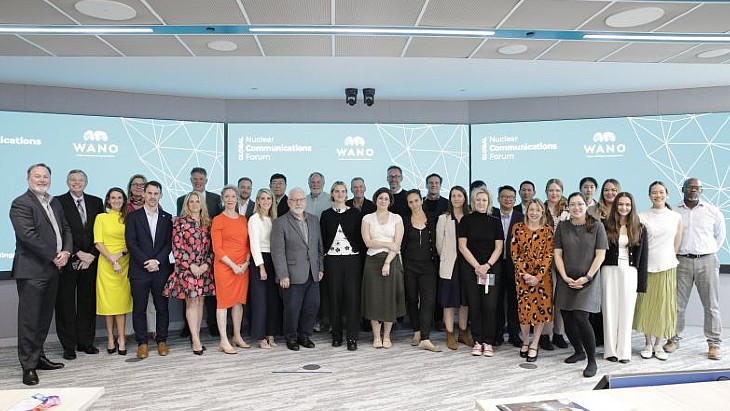
The World Association of Nuclear Operators hosted the third Global Nuclear Communications Forum, with WANO CEO Naoki Chigusa saying the event"made clear that communications is not just a support function - it’s a strategic driver of progress across the nuclear sector".
(Image: WANO)
He added: "We’re seeing communications play a pivotal role in driving performance at operating plants and facilities worldwide. Communications also plays a vital role in enabling plant restarts, life extensions, new builds, and the deployment of advanced technologies."
The World Association of Nuclear Operators (WANO) said 45 senior communicators, thought leaders, and industry stakeholders from 15 countries attended the event at its London, UK, headquarters. The forum is designed to be "a space for sharing knowledge, experience, and proven approaches to building effective communications functions. By strengthening connections between nuclear communicators globally, the Global Nuclear Communications Forum supports the industry’s growing demands through collaboration, practical tools, and the exchange of best practices - wherever members are on their nuclear journey".
Discussions "focused on harnessing digital innovation, responding to stakeholder expectations, and navigating the shifting communication landscape both internally and externally". Sessions also included moves towards "more proactive storytelling and reputation building, grounded in trust, transparency, and adaptability".
WANO says that its Communications Industry Working Group provides a practical mechanism for implementation of ideas from the forum and can shape tools and guidance that can be shared among its members.
WANO is a not-for-profit international organisation established in 1989 by the world's nuclear power operators to exchange safety knowledge and operating experience among organisations operating commercial nuclear power reactors. Its primary mission is to "maximise the safety and reliability of nuclear power plants worldwide, independent of geopolitical and national boundaries". It currently has 460 nuclear units as members, with 60 under construction.
Official proposal lodged for Halden SMR plant
Wednesday, 11 June 2025
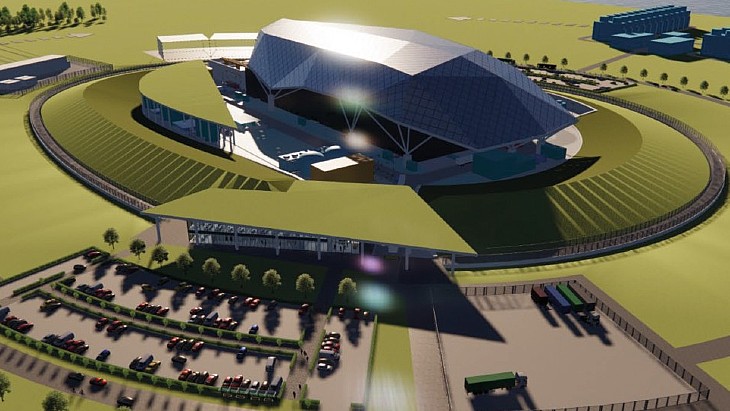
Halden Kjernekraft has submitted a proposal to Norway's Ministry of Energy for an assessment of the construction of both a power plant based on multiple small modular reactors as well as a radioactive waste storage facility at Halden, in southeast Norway.
(Image: Halden Kjernekraft)
Halden Kjernekraft - 20% owned by Halden municipality with Norsk Kjernekraft and Østfold Energi owning 40% each - was set up in November 2023 to investigate the construction of a nuclear power plant at Halden using small modular reactors (SMRs).
Halden Kjernekraft has now submitted a formal notification to Norway's Ministry of Energy regarding a study programme for the establishment of a nuclear power plant in the municipality. "This marks the first step in the Norwegian regulatory process to look more closely at the advantages and disadvantages of building nuclear power plants," the company said.
The proposed nuclear power plant at Halden will consist of up to four SMRs with a total installed capacity of 1200 MWe and an annual production of 10 TWh. The plant is expected to create between 200 and 500 jobs during the operational phase.
"Halden is centrally located between Oslo and Gothenburg, which makes it interesting for the establishment of new industry, but a lack of stable power has been an obstacle to such establishments. We have the solution to that problem," said Norsk Kjernekraft CEO Jonny Hesthammer. "We see that the need for power is increasing, while the power system has become more weather-dependent and more dependent on foreign cables, which are vulnerable to sabotage. A nuclear power plant in Halden will improve energy security in the capital area."
Håvard Kristiansen, CEO of Halden Kjernekraft, added: "Lack of power currently hinders industrial establishment and climate action in Østfold, Oslo and Akershus. A nuclear power plant in Halden can help solve this problem in the long term."
This is the fourth project that Norsk Kjernekraft is involved in notifying the Ministry of Energy. In August last year, it submitted a proposal to the Ministry of Energy for an assessment of the construction of a power plant based on multiple SMRs in the municipality of Øygarden, west of Bergen. That proposal followed proposals submitted for SMR power plants in Aure and Heim municipalities, as well as Vardø municipality.
In addition to proposing the nuclear power plant at Halden, Halden Kjernekraft has also proposed an investigation programme for an interim storage and disposal facility for radioactive waste. This is proposed to be located next to the nuclear power plant. This notification has been submitted to the Directorate for Radiation Protection and Nuclear Safety (DSA), which is the responsible authority for such facilities.
To obtain a licence under the Atomic Energy Act, developers must have a plan for the safe management of radioactive waste. Halden Kjernekraft said the proposed facility will use proven technology, developed and approved in several other countries, and will be able to handle waste from both the proposed nuclear power plant in Halden and from other sources.
Halden Kjernekraft said it is also considering using drilling technology from the oil and gas industry to deposit some types of radioactive waste in boreholes that are several kilometers deep.
Norsk Kjernekraft aims to build, own and operate SMR power plants in Norway in collaboration with power-intensive industry. It says it will prepare licence applications in accordance with national regulations and international standards. It will follow the International Atomic Energy Agency's approach for milestones, and focus on what creates value in the early phase. Financing will take place in c
KHNP and Thailand's EGAT to explore SMR options
Wednesday, 11 June 2025
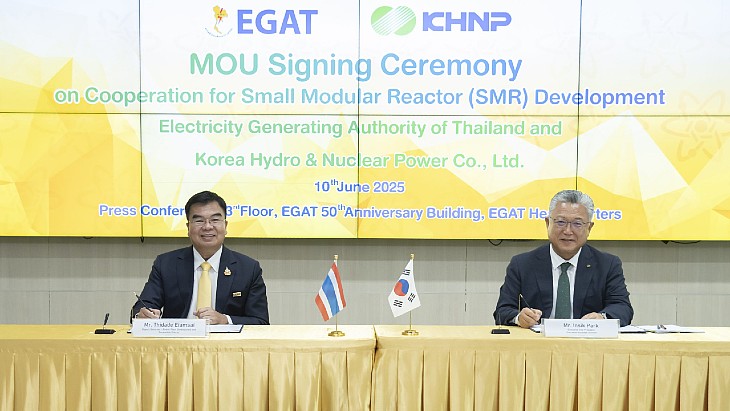
Korea Hydro & Nuclear Power has signed a memorandum of understanding with the Electricity Generating Authority of Thailand for cooperation on small modular reactors and exploring their feasibility for future projects.
(Image: EGAT)
The agreement will see the two companies exchange SMR-related technical information, hold a joint review of options for introducing a small modular reactor (SMR) in Thailand and cooperate on training personnel through on-site tours and staff and technology exchanges in the nuclear energy field.
Thidade Eiamsai, Deputy Governor Power Plant Development and Renewable Energy of the Electricity Generating Authority of Thailand (EGAT), said the country's Power Development Plan highlights the need to diversify energy sources and increase the share of clean energy. He said the MOU was "an important step towards Thailand’s clean energy future and also plays a part in achieving both EGAT’s and Thailand’s goal of Carbon Neutrality by 2050".
He said the focus would be on the study of SMRs "which are well-suited to Thailand’s energy landscape".
Park Insik, head of the Export Business Division for KHNP, said: "This agreement is an important starting point for sharing KHNP's technological prowess as Thailand’s energy transition partner ... we will continue to work closely with EGAT to create a sustainable energy future for Thailand, while also actively entering the SMR market in the ASEAN region, including Thailand, and establishing a cooperation model that contributes to the global energy transition."
Thailand and South Korea signed a Cooperation Agreement on the Peaceful Uses of Nuclear Energy in March this year which established a framework for collaboration and nuclear energy cooperation between the two countries. Among the nuclear-related projects being considered in Thailand is one involving the Danish molten salt reactor floating power plant developer Saltfoss Energy (formerly Seaborg), which has agreements with South Korea's Samsung Heavy Industries and KHNP for potential manufacturing and operation. A joint feasibility study has been taking place with Thailand's Global Power Synergy Public Company Limited.
Thailand does not currently have nuclear energy among its energy mix, although there have been various initiatives over the years to explore options, and it has had an operating research reactor since 1977. South Korea's 26 operable nuclear power reactors provide about a third of the country's electricity and it is one of the world's most prominent nuclear energy countries, and in recent years has had an increasing focus on exports.ollaboration with capital-strong industry and solid financial players.
Construction under way of third Taipingling unit
Wednesday, 11 June 2025
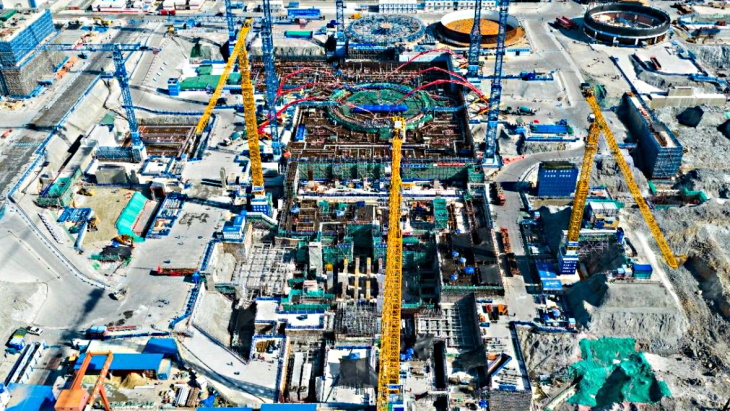
The first safety-related concrete has been poured for the reactor building of unit 3 at the Taipingling nuclear power plant in Guangdong province. It is the third of six HPR1000 (Hualong One) units planned for the site.
(Image: CGN)
"On the morning of 10 June, the mobilisation meeting for the construction of unit 3 of CGN Guangdong Taipingling Nuclear Power Project was held in Huizhou," China General Nuclear Power announced. "The project completed the pouring of the first batch of concrete on the nuclear island, marking the official start of construction of the main project."
The Taipingling plant will eventually have six Hualong One reactors. The construction of the first and second units began in 2019 and 2020, respectively. Unit 1 is scheduled to start up in 2025, with unit 2 following in 2026.
(Image: CGN)
Construction of the second phase of the plant - units 3 and 4 - was approved by China's State Council on 29 December 2023.
CGN said Taipingling will provide clean energy for the sustainable economic development of the Guangdong-Hong Kong-Macao Greater Bay Area. Once all six Hualong One units are completed, its annual power generation will be some 50 billion kWh, CGN said and will "provide a steady stream of clean energy for the sustainable economic and social development of the Guangdong-Hong Kong-Macao Greater Bay Area" and reduce CO2 emissions by 41.6 million tonnes per year.
Fuel loading under way at Kashiwazaki-Kariwa unit 6
Wednesday, 11 June 2025
Japanese utility Tokyo Electric Power Company announced that it has begun loading fuel assemblies into the core of unit 6 at its Kashiwazaki-Kariwa nuclear power plant ahead of its restart. The unit looks likely to be restarted before unit 7, into which fuel was loaded last year.
Fuel loading at Kashiwazaki-Kariwa 6 (Image: Tepco)
A total of 872 fuel assemblies will be transported from the used fuel storage pool to the core of the 1356 MWe Advanced Boiling Water Reactor. It is expected to take about two weeks to complete the loading process.
"We will continue to carefully load the reactor with fuel until the last fuel assembly has been loaded," Tokyo Electric Power Company (Tepco) said. "An announcement will be made after all fuel loading has been completed."
Tepco applied for Nuclear Regulation Authority (NRA) approval of its design and construction plan for Kashiwazaki-Kariwa units 6 and 7 in September 2013. It submitted information on safety upgrades across the site and at those two units. These 1356 MWe Advanced Boiling Water Reactors began commercial operation in 1996 and 1997, respectively, and were the first Japanese boiling water reactors to be put forward for restart.
In 2017, Tepco received permission from the NRA to restart units 6 and 7. However, in early 2021, the company notified the NRA of malfunctions in intruder detection equipment on the Kashiwazaki-Kariwa site. In addition, it reported the unauthorised use of an ID card. In April 2021, the NRA issued an administrative order to Tepco prohibiting it from moving nuclear fuel at the plant until improvements in security measures there have been confirmed by additional inspections. This order was lifted in December 2023 after inspections confirmed that measures had been enhanced at the site.
Additional regulatory inspections will still be required before Kashiwazaki-Kariwa units 6 and 7 - which have been offline since March 2012 and August 2011, respectively - can resume operation.
Tepco announced in April 2024 that it had completed loading fuel into unit 7, which it aims to restart as early as this summer. That unit, however, would have to be taken offline again in October to implement anti-terrorism safety measures.
Tepco has until September 2029 to implement these measures at unit 6, and it could continue operating until that time, pending local approval.
Although it has completed work at the other idled units at Kashiwazaki-Kariwa, Tepco is concentrating its resources on units 6 and 7 while it deals with the clean-up at Fukushima Daiichi. Restarting those two units would increase the company's earnings by an estimated JPY100 billion (USD706 million) per year.


_80647.jpg)
_41080.jpg)
_67454.jpg)
_79936.jpg)