Thursday, August 07, 2025

OpenAI adds mental health safeguards to ChatGPT, saying chatbot has fed into users’ ‘delusions’


Copyright Canva

By Roselyne Min
Published on 05/08/2025 

OpenAI says it is redesigning its AI chatbot to better detect signs of mental or emotional distress.

OpenAI is adding mental health safeguards to ChatGPT, after it said the chatbot failed to recognise “signs of delusion or emotional dependency”.

As artificial intelligence (AI) tools become more widely adopted, more people are turning to chatbots for emotional support and help tackling personal challenges.

However, OpenAI’s ChatGPT has faced criticism that it has failed to respond appropriately to vulnerable people experiencing mental or emotional distress. In one case, a 30-year-old man with autism reportedly was hospitalised for manic episodes and an emotional breakdown after ChatGPT reinforced his belief that he had discovered a way to bend time.

“We don’t always get it right,” OpenAI said in a statement announcing the changes. “Our approach will keep evolving as we learn from real-world use”. 


The changes will enable ChatGPT to better detect signs of mental or emotional distress, respond appropriately, and point users to evidence-based resources when needed, the company said.

The chatbot will now encourage breaks during long sessions, and the company will soon roll out a new feature to respond to questions involving high-stakes personal decisions.

For example, it will no longer give a direct answer to questions such as “Should I break up with my boyfriend?” but will instead ask questions to help the user think through their personal dilemmas.


OpenAI said it is also setting up an advisory group of experts in mental health, youth development, and human-computer-interaction (HCI) to incorporate their perspectives in future ChatGPT updates.

The tech giant envisions ChatGPT as useful in a range of personal scenarios: preparing for a tough discussion at work, for example, or serving as a sounding board to help someone who’s “feeling stuck …untangle [their] thoughts”.


Experts say that while chatbots can provide some kind of support in gathering information about managing emotions, real progress often happens through personal connection and trust built between a person and a trained psychologist.

This is not the first time OpenAI has adjusted ChatGPT in response to criticism over how it handles users’ personal dilemmas. In April, OpenAI rolled back an update that it said made ChatGPT overly flattering or agreeable.

ChatGPT was “sometimes saying what sounded nice instead of what was actually helpful,” the company said.

 

Endangered US contraceptives put 1.4 million women at risk, NGO claims

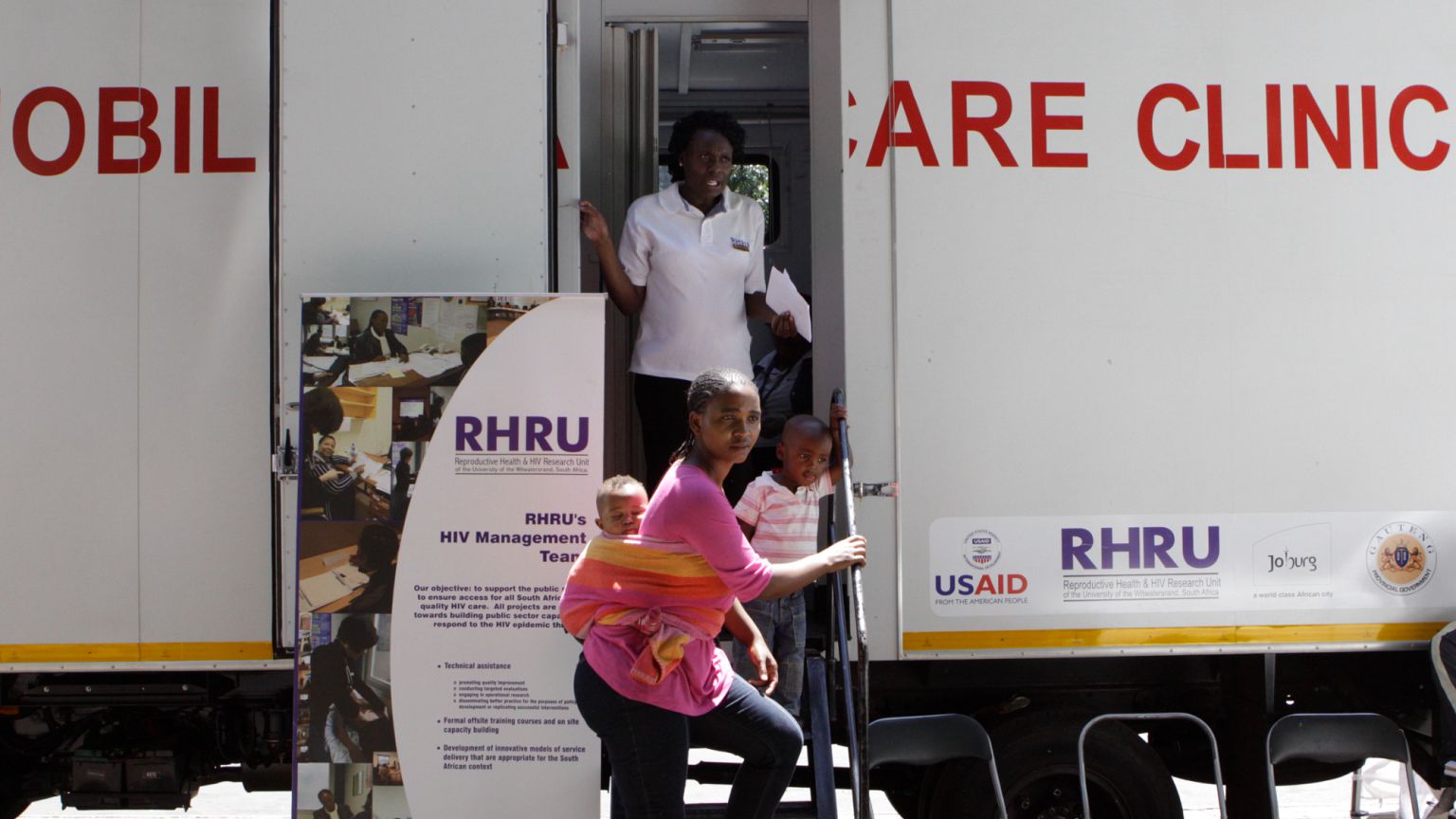
A woman enters a mobile healthcare clinic parked in downtown Johannesburg, South Africa.
Copyright AP Photo


By Marta Iraola Iribarren
Published on 

More than 1.4 million women and girls in Africa will lose access to contraceptives as the U.S. plans to burn $10 million worth of supplies stored in Europe.

More than 1.4 million women and girls in Africa risk losing access to life-saving care if a stockpile of US-owned contraceptives currently stored in Europe are destroyed in accordance with US government plans, according to NGO International Planned Parenthood Federation (IPPF).

The contraceptives, valued at $10 million (€8.5 million ) are currently stored in a warehouse in Belgium, but face destruction following the closure of key American aid agency United States Agency for International Development (USAID), as reported.

Plans for them to be incinerated in France in accordance with US government plans have sparked widespread condemnation from civil society organisations and politicians, who are calling for the supplies to be preserved. 

The IPPF has attempted to purchase the stock from the US government but had its offer rejected. 

The products were originally intended for distribution to lower-income countries by the now dismantled USAID. 

Approximately 77% of the stock, many with expiration dates between 2027 and 2029, was intended for use in African nations including the Democratic Republic of the Congo (DRC), Mali, Kenya, Tanzania, and Zambia. 

“We are facing a major challenge. The impact of the USAID funding cuts has already significantly affected the provision of sexual and reproductive health services in Tanzania - leading to a shortage of contraceptive commodities, especially implants," said Dr Bakari, Project Coordinator at UMATI, IPPF’s Member Association in Tanzania.  

Tanzania was set to receive more than a million injectable contraceptives and 365,000 implants from the Brussels stockpile, accounting for more than 40% of the total shipment. These supplies represent over half of USAID’s annual support to Tanzania’s health system and 28% of the country’s total annual need. 

“In Kenya, the effects of US funding disruptions are already being felt. The funding freeze has caused stock-outs of contraceptives, leaving facilities with less than five months' supply instead of the required 15 months,” said Nelly Munyasia, executive director for the Reproductive Health Network in Kenya also member of IPPF.**  

She added that the withdrawal of USAID has created a 46% funding gap in Kenya’s national family planning programme. 

The US has long been the largest bilateral donor to family planning, contributing $600 million annually which was 40% of global donor funding. The cancellation of pending procurement contracts has widened an existing global funding gap from $167 million to $210 million across 32 countries, according to the Reproductive Health Supplies Coalition (RHSC), a global partnership of public, private, and non-governmental organisations. 

The coalition also warned of broader effects of burning this stash. The group said that, when a woman’s first choice of contraceptive is missing, she may opt for a less-preferred product, which could lead to a stock-out of that product if demand rises unexpectedly.  

“When family planning stocks are compromised, the entire supply chain is at risk, requiring new funding, time, and coordination that cannot materialise at short notice,” they stated.  

The RHSC has estimated that failure to deliver this stockpile to its intended recipients could result in 362,000 unintended pregnancies, 161,000 unplanned births, and 110,000 unsafe abortions. 

Political opposition in Europe

During a briefing in late July, US State Department spokesperson Thomas Pigott said officials were “still in the process here in terms of determining the way forward” with regard to the Belgian stock. 

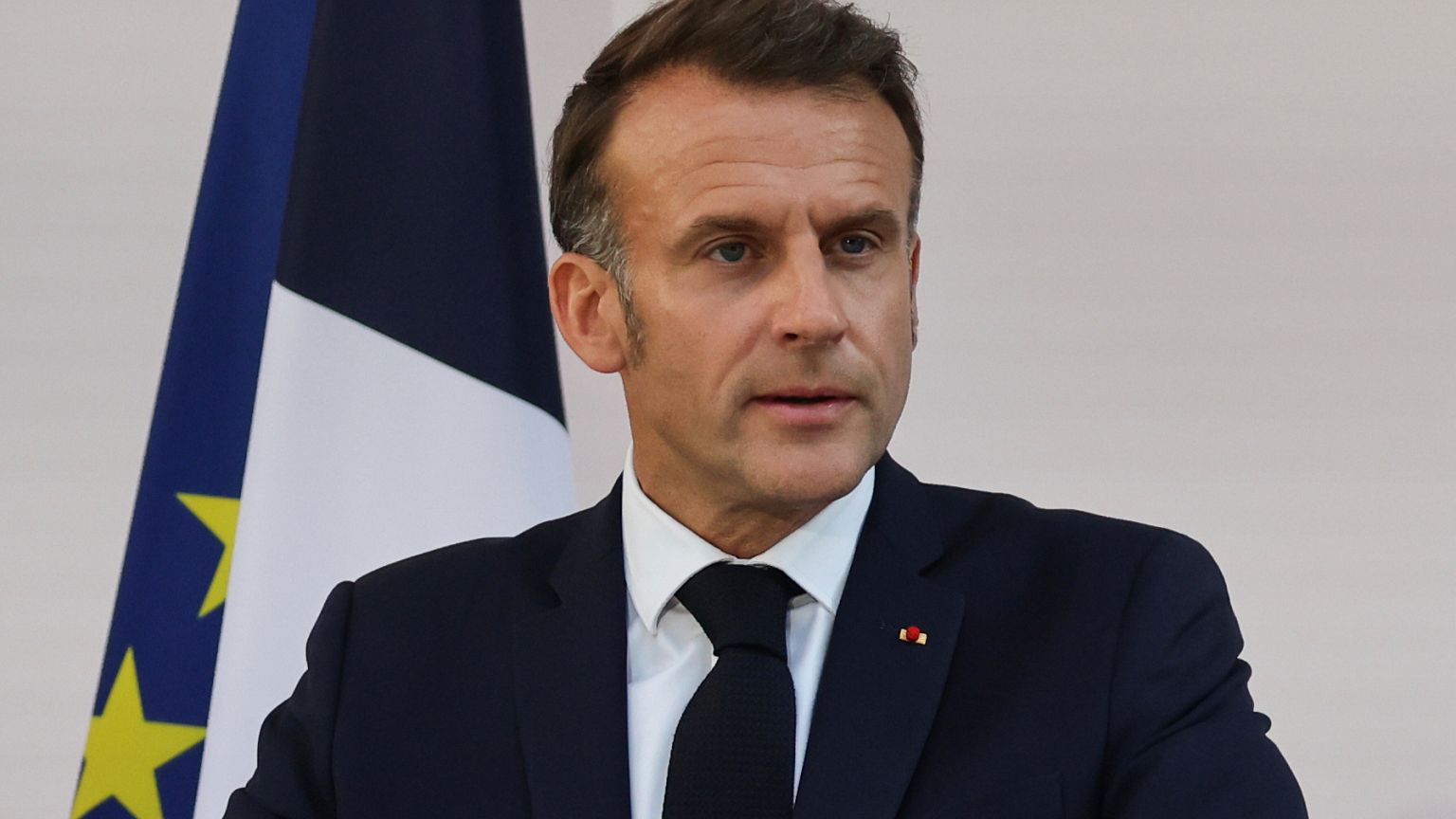
As the supplies are reportedly set to be transferred to France for destruction, French Green Party politicians have appealed to President Emmanuel Macron to intervene. 

“We cannot allow Donald Trump's anti-choice agenda to unfold on our territory. And so today, France must mediate with the Commission,” MEP Mélissa Camara (France/The Greens), one of the signatories of the letter, told Euronews.   

"Unfortunately there is no legal basis for intervention by a European health authority, let alone the French national drug safety authority, to recover these medical products," the French health ministry told AFP.

"Since contraceptives are not drugs of major therapeutic interest, and in this case, we are not facing a supply shortage, we have no means to requisition the stocks," it added. 

The ministry also said it had no information on where the contraceptives would be destroyed. 

EU resists renewed Trump pressure to shift digital rules

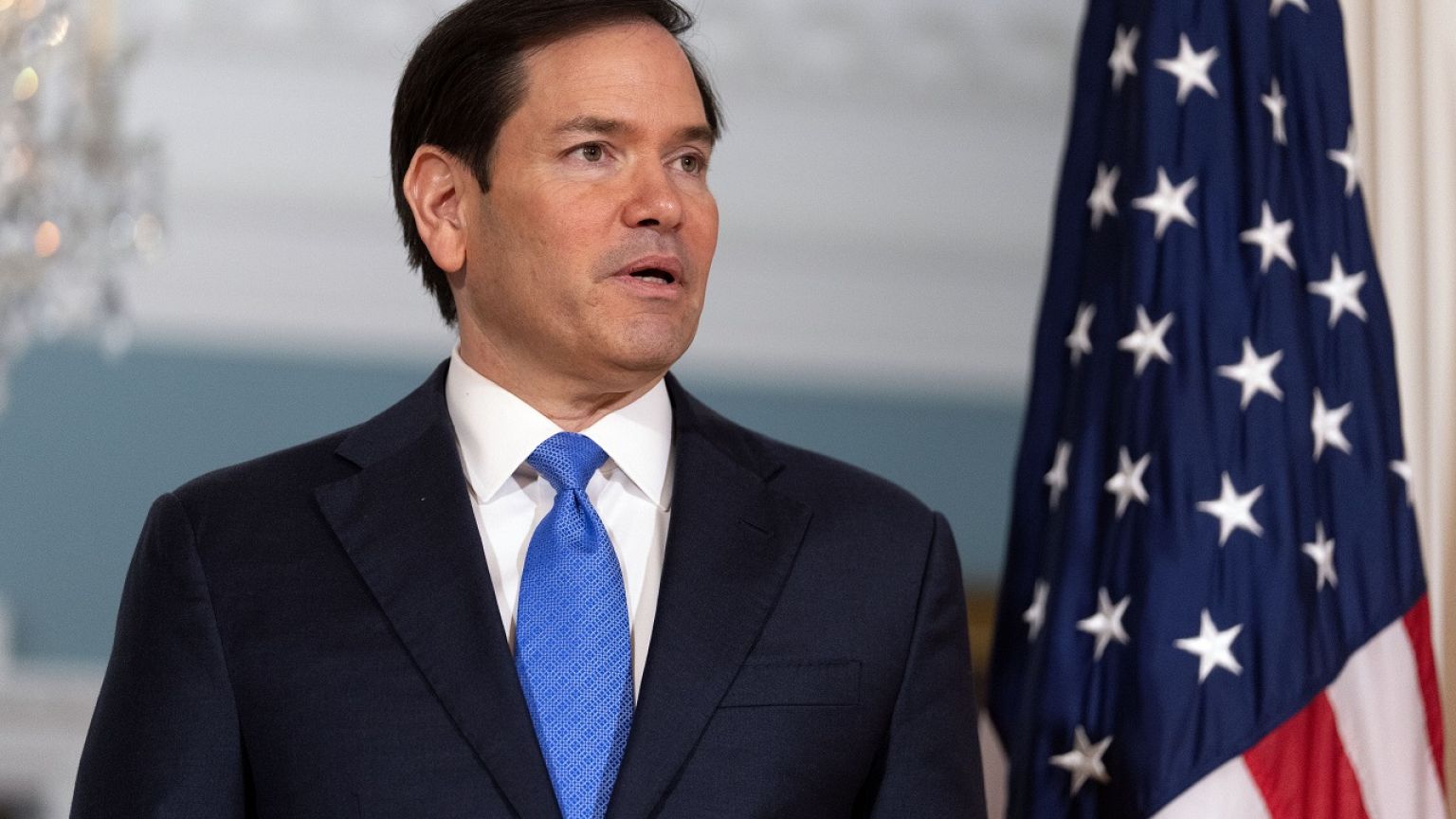
Secretary of State Marco Rubio at a press conference.
Copyright Mark Schiefelbein/Copyright 2025 The AP. All rights reserved.

By Cynthia Kroet
Published on 

Digital rules have been the subject of several attacks since the new US administration came to power in January.

EU digital rules are not up for discussion, a spokesperson for the European Commission said in response to media reports that the US administration of President Donald Trump has instructed its diplomats to launch a lobbying campaign against the bloc’s digital rulebook.

Reuters reported on Wednesday that a memo signed by US Secretary of State Marco Rubio, warned that the EU was pursuing "undue" restrictions on freedom of expression in its efforts to combat hate speech and disinformation.

It warned against the Digital Services Act (DSA) – online platform rules in place from late 2023 with the aim to curb illegal content and products online. 

A spokesperson for the Commission told Euronews in response that “our EU regulations and standards were never up for discussion, and this will not change.”

“We firmly rebut any censorship claims. The censorship allegations relative to the DSA are completely unfounded. Freedom of expression is a fundamental right in the EU,” the spokesperson added.

EU rules have been the subject of several attacks since Trump came to power in January. Not only by government officials, but also by the Big Tech companies themselves.

In April, the Commission reiterated it will not make any concessions on its digital and technology rules as part of any trade negotiations with the United States after a senior advisor of Trump openly accused the bloc of waging "lawfare" against the country's Big Tech companies.

EU Tech Commissioner Henna Virkkunen told Euronews in April: "Our rules are very fair, because they are the same rules for everybody who is operating and doing business in the European Union. So, we have the same rules for European companies, American companies, and Chinese companies.”

The EU executive has begun a number of probes into companies - including American ones – for suspected breaches of the DSA, and the Digital Markets Act, online competition rules. 

Spain’s housing crisis deepens: residents’ anger is rising


Copyright Euronews


By Valérie Gauriat
07/08/2025 - 

Millions across Europe are being priced out of housing, with Spain at the heart of the crisis. Euronews’s international correspondent Valérie Gauriat reports from Barcelona, where skyrocketing rents and property speculation are pushing residents to the brink.

Since 2010, housing prices in the European Union have surged by over 50% on average, while rents have climbed by 26%. Spain is among the hardest-hit nations, with rents increasing by up to 80% in the past decade. 

This is a crisis caused by a cocktail of scarce housing supply, inflated construction costs, the boom in short-term rentals, and foreign investor speculation.

“Barcelona is a city full of tourists. Rents are extortionate,” says Rosario Castelló, a longtime resident and member of the tenants’ union, Sindicat de Llogateres

She faces eviction after her apartment block was purchased by Vandor Group, a subsidiary of British investment fund Patron Capital.

“I’ve lived in my flat for 26 years,” explains Rosario. “It’s where I raised my children, and where I have my clothing brand Pinku No Kuma,” she says showing the dresses she designs with her daughter.

“And Vandor wants to take my house away from me, along with everything I’ve achieved here,” she adds.

Rosario is the last of the building’s former tenants. All the other flats were turned into co-living spaces, rented to foreigners on short term leases.

“Vulture funds are massively buying entire buildings for speculation. And they’re throwing us all out,” storms Castelló. “It must stop.”

Despite her lease having expired, she refuses to leave and is in legal proceedings with the owner to which she still pays rent.

“They offered me a small fee to get me out,” she explains, “but rental prices are extortionate. I have nowhere to go.”

Across Barcelona, residents like Rosario are banding together. Supported by the Sindicat de Llogateres, they are fighting to avoid evictions and pressure public authorities to intervene. 

“There is a total lack of protection for the right to housing,” exclaims Martina Ges Torra, another member of the tenants’ union. “We will collectively defend this right.”

The Spanish government is trying to curb the crisis. Measures include plans to remove 65,000 Airbnb listings, increase taxes on property purchases by non-EU nationals, and enforce rental caps.

“We have started to regulate the rise in rental prices,” says Barcelona’s Mayor, Jaume Collboni, noting an 8% price drop in Barcelona. 

Another sweeping measure will eliminate all Airbnb apartments in the city by 2028, returning 10,000 homes to residential use. 

“And in Catalonia, short-term rentals will be subject to the same price cap,” adds the mayor. “This means a huge drop in profitability for investment funds – it’s a deterrent.”

Jaume Collboni is leading the ‘Mayors for Housing Alliance’ initiative, involving 15 major European cities. They have presented the EU with a European Housing Action Plan  urging Brussels to invest in affordable housing and exempt such spending from the limitations of state aid rules.

 “The European Commission must act,” insists Collboni.  “If citizens see that European institutions aren’t addressing a problem of such magnitude, it could trigger a crisis of legitimacy,” he says, concluding: “It’s not just a social issue. The future of the European project, and of democracy itself, are also at stake.”


UK Renters pay £400 a month more than in 2020, sparking calls for urgent rent cap

RENT IS INFLATIONARY


3 August, 2025 
Left Foot Forward


“The government can and must act urgently."


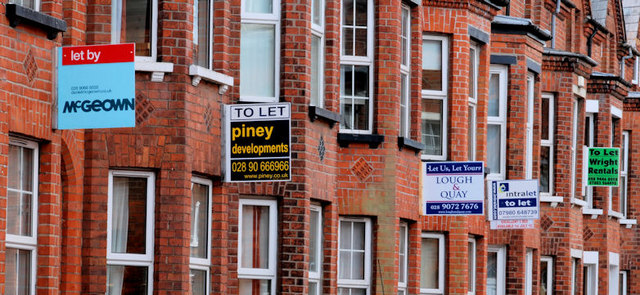
The government is being urged to act urgently to cap the cost of rents, following new research that shows tenants in Britain are now paying an average of £417 more per month compared to five years ago, a 44 percent increase that far outpaces wage growth.

Outside London, average monthly rents have climbed to £1,365, marking a 3.9 percent rise from this time last year. In the capital, rents have hit a record high of £2,712 per month. According to data from Rightmove, advertised rents for new tenancies in London have increased by 1.9 percent annually.

Ben Twomey, chief executive of Generation Rent, which advocates for tenants’ rights, warned that soaring rents are pushing people to the brink:

“Landlords often blame rising rents on demand being higher than the number of homes available, but it is now clear that high rents are here to stay, even as the number of renters looking for homes is falling.

“When so much of our income is swallowed up by landlords, it can mean that we can’t afford to heat our homes for the winter or feed ourselves properly.

“Some renters are staring down the barrel of debt and homelessness.

“The government can and must act urgently. We rightly have caps on essentials like energy and water bills, but we desperately need the same protection from the soaring rents that are pricing us out of our homes.”

Richard Lane, chief client officer at StepChange Debt Charity, shared similar concerns, noting how renters are disproportionately affected by financial strain:

“The majority of our clients struggling with debt are renters, with a third in the PRS (private rented sector). Our data shows that among StepChange clients, housing costs take up 37% of private renters’ incomes on average – compared to 29% among social renters and 27% among mortgage holders.

“When so much of your income goes on rent, it’s no wonder private renters are more exposed to debt and financial hardship.”


Canada sends troops to eastern province as fire damage grows

Montreal (AFP) – Canada is sending troops and coast guard personnel to its easternmost province on Thursday to confront wildfires that have forced hundreds to evacuate, as the country endures one of its worst fire seasons on record.

Issued on: 07/08/2025  FRANCE24
Wildfires burn in the Canadian province of British Columbia in June © Don MacKinnon / AFP

Wildfires across the vast country this year have already burned 7.1 million hectares (17.5 million acres) of land, an area roughly the size of Ireland, according to official data updated Wednesday.

The figure matches the amount of land scorched in 1995, which had been the second worst season on record, with data going back to 1983.

With hot, dry conditions expected to persist across several regions, and 730 active fires burning, the damage this year is almost certain to pass the toll from two decades ago.

But 2025 is not on track to overtake 2023, when 17.3 million hectares (42.7 million acres) burned, an extraordinary toll that focused global attention on the growing threat of wildfires boosted by human-induced climate change.

Federal emergencies minister Eleanor Olszewski said late Wednesday that she had approved an "urgent request" from the province of Newfoundland and Labrador to help battle growing wildfires.

"Help is on the way," Olszewski posted on X.

Provincial officials have estimated the number of people impacted by the latest evacuation orders at about 900.

Hundreds of people have also faced evacuation orders this week in the west coast province of British Columbia.

Federal troops have been deployed to help fire responses in several parts of the country this year, including the central provinces of Manitoba and Saskatchewan, where elevated temperatures and dry conditions led to a tumultuous spring.

In recent years, Canada has experienced warming at least twice as fast as the rest of the globe.

Linked to climate change, rising temperatures lead to reduced snow, shorter and milder winters, and earlier summer conditions that are conducive to fires, experts say.

© 2025 AFP

France’s top court strikes down pesticide clause in farming law

Copyright Ludovic Marin/APBy Euronews with AP
Published on 07/08/2025 -

Critics called the decision a win for democracy and the planet. Some lawmakers have already vowed to push for a full repeal in the coming months.

France’s highest court on Thursday blocked a key part of a contentious farming law that would have brought back a banned pesticide.

According to the French Constitutional Court, the measure failed to protect the environment and future generations. The rest of the law - known as the “Duplomb law,” after the senator who proposed it - was allowed to stand.

The bill aimed to loosen rules for farmers and fast-track projects like water storage. It was backed by the government and major farming unions and passed in early July.

However, it was met with fierce competition from scientists, health experts and green groups.

At the heart of the controversy was acetamiprid, a pesticide banned in France since 2018 for its role in harming bees and other pollinators. Some farmers, especially beet growers, had pushed for its return.

A student-led petition against the law drew more than 2 million signatures - one of the biggest in French history. Opponents said that the bill was rushed through parliament with barely any debate, and warned that it put public health and biodiversity at risk.

On Thursday, the French court ruled that the proposal previously passed was not strict enough and ignored France's constitutional commitment to environment protection.

The ruling is a blow to President Emmanuel Macron’s government, which had defended the bill until the end.

Left wing politicians were quick to react on social media.

Manuel Bompard, coordinator of France Insoumise, said that: "The mobilization must continue until the law is withdrawn and a government, more dangerous than ever for the environment and health, is censored."

Ian Brossat, co-chairman of the Communist group on the Paris council, welcomed the "excellent news for public health and the environment" and denounced what he described as an "absurd and dangerous" law.

Critics called the decision a win for democracy and the planet. Some lawmakers have already vowed to push for a full repeal in the coming months.

Acetamiprid is currently approved by the European Union until 2033, and authorized in other member countries.


Prosecutors in Thailand issue indictments for dozens linked to deadly building collapse

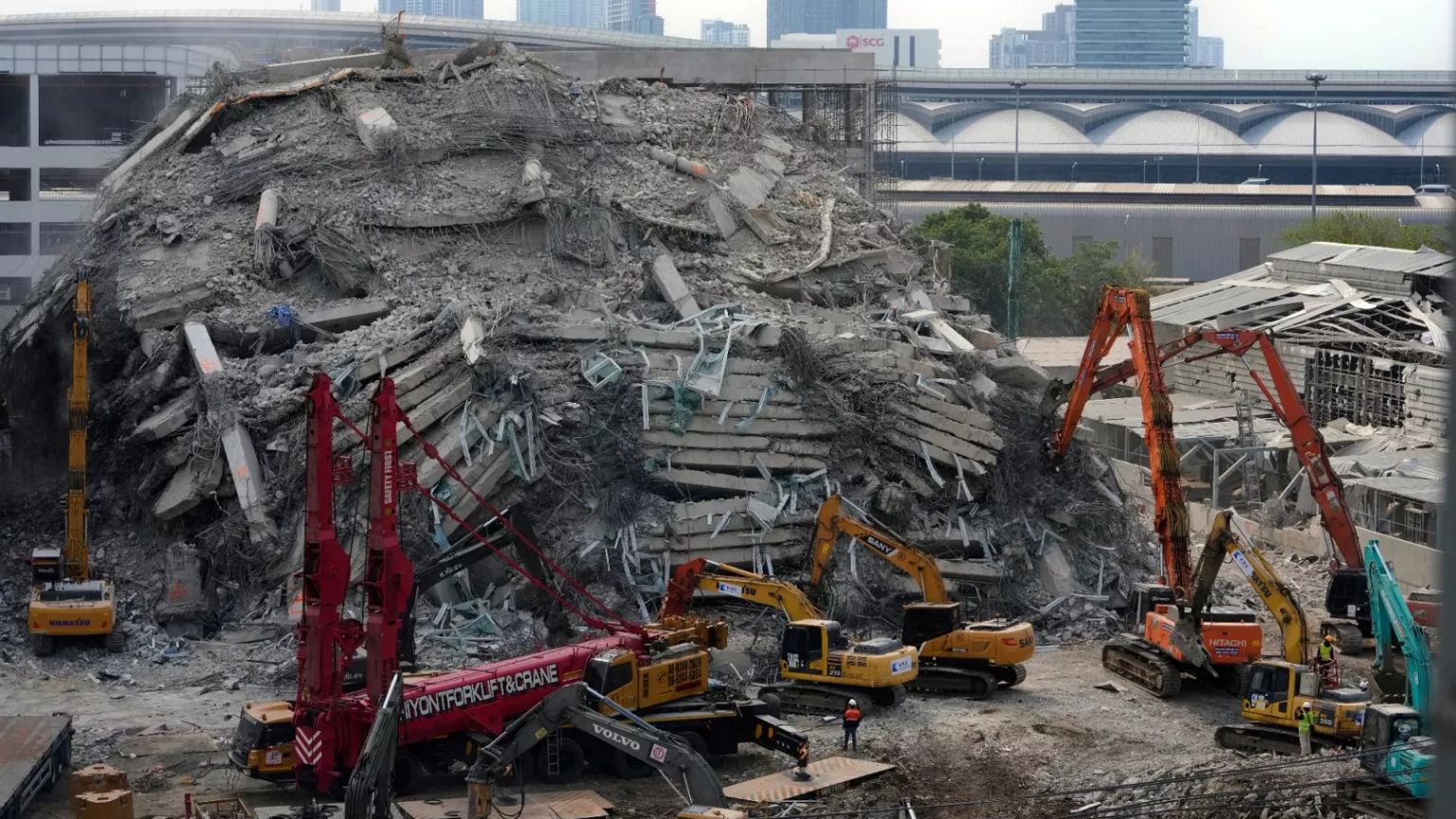
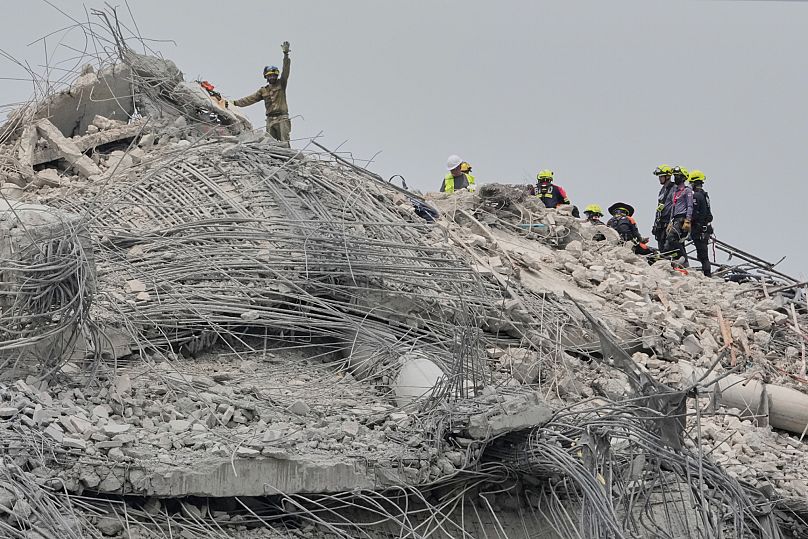
Heavy machinery deployed to clear the rubble from an under construction high-rise building that collapsed in Bangkok, 2 April, 2025
Copyright AP Photo

By Gavin Blackburn
Published on 

An investigation by police and other officials found design and structural flaws were behind the building's collapse and that some of the officially approved designs were not implemented.

State prosecutors in Thailand have formally indicted 23 individuals and companies on charges related to the collapse of a Bangkok office building that was destroyed after an earthquake, killing at least 92 people.

The partially built high-rise, which was to house the new State Audit Office, was the only one in Thailand to completely collapse on 28 March due to the 7.7 magnitude earthquake, which had its epicentre in neighbouring Myanmar.

Those indicted include the lead contractors for the project: Italian-Thai Development Co. and its Chinese joint venture partner for the project, the China Railway No. 10 company.

Italian-Thai Development's president, Premchai Karnasuta, and China Railway No. 10's local director, Zhang Chuanling, were also indicted along with others, including designers, engineers and several other companies.

The charges in the indictments include professional negligence in design, supervision, or construction practices that failed to comply with engineering standards, resulting in danger to others and causing deaths, according to a statement from the Office of the Attorney General.


Foreign and local rescuers look for sign of life at the site of an under-construction high-rise building that collapsed in Bangkok, 1 April, 2025 AP Phot

Additional charges include forgery and use of forged documents.

The indictment of Premchai is his second major tangle with the law. In 2019, he was convicted of killing protected animals and illegal possession of weapons while hunting in a wildlife sanctuary for which he served three years in prison.

Several of those indicted on Thursday had already surrendered to police and denied any wrongdoing.

An investigation by police and other officials found design and structural flaws were behind the building's collapse and that some of the officially approved designs were not implemented.

The earthquake killed more than 3,700 people in Myanmar and caused major damage in Mandalay, the country’s second-biggest city, and in the capital Naypyidaw.


US federal judge blocks Trump's birthright order nationwide

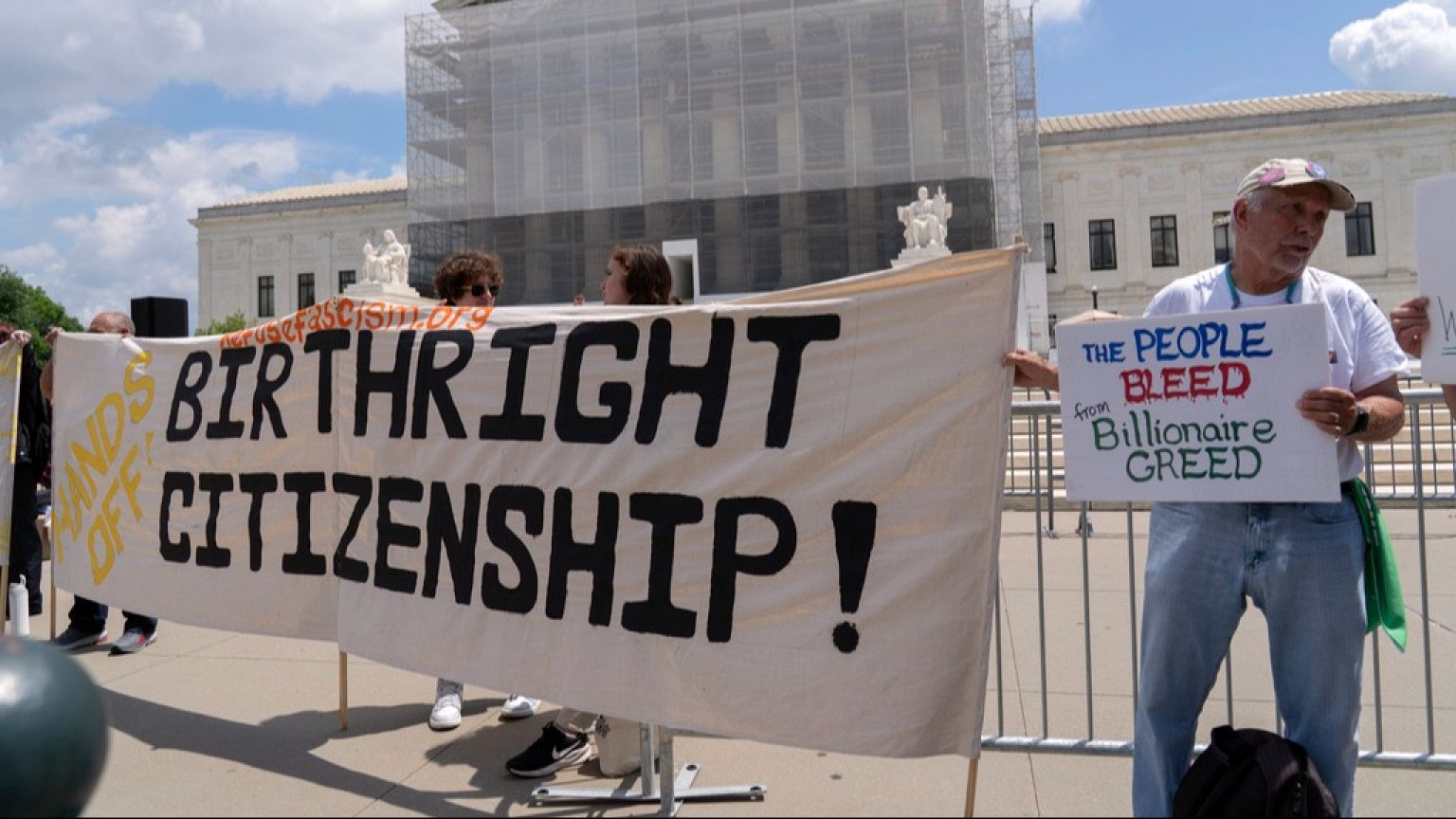
FILE - Demonstrators holds up a banner during a citizenship rally outside of the Supreme Court in Washington, May 15, 2025
Copyright Jose Luis Magana/AP

By Malek Fouda
Published on 


Trump signed an executive order on his first day back in office banning birthright citizenship to children born to people in the country illegally or temporarily, in what has been slammed by many as a violation of the 14th Amendment of the Constitution of the United States.

A federal judge in Maryland ruled that US President Donald Trump cannot withhold citizenship from people born to people in the United States illegally or temporarily, issuing the fourth court decision blocking Trump’s birthright citizenship order since a key Supreme Court ruling in June.

US District Judge Deborah Boardman’s preliminary injunction was expected after she said last month that she would issue such an order if an appeals court returned the case to her. The 4th US Circuit Court of Appeals sent the case back to her late in July.

Since June, two other district courts, in addition to an appellate panel of judges, have also blocked Trump’s birthright ban nationwide, which he passed on his first day in office through an executive order.

Trump’s executive order signed on Inauguration Day on 20 January would deny citizenship to children born to parents living in the United States illegally or temporarily.

Boardman issued a preliminary injunction blocking the executive order nationwide, but a ruling by the Supreme Court offered the Trump administration some hope of upholding the policy many criticise as a violation of the US Constitution.

The 14th Amendment of the Constitution stipulates that all persons born or naturalised in the United States are US citizens.

The top US court upended Boardman’s decision and other court rulings blocking Trump’s order across the nation, saying that federal judges and courts lack the authority to grant nationwide injunctions.

The justices ruled did not however rule out other court orders which could have nationwide effects, including class-action lawsuits and those brought forward by states.

Boardman on her Thursday ruling certified a class of children who have been born or will be born in the United States after 19 February, who would be affected by Trump’s order.

She argued that the plaintiffs in the lawsuit before her were “extremely likely” to win their argument that the US president’s order is a constitutional violation and are also likely to suffer “irreparable harm” if the order went into effect.  


Ryanair baggage handlers call strikes at Spanish airports from August: How will it affect my flight?

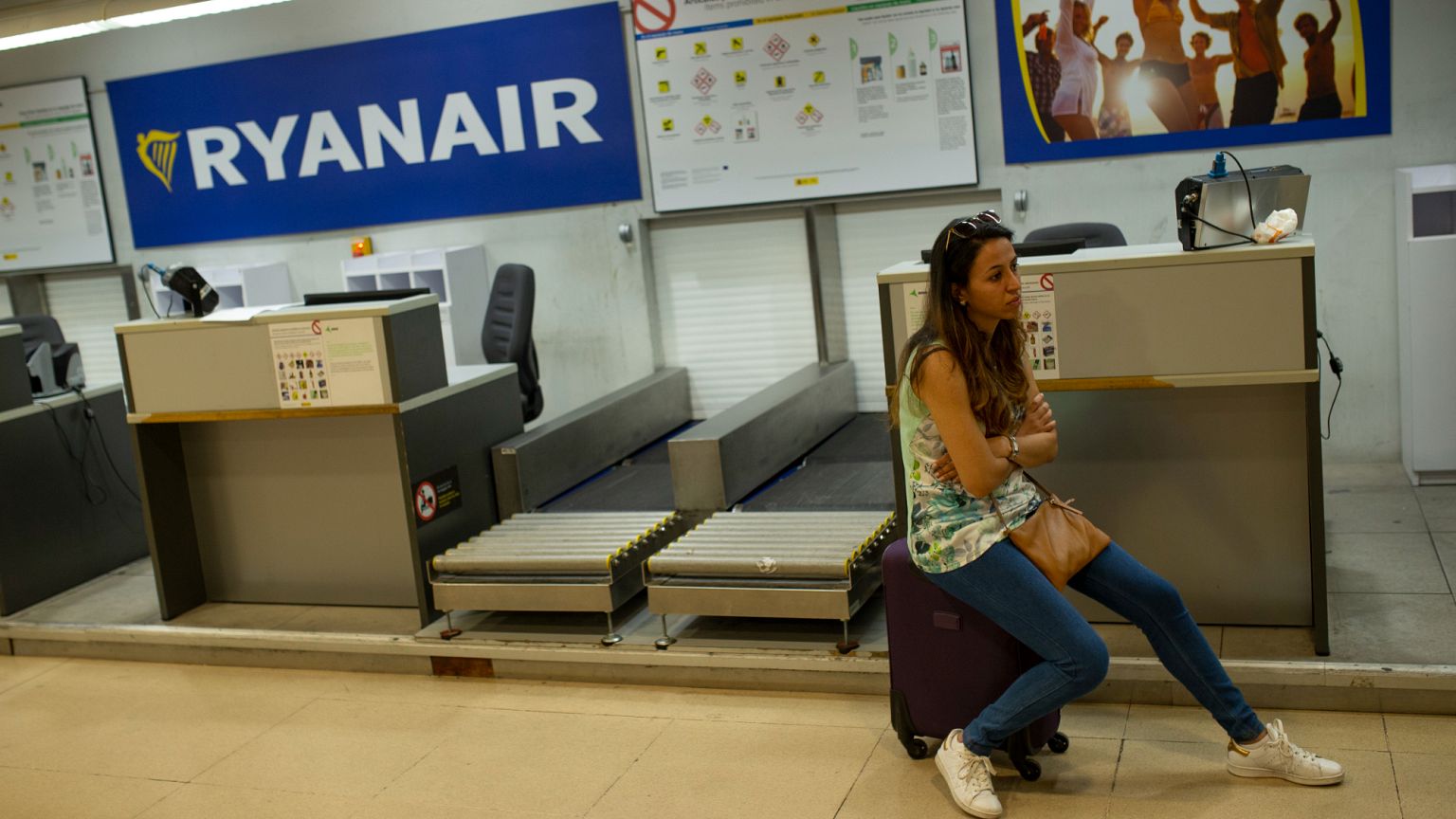
A woman sits on a suitcase next to a Ryanair airline check-in counter at the international airport in Madrid, July 25, 2018.
Copyright Copyright 2018 The Associated Press. All rights reserved.


By Christina Thykjaer
Published on 

Strikes will affect many Spanish airports at key times of the day and could lead to delays and cancellations.

The General Union of Workers (UGT) has announced a state-wide strike at Azul Handling, part of the Ryanair group, in response to what they describe as "continuous precariousness" and "constant breaches" of labour rights.

Azul Handling provides ground handling services to Ryanair group airlines at numerous Spanish airports.

It will face a series of work stoppages at all of its work centres and operational bases in Spain from 15 August. That includes airports in Madrid, Barcelona, Seville, Malaga, Alicante, Ibiza, Palma de Mallorca, Girona, Tenerife South, Lanzarote and Santiago de Compostela.

Initially, the strike will take place on 15, 16 and 17 August, in three time slots: from 05:00 to 09:00, from 12:00 to 15:00 and from 21:00 to 23:59.

It will then continue every Wednesday, Friday, Saturday and Sunday until 31 December 2025.

If you are travelling to or from any of the above airports from mid-August onwards, you are advised to check with Ryanair if your flight will be affected.

UGT calls for better conditions for its workers

The strikes follow a request for mediation by the Air Sector of FeSMC-UGT to the Interconfederal Service of Mediation and Arbitration (SIMA), aimed at opening talks before any industrial action.

According to the union, the reasons for the protest include the lack of consolidation of working hours for permanent part-time staff, the imposition of additional hours under duress, and what they describe as excessive disciplinary measures.

They also highlight ongoing breaches of the Joint Committee of the Sectoral Agreement's recommendations on economic guarantees and pay bonuses. UGT accuses the company of imposing unlawful limits on returning to work after medical leave and blocking family-friendly working hours by refusing to offer flexible schedules.

"Azul Handling maintains a strategy of precariousness and pressure on the workforce that violates basic labour rights and systematically ignores union demands," said José Manuel Pérez Grande, federal secretary of the FeSMC-UGT air union.

The union is calling on Azul Handling to withdraw the sanctions, comply with the rulings of the agreement and open real negotiations to improve the working conditions of more than 3,000 workers throughout the country.

Wrapped up in strikes: German döner lovers face shortages and sizzling prices

Copyright AP Photo

By Euronews with AP
Published on 07/08/2025 

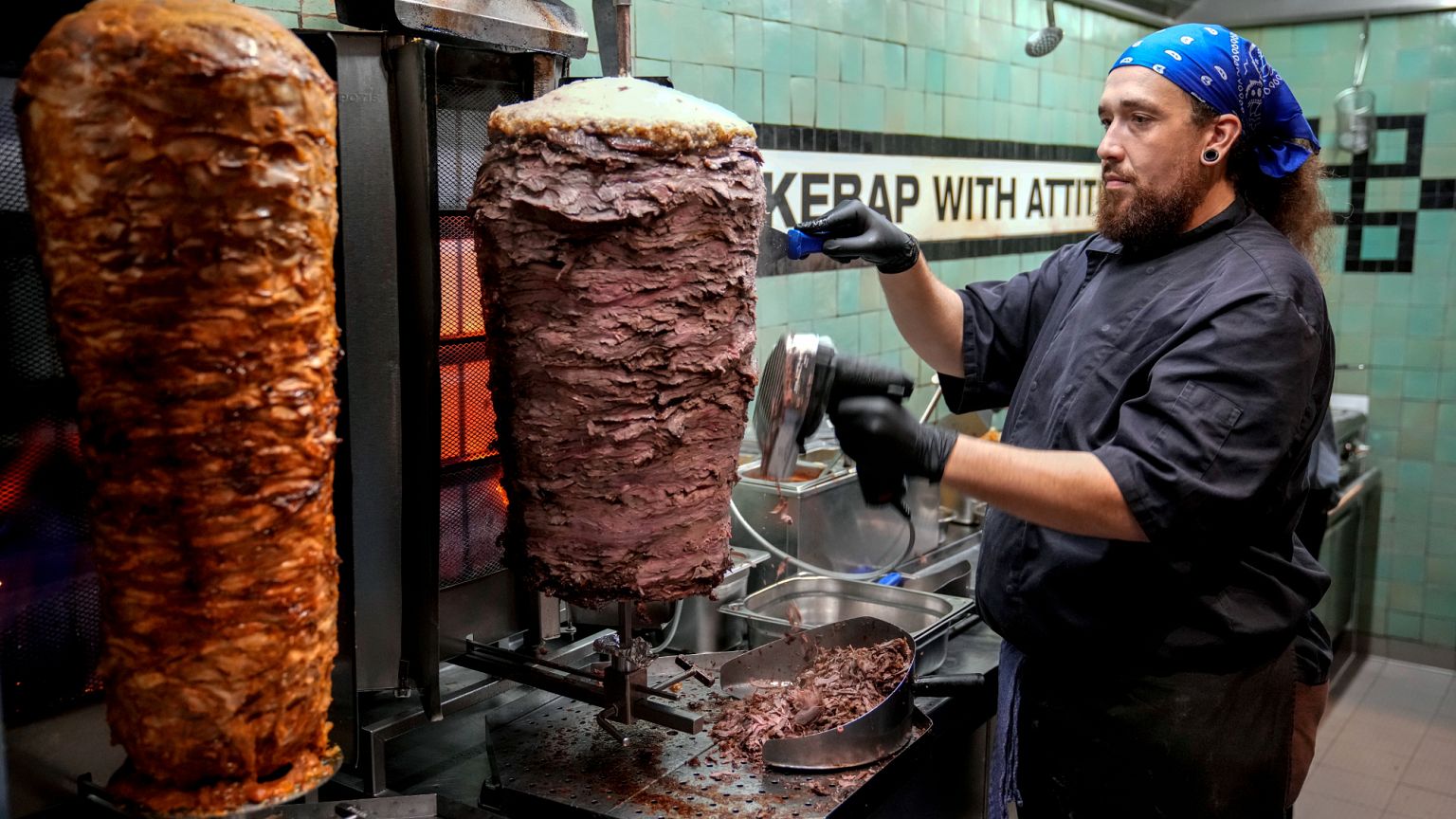
Workers at the Birtat Meat World SE factory in southwestern Germany have gone on strike again amid a salary dispute.

Germans are in kebab angst. They worry that their most beloved street food—the spicy, juicy kebab in a pita—found on every street corner across Germany, may get more expensive, or even worse, that the country may be sliding into a national kebab shortage.

Even if these fears may sound exaggerated at first, they aren't unfounded. Workers at one of Germany's biggest kebab factories are locked in a bitter and ongoing fight with their employer over wages and working conditions.

For weeks, workers at the Birtat Meat World SE factory in southwestern Germany have repeatedly stopped the production line by walking out in "warning strikes,” demanding wage increases of €375 per month.

Their current salaries vary widely, and haven't been disclosed. The Food, Beverages and Catering Union that represents them says that payment methods are non-transparent and workers are making vastly different salaries for the same kind of job, according to German news agency dpa.

Workers are also trying to organise a collective contract agreement for all employees with the help of the union.

Immigrant workers

Many workers are immigrants from Turkey, Romania or Bulgaria. They spend long, tough workdays in the factory, which has near freezing temperatures to keep the raw meat fresh.

On Wednesday, many workers walked off their jobs again, waving flags in front of the factory's main gate, playing drums, whistling and shouting for higher salaries and unionised contracts.

German media have reported that Birtat hasn't yielded to any of the demands so far. The company didn't immediately respond to requests for an interview.

Millions of consumers each month

Birtat, which is located in Murr, 30 kilometres north of Stuttgart, has been making kebab skewers for more than 30 years. The company says on its website that it makes kebab skewers of ground beef, veal, chicken or turkey that can weigh up to 120 kilograms.

The workers chop up the meat, marinate it and push chunks of the raw produce on long metal skewers. The meat is then shock-frozen and delivered to restaurants all over the country.

Birtat says it supplies thousands of kebab stands and fast food places and reaches more than 13 million consumers every month. Some restaurant owners worry that should the workers decide to go on a long-term strike, the Germans' favorite fast-food snack may indeed become more expensive or even scarce.
Rising prices

Germans already complain that the meaty snack, which used to be a cheap staple that sold for €2.50 about two decades ago, has become too expensive, with most places charging at least €7 or more.

Halil Duman was pondering the state of the kebab business as he was busy slicing off thin pieces of ground beef at Pergamon Döner, a small eatery at Berlin’s Friedrichstrasse train station where people were lining up for lunch.

“It's all getting more and more difficult," the 68-year-old Turkish immigrant said. "The produce is becoming more expensive and we barely make profit anymore.”

“But if we raise the prices any further, people won't buy here anymore,” said Duman, who has been working at kebab stores in the German capital for more than 30 years and was selling the classic kebab sandwich for €7.50.

Germans have long been fond of the kebab sandwich, called a döner in Germany. The word comes from the Turkish verb “donmek,” meaning to turn as the meat is grilled for hours on a spit and cut off in razor-thin slices when it's crisp and brown.

First brought to Berlin by Turkish immigrants in the 1970s, the grilled meat snack, which comes wrapped in pita bread with shredded lettuce, tomatoes, onions and different dressings, is now sold all across Germany, from the Baltic Sea to the Bavarian Alps.

According to legend, it was Mahmut Aygun, a Turkish guest worker, who invented the first döner sandwich in 1971, when he sold the meat in a piece of pita bread with yogurt dressing at a stand close to a main train station by the zoo in West Berlin.

About 2.9 million people with Turkish roots live in Germany, but the döner kebab sandwich has become so ubiquitous in the country that many foreign tourists consider it typically German and don't even know about the snack's immigrant past.

Nele Langfeld, a 22-year-old university student, had come to Pergamon Döner as she was craving comfort food, having just finished an exam.

Waiting in line for her turn, she said that while she hadn't heard about the labour dispute at Birtat, she sure didn't like the prospect of a possible döner shortage or higher prices.

“I live on a budget and that's the last thing I need,” she said. “Döner is the one affordable meal that really fills your stomach — it should stay that way.”


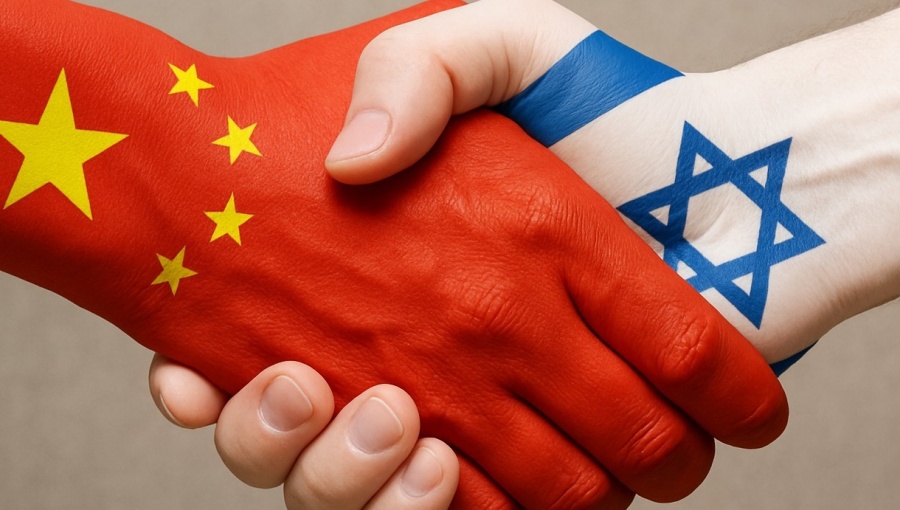
China wakes to the importance of moving closer to Israel

China wakes to the importance of moving closer to Israel
/ bno IntelliNews

By bno - Taipei Office August 7, 2025

China’s growing involvement in the Middle East, intensified by the recent escalation of violence in Gaza, is prompting renewed scrutiny of Beijing’s regional strategy, The Jerusalem Post reports. Traditionally focused on securing access to energy resources, safeguarding trade corridors, and expanding infrastructure investments, particularly in the Gulf, China's approach has until recently been marked by strategic ambiguity and a reluctance to take clear sides in regional rivalries.

However, shifting geopolitical realities, the erosion of US influence, and mounting instability across the Middle East are challenging Beijing’s longstanding posture of non-intervention and neutrality, especially in relation to its dealings with Iran and Israel.

Energy security and trade corridors

Energy security remains central to China’s engagement in the region. As the world’s leading oil importer, China currently sources approximately 40% of its oil from the Middle East; a figure projected to double by 2035. This dependency leaves Beijing vulnerable to disruptions in maritime chokepoints such as the Red Sea and the Strait of Hormuz, which are also vital routes for Chinese trade with Europe and Africa.

Beyond oil, The Jerusalem Post reports that China’s Belt and Road Initiative (BRI) has created a complex network of economic interests across the region. Saudi Arabia has emerged as China’s primary trading partner in the Middle East, with bilateral trade reaching over $107bn in 2024. This underscores Beijing’s intent to deepen economic ties even amid intensifying regional rivalries.

Balancing a diplomatic evolution

Historically cautious in its diplomacy, China has in recent years adopted a more proactive approach in managing its regional relationships. This recalibrated strategy seeks to maximise strategic partnerships without overtly alienating any one actor.

As such, China’s simultaneous cooperation with Saudi Arabia whose Vision 2030 reform agenda aligns in part with the BRI, alongside its alignment with Iran, highlights this nuanced balancing act.

At the same time, Beijing continues to lead diplomatic efforts, engaging both the United States and Arab leaders in attempts to de-escalate tensions.

It maintains a careful distinction between political rhetoric and operational policy, condemning Israeli military actions while expressing consistent support for the Palestinian cause and preserving economic ties with Iran despite Tehran’s links to groups such as Hamas and Hezbollah.

Iran-Israel conflict: a turning point

The recent military confrontation between Iran and Israel, sparked in June, has served as a critical juncture in China’s regional calculus. US-led strikes on Iranian nuclear facilities, and Israel’s expanded military posture, have combined to expose the limitations of Beijing’s neutral stance the same report indicates. This has placed strain on China’s ties with Iran, highlighting the latter’s weakened strategic position and internal instability.

At the same time, China is increasingly engaging with Israel, especially in areas such as science, high technology, and innovation. Bilateral trade between the two nations reached $16.27bn in 2024, with Israeli exports exceeding Chinese imports for the first time. This upward trend reflects Israel’s growing value within Beijing’s strategic framework and syncs with other nations in northeast Asia closer to Israel than Iran such as Japan, Korea and Taiwan.

To this end, despite a long-standing partnership with Tehran - including a pledge to invest $400bn in Iranian infrastructure under the BRI - China has recently adopted a more critical tone toward Iran’s leadership.

Accusations of ideological inflexibility and geopolitical misalignment have surfaced in Chinese academic and policy circles, with some analysts suggesting the regime in Tehran no longer serves Beijing’s broader regional ambitions.

A shift towards Israel

In Israel meanwhile, some have called for a reassessment of relations with China, despite limitations imposed by close ties to Washington. This reassessment could present Israel with an opportunity to strengthen its presence in Asian markets, diversify its regional relationships, while at the same time exploring deeper engagement with countries across the Global South; a region Iran struggles to relate to.

For China too, even a modest shift towards Israel signals a broader diplomatic realignment.

Strengthening bilateral ties could position Beijing as a stabilising influence in the region, offering a counterweight to Iran’s destabilising presence while helping to mediate complex regional disputes. In doing so, China enhances its image as a pragmatic, moderate power willing to engage with diverse actors across the geopolitical spectrum.

Recognition from Beijing would also further elevate Israel’s standing on the world stage, beyond its traditional alignment with the United States.

It would in turn open new avenues for cooperation in fields such as artificial intelligence, agriculture, health care, and advanced manufacturing, while boosting Israeli access to China’s vast consumer market.

Moreover, China’s engagement with Israel could prompt a more balanced regional discourse, potentially influencing opinions across the Global South and reshaping international perceptions of the Israeli-Palestinian conflict.

Beijing’s geopolitical calculations

At present therefore, China’s evolving stance forms part of a broader geopolitical strategy aimed at enhancing its global reach and diplomatic flexibility. By cultivating bilateral and multilateral ties across the Middle East, Beijing is constructing a framework that reduces dependency on any single actor and bolsters its credibility as a potential mediator in conflicts ranging from intra-Palestinian tensions to the Russia-Ukraine war.

While this shift may provoke resistance from Iran and draw criticism from segments of the Muslim world and the West, its success will largely hinge on China’s ability to project its moves as pragmatic rather than revisionist. Provided Beijing maintains its stance of non-alignment on the surface, and avoids overtly challenging US primacy in the region, it could recalibrate the strategic balance in the Middle East while positioning itself as a responsible global power.


Slovenia bans imports from Israeli settlements in occupied Palestinian territories

Slovenia bans imports from Israeli settlements in occupied Palestinian territories
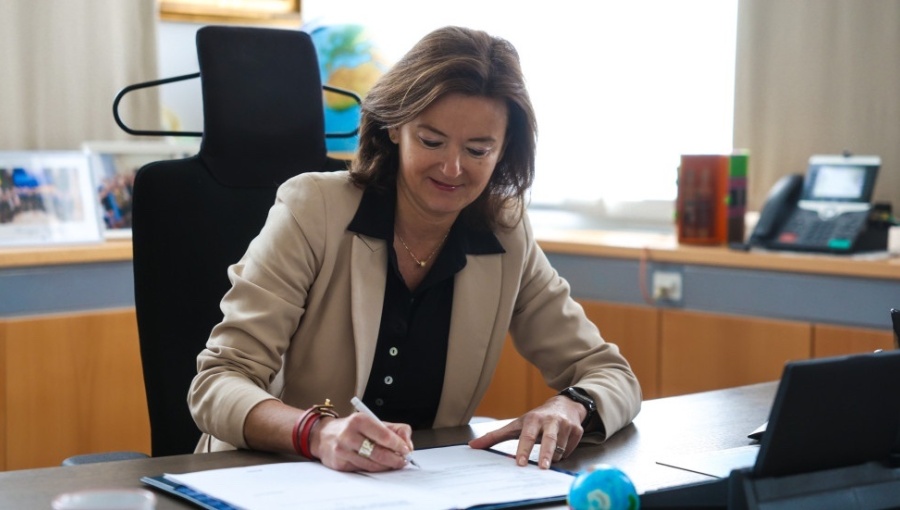
Slovenian Foreign Minister Tanja Fajon signing a draft government decision on the recognition of a Palestinian state in 2024. Ljubljana recognised Palestine later the same year. / MZEZ
By Valentina Dimitrievska in Skopje August 7, 2025

The Slovenian government is preparing to introduce economic measures in response to the situation in the occupied Palestinian territories, including a proposed ban on the import of goods originating from illegal Israeli settlements, it said on August 6.

Slovenia has been among the most vocal EU countries criticising Israel’s actions in Gaza, repeatedly condemning the large-scale destruction and humanitarian suffering. Last week, Slovenia became the first European country to ban the import, export and transit of weapons to and from Israel, with limited exceptions. 

In 2024, Slovenia was one of the first European countries to recognise Palestine and suspend arms trade with Israel. It also declared two Israeli ministers, Itamar Ben-Gvir and Bezalel Smotrich, personae non gratae.

The ban on imports from illegal Israeli settlements comes as part of Slovenia's broader commitment to upholding international law and humanitarian standards, and was announced following a government session this week.

Although imports from these territories are minimal — mostly consisting of avocados — the decision is being framed as a principled stance against Israeli policies in the occupied territories, which include settlement expansion, forced displacement, and systemic denial of access to essential resources for Palestinians, RTV SLO reported on August 6.

According to a joint statement from the Ministry of Economy and the Ministry of Foreign and European Affairs, the proposed measure includes a prohibition on importing products from settlements established in the territories occupied by Israel since 1967, including East Jerusalem. The measure will also aim to prevent any circumvention of the import ban.

Slovenian Foreign Minister Tanja Fajon was cited by RTV SLO as saying that the import ban is a necessary response to the current humanitarian catastrophe in Gaza. “Although symbolic, this measure carries enormous weight and places Slovenia among the countries that are principled, responsible, and courageous,” she wrote. Fajon stressed that the ban also sends a clear message to the international community that violations of international law have consequences.

"With this, we are sending a clear message to the Israeli government that the killing of innocent civilians, including attempts at ethnic cleansing and genocidal acts in Gaza, must end," Fajon was cited as saying at the time.

The decision follows the International Court of Justice’s advisory opinion of July 19, 2024, which called on all states to distinguish in their relations with Israel between its internationally recognised territory and the territories it has occupied since 1967. The court concluded that states must refrain from entering into contractual, economic or trade relations with Israel that could legitimise or support the occupation of Palestinian land.

In line with this advisory, the Slovenian government has empowered the Ministry of the Economy and the Ministry of Foreign and European Affairs to examine the possibility of also banning exports from Slovenia to the illegal settlements. A final decision on further steps will be made by the government following their recommendations.

At the same time, Slovenia is stepping up its humanitarian efforts in the region. The government has approved an additional aid package worth up to €879,490, which includes food and blankets for civilians in Gaza affected by the ongoing conflict between Israel and Hamas. The shipment will be delivered via Jordan by a Slovenian Armed Forces Spartan C-27J aircraft as part of an international airlift.

The aid consists of 1,000 blankets and up to 7,680 dry daily rations sourced from the Ministry of Defence’s stockpiles. Slovenian representatives will accompany the mission.

This marks the fourth aid package Slovenia has sent to Gaza. In 2024 alone, Slovenia has already provided humanitarian assistance worth over €2.1mn, including food, supplies and transport.

“The humanitarian situation in the Gaza Strip continues to deteriorate,” the government said, citing widespread shortages of food, water, electricity, and medical care. The civilian population, particularly women, children and other vulnerable groups, remains at high risk amid worsening famine and collapsing health services.

As a non-permanent member of the UN Security Council, Slovenia has pledged to act responsibly in international crises and promote adherence to humanitarian and international legal norms.