Friday, August 01, 2025

'Setback': Trump gets green light to gut federal unions’ bargaining power


Daniel Hampton
August 1, 2025 
RAW STORY

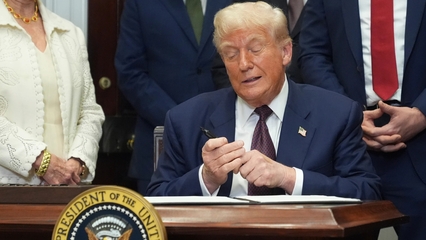
President Donald Trump got a federal appeals court's blessing Friday night to move forward with ending collective bargaining with many federal unions.

The three-judge San Francisco panel lifted a lower court's order that blocked the Trump administration from stripping hundreds of thousands of federal workers of their ability to engage in union bargaining with agencies, Reuters reported. The panel paused an injunction handed down that had been obtained by six unions.

The liberal appeals court panel, made up of two Trump appointees and an Obama appointee, said Trump's order did not "express any retaliatory animus." The judges also sided with Trump's administration that the president "would have taken the same action even in the absence of the protected conduct."

Everett Kelley, national president of the American Federation of Government Employees union, called the Friday ruling "a setback for First Amendment rights in America." He said the union is "confident in our ability to ultimately prevail."

Agencies could change working conditions and more easily hire and fire workers if the Trump administration eliminated collective bargaining. Unions could also be barred from taking the Trump administration to court over such initiatives.
HE SAID SOME BAD THINGS!!

‘First Amendment has limits’: Tom Homan insists that Mahmoud Khalil will be deported

White House officials insist Columbia University grad will be removed despite courts ruling against them

Alex Woodward
in New York
Friday 01 August 2025 
The Independent


Donald Trump’s border czar is adamant that Columbia University graduate Mahmoud Khalil will still be deported from the country despite several court rulings that have kept the Palestinian activist out of detention.

A federal appeals court on Wednesday rejected a request from the Trump administration to re-arrest Khalil and keep him in immigration detention center while he continues to challenge the government’s attempts to remove him from the United States. Homan says the administration will continue to appeal.

“We got radical judges just trying to stop the Trump administration from doing our job and enforcing the law,” he told Newsmax on Thursday.


He claimed there is “only one ending” to Khalil’s case: “We detain him and deport him, but regardless, he will be deported.”

That same day, the immigration court judge overseeing his case voided her earlier ruling that allowed the government to deport him.


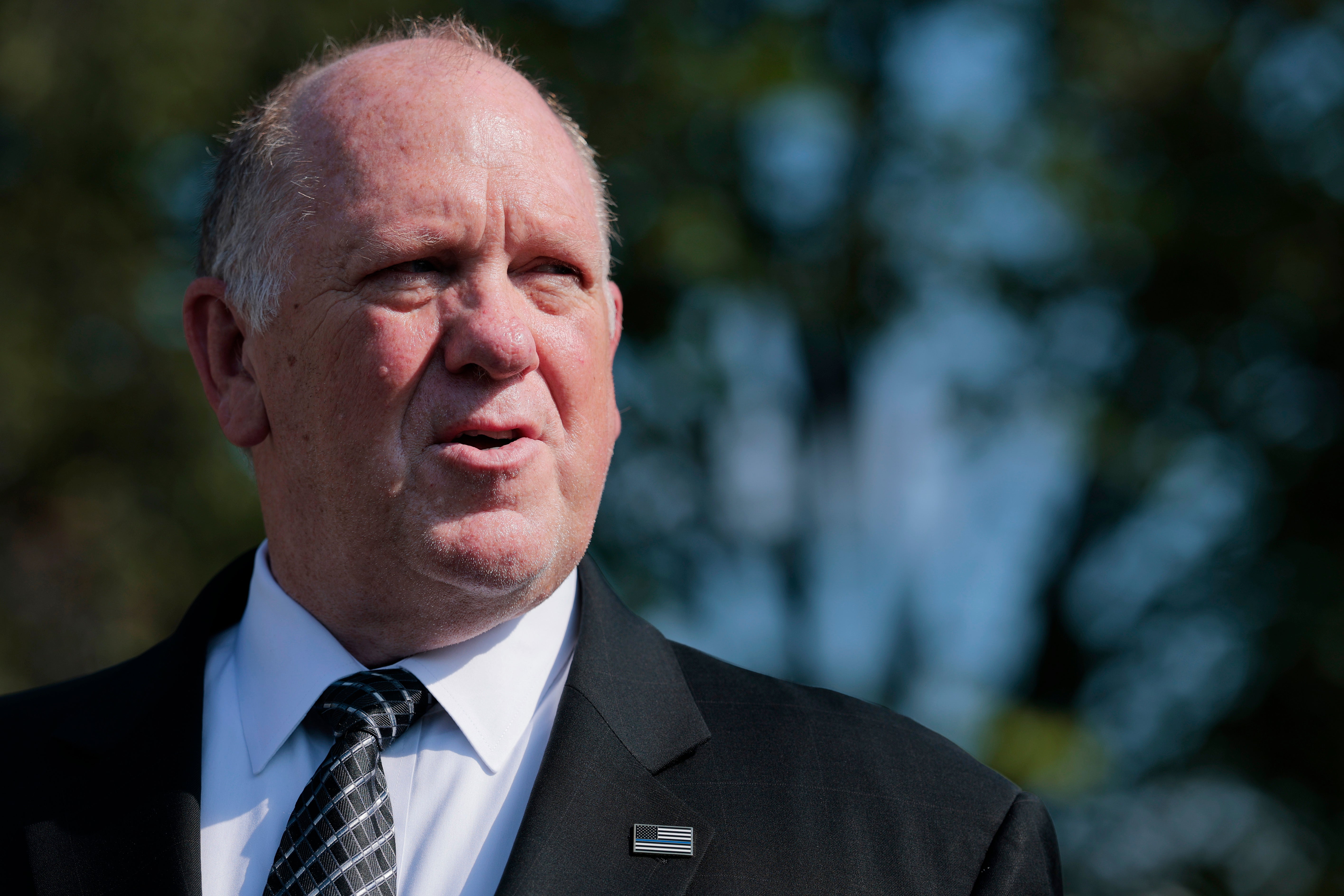
open image in galleryTrump’s border czar Tom Homan claims Mahmoud Khalil ‘did a lot of bad things’ despite federal court rulings finding the administration retaliated against him for his activism against Israel’s war in Gaza (Getty Images)
RECOMMENDED
Trump team has been using shadowy website that doxxed pro-Palestine academics and targets them for deportation

Khalil, a prominent student activist against Israel’s war in Gaza, was stripped of his green card and arrested in front of his then-pregnant wife in their New York City apartment building on March 8. He was then sent to an Immigration and Customs Enforcement detention center in Louisiana, where he was held for more than 100 days and forced to miss the birth of his child.

Trump administration officials have accused Khalil of “antisemitic activities,” allegations Khalil and his legal team have flatly denied. Officials concede that Khalil did not commit any crime, but Secretary of State Marco Rubio has sought to justify Khalil’s arrest by claiming that Khalil’s presence in the country undermines foreign policy interests to prevent antisemitism.

Khalil and his legal team argue his arrest and detention — and attempted removal from the country, which is currently blocked by court order — are retaliatory violations of his First Amendment right to freedom of speech and his Fifth Amendment right to due process of law, among other claims.

“Look, First Amendment rights have a limitation, too,” Homan told Newsmax. “He did a lot of bad things. We’re going to hold him accountable. He will be deported.”


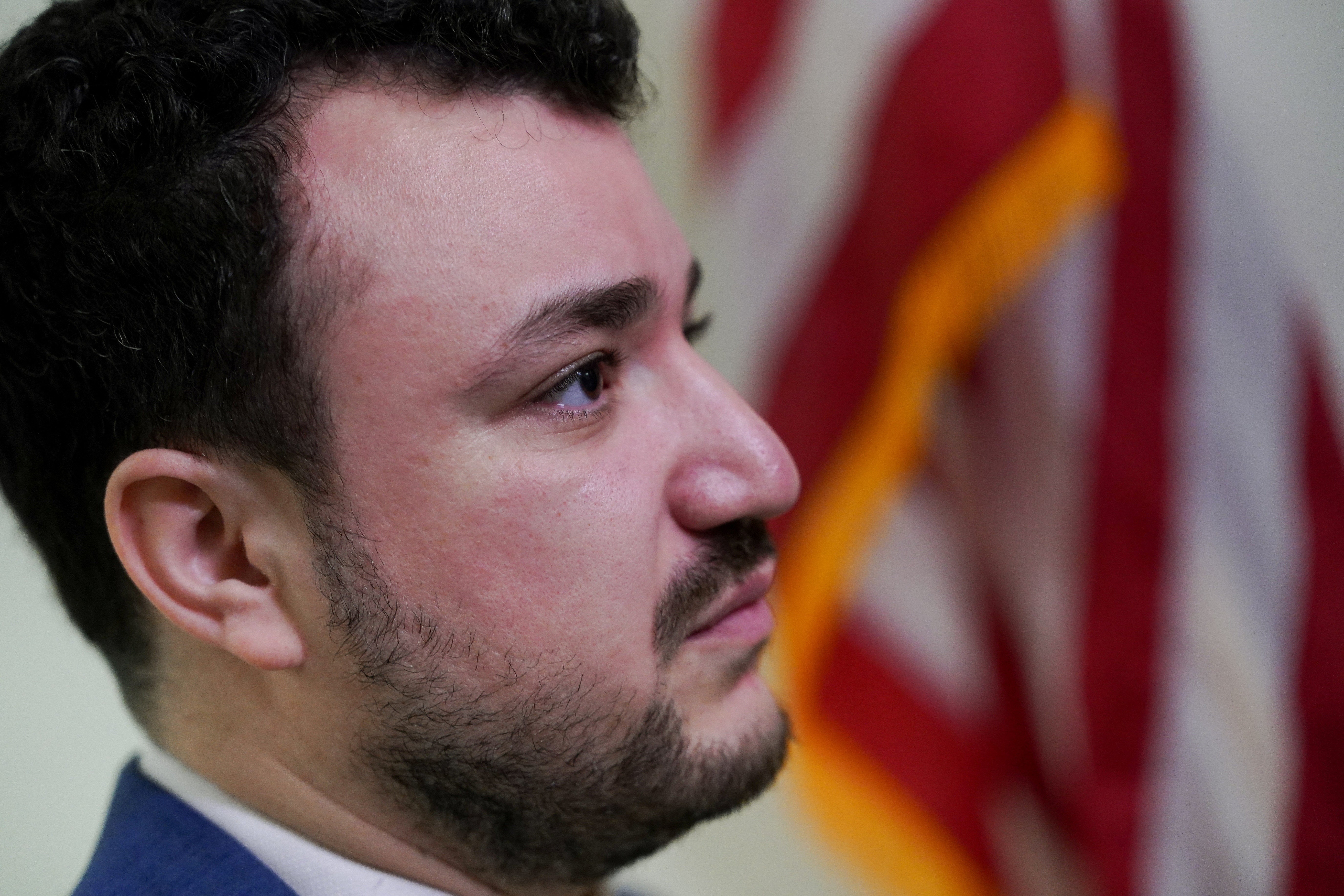
Khalil was freed from immigration detention in June after more than 100 days in a Louisiana ICE facility. He will remain out on bail while his legal challenges continue (REUTERS)

On June 11, a federal judge granted Khalil’s release from ICE detention on bail while legal challenges against his arrest and threat of removal from the country continue in both federal and immigration courts.

New Jersey District Judge Michael Farbiarz ruled that the administration had unconstitutionally wielded the law against Khalil, whose “career and reputation are being damaged and his speech is being chilled,” the judge wrote.

The government has “little or no interest in applying the relevant underlying statutes in what is likely an unconstitutional way,” Farbiarz added.

“Mahmoud spent 104 days in detention as punishment for speaking out for Palestinian rights,” ACLU senior staff attorney Noor Zafar said in a statement after this week’s appeals court ruling.

“That is time with his family that he will never get back, but this decision affirms that he will remain free and that the government cannot pursue his removal based on the likely unconstitutional foreign policy charge as his case moves through appeal,” she added. “We will not stand by and allow the government to weaponize immigration law to suppress lawful political speech.”

Khalil’s attorneys have also argued that the administration’s secondary basis for his arrest and removal — allegations that he lied in immigration paperwork — are similarly retaliatory and violate his First Amendment and Fifth Amendment due process rights.

The White House continues to insist that Khalil can still be deported on those grounds.

White House spokesperson Abigail Jackson told The Independent on Friday that “Khalil was given the privilege of coming to America to study on a student visa he obtained by fraud and misrepresentation.”

“Despite the lower court judge’s wishes to the contrary, the executive branch has the lawful authority to take actions that will protect America’s foreign policy interests and promote the overall welfare of the public,” she added. “The Trump Administration looks forward to ultimate victory on the issue.”
Multiple medical groups say they have been barred from work on CDC's panel of vaccine advisers


HHS said experts will still be included but not based on their organization.


ByYouri Benadjaoud
August 1, 2025, 


Fired CDC vaccine committee member on RFK Jr.'s decision to purge independent panelDr. Noel Brewer is a former voting member of CDC's Advisory Committee on Immunization Practices and talks about his firing Monday after an announcement by HHS Secretary Robert F. Kennedy Jr.

Multiple medical groups say they have been barred from working on the Centers for Disease Control and Prevention's panel of vaccine advisers.

It comes weeks after Health and Human Services Secretary Robert F. Kennedy Jr. fired the original panel of independent experts and replaced them with his own handpicked members -- many of whom have expressed skeptical views on vaccines.

Liaisons representing major medical groups were historically invited to meetings of the Advisory Committee on Immunization Practices (ACIP) as non-voting members to provide their independent expertise in respective fields. In a joint statement, the groups said they have now been excluded "from the process of reviewing scientific evidence end informing vaccine recommendations."


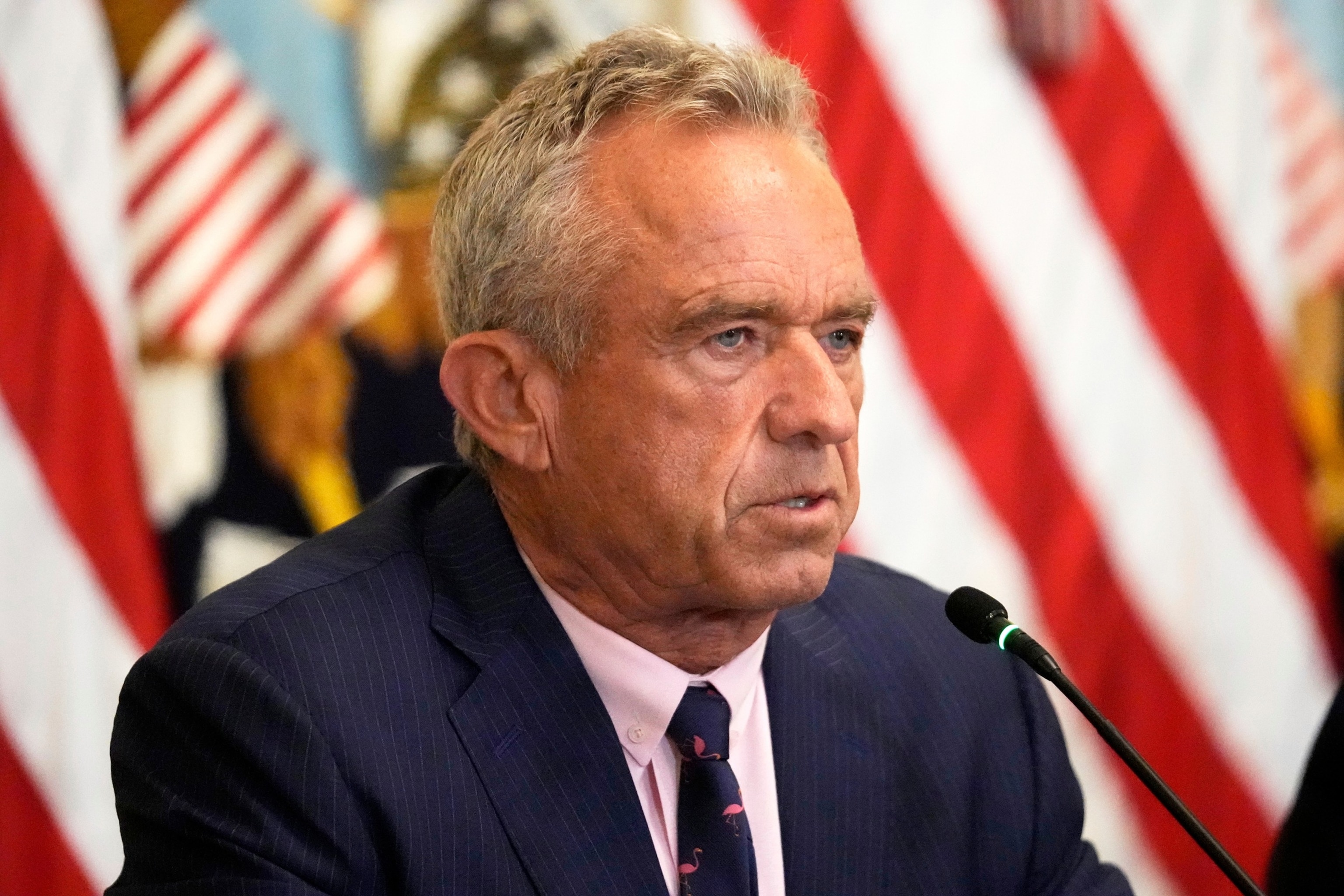
Health and Human Services Secretary Robert F. Kennedy Jr. speaks during an event with President Donald Trump on improving Americans' access to their medical records in the East Room of the White House, July 30, 2025.
Mark Schiefelbein/AP

MORE: Members of CDC vaccine panel ousted by RFK Jr. say committee has 'lost credibility'


A total of eight groups signed on to the statement, including the American Academy of Pediatrics, the American College of Physicians, the American Medical Association and the National Medical Association among others.

In a statement provided to ABC News, an HHS spokesperson said: "Under the old ACIP, outside pressure to align with vaccine orthodoxy limited asking the hard questions. The old ACIP members were plagued by conflicts of interest, influence, and bias. We are fulfilling our promise to the American people to never again allow those conflicts to taint vaccine recommendations."

The statement went on to say: "Experts will continue to be included based on relevant experience and expertise, not because of what organization they are with.


MORE: CDC vaccine advisers who were removed from committee by RFK Jr. speak out


In their statement, the medical organizations said they learned the groups will be excluded from the panel's work in an email late Thursday and noted they were "deeply disappointed and alarmed" by the move.

"To remove our deep medical expertise from this vital and once transparent process is irresponsible, dangerous to our nation's health, and will further undermine public and clinician trust in vaccines," the statement read.

Childhood vaccination rates fall for 5th straight year: CDC

Exemptions for vaccines also hit a record high, increasing to 3.6%.

ByYouri Benadjaoud
August 1, 2025,  ABC

Childhood vaccination rates for the 2024-25 school year fell for the fifth year in a row, according to data from the Centers for Disease Control and Prevention (CDC) published Thursday.

Vaccine coverage for shots that protect against measles, polio, chickenpox, whooping cough and hepatitis B have now been under 95% -- a threshold many experts consider herd immunity -- since at least the 2020-2021 school year.

Exemptions for vaccines also hit a record high, increasing to 3.6% for the 2024-25 school year compared to 3.3% during the previous school year. The number of kindergarteners exempt from one or more vaccines was about 138,000.


"That gap, combined with concentrated pockets of exemptions, is exactly how sustained outbreaks gain a foothold," said Dr. John Brownstein, an epidemiologist and ABC News medical contributor. "Kindergarten vaccination rates are an early warning indicator. Persistent declines predict conditions for more frequent and larger outbreaks are already in place."

Exemptions increased in 36 states, with 17 states reporting exemption rates exceeding 5%, according to the CDC data. Nearly all the exemptions were listed as non-medical, typically related to religious or personal reasons.


STOCK PHOTO/Getty Images

"The surge in non-medical exemptions reflects a growing influence of misinformation and shifting policy. When these beliefs concentrate geographically, they erode the very network of immunity that protects all children," Brownstein said.

An estimated 92.5% of kindergarteners were vaccinated with the polio vaccine as well as the measles, mumps and rubella vaccine, leaving an estimated 286,000 vulnerable to the diseases.

It comes as the U.S. is seeing the highest number of measles cases since 1992, with dozens of outbreaks reported across the country, CDC data shows.

About 94% of kindergartners were vaccinated against hepatitis B. Even fewer children were vaccinated against chickenpox and whooping cough with rates at 92.1%, according to the data.

MORE: Medical groups sue HHS, RFK Jr. over 'unlawful' vaccine changes

Last year saw a record level of whooping cough cases, with more than 35,000 cases reported -- roughly six times as many cases compared to 2023.

Federal health officials in the Trump administration have also recently shifted messaging around vaccination, now pushing for personal choice -- advocating that parents should decide whether or not to immunize their kids.

"Public health messaging has shifted in ways that place personal choice ahead of community protection. When federal leadership softens its stance on vaccination, it can accelerate hesitancy and legitimize non medical exemptions, further weakening population level immunity," Brownstein said.

"As pediatricians, we know that immunizing children helps them stay healthy, and when everyone can be immunized, it's harder for diseases to spread in our communities," Dr. Susan Kressly, president of the American Academy of Pediatrics said in a statement. "By making sure all children can access immunizations before entering school with their classmates, children are best able to stay healthy to play, learn, and grow."


Final US Report On Afghan Mission Paints Damning Picture

August 02, 2025 
By Ray Furlong
RFA


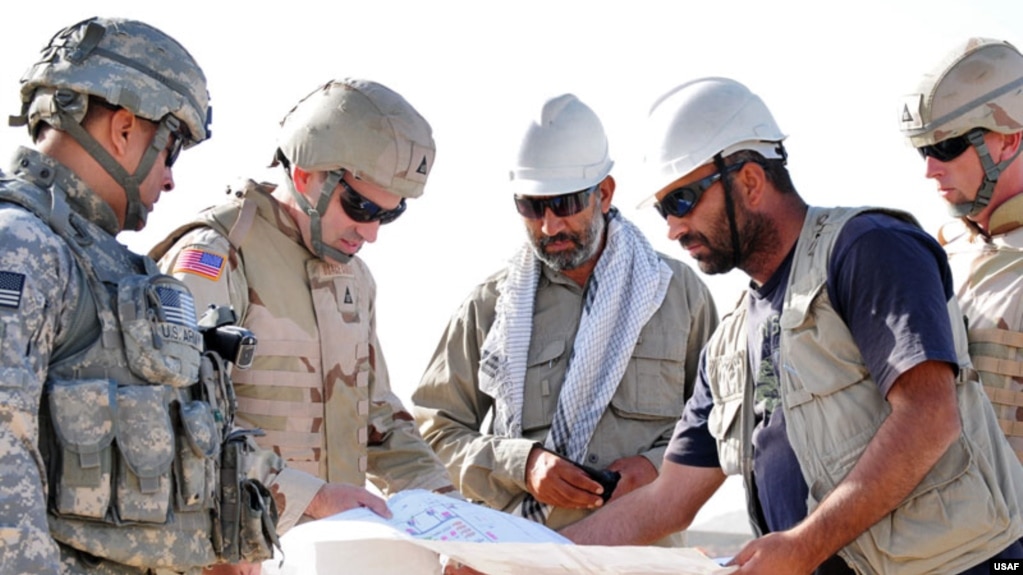
US and Afghan engineers review blueprints for an Afghan army garrison in September 2008.

A US body set up in 2008 to assess efforts to support Afghanistan has made its 68th and final quarterly report to Congress -- with damning details of waste and “pervasive corruption” over the course of the nearly 20-year Western intervention as well as concerns about Trump administration aid cuts.

The report was issued by the Special Inspector General for Afghanistan Reconstruction (SIGAR), a government agency, on July 30, two weeks before the fourth anniversary of the Taliban retaking power in Afghanistan.

In a section titled “End-Of-Mission Highlights,” it says the Western-backed Afghan government sometimes didn’t even want projects that the United States proposed.

“For example, SIGAR found that most of the buildings at five Afghan Border Police facilities costing $26 million were either unoccupied or being used for unintended purposes, including one used as a chicken coop,” it says.


US Court Temporarily Halts Bid To End Protection Status For Afghans


The 99-page report notes that it is the final installment in a highly detailed series that charted the ups and downs of the US-led mission in Afghanistan, as US aid for the country is being wound up.

“If you followed those reports, you were clearly aware where it was going and how it would end,” veteran Afghanistan analyst Thomas Ruttig told RFE/RL.

“Politicians chose to ignore this and continue to give us good messages from Afghanistan until the troops had to flee in August 2021. It's a very valuable archive of data on what went wrong in Afghanistan. It would have been much better if donors and particularly the US government would have acted on it,” he added.

Elsewhere, the report states that Western countries and global institutions flooded Afghanistan with money that fueled corruption, which US officials overlooked as they “prioritized security and political goals.”

Ruttig, who worked in Afghanistan for the United Nations, the European Union, and Germany in a series of stints from 2000-2006, agreed with this assessment of Western engagement.

“There was an awareness that [corruption] is a big problem, but it collided with the political strategy and took only second rank,” he said. “Security won.”


Trump's Afghanistan Policy

But the final SIGAR report is not only a lookback at the mission as a whole.

It also underlines the humanitarian impact of the Trump administration’s decisions to cut aid to Afghanistan and says the State Department did not explain why specific programs were being terminated.

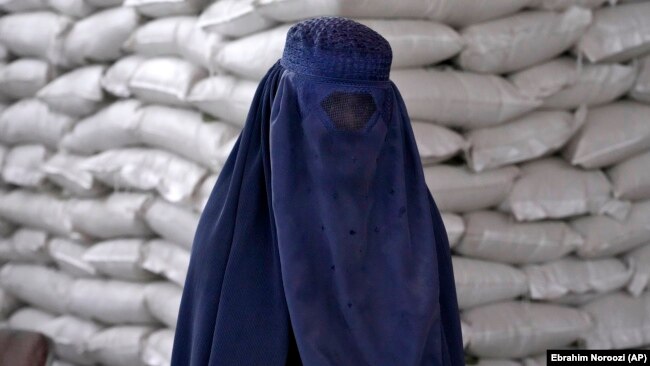
An Afghan woman waits to receive a food ration in Kabul in May 2022.

“State’s Bureau of Population, Refugees, and Migration (PRM), told SIGAR they were not informed why individual awards had been canceled, nor were they involved in the decision-making process,” the report noted.

RFE/RL has asked the State Department to respond to this and other elements of the report.

SIGAR says Washington “terminated all foreign assistance awards with activities in Afghanistan” in April.

This followed an Executive Order in January that said “The United States foreign aid industry and bureaucracy are not aligned with American interests and in many cases antithetical to American values.”


Taliban Effort To Resurrect Afghan Air Force Runs Into Turbulence


Within days, the Trump administration began moves to rapidly dismantle USAID, which was the primary U.S. government agency responsible for administering civilian foreign aid and development assistance.

The SIGAR report also notes “conflicting reports” of Taliban efforts to seize assets, including military vehicles, from USAID operations being wound down in Afghanistan this year.

“USAID noted that heavily armored units from the Taliban general directorate of intelligence forcibly entered implementing partner compounds on multiple occasions, seizing equipment, cash, and project documentation,” it said, adding that staff had been detained and interrogated.

But this contradicted official information from Washington, SIGAR said.

"Both State PRM and PM/WRA (Office of Weapons Removal and Abatement) said their implementing partners have not reported any Taliban demands for assets, data, or staff personal information, and, as previously noted, State F (Office of Foreign Assistance) declined to answer any of SIGAR’s questions this quarter," the report stated.

The issue is sensitive, with US President Donald Trump demanding the Taliban hand over military equipment left behind by US forces in 2021.

"Afghanistan is one of the biggest sellers of military equipment in the world, you know why? They're selling the equipment that we left," Trump said in January. “We want our military equipment back.”

SIGAR will cease operations in September.

Before then, it will produce one more report looking at how lessons learned in Afghanistan, Gaza, Syria, and elsewhere can be applied to future situations where aid missions face interference in undemocratic countries


.

Ray Furlong
Ray Furlong is a Senior International Correspondent for RFE/RL. He has reported for RFE/RL from the Balkans, Kazakhstan, Georgia, and elsewhere since joining the company in 2014. He previously worked for 17 years for the BBC as a foreign correspondent in Prague and Berlin, and as a roving international reporter across Europe and the former Soviet Union.
FurlongR@rferl.org


US Energy Department misrepresents climate science in new report


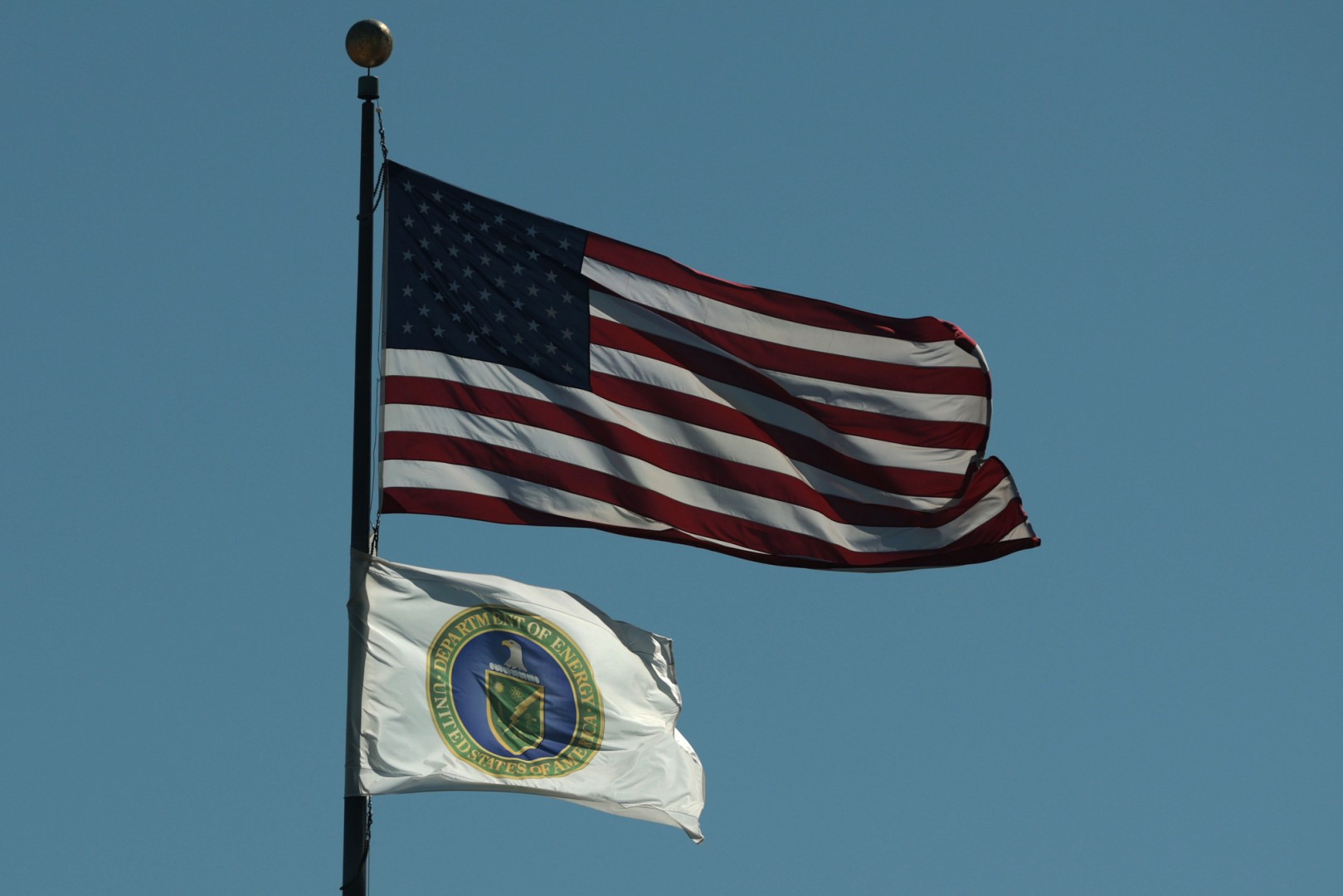
A US flag and the flag of the US Department of Energy fly outside its building in Washington, DC (GETTY IMAGES NORTH AMERICA / ALEX WONG)
  • Published on August 1, 2025  


Five top scientists told AFP their research cited in a flagship climate report by the US Department of Energy (DoE) was misused to downplay the role of human activity in global warming.

The document released July 29, 2025, outlines the Trump administration's rationale for revoking a foundational scientific ruling that underpins the government's authority to combat climate change (archived here).

The paper was written by a working group including John Christy and Judith Curry, who both have past links to The Heartland Institute, an advocacy group that frequently pushes back against the scientific consensus on climate change, which AFP has investigated.

It "completely misrepresents my work," Benjamin Santer, atmospheric scientist and honorary professor in the School of Environmental Sciences at the University of East Anglia in Britain  (archived here), told AFP on July 31.

Santer said a section of the report on "stratospheric cooling" contradicted his findings while citing his research on climate "fingerprinting," a scientific method that seeks to separate human and natural climate change, as evidence for its analysis.

Similarly, climate scientist Zeke Hausfather (archived here) said some of his findings were discarded entirely "as not fitting their narrative."

His work is cited throughout the paper and on July 31 he told AFP the references to models historically overestimating future CO2 concentrations (Hausfather et al., 2019) and to a scenario representing high greenhouse gas emissions throughout the 21st century (Hausfather and Peters 2020) are "not too badly misrepresented." But he said they "neglected to mention how the paper on models also showed how accurate historical climate models have been" (archived here and here).

"They also appear to have completely ignored my paper (Hausfather et al 2013) showing minimal urban heat island biases on temperatures, and instead only featured the small number of papers finding a larger regional effect" (archived here). 

He said the DoE report "gives a terribly skewed view of the underlying climate science and highlights a number of fringe studies that have been subsequently shown to be riddled with errors."

Planetary scientist and astrobiologist Joshua Krissansen-Totton said on July 31 his research (archived here) on climate and ocean pH of the early Earth -- meaning billions of years ago -- was cited to draw misleading parallels to modern ocean acidification.

AFP and other media, including NOTUS (archived here), a US digital news website affiliated with the nonprofit Allbritton Journalism Institute, found inaccurate citations, flawed analysis and editorial errors across the document.

This is the third time since January, when Donald Trump took office, that scientists have told AFP a government agency has misrepresented academic work to defend their policies.

Previous instances included made up citations in the government's "Make America Healthy Again" report, which the administration then rushed to edit.

"I am concerned that a government agency has published a report, which is intended to inform the public and guide policy, without undergoing a rigorous peer‑review process, while misinterpreting many studies that have been peer‑reviewed," Bor-Ting Jong, an assistant professor at the Vrije Universiteit Amsterdam in the Netherlands, told AFP on July 31 (archived here).

Jong said the paper made false statements about the climate model her team examined and used different terminology that led to a flawed analysis of her findings.

Call for a coordinated response

On Bluesky, the budding social media platform favored by academics, other researchers in atmospheric and extreme weather fields also deplored that the DoE document cherry-picked data and omitted or plainly distorted their academic findings (archived here).

Climate scientist Andrew Dessler (archived here) on July 31 initiated (archived here) a call for a coordinated response from academics specialized in areas mentioned in the report.

James Rae (archived here), a climate researcher at the University of St Andrews in Scotland, who said his work is also misrepresented in the report, told AFP on July 31 the shift in how the department uses scientific research "is really chilling."

"DoE was at the forefront of science for decades. Whereas this report reads like an undergraduate exercise in misrepresenting climate science," he said.

Contacted by AFP, a DoE spokesperson said on July 31 that the report was reviewed internally by a group of scientific researchers and policy experts from the Office of Science and National Labs.

The public will now have the opportunity to comment on the document before it is finalized for the Federal Register (archived here).

"The Climate Working Group and the Energy Department look forward to engaging with substantive comments following the conclusion of the 30-day comment period," the department added.

Gwen Roley, Bill McCarthy and Marisha Goldhamer contributed reporting to this article.
Solidarity movement cautiously welcomes Canada’s recognition of Palestinian state

August 1, 2025 
PEOPLES VOICE


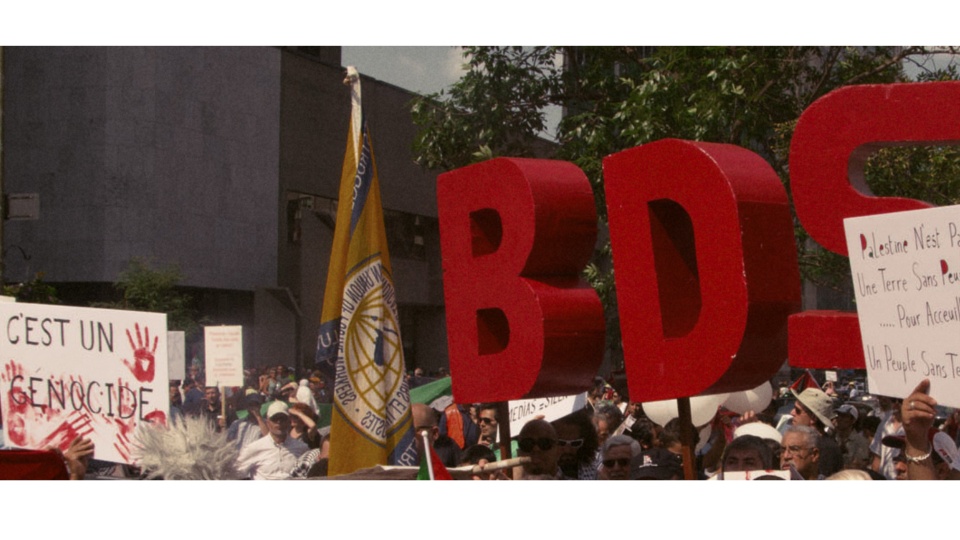
A Palestine solidarity demonstration by trade union activists in Montreal.
 | Photo via People's Voice

TORONTO—Canadians for Justice and Peace in the Middle East (CJPME) announced July 31 that it cautiously welcomes Prime Minister Mark Carney’s announcement that Canada will recognize a Palestinian state.

However, the solidarity organization expressed its deep concern over the conditional nature of the statement and the domestic context in which it was made, specifically noting new revelations about Canada’s complicity in Israel’s genocide against Palestinians.

“The timing of the announcement comes just one day after a bombshell report revealed the extent of Canada’s deceptive pause on arms transfers and far-reaching military cooperation with Israel during its assault on Gaza,” reads the statement.

“CJPME believes this context underscores both the growing power of Palestine solidarity movements and the government’s attempt to distract from more substantive accountability.”

CJPME believes that recognition of Palestinian statehood can only be made meaningful if Canada immediately enacts a comprehensive, two-way arms embargo with Israel, investigates Canadian companies potentially violating the embargo, and implements broad economic sanctions to hold Israel accountable for its genocide in Gaza and its system of apartheid and illegal occupation.

Jason Toney, Director of Media Advocacy at CJPME, warned that Carney seems to be trying to play the role of “kingmaker” in Palestine.

“Calling for elections while dictating who can participate makes a mockery of democracy. Palestinians, not foreign powers, must decide their future. Canada’s role should be to support truly fair and free elections.

“Demanding Palestinian demilitarization as a precondition for recognition while arming Israel is both the epitome of hypocrisy and denies Palestinians the very basic foundation of statehood itself. This is not recognition of a state, it’s a demand to capitulate to Israel’s dominance of Palestinians forever.

“The timing of this announcement is deeply suspect. Carney’s government appears more interested in deflecting attention from the damning arms trade revelations than in delivering real justice for Palestinians. Recognition is meaningless without sanctions on Israel. Palestine solidarity advocates won’t be placated by symbolic gestures.”

The declaration that Carney intends to recognize Palestine also came on the same day that U.S. President Donald Trump imposed fresh tariffs on Canada following failed negotiations between the two countries.

People’s Voice


CONTRIBUTOR

Dave McKee
Dave McKee is the editor of People's Voice, Canada's leading English-language socialist publication.


If France, the U.K. and Canada recognize a Palestinian state, what happens?


August 1, 2025
NPR/PBS
Heard on All Things Considered
By Michelle Aslam , Juana Summers


NPR's Juana Summers speaks with Michael Lynk, former U.N. Special Rapporteur for human rights in Palestinian territories, about recent international moves to recognize a Palestinian state.


JUANA SUMMERS, HOST:

This week, the United Kingdom and Canada joined France in recently announcing plans to formally recognize a Palestinian state. These announcements came amid growing international alarm over reports of mass starvation in Gaza, the worst hunger crisis in nearly two years of war between Israel and Hamas. But if these moves were meant to pressure Israel on humanitarian aid or an end to the war, Israel and its closest ally, the United States, both dismissed them as a reward for Hamas. So does this change anything? Let's hear now from Michael Lynk, law professor emeritus at Western University in Ontario. He was also a U.N. special rapporteur for human rights in the occupied Palestinian territory from 2016 to 2022. Thank you for being here.

MICHAEL LYNK: Pleased to be here. Thank you for having me.

SUMMERS: So Michael, just to start - 147 countries, so about three-quarters of the world's countries, already recognize Palestinian statehood. So what does it mean for a country to have relations with what it calls a fellow country of Palestine?

LYNK: What it means is that countries that recognize another country recognize the sovereignty and control that that country has or should have over that territory. So for Palestine, what it would mean is if Canada and France and the United Kingdom now recognize the state of Palestine, they're recognizing its sovereignty over East Jerusalem, the West Bank and Gaza and that they would be opposed to and probably compelled to take diplomatic action in support of Palestinian exercise of its sovereignty over those territories, which, of course, right now, are under the full control of Israel. So it would mean these countries would be opposed to infringements on that sovereignty by the 360 Israeli settlements on that territory and the thousands of Israeli troops on that territory. So it has both symbolic meaning and consequential legal and political meaning, as well.

SUMMERS: Let me ask you this. When we talk about countries like the United Kingdom, Canada and France, they are more influential than a lot of those other 140 some odd nations. These are G7 members that we're talking about, major Western powers to members of the U.N. Security Council. So I wonder, to your mind, what might this mean for diplomacy? Could these moves affect the international balance of power as it relates to the Israeli-Palestinian conflict?

LYNK: That's true. And on the positive side, as you said, I mean, now, 3 of the 7 G7 countries recognize Palestine as a state. Thirteen of the 20 members of the G20 recognize Palestinian sovereignty. And 4 of the 5 permanent members of the Security Council of the United Nations now recognize Palestine as a state. But there's also a political reality here, as well - is that there's unlikely to be forward moves to try to change the situation on the ground substantially if the United States is not on board. The United States still holds a veto power over admitting Palestine as a full member at the United Nations. The United States provides much of Israel's weaponry. It provides it with diplomatic shield at the United Nations and in other international forums. So as long as the relationship between the United States and Israel remains as firm and as tight as it is, it's hard to see how we're going to have any substantial moves to change the reality on the ground.

SUMMERS: France, the U.K. and Canada, they've long supported a two-state solution, two separate sovereign states for Israel and for Palestinians, but they have not really acted on that support until now. Why do you think that's happening now?

LYNK: Quite simply, the carnage in Gaza and the repeated Israeli obstruction of a Palestinian state coming into fruition. The Israelis hold most of the cards for the ability of the Palestinians to achieve their freedom and to be able to exercise their rights as a state. And they do that through, obviously, their troops on the soil and their 360 settlements in East Jerusalem and the West Bank, but particularly over the last three to four months, where levels of starvation are heading towards a famine...

SUMMERS: Right.

LYNK: ...And I think have shocked the conscience of the world. So all of this, I think, is meant to tell Israel, change your behavior. I'm afraid it may not happen. This announcement by Canada, the United Kingdom and France certainly will irritate Israel, but I'm not convinced it's going to change their behavior. The only real way for a Palestinian state to come into being is through, I think, a concerted economic boycott or sanctioning of Israel. Only by suspending weapons sales, only by suspending free trade agreements, only by suspending, I think, the sale of Israeli surveillance and technology will Israel feel the political and economic cost of pursuing this path of suffocating the possibility of a Palestinian state. Anything less may be important at a symbolic level, but it's not going to radically change what is going on short of taking decisive action.

SUMMERS: Michael Lynk, a former U.N. independent expert on human rights in the Palestinian territories. Michael, thank you so much.

LYNK: Thank you so much for having me. A real pleasure.

Copyright © 2025 NPR. All rights reserved. Visit our website terms of use and permissions pages at www.npr.org for further information.

Accuracy and availability of NPR transcripts may vary. Transcript text may be revised to correct errors or match updates to audio. Audio on npr.org may be edited after its original broadcast or publication. The authoritative record of NPR’s programming is the audio record.


Abbas welcomes Portugal’s plan to recognize Palestinian state in September

Palestinian leader urges more countries to follow suit amid growing wave of recognition pledges

Aysar Alais, Tarek Chouiref |01.08.2025 - TRT/AA


RAMALLAH, Palestine/ISTANBUL

Palestinian President Mahmoud Abbas on Friday praised Portugal’s decision to begin the process of recognizing a Palestinian state this September, calling it a key step toward advancing a two-state solution.

“This is a positive and courageous decision by Portugal, one that strengthens the path toward peace and reflects the growing consensus of the international community,” Abbas said in a statement carried by the official WAFA news agency.

He urged countries that have not yet recognized a Palestinian state “to take similar serious steps in support of peace.”

Portuguese media reported Thursday that Prime Minister Luis Montenegro plans to move forward with recognition during the UN General Assembly session in September, pending consultations with President Marcelo Rebelo de Sousa and parliamentary parties.

The announcement comes amid a wave of recognition momentum. On Thursday, Finnish President Alexander Stubb said he would approve recognition if his government submits a proposal, noting that “the time has come for Finland to decide.”

France, Britain, Canada, and Malta have also indicated plans to recognize a Palestinian state in September, while Australia has signaled it may follow.

Earlier this week, 15 Western nations, including France, issued a joint call for recognition and an immediate ceasefire in Gaza.

In recent months, Spain, Norway and Ireland officially recognized a Palestinian state, followed by Slovenia in June, bringing the total number of UN member states recognizing Palestine to 149 out of 193.
WEST BANK SETLLER MURDERS
Awdah Hathaleen’s murder must be the last


Israeli soldiers storm a memorial ceremony for Awdah Hathaleen on 29 July next to the spot he was killed, forcing mourners to leave. OREN ZIV

Bethany Rielly
NEW INTERNATIONALIST
1 August 2025


The Palestinian activist never gave up hope for a future free from Israel’s occupation. We must turn rage into action, writes Bethany Rielly.

On Monday afternoon a WhatsApp message from Awdah pinged on my phone: ‘URGENT CALL: The settlers … tried to cut the main water pipe for the community. We need everyone who can make something to act, if you can reach people like the congress, courts, whatever, please do anything.’

A few hours later he was shot and killed by an Israeli settler.

The news of his death hit me like a tonne of bricks. I met Awdah in 2019, as one of the countless activists he’s welcomed over the years to provide a protective presence in his home of Umm al-Khair, a village in the West Bank which is at constant risk of Israeli demolitions and settler violence. At the time he’d just got married, and was about to be a father for the first time – a rare moment of happiness.

While trying to live a life as normal as possible, Awdah carried a huge burden for a young man in his mid-20s, dedicating his time to fighting in Israel’s High Court to save his village from being demolished by the Israeli authorities. ‘We spend more time talking with lawyers than we do our family members,’ I remember him telling me. But he never stopped resisting, up until the very moment he was killed.


Awdah Hathaleen in Rome, Italy, during a visit in 2023. LIAM WHEELER


A prominent Palestinian activist, Awdah Hathaleen was shot dead on 28 July after a settler invaded his village on a bulldozer, destroying olive trees and a water pipe. When residents rushed over to intervene, the driver lunged forward, striking Awdah’s cousin Ahmed and knocking him unconscious.

Accompanying the driver was Yinon Levi, a notorious Israeli settler who’s made it his life's work to terrorize and displace Palestinian communities. Footage from the day shows Levi then firing a gun at the nearby villagers. Awdah was standing 50 metres away, filming the attack, when a bullet punctured his chest. Eye-witnesses claim the settler fired the fatal shot.

Levi was arrested in connection with the murder but was released less than 24 hours later. His house arrest ended on 31 July, and he is already free.
At the mercy of the bulldozers

Awdah lived in Umm al-Khair, a small bedouin village in the rural Masafa Yatta region in the southern West Bank. The region’s struggle against forced displacement was recently brought to international attention through the 2025 Oscar-winning documentary ‘No Other Land’, which Awdah helped to film.

It’s difficult to describe the way the people in Umm al-Khair are forced to live until you see it for yourself. Staying in the small village, home to around 150 people, is to experience the dizzying and disturbing reality of Israeli apartheid.


Women from the village of Umm al-Khair in the southern occupied West Bank walk next to the fence that seperates their homes from the illegal Israeli settlement of Carmel. OREN ZIV


A stone’s throw from the small cement and corrugated iron homes of Umm al-Khair is the Israeli settlement of Carmel. Built in the 1980s – through the theft of half of Umm al-Khair’s land – the settlement seems to have been plucked straight out of US suburbia: large yellow boxy houses with tarmacked roads and green trees.

A fence separates the two starkly different communities, so close you can hear settlers coughing as they walk by. Umm al-Khair’s patch of land is dry as Israel restricts the community’s water access to only seven hours a week. Meanwhile, Carmel is supplied with unrestricted running water from pipes built over Palestinian land.

While Carmel keeps expanding, Umm al-Khair’s residents are subjected to routine house demolitions, a cruel Israeli policy designed to make life unliveable for Palestinians. Almost every home in the village has been destroyed and rebuilt several times over. Residents never know when the bulldozers will come.

None came during the few weeks I spent there, but I saw first-hand the psychological torture of living with the constant threat of violent demolitions. This was particularly difficult to see in the children. For a blog I was writing, Awdah helped me translate interviews with his young relatives. ‘What is your biggest fear?’ we asked. They all had the same reply: ‘the bulldozers coming to destroy my home.’

Awdah spoke of the multigenerational trauma of Israel’s attempts to erase their community. Last year, after a particularly ruthless period of demolitions, he wrote: ‘The villagers look each other in the eye, searching for words of comfort, but there are none. Our children ask us why this is happening, but we have no answers.’
Hostile neighbours

Demolitions are one arm of Israel’s campaign of ethnic cleansing of Palestinians in Masafa Yatta. The other is settler violence and harassment, a shadow under which Umm al-Khair has long lived. Tariq Hathaleen, Awdah’s cousin, once shared with me the story of his older brother, Mohammed, who was brutally beaten by a settler from Carmel in the year 2000, leaving him brain-damaged.

I had seen Mohammed, a gentle man, roaming around the village muttering to himself, a glazed look in his eyes. Tariq and his family are forced to continue living in close proximity to his attacker who has never faced justice.

Since 7 October, settler violence and harassment against the villagers has escalated, with armed settlers repeatedly invading Umm al-Khair and nearby towns threatening to kill residents if they didn’t leave.

Since a group of extremist settlers established an illegal outpost about 800 metres from Awdah’s home in 2022, villagers have been unable to access their nearby grazing lands and others have been forced to sell their livestock due to ongoing harassment.

In the last few months, another settler outpost began construction in the middle of Umm al-Khair. Awdah was helping to launch a legal action against this latest violation of their land, fearing the incursion would lead to attacks. Clearly, he was right.

Adwah’s suspected killer lives nearby, in an outpost near Zanuta, a Palestinian village forced out by Levi’s campaign of harassment and intimidation. In the last two years, dozens of other communities – home to more than 2,000 people – have been forcibly displaced as a result of military and settler attacks.

Violent settlers like Levi rarely ever face justice, as the case of Tariq’s brother Mohammed shows. I fear that Awdah’s children will have to endure the same torture, growing up next door to and under the taunts of their father’s killer. It is unbearable to imagine.

‘He was always saying the same thing: “I want to live in peace. I want to raise my children in peace. I don't want them to suffer like I do”’

Levi is one of several violent settlers who’s been sanctioned by the British government, the European Union, France and the US (before Trump lifted them earlier this year), banning him from travel to those countries. But what’s the point in individual sanctions against settlers if they’re free to continue killing Palestinians with impunity? For violent extremists like Yinon Levi, who has no intention of travelling internationally and does not own a bank account, such measures don’t touch him.

Levi continues his reign of terror unabated, protected by and carrying out the will of the Israeli state to displace Palestinians. These sanctions are a step in the right direction, but unless action also targets those at the top, the Israeli government’s genocidal project, nothing will change.

The torment continues

Awdah’s family have not even been given even the dignity to grieve in peace. Each night since his death, Israeli soldiers have raided Umm al-Khair, breaking into the home of his grieving wife, and arresting 17 members of his family. On Thursday, all but six were released under strict conditions which restrict their movement around the village.

Worse still, the authorities are refusing to release Awdah’s body unless the community agrees to limit the number of mourners at his funeral to 15 people and bury him outside of Umm al-Khair. Even in death, the Israeli authorities’ determination to displace Awdah continues. Women of the village have gone on hunger strike to demand he be returned to them.

At the site of Awdah’s murder, a mourning tent has been set up to allow his friends and family to pay their respects.

Last Tuesday, Israeli soldiers ordered residents to dismantle the site of grieving, aggressively expelling mourners and journalists from the tent. When journalists protested, soldiers throw stun grenades at them. Under the protection of the army, settlers have even returned to the outpost this week on Umm al-Khair’s land, activists staying in the village have told me.

‘Justice and peace for everyone’

Awdah was a voice for his community. An English teacher, he used his language skills to tell the world of the horrific violence his community suffered day in, day out. Earlier this year he was invited to speak at several synagogues and other Jewish organizations in the United States, but his visa was revoked on arrival and he was deported.

He kept the hundreds of activists, faith leaders, diplomats and human rights advocates who passed through Umm al-Khair tuned in to what was going on with regular phone updates: the confiscation of land, poisoning of trees and livestock, destruction of homes.

Among my fondest memories of Awdah are celebrating his wedding. Speeches by his friends and family highlighted his infinite kindness and positivity. We ate food in the community centre and later the women went off to have our own celebrations, dancing and laughing together in his wife’s home. It was a beautiful evening, a sign of the resilience and defiant love of life that Awdah and his community embody despite their unbearable reality.

At his memorial on Tuesday, Awdah’s cousin Alaa told reporters: ‘For a man like Awdah we should all cry. He was always saying the same thing: “I want to live in peace. I want to raise my children in peace. I don't want them to suffer like I do”.’

For Awdah this meant pursuing non-violent means of resistance to try to save his community from erasure. But in the end, whether Palestinians pick up a gun or a placard, they are treated the same by the apartheid state.

Yet he often spoke about this community’s struggle without a drop of bitterness or hate. In one of his WhatsApp updates from 2023 he wrote: ‘I hope that peace and justice will prevail for everyone.’

That he should meet such a violent end has not only devastated his community, his wife and three young children, but the hundreds of us who he welcomed to Umm al-Khair, and whose struggle and resilience left an indelible mark on our hearts. Now we must turn that collective sense of rage and loss into action, picking up Awdah’s struggle to end the deadly reality of demolitions, occupation and settler terror he dedicated his life to stopping.


Palestinian man dies in Israeli settler arson attack in occupied West Bank

Khamis Ayyad, 40, died of smoke inhalation after settlers set fire to vehicles in town of Silwad, Health Ministry says.

Haleema Ayyad holds her son's photo after he was killed in an attack by Israeli settlers in Silwad, near Ramallah in the occupied West Bank, July 31, 2025 [Ammar Awad/Reuters]


Published On 31 Jul 2025

A Palestinian man has been killed after Israeli settlers set fire to vehicles and homes in a town in the occupied West Bank, the Palestinian Ministry of Health says.

The ministry said on Thursday that Khamis Ayyad, 40, died due to smoke inhalation after settlers attacked Silwad, northeast of Ramallah, around dawn. Ayyad and others had been trying to extinguish the fires, local residents said.

Settler sanctions are theatre. Hathaleen’s murder exposes the cover-up

Palestinian news agency Wafa reported that the settlers also attacked the nearby villages of Khirbet Abu Falah and Rammun, setting fire to more vehicles.

A relative of Ayyad’s, and a resident of Silwad, said they woke up at 2am (23:00 GMT) to see “flames devouring vehicles across the neighbourhood”.

“The townspeople panicked and rushed to extinguish the fires engulfing the cars and buildings,” they said, explaining that Ayyad had been trying to put out a fire burning his brother’s car.

Ayyad’s death comes amid burgeoning Israeli settler and military violence across the West Bank in tandem with Israel’s war on the Gaza Strip.

Settlers have been attacking Palestinians and their property with impunity, backed by the Israeli army.

Earlier this week, Awdah Hathaleen, a Palestinian from Masafer Yatta, the community whose resistance to Israeli settler violence was documented in the Oscar-winning film No Other Land, with which he helped, was killed by an Israeli settler.

The suspect, identified as Yinon Levi, was placed under house arrest on Tuesday after a Magistrate Court in Jerusalem declined to keep him in custody.

People gather next to a burned car after the Israeli settler attack in Silwad [Ammar Awad/Reuters]

According to the latest data from the UN’s humanitarian office (OCHA), at least 159 Palestinians have been killed by Israeli troops in the West Bank between January 1 and July 21 of this year.
Advertisement

Hundreds of Israeli settler attacks against Palestinians have also been reported so far in 2025, including at least 27 incidents that resulted in casualties, property damage, or both, between July 15 and 21, OCHA said.

Separately on Thursday, Wafa reported that a group of settlers also attacked an car repair shop in the village of Bazariya, northwest of Nablus in the north of the West Bank.

Observers have warned that the uptick in Israeli violence aims to forcibly displace Palestinians and pave the way for Israel to formally annex the territory, as tens of thousands have been forced out of their homes in recent months across the West Bank.

Earlier this month, the Israeli parliament – the Knesset – overwhelmingly voted in favour of a symbolic motion calling for Israel to annex the West Bank.

On Thursday, Israeli Justice Minister Yariv Levin and Defence Minister Israel Katz said in a joint statement that “there is a moment of opportunity that must not be missed” to exert Israeli sovereignty over the West Bank, according to a Times of Israel report.

“Ministers Katz and Levin have been working for many years to implement Israeli sovereignty in Judea and Samaria,” the statement said, using a term used by Israeli settlers and their supporters to refer to the occupied Palestinian territory.

Haleema Ayyad holds her son’s photo after he was killed in the attack [Ammar Awad/Reuters]

Back in Silwad, Raafat Hussein Hamed, a resident whose house was torched in Thursday’s attack, said that the settlers “burned whatever they could and then ran away”.

Hamed told the AFP news agency that the attackers “come from an outpost”, referring to an Israeli settlement that, in addition to violating international law, is also illegal under Israeli law.

The Israeli military told AFP that “several suspects … set fire to property and vehicles in the Silwad area”, but forces dispatched to the scene were unable to identify them. It added that Israeli police had launched an investigation.
Source: AFP, Al Jazeera


Another US citizen killed by Israeli settler attack in West Bank: Family

Relatives of slain Chicago resident Khamis Ayyad urge Trump administration to launch probe into 40-year-old’s killing.

The funeral of Khamis Ayyad, 40, a Palestinian American who was killed in an attack by Israeli settlers, takes place in Silwad, part of the Israeli-occupied West Bank, on August 1 [Ammar Awad/Reuters]

By Ali Harb
Published On 1 Aug 2025
 Al Jazeera


The family of a United States citizen who was killed in a settler attack in the occupied West Bank is calling on the administration of President Donald Trump to open its own investigation into the incident.

Relatives of Khamis Ayyad, 40, who died in the town of Silwad, north of Ramallah, on Thursday, confirmed on Friday that he was an American citizen and called for justice in the case.

Ayyad — a father of five and a former Chicago resident — was the second US citizen to be killed in the West Bank in July. Earlier that month, Israeli settlers beat 20-year-old Sayfollah Musallet to death in Sinjil, a town that neighbours Silwad.

Standing alongside Ayyad’s relatives, William Asfour, the operations coordinator for the Chicago chapter of the Council on American-Islamic Relations (CAIR), described the killing as “murder”.

“We demand a full investigation from the Department of Justice,” Asfour said. “An American citizen was killed. Where’s the accountability?”

According to Mahmoud Issa, the slain 40-year-old’s cousin, settlers torched cars outside Ayyad’s home around dawn on Thursday.

Ayyad woke up to put out the fire, but then the Israeli army showed up at the scene and started firing tear gas in his direction.

The family believes that Ayyad died from inhaling tear gas and smoke from the burning vehicles.


Hear from the former guard blowing the whistle on GHF aid sites in Gaza


Witkoff visits food site in Gaza: US envoy inspects GHF site as more die of hunger
27:40


Why has Washington sanctioned the Palestinian leadership? | Inside Story
08:48


American nurse shares videos from Gaza: Elidalis Burgos volunteers at Nasser hospital


‘How many more?’


Settler attacks against Palestinian communities in the West Bank, which US officials have described as “terrorism”, have been escalating for months, particularly since Israel launched its war on Gaza in October 2023.

The Israeli residents of illegal settlements have descended on Palestinian communities, ransacked neighbourhoods and set cars and homes ablaze.

The settlers, protected by the Israeli military, are often armed and fire at will against Palestinians who try to stop them.

The Israeli military has also been intensifying its deadly raids, home demolitions and displacement campaigns in the West Bank.

Just this past month, Israel’s parliament, the Knesset, approved a non-binding motion to annex the West Bank.

And on Thursday, two top Israeli ministers, Yariv Levin and Israel Katz, called the present circumstances “a moment of opportunity” to assert “Israeli sovereignty” over the area.

Meanwhile, Israel continues to carry out a brutal assault in Gaza, which rights groups have said amounts to a genocide.

CAIR-Chicago’s Asfour stressed on Friday that Ayyad’s killing is not an isolated incident.

“Another American was killed in the West Bank just weeks ago,” he said, referring to Musallet.

“How many more before the US takes action to protect its citizens abroad? Settlers burn homes, soldiers back them up, and our government sends billions to fund all of this.”

The US Department of State did not respond to Al Jazeera’s request for comment by the time of publication.


No arrests in Musallet’s case

Last month, Musallet’s family also urged a US investigation into his killing.

But Washington has resisted calls to probe Israel’s abuses against American citizens, arguing that Israeli authorities are best equipped to investigate their own military forces and settlers.

Mike Huckabee, US ambassador to Israel, called on Israel to “aggressively investigate the murder” of Musallet in July.

“There must be accountability for this criminal and terrorist act,” he wrote in a social media post.

But more than 21 days after the incident, there has been no arrest in the case. Since 2022, Israeli soldiers and settlers have killed at least 10 US citizens. None of the cases have resulted in criminal charges.

Ayyad was killed as Israeli forces continue to detain US teenager Mohammed Ibrahim without trial or access to his family.

Mohammed, 16, has been jailed since February, and his family says it has received reports that he is drastically losing weight and suffering from a skin infection.

On Friday, Illinois State Representative Abdelnasser Rashid called Ayyad’s death part of an “ugly pattern of settler colonial violence” in Palestine.

He called for repealing an Illinois state law that penalises boycotts of Israeli firms.
Advertisement

“We need action. Here in Illinois, we have a law that punishes companies that choose to do the right thing by boycotting Israel,” Rashid told reporters.

“This shameful state law helps shield Israel’s violence and brutality from consequences.”

Source: Al Jazeera