Thursday, June 19, 2025

Nippon Steel finalises US Steel takeover after state opposition
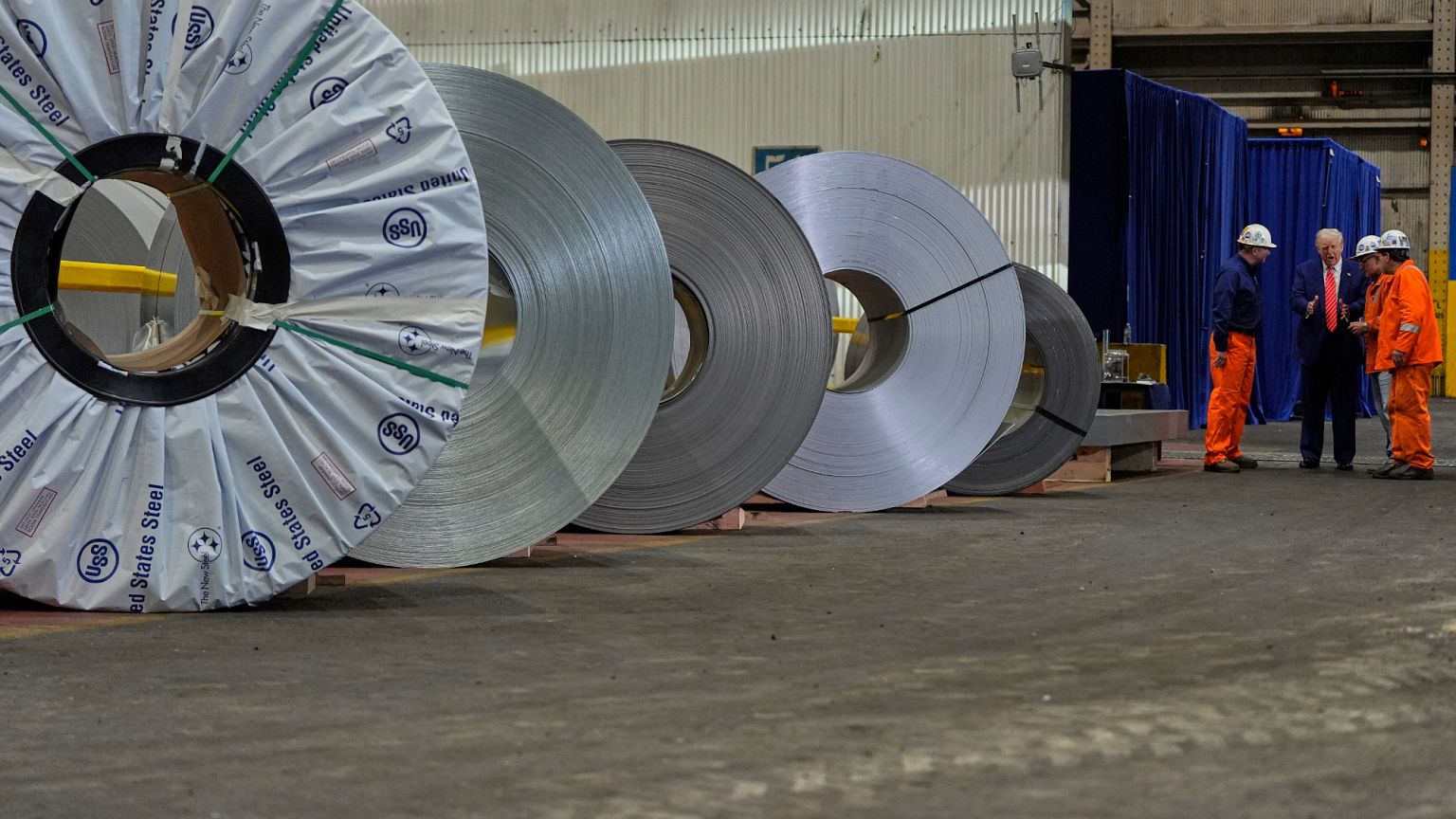
President Donald Trump talks to workers as he tours U.S. Steel Corporation's Mon Valley Works-Irvin plant. West Mifflin. 30 May 2025.
Copyright AP/Julia Demaree Nikhinson


By AP with Eleanor Butler
Published on 

Nippon Steel and US Steel said on Wednesday they have finalised their “historic partnership”, a deal that gives the US government a say in some business matters and comes a year-and-a-half after the Japanese company first proposed its nearly $15bn (€13bn) buyout of the iconic American steelmaker.

The pursuit by Nippon Steel of the Pittsburgh-based company was buffeted by national security concerns and presidential politics in a premier battleground state, dragging out the transaction for more than a year after US Steel shareholders approved it.

It also forced Nippon Steel to expand the deal, including adding a so-called “golden share” provision that gives the federal government the power to appoint a board member and have a say in company decisions that affect domestic steel production and competition with overseas producers.

“Together, Nippon Steel and US Steel will be a world-leading steelmaker, with best-in-class technologies and manufacturing capabilities,” the companies said.

The combined company will become the world's fourth-largest steelmaker in an industry dominated by the Chinese, and bring what analysts say is Nippon Steel's top-notch technology to US Steel's antiquated steelmaking processes, plus a commitment to invest $11bn (€9.6bn) to upgrade US Steel facilities.

In exchange, Nippon Steel gets access to a robust US steel market, strengthened in recent years by tariffs under President Donald Trump and former President Joe Biden, analysts say.

Anthony Rapa, a Blank Rome lawyer in Washington who advises firms on trade, operations and investments, said the government’s intervention in the Nippon Steel-US Steel deal is another sign of a trend that the US is increasingly equating economic security with national security.

He doesn't see the government's intervention as chilling foreign investment and said that using a “golden share” mechanism to ease national security concerns is unlikely to happen frequently — only in sensitive and complex cases.

Still, the episode could cause investors to be more strategic in how they approach transactions, Rapa said.

Anil Khurana, executive director of the Baratta Center for Global Business at Georgetown University, said the US government's interest in the deal is a sign of the growing importance it places on economic competition with China.

“Clearly the definition of what is national security has expanded to include national economic security, which is where I think this comes in,” Khurana said.

Nippon Steel and US Steel did not release a copy of the national security agreement struck with Trump's administration.

But in a statement on Wednesday, the companies said the federal government will have the right to appoint an independent director and get “consent rights” on specific matters.

Those include reductions in Nippon Steel's capital commitments in the national security agreement; changing US Steel’s name and headquarters; closing or idling US Steel’s plants; transferring production or jobs outside of the US; buying competing businesses in the US; and certain decisions on trade, labour and sourcing outside the US.

Nippon Steel announced in December 2023 that it planned to buy the steel producer for $14.9bn (€13bn) in cash and debt, and committed to keep the US Steel name and Pittsburgh headquarters.

The United Steelworkers union, which represents some US Steel employees, opposed the deal, and Biden and Trump both vowed from the campaign trail to block it.

Biden used his authority to block Nippon Steel’s acquisition of US Steel on his way out of the White House after a review by the Committee on Foreign Investment in the United States.

After he was elected, Trump changed course, expressing openness to working out an arrangement and ordering another review by the committee.

That’s when the idea of the “golden share” emerged as a way to resolve national security concerns and protect American interests in domestic steel production.

As it sought to win over American officials, Nippon Steel began adding commitments. Those included putting US Steel under a board made up of a majority of Americans and a management team of Americans.

It pledged not to conduct layoffs or plant closings as a result of the transaction or to import steel slabs to compete with US Steel’s blast furnaces in Braddock, Pennsylvania and Gary, Indiana.

In the final agreement, it pledged to produce and supply US Steel from domestic sources — such as mining operations in Minnesota — and to allow US Steel to pursue trade actions under US law.

It also made a series of bigger capital commitments in US Steel facilities, tallying $11bn (€9.6bn) through 2028, it said.

Nippon Steel said its annual crude steel production capacity is expected to reach 86mn tons, closer to its goal of 100mn tons.

The United Steelworkers on Wednesday noted that its current labour agreement with US Steel expires in 2026.

"Rest assured, if our job security, pensions, retiree health care or other hard-earned benefits are threatened, we are ready to respond with the full strength and solidarity of our membership," its international president, David McCall, said in a statement.

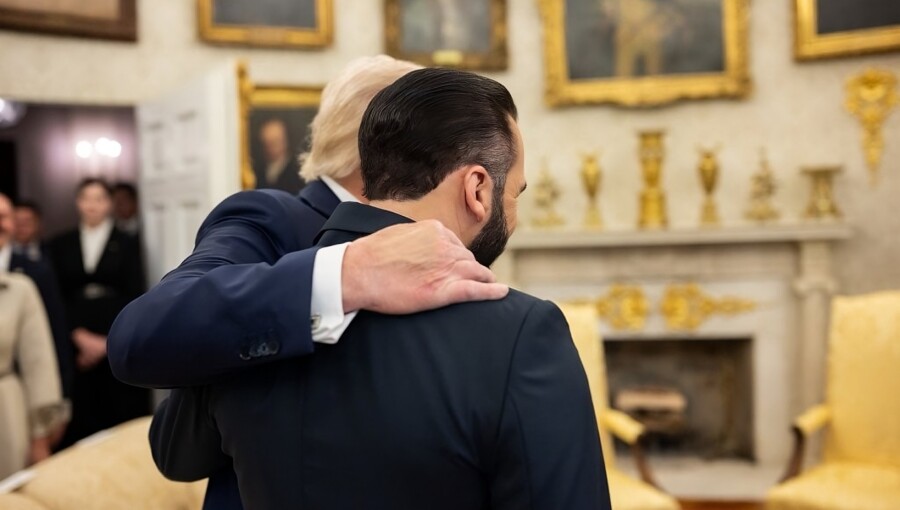
El Salvador in “darkest moment” for press freedom since civil war, rights groups say

El Salvador in “darkest moment” for press freedom since civil war, rights groups say
The media freedom deterioration has unfolded under President Nayib Bukele, a darling of US President Trump who gained popularity for his successful crackdown on gang violence but has faced growing criticism from human rights groups.
By bnl editorial staff June 19, 2025

Seventeen international press freedom organisations have issued a joint statement expressing "deep alarm" at what they describe as an accelerated deterioration of press freedom in El Salvador, with at least 40 journalists forced to flee the country in recent weeks.

The Association of Journalists of El Salvador (APES) documented the departures, which it attributed to "a sustained pattern of harassment, intimidation, and arbitrary restrictions on journalistic work," according to the statement released on June 18.

The journalists who have left the country come from various media outlets and had conducted investigations into human rights abuses, corruption, and government transparency issues, the organisations said. The exodus has "triggered a profound crisis of freedom of expression and created a climate of widespread fear," affecting even the families of exiled journalists.

APES has raised concerns about alleged watchlists and threats of arrest targeting journalists and human rights defenders, including those from the investigative outlet El Faro, the statement said.

The situation has been compounded by the recent passage of El Salvador's Foreign Agents Law, which the organisations described as posing "a direct threat to press freedom and the work of independent organisations." The legislation "imposes severe restrictions and could be used as a tool of persecution against those who practice journalism or defend fundamental rights," they warned.

Recent fact-finding missions by international press freedom organisations concluded that El Salvador is experiencing "one of its darkest moments for press freedom since the end of the armed conflict," characterised by high levels of self-censorship and forced exile.

The signatories, which include the Committee to Protect Journalists, Reporters Without Borders, and the Inter American Press Association, called on the Salvadoran government to "guarantee the physical integrity and freedom of all journalists and immediately cease any form of persecution, surveillance, or intimidation."

They demanded that the Salvadoran state "publicly clarify reports of watchlists and threats of arrests and to ensure that critical voices are not being criminalised."

The organisations also called for security guarantees to allow journalists who have been forced to flee to return without fear of persecution or legal action.

"The international community is closely monitoring the situation and demands the unrestricted respect for freedom of the press and expression in El Salvador," the statement said.

The joint statement was signed by 17 organisations from across the Americas and Europe, including regional press associations from Mexico, Colombia, Argentina, Chile, Brazil, and Peru, as well as global bodies such as the World Association of News Publishers and PEN International.

The media freedom deterioration has unfolded under President Nayib Bukele, who won re-election in February 2024 despite constitutional questions over consecutive terms.

"I don't care if they call me a dictator. I'd rather be called a dictator than see Salvadorans killed in the streets," Bukele publicly stated earlier this month. The 44-year-old flamboyant president, a darling of US President Donald Trump who was first elected in 2019 and returned to office in a landslide last year, accused NGOs of defending criminals and suggested the press was participating in an "organised attack" led by international groups. Since then, his administration has tightened regulations on NGOs’ activities following a playbook seen in some Eastern European countries such as Russia and Georgia, which have adopted controversial "foreign agents laws."

Bukele's second term has been marked by closer cooperation with the Trump administration on deportations and what critics characterise as increasing pressure on human rights. Under emergency laws bypassing judicial review, El Salvador has accepted over 200 migrants, mostly Venezuelans and some Salvadorans, deported from the United States since March, with many housed at the Cecot megaprison on allegations of links to criminal organisations, including MS-13 and Tren de Aragua.

Bukele has gained popularity for his successful crackdown on gang violence through a state of emergency declared in 2022, but has faced growing criticism from human rights groups over perceived authoritarian tendencies and restrictions on civil liberties.


European rights watchdog raises concerns over freedom of speech in Germany amid Gaza protests

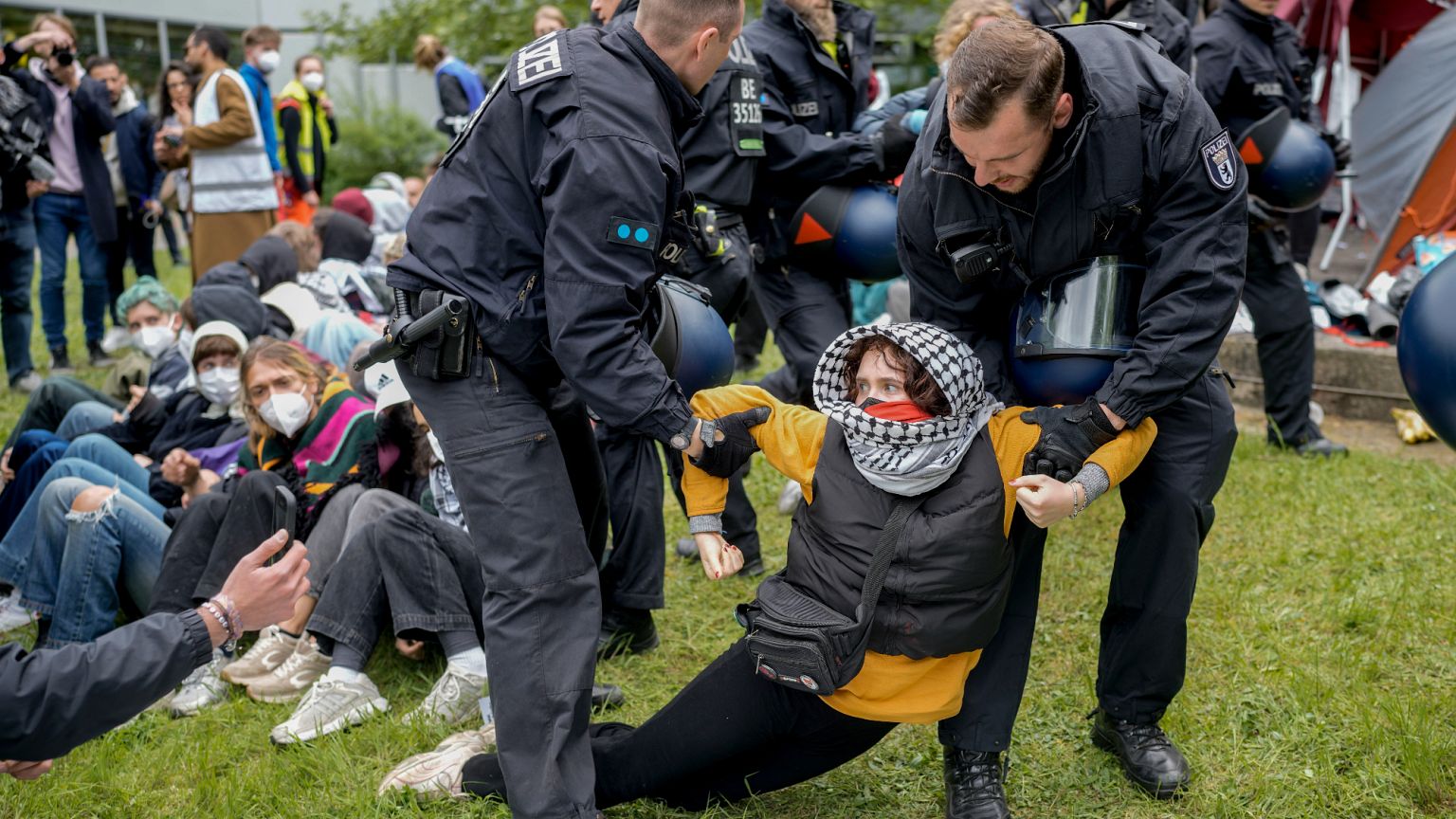
A woman is carried away by police officers during a pro-Palestinians demonstration by the group "Student Coalition Berlin" .
Copyright AP Photo


By Sandor Zsiros
Published on 

The Council of Europe’s Human Rights Commissioner has raised concerns that German authorities have curtailed the use of Arabic language and cultural symbols during Gaza protests and have allegedly used excessive force against demonstrators.

The Human Rights Commissioner of the Council of Europe, Michael O'Flaherty, has expressed serious concerns regarding the conduct of German authorities in response to pro-Gaza demonstrations. In a letter addressed to the German Interior Minister, Alexander Dobrindt, O'Flaherty highlighted what he perceives as infringements on freedom of expression and the right to peaceful assembly.

“Since February 2025, Berlin authorities have imposed restrictions on the use of the Arabic language and cultural symbols during protests. In certain instances, such as the demonstration held on 15 May 2025, marches were limited to static gatherings. Additionally, protestors have reportedly been subjected to intrusive surveillance—both online and in person—and arbitrary police checks,” O’Flaherty stated.

The Commissioner also raised alarm over reports of disproportionate police violence during these events.

“I am deeply concerned by allegations of excessive force used by police against demonstrators, including minors, which in some cases led to injuries. The use of force by law enforcement must adhere to the principles of non-discrimination, legality, necessity, proportionality, and precaution,” he said.

O'Flaherty has urged the German authorities to thoroughly investigate incidents of excessive force and to hold officers accountable where misconduct is found. He noted that police efforts to suppress Nakba Day commemorations—a remembrance of the 1948 displacement of Palestinians—were especially troubling.

The Irish human rights advocate further pointed out that freedom of speech appears to be restricted within some German universities and cultural institutions. He cited reports of foreign nationals facing deportation following their involvement in pro-Gaza activities.

“I am concerned by indications that the working definition of antisemitism adopted by the International Holocaust Remembrance Alliance (IHRA) is being interpreted by some German authorities in a manner that equates any criticism of Israel with antisemitism,” O’Flaherty wrote.

Tensions have run high in Germany since the beginning of the Gaza conflict, with frequent clashes at pro-Palestinian rallies. During the Nakba protest in mid-May, demonstrators were heard chanting slogans such as “From the river to the sea, Palestine will be free”—phrasing considered antisemitic under German law. The event saw several injuries as confrontations escalated.

In April, five students were arrested during a protest at Humboldt University for chanting anti-Israeli slogans. German police have also taken action against demonstrators displaying banned symbols, including altered Hamas slogans.

CRIMINAL CAPITALI$M

How Turkey became a fintech operator in Spain and Pakistan by seizing unicorn enterprise Papara

How Turkey became a fintech operator in Spain and Pakistan by seizing unicorn enterprise Papara
Spain’s PM Pedro Sanchez (left) with Turkish President Recep Tayyip Erdogan. The Erdogan regime, which has essentially acquired a new fintech, won’t expect any licensing problems in Spain or Pakistan, also an ally. / Turkish presidency
By Akin Nazli in Belgrade June 17, 2025

Turkey’s deposit insurance fund TMSF was last month appointed a trustee over local fintech Papara by court order, according to a statement from the country’s central bank.

Separately, the interior ministry said that it executed an operation targeting illegal betting and transfers of criminal proceeds allegedly conducted by Papara. The targeting extended to 13 suspects, including the company owners. All the suspects were detained.

Papara remains active as regards 65 electronic money institutions in Turkey, while the central bank is applying daily withdrawal limits in relation to the firm on a temporary basis.

According to its website, Papara had 21mn users. PPR Holding owns Papara. Karsli holds a 90% stake in PPR.

Spanish and Pakistani connections

Papara was launched in 2015 by Ahmet Faruk Karsli and Ilker Diker. 

In 2023, it completed the acquisition of Madrid-based neo-bank Rebellion Pay. Following the acquisition, Papara claimed that it had become Turkey’s first fintech unicorn.

So far, Turkey has seen the emergence of two decacorns, namely Alibaba’s e-commerce platform Trendyol and Getir, a rapid groceries delivery app-based service, along with five unicorns, namely Peak Games (acquired by Zynga (Nasdaq/ZNGA)), Dream Games, e-commerce platform Hepsiburada (Nasdaq/HEPS), artificial intelligence (AI)-based martech (marketing platform) Insider Growth Management Platform and Istanbul-based fintech Papara (launched in 2015).

In February 2024, media reports suggested that Papara acquired Pakistan-based fintech SadaPay.

In March 2024, Papara signed an agreement with Lebanon-based Bankmed Sal and Jordan's Arab Bank Plc (Amman/ABCO) to acquire their combined 100% stake in Turkey-based Turkland Bank (T-Bank).

Currently, the appointed trustee TMSF is directing all of these subsidiaries. Papara, meanwhile, remains a sponsor of leading football clubs in Turkey.

Business as usual

Since 2002, Turkey’s government has used deposit insurance fund TMSF as a tool for wealth transfer.

As of June 16, TMSF had established management over 801 companies. Additionally, it controlled stakes in 73 companies as well as the personal assets of 93 real persons as of end-2024.

One company is currently on sale.

In July 2024, Fatin Rustu Karakas, head of the TMSF, said that TMSF had seized 1,371 companies over links to the Gulenist clan since its alleged military coup attempt against the Erdogan administration on July 15, 2016.

The Imamoglu wave

In FebruaryTMSF was appointed as a trustee over fast food chain Maydanoz Doner in relation to a prosecution aimed at Gulenists. This was the first company seizure to have taken place for a while.

In March, the Istanbul chief public prosecutor's office seized 23 companies owned by Erkan Kork as part of a prosecution aimed at illegal sports betting.

Bankpozitif, a lender, and TV channel Flash TV, along with fintech companies Payfix, Aypara (iPara) and Ininal were among the seized companies.

Also in March,  Imamoglu Insaat, owned by jailed Istanbul mayor Ekrem Imamoglu and his family, was seized via a court order issued at the request of the Istanbul chief prosecutor’s office.

Since then, more companies have been seized as part of the operation aimed at Imamoglu, President Recep Tayyip Erdogan’s chief political opponent, and more businessmen have been arrested.

Currently, in the new wave of company seizures that was launched with Maydanoz in February, seizures are executed via three arms, namely the Imamoglu operation, the illegal betting operation and the Gulenist operation.

Separately, municipalities are seized. Prior to February, when the Kurdistan Workers’ Party (PKK) and Turkey’s ruling regime announced a collaboration, municipalities were seized as part of the PKK operation. Since March, municipality seizures have been executed as part of the Imamoglu operation.

TMSF: biggest fintech operator in Turkey

The electronic money institution licence of Ininal has been temporarily frozen.

In November, the electronic money institution license of Erpa Odeme Hizmetleri was also temporarily halted. However, no information was provided on the reasoning behind the move.

Local media reports quote anonymous witnesses at local courts as saying that Erpa was among local fintechs that served illegal betting schemes along with Maldopay, CMT Cuzdan, Envoysoft, Mefete, Erpa Pay and Ozanpay.

The payment institution licence of Aypara Odeme remains active while the licence of PayFix has been temporarily blocked.

Currently, the TMSF is the dominant player in Turkey’s fintech industry with its two active units in addition to the two units that remain suspended.


Asia's role as a global data centre hub is driving economic growth across the region

Asia's role as a global data centre hub is driving economic growth across the region
/ Unsplash - Compare Fibre
By bno - Taipei Office June 19, 2025

Asia is fast becoming a global data centre powerhouse, driven by the rapid growth of its digital economies, surging internet penetration, and increasing demand for cloud services and AI infrastructure. Governments across the region are investing in digital infrastructure, while global tech giants and regional players are establishing large-scale data centres to meet both local and international demand.

From India to Indonesia and Japan to Malaysia – and all points in-between - countries across Asia are competing to attract data centre investment. Many are succeeding and this digital infrastructure boom is now see as reflecting upon Asia’s technological rise whilst also signalling major economic benefits for host economies in terms of job creation, energy investments, and digital sovereignty.

Southeast Asia's digital ascendancy

Southeast Asia, in particular, has emerged as one of the fastest-growing data centre markets in the world. According to Structure Research, the region’s colocation and hyperscale data centre capacity is expected to more than double by 2027.

Singapore is a case in point. Despite its land constraints, the city state remains a top regional data hub due to its robust connectivity and pro-business environment. Being one of the most politically stable states in Asia helps too. Singapore had previously imposed a moratorium on new data centres due to environmental concerns, but has since reopened with new sustainability-focused regulations. Because of this, Microsoft and Google recently announced multi-billion dollar investments to expand their existing facilities in Singapore, incorporating AI-ready infrastructure and renewable energy commitments.

However, high demand and space limitations have prompted companies to look beyond Singapore and just across the northern border to Malaysia which has emerged as an attractive alternative. Johor, on the border across from Singapore, is now seeing a surge in data centre investments. In April 2024, Google unveiled plans to invest $2bn to build its first data centre and cloud region in Malaysia. This follows earlier announcements by Microsoft, which pledged to establish a new data centre region in the country to support its Azure services.

Indonesia, Southeast Asia’s largest economy and on Singapore’s southern border, is also witnessing a rapid data centre expansion. Amazon Web Services (AWS) is developing a major cloud region in the current capital Jakarta, while Tencent and Alibaba Cloud have already set up data centres to tap into Indonesia’s 270mn-strong population and growing e-commerce market. How the siting of these facilities will play out when the capital moves to Nusantara is still years away but a questions worth pondering early.

India meanwhile is nothing short of an emerging giant in having positioned itself as a global digital infrastructure hub. With its burgeoning internet user base – already the second largest globally – and strong government support under the Digital India initiative, the country is seeing significant data centre activity.

In 2024, Google Cloud opened a new region in Delhi-NCR, while Microsoft has announced plans for a third cloud region in Hyderabad. Indian conglomerates are also heavily involved.

Reliance Jio, through its partnership with Microsoft Azure, is building a network of data centres across the country, and Adani Group, another major player, has committed to building several hyperscale facilities, including a data centre park in Visakhapatnam on the Bay of Bengal coast

The Indian government’s data localisation regulations and the rising demand for sovereign cloud services are fuelling this momentum. States like Maharashtra, Tamil Nadu, and Uttar Pradesh are actively offering incentives such as land subsidies and fast-track approvals to attract investment.

Up in North Asia, countries like Japan and South Korea continue to lead in data centre development due to their advanced digital economies and technology sectors.

Japan has been a long-standing leader in IT infrastructure and in 2023, Amazon invested over $13bn to expand its AWS data centres in Tokyo and Osaka. Meanwhile, NTT Communications is expanding its own facilities to support AI and 5G applications. Japan’s stable power grid, skilled workforce, and demand for AI compute make it a key strategic hub in the Asia-Pacific region.

South Korea being home to tech giants like Samsung and LG, is also stepping up with Incheon and Seoul both seeing new investments, including recent plans by Oracle and IBM Cloud to boost their cloud infrastructure. The South Korean government has already launched smart city initiatives and is encouraging green data centres to power its future digital economy.

Taiwan too now hosts a Google data centre spread across 15 hectares in the centre of the country, and is already home to almost 30 other such sites - albeit many smaller in scale.

Economic benefits

The rise of Asia as a data centre hub is also bringing considerable economic benefits. Data centres create both direct and indirect employment from construction and engineering to IT services and facility management. According to a 2023 report by Deloitte, each hyperscale data centre could create up to 1,000 full-time equivalent jobs during the build phase and hundreds more during subsequent operations.

Moreover, data centres catalyse broader digital ecosystems. They attract cloud service providers, fintech firms, e-commerce platforms, and AI startups, contributing to the growth of local tech industries; in Malaysia, Johor’s data centre growth has spurred demand for fibre connectivity, logistics services, and renewable energy projects.

Energy is another key driver. Many companies are committing to carbon neutrality, prompting investments in green power. India’s Adani Group is known to be linking its data centres to solar farms, while Singapore and Japan are exploring data centre cooling innovations to help reduce emissions.

Beyond economics, digital infrastructure also has significant implications. Governments increasingly see data sovereignty and secure cloud storage as national priorities. Hosting domestic data onshore improves cybersecurity, regulatory compliance, and resilience against cross-border political risk.

Yet, while challenges remain such as accommodating energy demands, guaranteeing land availability, and environmental impact, the benefits are compelling. Asia’s data centre boom is not just a story of technological progress, but one of economic empowerment, digital sovereignty, and global rebalancing.

Greenpeace warns of potential environmental disaster as oil tankers collide near Strait of Hormuz

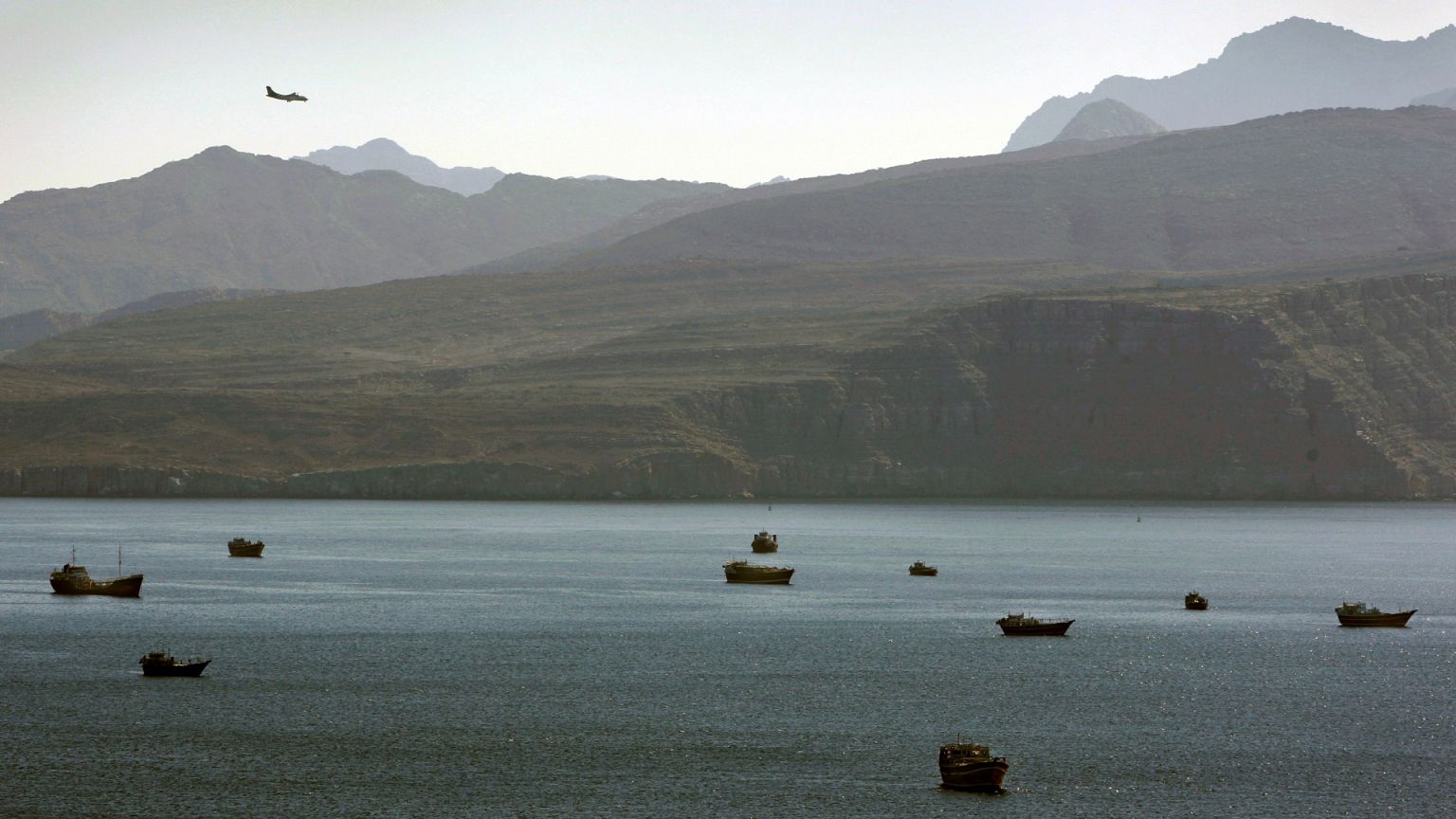
A plane flies over the mountains in south of the Strait of Hormuz. For illustrative purposes only.
Copyright AP Photo/Kamran Jebreili, File


By Gabe Levin with AP
Published on 

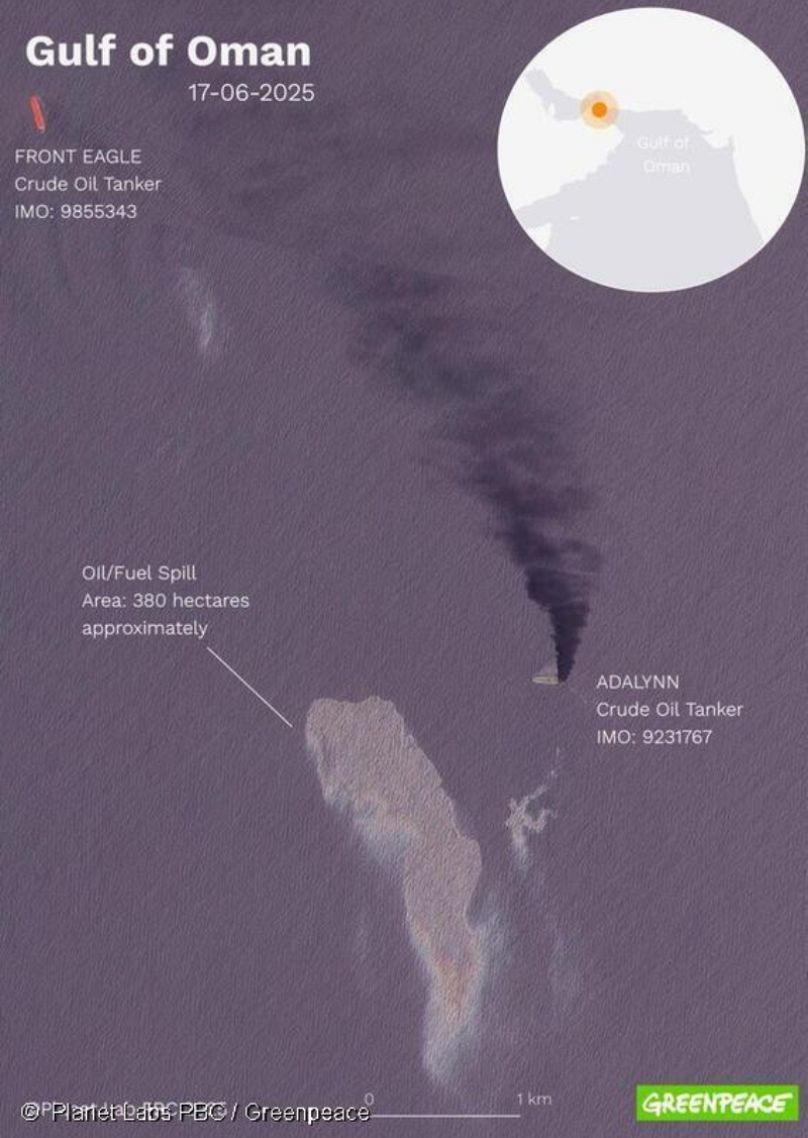
Greeneace said it had reviewed satellite imagery that showed a plume of oil stretching up to about 1,500 hectares from the crash site.

A collision between two oil tankers just east of the world’s most critical oil choke point, the Strait of Hormuz, could bring about a potential environmental disaster, Greenpeace said on Thursday.

The two giant tankers, ADALYNN and Front Eagle, crashed on Tuesday, 17 June, in the Gulf of Oman and caught fire before the Emirati national guard intervened to evacuate crew members. No injuries were reported, according to Emirati authorities.

Satellite data from NASA's Fire Information for Resource Management System showed heat signatures in the area early Tuesday morning.

How much oil are the tankers carrying?

Greenpeace said it had reviewed satellite imagery that showed a plume of oil stretching up to about 1,500 hectares from the crash site.

Satellite images from Gulf of Oman tanker collision.
Satellite images from Gulf of Oman tanker collision.©  Planet Labs PBC / Greenpeace

The 23-year-old tanker ADALYNN belonged to a so-called Russian “shadow fleet” – known to operate older ships below basic security standards – and may have been carrying around 70,000 tonnes of crude oil, the group said.

“This is just one of many dangerous incidents to take place in the past years,” said Farah Al Hattab of Greenpeace’s Middle East and North Africa division, adding that such oil spills "endanger marine life.”

The United Arab Emirates Ministry of Energy and Infrastructure did not respond to a request for comment.

Israel-Iran conflict raises shipping concerns

It was not immediately clear what caused Tuesday's incident. British maritime security firm Ambrey said it was unrelated to the fighting between Israel and nearby Iran.

The Strait of Hormuz, near where the collision took place, is the strategic maritime entryway to the Persian Gulf and sees about a fifth of the world’s oil pass through it, according to the US Energy Information Administration.

In 2024, an average of 20 million barrels of oil travelled through it daily.

After Israel launched airstrikes against Iran on 13 June, oil prices surged as worry mounted over whether the Islamic Republic might block the waterway.

Maritime ship experts say shipowners are increasingly wary of using the waterway, with some ships having tightened security and others cancelling routes there.

As the Israel-Iran conflict intensified over the weekend, hundreds of ships in the strait saw spotty navigation signals and had to rely more on radar.

The Financial Times reported on 13 June that the world’s largest publicly listed oil tanker company, Frontline, which owns the Front Eagle oil tanker involved in Tuesday’s crash, said it would turn down new contracts to sail into the Gulf through the Strait of Hormuz.


EU divided over Israel's right to bomb Iran

Smoke rises from the building of Iran's state-run television after an Israeli strike in Tehran, Iran, Monday, June 16, 2025. (AP Photo)
Copyright AP Photo

By Shona Murray & Eleonora Vasquez
Published on 

Not all EU countries believe Israel’s attack on Iran is legal under international law, and the differences will be on display when ambassadors meet in Brussels on Thursday ahead of a summit of heads of state and government taking place next week.

Divisions over the justification for Israel’s attack on Iran last Friday are set to surface among ambassadors in Brussels on Thursday, stymying EU attempts at finding a common response to the crisis, according to sources Euronews has spoken to.

"It’s definitely an issue that is being discussed - what is the extent to which this right of self-defence is acceptable," one source said.

The EU issued a statement on Saturday calling “on all sides to abide by international law, show restraint and refrain from taking further steps which could lead to serious consequences such as potential radioactive release”.

Sources close to the discussion say a "major" part of the deliberations among member states was whether the EU should state “Israel has a right to defend itself” in the context of its attacks against Iran.

Around 15 member states including Austria, Czechia, France, Germany, Hungary, Italy and the Netherlands wanted to add the line but it was not agreed unanimously.

Several other countries felt there wasn’t sufficient evidence that Israel has the right under international law to launch its offensive against Iran.

Under international law, and the UN Charter, a state may exercise its right to self-defence in case of an armed attack or imminent attack. Any necessary action should also be proportionate.

No consensus on attacks being justified through right of defence

Israel says its series of strikes are pre-emptive moves to stop Iran from obtaining nuclear weapons.

The issue is set to be discussed by ambassadors in Brussels on Thursday and is an agenda item for next week's EU summit of heads of state and government. Draft conclusions for that summit seen by Euronews currently contain no wording in respect of the EU Council's position on the Israel-Iran conflict.

Meanwhile, EU sources told Euronews they were "surprised" by a tweet from the Commission President announcing implicit support for Israel’s attacks against Tehran.

The message from Ursula von der Leyen went further than the agreed statement of the European Council, which is the arm of the EU with the authority to conduct foreign policy.

Ursula von der Leyen tweeted “Spoke with President Herzog concerning the escalating situation in the Middle East. I reiterated Israel’s right to defend itself and protect its people”.

“There was no consensus on saying Israel has a right to defend itself but Von der Leyen said it anyway,” another diplomatic source told Euronews.

 “She saw the agreed language and then made her own statement,” they said.

 “It was disheartening to be honest,” said the diplomat.

“These countries like Iran – as bad as they are don’t simply submit when they’re attacked like this, and what comes next will be so much worse even if there is regime change in Iran,” said this source, adding: “And then when two or three million Iranians turn up on Europe's door they'll say we can't deal with this migration crisis."

 “Member states which are critical of Israel said they thought Israeli attacks on Iran were irresponsible, but a large group is on board with von der Leyen’s statement," said another diplomat.

“We would say that’s a question for legal scholars – there is no judgement on that yet,” the diplomat responded, when asked if their government believed the war against Iran to be within the provisions of international law.

Former International Atomic Energy Agency (IAEA) chief Mohammad El Baradei claimed in a post on X that Israeli “suspicion does not constitute an imminent threat”, and that Israel’s attack on nuclear facilities was illegal under international law.

“The president has made her position clear, her position has already been taken quite clearly by the G7 leaders statement on the developments in the region," von der Leyen's spokesperson said when asked about the difference between the official statement of the EU and that of the Commission president.

“She also communicated on social media stressing the fact that Israel has the right to defend itself and Iran is the main source of tension in the region,” said Stefan de Keersmaecker on Wednesday.

The EU regards Iran as major destabilising influence in the European continent through its military support of Russia.

Iran has been supplying Shahed drones to Russia since the start of Russia’s full scale invasion of Ukraine in 2022, according to the Ukrainian army.

Meanwhile the EU’s foreign policy chief Kaja Kallas has since reiterated the official EU position for a diplomatic resolution to the Israel-Iran war.

And again called on all sides to “abide by international law, and de-escalate the situation”.

She tweeted on Wednesday that “Israel has the right to defend itself in line with international law.”


Trump Orders ‘Unconditional Surrender’ By Iran: Who’s Listening? – OpEd

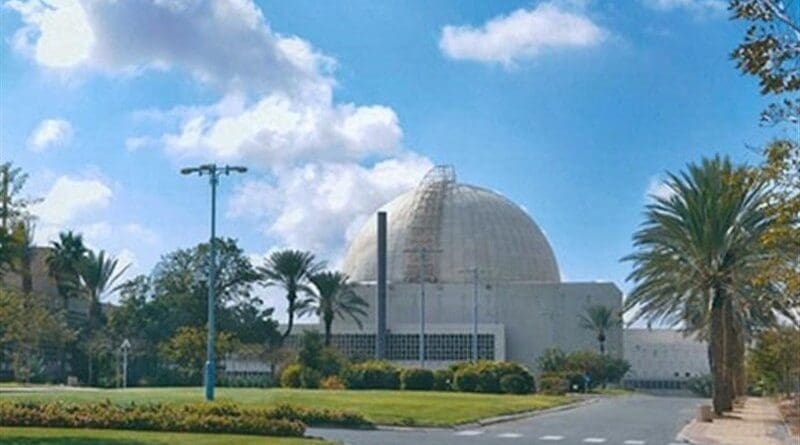
Israel's top secret nuclear facility in the southern town of Dimona. Photo Credit: Tasnim News Agency

By 

Israel’s blitzkrieg against Iran five days ago is failing spectacularly. The Russian media reported that: i) Israel’s Rafael weapons complex has been destroyed; ii) Haifa oil refinery is in flames; iii) the Iron Dome has been breached; iv) and, Israel’s air dominance is a figment of imagination. 


On Tuesday, Iran fired cruise missiles for the first time against Israel. Another wave of Iranian missile and drone attack targeted the Nevatim Airbase in southern Israel, where stealth fighter jets, transport aircraft, tanker aircraft and machines for electronic reconnaissance/surveillance, etc. are stationed. 

Some Iranian reports claim that “plumes of smoke were rising from areas near the Dimona nuclear facility,” where an estimated 90 Israeli  nuclear warheads are stored. If true, this must be highly embarrassing for Israel which has been maintaining a policy of deliberate ambiguity in regard to its nuclear capabilities as well as for President Donald Trump who is constantly hectoring Iran while turning a blind eye on Israel’s clandestine nuclear weapon stockpiles right under his nose — apart from exposing the IAEA. 

According to the independent Stockholm International Peace Research Institute, Israel’s nuclear warheads are capable of being delivered anywhere within a maximum radius of 4,500 km by its F-15, F-161, and F-35I “Adir” aircraft, its 50 land-based Jericho II and III missiles,  and by about 20 Popeye Turbo cruise missiles, launched from submarines. 

Suffice to say, rational minds among the Israeli elite feel worried. Typically, Danny Yatom, former head of Mossad, is quoted as saying, “Iranians will not kneel; they will not raise the flag of surrender and they will not give in!” 

The American broadcast television network NBC has reported that Israel asked Iran, through western mediators, to stop its retaliatory attacks and return to nuclear negotiations. This would probably explain Trump’s bombastic post on Sunday in Truth Social that Israel and Iran will end their violent conflict by “making a deal” through his mediation. Trump wrote, ”We will have peace, soon, between Israel and Iran. Many calls and meetings now taking place.” He even drew the analogy of his success in brokering peace between India and Pakistan recently. 


However, the realisation may have since dawned on Trump that Iranians will not forget or forgive the assassinations of their military commanders or the destruction and loss of life of dozens of civilians in the Israeli Blitzkrieg, which targeted Iran’s nuclear facilities, military infrastructure, and residential buildings in Tehran and other cities. 

Trump has a major decision to take in coming days as regards the next move — specifically, how to rescue Israel from the attritional war that lies ahead. Pressure for US military intervention is mounting. Trump is obligated one way or another to all three segments of the Israel Lobby — Zionists, evangelical Christians and wealthy Jewish elites who are kingmakers in American politics.

The pendulum is wildly swinging in Trump’s mercurial mind. He was in an irritable mood at the G-7 summit in Canada on Monday, cut short his trip and picked a nasty public quarrel with French President Emmanuel Macron for simply commenting that Trump hurried back to wrap up a ceasefire. 

Trump wrote angrily, “Publicity seeking President Emmanuel Macron, of France, mistakenly said that I left the G7 Summit, in Canada, to go back to D.C. to work on a “cease fire” between Israel and Iran. Wrong! He has no idea why I am now on my way to Washington, but it certainly has nothing to do with a Cease Fire. Much bigger than that. Whether purposely or not, Emmanuel always gets it wrong. Stay Tuned!” 

Four hours later, he clarified, “I have not reached out to Iran for “Peace Talks” in any way, shape, or form. This is just more HIGHLY FABRICATED, FAKE NEWS! If they want to talk, they know how to reach me. They should have taken the deal that was on the table — Would have saved a lot of lives!!!” 

Seven hours later, Trump claimed, “We now have complete and total control of the skies over Iran. Iran had good sky trackers and other defensive equipment, and plenty of it, but it doesn’t compare to American made, conceived, and manufactured “stuff.”  Nobody does it better than the good ol’ USA.” 

But a few minutes later, Trump threatened Iran’s Supreme Leader Ayatollah Ali Khamenei: “We know exactly where the so-called “Supreme Leader” is hiding. He is an easy target, but is safe there — We are not going to take him out (kill!), at least not for now. But we don’t want missiles shot at civilians, or American soldiers. Our patience is wearing thin. Thank you for your attention to this matter!” 

Seven minutes later, another nasty post followed in capital letters:  “UNCONDITIONAL SURRENDER!” 

That was 9 hours ago. Presumably, Trump wound up Tuesday by ordering Iran to crawl on its knees. The chances of Iran obliging him are zero. In fact, the Chairman of the Chiefs of Staff of Iran’s Armed Forces Major General Abdolrahim Mousavi said on Tuesday that the operations carried out so far have served as a deterrent warning, and the actual “punitive operations” are set to begin soon. The general asked the inhabitants of Tel Aviv and Haifa “to leave these areas for the sake of their lives.”

In fact, an Iranian commentary underscored yesterday that “Israeli strikes on Iran’s energy infrastructure and southern ports near the Persian Gulf could shift the nature of the conflict dramatically… This is precisely what Iran identifies as its strategic red line.” 

The commentary continues: “What we’re witnessing is a multi-level hybrid conflict, a complex puzzle involving direct warfare, proxy engagement, diplomatic pressure, and a simmering “cold peace”—all unfolding at once… But such a scenario is unsustainable, as Israel… knows it cannot endure a prolonged high-intensity conflict.

The commentary estimates that a ceasefire “would likely be a tense calm or a “cold peace” rather than true stability.” Because, “What’s emerging now is a fluid and brutal new balance of power… The Persian Gulf, Israel, the Axis of Resistance, and the global energy market are no longer separate arenas—but interconnected pieces in a simultaneous, high-stakes game.” (here

The great dilemma for Trump is that there’s no quick fix solution in sight. On his way back to the US yesterday evening, Trump said he wanted a “real end” to the conflict and that he was “not too much in a mood to negotiate.” German Chancellor Friedrich Merz also noted that Trump was indeed considering that option. The US is rapidly building up its forces in the Gulf region.

However, US intervention may trigger a continental war that will outlive Trump’s presidency and destroy his presidency, as Bush’s 2003 Iraq invasion destroyed his. And Trump might as well forget about America First, MAGA, Ukraine, Taiwan, tariff wars, immigration, inflation, China, etc.

Even European allies won’t stand by Trump. Macron told reporters on the sidelines of the G7 summit after Trump’s departure, “The biggest mistake today would be to try to do a regime change in Iran through military means because that would lead to chaos.” Macron warned that “no one can say what comes next…We never support actions of regional de-stabilisation.” 

Do not forget that the skeptics include Vice President JD Vance also, whose suspicion of foreign entanglements had its origins in his time as a US Marine in Iraq, where he became disillusioned with America’s interventionist regime change projects and ill-fated ‘forever wars’ in the region. 


M.K. Bhadrakumar

M.K. Bhadrakumar is a former Indian diplomat.


COMMENT: Four scenarios of how the Israel-Iran conflict might play out from Capital Economics

“The outcome of this conflict will shape regional dynamics and global market sentiment for months, if not years, to come,"

COMMENT: Four scenarios of how the Israel-Iran conflict might play out from Capital Economics
The Israeal-Iran war is highly unpredictable, but Capital Economics has map out four possible scenarios of how it might play out. / bne IntelliNews
By bne IntelliNews June 18, 2025

As the conflict between Israel and Iran continues to unfold, the geopolitical uncertainty has prompted wide-ranging assessments of how it might play out. Analysts at Capital Economics have outlined four plausible scenarios, each with markedly different implications for the Middle East, global energy markets and international financial systems.

“The key takeaway is that even in the event of escalation, the range of outcomes remains wide — from short-term military engagement to regime change or prolonged conflict,” the firm said in a note published on June 18. “We may not know the endgame for some time.”

Scenario one, their current working assumption, envisions the conflict de-escalating within weeks. Israeli officials have signalled this possibility, suggesting that once military objectives are achieved, hostilities may subside. In this case, Iran’s regime would remain in place but with a weakened military posture, while sanctions would continue. “Oil prices would return to pre-conflict levels — around $65 per barrel — and safe haven flows in financial markets would unwind,” Capital Economics noted.

Scenario two assumes a more intense military escalation. If Israel expands its operations and Iran retaliates — potentially targeting US forces or threatening to close the Strait of Hormuz — the economic fallout could be sharp but short-lived. “Oil prices could feasibly spike to $130–150 per barrel, equities would fall, and the dollar would strengthen,” the analysts said. “However, these moves would subsequently reverse if a peace deal is reached, possibly paving the way for a new nuclear agreement.”

Scenario three explores posits a regime change in Iran, triggered by intensified conflict and mounting domestic pressure. In its most optimistic form, reformist elements within Iran’s establishment could gain power and seek rapprochement with the West. “Such a shift could ultimately lead to the lifting of sanctions and a return of foreign investment,” the firm said, adding that this outcome would likely be positive for risk assets and energy prices could stabilise at lower levels.

However, Capital Economics also flagged less favourable permutations — from hesitant leadership transitions to disorderly change — that could still reduce Iran’s ability to sustain hostilities. “In any of these situations, we suspect Iran would seek to extricate itself from conflict with Israel or the US,” the analysts wrote.

Scenario four, the most disruptive, involves a protracted conflict with no diplomatic exit. The Iranian regime would suppress domestic dissent and continue hostilities, while regional security deteriorates. “This scenario might result in a long-lasting higher oil price in the range of $130–150 per barrel,” Capital Economics warned. “It could lift inflation in advanced economies by 2–2.5 percentage points by the end of 2025 and would be a major risk-off event in markets.”

In all scenarios, Capital Economics says that energy markets will bear the brunt of instability.

“The outcome of this conflict will shape regional dynamics and global market sentiment for months, if not years, to come,” they concluded.


The Israel-Iran Conflict And Turkey’s Long-Term Energy Security: A Gathering Storm – OpEd

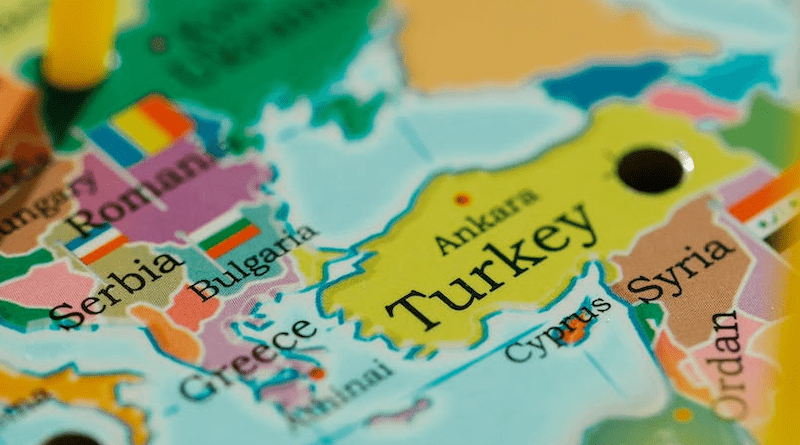
map turkey syria Greece Cyprus


By 

As the Israel–Iran conflict intensifies across the Middle East, Turkey faces a new test of its long-term energy security. The war’s consequences may not yet have disrupted supply chains, but price volatility, infrastructure risks, and geopolitical uncertainty are already shaking regional markets and prompting urgent strategic reassessments in Ankara.


A Strategic Crossroads for Turkey

Turkey, an energy-import dependent country that meets nearly 72% of its energy demand through imports¹, sits at the intersection of several high-risk energy corridors. With its dual identity as a consumer and a key transit nation, Turkey’s exposure to shocks from Middle Eastern instability is profound.

The Strait of Hormuz: Choke Point Under Threat

In recent developments, Israeli airstrikes targeted Iranian energy infrastructure—including the critical South Pars gas field²—prompting retaliatory missile and drone attacks by Iran. Tehran’s subsequent threats to shut down the Strait of Hormuz³, through which roughly 20% of global oil passes, have fueled anxiety in global markets.

Brent crude prices surged to $74 per barrel⁴, and although Turkey’s Energy Minister assured that current oil and gas deliveries remain stable⁵, the long-term outlook is uncertain. Turkey, while no longer heavily reliant on Iranian oil, continues to import crude from Gulf nations via the strait⁶.

Pipeline Security and Supply Disruption Risks

Key infrastructure such as the Iran–Turkey natural gas pipeline and the Kirkuk–Yumurtalık oil pipeline are vulnerable to potential sabotage or collateral damage in the conflict zone⁷. Any disruption would threaten Turkey’s power generation capabilities and industrial continuity.

Furthermore, Turkish LNG imports from Qatar and the U.S., while geographically distant from the war theatre, are susceptible to shipping and insurance costs in an escalated global conflict environment⁸.


The Economic Toll of Rising Energy Prices

Should Brent oil prices stabilize above $100/barrel, as some analysts predict⁹, Turkey’s current account deficit will widen significantly. Gas-fired electricity generation costs will rise, pushing inflation higher and potentially triggering an industrial slowdown.

A Renewed Push for Diversification and Resilience

The current crisis may accelerate Ankara’s efforts to diversify both suppliers and supply routes. Options include:

• Expanding LNG procurement from the U.S., Algeria, and Nigeria¹⁰

• Fast-tracking offshore gas development in the Eastern Mediterranean¹¹

• Increasing imports from Azerbaijan and potentially Turkmenistan through swap deals¹²

• Accelerating domestic gas production from the Black Sea¹³

Meanwhile, investments in renewables (solar, wind, geothermal, biomass) and the commissioning of nuclear units at Akkuyu are vital for long-term energy independence¹⁴.

Storage infrastructure is also a key pillar. Facilities like Tuz Gölü and Silivri must expand, while strategic oil reserves are overdue for structural modernization¹⁵.

The Risk of Conflict Spillover into Turkey

Experts warn of proxy confrontations via Iran-backed groups in Iraq, Syria, and Lebanon, which could indirectly target Turkish interests. A resurgence of PKK or YPG activity, potentially supported by Tehran, remains a latent threat¹⁶.

Turkey’s NATO ties may also complicate matters. Should Turkish airspace be used for Israeli or U.S. operations, Iran could designate Ankara as a “hostile actor,” placing pipelines, terminals, and storage facilities at risk¹⁷.

Adding to this complexity is the humanitarian angle. Early signs of an exodus from Iranian Kurdish regions and parts of Iraq signal potential new refugee waves, increasing Turkey’s socio-economic and energy consumption burden¹⁸.

Policy Recommendations for Ankara

To navigate this strategic storm, Ankara should:

• Deepen geopolitical energy diversification

• Accelerate investments in domestic and renewable resources

• Expand gas and oil storage capacities

• Harden energy infrastructure against cyber and physical threats

• Pursue a balanced, multilateral energy diplomacy

• Integrate energy planning with border security and defense policies

Conclusion

While no energy crisis has yet fully materialized, the Israel–Iran conflict is a warning shot. Turkey must treat energy security not merely as an economic issue but as a critical dimension of national security. Long-term planning, investment, and diplomatic agility are essential to weathering the geopolitical turbulence ahead.

Dipnotes

1. International Energy Agency (IEA), World Energy Outlook 2023, Paris, 2023.

2. Economic Times, “Israel Strikes Iran’s South Pars Field”, June 16, 2025.

3. Reuters, “Iran Threatens to Close Strait of Hormuz”, June 17, 2025.

4. Barron’s, “Oil Prices Surge on Middle East War”, June 17, 2025.

5. Reuters, “Turkey Sees No Immediate Energy Supply Issues”, June 17, 2025.

6. T.C. Energy and Natural Resources Ministry, Energy Statistics Report, 2024.

7. RAND Corporation, Iran’s Strategic Infrastructure, California, 2022.

8. BP, Statistical Review of World Energy, London, 2023.

9. Atlantic Council, Middle East Energy Forecast, Washington D.C., 2024.

10. BOTAÅž, LNG Import and Storage Strategy, 2023.

11. Atlantic Council, Eastern Mediterranean Gas and Turkey’s Future, 2022.

12. Energy Intelligence, “Turkmenistan Gas Swap Potential”, March 2025.

13. Turkish Petroleum (TPAO), Black Sea Gas Development Plan, 2024.

14. TEİAÅž, Electricity Capacity Report, 2024.

15. BOTAÅž, Natural Gas Storage Operations, 2023.

16. ORSAM, Turkey’s Border Security and Regional Threats, 2023.

17. NATO Defense College, NATO-Turkey Relations in Conflict Zones, Rome, 2022.

18. UNHCR, Türkiye and Regional Refugee Trends Report, Geneva, 2024.

References

• International Energy Agency (IEA), World Energy Outlook 2023, Paris, 2023.

• BP, Statistical Review of World Energy 2023, London, 2023.

• T.C. Energy and Natural Resources Ministry, Energy Statistics 2024, Ankara.

• BOTAÅž, Corporate Strategy Reports, 2023.

• RAND Corporation, Iran’s Energy Infrastructure Vulnerability, Santa Monica, 2022.

• Atlantic Council, Turkey’s Energy Diplomacy, Washington D.C., 2022.

• ORSAM, Middle East Security Review, Ankara, 2023.

• NATO Defense College, Southern Flank and Geopolitical Challenges, Rome, 2022.

• TEİAÅž, Electricity Generation and Investment Reports, 2024.

• UNHCR, Türkiye Refugee Movements Report, Geneva, 2024.


Haluk Direskeneli

Haluk Direskeneli, is a graduate of METU Mechanical Engineering department (1973). He worked in public, private enterprises, USA Turkish JV companies (B&W, CSWI, AEP, Entergy), in fabrication, basic and detail design, marketing, sales and project management of thermal power plants. He is currently working as freelance consultant/ energy analyst with thermal power plants basic/ detail design software expertise for private engineering companies, investors, universities and research institutions. He is a member of Chamber of Turkish Mechanical Engineers Energy Working Group.