Friday, June 06, 2025


Kuala Lumpur Summit Reflects Shift To The East In The Global Economy – OpEd
Kuala Lumpur malaysia

By 

By Kalinga Seneviratne


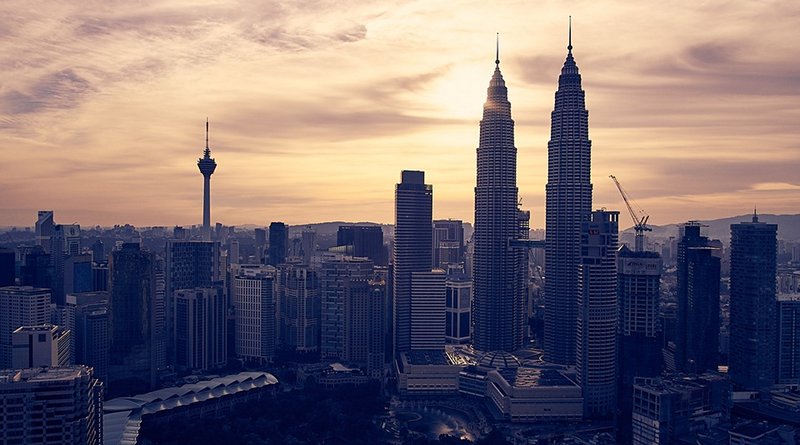
The last week of May marked an important landmark in the shift in the global economy to the East when countries representing over 2 billion people and a combined economy of over US$ 25 trillion came together to chart a new path for a peaceful and prosperous world through civilizational dialogue and cooperation, a term the West finds difficult to understand.

The landmark meeting in the Malaysian capital Kuala Lumpur brought together the leaders of the 10-nation Association of South East Asian Nations (ASEAN), the 6-member Gulf Cooperation Council (GCC) and the world’s second biggest economy China.

In 2024, ASEAN-China trade stood at US$ 1 trillion while GCC-China trade was over US$ 288 billion, with vast potential for trade expansion, the leaders from both regions spoke about the potential of the region to foster regional stability and lead in economic globalization.

In his opening remarks, Malaysian Prime Minister Anwar Ibrahim talked about opening up a new chapter in dialogue and cooperation. “This is a meeting of minds, people who want to develop their countries, who believe in independence, in rights, in democracy and who want to enhance trade, increase investments,” he said.

Speaking at the same session, Chinese Premier Li Qiang called on China, ASEAN and GCC countries to jointly forge an example in openness, development cooperation and cross-civilization integration by creating a model of cross-region openness, noting that the population and economic aggregate of China as well as countries of the ASEAN and the GCC account for approximately one quarter of the world’s total population.


Traditional United States (US) ally Singapore’s new Prime Minister Lawrence Wong called upon the 3 partners to forge deeper ties to unlock new pathways for economic cooperation amidst geopolitical turbulence and uncertainty. Pointing out that ASEAN will become the world’s fourth largest economic block by 2030, he said that this new grouping can drive global growth by increasing cooperation in new areas such as digital technology, artificial intelligence and renewal energy.

The fact is that the summit participants as a whole have expertise in all these areas and it is a matter of coordinating its implementation as opposed to hegemonic power play. Both Malaysia and China have also emphasized promoting cultural dialogue and understanding taking inspiration from the ancient Silk Routes where trade and culture interacted seamlessly and peacefully. China is keen to emphasize this with its new avatar of the Belf and Road Initiative (BRI) accompanied by its ‘Global Civilizational Initiative’.

West’s attempt to denigrate BRI as a “debt trap” has backfire. In his summit opening remarks, Anwar referred to the rich trading histories shared by the three parties, from the Silk Road to the Malacca sultanate’s flourishing as a critical entrepot linking East and West. “Today, Asean carries forward that legacy on a broader scale, emerging as a dynamic crossroads of global commerce, innovation and opportunity,” said Anwar.

“America’s determination to contain China is forcing countries towards an uncomfortable decision long avoided: choosing a side”, notes Peter Chang, a visiting senior fellow with ISEAS – Yusof Ishak Institute, Singapore. “As both US allies and adversaries recalibrate their positions, the world is witnessing a profound geopolitical reconfiguration. Trump’s disruptive “America first” agenda has accelerated efforts to develop alternative economic frameworks, with nations seeking to insulate themselves from Washington’s unpredictable policies”, argued Chang in a commentary published in Hong Kong’s South China Morning Post (SCMP), adding that the Asean-GCC-China partnership is “a crucial step in advancing the developing world’s vision”.

China’s Global Times (GT) noted that the leaders’ pledged to further deepen BRI cooperation, in such areas as connectivity, economy and trade, industrial and supply chains, agriculture, energy, finance and the digital economy.

“They also pledged to strengthen mutual learning among civilizations, carry out closer multilateral cooperation, and advance trilateral integration for strong, inclusive, and sustainable development, contributing to the building of a community with a shared future” GT said. The latter referring to China’s often stated aim of development cooperations as a win-win process.

Chen Hong, executive director of the Asia Pacific Studies Center at East China Normal University, told GT , “it’s not only a crucial milestone for regional cooperation in Asia but also a collective declaration by Global South nations under the shadow of unilateralism, asserting that multipolarity and equal cooperation represent the prevailing will of the people, and that unity will inevitably triumph over isolationism.”

Riaz Khokhar, a political scientist at the University of Gotenburg writing in SCMP argues that the trilateral partnership been forged aligns smartly with China’s BRI, leveraging with ASEAN’s consumer markets and GCC’s energy wealth. “Asean’s resources, the GCC’s financial clout and China’s manufacturing dominance constitute complementary strengths that can forge a robust supply chain ecosystem. Raw materials, such as Indonesia’s nickel and Malaysia’s palm oil, complement China’s manufacturing capacity, while the GCC’s sovereign wealth funds, worth a collective US$5 trillion, can finance critical projects,” he notes.

These are not pipedreams. As Khokhar points out, in April, Qatar’s Investment Authority and Indonesia sovereign wealth fund Danantara have announced a US$ 4 billion fund to invest in Indonesia’s renewable energy, healthcare and technology sectors. That will see ASEAN supplying raw material for China’s electric vehicle battery production with GCC funding. Trilateral investments in ASEAN’s digital economy could link China’s digital payments systems with GCC’s Islamic finance networks, that will create a “robust digital ecosystem” argues Khokhar.

The Kuala Lumpur summit was a welcome break from the East Asia Summit and the Singapore’s Shangri-La Dialogue (that took place at the same time) where western leader come and lecture about so-called “security issues” in the region, and the need to expand defense budgets. There was no such talk in Kuala Lumpur nor in the regional media coverage of the summit.

“Trilateral cooperation between ASEAN, China, and the GCC is likely to deepen and extend into new sectors, reinforcing a pragmatic partnership model built on complementary strengths’, argued Muhammad Zulfikar Rakhmat, Director of China-Indonesia Desh at the Jakarta based Center of Economic Law Studies in a commentary published by China Global South Project. “This framework provides a solid foundation for regional collaboration, focusing on infrastructure, technology, and sustainable development.”


IDN

IDN-InDepthNews offers news analyses, features, reports and viewpoints that impact the world and its peoples. It has been online since 2009. Its network spans countries around the world.

 

Rep. Thomas Massie Introduces US Gold Reserves Audit Bill – OpEd

gold bars


By 

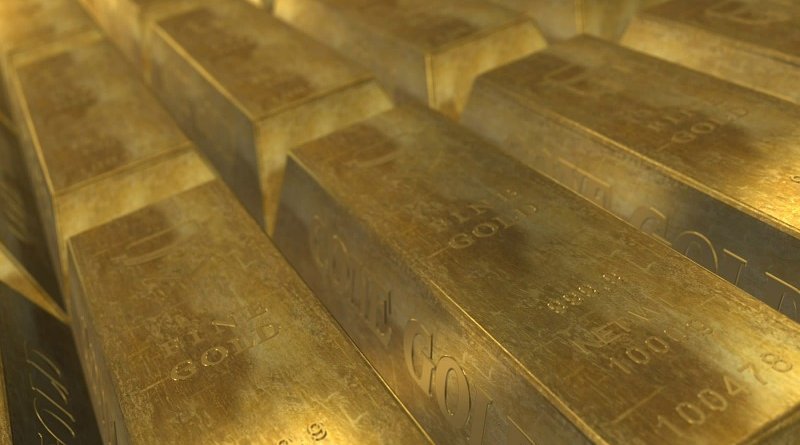
The United States government says it has about 261 million troy ounces of gold in its gold reserves. That is rather impressive, if true.


The US government is not a great role model for honesty, though. So, it seems a good idea to put its gold claim to the test.

President Donald Trump talked on occasion in the first couple months of his second term about traveling to Fort Knox where much of the gold is supposed to be held to check if it is really there. But, more recently, he has largely gone silent about the matter.

Maybe an act of Congress is what is needed to double-check that all the gold is where the government says it is. That is just what Rep. Thomas Massie (R-KY) introduced on Friday — the Gold Reserve Transparency Act (HR 3795).

Massie’s bill requires the Comptroller General to “contract with a qualified, independent, third-party, external auditor to conduct and complete … a full assay, inventory, and audit of all gold reserves” within nine months of the bill becoming law and every five years thereafter. The auditor would also report on other gold reserves related matters including the sufficiency of measures for the physical security of the gold reserves; all encumbrances on the gold at present or entered into over the last 50 years; all sales, purchases, disbursements, or receipts of gold over those 50 years along with identification of the terms and parties for those transactions; and a full accounting of all third parties held gold in which the US government – including the Federal Reserve — has a direct or indirect interest.

The Comptroller General is further required by the legislation to report every five years all results, findings, and determinations of the bill’s required investigations to Congress and the Secretary of the Treasury, as well as on the internet for the public. All relied on source material would need to be included with the reports. Redactions, the bill specifies, may be made only in regard to physical security for the gold reserves.

Massie is an advisory board member for the Ron Paul Institute.

Original cosponsors of the Gold Reserve Transparency Act are Reps. Warren Davidson (R-OH), Addison McDowell (R-NC), and Troy Nehls (R-TX).


Adam Dick

Adam Dick is a Senior Fellow at Ron Paul Institute for Peace and Prosperity. Adam worked from 2003 through 2013 as a legislative aide for Rep. Ron Paul. Previously, he was a member of the Wisconsin State Board of Elections, a co-manager of Ed Thompson's 2002 Wisconsin governor campaign, and a lawyer in New York and Connecticut.


Profiles In Courage: Trump And Eisenhower – OpEd

donald trump vladimir putin poster grok

By 

President Donald Trump had a difficult week. No, this isn’t about Elon Musk or Harvard University. On Wednesday, his call to Russian President Vladimir Putin didn’t go well. It turned into a ‘conversation’, as Trump wrote on Truth Social, lasting only an hour and 15 minutes, which means, setting aside the time for interpretation, it left no room for substantive discussions.  

The call took place against the backdrop of the attack on Russia’s nuclear force on June 1. Trump acknowledged in his Truth Social  post later that Putin spoke “strongly” about Russia’s response to come. The post was notable for its subdued tone.  

We wouldn’t know whether Putin brought up Western involvement. The Kremlin merely noted that “Donald Trump reiterated that the Americans had not been informed about this [attack] in advance.” 

Zelensky’s version is that the attack was in the pipeline for the past 18-month period. Yet, we are to believe, neither the CIA nor MI6 whose operatives run the show in Kiev got an inkling of it. Trump’s Truth Social post simply omitted this crucial part of the conversation with Putin, which is highly significant — and consequential. 

Especially, as Kremlin-funded RT had already carried one report citing the assessment of an ex-French intelligence officer that the Ukrainian targeting couldn’t have been possible without US satellite inputs. 

Earlier, Tass also had carried a similar report citing a former US naval officer who estimated that the 18 month-period was when the Biden administration was virtually on auto-pilot (due to the president’s dementia). An interesting thought in itself?

Tass quoted the American source who actually said on a War Room podcast: “So, who was it on the American side that either gave the greenlight to this or provided the initial intelligence targeting? Hey, where is William Burns and Jack Sullivan, the neocon whizkids in Biden’s team?

Again, on the same day as Trump spoke to Putin, Russian Deputy Foreign Minister Sergey Ryabkov warned at a news conference in Moscow, “The fact that certain circles in the United States have been and are still hatching plans to move towards eradicating Russia as a state is also undeniable… We should not underestimate the consequences of such a mindset… Russian society should remain in a state of high readiness for any intrigues.” 

Interestingly, Ryabkov called on Washington and London specifically to speak up on the attack on Russian airfields. As he put it, “We demand that both London and Washington respond in a manner that stops this recent round of escalation of tensions.” 

When asked about the Ukrainian attack on Wednesday in Brussels, NATO secretary-general Mark Rutte came up with an ingenious argument : “Let’s not forget that the capabilities they hit were the capabilities the Russians were using to attack innocent people going about their daily lives in Ukrainian cities and communities. So I think we should take note of that.” Clearly, the poor chap was in the loop! Rutte refused to speak further.  

Equally, the social media is awash with the assessments by some prominent American experts, especially ex-CIA analysts, pointing finger directly at the agency’s involvement. Of course, Russia has the experience and technical expertise to dig deep. 

There are comparable situations. What comes to mind is the famous U-2 spy plane incident on May 1, 1961. Perhaps, Trump is finding himself in the same embarrassing situation as President Dwight Eisenhower. 

Do we give the benefit of the doubt to Trump that he too was unaware of the strike on Russia’s nuclear force on June 1? To my mind, the analogy of the U-2 incident holds good — a rare cold-war era confrontation over the US’ blatant violation of Russian sovereignty and territory at a critical juncture just when the White House was navigting an improvement of relations with Russia. 

Eisenhower was kept in the dark about the full details of the U-2 although countdown had begun for his planned summit meeting with Nikita Khrushchev, the Soviet leader, in Paris to discuss a Soviet-American detente (just what Trump is attempting with Putin.) The following excerpts from the archives of the Dwight D. Eisenhower MemorialEisenhower National Historic Site are most insightful:  

“[U-2 spy plane pilot Gary] Powers did have a contingency in the form of a concealed needle with the poison Saxitoxin. If injected, this would have killed him and prevented his capture. Powers did not utilize this and was surrounded by Soviet citizens very soon after he touched down. Soviet citizens soon found his United States issued firearm, and other items bearing the flag of the U.S., turning him over to Soviet officials. Powers, and what was left of his spy plane, were shipped to Moscow be researched and documented. In a matter of hours, Khrushchev was informed of the captured pilot and the wrecked U-2.

“When Powers was overdue to land at Norway [U-2 had taken off from its base in Peshawar], the CIA started to consider what might have happened. As a result, their contingency plan went into action. To prevent the public and the Soviets from learning the true nature of the U-2 aircraft, a misinformation campaign began. A NASA press release stated one of their high-altitude weather research U-2 aircraft had gone missing over Turkey, and that it may have drifted into Soviet airspace because of an unconscious pilot. A U-2 was shown off in NASA colors as well to help sell the story. Khruschev learned of this story from the Americans and decided to lay a trap for the United States and for Eisenhower.

“The Soviets released information that a spy plane was shot down but did not include any other information on the status of the aircraft or Powers. The U.S. believed it could shape the narrative further and kept releasing “reports” of oxygen difficulties in the aircraft and that the auto pilot may have sent the plane into Soviet territory. Once the deception from the United States grew large enough, on May 7th, Khruschev sprung his trap by stating the pilot was alive, and that the Soviets had captured the remains of the aircraft, which contained a camera and film of Soviet Military Installations. This destroyed the cover story and was a public embarrassment for the United States and for President Eisenhower. The President learned of this at the office of his Gettysburg residence, where he got a phone call informing him the Soviets had captured Powers. This shattered the peace and tranquility of his stay in Gettysburg, and he knew that he would be held responsible in the eyes of the Soviet Union. In a remark to an aide, Eisenhower reportedly said, “I would like to resign.”

While Eisenhower did not resign, the U-2 incident and the acute embarrassment so close to the end of his second term defined his Cold War legacy. Khrushchev cancelled the Paris summit and Soviet-American detente had to wait until Henry Kissinger consolidated his grip over US foreign policy strategies. Nonetheless, the Deep State, which loathed detente, booby-trapped Richard Nixon’s presidency!

Eisenhower’s sense of betrayal is reflected in his farewell address when he bitterly called out the Deep State and prophesied that it will someday wreck America’s democracy. 

History is repeating. Look at the cascading turbulence already around Trump presidency. Eighty two out of 100 members of the Senate are co-sponsoring a bill by Senator Lindsey Graham (whose affiliation to the Deep State is  legion), forcing Trump’s hands to impose “bone-breaking” sanctions against Russia, whose sole objective is to stall any improvement of US-Russia relations. Meanwhile, a call for impeachment of Trump is already in the air.  


M.K. Bhadrakumar

M.K. Bhadrakumar is a former Indian diplomat.


Shadowy Funding Streams Finance ISWAP Attacks


The Islamic State West Africa Province (ISWAP)

Monero cryptocurrency digital


By 

The Islamic State West Africa Province (ISWAP) group has launched at least 12 attacks on military bases and infrastructure across northeast Nigeria since March. The brazen attacks that employ drones carrying grenades and bombs placed near roads and bridges are alarming observers. The attacks are also evidence of a terror group with significant sources of funding.


The terror group has moved beyond collecting ransoms and taxes. It has transformed parts of northeastern Nigeria into a conflict-driven economy through a complex blend of taxation, extortion, smuggling and ideological justification, HumAngle reported. ISWAP has turned to the dark web to generate revenue by exploiting the anonymity of cryptocurrencies to evade traditional financial surveillance.

Terrorist financiers are leveraging decentralized digital currencies to solicit donations and organize and allocate funds, posing a complicated new challenge to counterterrorism efforts.

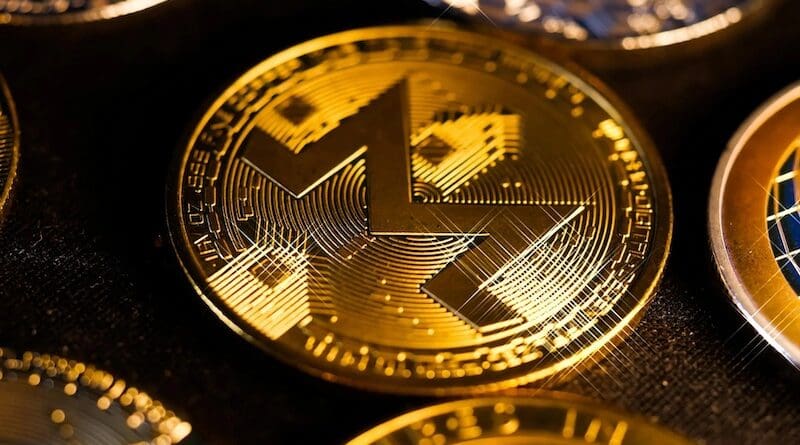
According to HumAngle, Nigeria is one of the world’s fastest-growing cryptocurrency markets. ISWAP and other terror groups, including Boko Haram, use platforms such as Monero, a digital crypto page with enhanced privacy features. On the dark web, their propaganda outlets have actively solicited Monero donations.

Monero conceals transaction details on its blockchain, which has made it popular among ransomware operators and extremist networks. Researchers identify it as a leading crypto user among Islamic State group affiliates globally. ISWAP’s significant revenue often is converted into the Monero cryptocurrency platform to facilitate anonymous transactions. This makes it difficult for authorities to track and monitor financial flows.

Much of the money goes into a central treasury where it is redistributed for operational and administrative needs, such as buying weapons, paying fighters monthly salaries and bonuses during military campaigns, offering stipends to widows and orphans of dead fighters, running health clinics, and providing some community services. These services often are provided in areas where state-provided accommodations are unavailable.


Black market operations and regional trade also form a large part of ISWAP’s economy. Smuggling routes span Nigeria’s borders with Cameroon, Chad and Niger, easing the movement of fuel, food and drugs.

“Smugglers bring in fuel through Banki and Kirawa [in Borno State],” a former ISWAP fighter told HumAngle. “They pay a levy to pass. The group taxes everything.”

ISWAP strictly controls livestock and fish markets via appointed local businessmen who handle external trade and launder profits back to leadership. This has allowed the group to embed itself into local commerce.

“Sometimes businessmen are fined for disobedience, and it’s called a donation,” the former ISWAP fighter told HumAngle. “It’s never really voluntary.”

Smaller territories under ISWAP control known as wilayat still enforce zakat, an obligatory charity that Muslims are required to pay, and jizya, a tax historically levied on non-Muslims living in a Muslim-governed state, in exchange for protection.

“Revenues are collected by appointed officials who move around town, villages, farmlands and grazing areas,” the former ISWAP fighter told HumAngle. “The financial records are kept by the revenue collectors.”

Refusal to pay brings swift and brutal retribution.

“Confiscation of assets, jail sentence or capital punishment were the typical sanctions,” the former fighter said. “[Sometimes] it could amount to capital punishment.”

In Borno State, farmers told HumAngle that no one can farm until they pay 50,000 naira (about $31.50) per hectare.

ISWAP also invokes theological language to mask its coercive actions. It appeals for support using terms such as “isti’dad,” or preparation for jihad. The fusion of religious rhetoric and criminal enforcement lets ISWAP assert moral authority and claim authoritarian control.

A 2023 report by the International Crisis Group observed that dismantling ISWAP’s economic model will require more than military might.

“Breaking the financial backbone of these groups involves restoring legitimate governance and providing alternative livelihoods,” a former staff member of the Nigerian Financial Intelligence Unit told HumAngle anonymously. “As long as they provide services and the state does not, they will retain influence.”


Africa Defense Forum

The Africa Defense Forum (ADF) magazine is a security affairs journal that focuses on all issues affecting peace, stability, and good governance in Africa. ADF is published by the U.S. Africa Command.

Otago researchers help unlock ancient migration secrets


University of Otago


University of Otago – Ōtākou Whakaihu Waka researchers have helped bring clarity to the great migration of early Pacific pioneers, considered to be ancestors of many Pacific people including Māori.

In a new study published in Nature Ecology and Evolution, a group of international researchers involving several from Otago have recovered the first ancient genomes (aDNA) from Papua New Guinea and the Bismarck Archipelago – unlocking genetic insights from a region as culturally rich as it is historically pivotal.

Combining aDNA with dietary evidence and linguistics, the study reveals how the pre-colonial coastal communities were surprisingly genetically diverse from each other and suggests many cultural groups did not intermarry for some time.

Co-author Dr Monica Tromp from Southern Pacific Archaeological Research, in the Archeology Programme, says aDNA acts like a time machine, revealing how people lived and interacted thousands of years ago – and how those ancient connections still influence our world today.

“This groundbreaking research reveals something remarkable: Pacific Island cultures were far more diverse and complex than we ever imagined.

“Rather than being one unified group, these ancient communities represented a rich tapestry of different cultures and peoples.”

New Guinea, settled over 50,000 years ago, served as a vital launch point for early seafaring journeys into the wider Pacific – a chapter in human history marked by extraordinary navigational feats.

About 3,300 years ago, the Lapita people – considered the earliest ancestors of many Pacific people, including Māori – settled in the Bismarck Archipelago, which became the cradle of the Lapita cultural complex.

The seafaring peoples were renowned for their intricate pottery and horticultural practices and embarked on voyages that would reach as far as Vanuatu, Tonga, and Samoa.

Yet until now, the genomic legacy of these early Pacific pioneers – and the islands they first called home – had remained unexplored, Dr Tromp says.

“They were some of the world's greatest explorers and navigators, setting sail into the endless blue horizon centuries before Europeans ever dared venture far from their own coastlines.”

What makes the study particularly exciting is that it shows how far scientific technology has advanced, she says.

“The DNA analysis that made these discoveries possible would have been completely impossible just a decade ago.

“Hot, humid tropical climates typically destroy genetic material, but new techniques have opened up entirely new chapters of human history that were previously lost to us.”

One of the study's most striking findings is the presence of individuals with completely Papuan genetic signatures on the island of Watom in the Bismarck Archipelago, where missionaries found the very first Lapita-style pottery in the early 20th century.

The individuals excavated on the island are all younger than evidence for the arrival of the Lapita Cultural Complex. One of these individuals additionally displays a rare case of cultural cranial modification, suggesting the co-occupation of the island by genetically and culturally different groups.

Co-lead author Dr Rebecca Kinaston, from BioArch South, says the researchers’ analysis reveals a fascinating picture of the earliest encounters in the Bismarck Archipelago.

"Despite the co-occupation, it seems the different groups didn't mix for a long time, which is quite unusual for human encounters."

The delay in intermarriage and the presence of people with Papuan ancestry inform on a debated matter in Pacific human history: Did the first settlers in the remote islands of Western Remote Oceania arrive unmixed and, followed by people from New Guinea, mix on the islands?

The new findings support previous studies, suggesting this is a likely scenario, and informing on the seafaring capabilities of Papuan ancestors, Dr Kinaston says.

The analysis of two geographically close communities inhabiting the South Coast of Papua New Guinea between 500 and 150 years ago proved to be particularly interesting, she says.

“Surprisingly, their ancestries started diverging 650 years ago, despite the absence of geographical borders.

“This divergence suggests the communities were shaped by distinct interaction spheres and cultural influences, with implications for our understanding of ancient trade networks and social dynamics.”

The co-authors say the publication of these ancient genomes marks a significant step forward in understanding the genetic diversity and historical dynamics of Papua New Guinea and the wider Pacific.