Nuclear watchdog IAEA calls for crisis meeting over US attacks on Iran
 Copyright AP Photo
Iran claims no nuclear leakage detected so far at the sites attacked by the US: On Friday, before the latest bombings, Director General Rafael Grossi said radioactive release could endanger the public in Iran.
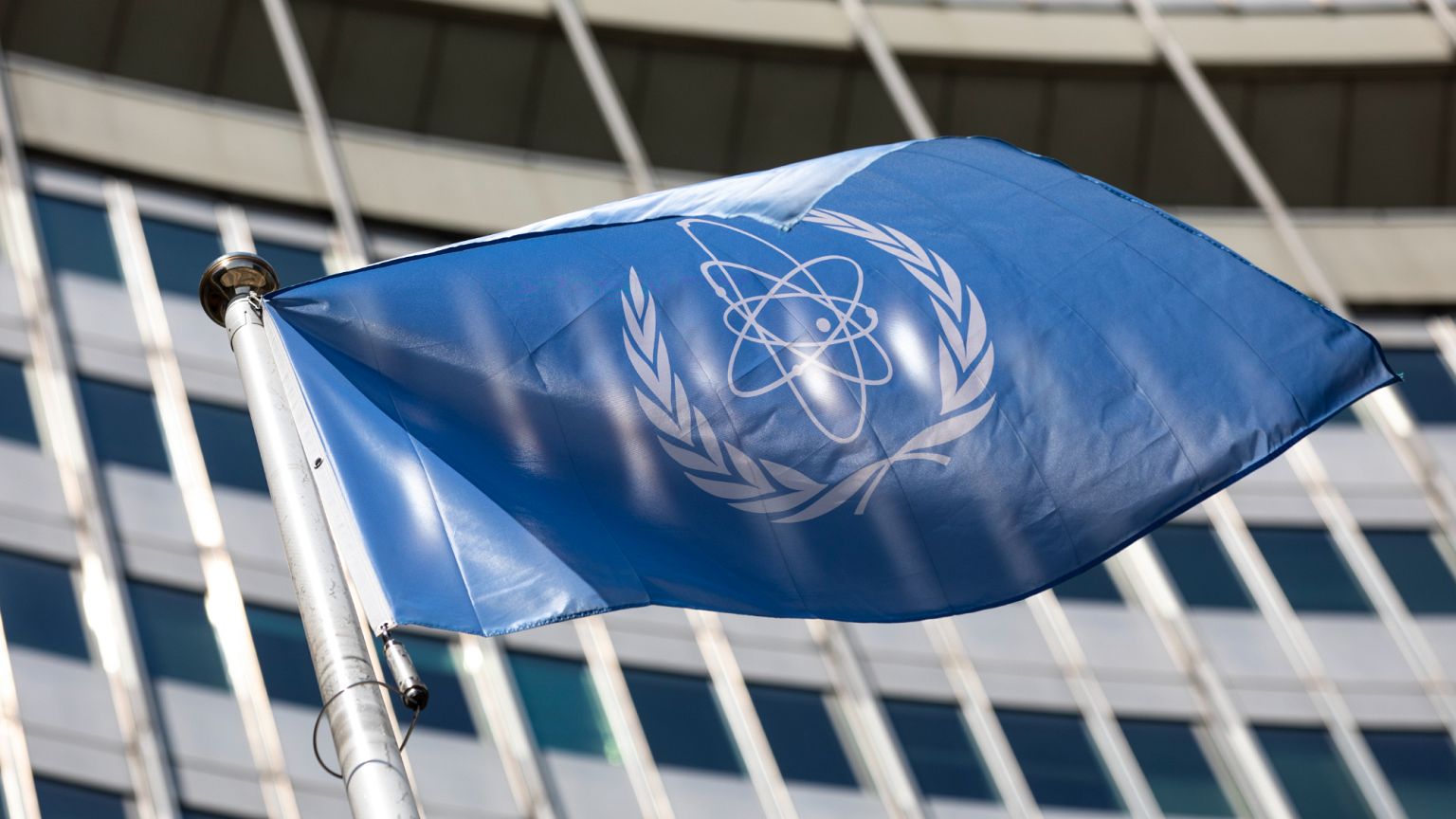
The International Atomic Energy Agency has called for a crisis meeting at its Vienna headquarters after the US bombings on Iran's nuclear sites, the agency has signalled in a post on X.
Director General of IAEA Rafael Grossi has cancelled a trip to Brussels on Monday, where he had planned to take part in a meeting of the EU's foreign ministers. Instead he will remain in Vienna where the IAEA’s Board of Governors will now meet for extraordinary talks on the situation.
Overnight, US planes bombed several Iranian nuclear sites, including Natanz, Isfahan and Fordow.
Iran's National Nuclear Safety System Centre said in a statement that no radioactive releases had been detected after the bombings.
“There is no danger to the residents living around the aforementioned sites,” the statement said.
The IAEA confirmed in a post on X that no increase in off-site radiation levels has been reported.
The International Atomic Energy Agency has called for a crisis meeting at its Vienna headquarters after the US bombings on Iran's nuclear sites, the agency has signalled in a post on X.
Director General of IAEA Rafael Grossi has cancelled a trip to Brussels on Monday, where he had planned to take part in a meeting of the EU's foreign ministers. Instead he will remain in Vienna where the IAEA’s Board of Governors will now meet for extraordinary talks on the situation.
Overnight, US planes bombed several Iranian nuclear sites, including Natanz, Isfahan and Fordow.
Iran's National Nuclear Safety System Centre said in a statement that no radioactive releases had been detected after the bombings.
“There is no danger to the residents living around the aforementioned sites,” the statement said.
The IAEA confirmed in a post on X that no increase in off-site radiation levels has been reported.
Costa alarmed by developments
Shortly after the bombings, EU Council president Antonio Costa posted a statement on X where he highlighted nuclear safety. "I call on all parties to show restraint and respect for international law and nuclear safety," Costa said.
Meanwhile, in the wake of the US attacks Iran now has the legal right to withdraw from the Nuclear Non-Proliferation Treaty, the Head of the Foreign Relations Committee in the Iranian Parliament, Abbas Golroo told Tasnim News Agency, a semi-official outlet in Iran associated with the Islamic Revolutionary Guard Corps. The treaty aims to limit the spread of nuclear weapons.
Shortly after the bombings, EU Council president Antonio Costa posted a statement on X where he highlighted nuclear safety. "I call on all parties to show restraint and respect for international law and nuclear safety," Costa said.
Meanwhile, in the wake of the US attacks Iran now has the legal right to withdraw from the Nuclear Non-Proliferation Treaty, the Head of the Foreign Relations Committee in the Iranian Parliament, Abbas Golroo told Tasnim News Agency, a semi-official outlet in Iran associated with the Islamic Revolutionary Guard Corps. The treaty aims to limit the spread of nuclear weapons.
Israel’s War with Iran Exposes the Fragility of Jewish Supremacy

I arrived in Jerusalem last Thursday evening.
Twelve hours later, I awoke to the news of the Israeli military’s attack on Iran—having slept through the sirens in the night. I am an American Jewish activist and researcher; I have spent time on and off in Israel/Palestine throughout my life. But this visit has been unlike any other. Four days in, I have found my eyes opened by the breathtaking recklessness of the current Israeli government. The attacks on Iran are but the latest action by a political leadership that, lacking public legitimacy since the October 7 attacks, seems determined to use terror to resecure a public mandate for its otherwise vulnerable project of Jewish supremacy.
Power and violence, the political theorist Hannah Arendt argued, are negatively correlated. “Rule by sheer violence comes into play where power is being lost,” she noted in her 1969 treatise, On Violence. “To substitute violence for power can bring victory, but the price is very high; for is not only paid by the vanquished, it is also paid by the victor in terms of his own power.” Arendt’s argument rests on the insight that a government’s power is constituted through public support and participation. Violence can sustain regimes that otherwise lack public legitimacy, but at tremendous cost. If the cost of Israeli state violence has been borne by Palestinians for decades—and with untold brutality since the October 7 Hamas attacks—Israel’s new front with Iran signals the Netanyahu government’s willingness to use its own public as bait for Iran, in a desperate bid to resecure legitimacy with that very public.
The currency of the Netanyahu government’s military gambles are human lives across the Middle East.
By initiating this confrontation, Prime Minister Benjamin Netanyahu and his government are knowingly courting a situation in which Israelis will be terrorized by Iranian missiles. Less than a week ago, this same government narrowly survived a vote of no-confidence; now, that threat has been preempted by the war. Yet the dynamic at hand runs deeper than electoral politics. To understand this, it’s worth considering past episodes of mass anti-Palestinian violence and expulsion. For instance, the late historian Alon Confino argues that in the run-up to 1948, there emerged in the Jewish public a “shared conception of Jewish sovereignty with fewer Palestinians.” By conditioning Jewish sovereignty and self-determination on Jewish ethnic homogeneity, the Zionist movement created a Jewish public appetite for the Nakba.
There is a similar, but shifted, logic at play today. As in 1948, there is apparently widespread Israeli-Jewish support for anti-Palestinian expulsion and killing. But today, this support is modulated through the neoliberalization of Israeli society—a shift Louis Fishman identified back in 2021. Jewish sovereignty may still be the rationale of the state, but it is also now at least partially instrumental for ideals of personal safety, material comfort, and enrichment. (Fishman notes that the entrenchment of these ideals into the Israeli-Jewish political imaginary is one of Netanyahu’s signal accomplishments.) As such, I think it is worth considering how ideals of Jewish sovereignty and supremacy are more limited in their ability to induce the kind of active support the current Israeli government would need to fully implement its extremist vision of anti-Palestinian dispossession and removal. If in 1948, as Confino argues, the “dream of an ethnonational state” was a strong enough incentive to induce Jews into expelling their own neighbors, now a stick is needed to complement the carrot of Jewish sovereignty.
It seems clear that the current “stick” is Israeli experiences of terror, induced by the Iranian missile attacks. As in the aftermath of the October 7 attacks, the Israeli government is apparently hoping that these missile attacks will induce sufficient terror and trauma amongst its own public to underwrite support for both an extended campaign in Iran and continued mass violence in Gaza. To return to Arendt’s parlance, we might reckon with how the government is ceding violence against its own people in order to obscure its lack of political power. This is a depraved gamble by the Netanyahu government that rests on the dehumanization of Palestinians. Gaza may now be a “secondary arena” for the Israel Defense Forces, but continued mass violence against Palestinians in Gaza and the West Bank is the implied byproduct of the war with Iran.
But this approach endangers Israeli Jews, too, even if the scale of destruction between Tel Aviv and Gaza is not remotely comparable. Growing numbers of Israelis have already been injured and killed in the missile attacks. Those numbers may seem small from afar, especially in comparison to the IDF’s crimes in Gaza. But there is no guarantee that those numbers won’t rise dramatically over the course of the war. The currency of the Netanyahu government’s military gambles are human lives across the Middle East.
As I walked towards a bomb shelter on Saturday night, I saw the glowing streaks from missile interceptions: it felt like the sky itself had come alive. Within the shelter, kids and parents slept in the corners. Others sat refreshing their phones amid intermittent cell service. Jerusalem, at least as I have known it in the past, now feels like it is in a suspended state.
Continued escalation is not inevitable—although it can certainly feel that way to me here. But to change direction, I think we as Jews in both Israel and the Diaspora have to overcome investments in the current frameworks of Jewish supremacy and sovereignty. This is no small feat in a moment when the Israeli political leadership is invested in mobilizing Israeli and global Jewry toward precisely those ideals.
But an alternative is always possible. Even now.
From Tehran to Gaza, We Stand United Against Israeli Criminality And American Imperialism: A Statement From baray-e Felestin
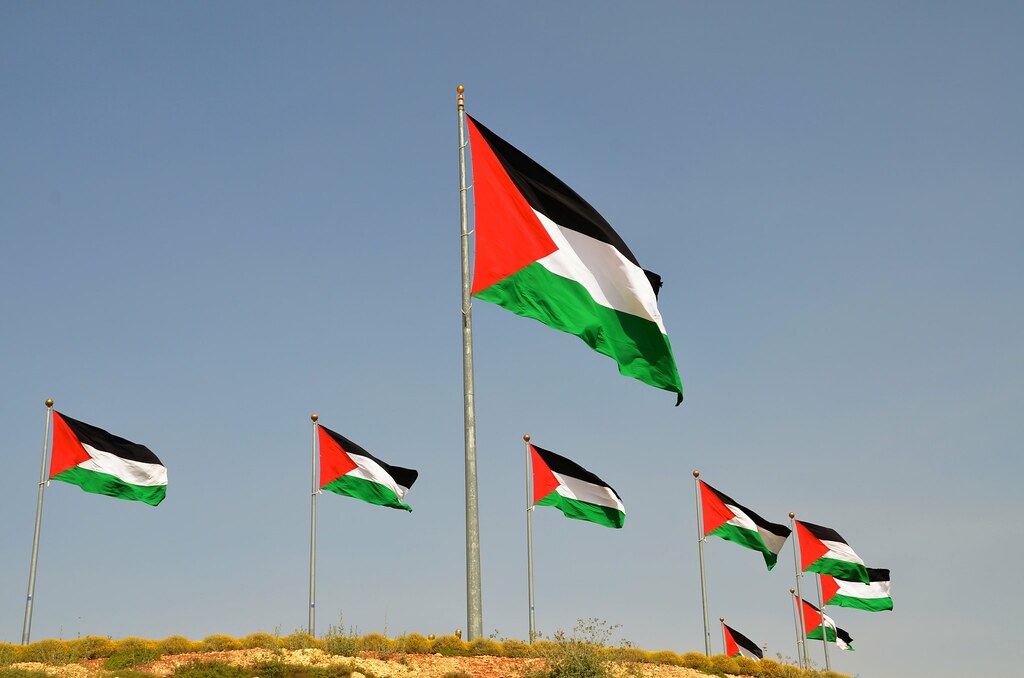
NOTE: The following text is an abridged translation of a Persian-language statement regarding Israel’s unprovoked attack on Iran. The statement was published on Saturday, June 14, on the Telegram channel of baray-e Felestin (For Palestine), a grassroots Tehran-based Palestine solidarity group. Formed earlier this year as a collective of independent activists, baray-e Felestin held its first rally on May 22 in front of the University of Tehran.
Last night, the sound of explosions tore through the darkness of the night in our beloved Iranian cities, planting shock and disbelief in the hearts of the people. Last night, Israel struck at the heart of millions of Iranians—not merely targeting a geographic location, but attacking our historical memory, our emotional and political bonds, our hopes, and our future. Last night, the parasitic outpost and military base of the United States in the region—a stark embodiment of militarized capitalism, whose very nature is rooted in occupation and the killing of children—once again reminded us of our shared fate. Last night, homes were reduced to rubble, bodies remained trapped beneath the debris, and lives were claimed by dust, stone, and fire.
We are still in shock—but not only from the roar of missiles and bombs. We are haunted by the recurring nightmare in the modern history of our region; the history of an imperialist conquest whose endless lust for domination has taken the lives of Palestinians in Gaza, Lebanese in Dahiyeh, Yemenis in Saada, Afghans in Kabul and Kandahar, and now Iranians in Tehran, Shiraz, Tabriz, Ilam, and Kermanshah. And perhaps tomorrow, it will strike again, in yet another wounded city of West Asia.
This was the nightmare that compelled us to take to the streets on 22 May. With flags in our hands, cries in our throats, and our eyes fixed on the horizon, we chanted: “From Gaza and Yemen to Tehran / Workers of the world, unite!”; and, “Neither Gaza nor Lebanon / Are separate from Iran.” We tried to remind the world that the fate of the working class and the oppressed peoples of West Asia is inseparably intertwined. We said that even if the suffering of Palestine may seem distant from where we stand, in the eyes of the Western colonizer, such distance does not exist. They do not see us as separate nations, but as a single threat—a threat to their domination, built on injustice, colonialism, and the so-called New Middle East Order.
Yesterday, we wept for the children of Gaza and for the Palestinian mothers who laid their children to rest in the arms of the earth. Today, we cry out for Tehran, Tabriz, Shiraz, Kermanshah, Ilam. We cry for Iran, standing beneath a sky stained crimson, on streets heavy with the scent of blood. But we, the people of the Middle East, are the children of resistance—risen from the ashes of occupation and coup d’état. We carry in our hearts the memories of pain and hope.
In these historic moments, as the people of Iran relive the bitter memories of war, we cannot remain silent in the face of those who, with hearts sold to the West, eyes fixed on the spectacle of global capitalism, and minds colonized by empire, repeatedly called for attacks on Iran. Instead of standing with the people, they beat the drums of war—and today, they sit back and watch as we mourn, spectators at the feast of our grief. These beggars at the gates of the West feign concern for human rights; but they eagerly offer human sacrifice in order to please their imperialist masters. They whitewash Israeli crimes in their poison-spewing media outlets. But we know all too well the demon who deliberately and knowingly targets both residential and military areas simultaneously. We know that at the same time as it spills blood in Iran, Palestine, Lebanon, Yemen, and beyond, the Israeli war machine also wages psychological warfare. Its overt and covert agents spread the filthy lie that the killing of our compatriots—civilians, military personnel, academic and nuclear elites—is an “acceptable cost” in pursuit of Israel’s military objectives, and that these military objectives are even legitimate!
We shall not forget that amidst the carnage of a criminal war, there were those who betrayed our people. Not only the Westernized expatriates with their rented media; but also those who, for years, have enriched themselves by exploiting the working class, laborers, and the oppressed of this country. At this critical juncture in our country’s history, this group sees the path to salvation not in fighting for social justice and defending the historical rights of this nation, but in compromise and begging at the doorstep of the American empire and its allies. For this group, “negotiation” with Western powers is nothing but a ploy to continue class domination; not to lift sanctions, but to cement its own economic status, to continue the plunder of Iran and to serve imperialism. This group is as complicit in the ongoing crimes as hostile media and colonial megaphones; for they have eroded the backbone of resistance from within and held the will of the people hostage with their empty promise of “normalization.”
There exists an organic, structural, and strategic relationship between the pro-imperialist Westernized expatriates, and the exploiters of the masses within the prevailing structure in Iran. They are two arms of the same body: the body of dependency. They despise the 1979 revolution’s ideal of independence, and they want to fully subordinate Iran to the imperialist global exploitation system. Despite their superficial differences, these two currents ultimately stand for a shared goal: the destruction of the Iranian nation’s historical capacity to resist, the erasure of the memory of resistance, and submission to the logic of the market, capital, and imperialist power.
We take a firm stand against both of these forces. We reject the logic of internal plunder and the language of external betrayal. We oppose the mercenaries who have inscribed the name of diplomacy on the grave of resistance, and the class that has ascended to power and privilege on the broken backs of the working class.
We, the people of the Middle East, must stand united; not as scattered nations, but as a single body, wounded yet alive, standing against the monster of colonialism, against the death machine of global capitalism, against Israel and America, and against their local agents and cheerleaders.
We will neither be broken nor will we retreat in the face of this crime; we will become more resilient, more determined—just like our sisters and brothers in occupied Palestine. Our righteous anger against Israel will be passed down from generation to generation, like a blood-written testament, to our children; so they never forget how this blood was spilled on our land and how, together with all the peoples of the Global South, we are united and share the same fate in this resistance and struggle.
We shout: Tehran, Gaza, Beirut, Baghdad, Damascus — we are united in destiny, and “resistance” is the common chapter of all our lives, and unity is the secret to victory.
ZNetwork is funded solely through the generosity of its readers. Donate
Baray-e Felestin
baray-e Felestin (For Palestine), a grassroots Tehran-based Palestine solidarity group. Formed earlier this year as a collective of independent activists, baray-e Felestin held its first rally on May 22 in front of the University of Tehran.
Israel has launched a major attack on Iran, which could escalate into a larger war.
The United States is not just sitting on the sidelines, watching what is happening; the Donald Trump administration is directly involved.
The US government oversaw the attack. Washington provided Tel Aviv with crucial intelligence, to help it kill top Iranian officials, with US weapons.
Trump provided Israel with cover, by overseeing fake peace talks with Iran, which in reality were a cynical ruse.
As US officials met with their Iranian counterparts to discuss a new nuclear deal (after Trump unilaterally tore up the previous one), Washington and Tel Aviv were secretly planning the operation.
Trump personally gave Israel’s Prime Minister Benjamin Netanyahu the green light to launch the strikes.
Trump: “I always knew the date” of Israel’s attack on Iran; “we knew everything”
Mere hours after Israel struck Iran, Trump told the New York Post that he had approved the attack beforehand.
“I always knew the date”, Trump said. “Because I know everything”.
“I gave [Iran] 60 days and they didn’t meet it. Today is day 61”, he added, referring to 13 June.
Trump repeated these comments in an interview with Reuters: “We knew everything”, he stated, revealing that the US government was in constant communication with Israel.
“I think it’s been excellent”, Trump said of the Israeli attack on Iran, in an interview with ABC News.
“We gave [Iran] a chance and they didn’t take it. They got hit hard, very hard. They got hit about as hard as you’re going to get hit”, Trump boasted. “And there’s more to come. A lot more”.
Just three days before the attack, the Trump administration sent Israel 300 Hellfire missiles, US officials admitted to Middle East Eye. These US missiles were used to kill Iranian officials.
Trump’s fake “peace talks” with Iran were cover for surprise attack
The Wall Street Journal summarized the Trump administration’s cynical strategy: “U.S. Diplomacy Served as Cover for Israeli Surprise Attack”.
Trump falsely claimed that he wanted peace with Iran, and US officials participated in five rounds of negotiations with Tehran. The sixth was supposed to be held in Oman on 15 June.
These talks aimed to broker a new Iran nuclear deal. Back in 2018, during his first term as US president, Trump unilaterally withdrew from the Joint Comprehensive Plan of Action (JCPOA), which had been signed into international law in 2015 and endorsed by a UN Security Council Resolution.
However, the Wall Street Journal noted that Trump’s bad-faith negotiations over a new agreement “ended up being the perfect cover for a surprise Israeli attack”.
This is how the Israeli media described Trump’s duplicitous scheme: “The US participated in a massive campaign to lull Iran into thinking an attack was not going to happen immediately”.
While publicly participating in these negotiations, the US government was privately helping Israel prepare for war on Iran.
A US official told ABC News that, before the attack, the Trump administration provided Israel with “exquisite” intelligence needed to target Iranian officials.
The media outlet Axios, which is very close to the Israeli government, reported the following (emphasis added):
Two Israeli officials claimed to Axios that Trump and his aides were only pretending to oppose an Israeli attack in public — and didn’t express opposition in private. “We had a clear U.S. green light,” one claimed.
The goal, they say, was to convince Iran that no attack was imminent and make sure Iranians on Israel’s target list wouldn’t move to new locations.
Netanyahu’s aides even briefed Israeli reporters that Trump had tried to put the brakes on an Israeli strike in a call on [9 June], when in reality the call dealt with coordination ahead of the attack, Israeli officials now say.
Trump boasts of US-backed “slaughter” and “brutal” attacks on Iran
Donald Trump is proud of his role in the attack on Iran.
Hours after Israel hit Tehran with US missiles, on 13 June, Trump took to his website Truth Social, where he boasted that “the United States makes the best and most lethal military equipment anywhere in the World, BY FAR, and that Israel has a lot of it, with much more to come – And they know how to use it”.
Trump wrote that some Iranian officials “spoke bravely, but they didn’t know what was about to happen. They are all DEAD now, and it will only get worse!”
The US president referred to these Israeli strikes that he was sponsoring as a form of “slaughter”, threatening that “the next already planned attacks [will be] even more brutal”.

One and a half hours later, Trump published another post on Truth Social.
The US president wrote, “Two months ago I gave Iran a 60 day ultimatum to ‘make a deal’. They should have done it! Today is day 61. I told them what to do, but they just couldn’t get there”.
Trump’s message was clear: if Tehran didn’t give in to Washington’s demands and surrender its sovereignty, the US would keep using Israel to bomb Iran.

Marco Rubio lied; USA was deeply involved
All of this context demonstrates that US Secretary of State and National Security Advisor Marco Rubio was blatantly lying when he claimed, “Israel took unilateral action against Iran. We are not involved in strikes against Iran”.

This is simply false. The Trump administration was involved in overseeing the operation. The US government provided Israel with intelligence and logistical support, not to mention the missiles, planes, and other military technology used to attack Iran.
Donald Trump personally gave Netanyahu and the Israeli regime the green light.
Moreover, when Tehran responded to Israel’s unilateral attack and hit back in self-defense, the US military was directly involved in intercepting and shooting down some of the Iranian missiles that were heading toward Tel Aviv.
What is clear is that everything that happened was a joint US-Israeli operation. Israel was not acting alone, and it certainly was not “dragging” the US into war. The Trump administration approved and oversaw this act of war.
Israel: an unsinkable aircraft carrier for the US empire
Israel is an extension of the US empire in one of the most strategic regions of the world.
Tel Aviv does not make significant military and foreign-policy decisions without first getting the approval of Washington.
Top Israeli military officials have admitted that, without US support, the IDF would not be able to wage war on Gaza (not to mention Iran, Lebanon, and Syria).
This is why former US President Joe Biden repeatedly declared that, “Were there not an Israel, the United States of America would have to invent an Israel to protect her interest in the region; the United States would have to go out and invent an Israel”.
As former US Secretary of State Alexander Haig explained, “Israel is the largest American aircraft carrier in the world that cannot be sunk, does not carry even one American soldier, and is located in a critical region for American national security”.

Prime Minister Netanyahu said the same. He proudly referred to Israel as a “mighty aircraft carrier” of the US empire.
It is the United States that arms and protects Israel. Washington gives it billions of dollars of military aid every year, including the weapons, ammunition, planes, and missiles that Israel uses to kill Palestinians and attack Iran, Lebanon, and Syria.

The United States also protects Israel in international fora, ensuring that it does not face any consequences for constantly violating international law and committing war crimes and crimes against humanity.
The Trump administration vetoed a resolution in the UN Security Council on 4 June that had called for a permanent ceasefire in Gaza. The US was the only country in the Council to oppose the peace measure.
In 2023 and 2024, the Biden administration vetoed four UN Security Council resolutions that demanded peace in Gaza.