Tuesday, September 30, 2025


Amidst Russia-NATO Tensions, Drone Spotted at North Sea Gas Platform

The Sleipner A platform (left) (Bair175 / CC BY SA 3.0)

Published Sep 29, 2025 11:11 PM by The Maritime Executive


On Monday, as NATO ramped up preparedness for ongoing Russian drone and aircraft incursions, workers at Norway's Sleipner gas field reported sighting an unidentified drone. It is not the first time that suspicious drone activity has been spotted in the area, but the approach is under investigation because of elevated concerns about hybrid warfare threats - and the value of the installation. 

The four-platform Sleipner complex handles output from five mature fields, including tiebacks. The installation dates back to the 1990s, and is still actively contributing to Norway's gas production; it feeds into the Gassled Area D dry gas offshore pipeline network, which serves customers in Europe. Taken as a whole, including other fields, the Gassled supply system is a strategic asset: Norway's offshore sector provides more than 30 percent of all natural gas used by consumers in the UK and EU combined.  

Personnel aboard Sleipner A notified shoreside staff at Equinor on Monday night that a suspicious drone had been sighted near the platform, an operations manager confirmed to VG and NRK. No further details were available, but he said that these matters are taken seriously, and the company is following its notification protocols. The platform's operations are unaffected, he told NRK. 

"We encourage our employees to have a certain level of vigilance given the circumstances we are in. It has been like this for a while," Equinor spokesman Magnus Frantzen Eidsvold told NRK. 

Sleipner is in the middle of the North Sea, halfway between Norway and Scotland - more than 100 nautical miles beyond the reach of a typical consumer drone. However, it is not the first time that a drone has been spotted near Sleipnir. In October 2022, amidst heightened tensions over the then-new Russian invasion of Ukraine, workers on the Sleipner platform reported a "helicopter-style" drone near the facility. The Norwegian Police Security Service opened an investigation into a possible espionage threat in connection with the case, and drone detection sensors were installed to identify any approaching UAVs. 

Then and now, the drone sightings offshore are accompanied by concerning drone threats over land. On Sunday, one Norwegian airplane flight departing Oslo had to return to the airport because of suspicious drone sightings on its route. Over the past week, unauthorized drones shut down the Copenhagen airport in a coordinated raid - and several Russia-linked ships are suspected of serving as possible launch pads for the operation. 

Top image: The Sleipner A platform (Bair175 / CC BY SA 3.0)


Coast Guard Shoots Out Smuggling Boat's Engine off San Diego

USCG
A previous interdiction off San Diego (USCG file image)

Published Sep 29, 2025 8:43 PM by The Maritime Executive


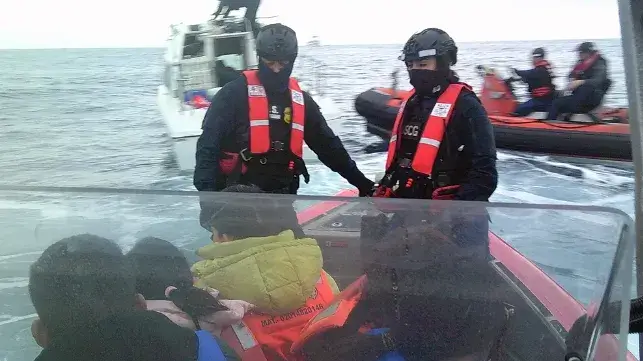
On Sunday evening, a U.S. Coast Guard response boat crew detained seven foreign nationals off San Diego by shooting out their vessel's engines. 

At about 1710 hours, the response boat crew was on patrol when they spotted an apparently disabled vessel at a position about five nautical miles off the coast of Mission Bay, within U.S. territorial seas. The patrol boat approached the vessel to investigate, at which time the "disabled" boat began a high-speed sprint on a southward course, headed for the Mexican maritime boundary line. 

After directing the suspect vessel to stop, the boat crew fired warning shots, but this did not have the desired effect. The crew followed up with 15 rounds of non-lethal pepper balls, after which the suspect boat rammed the patrol boat, causing minor damage. 

At this point, the boat crew escalated and shot out the suspect vessel's starboard engine with "precision rounds." The damage brought the fleeing boat to a halt at a position about four nautical miles southwest of Point Loma - about 15-20 nm from where the chase began, and less than 10 nm from the maritime boundary.

Aboard the vessel, the Coast Guard boat crew found seven Mexican nationals, all male. None were injured except for irritation from the pepper balls. They (and the vessel) were taken into custody and handed over to the appropriate authorities for processing. 

The last time a San Diego boat crew used live rounds to disable a fleeing suspect vessel was on May 10, when an 18-foot cabin cruiser was spotted moving at high speed off Point Loma. After warning shots, the boat crew used disabling fire to force the vessel to halt. Eight foreign nationals were aboard the suspect boat, and were detained for transfer to Department of Homeland Security agents. 

Routine, nonkinetic intercepts are commonplace at the Southern California maritime boundary. As part of the administration's ongoing crackdown on illegal immigration, the San Diego station has tripled its fleet of patrol boats this year, according to local ABC 10. 


Ship Recycling at a Crossroads: Why Basel and the HKC Must Coexist

Ship recycling
A yard participating in an HKC compliance program (IMO file image)

Published Sep 29, 2025 3:15 PM by Dr. Ishtiaque Ahmed


The debate over end-of-life ship recycling has never been more urgent. With the recent entry into force of the Hong Kong International Convention for the Safe and Environmentally Sound Recycling of Ships (HKC) on 26 June 2025, governments, industry, and civil society are once again grappling with the unresolved question of how this new instrument interacts with the older and broader Basel Convention on the Control of Transboundary Movements of Hazardous Wastes and their Disposal. At stake is not only the proper interpretation of international law but also the protection of human health and the environment in some of the world’s most vulnerable regions.

For ship recycling states such as Bangladesh, which dominate global dismantling capacity, the Basel–HKC conflict has profound practical implications. The Basel Convention provides a comprehensive system for controlling the cross-border and downstream movement of hazardous waste, designating competent authorities to oversee compliance. In Bangladesh, under the constitutional “Rules of Business” that allocate responsibilities among ministries, this role belongs exclusively to the Department of Environment (DoE). Once asbestos, heavy metals, and other hazardous substances are stripped from a vessel and removed from the yard, their transport to treatment, storage, and disposal facilities (TSDFs) falls squarely within Basel’s remit—and under the DoE’s jurisdiction.

By contrast, the HKC is deliberately narrower. Negotiated under the auspices of the IMO, it focuses primarily on shipyard-level practices: worker safety, facility certification, and environmentally sound methods of cutting, dismantling, and waste removal inside the yard. The HKC does not extend beyond the yard gate. It does not govern what happens when hazardous materials leave the premises. The IMO itself has acknowledged that it has no mandate over downstream waste management, which remains a matter of domestic law and, internationally, Basel.

This division of labor should make the picture clearer: HKC & Basel inside the yard, Basel outside the yard. Yet in practice, the simultaneous existence of two treaties has generated confusion and, in some cases, intentional misinterpretation. Powerful stakeholders within the global shipping industry have promoted the view that HKC, being the newer and more “specific” treaty, should take precedence as per the Vienna Convention on the Law of the Treaty (VCLT). This argument appeals to states eager to facilitate the ship recycling business, but risks sidelining Basel’s more stringent downstream obligations.

The danger is not theoretical. In Bangladesh, the Ministry of Industries (MoI), the Competent Authority to govern ship recycling, supported by donor-funded projects, has begun to assume semi-regulatory roles that properly belong to the Department of Environment (DoE) under the Rules of Business following the constitution of Bangladesh. While not promulgating binding rules, the MoI’s issuance of voluntary guidelines nonetheless influences practice in ways that affect the DoE’s constitutional mandate under the Rules of Business. For example, the ongoing consultation on the draft “Guidance on Hazardous Waste Collection & Transport Systems from Ship Recycling Facilities” under projects led by the Ministry of Industry and funded by the International Maritime Organization (IMO) illustrates a quiet but consequential encroachment on environmental authority. Even though the document has not yet been formally adopted and carries no binding force, the very process of developing such guidance under the auspices of the MoI signals a shift in institutional influence over environmental governance in the ship recycling sector.

According to the Rules of Business, the MoI’s mandate is to promote commerce, investment, and industrial development—not to regulate or influence environmental matters. When the Department of Environment is bypassed in any form, the result is a dilution of constitutional safeguards for environmental governance and the emergence of a conflict of interest, as responsibilities shift from environmental oversight toward the advancement of business interests.

The funding dynamics are critical. With virtually no international projects—particularly those related to ship recycling in Bangladesh—channeling resources through the DoE, the department lacks both the incentive and institutional capacity to develop Basel-based regulations, guidelines, or enforcement mechanisms. In contrast, ministries tasked with promoting industry receive more direct donor support, often linked to technical assistance projects. The result is an institutional imbalance that tilts governance toward business facilitation. Environmental oversight is weakened, not by overt deregulation but by subtle shifts in jurisdiction and funding priorities.

This dynamic reflects what can be described as environmental colonialism. It is not the traditional colonialism of political domination, but a new form rooted in global asymmetries of power, finance, and influence. In the realm of ship recycling, powerful shipping nations and industry associations shape the agenda, ensuring that international rules accommodate business interests. Meanwhile, environmental considerations—particularly those affecting communities near shipyards and TSDFs—are treated as secondary.

In Bangladesh, where ship recycling is a critical economic sector, the pressures are immense. The industry provides employment and foreign exchange earnings, making it politically sensitive. Yet the environmental and health consequences of mishandled hazardous waste are equally immense. When downstream controls are weakened or neglected, the burden falls on local communities, workers, and ecosystems. The absence of strong NGO voices and limited public awareness exacerbate the problem, allowing industry-aligned narratives to dominate.

The entry into force of the HKC should not be misinterpreted as a license to dilute Basel. Both treaties can and must coexist. The HKC is valuable for improving working conditions and environmental practices within shipyards. Basel remains indispensable for ensuring that once waste leaves the yard, it is managed in a manner consistent with international environmental standards. For Bangladesh, and for other ship recycling states, clarity on this division of responsibility is critical.

The path forward requires several steps. First, Bangladesh's domestic law should explicitly confirm the division of jurisdiction: HKC governs dismantling activities within the yard, while Basel applies to all downstream hazardous waste activities. Such clarity would prevent regulatory overlap and close the door to opportunistic interpretations.

Second, environmental authorities such as the DoE must be strengthened with resources, authority, and political backing. Without adequate capacity, even the clearest legal mandate cannot be enforced effectively.

Third, international programs supporting ship recycling must align with Basel’s downstream obligations. Projects addressing hazardous waste transport or disposal should be anchored in Basel, not in IMO’s shipping-centered framework.

Finally, civil society must play a more active role. NGOs and local communities can provide the counterbalance needed to ensure that industry interests do not monopolize policy development.

Ultimately, aligning Basel and HKC within the framework of the Rules of Business is essential not only for legal coherence but for environmental justice. Failure to respect these boundaries risks perpetuating a form of environmental colonialism in which developing countries bear the toxic burdens of global commerce without adequate protection. Respecting Basel’s jurisdiction once hazardous waste leaves the yard, and empowering Bangladesh's DoE to carry out its mandate, are not obstacles to business. They are prerequisites for ensuring that ship recycling is safe, sustainable, and fair.

If the global community is serious about sustainability, it must acknowledge that commercial imperatives cannot be allowed to erode environmental safeguards. The HKC may be more specific and new, but Basel remains vital. Together, and only together, can they provide the framework needed to transform ship recycling from a site of risk into a model of responsible industry.

Dr. Ishtiaque Ahmed is a Professor and the Chair of the Department of Law at North South University, Bangladesh. A former merchant marine engineering officer, he earned his Doctor of the Science of Law (J.S.D.) from the Center for Oceans and Coastal Law at the University of Maine School of Law, USA, where he specialized in ship recycling law and policy. Dr. Ahmed has also worked with the International Maritime Organization (IMO) as a legal consultant, where he played a central role in drafting Bangladesh’s Ship Recycling Rule and revising the Ship Recycling Act. His academic and professional expertise lies at the intersection of maritime law, environmental regulation, and the development of sustainable ship recycling practices. He can be reached at ishtiaque.ahmed@northsouth.edu.

The opinions expressed herein are the author's and not necessarily those of The Maritime Executive.

 

Houthis Announce “Sanctions” on Oil Majors and Tankers for U.S. Oil Exports

Houthi spokesperson
The now famous image of the Houthi spokesperson making their official pronouncements

Published Sep 30, 2025 6:06 PM by The Maritime Executive


The Houthi militants in Yemen issued a statement saying that they are sanctioning many of the leading energy companies, the chief executives, and tankers for conducting exports of U.S. oil. The group did not make a specific threat but said its leadership had issued a ban on U.S. oil exports in May of this year.

In the statements emailed to Western media and posted online, the group lists a dozen major energy-oil companies and traders. It includes ExxonMobil, Chevron, Phillips 66, Marathon, Conoco, Valero, and more, along with the names of the CEOs of the companies. In the statement, the group said these companies are being sanctioned because of their “involvement in facilitating the export, re-export, transport, loading, purchase, or sale of U.S. crude oil, directly or indirectly, from U.S. ports. This includes ship-to-ship (STS) transfers - whether wholly or partially – and through third parties.”

One shipping company, Diamond S Shipping, is also on the group’s list of sanctioned companies. 

In addition to the companies, the statement also singles out two crude oil tankers, both it says, are associated with Diamond S and are registered in the Marshall Islands. Both of the vessels were built in 2012 and are currently sailing to South America. The tankers named are the Seaways San Saba and the Seaways Brazos, each 159,000 dwt. The statement does not explain why these ships or Diamond S were specifically included.

In the past, the Houthis have singled out a few other shipping companies, but always charged that they were involved with Israel through investment or sending cargo to Israeli ports. They have continued to threaten the U.S. warships operating in the Red Sea area, but no direct targeting of U.S. vessels has been reported since the short-lived ceasefire earlier in the year and the U.S. bombardment of Houthi positions in Yemen. 

Only a few commercial ships have been targeted in 2025, despite the continued threats. Most of the Houthi missile and drone attacks are being directed at Israel, prompting multiple bombing raids in retaliation from Israel.


Maritime Security in an Era of Unprecedented Challenges

Damage to the tanker Sounion after a Houthi attack off Yemen, 2024 (EUNAVFOR)
Damage to the tanker Sounion after a Houthi attack off Yemen, August 2024 (EUNAVFOR)

Published Sep 30, 2025 4:46 PM by John Stawpert


The maritime industry has faced an extraordinary period of disruption over the past few years, from the Red Sea crisis and Ukraine conflict, to continued piracy threats in South East Asia. As we navigate these challenges, the lessons learned are reshaping how we approach maritime security globally. Drawing from extensive experience contributing to the International Chamber of Shipping's Maritime Security Guide and frontline observations of recent crises, it's clear that the industry's resilience has been tested and proven, but significant challenges lie ahead.

The shifting maritime security landscape has necessitated a move from a geographical focus to a comprehensive threat-based methodology. The latest Best Management Practices (BMP) Maritime Security guidelines reflect this evolution, moving away from region-specific advice to a universal framework that allows companies to conduct thorough threat assessments for each voyage. This transformation represents more than just a change in documentation, it's a philosophical shift toward proactive security management. The sequential layout of modern BMP guidelines enables companies of all sizes, from single-ship operators to hundred-vessel fleets, to apply consistent security standards. The beauty of this approach lies in its universality; the fundamental threat assessment process has universal applicability, and its embedding in shipping companies' security culture has unquestionably enhanced industry-wide security.

However, the effectiveness of security measures remains threat-dependent. What proves essential in one scenario may be irrelevant in another, reinforcing the importance of voyage-specific threat and risk assessments rather than blanket security protocols. This nuanced approach acknowledges that maritime security cannot be solved with one-size-fits-all solutions, despite the universal applicability of the assessment framework itself. The complexity of modern maritime threats requires comprehensive guidance that addresses everything from traditional piracy to cyberattacks and terrorism, challenges that are thoroughly examined in ICS's Maritime Security Guide.

The ongoing Red Sea crisis stands as perhaps the most significant maritime security challenge of recent years. The crisis has had profound operational impacts, with 60 percent of trade diverting from the usual Red Sea route around the Cape of Good Hope instead. Yet remarkably, the financial impact has been minimized by industry resilience, preventing the anticipated price rises for consumers that many feared.

The industry's response strategies have yielded mixed results. While rerouting significantly reduced the target environment in the Red Sea, it has sadly not eliminated attacks or their awful consequences for seafarers aboard targeted vessels. More positively, the massive increase in maritime situational awareness, assisted by naval missions in the region, has provided contingent security benefits, enabling companies to accurately assess voyage-specific threats. Perhaps most importantly, the crisis has generated an exemplary reporting and information architecture that demonstrates effective industry-military liaison. This model should be replicated wherever security crises arise, providing a blueprint for future crisis response.

The war in Ukraine initially created a blockade of Northwestern Black Sea trade, but innovative solutions have restored operations to surprising levels. Trade flows have now reached antebellum levels, demonstrating the industry's remarkable adaptability. The Black Sea Grain Initiative represented a unique diplomatic and operational solution to conflict-related challenges. The subsequent humanitarian corridor has maintained trade flow to Ukrainian ports despite ongoing threats from mines and collateral damage from attacks on port infrastructure. This success suggests that long-term shipping pattern changes in the Black Sea may be minimal, with trade flows having already normalized. Operating in such areas of war and war-like risk requires sophisticated planning and risk management, precisely the type of practical guidance that modern security resources must provide to shipping professionals.

In South East Asia, piracy continues to follow traditional patterns, with criminals boarding vessels primarily for robbery. The Straits of Malacca and Singapore remain the region's highest-risk areas, requiring thorough threat and risk assessment for all voyages, particularly when vessels are at anchor. However, regional cooperation has achieved remarkable success in what was once the global hotbed of maritime piracy. Recent action by Indonesian authorities has severely impacted criminal gangs' operational capacity, with hopes that continued enforcement will eradicate this longstanding threat entirely.

Looking ahead, three significant challenges dominate the maritime security horizon. Regional conflicts will remain a persistent threat, requiring constant vigilance and adaptive responses. The introduction of loitering munitions has added an entirely new dimension to maritime threats, demanding sophisticated guidance and countermeasures that the industry is still developing. Cybersecurity presents an escalating concern that will become increasingly complex as systems integrate further and artificial intelligence becomes more prevalent in maritime operations. The interconnected nature of modern shipping systems creates new vulnerabilities that require comprehensive protection strategies, making maritime cyber risk management an essential competency for today's shipping professionals.

Additionally, drug smuggling continues to challenge shipping companies, complicated by the risk of unfair criminalization in some jurisdictions. This creates a dual burden: preventing criminal exploitation while protecting legitimate maritime operators from unjust prosecution. The complexity of this challenge requires careful navigation between security responsibilities and legal protections, alongside practical guidance on managing issues like stowaways and rescues at sea.

The key to addressing future maritime security challenges lies in enhanced cooperation. We know from experience that international cooperation works. The cooperation between EUNAVFOR Atalanta, Combined Maritime Forces and NATO was central to combating Somali piracy, and the reporting and response architectures developed through that process are a model that should be replicated wherever there are security threats. Policymakers must understand the peculiarities of shipping to ensure crisis responses match industry needs and are properly tailored to the maritime environment.

For the industry itself, constant vigilance and awareness remain fundamental to preparedness in the face of an uncertain security environment. Horizon scanning for likely crises and emerging threats ensures the maritime sector isn't caught off-guard when new security dangers manifest at sea. This proactive approach, combined with the lessons learned from recent crises, positions the industry to respond more effectively to future challenges. Having trusted security resources collected in one place, from the latest BMP guidelines to Maritime Industry Security Threat Overview (MISTO) and comprehensive risk assessment tools, enables shipping companies to maintain the high standards of security preparedness that today's threat environment demands.

For shipping executives navigating this complex security environment, three priorities stand out as essential. First, conduct thorough threat and risk assessments for every voyage, without exception. The voyage-specific approach enshrined in modern BMP guidelines must become standard practice across all operations. Second, actively connect with regional security architectures to leverage collective intelligence and response capabilities. The success of cooperative frameworks demonstrates the value of shared situational awareness and coordinated responses. Third, rigorously follow Best Management Practices for Maritime Security as the foundation for all security protocols.

The maritime industry has demonstrated remarkable resilience in the face of unprecedented challenges. From the Red Sea crisis to Black Sea innovations and South East Asian success stories, shipping has adapted, innovated, and overcome. The financial stability maintained during the Red Sea crisis, the restoration of Black Sea trade flows, and the dramatic reduction in South East Asian piracy all testify to the industry's capacity for effective response and adaptation.

However, the evolving nature of maritime threats demands continued vigilance, enhanced cooperation, and unwavering commitment to security best practices. The introduction of new threat vectors like loitering munitions and the growing complexity of cybersecurity challenges require the industry to remain agile and forward-thinking. Masters, company security officers, ship security officers, and port facility security officers must have access to comprehensive, up-to-date guidance that addresses both statutory requirements under SOLAS and the ISPS Code, and practical operational realities. As we navigate an uncertain future, the lessons learned from recent crises provide both warning and reassurance. The industry's capacity for adaptation and the effectiveness of international cooperation when properly implemented offer hope that maritime trade will continue to flow safely across the world's oceans, even as new challenges emerge on the horizon.

John Stawpert is Principal Director Marine at the International Chamber of Shipping.

The opinions expressed herein are the author's and not necessarily those of The Maritime Executive.
 

Korean Coast Guard Tracks Down and Detains Russian Ship in MARPOL Case

Russian flagged cargo ship
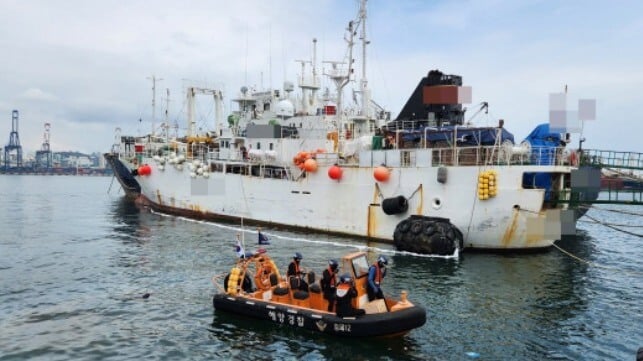
Russian-flagged cargo ship detained on MARPOL offense (Busan Coast Guard)

Published Sep 30, 2025 3:49 PM by The Maritime Executive


The Busan Coast Guard in South Korea is reporting the details on a recent MARPOL violation where it had to track down the vessel using detailed research. A small, Russian-flagged refrigerated cargo ship was identified as the source of the pollution and has now been detained after the Coast Guard pursued the ship.

The incident began when a diver reported an oil spill off the coast of Busan on the morning of September 24. The Coast Guard determined that the vessel that had released the oil had fled the scene. It conducted a clean-up while it began searching for the vessel associated with the spill.

A drone was deployed, and based on the spread of the oil film, the Coast Guard reports it targeted the unnamed vessel as a suspect in the case. It collected and analyzed oil samples from the spill.

“This case is a representative success story combining the systematic investigation and relentless pursuit of Busan Coast Guard's marine pollution response specialists,” said a Busan Coast Guard official. 

The vessel, which is only identified as a 2,616-ton Russian-flagged refrigerated cargo ship, was later stopped and accused of dumping approximately 39 liters of waste oil into the sea near Busan and then fleeing.

The Coast Guard reports it conducted a four-day inspection of the vessel, attempting to identify the source of the oil and the path of a possible leak. It inspected the entire engine room and discovered that the waste oil had leaked into the sea due to a malfunction caused by the deterioration of an intermediate valve while transferring engine room waste oil to a tank for engine repairs. 

Analyzing the oil aboard the vessel, they were able to confirm the same components as the recovered spill. Based on this and the detailed inspection of the engine room, they report that they obtained a confession from a crewmember on the vessel.

The Coast Guard is seeking compensation from the vessel’s operator for the costs involved in the clean-up of the spill. There was no word of any additional fines the vessel might be facing for the offense and leaving the scene. 


Suspicious Shadow Tanker is Again Being Investigated, This Time by France

shadow tanker detained in Estonia
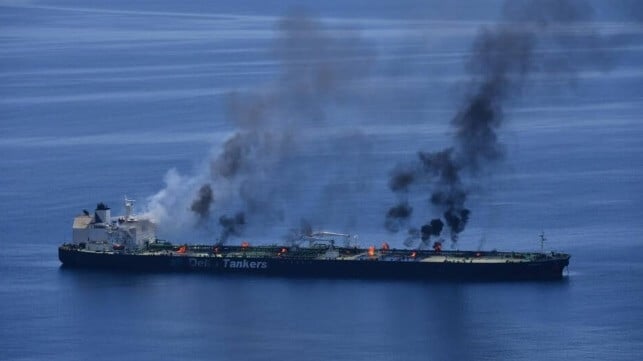
Estonia held the vessel for over two weeks but released it on a technicality (Estonia's Transport Administration)

Published Sep 30, 2025 3:48 PM by The Maritime Executive


A suspicious shadow tanker that has already been investigated at least once this year is again being detained for further investigation. The French authorities confirmed to Reuters that the suspicious vessel now identifying as the Boracay (115,577 dwt), is anchored off Saint-Nazaire while prosecutors review the details.

The French authorities have not said what specific violations the vessel is being accused of, or what prompted the detention. Reuters reports the crew failed to provide proof of the vessel’s nationality and “failed to comply with orders.”

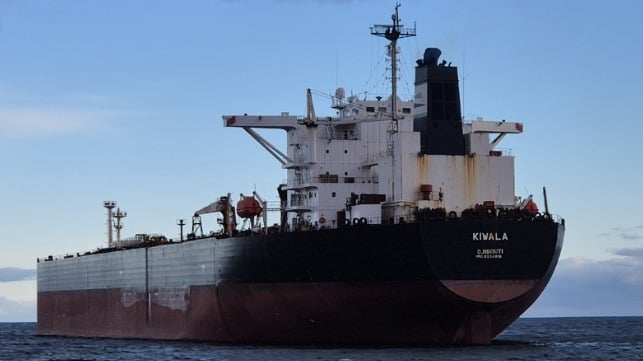
Built in 2007, the vessel was detained by Estonian authorities earlier this year. They registered that the ship had 40 deficiencies, mostly related to documentation and crew training. The primary issue was that the tanker, which was identifying as the Kiwala, could not confirm its registry in Djibouti. The flag service told the Estonians that the vessel’s registry had been canceled on January 1, 2025. The ship was detained for 15 days, but released when Estonia’s foreign ministry received information from Djibouti that it would accept the vessel until May 7. Estonian authorities said the ship had been released because it was in technical compliance and in a transition period.

The same tanker showed up at the Russian oil terminal in Primorsk, where it departed on September 20 laden with 750,000 barrels of Russian crude. The AIS signal reports the tanker was bound for Vadinar, India, using the name Pushpa and claiming registry in Benin.

Authorities identified the Pushpa as one of three vessels that were suspects in the September 22 incident when drones overflew the Copenhagen airport and disrupted flights. The tanker was approximately 70 nautical miles from Copenhagen at the time.

The French were shadowing the tanker as it transited out of the English Channel and began the trip along the coast. It is unclear when they stopped the ship, but the EU earlier this year authorized countries to inspect paperwork and insurance of the vessels traveling in their coastal waters.

Windward analyzed the vessel’s data and reports that this tanker started sailing in the shadow fleet in November 2022. Since then, they report the ship has had nine ISM managers, four registered owners, and three commercial controllers. It has claimed five different names and seven different flags. 

The UK sanctioned the tanker in October 2024 for its involvement in the Russian oil trade. The EU followed suit and sanctioned the vessel in February 2025.

Reuters reports that prosecutors in Brest, France, are now reviewing information from the French Navy. The investigation into the shadow tanker is proceeding.


Yangzijiang Cancels Ship Order on Allegations of Plot to Avoid US Sanctions

Chinese shipbuilder yard
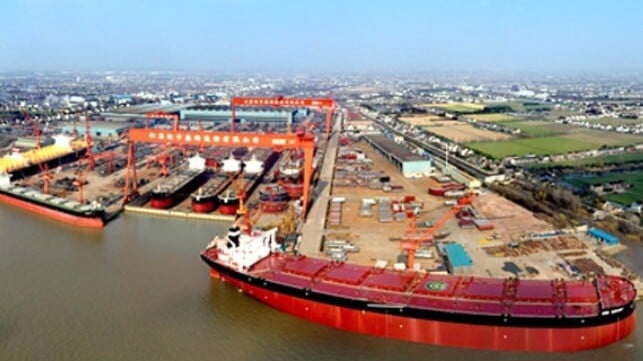
Yangzijiang is China's largest private shipbuilder (Yangzijiang)

Published Sep 29, 2025 4:54 PM by The Maritime Executive


China's largest privately owned shipbuilder, Yangzijiang Shipbuilding and three of its subsidiaries, report that they canceled an order after learning of an effort to circumvent U.S. sanctions laws and regulations. The buyer of the tankers and which sanctions involved were not identified, but it highlights the new level of scrutiny shipbuilding is being subjected to as the U.S. tightens sanctions on Chinese-built ships, and oil shipments by Iran, Russia, and Venezuela.

In a stock exchange filing on September 26, Yangzijiang said it had terminated an order for four 50,000 dwt MR product tankers valued at approximately $180 million. It said work had just commenced on the first of the four vessels, which were scheduled for delivery in 2026 and 2027.

It reported that the contracts were terminated “following certain critical information just disclosed by the buyer, which had not been previously known” by the shipbuilder. “This critical information contains allegations that the buyer’s sole shareholder was involved in a scheme to circumvent U.S. sanctions laws and regulations,” Yangzijang reports in the filing.

The shipbuilder said it had previously conducted an extensive due diligence on the buyer and its shareholder and that it had obtained legal advice to determine that the buyer “is in anticipatory repudiatory breach of the contracts. Alternatively, the contracts have been frustrated as a result of the supervening illegality associated with the buyer’s payment obligations.”

The buyer paid a 10 percent deposit of approximately $18 million when the contract was signed. In addition, the yard received a 10 percent installment payment of $4.48 million when work began on the first tanker. Yangzijiang emphasized that it does not anticipate any material financial impact on the company. The yards are also reserving their legal rights against the buyer.

This comes just weeks before the U.S. is expected to start collecting fees for Chinese-owned, operated, or built ships calling in U.S. ports. The initiative announced by the U.S. Trade Representative is in response to China’s unfair business practices to promote its shipbuilding industry. Despite the threat of new fees, China has still won 75 percent of the newbuilding contracts in recent months.

South Korea’s shipbuilders ran into problems after the sanctions were imposed on Russia following the invasion of Ukraine. The builders who were contracted for tankers were forced to cancel the orders, saying the Russian companies could not pay for the ships under the sanctions, and they were barred from delivering new vessels.


Video: Crew Rescued as Dutch Cargo Ship Remains Adrift off Yemen

Dutch cargo ship hit by missile
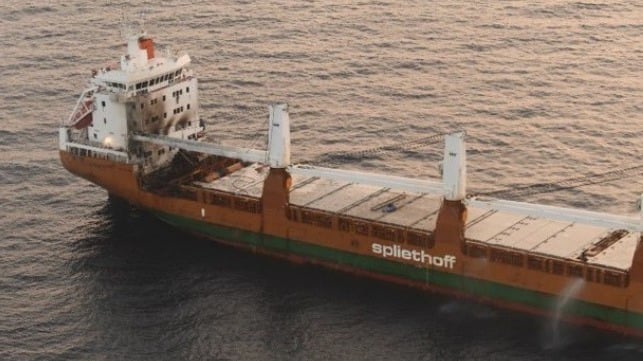
Minervagracht remains adrift in the Gulf of Aden (Armée Française - Opérations Militaires)

Published Sep 30, 2025 9:16 AM by The Maritime Executive


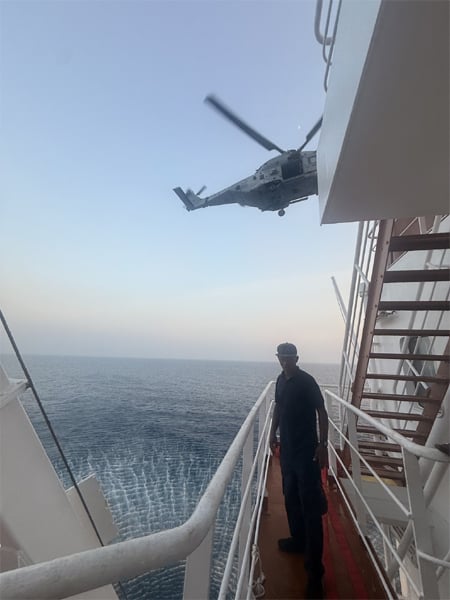
An international effort successfully evacuated the 19 crewmembers from the Dutch-flagged cargo ship Minervagracht, which remains adrift in the Gulf of Aden. The most seriously wounded crewmember was airlifted directly to Djibouti, and a second crewmember was being treated while the 18 crewmembers were transferred to Djibouti.

The EU mission EUNAVFOR Aspides coordinated the rescue of the crew after the vessel was struck by a suspected missile launched by the Houthis in Yemen. It was sailing approximately 123 miles southeast of Aden at the time. 

Ten crewmembers were embarked aboard the Greek frigate HS Spetsai, while an additional eight were taken on board a French frigate. Aspides reports the crew is made up of individuals from Russia, Ukraine, the Philippines, and Sri Lanka.


French and Greek warships evacuated the crew (Armée Française - Opérations Militaires)


The vessel’s owner, Spliethoff, reports Minervagracht has sustained “considerable damage” and is “experiencing a fire.” They said the vessel was sailing eastbound from Djibouti at the time of the incident and was not carrying cargo. 

The Houthis, so far, have not made any statements about the attack and why they repeatedly targeted this vessel. Yesterday, the Maritime Information, Cooperation and Awareness Center reported the same vessel was targeted on September 23 when it was 120 nautical miles east of Aden. The report said the vessel has no links with Israel. The Houthis, however, released a statement late on September 30 saying the ship was targeted because of the owner's sending ships to Israel in violation of the Houthis' ban.

Spliethoff reports it is engaging with international authorities and specialists to safeguard and secure the vessel. Aspides has warned that the ship remains a hazard to navigation.

The Houthis’ attacks have mostly been directed at Israel in recent weeks, although the group continues to assert that it is maintaining a blockade on all shipping associated with Israel. They had not claimed attacks on merchant ships since the beginning of September, and before that, in early July, when they sank two bulkers in the Red Sea.

Video: Cruise Ship Saves Castaways on Raft in the Caribbean

rescue at sea
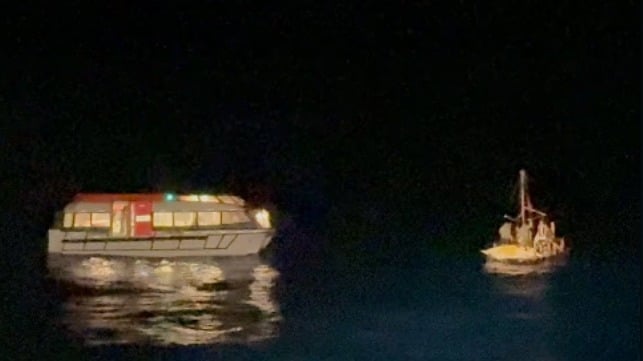
Cruise ship tender approaching the raft

Published Sep 29, 2025 5:23 PM by The Maritime Executive


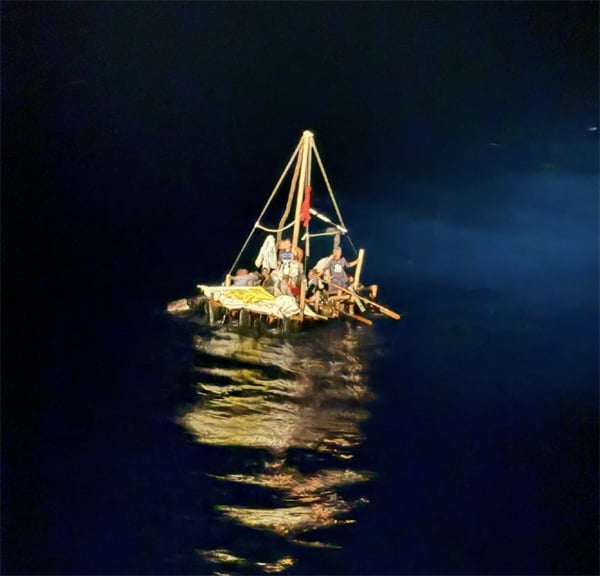
In what appears to be a very lucky stroke of fate, a group of cataways was rescued by a large cruise ship early Sunday evening, September 28.  According to passengers posting on social media, ten individuals were rescued from their open raft somewhere west of Cuba and east of Mexico.

The 82,900 gross ton Enchantment of the Seas was cruising the Western Caribbean when, according to the reports, people from the raft used possibly flashlights to attract the attention of the bridge crew of the 990-foot (302-meter) cruise ship, which was sailing toward Costa Maya on Mexico’s Yucatán Peninsula.


It was around dusk, and the cruise ship stopped to investigate. One of the vessel’s tenders was lowered, and it approached the raft. The people were taken aboard and brought back to the Royal Caribbean International cruise ship. 

It was extra luck that the cruise ship was in the right place at the right moment. The Enchantment of the Seas, which accommodates more than 2,250 passengers, sails from the Port of Tampa and had been scheduled to proceed east to the Bahamas. However, with the mounting tropical storm, the cruise line rerouted the ship west to Costa Maya and Cozumel.


(Jeffrey Walker/Facebook)


In these situations, the cruise ship typically gives the people clean clothing, food, and water, and emergency medical treatment if required. The cruise ship notifies the local authorities. The people are often landed at the next port of call for repatriation.

Thanks to cruise passenger Jeffrey Walker, who was enjoying a trip with his family, for posting the pictures and videos online. 

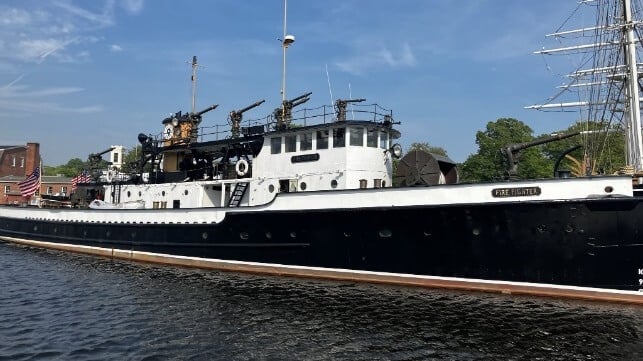
America’s Fireboat, Fire Fighter, Seeks New Home to Continue Mission

Fireboat Fire Fighter Museum

Published Sep 30, 2025 8:09 PM by The Maritime Executive


[By: Fireboat Fire Fighter Museum]

America’s Fireboat, Fire Fighter, is preparing for her next chapter. This National Historic Landmark, celebrated as one of the most decorated and iconic vessels in U.S. firefighting history, is seeking a new permanent home where she can continue her role as a teaching museum and living memorial. Since 2021, thousands of visitors have come aboard while she has been berthed at Mystic Seaport Museum. As her time there concludes in 2026, Fire Fighter offers a rare opportunity for a community or organization to host this extraordinary piece of maritime history.

Thanks to grants from the Robert David Lion Gardiner Foundation, Save America’s Treasures, and other donations totaling more than $1 million, Fire Fighter can now go to her new home completely overhauled and restored to her original glory.

At 134 feet long, Fire Fighter requires dock facilities designed to provide stability and safe visitor access. In addition to her historical significance, she offers communities a one-of-a-kind attraction capable of drawing crowds and enhancing waterfront destinations.

“Fire Fighter is known as America’s Fireboat because she embodies courage, service, and resilience,” said James W. Tomes, CEO of Telgian and Board Member of the Fireboat Fire Fighter Museum. “Welcoming Fire Fighter to your harbor is not just about preserving a vessel - it’s about giving future generations a place to connect with American history in a tangible, inspiring way.”

A Storied Legacy of Service
Commissioned in 1938, Fire Fighter holds the distinction of being the most award-decorated fireboat in the world. At the time of her decommissioning in 2010, she was the second-oldest fireboat in frontline service worldwide and the longest serving member of the FDNY Marine Unit Fleet.

Fire Fighter’s service record is unparalleled:

  • World War II: She protected ammunition ships bound for Europe, answering emergencies such as the fire and capsizing of the SS Normandie and the explosion aboard the munitions ship El Estero, and near annihilation of New York City.
  • June 1974: Received the Gallant Ship Award for fighting bravely the Sea Witch/Esso Brussels collision/fire and explosion beneath the Verrazano-Narrows Bridge in 1973.
  • September 11, 2001: She played a critical role at Ground Zero, pumping water at her maximum capacity for three weeks from New York Harbor, when water mains were crushed and hydrants were destroyed, ensuring firefighters could battle the catastrophic blazes.
  • US Airways January 15, 2009: She assisted in the rescue of passengers from US Airways Flight 1549 after its emergency landing in the Hudson River.

For these and countless other acts of heroism, Fire Fighter is the only fireboat ever awarded the prestigious Gallant Ship Award since its creation in 1944.

A National Treasure, Floating Museum, and Landmark Attraction

  • A tourism attraction that draws history enthusiasts, families, and maritime visitors.
  • A living classroom for students to experience history, engineering, and public safety.
  • A symbol of resilience and service that connects communities to national moments from World War II to 9/11.
  • A chance for a host community to join the legacy of safeguarding America’s stories.

“We are inviting communities, maritime organizations, and civic leaders to partner with us in identifying a safe and suitable location for Fire Fighter,” said Museum President Charlie Ritchie. “Her legacy is about much more than firefighting. It embodies courage, resilience, and American history.”

Organizations or communities with potential docking opportunities, as well as those interested in partnerships or supporting preservation efforts, are encouraged to contact the Fireboat Fire Fighter Museum.

The products and services herein described in this press release are not endorsed by The Maritime Executive.

This GOP extremist hypocrite fought unions. Guess what his new job is?


Janelle Stecklein,
 Oklahoma Voice
September 29, 2025


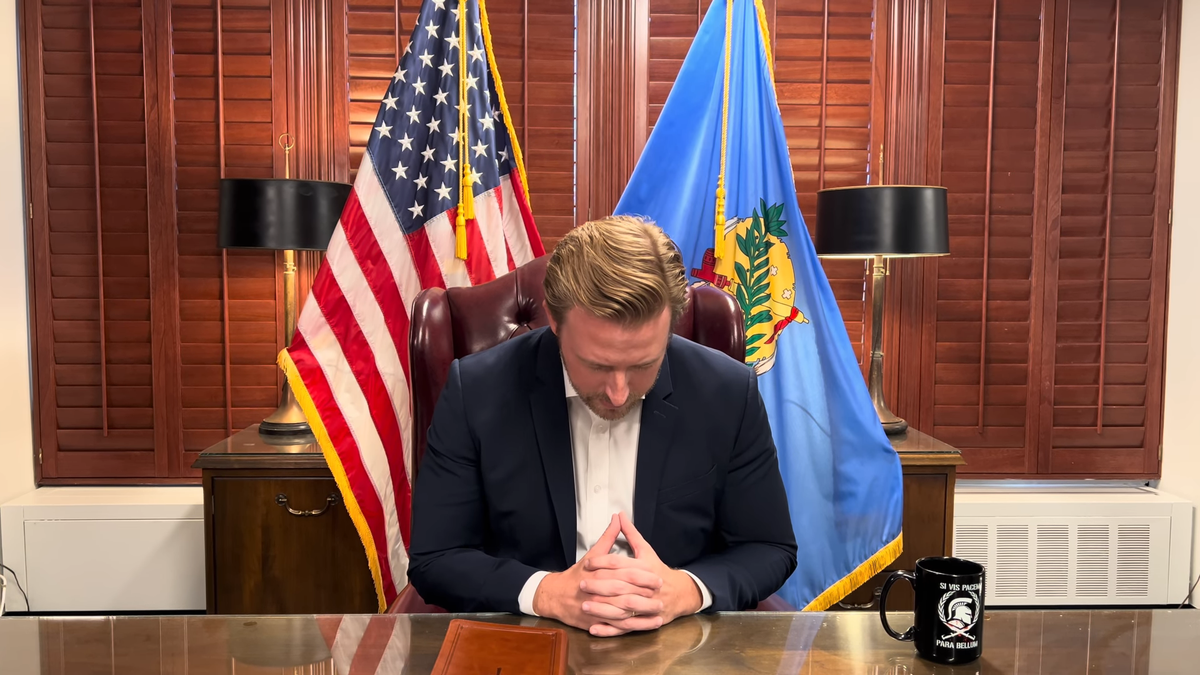
Oklahoma Superintendent Ryan Walters prays for Donald Trump.
Screengrab / Oklahoma State Department of Education

It’s ironic that a man who built his political career railing passionately about teachers “unions” will soon be running one of his own.

But in a way it’s almost fitting that it will be the next move for Oklahoma education Superintendent Ryan Walters, who has made it his mission to babble bizarre, inflammatory rhetoric and launch random witch hunts against educators and their unions.

Maybe it will help him recenter on who is vitally important to the success of our public schools — the teachers. Because if he truly wants to be successful, the role will require him to collaborate with them and show some empathy toward their needs.

Those are two skillsets that he’s been sorely lacking the past two years and 10 months in his elected position.

And maybe it will serve as a rude awakening that he’s betrayed the trust of Oklahomans who believed he could turn our schools around. They’ll now find themselves with a politically appointed leader they didn’t get to choose, for the remaining year or so of what should have been Walters’ term.

In case you weren’t randomly tuned into Fox News at 10:43 p.m. last Wednesday, Walters was allotted just under 40 seconds on a national conservative talk program to announce he has accepted a new role as CEO of the Teacher Freedom Alliance. The group bills itself as an “alternative to traditional union membership,” but provides “professional support services and resources” for educators.

The group, which so far boasts a measly 2,800 members nationwide, is a new effort of the Freedom Foundation, a nonprofit “dedicated to fighting government overreach, defending workers’ rights and protecting constitutional freedom.”

“For decades, union bosses have poisoned our schools with politics and propaganda while abandoning parents, students, and good teachers. That ends today. We’re going to expose them, fight them, and take back our classrooms,” Walters said in a statement released by the Freedom Foundation.

“At the Teacher Freedom Alliance, we’re giving educators real freedom, freedom from the liberal, woke agenda that has corrupted public education. We will arm teachers with the tools, support, and freedom they need, without forcing them to give up their values.”

THIS IS CALLED A SCAB, RAT OR YELLOW UNION, AN ANTI UNION ALIGNED WITH STRIKE BUSTERS INC.


The Teacher Freedom Alliance sure sounds like it has the same mission of a teachers union — you know, those groups Walters has loved to hate.

In January, Walters launched a tone deaf tirade attempting to link schools and teachers unions to the deadly truck attack in New Orleans and even used the phrase “terrorist training camps” to describe school classrooms.

This year, he also falsely claimed teachers unions love standardized testing (they don’t).


He pushed the state Board of Education to take away the teaching license of a former Norman High School educator for sharing a QR code to the Brooklyn Public Library’s free online catalog. He is trying to revoke two other educators’ licenses over social media posts related to the 2024 assassination attempt of President Donald Trump.

And most recently, he’s threatened to ban teachers for things they’ve posted on social media about the killing of conservative activist Charlie Kirk.

Now he’s going to be something of a union boss himself? That was not a square on my 2025 bingo card.

While the Teacher Freedom Alliance bills itself as a “viable alternative to unions,” it does appear to share many similarities with Oklahoma’s organizing groups. In Oklahoma, a few of the largest districts do have groups that collectively bargain for educators, but most don’t. However, one thing that makes Oklahoma’s associations different from unions in other states is that they cannot strike. But much like the Teacher Freedom Alliance, Oklahoma’s organizations provide their members liability insurance if they ever get sued as well as professional development training and an “engaged community of educators.”

In light of his new job, it sure appears that Walters has been spewing a whole lot of hyperbole about educators that he actually doesn’t believe. That’s pretty sad for our children and the teachers we’ve entrusted to educate them.

It also appears that Walters never intended to actually help fix our school system. Instead, he used the post that we entrusted him with to try to gain the attention of conservative groups so he could grab a cushy job.

Oklahoma voters — and teachers — deserve better. They deserve a public official who is committed to rolling up their sleeves and working together, and not someone who flees in terror when things get hard. And they need someone who is competent and understands how schools work and who isn’t motivated by grabbing headlines.

Hopefully fellow Republican Gov. Kevin Stitt will choose carefully when it comes time to fill the role. He’ll get to pick Walters’ successor once he officially resigns.

Walters has proven he doesn’t have a lot of respect for the voters who elected and believed in him if last night was any indication.


He couldn’t be bothered to let Oklahomans know he was leaving in a publicly accessible forum. Instead, he chose a late-night, cable talk show slot, which many Oklahomans don’t have access to, to announce he’s washing his hands of us.

Walters was likely a frontrunner in the 2026 gubernatorial race. I say that judging from the multitude of emails in support of him that I’ve received from people all over the state the past two years.

If he still harbored any plans to run for governor, I think he’s shot himself in the foot.

Oklahomans don’t like quitters. And they certainly don’t like hypocrites who preach one thing publicly while secretly believing something else.


Janelle Stecklein is editor of Oklahoma Voice. An award-winning journalist, Stecklein has been covering Oklahoma government and politics since moving to the state in 2014.