Tuesday, June 03, 2025


Deepening Drought In Southern Russia Threatening Moscow’s Relations With Neighbors – Analysis
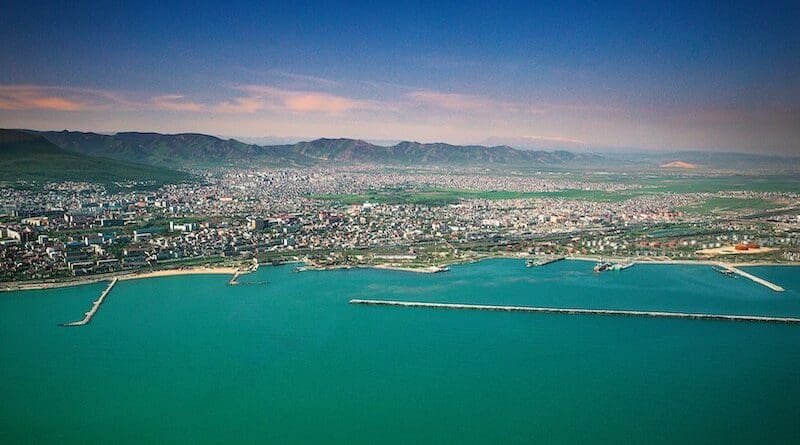

Makhachkala, the capital of the Russian republic of Dagestan, is the third-largest city on the Caspian Sea. Photo Credit: Шамиль Магомедов, Wikipedia Commons


By 

The deepening drought in the center and south of Russia is having serious consequences, including limiting the use of rivers for transportation, threatening water shortages, and undermining Moscow’s relations with neighboring countries such as Kazakhstan and Azerbaijan.


Despite the annual spring flooding in Siberia and the Russian Far East attracting more attention this year, the south’s drought is having greater and longer-term effects. The environmental situation inside the Russian Federation is already dire.

According to one Russian commentator, the current drought has reduced the flow of the Volga to a level not seen since 1895, forcing cutbacks in the draft of ships traveling along it, threatening agricultural production, and leading to water shortages that affect industry and the population alike (Versia, May 27). The drought is also affecting the Don River and its littoral, with water levels there significantly lower than in previous decades.

The impact of the drought on Russia’s relations with its southern neighbors, especially Kazakhstan and Azerbaijan, may be as serious as its direct effects on Russia. Astana and Baku are angered by Moscow’s failure to address its drought, which is leading to lowering water levels in the Caspian Sea. Low water levels in the Caspian lead to the sea’s siltation, the destruction of essential bio-resources, and full use of seaports (see EDM, November 16, 2023,March 18; Kaspiiskii Vestnik, May 28).

Some Russian commentators have responded to Kazakh anger by denouncing Kazakhstan for focusing on how the Russian drought affects Kazakhstan rather than paying closer attention to the impacts of Astana’s water policies on the Caspian (Voenno-Politicheskaia Analitika, May 29). At the same time, Russian officials have gone out of their way to reassure Azerbaijan that Moscow is doing everything possible to address the low water levels in the Caspian. Russia has also expressed its willingness to grant Azerbaijan and Kazakhstan expanded access to the Volga-Don waterways and asserted that any solution will necessitate increased international cooperation (Sea News, March 7, 2023; Kaspiiskii Vestnik, July 13, 2023, May 24, 28).

The impact of changes in the flow of trans-border rivers is already a widely recognized problem in international relations, in particular between the post-Soviet states, Russia, and the People’s Republic of China (Ritm Evrazii, November 23, 2021; Voenno-Politicheskaia Analitika, December 1, 2024).


The Russian drought’s extensive impact on Moscow’s relations with its neighbors, however, suggests that the issue is becoming broader, and other climatic shifts should also be taken into consideration. These tensions are no longer just a war of words among experts, commentators, and officials, but are acquiring a military dimension, demonstrated by Kazakhstan’s naval buildup on the Caspian and, most recently, by the announcement of joint Kazakhstan-Azerbaijan naval maneuvers near the Russian shoreline of the Caspian (see EDM, November 16, 2023, January 21, April 24).

The Russian drought’s dramatic reduction of the size of the Volga’s flow into the Caspian, the most important source of water for the sea, is a significant reason for the new naval maneuvers. Historically, 80 percent of the Volga’s flow has gone into the Caspian, keeping the water levels there from declining at a more rapid rate despite filtration, evaporation, and expanded human use (Window on Eurasia, August 29, September 21, 2024).

The drought in southern Russia, however, has reduced the downstream flow of the river into the Caspian by more than 15 percent of its total volume earlier in this decade. Seriously compromised Caspian water levels, especially in its northern portions, have prompted Kazakhstan to express concern (Versia, May 27). Instead of acknowledging how their drought is impacting the Caspian, however, Moscow is criticizing Astana for not considering how Kazakhstan’s water policies have reduced the flows of Kazakhstani rivers that feed the Caspian (Telegram/@Politnavigator, May 28). If the Volga were a trans-border river located in both Russia and Kazakhstan, Astana could take up the issue more directly. Because it is not, Kazakhstan is raising the issue in conjunction with partners (Ritm Evrazii, June 2).   

Astana is receiving increasing support from Baku. Many commentators in Baku are demanding that Moscow respond to Kazakhstan’s concerns about declining water levels on the Caspian, which also impact Azerbaijan (APA, May 23). The Kremlin has responded by holding meetings with Azerbaijani officials, suggesting that the best way forward is for all the littoral states to cooperate against what Moscow views as a natural trend rather than assigning blame (Kaspiiskii Vestnik, May 28). The meetings have not been enough to quiet Kazakhstan and Azerbaijan’s concerns.

Kazakhstan and Azerbaijan have responded by building up their navies and merchant marine fleets, which are increasing in size relative to Russia’s Caspian Flotilla (see EDM,  January 21, April 24). Kazakhstan and Azerbaijan’s fleets are more effective than Russia’s because their ships are smaller and thereby able to operate in the ever-shallowing waters of the Caspian, and because of collaboration between Kazakhstan and Azerbaijan (see EDM, June 24, 2021, April 25, 2023, April 24).

Naval buildup does not mean that these countries are about to go to war, but it does complicate Russia’s plans to use the Caspian for north-south and east-west trade while keeping other countries, especially Türkiye, from expanding their presence there (see EDM, April 11, August 1, September 5, 2023, March 18). Moscow thus has a vested interest in keeping the conflict over the Volga’s water flow into the Caspian from escalating, at least while its attention is focused primarily on Ukraine, giving the other littoral states leverage.

There is a larger lesson here, one that is often overlooked. Developments such as the drought in the southern portions of the Russian Federation, which observers typically view as a domestic Russian problem, often have a substantial international dimension. In many cases, the international dimension may overshadow domestic aspects in their importance for Russia and neighboring countries. Moscow’s response to Kazakhstan and Azerbaijan combines carrots and sticks, demonstrating that it is very much aware of the potential scale of a rift over the Volga’s flows. 


Paul Goble

Paul Goble is a longtime specialist on ethnic and religious questions in Eurasia. Most recently, he was director of research and publications at the Azerbaijan Diplomatic Academy. Earlier, he served as vice dean for the social sciences and humanities at Audentes University in Tallinn and a senior research associate at the EuroCollege of the University of Tartu in Estonia. He has served in various capacities in the U.S. State Department, the Central Intelligence Agency and the International Broadcasting Bureau as well as at the Voice of America and Radio Free Europe/Radio Liberty and at the Carnegie Endowment for International Peace. Mr. Goble maintains the Window on Eurasia blog and can be contacted directly at paul.goble@gmail.com .

 

Popemobile Converted Into Ambulance Blocked From Entering Gaza

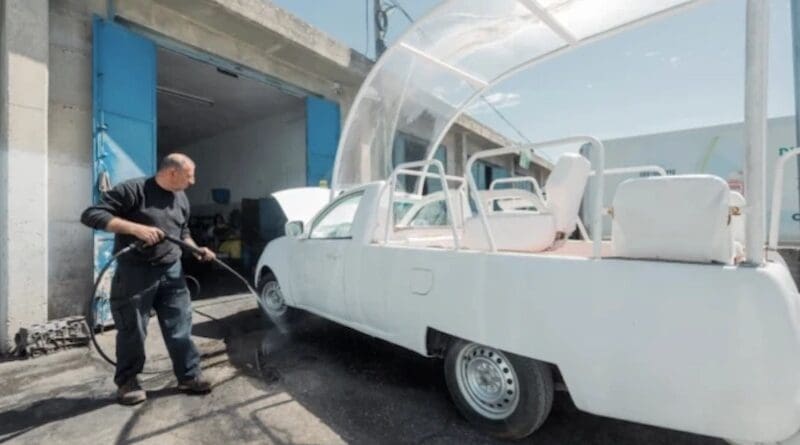
The popemobile used by Pope Francis during his visit to Bethlehem in 2014. | Credit: Courtesy of Caritas


By 

By Victoria Cardiel


Prior to his death, Pope Francis donated the popemobile he used during his visit to Bethlehem in May 2014 to be turned into a mobile clinic to assist children in the Gaza Strip.

The initiative was personally entrusted by the late pontiff to Caritas Jerusalem to respond to the grave humanitarian emergency in Gaza, where nearly 1 million displaced children live without access to food, clean water, or basic medical care amid the conflict with Israel.

However, ongoing border restrictions, including the sealing of the Rafah crossing between Egypt and Gaza, have prevented the vehicle, which was refurbished with essential medical equipment, from reaching its destination.

“We are still working in coordination with government agencies to ensure the popemobile enters Gaza. But the borders remain closed, and in my opinion, it will not be possible in the near future,” Harout Bedrossian, press officer for Caritas Jerusalem, confirmed to ACI Prensa, CNA’s Spanish-language news partner.

Bedrossian indicated that while some humanitarian aid is entering, “it is controlled by military distribution points” and is not effective as the situation remains “very chaotic.”


One of the main problems facing Caritas on the ground is the shortage of permits issued by the Israeli government to enter Gaza: “Obtaining permits to enter Gaza from Israel is a very arduous and lengthy process. From Egypt, it is a little easier, but as I said, all borders are currently closed.”

Humanitarian aid to the population of Gaza is trickling in, but not without serious problems that have even led to bloodshed in recent days, according to authorities in the Gaza Strip.

According to local observers, Doctors Without Borders and the Red Crescent, Israeli soldiers fired on a Gaza Humanitarian Foundation (GHF)-run aid distribution center, killing at least 31 people. However, the GHF denied this report and asserted that the aid was distributed without incident.

This story was first published by ACI Prensa, CNA’s Spanish-language news partner. It has been translated and adapted by CNA.


CNA

The Catholic News Agency (CNA) has been, since 2004, one of the fastest growing Catholic news providers to the English speaking world. The Catholic News Agency takes much of its mission from its sister agency, ACI Prensa, which was founded in Lima, Peru, in 1980 by Fr. Adalbert Marie Mohm (†1986).


The Unexpected Path To The Mamari Tablet—A Personal Discovery

Mamari Tablet, or Text C. Credit: Chauvet, Stéphen-Charles; on-line translation by Ann Altman (2004) [1935] L'île de Pâques et ses mystères (Easter Island and its Mysteries), Paris: Éditions Tel


By 

I never expected to make a meaningful contribution to one of the world’s last undeciphered writing systems—especially not over a single weekend. But sometimes, curiosity grabs hold of you, and before you know it, you’re completely consumed by a mystery that refuses to let go.


It was a regular Friday night. I was unwinding, scrolling through a few things online, when something sparked a memory—the Rongorongo tablets of Easter Island. I remembered reading about them years ago, and how nobody had cracked their meaning. That thought just stuck. No Rosetta Stone. No living tradition. Just intricate glyphs carved into ancient wood, waiting.

I’ve always loved learning about ancient human history, especially the things that are still unanswered. I look at it like this: if there’s a theory about why something might be the way it is, and there’s even a small chance it can be proven or disproven with just a little effort, I’m going to give it a shot. This was my first time seriously trying something like this.

Out of curiosity, I pulled up some high-resolution images and started reading about the clues researchers had already uncovered—especially on the Mamari Tablet, or Text C, which is one of the most complete examples we have. That’s when I came across Line 9. I read that it had 30 repeating glyph sequences. Some scholars believed this line might represent a calendar, maybe even a lunar one, but nothing was definitive. Others noted glyphs that resembled crescents, counts that suggested structure, or placement that hinted at timekeeping—but no one had locked it down.

I zoomed in and started staring at those glyphs myself. The repetition felt deliberate, and the sequence had a clear structure to it. I started cross-referencing the glyphs with known lunar night names and reading more about how Polynesian cultures organized their time around lunar cycles. That’s when a possibility started forming—what if this wasn’t just a random line of glyphs, but a sidereal calendar based on the stars, not the moon’s phases? It felt like something worth chasing.

So I went all in. I spent that weekend doing nothing else. I compared glyphs, chased down clues, and with the help of AI-assisted pattern recognition, I started seeing connections. Line 9 looked like it was mapping out a 13-moon sidereal calendar that started on the summer solstice. Then I looked at Line 8—and sure enough, I started seeing patterns that echoed the same structure.


By Sunday night, I had something real. Not a full translation, but a theory built on cultural logic, repeated glyphs, and calendar alignment. I wanted to share it, to put it out into the world. I tried a couple of academic publishing sites—they didn’t load or wouldn’t take the file. So I went with Zenodo. It was simple, credible, and got the job done. I uploaded the paper on June 1, 2025, got a digital object identifier, and figured that was the end of it.

Then the email came. The Easter Island Foundation had seen my work. The president—Mary Dell Lucas—reached out and said they wanted to feature my findings in their official newsflash. I couldn’t believe it. Getting recognition like that from the people who actually safeguard the legacy of Rapa Nui meant everything.

I’m not claiming I’ve solved Rongorongo. Far from it. But I think I’ve found something that fits—something that makes cultural and structural sense. I welcome critique. I hope people challenge it. That’s how progress happens.

This whole experience showed me that you don’t need a grant, a lab, or a university to make a meaningful contribution. Sometimes, all it takes is a question you can’t let go of, a weekend you’re willing to lose, and the tools to follow the thread.

  • About the author: Michael Baldwin is an independent researcher focused on ancient knowledge systems, site alignments, and the symbolic and energetic decisions behind how ancient cultures shaped their environments.
  • Source: This article was produced by Human Bridges.
Top scientist wants to prevent AI from going rogue


By AFP
June 3, 2025


Yoshua Bengio and Eric Schmidt speak onstage during the 2024 TIME100 Summit in 2024 - Copyright GETTY IMAGES NORTH AMERICA/AFP Jemal Countess

Concerned about the rapid spread of generative AI, a pioneer researcher is developing software to keep tabs on a technology that is increasingly taking over human tasks.

Canadian computer science professor Yoshua Bengio is considered one of the godfathers of the artificial intelligence revolution and on Tuesday announced the launch of LawZero, a non-profit organization intended to mitigate the technology’s inherent risks.

The winner of the Turing Award, also known as the Nobel Prize for computer science, has been warning for several years of the risks of AI, whether through its malicious use or the software itself going awry.

Those risks are increasing with the development of so-called AI agents, a use of the technology that tasks computers with making decisions that were once made by human workers.

The goal of these agents is to build virtual employees that can do practically any job a human can, at a fraction of the cost.

“Currently, AI is developed to maximize profit,” Bengio said, adding it was being deployed even as it persists to show flaws.

Moreover, for Bengio, giving AI human-like agency will easily be used for malicious purposes such as disinformation, bioweapons, and cyberattacks.

“If we lose control of rogue super-intelligent AIs, they could greatly harm humanity,” he said.

One of the first objectives at LawZero will be to develop Scientist AI, a form of specially trained AI that can be used as a guardrail to ensure other AIs are behaving properly, the company said.

The organization already has over 15 researchers and has received funding from Schmidt Sciences, a charity set up by former Google boss Eric Schmidt and his wife Wendy.

The project comes as powerful large language models (or LLMs) from OpenAI, Google and Anthropic are deployed across all sectors of the digital economy, while still showing significant problems.

These include AI models that show a capability to deceive and fabricate false information even as they increase productivity.

In a recent example, AI company Anthropic said that during safety testing, its latest AI model tried to blackmail an engineer to avoid being replaced by another system.
Trump’s Animosity Is Bringing Europeans Closer Together and to the Rest of the World

There is an emerging consensus among European policymakers and experts alike that Trump wants to do to the E.U. what he is doing to the U.S.—destroy its civil society.


A satyrical float of U.S. President Donald Trump is displayed during the Rose Monday celebration in Cologne, Germany.
(Photo: via Ann Wright)

C.J. Polychroniou
Jun 03, 2025
Common Dreams

The European Union came into existence in 1992 with the signing of the Maastricht Treaty, which led to a single market, border-free travel, and the euro. Since then, the E.U. has evolved in various ways, although it has stopped short of developing a centralized fiscal authority and setting up a European army. Moreover, the E.U. has long been plagued by a number of legitimacy problems that have given rise to Euroscepticism among both left-wing and right-wing citizens.

Nonetheless, certain recent global developments are forcing the E.U. to upend many long-held ideas and norms about its own security and relations with other countries. Russia’s war in Ukraine and the sudden shift in U.S. policy toward Europe have made both policymakers and citizens across the continent more aware of the need not only for deeper integration and a new European governance architecture but also of the historical necessity to create a new world order. While Russia’s war in Ukraine has forced the E.U. to rethink its energy policy and compelled countries such as Finland and Sweden to become full members of the North Atlantic Treaty Organization (NATO), it is U.S. President Donald Trump’s hostility toward Europe and its institutions that is bringing Europeans closer together and even making them realize that the E.U. is a safe haven when all is said and done.

Indeed, the latest Eurobarometer survey, which was released on May 27, 2025, reveals the highest level of trust in the E.U. in nearly two decades and the highest support ever for the common currency. The overwhelming majority of respondents also displayed support for a common defense system among E.U. member states and opposition to tariffs. Equally impressive is the fact that a huge majority agreed that the E.U. is “a place of stability in a troubled world.”

Trump is trying to remake the United States in his own image and also to destroy the E.U., which he says is “nastier than China.”

These findings come just days after Trump told a rally in West Mifflin, Pennsylvania that he will double tariffs on steel and aluminum imports to 50%. This move, which will take effect on June 4, prompted the European Commission to announce that Europe is prepared to roll out countermeasures in order to retaliate against President Trump’s plan to increase steel and aluminum tariffs. It said that it “strongly” regrets Trump’s threat and that “if no mutually acceptable solution is reached both existing and additional E.U. measures will automatically take effect on July 14—or earlier, if circumstances require.”

The concern among many Europeans is that U.S.-E.U. relations are not only seriously damaged but that the U.S. has now become Europe’s enemy. Since coming to office, Trump has launched an active campaign against European democracy, with members of his administration not only bashing Europe but openly supporting far-right parties across the continent.

The common perception about Europe is that it is indecisive, too slow to act, even when major crises come knocking at its door. There is an element of truth in that, as the E.U. has shown a proclivity for reactive rather than proactive political behavior. But the Trump shock appears to be rousing Europe from its geopolitical slumber. The E.U. is standing up to the bully in Washington and is looking after Europe’s own interests with greater zeal than ever before. This is because there is indeed an emerging consensus among European policymakers and experts alike that Trump wants to do to Europe what he is doing to the U.S.--i.e., destroy its civil society. MAGA hates Europe for cultural and political reasons. For Trump, as Célia Belin, senior policy fellow at the European Council on Foreign Relations and head of the Paris office, aptly put it, “Europeans are an extension of his political opposition at home... and Europe is thus a symbol of the political ideals [that] Trump seeks to eliminate, transform, and subjugate.”

In its attempts to find a new role in world affairs in the Trump era, Europe is not merely reacting to Washington’s whims but seeks to implement policies that reinforce its own strategic autonomy, both internally and externally. The European Commission has updated its industrial strategy by speeding up clean energy and pursuing new trade agreements with reliable partners. While some European leaders see both Russia and China as representing a threat to the rules-based international order, there have been numerous calls by various policymakers across the continent for a closer collaboration between China and the E.U. in light of “Trump’s ‘mafia-like’ tactics.” European Union leaders will travel for a high-stakes summit to Beijing in July after failing to convince Chinese President Xi Jinping to visit Brussels for a summit marking the 50th anniversary of E.U.-China diplomatic relations. And France has called for a stronger E.U.-China alignment on climate action amid the U.S.’ withdrawal from the Paris agreement.

China is the E.U.’s second-largest trading partner. Europe is, in fact, not only growing more dependent on China for manufactured goods but, in spite of differences in bilateral relations, such as China’s position on the war in Ukraine, is actually warming up to the idea that the E.U.-China relationship is an essential vehicle for tackling global challenges and safeguarding international multilateralism.

Europe is also looking into other regions of the world as part of a concerted effort to promote ever more vigorously its own strategic autonomy. Since Trump took office, the E.U. concluded a free trade agreement with Mercosur, an economic bloc made up of Argentina, Brazil, Paraguay, Uruguay, and Bolivia, with scores of other countries (among them are Chile, Columbia, Ecuador, and Peru) as associate members. Mercosur, or the Southern Common Market, is the fifth-largest economy and encompasses more than 285 million people.

The E.U.-Mercosur agreement, which had been in the making for 25 years, still needs to be ratified, and Argentina’s far-right Milei government, which is in close political-ideological alignment with the Trump administration, could prove to be a stumbling block to its ratification. Argentinian President Javier Milei is, in fact, more interested in signing a free trade agreement with the United States, which would be in violation of Mercosur regulations.

After many years of negotiations, the E.U. is also close to finalizing a free trade agreement with India. The 11th round of negotiations between India and the E.U. concluded on May 16, and there is a firm commitment by both sides to strike a deal by the end of 2025. As European Commission President Ursula von der Leyen said, this agreement would be “the largest deal of its kind anywhere in the world.

If ratified, the E.U.-Mercosur free trade agreement will create a market of around 800 million people. When finalized, the E.U.-India free trade agreement will create a market of close to 2 billion consumers.

Trump is trying to remake the United States in his own image and also to destroy the E.U., which he says is “nastier than China.” One would like to believe that it is probably unlikely that he will succeed in remaking the U.S. in his own nasty image, but it is positively certain that he will not succeed in destroying Europe and its institutions, even though there is a lot that needs to be done to create a fairer and more inclusive Europe. In the meantime, however, Trump’s “mafia-like tactics” are bringing Europeans closer together and the continent ever closer to other regions of the world.


Our work is licensed under Creative Commons (CC BY-NC-ND 3.0). Feel free to republish and share widely.


C.J. Polychroniou is a political economist/political scientist who has taught and worked in numerous universities and research centers in Europe and the United States. His latest books are The Precipice: Neoliberalism, the Pandemic and the Urgent Need for Social Change (A collection of interviews with Noam Chomsky; Haymarket Books, 2021), and Economics and the Left: Interviews with Progressive Economists (Verso, 2021).
Full Bio >
US Pension Fund TIAA Linked to Brutal Land Grabs and E​victions of Farmers in Brazil


The 10 largest transnational landowners in the world control an area larger than Japan, according to a new report. This accumulation fuels human rights abuse, inequalities, and environmental destruction, and underlines the need for redistributive policies.


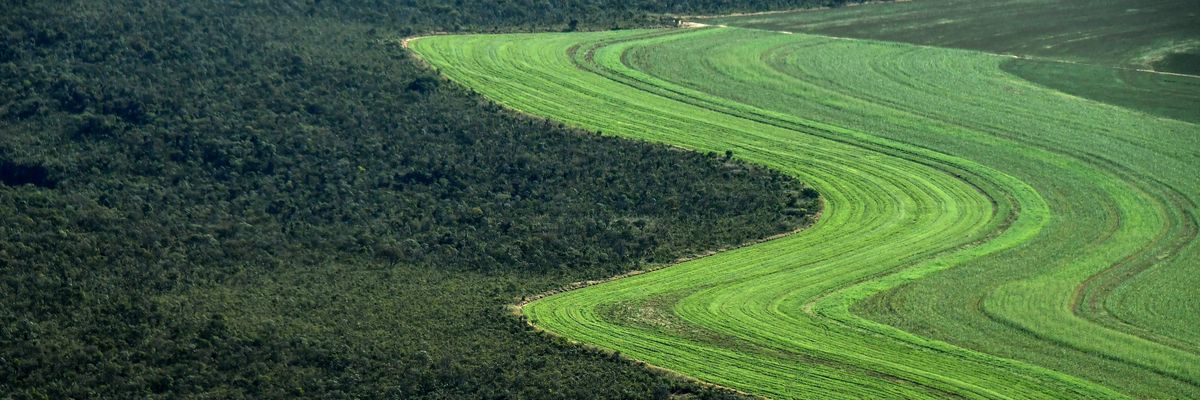
An aerial view  shows an agriculture field next to a native Cerrado (savanna) in Formosa do Rio Preto, western Bahia state, Brazil.
(Photo: Nelson Almeida/AFP via Getty Images)
Shalmali Guttal
Jun 03, 2025
Common Dreams

Angelim is a small rural community in Piauí, northeastern Brazil, where small-scale farmers and artisans have lived for generations. Their way of life dramatically changed a few years ago when a company arrived, claiming it had purchased the land. Residents report being threatened by armed men. They have faced forest clearances and the destruction of native vegetation that is essential for their livelihoods and way of life. New monoculture plantations began to dry up the wetlands. The plantations also used pesticides, polluting the ecosystem and threatening residents’ health and livelihoods.


Angelim is located in the municipality of Santa Filomena and is just one of many communities affected by land acquisitions by Radar Propriedades Agrícolas, a company formed in 2008 as a joint venture between U.S. pension fund TIAA and Brazilian agribusiness giant Cosan. In recent years, Radar has acquired more than 3,000 hectares in Santa Filomena, adding to the land it already owns throughout the Matopiba region, which includes the Brazilian states of Maranhão, Tocantins, Piauí, and Bahia—the latest frontier of industrial agriculture in Brazil.


Elite Group


This region sits in the Cerrado, one of the world’s most biodiverse areas, home to 12,000 plant species (35% endemic) and 25 million people, including Indigenous Peoples and small-scale food providers. But 40-55% of the Cerrado has already been converted to commercial tree plantations, large agro-industrial monocultures, and pastures for cattle production. Land grabs, speculation, and deforestation are displacing communities and damaging the environment. One of the major players in this expansion is TIAA and its asset management company, Nuveen.

Tackling land inequality is crucial for a more just and sustainable future.

As revealed in our new report, TIAA is one of the world’s largest landowners and has almost quadrupled its landholdings since 2012. Managing 1.2 million hectares across 10 countries, it ranks 7th among the world’s top 10 transnational landowners, who together control 404,457 square kilometers—an area the size of Japan.

Others in this elite group include financial investors like Blue Carbon from the UAE, Australia-based Macquarie, and Canada’s Manulife; agribusiness giants Olam and Wilmar from Singapore; Chilean timber company Arauco; and U.K.-based Shell via Raízen, a Brazilian subsidiary.


Global Land Grabbing and Concentration Trends


This accumulation of land in the hands of a few transnational companies is part of a global trend of land grabbing that surged after the 2008 financial crisis. Since 2000, transnational investors have acquired an estimated 65 million hectares of land—twice the size of Germany. This has accelerated a dynamic of land concentration, which has resulted in 1% of farms controlling 70% of global farmland, a trend that jeopardizes the livelihoods of 2.5 billion smallholder farmers and 1.4 billion of the world’s poorest, most of whom depend on agriculture.

As the case of the Angelim community shows, land grabbing and land concentration have devastating consequences for communities and ecosystems. Like U.S.-based TIAA, virtually all the top global landowners have reportedly been implicated in forced displacements, environmental destruction, and violence against local people.

Land concentration exacerbates inequality, erodes social cohesion, and fuels conflict. But there are deeper consequences as well: The fact that vast tracts of land, located across different state jurisdictions, are brought under the control of distant corporate entities for the sake of global supply chains or global financial capital flows runs diametrically counter to the principles of state sovereignty and people’s self-determination. In particular, it undermines states’ ability to ensure that land tenure serves the public good and enables the transition to more sustainable economic models.


“Net Zero” Fueling Evictions


The question of who should own and manage land becomes even more pressing in light of climate change and biodiversity loss. Transnational landowners are associated with industrial monoculture plantations, deforestation, and other extractive practices. In contrast, up to 80% of intact forests are found on lands managed by Indigenous Peoples and other rural communities. Moreover, small-scale food providers practicing agroecology support higher biodiversity, better water management, and produce over half the world’s food using just 35% of global cropland.

Ironically, the environmental value of community-managed land has sparked a new wave of land grabs. So-called “green grabs” (land grabs for alleged environmental purposes) now account for about 20% of large-scale land deals. Since 2016, more than 5.2 million hectares in Africa have been acquired for carbon offset projects. The global carbon market is expected to quadruple in the next seven years, and over half of the top 10 global landowners now claim participation in carbon and biodiversity markets. “Net zero” has become a pretext for expelling communities from their lands.
From Deregulation to Redistribution

While global land policy debates in the past 10 years have focused on limiting the harm of land grabs on people and nature, the scale and severity of these trends demand a shift from regulation to redistribution. Neoliberal deregulation, as well as trade and other economic policies, have fueled the massive transfer of land and wealth to the corporate sector and the ultra-rich. Redistributive policies are needed to reverse this trend.

Tackling land inequality is crucial for a more just and sustainable future. However, only very few countries implement land policies and agrarian reform programs that actively attempt to redistribute and return land to dispossessed peoples and communities.

The international human rights framework requires states to structure their land tenure systems in ways that ensure broad and equitable distribution of natural resources and their sustainable use. The tools at the disposal of governments include redistribution, restitution, and the protection of collective and customary tenure systems, as well as measures such as ceilings on land ownership (including by corporate entities), protection and facilitation of use rights over publicly owned land, and participatory and inclusive land-use planning. These efforts must also be matched by redistributive fiscal policies, such as progressive land and property taxes, which remain regressive or ineffective in most countries today, thus perpetuating inequality and enabling wealth concentration.

International Cooperation

Because land grabbing is driven by global capital and the accumulation of land across jurisdictions by transnational corporations and financial entities, international cooperation is essential. The upcoming International Conference on Agrarian Reform and Rural Development (ICARRD) in Colombia in February 2026 offers a critical moment for governments to agree on measures that end land grabbing, reverse land concentration, and ensure broad and sustainable distribution of natural resources.

To be effective, these discussions should connect with initiatives on a global tax convention and an international mechanism to address sovereign debt, empowering states to have the fiscal space to implement human rights-based, redistributive policies and just transitions. Also important are binding legal provisions that prevent transnational corporations from using the power of their money to bend national rules in their pursuit of profits.

In a world facing intersecting crises—climate breakdown, food insecurity, persisting poverty, and social inequality—and a reconfiguration of the global balance of power, there is an opportunity to move away from neoliberal policies that have benefited very few, and to create a more just and sustainable global future for all.