Saturday, November 08, 2025

While Trump Posts Marble Bathrooms, Americans Go Hungry

Trump plasters his social media with a floor-to-ceiling marble bathroom remodel while families across America wonder how they can keep their children from starving.


US President Donald Trump shared this image of a remodeled Lincoln Bathroom on October 31, 2025.
(Photo by Donald Trump/Truth Social)


Emese Ilyés
Nov 08, 2025

Common Dreams

I know what it means to be starved by those in power. As a little girl, if not for my grandparents’ ancient walnut tree that fed us, and not for my grandma’s beloved chickens who laid eggs and now and then were a very special Sunday soup, if not for my sister—just a few years older than me—standing in line at dawn to fight adults for bread, I would have been significantly malnourished. I would watch my sister come home exhausted from those pre-dawn battles with full-grown adults, clutching a loaf of bread that meant we might be a little less hungry than we were the day before.

I never thought I’d see that kind of chosen starvation—the kind that Romania’s Nicolae Ceaușescu was notorious for—in America. I was wrong.
Trump is Choosing to Starve Americans


With Food Aid Suspended for Millions of Families, Trump Brags of ‘Statuary Marble’ Bathroom Makeover



Failures of Trumponomics Glaring as Prices, Consumer Anxiety Climb Higher

On November 3, day 33 of a government shutdown, President Donald Trump’s administration said it would provide only partial Supplemental Nutrition Assistance Program (SNAP) food stamp benefits for November. This has a devastating impact on millions of Americans. And, this is after two federal judges ordered the administration to tap into emergency funds to cover food assistance. What’s worse is this partial aid Trump is willing to concede to give might not reach these families for months.

And what was Trump doing as families wondered how they’d feed their children? Posting 24 photos on social media of his newly renovated Lincoln Bedroom bathroom—covered floor to ceiling in black and white marble with (surprise, surprise) gold fixtures—as he headed to Mar-a-Lago for the weekend. He has already golfed multiple times during this shutdown and traveled internationally, something other presidents would have refused in order to focus on ending the shutdown that is devastating the country. Millions are unsure about what they’ll eat tonight, and Trump posts about the luxury renovations and packs his golf clubs while the government remains shut down.

Trump wants us to watch him build monuments to himself. Fine. We’re watching. And we’re remembering.

Ceauşescu was similarly fond of gold and glitz while the people starved. Like this Romanian dictator, Trump is demolishing the historic East Wing of the White House to build an over $300 million ballroom, removing commemorative magnolia trees planted in the 1940s for Presidents Warren G. Harding and Franklin D. Roosevelt. According to White House aides, Trump spends hours obsessing over marble choices and column styles, even fidgeting with 3D-printed models of the ballroom during tense moments. Watch me, he seems to say. Watch me build monuments to myself while you starve.

Ceauşescu built his lavish palaces that included a golden bathroom with gold plated fixtures while my sister, a child, stood in line to fight for a half a loaf of bread to feed her family. Trump plasters his social media with a floor-to-ceiling marble bathroom remodel while families across America wonder how they can keep their children from starving.
The Policy Behind the Cruelty

Yes, by now we know full well, the cruelty is the point, it’s policy. The “big beautiful bill” Republicans passed earlier this year delivers massive tax breaks to the ultra wealthy: Starting in 2029, those making $30,000 or less would see a tax increase, while the top 0.1% would receive an average $309,000 tax cut annually, more than three times what a typical American household earns in an entire year. Sixty percent of the tax cuts go to the top 20% of earners, while the bill is coupled with cuts to Medicaid and SNAP that leave low-income Americans worse off on net.

The bill kicks more than 15 million people off health insurance, makes the largest cuts to nutrition assistance in history, and makes higher education less affordable. Congressional Budget Office analysis shows this bill adds over $4 trillion to the national debt while worsening inequality.
Masked Agents, Militarized Enforcement

Meanwhile, billions of dollars are being poured into Immigration and Customs Enforcement (ICE) raids, with masked federal agents in unmarked vehicles conducting workplace sweeps and detaining our neighbors outside courthouses, with more than 75% of those booked into ICE custody in fiscal year 2025 having no criminal conviction other than immigration or traffic-related offenses. Trump is choosing to continue to fund, and even increase the funding, for the modern-day Gestapo, ensuring masked ICE agents can continue to brutalize our communities. But we do not have to look at other places to understand what is happening before our eyes. In the 1850s in the United States, the federal government enforced a policy to hunt down and “return” what the government dubbed to be “fugitive slaves,“ people who were formerly and brutally enslaved and who had escaped captivity to flee north. No, we do not have to look at Nazi Germany to understand what ICE is doing, we have to look at our own history.

All of us Americans, who love our neighbors, who care for our families, who love our cities and our country, should see Trump for who he is. He is making a choice. This is a choice about who gets to have resources and who gets to suffer. This is about billionaires running the government and watching the people who actually make this country run—the workers, the families, the communities—go hungry while they build their ballrooms.

When the wealthy choose to watch their neighbors starve, when they fund masked agents to terrorize communities while slashing food assistance, this isn’t leadership. This is corruption masquerading as governance. Ceauşescu did it. Now Trump is doing it. Sending social media messages from his golden toilet while we the people go hungry.
The Walnut Tree Didn’t Ask Permission

They want us to be too hungry, too tired, too scared to fight back. They want us watching marble-bathroom reveals while we worry about our own children’s empty stomachs.

We won’t give them that satisfaction.

Every community that’s ever survived oppression has known this truth: We have to take care of our beloved communities. You share what you have. You build networks of care that the powerful can’t dismantle because they’re not built on their permission.

Start a community fridge in your neighborhood, like many of us did during the pandemic. Organize a weekly soup kitchen. Form a food co-op. Create a network of families who share meals and resources. This is how we survive, this is how we resist.

And then, fed and strong, we organize politically. We vote out every representative who voted to starve their constituents to feed the rich. We primary the ones who won’t fight. We run our own people, people who remember what it’s like to be hungry, to watch your sister fight for bread, to rely on a grandparent’s walnut tree.

Trump wants us to watch him build monuments to himself. Fine. We’re watching. And we’re remembering. Every marble tile laid while children went hungry. Every gold fixture installed while families lost food assistance. Every historic symbol of American’s greatness lying in rubble while more Americans lost access to healthcare.

But we’re not just watching. We need to be building too. Building the mutual aid networks, the political power, the community resilience that will outlast any administration’s cruelty.

The walnut tree that saved my life didn’t ask permission to grow. Neither will we.


Our work is licensed under Creative Commons (CC BY-NC-ND 3.0). Feel free to republish and share widely.

Emese Ilyés
Emese Ilyés is a critical social psychologist and participatory action researcher whose work examines community resistance and collective survival in the face of authoritarianism. Her research focuses on grassroots movements and mutual aid networks.
Full Bio >

Trump’s White House Ballroom Is Being Bankrolled by Genocide and ICE Profiteers

The ballroom donor list also includes Wall Street and cryptocurrency firms that benefit from the president’s agenda.
November 6, 2025

U.S. President Donald Trump displays a rendering of his proposed $250 million White House ballroom as he meets with NATO Secretary General Mark Rutte in the Oval Office of the White House on October 22, 2025, in Washington, D.C.Alex Wong / Getty Images

Money has always distorted U.S. politics, but the current Trump regime has entered new territory with an unabashed pay-to-play setup that’s stuffing the president’s political coffers while enriching him and his family.

Donald Trump’s coldly transactional dealings have been on full display as he’s tapped billionaire allies and major corporations to shower his administration with donations to pay for his latest vanity project: a 90,000-square-foot, $300 million ballroom set to be erected over the rubble of the White House’s now-demolished East Wing.

Trump has wined and dined dozens of corporate executives and mega-billionaires across industries, from cryptocurrency to fossil fuels and telecoms to tech, as he’s solicited donations for the ballroom. Many corporate donors have been disclosed; others have sought to remain hidden. For all, the game is clear. Many donors have direct business interests that Trump’s decisions will impact. Together, the ballroom donors benefit from at least $279 billion in federal contracts.

Together, the ballroom donors benefit from at least $279 billion in federal contracts.

What’s less apparent is that key donors are paying for Trump’s ballroom with profits culled from enabling the detention and deportation machinery of U.S. Immigration and Customs Enforcement (ICE) and Israel’s apparatus of occupation and genocide against Palestinians.

Other donors are among the most powerful Wall Street firms and their billionaire executives that are directly benefiting from Trump’s imperial posturing and his deregulatory agenda that’s opening up the retirement funds of tens of millions of workers to private equity profiteers.


UN Expert Exposes Companies Aiding Israel’s Genocide, Occupation in Palestine
Amazon, BlackRock, and Keller Williams LLC are some of the companies named in the report. 
By Sharon Zhang , Truthout July 1, 2025


Wall Street

Two Wall Street powerhouses have been identified as ballroom donors, and both are cashing in from their ongoing relationship with the Trump administration.

One is BlackRock, the world’s largest asset manager and a universal top shareholder of corporate capitalism. BlackRock’s assets under management recently hit a record $13.5 trillion, more than the combined GDP of Germany, Japan, and India.

In recent years, BlackRock has intensified its private capital spending spree, looking to gobble up data centers, utilities, and other critical infrastructure across the world.

In 2024, BlackRock acquired Global Infrastructure Partners (GIP), a massive private equity infrastructure firm led by Adebayo Ogunlesi, who sits on the board of OpenAI and, until recently, led the board of Goldman Sachs.

BlackRock and GIP made headlines in March 2025 when they struck a deal to acquire a huge global portfolio of shipping ports that included two Panama Canal ports. Referring to the acquisition, Trump boasted to Congress that his administration “will be reclaiming the Panama Canal, and we’ve already started doing it.”

The deal was a mutual victory for both Trump, who’s focused on reasserting U.S. imperial power across the Americas, and BlackRock, which snagged a chain of critical global infrastructure while entering Trump’s good graces.

Cozying up to Trump and MAGA conservatives appears to be a priority for BlackRock and its powerful billionaire co-founder and CEO, Larry Fink.

For a time, BlackRock became a poster child for the conservative backlash against diversity, equity, and inclusion efforts and against environmental, social, and governance in corporate America. In 2024, for example, Texas pulled billions out of BlackRock funds.

But since then, BlackRock and Fink have retreated from past postures of corporate responsibility, dropping diversity goals and pulling back from climate commitments. At a March fossil industry conference, Fink sported a “Make Energy Great Again” bracelet.

On November 3, Sen. Richard Blumenthal (D-Connecticut) sent Fink a letter demanding more information surrounding BlackRock’s donation to Trump’s ballroom, which the White House did not originally disclose.

Another big Wall Street donor to the ballroom is Stephen Schwarzman, one of the world’s wealthiest billionaires and the co-founder and head of Blackstone, the world’s largest private equity firm. Schwarzman is a longtime Trump ally and donor who chaired Trump’s CEO Council during his first term.

Stephen Schwarzman, one of the world’s wealthiest billionaires, once compared Barack Obama’s support for raising the carried interest tax rate to the Nazis invading Poland.

Schwarzman and Blackstone are major beneficiaries of Trump’s agenda of corporate tax cuts and financial deregulation, especially in two ways.

First, Trump’s “One Big Beautiful Bill Act” preserved the carried interest tax loophole, which allows private equity barons to avoid billions in tax payments. In fact, Schwarzman, who owns luxurious mansions and estates across the world, once compared Barack Obama’s support for raising the carried interest tax rate to the Nazis invading Poland.

Even more, Trump delivered a major boon to Blackstone and private equity firms in August by giving them access to trillions of dollars’ worth of 401(K) funds, a move that could supercharge risk and weaken oversight of savings for retirees.

Investors in private equity funds are mostly wealthy individuals and large institutions like universities and foundations that have resources to gauge investment prospects and can weather greater risks, unlike many ordinary retirees. Whereas government regulations previously put safeguards between private equity firms and millions of 401(K)s, Trump’s new policy dissolves that boundary.

Beyond Wall Street, cryptocurrency firms, which also populate the White House ballroom donor list, benefit from this regulation.

Senators Elizabeth Warren (D-Massachusetts) and Bernie Sanders (I-Vermont) recently sounded the alarm over Trump’s new policies that push “risky private market funds and cryptocurrencies into Americans’ retirement plans,” according to a press release.


ICE Profiteers


Major corporate interests that rake in profits through enabling ICE’s deportation machine are also bankrolling Trump’s ballroom.

One major ballroom donor is Palantir Technologies, the data management company overseen by billionaires Peter Thiel and Alex Karp that sits at the core of ICE’s surveillance apparatus.

Major corporate interests that rake in profits through enabling ICE’s deportation machine are bankrolling Trump’s ballroom.

Beginning with the so-called “war on terror,” Palantir has benefited from lucrative government contracts across both Democratic and Republican administrations. ICE uses Palantir’s software to integrate and store data on immigrants, collected through a vast surveillance system, that’s wielded to monitor, seize, and deport people.

Palantir has been a top corporate beneficiary of Trump’s rule, snagging more $322 million in government contracts during the first half of 2025 alone. This included a $30 million ICE contract to develop its “ImmigrationOS” surveillance platform that will use artificial intelligence to hypersurveil immigrants, select targets for seizures and raids, and track “self-deportations.”

Organizers across the U.S. have protested Palantir over its contracts with ICE as well as the Israeli military.

Amazon also donated to Trump’s ballroom and attended his fundraiser dinner, while Amazon founder and mega-billionaire Jeff Bezos has placated Trump through gestures like shifting The Washington Post, which Bezos owns, to the right, and paying $40 million for a documentary about Melania Trump featured on Amazon Prime Video.

As the immigrant rights group Mijente reported back in 2018, Amazon provides critical data storage services for ICE through its Amazon Web Services cloud business. The MIT Technology Review went so far to call Amazon the “invisible backbone” of ICE’s attacks on immigrants.

Amazon, as well as ballroom donors like Microsoft and Alphabet (the parent company of Google), continue to benefit from contracts with ICE and the Department of Homeland Security, though these are typically transacted through third parties that use their cloud services. In July, Amazon bragged that Customs and Border Protection is “using cloud computing, generative AI and machine learning to secure US borders.”

Google, along with Apple, another ballroom donor, have also removed ICE-tracking apps from their online stores.

Taken together, these Big Tech ballroom donors help undergird what the Mijente report called the “cloud industrial complex,” the checkered alliance between Silicon Valley and the state, wedded by a massive ensemble of government contracts, that props up ICE’s digital surveillance and data storage operation that guides its daily raids.

Other ballroom donors such as Booz Allen Hamilton and Comcast also have ICE contracts.

Genocide’s Corporate Backers


In July, UN Special Rapporteur Francesca Albanese published a scathing report, titled “From Economy of Occupation to Economy of Genocide,” that named key players composing the “corporate machinery sustaining the Israeli settler-colonial project of displacement and replacement of the Palestinians in the occupied territory.”

The report shows that many of the same corporations enabling and profiting from occupation and genocide in Palestine are also bankrolling Trump’s White House ballroom.

These include Big Tech companies like Google and Amazon that provide cloud storage and computing for Israel’s occupation and surveillance of Palestinians through the $1.2 billion “Project Nimbus” contract.

“Tech billionaires leading Google and Amazon are yet again currying favor with the Trump administration to ensure that their quest for profit and endless expansion of their monopoly power remains unchallenged by the federal government,” a spokesperson from No Tech for Apartheid, a campaign of Google and Amazon workers organizing against the Project Nimbus contract, said in a statement to Truthout.

Microsoft, which unsuccessfully bid for the Project Nimbus contract, has also provided technology for the massive surveillance operation that supports the Israeli military’s occupation of the West Bank and Gaza.

Albanese’s report also names other tech donors to Trump’s ballroom, including Palantir, with its long “tech collaboration” with the Israeli government and likely supplying of artificial intelligence systems and automatic predictive policing technology, and Hewlett Packard, which Albanese says has “long enabled the apartheid systems of Israel, supplying technology to the Coordination of Government Activities in the Territories (COGAT), the prison service and police.”

Additionally, Albanese’s report also named companies like Lockheed Martin, which supplies Israel’s military with weapons and aircraft, and Caterpillar, which sells Israel equipment to demolish Palestinian homes — both of which are donors to Trump’s ballroom.

The report also names BlackRock as a major purchaser of Israeli treasury bonds as well as a top shareholder in corporations like Palantir, Microsoft, Amazon, Alphabet, Lockheed Martin, and Caterpillar. The report concludes that BlackRock ranks “among the largest investors in arms companies pivotal to the genocidal arsenal of Israel.”

It should also be noted that the Adelson Family Foundation — the philanthropic arm of mega-billionaire Miriam Adelson, an ardent and hawkish Zionist with influence over U.S. policy toward Israel — was disclosed as a donor to Trump’s ballroom.

News reports suggest that Adelson supports Israel’s annexation of the West Bank, and she has referred to protesters of Israel’s genocidal campaign in Gaza as “our enemies.” Miriam Adelson and her late husband Sheldon Adelson also influenced Trump’s 2017 decision to recognize Jerusalem as Israel’s capital.


This article is licensed under Creative Commons (CC BY-NC-ND 4.0)

, and you are free to share and republish under the terms of the license.


Derek Seidman
Derek Seidman is a writer, researcher and historian living in Buffalo, New York. He is a regular contributor for Truthout and a contributing writer for LittleSis.



 Mamdani’s Win Proves That Hope Is Power


Perhaps the most important takeaway from Mr. Mamdani’s campaign is this: Hope grounded in possibility is the fuel for democracy.


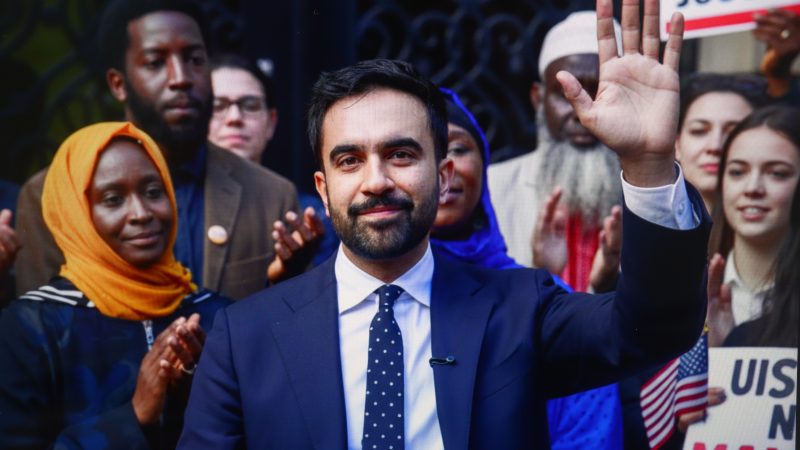
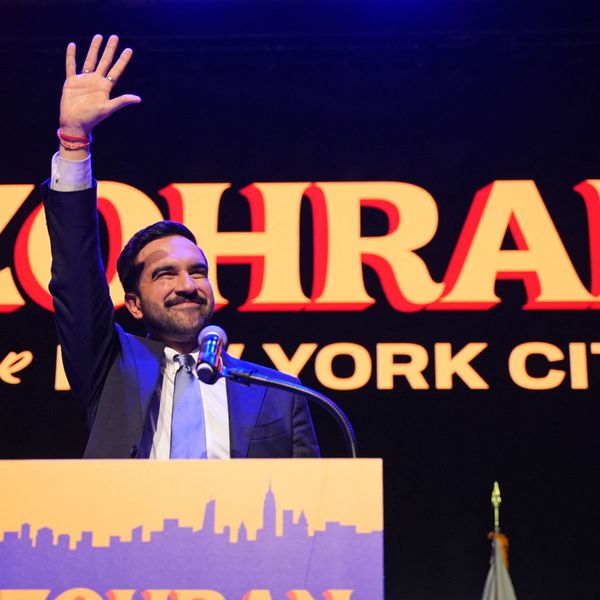
Democratic New York City mayoral candidate Zohran Mamdani delivers remarks at his election night watch party at the Brooklyn Paramount Theater on November 4, 2025 in the Brooklyn borough in New York City.
(Photo by Andrew Lichtenstein/Corbis via Getty Images)
LappéCorinna Rhum
Nov 08, 2025
Common Dreams

Zohran Mamdani’s stunning victory on Tuesday is a bright light in this otherwise terrifying political time, and the messages propelling his political ascendance offer many lessons. One particularly is music to our ears—indeed, it’s a song we’ve long been singing. We’ll let the words from his acceptance speech speak for themselves:
Tonight we have spoken in a clear voice. Hope is alive. Hope is a decision that tens of thousands of New Yorkers made day after day, volunteer shift after volunteer shift, despite attack ad after attack ad. And, while we cast our ballots alone, we choose hope together: hope over tyranny. Hope over big money and small ideas. Hope over despair. We won because New Yorkers allowed themselves to hope that the impossible could be made possible.

Right on!


‘Hope Is Alive!’ Mamdani Victory in NYC Seen as Historic Turning Point


42-Point Blowout With Young Men Helped Fuel Mamdani’s Victory

Mr. Mamdani’s message is both powerful and incisive. To launch his campaign to become mayor of our largest city required hope—and great courage. A long-shot candidate—a 34-year-old South Asian Muslim and democratic socialist assemblyman—he is a departure from mayoral convention.

Nevertheless, he, and a dedicated team of volunteers, took the plunge, pouring heart and soul into one of the most impressive grassroots campaigns. Mr. Mamdani’s candidacy was an act of hope—rooted not only in a belief in the necessity of his ideas and capacity to govern but also of hope that the political landscape would embrace a leader like him.

We must challenge ourselves to hope! Why not run for office with a bold, hope-infused platform? Volunteer for a candidate we believe in? And cast our votes for a different and better future?

And that hope turned into victory—justifying itself. Adamantly and consistently, he worked to convince voters that a better New York is achievable—that hope need not be an abstract and ephemeral feeling but rooted in actual political possibility.

Doing so, Mr. Mamdani championed the concerns New Yorkers—but, really, most Americans—feel acutely: our affordability crisis in housingfood, and healthcare; the burden of wages failing to keep up with cost of living; the immense struggle required just to survive. At every step of his campaign, he addressed these deep structural problems with real, innovative policy solutions. He didn’t ask voters to find hope from his politicking. Rather, he offered real grounds for belief.

We have long said that hope is power. Mr. Mamdani’s political success is evidence of this truth.

So perhaps the most important takeaway from Mr. Mamdani’s campaign is this: Hope grounded in possibility is the fuel for democracy. We find this a particularly powerful line from Mr. Mamdani’s acceptance speech: “We won because we insisted that no longer would politics be something that is done to us. Now, it is something that we do.” This sentiment is, indeed, the crux of hope’s power. When we believe, the door to action opens. We become agents capable of making real the changes we so desperately. As Mr. Mamdani says, politics is not done to us, but what we do.

This spirit is contagious and key to fighting back successfully against the Trump administration’s fascist policies and reversing widespread democratic backsliding. We must challenge ourselves to hope! Why not run for office with a bold, hope-infused platform? Volunteer for a candidate we believe in? And cast our votes for a different and better future?

Organizations including Run for Something empower us to step up and consider ourselves as changemakers, and several other national groups such as Common Cause and Indivisible provide clear paths for citizen action. Who knows what may come from taking the next hopeful step in your community, whether its electoral or any other form of advocacy.

Remember hope is not for “wimps.” It requires courage to do what we thought we could not do. The root of the word courage is the French word for heart, “coeur.” So, when you step up and feel yours pounding, don’t doubt. It’s just your heart cheering you on!

Leading with hope, we can build the engaged and just “living democracy” we want and know is essential. We can become proud of our country again.


Our work is licensed under Creative Commons (CC BY-NC-ND 3.0). Feel free to republish and share widely.


Frances Moore Lappé
Frances Moore Lappé is the author of 20 books, beginning with the acclaimed "Diet for a Small Planet." Most recently she is the co-author, with Adam Eichen, of the new book, "Daring Democracy: Igniting Power, Meaning, and Connection for the America We Want." Among her numerous previous books are "EcoMind: Changing the Way We Think to Create the World We Want" (Nation Books) and "Democracy's Edge: Choosing to Save Our Country by Bringing Democracy to Life." She is co-founder of the Cambridge, Mass.-based Small Planet Institute.
Full Bio >

Corinna Rhum
Corrina Rhum is the Institute Manager at the Small Planet Institute.
Full Bio >


OPINION
Tuesday’s elections in Georgia show change is coming — and fast


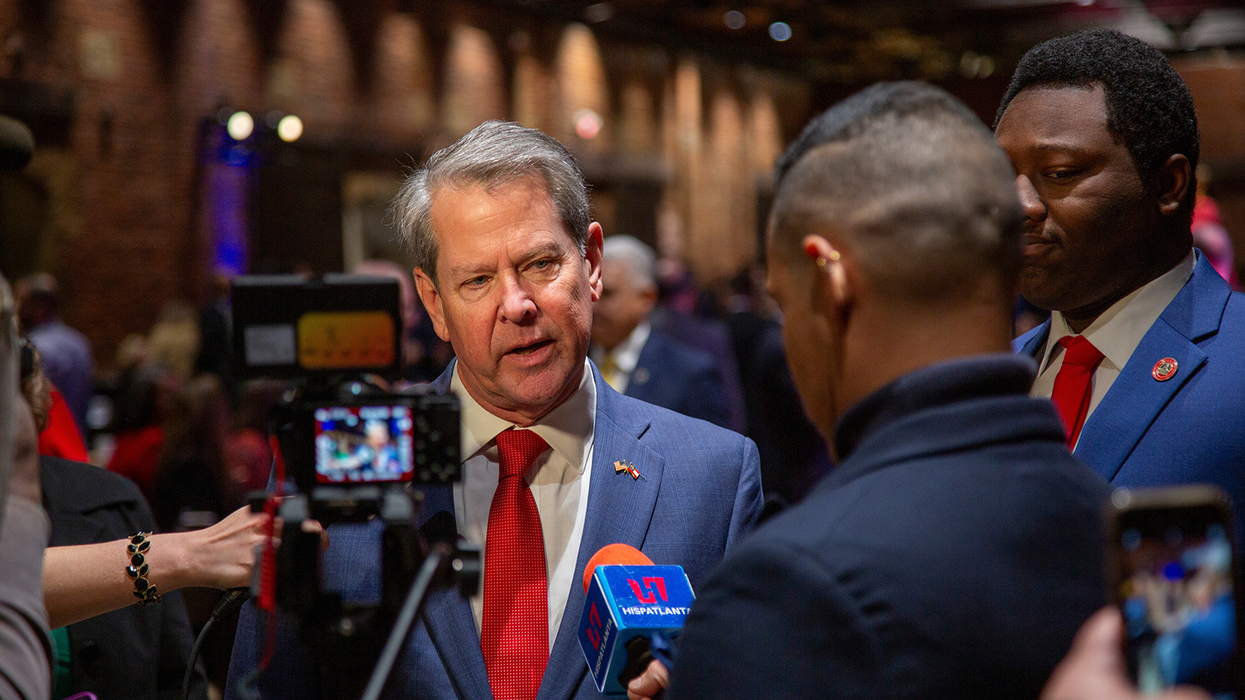
Atlanta, GA - February 6th 2024: Governor Brian Kemp participates in a interview, after a legislative breakfast held by the GHCC.

Jay Bookman,
November 06, 2025 

Maybe what happened in Tuesday’s election was an anomaly. You could certainly make that case, as many Georgia Republicans have tried to do.

It was, after all, an odd-year election, with relatively low turnout, for two low-profile statewide races. So even if the resulting margins were spectacular – Democrats won two seats on the five-member Public Service Commission, both by 25 percentage points – maybe it was just an anomaly.

Joe Biden’s 2020 victory in the red state of Georgia was another such anomaly, so rare and unusual that to this day, Donald Trump refuses to accept that it happened.

Raphael Warnock’s victory in a special election runoff in 2021, making him the first Black Democrat elected to the U.S. Senate from the South, was also an anomaly, as was Sen. Jon Ossoff’s runoff win that year. Georgia hadn’t had a Democratic senator in almost 20 years, but suddenly we had two in the same year, so surely that too was just a fluke, the result of a rare confluence of political events at the national level that is unlikely to be repeated here in Georgia.

Of course, Warnock then won re-election in 2022. Was that too just an anomaly, a one-time event explained away by the GOP’s mistake in running Herschel Walker, a man who made his name on the football field, as its candidate? It’s not as if Georgia Republicans would ever repeat that unforced error, right? They would never again try to nominate someone else whose only qualification was football fame, someone like Derek Dooley?

No, they would never.

But anomalies are funny things. Considered in isolation, they might not mean much. But when you get a string of them, one anomaly after another, they cease to be anomalies at all.

 They become a trend.

We also have other anomalies to consider. For example, today we have a former Republican lieutenant governor who has switched parties and is now running for governor as a Democrat. That’s pretty rare, right? When was the last time a party-switcher actually ran for governor and won?

Well, Sonny Perdue did it in 2002. That was an anomaly, until Nathan Deal did it again in 2010. The anomalies became a trend.

We also have MAGA queen Marjorie Taylor Greene, representing Georgia’s 14th Congressional District, who is suddenly and loudly condemning her own party’s leadership. She is slamming it for its failure to reopen the government and for its failure to address a looming crisis in health insurance affordability. In a startling appearance this week on The View, where Greene was greeted warmly by the liberal hosts, she called the GOP’s performance “embarrassing.”

My mother, who lives out of state, is a big fan of The View.

“What the heck happened to that woman?” Mom asked me this week. “Did she get struck by lightning or something?”

“No, Mom. I think it was space lasers. Or maybe chemtrails.”

The easy, short-term conclusion from all this is that Democrats have momentum going into the 2026 midterms, both here in Georgia and nationwide. While I think that’s true, something deeper and more profound is also going on.

A generation is finally ceding power that it has clung to for too long, necessary because we face new problems that our elders do not comprehend. The political establishments of both parties are crumbling, and frustration with government has become so profound that Americans of all ideologies find themselves open to solutions that previous generations had rejected. In a recent YouGov poll, for example, just 13% of Americans said they approved of how Congress is performing, and that’s just not sustainable. Change is coming, and fast.

What we see happening in Georgia, then, is just a small part of what’s happening nationally, globally. Coalitions are breaking apart, and new ones will be forming. Old ways of understanding are being tossed aside. As structures and systems are torn down, new ones must rise to replace them.

Trump and MAGA offer one such alternative, one they apparently intend to impose by force if necessary. Tuesday’s results offer us hope that other alternatives will emerge and prove more viable, but in a world where everything seems an anomaly, who the hell knows.


Georgia Recorder is part of States Newsroom, a nonprofit news network supported by grants and a coalition of donors as a 501c(3) public charity. Georgia Recorder maintains editorial independence. Contact Editor Jill Nolin for questions: info@georgiarecorder.com.

Mamdani’s New York win takes free public transport vision to the next level

NOVEMBER 6, 2025

By Fare Free London

Zohran Mamdani’s victory in the New York mayoral election shines a spotlight on the potential for free public transport in the world’s biggest cities. Making the city’s buses “fast and free” is one of Mamdani’s key election pledges.

His manifesto aims to “lower the cost of living for working-class New Yorkers”. It promises to scrap bus fares, freeze rents, provide free child care up to the age of five, and set up a chain of municipally-controlled grocery shops.

The zero-fares scheme would have to be agreed with New York’s Metropolitan Transportation Authority (MTA), which is run by the New York state government – most likely by New York City back-filling the $6-800 million/year hole it would leave in the MTA budget.

Pearl Ahrens of Fare Free London said: “This win has international resonance. If New York City can consider making buses free, so can London and other big world cities.

“There are smaller cities successfully running free public transport – more than 130 of them in Brazil, and European capitals including Luxemburg, Belgrade (Serbia) and Tallinn (Estonia). Glasgow, with more than 600,000 people, is committed to running a pilot scheme next year.

“New York City, which, like London, has more than 8 million people, can take this to the next level.”

New York transport researcher Charles Komaroff said in an interview with Fare Free London that Mamdani’s election campaign – based on “affordability” via free buses, free child care and low-cost groceries – had powerful symbolism in the city.

Komaroff authored a detailed appraisal of the scheme, published in April this year by the Nurture Nature Foundation, that has been a potent weapon for supporters of free buses. It concludes that, in money terms, the scheme will produce benefits for New Yorkers worth at least twice as much as the $600+ million it will cost.

The report estimates that the scheme will increase bus use by 23%, and shows that it will simplify bus travel, as boarding will be quicker, and speed up journey times by at least 7%.  

Komaroff said in interview that funds for the scheme would most likely have to be transferred from the city’s budget to the MTA. “Ethically and politically, this money should be raised by taxes on millionaires and billionaires.”

Fare-free travel was trialled on five New York City bus routes during the year to September 2024. The pilot “dramatically increased” passenger numbers, by 30% on weekdays and 38% at weekends, providing “clear economic relief to low-income riders”, Mamdani and New York state senator Michael Gianaris wrote afterwards. Assaults on drivers fell by 38%.

More details, and more comments from Charles Komaroff, on farefreelondon.org.

Image: Zohran Mamdani https://commons.wikimedia.org/wiki/File:Zohran_Mamdani_at_the_Resist_Fascism_Rally_in_Bryant_Park_on_Oct_27th_2024.jpg Author: Bingjiefu He, licensed under the Creative Commons Attribution-Share Alike 4.0 International license.


London Mayor Sadiq Khan congratulates Zohran Mamdani on New York mayoral victory as he takes dig at Trump


5 November, 2025 
Left Foot Forward

“New Yorkers faced a clear choice – between hope and fear – and just like we’ve seen in London – hope won."


The Mayor of London Sadiq Khan has congratulated Zohran Mamdani following his election victory in the New York mayoral race, which makes him the city’s youngest mayor since 1892, as well as its first Muslim and South Asian mayor.

Despite repeated Islamophobic and bigoted attacks from the right-wing press as well as being labelled a ‘communist’ by Donald Trump who threw his weight behind Cuomo, Mamdani 34, defeated former governor Andrew Cuomo and Republican Curtis Sliwa.

Congratulating Mr Mamdani on what he called an “historic campaign” on social media, Sir Sadiq said: “New Yorkers faced a clear choice – between hope and fear – and just like we’ve seen in London – hope won.

“Huge congratulations to @ZohranKMamdani on his historic campaign.”

Trump has previously targeted Khan with Islamophobic slurs, with both politicians clashing in the past.

In September, Trump took aim at Khan during a speech at the UN, where he falsely claimed that London wanted to “go to sharia law” under its “terrible mayor”.

His comments were condemned by a number of Labour MPs with Khan responding himself calling Trump ‘racist, sexist and Islamophobic’.

Basit Mahmood is editor of Left Foot Forward


‘This week brought good news for Democrats and progressives in the UK and worldwide’


Shutterstock

Demeaned and taunted by President Trump for nine dispiriting months, Democrats finally had a chance on Tuesday to respond with something more than theatrical gestures of resistance. Tapping a rich vein of anti-Trump sentiment, a party famished for wins racked up one after another in America’s odd-year elections. 

Suddenly, Democrats seem politically relevant again. The victories, coming in mainly blue states and cities, don’t necessarily presage big gains in next year’s national midterm elections. For that, they’ll need to win on more competitive terrain. Nonetheless, Tuesday’s outcomes confirmed growing public dismay with Trump’s imperious rule, as well as Democrats’ ability to start reclaiming ground he seized in last year’s presidential contest. 

This is good news for Labour activists in the UK and around the world, as it shows the fractures in the administration are beginning to take political effect.

Most consequential were the big Democratic victories in Virginia and New Jersey. Abigail Spanberger won the Virginia’s governor’s race by 15 points, leading a sweep of top state offices that flipped the state back into the blue column. Democrats also added seats in the state legislature, amassing their biggest majority since 1989.

READ MORE:

In New Jersey, despite polls showing a tight race, Rep. Mikie Sherrill cruised to a 13-point win over her Trump-endorsed Republican opponent. Spanberger and Sherrill exemplify a new breed of pragmatic Democrats who have distanced themselves from the unpopular cultural fixations of the progressive left.

Both describe themselves as “security moms” – Spanberger was a CIA agent and Sherrill flew helicopters for the Navy. Their national security credentials and moderate reputations made it hard for their opponents to tar them as “weak and woke.”

Spanberger and Sherrill focused their campaigns on lowering living costs and keeping communities safe. They emphasised building more affordable housing, holding energy prices down and assuring access to health care. As her opponent harped incessantly on the spectre of transgender women undressing in girl’s bathrooms, Spanberger called for getting culture war politics out of public schools. 

Both unquestionably got a lift from tying their opponents to Trump. According to exit polls, 55 and 56 percent of voters in New Jersey and Virginia respectively disapprove of the president’s job performance. Not surprisingly, Spanberger did especially well in Northern Virginia, where tens of thousands of federal workers have either been fired by DOGE, laid off by the government shutdown or been forced to take buyouts.  

Trump proved to be a turnout magnet for Democrats. This highlights the fatal flaw in his strategy of maximum political polarisation. By offering his opponents nothing but the back of his hand, Trump motivates furious Democrats to turn out in droves. And by excluding them from government decisions, he ensures that he and his party bear the full weight of public frustration with federal sins of commission and omission. That’s why the Republicans appear to be losing the blame game over the ongoing government shutdown. 

Turnout also surged in New York, where two million voters showed up for a three-way race for mayor. The winner was rookie phenomenon, Zohran Mamdani, at 34 the city’s youngest as well as first Muslim mayor. 

Mamdani ran an exciting and impressive race, even if most of his radical proposals for municipal socialism – public grocery stores, free buses and tuitions and other government goodies to be financed by taxing oligarchs – seem fanciful rather than bold. 

Mamdani also stressed making urban life more affordable and his message of radical change resonated in some lower-income and immigrant neighborhoods as well as upscale precincts. But while his loud and proud embrace of democratic socialism may thrill cosmopolitan elites – including fellow travelers like Britain’s Jeremy Corbyn, it won’t travel far beyond big coastal metros.

Against a scandal-plagued opponent, former Democratic Governor Andrew Cuomo, Mamdani managed to win only half the vote. His Democratic predecessors as mayor typically won about two-thirds of the city’s voters. 

What’s more, Cuomo won non-college voters in New York – the group Democrats must do better with to revive their national competitiveness. 

Subscribe here to our daily newsletter roundup of Labour news, analysis and comment– and follow us on BlueskyWhatsAppX and Facebook.

In contrast, Spanberger and Sherrill demonstrated crossover appeal to the voters Democrats need to build durable majorities.  Both won independents, including voters who supported Trump last year. They also made notable gains in exurban, small town and rural communities.  

Most promising of all, among Latino voters, support for the Democratic candidates grew by 9 points in New Jersey and five points in Virginia. Black voters also shifted toward the Democrats, though less dramatically. And Republican candidates for governor lost under 30 voters by almost 40 points.  

Another big winner on Tuesday was California’s Democratic Governor, Gavin Newsom. He championed Proposition 50, which draws a map of Congressional districts more favorable to Democrats. It’s designed to counter Trump’s attempts to pressure Texas and other red states to produce new maps favoring Republicans before the midterm. Nearly 65% of California voters backed the measure, which could produce five new Democratic House seats. 

Will the Republican rout prompt rethinking in the White House? One possibility is that Trump will instruct pliant GOP Congressional leaders to end the government shutdown. Another is that the Supreme Court will invalidate his spurious national security rationale for imposing tariffs, which are driving up costs for consumers and businesses. 

This much seems certain: If Trump doesn’t change course and start fulfilling his pledges to get prices and living costs down soon, Democrats will have an even better midterm election next year. 

For those watching from across the Atlantic, it’s an encouraging set of results, especially when we look beyond the headlines dominated by the New York contest. But Democrats have their work cut out to show to the American public that the party has changed and is ready to lead again if we are to translate this success into sustained victories at the midterms in the path to the next Presidential election. 

 ‘Earth’s Greatest Enemy’ Shows Us We Have No Choice


A new documentary details how the US military is destroying all forms of life—from oceans, plants, and animals to the communities it attacks and even the people who fight its wars.


The battleship USS Missouri (BB-63) fires one of its Mark 7 16-inch/50-caliber guns during exercise RIMPAC ‘90 near Hawaii.
(Photo by CORBIS/Corbis via Getty Images)
Danaka Katovich
Nov 08, 2025
Common Dreams

In the opening scene of Abby Martin and Mike Prysner’s new documentary, Earth’s Greatest Enemy, an unhoused veteran sits and plays piano in an encampment in Brentwood, California. He lives in an encampment popularly known as “Veterans Row,” where tents are draped in US flags and people walking by are reminded of how often the U.S. military chews people up and spits them out. The man starts reciting the lines to an old Army recruiting commercial; the film cuts to the commercial itself, featuring the same unhoused veteran. He still remembers all the lines.

Earth’s Greatest Enemy is a documentary about the climate crisis and imperialism: how the US military is the largest institution pushing us toward ecological collapse. At face value, the opening scene of a veteran who lives out on the street might seem unrelated. Over the course of the film, Martin, with careful precision, illustrates that the destruction of the climate by the US military is not only being done to the environment around us, but being done to us, as is shown in the scenes highlighting the contaminated water at Camp Lejeune.


Report Details How ‘Gas-Fed AI Boom’ Set to Blow Up US Climate Goals


The Librarian’s Call: Documenting Is Resistance

Earth’s Greatest Enemy captures the unfathomable breadth of ecological and human suffering caused by militarism. It covers the cost of war to the oceans, animal and plant life, fresh water, and more. If someone lives in the belly of this military beast, Earth’s Greatest Enemy should be a required watch.

One segment of the film focuses on the US military’s impact on Earth’s oceans, specifically during the US-led war games, RIMPAC, the largest maritime military exercise in the world. They fly Growler jets over the ocean and practice sinking exercises, exploding decommissioned ships in the open water. They fire live rounds and pollute the ocean for five or six straight weeks. Martin documents the US military detonating mountains in Okinawa and taking the dirt to fill in coral reefs so the military can use the land for part of a base. One of the film’s most surprising revelations is that the US military determines how many sea mammals they can kill. All of this, of course, affects fishing and biodiversity that sustains the oceans—and human and animal life around the world, most directly the people of the Pacific, whether it be Hawai’i, Okinawa, or the other islands where the US has set up permanent military outposts.

To fight for the future of the planet, we in the anti-war movement must join forces with the climate movement. Our enemies are one and the same: the war profiteers and politicians driving us toward climate collapse.

Earth’s Greatest Enemy also explores the water pollution caused by the US military. Halfway through the film, we hear from Kim Ann Callan, who has spent the last 15 years uncovering the impact of toxic waste from the military at Camp Lejeune. For years, the military poisoned the groundwater, which, in turn, poisoned military families. As a result, whole families got sick with cancer; the US military tried to cover it up. The film shows Callan walking through a cemetery with rows of gravestones of infants, with headstones reading “born and died” on the same date. Multiple families lost more than one baby to the illnesses caused by the military’s pollution.

Callan reflects: “Going into this, I had a whole different vision of the military. And I had a lot of respect for the military… I don’t have respect for the government or the military anymore.” The poisoning of military families on the base didn’t just happen at Camp Lejeune: The film exposes how toxic US military bases are worldwide—with just as devastating stories in each of the 800-plus military bases globally in over 80 countries and in hundreds throughout the US.

Martin, of course, discusses the impact conventional warfare has on the planet, like when the US or one of its proxies, like Israel, relentlessly bombards land over an extended period of time. The result is often total ecocide, where survivors have next to nothing left to grow and live off of.

The film reveals the cumulative impact of the bullets fired in Iraq. Conservative estimates suggest that, for every person killed in the US wars on Iraq and Afghanistan, more than 250,000 bullets were used. Each bullet injects lead, mercury, and depleted uranium into air, water, and land. Furthermore, studies have found titanium in the lungs of US soldiers on bases and in the hair samples of children in Iraq and Afghanistan. The US wages wars not only on the air, water, and land, but also on bodies, bloodlines, and generations of human beings.

The US military is destroying all forms of life. And for what? Even those who fight the wars are ultimately left out on the street when they return home.

By the end of the film, it’s abundantly clear: The US military is truly Earth’s greatest enemy. It controls—and threatens all life on Earth. Yet as organizers within the anti-war movement, it’s abundantly clear how siloed the fight against it can be from the rest of the environmental movement. To fight for the future of the planet, we in the anti-war movement must join forces with the climate movement. Our enemies are one and the same: the war profiteers and politicians driving us toward climate collapse.

Organizers on the front lines of the struggle against this planetary crisis of militarism—from Hawai’i to Okinawa to Atlanta—understand this. The struggle for the land is inextricably bound to the struggle against militarism. We have no choice but to cut through the political, philanthropic, and organizational red lines that separate us. Because, as Martin and Prysner elucidate, through compassionate human storytelling and radically honest journalism, the war machine will eventually come for us all. We must act now.


Our work is licensed under Creative Commons (CC BY-NC-ND 3.0). Feel free to republish and share widely.


Aaron Kirshenbaum
Aaron Kirshenbaum is CODEPINK's War is Not Green campaigner and East Coast regional organizer. Based in, and originally from, Brooklyn, New York, Aaron holds an M.A. in Community Development and Planning from Clark University. They also hold a B.A. in Human-Environmental and Urban-Economic Geography from Clark. During their time in school, Aaron worked on internationalist climate justice organizing and educational program development, as well as Palestine, tenant, and abolitionist organizing.
Full Bio >

Danaka Katovich
Danaka Katovich is CODEPINK's national co-director. Danaka graduated from DePaul University with a bachelor's degree in Political Science in November 2020. This was originally published on Danaka’s Substack, Proof That I’m Alive. You can subscribe here: https://danaka.substack.com/
Full Bio >

The Hemispheric Presidency: Emergency Powers and the New US Doctrine in Latin America

IMPERIALIST PIRACY ON THE HIGH SEAS AGAIST FISHING BOATS

Trump’s emerging doctrine is anchored in the expansion of presidential authority, representing the full extension of the unitary executive theory or the imperial presidency into the sphere of foreign policy.


A video shared by Secretary of Defense Pete Hegseth shows a boat about to be struck in the Caribbean on November 6, 2025.
(Photo by Pete Hegseth/X/Screengrab)


Jose Atiles
Nov 08, 2025
Common Dreams


The latest round of deadly boat strikes, which killed 3 people—bringing the total death toll to at least 70 since September—are confirmation that the second Trump administration has decisively refocused US foreign policy toward Latin America and the Caribbean.

Long treated as a secondary concern, including during President Donald Trump’s first term, when attention centered on China, the Middle East, and Eastern Europe, the region has returned to the forefront of US global strategy. But what is emerging is not a revival of Cold War containment or the Monroe Doctrine. It is the consolidation of a new US doctrine, one that aims to fuse emergency powers, economic warfare, and militarization into a unified hemispheric order.


‘We Have Lived This Nightmare Before’: Latin American Lawmakers Condemn Trump Extrajudicial Killings


Senate Dems Aim to Stop Trump ‘From Dragging This Country Into War’ With Venezuela

This emerging doctrine is anchored in the expansion of presidential authority. It represents the full extension of the unitary executive theory or the imperial presidency into the sphere of foreign policy, an effort to normalize executive unilateralism as the organizing principle of US governance at home and abroad. Trump’s approach reveals how emergency powers techniques, such as executive orders, emergency declarations, and budgetary discretion, are being implemented as instruments of foreign policy.

This realignment is only possible because of the profound transformations generated by the War on Drugs and the War on Terror, which over the last three decades expanded the legal and institutional capacity of the US executive branch to govern through permanent emergency. What began as exceptional counterinsurgency frameworks, asset seizures, sanctions, and military authorizations without congressional approval has evolved into the standard operating logic of the US government.

Under Trump, these tools have coalesced into a coherent hemispheric project.

Emergency powers serve as the connective tissue linking military strikes, financial bailouts, and sanctions into a coherent system of hemispheric governance.

The Trump administration’s foreign policy rests on a single assumption: that the president can act independently of Congress, international law, and long-standing diplomatic norms. This logic manifests through unilateral bailouts, economic and financial sanctions, and militarized interventions.

For instance, the Trump administration’s authorization of 17 direct boat strikes in the Caribbean illustrates how the administration treats military action as an extension of executive discretion. In a highly contested argument, the Trump administration has maintained that the president has the legal authority to carry out these attacks.

The attacks are against vessels allegedly linked to narcotics operations, though many lacked the capacity or cargo to justify the strikes. Some accounts note that the goal with these strikes is not interdiction, but provocation, using force to engineer confrontation and accelerate regime change in Venezuela.

The Caribbean, once imagined as America’s “backyard,” has become the theater where emergency powers are rehearsed as everyday statecraft.

The economic arm of this doctrine operates on the same logic. On October 17, the administration announced a $40 billion bailout for Argentine President Javier Milei, the self-styled “anarcho-capitalist” who wields a chainsaw as a symbol of his promise to “cut the state.” Half of the funds came from US public reserves and half from private investors, without congressional approval.

The measure was less about stabilizing Argentina’s economy than about underwriting a radical neoliberal experiment that mirrors Trump’s domestic agenda. Milei’s program, including privatizing pensions, slashing social services, and gutting labor protections, has been hailed in Washington as proof of “fiscal responsibility.”

But as Mother Jones revealed, hedge-fund billionaire Rob Citrone, who had recently invested heavily in Argentine debt, maintained close ties with Treasury Secretary Scott Bessent, raising questions about conflicts of interest and influence peddling.

In this context, the bailout secures a government ideologically aligned with Trumpism while reinforcing US financial dominance. More importantly, the US taxpayers’ bailout played a key role in Milei’s victory on October 26’s legislative elections, giving him a lifeline to address the economic stability exacerbated by Milei’s own policies. Thus, through the language of crisis management, the executive transforms financial rescue into a form of governance by decree.

The military dimension of this doctrine is even more telling. The Caribbean has become the primary stage for the remilitarization of US power and the enactment of presidential emergency authority abroad. In recent months, the Pentagon launched the largest regional deployment in decades.

In late October, the aircraft carrier USS Gerald R. Ford left the Croatian port of Split for the Caribbean, joined by seven other warships and dozens of fighter jets. More than 10,000 US troops are currently deployed in the area, half aboard naval vessels and half stationed in Puerto Rico. The deployment followed a series of military practices and intelligence operations aimed at destabilizing the government of Nicolas Maduro, all justified by executive authorizations and emergency powers.

Here, Puerto Rico plays a decisive role. The archipelago’s colonial status allows the administration to deploy forces, intelligence, and financial instruments beyond the constraints of congressional oversight. Its ports and bases have been reactivated as platforms for surveillance, drone operations, and logistics under the pretext of “regional security.” The remilitarization of the archipelago echoes the Cold War, when Puerto Rico served as the hinge for US interventions in the Dominican RepublicGrenada, and Central America. To its environmental, social, and politico-economic detriment, Puerto Rico has been placed at the center of the US intervention on Venezuela, Colombia, and other “enemies” of the Trump administration.

Parallel to the military buildup, the administration has expanded its economic warfare campaign across the hemisphere. Economic and financial sanctions on Venezuela have deepened, further debilitating its oil sector and currency circulation, while the Treasury has introduced new tariffs and sanctions on BrazilColombia, and Cuba. The coordination between the State Department and Treasury has transformed sanctions into weapons of punishment, instrumentalizing law to produce political compliance.

Furthermore, on November 5, the US Supreme Court heared arguments in a case on that could redefine the presidential emergency powers under the International Emergency Economic Powers Act (IEEPA). The case stems from President Trump’s use of IEEPA to impose sweeping global tariffs, actions he justified as responses to “unusual and extraordinary threats” to US national security and the economy. The court’s decision will determine whether the president can unilaterally wield emergency powers to reshape trade policy, bypassing Congress and potentially transforming emergency authority into a routine tool of governance.

These sanctions, tarrifs, and “boat strike” authorizations were issued through executive orders, bypassing both congressional approval and multilateral oversight. Emergency powers serve as the connective tissue linking military strikes, financial bailouts, and sanctions into a coherent system of hemispheric governance.

Within this architecture, Puerto Rico stands as the linchpin. Its colonial legal status allows Washington to merge colonial governance with global military reach. The archipelago is now both a financial enclave and a military platform, where the imperial presidency meets authoritarian neoliberalism.

Thus, what is emerging is a new doctrine of foreign policy based on emergency powers. This policy deploys tools once reserved for domestic crises to govern an entire hemisphere. Under Trump, Latin America and the Caribbean have become extensions of the US executive powers, managed through decrees, loans, and strikes, all justified as acts of necessity, all serving the same logic of control.


Our work is licensed under Creative Commons (CC BY-NC-ND 3.0). Feel free to republish and share widely.


Jose Atiles
Jose Atiles is an associate professor of Criminology, Law, and Society at the University of Illinois, a Public Voices fellow of the OpEd Project, and the author of “Crisis by Design: Emergency Powers and Colonial Legality in Puerto Rico,” which analyzes the role of law, emergency powers, and colonial structures in producing and exacerbating political and economic emergencies.
Full Bio >


US Strikes on Drug Smuggling Boats Prompt Warning for Commercial Ships

US strike on drug boat
U.S. has conducted its 17th acknowledge strike on drug-running boats (Hegseth on X)

Published Nov 7, 2025 5:04 PM by The Maritime Executive


The U.S. on Friday, November 7, announced its latest strike on a small boat in the Caribbean believed to be smuggling drugs. It is the 17th reported strike, and as the U.S. continues its offensive, warnings are going out for the possible consequences for commercial shipping, which has already been used by the cartels to often unsuspectingly ferry the narcotics overseas.

The latest strike was announced online by Pete Hegseth, who said, “three male narco-terrorists were killed.” He continues to assert that these boats are “operated by a Designated Terrorist Organization,” while saying the strikes will continue until the groups stop smuggling drugs into the United States.

By the latest count, the U.S. has now destroyed 17 boats and one semi-submersible. The death count stands at 69 or 70 people, with only two or three people surviving the initial attacks. 

While Hegseth continues to label the operators of the boats “narco-terrorists,” Associated Press issued a lengthy story piecing together the details on nine of the individuals after interviews in Venezuela. It concludes that the boats are drug runners, but mostly operated by ordinary individuals, and not the leaders of the cartels or gangs. They write that the men were crewing the boats for the first or second time and were laborers, a fisherman, a taxi driver, or low-level career criminals.

Global insurance company Gard, which bills itself as the world's leading provider of marine insurance and energy insurance, advises that cocaine smuggling is on the increase and cites data from the United Nations Office on Drugs and Crime reporting that cocaine flows to Europe have increased dramatically compared to North America. They highlight the need for vigilance and preventive measures in the shipping industry and call for fair treatment of crews when smuggled drugs are found in the cargo or aboard the ships. 

“Use of the military against suspected drug smuggling boats by the current U.S. administration may also push more activity toward commercial vessels,” advised Gard. It notes that the high-risk areas for cocaine smuggling include Colombia, Ecuador, Peru, Mexico, Brazil, and Venezuela. “Patterns may change due to increased pressure by law enforcement, both by authorities in countries of production and countries where the drugs are found,” they advise.


Senior loss prevention specialists at Gard prepared a detailed analysis of the consequences of drug smuggling for the commercial shipping industry. The article warns that “rising cocaine production and evolving trafficking routes are creating serious risks for commercial vessels.”

They report that packages may be placed by rogue employees working for shipping companies or terminals, and that there have been reports of drug traffickers disguised as port officials and stevedores. The European authorities have also warned that ports have been infiltrated by the drug cartels.

“In Gard’s experience, cocaine trafficking using commercial vessels as unwitting ‘drug mules’ is increasing with the associated perils to crew and ship when drugs are found.” They report that most often the drugs are hidden in containers either with the cargo or in the structure, but have also been found in bulk cargoes. It also says that its experience shows there are only a small number of cases where drugs are discovered on board or attached to a vessel. 

The U.S.’s high-visibility strikes came as the U.S. Coast Guard also reported it achieved a new record for cocaine seizures. The service maintains interdiction patrols in both the Caribbean and Pacific, which seize the boats and turn over the individuals for prosecution. 

Opposition continues to the lethal strikes despite Donald Trump and Pete Hegseth saying they are necessary, legal, and will continue. Experts have noted that it stops only a small amount, and it does nothing to address the demand and addictions among the American public. 

The U.S. Congress has also questioned the strikes and highlighted that it was not being briefed, and no evidence was presented to support the contention that the efforts were based on intelligence and known drug traffic routes. A Congressional briefing was conducted on November 5. It came after the Senate last month narrowly rejected a resolution calling for Congressional approval for the strikes in the Caribbean. On Thursday, November 6, the Senate also narrowly voted down a measure requiring military approval for any military action against Venezuela. 

Hegseth wrote today on social media, “If you want to stay alive, stop trafficking drugs. If you keep trafficking deadly drugs – we will kill you.” 


HMS Prince of Wales Fills Void in Mediterranean as USS Ford Heads West

UK warships in Suez Canal
HMS Prince of Wales and RFA Tideforce head north up the Suez Canal (Sjøforsvaret - Norwegian Armed Forces)

Published Nov 7, 2025 2:51 PM by The Maritime Executive


The UK carrier strike group (CSG) led by HMS Prince of Wales (R09) having transited the Suez Canal is now in the central Mediterranean and participating in the early phases of the Italian-led Exercise Falcon Strike 25. During a pause in Souda Bay, command of Prince of Wales was passed from Captain Will Blackett to Captain Ben Power, and the frigate HMS Richmond took the opportunity to conduct anti-submarine warfare with the Greek Navy.

Prince of Wales is now in the sea space vacated by USS Gerald R. Ford (CVN-78), which sailed through the Straits of Gibraltar and into the Atlantic on November 5, preceded by the Arleigh Burke Class guided missile destroyer USS Bainbridge (DDG-96) and the fast combat support ship USNS Supply (T-AOE-6). Ford has reportedly been ordered to head towards Venezuela, although online spotters have identified that she appears to be lingering near Africa.


Task force heading through the Suez Canal (Sjøforsvaret - Norwegian Armed Forces)


The UK CSG now comprises Norwegian Nansen Class frigate HNoMS Roald Amundsen (F311), Type 45 destroyer HMS Dauntless (D33), Type 23 frigate HMS Richmond (F239), the Italian Carlo Bergamini Class frigate ITS Luigi Rizzo (F595) and the fleet resupply ship RFA Tideforce (A139). RFA Tideforce came through the Suez Canal from the Mediterranean into the Red Sea in order to support the CSG when it made the Suez transit.

Falcon Strike 25 is a two-week complex joint exercise involving both ground-based air and sea forces from Italy, Greece, Norway, the United Kingdom and the United States. For the exercise, Prince of Wales will for the first time have on board its full complement of F-35B aircraft, which will operate with Harrier aircraft from the Italian Navy.


Top DOJ Lawyer Claims Trump Doesn’t Need

Congressional Approval for Boat Strikes


A DOJ lawyer told Congress that the strikes — which Trump says are in “self-defense” — don’t put troops in harm’s way.


By Sharon Zhang , 
November 4, 2025

As the Trump administration blows past a key congressional deadline, a top lawyer in the Department of Justice has claimed that the executive branch does not need the approval of Congress to continue conducting boat strikes in and around the Caribbean — an assertion outside experts say is patently false.

Last week, Office of Legal Counsel T. Elliot Gaiser told a small group of members of Congress that the administration does not have to follow the 1973 War Powers Resolution and its mandate that Congress must approve of armed conflict conducted by the U.S.

The briefing was made just before the end of the 60-day deadline established by the legislation. The legislation requires the president to acquire approval for sustained military action within 60 days of an initial notification of actions. This deadline passed on Monday. Gaiser said that the administration is not going to seek approval or an extension of the deadline.

In an email to The Washington Post, a senior official said that strikes do not rise to the level of “hostilities,” as defined under the law.

The administration’s reasoning, it seems, is that “even at its broadest … [it] has been understood to apply to placing U.S. service-members in harm’s way,” and that the current engagement does not do so — even as the administration claims that the current operation is conducted in self-defense.

Related Story

Pentagon Admits to Striking Boats Without Identifying Victims’ Drug Links
The White House cannot “satisfy the evidentiary burden” to prosecute those they have been killing, one lawmaker said. By Chris Walker , Truthout October 31, 2025


“The operation comprises precise strikes conducted largely by unmanned aerial vehicles launched from naval vessels in international waters at distances too far away for the crews of the targeted vessels to endanger American personnel,” the email said.

Experts say this reasoning is patently wrong. Brian Finucane, senior advisor for the International Crisis Group’s U.S. program, pointed out that Congress has previously noted that the resolution purposefully used a broader term — “hostilities” — rather than a narrower term — “armed conflict.” This was so that it could encompass not just attacks, but also a “clear and present danger of armed conflict.”

Further, last month, Trump explicitly said that the administration was engaged in “armed conflict” in its boat strike campaign.

“[F]or the administration to claim U.S. forces are in an armed conflict but not hostilities would be nonsensical to those members of Congress who passed the legislation,” Finucane wrote for Just Security.

Officials’ assertion of control over war powers is a show of how the Trump administration seems to be shifting its legal reasoning on the fly to continue its strikes. Trump, for his part, appears unconcerned with legal reasoning, simply saying last month: “I think we’re just gonna kill people that are bringing drugs into our country, okay? We’re going to kill them.”

Trump administration officials are also purposefully withholding information from lawmakers. Last week, in a separate briefing, the administration excluded Democrats in a briefing with Senate Republicans on the strikes. And in briefings so far, lawmakers say the Pentagon has not provided lists of which gangs they’re targeting or the identities of those killed.

In fact, Rep. Adam Smith, the top Democrat on the House Armed Services Committee, told The New Republic that the administration said they are targeting anyone “affiliated” with “narco-terrorist” groups — and that the administration won’t even explain what constitutes an “affiliation.”

“They did not in any way, shape, manner, or form explain what the ceiling and floor are for ‘affiliated,’” Smith said. Smith added that the administration’s treatment of survivors of the strikes — all of whom so far have been repatriated to their home countries — underscores the illegality of the operations.

Smith says he told administration officials: “So what you’re telling us is you need less evidence to kill somebody than you do to hold them.”

Meanwhile, the operation is seemingly constantly on the verge of expanding into a ground war. Last week, Miami Herald and The Wall Street Journal reported that the U.S. is prepared to strike ground targets within Venezuela.

In response to these reports, President Donald Trump said their claims are “not true” — even though, just weeks before, Trump said that the administration is “certainly looking at land now” for strikes.