Sunday, July 06, 2025


Russian Black Sea Fleet Intends To Establish Base In Abkhazia – Analysis
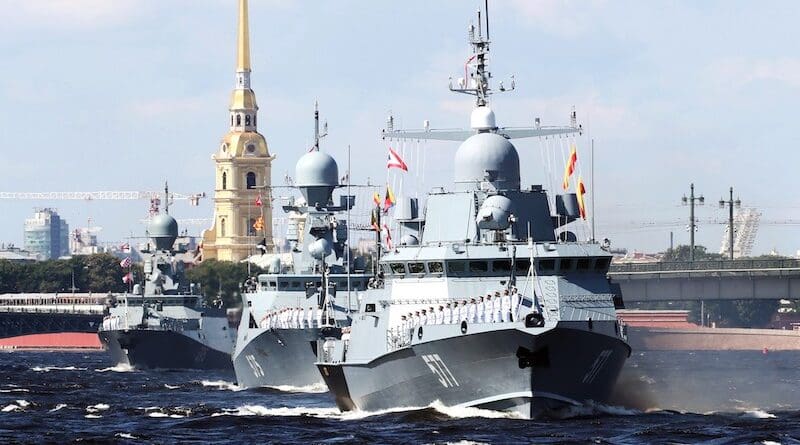
Russian naval parade. Photo Credit: Kremlin.ru


By 

By John C. K. Daly


Kremlin leader Vladimir Putin’s three-year war against Ukraine has battered the Russian Black Sea Fleet (BSF). Ukrainian successes have largely forced the fleet to abandon its traditional Sevastopol base in Crimea for safer anchorage in the Sea of Azov and Novorossiysk on the Black Sea’s eastern coast (see EDM, November 8, 2022,November 15, 2023, January 17, March 26, August 13, 2024, June 27).

Now, the BSF will broaden its basing options by establishing a material and technical base in Georgia’s self-proclaimed Autonomous Republic of Abkhazia. Badra Gunba, president of the mostly unrecognized entity, announced that the facility will be built in the city of Ochamchire. Since 2017, patrol ships from the Coast Guard of the Russian Federal Security Service’s (FSB) Border Service have been based at this port (see EDM, May 1, October 11, 2023). The 7th Russian Military Base is also located on the republic’s territory (The Moscow Times, May 31). Moscow hopes that with the creation of an additional BSF base in Abkhazia, the fleet will be able to effectively regroup while still projecting power across the Black Sea and throughout the Caucasus. For Abkhazian officials, future engagement with the Kremlin could open the door to potential participation in the Union State of Russia and Belarus as well as more widespread recognition of its independence.

Ochamchire is a former Soviet BSF naval base created and developed in the late 1980s that was abandoned after the breakup of the Soviet Union in 1991. In 1997, the fleet based in Sevastopol was partitioned between Russia and Ukraine. Subsequent plans to create a base for Russian BSF ships in Ochamchire were discussed as early as 2009, and, in October 2023, Russia and Abkhazia signed an agreement to establish a permanent base for the Russian Navy (Kommersant, October 5, 2023).  

Russia’s interest in Abkhazia is not limited to Ochamchire. On May 10, during a meeting with Gunba in the Kremlin, Putin remarked, “Today our relations are built on the basis of the 2014 treaty on alliance, a good, solid contractual and legal basis has been created … We are ready to continue cooperation in both the economic and humanitarian spheres: this includes education and healthcare” (President of Russia, May 10).

Expanded cooperation has also included the reopening of the Sukhumi airport, which had not been functioning for 32 years (see EDM, November 20, 2023, March 5, 25). On May 1, the first regular flight from Moscow landed in Sukhumi. Georgia was quick to respond. Georgian Economic Minister Levan Davitashvili argued that the resumption of air traffic between Russia and Abkhazia is a violation of international norms. He said, “Carrying out such flights is a violation of the standards of the International Civil Aviation Organization … We are talking about Russian airlines that are under international sanctions” (1tv.ge, May 1) 


Abkhazia, in northwestern Georgia, was a protectorate of the Ottoman Empire since the late 16th century. In February 1810, Tsar Alexander I issued a manifesto annexing the Abkhazian Principality to the Russian Empire, a status it would retain for the next 183 years, until the collapse of the Soviet Union in 1991 (Gazeta.ru, March 1, 2020).

In 1992, Abkhazian separatists began an armed uprising with the goal of secession and independence from Georgia. The following year, the insurrectionists defeated Georgian forces and established control over Abkhazia. They then declared the entity’s independence, following which a ceasefire was negotiated in May 1994 (Sputnik Abkhazia, August 26, 2024). Despite the truce, Moscow still dispatched Russian peacekeepers to the region, and conflict continued. In 2008, Abkhazia formally declared independence, and the Russian invasion of Georgia ensued. Today, Abkhazia remains de facto independent, though that status is largely unrecognized by the international community.

Abkhazia has since sought the advantages of closer ties with larger regional states. Nevertheless, the issue of Abkhazia potentially joining the Union State of Russia and Belarus was first discussed in 2020 during the initial meeting between Putin and Abkhazia’s self-declared president, Aslan Bzhania. The idea itself was raised with the Russian president on Bzhania’s initiative. In October 2023, Bzhania met with Putin yet again. In a subsequent interview with Izvestiya, the Abkhazian leader once again mentioned that Abkhazia was considering joining the Russia-Belarus union state in the foreseeable future (Ekho Kavkaza; Izvestiya, October 5, 2023). Abkhazia’s potential inclusion into the Union State may run into some difficulties, however. Belarus has yet to recognize the region’s independence.

The occupied territory is also seeking broader international recognition of its independence. On June 8, Oleg Bartsits, Abkhazia’s foreign minister, spoke on his government’s goal to increase its global standing. He stated, “Today we are receiving signals from a number of countries from various regions that there is interest in dialogue with us” (RIA Novosti, June 8). To date, only Russia, Nicaragua, Venezuela, Nauru, and Syria have officially recognized Abkhazia’s independence.

Abkhazia continues to attempt to normalize its relationship with Tbilisi, which regards the region as a breakaway republic whose independence was obtained illegally. On April 22, Bartsits stated that Georgia must repeal its law on occupied territories and sign an agreement with secessionist Abkhazia and South Ossetia on the non-use of force. He asserted:

Statements by the Georgian leadership that they would like to improve relations with their main neighbors—Abkhazia, South Ossetia, and the Russian Federation—do not go unnoticed by us, but at the same time, practical confirmations and real steps are needed. From my point of view, there may be several of them, including the repeal of the law on occupied territories, which does not withstand any criticism or test of time … The second thing … is the signing of an agreement on the renunciation of the use of military force (TASS, April 22).

The separatist government is growing increasingly nervous about possible aggression from Georgia. Thus, granting Russia a naval base in Ochamchire can be viewed as a wise insurance policy in positioning Moscow as an effective deterrent against the potential use of force. Sergei Shamba, former foreign minister and a prominent member of the People’s Assembly of Abkhazia, bolstered this interpretation on February 28. He stated, “The agreements that we have with Russia give us security guarantees, because, in the event of a threat, Russia would act as an ally in defense of our independence and statehood” (Denresp.ru, February 28).

The future of the BSF will largely be determined by the new naval doctrine Putin approved in May, “The Strategy for the Development of the Russian Navy up to 2050.” While details have not yet been released, according to Putin aide and Chairman of the Russian Maritime Collegium Nikolai Patrushev, the new policy is intended to restore Russia’s position as one of the world’s leading maritime powers (PortNews, June 9). The acquisition of a naval base in Abkhazia would accordingly bolster the restoration of the BSF’s regional presence.

On June 6, Bartsits visited Moscow for negotiations with Russian Foreign Minister Sergei Lavrov. Summarizing their discussions, Bartsits commented, “We touched upon almost the entire spectrum of issues that exist in our strategic alliance … First of all, these are issues of security, the formation of a common space, a common security contour in the region of the South Caucasus, the Eastern Black Sea region” (Izvestiya, June 8). Regarding the Ochamchire base, Bartsits added, “Today, in such an important and sensitive geostrategic place … the deployment of such a point, where ships of the Russian Black Sea Fleet can be promptly serviced, we regard as an additional factor of stability and an opportunity to ensure high standards of security in the region.”

Russia is pressuring Tbilisi to bolster Abkhazia’s hardline demands by insisting that Georgia accept legal obligations for the non-use of force against Abkhazia and South Ossetia. The Kremlin has also begun a definitive demarcation of the Georgian–Abkhazian and Georgian–South Ossetian state borders (EurAsia Daily, June 9).

Both Bartsits and Putin define security as the top priority in Russian-Abkhazian relations. Despite the republic’s distance from the frontlines in Ukraine, the conflict has still had an impact there. On October 4, 2023, after meeting Putin in Moscow, Bzhania announced:

On the day of our celebration [commemorating the 30th anniversary of Victory Day in the Georgian-Abkhazian War and Independence Day, celebrated on September 30], a small missile ship came to us, we boarded it … We signed an agreement, and in the near future, the Ochamchire region will be the permanent base of the Russian Navy (Izvestiya, October 5, 2023). 

On October 24, 2023, Ukrainian President Volodymyr Zelenskyy put Moscow on notice about its decision to reopen the base at Ochamchire. He stated that Ukraine would strike the Russian fleet if it were to be based in Abkhazia. The Ukrainian president emphasized that a major naval transition was occurring in the Black Sea, pointing out that the Russian military fleet is no longer able to operate in the western part of the Black Sea and is gradually retreating from Crimea. He stated, “Recently, the Russian leadership was forced to announce the creation of a new base for the Black Sea Fleet—or what’s left of it—on the occupied territory of Georgia, in the southeastern part of the sea, as far as possible from Ukrainian missiles and naval drones. But we will reach them everywhere” (Ukrainska Pravda, October 24, 2023). 

On June 10, it was reported that the Abkhazian State Security Service (SGB) detained a 45-year-old Russian construction engineer. The man was allegedly recruited by the Main Intelligence Directorate of Ukraine’s Ministry of Defense to plan a terrorist attack at the newly reopened Sukhumi airport (TASS, June 10). After making contact with Ukrainian intelligence operatives, the engineer was given directions to plant and detonate a bomb in June that would cause a large number of casualties. The detainee sent his Ukrainian handlers an engineering plan of the Sukhumi airport, marking possible locations for explosive devices. 

The SGB posted a video of the saboteur’s interrogation and confession. He stated:

An unknown person contacted me on the Telegram messenger and introduced himself as an employee of the Main Intelligence Directorate of Ukraine. He explained that he had found me in anti-war and anti-Russian groups on the Internet. And he suggested that we fight the regime together. I agreed. I took the initiative to suggest that we organize an explosion at the VIP parking lot of the Sukhumi airport (Sputnik Abkhazia; TASS, June 10).

Following his interrogation, the SGB’s Investigative Department opened a criminal case against the detainee under Article 274 (Espionage) of the Criminal Code of the Republic of Abkhazia.

In 2008, Russia’s cynical manipulation of separatism in Georgia prior to its brief and violent two-week war saw both Abkhazia and South Ossetia declare independence. Seventeen years later, both republics are economically impoverished regions under a de facto indifferent Russian protectorate, with Abkhazian independence officially recognized by only a select few. It is difficult to see how Abkhazia, with a population of less than 300,000 people, can further establish a fully independent republic when Russian tourists’ rubles largely underwrite its agrarian economy. At least Abkhazia can provide Russian tourists with sandy semi-tropical beaches as their access to the usual European Mediterranean destinations grows more constricted from Western sanctions on Moscow. Beyond that, a more prosperous liberation scenario for Abkhazia is difficult to discern, and the Kremlin is likely to use the breakaway republic for its own military designs.

  • About the author: Dr. John C. K. Daly is a Eurasian foreign affairs and defense policy expert for The Jamestown Foundation and a non-resident fellow at the Central Asia-Caucasus Institute in Washington DC.
  • Source: This article was published at The Jamestown Foundation’s Eurasia Daily Monitor Volume: 22 Issue


Published by the Foreign Policy Research Institute

Founded in 1955, FPRI (http://www.fpri.org/) is a 501(c)(3) non-profit organization devoted to bringing the insights of scholarship to bear on the development of policies that advance U.S. national interests and seeks to add perspective to events by fitting them into the larger historical and cultural context of international politics.
Very rare sword find leads to discovery of extensive Roman-era settlement in England


Copyright Cotswold Archaeology

By Tokunbo Salako
04/07/2025 - EURONEWS

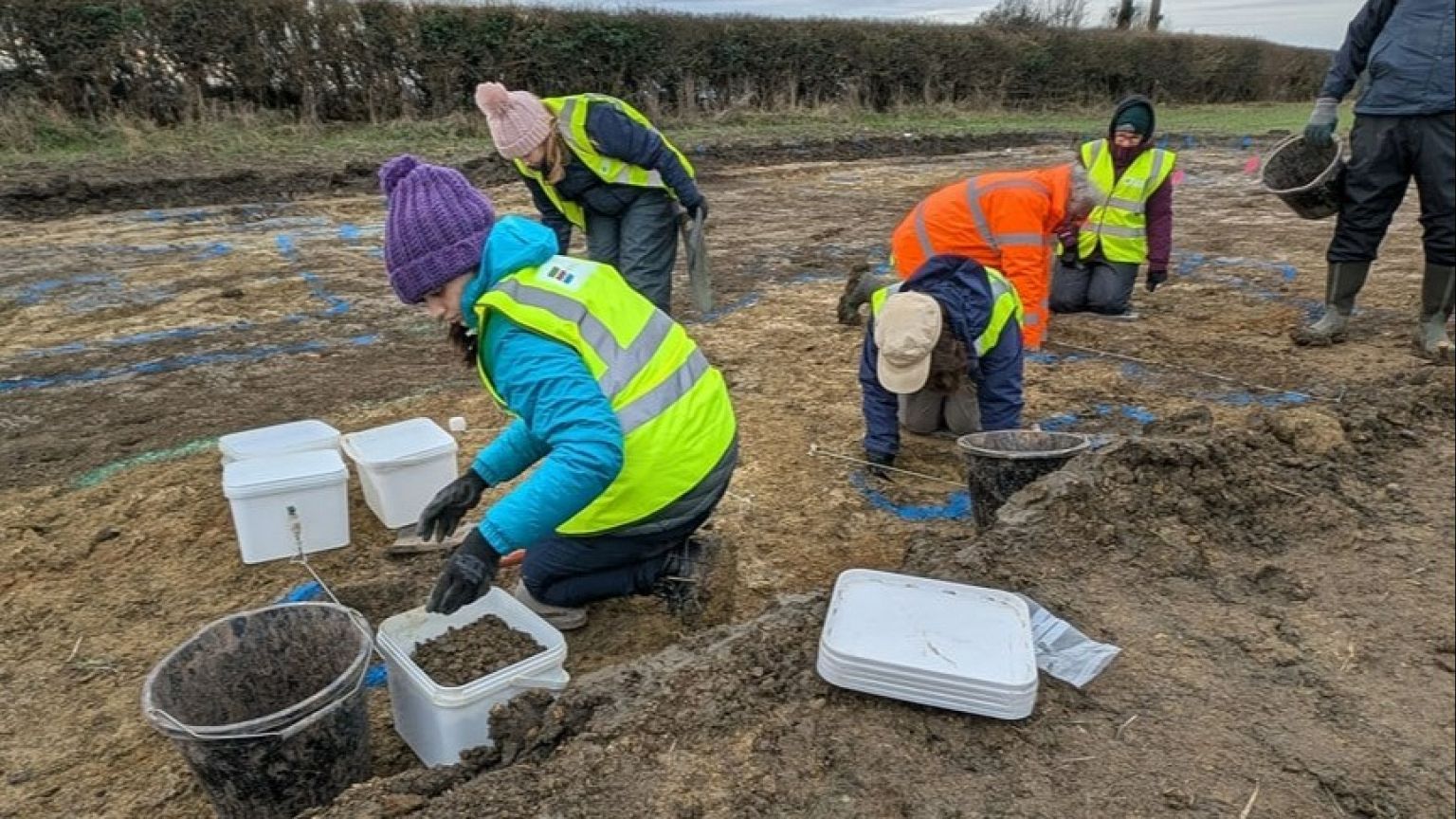
Archaeological excavations have revealed an extensive settlement dating from the Early-Middle Iron Age through to the first and second centuries AD during the Roman period.

What began as an extremely rare discovery of two Roman swords by a metal detectorist has led to an enormous Early-Middle Iron Age find in the Cotswolds in south-west England.

Archaeological excavations at the site in Gloucestershire have revealed an extensive Roman era settlement from the first and second centuries.

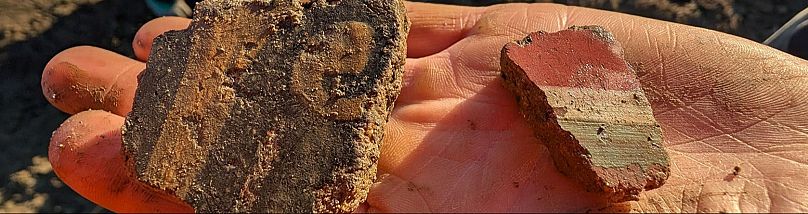
The site near Willersey, funded by Historic England and directed jointly with Cotswold Archaeology, suggests possible evidence of a Roman villa, which may also have a pair of flanking wings, one at either end of a central range.

Archaeologist holding two pieces of Roman painted plaster from the Willersey dig.
 © Cotswold Archaeology

Once Historic England has the final report on the archaeological work, it will be able to consider whether to recommend to the UK government that the site be protected as a scheduled monument.

Fragments of a copper bowl found with the Roman cavalry swords.© Corinium Museum


Iron Roman cavalry swords

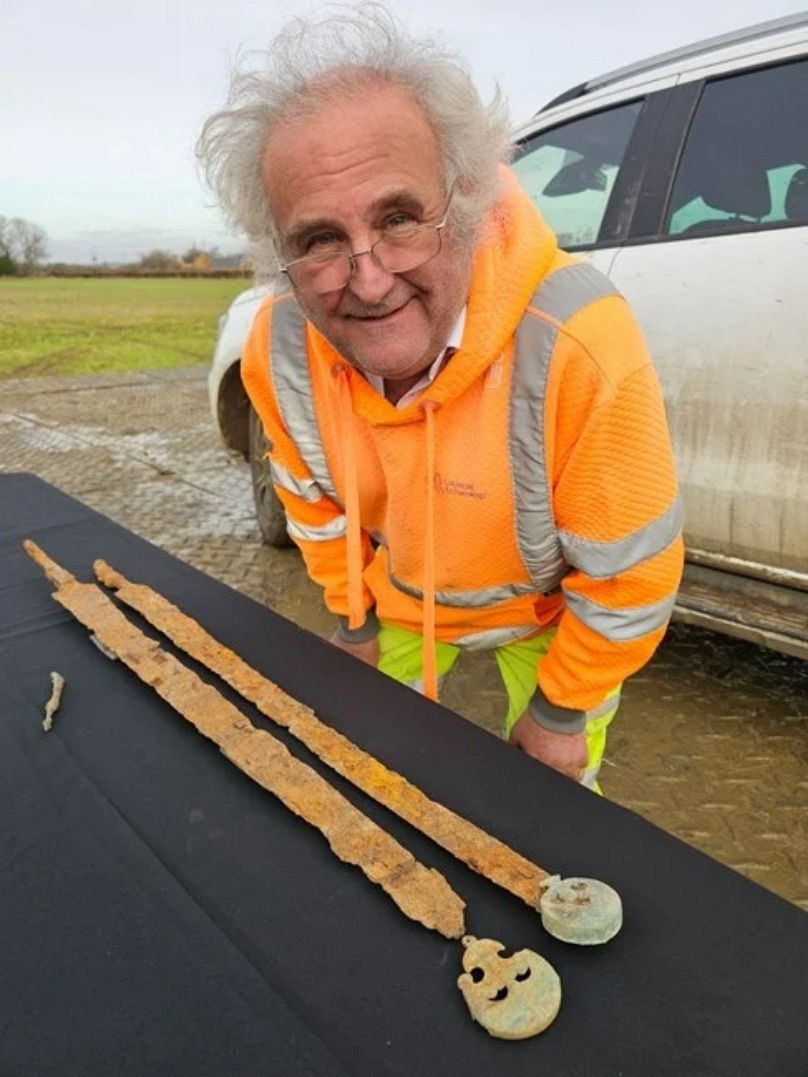
The dig follows the discovery of two iron Roman cavalry swords, possibly displaying traces of their scabbards, during a metal detecting rally in the north of the Cotswolds in March 2023.

The swords were originally reported to and identified by the Portable Antiquities Scheme, who arranged with the finder, metal detectorist Glenn Manning, and the landowner for them to be donated to the Corinium Museum in Cirencester.

Roman cavalry sword with its protective fitting known as a chape. 
© Corinium Museum

The swords were X-rayed at Historic England’s science facility at Fort Cumberland in Portsmouth.

Analysis of the weapons reveals they were constructed differently: one has evidence of decorative pattern welding running down the centre, whereas the other sword is plain. The pattern-welded sword would have been more expensive to produce and therefore higher status.

Peter (Buzz) Busby from Cotswold Archaeology looking at the swords.
© James Haris

The swords will be available for the public to see at the Corinium Museum from 2 August.

Although historically important, at the time of discovery they were not protected by laws such as the 1996 Treasure Act as no gold or silver were discovered within the assemblage that contained the two iron swords, several copper alloy scabbard fittings and strap fittings and a fragmentary copper alloy bowl.

It is believed these long swords or ‘spatha’ were used by the Romans on horseback from early in the second century AD through to the third century AD. They are contemporary with the villa. How they came to be there though, is currently unknown.

Firefighters across Europe battle wildfires as blazes continue in Germany, Greece and Turkey


Copyright Daniel Vogl/(c) Copyright 2025, dpa (www.dpa.de). Alle Rechte vorbehalten


By David O'Sullivan
Published on 05/07/2025 - EURONEWS


Experts link the rising frequency and intensity of heatwaves in Europe to climate change, warning that such extreme weather events are becoming increasingly common.

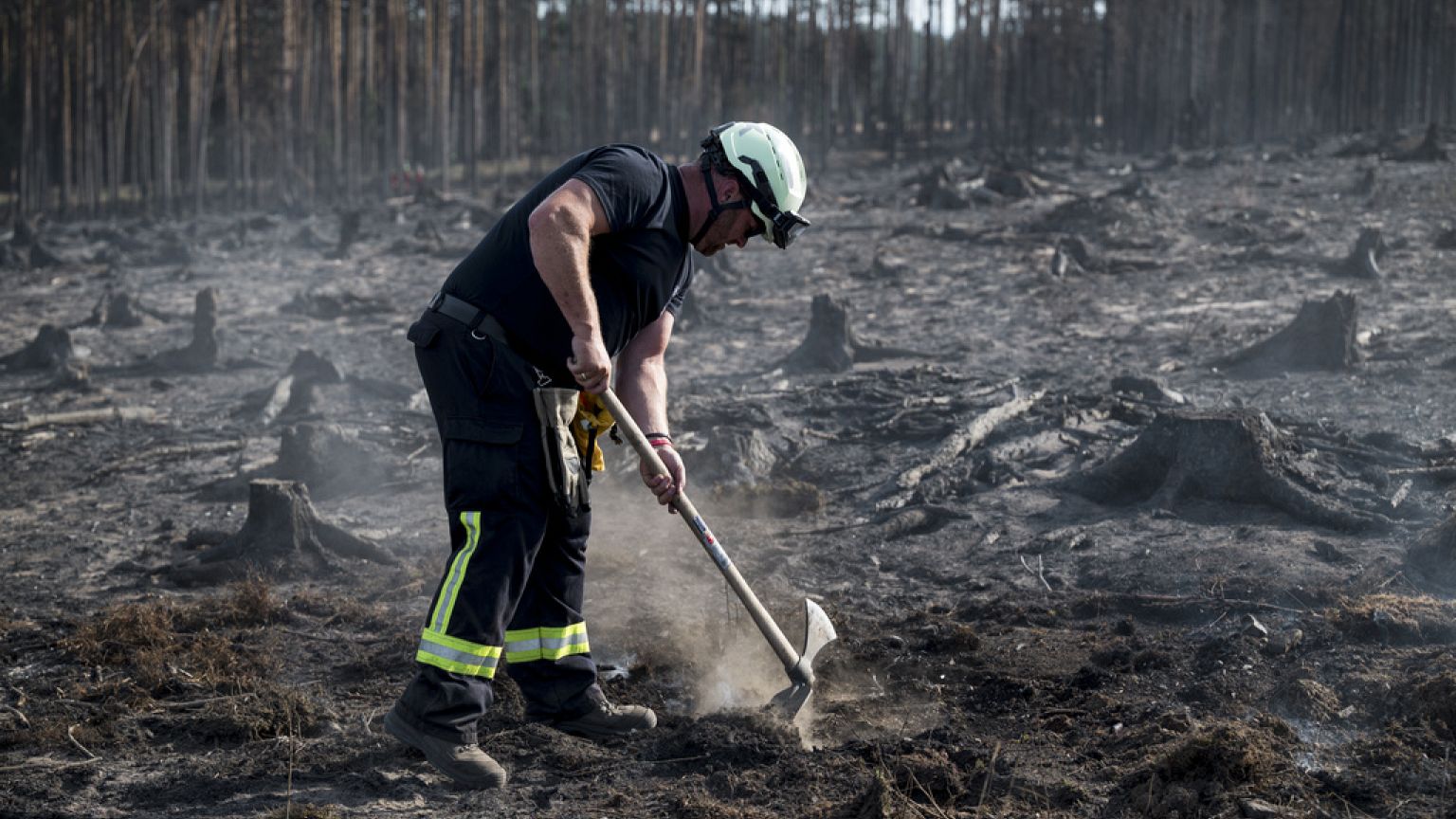
Firefighters across Europe continue to battle forest fires amid blistering heatwaves, as blazes broke out in Germany, Greece and Turkey on Saturday. 

Hundreds of German firefighters have been battling blazes for days in the forested regions of Thuringia and Saxony, including the Gohrischheide nature reserve near the Brandenburg border. 

Around 650 emergency personnel were deployed by midday on Saturday, officials said. Fire alerts were issued via mobile apps by authorities. 

While officials in Saxony described the situation there as largely stable, authorities in Brandenburg said they were prepared for the fire to potentially reignite. 

Firefighters in Greece made progress in containing a wildfire that broke out on Friday afternoon in eastern Attica, the Greek fire service said on Saturday. 

Authorise had earlier ordered evacuations of nearby residents after reports of homes being damaged. People living in Agios Dimitrios, Galazia Akti and Althea received emergency alerts on their phones instructing them to evacuate to the coast. 

The fire service deployed around 120 firefighters, supported by eight helicopters and eight aircraft, to fight the fire. 

Strong winds and dry conditions have raised the risk of wildfires across the country, prompting heightened vigilance by emergency services. 

In Turkey, firefighters have reportedly brought several large wildfires under control in the western Izmir province. 

Fanned by strong winds, fires left homes uninhabitable and forced the evacuation of several neighbourhoods after flames reached residential areas.  

Ground crews, supported by planes and helicopters, worked around the clock for three days to contain the fires, according to the Turkish forestry directorate. 


A fire truck drives through heavy smoke as wildfires burn in the countryside near Rabia, in Syria's Latakia province, Saturday, July 5, 2025.Ghaith Alsayed/Copyright 2025 The AP. All rights reserved.

Turkey also reportedly sent two aircraft and 11 fire engines along with support vehicles to Syria on Saturday to help in the firefighting efforts there. 

Large wildfires there continue to wreak havoc as they devour coastal forests fanned by strong winds and drought. Efforts to halt the series of wildfires have been complicated by the presence of unexploded munitions left over from more than a decade of civil war. 


COMMENT: How close to a crisis is Russia's banking sector?

COMMENT: How close to a crisis is Russia's banking sector?
Russia's banks made an all-time record profit in 2024, but most of their means of making money have evaporated thanks to sanctions. Now the economy is slowing fast and putting them under pressure. How bad will it get? / bne IntelliNews
By Ben Aris in Berlin July 7, 2025

The Russian banking sector, once buoyed by record profits and wartime stimulus, is now showing growing signs of financial strain, leading some to ask if a crisis is looming?

Bloomberg put the cat among the pigeons earlier this month with an article quoting senior bankers as saying the level of non-performing loans (NPLs) is rising and banks are coming under increasing pressure as the Central Bank of Russia (CBR) cracks down on their main form of income – voluminous consumer credits – as the regulator tries to artificially manage inflation lower (which is working).

In a detailed analysis for The Bell, Alexandra Prokopenko, research fellow at the Carnegie Russia Eurasia Centre, and Alexander Kolyandr, visiting research fellow at the Center for European Policy Analysis (CEPA), warn that “the situation in the Russian banking sector is expectedly worsening due to the high rate, tightening requirements for borrowers, and a slowing economy.”

Banks have been left with few options to maintain profitability after sanctions gutted key revenue streams such as foreign exchange trading, investment banking and cross-border transaction services. Prokopenko and Kolyandr write that by mid-2023, the sector had effectively “narrowed down to basic functions: lending, deposit products, and participation in government programmes.”

The shift initially produced windfalls. In 2024, Russian banks posted a record RUB3.8 trillion ($41bn) in profits, up 20% year on year. Return on equity was 23% – also a very high figure. And net interest income grew by 11%, to RUB6.7 trillion. Those were happy days as banks rode the wave of the Kremlin’s military Keynesianism boost.

Lending was fuelled by state-backed mortgage and industrial support programmes, while depositors flooded banks in search of high-yield returns amid elevated interest rates. However, those same high rates are now suppressing economic activity and slowing loan issuance.

Last month, German Gref, CEO of Russia’s biggest bank, Sber, warned that this year profits would be sharply lower. “There is no sign of a crisis yet,” Gref told the Rossiya-24 TV channel at the St. Petersburg International Economic Forum (SPIEF).

"I think that banking sector profit will be lower this year. And banks always get all the problems that arise in the economy at the next stage. We see now that a lot of enterprises are starting to have trouble servicing loans, and the cost of risk and provisioning is also going up for banks. This will likely continue until the end of this year," Gref said.

As Central Bank regulations tighten and quality borrowers retreat, banks are increasingly competing for riskier clients. “Banks are literally running after you,” one banker told The Bell, describing the scramble for solvent borrowers with decent collateral to back a loan.

“All this means that it has become much more difficult for banks to make a profit. But this situation in itself does not threaten to lose stability. Banks have enough capital to cover most of the problem debts, and the percentage of problem loans is still bearable,” the authors said.

The result has been a visible uptick in bad loans, although the NPLs are still at a manageable level. From January to May 2025, the share of problematic consumer loans rose from 4.9% to 5.7%. Defaults are also rising in exposed sectors such as coal, metallurgy and construction. “We have problems,” said VTB CEO Andrey Kostin, pointing to the coal industry. “Let’s be honest, why do we need to produce so much coal? … If we do not start rebuilding the economy, closing inefficient production facilities, we will have a labour shortage and costs will rise,” VTB CEO Andrey Kostin complained this week at the Central Bank Financial Congress. VTB holds several large coal companies and a coal port in the Far East as collateral. However, as bne IntelliNews reported, Russia’s labour shortage is also showing signs of easing thanks to Nabiullina’s actions.

Despite the pressure, the analysts caution against overstating the risk of a systemic collapse. “Yes, there is little that is pleasant ahead … But this is not a catastrophe. This is a normal cycle,” one banker told The Bell. The share of total non-performing loans remains modest at 4.2%, and coverage ratios – the capital set aside to absorb losses – remain stable at 72% for corporate lending and 87% for retail, according to the CBR.

“But the problem of non-payments is not yet systemic. Over the year, the share of problem loans in the corporate loan portfolio remained at 4.0%, although the number of applications for restructuring has increased. The problem is growing in retail – from January to May 2025, the share of problem loans increased from 4.9% to 5.7%, mainly due to unsecured consumer loans,” say the authors.

The CMAKS analytical centre, which usually advocates lowering the Central Bank rate, does not see the inevitability of a crisis either. According to CMAKS calculations, the share of all problem and bad loans in the total loan portfolio of the banking sector increased from 5.9% to 6.4% in January-February of this year. For comparison, a year ago it was 7%, according to The Bell. The Centre for Macroeconomic Analysis and Short-Term Forecasting (CMASF) agrees; there is no sign of a banking crisis yet, The Bell reports.

Addressing these fears, CBR Governor Elvia Nabiullina admitted that the sector was under pressure, but categorically assured Duma deputies that there was “no chance of a banking crisis” in comments this month in response to the Bloomberg article. Nabiullina said the banking system remains stable and well capitalised, and that the “concerns about a systemic banking crisis were unfounded.”

““There are no grounds to consider the situation in the banking sector critical or to talk about systemic risks. The Central Bank continues to monitor the situation closely and is taking all necessary regulatory measures,” she said, Vedomosti reported.

The three biggest banks – Sber, VTB and privately owned Alfa Bank – continue to dominate the sector and all three are well capitalised and in profit. Still, smaller lenders are more vulnerable and having some trouble. The lack of income diversification and regulatory constraints could push some second-tier banks into financial trouble. “Competition for clients without the ability to diversify income leads to portfolio overheating,” write Prokopenko and Kolyandr.

The Central Bank is watching closely. From October 1, it will require stricter capital buffers for loans to state-owned firms that lack explicit repayment guarantees. Meanwhile, ministers have begun publicly warning of recession, which may force a delicate balancing act between inflation control and financial stability.

The danger, the authors note, lies in a prolonged combination of high inflation and economic stagnation. “The most dangerous situation for banks would be a combination of recession and high inflation, which would force the Central Bank to keep the rate high.”

But Nabiullina is working flat out to bring inflation rates down. Last year Russia ended with inflation rates of around 10%, but this year the budget forecast predicts they will drop to 7.6%. Indeed, as inflation is now falling faster than expected, according to Nabiullina, Minister of Economic Development Maxim Reshetnikov said in St Petersburg that the target rate will probably be downgraded soon to reflect the progress, opening a space for Nabiullina to put in new rate cuts and alleviate the pressure on banks and business.

Melting polar ice is measurably slowing the earth’s rotation

Melting polar ice is measurably slowing the earth’s rotation
Frozen polar ice has little effect on the rate of the earth's rotation, but as it melts and flows to the equator, the further away it gets from the rotational axis the slower the earth spins. / bne IntelliNews
By bne IntelliNews July 7, 2025

Melting polar ice is slowing the Earth’s rotation, but not enough to offset an even greater acceleration caused by changes in Earth’s molten core. As a result, scientists say the planet is spinning faster overall — and for the first time in history, a second will need to be subtracted from official timekeeping.

The weight of melting water flowing from the polar ice caps to the equator is visibly slowing the earth’s rotation and adding measurable extra seconds to the length of a day, a new study found.

The melting of polar ice due to global warming has slowed Earth’s rotational acceleration enough to delay a rare timekeeping adjustment — the subtraction of a leap second — in what scientists are calling a dramatic example of how the Climate Crisis is negatively affecting the entire world, CNN reported.

A study published in Nature on March 27 found that the subtraction of a leap second, once expected in 2026, will now be delayed until 2029 — not because Earth is slowing down, but because ice melt has temporarily countered a much larger internal speeding-up effect.

“As the polar ice melts and the water shifts toward the equator, it redistributes Earth’s mass in a way that slows rotation,” said Professor Duncan Agnew, lead author of the study, told CNN. “But deep within the planet, the molten core is slowing down, and to conserve angular momentum, the outer layers — including the crust — are spinning slightly faster.”

The weight of frozen water trapped at the poles has little affect the speed of the rotation of the earth, but like a spinning ice skater lowering her arms from over her head to hold them out, the further the mass of the water is from the axis of rotation, the slower the rate of spinning becomes due to the effects of momentum as the centrifugal force pulls the water to the equator.

That is making the day longer, according to scientists. The phenomenon is slowing the Earth’s rotation, and, by extension, the Coordinated Universal Time (UTC) system used worldwide.

“Part of figuring out what is going to happen in global timekeeping … is dependent on understanding what is happening with the global warming effect,” said Agnew.

Everyone knows about leap years, an extra day every four years, needed to correct the not-quite 365 days a year rotation of the earth around the sun, but less well known are “leap seconds” that need to correct the non-quite 24 hours in a day.

The leap second adjustment is necessary to keep UTC — which is governed by atomic clocks — in sync with astronomical time, based on Earth’s rotation. Since the late 1960s, when UTC became standard, leap seconds have only been added to account for the planet’s gradual slowing due to tidal friction.

However, perversely, the movement of water to the equator and its slowing effect, is not enough to counter the acceleration of the rate of the earth's spinning caused by changes in the rotation of its molten core. The upshot is a scheduled subtraction a second from global timekeeping has to be delayed by several years. A negative leap second — subtracting a second — has never been implemented before.

“A negative leap second has never been added or tested, so the problems it could create are without precedent,” said Patrizia Tavella of the Time Department at the International Bureau of Weights and Measures in France, CNN reports.

Due to the accelerated rotation of the earth’s crust, the Earth’s overall rotation is accelerating: Scientists say the core is slowing, forcing the outer layers to rotate more quickly to compensate and conserve angular momentum. It’s the basic physic principle of: for every action there is an equal and opposite reaction.

The implications of the change in time are significant as changing the time in computers will be as difficult as the Y2K problem at the turn of the century – counting time is hardwired into the core of computers so subtracting even one second to all the computers in the world poses a formidable technological problem. While current computing systems can handle the addition of a second, most are not equipped to subtract one, reports CNN. The risk of errors in systems that rely on ultra-precise timekeeping — such as high frequency stock trading that do thousands of transactions a second and rely on being infinitesimally faster than their competition — is going to be substantial.

“Nobody really anticipated that the Earth would speed up to the point where we might have to remove a leap second,” Agnew added. “Being able to say so much ice has melted that it’s actually changed the rotation of the Earth by a measurable amount — I think gives you the sense, OK, this is a big deal.”


Experts warn of “cascading” climate tipping points that will kill the climate without immediate global action

Experts warn of “cascading” climate tipping points that will kill the climate without immediate global action
The world has already crossed seven of the tipping points that will lead to a catastrophic impact on the ecosystem. Action needs to be taken now, as "later is already too late", delegates say. / bne IntelliNews
By Ben Aris in Berlin July 7, 2025

World leaders must act with “immediate, unprecedented” urgency to prevent cascading climate tipping points that could have catastrophic consequences for billions of people, according to a joint statement released at the Global Tipping Points Conference held last week at the University of Exeter.

The statement, endorsed by nearly 200 scientists and experts, warns that global warming is on track to exceed 1.5°C within the next few years – a level that would activate irreversible shifts in critical Earth systems. “Already tropical coral reefs have crossed their tipping point and are experiencing unprecedented dieback, impairing the livelihoods of hundreds of millions who depend on them,” the statement said.

"Humanity faces threats of an unprecedented magnitude from these tipping points," warned Tim Lenton, a climate scientist at the University of Exeter, in an earlier report on the danger of tipping points.

“Tipping points in the Earth system pose threats of a magnitude never faced by humanity,” he said. “They can trigger devastating domino effects, including the loss of whole ecosystems and capacity to grow staple crops, with societal impacts including mass displacement, political instability and financial collapse.”

Swedish scientist Johan Rockstroem, the head of the well-respected Potsdam Institute, has identified nine tipping points that constrain life on earth. We have solved the problems with only one of them: the Ozone layer, says David Suzuki, a well-respected climatologist. This year, the lack of climate action saw the seventh of the nine breached.

“Now it's too late,” said Suzuki in an interview with iPolitics. “The fight against the Climate Crisis has been lost... All we can do now is hunker down.”

The United Nations’ Intergovernmental Panel on Climate Change (IPCC) has already admitted that the 1.5C-2C limit to temperature increases above the pre-industrial baseline target has already been missed. The world is now on track for a 2.7C-3.1C increase, which will have catastrophic consequences for the ecosystem. As bne IntelliNews reported in charts and maps, all the tipping point indicators were already flashing red in 2023. And little or no action has been taken: the COP28 UN environmental summit was a cop-out, attended by more members of the energy lobby than environmental NGOs. There is still no commitment to reduce the burning of fossil fuels as emissions rise to all-time highs and the Climate Crisis accelerates faster than a scientific model has predicted.

Impact of tipping points already visible

Tipping points are already being passed and are having an increasingly visible impact on the environment. Further destabilisation of the climate could follow, including “a collapse of deep-water formation in the Labrador-Irminger Seas,” with abrupt consequences for weather systems and food security in Europe and Africa, delegates at the Exeter summit were told.

The potential collapse of the AMOC (Atlantic Meridional Overturning Circulation), the Atlantic current system that helps regulate global climate, is described as “particularly alarming”. As bne IntelliNews reported, the collapse of the AMOC, also known as the Gulf Stream, would trigger a mini-ice age in Europe with average winter temperatures falling by 10-30C in Northern Europe. Scientists say they are 98% sure of the collapse by 2100, but more recent research says it could happen in the next few decades, or possibly even earlier.

Moreover, the Southern Ocean current, part of the AMOC, reversed for the first time in history in what climatologists are calling a “catastrophic” tipping point in the global climate system, bne IntelliNews reported.

The Amazon rainforest is also said to be nearing irreversible dieback due to climate change and deforestation. The Amazon rainforest could face “large-scale collapse” by 2050, according to research released last year. This would be included in a tipping point that the ecosystem encounters.

European heatwave hits food production

More mundanely, Europe is currently sweltering in a heatwave of unprecedented proportions that is seeing records broken on a daily basis – records that were only set a year earlier. The economic impact of climate change in Europe has become so noticeable that the European Commission has recently proposed changes to the EU’s long-term budget to better account for the growing economic impact of climate change. The revisions aim to increase funding for climate resilience, disaster relief, and the green transition, while also adjusting budget rules to take into account rising food inflation that will be caused by falling agricultural yields as food security deteriorates.

Over the past three years, food yields in Europe have already declined dramatically as the now annual disaster season gets underway. Several key sectors have already seen the output of key foodstuffs plummet due to a combination of climate-related shocks, drought, extreme heat and changing rainfall patterns, according to data from the European Commission and EU member states.

2022: Europe experienced its worst drought in at least 500 years, significantly reducing harvests of maize (corn), soybeans and sunflowers. Yields for maize dropped by over 20% below the five-year average in many regions, including France, Italy and Romania.

2023: Conditions improved slightly, but yields remained below average for several crops. In southern Europe, persistent drought and heat waves continued to affect cereals and olive production, while flooding in parts of Central Europe disrupted planting and harvest cycles.

2024: Extreme weather intensified again, with early heatwaves in spring and dry soils affecting wheat and barley. The European Drought Observatory reported that crop stress indicators were particularly high in Spain, Portugal and parts of southern France. Olive oil production in Spain fell by more than 50% compared to typical years, leading to record price increases.

However, instead of ramping up its climate fight, European Commission President Ursula von der Leyen has been criticised for proposing to water down the EU’s commitment to its Green Deal goals in the face of the deepening recession in Europe and the growing funding strains of taking over responsibly for supporting Ukraine in its war with Russia.

In recent months, the EU has:

  • Abandoned or weakened several environmental targets, including shelving a law to halve pesticide use by 2030.
  • Relaxed climate and biodiversity rules for agriculture under the Common Agricultural Policy (CAP), amid widespread farmer protests across the bloc.
  • Scaled back nature restoration plans, such as reducing the scope of the Nature Restoration Law to secure passage through Parliament.
  • Delayed or diluted regulation on vehicle emissions and building energy standards, after pushback from industry and some member states.

Matter of survival

Lenton, professor at the Global Systems Institute at Exeter, described the moment as “a matter of survival,” adding that “decisive policy and civil society action” is now critical. “We need to trigger positive tipping points in our societies and economies,” the statement reads, calling on COP30 leaders to adopt policies that generate self-reinforcing change in technology, behaviour and governance.

To minimise the duration and magnitude of global temperature “overshoot,” the statement calls for global greenhouse gas (GHG) emissions to be halved by 2030 from 2010 levels – a reduction path not currently supported by existing national pledges. “Every year and every fraction of a degree above 1.5°C matters,” the signatories write.

Mike Barrett, Chief Scientific Adviser at WWF, warned that delaying action until tipping points are felt would be too late. “The risks of global tipping points are real, and the consequences catastrophic,” he said. “We must catalyse positive tipping points, especially in restoring nature, which is one of our major allies in tackling climate change.”

The experts also advocate for policies to phase out fossil fuel-based technologies – including bans on the sale of petrol and diesel vehicles and gas boilers – and for large-scale investment in emerging solutions such as green hydrogen and green steel. In the food sector, they urge governments to redirect subsidies away from livestock production and toward plant-based proteins.

The statement aligns with Brazil’s COP30 presidency, which has highlighted the risk of tipping points and supports the Global Mutirão initiative – a civil society platform intended to accelerate collective climate action. The authors warn that without immediate shifts in global climate policy, current trajectories will lock in overshoot and irreversible planetary change.

“If we wait until we are experiencing the impacts, then we will also know it is already too late to act,” said Mike Barrett of the WWF. “Later is already too late.”