Monday, January 06, 2025

Nations Are Exiting a Secretive System That Protects Corporations. One Country’s Story Shows How Hard That Can Be

Bolivia was the first nation to begin leaving a legal system that allows foreign companies to sue governments behind closed doors. Now, other countries are following.

INTRODUCED UNDER THE MAI FREE TRADE AGREEMENT FROM THE 1990'S

January 4, 2025
Source: Inside Climate News


La Paz, the administrative capital of Bolivia, is the world’s highest capital city at 13,000 feet. 
Credit: Katie Surma/Inside Climate News

In January 2000, thousands of Bolivians flooded into the streets of the city of Cochabamba. The region’s water services had just been privatized and sold to an American-led consortium, which hiked rates sharply.

The protests roiled the country for months and forced the national government to cancel the contract, returning water services to public control.

But after the consortium filed a legal claim against the Bolivian government in 2002, seeking up to $50 million, the popular uprising transformed into a broader fight against the legal system that allowed this. Investor-state dispute settlement, or ISDS, lets foreign companies bypass national courts and sue governments before international panels of arbitrators.

These tribunals have awarded hundreds of millions or even billions of dollars to companies, even in cases where they flouted national laws, polluted the environment or were accused of violating human rights. Most of these cases have been filed by companies from wealthy nations against developing countries, prompting critics to say ISDS acts like a form of modern-day colonialism.

Bolivia wanted out of the system. Within a few years, it started a movement that has spread around the globe.

From the United States to Europe, Colombia to Indonesia, governments are re-examining a cornerstone of international trade and investment that has held strong for decades. Many elected leaders, activists and legal experts from the political left and right have come to see ISDS as a threat to government policymaking and national sovereignty.

The system has also emerged as a hurdle for climate action: Australia, Canada, Germany, Italy, Slovenia, Spain, the Netherlands and the United States have collectively faced billions of dollars in claims prompted by policies to limit fossil fuels or promote renewable energy.

“ISDS is highly problematic, to put it mildly,” said Surya Deva, United Nations special rapporteur on the right to development. “An investor telling a government, ‘We will bring an arbitration case if you try to protect a local community or give them access to water or limit our mining operations,’ that is crippling.”


Yet even as opposition to ISDS has spread, the system is not going anywhere soon. In some cases, wealthy nations have started to eliminate foreign investor protections among themselves while insisting that poorer nations maintain them.

Many business groups and some academics continue to advocate for ISDS, saying it helps drive foreign investment, especially to small and politically unstable countries like Bolivia.

In these places, investor-state settlement protections serve as a guardrail, said Monica de Bolle, a senior fellow at the Peterson Institute for International Economics. Its presence, she said, sends a signal to prospective investors: “They have ISDS, so if something goes wrong, I’m protected.”

Research on this question has been notoriously inconsistent. Analyses of dozens of studies show no conclusive evidence that these protections increase investment.

Any nation seeking to extricate itself from investor-state arbitration faces an uphill battle: The protections are built into more than 2,600 treaties and countless contracts that would need to be renegotiated or canceled, a daunting task.

Bolivia spent more than a decade snipping the threads tying it to those legal agreements. And yet, it’s still not quite free.
“We Want Partners, Not Bosses”

Like many developing countries, Bolivia bound itself to ISDS in the 1980s and 1990s. The nation was emerging from a period of military dictatorship that had left debilitating debt and hyperinflation.

When the civilian government looked for help overseas, World Bank officials and other global financiers promoted a set of policies, known as the “Washington Consensus,” that included market-friendly reforms like privatization, deregulation and lower taxes. Investor-state arbitration, the officials said, would attract foreign investment, which in turn would lead to prosperity. Bolivia signed 22 investment treaties with ISDS clauses from 1987 to 2002.

The policies brought down inflation and stabilized the economy. But they did little to improve people’s standards of living or reduce inequality. For the majority of Bolivians still living on less than $2 a day, prosperity never came. It was those Bolivians’ formidable social movements that in 2005 propelled an outsider to the presidency who promised to “end the colonial state and the neoliberal model.”

Evo Morales, a former coca farmer who’d stood with water protestors in Cochabamba years earlier, pledged to renationalize natural resources and disentangle the country from Washington, D.C.

“We want partners, not bosses,” became his tagline. The government took control of oil and gas and other industries. On his 100th day in office, Morales led a military contingent to a gas field operated by a Brazilian-Spanish consortium in southern Bolivia to announce that foreign companies had six months to renegotiate their contracts. After he spoke, a soldier unfurled the red, yellow and green Bolivian flag from atop a processing plant.

In 2007, Bolivia withdrew from the treaty tying the country to the World Bank’s arbitration arm, the International Center for Settlement of Investment Disputes, which administers most ISDS claims.

The Washington-based center is the most prominent embodiment of the ISDS system, which Bolivia was intent on opposing for several reasons, said Pablo Solón, a former Morales trade adviser in charge of the withdrawal. Cases can only be initiated by transnational investors against states, and not the other way around. Proceedings are conducted behind closed doors despite having public consequences. And there is no binding code of ethics for arbitrators, who can act as both judges and counsel within the system.

But leaving that World Bank treaty was largely symbolic. It merely shut off one forum for arbitration disputes, albeit a well-known one seen as especially friendly to investors. Until Bolivia terminated the treaties with other nations, companies could continue to bring new claims using other forums, like ones administered in London and The Hague.

Bolivia began pulling out of those treaties in 2009, after enacting a new constitution banning ISDS. Still, there was a catch. Most of these agreements contain “sunset clauses,” which allow companies who invested before termination to bring new claims for five to 20 years afterward unless all parties to the treaties agree to abolish the provision. Nearly all of Bolivia’s treaty partners, including the United States, did not consent.

The last of Bolivia’s sunset clauses will end in 2035, according to U.N. data. So far, the nation has faced 19 publicly known claims, though former government officials and lawyers say another 10 or 20 have been filed in secret.

It took the government eight years after its 2007 withdrawal from the World Bank treaty to enact national legislation as a replacement for ISDS. The rules require disputes to be arbitrated in Bolivia and give Bolivian courts final say over awards.

For ISDS supporters, that is exactly the problem. Human Rights Watch has called the Bolivian judiciary “broken” and highlighted how Morales weakened judicial independence over his 14 years in office. The current president, Luis Arce, has pursued similar policies. Neither a Morales spokesperson nor the Bolivian embassy in Washington or its New York City consulate responded to requests for comment.

Eduardo Rodríguez Veltzé, who served as the president of Bolivia’s Supreme Court from 2004 to 2005, said in an interview at his home in June that past efforts to reform the country’s judiciary have been unsuccessful. He’s not optimistic that will change any time soon.

“Justice is a sad story in this country,” he said.

Yet just because a country’s justice system may be deficient, said Deva, the U.N. special rapporteur, that doesn’t mean foreign corporations should be given exclusive rights to bypass them.

“When people say that investors cannot trust the legal system, I say even communities might not trust the legal system of their own country either,” Deva said, adding that ISDS exacerbates what is already an imbalance of power between foreign companies and local communities.

That argument has attracted unlikely supporters, including Donald Trump’s former trade representative. In 2018, Robert Lighthizer told Congress that the U.S. government ought to be skeptical of ISDS and questioned why a foreign national should have more rights in America than an American.

“A U.S. person goes into a court system, goes through the system and they’re stuck with what they get,” he said. “A foreign national can do that and then at the end of the day say, ‘I want three guys in London to say we’re going to overrule the entire U.S. system.’”
The Unraveling

Bolivia’s pivot away from ISDS helped spark a wave of other withdrawals.

South Africa was already reviewing its investment treaties at the time. One claim had been filed in response to the nation’s post-apartheid policies to share mining wealth with Black citizens. The country’s leaders had signed ISDS treaties in the 1990s without realizing their scope, according to Randall Williams, a former legal advisor to the government. The investment treaties gave all the rights to foreign companies, he later wrote, while the government was given all the obligations.

“Obviously, if this were a personal contract, no one would sign it in their personal lives,” Williams wrote. “This then begs the question—why would officials enter into such agreements on behalf of their countries?”

South Africa sent a delegation to Bolivia to learn about its ISDS withdrawal, according to one person involved, and began withdrawing from its own investment treaties in 2013. At the same time, Ecuador, India, Indonesia, Venezuela and other nations were taking similar steps as a flurry of arbitration claims challenged governments’ regulations on tobacco packaging, oil and gas drilling, gambling and other matters of public health and safety.

Other countries opted to quietly let their treaties expire out of fear of being perceived as anti-investment, according to people who have studied and worked in the system. These moves began building a case against investor-state arbitration.

Yet withdrawal can be fragile. In 2021, Ecuador’s then-President Guillermo Lasso rejoined the World Bank treaty that helps administer arbitrations, though many experts have questioned whether that move violated a prohibition on ISDS written into the country’s 2008 constitution. The nation signed a free trade agreement with Costa Rica, only to have it struck down by Ecuador’s high court because of its inclusion of ISDS.

Last year, President Daniel Noboa placed a ballot question on a referendum that would have reversed that constitutional ban. Noboa was negotiating a new investment agreement with Canada, which was seeking to include investor-state arbitration, according to debates in the Canadian parliament.

Ecuadorians rejected the ballot measure by a wide margin.

As Ecuador, Bolivia and other countries have pulled out, other nations have instead sought to reform the system. Some countries have “new generation” treaties that include carve-outs meant to protect certain types of regulations from arbitration claims, for example.

It’s unclear whether these new agreements are having the intended effect, however. Colombia has faced three claims from Canadian companies following a ban on mining in a sensitive ecosystem, despite the environmental carve-out in its free trade agreement with Canada. Though the Colombian government prevailed on two of the three claims, its costs for the three suits totaled $11 million, which taxpayers will finance.

Earlier this year, the Colombian government announced that it will attempt to renegotiate its trade and investment agreements to remove ISDS, though doing so would require the cooperation of the other parties.

María Claudia Lacouture, executive president of the Colombian American Chamber of Commerce, whose members include major multinational corporations, warned against this move. In an email, Lacouture said investment protections help provide the certainty foreign businesses seek and that arbitration’s “separation from the national legal system enhances investor confidence by guaranteeing neutrality and predictability in the resolution process.”

Colombia has faced at least 23 ISDS claims in the past decade.
“Who Is Winning?”

One of the most puzzling questions about ISDS is why it still exists. Several wealthy nations that constructed it and are its biggest beneficiaries—the United States chief among them—have begun turning against it. For the countries more often on the losing end, activists and academics are pointing the way to the exits.

Opponents have campaigned against the system since the early 1990s, said David Gantz, an ISDS supporter and the Will Clayton fellow at Rice University’s Baker Institute for Public Policy. “And to put it very bluntly,” he said, “they’ve won.”

Many countries, including Spain and Italy, have reconsidered ISDS after damaging energy-related claims. In the United States, officials in both political parties now dislike it because of a view that it infringes on sovereignty, discourages governments from adopting regulations and hurts American workers.

“I think it’s gone,” Gantz said of ISDS. “Or it’s almost gone.”

Still, dismantling it could take decades.

“The system is designed to be as sticky as it gets,” said Josef Ostřanský, a policy adviser at the International Institute for Sustainable Investment who is critical of investor-state arbitration. “Super easy to get in, but it’s very difficult to get out.”

Some industry groups continue to promote investor-state arbitration protections; the American Petroleum Institute tried, with some success, to have it included in NAFTA’s replacement agreement.

Yet many experts say ISDS is rarely if ever the key factor for whether a foreign company invests in a country. A 2020 meta-analysis, published in the Journal of Economic Surveys, looked at 74 studies that examined this question and determined that the “effect of international investment agreements is so small as to be considered zero.” The authors left open the possibility of positive effects that studies weren’t able to capture.

Ecuador released an audit of its investment treaties in 2017 that concluded that its top sources of foreign investment came from countries it had no investment agreement with. An earlier study in South Africa came to similar conclusions. And Brazil, which never signed on to ISDS in the first place, has been a magnet for foreign investment.

While experts say foreign investment data for Bolivia is unreliable, U.N. figures suggest an increase after 2007, when the country withdrew from the World Bank treaty, and then a decline after 2013. But linking economic trends with ISDS is difficult because of the many variables involved. Bolivia’s rise and fall in foreign investment was tied most closely to commodity prices, said de Bolle, of the Peterson Institute for International Economics.

Still, de Bolle argued that given Bolivia’s small size and political upheavals, the lack of ISDS protections are part of the reason for the country’s recent economic struggles. “It is certainly contributing to the problems that they’re having,” she said.

Within the small world of academics and lawyers who study and work on ISDS, many say that its most vocal supporters are not investors but the law firms and lawyers who argue, arbitrate and profit off the cases. Whether a company wins or loses its claim, “you have to pay your lawyers and you have to pay the tribunal,” said J. Benton Heath, an associate professor at Temple University’s Beasley School of Law, who worked as an arbitration lawyer in private practice and an attorney-adviser at the U.S. Department of State until 2018. Those payments generally amount to millions of dollars for each claim, with arbitrators receiving up to $3,000 each day they work on cases.

“Who is winning?” Heath said. “The house always wins.”

Supporters like Gantz argue that the turn against ISDS could jeopardize the transition to cleaner energy. Even if ISDS is not a decisive factor in driving investment, he said, removing it would create one more roadblock to drawing the trillions of dollars needed to build renewable energy systems across the globe.

Ostřanský is working on a new model for international agreements to address this, one that would replace investor protections with mechanisms meant to encourage investments and the transfer of technology.

And companies have other options for operating in challenging markets. Foreign investors can purchase political-risk insurance to protect themselves, for instance.

Meanwhile, in El Alto, a bustling city on a plateau above Bolivia’s capital city La Paz, the country’s solicitor general is defending Bolivia’s last publicly known ISDS case. A Swiss insurance company filed the claim in 2020 over nationalization of the pension system.

In an interview earlier this year, Solicitor General César Adalid Siles Bazán called the nation’s ISDS exit an “intelligent decision.”

With the country’s independence from ISDS, foreign investors who think they’ve been wronged will have to take their chances in Bolivian courts, just like Bolivians.


The Multilateral Agreement on Investment (MAI) was a draft agreement negotiated in secret between members of the Organisation for Economic Co-operation and Development (OECD) between 1995 and 1998.[1][2] It sought to establish a new body of universal investment laws that would grant corporations unconditional rights to engage in financial operations around the world, without any regard to national laws and citizens' rights. The draft gave corporations a right to sue governments if national health, labor or environment legislation threatened their interests. When its draft became public in 1997, it drew widespread criticism from civil society groups and developing countries, particularly over the possibility that the agreement would make it difficult to regulate foreign investors. After an intense global campaign was waged against the MAI by the treaty's critics, the host nation France announced in October 1998 that it would not support the agreement, effectively preventing its adoption due to the OECD's consensus procedures.

WIKIPEDIA

AMERIKA

“We Have to Act”: Taxpayers Suing Congressmembers for Funding Genocide Speak Out

Plaintiff Tarik Kanaana says the lawsuit “has given people something to rally behind and a renewed sense of hope.”


January 4, 2025
Source: Truthout


Wikimedia Commons


On December 19, more than 500 federal taxpayers from 10 northern California counties filed an unprecedented class-action lawsuit against their congressional representatives. Seth Donnelly et. al. v. Mike Thompson, and Jared Huffman charges that the defendants — two Democratic congressmembers — illegally abused their tax and spend authority on April 20, 2024, when they voted for the Israel Security Supplemental Appropriations Act, which authorized $26.38 billion in military aid to Israel.

The lawsuit, filed in U.S. District Court, Northern District of California, alleges that Thompson and Huffman violated the U.S. Constitution, the Genocide Convention and several U.S. laws.

“I am a Palestinian Lebanese American, and I am suing my California congressman, Mike Thompson, for misusing my federal tax dollars and supporting the genocide in Gaza,” Maria Barakat, a class representative, told Truthout. “As a Palestinian and a person of conscience, Thompson has forced me to be complicit in the murder and genocide of my own people.”

Taxpayers who brought the suit come from a wide variety of backgrounds. They include young people, the elderly, educators, health care workers, Jewish and Palestinian Americans, and others. Members of the class are defined as: “All persons who were federal taxpayers during the year 2024 who reside within the federal Second or Fourth Congressional District of California and have suffered moral and emotional/psychic injury from being made complicit in the ongoing genocide in Gaza.”
Congress Can Tax Only for the Common Defense and General Welfare

Article I, Section 8 of the U.S. Constitution establishes Congress’s power to lay and collect taxes only for the common defense and general welfare of the United States. When taxes are collected and allocated for unlawful purposes, the general welfare is not served.

The complaint — the charging document in the lawsuit — notes that the $26.38 billion for which the defendants voted includes $3.5 billion for the procurement of advanced weapons systems, defense articles (items or technical data designed for a missile, satellite or other military use) and defense services; $1 billion for the production and development of artillery and critical munitions; and $4.4 billion to replenish defense articles and defense services provided to Israel.

As this article goes to press, more than 45,500 Palestinian people have been killed by Israel’s genocidal campaign using weapons provided by the U.S. government.

In Donnelly v. Thompson, the taxpayers cite violations of the Genocide Convention, which the U.S. has ratified, and the Genocide Convention Implementation Act, which establishes the crime of “complicity in genocide.” Customary international law, which is part of federal common and statutory law, also prohibits complicity in genocide.

The complaint alleges violation of the Leahy Law, which prohibits aid to foreign security forces that have committed a gross violation of human rights. In addition, it charges that the congressmembers violated the Foreign Assistance Act of 1961 and the Arms Export Control Act, which prohibit U.S. assistance to countries whose governments engage in a consistent pattern of gross violations of internationally recognized human rights. Lastly, the complaint alleges violation of the Conventional Arms Transfer policy, which prohibits U.S. weapons transfers if they risk facilitating human rights violations.
Class Members Asked Their Congressmembers to Halt Military Aid to Israel

Many class members repeatedly contacted their representatives, Thompson and Huffman, urging them not to support Israel’s genocide in Gaza — to no avail. “We have called and written our representatives for over a year begging them to halt military aid to Israel,” Barakat told Truthout. “Some of us call them every single day.” But both congressmembers voted for military assistance to Israel, knowing that it was committing genocide, the complaint asserts.

“We are inspired by the lawsuit Defense for Children International — Palestine v. Biden, filed in November 2023, that attempted to hold the Biden administration legally accountable for direct involvement in the genocide in Gaza,” class representative and lead plaintiff Seth Donnelly told Truthout. In the case against President Joe Biden, Secretary of State Antony Blinken and Defense Secretary Lloyd Austin, a federal district judge in Oakland, California, found that Israel’s conduct in Gaza amounts to a plausible case of genocide.

Although the Biden case was dismissed based on the “political question” doctrine, which reserves foreign policy decisions to the political branches of government (executive and legislative), not the judiciary, the two lawsuits raise different issues, attorney Dean Royer, who filed Donnelly v. Thompson, wrote in an email to Truthout: This case “is premised on taxpayers having their constitutional rights violated when their [c]ongressional representatives voted in favor of military aid to Israel despite knowing Israel was committing genocide and would continue to do so with the aid.”

The complaint in Donnelly v. Thompson cited the International Court of Justice’s January 26 ruling that some of Israel’s actions in Gaza appeared to constitute genocide. On March 24, Francesca Albanese, the UN special rapporteur on the situation of human rights in the Palestinian territories occupied since 1967, published a comprehensive report which concluded that the Israeli government had unequivocally crossed the “threshold” and was actively committing genocide in Gaza. Her findings were also cited in the taxpayers’ lawsuit.
Taxpayers Described Moral Injuries They Suffered From the Vote to Arm Genocide

The taxpayers are asking the district court to certify the proposed class and declare that defendants Thompson and Huffman violated the Constitution’s tax and spend authority as well as federal statutes when they voted for the Israel Security Supplemental Appropriations Act. They also ask the court to restrain the defendants from providing further military aid to Israel. And they are requesting compensatory damages for the emotional trauma, mental health problems and depression they have suffered as a result of the ongoing genocide.

Carol Bloom, a class member from Sonoma County, stated in a release for the Institute for Public Accuracy, “The moral injuries that I and countless other constituents of Representative Huffman have suffered resulting from his vote to arm the genocide in Gaza are immeasurable.”

In media statements, class representatives described the emotional and moral injuries they suffer as a result of Israel’s genocide against Palestinians:

“I have witnessed the destruction of parts of my history and parts of the beautiful culture which I am a product of. I have witnessed the bombing of hospitals and schools, churches, mosques, playgrounds and seaside promenades. I have seen the desecration of burial grounds and have seen the remains of forbearers being unearthed so that refugees have nothing to return to,” Tarik Kanaana, a Palestinian American who lives in Santa Rosa, said in the statement. “The United States is not only allowing this genocide to happen; but is an active participant in it.”

Pamela Brown from Humboldt County said, “My life emotionally and intellectually fell apart in October 2023. As I witnessed and read about the horror inflicted on innocent children, women, and men in Gaza over days, then weeks, then months, and now more than a year, I continued down a dark hole that my friends began to remark on. The distress and despondency I experience have been profound, unlike any other time in my life.”

“I feel I’ve been living in a traumatized state for over a year. I cry every day, multiple times a day, my heart is beyond broken, it’s shattered. I wake up each morning worrying about the genocide that is happening in Gaza, knowing that if it wasn’t for my government’s partnership with the Israeli government, this couldn’t continue,” said Leslie Angeline from Marin County. She tried in vain to meet with Rep. Jared Huffman on the 25th day of her hunger strike/fast, which she ended when the lawsuit was filed on December 19, after 31 days.

“It is literally breaking my heart day by day, night by night, to be complicit in this ‘collective punishment’ of Palestinians of both Gaza and The West Bank,” said Francesca Ciancutti from Mendocino County.

Linda Helland, also from Mendocino County, said, “The psychological distress and moral injury I experience from being forced to pay for genocide has caused me irreparable harm, manifested in depression, anxiety, distractions from work, lack of joy in daily activities, and inability to sleep peacefully.”

Helland, a public health professional, described images seen on phones every day:


Children shot in the head by Israeli snipers; Palestinian women who are too hungry and thirsty to breastfeed their babies because Israel uses starvation as a weapon; rotting babies in incubators after the Israeli military took over the hospital and turned off the electricity; teenagers burned to death still hooked up to their hospital IVs when the Israeli military bombed the hospital; toddlers crushed when Israel bombs schools; and parents collecting plastic bags of unidentifiable children’s body parts so they’ll have something to bury after Israel bombs refugee shelters.
One Struggle, Many Fronts

The taxpayers are clear-eyed about the challenges the lawsuit faces. But they are resolute.

“We see it quite clearly that there are legal and constitutional limits on what U.S. tax dollars can be used for, and our congressmen have broken the law,” Barakat told Truthout. “Our eyes are wide open about the federal courts. It’s an uphill climb, but we have to act. We are responsible to act.”

“I have no faith that the U.S. government will do what is right, especially after 15 months of … supporting Israel’s genocide against the Palestinian people, including financing and providing Israel with the political cover it needs,” Kanaana said in an interview with Truthout. “I am sure that the court will find a way to dismiss this case. If, however, it does continue and we get a ruling in our favor, it will have huge ramifications on what the U.S. can do to support Israel. That said, we have already achieved so much of what we set out to do.”

Kanaana added that the lawsuit “has given people something to rally behind and a renewed sense of hope.” Since the genocide started, the taxpayers have “been protesting in the streets, going in front of city councils and other political bodies to convince them to call for a ceasefire, protesting national politicians and university encampments (which were violently suppressed) and anything else we could think of to change our government policies.” However, Kanaana says, the situation in Palestine “is getting much worse.”

“This struggle will take sustained efforts on many fronts, with the lawsuit being a means to shine the spotlight on the role of U.S. tax dollars in the genocide. We anticipate a vigorous effort by the defendants to dismiss the case on various grounds and understand that the legal battle will be challenging but we believe we can ultimately succeed,” attorney Royer told Truthout. “While Congress has great latitude to decide how to spend tax money, the line is crossed when the spending results in complicity in genocide and human rights violations.”

Since the filing of Donnelly v. Thompson on December 19, “we have gotten media attention beyond what we had anticipated locally and nationally,” Kanaana told Truthout. As a result, “people and groups from around the country have been reaching out to us offering us support and, more importantly, to get information on how they can replicate our lawsuit in other areas against other Congress members who have shown support for Israel’s war crimes.”

“If we persuade the court that we are correct, this lawsuit could be replicated throughout the U.S. with other congressional representatives as defendants,” attorney Royer added. “In fact, there is already interest in the case by other constituencies in California and other states.”

Class members are encouraging all taxpayers in Marin, Sonoma, Solano, Napa, Lake, Yolo, Mendocino, Trinity, Humboldt and Del Norte Counties to sign onto the lawsuit.

Taxpayers Against Genocide NorCal, which organized the taxpayers’ lawsuit, will soon be offering a webinar for activists across the U.S. who want to replicate their action. For more information, interested parties can contact classactionagainstgenocide@proton.me.

“This unprecedented lawsuit gives these Congresspersons pause that their constituents, from all 10 counties in northern California, have joined together. Their power is seated in keeping us apart,” Anna Marie Stenberg, a long-time activist and key leader of the coalition, whose family is from Lebanon, told Truthout. “This coalition will also be invaluable over the next four years when the targets are put on immigrants and the LGBTQX communities.”


Marjorie Cohn is professor emerita at Thomas Jefferson School of Law, dean of the People’s Academy of International Law, and past president of the National Lawyers Guild. She sits on the national advisory boards of Veterans For Peace and Assange Defense and she is the U.S. representative to the continental advisory council of the Association of American Jurists. Her books include Drones and Targeted Killing: Legal, Moral and Geopolitical Issues.


Tears of Our Children

From Palestine to Sudan, imperialist wars are destroying the lives of innocent children, leaving long-term physical and psychological wounds on those who survive.
January 4, 2025
Surce: Tricontinental Institute


Malak Mattar (Gaza, Occupied Palestinian Territory), Prematurely Stolen, 2023.


A study came out in December that made me cry. Titled Needs Study: Impact of War in Gaza on Children with Vulnerabilities and Families, it was conducted by the Community Training Centre for Crisis Management (CTCCM) in Gaza. Written in a clinical style, nothing about the language should have impacted me in the way that it did. But the study’s findings were shocking. Here are some of the cold facts:79% of the children in Gaza suffer from nightmares.
87% of them experience severe fear.
38% report bedwetting.
49% of caregivers said that their children believed that they would die in the war.
96% of the children in Gaza felt that death was imminent.

Put simply, every single child in Gaza feels that they are going to die.
Galal Yousif Goly (Sudan), Untitled, 2024.

This newsletter, the first of 2025, could have ended after that last line. What more needs to be said? But there is more to say.

In March 2024, the United Nations Committee on the Rights of the Child released a sharp statement on the war in Sudan between the Sudanese Armed Forces and the paramilitary Rapid Support Forces, both backed by a range of foreign powers. That statement had its own powerful facts:24 million children in Sudan – nearly half of the country’s total population of 50 million – are at risk of ‘generational catastrophe’.
19 million children are out of school.
4 million children are displaced.
3.7 million children are acutely malnourished.

The first point refers to the totality of Sudan’s children, all of whom are at risk of a ‘generational catastrophe’. This concept, which was first used by the United Nations to describe the trauma and setbacks that children experienced due to COVID-19 lockdowns, means that the children of Sudan will not recover from the ordeal that the war has inflicted upon them. It will take generations before anything resembling normality returns to the country
.
Pacita Abad (Philippines), Water of Life, 1980.

A scientific study from 2017 found that deep childhood traumas can mark a person both physically and psychologically. Trauma reroutes children’s developing nervous systems, causing them to be highly alert and anxious even decades later. This process, the authors write, generates a mechanism called ‘enhanced threat processing’. No wonder studies of children who lived through earlier wars show that they disproportionately suffer from medical conditions, including heart ailments and cancer.

In March 2022, five doctors from Afghanistan, India, Ireland, and Sri Lanka wrote a heartfelt letter to The Lancet in which they reminded the world of the plight of the children of Afghanistan. As of 2019, every child in Afghanistan was born and raised during war. Not one of them had experienced peace. The authors noted that ‘studies on psychotherapeutic interventions in Afghan children and adolescents are rare, and the evidence they have produced is low quality’. So, they proposed an integrated healthcare plan for Afghan children that relied upon telehealth care and non-medical professionals. In another world, the plan could have been debated. Some of the funds that had enriched the arms merchants during that war would have instead been expended to realise this plan. But this is not the way forward in our world.
Mahoud Ahmad (Iraq), Title Not Known (Ahmad 9), 1976.

The statement about arms merchants is not made idly. According to a December 2024 fact sheet from the Stockholm International Peace Research Institute (SIPRI), the world’s top 100 largest arms-producing and military services companies increased their combined arms revenues by 4.2% in 2023, reaching a staggering $632 billion. Five US-based companies accounted for nearly a third of these revenues. These 100 companies increased their total arms revenues by 19% between 2015 and 2023. Though the full numbers for 2024 are not yet available, if one looks at the quarterly filings from the main merchants of death, their earnings have spiked even further. Billions for warmongers, but nothing for children who are born into warzones.
Ismail Shammout (Gaza, Occupied Palestinian Territory), We Will Not Leave, 1987.

In 2014, Israel’s bombardment of Gaza resulted in the death of innocent children. Two incidents in July struck a special chord. First, Israel fired a missile that hit the Fun Time Beach Café (Waqt al-Marah) in Khan Younis at 11:30pm on 9 July. In the café, which was a makeshift structure about thirty metres from the Mediterranean Sea, several people had gathered to watch the 2014 FIFA World Cup semi-final match between Argentina and the Netherlands. They were all serious football fans. The Israeli missile killed nine young people: Musa Astal (age 16), Suleiman Astal (age 16), Ahmed Astal (age 18), Mohammed Fawana (age 18), Hamid Sawalli (age 20), Mohammed Ganan (age 24), Ibrahim Ganan (age 25), and Ibrahim Sawalli (age 28). They never got to watch Argentina win the match in the penalty stage or see Germany win the tournament in a tense match a few days later.

Israel’s bombing, meanwhile, was unabated. Three days later, on 16 July, several boys were playing football – as if replaying the World Cup on Gaza’s beach – when an Israeli navy ship fired first at a jetty and then, as the boys ran from the explosion, at the boys. Israel killed four of them – Ismail Mahmoud Bakr (age 9), Zakariya Ahed Bakr (age 10), Ahed Atef Bakr (age 10), and Mohammad Ramez Bakr (age 11) – and wounded others.

The 2014 Israeli barrage on Gaza killed at least 150 children in total. When the human rights group B’Tselem produced an advertisement to broadcast the names of the children on Israeli television, the Israel Broadcast Authority banned it. The British poet Michael Rosen responded to the killings and the ban with the beautiful poem ‘Don’t Mention the Children’.


Don’t mention the children.
Don’t name the dead children.
The people must not know the names
of the dead children.
The names of the children must be hidden.
The children must be nameless.
The children must leave this world
having no names.
No one must know the names of
the dead children.
No one must say the names of
the dead children.
No one must even think that the children
have names.
People must understand that it would be dangerous
to know the names of the children.
The people must be protected from
knowing the names of the children.
The names of the children could spread
like wildfire.
The people would not be safe if they knew
the names of the children.
Don’t name the dead children.
Don’t remember the dead children.
Don’t think of the dead children.
Don’t say: ‘dead children’.

Yes, the children have names. We will continue to name all those whose names we can remember. We will not forget them. In September 2024, the Palestinian Ministry of Health released an updated list of the names of Palestinians killed in the US-Israeli genocide from October 2023 to August 2024. On that list are 710 newborns whose ages are listed as zero. Many of them had only just been named.

Though the list is too long to reproduce here, the story of Ayssel and Asser Al-Qumsan is emblematic. On 13 August 2024, Mohammed Abu Al-Qumsan left his apartment in Deir al-Balah, within central Gaza’s ‘safe zone’, to register the birth of his twin children Ayssel and Asser. He left the twins with their mother, Dr. Jumana Arfa (age 29), who had given birth to them three days earlier at Al-Awda Hospital in Nuseirat. Dr. Jumann Arfa was a pharmacist trained at Al-Azhar University in Gaza. A few days before giving birth to her children, she posted on Facebook about Israel’s targeting of children, citing an interview with Jewish-American surgeon Dr. Mark Perlmutter on a powerful CBS News segment called Children of Gaza. When Mohammed returned from registering the twins, he found that their home had been destroyed and that his wife, newborn children, and mother-in-law had all been killed in an Israeli strike.


Ayssel Al-Qumsan.
Asser Al-Qumsan.

We must name the dead children.
Malak Mattar (Gaza, Occupied Palestinian Territory), Tiger Embracing the Boy, 2024.


Vijay Prashad

Vijay Prashad is an Indian historian, editor, and journalist. He is a writing fellow and chief correspondent at Globetrotter. He is an editor of LeftWord Books and the director of Tricontinental: Institute for Social Research. He is a senior non-resident fellow at Chongyang Institute for Financial Studies, Renmin University of China. He has written more than 20 books, including The Darker Nations and The Poorer Nations. His latest books are Struggle Makes Us Human: Learning from Movements for Socialism and (with Noam Chomsky) The Withdrawal: Iraq, Libya, Afghanistan, and the Fragility of U.S. Power. Tings Chak is the art director and a researcher at Tricontinental: Institute for Social Research and lead author of the study “Serve the People: The Eradication of Extreme Poverty in China.” She is also a member of Dongsheng, an international collective of researchers interested in Chinese politics and society.
Brazilian Judiciary Orders Investigation of Israeli Soldier-Tourist for War Crimes in Gaza

January 5, 2025
Source: Informed Comment


Rio de Janeiro

According to Junio Silva at the Brazilian newspaper Metrópoles , on December 31, Federal Judge Raquel Soares Charelli directed the Federal Police to open an immediate investigation into Israeli soldier vacationing in Brazil who is alleged to have perpetrated war crimes in Gaza.

The court was petitioned by the Hind Rajab Foundation, an organization based in Belgium and operating globally to expose crimes against humanity, war crimes, and human rights violations in Palestine. The foundation and other sources provided 500 pages of legal documentation connected to the case, gathered through open-source investigation. A lot of Israeli soldiers have posted videos to Telegram and other outlets boasting of their atrocities, which allow organizations like the Hind Rajab Foundation to build a case.

The foundation’s petition included a plea for the detention of the Israeli national lest he flee the country.

Junio writes that the accused Israeli national is alleged to have participated in demolishing a residential complex in the Gaza Strip with explosives in November 2024. This act reportedly occurred outside an active combat zone. The demolished homes had served as refuge for internally displaced Palestinians within the enclave following the onset of the conflict between Israel and Hamas.

Junio quotes the Hind Rajab Foundation’s attorney, Maira Pinheiro, who clarified that the decision leverages the Rome Statute, a treaty that Brazil ratified. The Rome Statute established the International Criminal Court (ICC) and has been in effect since 2002.

Pinheiro said, “Since Brazil is a signatory to the Rome Statute [Como o Brasil é signatário do Estatuto de Roma], universal jurisdiction also applies within Brazilian territory [vale também em território brasileiro a jurisdição universal]. This means any member state must act to ensure crimes outlined in the Statute – war crimes, crimes against humanity, and genocide – are investigated and prosecuted. Based on the extraterritoriality principle in Article 7 of the Brazilian Penal Code, Brazil has jurisdiction to investigate criminal offenses committed abroad when they arise from international treaties and the perpetrator enters Brazilian territory.”

The International Criminal Court has issued arrest warrants for Israeli Prime Minister Benjamin Netanyahu and former Defense Minister Yoav Gallant.

Camila França at Brasil 247 notes, “The decision is considered a landmark in the application of international law within national territory.”

She notes that a similar case is unfolding in Chile, where 620 attorneys have filed a case against a member of Israel’s 749th Combat Engineering Battalion who was vacationing in Chilean Patagonia. Lawyer and former ambassador Nelson Hadad in Santiago also called for the immediate arrest of that individual. She writes that the complaint is supported by Chilean Senator Francisco Chahuan, who said that the Public Prosecutor’s office was in receipt of mounds of evidence, including videos and photos from the accused’s Instagram account, which allegedly depict his involvement in the destruction of neighborhoods, civilian infrastructure, and cultural sites in Gaza. She notes that Senator Chahuan alleges that these actions violated the Geneva Conventions and constitute war crimes and genocide.


Juan Cole
Juan R. I. Cole is Richard P. Mitchell Collegiate Professor of History at the University of Michigan. For three and a half decades, he has sought to put the relationship of the West and the Muslim world in historical context, and he has written widely about Egypt, Iran, Iraq, and South Asia. His books include Muhammad: Prophet of Peace Amid the Clash of Empires; The New Arabs: How the Millennial Generation is Changing the Middle East; Engaging the Muslim World; and Napoleon’s Egypt: Invading the Middle East.
AI and Us—Wake Up and Smell the Guillotine

January 5, 2025
Source: Originally published by Z. Feel free to share widely.


Credit: Jérémy Barande (Flickr)

AI is already very nearly everywhere. So far, it is no big deal, right? It assembles data, controls this or that machine, writes and/or edits lots of messages and even articles, and who knows, maybe even a book or two. It produces songs, short films, and of course lots of software. It talks, it watches, it will read a book or watch a video and summarize it for you. It’s a time saver, a pattern revealer. But has it turned life upside down and inside out? Not really—unless you think we have ubiquitous mistrust and pervasive lying in part due to AI though I would say Social Media is more implicated in that mess. In any case, it has technological side effects? So what. The main effects are gloriously exciting. Goodbye cancer. Hello immortality.

A poll of Ivy League college students that asked how many books students surrounded by ivy walls read a year revealed that many of them don’t read books anymore at all. Many doubt if they could even manage to read a whole book. It doesn’t matter much because they prefer to get a summary lickety split. So why was I worried in some earlier essays that I offered on this topic? I play Go with an AI that trounces me unless I opt for it to play less well than it can. Same for chess. Great opponent. So? So far, no big deal. No?

Let’s look down the road a bit. Five years off, ten years, whatever. Consider the top 100 songs of 2030. Suppose eighty five were written by AIs. Not just the lyrics, but also the music. Even played by AI. Maybe ninety five. Great listening. Hooray. Headphones get better too. Al engineers at work. Same for new novels, best sellers, and for my reading glasses too, supposing I still read. We have so much to enjoy. And of course it’s the same for software, in spades. Likewise for architectural designs and new product proposals. And oh yes, do you need to go to the doctor? Looks like a person, talks like a person, but it’s an AI that has fantastic bed-side manners. The thing makes brilliant diagnoses. And it is so pretty/handsome—you choose. Even out in the boonies, a therapist in every home. Surgery galore. Longer life. Fabulous.

Meanwhile, your daughter is in high school with all AI teachers. They are very patient with her. Indeed, from day care on is all AI territory. Your son has an AI life partner. A perfect soulmate. No need for angst. No more breakup songs. Everyone has a convenient AI agent. It plans for us, shops for us, cooks for us, cleans for us, read for us, writes for us, reads for us, talks for us, hears our woes, shares our ecstasies (supposing we have any). You want my week’s plan, what I feel? Have your AI me a call. My AI will answer. It will reply as I would, in my voice, with my personality. With no forgetfulness, no errors. I’m in my den. On my couch. Watching AI entertainment. A happy idiot.

The news gets delivered each day by AIs who tell us all is great. All is wonderful. We have somehow avoided AIs being misused by nefarious profit-seeking owners to lie, cheat, steal, and manipulate (despite that of late, in our time, there is steadily less attention to such concerns). We have also somehow avoided AIs going rogue to do their own preferred deeds no matter the human costs (despite that in our time we rush to give them independent ability to make their own decisions and implement their own plans). AIs provide all kinds of calculations, prognostications, and creations. They help us like we used to help our pets. What’s to worry about? What’s to regulate? After all, we can always pull the plug.

Well, one answer goes back a step and says that most of that can’t happen. AI’s won’t ever do the things I mentioned. But just months back the most frequent basis for such a claim was that we were running out of data to train AIs with. There is only one internet, after all. So there is only so much data. And lots of it is garbage. But then came a brainstorm. Why not generate new data with AIs? What could go wrong? Is it a solution or cyber in breeding? Off we go.

But still comes the next answer. even if they keep developing these AIs are just machines. Life partners? Give me a break. Nonsense. Humans won’t fall for that. Teachers, doctors, agents who we converse with, who we get instructions from, who we get life advice from, who we have dinner with? Come on. You might as well marry a pretty rock. And then they are going to write, sing, paint, and film better than flesh and blood writers, singers, painters, and film-makers? Surely not. It is all industry hype to get investments.

Hang on. An AI interviews you for two hours. Yes, you. Tomorrow. It asks you diverse questions. It ruminates on your answers. It winds up with your personality. It grabs your voice too. Your look. Your feel. Think about that. It can act as you would act in 85% of all cases now, today, already. Is that hype? Maybe, but what if it isn’t? In five years, 98%? Except it answers way faster and has infinitely more facts to offer. More insights. Will that mean it is 120% you?

There are dozens of AI products right now and more arrive monthly. Soon, AIs will design new AIs. Even with humans designing, it is largely trial and error. We don’t really know how the hell AIs do what they do so well or often even at all. But with AIs designing? For the most part, nowadays mainly only tech bros extensively use them. AI’s are still a bit too clumsy for you and me. But soon anyone will be able to use them. Easy peasy. What fun. Just ask and you shall receive. No more frustration. No more pathos. No more tedium. No more, no more.

Yes, of course one possible worry is bad actors who will misuse AI to manipulate millions via lies and fear. Read that again. Not exactly a little worry. Another kind of worry is AIs that themselves not only decide how to fulfill requests we make of them, but also decide how to fulfill requests they make of one another regardless of collateral damage for cats, dogs, and people. Also serious, no? But I think there is a third kind of worry. Cheered on by us, AIs become able to do all that humans do, not only faster but also valued more by humans than when humans do those things. Hey robot, I appreciate you. This proceeds until humans prefer AIs to other humans for getting things done, meeting needs, being entertained, and even for intimacy. It proceeds until humans become steadily less social, less productive, less initiating, less discerning, and less creative, and AI-guided life-like robots become more of all of that. Until, that is, we become less human-like and they become more human-like.

At this point, for evidence I might start listing AI products that already exist. I might describe their capabilities, compare them to one year ago, and report what people in the field say is in the works. And I might detail how their use would reduce our time sent in diverse pursuits, progressively atrophying our capacities regarding those pursuits. Or I could ask an AI to do that research and to write it up for me, even in my wordy style. But I bet you won’t be surprised that I would rather suggest that you assemble whatever evidence you think relevant and think it through for yourself to a wonderful or to a God-awful conclusion. What you need is just a Google search away. You don’t want to search? Too much work? Too disturbing? I get that, but consider the implications of that answer coupled to the rest of this brief article for what it says we won’t want to do five years from now.

P.S. I in no way mean to suggest that AIs that do more and more and faster and faster translation, programming, transporting, constructing, designing, care-taking, teaching, doctoring, cooking, planning, and conversing don’t pose serious problems for employment and economy more broadly. I am instead suggesting that even if we deal with those problems and also with nefarious use problems and also with rogue AI mayhem problems, we may still confront a social relations problem that threatens what it is to be a person. Like social media has done a spirited tap dance on what it means to be friends, to pay attention, and to find truth, AI may elephant tromp on what it means to be a person.

P.S.S. I also don’t mean to suggest that we should drop everything else and become Luddites or even just well informed critics of AI mania who demand extensive AI oversight and restrictions. Nope. Global heating and ecological suicide are still around. So too is a surging fascist trend. And nukes. I am instead suggesting that along with developing a movement of movements to address those undeniable dangers, we should also have an emerging movement of movements address AI dangers.

Ugly possibilities. Is there some way out of here? Is there an orientation, a mind set, some values, a vision or perhaps mixture of visions that taken all together can fuel resistance to all our impending horrors right up to our winning a world in which none of that persists? Apocalypse avoided. A better world attained. I think we need a bit more attention to conceiving such a worthy viable shared mindset, values, and visions to then act in accord with in 2025.


ZNetwork is funded solely through the generosity of its readers.  Donate


Michael Albert`s radicalization occurred during the 1960s. His political involvements, starting then and continuing to the present, have ranged from local, regional, and national organizing projects and campaigns to co-founding South End Press, Z Magazine, the Z Media Institute, and ZNet, and to working on all these projects, writing for various publications and publishers, giving public talks, etc. His personal interests, outside the political realm, focus on general science reading (with an emphasis on physics, math, and matters of evolution and cognitive science), computers, mystery and thriller/adventure novels, sea kayaking, and the more sedentary but no less challenging game of GO. Albert is the author of 21 books which include: No Bosses: A New Economy for a Better World; Fanfare for the Future; Remembering Tomorrow; Realizing Hope; and Parecon: Life After Capitalism. Michael is currently host of the podcast Revolution Z and is a Friend of ZNetwork.
U$ Electoral Opposition

Part 5 of "Defending Society Against MAGA Tyranny: A Prospectus for Action"
January 5, 202
Source: Originally published by Z. Feel free to share widely.


COUNT EVERY VOTE RALLY at McPherson Square at 15th and I Street, NW, Washington DC on Wednesday evening, 4 November 2020 by Elvert Barnes Photography via Wikimedia


Part 5 of this series contains the following chapter:

6. Electoral Opposition

Defending Society Against MAGA Tyranny: A Prospectus for Action is a report from the Labor Network for Sustainability, co-published by ZNetwork.org.

Click here to read the report in full: Defending Society Against MAGA Tyranny: A Prospectus for Action
Electoral Opposition

Even when, as in Milosevich’s Serbia or Bolsonaro’s Brazil, democracy has been severely undermined, institutions of representative government can still play a major role in ending a tyranny. While Trump and the Republican party have already restricted voting rights and other democratic practices, the electoral arena remains crucial for Social Self-Defense.

Trump won less than 50% of the popular vote.[1] Republican margins in the House and Senate are extremely narrow. If the electoral system is not further corrupted, a very small shift would swing the House and/or the Senate to Democratic control in 2026 and elect a Democratic president in 2028. A very small swing to the Republicans, conversely, might solidify para-fascist governance for a very long time.

There are serious obstacles to defeating MAGA simply by electoral means. The first is that Trump has already used and will now augment the use of extralegal, violent, unconstitutional means that can’t be countered just by voting. That will include further undermining the electoral system itself, repressing opponents, and using all the instruments of an authoritarian, plutocratic government to secure unlimited power.

The second is the inadequacy of the Democratic Party as a vehicle for countering MAGA power. Disillusion with Democrats played a major role in Trump’s victory. Corporate and fossil fuel domination of the Democratic Party made it impossible to present a clear alternative to Trumpism that could appeal to the great majority of voters on the basis of their anger at the status quo. These weaknesses of the Democratic Party will facilitate Trump’s march to permanent MAGA domination.

Overcoming these obstacles requires a two-pronged strategy. On the one hand, the Democrats must be pressured to function as a real opposition party, to fight for Social Self-Defense, as discussed in this chapter. On the other hand, extra-electoral forms of action must help mobilize popular opposition and fight back against MAGA domination, as discussed in the next chapter.

Democratic elected officials retain significant power bases both in Congress and in states and cities. There are 15 states where Democrats control the governorship and both houses of the legislature. These states produce nearly half of the national gross domestic product. As of the 2024 elections, the mayors of 64 of the country’s 100 largest cities are affiliated with the Democratic Party, only 24 with the Republican party.[2]

Democratic politicians and elected officials can begin taking the steps that are necessary to resist Trump and defeat MAGA in the electoral arena. For example, they can do what is necessary to mobilize those currently unrepresented in the political system. According to Rev. William Barber, 30 million poor and low-wage people did not vote in 2020 because they said, “nobody talked to their issues.” In the 2024 presidential and vice-presidential debates, not one candidate was asked “how would their policies affect the issues of people dying every day from poverty and low wages.” Not one candidate was asked whether they would they raise the minimum wage.

There’s not a battleground state where poor and low-wage people don’t make up more than 40% of the electorate. There’s not a battleground state where if just 10% of poor, low-wage people were to vote around an agenda that they wouldn’t fundamentally shift the outcome of the election.[3]

Democratic politicians and officeholders need to begin right now to highlight such issues. Where mainstream politicians fail to raise such issues in the Trump era, they will have to be raised by direct action highlighting policies and actions that hurt poor and working people – and alternatives that could help them.

Democratic politicians need to help defend society against Trump’s attacks. Although Democrats are in the minority in both houses of Congress, they still have significant powers. They can hold confrontational hearings on appointments, legislation, and executive policy; speak out and campaign around the country against Trump’s actions; in the Senate they can filibuster; if President Trump commits high crimes and misdemeanors that provoke public and congressional outrage they can move to impeach him. They need to use every available power to expose, condemn, slow down, weaken, and to the extent possible, halt Trumpism’s anti-social plans. They need to build a unified force to oppose Trump’s agenda and to hold each other accountable not to sell out.

An obvious objective is to take back the House and/or Senate in 2026. That requires driving down Trump’s public support. Anti-Trump representatives need to show the disastrous effects of Trump policies and expose Trump’s corruption and stupidity.

Some Democrats have already indicated that they are willing to work with Trump; some, like New York mayor Eric Adams, are already doing his bidding. There must be redlines for any such cooperation. There can be no compromise when it comes to human rights, protection of the climate, constitutional limits on the power of government, or global cooperation to protect the human future. Even Trump’s most “progressive” programs are laced with threats to equality for women and minorities, labor rights, and the environment – and so there can be no compromise with them. And any cooperation with Trump’s agenda – or even failure to oppose it – risks legitimating and normalizing his regime and offering him credit for winning bi-partisan cooperation.

Democrat officeholders can also begin laying out attractive alternatives that meet the needs of those to whom Trump appealed but who he is now dissing. Many Democrats have laid out programs, including but not limited to the Green New Deal, that have wide support, not only within the Democratic Party but even among many people who eventually voted for Trump. Many aspects of these programs can be implemented right now by state and local governments.

What elected representatives do will depend heavily on what the people do. Social Self-Defense needs to define the Trump agenda not as a slight variation on “normal politics” but as an attack on society. We need to use petitions, letters, calls, and social media to urge government officials, the media, and institutional leaders to deny that Trump’s agenda is anything but an attack on human rights, the natural environment, constitutional government, and global survival. We need to protect the protectors, ensuring money and support for those in Congress, local and state government, and the political system more broadly who are demonstrably fighting Trump.

Finally, Democrats who may be tempted to compromise with Trump must be made to realize that they will be risking their own political future to do so. Advocates for Social Self-Defense need to pressure Democrats to find their backbone. For example, they can develop multi-issue ratings of courage vs. cowardice in standing up to Trump – with the obvious implication that money and support is more likely to flow to the resolutes than to the wishy-washies.

How can the pressure to make elected officials fight for Social Self-Defense be generated? In the aftermath of Trump’s election in 2016, current and former congressional staff members created Indivisible: A Practical Guide for Resisting the Trump Agenda, adapting the strategy of the Tea Party movement to the Trump Resistance. They called for targeting members of Congress by attending town hall sessions, calling congressional officials, visiting their offices, and showing up at public events. Within two weeks of Trump’s inauguration, more than thirty-eight hundred local groups identifying as “Indivisibles” had formed. These local groups held tens of thousands of actions—playing a major role, for example, in blocking Republican plans to gut the Affordable Care Act.

Shortly after Trump’s election in 2024, the same group issued Indivisible: A Practical Guide to Democracy on the Brink. Recognizing differences between the first and second Trump eras, it provides detailed recommendations for resisting the current MAGA onslaught in the electoral arena. The Indivisible plan is based on what it calls “constituent power.”

Your electeds care first and foremost about getting reelected and growing their own power. Some of the good ones care about doing good, and some of the bad ones care about doing bad, but regardless, they all know they can’t do anything unless they grow or maintain their base of support to win reelection or win higher office.

Elected representatives care about what makes them look good, responsive, and hardworking to the people of their district. By “making enough of a public ruckus” to endanger their local reputation as an upstanding elected, their constituents can “shift their behavior and/or soften them up” for the next election.

Indivisible says that the best vehicle for doing this is a local group, whether or not it is formally affiliated with Indivisible. Such groups are rooted in geographic communities – a neighborhood, a town, a congressional district. They are volunteer organizations that include multiple leaders with different and overlapping roles. They can coordinate with neighboring communities and statewide. Indivisible includes detailed guidance for such local groups.

Indivisible focuses on undermining Trump’s coalition and building the opposing coalition over the two years leading up to the 2026 elections. Their “playbook” emphasizes three “plays”:Say no to Project 2025.Stop what we can and pick strategic fights to drive national backlash to win in 2026.
Push Democrats in local, city, or state office to block, delay, and challenge MAGA’s attacks – and support them when they do.
Protect and win elections bydefending against election deniers in swing states and turning national backlash into an electoral majority coalition that delivers big wins in 2026.

State elected officials can be pressured to:Sign executive orders to protect residents under MAGA attack.
Form alliances with other states on issues like climate change, data privacy, and healthcare.
Use their economic leverage by setting procurement and contracting standards that prioritize civil rights, environmental responsibility, and fair labor practices, and by refusing to do business with companies that don’t uphold progressive values.
File lawsuits against harmful federal actions.
Decline to implement federal policies.
Implement sanctuary policies for out-of-state visitors.
Create legal funds to protect residents.
Implement policies that make their state a thriving, healthy, and desirable place to live.

Similarly, city elected officials can be pressured to:Adopt sanctuary policies.
Expand protections for vulnerable communities through policies and ordinances that protect housing rights, fund community health programs, and ensure that LGBTQ+ residents feel safe and supported.
Invest in local environmental and climate policies like banning single-use plastics, promoting renewable energy, and creating green infrastructure projects.
Partner with state and regional governments and other allies on issues like transportation, affordable housing, and voting rights.
Make your city a thriving, healthy, and desirable place to live.

Republican state officials and federal officials may care more about Trump’s support than the wishes of their own constituents. But either to change them or to remove them they must be forced to answer for every single action the Trump administration takes that hurts their state and its people.

Indivisible recognizes the threat of what it calls “authoritarian creep.” Fighting this requires building volunteer local infrastructure for mutual aid and support for people under threat. This could include working with immigrant rights groups on deportation defense, raising money for, or volunteering with, local groups helping patients access abortions, or supporting a local teachers union in their fight against a new draconian education policy.

Indivisible observes that Trump has promised to prosecute his political opponents, weaponize the justice system, and unleash hell on his preferred targets, from immigrants to people of color to racial justice advocates to Muslims to people with disabilities to trans kids. It also notes the threats to shut down the pro-democracy side’s activists, institutions, and bases of power. Its prescriptions for dealing with these threats are more general than its concrete and well thought out approach to the electoral arena. It primarily points to lessons from global historical fights against fascism:Build broad coalitions
Wage nonviolence, such as protests and civil disobedience
Develop independent media and communications
Strengthen community ties
Document and publicize human rights violations

The next two chapters will discuss how Social Self-Defense can address both creeping and galloping authoritarianism when they cannot be stopped from within the electoral arena alone.

[1] Domenico Montanaro, “Trump falls just below 50% in popular vote, but gets more than in past elections,” NPR, December 3, 2024. https://whyy.org/articles/2024-presidential-election-popular-vote-trump-kamala-harris/

[2] Ballotpedia, “Party affiliation of the mayors of the 100 largest cities,” Ballotpedia, November 2024. https://ballotpedia.org/Party_affiliation_of_the_mayors_of_the_100_largest_cities

[3] John Blake, “This fiery evangelical pastor offers a blueprint for Democrats’ revival in Trump’s second term,” CNN, November 24, 2024. https://edition.cnn.com/2024/11/24/us/reverend-william-barber-democrats-cec/index.html ; Poor People’s Campaign, “Waking the Sleeping Giant: Poor and Low-Income Voters in the 2020 Elections,” Poor People’s Campaign, October 2021. https://www.poorpeoplescampaign.org/waking-the-sleeping-giant-poor-and-low-income-voters-in-the-2020-elections/

Jeremy Brecher is a co-founder and senior strategic advisor for the Labor Network for Sustainability. He is the author of more than a dozen books on labor and social movements, including Strike! Common Preservation in a Time of Mutual Destruction, and The Green New Deal from Below.

The mission of the Labor Network for Sustainability is to be a relentless force for urgent, science-based climate action by building a powerful labor-climate movement to secure an ecologically sustainable and economically just future where everyone can make a living on a living planet.


ZNetwork is funded solely through the generosity of its readers. Donate


Jeremy Brecher is a historian, author, and co-founder of the Labor Network for Sustainability. He has been active in peace, labor, environmental, and other social movements for more than half a century. Brecher is the author of more than a dozen books on labor and social movements, including Strike! and Global Village or Global Pillage and the winner of five regional Emmy awards for his documentary movie work.


Opinion

Entering Jubilee 2025 with hope for our common home

(RNS) — When we are tempted to lose hope, we must remember that it is not a feeling or an emotion but a virtue.


(Photo by Porapak Apichodilok/Pexels/Creative Commons)
Joseph J. Tyson
January 3, 2025

(RNS) — The hope of a new year is here as the Catholic Church enters the 2025 Jubilee, a yearlong period of forgiveness and mercy whose theme is taken from Romans 5: “Hope does not disappoint.” The Jubilee also coincides with the 10th anniversary of “Laudato si’,” Pope Francis’ landmark encyclical on the environment.

The coming together of these events kindles in me a feeling of optimism for the future of our planet. The U.S. is currently on track to reach 80 percent or more of its emissions-reduction target under the Paris Climate Agreement, according to the Rhodium Group. While much work still needs to be done, this is progress. I am also encouraged by church leaders, led by Pope Francis, using their voices. Archbishop Timothy Broglio, as president of the U.S. Conference of Catholic Bishops (USCCB), sent a powerful letter to Pope Francis thanking the Holy Father for his “consistent reminder on the need to address the climate crisis and experience ecological conversion.”

Archbishop Broglio acknowledged our current challenges in his message of gratitude, lamenting the suffering brought by natural disasters and noting that “devastating hurricanes and other events have leveled entire communities.” Acknowledging both our progress and how much we have to do gives me hope because we must be honest about where we are to truly see where we must go.

As a group, the USCCB has taken important stances on the climate crisis, asserting its voice with clear policy positions. Last year, I advocated for their climate positions as part of a delegation of Catholic leaders visiting the White House to amplify Pope Francis’ exhortation on climate, “Laudate Deum.” Archbishop John Wester, Bishop Edward Weisenburger, Sister Carol Zinn from Leadership Conference of Women Religious and Lonnie Ellis from In Solidarity made the trip together.

It was quite an experience to bring the pope’s message to the building where so much national policy takes shape. Within five months of our visit, the Environmental Protection Agency enacted all four of our policy stances — on mercury, methane, carbon pollution from power plants and emissions from heavy-duty vehicles. We weren’t the only people raising our voices — groups advocating for public health and the environment have long pushed for these protections. Being part of democracy in action gives me hope, too.

Yet as important as policy is, as a person of faith my hope ultimately resides in something deeper: the resurrection of Christ, and with it the restoration of all creation in the fullness of time. I think of Pope Francis’ message on the World Day of Prayer for the Care of Creation this past September. He linked our earthly and our eschatological hope: “Our Christian optimism is founded on a living hope: it realizes that everything is ordered to the glory of God, to final consummation in his peace and to bodily resurrection in righteousness, as we pass ‘from glory to glory.’”

Cardinal Rolandas Makrickas opens the holy door of the Santa Maria Maggiore Basilica in Rome on New Year’s Day, Wednesday, Jan. 1, 2025, one of the events starting the Jubilee of 2025.
(AP Photo/Andrew Medichini)

Some may wonder whether hope, however we define it, is enough to combat our many intersecting crises. The climate crisis itself can at times feel insurmountable. When we also see the prevalence of war, poverty, migration, authoritarianism and the breakdown of social bonds and institutions, things can feel hopelessly beyond our capacity to change.

When we are tempted to lose hope, we must remember that it is not a feeling or an emotion but a virtue. Unlike emotions that come and go, virtues can be cultivated with purpose. The Holy Father touched on this in his message for the World Day of Prayer, when he defined hope as “the possibility of remaining steadfast amid adversity, of not losing heart in times of tribulation or in the face of human evil.” Hope animates our care for creation; it is both a first step and a final reward, an incentive as well as an intention. Let us enter the Jubilee year preparing to make St. Paul’s words our own: “For in hope we were saved.”

(The Most Rev. Joseph J. Tyson serves as Bishop of the Catholic Diocese of Yakima in Washington state and as Episcopal moderator for Catholic Climate Covenant, based in Washington, D.C. The views represented in this commentary do not necessarily reflect those of Religion News Service.)
Richard Hays, influential scholar who changed his mind on same-sex marriage, has died

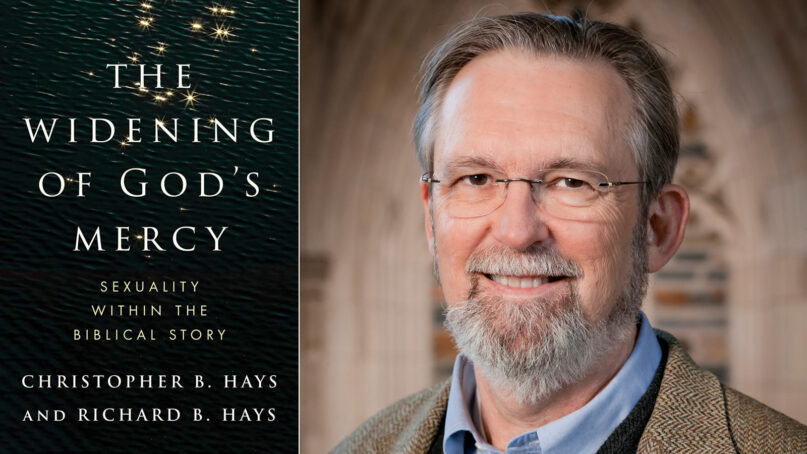
(RNS) — The renowned New Testament scholar and former dean of Duke Divinity School described his most recent book as an act of repentance for the way his work had been used to harm LGBTQ people and to divide Christians.


Richard Hays. (Photo courtesy of Duke)
Bob Smietana
January 4, 2025

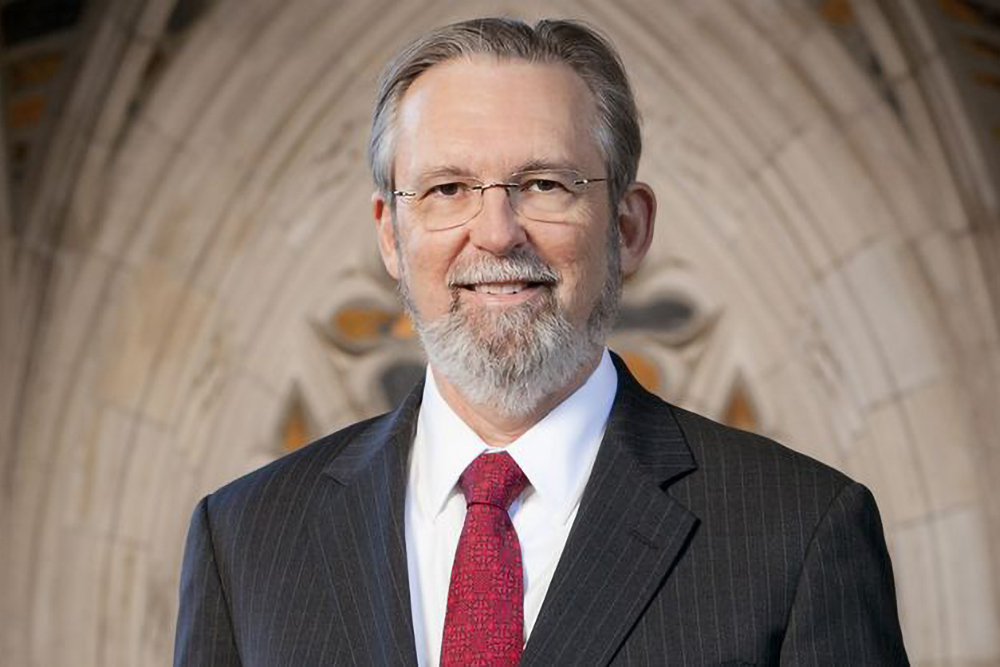
(RNS) — Richard Hays, a renowned New Testament scholar and former dean of Duke Divinity School known for his influential books on Christian ethics and his change of mind about same-sex marriage, died Friday (Jan. 3) at his home in Nashville, Tennessee, from pancreatic cancer. Hays was 76.

“He was surrounded by his books, overseen by photos of his parents and wide family, and with Christmas music from Kings College Cambridge playing softly in the background,” his wife, Judy, wrote on CaringBridge.org, in announcing his death.

A former English teacher and pastor, Hays was a graduate of Yale University and Yale Divinity School and earned his doctorate from Emory University in 1981. He then returned to teach New Testament at Yale from 1981 to 1991 and then at Duke Divinity School until his retirement in 2018.

For much of his career, he was perhaps best known for his 1996 book, “The Moral Vision of the New Testament,” in which he argued that same-sex relationships were “one among many tragic signs that we are a broken people, alienated from God’s loving purpose.” His well-respected scholarly work was cited by Christian leaders who viewed same-sex relationships as sinful and who opposed LGBTQ affirmation in churches.

This past year, Hays publicly changed his mind — in what he described as an act of repentance for the way his work had been used to harm LGBTQ people and to divide Christians — in a new book, “The Widening of God’s Mercy: Sexuality Within the Biblical Story,” co-authored with his son, Christopher Hays, an old Testament scholar.

RELATED: Richard Hays and the lost art of repentance

In the book’s introduction, Richard Hays recounts how his brother initially balked at attending their mother’s funeral, because her church, where the service would be held, affirmed same-sex relationships. That prompted him to reflect on the place of LGBTQ Christians in the church.


“The Widening of God’s Mercy: Sexuality Within the Biblical Story” and co-author Richard Hays. (Photo courtesy of Duke)

In the years since 1996, Hays had been rethinking his interpretation of the biblical texts barring same-sex relations because of his experience of teaching gay students in seminary and seeing the faithful service of gay Christians in local churches, he told Pete Wehner in a New York Times interview last year.

That included Hays’ own congregation, where “I saw church members who were not theological students or anything like that but who were exercising roles of gracious and meaningful leadership,” he told Wehner.

Hays was also concerned about what he called “smug hostility” among more conservative Christians toward LGBTQ church members, something he felt in part responsible for and something he hoped to make amends for.

“The present book is, for me, an effort to offer contrition and to set the record straight on where I now stand. … I am deeply sorry,” he told RNS in 2024. “The present book can’t undo past damage, but I pray that it may be of some help.”

The new book, which argues God has changed his mind about same-sex relationships and other boundaries that keep some people outside his grace, was seen as a betrayal by conservatives who agreed with his former book, with some going as far as to call it heretical. But Hays told National Public Radio that he was at peace with his change of mind, though he knew it would cause controversy.

“So there’s a sense in which I’m eating some of my own words, and I’m concerned that it will perhaps burn some bridges and break some relationships that I’ve cherished,” he told NPR. “But as I age, I wanted my final word on the subject to be out there. And so there it is.”

Hays was initially diagnosed with pancreatic cancer in July 2015 and at the time had been given a dire prognosis, with his doctor telling him he might be dead by Christmas of that year. But surgery and chemotherapy put his cancer into remission until 2022, when it returned. Despite more treatment, the cancer had spread to his lungs by the summer of 2023 and eventually he went into hospice care.

This past fall, he wrote a health update asking for prayer, knowing the cancer would likely soon take his life, and sharing how his faith was shaping his approach to life in his dying days.

“Over these past nine years, Judy and I have become practiced in looking death in the face,” he wrote. “We continue to trust that we are in the hands of a merciful God who loves us. And we continue to anticipate the power of the resurrection. It’s a hard thing to know with some certainty that I will not be here to watch my grandchildren grow up. But as in years before, we remain grateful for each new day in which we can join the Psalmist in proclaiming: ‘This is the day that the Lord has made; let us rejoice and be glad in it.’”

Hays is survived by his wife, Judy, and children Christopher and Sarah.

According to an update posted on CaringBridge, Hays will be interred in Oklahoma City, with services to follow at a later date at McKendree United Methodist Church in Nashville and at Duke.

Opinion

In Richard Hays, a rare combination of confidence and contrition

(RNS) — All of this full and good life was funded by an unapologetic conviction about the mercy of God at work in the gospel of Jesus Christ.


Richard Hays. (Photo courtesy of Duke)
Beverly Gaventa
January 5, 2025

(RNS) — Professor Richard Hays, a Scripture scholar of vast influence, both through his scholarship and through his leadership in theological education, died on Friday, Jan. 3, the result of a long journey with pancreatic cancer and the end of a remarkable life.

When New Testament specialists refer to the scholarship of Richard Hays, we are apt to resort to shorthand expressions. “Narrative substructure,” “subjective genitive” and “echoes of Scripture” are three that come immediately to mind, and rightly so, as Richard’s publications on these topics set waves of research in motion. But Richard was more than a set of propositions in need of defense. His work was enriching because it was itself enriched by the English language he so cherished. His early devotion to poetry paid off, not because he raided Harold Bloom, but because he read Milton and Yeats and Arnold and Eliot. Every word mattered, whether it was an ancient word or a modern one, and that made Richard’s own words more powerful.

Richard pursued his work with a confidence that manifested itself in his early willingness to take on scholarly positions that were generally thought to be “settled.” We were at a Columbia Seminar dinner together sometime in the early 1980s — well before even his dissertation had been published — when he instigated a heated discussion about the “faith of Christ” among senior scholars at the table. Neither on that evening nor later did I sense Richard was being provocative just to be provocative; he did it out of genuine conviction for the topic at hand.

That confidence was coupled, even mellowed, by a well-honed willingness to hear and respond to criticism. When “The Moral Vision of the New Testament” was still in draft form, he hosted a small conference at Duke, inviting numerous colleagues to interact with its chapters. Richard gracefully endured several days of critique — some of it quite forceful — in the interest of improving his work. Some years later, after the publication of “Seeking the Identity of Jesus” — a book we edited together through the auspices of the Center of Theological Inquiry in Princeton — Tom Wright issued a stinging critique of the volume in a book review panel at a national meeting. True to his own character, although Richard was dismayed by the critique and disagreed with it, he maintained his respect and deep affection for Tom.

I experienced that commitment to friendship myself, as Richard and I navigated our own disagreements. Conversations around several topics, most notably human sexuality and abortion, found us on opposite sides, and awkwardly so at times. Yet I never considered that Richard might see these as friendship-terminating moments, and I trust he never experienced anxiety over that possibility. To be sure, we both lived with privileges that allowed us to maintain the friendship, but I think something other than privilege was at work. We had been given to each other as friends, and that gift was not to be questioned or cast aside.

In the final years of his life, Richard demonstrated in a public way that confidence about one’s work needs to be coupled with the ability to change one’s mind. When he and his son, Christopher B. Hays, published “The Widening of God’s Mercy” in 2024, Richard made public what many of us knew, namely, that he had changed his mind about the interpretation of Scripture and the question of same-sex relations. Richard was aware that his earlier position, argued in “Moral Vision,” had contributed to a hardening of the categories in some church circles, and he wanted very much to give public voice both to his change of mind and to his change of heart. It is a testimony to the divine mercy of the title of that book that it was published before Richard’s death.
RELATED: Richard Hays and the lost art of repentance

The intensity that characterized Richard’s work also characterized his support of students and friends. I can recall warm introductions to Love Sechrest, Ross Wagner and Brittany Wilson, among others — students Richard wanted to bring to the attention of his own scholarly friends — friendships he hoped to generate. And I am deeply grateful for his support in times of personal crisis, to say nothing of his encouragement of my own work. During one season when both of us were in Princeton, we met several times to work through a translation of Romans. Those conversations were rich and precious, even if we did try the patience of restaurant staff who needed us to move along.

Such intensity can come at the expense of family, and Richard was painfully aware that his own family sometimes paid a steep price for his vocation. He acknowledged that price explicitly in the preface to “Echoes of Scripture in the Gospels,” which is dedicated to his wife, Judy. In many conversations over the years, however, he always reported on Judy’s work with pride and genuine interest. And no conversation was complete until we had shared reports on our children and, with time, the grandchildren. Unquestionably, Richard loved and was loved in a way that sustained him and allowed all of them to flourish.

All of this full and good life was funded by an unapologetic conviction about the mercy of God at work in the gospel of Jesus Christ. While Richard held that there was value in historical critical investigation, it was not for him a mere parlor game but part and parcel of a quest to understand what God has done in the world and to find our place in that story. It surprised me not at all to find that his own last message on his CaringBridge site came from Romans 14:

We do not live to ourselves, and we do not die to ourselves.
If we live, we live to the Lord, and if we die, we die to the Lord;
So then, whether we live or whether we die, we are the Lord’s.

Richard knew who his Lord was, and he knew what his own vocation was. The church and the academy have been the beneficiaries of that life.

(Beverly Roberts Gaventa is Helen H.P. Manson Professor of New Testament Emerita at Princeton Theological Seminary and Distinguished Professor of New Testament (retired) at Baylor University. Her most recent book is “Romans: A Commentary” (WJK, 2024). The views expressed in this commentary do not necessarily reflect those of Religion News Service.)
Buddhist group says Army Corps’ Everglades project violates religious freedom

(RNS) — A new lawsuit says the project could disrupt a retreat center for Soka Gakkai International-USA, a group popularized by Tina Turner and Orlando Bloom.


Aerial map of the Florida Nature & Culture Center, red outline in center left, next to the U.S. Army Corps of Engineers C-11 Impoundment Project, gray, in Weston, Florida. (Courtesy image)
Kathryn Post
January 3, 2025

(RNS) — Each year, thousands of members of an influential Buddhist group journey to a retreat center tucked away in the Florida wetlands seeking tranquility and spiritual enrichment.

Established in 1996 by Soka Gakkai International-USA, the Florida Nature & Culture Center sits on 118 acres sparsely populated with red-roofed buildings, where adherents pray and attend sessions on Buddhist study surrounded by the property’s 40-acre wetland conservation area.

But the center and Soka Gakkai have sued the U.S. Army Corps of Engineers in federal court, saying a planned Corps of Engineers conservation project will dwarf the center in violation of the 1996 Religious Freedom Restoration Act, arguing that a peaceful natural environment is vital to their Buddhist practice.

The project would include an above-ground reservoir that would cover over 1,000 acres and a seven-story pump station near their property, according to the retreat center.
RELATED: What Buddhism can teach in this moment of deep divisions: No person is ‘evil,’ only ‘mistaken’

“The recitation of mantras (prayers) aiming to harmonize oneself with one’s environment (including the natural environment) and awaken to the inseparability of life and the environment are core tenets of Nichiren Buddhism,” reads the lawsuit filed in U.S. District Court Monday (Dec. 30). “Naturally, such tenets and practices make a peaceful natural environment a priority for SGI and a goal of the religious practices of Nichiren Buddhist members.”

The Army’s C-11 Impoundment Project is part of a larger initiative called the Comprehensive Everglades Restoration Plan, authorized by Congress in 2000 to reduce water loss from the Everglades. A fact sheet about the initiative says it will support hundreds of thousands of acres in the Everglades and “benefit federally listed threatened and endangered species and many wading birds.”


The Florida Nature & Culture Center property, red outline, in Weston, Florida. (Courtesy image)

The lawsuit, which also names Colonel Brandon Bowman, district commander of the Army Corps of Engineers’ Jacksonville Office, claims the construction project, set to begin this month, will damage retreat center property and related ecosystem and disrupt their protected religious activity.

The Buddhist group maintains that the project has gone ahead without properly accounting for its effects on surrounding inhabitants of the area.

In a statement from the Buddhist group, Renu Debozi, vice president of public relations for SGI-USA, said the Corps of Engineers has largely ignored their concerns since they first raised them in 2007. “Left with no other choice, we decided to file a lawsuit to force the Corps to do what the law requires it to do: publicly and transparently evaluate and consider the consequences of the C-11 Impoundment Project on adjacent properties like the FNCC, including consideration of alternatives that mitigate the impacts of the Project,” the statement said.


A spokesperson for the U.S. Army Corps of Engineers’ Jacksonville District said it is aware of the lawsuit but can’t comment on active litigation.

Popularized by celebrity adherents like Tina Turner and Orlando Bloom, Soka Gakkai International, founded nearly a century ago in Japan, follows the teachings of a 13th -century Buddhist monk. Known for its relative racial and ethnic diversity and for attracting converts, the group began gaining traction in the U.S. in the 1960s, in part due to what critics call a “prosperity dharma,” which teaches that certain chants will generate wealth and material benefits.

Today, the U.S. chapter touts more than 100,000 members. The global group’s website stresses their commitment to dialogue and nonviolence and the link between individual happiness and peace.

In recent years, the center hired its own engineers to assess the impact of the project and, based on these findings, argue that the construction and the pump station will create noise, vibration and dust, as well as emit noxious odors and decrease air quality. Changes to groundwater levels, it says, could threaten the stability of the center’s buildings and the surrounding wetland, and the construction could cause wild animals to relocate to their land.

“(T)he construction and subsequent operation of the C- 11 Impoundment Project will (cause) damage to buildings in which Plaintiffs and their members practice their religion, damage the artifacts and symbols they revere, substantially burden their ability to use the carefully landscaped outdoor areas for religious practices, and disrupt the serenity and harmony with nature central to their religious practices,” the complaint reads.

The lawsuit claims the defendants failed to include the retreat center and related ecosystem in their environmental impact analysis and did not take the religious group’s input into account, violating both the National Environmental Policy Act and Administrative Procedure Act. They are requesting that the court order a halt to construction until a supplemental environmental impact statement is created.