Monday, January 13, 2025

Newsom’s Atomic Folly: Now By Fire, Next by Quake, Then by Apocalyptic Radiation?  


 January 13, 2025
Facebook

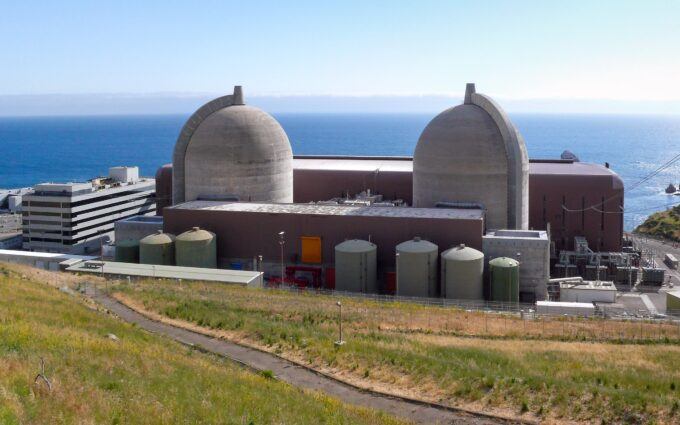
Diablo Canyon Nuclear Plant. Photo: Tracey AdamsCC BY 2.0

Los Angeles is now being destroyed by fire.

Next will be the “Big One” earthquake everyone knows is coming.

And then—unless we take immediate action—Diablo Canyon’s radioactive cloud will make this region a radioactive dead zone.

My family is now besieged by four fires raging less than four miles away.  We don’t know how long our luck will hold.

We are eternally grateful to the brave fire-fighters and public servants who are doing their selfless best to save us all.

We are NOT grateful that Gavin Newsom has recklessly endangered us by forcing continued operation at two unsafe, decrepit nuclear power plants perched on active earthquake faults, set to pour radioactive clouds on us from just four hours north of here.

The Nuclear Regulatory Commission’s resident site inspector—Dr. Michael Peck—after five years at Diablo warned that it cannot withstand the earthquakes we all know are coming.

In 2006 the NRC confirmed that Unit One was already seriously embrittled.  Its fragile core makes a melt-down virtually certain to cause a catastrophic explosion, shooting a lethal apocalyptic cloud right at us…and then across the state and continent.

These wildfires make clear that these city, state and federal governments—maybe NO government ANYWHERE—can begin to cope with these kinds of mega-crises.

Imagine watching our public servants trying to cope while dressed in radiation suits, knowing everything around us has been permanently contaminated.

Imagine leaving all you own forever behind while racing to get yourself and your family out of here under the universal evacuation order demanded by radioactive clouds like those that decimated the downwind regions from Chernobyl and Fukushima, not to mention Santa Susanna and Three Mile Island, Windscale and Kyshtym.

Pre-empting such a catastrophe was a major motivation for the 2018 plan to phase out the two Diablo nukes in 2024 and 2025,

That landmark blueprint was crafted over a two-year period with hundreds of meetings, scores of hearings involving the best and brightest in energy, the economy, the ecology and the hard engineering realities of aging atomic power reactors.

It was signed by the then-Governor (Jerry Brown), Lieutenant Governor (Gavin Newsom), state legislature, state regulatory agencies, the Nuclear Regulatory Commission, plant owner (PG&E), labor unions, local governments, environmental groups and many more.

The economic and energy security goals of this plan have been far exceeded by advances in renewable generation and battery storage.  California now regularly gets 100% of its electricity from solar, wind and geothermal.  Battery back-up capabilities exceed Diablo’s capacity by a factor of four or more.  Its inflexible baseload production unfortunately interferes with far cheaper renewables filling our grid.

The grid’s most serious blackout threats now come from disruptive malfunctions and potential disasters at Diablo Canyon.

All this has been well known since 2018, when Newsom signed the shut-down agreement.

The phase-out proceeded smoothly for four years, largely exceeding expectations.

But in 2022, Newsom strongarmed the legislature into trashing the transition plan.  His Public Utilities Commission decimated the statewide rate structure, costing our solar industry, billions in revenues and at least 17,000 jobs.

Instead Newsom fed PG&E about $1.4 billion in public subsidies and $11 billion in over-market charges to keep Diablo running through 2030.

Neither the NRC nor state nor PG&E have done the necessary tests to guarantee Diablo’s safety, refusing to re-test for embrittlement even though such defects forced the NRC to shut the Yankee Rowe reactor in 1991.

Diablo has no private liability insurance.  Should it irradiate Los Angeles, NONE of us can expect compensation.

So as we shudder amidst the horrors of this firestorm, we know that our loss of life, health and property will be orders of magnitude—literally, infinitely—more devastating when, by quake or error, the reactors at Diablo Canyon melt and explode.

Responsibility for this needless, unconscionable threat lies strictly with Gavin Newsom.  There is no sane economic, electric supply or common sense reason for him to impose this gamble on us.

Governor Newsom: NOTHING can make public sense of this radioactive throw of the dice.

We respectfully beg, request, demand, beseech that you honor the sacred word you gave in 2018 to phase out the Diablo Canyon atomic reactors.

As we see the devastation engulfing us, and the inability of government to make it right, there is zero mystery as to why these nukes must shut.

 NOW!!!

Harvey Wasserman wrote THE PEOPLE’S SPIRAL OF US HISTORY: FROM JIGONSASEH TO SOLARTOPIA.  Most Mondays @ 2-4pm PT, he co-convenes the Green Grassroots Election Protection Zoom (www.electionprotection2024).  The Mothers for Peace (www.mothersforpeace.org) could use your help in the struggle to shut the Diablo Canyon nukes.  


What to know about the latest effort to bring an end to Turkey’s 40-year Kurdish conflict


A cardboard cut-out of Selahattin Demirtas is pictured at an election kiosk in Istanbul, June 20, 2018. (AP Photo/Lefteris Pitarakis, File)

U.S.-backed Syrian Democratic Forces (SDF) fighters stand guard at Al Naeem Square, in Raqqa, Syria, Monday, Feb. 7, 2022. (AP Photo/Baderkhan Ahmad, File)

BY SUZAN FRASER
Updated 10:01 PM MST, January 12, 2025Share


ANKARA, Turkey (AP) — Talks between politicians from Turkey’s pro-Kurdish party and jailed Kurdish leaders have been gathering steam as they try to end 40 years of fighting between the state and the Kurdistan Workers’ Party, or PKK.

The latest peace effort comes at a time of heightened instability and fundamental changes reshaping the region. These include the ongoing Israel-Hamas war in Gaza, the weakening of the Hezbollah militant movement in Lebanon, and the reconfiguration of power in Syria after the toppling of President Bashar Assad.

The cautious process was initiated in October by Devlet Bahceli, a firebrand ultranationalist who has usually opposed any concessions to Kurdish identity or rights.

Since then, the fall of Assad in a lightning rebel offensive has triggered intensified fighting between Turkish-backed and Kurdish groups in northern Syria.
ADVERTISEMENT


The Kurdish-led Syrian Democratic Forces, who have controlled northeast Syria for the past decade, are under attack from the Syrian National Army, an umbrella of militias fighting on behalf of Turkey, which regards the SDF as an extension of the PKK and wants to neutralize it as an independent fighting force.

Recently, senior members of the Peoples’ Equality and Democracy Party, or DEM, met jailed PKK leader Abdullah Ocalan and Selahattin Demirtas, another imprisoned figurehead of the Kurdish movement. They have also met with the leaders of other political parties to explain their discussions.


What is the PKK?

The Kurdistan Workers’ Party, or PKK, has waged an armed insurgency against Turkey since 1984, initially with the aim of establishing a Kurdish state in the southeast of the country. Over time, the objective evolved into a campaign for autonomy and rights for Kurds within Turkey.

The conflict between militants and state forces, which has spread beyond Turkey’s borders into Iraq and Syria, has killed tens of thousands of people. The PKK is considered to be a terror group by Turkey, the United States and the European Union.

Who is Ocalan?

Abdullah Ocalan, who as a student of political science in Ankara became deeply involved in leftist movements, formed the PKK in 1978 as a Marxist organization. He fled to Syria in 1979, along with other PKK members, where he remained until 1998, when Syria expelled him under intense pressure from Turkey.

Ocalan was captured in Kenya in 1999 and imprisoned on Imrali island in the Sea of Marmara, where he remains to this day. His death sentence for treason was commuted to a life term in prison after Turkey abolished the death penalty.

The 75-year-old endures as a symbol for Kurdish independence and rights and continues to wield influence over the Kurdish movement, with past messages relayed through family members or lawyers resonating beyond Turkey, in Iraq and Syria.

In a message relayed by his nephew in December, Ocalan said he has the power to end the conflict if the conditions are right.

Renewed effort for peace

In October, Bahceli, a close ally of President Recep Tayyip Erdogan, suggested Ocalan could be granted parole if he renounces violence and disbands the PKK. It was a major shift for the hardline politician who had previously strongly supported the state’s military action against the militant group and its affiliates in neighboring Syria and rejected any notion of negotiation.

Erdogan appears to have endorsed Bahceli’s stance.

There is a mixed reaction among politicians and analysts to suggestions of a new peace effort. Some describe it it as a historic opportunity, while others strongly oppose any notion of leniency toward Ocalan or the PKK.

A recent attack on Turkey’s key aerospace company outside of Ankara that killed several people was claimed by the PKK, complicating the debate.

Past peace efforts

There have been several peace efforts between the Turkish state and the PKK over the years, including secret negotiations held in Oslo, Norway from 2009 until 2011. However, none have yielded results.

The last attempt to reach a peace deal took place between 2013 and 2015 with a series of talks between Turkish officials and Ocalan, who declared a ceasefire and withdrew fighters to bases in northern Iraq.

Turkish officials took steps to improve Kurdish rights, including allowing Kurdish-language broadcasts. The process collapsed in July 2015, after a series of violent attacks, including one by the Islamic State group that killed 33 pro-Kurdish activists.

Since then, Turkey has cracked down on its pro-Kurdish movement and has jailed thousands of people, including the former leader of the main pro-Kurdish political party, Selahattin Demirtas, over alleged links to the PKK.
Why now?

The latest peace effort comes at a time when Turkey and the Kurds are both seeking security to face the challenges in the Middle East.

However, some believe the main aim of the reconciliation effort is for Erdogan’s government to garner Kurdish support for a new constitution that would allow him to remain in power beyond 2028, when his term ends.


Bahceli has openly called for a new constitution, saying it was essential to keep Erdogan in power for Turkey’s future. Erdogan and Bahceli are reportedly seeking parliamentary support from the DEM.


SYRIAN-KURDISTAN:

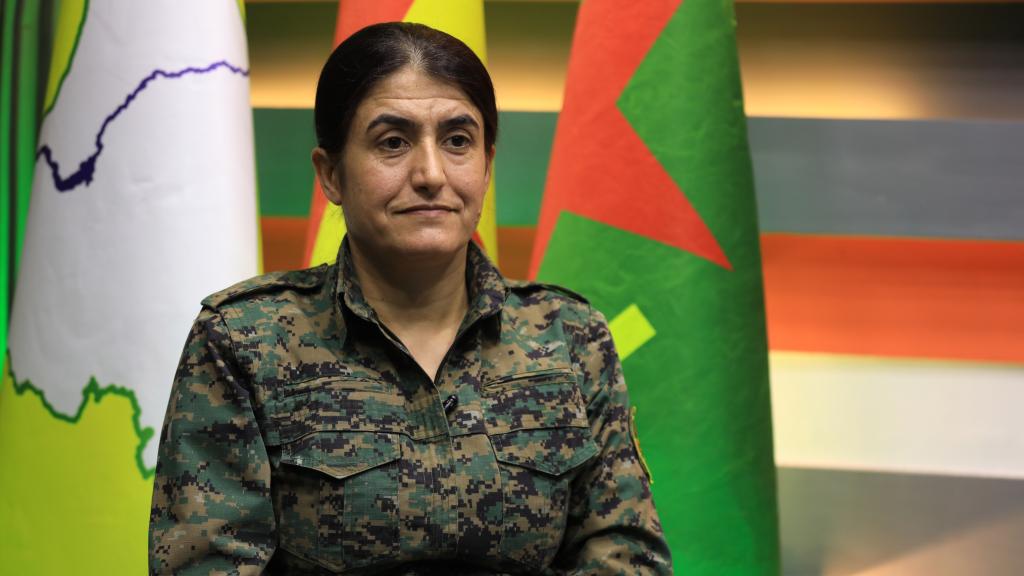
 ‘We cannot hand over our weapons while attacks on women and our territories continue’ — An interview with YPJ Commander-in-Chief Rohilat Afrin


First published at Rojava Information Center.

As all eyes were on the Hayʼat Tahrir al-Sham (HTS)-led forces sweeping across Syria with Assad crumbling, the Turkish-backed Syrian National Army (SNA) launched an attack on North and East Syria (NES), seizing Shehba and Manbij from the Syrian Democratic Forces (SDF). Now, Turkey is threatening an invasion into the Kurdish city of Kobane. The SNA meanwhile, is attempting to cross the Euphrates River and further encroach into NES, with fierce clashes underway in the Manbij countryside. The all-female YPJ units – that shot to prominence during their fight against ISIS in Kobane in 2014 — are on the frontlines as part of the SDF.

YPJ Commander-in-Chief, Rohilat Afrin, talked to RIC about the state of the war in Manbij, the ceasefire that never was, the possibility of a Turkish invasion in Kobane, HTS-SDF relations and the potential for the YPJ to be integrated into the Syrian army.

The current situation on the frontlines seems to have been more or less unchanging in recent days. Can you shortly explain the state of the fighting?

It is evident that there is a war being waged against our region — this is in the context of the ongoing fighting here, particularly at the Tishreen Dam and Qereqozak Bridge. This situation of war has been a constant since the collapse of the Baath regime and subsequent rise of the al-Jolani government. Turkey and the Turkish-backed SNA have sought to exploit a power vacuum and initiate an attack on our region. This is in staunch opposition to our achievements here. These attacks are not simply military actions — they are a deliberate attempt to destroy what we have built up here. Turkey and its mercenaries are pursuing a policy of destruction and subjugation through these attacks.

Tishreen and Qereqozak are the two main gateways to enter NES. They are strategically important to protect Kobane, Tabqa, Raqqa and the rest of NES in general. Targeting these gateways is connected to Turkey’s aim of targeting our achievements in the region. In our region, people have been brought together. A collective mentality has united its populace. Years of work have been invested in building this mentality amongst people. They are determined to wipe it out. This war aims to dismantle the values established in this region.

Our fighters are currently engaged in combat with the SNA, fighting strongly. What people really should notice is that Turkey has been using drones and warplanes unceasingly, encouraging the SNA to attack. Our fighters’ resilience has not been deterred. If it wasn’t for Turkey’s aerial power, the SNA would be easily defeated. Actually, the number of fatalities and injuries within their ranks is already high. They have withdrawn from certain points. In these circumstances, a major confrontation is underway.

Supposedly, a ceasefire was called in Manbij some weeks ago. Everyday there is fighting however – so was there never any ceasefire?

We cannot call it a ceasefire. In talk there was a ceasefire. In practice we witnessed nothing like this. When the ceasefire was announced in Manbij it was on the basis that we evacuate people wishing to flee, the bodies of our fallen fighters and our wounded who were in their hands. However no such ceasefire materialized due to the attacks the SNA launched. The ceasefire was nothing on the ground. It was just talk.

Then, as the YPJ, YPG and SDF, we wanted to move forwards from the Tishreen Dam and Qereqozak, to advance a bit, because we were under heavy fire. There were a lot of attacks both on the Tishreen and from the Deir Hafir axis. So we took back some villages. This was because we wanted to protect the Dam and the Bridge. With this as our situation, a ceasefire cannot be spoken of.

The SNA were drunk from success in Syria, as they participated in the advance from Idlib to Damascus. City after city was falling. They thought it would be the same with Qereqozak Bridge and the Tishreen Dam. Now they are both psychologically and materially facing losses having been confronted with the resistance of our fighters. On both fronts, our fighters have been steadfast.

And what is the current threat to Kobane?

What I said before connects to the issue of Kobane. There are a lot of threats against Kobane. As a city, Kobane does not just concern NES. It is the world’s city, as expressed by the establishment of ‘World Kobane Day’ in solidarity. The struggle that took place in Kobane saw a force like ISIS defeated. It has been around 10 years since this massive victory. At the time, Erdogan was observing the situation day after day, saying ‘Kobane will fall today’ or ‘Kobane will fall tomorrow’. But Kobane was liberated, through will, resistance and determination. Through this, Kobane became globally famous.

The danger Kobane is facing is serious. When we say this, it means that there is a danger to the whole of NES. Turkey sees that Kobane was a reason behind what has been achieved in NES. Turkey wants to spread its influence in Syria. In this context it threatens the city and wants to occupy it. Actually the danger posed to Kobane never ended. There have always been threats. These threats in turn were met by responses of solidarity — politicians, human rights activists and the global public, even the Coalition, made statements opposing war against the city.

If Turkey were to take over the Tishreen Dam and Qereqozak bridge, Tabqa, Raqqa, Kobane, and all regions of NES would be threatened. The politics — war and victory — in Kobane concern the whole world, not just NES. We are confident that Kobane will receive external support and solidarity. We will be able to protect it. But Turkey is determined to realize its goals. Against this stands the SDF and YPJ. The fight they waged in Kobane [in 2014] shocked the world. In the current period, we will show the same stance against Turkey and the SNA.

How do you see the diplomatic flurry around Damascus, with many delegations coming to meet al-Jolani, including from Turkey?

Many states have been seeking to establish relations with HTS now al-Jolani’s new government has emerged. Turkish officials have also come to Damascus, such as Hakan Fidan. He demonstrates a certain mentality — in which the primary aim is to wipe out the Autonomous Administration. Turkey wants to organize Syria as its own province; to control it, to have influence on Syria. Hakan Fidan’s arrival in Damascus made this clear. He wants to influence HTS.

Are the Americans still in Kobane? And if Turkey attacks Kobane do you expect American assistance?

Throughout the last phase until the latest developments began, the Russians were present in Manbij, Ayn Issa and Kobane. The Americans were not present there. With the recent withdrawal of the Russians, American patrols started to take place, but there are no bases there. Through these patrols, America was saying ‘we are here, we will help protect the city’, sending a message that they are present. Our cooperation with the Coalition began with the fight against ISIS. If the US-led Coalition don’t fulfil their role, they will face accusations of double-standards. If Turkey attacks Kobane, do we expect that the US will help? Materially, no. But in general, with the support they exhibit and through them meeting with Turkey, they have shown that their position is that the issue must be peacefully resolved.

Even if they are purely following their own interests, it has prevented the doors to a Turkish invasion into Kobane from being opened. It is evident from certain things within their diplomatic efforts that they have attempted to help us. However, we see that the Coalition has a responsibility to put a halt to the current fighting and aerial attacks. So in general, we do not expect that there will be any type of concrete blocking of a ground invasion, but in the diplomatic context there are efforts to prevent this, even if they are not enough.

What about international assistance more generally, aside from America? The last time Kobane saw war was in 2014 when ISIS attacked. At that time, the international solidarity was significant. This time the threat is from Turkey rather than ISIS. Do you expect similar global support?

During ISIS’ siege on Kobane, the actions of YPJ as a women’s force resonated globally. Through Kobane — and with the July 19 Revolution here — silent and defenceless women found their voice, their strength and came to the forefront as leaders. The attitude of the YPJ in 2014 made them an example to follow in the world. We have learned from all the experiences and challenges we have gone through for years, in terms of strengthening tactics and methods. We have confidence that the YPJ — and YPG and SDF — will be able to stand strong against whatever may come. As women’s units, we have faith in this. We were victorious in Kobane. This also demonstrated to women worldwide that a women’s army is a necessity to protect women. Through this protection, we are able to organize ourselves. Fighting to protect our territories has continued like this. As I already stated, we believe that the war in Kobane was a war for humanity; a war to protect all women and land. We are confident that a state of public alert on a global scale will be raised and solidarity will be provided should Kobane be attacked again.

There are some now saying the SDF should surrender its weapons to a central Syrian army and integrate. What does this mean for the YPJ?

The new government’s intention — I am not speaking of the general populace, but specifically the government — to do this is shown through the content of its approach towards the SDF. They want a centralized state based on the unification of the army, institutions and also mentality. What they circulate to the press and media as well as the interviews they make, suggests that the SDF will not be accepted in its current form and as it is.

We are under attack. This makes it impossible for us to lay down our arms. The SDF is a force with ten years of experience fighting ISIS. At the international level, it is supported by the Coalition.

Turkey refuses to accept the Autonomous Administration as a model and idea. Turkey also does not accept the SDF as an army. It is imposing this on the new government. This also means the YPJ is not accepted — the YPJ, which fought against ISIS, achieved significant gains, and is at the core of the Autonomous Administration.

With the incoming government, women will have to heighten their struggle in order to defend themselves. We cannot hand over our weapons while attacks on us and our territories continue. Such a thing can only occur through agreements and talks that formalize a democratic Syria in which the rights of all women, nationalities and peoples are guaranteed and realized. If these conditions are met, then we can discuss the issue of weapons.

The mindset entrenched within the new government makes it clear that there is no place for women there — or only a place where women must accept to cover their heads and adopt a patriarchal mindset. Avoiding the above will require a great deal of organization and struggle. This is a serious danger that we need to recognize. The new government’s standards for women are a threat to the existence, role and culture of women.

On a global level, we have women forming an army, protecting themselves and fighting, for the first time. This independent, armed force has inspired many women — Arab, Kurd, Assyrian and international.

Would the YPJ accept being part of the Syrian army?

As this juncture, it remains unclear what the eventual outcome of the situation will be. There are a multitude of factors that are as of yet unclear. The situation is complex. The new government is in serious chaos, both in terms of its institutions and its ability to govern the entire country. The future remains uncertain. If — as the population wishes for and as we wish for — Syria truly becomes a democratic Syria, politically, socially, legally; if all the effort given and achievements gained in NES through the past 12 years are recognized, then of course YPJ can become a part of this army [the Syrian army]. In fact, YPJ can serve as a model for Syrian women, setting an example of women’s autonomy and self-defence. However, as previously stated, the precise nature of the situation remains uncertain. It is imperative to comprehend that the scope of this matter is wide. Our objectives, positions and approach will be formulated on this foundation I have explained. Not following the current way of thinking exhibited by HTS — that everything must be centralized. If an approach is adopted that embraces diversity and is democratic, then the role of YPJ can be discussed. The composition of a Syrian women’s army can be shaped by the YPJ. This is what I can say at this point.


How the West Destroyed Syria


Peter Ford served in the UK Foreign Ministry for many years including being UK Ambassador to Bahrein (1999-2003) and  then Syria (2003-2006).  Following that, he was representative to the Arab world for the Commissioner General of United Nations Relief and Works Agency.  He was interviewed by Rick Stering on Jan 6, 2025.

RS: Why do you think the Syrian military and government collapsed so rapidly?

Peter Ford: Everybody was surprised but with hindsight, we shouldn’t have been. Over more than a decade, the Syrian army had been hollowed out by the extremely dire economic situation in Syria, mainly caused by western sanctions. Syria only had a few hours of electricity a day, no money to buy weapons and no ability to use the international banking system to buy anything whatsoever. It’s no surprise that the Army was run down. With hindsight, you might say the surprise is that the Syrian government and Army were successful in driving back the Islamists. The Syrian Army forced them into the redoubt of Idlib four or five years ago. But after that point, the Syrian army deteriorated, became less battle ready on the technical level and also morale.

Syrian soldiers are mainly conscripts and they suffer as much as any ordinary Syrian from the really dreadful economic situation in Syria. I hesitate to admit it, but the Western sanctions were extremely effectively in doing what they were designed to do: to bring the Syrian economy down to its knees. So we have to say, and I say this with deep regret,  the sanctions worked. The sanctions did exactly what they were designed to do to make the Syrian people suffer, and thereby to bring about discontent with what they call the regime.

Ordinary Syrians didn’t understand the complexities of geopolitics, and they blamed the Syrian government for everything: not having electricity, not having food, not having gas, oil, high inflation. Everything that came from being cut off from the world economy and not having supporters with bottomless pockets.

Syria was being attacked and occupied by major military powers (Turkey, USA, Israel). Plus thousands of foreign jihadis. The Syrian army was so demoralized that they really were a paper tiger by the end of the day.

RS: Do you think the UK and the US were involved in training the jihadis prior to the December attack on Aleppo? 

Peter Ford: Absolutely. The Israelis also. The leader of Hayat Tahrir al Sham (HTS),  Ahmed Hussein al Sharaa (formerly known as Mohammad abu Jolani) almost certainly has British advisors in the background.   In fact, I detected the hand of such advisors in some of the statements made in impeccable English. The statements had Americanized spelling, so the CIA are in there too.  Jolani is a puppet, a marionette saying what they want him to say.

RS: What’s is the current situation,  a month after the collapse?

Peter Ford: There are skirmishes here and there, but broadly, the Islamists and foreign fighters are ruling the roost. There are pockets of resistance in Latakia where the Alawite are literally fighting for their lives.  Much of the fighting is about the attempts by HTS, the present rulers to  confiscate weapons. The Alawites are resisting and there are pockets of resistance in the South where there are local Druze militias.

HTS is spread thinly on the ground. They are facing problems in asserting themselves. Although they had a walkover against the Syrian army, they never actually had to do much fighting.  I would guess they only have about 30,000 fighting men and spread across Syria, that is not a lot. There’s an important pocket of resistance in the Northeast where the Kurds are. The Kurdish American allies are resisting. The so-called Syrian National Army, which is a front for the Turkish army, may  go into a fully fledged war against the Kurdish forces. But that’s going to depend partly on what happens after the  inauguration of the new US president, how Trump deals with the situation.

RS: What are you hearing from people in Syria?

Peter Ford: It is not a pretty story. HTS and their allies have been parading showing their dominance, flying ISIS and Al-Qaeda flags. They have been bullying, intimidating, confiscating and looting. Surrendering Christian as well as Alawite soldiers have been given summary justice, roadside executions being the norm.  Christians in their towns and villages are just trying to hunker down and pray. Literally. I’m sorry to say the senior Christian clerics, with one or two noble exceptions, have opted for appeasement and effectively betrayed their communities. The senior leadership at the Orthodox Church, in particular Greek Catholic church, have had themselves photographed with dignitaries of the jihadi regime.

They are turning the other cheek. It’s quite a contrast with the Alawite. But they have no choice. You may remember that the slogan of the jihadi armies during the conflict was, “Christians to Beirut, Alawite to the grave.”  HTS  is going through the motions of having meetings with clerics and making soothing noises. All the while their henchmen are driving around in trucks flying ISIS flags. What I’m hearing is very depressing.

The regime is leaving the Alawites totally abandoned. You barely read a word in the west in media about the plight of the Alawite and not much more about the Christians.

RS: Western media have demonized Bashar al Assad and even Asma Assad.   What was your impression of Bashar and Asma when you met them? What do you think of accusations they accumulated billions of dollars?

Peter Ford: The accusations are completely spurious. I know some members of the Assad family, some of them have lived for many years in Britain. They lived in very modest personal circumstances. If Assad had been a billionaire, like they’re saying, some of that would’ve trickled down. I can guarantee you that has not been the case.  These accusations also go against the impressions that I picked up when I was seeing the Assads when I was an ambassador there. They appreciated the good things of life the same as everybody else, but they didn’t come across as the (Ferdinand & Imelda) Marcos-type. Nothing at all like that.  It is all lies,  made up to serve the deeper agenda.

The media kicking of Bashar and Asma is really distasteful. It’s pointless. He’s disappointed his few remaining followers, although it was unrealistic, I believe, for them to expect more. But the fact is that he ran when others were not able to run, and many of those have been killed, or they’re hiding or they’ve escaped to Lebanon in some cases where they’re also hiding. He did get out with his skin, but to beat up on him as the media are doing is really distasteful and pointless. It is akin to this new genre of political pornography, Assad porn, the torture stories, the hyped up narrative about prison and graves being opened up. Actually, by the way, most of those graves are war dead. They were not people who’d been tortured to death as the media pretends. Hundreds of thousands of people died in the conflict over more than a decade, and many of them were buried in unmarked graves. But the western media are reveling in this new genre of Assad porn.

This is all being whipped up to make Western audiences more accepting of the way the West is getting into bed with Al-Qaeda. The more they demonize Assad and harp on the misdeeds of the Assad regime, and the more likely we are to swallow and be distracted away from the  hideous atrocities being carried out right now.

Western leaders are kissing the feet of a guy who’s still a wanted terrorist and who has been a founder member of ISIS for God’s sake, as well as a founder member of Al-Qaeda in Syria. It is morally distasteful and shaming.

Jolani needs the west desperately now. Otherwise, he will face the same fate as Bashar Asad. If the economy continues on its trajectory of the years, then Jolani will be dead meat in fairly short order. He has to deliver massive rapid economic improvement to survive as leader. And this is what it’s all about. His strategy, obviously, is to milk his status as a puppet of the West in order to secure not just reconstruction aid, but that’s for the long term, but more immediately sanctions relief, the electricity flowing again, the oil.

Let’s not forget that the oil and gas of Syria is still effectively in the hands of the United States, which through its Kurdish puppets, controls a segment of the economy, which used to be worth, I think, 20% of serious GDP and provide essential oil for fuel, cooking, everything. He’s got to get his hands on that and get sanctions lifted. That’s what so much of it is about. But he has one major problem: Israel. Israel’s not buying it. Israel is the exception. All the western front is tumbling over itself to go and kiss the feet of the sultan of Damascus. But the Israelis are sucking their teeth, saying they don’t trust the guy.

Israel is destroying the remnants of the Syrian army and its infrastructure. Meanwhile they grab more Syrian land. They want to keep Syria on its knees indefinitely by insisting that Western sanctions not be lifted.  I sense there’s a battle royal going on in Washington between what we might call the deep state, which would favor lifting sanctions and the Israel lobby, which is resisting that for selfish Israeli reasons. Given that the Israeli lobby wins these tussles nine times out of 10 , the outlook may not be that great for the Jolani regime.

RS: What are your hopes and fears for Syria? What’s the nightmare scenario and what’s the best possible?

Peter Ford: I’m very pessimistic. It is very hard to see a silver lining in what has happened. Syria has been taken off the table as a Middle East player. The old Syria has died effectively. Syria was the last man standing among the Arab countries that supported the Palestinians. There was no other. There were militias like Hezbollah plus Yemen but there were no states other than Syria. Syria is now gone, and the jihadis are saying, telling the world they don’t care. By the way, this is an example of how the Israelis will not take yes for an answer. The jihadis keep telling the world, “We love Israel. We don’t care about the Palestinians. Please accept us. We love you.”  And the Israelis won’t take yes for an answer.

The best hope for the Syrian people is that they may get some respite. It is possible to imagine a scenario where the Syrian people are able to recover, at least economically a scenario under which sanctions are lifted, under which Syria, the central government recovers control of its oil and grain, where fighting has stopped, where it doesn’t have to pay anything to keep up an army because it’s not trying. They might be able to put everything into reconstruction.

So it is possible to imagine a scenario where Syria loses its soul, but gains more hours of electricity. That is possibly the most likely scenario. But there are major obstacles as we discussed, Israel standing in the way of sanctions, lifting pockets of resistance in discipline among the jihadi ranks, Turkey rampaging against the Kurds and ISIS which is still not a completely spent force. So the outlook is obviously cloudy. We should take stock in a month’s time when we see the early days of the new regime in Washington on which so much will depend.

RS: In Trump’s first term he tried to remove all US troops from east Syria but his efforts were ignored. Perhaps that could have made a big difference?

Peter Ford: Yes, it could have been a total game changer. If Syria had access to its oil, it wouldn’t have had the fuel problem, the electricity problem. It could have changed the history of the region.

Now, the US is increasing the number of soldiers and bases in Syria. And they recently assassinated a ISIS leader which might have played a role in sparking the recent terrorist attack in the US. All of this makes it much harder now for Trump to withdraw US forces because it will seen as a retreat, a reward for ISIS.

I argued for years that the sanctions were manifestly not working. But in the end they did. It’s like a bridge. It gets undermined and then suddenly it breaks. There was no single cause. It was just the culmination and things reached a tipping point.

Rick Sterling is an independent journalist based in the San Francisco Bay Area. He can be reached at rsterling1@gmail.com.

ANTIWAR.COM
 

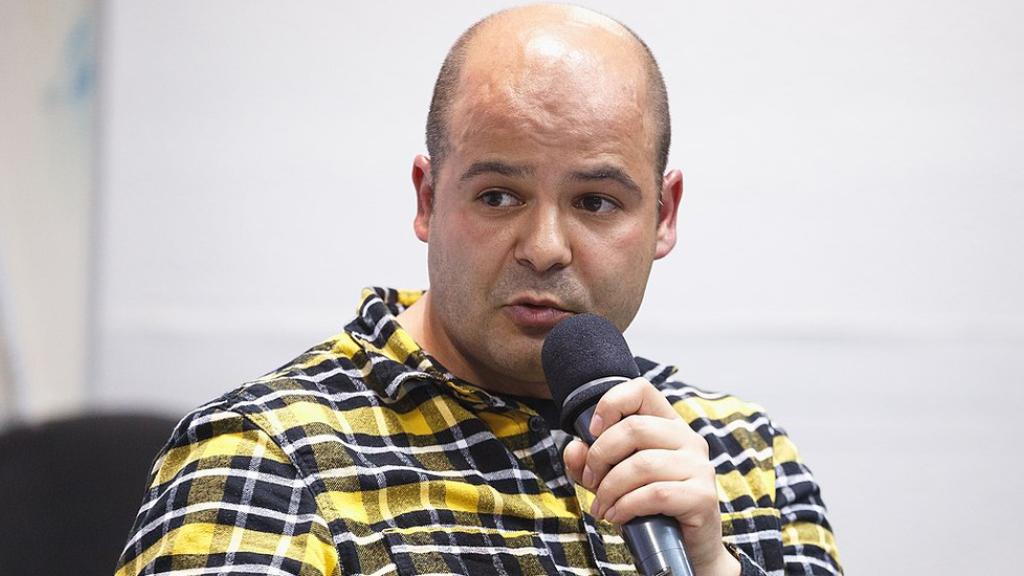
Ilya Budraitskis: ‘The struggle for Boris Kagarlitsky’s liberation is an integral part of the struggle for socialism from below’


Published 

Ilya Budratskis

[Editor’s note: The following is an edited transcript of the speech and responses to questions given by Ilya Budraitskis on the “The situation for the left in Russia today” panel at the “ Boris Kagarlitsky and the challenges of the left today” online conference, which was organised by the Boris Kagarlitsky International Solidarity Campaign on October 8. Budraitskis is a political and social theorist, previously based in Moscow, who is now a visiting scholar at UC Berkeley. Transcripts and video recordings of other speeches given at the conference can be found at the campaign website freeboris.info.]

Since the beginning of the war, we have experienced a huge transformation of the political regime in Russia and all the political guidelines that existed before the war started changed quite dramatically. Also since the beginning of the war, there have been two camps within the Russian left that are totally antagonistic to each other: a pro-war camp and an anti-war camp. They have totally different perspectives on what it means to be on the left. I think that is a very important lesson to be learned and discussed, and not only among Russian leftists. 

On the pro-war left, there are now people who are not just justifying the war, who are not just actively supporting and promoting it, but who are actually going beyond the government’s imperial rhetoric. This cleavage in the Russian left was not something unexpected. I think that the foundations of this division were laid years before the full-scale invasion was launched. But only now has it become so clear and pronounced. And I think that this division also corresponds in some respects to the divisions within the global left. That is why this lesson is also important internationally.

On the pro-war left, the leadership of the Russian Communist Party holds the central place, along with some smaller Stalinist groupings. Why do they hold this position? It is not simply because they share the imperial chauvinist worldview; it is also a survival strategy in the so-called legal framework of the current Russian dictatorship. But I think that you can find some deeper ideological roots there. The main thrust of Russian Communist Party ideology is the defence of the state. It is a conception of socialism as a top-down politics of redistribution designed to serve the interests of the state, including promoting its power in the global arena. This party perceives any sort of democracy from below as an obstacle to such aims. Before the war, in the already quite authoritarian Russian political system, the Communist party occupied the position of the so-called parastatal opposition, which was integrated in Putin’s system of managed democracy. It was dependent on the state and did not seriously compete with the Kremlin and the Kremlin’s main party, United Russia.

Moreover, this party, and especially the Communist Party, occasionally served as a channel for the expression of discontent in one part of society or another. That is why many activists, especially outside of the big cities, who wanted to be involved in any oppositional activity joined the ranks of the Communist Party. It is telling that in the first days following the invasion of Ukraine, several Communist Party deputies and regional activists even made anti-war statements. One of those deputies was Yevgeny Stupin, who is supporting this conference. However, these voices within the party were harshly suppressed, including by the party’s own leadership. So, people like Stupin were expelled from the Communist Party because of their anti-war stance. 

As early as April 2022, perpetual party leader Gennady Zyuganov made a speech in the Russian parliament demanding that the fight against the so-called fifth column inside the country be intensified. Zyuganov literally called for the escalation of repression against any sort of anti-war resistance and anti-war critique of the government. Over the next two years, representatives of the Communist Party were among the most active warmongers, notable for their extremely aggressive nationalist and imperialist rhetoric. This shift of the Communist Party can be explained both by its traditional (especially for the leadership) ideological stance on imperial nationalism, and by a desire to protect the party's legal existence under the conditions of the tightening of the political rules of the game in the country after the beginning of the full-scale invasion of Ukraine. 

On the other side of the struggle against the regime are the various strands of the anti-war left. Some of these people were forced to leave the country after the beginning of the invasion. Some were forced to censor themselves and nearly abandoned open political activity or tried to continue their political propaganda work in all legal forms that are possible, such as, for example, those mentioned in the first presentation by the representative of Feminist Anti-war Resistance. This consisted of work inside small collectives and some propaganda work using social media.

It is important to note that this propaganda work is very restricted by the current exceedingly harsh censorship. Basically, you cannot discuss what is happening on the front lines at all without breaking existing Russian laws. So, the final strategy of the Russian far left is to go underground. And that is true especially for anarchists. Since the war began there have been people primarily targeting military enlistment offices and recruiting stations. 

There are a lot of anarchist political prisoners. Most of you know about Azat Miftakhov, who was sentenced to a second prison term while he was in prison. I think it is one of the very important tasks of this conference to talk not just about Boris Kagarlitsky, but about left political prisoners in general. They are not just anarchists; there are also socialist political prisoners like Igor Kuznetsov, Darya Poludova, and many others. 

Any public legal activity of the Russian left has already ceased. For example, early this year, the Russian Socialist Movement, the organization to which I belonged, dissolved itself because it was labeled a so-called foreign agent. And according to the law on foreign agents, if you are branded a foreign agent, that basically makes any public activity inside the country impossible. Some months ago, another radical left-wing organization, the Revolutionary Workers Party, also dissolved itself due to the many arrests and police searches. 

Then there are the people on the Russian anti-war left who were forced to leave the country and who are trying not just to influence Russian audiences on social media, but also trying to work with and have discussions with the left internationally, especially in the countries where they are currently settled. So, generally speaking, the Russian anti-war left has a core audience inside the country, which follows their commentary. But it is very hard to know how big this audience is due to the current situation. 

It is also important to note that the Russian anti-war left, and especially those members of the anti-war left who settled outside Russia, was able to take part in the debates among the liberal, or democratic (broadly speaking), Russian opposition abroad because this diasporic Russian liberal opposition is now undergoing a deep ideological and political crisis. I think what Greg Yudin said about the possible proposals of the Russian left could play an important role in the debates, not just within the left milieu, but also more broadly in the diasporic Russian opposition and its audience, which is still quite large inside the country.

To return to my first point: if some serious political changes come to pass in Russia in the foreseeable future, we will see a totally different kind of political division on the left an in the political arena in the country in general. And it will come precisely from the conflicting positions that emerged clearly during the war.

I believe that this division will not just pertain to historical questions and historical experiences but will revolve primarily around different understandings of what socialism is about and what it means to be on the left. I think this division can be clarified with reference to the very well-known old essay by Hal Draper on the two souls of socialism. Although there are some problematic aspects from my point of view, the main idea is quite relevant for our time. To quote Draper 

What unites the many different forms of Socialism-from-Above is the conception that socialism (or a reasonable facsimile thereof) must be handed down to the grateful masses in one form or another, by a ruling elite which is not subject to their control in fact. The heart of Socialism-from-Below is its view that socialism can be realized only through the self-emancipation of activated masses in motion, reaching out for freedom with their own hands, mobilized “from below” in a struggle to take charge of their own destiny, as actors (not merely subjects) on the stage of history.

I think that this distinction between socialism from above and socialism from below is still quite relevant and important, and not just with respect to divisions among Russian leftists today, in the context of the ongoing war, but also to the situation on left globally. I think that Boris Kagarlitsky, whom I have known for more than 20 years, has always sided with socialism from below. He has not just supported this position but remains one of its main public advocates in his books and his public interventions. I would say that in many ways he raised a generation of Russian leftists in the current period. 

Given the role Boris played in the history of the Russian left, I think the struggle for his liberation is an integral part of the struggle for socialism from below, for the right of the masses to be actors in history and not remain in the role of victims.