Saturday, April 05, 2025

New Zealand Court of Inquiry Identifies Training in Loss of Survey Vessel
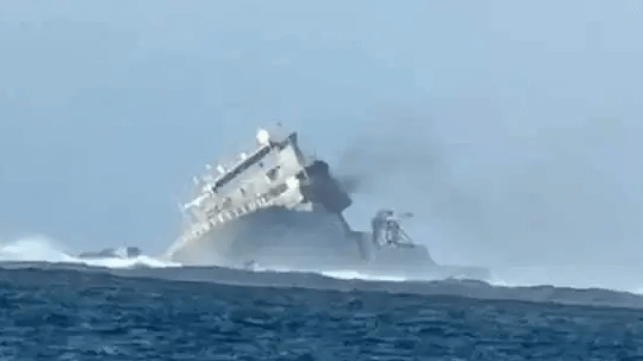
New Zealand survey ship sinking
Now famous image of the Manawanui sinking on October 5, 2024 (Courtesy U.S. Embassy in Samoa)

Published Apr 4, 2025 3:32 PM by The Maritime Executive


The Royal New Zealand Navy released the final results of its Court of Inquiry into the shocking October 2023 loss of its survey vessel HMNZS Manawanui, the first vessel lost by the Navy since World War II. While the preliminary report released in November 2024 identified human error issues including failing to disengage the autopilot, the final report delves deeper to identify the underlying issues that they believe contributed to the loss of the vessel.

The interim Court of Inquiry focused on the direct issues, and it put the blame squarely on mistakes made by the crew. Failing to turn off the autopilot, the bridge crew attempted to maneuver the vessel. When the vessel did not respond they failed to check if they had manual control with it taking more than 10 minutes to regain control. The vessel however had grounded and the following morning after the 75 people on board were rescued the ship foundered. 

In the final report, the court identified 12 additional issues that it says contributed to the grounding and sinking. Key among them were training issues and the qualifications of the ship’s personnel, as well as planning, instructions and procedures, supervision, haste, leadership, distraction, and interruptions. All these factors they believe made the loss more likely.

The court thanks the officers and crew of the vessel recognizing their braveness as well as their willingness to provide detailed testimony. The result was a 120-page report that was released online for public review.

“The Court found deficiencies in the training and qualifications of key ship’s personnel involved in the incident, risks related to the survey task were not sufficiently identified, discussed, and mitigated, and instructions or procedures were lacking,” said the Court of Inquiry president Commodore Melissa Ross. It also found leadership was inadequate in some areas, supervision was not at expected levels, and time pressure influenced the way the survey task was conducted.

Chief of the Navy Rear Admiral Garin Golding accepted the report acknowledging that it illustrated a gap between work as imagined on shore by command and work as done on the vessel. 

“Fundamentally we need to do things differently. We need to adapt to new technologies, change the way we approach what we do, and find new ways to continue to deliver on what is expected of us,” he said.

The Court issued nine recommendations ranging from risk management to training. It cited the process around orders, instruction, and procedures as well as the experience of the crew. 

Admiral Golding said the Navy has already moved forward in some areas, such as reviews of risk management, oversight, and documentation. He said among the audits was a review of the state of training. However, he recognized that some of the issues would be more complex and time-consuming to resolve.

“Ultimately, there are a range of issues, including the lack of commonality across the fleet, which means our people need to constantly adapt to new procedures each time they change ships,” said the admiral. He called for embarking on a transformation program that seeks to reform the approach to operating the Navy.


Two European River Cruise Boats Suffer Collisions in One Week
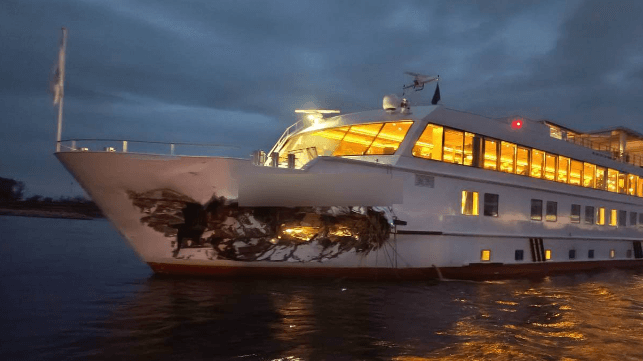
An unnamed river cruise boat sustained serious damage in a collision on the Rhine on Saturday (Duisberg Water Police)

Published Apr 3, 2025 9:26 PM by The Maritime Executive


Two European river cruise boats were involved in separate collisions over the past week, one on the Rhine near Duisberg and another near Szczecin, Poland. 

Collision on the Rhine damages two vessels

On Saturday, a Dutch river cruise vessel collided with a Dutch inland cargo vessel near Voerde-Spellen, Germany, just downriver from Duisberg on the Rhine. 

Shortly after 0300 hours on Saturday morning, the unnamed cruise vessel and unnamed cargo vessel collided mid-river. The port bow of the cruise ship was torn open, leaving a gaping hole measuring about 200 square feet in area. Remarkably, none of the 140 passengers and crewmembers on board were harmed, and no injuries were reported aboard the cargo vessel. 

All of the hull damage was above the waterline, and both vessels remained able to transit safely. The cruise boat berthed in Wesel and disembarked its passengers for onward travel. 

The Duisberg Water Police suspect that the cargo vessel may have caused the collision, and detained it for an inspection. The master was taken to the central station in Duisburg for blood alcohol level testing. Germany's Waterways and Shipping Authority is conducting a parallel investigation into the cause of the collision.

Collision on the Szczecin Lagoon

On Monday evening, nine people were injured in a collision between a river cruise vessel and a fuel barge in Poland's Szczecin Lagoon. The cause of the casualty is under investigation. 

Near Chelminek Island, the cruise boat Junker Joerg collided with the fuel barge Argonaut, tearing a large hole in the Junker Joerg's port bow. The Argonaut sustained damage above the waterline, but no penetrations. 

Both vessels made it to a safe pier at Szczecin under their own power. Initially, no injuries were reported, but when Junker Joerg reached port the crew called for an ambulance. Eight people had superficial injuries, a provincial medical service spokesperson told Polish agency PAP, and four medical teams responded to the scene. One 84-year-old woman sustained head and hip injuries, and she had to be hospitalized for evaluation. 

An inquiry has been opened to determine the cause of the collision, and any evidence will be passed to Poland's State Commission for the Investigation of Marine Accidents. 


UK Report Says Solong Did Not Have Lookouts Despite “Patchy” Visibility
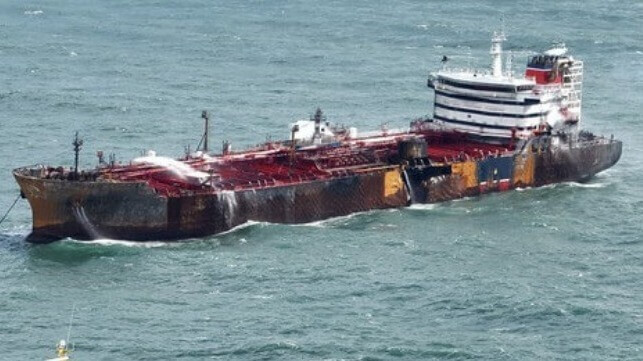
burnt tanker Stena Immaculate
Stena Immaculate remains anchored as the lightering operation for the fuel is set to proceed (Havariekommando)

Published Apr 3, 2025 12:55 PM by The Maritime Executive


The UK’s Marine Accident Investigation Branch released initial results from its ongoing investigation into the “very serious marine casualty” resulting from the containership Solong hitting the anchored tanker Stena Immaculate. While many of the details have already leaked in the media, it confirmed the now-arrested master of the Solong was alone on the bridge despite the presence of fog in the area and functioning with no more than approximately seven hours of sleep between watches.

The Portuguese-flagged containership was moving at a speed of 16 knots having departed the prior evening from Grangemouth, Scotland, and on a planned passage to Rotterdam following a route the ship had used in the past. The master of the containership, Vladimir Motin, was on the bridge when the ship departed around 2000 on March 9, handed over the bridge at around 2400 to the second officer, and returned to the bridge at 0700 to assume the watch. He was the lone watchkeeper, despite requirements for a lookout at night and in foggy conditions, a violation that MAIB has emphasized in previous collision reports.

“The visibility in the area north of the Humber light float was reported to be patchy and varying between 0.25 nautical miles (nm) and 2.0nm. Neither Solong nor Stena Immaculate had a dedicated lookout on the bridge. At 0947, Solong collided with the anchored Stena Immaculate’s port side on a heading (HDG) of 150° and speed over the ground (SOG) of about 16 knots (kts),” MAIB states in its interim report. It also says there was a slight swell of 1 meter. 

Crowley responded to the report with a statement highlighting, “It is important to note that watch requirements for vessels at anchor are different from ships that are underway. The Stena Immaculate was operating in compliance with applicable watch-standing safety regulations and Crowley company policies for an anchored vessel. We are confident that the forthcoming comprehensive investigation report will clarify the facts and circumstances of the incident, demonstrating that Crowley exercised appropriate vigilance.”

The report states that the tanker’s second officer was on watch. Crowley says the officer began a 12-hour lookout shift just before midnight.

MAIB emphasizes in the report that the findings are preliminary and that the investigation into the accident is ongoing. It states among the factors it will be exploring are “the navigation and watchkeeping practices on board both vessels, manning, and fatigue management.”

Other issues that will be considered in preparing the report include the use of the offshore area as an anchorage for vessels waiting to enter the Humber Estuary and the environmental conditions at the time of the allision. MAIB is also reviewing the condition and maintenance of the vessels.

It highlights that both vessels were above their minimum safe manning level and the efforts of the crews in managing the fires after impact. MAIB says the aviation fuel from the Stena Immacualte’s damaged number 7 tank was released into the sea on the bow of the Solong. The heat generated by the force of the collision ignited the fires which spread to the contents of the containers on the Solong. It notes the severity of the fire hampered the efforts to find the missing seafarer on the containership and the efforts to control the situation before both ships were abandoned. 

It had come out in court that the captain was alone on the bridge of the containership when he was formally charged with gross negligent manslaughter. He is due for another appearance in court this month with a tentative date of January 2026 set for the trial.

The release of the report comes as salvage efforts continue. Local officials from Lincolnshire on the east coast of England said this week they so far have retrieved approximately 11 tonnes of plastic pellets that washed up on the beaches mostly in burnt clumps. The priority has been on the clumps, but they expect there are large quantities still to be recovered.

Crowley reported that the tanker Fure Vyle (17,950 dwt) has been hired and was anchored near the Stena Immaculate to begin the lightering of the remaining 202,485 barrels of Jet-A1 cargo from the damaged tanker. It will be shuttled to its original destination of Killingholme in the UK for the U.S. military while the Stena Immaculate will be towed to Newcastle upon Tyne for further inspection. Two ocean-going tugs appear to be working at the Stena Immaculate with the Fure Vyle still standing by as of April 3.

The Solong arrived in Scotland on March 28. She was tied up in Aberdeen where she is being inspected.
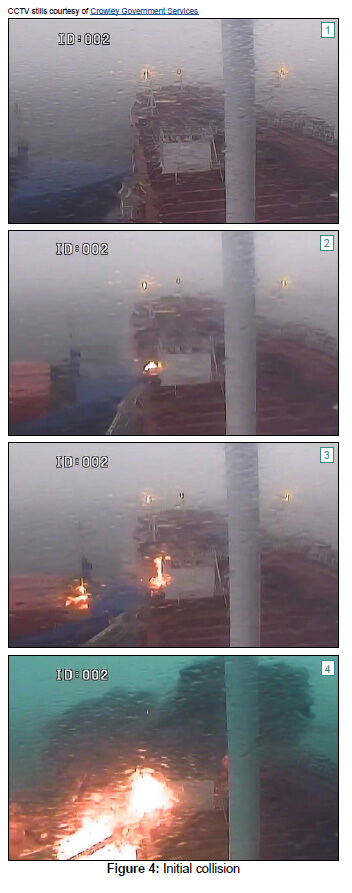
 

Images from the CCTV on Stena Immaculate from Crowley showing the impact released by MAIB

Video: Fire Damages Plant at Russia’s Onega Shipbuilding Yard

shipyard fire
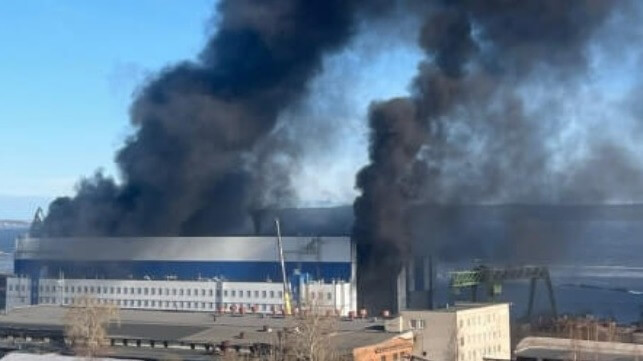
Fire damaged at least one building hall (Russian media)

Published Apr 3, 2025 2:23 PM by The Maritime Executive


A large fire broke out this morning in the Onega Shipbuilding and Ship Repair Plant in Petrozavodsk, Russia causing damage to one of the new structures at the facility. According to the Ministry of Emergency Services, more than 60 firefighters and 20 units of equipment were dispatched. Reports indicate three individuals were injured in the fire.

The Onega Shipyard has been the focus of Russian efforts to expand its domestic shipbuilding capabilities. The facility was established in 2002 north of St. Petersburg at the convergence of Russia’s main waterways connecting the Baltic, White, Caspian, Azov, and Black Seas. Russian officials announced in 2021 that the yard would be modernized and expanded for the production of vessels including tugs, dredgers, and LNG bunkering ships. The yard employs more than 500 people.


The fire was reported at 0950 local time on April 3 with the media indicating it was likely started by two welders working near spilled fuel. They were in one of the building sheds which is 1,500 square meters (more than 16,000 square feet). Some reports are saying it was one of the new facilities being prepared for automation and digital operations.

Residents reported hearing explosions, which the Ministry is saying were gas canisters used at the shipbuilder. In one of the videos posted on Telegram, someone is heard yelling “get out” to the workers.

The Ministry said that two victims suffered burns to the upper respiratory tract and smoke inhalation and were hospitalized. A third person received medical care at the scene.

Local officials later told the media the fire had been contained by 1130 and extinguished by 1200. They said a cooling operation was underway.


Shipbuilding Orders Rebound as South Korea Looks to Benefit from U.S. Fees

South Korean shipbuilding
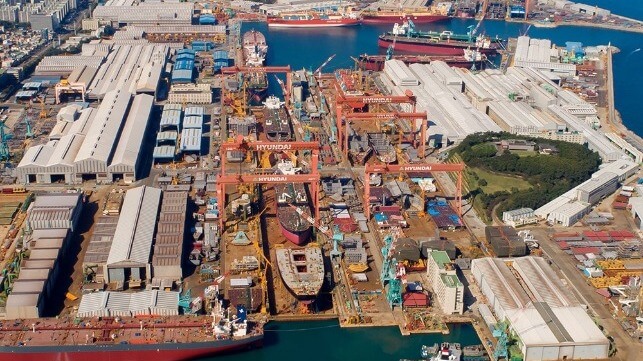
HD Hyundai reports it has booked nearly a quarter of its shipbuilding target for 2025 (HD Hyundai)

Published Apr 4, 2025 4:59 PM by The Maritime Executive


South Korea’s shipbuilding industry is highlighting a rebound in orders in March after a slow start to the year. It comes as the industry looks for ways to benefit from the proposed U.S. fees on Chinese-built ships.

To combat the growing Chinese domination of shipbuilding, South Korea’s strategy has included a focus on high-value ships and larger, more technologically advanced ships. This includes all forms of gas carriers where South Korea continues to lead the orders despite China’s growth in LNG tankers. In the long term, South Korea looks toward ammonia carriers, ammonia-fueled ships, automation, and other technologies.

Reports are the strategy worked in March 2025 with the South Korean yards garnering 55 percent of the orders based on tonnage according to data from Clarkson Research Service. South Korea recorded orders for 820,000 compensated gross tons (CGT) compared to the Chinese yards booking 520,000 CGT in March. By the number of vessels, however, China continued its lead booking 31 ship orders compared to South Korea’s 17 ships.

This is a strong rebound from February when China booked 70 percent of the orders by tonnage. South Korea’s yards booked just nine percent of the tonnage ordered in February. The reports highlighted that the Korean yards historically have lagged behind the Chinese in the first quarter of the year while also noting that last year South Korea only received 16 percent of the orders for the year versus 70 percent booked in China.

China also continues to hold a strong overall lead in the sector, Clarkson’s data shows Chinese yards have an order backlog of nearly 94 million CGT which is 59 percent of the global total. South Korea’s yards while ranking second have a backlog of just over 36 million CGT or 23 percent of the total. 

The South Korean industry is looking toward the U.S. to help drive future business. In February it was reported that the U.S. Trade Representative was proposing fees for Chinese-built ships calling in U.S. ports. The Trump administration has latched on to the concept as part of its plan to rebuild U.S. shipbuilding.

The Korean news outlet CHOSUNBIZ reports fears of the pending fees might already be impacting future shipbuilding plans. Citing reports from Daishin Securities it writes that ExxonMobil canceled orders for two liquefied natural gas bunkering vessels (LNGBVs) intended for China.

HD Korea Shipbuilding & Offshore Engineering, South Korea’s largest shipbuilder, reported yesterday, April 3, that it had booked an additional order for an LNG carrier valued at approximately $263 million. The group said it has now received orders for a total of 24 ships worth $4.07 billion, achieving 22.6 percent of its annual order target of $18.05 billion. By ship type, the company has received orders in 2025 for an LNG carrier, four LNG bunkering vessels, an LPG/ammonia carrier,  and two ethane carriers, as well as 12 containerships, and four tankers.

The Office of the United States Trade Representative held public hearings on March 24 and March 26, regarding the proposed actions in the Section 301 investigation on China’s targeting of the maritime, logistics, and shipbuilding sectors for dominance. It also accepted written comments and for seven days afterward was also accepting rebuttal comments. No timeline was released for completing the review but it is expected the office will issue its final recommendations which Trump will incorporate into the overall plan for U.S. shipbuilding.  Combined with the new tariffs, many have warned it could have a chilling effect on global trade and the shipping industry.


USACE, Eastern Shipbuilding, Royal IHC Start Construction of New Dredge

Army Corps, Eastern Shipbuilding, Royal IHC

Published Apr 4, 2025 8:39 PM by The Maritime Executive


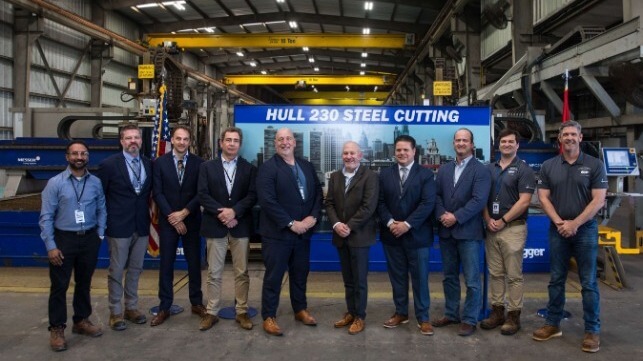
The U.S. Army Corps of Engineers joined contractors Eastern Shipbuilding Group and Royal IHC on April 4, 2025, in Panama City, FL for a steel cutting ceremony, kicking off construction of a Medium Class Hopper Dredge (MCHD) to replace the Dredge McFARLAND of the Army Corps’ Philadelphia District.

The event was attended by USACE Headquarters, North Atlantic Division, Marine Design Center, and Philadelphia District leadership as well as Royal IHC and Eastern Shipbuilding Group leadership.

“This new dredge is going to play a critical role in helping us deliver our navigation mission, which enables maritime commerce to flow on our nation’s waterways. This strengthens our economy and supports our national security,” said USACE North Atlantic Division Regional Business Director John Primavera. “USACE hasn’t built a deep draft hopper dredge in about 45 years. We’re proud to recognize this milestone and look forward to continued partnership with the shipbuilding industry and progressing on the construction of this vital ship.”

The Dredge McFARLAND is one of four oceangoing hopper dredges owned and operated by the Army Corps of Engineers and is currently conducting urgent dredging in North Carolina near the entrance of the Cape Fear River.

The new MCHD will play a critical role in enabling the Corps to continue to deliver its navigation mission and provide for safe, reliable, effective, and environmentally sustainable waterborne transportation systems for vital national security, commerce, and recreation needs.  The new dredge is estimated to be placed into service in 2027 and replaces the McFARLAND. 

Quotes from Eastern Shipbuilding Group and Royal IHC leaders

"The steel cutting of this highly advanced hopper dredge marks another milestone in Eastern Shipbuilding Group’s legacy of delivering world-class vessels. We are proud to partner with the U.S. Army Corps of Engineers and Royal IHC to build a state-of-the-art dredge that will enhance our nation's waterway infrastructure. Our team is committed to executing this program with the highest standards of quality, efficiency, and innovation,” said Joey D’Isernia, CEO of Eastern Shipbuilding Group, Inc.

“We are proud to see our design with the most advanced dredging technology come to life during this exciting milestone,” said Leo van Ingen, Sales Director North America at Royal IHC. “Exceeding the USACE's mission-based operational requirements and featuring one of the most advanced configurations ever developed by Royal IHC, this project marks a significant step in our collaboration with USACE and ESG. This ground-breaking hopper dredge will set new standards in efficiency, automation and sustainability.”

This highly automated, state-of-the-art vessel is undergoing construction at ESG's Allanton and Port St. Joe facilities and is scheduled for delivery in 2027.

Vessel Specifications:

Length: 320’
Beam: 72’
Hull Depth: 28’
Draft (hopper empty): 11’3”
Draft (hopper full): 25’6”
 

The products and services herein described in this press release are not endorsed by The Maritime Executive.


St. Johns Ship Building Receives Two New Contracts Valued at Over $17M

St Johns Ship Building

Published Apr 4, 2025 8:39 PM by The Maritime Executive


[By St. Johns Ship Building]

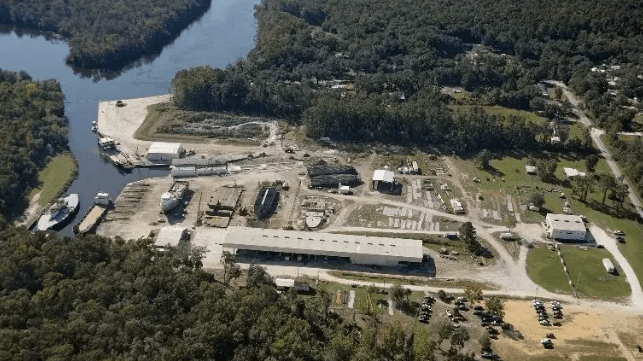
St. Johns Ship Building, a Palatka, Florida-based Jones Act facility, today announced the award of two new contracts totaling approximately $17 million in value. The projects include the construction of a state-of-the-art Crew Transfer Vessel (CTV) and two aluminum cruise vessels. This milestone underscores the shipyard's sustained momentum and reputation for delivering high-quality, purpose-built vessels that support a diverse range of maritime operations.

The new aluminum CTV is designed to meet the rigorous demands of offshore operations, ensuring safe and efficient transportation of personnel and equipment. Incorporating advanced technology and sustainable design elements, the vessel will contribute to the next generation of maritime innovation while supporting the expansion of offshore infrastructure in the United States.

In addition, St. Johns Ship Building has been contracted to construct two aluminum cruise vessels, further diversifying its production portfolio and reinforcing its capabilities in the commercial passenger vessel sector. These vessels will be built with a focus on passenger comfort, safety, and fuel efficiency.

“We are honored to secure these important contracts,” said Joe Rella, President of St. Johns Ship Building. “Our shipyard continues to build momentum, and these awards reflect both our expertise and our ability to deliver reliable, cutting-edge vessels that are critical to the success of a wide range of maritime operations. With our skilled workforce and modernized facilities, St. Johns Ship Building is well-positioned to support diverse shipbuilding needs with innovative solutions.”

Since being acquired in 2022 by Americraft Marine, St. Johns Ship Building has undergone significant investment and modernization. The facility has enhanced its production capacity to build multiple vessels concurrently, streamlining operations to deliver high-quality vessels on schedule and at scale. These improvements have strengthened its position in the U.S. shipbuilding industry, specializing in a wide variety of vessels that support commercial marine and government operations. 
 

The products and services herein described in this press release are not endorsed by The Maritime Executive.


Canada’s First Large LNG Export Facility Enters Final Commissioning Stage

LNG Canada
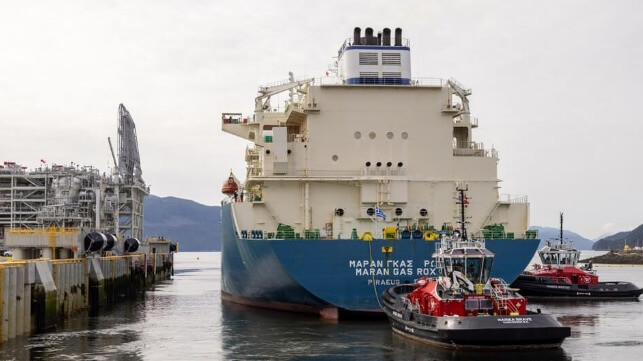
Maran Gas Roxana arrived on April 2 with the cooldown cargo for Canada's first large export facility (LNG Canada)

Published Apr 3, 2025 7:41 PM by The Maritime Executive


LNG Canada received its critical cooldown shipment of LNG on April 2, as the project which is poised to become the country’s first major LNG export facility, continues on track to achieve its first export cargo by the middle of 2025
. It will open a key market for Canada as it launched the LNG industry shipping gas to Asia in competition with the U.S. and Australia which have been the traditional large suppliers.

 The project calls itself the largest private sector investment in Canadian history. Construction began on the project in 2019 with an initial two trains and two docks to handle LNG carriers. The terminal will process up to 2 billion cubic feet per day (bcfd), representing approximately 11 percent of current Canadian gas output, or a total annual capacity of 14 million tonnes annually, and designed to potentially expand with two additional trains.
 
LNG Canada is a joint venture company comprised of Shell, PETRONAS, PetroChina, Mitsubishi Corporation, and KOGAS. It is also the start of an industry that is expected to develop over the second half of this decade. 


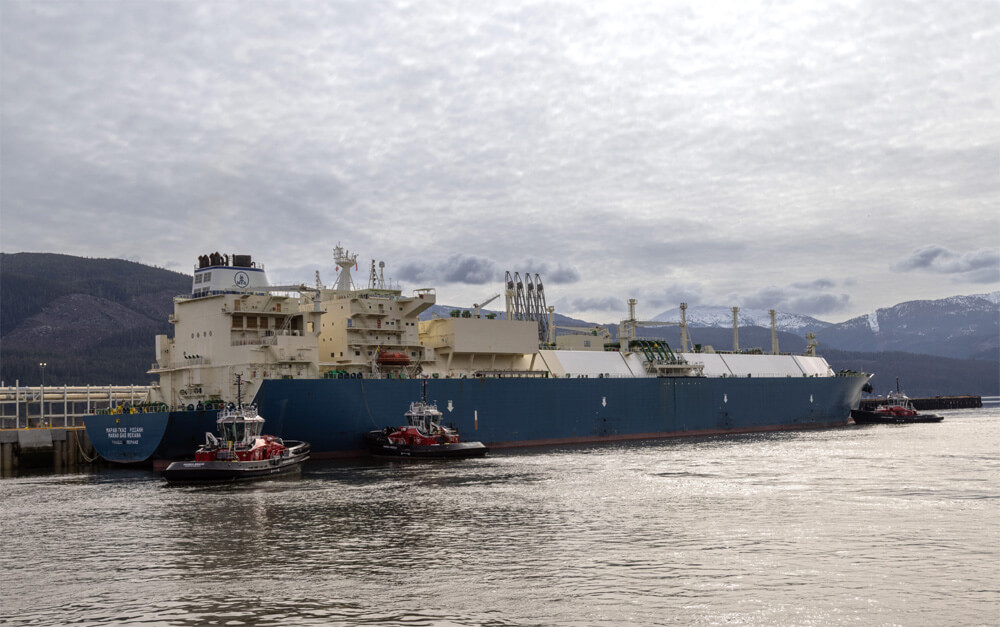
Cooldown cargo arrived from Australia as testing proceeds at the new facility in British Columbia (LNG Canada)


“We’re pleased to announce that today, in a well-coordinated effort with HaiSea Marine personnel and tugboats, British Columbia Coast Pilots and Pacific Pilotage Authority Canada, with support from the Canadian Coast Guard and Canada Border Services Agency, our marine team welcomed for the first time an LNG carrier to the LNG Canada facility in Kitimat,” the company wrote online. Careful planning has gone into the process of moving the vessels along a 159-nautical mile route from an initial point near Prince Rupert to the terminal.

The initial LNG cargo arrived from Gladstone, Australia aboard the Maran Gas Roxana (95,194 dwt). It will be offloaded and used to test the systems during this phase of commissioning. It will cool down the pipes and storage tanks under cryogenic conditions preparing them for operations. LNG Canada reports it will only require this cargo and that this phase of testing and commissioning should last three to four weeks.

After the vessel is offloaded, the pilots will complete their testing process navigating the vessel back to the Pacific. HalSea Marine also completed the commissioning of its tugs which are being used to escort the vessels during the trip to and from the terminal. Canadian authorities are requiring as a precaution escorts for all the LNG carriers.

The project is close to realizing its key milestones as production and shipments begin after years of planning and construction.


Ports and Businesses Brace for Impact From Heavy Tariffs

Port of LA containers
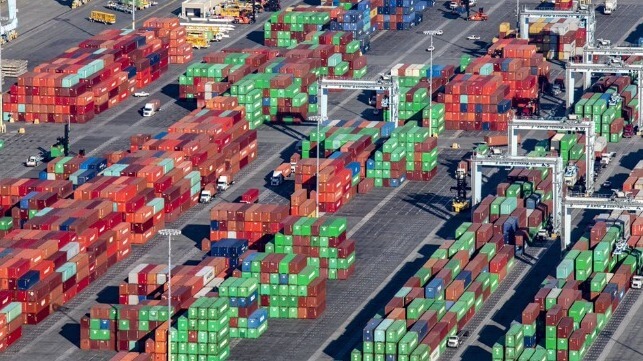
File image courtesy Port of LA

Published Apr 3, 2025 5:13 PM by The Maritime Executive


Markets reacted negatively on Monday after President Donald Trump's announcement of sweeping tariffs on major trading partners, including an additional 34 percent tariff on China. The Dow fell four percent, the S&P 500 dropped five percent, the Nasdaq was down by six percent, and the small-cap Russell 2000 fell by 6.6 percent - the worst trading day on Wall Street since the COVID-19 pandemic. American seaports and importers are bracing for the effects of a 20 percent tariff on the EU, a cumulative 54 percent tariff on China, and 40 percent-plus tariffs on Southeast Asian nations.

At the twin ports in San Pedro Bay, any decline in trade volume will be acutely felt. More than 60 percent of Port of Long Beach's imports come from China, and at neighboring Port of LA, the Chinese share is about 40 percent. Hundreds of thousands of jobs in the vast warehousing districts around LA - where containers are unstuffed and the contents loaded for delivery around the U.S. - will be directly affected.

"If we have reduced container volume and more specifically imports, be it from China or Southeast Asia, it would have an impact on jobs," said Mario Cordero, CEO of the Port of Long Beach, speaking to CBS.

LA and Long Beach have been booming over the past few months as importers raced to beat the tariff deadline. Port of LA posted its second-best February ever, driven by strong import volume. That boom may be followed by a bust cycle, Port of LA CEO Gene Seroka has cautioned.

"Given the substantial inventory already here and the uncertainty of tariffs, it’s possible we can see a 10% drop in volume in the second half of this year," Seroka said at a press conference in March. 

Smaller import-dependent businesses may be the most affected by the new tariffs, and smallcap stocks have now fallen by more than 20 percent since before the election. "They’re not like large corporations. They operate on very thin profit margins," Bank of America Institue economist Taylor Bowley told Politico. "Frankly, they just don’t have the bandwidth or operating expenses to do that."


Chinese Control of Darwin Port Becomes Key Issue in Australian Elections

Darwin, Australia
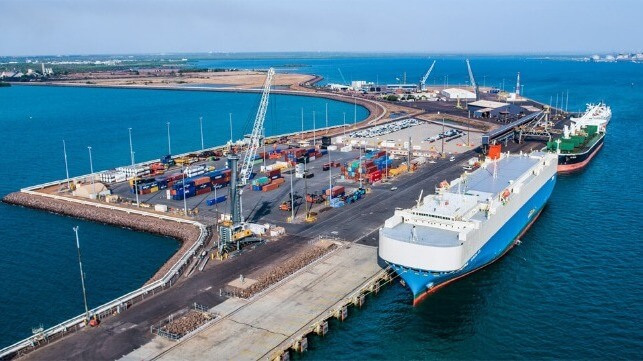
Darwin's port is strategically located on the northern coast (Port of Darwin file photo)

Published Apr 4, 2025 12:12 PM by The Maritime Executive


The latest Chinese port operation to come under pressure is Australia’s Port of Darwin which is now a headline issue in the upcoming federal elections. Today, April 4, Australia’s Prime Minister Anthony Albanese declared during a radio interview that Darwin “should be in Australian hands.” Concerns have been brewing over the now decade-old deal that ceded control of the port to a Chinese company. 

Located on Australia’s north central coast the port while small in scope is seen as a strategic asset. It is Australia’s closest port to Asia and is playing an increasingly significant role in Australia’s expanding offshore oil and gas sector. In the port’s last fiscal year ended in 2024, it reported imports of more than 1 million kiloliters of petroleum products, handling over 280,000 head of cattle and being a major RoRo import operator for cars. It is a base to U.S. Marines and also a popular cruise ship destination.

Faced with financial difficulties, the government of Australia’s Northern Territories put out a public tender in 2014 and the following year concluded a deal with a Chinese company Landbridge. The operator gained a 99-year lease for the port and promised to make investments. Reports indicate that the U.S. with then-President Barack Obama voiced concerns over the Chinese deal.

Accusations have been raised about the operations with the Australian opposition party contending that Landbridge has failed to make the promised investments. In 2024 there were questions when Landbridge’s parent company went into default on an A$107 million (US$65 million) bond.  

The company said in November 2024 that the “underlying operations of Darwin Port have improved significantly,” while reporting a nearly 50 percent increase in EBITDA earnings for FY 24. It blamed non-cash charges for an A$34 million (US$21 million) loss before taxes and said “Darwin Port remains a key asset of the group.”

Prime Minister Albanese announced the federal government is in talks with private pension fund investors on a possible deal to take over the operational lease for the port. He said the options were private investment or the federal government taking over the port. When asked in 2023, Albanese had ruled out a similar move to regain control of the port.

Opposition leaders have already spoken publicly about the need for the federal government to take control back from the Chinese. Media reports indicate they were going to make a formal public statement this coming Sunday, April 6, ahead of the May 3 federal elections.

Media reports said in March the federal government had discussions with the new government of the Northern Territory over possible steps. This came after Federal Labor MP Luke Gosling also made a public statement saying the federal government wanted to “return the port to Australian hands.”

Responding to the statements and media speculation, Terry O’Connor, Non-Executive Director for Landbridge in Australia, issued a statement in March calling the minister’s statement “a surprise,” and he asserted “Landbridge and Darwin Port have not been involved in any discussions on the matter.” He said they would engage with the Northern Territory government but the “port is not for sale.” 

A local news outlet, NT News, however early in March reported Landbridge “could be willing to sell the port’s lease, but was asking A$1.3 billion (US$795 million). Reports indicate that is nearly A$800 million (approximately US$490 million) more than it paid in 2015 for the 99-year lease.


Op-Ed: We Need New Cross-Industry Collaboration to Reach Net Zero

Port scene
iStock

Published Apr 4, 2025 2:10 PM by Daniel Bischofberger


Coming from Switzerland, the International Year of Glacier Preservation and World Water Day’s glacier theme strike a chord with me. I have witnessed the alarming retreat of Swiss glaciers firsthand—a 65% ice loss since 1850, with 10% gone in just 2022-2023.
Maritime has a front-row seat to glacial and polar melting, with rising sea levels, surging storms, and threats to coastal infrastructure. If the climate crisis escalates, supply chains and industries worldwide will face disruption.

The point is, this is a climate red flag. And it’s a call to unite like never before. Maritime’s strength has always been partnership, and in the past five years, together we have deployed efficiency technologies, dual fuel engines, and digitalization to curb emissions.

Yet, even with these efforts, progress is too slow, and two more red flags appeared last year. Global emissions should have peaked before 2025; instead, they hit an all-time high in 2024. It was also the first full year of 1.5°C warming.

One year of 1.5° is not a point of no return, but it raises the stakes ahead of 2030 emissions targets. Missing those could make future goals unattainable. On the other hand, meeting shipping’s 20-30% reduction target would prove that we can pull our weight.

A 2023 IMO study confirms we can, if we accelerate two key developments.

First, we have to go viral with fuel efficiency

The technology for maximum efficiency already exists—from speed optimization to hull cleaning, digital tools, and wind propulsion. Just derating engines with optimized turbochargers can save a conservative 3% in fuel and emissions. We have a customer that combined that with a propeller upgrade to save 25%. But in a global fleet averaging 13.1 years (weighted), only 37% of ships have energy saving technology (EST) retrofits.

We need to finish the efficiency job, and it only makes sense. Investing now will future-proof ships, cut fuel costs, and ensure compliance with new carbon regulations, avoiding wasted money on penalties.

Second, and not as easy, we need to solve the carbon-neutral fuel challenge

To meet the 2030 target, the IMO estimates 5-10% of the global fleet must also switch to carbon-neutral fuels. Consensus is growing around green methanol and ammonia, with new ships already designed for them. Theoretically, we could just scale up infrastructure for green hydrogen production and non-fossil carbon capture as feedstock, boosting green methanol and ammonia production and driving deep decarbonization toward net zero. Unfortunately, theory and reality are far apart, and the way forward is blocked by infrastructure and investment challenges.

Green shipping corridors help, by concentrating carbon-neutral fuel availability, and in 2024, they grew 40% to 62 initiatives worldwide. Still, the actual fuel is in short supply.

As a result, LNG dual fuel technology now leads in new ship orders, Of course, we have to manage methane slips, but mitigation technologies exist. With no perfect path, a 25% emissions drop from conventional fuel is still progress, and onboard carbon capture (OCC) is gradually emerging which could further reduce CO2 emissions from LNG.

But it will not get us to net zero.

Navigating the fuel challenge requires a cross-industry compass

We are not alone in our infrastructure needs. Shipping accounts for 3% of global emissions, but combined with other hard-to-abate sectors—aviation, steel, cement, and chemicals—the total jumps to 25%. Adding power generation (34% of global emissions) and agriculture (12%) brings the total to over 70%, all reliant on green hydrogen and carbon capture. Some sectors, especially shipping, also depend on increased production of green methanol and ammonia.

Right now, infrastructure is critically lagging, and continuing with a fragmented, sector-specific approach will see green hydrogen demand outstrip supply by at least 900% in 2030, with carbon capture facing a similar gap. As major energy players are now scaling back renewable investments, that gap could well grow.

We must join forces to build critical mass

Why not unite to shift the balance in our favor? A cross-industry initiative could consolidate demand and provide market certainty, unlocking the requisite investment: $9 trillion for green hydrogen, $3.5 trillion for carbon capture, five times current methanol production, and a tripling of ammonia production by 2050.

Of course, demand alone will not suffice. With prohibitive costs and long payback periods, making green hydrogen and carbon capture cost-competitive also requires bold national leadership and large-scale incentives—like the ones that drove solar growth in Germany, and made it viable against fossil fuels.

Shipping, a natural starting point for a united fuel front

As stewards of 80-90% of global trade, shipping has a responsibility—and a unique position—to unite sectors, aggregate demand, and amplify our collective voice with policymakers. When it comes to the climate challenge, we are all in the same ship, sailing the same ocean. Acting together now can turn the carbon-neutral fuel challenge into our greatest opportunity for net zero.

Daniel Bischofberger is CEO of Accelleron. With a 100-year heritage of innovation, Accelleron helps the world move further, more efficiently and sustainably through its turbocharging, fuel injection, and digital solutions for heavy-duty applications. The company serves marine and energy customers in more than 100 locations across 50 countries, continuously innovating to drive the energy transition forward and accelerate the decarbonization journey.

The opinions expressed herein are the author's and not necessarily those of The Maritime Executive.

 ALT. FUELS

Project Outlines Process for Converting Standard Bulk Carrier to Methanol

dry bulk carrier Kamsarmax
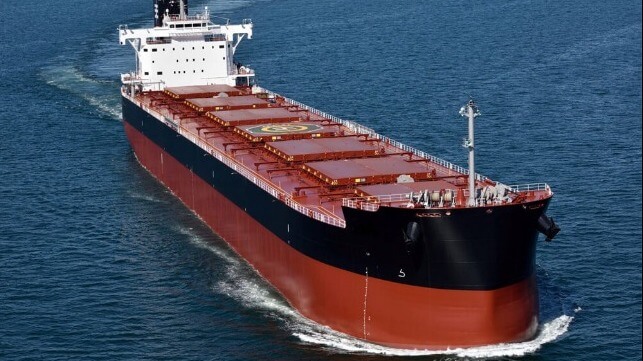
Tsuneishi reprots building over 300 Kamsarmax and belives the retrofit of the category would lead maritime decarbonization (Tsuneishi Shipbuilding)

Published Apr 3, 2025 4:57 PM by The Maritime Executive


A new project led by the Maersk Mc-Kinney Møller Center for Zero Carbon Shipping addressed the challenges and processes required to convert one of the largest segments of the current global shipping fleet, the Kamsarmax bulk carrier, for dual-fuel methanol operations. With involvements from leaders across the segments of the industry, the project leaders believe it is a key step in decarbonization that provides critical insights into the feasibility of retrofit projects.

The project, which aimed to assess the techno-economic feasibility of a retrofit from fuel oil to dual-fuel methanol, has been granted an Approval in Principle (AiP) by Japan’s ClassNK, which also contributed regulatory advice and facilitated safety risk assessments.

The Center highlights that Kamsarmax bulk carriers represent a significant share of the existing fleet. It believes that developing a general retrofit package could drive low-emission solutions across the maritime industry. Additionally, the project sheds light on the challenges and opportunities that need to be addressed when deciding to retrofit a bulk carrier.

The retrofit project was based on a standard Kamsarmax design developed by Tsuneishi Shipbuilding which worked along the Center as a lead in the project. They explored the technical and operational challenges and opportunities of converting vessels to dual-fuel methanol. The retrofit design and technological solutions were developed in close cooperation with MAN ES, which provided the main engine and FuelTech expertise on design reviews and HAZID processes (Hazard Identification). Cargill offered operational and technical insights bringing in the charterer’s perspective, while the Danish Maritime Administration participated as an observer.

“With the medium-sized bulk carrier segment representing a substantial share of the industry, this modular retrofit solution paves the way for an accelerated transition to methanol and other sustainable fuels,” said Evangelos Fragkoulis, Head of Ship Design for the Maersk Mc-Kinney Møller Center for Zero Carbon Shipping. “It demonstrates a paradigm shift towards non-intrusive, safe, and agile solutions that enable the integration of green fuels without compromising safety.”

The Kamsarmax is an 80,000 to 84,000 dwt dry bulk carrier which is very popular in the industry with the first vessel of the class delivered in 2005. Tsuneishi alone reports having built over 300 of the vessels, and the number one market share in the category, which generally measure approximately 230 meters (755 feet) in length making it a versatile and economical design. Tsuneishi highlights with a lifespan of 20 to 30 years, it is a critical segment of the industry that will significantly impact maritime decarbonization efforts.

The project generated multiple design solutions, including novel and modular fuel handling onboard, as well as methanol storage and integration options that optimize safety, capacity and ultimately reduce cost and conversion lead times. Additionally, the project has developed general design principles for methanol retrofit aimed at ship designers, shipyards and operators, providing a navigational framework through key design decisions. 

The Maersk Mc-Kinney Møller Center for Zero Carbon Shipping reports that it will be releasing a comprehensive case study on the design. The guidelines developed during the project will also be released late this year.


ENEOS Joins Maersk and APM Investing $100M in U.S. Green Methanol Project

Maersk methanol fueled containership
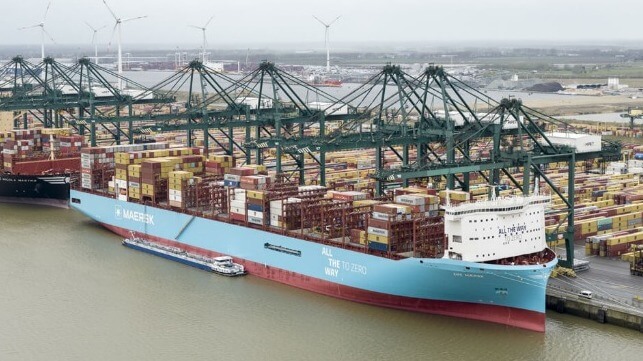
ENEOS is investing in the effort to build methanol supply for Maersk and others in shipping, aviation and the chemical industry (Maersk)

Published Apr 3, 2025 6:02 PM by The Maritime Executive

Japan’s leading energy company ENEOS is joining with A.P. Moller Holding and A.P. Moller – Maersk investing $100 million in C2X, the green methanol developer launched in 2023 by A.P. Moller Holding. The proceeds will primarily be used to fund the final development of a Louisiana project to produce green methanol as well as to advance C2X’s current efforts in the U.S., Spain, and Egypt to build green methanol production for the shipping, aviation, and chemical sectors.

C2X reports the investment is a critical step to advance the development of the Beaver Lake Renewable Energy project in Louisiana to FID, which is being developed with SunGas Renewables. The project will use SunGas’ S-1000 gasification technology system to convert biomass into low-carbon methanol. The project will also capture and permanently sequester approximately 1 million tonnes per year of surplus biogenic CO2 from the gasification process, generating carbon dioxide removal (CDR) credits.

The multibillion-dollar project aims to start construction in the second half of 2026. Once operational, which is targeted for the end of 2028, it will produce over 500,000 tonnes of green methanol annually. C2X reports it is also in discussions to secure long-term offtake agreements from Maersk and other customers in its targeted shipping, chemicals, and industrial sectors.

The Beaver Lake facility is the first of several facilities planned by SunGas and C2X to supply green methanol. It would repurpose a former International Paper site in Rapides Parish, Louisiana that closed in 2009. SunGas has estimated the facility would be valued at $2.4 billion.

SunGas and C2X announced a strategic partnership and C2X’s investment in SunGas in May 2024. ENEOS’ new investment is accompanied by a strategic partnership with C2X, which considers methanol offtake and the application of SunGas’ gasification technology into its system portfolio.

AP Moller launched C2X to help expedite the process of developing a global production and supply chain for methanol. The company has previously announced projects in Spain, Egypt, and the United States. With the new commitment from ENEOS, Maersk, and APM, it looks to continue to accelerate the development of its portfolio of projects.


Construction Order Placed for World’s First Sail-Powered Containership

sail container ship
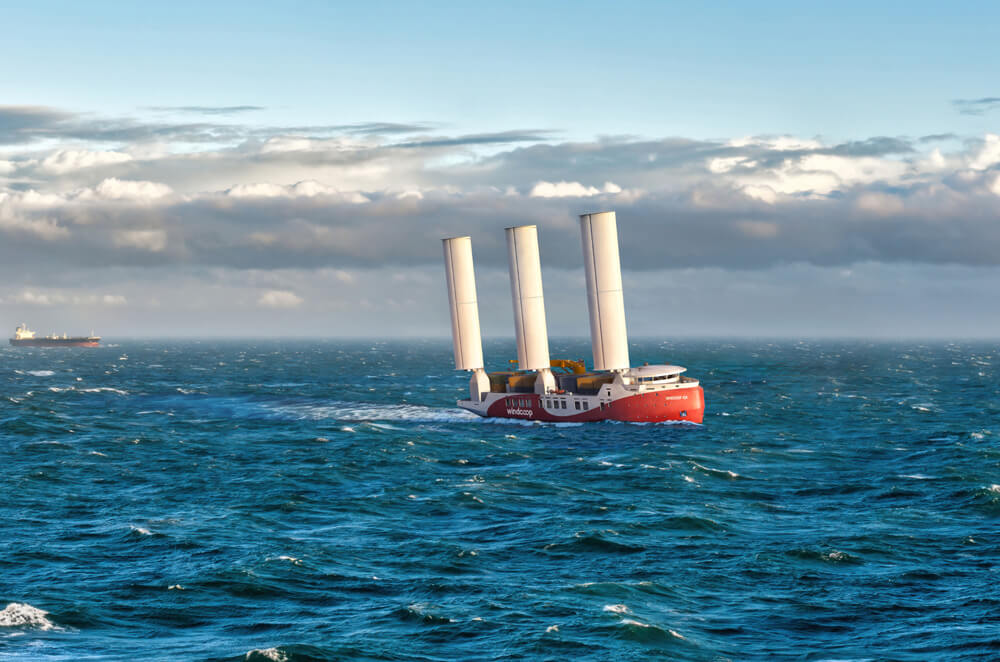
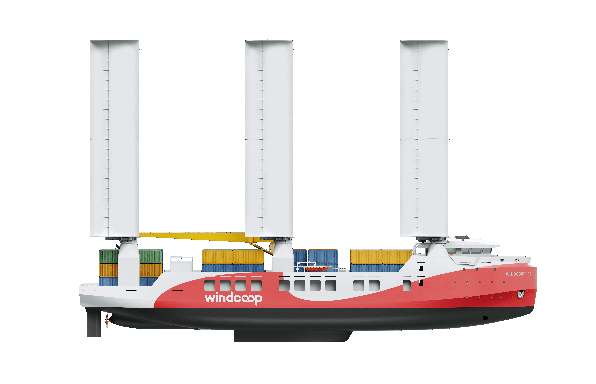
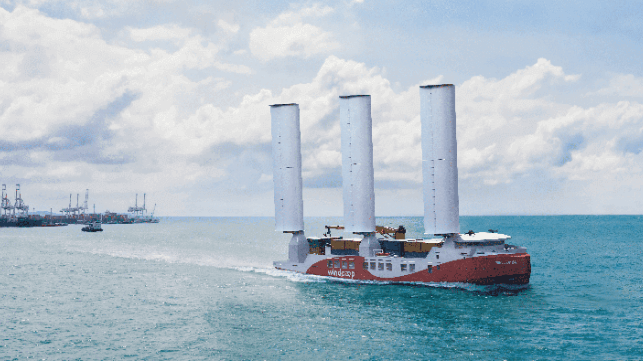
The sail containership will have a capacity for 210 TEU and cranes to make it full independent for cargo handling (Windcoop)

Published Apr 3, 2025 8:31 PM by The Maritime Executive


The French cooperative Windcoop completed the construction order for its revolutionary open-hatch sail-powered cargo ship, the first of what the group envisions will be a pioneering fleet of ships. The order was placed with Turkey’s RMK Marine, which is also building the sail-powered RoRo Neoliner Origin.

The group reports it has had to overcome major technical and logistic challenges to integrate a wind-powered propulsion system while also ensuring efficient container handling. This was in part solved with asymmetrical sails, the open-hatch design, and the placement of cranes on the opposite from the sails. It helps to provide stability and balance while also giving the vessel total autonomy for loading and unloading.

The vessel will be 91.3 meters (approximately 300 feet) in length with a capacity for 210 TEU and 40 reefer plugs. The three wingsails designed by Computer Wingsails (CWS) are each 350 square meters (approximately 3,800 square feet) or a total sail area of 1,050 square meters (11,300 square feet). The vessel is projected to have an average sailing speed of 9 knots.


“After four years of development, we are finally taking decisive steps toward realizing what was once considered an audacious dream,” said Matthieu Brunet, Chairman of Windcoop. The effort was started in 2022. Based in Lorient, France, Windcoop was created through the collaboration of Zéphyr & Borée, Enercoop and Arcadie.

The project with RMK calls for orders to the subcontractors including the sails and engines and finalization of the studies and tank tests for the vessel this year. Construction is due to begin in 2026 and trials, delivery, and commissioning in May 2027.

The total construction cost is set at €28.5 million ($31.5 million). Windcoop reports it has secured financing of €28.5 million structured by Crédit Maritime Grand Ouest – Banque Populaire, with a counter-guarantee from Bpifrance. The financing includes €6.8 million ($7.5 million) raised through the cooperative. This involved 1,600 citizens, committed shippers (Arcadie, Valrhona, Prova, Lobodis, Ethicable, Cafés Richard, Demad, Arawak), and institutional investors (La Nef, Crédit Mutuel Arkéa, SIDI, Mer Invest, Inddigo, Bretagne Capital Solidaire). It is the first cargo ship of this size to include cooperative funding.

The first service route was selected to focus on secondary ports that are traditionally neglected because they lack the capacity or equipment to load goods. The group says it aims to “rebalance the logistics network” while also reducing carbon emissions by limiting land transport. The vessel will be registered in France and sail a route between France and Madagascar, connecting Marseille to the ports of Tamatave, Diego Suarez, and Majunga, without transshipment and including transits of the Suez Canal. They project a transit time of 31 days.

From Madagascar, they will carry cargo including aquaculture, cocoa, vanilla, spices, essential oils, and textiles. While they expect to export from France to Madagascar retail goods, glassware, paramedical products, and textiles.

Windcoop has ambitious plans. It aims to secure financing and rapidly build a second vessel to ensure a monthly service on the Madagascar-France route. At the same time, Windcoop plans to expand its fleet by launching new maritime routes designed to meet the needs of the shippers and the territories involved. A regional line in the Indian Ocean, a transatlantic connection as well as a direct link to West Africa are currently in the planning stages.