Tuesday, May 13, 2025

Kristi Noem scraps protection for thousands of Afghans who helped US against Taliban

WORSE THAN BIDEN'S EXIT FROM AFGHANISTAN

Ariana Figueroa,
 States Newsroom
May 13, 2025 


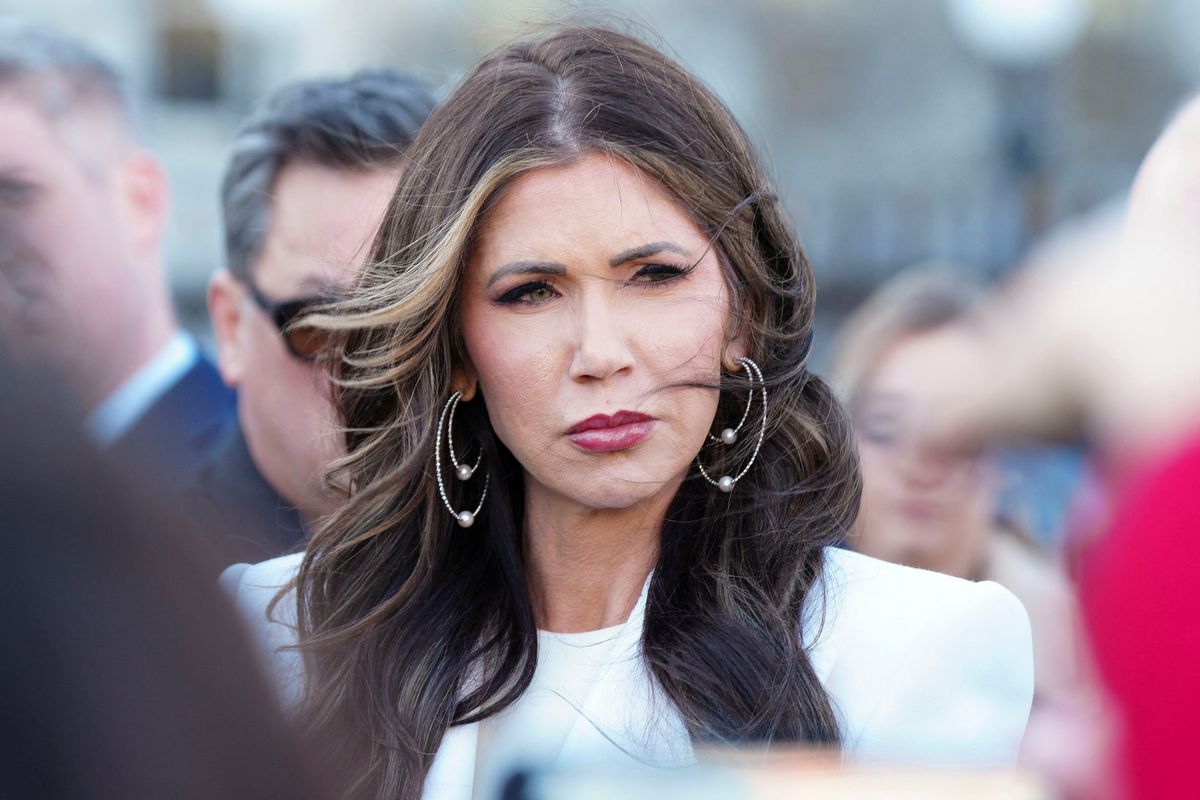
U.S. Department of Homeland Security Secretary Kristi Noem looks on at the White House, in Washington, U.S., January 29, 2025. REUTERS/Ken Cedeno

WASHINGTON — Department of Homeland Security Secretary Kristi Noem Monday announced about 9,000 Afghans living in the United States who had been protected from deportation will no longer be shielded as of mid-July.

After the United States withdrew from Afghanistan in 2022, the Biden administration designated Temporary Protected Status, along with other legal temporary status pathways, for thousands of Afghans who aided the U.S. against the Taliban terrorist group and fled their home country. Thirteen U.S. military members were killed in the chaotic withdrawal at the Kabul airport.

About 80,000 Afghans came to the U.S. and settled in various programs that offered legal protections and work authorization. Of that group, 9,000 were designated TPS.

TPS is granted to nationals whose home country is deemed too dangerous to return due to violence or disasters.

The TPS designation for Afghanistan will expire on May 20 and deportation protections will lift on July 12. The order is likely to face legal challenges, since Noem’s moves to curtail TPS for other nationals have faced lawsuits.

“This administration is returning TPS to its original temporary intent,” Noem said in a statement. “We’ve reviewed the conditions in Afghanistan with our interagency partners, and they do not meet the requirements for a TPS designation. Afghanistan has had an improved security situation, and its stabilizing economy no longer prevent(s) them from returning to their home country.”

The termination of the status comes as the Trump administration fast-tracked the classification of refugees for white South Africans who landed in the U.S. Monday at Dulles International Airport in Virginia.

President Donald Trump signed an executive order in February that noted Afrikaners — an ethnic group in South Africa made up of European descendants, predominantly Dutch — are “victims of unjust racial discrimination” after South Africa’s government passed a land ownership law in an effort to address land dispossession that occurred under apartheid.

The Trump administration suspended all refugee services in late January and has resisted a district court’s order to reinstate the program, along with contracts to organizations that facilitate refugee resettlement services.

Noem said that determination to end TPS for Afghanistan was based on a review from U.S. Citizenship and Immigration Services on Afghanistan’s conditions along with input from the State Department.

The Taliban currently control the government and the State Department’s travel advisory for the country is the highest level, a 4, which means it advises against traveling.

DHS added in a statement that Noem “further determined that permitting Afghan nationals to remain temporarily in the United States is contrary to the national interest of the United States.”

Noem has also ended TPS for Venezuelans and Haitians.

The Trump administration asked the U.S. Supreme Court in early May to lift a lower court’s order that reversed Noem’s decision to end TPS for one group of Venezuelans.
'We can't give up': Black doctor's lifetime work screeches to halt due to Trump policy

RAW STORY


Doctor consulting with a patient (Shutterstock)

The work of several Black doctors who established multiple scholarships for Black medical students at the University of Cincinnati has come to a halt because of President Donald Trump’s policies, according to a Washington Post report.

Clyde Henderson is a retired orthopedic surgeon in Cincinnati who spoke with the outlet about the problem.

“This is just a setback, and it’s going to take a concerted effort to reverse it,” Henderson said. “But we can’t just give up, we don’t have that choice.”

He added, “Disparities exist at nearly every part of the health care system, and the data shows that Black folks do better when they’re taken care of by folks who look like us, so it would be immoral for us not to address the shortage.”

According to the Post, the disparity in Cincinnati is stark. A 2020 report from the Doctors Foundation found there are fewer than 100 Black or Latino doctors in the region.

“That amounts to less than 5 percent of the physicians in the region,” the Post reported. However, Black residents make up 40 percent of Cincinnati’s population. Latinos make up just 5 percent of residents.

Lawyers from the University of Cincinnati have been raising questions about how scholarships for Black students were being administered before Trump’s policies were put in place. They have also suggested that they should be open to more than just Black students.

This especially became the case when Ohio’s Republican Gov. Mike DeWine signed an overhaul of the state’s higher education system.

The legislation banned diversity, equity and inclusion training and called for the end of race-based scholarships.

The Post reports, “The University is also one of 45 colleges under investigation by the Department of Education’s Office for Civil Rights for its DEI policies.”

Doctors like Henderson are now rushing to protect their endowments. They are also left hoping the political environment will change or the college will back their efforts.

The University of Cincinnati didn’t return the Post's “repeated calls and emails for comment.”
'Corruption tour': Trump lashed by criticism as he arrives in Saudi Arabia


Matthew Chapman
May 13, 2025 
RAW STORY


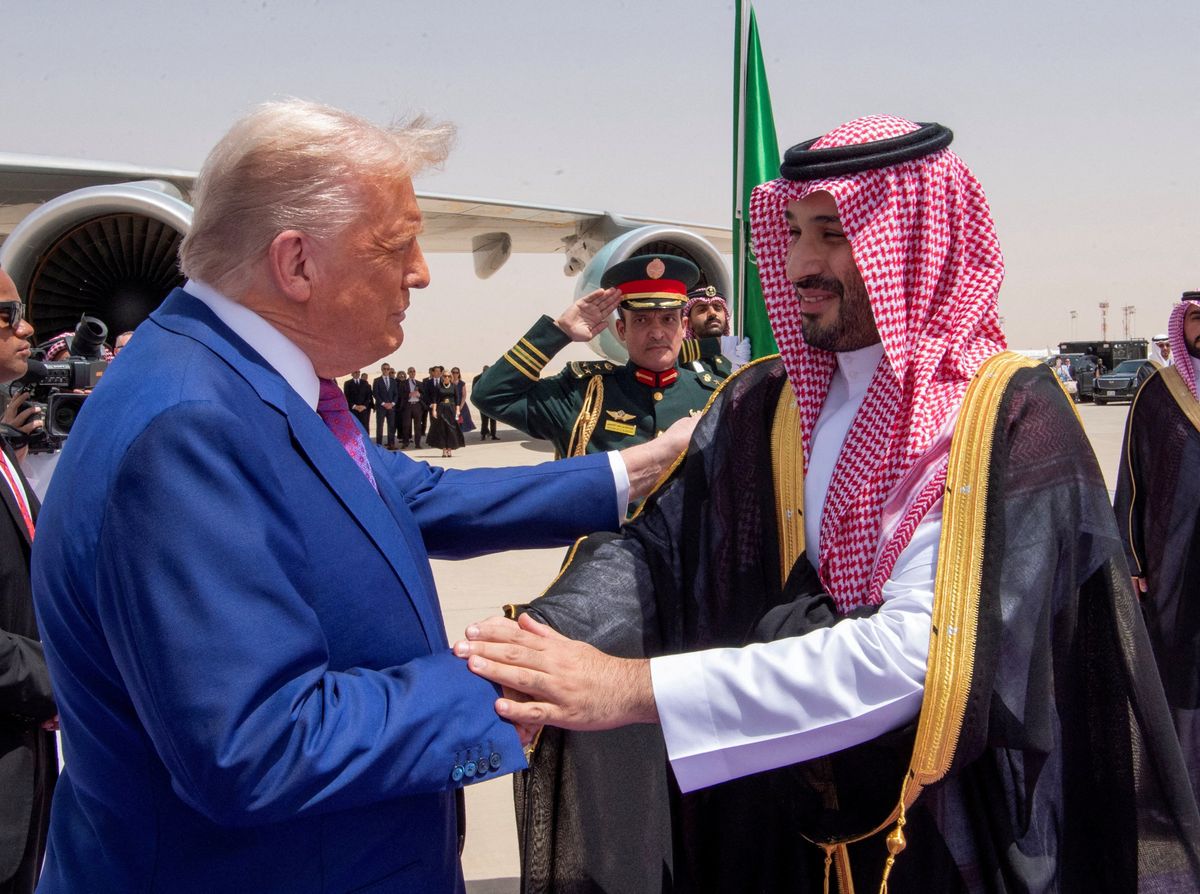
U.S. President Donald Trump shakes hands with Saudi Crown Prince Mohammed Bin Salman during a welcoming ceremony in Riyadh, Saudi Arabia, May 13, 2025. Bandar Algaloud/Courtesy of Saudi Royal Court/Handout via REUTERS THIS IMAGE HAS BEEN SUPPLIED BY A THIRD PARTY TPX IMAGES OF THE DAY

President Donald Trump has begun his long-anticipated tour of the Middle East, where he is set to negotiate with a number of foreign nations and try to resolve conflicts and wars in the region — but he already begins that mission under a cloud of doubt and skepticism at home.

In particular, the trip has been marred by reports that he wants to put business deals over diplomacy, and the fact that the government of Qatar is gifting Trump a $400 million luxury Boeing 747, which raises questions of whether any concessions or benefits accruing to Qatar in Trump's discussions will truly be in America's interests and has even some of Trump's firmest supporters crying foul.

Even as Trump prepared to leave, multiple senators sounded the alarm that none of this was above board.

"This is President Trump's corruption tour of the Middle East," Sen. Chris Murphy (D-CT) posted on X. "He is giving favors to nations, and in exchange he is asking not for security concessions for the United States, but cash payments for himself. This isn't a normal moment and we shouldn't act like it."

"Donald Trump's personal business dealings in the Middle East are already an ethical nightmare," wrote Sen. Jack Reed (D-RI). "Accepting a luxury aircraft from a foreign gov’t would create a security nightmare too. President Trump should think twice before permanently embarrassing himself & the nation."

Other commentators had a similar take on the matter.

"Qatar wants: U.S. weapons; Military protection; U.S. foreign policy influence in the Middle East; Favorable trade terms and investment opportunities. Trump wants: bribes," wrote health care activist Melanie D'Arrigo. "So Qatar gave him a $400 million plane and a $5.5 billion golf course deal."

"The WH truly has succeeded in framing Trump's Middle East trip as 'all about business,'" wrote former Biden administration State Department adviser Ned Price. "But the many media outlets covering it as such might ask why he's choosing these countries over longstanding U.S. allies with larger GDPs whose values more closely align with ours."

Even some people willing to concede Trump could make diplomatic progress in the Middle East, were skeptical it would actually happen.

"As Trump arrives in Middle East, he has leverage Biden didn't have or wouldn't use — on Israel, Iran, and Congress — and inherits new strategic landscape," wrote Brookings Institution scholar Phil Gordon. "Alas no sign he has the discipline, expertise or perseverance to turn that into effective policy."
CHAUVINISM IS FRENCH

Depardieu convicted of sexually assaulting two women

By AFP
May 13, 2025


French film star Gerard Depardieu is the highest-profile figure caught up in France's response to the #MeToo movement - Copyright AFP JULIEN DE ROSA

Céline BRUNEAU

A Paris court on Tuesday handed French cinema icon Gerard Depardieu an 18-month suspended sentence after convicting him of sexually assaulting two women on a film set in 2021.

The court also ordered that Depardieu, who was not present for the verdict, register as a sex offender — marking a spectacular fall from grace for the 76-year-old who has dominated French cinema for half a century.

Depardieu, who has acted in more than 200 films and television series, is the highest-profile figure caught up in France’s response to the #MeToo movement.

The verdict was delivered on the first day of the 2025 Cannes Film Festival, France’s most prestigious cinema showcase where Depardieu won best actor in 1990 and was for years the subject of adulation.

The trial related to charges of sexual assault during the filming in 2021 of “Les Volets Verts” (“The Green Shutters”) by director Jean Becker.

The plaintiffs were a set dresser, 54, identified only as Amelie, and a 34-year-old assistant director, who accused the actor of sexual assault.

Of the two, only Amelie was present to hear the judgement and she reported feeling relieved after going through “an emotional rollercoaster”.

“This recognition of the mistreatment in court means a lot to us,” said Carine Durrieu Diebolt, a lawyer for one of the plaintiffs.

Claude Vincent, another lawyer for the plaintiffs, added: “Genius does not excuse sexual assault.”

Around 20 women have accused Depardieu of assault or inappropriate behaviour but this was the first case to come to court.

The whereabouts of the actor were not immediately clear.

The actor, who had complained that he had been out of work for three years, is to star in a film directed by his friend, actor Fanny Ardant.

The shooting of the scenes involving Depardieu began in April in the Portuguese archipelago of the Azores.

The actor’s lawyer Jeremie Assous said Depardieu would appeal.

“The moment you are implicated in a case of sexual assault, you are automatically convicted,” he said.

– ‘Lack of remorse’ –


The sentence was fully in line with the recommendation of prosecutor Laurent Guy who argued an 18-month suspended jail term “takes into account the total lack of remorse” shown by the defendant.

Amelie testified that Depardieu pinned her down on set in 2021, saying that “he was very strong” and “groped” her.

She also said Depardieu made “obscene remarks” and suggestions, boasting he could “give women an orgasm without touching them”.

The 34-year-old plaintiff said Depardieu initially assaulted her when she accompanied him from his dressing room to the set.

“It was nighttime,” she said. “He put his hand on my buttocks,” she said, adding that the actor assaulted her on two other occasions.

Depardieu denied sexually assaulting the women.

“I’m vulgar, rude, foul-mouthed, I’ll accept that,” he told the court, but he added: “I don’t touch.”

“I adore women and femininity,” he also said, while describing the #MeToo movement as a “reign of terror”.

Throughout the trial, Depardieu was supported by his daughter Roxane, his ex-partner Karine Silla and actor Vincent Perez.

On Monday, he won public backing from French film star Brigitte Bardot.

“Those who have talent and put their hands on a girl’s bottom are thrown in the gutter,” Bardot told broadcaster BFMTV.

“We could at least let them get on with their lives. They can’t live anymore,” she added.

– ‘Change judicial practices’ –

While delivering the verdict, the presiding judge criticised the “excessive harshness” shown toward the plaintiffs by Depardieu’s defence team.

During the trial Assous, the actor’s lawyer, called the two women “liars” and “hysterical”, arguing that they were working for the cause of “rabid feminism”.

“These remarks, by their very nature, amount to secondary victimisation,” the presiding judge said, ordering Depardieu to pay each woman 1,000 euros ($1,111).

The court also ordered Depardieu to pay 4,000 euros to Amelie and 2,000 euros to the second woman in compensation for moral injury.

Women’s rights group the Fondation des Femmes hailed the ruling.

“We hope this decision will help change judicial practices and finally reduce the impunity that has long surrounded sexual violence,” said the group.

Nearly 200 French lawyers signed an open letter during the proceedings urging the judiciary to fight what they called courtroom sexism.

Depardieu’s lawyer “used sexism and misogyny to his heart’s delight” to try to discredit the plaintiffs and their legal team, they said.

Depardieu has also been indicted in another case following a rape complaint filed by actor Charlotte Arnould, 29. Prosecutors have requested a trial.

In April, French MPs criticised “endemic” abuse in the entertainment industry after a six-month inquiry.
Health: Nine-year gap in life expectancy between U.S. states

By Dr. Tim Sandle
May 11, 2025
DIGITAL JOURNAL


Lovely setting! Waianae is in the remote western part (Leeward Shores) of Oahu, and is far removed from the bustle, hustle, and glitz of Honolulu and Waikiki. 
— Photo by Scarlet Sappho CC BY-SA 2.0

Human life expectancy has increased over the past century thanks to advances in medicine, nutrition, and public health. But a new study reveals that where a person lives in the U.S. can still make a major difference in how long and how well you live. This can be a difference of up to nine years.

The stem cell research firm DVC Stem has compiled life expectancy data from the U.S. to determine which states have the highest longevity rates. Researchers also looked at 36 metrics across seven categories – including healthcare access, cost of living, and senior wellness – to find out which states provide the best conditions for senior health and well-being (scored out of 100 based on their performance, with a higher score indicating healthier ageing).

According to the findings, residents of Hawaii live nearly nine years longer on average than those in Mississippi, while Vermont is the best state for seniors to age healthily.

Three out of the eight states with the highest life expectancy (accounting for ties) also place among the top five for healthy aging.

The U.S. states with the highest life expectancy  

Rank State Life expectancy (years) 
1 Hawaii 80.7 
2 Washington 79.2 
3 Minnesota 79.1 
=4 Massachusetts 79 
=4 New Hampshire 79 
=4 California 79 
=5 Vermont 78.8 
=5 Oregon 78.8 
From the above, Hawaii leads the U.S. with a life expectancy of 80.7 years, outperforming all other states by a significant margin. The Aloha State also has low respiratory disease death rates, with only 45.9 deaths per 100,000 residents.

Washington comes next, with a life expectancy of 79.2 years. The state’s residents benefit from high rates of preventative care, with 69.3% of seniors receiving flu immunizations.

Minnesota residents can expect to live 79.1 years on average, placing the state third in the rankings. The North Star State shows strong performance in healthcare access and mortality prevention, with only 55.1 deaths per 100,000 from respiratory diseases.

Massachusetts ties for fourth with a life expectancy of 79 years and has the highest percentage of adults who have had routine checkups within the past year at 80.9%.

New Hampshire also reports a life expectancy of 79 years, with 70.9% of seniors receiving flu vaccinations annually.

California matches New Hampshire and Massachusetts with a life expectancy of 79 years despite its large and diverse population. The Golden State performs exceptionally well in mortality and disease prevalence metrics, ranking fifth in this category.

Vermont ties for fifth place, with a life expectancy of 78.8 years, excelling in senior functional and cognitive health, with only 4.74% of seniors reporting serious cognitive difficulties.

Oregon also reports a life expectancy of 78.8 years, performing particularly well in healthcare costs and access, ranking 4th in this category.

In contrast, the U.S. states with the lowest life expectancy 

Rank State Life Expectancy (years) 
1 Mississippi 71.9 
2 West Virginia 72.8 
3 Alabama 73.2 
4 Louisiana 73.1 
=5 Kentucky 73.8 
=5 Tennessee 73.8 
=5 Arkansas 73.8 
From the second table, Mississippi has the nation’s lowest life expectancy at 71.9 years, nearly 9 years shorter than Hawaii – the state places 49th in senior wellness and preventative care with only 59.5% of seniors receiving flu immunizations.

West Virginia comes second, with residents living an average of 72.8 years, the second-lowest in the nation. The state has the highest deaths from heart attacks and strokes (238.81 per 100,000 people) and cancer (262.63 per 100,000 people) among all states.

Alabama comes next, with a life expectancy of 73.2 years. The state has the highest death rate from cardiovascular diseases at 216.86 per 100,000 residents and lands 47th for mortality and disease prevalence overall.

Louisiana residents have a life expectancy of 73.1 years, with only 53% of its senior residents immunized against flu.

Kentucky, Tennessee, and Arkansas tie for the fifth-lowest position with life expectancies of 73.8 years. Kentucky and Arkansas show troubling rates of deaths from respiratory diseases (101.97 and 99.28 per 100,000 people, respectively), while Tennessee has significantly elevated death rates from heart attacks and strokes (203.70 per 100,000).

The regional patterns show how significantly location affects health outcomes as people age. Location will be affected by income and local provision,
Large increase in breach data shared on underground forums


By Dr. Tim Sandle
May 11, 2025
DIGITAL JOURNAL


Image: — © AFP

While ransomware threats are not new, they are becoming increasingly widespread due to the rapid dissemination of attack techniques, which is outpacing law enforcement’s ability to dismantle attack groups.

This increase is attributed to factors like cloud misconfigurations, new ransomware attacks, and increased exploitation of vendor systems. With the latter, attackers are increasingly targeting the systems and data of third-party vendors to gain access to larger networks and databases.

The evolving cyber threat landscape appear bleak, with the rate and severity of incidences increasing. A recent survey reveals the UK’s prominence as a target for cybercriminals.

According to the firm Bitsight’s new State of the Underground report, which analysed billions of dark web activities via its TRACE Security Research Team, there was a 43 percent rise in data breaches shared on underground forums globally in 2024.

This increase in threats has been driven by increasingly agile ransomware gangs and a surge in compromised data.

For the UK, the scale of the threat suggests the UK is placed third globally for ransomware attacks, with professional services, manufacturing, and education sectors hardest hit. This highlights the growing complexity and speed of cybercrime, as well as the significant exposure of UK organisations across sectors.

The report indicates

Ransomware attacks

Increased by 25% in 2024, while the number of ransomware group leak sites rose by 53%. The fragmentation caused by smaller, more agile gangs is leading to more attacks on mid-sized organizations.

Data breaches

Increased by 43% in 2024, based on incidents shared across underground forums. U.S. organizations accounted for nearly 20% of victims.

Compromised credentials

The survey identified 2.9 billion unique sets of compromised credentials in 2024, up from 2.2 billion in 2023.

Compromised credit cards

Underground markets listed 14.5 million compromised credit cards in 2024, a 20% increase over 2023.

The surge in active ransomware attacks signals escalating sophistication of attackers and an increasingly complex threat landscape.

The report recommends that combating these evolving threats requires more than layered defences—it demands continuous visibility into exposed assets, insights into emerging threats, and the ability to prioritize action based on real-world risk.
AI tools have led to ‘AI-spamplications’ (resume spamming)


By Dr. Tim Sandle
May 9, 2025


Chinese AI tool Manus can perform tasks such as booking tickets and sorting resumes - Copyright AFP ADEK BERRY

AI is becoming more widely used in the working world, proving, when it works, to be a time-saving and effective resource for both job seekers and employers. One consequence has led to an increase in ‘spamplications’, also known as ‘CV Spamming’, where job seekers are using AI to share their CV with many different employers and applying for multiple jobs in a short space of time.

There are many issues with this method of finding a job, both for employers and candidates and care needs to be taken by would-be employees.

CEO and Co-Founder of Kickresume, Peter Duris, has explained the best approach to Digital Journal.

Duris says: “AI tools can save time and help you come up with ideas, but it’s important for people to use them responsibly. For instance, you should always double check the text output to make sure that you’re happy with it, and be mindful that AI isn’t always right.”

Citing examples, he adds: “There have been recent stories in the news of job applicants sending cover letters or applications with a chatbot prompt right in the middle of the text that they have forgotten to take out. It’s not a good look—it makes managers think that the worker is careless, doesn’t pay attention to detail, and hasn’t taken the time to write it himself/herself…

“Hiring managers are getting swamped with a deluge of ‘spamplications’ right now, so whatever you can do to make yourself stand out as a candidate will help. And for employers, now might be a great time to focus on interviews as a way to get to know the candidates better, beyond the applications they sent in.”

Duris’s tips for employees are:

• AI is perfect for helping with the overall picture, whether it’s the formatting, language, or structure. It helps make your CV and cover letter come across as polished and professional—but the tiny details are still down to you. Make sure you add that personal touch.
• Use a CV tool that helps with design and layout, rather than just generating the text in a chatbot like ChatGPT or Gemini. A resume that’s well laid out will catch hiring managers’ attention and create a better impression.
• Don’t just generate a single application and send it to every company that’s hiring in your field. You’ll get better results if you personalize your CV to suit different roles. You can still use AI tools for this, as they can help you come up with ideas or show you examples of successful applications for these roles.

Dursi’ tips for hiring managers are:

• When reviewing CVs, look out for real examples of projects the candidate has worked on or results they have achieved. These stories prove something genuine about the candidate and their employment history.
• In an interview, ask the candidate about the skills on their CV—they should be able to back them up with examples, and answer skill-based questions.
• Look out for inconsistencies on candidates’ CVs. It might be a hint that it has been created using AI tools without being edited or looked over by the applicant.

Dursi concludes, observing: “If it’s important for your company to filter out AI generated text, for example if you have asked candidates to complete a written task, there are a number of free and paid tools on the market today that are able to predict how likely it is that the text has been written by AI.”
The browser blind spot: Hidden security risks behind employee web activity


By Dr. Tim Sandle
May 12, 2025
DIGITAL JOURNAL


Google contends the US is overreaching by asking a federal judge to order it to sell its popular Chrome web browser - Copyright GETTY IMAGES NORTH AMERICA/AFP Brandon Bell

Web-based threats are a key cybersecurity concern, and recent headlines on malicious browser extensions have highlighted that the browser has become an attack vector. However, according to Andrius Buinovskis, a cybersecurity expert at NordLayer, these are not the only threat security teams need to watch out for, since dangerous employee activity can result in data leaks, GDPR violations, and industry secret disclosure.

According to Buinovskis, organizations are embracing the shift to a web-based environment. However, with limited observability and control over what employees are doing, the browser has created a security blind spot, often allowing dangerous activity undetected.

Enterprise reliance on browsers is growing, and so are the associated risks stemming from dangerous employee web behaviour. Research has found that 80 percent of employees can complete 80 percent of their work tasks using the browser. While the shift to the browser can increase productivity and collaboration by speeding up processes, this is also accompanied by risks.

“Companies are embracing web-based software as a service (SaaS) applications for various benefits, such as cost reduction and increased efficiency. However, due to increasing dependency, the browser is becoming a significant cybersecurity concern,” says Buinovskis in a statement provided to Digital Journal.

He continues: “Aside from attracting the attention of cybercriminals, it’s also become a hub for insider threats or employee error, which can result in devastating security breaches. The most concerning element is the lack of observability security teams might have into employee activity in the browser, creating an alarming blind spot.”

Can security teams see what employees are doing in the browser?

According to Buinovskis, if employees use a traditional browser, security teams’ observability of what people do in the browser is existent yet limited. Solutions like ADR (automated detection and response) and XDR (extended detection and response) can incorporate TLS (transport layer security) inspection and provide extensive activity monitoring and securing capabilities. However, they require significant financial and human resources to implement and maintain. The hefty price tag might ward off small to medium-sized businesses from the investment, exposing them to browser-based threats.

“Traditional browsers are not built with security and observability in mind — their primary target is to provide a user-friendly interface. These capabilities are more or less sufficient for personal use but are inadequate to safeguard a business,” Buinovskis explains. “Even if a company has an extensive cybersecurity strategy and a large team of security experts at their disposal, the lack of built-in security and monitoring features in a traditional browser still leaves them vulnerable and more likely to experience a safety incident.”

The most dangerous threats to look out for

According to Buinovskis, the most dangerous threats that can result from employee activity in the browser include:
• Data exfiltration. Ill-intended employees can use the browser’s limited observability to steal confidential company information, such as industry secrets or client data stored on web-based apps, and share it through email or social media without being detected.
• Install unauthorized browser extensions. Some of these extensions are malicious and prey on unsuspecting users to collect sensitive data, modify browser behavior, and create security vulnerabilities. If a company uses a traditional browser, it’s challenging to monitor and control which extensions employees can download and minimize the risk of them installing malicious add-ons.
• Engage with unauthorized browser-based applications (shadow IT). Not all web-based SaaS applications are safe to use — some might have significant security vulnerabilities, resulting in data leaks or compliance violations. Without proper monitoring, these applications can go undetected, expanding the scope of unmanaged apps (shadow IT).
• Other insider threats. The traditional browser’s lack of observability and behavioral analytics makes it easier for malicious employees to fly under the radar and access sensitive data or converse with third parties. Depending on the scope, these actions can have dire consequences, such as industry secrets ending up in the hands of the competition.

“To safeguard against browser-based threats, companies need to invest in building and maintaining a comprehensive cybersecurity strategy that would provide a higher level of observability into employees’ activity on the browser or opt for browsers with built-in monitoring and security features,” Buinovskis recommends.

Buinovskis highlights that cybersecurity awareness training for employees is also a worthwhile investment. It helps to minimize the possibility of user error, such as interacting with unauthorized apps or downloading malicious browser extensions.

He further advises: “However, it’s worth noting that even with comprehensive cybersecurity measures, monitoring browser usage across an organization remains challenging if it lacks built-in security features. This gap allows certain user activity to go undetected.”
Inner workings of AI an enigma – even to its creators


By AFP
May 12, 2025


A photo taken on April 1, 2025 shows the GPT chat logo on a laptop screen (R) next to the logo of Deepseek AI application on a smartphone screen in Frankfurt am Main, western Germany. - Copyright AFP Kirill KUDRYAVTSEV


Thomas URBAIN

Even the greatest human minds building generative artificial intelligence that is poised to change the world admit they do not comprehend how digital minds think.

“People outside the field are often surprised and alarmed to learn that we do not understand how our own AI creations work,” Anthropic co-founder Dario Amodei wrote in an essay posted online in April.

“This lack of understanding is essentially unprecedented in the history of technology.”

Unlike traditional software programs that follow pre-ordained paths of logic dictated by programmers, generative AI (gen AI) models are trained to find their own way to success once prompted.

In a recent podcast Chris Olah, who was part of ChatGPT-maker OpenAI before joining Anthropic, described gen AI as “scaffolding” on which circuits grow.

Olah is considered an authority in so-called mechanistic interpretability, a method of reverse engineering AI models to figure out how they work.

This science, born about a decade ago, seeks to determine exactly how AI gets from a query to an answer.

“Grasping the entirety of a large language model is an incredibly ambitious task,” said Neel Nanda, a senior research scientist at the Google DeepMind AI lab.

It was “somewhat analogous to trying to fully understand the human brain,” Nanda added to AFP, noting neuroscientists have yet to succeed on that front.

Delving into digital minds to understand their inner workings has gone from a little-known field just a few years ago to being a hot area of academic study.

“Students are very much attracted to it because they perceive the impact that it can have,” said Boston University computer science professor Mark Crovella.

The area of study is also gaining traction due to its potential to make gen AI even more powerful, and because peering into digital brains can be intellectually exciting, the professor added.

– Keeping AI honest –

Mechanistic interpretability involves studying not just results served up by gen AI but scrutinizing calculations performed while the technology mulls queries, according to Crovella.

“You could look into the model…observe the computations that are being performed and try to understand those,” the professor explained.

Startup Goodfire uses AI software capable of representing data in the form of reasoning steps to better understand gen AI processing and correct errors.

The tool is also intended to prevent gen AI models from being used maliciously or from deciding on their own to deceive humans about what they are up to.

“It does feel like a race against time to get there before we implement extremely intelligent AI models into the world with no understanding of how they work,” said Goodfire chief executive Eric Ho.

In his essay, Amodei said recent progress has made him optimistic that the key to fully deciphering AI will be found within two years.

“I agree that by 2027, we could have interpretability that reliably detects model biases and harmful intentions,” said Auburn University associate professor Anh Nguyen.

According to Boston University’s Crovella, researchers can already access representations of every digital neuron in AI brains.

“Unlike the human brain, we actually have the equivalent of every neuron instrumented inside these models”, the academic said. “Everything that happens inside the model is fully known to us. It’s a question of discovering the right way to interrogate that.”

Harnessing the inner workings of gen AI minds could clear the way for its adoption in areas where tiny errors can have dramatic consequences, like national security, Amodei said.

For Nanda, better understanding what gen AI is doing could also catapult human discoveries, much like DeepMind’s chess-playing AI, AlphaZero, revealed entirely new chess moves that none of the grand masters had ever thought about.

Properly understood, a gen AI model with a stamp of reliability would grab competitive advantage in the market.

Such a breakthrough by a US company would also be a win for the nation in its technology rivalry with China.

“Powerful AI will shape humanity’s destiny,” Amodei wrote.

“We deserve to understand our own creations before they radically transform our economy, our lives, and our future.”
No truce in India-Pakistan disinformation war


By AFP
May 13, 2025


Copyright AFP Narinder NANU


Sumit DUBEY with Masroor GILANI in Islamabad

India and Pakistan have announced a ceasefire after coming close to all-out conflict, but on social media citizens on both sides are vying to control public perceptions by peddling disinformation.

Platforms such as Facebook and X are still awash with misrepresented footage of the attacks that killed at least 60 people and sent thousands fleeing. AFP fact-checkers have debunked many of the clips, which actually show the Israeli-Palestinian conflict or the war in Ukraine.

Indian and Pakistani media outlets have also amplified misinformation, including false or unverifiable claims of military victories that experts say have exacerbated tensions and contributed to a flood of hate speech.

“It’s complicated to establish the military facts because, in addition to the reality of strikes that are difficult to ascertain, there’s a communication war going on,” said General Dominique Trinquand, an international relations analyst and former head of the French military mission to the United Nations.

Disinformation peaked when India launched deadly air strikes on Wednesday targeting “terrorist camps” in Pakistan, two weeks after a deadly attack on the Indian-run side of disputed Kashmir.

New Delhi blames Islamabad for backing the April 22 attack near the tourist town of Pahalgam, which killed 26 people — almost all of them Hindu men. Pakistan denies the claim.

After the first round of Indian air strikes, the Pakistani military shared footage that had previously circulated in reports about a 2023 Israeli air strike in Gaza. The clip quickly appeared on television and social media but was later retracted by numerous media outlets, including AFP.

AI-generated imagery has also muddied the waters, including a video that purportedly shows a Pakistan Army general saying the country lost two of its aircraft. AFP fact-checkers found the clip was altered from a 2024 press conference.

“We have seen a new wave of AI-based content in both video and still images due to increased access to deepfake tools,” said Joyojeet Pal, an associate professor in the School of Information at the University of Michigan.

– Cyber alert, social media crackdown –


Both India and Pakistan have taken advantage of the information vacuum to raise alarm bells and promote their own claims and counter-claims.

Pakistan appears to have lifted a more than one-year-old ban on X the same day of the Indian strikes, according to an AFP analysis of data from the nonprofit Open Observatory of Network Interference.

“In a time of crisis, the government needed its people’s voice to be heard all around the world and not to be silenced anymore like it was before for domestic political purposes,” said Usama Khilji, a digital rights expert and activist in Pakistan.

The country’s National Cyber Emergency Response Team (NCERT) on May 8 issued an alert about “increased cyberattacks and misinformation via emails, social media, QR codes, and messaging apps”.

Both Pakistan’s Ministry of Economic Affairs and the Karachi Port Trust later said their X accounts had been hacked.

A post from the latter account said the port — one of South Asia’s busiest — was attacked by the Indian military. The page was later restored and the port authority said no attack had taken place.

India, meanwhile, has executed a sweeping crackdown targeting the social media accounts of Pakistani politicians, celebrities and media organisations.

The government ordered X to block more than 8,000 accounts and banned more than a dozen Pakistani YouTube channels for allegedly spreading “provocative” content, including news outlets.

Press Information Bureau (PIB) Fact Check, a government-run website, has also refuted more than 60 claims about the ongoing crisis, many having to do with supposed Pakistani military victories.

– ‘Cyclical relationship’ –

The avalanche of disinformation online has been accompanied by a spike in hate speech offline.

A report from the US-based India Hate Lab documented 64 in-person hate speech events between April 22 and May 2. Most were filmed and later shared on social media.

“There is a cyclical relationship between offline hate speech and the rise of harmful online content,” said Raqib Hameed Naik, executive director of the Center for the Study of Organized Hate.

He said the Pahalgam attack sparked in India a “significant surge in rallies where far-right leaders weaponised the tragedy to incite hate and violence against Muslim Indians and Kashmiris.”

Several clips online show people dressed in Hindu garb calling for economic boycotts of minority Muslims. Rallies in the northern Indian states of Himachal Pradesh and Uttarakhand have seen similar incendiary speeches.

Now that a ceasefire has been declared, Naik warned that hate speech “will once again refocus on religious minorities.”

“The war machine may have paused, but the hate machinery never stops. I worry it might return with a greater force.”