Indonesia’s Energy Sector Reforms Under Prabowo: Moving Backwards? – Analysis
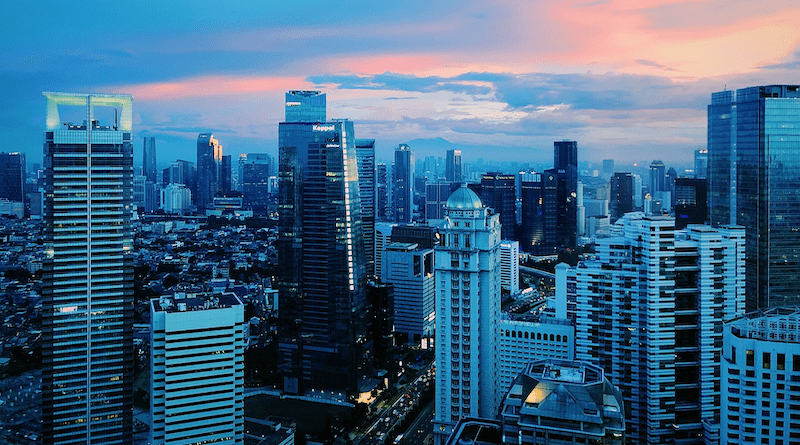
Jakarta, Indonesia
By Institute of South Asian Studies
By Anissa R. Suharsono and Yanuar Nugroho
The energy sector in Indonesia has long been a contested domain dominated by politically influential actors. President Joko “Jokowi” Widodo pursued reforms amidst considerable resistance. He removed subsidies on gasoline, except for distribution costs outside Java, Bali, and Madura, and introduced a “fixed” subsidy of IDR1,000 per litre on diesel. The results have varied: some showed progress, such as substantive fiscal savings equal to IDR211 trillion[1] (USD15.6 billion) or over 10 percent of state expenditure; while others needed acceleration.
Now, under President Prabowo, can we still hope for the reform in the energy sector to continue, given his political promise Asta Cita?
Recent developments have sent mixed messages. Since the presidential campaign, energy self-sufficiency has become the central theme. However, the government’s stance on energy transition, emission reduction, and climate commitments remains unclear. Additionally, there are concerns regarding the consistency and credibility of this administration on these critical issues. A major institutional shift exacerbating this uncertainty is the dissolution of the Coordinating Ministry for Investment and Maritime Affairs (Kemenkomarves), previously a central actor in energy transition governance. Its functions have now been dispersed across several ministries, such as the Coordinating Ministries of Economic Affairs, Food Affairs, and technical ones like the Ministries of Energy and Mineral Resources (ESDM), Environment (KLH), Finance, and National Development Planning (Bappenas). This has resulted in diminished coordination and fragmented policymaking. This structural reorganisation has contributed to inconsistencies in critical issues in the energy sector, such as energy self-sufficiency, coal phase-out, and energy subsidy reform.
Several major programmes, including electric vehicle initiatives, carbon pricing, and the coal phase-out under JETP (Just Energy Transition Partnership) now lack clear institutional stewardship.[2] In some cases, different ministries or agencies lead parallel efforts on the same issue. For example, the energy subsidy reform, where both ESDM and the Agency for Acceleration for Poverty Eradication (BP Taskin) have different stances, with the former focused on the supply side (i.e., the subsidy) and the latter on the demand side (i.e., the recipients) – creating confusion about who is in the lead. Various energy transition programmes, as abovementioned, appear to be in a state of uncertainty. This could arguably be a result of poor coordination across the cabinet, although there is always a possibility that some more fundamental issues are at play.
Among the many important issues discussed here are (i) energy self-sufficiency, (ii) coal phase-down that reflects climate commitments, and (iii) the energy subsidy reform. While there seems to be a general agreement across the cabinet that the priority for energy self-sufficiency is to develop large-scale bioenergy, this is not the case for the other two issues. Confusions, inconsistencies, lack of clarity, as well as disagreements between ministries cannot be hidden from the public eye. The intention to phase down coal as well as to reform energy subsidies has not been reflected in clear policies, let alone in a roadmap or a grand strategy agreed upon by all responsible ministries and agencies.
Focusing on the three issues above, we attempt to provide explanations on the dynamics in the energy sector in Indonesia.
ON ENERGY SELF-SUFFICIENCY
In his inauguration speech, Prabowo emphasised the necessity for Indonesia to achieve energy self-sufficiency, especially given global tensions and potential conflicts.[3] While the speech focused on utilising domestic resources such as geothermal energy, coal, large hydro, and various crops, it made no specific mention of achieving the self-sufficiency target through renewable energy, despite Indonesia’s large potential (Table 1). Indonesia’s heavy reliance on fossil fuels and its renewed large-scale biofuel ambitions raise concerns about environmental sustainability and economic viability.
Table 1. Indonesia’s Renewable Energy Potential
| Energy Type | Potential (GW) | Utilised (GW) |
| Solar | 3,295 | 0.27 |
| Hydro | 95 | 6.69 |
| Bioenergy | 57 | 3.09 |
| Wind | 155 | 0.15 |
| Geothermal | 24 | 2.34 |
| Tidal | 60 | 0 |
| Total | 3,686 | 12.54 |
The energy self-sufficiency target is especially daunting given that almost 90 percent of Indonesia’s energy consumption comes from fossil fuel,[5] with significant dependence on imports, especially fuel and LPG. According to the Minister of ESDM, Bahlil Lahadalia, national fuel consumption reached approximately 505 million barrels in 2023, with transportation and industry being the main consumers. This level of dependence has exerted considerable pressure on foreign exchange reserves, costing the country around IDR396 trillion (USD24.75 billion).[6]
Heavy reliance on imported fuels aside, there is also a common misconception that domestic energy will always be cheaper than imports. Although the government mandates an increase in biodiesel blend to 40 percent (B40) by 2025, the biodiesel and bioethanol reference price have always been higher than petroleum fuel, especially for palm oil-based biofuel, due to high feedstock price.[7] In order to offset these higher costs, biofuel has always been subsidised through the establishment of the Oil Palm Plantation Fund (OPPF) managed by Oil Palm Plantation Fund Management Agency (BPDPKS). This fund channels revenues from palm oil and derivative product exports to subsidise the biofuel producers. The fund is not without its own controversies.
A 2022 report by Indonesia Corruption Watch (ICW) revealed that approximately 80 percent of OPPF subsidies went to just around ten large palm oil corporations, while only five percent –around IDR6.59 trillion (USD412 million) — was allocated for smallholder plantation rejuvenation from 2016 to 2021.[8] In 2023 alone, the government allocated IDR30.22 trillion (USD2.02 billion)[9] to subsidise 13.15 million kilolitres of biodiesel, with projection indicating an increase to IDR35.47 trillion (USD2.2 billion) for 2026 under the B40 mandate.[10]
Looking ahead, the government aims to promote further biofuel commercialisation, especially the future implementation of B100.[11] However, estimated production costs[12] in Indonesia range from IDR9,000-12,000 per litre (USD0.60-0.80), depending on CPO prices and operating costs –well above the subsidised retail price of conventional diesel, which is around IDR6,800 per litre (USD 0.45). This cost gap underscores the need for sustained and possibly escalating subsidies to maintain competitiveness, raising questions about fiscal sustainability.
Beyond economic concerns, the environmental implications of the bioenergy programme are deeply troubling. One of the government’s most controversial plans involves clearing up to 20 million hectares of forests for food and biofuel crops cultivation. If implemented, the clearing of this scale could release up to 22 billion metric tons of carbon dioxide —equivalent to the annual emissions of roughly 5,300 coal-fired power plants (CFPPs).[13] This will be a backslide from the success the country has had since 2015 in reducing emissions from the agriculture, forestry, and other land use (AFOLU) sector,[14] and will undermine its climate commitments under the Paris Agreement and contradict its own emission reduction target.
Despite these issues, the government’s narrative around bioenergy self-sufficiency remains largely cohesive and unambiguous. The institutional and financial frameworks supporting biodiesel—through BPDPKS and mandated blending policies—are clear and substantially backed by the state. This contrasts starkly with other areas of the energy sector, particularly the coal phase-out and energy subsidy reform, where strategic direction, political coherence, and inter-agency alignment remain elusive.
THE UNCERTAINTIES OF INDONESIA’S COAL PHASE-DOWN
One of the energy transition programmes left from the previous administration is the plan to phase down coal-fired power plants. The previous administration signed the Just Energy Transition Partnership (JETP) agreement back in November 2022,[15] which included a clause for the accelerated retirement of coal-fired power plants and a freeze on the development of new coal plants. However, this commitment appeared conspicuously absent during COP 29 in Baku, where Indonesia’s special envoy, Hashim Djojohadikusumo, emphasised a plan to add 75 GW of new and renewable energy to the grid but failed to mention the coal phase-down.[16] Civil society organisations criticised this omission, further questioned Hashim’s dual role as a businessman seeking investments in energy projects and as a government representative, and raised concerns about conflicts of interest.[17]
Despite this ambiguity, Prabowo publicly reaffirmed the coal phase-down ambition at the 2024 G20 Summit, announcing a plan to retire all coal and other fossil fuel power plants and significantly boost the country’s renewable energy capacity within the next 15 years.[18] International media welcomed the announcement, but domestic scepticism soon followed. The scepticism was not unfounded, because shortly thereafter the Minister for ESDM, during the Indonesia Mining Summit 2024, reassured coal businessmen not to worry and to continue their operations, citing the ongoing need for coal and the high costs of renewable energy technology.[19] The Minister’s remarks significantly undercut Prabowo’s earlier commitment, revealing internal inconsistencies and weakening the perceived resolve of the current administration to work towards its 2060 net-zero target.
Further doubt is cast by the issuance of the National Electricity General Plan (Rencana Umum Ketenagalistrikan Nasional/RUK).[20] This document omits any reference to coal phase-down. Instead, it discusses the possibility of converting CFPPs to new and renewable energy sources such as biomass, ammonia, and nuclear energy through retrofitting.[21] This approach poses significant technical challenges, given Indonesia’s extensive reliance on coal – 254 operational CFPPs with a combined capacity of 51.56 GW,[22] 40 more under construction, and five in pre-permit stages as of 2024. Furthermore, it highlights that fuel switching and retrofitting will only be considered when the book value of the CFPP reaches zero or when it becomes economically viable. Since it is technically impossible for a CFPP to reach zero book value, legal reforms are needed to write off these assets, allowing for transition. Even then, the focus remains on repurposing rather than decommissioning.[23] Although retrofitting requires additional investment, it is deemed more economical than decommissioning CFPPs and building new renewable energy plants from scratch. This indicates that the government is strongly weighing the financial implications and prefers a less costly transition strategy. Based on the language used in the RUKN, the preference for retrofitting over decommissioning suggests a reluctance to phase down coal power plants completely, using economic and social costs as excuses.
There is also a conditional approach to phasing down coal, dependent on the availability of investment and the economic viability of retrofitting. Multilateral development banks (MDBs) and private investors have expressed guarded interest in supporting CFPP transitions, but the risks remain high. MDBs usually focus on de-risking mechanisms, such as guarantees and concessional finance, to attract private capital while prioritising renewable energy projects to align with climate goals.[24] For instance, the Asian Development Bank (ADB)’s Energy Transition Mechanism (ETM)[25] aims to enable early CFPP retirement, and mobilise private sector financing. On the other hand, private investors often view such transitions as economically unviable, citing stranded asset risks, high upfront costs, and uncertain policy frameworks.[26] Programmes such as ADB’s ETM address these concerns by ensuring financial neutrality for Independent Power Producers (IPPs) during transitions, attempting to bridge private capital with broader climate objectives. Both sectors acknowledge the challenge of balancing financial viability with sustainability.
PT Perusahaan Listrik Negara (PLN), as the utility State-Owned Enterprise (SOE) and operator of the majority of CFPPs in Indonesia, is open to phasing out its CFPPs if legal reforms can effectively write off their book value without legal repercussions for any parties involved. Lastly, the government is open to completely phasing out and shutting down CFPPs if all related costs, including system costs, just transition costs, and decommissioning costs, are covered by external entities such as international organisations or private investors. This can be translated as a willingness to reduce coal reliance, but the overall strategy hinges on practical and financial considerations rather than an outright policy mandate to eliminate coal. Overall, the approach outlined in the latest revision of RUKN reflects a half-hearted, pragmatic approach with no immediate commitment to phasing out coal power plants. Given the complexities and challenges outlined, the technical, economic, and regulatory hurdles, combined with mixed messages from officials, achieving Prabowo’s target of completely phasing out coal power plants in 15 years is next to impossible.
In conclusion, the RUKN, while ambitious in its goals, falls short of articulating a clear and actionable coal retirement strategy. The government’s continued reliance on conditionalities, combined with legal, technical, and financial constraints, reflects a half-hearted approach that undermines the credibility of its net-zero aspirations. Without consistent political messaging, firm regulatory frameworks, and committed financing strategies, the coal phase-down remains more rhetorical than real. The fading momentum of the JETP and mixed policy signals cast significant doubt on Indonesia’s ability to fulfil its coal transition pledges, leaving the country’s sustainable energy uncertain. This lack of coherence and unified direction has resulted in a state of confusion and scepticism, especially among civil societies. As for the fate of the coal phase-down ambition, all the fanfare surrounding funding from energy transition mechanism and JETP to phase down coal power in 2022 seems short-lived. Furthermore, the US policy under Trump, which emphasises revitalising the coal industry and rolling back regulations like the Clean Power Plan, has further reinforced coal’s role in the energy mix.[27] This approach and the recent US pull-out from JETP Indonesia signal a shift away from global coal phase-out efforts.
CRAFTING OF A NEW ERA OF ENERGY SUBSIDIES
Indonesia’s energy subsidy regime began in 1967 with the introduction of fuel subsidies to suppress retail prices.[28] From then until the 1980s, fuel subsidies were fiscally manageable due to Indonesia’s high oil production. However, since becoming a net oil importer in 2004,[29] sustainability in this policy has been increasingly scrutinised. Between 2005-2011, energy subsidies exceeded the spending on key public sectors such as defence, education, health, and social assistance.[30] With the arrival of a higher budget deficit in 2014, President Joko Widodo moved to significantly reduce the subsidies.
By partially removing subsidies on premium gasoline and introducing a new pricing mechanism, the government achieved budget savings of around IDR211 trillion (USD15.6 billion) in 2015.[31] This was reallocated to sectors such as infrastructure, village funds and social programmes. Nevertheless, fossil fuel subsidies have gradually crept back up, at large due to global oil prices volatility since 2018 which spiked in 2022. Political sensitivity surrounding fuel prices has led the government to prioritise social stability over fiscal prudence. Consequently, subsidy expenditures have grown once again, constraining fiscal space for clean energy investments.
A significant portion of Indonesia’s energy subsidies still supports fossil fuels, placing an increasing strain on the state budget. Without reform, these fossil fuel subsidies will continue to rise, taking away funds that could be better invested in clean energy. Indonesia can reform energy subsidies by adjusting fuel prices on clear timelines, reallocating subsidies towards clean energy and grid modernisation, and enhancing social assistance through targeted cash transfers using an integrated and improved database. The implementation of the carbon tax can also further incentivise a shift away from fossil fuels while generating revenue for energy transition programmes.
Subsidy reform is essential not only for Indonesia’s energy transition goals but also to improve efficiency and equity in government spending.[32] Broad-based energy subsidies tend to disproportionately benefit wealthier households. Targeted social assistance, on the other hand, can better support vulnerable populations while freeing up fiscal space. However, such reforms require robust data systems to ensure accurate targeting and minimise leakage.
The principal challenge in targeting social assistance and subsidies in Indonesia is the inaccuracy and lack of integration of government databases: the Integrated Social Welfare Data (DTKS), Socio-Economic Registration (Regsosek), and Targeting for the Acceleration of Extreme Poverty Elimination (P3KE). They are plagued by varying standards and methodologies and overlapping mandates. Local governments still rely on DTKS or their records to verify P3KE data, reflecting a lack of trust in its accuracy. A “One Data policy” that consolidates these datasets (now named DTSEN or National Integrated Data on Social and Economic Affairs) is essential to enhance targeting precision and streamline social assistance programmes.[33]
Another significant challenge is the targeting itself. Minister of ESDM Bahlil Lahadalia pointed out that approximately 20-30 percent, or IDR100 trillion out of the total IDR435 trillion of energy subsidy funds allocated for this year, which includes fuel, LPG and electricity subsidies, were potentially misdirected and were enjoyed by the wealthy instead.[34]
However, energy subsidy reform is never a straightforward task, and the government has always been hesitant to undertake such reforms due to their political sensitivity. When inaugurated, Prabowo pledged to reform the subsidy mechanism to ensure that all forms of social assistance and subsidies reach the right target, and to do this by switching to direct subsidies scheme and improving data through digitalisation.[35] This ambition aligns with his energy self-sufficiency goals, as a large portion of energy subsidies currently goes towards subsidising imported LPG.[36]
Implementing large-scale energy subsidy reform is indeed complex. The experience of 2014 cannot be easily replicated due to changes in the political dynamics and international energy markets. Reform is often reactive, is prompted by crises, and suffers from inadequate coordination, research, and public support. Political will and inter-agency/ministerial alignment –ensuring that all government agencies involved are on the same page — are crucial, alongside improving credibility and trust with the public. Mixed messages and competing initiatives, as seen in the coal phase-out agenda, risk eroding trust and delaying progress.
In the recent case, this situation is evident from at least three different government ministries and agencies claiming to lead the unified data system. A new agency, BP Taskin, tasked with overseeing poverty issues, claims to lead the initiative alongside the Ministry of Social Affairs, BPS and Bappenas.[37] Meanwhile, ESDM also claims to be working on its own energy subsidy reform mechanism. In November 2024, as the Chairman of the Energy Subsidy Policy Formulation Team, Bahlil Lahadalia, stated that they were working on improving data accuracy for energy subsidy targeting. They are also considering a new distribution mechanism scheme through a blending method, where subsidies are given to goods partially in the form of Direct Cash Assistance (BLT),[38] and not removing subsidies for public vehicles. While BP Taskin claimed that the data collection should be done by January 2025,[39] Bahlil claimed that the data collection for targeted subsidy recipients is expected to be completed by the first quarter of 2025.[40] Although DTSEN has now been claimed to be operational – despite problems of updating — it is still unclear whether these initiatives are part of the unified data system, or if ministries are working in silo.
President Prabowo’s ambitious reform agenda apparently faces institutional constraints. The expansion of ministries and the assignment of complex mandates to newly established or restructured agency may hinder the pace and coherence of reform. While the administration aims to save USD 13.3 billion[41] through energy subsidy cuts and redistribute funds to social programmes, such targets are contingent on accurate targeting, administrative capacity, and inter-ministerial cooperation.
Aligning efforts across government agencies, and leveraging digitalisation are essential for progress, while navigating historical complexities and political sensitivities is crucial for achieving sustainable energy policy and broader social welfare goals. The government can learn from what was a successful subsidy reform back in 2015, although it has bounced back up since with an increasing trend. The lack of coherent messaging and governance structure when it comes to conducting another reform, risks undermining the programme’s effectiveness and its ability to take off at all.
CONCLUSION
Indonesia’s energy sector reform under Prabowo faces deep structural challenges, governance inefficiencies, and policy inconsistencies. If Prabowo is to achieve his energy reform goals, three critical changes are needed: first, a centralised and coherent governance structure for energy policy, with clear ministerial responsibilities and accountability mechanisms; second, a transparent, legally binding roadmap for the coal phase-out, backed by enforceable regulations rather than vague commitments, and; third, a streamlined subsidy reform process that prioritises accuracy, fiscal discipline, and social equity, rather than competing bureaucratic interests.
Without urgent policy realignment and institutional consolidation, Prabowo risks moving backwards rather than progressing in Indonesia’s energy transition. The next few years will tell whether these early inconsistencies are merely growing pains or indicative of deeper, systemic inertia in the country’s energy governance.
For endnotes, please refer to the original pdf document.
- About the authors: Anissa R. Suharsono is an independent researcher focusing on climate and energy, based in Jakarta, and Yanuar Nugroho is Visiting Senior Fellow at the ISEAS – Yusof Ishak Institute, Singapore and Senior Lecturer at the Driyarkara School of Philosophy, Jakarta, Indonesia.
- Source: This article was published by ISEAS – Yusof Ishak Institute

Institute of South Asian Studies
The Institute of South Asian Studies (ISAS) was established in July 2004 as an autonomous research institute at the National University of Singapore (NUS). ISAS is dedicated to research on contemporary South Asia. The Institute seeks to promote understanding of this vital region of the world, and to communicate knowledge and insights about it to policy makers, the business community, academia and civil society, in Singapore and beyond.
