Wednesday, June 04, 2025


Ukraine’s secret services hit Kerch bridge with a 1,100kg bomb
Ukraine’s secret services hit Kerch bridge with a 1,100kg bomb
The SBU, Ukraine's secret services, have hit the Kerch bridge that links Russia's mainland to the Crimean peninsula with a bomb of over 1,100kg of explosives as Kyiv continues to take its fight into Russia. / bne IntelliNewsFacebooBy Ben Aris in Berlin June 3, 2025

Ukraine’s security services have claimed responsibility for a major underwater explosion that damaged the Kerch Bridge on June 3, the critical road and rail link between Russia and the occupied Crimean peninsula.

While the explosion was large, the damage to the bridge appears to be minimal and Russian authorities reopened the bridge to traffic after a few hours according to the latest reports.

The high-profile attack comes only days after Operation Spiderweb where the Ukrainian Security Service (SBU) smuggled drones into Russia and launched them remotely from trucks deep in Russia’s interior, blowing up 41 long-distance strategic bombers that are part of Russia’s nuclear weapons delivery system.

This is the third time that the $4bn bridge has been attacked, a symbol of Russia’s occupation of the Crimea peninsula, annexed by Russia in 2014.

Previously the Kerch bridge was bombed in October 2022 in a special operation when a truck packed with explosives and driven by an unsuspecting Russian driver was detonated remotely while crossing the bridge doing considerable structural damage. There was also a naval drone strike in July 2023. On both prior occasions, Russia repaired the bridge within weeks.

The recent attacks are designed to show that Ukraine has changed tactics and is increasingly taking the fight to Russia, despite having to withdraw its forces following the Kursk incursion carried out last year, when the Armed Forces of Ukraine (AFU) occupied over 1,000 square kilometres of Russian territory – the first time Russia had been invaded since WWII.

Analysts say that with these attacks, Ukraine is showing the Trump administration that it still has “some cards to play” in its conflict with Russia and hope to draw in more US support to sustain its struggle against the Kremlin. Other analysts called Operation Spiderweb “Russia’s Pearl Harbour” moment.

The two attacks are also in retaliation for Russia’s own devastating missile barrage a week earlier – the heaviest since the war began over three years ago – that targeted Kyiv and several other urban centres across the country, killing around 100 civilians and designed to degrade Ukraine’s air defences which reply on a dwindling stock of Patriot missile rockets.

Unusually, the SBU has taken credit for both attacks. The Ukrainian secret services rarely comment on special operations, especially if they take place on Russian soil.

"Previously, we hit the Crimean Bridge twice, in 2022 and 2023. So today we continued this tradition underwater," the SBU said in its statement.

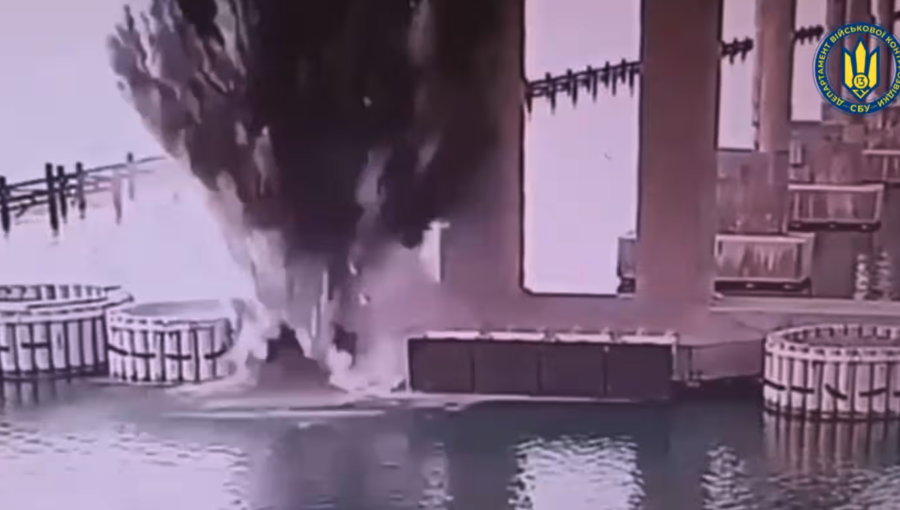
The SBU released a video of the explosion, watermarked with the Ukrainian state emblem, underscoring the political dimension to the attack. On the day of the attack Ukrainian President Volodymyr Zelenskiy was on his way to Washington with Ukraine’s Defence Minister Rustam Umerov to meet US President Donald Trump.

“Ukraine is busy producing a new pack of cards to present to Trump at the next Oval Office meeting with Trump,” Timothy Ash, the senior sovereign strategist at BlueBay Asset Management in London said in an emailed note. “Ukraine is proving via this latest attack and the drone attack over the weekend that it has lots of agency to make life very difficult for Russia, and Trump and the US going forward.”


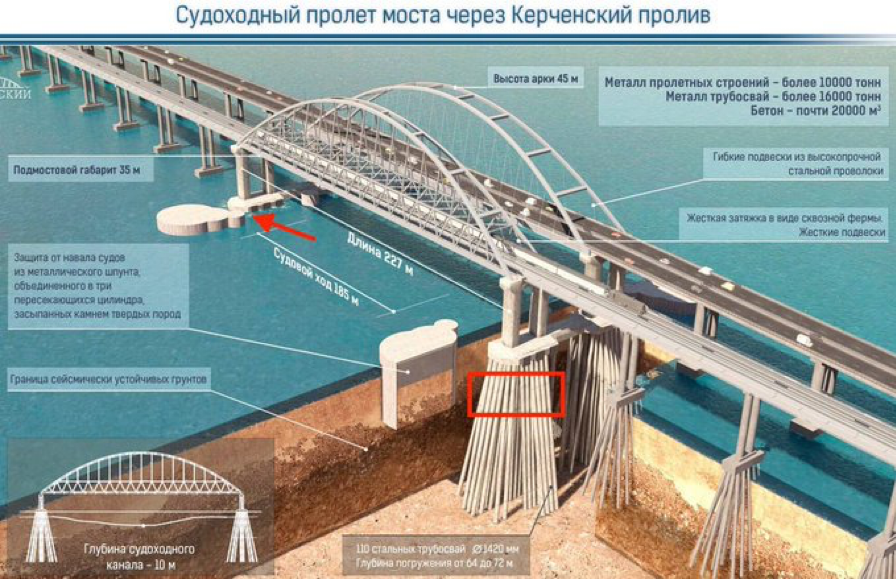
Over a metric tonne of TNT was used in the attack on the bridge which “severely damaged” the base of the bridge supports, the SBU claim.

Opened in 2018 and personally inaugurated by Russian president Vladimir Putin, the bridge serves as a vital military supply route for Russian forces operating in southern Ukraine. The bridge was used by Russian forces during their invasion of Ukraine in February 2022, when they crossed it to reach Crimea and from there went on to seize parts of Ukraine's southern Kherson and southeastern Zaporizhzhia regions.

It was the only direct connection between Russia’s mainland and the peninsula until Russia occupied the land bridge between the Crimea and its border town of Rostov-on-Don – known to Russians as Novorossiya – after the start of the war.

The status of Novorossiya remains unclear. During the latest round of ceasefire talks held in Istanbul on June 1, Russian Foreign Minister Sergei Lavrov gave the Ukrainian delegation a six-point list of conditions for a ceasefire that included a demand that Ukraine recognise Russia’s sovereignty over the four regions it annexed in 2023 and the Crimea, but no mention of the Novorossiya land bridge has been made in any of the talks held since the process kicked off in Riyadh on February 18. However, Russia has been investing heavily in rebuilding the destroyed city of Mariupol on the coast there and clearly has no intention of giving up that territory.

Lt General Vasyl Maliuk of the SBU, who oversaw the operation, called the bridge “an absolutely legitimate target, especially considering that the enemy used it as a logistical artery to supply its troops.” He added: “Crimea is Ukraine, and any manifestations of occupation will receive our tough response.”

The footage shows a large explosion erupting from beneath the bridge, suggesting the charges were set by divers or it was a naval drone strike as the bridge remains heavily guarded. Debris flew into the air, but the extent of the damage is impossible to judge from the video. Russian military bloggers said the attack had been unsuccessful and speculated that it had been carried out by a Ukrainian sea drone.

Russian authorities are playing down the attack and said road traffic across the bridge has been temporarily halted, with state media reporting a four-hour closure. The roadway above appears to be undamaged, and the supporting pillars also appear to be still intact. As of the time or writing the bridge has already been reopened to traffic.

“This operation had been planned for several months,” the SBU said in a statement.

The attack comes as Ukraine confirmed it had been invited to the upcoming Nato summit later this month, following concerns raised by Zelenskiy that Kyiv’s exclusion would represent a “victory” for Russia.
 

Countering drones in modern warfare: lessons from Ukraine and beyond

Countering drones in modern warfare: lessons from Ukraine and beyond
Launcher of Chien hsiang loitering UAV munition. / Kenchen945 - CC BY SA - 4.0 - wikiFacebookBy bno - Taipei Office June 4, 2025


In recent years, drones have emerged as one of the defining technologies of modern warfare. These unmanned aerial vehicles (UAVs), ranging from small commercial quadcopters to sophisticated long-range systems, have dramatically reshaped the battlefield. Their low cost and ease of deployment make them particularly attractive to governments around the world. Nowhere has this shift been more apparent than in the ongoing war in Ukraine, where drones have played a central role in intelligence gathering, targeting and ultimately direct attacks on enemy hardware and personnel.

The Ukraine-Russia drone war

The conflict in Ukraine has served as a testing ground for drone technology and countermeasures of all types.

One of the most notable recent developments was a large-scale Ukrainian drone swarm attack on Russia in early 2024. Dozens of drones were launched in a coordinated strike against oil refineries and military infrastructure deep within Russian territory, including in the Belgorod, Tatarstan and Krasnodar regions. This attack demonstrated not only Ukraine’s growing capability to strike behind enemy lines but also the increasing threat posed by coordinated UAV swarms. More importantly it signalled a change in tactics by Kyiv and brought the use of drones to the fore.

Russian officials at the time claimed that the majority of the drones had been intercepted and prevented from reaching their targets. This, Moscow claimed, was achieved primarily using electronic warfare systems and surface-to-air missile defences. However, satellite imagery and open-source intelligence later confirmed that at least some of the drones had evaded Russian defences, causing significant damage to infrastructure. The incident underscored the difficulty of detecting and neutralising large numbers of small, low-flying drones simultaneously.

Just days ago too, a Ukrainian drone strike destroyed more than 40 Russian military aircraft deep inside Russian territory, according to Ukraine’s Security Service as was reported across the world.

A senior Ukrainian military official, speaking anonymously to AP, said the long-range strike took more than 18 months to plan and carry out, and was overseen directly by President Volodymyr Zelenskiy.

According to Zelenskiy, the operation involved 117 drones and was coordinated from a location near the local office of Russia’s FSB intelligence agency.

Footage shared on social media by Russian outlets appeared to capture drones emerging from containers on the back of trucks. After launch, the drones struck 41 aircraft at several military airfields on June 1, including long-range bombers such as the A-50, Tu-95 and Tu-22M. The Tu-95 and Tu-22 have both previously been used by Moscow to launch missile strikes on Ukrainian targets, while the A-50 aircraft serve in reconnaissance and command roles.

Ukraine’s Security Service claimed later that the operation had destroyed around 34% of Russia’s fleet of missile-carrying aircraft AP reported. Russia’s Ministry of Defence acknowledged the attacks, adding that aircraft were also damaged and fires had broken out at airbases in the Irkutsk region, over 4,000 kilometres from Ukraine, and in Murmansk, in the far north. 

Drone use in combat

Beyond simply attacking the enemy, drones have been pivotal in other ways on the front lines. In eastern Ukraine, both Russian and Ukrainian forces have deployed thousands of first-person-view (FPV) drones for reconnaissance and direct strike roles. These drones, often equipped with explosives, are guided by operators wearing video goggles, allowing them to perform ‘kamikaze’ missions with pinpoint accuracy. More and more videos are now appearing on social media showing direct strikes on individual troops left with nowhere to run when spotlighted by an FPV.

Recent footage from battles near Avdiivka and Bakhmut has also shown how these devices are used to neutralise tanks, destroy bunkers and harass infantry units.

Ukrainian drone units have become adept at modifying commercial drones and coordinating strikes across wide battlefronts. In response, Russian forces have invested heavily in electronic countermeasures, including signal jamming and spoofing, to disrupt drone communications and navigation.

There are, however, other methods to limit drone effectiveness at the front.

Methods of countering drones

Given the escalating use of UAVs in modern combat, militaries across the world are reportedly developing a range of counter-drone technologies and tactics. These can be broadly divided into three categories: kinetic, electronic and procedural.

1. Electronic warfare (EW):
Electronic countermeasures are among the most widely used methods for neutralising drones. These include GPS jamming, radio-frequency jamming, and signal spoofing. Russia has deployed several mobile EW systems, such as the "Krasukha" and "Repellent" series, to protect critical assets and disrupt drone operations.

However, EW is not altogether foolproof. Many commercial drones are pre-programmed with return-to-home or follow-me functions, which can be triggered even when a signal is lost. Furthermore, modern swarm attacks often use autonomous drones that do not rely on continuous operator input, making them much more resistant to jamming.

2. Kinetic defences:
Traditional air defences, such as missiles and anti-aircraft guns, even lasers can be used to destroy drones, but they are often too expensive or slow to respond to small, fast-moving UAVs.

As a result, there has been a surge in the development of purpose-built systems like the Israeli "Iron Beam" and the US-made "Coyote" interceptor drone.

In Ukraine, both sides have resorted to more improvised solutions, including small arms fire from any weapon to hand, and even shotguns with a wider pellet dispersal area. Additionally, radar-guided autocannons, such as those mounted on the German-supplied Gepard systems, have proved effective against low-flying drones.

3. Procedural and tactical adaptations:
In addition to hardware solutions, troops on the battlefield have adapted their tactics to mitigate drone threats. Ukrainian forces have become quite accomplished at using camouflage, smoke and decoys to deceive drone operators but movement of troops and machinery is often restricted to times of poor visibility, and units frequently change positions to avoid detection.

In some cases there are even reports of inflatable decoys being used to draw fire away from real tanks, APCs and the like.

In tandem with the above, portable radar systems, acoustic sensors and visual spotters are also used to warn of incoming UAVs, thereby giving ground units time to react or at least seek cover.

The future of counter-drone strategy

NATO and other military alliances are now investing in layered counter-UAV systems that combine sensors, EW tools, kinetic interceptors and AI-driven command systems. The goal, simply put, is to detect, track and destroy drones in real time across varied environments.

As such, emerging technologies such as directed-energy weapons (e.g., laser and microwave systems) promise to provide cost-effective defences against drone swarms – at least in relatively open areas. The British Army is just one established military force that has trialled laser weapons capable of shooting down drones with pinpoint precision and minimal collateral damage.

It is presumed Chinese efforts along the same lines have also at least begun based on the presumption that tech-rich Taiwan – a long-time target of China across the narrow Taiwan Strait – will itself play the role of underdog similar to Ukraine in any future conflict initiated by Beijing. Taipei has already invested heavily in military-capable drone tech as a form of self-defence, with a number of UAV variants and even kamikaze sea-drones known to be in production or at various stages of development in the self-governing country, albeit with payload capabilities and range a closely guarded secret.

For now, though, no single method has proved entirely effective, especially against swarms and autonomous drones. As drone technology becomes more sophisticated and widespread, military planners must adopt a multi-layered approach that combines technology, tactics and training to effectively counter this growing threat. The war in Ukraine has not only exposed vulnerabilities of even the best equipped militaries across the world, it has also accelerated innovation in one of the most critical domains of future warfare.


COMMENT: Asia's team lists in the Washington VS Beijing bout

COMMENT: Asia's team lists in the Washington VS Beijing bout
/ Road Ahead - Unsplash
By bno - Taipei Office June 4, 2025

As tensions between the United States and China show little sign of abating, Asia finds itself caught in the crossfire of a geopolitical rivalry that is increasingly shaping global dynamics. From trade and technology to security and soft power, the choices made by nations across the continent are of immense consequence - not just for the region, but for the world at large.

Some obvious names have nailed their colours firmly to the mast early, aligning themselves clearly with Washington or Beijing.

Others, wary of jeopardising economic interests or provoking security dilemmas, prefer the middle ground - engaging both sides where advantageous and avoiding overt commitments. This diplomatic hedging reflects the complex realities of a multipolar Asia, where the calculus is not simply a binary choice but a subtle dance of pragmatism, history and national interest.

In Washington's corner

Several Asian nations have, for a variety of reasons, backed the United States.

Japan remains one of Washington's closest allies in the region – a position held since the end of WWII. Bound by a post-war security treaty and a shared commitment to liberal democratic values, Tokyo has grown increasingly wary of China's maritime ambitions over the years, particularly in the East China Sea where the bulk of Asia-watchers see conflict as most likely in the years ahead. Under successive Liberal Democratic Party (LDP) governments, Japan has enhanced defence cooperation with the United States and joined regional initiatives such as the Quad (Quadrilateral Security Dialogue) alongside India and Australia. Tokyo’s added willingness to supply defensive arms and aid to like-minded partners further underscores its clear US-centric alignment.

South Korea, although economically entwined with China, like Japan, has deep military ties with the US. The presence of tens of thousands of American troops on its soil and the mutual concern over North Korea’s nuclear programme keep Seoul closely tethered to Washington. Indeed, the first story to make headlines of note in the South Korean media on June 4 after the election of new President Lee Jae-myung, focussed on the timing of a phone call to the White House – a norm in South Korea and Japan when a new leader is elected. Nonetheless, on paper, South Korea walks a diplomatic tightrope of sorts, mindful of Beijing’s sway over Pyongyang and the importance of China just over the Yellow Sea as its largest trading partner.

The Philippines has seen a notable shift in orientation back towards the US under President Ferdinand Marcos Jr. After a period of flirtation with China under the now-jailed Rodrigo Duterte, Manila has restored robust defence ties with Washington, allowing increased access to strategic military bases under the Enhanced Defense Cooperation Agreement (EDCA).

This has been aided, ironically on China’s part by frequent stand-offs with Chinese naval and coastguard vessels in the South China Sea which has helped to push public opinion and official policy back towards the United States. Culturally and in terms of the size of its US-based diaspora too, Manila is heavily reliant on links across the Pacific.

Taiwan, while diplomatically isolated and lacking formal recognition by most countries, remains a de-facto ally of the US. Washington provides arms, political support, and an implicit security guarantee against any potential Chinese aggression. Taipei, for its part, has thus long-aligned itself economically and strategically with the liberal democratic order led by the United States and will continue to do so despite the cultural links across the Taiwan Strait being much stronger than those shared with the US.

Australia, though not an Asian nation per-se, plays a significant role in the regional security calculus. It has firmly sided with the US, participating in the AUKUS defence pact and vocally criticising Beijing on issues ranging from cyber security to human rights. Australia – and New Zealand – have also sent their ships through the Taiwan Strait in the past year in a clear message to China not to get overly aggressive with Taiwan – a fellow backer of the US in Asia.

Leaning towards Beijing

While fewer in number, some Asian nations have displayed clear signs of alignment or strategic proximity to China.

Cambodia is among Beijing’s staunchest supporters in Southeast Asia. Former Prime Minister Hun Sen and his son - now PM - Hun Manet have both welcomed Chinese investment and security assistance, even allowing Chinese-funded infrastructure projects near naval facilities. This has served to raise eyebrows in Western capitals. Phnom Penh has also consistently defended Beijing in ASEAN forums, often obstructing unified positions on the South China Sea (SCS) despite not have a coastline on the SCS.

Pakistan, long reliant on American aid, has pivoted strongly towards China in recent years, particularly in the wake of US actions in neighbouring Afghanistan. The China-Pakistan Economic Corridor (CPEC), a flagship of Beijing’s Belt and Road Initiative, has helped to cement the strategic partnership shared by Islamabad and Beijing and shared concerns over India and converging political interests have further deepened the relationship, making Pakistan a key Chinese ally in South Asia.

Myanmar, under military rule since the 2021 coup, has found itself increasingly isolated from the West. Beijing meanwhile, although officially calling for stability, has maintained a dialogue with the highly unpopular ruling junta and has both expanded economic ties and reportedly offered security-related assistance of late. A recent earthquake that led to the deaths of thousands saw an immediate response by China with aid shipments arriving soon after. Though the relationship is pragmatic rather than ideological, Naypyidaw’s dependence on Chinese capital and diplomatic cover is growing.

The fence-sitters

Most Asian nations, however, do not fit neatly into either camp. Instead, they pursue a route best titled "strategic ambiguity" or "hedging". These countries recognise the risks of alienating either power and seek to maximise benefits from both.

India, for instance, is a founding member of the Quad and has deepened defence ties with Washington, yet remains outside formal alliances. It continues to purchase Russian weapons - often made with Chinese components – while maintaining a complicated, often adversarial, relationship with Beijing, especially on the back of deadly border clashes in the Himalayas in the past few years and the knowledge that China did back Pakistan in their cross-border conflict over a seemingly Islamabad-backed terrorist attack that killed 26 in Pahalgam, India.

However, New Delhi remains cautious about becoming a full-fledged ally of the US, preferring a multipolar world in which it can chart an independent course.

Indonesia, Southeast Asia’s largest economy and the world’s largest Muslim nation as well as the de-facto leader of ASEAN, exemplifies non-alignment. Jakarta maintains strong trade and investment ties with China while also engaging on multiple levels with the United States on security cooperation and military training. Indonesia's traditional foreign policy doctrine of "free and active" diplomacy encourages engagement without entanglement which largely removes the nation from headlines leaning one way or the other.

Vietnam, like Indonesia, also treads a careful line. Historically wary of Chinese influence - due to over a thousand years of conflict and ongoing maritime disputes in the South China Sea - Hanoi has recently welcomed closer defence ties with the US. Yet it is also deeply intertwined economically with China, its largest trading partner. The Communist Party of Vietnam too shares ideological ties with Beijing, even as it seeks to diversify its strategic options and moves closer towards the West particularly in the energy sector as Hanoi looks to increase its LNG infrastructure.

Thailand, a US treaty ally, has in recent years developed closer economic ties with China, now its largest trading partner. Because of this, Bangkok participates in multiple Chinese-led infrastructure projects while also continuing joint military exercises with the US. Thailand’s internal political flux and strategic geography combine to make it a cautious actor, unwilling to commit too firmly to either side.

Malaysia maintains both deep cultural ties and strong trade relations with China, particularly in the technology and commodities sectors. Yet it is also wary of Chinese assertiveness in the South China Sea and quietly supports regional defence cooperation with Western powers. Kuala Lumpur prefers quiet diplomacy over overt alignment and this is best demonstrated in its lack of condemnation in periods of increased tension in the SCS.

Singapore, while not a treaty ally, has one of the region’s most sophisticated militaries and maintains close ties with both Beijing and Washington. It allows rotational US naval deployments and supports international rules-based order, but also hosts significant Chinese investment and maintains robust bilateral and cultural ties with Beijing. Former Prime Minister Lee Hsien Loong had frequently spoken of the need for the two great powers to avoid confrontation, reflecting Singapore’s acute awareness of the stakes involved. New PM, Lawrence Wong meanwhile has already indicated his own preference to focus first and foremost on Singapore’s best interests rather than lean one way or the other, having said in reference to US ties and China’s response that “The new era will be more volatile, with more frequent and unpredictable shocks. We must be ready to stand firm, and protect our interests, no matter how the external winds may blow” according to The Straits Times.

The cost of choice

For most Asian nations therefore, the decision is less about choosing sides and more about managing relationships. Economic dependency on China, particularly through trade and investment, is undeniable. At the same time, the security umbrella provided by the United States remains vital to deterring coercion by Beijing and maintaining regional stability.

The underlying theme is clear: while a few states have chosen sides, most are keen to avoid entanglement. Their strategic calculus is shaped not only by immediate national interests but also by the fear that an overt choice could bring retaliation or exclusion from one side or the other.

COMMENT: US military sales to Taiwan – a necessary shield or forced purchases by an economic bully?

COMMENT: US military sales to Taiwan – a necessary shield or forced purchases by an economic bully?
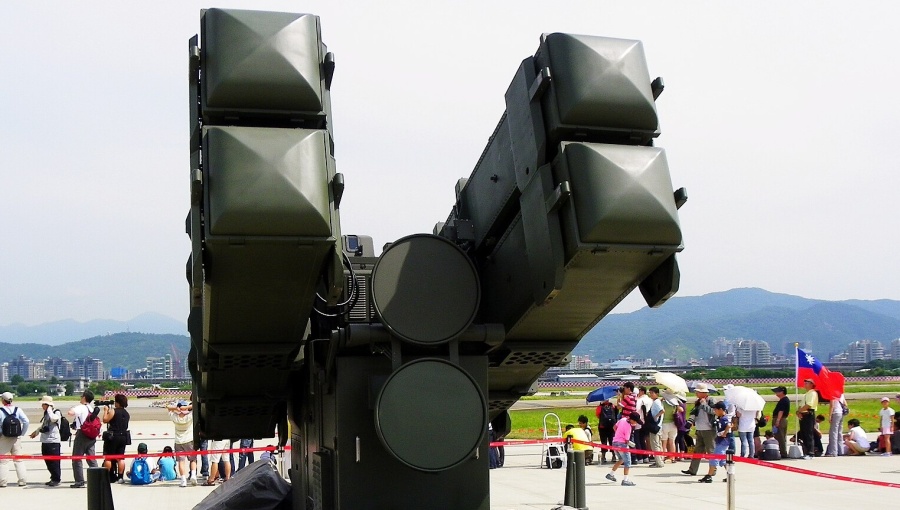
Air Defence Skyguard system - Sparrow missile launcher. / 玄史生 - CC BY SA 3.0 - wikiFacebook
By bno - Taipei Office June 4, 2025

For decades, the United States has been the principal arms supplier to Taiwan, a self-governing democracy that China regards as a breakaway province across the Taiwan Strait. American military sales to Taipei are often framed in Washington as a moral imperative – a commitment to help a democratic partner defend itself.

But beneath this well-worn rhetoric lies a more complex story: one shaped by global power dynamics, shifting military technology, and persistent economic incentives oftentimes forced upon a US-friendly outpost on the Western Pacific.

Since the passage of the Taiwan Relations Act in 1979 – the same year Washington formally recognised the Communist People’s Republic of China – the US has pledged to provide Taiwan with “defensive articles and services” sufficient for self-defence. This strategic ambiguity, designed to deter both Chinese aggression and a unilateral declaration of independence by Taiwan, has given the US wide latitude in its arms transfers.

As a result, over the past four decades, the result has been a steady stream of weapons systems, training, and logistical support from American defence firms to Taiwan’s armed forces. Yet critics argue that not all of this assistance has been necessary in countering the military threat posed by China.

A long history of arms sales

Taiwan’s earliest American-made equipment, including F-5 fighter jets and Knox-class frigates, reflected Cold War-era military thinking: a conventional force prepared to repel an amphibious invasion. But over time, the nature of the Chinese threat evolved – and the People’s Liberation Army (PLA) modernised at an astonishing pace.

Today, China fields a military force that dwarfs Taiwan’s. The PLA Navy is now the largest in the world by number of ships. Its missile arsenal includes precision-strike systems aimed at Taiwan’s command centres and airbases. In the skies, China’s J-20 stealth fighters and radar-evading cruise missiles place Taiwan’s ageing fleet of American F-16s and Indigenous Defence Fighters at a marked disadvantage.

Against this backdrop though, the US has continued to sell and in many ways force Taiwan to buy arms – some of them cutting-edge, others less so. Recent packages have included HIMARS rocket systems designed over a quarter of a century ago, Harpoon anti-ship missiles, and upgraded F-16V fighters with advanced avionics and radar. In 2020, the Trump administration approved over $5bn in arms sales to Taipei, a figure sustained by the Biden administration through a series of smaller, more targeted deals, often framed as “fast and asymmetric”.

But not all Taiwanese leaders are convinced.

Pressure and procurement – the American way

There is a growing sense in Taipei that Washington’s insistence on certain purchases is driven as much by domestic industrial interests as it is by strategic necessity for Taiwan.

American lawmakers, particularly those from districts hosting defence contractors, are known to lobby vigorously for foreign military sales. The result, according to some analysts, is a pattern in which Taiwan is ‘encouraged’ to purchase systems that benefit US industry but do not necessarily match Taiwan’s own defence strategy.

The controversial purchase of M1A2 Abrams tanks is a case in point. The deal, approved in 2019, was worth nearly $2bn. Yet many defence experts questioned whether the 70-ton vehicles which are designed for open warfare in the deserts of the Middle East are appropriate for the mountainous terrain and dense urban environments of Taiwan.

And these were the first new tanks received by Taiwan in almost 25-years after a shipment of M60A3 TTS tanks crossed the Pacific in the late 90s through to 2001.

On the waves, Taiwan has also been offered older-model naval ships and aircraft parts that some critics describe as “second-tier”. While not obsolete, these systems require significant maintenance and upgrades to remain in any way viable in a high-intensity conflict.

Strategic realism or symbolic support?

The US, however, insists that its arms sales to Taiwan are tailored to help the island adopt a “porcupine strategy” in making any potential Chinese invasion so costly that Beijing is deterred from acting in the first place.

Taipei has increasingly leaned into this model, investing in mobile Stinger missiles, improved radar networks, and indigenous drone and missile production. In this context, US sales of precision-guided munitions and support systems appear more relevant.

Still, there remains a fundamental and glaringly obvious financial imbalance: China spends more on defence in a month than Taiwan does in a year. The PLA continues to rehearse blockade scenarios, cyber attacks, and joint air-sea operations that outstrip Taiwan’s capacity to respond on its own.

And while the US remains Taiwan’s security partner of choice, it is not a formal treaty ally. On paper, the US does not even recognise Taiwan as a full diplomatic ally.

Because of this ambiguity over how, if at all, the US would react were China to invade hangs over every arms deal and defence conversation. American weapons might buy time in the event of a Chinese assault – but they do not ensure direct US intervention.

Hegseth’s warning - and the 2027 timeline

Amid growing concern over the cross-Strait balance of power therefore, the US Secretary of Defence, Pete Hegseth recently drew headlines for his stark warning of an “imminent” Chinese move against Taiwan. Hegseth, citing internal Pentagon estimates, suggested that a potential conflict could unfold “sooner than many think”.

It was a claim that many before have made, albeit not at the level held by Hegseth.

However, while Hegseth’s comments underscored the urgency felt in some US defence circles, they also referenced a projected timeline of 2027 – not next week as many media outlets have implied in recent days. Besides drawing the scorn of more astute Taiwan watchers, the date aligns with prior US intelligence assessments that highlight the PLA’s goal of achieving the capability to invade Taiwan by the end of the current decade.

As ever, such forecasts are not predictions but planning scenarios. Nonetheless, they do influence defence postures, congressional rhetoric, and the cadence of US arms sales to Taiwan – reinforcing a climate of urgency that is both strategic and, at times, politically convenient.

Beyond questions of military strategy, there is the simple reality that arms sales are big business. The US defence industry relies heavily on foreign military sales to sustain production lines and support high-skilled jobs. Taiwan, given its strategic significance and political alignment with the West, represents a relatively secure and dependable market.

Defence giants such as Lockheed Martin, Raytheon, and Boeing have all been involved in Taiwan deals.

China, for its part, routinely retaliates by placing sanctions on these firms – a largely symbolic gesture, but one that illustrates the geopolitical stakes.

This blend of economic self-interest and strategic signalling is hardly unique to Taiwan. But on the island – where every sale is interpreted as a message to both Beijing and Washington – it carries disproportionate weight.

Reality on the ground

The US-Taiwan defence relationship is thus a marriage of pragmatism and politics. On one hand, Taiwan urgently needs modern capabilities to deter an increasingly assertive and aggressive China.

On the other, US arms packages are shaped as much by congressional lobbying and industrial incentives as they are by military planning and as long as cross-Strait tensions persist, and voices like Hegseth’s amplify the sense of looming confrontation, the economic pressure on – some say bullying of - Taiwan to keep buying American military hardware, will very likely intensify.


Venezuela and Iran deepen trade ties to circumvent sanctions at Caracas forum

Venezuela and Iran deepen trade ties to circumvent sanctions at Caracas forum
Venezuelan Foreign Minister Yván Gil, who hosted Qalibaf at a dinner, characterised the visit as a reaffirmation of “deep friendship” and mutual resistance to foreign sanctions.
By bne intellinews June 3, 2025

Venezuela and Iran moved to reinforce their bilateral cooperation during a business forum held in Caracas on June 2, with senior officials from both sanctions-hit nations advancing new trade and technology initiatives aimed at bypassing bureaucratic bottlenecks and expanding economic collaboration, El Universal reported. 

The gathering brought together government and private sector representatives under the framework of the Venezuela-Iran Joint High-Level Commission.

Ramón Velásquez Araguayán, Venezuela’s Transport Minister and co-chair of the commission, underscored the visit of Mohammad Baqer Qalibaf, head of Iran’s Consultative Assembly, as a symbolic boost to joint ambitions. 

Velásquez said the two sides are prioritising the elimination of administrative barriers and accelerating trade flows, particularly through technological partnerships and institutional alliances.

Among the new ventures unveiled, a fibre optic manufacturing facility is set to be established in La Guaira in partnership with Iran’s MDC company. 

In the health sector, Venezuela has launched its first care unit equipped with Iranian hemodialysis machines, offering lower-cost treatment options. 

A new Iran-Venezuela Scientific Center is also in development to showcase Iranian technology and facilitate business integration.

Iranian insurers have begun operations in Venezuela, providing coverage for sectors including aviation, with state airline Conviasa already using Iranian insurance for three years. 

Velásquez stressed that the goal is to create a robust trade structure that bridges public and private entities across both countries.

Foreign Minister Yván Gil, who hosted Qalibaf at a dinner, characterised the visit as a reaffirmation of “deep friendship” and mutual resistance to foreign sanctions. 

Both governments, which regard their relationship as a "strategic alliance," reiterated their commitment to "building a multipolar global order" while consolidating political, economic, and cultural ties.


Why Brazil’s Quilombola Communities Are Still Fighting For The Land They’re Owed

Andre Luiz, a member of Ribeirão, a quilombola community, looking at the community's reforestation nursery in Bahia, Brazil. (Credit: Rayna Benzeev)


By 

Brazil’s quilombola people, the descendants of Africans who escaped slavery, have lived in the nation’s vast Amazon and Atlantic rainforests for centuries. Today, the quilombolas number about 1.3 million people in the country and have cultivated deep ties to their ancestral territories, where they raise their families and steward the land.


But these communities remain largely unseen in the eyes of the government and neglected in scientific research, especially when it comes to their legal rights to the land they call home.

A new study published in World Development Sustainability sheds light on this critical gap. Previous research has shown that Indigenous peoples who have secured formal land rights in Brazil have reduced deforestation in their territories. But, according to research from CU Boulder and the Federal University of Rio Grande do Sul in Brazil, the team didn’t see the same pattern in quilombola communities.

While the team was surprised by the result, they said it could point to deeper systemic issues, including a lack of research on the quilombolas and Brazil’s convoluted process for obtaining land rights.

“Our research reveals a significant data gap that has rendered quilombolas less visible in research and reporting,” said Peter Newton, the paper’s senior author and associate professor in the Department of Environmental Studies. “These communities have been significantly less studied than some others, and without data, the plight of these residents often goes undiscussed and unrecognized.” 

Traditional peoples and lands

Brazil’s 1988 Constitution recognized that traditional peoples, including quilombola and Indigenous communities, have rights to receive formal recognition of their ancestral lands, known as land tenure. 


Prior research from Newton and his colleagues found that Indigenous communities in Brazil’s Atlantic Forest who attained full land tenure reduced deforestation and increased forest cover in their communities between 1985 and 2019.  The researchers wondered if the same would hold true for quilombola territories. 

“Legally-enforced land rights provide communities the ability to prevent invaders from encroaching and land grabbing,” said Rayna Benzeev, the first author of both papers who earned her doctorate from CU Boulder in 2022. “At the same time, when a community knows they’ll be able to access the land for many generations into the future, they have more incentive to care for this land.” For example, quilombola farmers have ancestral traditions involving agro-ecology and crop rotation which allows forests to regenerate. 

After analyzing more than three decades of satellite imagery and land tenure data, the researchers found no clear difference in deforestation or reforestation rates between territories that had secured formal tenure and those still awaiting it.

A broken process 

The arduous land tenure process for quilombola communities might be one reason for the result. 

When Benzeev began collecting data on forest coverage change in quilombola territories, she noticed a shockingly low rate of land tenure more than three decades after the constitution first guaranteed the rights. Out of 5,900 quilombola territories, only 176—or fewer than 3%—have been able to complete the process to obtain formal land rights. 

The contrast is striking. About 69% of Indigenous territories in Brazil have secured formal tenure.

Brazil’s National Institute for Colonization and Agrarian Reform (INCRA) oversees quilombola land tenure applications. It requires communities to navigate a complex six-step process to prove their territories are traditional lands.  

“For a lot of these communities, it’s been really hard to reach the end of the six-stage process. This could be due to huge recent decreases in the government budget, or because of strong political opposition to recognizing these territories,” Benzeev said. 

Between 2014 and 2019, Brazil cut INCRA’s budget for formalizing land tenure by 89%, effectively paralyzing the process. 

In addition, reliable data on land use within these areas is sparse. As a result, the team could only include a total of 313 quilombola territories in their analysis of the 5,900 territories that exist across Brazil, including 98 with full tenure and 215 still in process. 

“We could only analyze a very small proportion of all quilombola territories, and that sample might not be representative of the whole picture,” Benzeev said. 

More than trees

Even though this study didn’t detect an immediate forest benefit from land tenure among quilombolas, the researchers note that securing land rights for these communities may still be crucial.

Forests in Brazil remain under persistent threats, including from legal and illegal logging, ranching, gold mining and large-scale plantations.

“It’s not that those activities were necessarily legal before a territory gets its land tenure, but once tenure is granted, it becomes clear who owns and manages the land. When those boundaries are fuzzy or can be contested, it’s much easier for others to move in,” Newton said. 

Some quilombola community leaders Benzeev has collaborated with said they had been fighting against encroachment from eucalyptus companies for decades. People died in these conflicts, but without land rights, the quilombolas were not able to stop the violence. 

“Quilombolas are some of the most marginalized communities in Brazil,” Benzeev said. “The fact that they are entitled to land by law but they’re not receiving this recognition is a violation of rights, and shows there is still a big gap to address.”


Eurasia Review

Eurasia Review is an independent Journal that provides a venue for analysts and experts to disseminate content on a wide-range of subjects that are often overlooked or under-represented by Western dominated media.

CRIMINAL CAPITALI$M

Armenia: Еx-Deputy PM Charged With Laundering Nearly $12.5 Million

Official portrait of former Armenian Deputy Prime Minister Armen Gevorgyan. Photo Credit: Armenia Government


By 

Former Armenian Deputy Prime Minister Armen Gevorgyan has been formally charged with money laundering involving approximately 4.92 billion drams (about $12.5 million). The preliminary investigation has concluded, and the case has been forwarded to the prosecutor for submission to court.


According to Armenia’s Anti-Corruption Committee, the criminal case covered multiple incidents and was supported by extensive evidence. Investigators allege that Gevorgyan, who held several high-ranking government positions from 2000 to 2018, including Chief of Staff to the President, Secretary of the National Security Council, and Minister of Territorial Administration, legalized illicit income by concealing the origin and true nature of unlawfully acquired property.

From 2004 to 2018, 39 properties in Yerevan and other regions—formally registered under the names of Gevorgyan’s close relatives but effectively under his control—were identified. The official contractual value of these properties was 751.3 million drams, while their actual market value at the time of acquisition was over 4.84 billion drams.

In addition, ten properties linked to Gevorgyan’s associates in the Czech Republic were found to have a total market value equivalent to 391.9 million drams ($920,000 USD).

The investigation also found that the financial flows through banking transactions significantly exceeded the declared incomes of Gevorgyan and his close affiliates.

Gevorgyan has been charged under Part 3, Points 1 and 3 of Article 190 of Armenia’s 2003 Criminal Code, which covers the legalization of particularly large-scale property acquired through criminal means.


The case has now been referred to the supervising prosecutor for confirmation and submission to the court.


PanARMENIAN

PanARMENIAN Network is the first Armenian online news and analytical agency and one of the most cited Armenian informational resources worldwide.