Monday, June 23, 2025


Strait Of Hormuz Under Siege: Unraveling The Global Consequences Of A Blockade – Analysis

File photo of oil tanker.


The Strait of Hormuz functions as the world’s vital oil chokepoint since it transports 17 to 20 million barrels per day (bpd) of crude oil and LNG, which represents nearly one-fifth of global petroleum liquids in 2025.


The closure of this narrow waterway by Iran would trigger an unmatched energy crisis while disrupting worldwide supply networks and triggering serious economic instability and immediate strategic changes throughout Gulf Arab nations and worldwide. A  blockade of the Strait of Hormuz would initiate multiple crises that involve sharp price changes alongside extensive trade breakdowns and substantial adjustments in security arrangements across the region, which require immediate crisis handling and medium-term energy diversification strategies, and long-term supply-chain risk reduction.

Strategic Significance of the Strait of Hormuz

The Strait of Hormuz transports 18.5 million bpd of oil and 3 million bpd of LNG and refined products through this waterway in 2025.

– The Strait handles about 18 percent of global oil flows at 18.5 million bpd during Q1 2025.

– LNG and Refined Products: An additional 3 million bpd equivalent of LNG and refined fuels.

Geopolitical Context

The narrow 21-mile-wide channel runs between Iran in the north and Oman in the south, while Iranian Revolutionary Guard forces patrol it, which demonstrates its exposed nature.

The closure would cut off all export pathways for Saudi Arabia and UAE, and Kuwait, as well as major LNG exporter Qatar.

Data Context: Global Energy Flows in 2025

Global crude consumption in 2025 reached 101 million bpd, while the Strait of Hormuz carried 18.5 million bpd of oil, which equated to 18.3 percent of the total world oil flow. The Hormuz waterway carried 77 billion cubic meters of LNG from Qatar, which represented 30 percent of worldwide exports. The IEA member nations hold approximately 1.5 billion barrels in their Strategic Petroleum Reserves, yet these reserves function solely as short-term supply protection. The existing East–West pipeline in Saudi Arabia and the Fujairah pipeline in the UAE provide a combined capacity of 6.8 million bpd, which remains well below the daily 20 million bpd that passes through the strait.

Problems and Challenges of a Blockade

1. Acute Energy Supply Shock

Benchmark Brent crude prices would exceed US$ $150–$200 per barrel within weeks to levels not observed since the 1970s embargo, which would push inflation above 8 percent in multiple import-dependent economies.

Sectoral Impact:

The immediate doubling of transportation fuel costs would decrease airline and shipping firm profits while forcing both industries to raise their prices.

The fuel-intensive manufacturing sector, together with the petrochemicals and fertilizers industries, would experience input cost increases that would decrease their output levels and workforce numbers.

2. Inflation and Economic Contraction

The global GDP would likely decrease by 4–6 percent in developed nations and more than 7 percent in emerging markets because of restricted financial markets and capital outflows.

Central banks must decide between two unappealing options when facing inflation: they can either increase interest rates to combat inflation but risk deeper economic decline, or keep interest rates low to maintain economic growth while allowing inflation to establish itself, which would reduce real income levels.

3. Supply Chain Disruption

The longer distance from tanker routes when using the Cape of Good Hope route results in a total 6,000 nautical miles journey that extends voyage duration to 10–14 days and causes freight rates to increase by 40–60 percent.

Just-in-Time Vulnerabilities

The discontinuation of automotive and electronics production would start when component shortages occur because assembly lines must shut down, and such a one-week shutdown would reduce output by 12 percent.

Middle Eastern countries that depend on European and Asian grain imports would experience two-week transit delays that would worsen their existing food shortages.

Arab States’ Reactions and Vulnerabilities
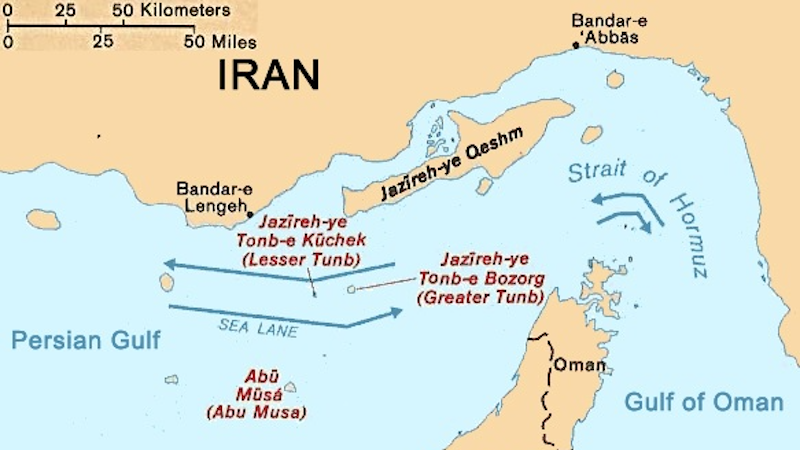
Map of Strait of Hormuz. Credit: CIA World Factbook, Wikipedia Commons

Saudi Arabia, together with Kuwait, faces the potential loss of US$ $100–130 billion in monthly oil exports, which would account for more than 80 percent of their total budget revenue.

The budgetary pressures would force Saudi Vision 2030 and UAE diversification plans to either suspend or terminate certain projects, which would threaten their social subsidy programs and investment commitments.

Diplomatic and Military Responses

The leaders of the GCC would issue public statements denouncing Tehran’s actions while they would pursue UNCLOS invocation and UN Security Council resolutions for strait reestablishment.

Security Posture:

– Joint naval patrols with the U.S. Fifth Fleet in Bahrain and European partners, alongside expedited deliveries of U.S. Aegis destroyers and submarines.

– Alternative export nodes (Fujairah, Yanbu) have their alert levels elevated to prevent Iranian retaliation.

Alternative Export Routes—Insufficient Band-Aid

– Pipeline Bypass: The Combined 6.8 million bpd capacity covers less than 40 percent of Hormuz flows.

– At the Fujairah storage complex, with a storage capacity of 20 million barrels, exports would only last three weeks, but the complex itself is vulnerable to aerial or missile strikes.

Alternative Export Routes—Insufficient Band-Aid

• Pipeline Bypass: Combined 6.8 million bpd capacity covers less than 40 percent of Hormuz flows.

• The storage complexes in Fujairah can store 20 million barrels but could only maintain exports for three weeks, and they are also vulnerable to aerial or missile attacks.

Recommendations for Mitigation and Resilience

Immediate Crisis Management

– The IEA members should release 200 million barrels of crude oil synchronously to temper the price increase while the U.S. SPR drawdowns are fast-tracked for approval.

– A United Nations Security Council emergency session should be convened to engage Oman and other neutral countries for shuttle diplomacy and to engage Iranian interlocutors through track two dialogues.

– A “Hormuz Maritime Security Initiative” under international law should be formalized to mandate freedom of navigation patrols with transparent rules of engagement.

Medium-Term Energy Diversification

– The acceleration of Renewables: The import-dependent Asia should increase its solar PV and wind capacity by 50 GW/year to reduce oil demand by 1.2 million bpd by 2030.

Alternative Pipelines and Shipping Hubs

– The proposed Qatar–Pakistan gas pipeline (2 billion cubic feet/day) should be fast-tracked for development, while the new oil lines through Oman’s Duqm port (up to 1 million bpd) should be accelerated.

– Floating LNG terminals should be invested in India and Southeast Asia to reduce dependence on choke points.

Long-Term Supply-Chain De-Risking

• The relocation of 25 percent of critical industries (semiconductors, pharmaceuticals) closer to end-markets should be supported by tax incentives and infrastructure grants.

• A minimum of six months’ inventory should be maintained for tier-one suppliers in the automotive and electronics sectors, while their procurement should be diversified across at least three geographic regions.

• Real-time tracking platforms using AI analytics should be deployed for disruption forecasting and automated alternative shipping instruction triggering.

Conclusion

A blockade of the Strait of Hormuz by Iran in 2025 would constitute an unprecedented attack on the global economic system, triggering an enormous energy crisis, destabilizing global financial markets, and exposing the vulnerabilities of both Gulf Arab countries and international supply chains. The Arab states, facing fiscal collapse, would gather international backing, strengthen their military positions, and use their limited alternative export routes.

The international community must take immediate action through the strategic release of petroleum reserves, powerful diplomatic efforts, and, if necessary, coordinated naval operations to restore shipping freedom. Beyond crisis management, policymakers and industry leaders must pursue medium-term energy diversification by accelerating renewables and alternative pipelines, and long-term supply-chain de-risking through reshoring, buffer stocks, and digital resilience. The security of the Strait of Hormuz goes beyond regional stability, requiring unconditional international commitment to protect the critical energy and trade routes of the world.

The opinions expressed in this article are the author’s own.

References

  • Reuters. “Goldman Sachs warns of oil price surge on Strait of Hormuz risks.” Reuters, 23 June 2025. 
  • The Times. “Oil will surge above $100 a barrel if Iran blocks the Strait of Hormuz.” The Times, 23 June 2025. 
  • EnergyNOW.com. “Shell CEO Warns of ‘Huge Impact’ If Strait of Hormuz Blocked.” EnergyNOW.com, 19 June 202


Simon Hutagalung is a retired diplomat from the Indonesian Foreign Ministry and received his master's degree in political science and comparative politics from the City University of New York. The opinions expressed in his articles are his own.


The Trump Administration’s South Caucasus Policy: Main Expectations – Analysis

Map of South Caucasus. Credit: Wikipedia Commons

Donald Trump’s re-election as U.S. President in 2024 sparked wide discussions regarding possible shifts in Washington’s foreign policy. It is worth noting that the three South Caucasus countries – Azerbaijan, Armenia, and Georgia – each have distinct expectations from the new administration.


During Trump’s first term (2017-2021), the South Caucasus was not among the top priorities of U.S. foreign policy. Historically, the region has often remained in the shadow of more globally significant issues, with Washington directing its resources mainly toward the Middle East, China, Russia, and other major challenges. The Trump administration’s approach during his first term lacked a consistent and comprehensive strategy for the region; U.S. actions were largely episodic.

Although the South Caucasus has not been a central theme in U.S. foreign policy strategy, it holds a crucial place in Washington’s broader Eurasian geostrategy. Several key factors shape U.S. interests and policies toward the region.

One of the major priorities in the U.S. regional strategy has been energy security and transport corridors. It is expected that this strategy will remain unchanged under the Trump administration. The South Caucasus, due to its geographic location, holds strategic importance in terms of energy and transport. Located along the “New Silk Road” connecting Asia to Europe, the region hosts critical infrastructure such as oil and gas pipelines, railways, and highways. For years, the U.S. has viewed the South Caucasus as vital for diversifying Europe’s energy supply.

Specifically, the Baku–Tbilisi–Ceyhan (BTC) oil pipeline delivers Caspian oil directly to the Mediterranean via Georgia and Turkey, while the Baku-Tbilisi-Erzurum (South Caucasus) gas pipeline transports natural gas from Azerbaijan’s Shah Deniz field to Turkey and onward to Europe via the Trans-Anatolian (TANAP) and Trans-Adriatic (TAP) pipelines. These corridors have become an integral part of Europe’s strategy to reduce its dependence on Russian energy. It is highly likely that the Trump administration will continue to recognize the importance of these energy routes and support their security in line with U.S. interests.

Additionally, the Trans-Caspian International Transport Route, also known as the “Middle Corridor,” has gained prominence in recent years. This route enables cargo from China to reach Europe bypassing Russia, traveling through Central Asia, the Caspian Sea, the South Caucasus, and Turkey. In the context of global trade flow shifts, the significance of this route is growing. Especially due to the Russia–Ukraine war, the Northern Corridor (Trans-Siberian Railway) under Moscow’s control is seen as risky, and the Middle Corridor is receiving increased investment as a viable alternative. This route is important not only for trade but also for energy security, as it serves as a conduit for transporting oil and gas from the Caspian region to Europe while avoiding Russia and Iran.


Although the Biden administration had begun providing some political support for the Middle Corridor’s development, its efforts lacked a unified strategic framework, allowing Moscow and Beijing to continue strengthening their positions in the region. Trump’s return to power may prompt Washington to fill this vacuum. Increased interest in the Middle Corridor could become part of a broader U.S. global competition strategy against China and Russia. Given Trump’s hardline stance on China, the U.S. may seek to promote investment in the Middle Corridor as a counterbalance to China’s Belt and Road Initiative.

Potential U.S. Mediation in the Armenia-Azerbaijan Peace Process

Since the Second Karabakh War (2020), one of the key questions in the South Caucasus has been whether a lasting peace agreement between Azerbaijan and Armenia can be achieved. The trilateral statement signed in November 2020 (between Russia, Azerbaijan, and Armenia) not only ended the conflict but also created a new status quo in the region. In 2022-2023, some progress was made in negotiations between Armenia and Azerbaijan mediated by the European Union and the United States. However, the Biden administration’s Armenia-centric policy and its biased approach to post-conflict issues ultimately rendered Washington’s mediation efforts ineffective.

Trump’s re-election could significantly impact the trajectory of the Armenia-Azerbaijan peace process. On the one hand, the Azerbaijani leadership views the Trump administration favorably and hopes that during his term, the U.S. will abandon its critical stance toward Baku and adopt a more rational policy. Indeed, some analysts believe that under Trump, the risk of U.S. sanctions against Azerbaijan has considerably diminished. While under the Biden administration, there were discussions in Congress about punishing Azerbaijan for its counterterrorism operations against illegal Armenian armed groups in Karabakh – through measures like halting military assistance or imposing sanctions – the Trump administration is less inclined toward such actions. This provides Baku with greater flexibility and reduces the urgency of rushing the peace agreement.

On the other hand, Armenia approaches Trump’s presidency with neutrality and caution. Prime Minister Nikol Pashinyan explicitly stated that he supported no candidate in the U.S. elections, instead emphasizing the importance of developing U.S.–Armenia relations. Yerevan’s primary objective is to secure security guarantees from the Trump administration and maintain the current status quo. Having lost the 2020 war, Armenia’s greatest fear is that Azerbaijan might use its military superiority to exert force once again. While Baku has declared its commitment to peace talks and the likelihood of new military operations seems minimal, Yerevan remains uncertain. The Pashinyan government hopes that the Trump administration will continue the mediation role traditionally undertaken by previous U.S. governments – both Democrat and Republican. Armenia’s expectations from Trump are also driven by the presence of a powerful Armenian lobby in the U.S. and certain individuals within the new administration who are viewed favorably by Armenian circles (e.g., Marco Rubio, Tulsi Gabbard).

Furthermore, shortly before Trump took office the U.S. and Armenia signed a Strategic Partnership Charter on January 14, 2025. This document was deliberately finalized just before Trump’s inauguration to ensure it would take effect during the transition. The aim was to institutionalize U.S.- Armenia relations and prevent a sharp policy reversal by the incoming administration. Armenia hopes that this charter will serve as a foundation for continued cooperation, and that the Trump administration will not easily disregard its terms.

As for the U.S. role in the peace process, it remains unclear how much personal attention Trump will devote to the South Caucasus. Overall expectations suggest that Trump is unlikely to dramatically shift policy or engage actively in the process. His top priorities are likely to involve “the great game” with Russia and China, while localized issues like the Armenia-Azerbaijan disputes may remain secondary. Nevertheless, Trump might still involve himself. Known for portraying himself as a “master dealmaker,” he may view a peace agreement between Armenia and Azerbaijan as a potential foreign policy achievement and seek to expedite the process. During his first term, Trump’s administration brokered the Abraham Accords in the Middle East. Similarly, the prospect of ending a decades-long conflict in the South Caucasus could attract his attention.

Georgia’s Complex Position

While Georgia has traditionally been seen as the South Caucasus’s pro-Western country, recent internal political tensions and shifts in foreign policy have somewhat tarnished this image. Especially following Russia’s 2022 invasion of Ukraine, the Georgian government (led by the Georgian Dream party) openly refrained from joining the Western sanctions regime, avoided direct confrontation with Moscow, and undertook domestic actions disapproved of by the West. This strained Tbilisi’s relations with its traditional Western partners. The results of the October 2024 parliamentary elections were not recognized by the U.S. and EU. Consequently, the Biden administration imposed certain sanctions on the Georgian government, including visa bans on individual officials – a serious warning for Tbilisi.

In this context, Trump’s return to the presidency served as a “breath of fresh air” for the Georgian government. The leadership welcomed his victory, interpreting it as a legitimizing factor for its anti-Western rhetoric. Irakli Kobakhidze, chairman of Georgian Dream, openly celebrated Trump’s win, calling it “the end of liberal hegemony in the world.” Tbilisi expects that under the new Trump administration, the U.S. will not punish Georgia for democracy or human rights violations, but rather support the Georgian government if it adopts a tough stance toward Russia. If the Trump administration emphasizes “deals” over “values,” the Georgian government may feel freer to take hardline domestic actions without fear of U.S. criticism. Nonetheless, recent developments suggest that the Trump administration may continue some of its predecessor’s policies toward Georgia. This includes the U.S. House of Representatives’ adoption of the “MEGOBARI Act,” which imposes sanctions on Georgian officials.

Regarding NATO, Trump’s skepticism toward the alliance further clouds Georgia’s long-standing aspiration for membership. Although Georgia was promised NATO membership at the 2008 Bucharest Summit, that promise has yet to materialize. Even under the Biden administration, despite an official “open door” policy, problems in Georgia-NATO relations had stalled the process. Trump, known for questioning the value of NATO allies and even discussing U.S. withdrawal from the alliance, is unlikely to strongly support NATO expansion during 2025-2029. As such, Georgia may refrain from emphasizing NATO membership and instead focus on strengthening bilateral security cooperation with Washington. Ultimately, Georgia’s Euro-Atlantic integration could slow down or stall during Trump’s presidency – though much will also depend on domestic political dynamics in Tbilisi.

Conclusion

Trump’s return to the presidency in 2024 could significantly reshape the tone and priorities of U.S. policy in the South Caucasus. Value-based themes emphasized by the Biden administration may fade into the background, while pragmatic interests take center stage. Trump’s policy based on the principle of “practical benefit for America” is likely to favor continued cooperation in energy and security – areas in which the South Caucasus provides concrete value to the U.S. (e.g., reducing Russian influence, isolating Iran, securing Europe’s energy supply). However, Trump’s unpredictable nature could lead to abrupt decisions – such as cutting off foreign aid or alienating allies – potentially causing “earthquake effects” for smaller states.

In this complex landscape, the leaderships of Azerbaijan, Armenia, and Georgia are each trying to formulate strategies suited to the Trump administration. Azerbaijan aims to attract Trump’s attention to its economic and geopolitical projects and thereby secure both political and non-political support from the U.S. Armenia seeks to ensure that the Trump administration, supported by Congress, adopts a position in the peace process that aligns with Yerevan’s interests and does not over-penalize it due to Iran-related concerns. Georgia, meanwhile, is attempting to portray Trump’s return as legitimizing its government and plans to continue its risky rapprochement with Russia – while still trying not to alienate Washington, instead presenting itself as Trump’s “loyal ally.”

The Trump administration’s concrete policy toward the South Caucasus will take shape over time. However, some contours are already visible: the U.S. is likely to pursue a balancing act in the region to prevent any one power (e.g., Russia or China) from gaining overwhelming dominance. In this pursuit, the U.S. may support energy, transport, and peace initiatives as a mediator and moderator. On the contrary, if the Trump administration disregards the region as unimportant and leaves a vacuum, major powers like Russia, Iran, China, and Turkey will compete to fill that gap – potentially destabilizing the region further.

Therefore, Washington’s South Caucasus policy will largely reflect Trump’s global strategic choices – choices that will be shaped by U.S. moves toward Russia, China, and Iran. In the end, while there may be tactical shifts during Trump’s second presidency, the fundamental U.S. interests in the region – stability, energy security, and great power balance – are likely to remain intact. Even if the style changes (including unpredictable statements and a preference for practical “deals”), U.S. presence in the region will not disappear completely.


Dr. Matin Mammadli is a leading advisor at the Baku-based Center of Analysis of International Relations .


Weather Gone Wild: Scientists Use Fine-Scale Models To Predict Pollution Surges

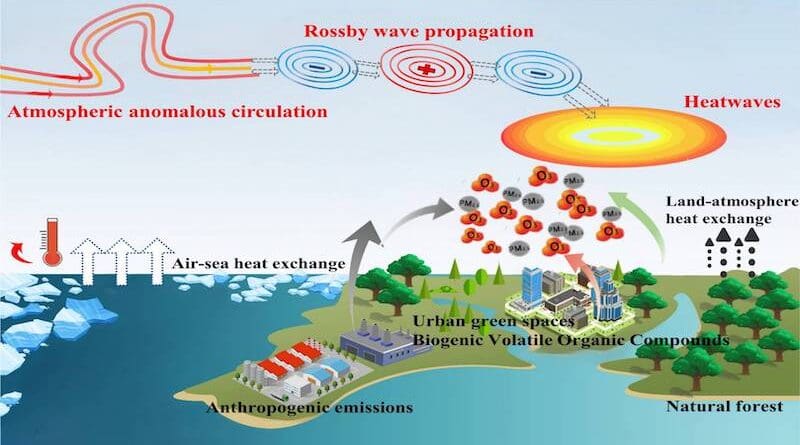
Interconnected Climate and Pollution Feedbacks in a Warming World. Interconnected Climate and Pollution Feedbacks in a Warming World.Interconnected Climate and Pollution Feedbacks in a Warming World.


Over the last two decades, the scientific community has made rapid strides in understanding climate change and air pollution—but progress on their combined effects remains limited.


Traditional models often gloss over the complex web of interactions between land, sea, and sky, especially when simulating compound events like heatwaves coinciding with stagnant air. These gaps are particularly troubling in densely populated coastal and urban zones, where human exposure is highest. Researchers now recognize that capturing fine-scale processes is critical to improving both forecasts and public health responses. Due to these challenges, there is an urgent need to deepen our understanding of how climate extremes and air pollution interact through high-resolution modeling.

A research team led by the Ocean University of China and Tsinghua University has published a perspective article in Frontiers of Environmental Science & Engineering. The study explores how advanced high-resolution Earth system models can better simulate the coupled effects of extreme weather and air pollution. By bridging gaps in current modeling capabilities, the work offers a more detailed and accurate picture of environmental hazards under climate change.

The team’s research dives into the mechanics of how extreme weather intensifies air pollution, and vice versa. Using next-generation Earth system models with kilometer-scale resolution, the study sheds light on how poorly represented processes—like ozone dry deposition or urban–rural emission differences—can distort pollution forecasts. The new simulations corrected these issues, reducing ozone overestimates by an average of 62% in heavily polluted regions.

Compound climate extremes, involving simultaneous or sequential events, have become increasingly frequent. High-resolution Earth system models are crucial for capturing the intricate fine-scale processes underlying these compound events. To tackle the heavy computing demands of such simulations, the researchers also propose to integrate artificial intelligence techniques—speeding up calculations while preserving accuracy. Their work highlights the immense value of modeling tools that can reflect the complex, nonlinear reality of our atmosphere in a changing climate.

“Understanding how extreme weather and air pollution amplify each other is essential to protecting lives and ecosystems,” said Professor Yang Gao and Deliang Chen, corresponding authors of the study. “High-resolution Earth system models allow us to uncover interactions that were previously invisible, giving decision-makers the knowledge they need to prepare for tomorrow’s climate risks.”


As climate-related disasters escalate, tools that can pinpoint where and when pollution and weather will collide are more critical than ever. High-resolution models could revolutionize environmental forecasting—offering cities, coastal communities, and health systems the foresight to act swiftly. Combined with artificial intelligence, these models can deliver real-time, localized warnings and guide investments in climate adaptation. By capturing the full complexity of Earth’s systems, this research lays the foundation for more resilient societies in an uncertain future.

 file photo rat

Urban Rats Spread Deadly Bacteria As They Migrate

By 

Urban rats spread a deadly type of bacteria as they migrate within cities that can be the source of a potentially life-threatening disease in humans, according to a six-year study by Tufts University researchers and their collaborators that also discovered a novel technique for testing rat kidneys.


Leptospirosis is a disease caused by a type of bacteria often found in rats. It’s spread through their urine into soil, water, or elsewhere in the environment, where it becomes a source of infection and contamination for humans, dogs, and other species. While it’s prevalent worldwide, it’s more common in tropical regions, though a changing climate means it could become more common in colder regions as they warm.

In Boston, leptospirosis persists in local rat populations, and different strains of the bacteria move around the city as groups of rats migrate, according to a new study by Marieke Rosenbaum, M.P.H., D.V.M., V14, assistant professor in the Department of Infectious Disease and Global Health at Cummings School of Veterinary Medicine at Tufts University, along with co-authors at Northern Arizona University (NAU), the United States Department of Agriculture (USDA), and the Centers for Disease Control and Prevention (CDC). In addition, their genetic analysis of a 2018 human leptospirosis case in Boston strongly suggests a link to rats as the source.

The paper, published recently in the journal PLOS Neglected Tropical Diseases, is the latest work conducted by Rosenbaum and collaborators as part of the Boston Urban Rat Study, a research group investigating whether rats in Boston carry pathogens that pose a risk to public health.

For this study, she joined forces with the City of Boston’s Inspectional Services Department and other groups throughout the city to track rats from 2016 to 2022 and test rats for leptospirosis. She and researchers then employed advanced molecular techniques to figure out exactly what type of leptospirosis was present. The researchers analyzed DNA from 328 rat kidney samples collected from 17 sites in Boston, and 59 rats representing 12 of 17 sites were positive for Leptospira bacteria.

“The primary way to get a full genomic sequence of a virus or bacteria is to culture it, which was a challenge in this case because Leptospira is considered a fastidious organism,” says Rosenbaum. “It has specific requirements for temperature, pH, and nutrients. But our USDA collaborators cultured the bacteria from not only fresh but also frozen rodent kidneys, which has never been reported in the literature before, to get isolates.”


From there, the Northern Arizona University collaborators at the Pathogen & Microbiome Institute (PMI) used targeted DNA capture and amplification to pick out and enhance leptospirosis DNA in the samples, which resulted in a lot of fine-scale genomic information about the isolates.

“The new genetic and tools that we developed and used in this study are real game changers for leptospirosis research, as we can now use the power of the whole genome to look for relatedness among samples, something that just wasn’t possible before,” said Dave Wagner, Ph.D., professor of biological sciences and executive director of the PMI at NAU.

“Because we were able to do the culturing and the sequencing, we were able to look more closely at how the different strains of leptospirosis are related, which helps us understand how the bacteria are getting transmitted between rats and rat populations in the city,” Rosenbaum says.

The researchers hope their findings will help guide rat control and human leptospirosis mitigation efforts in urban settings.

“Because we were able to do the culturing and the sequencing, we were able to look more closely at how the different strains of leptospirosis are related, which helps us understand how the bacteria are getting transmitted between rats and rat populations.”

On Human Cases

For this paper, Rosenbaum and the other authors examined one human case of leptospirosis in collaboration with the CDC, which had an isolate obtained from a patient in a Boston hospital that was reported to the federal level. Researchers at Northern Arizona University used molecular tools to get a genomic sequence, which they found to be nearly identical to a sequence obtained in three different rats spanning multiple years from the same location in Boston.

“It’s very strong evidence that the source of that human case was a rat,” says Rosenbaum.

Rats are the most well-established source of leptospirosis infection in humans. But not all cases get diagnosed or reported. Some people may get infected, not develop any symptoms, and never know they were infected. Others might develop a mild fever or other nonspecific symptoms before their immune system clears the infection. However, a small percentage of people will go on to develop a more serious case of the disease, which can affect different organs and, ultimately, cause multi-organ failure and death.

“Human exposure to rats is not very common. But certain populations might be at higher risk, like unhoused people or people who engage in outdoor injection drug use, which are situations that lead to more direct contact with rats,” says Rosenbaum.

There are challenges to collecting data on leptospirosis cases, as well. Few clinicians would think to test a patient for leptospirosis without some knowledge that the person may have been exposed to it. And even if they do test for it, sometimes positive results are not reported to state or national systems that compile such data. In addition, leptospirosis is responsive to antibiotics, so if a physician prescribes antibiotics for a patient to treat a suspected infection, then the bacteria may not get picked up by a test anyway, Rosenbaum explains.

On Rat Migration

“Rats have a high degree of genetic structure, which means there are distinct rat populations throughout the city that are highly related to each other,” says Rosenbaum. “It doesn’t look like they’re intermingling with other populations a lot, and that’s contributing to a stable population over time, but when they do disperse, they can take leptospirosis with them. The actual genetic sequence of leptospirosis is also stable within a population of rats over time. Rats in Boston Common have a strain of leptospirosis that they maintain over years in that location, and it’s different from the strain we saw in another area that also was persisting over time.”

They found that a rat in Boston would have to travel over 600 meters, or just over a 1/3 of a mile, to encounter another genetic population of rats. They also found evidence that large, multi-lane roads disrupted all connectivity between populations of rats on either side of the road, and that rats used greenways and biological corridors for travel and intermingling. Construction is another well-known disruptor of rat burrows that forces rats to look for other places to persist, which can increase the spread of the bacteria.

When it comes to pest control, Rosenbaum says an important next step is to better understand how pest management interventions impact rat migrations and their population structure, as well as how they impact humans and the environment.

“Extermination is not realistic,” she says, “but I think better understanding of how the different pest control interventions are impacting rat migrations and transmission of pathogens amongst the rat population would be really helpful.”


Eurasia Review

Eurasia Review is an independent Journal that provides a venue for analysts and experts to disseminate content on a wide-range of subjects that are often overlooked or under-represented by Western dominated media.


Rule Of Law As Growth Catalyst: Legal Foundations For Economic Prosperity – OpEd

network globe asia middle east binary


The fundamental connection between strong legal structures and sustained economic development has become unmistakable in 2025.


Market confidence, together with institutional credibility and cross-border investment, depends on the rule of law, which has evolved beyond its status as an ideal norm into an essential foundation for economic recovery from pandemic disruptions and geopolitical tensions, and technological advancements. The growth of GDP depends on a strong rule of law system that delivers impartial judgments with predictable regulations and accessible governance and justice to all citizens to achieve meaningful foreign direct investment and stable welfare improvements.

The World Justice Project’s Rule of Law Index ranked nations for the first half of 2025, with those achieving scores above 0.82 averaging 4.0 percent GDP growth while those below 0.45 achieved only 1.7 percent¹. The significant difference demonstrates how clear property rights drive development because countries with scores above 0.80 experienced a 12 percent increase in domestic investment and an 8 percentage point growth in credit‐to‐private‐sector ratios during 2024 and early 2025. States with weak judicial independence experienced their nonperforming loans rise higher than 14 percent of their total bank assets because of contractual uncertainty³.

The International Monetary Fund studied rule of law metrics in February 2025 to show that a one-point improvement leads to a 1.2 percent increase in per-capita GDP during a five-year period⁴. The judicial appointment reforms, together with digital case management systems implemented in Indonesia and Kenya during 2023–24, led to a 15 percent and 10 percent increase in FDI inflows during 2024 compared to a 5 percent regional average⁵. The numerical data demonstrates how implementing governance standards at a global level generates tangible economic results.

The path toward achieving a consolidated rule of law in 2025 faces multiple significant challenges. Public coffers lose an estimated USD 1.3 trillion each year to corruption, according to Transparency International’s Corruption Perceptions Index for 2025, which shows that thirty percent of surveyed nations score below 40 out of 100⁶. Public graft in these environments imposes a 25 percent effective tax burden above official rates that creates unfair market competition and inefficient resource distribution⁷. Political elites who control law enforcement and judiciary budgets create risks for transactions through manipulation, which leads to higher interest rates and discourages investors from taking long-term loans.

These institutional weaknesses produce additional problems in the system. According to a World Bank mid-2025 assessment, more than 60 low and middle-income countries dedicate less than 0.05 percent of their GDP to judicial funding, although high-income states allocate 0.20 percent of their GDP for this purpose⁸. Court backlogs reach an average of three years, while judges require specialized training in commercial law and intellectual property law, and environmental law, because underfunded courts lack sufficient resources. The judicial system experiences sequential delays in decision-making, combined with inconsistent judicial decisions, which forces parties to use alternative dispute resolution methods that circumvent judicial procedures. Businesses in economies with delayed contract enforcement periods exceeding one year must pay 35 percent higher interest rates for credit compared to those operating in countries with quick enforcement times⁹.


Political instability, together with violence, makes existing institutional weaknesses even more severe. Any legal system becomes irrelevant when civil unrest or organized crime takes over regions because the basic right to personal safety disappears. The United Nations reports that conflict-affected states in March 2025 generated 5 percent of worldwide GDP while requiring 25 percent of global humanitarian aid funding¹⁰. Instability generates economic expenses that surpass humanitarian needs because it destroys investor trust and breaks supply chains while leading to the departure of essential skilled personnel who fuel innovation.

A strategic sequence of design methods, along with context-specific approaches, is needed to address these complex challenges. The establishment of transparent merit-based appointment processes, together with ring-fenced funding, represents an optimal starting point to protect the judiciary. Estonia demonstrates judicial independence reforms through 2023 to reach its current state, where courts handle digital cases amounting to 85 percent of their workload and commercial disputes are resolved within 120 days, and public support reaches 80 percent in 2025. The benchmarks established by these reforms serve as models for nations attempting to replicate this transformation.

Anti-corruption initiatives need to implement both punitive measures together with preventive approaches as part of their strategy. Through its robust legal framework featuring independent agencies and protective whistleblower laws, and transparent procurement portals, Singapore has eliminated high-level bribery, which led to a Corruption Perceptions Index score of 92 in early 2025. The OECD’s most recent peer review demonstrates how open data standards combined with civil society monitoring function as an effective measure to prevent rent seeking from spreading. Blockchain technology, together with artificial intelligence anomaly detection tools, reduces the areas of opacity that lead to corruption.

Yet technology is no panacea. Internet accessibility remains limited throughout sub-Saharan Africa since only about 40 percent of citizens have dependable online connections, thus hindering the adoption of e-governance systems¹³. Public registries alongside case filing systems experience increased cybersecurity risks when governments implement digital transformation. According to the INTERPOL survey from 2025, ransomware attacks on courts and public registries have increased by 22 percent throughout the past year¹⁴. Rule of law reform initiatives need to implement digital innovation alongside robust data protection structures and cyber forensic training programs to ensure resilience.

The majority of successful outcomes depend on international cooperation between nations. The Global Judicial Integrity Network, established by the United Nations in 2022, has provided technical assistance to more than 50 countries, which led to World Bank-funded judicial modernization projects totaling $400 million by 2025¹⁵. Trade agreements between countries now include mandatory legal reform requirements, which serve as entry conditions for Western Balkan states to join the EU in 2025 through the accession accords¹⁶. External incentives help build domestic support for reforms, which link governance improvements to economic benefits.

The empirical findings of 2025 conclusively demonstrate that an enhanced rule of law serves as the fundamental framework for achieving economic development. Jurisdictions that support independent courts alongside transparent governance systems and anti-corruption measures outperform other nations in terms of GDP growth while attracting more foreign direct investment and creating wealth in a fair manner. Low rule of law environments demonstrate unpredictable growth patterns because they remain susceptible to political interference and lack the capacity to develop strong human capital. Nations pursuing prosperity need to position legal reforms as fundamental components of their development plans because stable and predictable, and inclusive legal institutions represent the only path to sustainable economic advancement.

The opinions expressed in this article are the author’s own.

References

  • O’Reilly, T. & Murphy, S. (2025). State Capacity and Growth RegimesInternational Monetary Fund Working Paper WP/25/014, Washington, D.C.
  • Mir, A. (2025, April 18). Deeds, Deals and Development: The Rule of Law Behind MarketsNational Economic Forum.
  • Transparency International. (2025, February 11). 2024 Corruption Perceptions IndexTransparency International Press Release.


Simon Hutagalung

Simon Hutagalung is a retired diplomat from the Indonesian Foreign Ministry and received his master's degree in political science and comparative politics from the City University of New York. The opinions expressed in his articles are his own.