Monday, June 30, 2025


How to refocus in the age of distraction


New survey reveals what Americans believe contributes most to a short attention span


Ohio State University Wexner Medical Center

News Package 

video: 

New survey reveals what Americans believe contributes most to short attention spans

view more 

Credit: The Ohio State University Wexner Medical Center


COLUMBUS, Ohio – Studies show that the average attention span is now only eight seconds. That’s about as much time as it takes to read a few sentences before being distracted. 

A new national survey of 1,000 American adults commissioned by The Ohio State University Wexner Medical Center and College of Medicine finds that stress and anxiety contribute most to a     short attention span (43%), followed by lack of sleep (39%) and digital devices (35%). 

Other contributing factors include boredom or lack of interest (31%); multitasking (23%); lack of physical activity (21%); poor diet/hydration (20%) and medical conditions such as ADHD (18%). 

Only 25% of survey respondents said they don’t have trouble with their attention span.

Evita Singh, MD, a psychiatrist with Ohio State’s Department of Psychiatry and Behavioral Health said this is something she sees often. 

“The stress and the ruminating and thinking about things over and over in your mind can certainly impact attention span and the ability to focus,” said Singh. “Often when patients come to see me, they're worried about their ability to focus, and there's a good chance that it ends up being because they're so stressed out or they're anxious. So we work on treating that.” 

Short attention spans can have long-term consequences, she said. 

“When people are multitasking, when they have so many things in their mind that they're thinking about, they can get exhausted,” Singh said. “And then it's really hard to enjoy things, which can then lead to depression or anxiety.” 

To help improve attention spans and the ability to focus longer, Singh created a tool to help. 

It’s called Take Five:

  • T – Take frequent breaks.

  • A – Actively engage in the one task at hand. 

  • K – Keep distractions to a minimum. 

  • E – Eliminate multitasking. 

  • Five – Take five minutes to refocus.
     

“For example, can we do five minutes of a small workout practice, or a little bit of mindfulness or something else that we enjoy?” Singh asked. 

If techniques such as “Take Five” are not working, and a lack of focus or short attention negatively impacts day-to-day life, Singh encourages people to seek help from a mental health professional. 

“There are many different things that can lead to why we're having a hard time focusing or having trouble with attention,” Singh said. “But being able to recognize that while also giving grace to ourselves that we don't need to be ‘on’ and focusing 100% of the time is also really important.”

###

Survey Methodology

This study was conducted by SSRS on its Opinion Panel Omnibus platform. The SSRS Opinion Panel Omnibus is a national, twice-per-month, probability-based survey. Data collection was conducted from May 2 – May 5, 2025, among a sample of 1,008 respondents. The survey was conducted via web (n=978) and telephone (n=30) and administered in English. The margin of error for total respondents is +/-3.6 percentage points at the 95% confidence level. All SSRS Opinion Panel Omnibus data are weighted to represent the target population of U.S. adults ages 18 or older. This report provides information about the sampling procedures and the methods used to collect, process, and weight data for this study.

Tests to detect marijuana-impaired driving based on ‘pseudoscience’


Journal of Studies on Alcohol and Drugs

"Police ahead" sign photo 

image: 

"Police ahead" sign photo

view more 

Credit: Journal of Studies on Alcohol and Drugs (www.jsad.com/photos)


PISCATAWAY, NJ – For years now, U.S. police departments have employed officers who are trained to be experts in detecting “drugged driving.” The problem is, however, that the methods those officers use are not based on science, according to a new editorial in the Journal of Studies on Alcohol and Drugs

With marijuana now legal in many U.S. states, the need for reliable tests for marijuana impairment is more pressing than ever. Police can evaluate alcohol-intoxicated drivers by using an objective measure of breath alcohol results. But there is no “breathalyzer” equivalent for marijuana: The drug is metabolized differently from alcohol, and a person’s blood levels of THC (the main intoxicating chemical in marijuana) do not correlate with impairment. 

So law enforcement rely on subjective tactics—the roadside tests and additional evaluations by police officers specially trained to be so-called drug recognition experts, or DREs. These officers follow a standardized protocol that is said to detect drug impairment and is said to even determine the specific drug type, including marijuana. The process involves numerous steps, including tests of physical coordination; checking the driver’s blood pressure and pulse; squeezing the driver’s limbs to determine if the muscle tone is “normal” or not; and examining pupil size and eye movements.

But while the protocol has the trappings of a scientific approach, it is not actually based on evidence that it works, said perspective author William J. McNichol, J.D., an adjunct professor at Rutgers University Camden School of Law.

Instead, McNichol said, the DRE process is a product of “police science”—techniques created by police officers to use in their work. Few scientific studies have tried to determine how often DREs get it right. But the existing evidence suggests they’re “not much better than a coin toss,” McNichol said.

Despite that, DRE programs and training are federally funded, and more than 8,000 DREs work in police departments nationwide, according to the International Association of Chiefs of Police. In addition, McNichol points out, a “spinoff” of the DRE has recently made its way into job sites: workplace impairment recognition experts, or WIREs, who are certified to detect and prevent on-the-job drug impairment.

Not long ago, when marijuana was uniformly illegal in the U.S., people would land in hot water for simple possession or use of the drug. Now that it’s legal in many states, McNichol said, there is an urgent need for scientifically valid, reliable methods for detecting marijuana impairment. And that, he added, will require scientists in the substance abuse field to get involved.

A related commentary published in the same issue of JSAD echoes that last sentiment. Collaborations between law enforcement and scientists who are not invested in either supporting or refuting the status quo is the best path forward, write Thomas D. Marcotte, Ph.D., and Robert L. Fitzgerald, Ph.D., from the Center for Medicinal Cannabis Research at the University of California San Diego. “Developing more robust tools to identify cannabis-impaired drivers in an unbiased fashion is essential to keeping our roadways safe,” they write. These authors also provide recommendations for improving detection of drug impaired driving.

As for how to fund that type of research, McNichol said a source already exists: taxes from legal marijuana sales. “The money is there,” he said, “if only it can be allocated properly.”

-----
McNichol W. J. (2024). Perspective: Pseudoscience and the detection of marijuana-based impairment: We can and must do better. Journal of Studies on Alcohol and Drugs, 86(4), 503–509. https://doi.org/10.15288/jsad.24-00307

Marcotte, T. D., & Fitzgerald, R. L. (2025). Robust Validation of methods for detecting driving under the influence of cannabis: Paths forward. Journal of Studies on Alcohol and Drugs, 86(4), 510–514. https://doi.org/10.15288/jsad.25-00110


Researchers identify genetic bottlenecks that explain the emergence of cholera


Universidad Miguel Hernandez de Elche

Evolutionary history of the pandemic Vibrio cholerae lineage 

image: 

The evolutionary history of the pandemic Vibrio cholerae lineage shows that its emergence has not been linear, but shaped by several key genetic bottlenecks that explain its rarity. From a group of bacteria with pre-adaptations for virulence (A), new lineages arise with key gene clusters such as CTXΦ or VPI-1 (B), specific modular arrangements within those clusters (C), and unique allelic variations (D). The right combination of all these elements in this genetic mosaic allows the emergence of pathogenic clones from environmental V. cholerae populations (E).

view more 

Credit: López-Pérez et al. (2025), PNAS, 122(22), e2417915122.


A new study by the Genomics and Microbial Evolution Group at the Miguel Hernández University of Elche (UMH) together with the Department of Host-Microbe Interactions at St. Jude Children’s Research Hospital in Memphis, USA, sheds light on one of the great enigmas of microbiology: why only certain strains of common bacteria become pandemic pathogens. The work, published in the prestigious journal Proceedings of the National Academy of Sciences (PNAS), focuses on Vibrio cholerae, the bacterium that causes cholera. It reveals that its most dangerous form arises from a specific combination of genes and allelic variants that give it an advantage in the human intestine. This research could pave the way for new strategies to predict and prevent future cholera outbreaks.

The study results from a collaboration between UMH researcher Mario López Pérez and Professor Salvador Almagro-Moreno of the St. Jude Children’s Research Hospital. It also involved UMH Professor José M. Haro Moreno and predoctoral researcher Alicia Campos López, affiliated with the Department of Plant Production and Microbiology.

Through an extensive analysis of over 1,840 Vibrio cholerae genomes, the researchers identified eleven distinct phylogenetic clusters, with the pandemic group belonging to the largest and located within a lineage shared with environmental strains. Their findings suggest that the emergence of pandemic strains, responsible for global cholera outbreaks, is largely dependent on the acquisition of unique modular gene clusters and allelic variations that confer a competitive advantage during intestinal colonization.. These act as nonlinear filters that prevent most environmental strains from becoming human pathogens.

“As a result, only a small group of Vibrio cholerae strains can cause cholera in humans, despite the species’ vast natural diversity,” explains UMH researcher Mario López, lead author of the study. “We wondered why only this small subset has ever triggered pandemics.”

The study reveals that the emergence of pandemic V. cholerae clones is constrained by specific genetic bottlenecks. These require: a genetic background pre-adapted for virulence, the acquisition of key gene clusters such as CTXΦ and VPI-1, their organization into specific modular arrangements, and finally, the presence of unique allelic variants. “Only when all these elements come together can a strain evolve into a pandemic-capable pathogen,” the researchers explain.

These features are absent in most environmental V. cholerae strains and appear to grant pandemic clones a key competitive advantage: enhanced ability to colonize the human gut.

“Interestingly, the genetic traits that enable V. cholerae to infect humans don’t benefit the bacteria in their natural aquatic environment,” López notes. In the wild, V. cholerae typically lives freely or in association with cyanobacteria colonies, mollusks, or crustaceans.

Cholera is endemic in parts of the world with poor water, sanitation, and hygiene infrastructure. Outbreaks can also occur after natural disasters that disrupt these systems. The disease is characterized by sudden, severe episodes of watery diarrhea, leading to rapid dehydration and, if untreated, potentially death.

“Our analytical model could be applied to other environmental bacteria to understand how pathogenic clones emerge from non-pathogenic populations,” López emphasizes. The study also opens the door to more precise surveillance of strains with pandemic potential—an approach that could be highly useful for future public health preparedness.

The research was supported by the U.S. National Science Foundation (NSF) through the CAREER program (#2045671) and by the Burroughs Wellcome Fund’s Investigator in the Pathogenesis of Infectious Disease program (#1021977). It also received funding from the Spanish “MICRO3GEN” project (PID2023-150293NB-I00), co-financed by the European Regional Development Fund (FEDER) and managed by the Spanish Ministry of Economy, Industry, and Competitiveness.


Australia Backs US Strike on Iran


A Vassal’s Impulse


The initial statement from Australian government sources was one of constipated caution and clenching wariness. Senator Penny Wong’s time as head of the Department of Trade and Foreign Affairs has always been about how things come out, a process unsatisfyingly uncertain and unyielding in detail. Stick to the safe middle ground and sod the rest. These were the cautionary words of an Australian government spokesperson on June 22: “We have been clear that Iran’s nuclear and ballistic missile program has been a threat to international peace and security.”

That insipid statement was in response to Operation Midnight Hammer, a strike on three nuclear facilities in Iran by the US Air Force, authorised by US President Donald Trump on June 22. With such spectacular violence came the hollow call for diplomatic prudence and restraint. There was an important difference: Tehran, not Israel or Washington, would be the subject of scolding. Iran would not be permitted nuclear weapons but jaw jaw was better than war war. “We note the US president’s statement that now is the time for peace,” stated the spokesperson. “The security situation in the region is highly volatile. We continue to call for de-escalation, dialogue and diplomacy.”

Within twenty-four hours, that anodyne position had morphed into one of unconditional approval for what was a breach of the United Nations Charter, notably its injunction against the threatened or actual use of force against sovereign states in the absence of authorisation by the UN Security Council or the necessity of self-defence. “The world has long agreed Iran cannot be allowed to get a nuclear weapon, and we support action to prevent this. That is what this is,” accepted Wong.

This assessment was not only silly but colossally misguided. It would have been an absurd proposition for the US to make the claim that they were under imminent threat of attack, a condition seen as necessary for a pre-emptive strike. This was a naked submission to the wishes of a small, destabilising and sole (undeclared) nuclear power in the Middle East, a modern territorial plunderer celebratory of ethnonational supremacy.

The Australian position, along a number of European states, also failed to acknowledge the General Conference Resolutions of the International Atomic Energy Agency (in particular GC(XIXI)/RES/444 and GC(XXIV)/RES/533) declaring that “any armed attack on and threat against nuclear facilities devoted to peaceful purposes constitutes a violation of the United Nations Charter, international law and the Statute of the Agency.”

Wong also misrepresented the circumstances under which Iran was told they could negotiate over their nuclear program, erroneously accepting the line from the Trump administration that Tehran had “an opportunity to comply”. Neither the US diplomatic channel, which only permitted a narrow, fleeting corridor for actual negotiations, nor Israel’s wilful distortion of the IAEA’s assessment of Iran’s uranium enrichment plans and prevarication, ever gave chance for a credible resolution. Much like the calamitous, unlawful invasion of Iraq in 2003 by a crew of brigand nations – the merry trio of US, UK and Australia stood out – the autopilot to war was set, scornful of international law.

Wong’s shift from constipated caution to free flow approval for the US attack, with its absent merits and weighty illegalities, was also a craven capitulation to the warmonger class permanently mesmerised by the villain school of foreign relations. This cerebrally challenged view sees few problems with attacking nuclear facilities, the radioactive dangers of doing so, and the merits of a state having them in the first place.

The US attack on Iran found hearty approval among the remnants of the conservative opposition, who tend to specialise in the view that pursuing a pro-Israeli line, right, wrong, or murderous, is the way to go. Liberal Senator and former Australian ambassador to Israel, David Sharma, thought the Albanese government’s initial response “underwhelming and perplexing”, claiming that support for this shredding of international law “a straightforward position for Australia to adopt”. Sharma is clearly getting rusty on his law of nations.

His side of politics is also of the view that the attacked party here – Iran – must forgo any silly notion of self-defence and retaliation and repair to the table of diplomacy in head bowed humiliation. “We want to see Iran come to the negotiating table to verify where that 400 kilos of enriched uranium is,” stated a very stern opposition home affairs minister, Andrew Hastie. “I’m very glad to see that Penny Wong has essentially endorsed our position and I’m glad we have bipartisanship on this.”

Australia’s response has been that of the weary poltroon. Little has been asked about Canberra’s standout complicity in assisting the US imperium fulfil its global reach when it comes to striking targets. The role of the intelligence signals facility in Pine Gap, cutely and inaccurately called a joint venture, always lends its critical role to directing the US war machine through its heavy reliance on satellite technology. Wong, when asked about the role played by the facility in facilitating the attacks on Iran, had little to say. Australian Prime Minister Anthony Albanese was also cold towards disclosing any details. “We are upfront, but we don’t talk about intelligence, obviously. But we’ve made very clear this was unilateral action taken by the United States.”

At least on this occasion, Australia did not add its forces to an illegal adventure, as it all too wilfully did in 2003. Then, Iraq was invaded on the spurious grounds that weapons of mass destruction not only existed but would somehow be used either by the regime of Saddam Hussein or fictional proxies he might eventually supply. History forever shows that no such weapons were found, nor proxies equipped. But the Albanese government has shown not only historical illiteracy but an amnesia on the matter. Unfortunately, it’s the sort of amnesia that has become contagious, afflicting a goodly number of Washington’s satellites, vassals and friendly states.

Binoy Kampmark was a Commonwealth Scholar at Selwyn College, Cambridge. He lectures at RMIT University, Melbourne. Email: bkampmark@gmail.comRead other articles by Binoy.
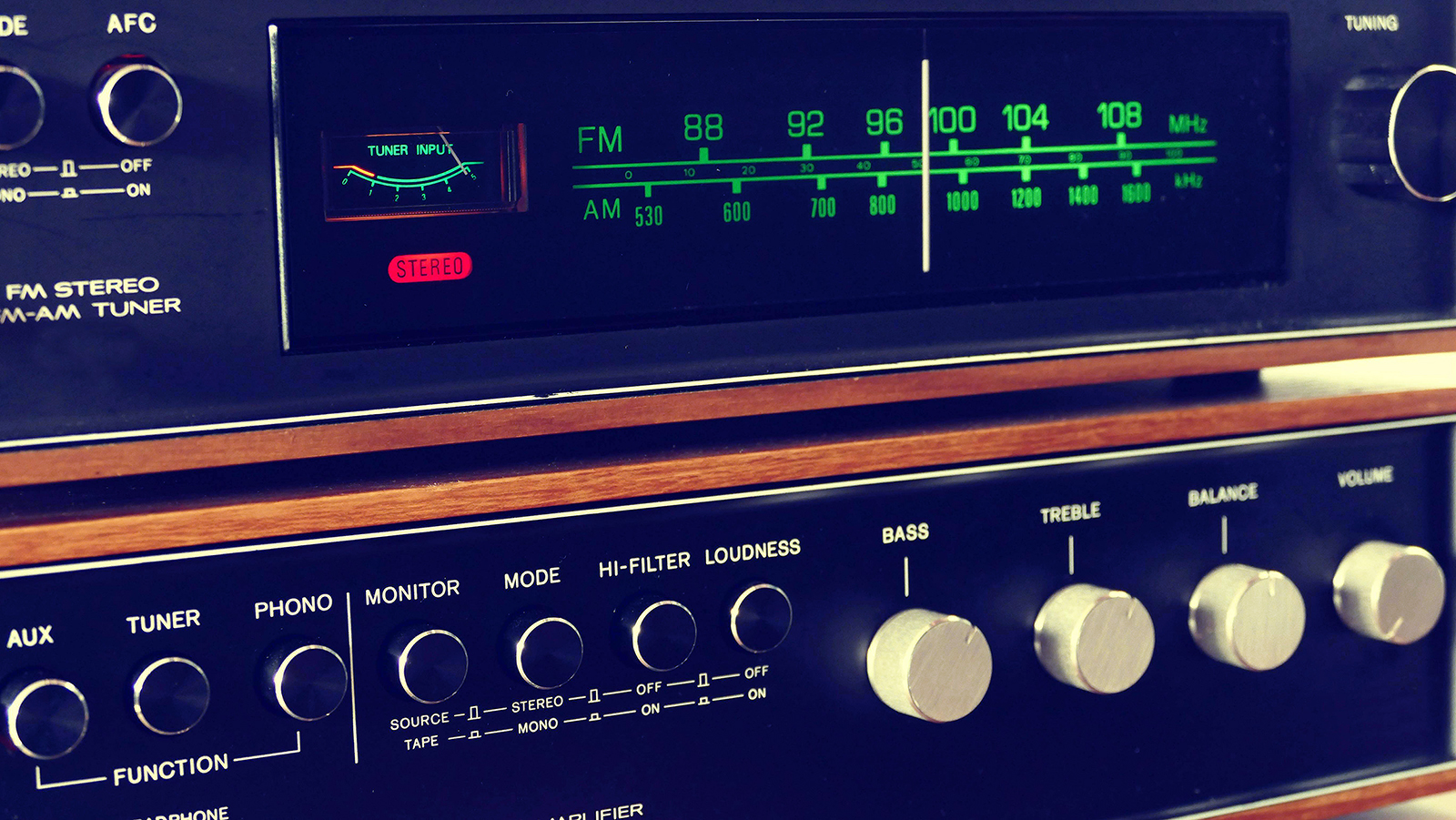
US Christian broadcasters ask listeners to tune in to the fight for AM radio

(RNS) — A diverse coalition is urging Congress to keep AM radio on the nation’s dashboards.


(Photo by Anthony/Pexels/Creative Commons)
Kathryn Post
June 25, 2025

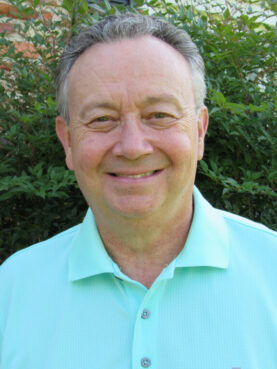
(RNS) — Faith Radio president Scott Beigle’s quest for Christian radio started with 1070AM, a former CNN news station in Tallahassee, Florida.

After moving from northern Alabama to the Florida Panhandle with his wife and three kids, Beigle, who is Baptist, noted the lack of Christian radio stations in the area and felt compelled to change that. Months later, on Oct. 6, 1997, that calling became a reality as the Faith Radio Network’s blend of evangelical Christian music and teachings hit the airwaves on 1070AM.

Nearly three decades later, the nonprofit network has grown to include 12 other Christian radio stations. Their flagship station, 1070AM, has been converted to a Spanish-language Christian station to meet the needs of Latino Christians in the region — “there was no one doing that in our area,” Beigle told RNS.

But in recent years, the future of 1070AM has become uncertain, even as Beigle said its message has become more vital.

Scott Beigle. (Photo courtesy of Faith Radio)

“A lot of them, especially now with the immigration and all, they’re scared,” Beigle said of 1070AM’s Spanish-speaking listeners. “And we understand they’re scared to go out — but they’re not scared to listen, to turn that AM radio on to hear their language, and to hear how God can change their life.”

In recent decades, AM radio, known especially for talk radio, has faded in popularity with the arrival of the clearer but more limited reach of FM signals, in addition to streaming and satellite radio. A 2025 survey from Barna Group and the National Religious Broadcasters found listeners access Christian radio from multiple sources, with 68% saying they listen to FM stations, 57% a website or app, 38% satellite radio and 37% AM stations.

While AM stations remain a smaller but consequential part of America’s radio landscape — the National Association of Broadcasters reports 80 million Americans still listen to AM radio each month on over 4,000 AM stations — AM radio now faces an existential threat: removal from cars. Citing dwindling audiences and technological clashes with electric vehicle equipment, automakers such as Ford, Volkswagen, Tesla and BMW have begun phasing out AM radio in some newer vehicles. 

A diverse coalition of stakeholders linked with conservative talk shows, foreign language stations and religious broadcasters is teaming up in the halls of Congress, advocating to salvage AM radio’s spot on the nation’s dashboards, at least temporarily.

(Photo by Jonathan Farber/Unsplash/Creative Commons)

For many Christian stations, the legislative effort has spiritual stakes.

“We’re in the hope business — to see their lives changed,” Beigle said. 

The AM Radio for Every Vehicle Act is the latest iteration of a bill that would require United States automakers to include AM receivers in new vehicles for the next 10 years. Though the bill has already gained broad bipartisan support — with at least 218 co-sponsors of the House version and 61 of the Senate — the House version is still in committee, while the vote on the Senate version has yet to be scheduled.   

“We have more than enough votes to pass it in the House right now, but to make it a priority in a moment where there’s just a whole lot of four- and five-alarm fires you have to put out, it’s hard to do something that’s more of a long-term concern,” said Mike Farris, legal counsel for the National Religious Broadcasters, a multimedia association founded by evangelical Christian broadcasters in the 1940s. The NRB, which has more than 120 AM stations among its members, has been one of several groups advocating for the legislation.

Mike Farris. (Courtesy photo)

Proponents of AM radio say the medium has long been a key source of emergency communication. The Federal Emergency Management Agency’s warning system relies on AM stations for emergency alerts, and local AM stations are known for distributing critical updates in a crisis — particularly in more rural areas, where AM is sometimes the only signal available. Carolyn Cassidy, a regional general manager for Christian media conglomerate Salem Media Group, said her stations give AM listeners in Tampa, Florida, information on how to prepare for, ride out and recover from severe storms during hurricane season.  

“It’s a First Amendment issue, it’s a religious issue, but it’s also a public safety issue, because AM radio is the backbone of the Emergency Alert System,” said Nic Anderson, vice president of government affairs for Salem. He said he fears that excluding AM radio from cars is a move toward giving automakers control over what drivers can listen to.

Known for promoting Christian and conservative values, Salem Media Group owns and operates roughly 80 stations, 84% of which fall on AM, Anderson said. The group also has about 3,000 affiliate stations that are owned locally but carry Salem programs — of those, 900 are AM stations.

In addition to advocating on Capitol Hill, Salem has been raising awareness among listeners by distributing prerecorded, pro-AM radio public service announcements from evangelical Christian leaders and influencers such as Focus on the Family President Jim Daly and Turning Point USA founder Charlie Kirk.

(Photo by Breakingpic/Pexels/Creative Commons)

“For generations, AM radio has brought the hope of the gospel, biblical teaching and encouragement right into our homes and cars, especially in times of crisis,” Kirk said in one of the announcements. “But now, some automakers want to eliminate AM radio from new vehicles. Let’s stand together and protect this ministry lifeline.”


Broadcasters say one reason Christian stations are especially available in the AM format is because it’s a more affordable option than FM, making it more accessible to smaller, niche stations of all stripes, including farming and foreign language stations.

“AM allows for certain formats that can’t command the bigger dollars from agencies. They have more of a local appeal,” said Orlando Boyd, general manager of The Gospel Nashville, which offers a mix of music and talk shows that cater to Christian audiences. “It’s really to get that foot in the door … for people trying to break into the radio business.”

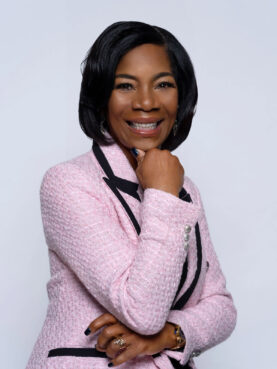
Sheila Brown. (Courtesy photo)

Boyd said The Gospel Nashville began as an AM station and later added an FM translator, which “piggybacks” on the AM station to play the same content on an FM frequency. But the AM station is still a key part of the branding and reach. It’s vital, he said, for listeners in remote settings and is often the first choice for those over age 40.

Sheila Brown, who owns two AM radio stations — WUFO (1080AM) in Buffalo, New York, and WIGO (1570 AM) in Atlanta — said listeners on the east side of Buffalo and the south side of Atlanta especially depend on these stations’ unique blend of R&B, gospel and talk shows to reflect their interests and experiences.

“We’re running our own narrative when it comes to our talk shows, our music, our format. No one else in either city has the formats that we have,” Brown said. 

Brown started her career in an entry-level position at WUFO in 1986 and worked her way up to become owner and CEO in 2013. She went on to purchase WIGO in 2022. While WUFO in Buffalo has since added a translator to air its content on an FM signal, WIGO in Atlanta is a standalone AM station.

Brown’s stations feature daily gospel music and sermon segments, and on Sundays, they play religious content all day. That’s why for the lifelong member of Pilgrim Missionary Baptist Church in Buffalo, the fight for AM radio is a matter of faith.  

“You have so many people that are sick and shut in, who can’t get out to their churches like they used to,” Brown said. “But when they turn to us, they’ll get the same singing, ministry, preaching that they would if they would be at their church.”