It’s possible that I shall make an ass of myself. But in that case one can always get out of it with a little dialectic. I have, of course, so worded my proposition as to be right either way (K.Marx, Letter to F.Engels on the Indian Mutiny)
T. Parker Host, already a leading U.S. maritime agency and terminal services provider, acquired Transmarine Navigation Corporation, a West Coast ship agency. Combined, they report the operations will be the largest tramp ship agency in the United States.
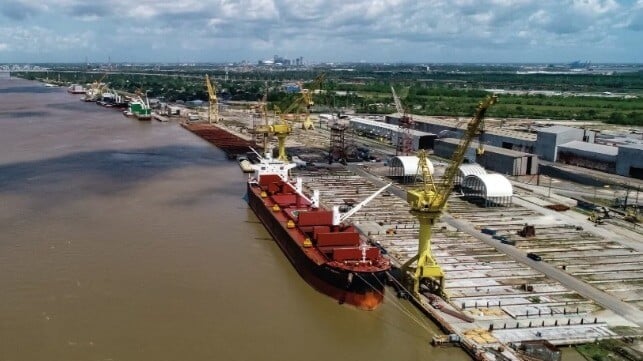
Host, which marked its 100th anniversary in 2023, is based in Louisiana and transformed the former Avondale Shipyard into its home base as the Avondale Global Gateway. Transmarine, headquartered in Long Beach, California and is well-known on the West Coast.
“This acquisition aligns with our strategic vision to deliver seamless, high-touch maritime solutions across every major U.S. port,” said Adam Anderson, Chairman and CEO of T. Parker Host. “By joining forces with Transmarine, we are expanding our footprint into the Pacific and enhancing our ability to serve customers with the same responsiveness, precision, and trust they’ve come to expect—now at every major port in the US, every tide and every terminal.”
With more than 85 years of experience navigating the Pacific corridor, the companies highlight that Transmarine brings long-standing relationships and operational experience in Long Beach, San Francisco, Seattle, Portland, and Honolulu.
“Host is the ideal partner to carry our legacy forward,” said Leslie Clements, Managing Director at Transmarine, “Together, we will continue providing the personalized, expert-level care our clients depend on, now with greater reach, expanded resources, and a shared dedication to excellent service.”
Among the benefits of the acquisition, Host reports it now operates in every major U.S. port, with expanded presence along the Pacific Coast and Hawaii. The offices in Houston and New Orleans will merge, continuing to service the existing clients of both firms, while the other operations will be integrated to provide uninterrupted service supported by HOST’s national infrastructure and digital systems.
With this acquisition, HOST says it further solidifies its leadership position in the maritime industry while continuing to invest in best-in-class service, technology, and people.
Old aerial photos give scientists a new tool to predict sea level rise
Copenhagen researchers have gained new insight into the mechanisms of Antarctic ice shelf collapse. Old aerial photos have provided an unparalleled dataset that can improve predictions of sea level rise and change how we prioritize climate adaption
Researchers from the University of Copenhagen have gained unique insight into the mechanisms behind the collapse of Antarctic ice shelves, which are crucial for sea level rise in the Northern Hemisphere. The discovery of old aerial photos has provided an unparalleled dataset that can improve predictions of sea level rise and how we should prioritise coastal protection and other forms of climate adaptation.
On 28 November 1966, an American aeroplane flies over the Antarctic Peninsula just south of the southernmost tip of Chile.
On board is a photographer, probably from the US Navy, whose job is to map the Antarctic landscape. But it turns out that the photographer is also documenting a very special situation that is in progress. He shoots an aerial photo of the Wordie Ice Shelf, which, 30 years later, has almost vanished after a total collapse.
The consequence of this collapse was that the ‘plug’ that held large amounts of glacier ice broke off, leaving the ice sheet floating freely into the sea.
Fortunately, Wordie is a relatively small ice shelf and the sea level rise it has caused can be measured in millimetres. But there are much larger ice shelves in Antarctica, which, like Wordie, could collapse due to climate change. Just the two largest ice shelves, Ronne and Ross, are believed to hold enough ice to account for sea level rises of up to five metres.
If, in this context, we think that Antarctica is far away, we need to understand that the melting of ice in the Southern Hemisphere will cause sea levels to rise in places like Denmark in the Northern Hemisphere, due to the effects of gravity. A new research study provides insights that can help identify signs of incipient collapse in these ice shelves and assess the stage of collapse.
The photo of Wordie from 28 November 1966 - the first in a long series of images that continually document the collapse of the Wordie Ice Shelf through the 1960s - has become a valuable first data point in a study of the ice shelf collapse recently completed by researchers at the University of Copenhagen.
In their paper, now published in Nature Communications, they present a unique dataset based on the vast archives of old aerial images combined with modern satellite observations, which, for the first time, shows the collapse of an ice shelf as a constant evolution in a long time series. A critical insight that can be used to improve scientists' understanding of ice shelves and the mechanisms behind their collapse.
"We have identified several signs of incipient ice shelf collapse that we expect will be observed in other ice shelves, but perhaps more importantly, the dataset has given us a multitude of pinning points that can reveal how far advanced a collapse is. It's a completely new tool that we can use to do reality checks on ice shelves that are at risk of collapsing or already in the process of collapsing," says Postdoc Mads Dømgaard from the Department of Geosciences and Natural Resource Management, who is lead author of the study.
According to the researchers, this knowledge will enhance computer models of sea level rise and lead to more accurate predictions of when the water will rise, allowing for prioritisation of investments in climate change adaptation in the most effective way.
Warmer seawater and melting under the ice were most conclusive
The hundreds of historical aerial photos were analysed using a technique known as structure-from-motion photogrammetry. The method has enabled scientists to accurately reconstruct ice thickness, as well as its extent, surface structure and flow velocity, dating back to the 1960s.
In this way, the researchers analysed the collapse of Wordie and learned more about the factors involved. It was previously assumed that a warmer atmosphere was the primary factor leading to the collapse, and, similarly, that the formation of meltwater lakes on the ice surface had also played a part. The new study has disproved both assumptions.
Instead, the researchers highlight melting under the ice where the sea and ice meet as definitive factors.
"Our findings show that the primary driver of Wordie's collapse is rising sea temperatures, which have generated the melting beneath the floating ice shelf," Mads Dømgaard says.
Collapse is tougher than we thought – like it or not
Furthermore, the study's findings have already altered the foundation of scientists' knowledge about ice shelf collapse. According to co-author Anders Anker Bjørk, the new data advances our understanding of how and at what speed these collapses occur.
"The tentative conclusion from our findings is that ice shelf collapse may be slower than we thought. This means that the risk of a very rapid development of violent sea level rise from melting in Antarctica is slightly lower, based on knowledge from studies like this one," says Anders Anker Bjørk, Assistant Professor at the Department of Geosciences and Natural Resource Management.
But there is also a flip side to this, he explains:
"It was already a supertanker that needed to be turned to stall the melting of ice in Antarctica, but our data shows a collapse process that is even more protracted than previously assumed. And this longer process will make it harder to reverse the trend once it has started. This is an unambiguous signal to prioritise halting greenhouse gas emissions now rather than sometime in the future," Anders Anker Bjørk says.
*
Facts: ice shelves and sea level rise
Ice shelves, like Wordie, act as a kind of brake on glaciers flowing from the ice sheet towards the sea. When an ice shelf vanishes, the glaciers lose this support and can begin to float and melt more rapidly.
As the ice mass of ice shelves is already partially or wholly in the sea, their direct contribution to sea level rise is limited. On the other hand, the glacier ice they retain is on land and, therefore, every cubic metre affects the water level of the world's oceans.
Although Antarctica is far away, areas like Denmark are being affected significantly by sea level rise caused by ice shelf collapses resulting from gravitational forces. Before Antarctica melts, its ice mass helps pull sea waters southwards. When the ice has melted into the sea, the gravitational field has changed, causing the oceans to the north to rise proportionally more.
Facts: How dusty old photos became important data
In the study, the researchers used images from multiple overflights of Wordie, shot between 1966 and 1969.
In analysing the historical aerial photos, the researchers employed the structure-from-motion photogrammetry method, which utilises overlapping photos to calculate accurate three-dimensional models of landscapes or objects.
By analysing differences in perspective between the photos, it’s possible to measure heights and distances with high accuracy. This allows tracing how the ice surface, thickness and velocity have changed over time.
Behind the Research:
The following researchers contributed to the scientific article:
Department of Geoscience and Natural Resource Management, University of Copenhagen, Denmark: Mads Dømgaard Jonas K. Andersen Anders A. Bjørk
Université Grenoble Alpes, France: Romain Millan Eric Rignot (Also affiliated with: University of California and California Institute of Technology, USA)
University of California, Irvine, Department of Earth System Science, USA: Bernd Scheuchl
Delft University of Technology, Department of Geoscience and Remote Sensing, The Netherlands: Maaike Izeboud
Half a century of dynamic instability following the ocean-driven break-up of Wordie Ice Shelf
MUSK CRIMINAL CAPITALI$M
Colombia seizes first unmanned narco-submarine with Starlink antenna
This is not the first time a Starlink antenna has been used at sea by suspected drug traffickers.
The Colombian navy on Wednesday seized its first unmanned narco-submarine, equipped with a Starlink antenna, off the Caribbean coast. No drugs were found, but officials and regional security sources suspect it was a trial run for automated cocaine trafficking, navy and Western sources told AFP.
The Colombian navy on Wednesday announced its first seizure of an unmanned narco-submarine equipped with a Starlink antenna off its Caribbean coast.
The vessel was not carrying drugs, but the Colombian navy and Western security sources based in the region told AFP they believed it was a trial run of an unmanned vessel by a cocaine trafficking cartel.
Manned semi-submersibles built in clandestine jungle shipyards have been used for decades to ferry cocaine north from Colombia, the world's biggest cocaine producer, to Central America or Mexico.
But in recent years, they have been sailing much further afield, crossing the Atlantic and Pacific oceans.
The latest find, announced by Admiral Juan Ricardo Rozo at a press conference, is the first reported discovery in South American waters of a drone narco-submarine.
The navy said it was owned by the Gulf Clan, Colombia's largest drug trafficking group and had the capacity to transport 1.5 tons of cocaine.
A video released by the navy showed a small grey vessel with a satellite antenna on the bow. This is not the first time a Starlink antenna has been used at sea by suspected drug traffickers.
In November, Indian police seized a giant consignment of meth worth $4.25 billion in a vessel steered remotely by Starlink near the remote Andaman and Nicobar islands.
It was the first known discovery of a narco-submarine operated by Starlink.
Cocaine production, seizures and use all hit record highs in 2023, the UN drug agency said last month.
In Colombia, production has reached record levels, fuelled by surging global demand.
Rozo said the use of autonomous subs reflected the traffickers "migration towards more sophisticated unmanned systems" which are hard to detect at sea, "difficult to track by radar and even allow criminal networks to operate with partial autonomy".
Juana Cabezas, a researcher at Colombia's Institute for Development and Peace Studies, told AFP that powerful Mexican drug cartels, who operate in Colombia, "hired technology experts and engineers to develop an unmanned submarine" as far back as 2017.
She pointed out that drone vessels made it harder for the authorities to pinpoint the drug lords behind the shipments.
"Removing the crew eliminates the risk of captured operators cooperating with authorities," agreed Henry Shuldiner, an investigator for the US-based InSight Crime think tank, who co-authored a report on the rise of narco-subs.
Shuldiner also highlighted the challenge of assembling crews to sail makeshift subs described as floating "coffins".
A near record number of the low-profile vessels were intercepted in the Atlantic and Pacific in 2024, according to the report.
In November last year, five tons of Colombian cocaine were found on a semi-submersible en route to faraway Australia.
Colombian law punishes the use, construction, marketing, possession, and transportation of semi-submersibles with penalties of up to 14 years in prison.
(FRANCE 24 with AFP)
PKK leader accuses Turkish government of 'seeking to sabotage' disarmament process
Less than two months after the Kurdish PKK group decided to disband, ending decades of conflict with Turkey, one of its top leaders on Wednesday accused some within the Turkish government of "seeking to sabotage" the historic disarmament process.
The KurdishPKK group on Wednesday said that some elements of the Turkish government are seeking to undermine a historic disarmament process meant to put an end to decades of conflict.
The PKK, or Kurdistan Workers' Party, in May declared an end to its armed conflict and was expected to hold a series of ceremonies to destroy its weapons.
But Mustafa Karasu, one of the group's founders and top leaders, told a Kurdish-linked television station that "a group at the heart of the state is seeking to sabotage the process".
"We are ready, but it is the (Turkish) government that has not taken the needed steps," he said.
Karasu cited continued Turkish military strikes on PKK positions in northern Irak as well as the lack of improvement in the prison conditions of the PKK's founder Abdullah Ocalan.
Ocalan, now 76, has been held at the Imrali island jail since 1999. In February, he called on the PKK to lay down its weapons after decades of conflict with the Turkish state that has left at least 45,000 people dead.
"Some friends have gone to Imrali, but it's not enough. The isolation has lasted for 26 years," despite some adjustments, Karasu said.
"The situation of our leader affects the process and slows it down," he said.
Karasu did not confirm if any disarmament ceremonies were still planned.
"We want the process to continue and flourish. But the situation leads us to observe a blockage. The government's attitude is the cause," he said.
(FRANCE 24 with AFP)
French air traffic controller strike forces Ryanair to cancel 170 flights A nationwide air traffic controller strike in France planned for later Thursday and Friday has forced the air carrier Ryanair to cancel 170 flights, causing travel turmoil for more than 30,000 passengers.
Ryanair said on Thursday it was forced to cancel 170 flights, disrupting travel for more than 30,000 passengers, due to a nationwide air traffic controller strike in France planned for later in the day and Friday.
The disruption comes at the start of Europe's summer holidays, one of the busiest travel periods of the year.
The French civil aviation agency DGAC on Wednesday asked multiple carriers to reduce flights at Paris airports by 40% on July 4 due to the planned strike.
"In addition to flights to/from France being cancelled, this strike will also affect all French overflights," Ryanair said in a statement on Thursday.
Passengers overflying French airspace from the United Kingdom to Greece and Spain to Ireland would also be affected, the Irish carrier said.
The EU Parliament could assess the European Public Prosecutor's Office's investigation into an alleged organised fraud scheme involving agricultural funds and corruption.
A scandal involving Greek use of EU agricultural funds is set to play a role in the EU Parliament’s discharge of the Commission budget later this year, the co-chair of the European Parliament’s Intergroup on Anti-Corruption has told Euronews.
German Green MEP Daniel Freund was commenting on the "fake farmer" fraud scandal, a sprawling case that has triggered political turmoil in Greece and raised questions over the management of EU agricultural subsidies.
The European Public Prosecutor's Office (EPPO) announced in May that it has an ongoing investigation into an alleged organised fraud scheme involving agricultural funds and corruption involving public officials of the Greek Payment and Control Agency for Guidance and Guarantee Community Aids (OPEKEPE).
Five high-ranking Greek government officials, including a minister and three deputies, resigned on Friday following allegations of involvement in the case, which stems from the alleged mismanagement of EU subsidies for agriculture between 2019 and 2022 by OPEKEPE, a government agency tasked with handling the funds.
According to the EPPO, a "significant number of individuals" received subsidies through the agency based on false declarations, including claims of owning or leasing pastures that were in fact public land.
“In September 2024, Greek authorities placed OPEKEPE’s accreditation on probation, and an action plan was designed to address the deficiencies identified,” a European Commission spokesperson told Euronews, adding: “The Commission is working closely with the Greek authorities in this context.”
Freund called on the European Parliament’s budget control committee to investigate whether the alleged fraud points to deeper structural issues in Greece’s management of EU funds.
“This issue will for sure play a role into the discussion on the discharge of the Commission's budget after the summer,” he said.
The Commission said it could not comment on ongoing EPPO criminal investigations or criminal trials.
Under EU law, member states must accredit only those paying agencies that meet minimum standards for managing EU funds, and if an agency fails to meet these conditions, it must be placed under probation and eventually stripped of its accreditation.
Greek Prime Minister Kyriakos Mitsotakis has publicly acknowledged the scandal as “evidence of the state’s inadequacy” in addressing corruption, pledging to establish a special taskforce to conduct a swift and thorough investigation. “Clientelism cannot govern the way we conduct business,” he told his cabinet, vowing that “since OPEKEPE didn’t manage to do its work, the state will do it centrally.”
In June the Athens-based EPPO referred to the Hellenic Parliament information regarding the alleged involvement of two former Ministers of Rural Development and Food in criminal offences. The Greek Constitution provides that only the national Parliament has the power to investigate and prosecute serving or even former members of the Greek government.
This legal limitation has forced EPPO to split its investigation, a move the office argues undermines its mandate under EU law. EPPO has reported this issue to the European Commission, suggesting that national legal protections for ministers could limit the EPPO’s competence and therefore be in breach of the EU’s prosecutorial framework.
Former agriculture minister Makis Voridis, who was serving as migration minister until recently, was one of those who resigned last week.
“I hope that the Greek Parliament lifts the immunities of MPs involved, in order to allow a proper investigation,” Freund said.
Wildfire on the Greek island of Crete causes evacuations of hotels and homes
Copyright STR/Copyright 2025 The AP. All rights reserved
By Euronews with AP, Cretalive, ERT News
Published on
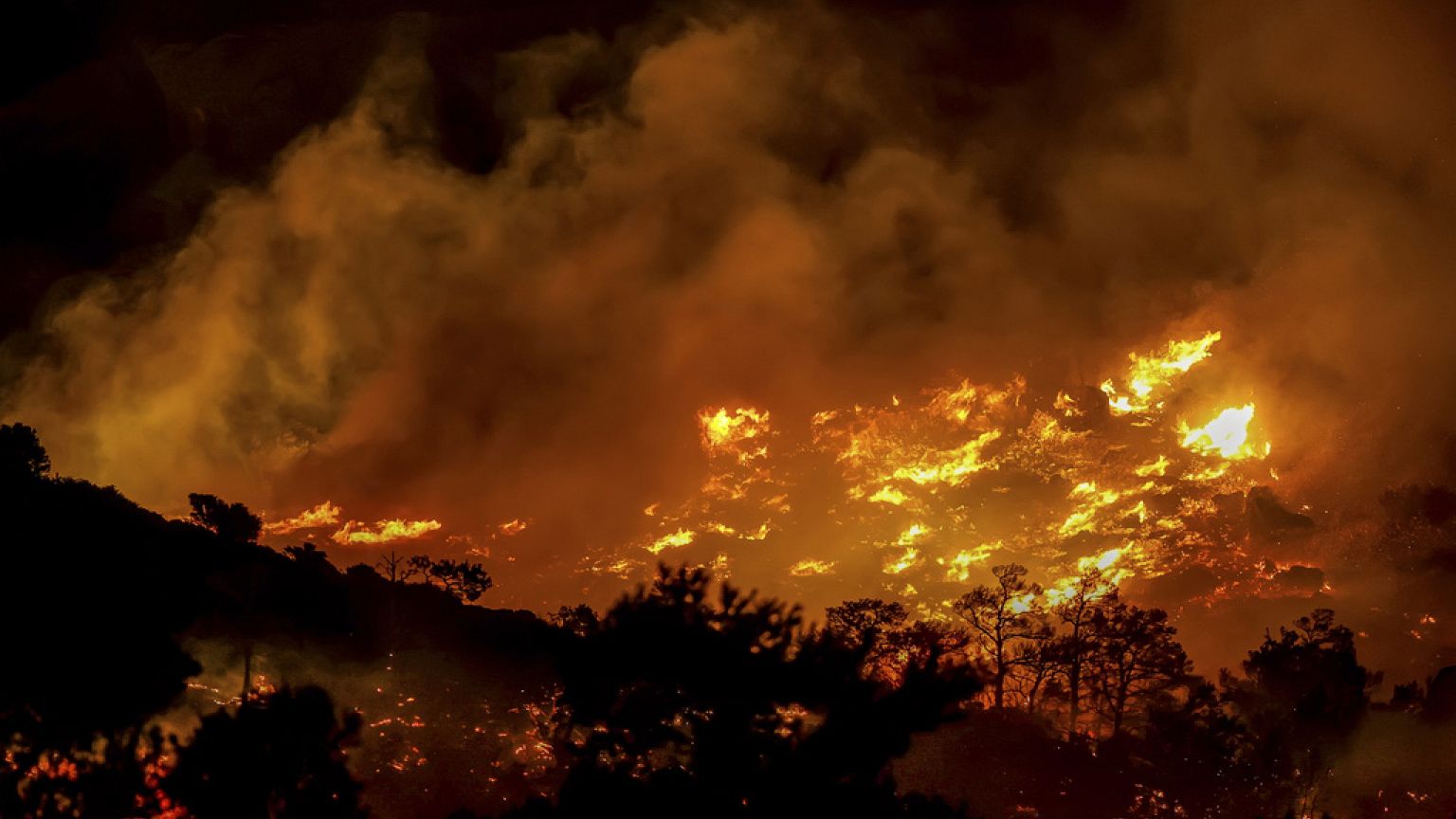
A wildfire on the Greek island of Crete has caused the evacuation of more than 1,500 people from hotels and homes early on Thursday in the Ierapetra area.
Firefighters are battling a wildfire on the south coast of Crete which has prompted the evacuation of hotels and homes.
Residents have called the fire, which caused three evacuation orders outside the port of Ierapetra, a "complete disaster".
Strong winds have made the firefighters' task especially difficult, with the flames to sweep through hillside forests.
The areas of Ferma, Agia Fotia and Koutsounari have been badly affected, according to local media. In Agia Fotia, residents described the destruction as “biblical”, saying the fire destroyed everything in its path.
An emergency alert had been sent around on Wednesday evening, leading to the evacuation of the aforementioned areas. Evacuation orders were also issued for the villages of Achlia and Galini.
Evacuations of houses and hotels continued throughout the night, while people who had taken refuge on the beach were evacuated by boat.
There have been no casualties at the time of writing, though some people were reportedly taken to hospital with respiratory problems.
“It’s a very difficult situation. The fire is very hard to contain. Right now, they cannot contain it,” said Nektarios Papadakis, a civil protection official at the regional authority.
The fire department said 230 firefighters backed by 10 water-dropping aircraft
Crete is one of Greece's most popular tourist destinations, and the risk of wildfires remains high on the island as well as in other parts of southern Greece.
More than 1,000 evacuated as fierce winds
stoke wildfire on Crete
A wildfire stoked by gale-force winds burned overnight and into Thursday on Greece’s southern island of Crete, turning swathes of forest and olive groves into ashes and forcing the evacuation of more than 1,000 locals and tourists, officials said.
Hundreds of firefighters battled a blaze Thursday on Crete island, which burnt swathes of forest and olive groves and forced the evacuation of over 1,000 people, officials said, underscoring the region's vulnerability to destructive wildfires.
At least 230 firefighters, along with 46 engines and helicopters, were deployed to contain the conflagration, which broke out a day earlier near Ierapetra town on the southeastern coast of Greece's largest island.
Stoked by gale-force winds, the blaze reached houses and hotels, fire brigade and local officials said, with local media reporting damage to some homes but no injuries.
Scores of residents and tourists were evacuated and moved to a temporary shelter at an indoor stadium in Ierapetra.
"Three settlements were evacuated and more than 1,000 left their homes. Some were taken to health centres with respiratory problems," Crete's deputy civil protection governor, George Tsapakos, told public broadcaster ERT. ERT footage showed a water bomber flying over an area thick with grey smoke.
Alongside reinforcements from Athens on Thursday, firefighters fought to tame several resurgent blazes whipped up by winds, fire brigade spokesman Vassilis Vathrakogiannis said.
"There are wind gusts in the area, some measuring 9 on the Beaufort scale, which are triggering rekindling and hindering firefighting efforts," Vathrakogiannis said.
July tended to be the most difficult month of the fire season due to high temperatures and strong winds, he said.
Greece and other countries in the Mediterranean are in an area scientists have called "a wildfire hotspot" – with blazes common during hot and dry summers. These have become more destructive in recent years, authorities say, due to a fast-changing climate.
Thousands have fled wildfires in Turkey and at least eight people have died as a result of a heatwave in Europe.
(FRANCE 24 with Reuters)
France and Switzerland shut down nuclear power plants amid scorching heatwave
SOLAR & WIND DON'T HAVE THAT PROBLEM
Copyright AP Photo
By Euronews
Published on
To cool down, nuclear power plants pump water from local rivers or the sea, which they then release back into water bodies at a higher temperature. However, this process can threaten local biodiversity if water is released which is too hot.
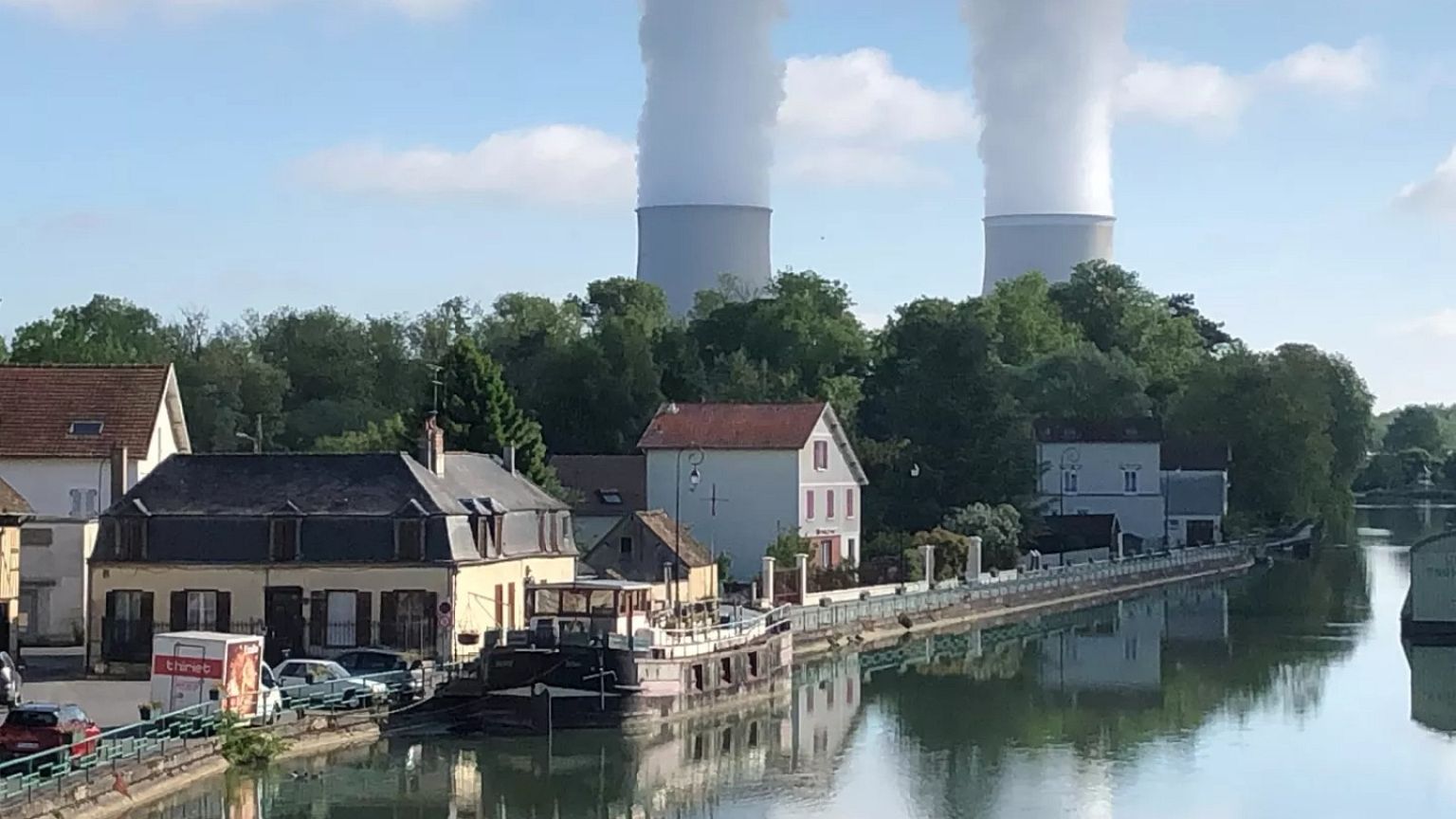
Due to a scorching heatwave which has spread across Europe in recent days, a number of nuclear power plants in Switzerland and France have been forced to either reduce activity or shut down completely as extreme temperatures have prevented sites from relying on water from local rivers.
To cool down, nuclear power plants pump water from local rivers or the sea, which they then release back into water bodies at a higher temperature.
However, Europe's ongoing heatwave means that the water pumped by nuclear sites is already very hot, impacting the ability of nuclear plants to use it to cool down. On top of this, nuclear sites run the risk of posing a dangerous threat to local biodiversity, by releasing water which is too hot into rivers and seas.
In light of the heat, Axpo - which operates the Beznau nuclear power plant in Switzerland - said it had shut down one of its reactors on Tuesday, adding that a second reactor was operating at limited capacity.
"Due to the high river water temperatures, Axpo has been increasingly reducing the output of the two reactor units at the Beznau nuclear power plant for days and reduced it to 50 per cent on Sunday," said the operator.
A man eats an ice cream during a heatwave in Rennes, 1 July, 2025AP Photo
The Beznau nuclear power plant's reactors are located directly on the River Aare, where temperatures have reached 25 degrees Celsius in recent days, leading Axpo to curtail its activities to prevent "excessive warming of the already warm water" which could strain local biodiversity.
Although Switzerland has decided to phase out nuclear power by 2033, existing plants are able to continue to operate as long as they are safe.
Meanwhile, on Monday French electricity company EDF shut down the Golfech nuclear power plant, located in the southern department of Tarn-et-Garonne, amid extreme heat warnings in the region and concerns that the local river could heat up to 28 degrees, even without the inflow of heated cooling water.
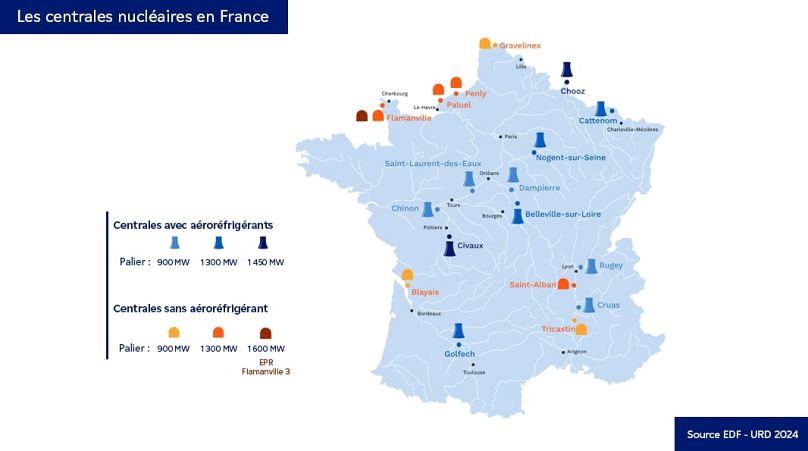
France has a total of 57 active nuclear reactors in 18 power plants. According to EDF, the country obtains around 65% of its electricity from nuclear energy, which the government considers to be environmentally friendly.
France has 18 nuclear power plants. The reactors in the south had to be shut down due to a lack of cooling water.EDF - URD 2024
Output has also been reduced at other sites, including at the Blayais nuclear power plant in western France, as well as the Bugey nuclear power plant in southern France, which could also be shut down, drawing their cooling water from the Gironde and Rhône rivers.
Although the production of nuclear power has had to be curtailed in light of extreme heat, the impact on France's energy grid remains limited, despite the fact that more electricity is being used to cool buildings and run air conditioning systems.
Speaking to broadcaster FranceInfo, French grid operator RTE ensured that "all the nuclear power sites which are running are able to cover the needs of the French population. France produces more electricity than it consumes, as it currently exports electricity to neighbouring countries."
However, experts forecast that peaks in energy consumption peaks during heatwaves will only become more frequent, as global temperatures continue to rise.
3,000 new fighters join Syrian Army’s 76th division following Aleppo academy graduation
graduation ceremony for 3,000 fighters from the 76th Division of the Syrian Arab Army / SANA
By bna Cairo BureauJuly 2, 2025
Aleppo’s Military Academy held a graduation ceremony for 3,000 fighters from the 76th Division of the Syrian Arab Army, attended by official and military dignitaries. The event highlighted the military leadership’s commitment to ongoing development and strengthening the defence institution’s role in securing stability and security, as reported by Syria's state agency SANA on July 2.
The graduates performed a military parade featuring infantry, armoured units, helicopters, drones, and airborne operations, demonstrating high levels of readiness, discipline, and skill in handling various combat scenarios and field challenges.
Speaking at the ceremony, Defence Minister Marahif Abu Qasrah said, “Today, here in Aleppo – the city of lions – this military academy has transformed from a symbol of fear and terrorism into a cradle of heroism and a factory for men. This military display embodies the 76th Division’s and the training authority’s commitment to continue preparing for a new phase of rebuilding an army worthy of Syria and its people.”
“Graduating this new batch of the Syrian Arab Army marks the start of a comprehensive development process in structure, organisation and discipline, aiming to build a highly professional and efficient army that stands as an unbreakable barrier against challenges and guarantees Syria’s security and stability.” Abu Qasrah added.
As part of efforts to consolidate security and stability, the defence minister praised the Armed Forces’ role in supporting civil peace, stating: “Today we witness a model to be emulated, and we are confident that the Ministry of Defence formations will continue their active role in achieving our national goals.”
Concluding his remarks, the minister renewed the pledge to follow the path of sacrifices made by Syrian fighters in liberating the homeland and saluted the army personnel, urging them to maintain discipline and commitment, reaffirming that “through their faith and will, we build the new Syrian army.”
At the end of the ceremony, the graduates took a military oath to remain loyal soldiers of the Syrian Arab Republic, pledging to defend its land and people, uphold stability across all regions and obey military orders.
The defence minister and the commander of the 76th Division honoured a number of outstanding officers and soldiers in recognition of their excellence during training.
Russian forces take full control of Luhansk for the first time, advance in other new regions
Putin celebrating with the four Kremlin-appointed new governors after annexing Ukraine’s regions last year, but has never fully controlled any of them until now.
/ bne IntelliNews
By bne IntelliNewsJuly 1, 2025
Russian forces have reportedly taken full control of the region of Luhansk. If confirmed it would be the first time that Russia fully controls one of the four regions that it annexed in 2023, reported Reuters, citing Russian media.
Armed Forces of Russia (AFR) have also reportedly taken a village in Ukraine’s east-central Dnipropetrovsk region, marking the first advance in that region since the war began.
The Kremlin appointed governor of the so-called Luhansk People’s Republic, Leonid Pasechnik, told Russian TV that the AFR now control “100 %” of the region, calling it fully “liberated.”
Bankova (Ukraine’s equivalent of the Kremlin) has not confirmed the claim nor has it been confirmed by the Russian Defence Ministry. Intelligence reports say Russia controlled approximately 98–99 % of Luhansk Oblast by late 2024, but small pockets—less than 1 %—remained under Ukrainian control.
If the entire region is now under Russia’s control that would be a significant blow to Ukraine. One of Putin’s stated war goals is to bring all four of the occupied regions under Russia’s direct control.
Moreover, one of the Kremlin’s key demands during the stalled ceasefire talks has been that Kyiv and the international community recognise Russia’s sovereignty over the regions, including the parts that the AFR don’t control. Giving up Ukraine’s sovereignty over any occupied land has been a red line for Ukrainian President Volodymyr Zelenskiy, who has refused to even discuss the idea until Putin agrees to an unconditional 30-day ceasefire.
As of June, Russia claims full control over Luhansk and holds significant portions of the other three occupied Ukrainian regions. It controls approximately 60–70% of Donetsk, about 70% of Zaporizhzhia, and up to 95% of Kherson. Moscow asserts administrative authority over all four regions, but Ukrainian forces continue to contest many of these areas. Independent assessments often show lower levels of Russian occupation than the Kremlin claims.
First village falls in Dnipropetrovsk
According to Russia’s RIA news agency, Russian official Vladimir Rogov claimed that troops had captured the village of Dachne, located just inside the Dnipropetrovsk region. Ukraine has yet to confirm the loss and has consistently denied that Russian forces have made significant advances in the area.
The claim follows two months of steady Russian gains in eastern Ukraine, with pro-Kremlin sources reporting that Russia has seized approximately 950 square kilometres of territory during that period. If confirmed, the move into Dnipropetrovsk would mark a new phase in Russia’s offensive beyond its previously declared territorial ambitions.
Meanwhile, in the southern Donetsk region, another area claimed by Moscow, Russian-installed authorities reported Ukrainian strikes on the regional capital, killing at least one person. The AFR has started its summer offensive that has been accompanied by a sustained devastating missile barrage that began in Kyiv at the end of May.
With reports that US President Donald Trump has officially ended weapons supplies to Ukraine – and in particular, the desperately needed Patriot air defence missiles – the mood is turning black.
“The increased intensity of Russian missile attacks on Kyiv and other Ukrainian cities is…damaging Ukrainian morale. Without a clear vision of victory — or at least of an end to the war — a sense of hopelessness risks descending over the country,” wrote Gideon Rachman in an op-ed, the Financial Times’ famous leader writer.
Rachman added that behind closed doors European leaders are becoming more sceptical and suggest Ukraine could reach a “breaking point” within six months, if it does not receive significant fresh military supplies.
“The change in mood inside the Ukrainian government is reflected in the urgency with which it is now privately calling for a ceasefire. A year or two ago, such calls would have been regarded as defeatism. Now they are made with increasing insistence in closed-door meetings between Ukrainian and western leaders.
Despite ongoing discussions from both Kyiv and Moscow about potential pathways to peace, Russia continues to report incremental battlefield progress. The Russian Defence Ministry has been announcing the capture of new villages on a near-daily basis in recent weeks.
“The change in mood inside the Ukrainian government is reflected in the urgency with which it is now privately calling for a ceasefire. A year or two ago, such calls would have been regarded as defeatism. Now they are made with increasing insistence in closed-door meetings between Ukrainian and western leaders,” wrote Rachman.
Other regions in the firing line
Separately, Russian forces are reportedly pushing into Ukraine’s northern Sumy region, attempting to establish a foothold across roughly 200 square kilometres of territory near the border. There is also talk of an assault on Odesa that has also come under heavy bombardment recently.
The Kremlin has messed around 50,000 troops near the border with Sumy in eastern Ukraine, committing elite units including airborne and naval infantry, in an effort to open a new axis of advance into Ukraine.
During the recent St Petersburg International Economic Forum (SPIEF) Putin said that the occupation of Sumy is not currently on the agenda, “but might be if we think it is necessary.”
Although Russian troops have made initial gains—seizing several northern villages such as Basivka, Novenivka, Kindrativka, and Kostiantynivka—they have not achieved any significant breakthrough in the face of fierce resistance by the Armed Forces of Ukraine (AFU).
Ukraine’s commander General Oleksandr Syrskyi said this week that the AFU has successfully halted further advances, stabilised the frontline, and pushed back incursions in key settlements north of Sumy City, Reuters reports. But in a sign to things to come as air defences fail, Sumy city endured a devastating missile strike on April 13, killing at least 32 civilians, including children, and injuring over 99, marking the deadliest attack on civilians in Ukraine since 2023
Former foreign minister Carl Bildt of Sweden and Sanna Marin of Finland visited Ukraine recently and picked up on the deteriorating mood. They wrote afterwards that “while Ukrainians will never stop resisting, without more military support, Ukraine can lose more territory. More cities might be captured.”
The Ukrainian monitoring group Deep State reported that Russian forces now control approximately 113,588 square kilometres of Ukrainian territory, reflecting a net gain of 943 square kilometres since late April, or about 20% in total.
“One well-placed official thinks that Russia’s central goal now is to capture Odesa — which Vladimir Putin regards as a historically Russian city. Without Odesa, Ukraine would lose access to its main port,” wrote Rachman.
Odesa was founded by Prince Potemkin, Catherine the Great’s lover, in the seventeenth century and is widely seen as Russian by Russians. Potemkim also first annexed the Crimea in Catherine’s name in the same campaign.