Saturday, July 05, 2025


Rhoads Plans $100M Investment to Expand Operations at Philly’s Navy Yard
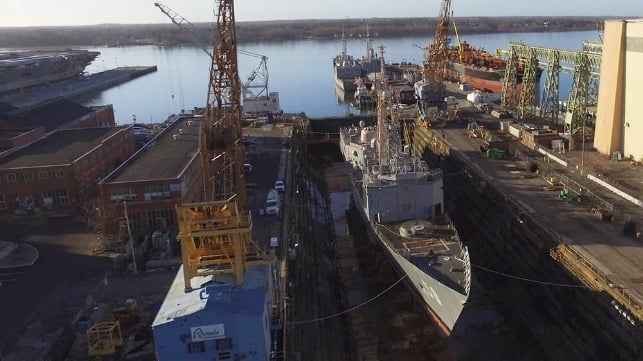
Philadelphia Navy Yard
Rhoads launched is Marine Division at Philly's Navy Yard in 2010 (Rhoads Industries)

Published Jul 4, 2025 9:16 AM by The Maritime Executive


Rhoads Industries, alongside Pennsylvania Governor Josh Shapiro, announced its plans for a nearly $100 million investment to expand manufacturing capacity at its shipyard facilities in Philadelphia at the site of the former Navy shipyard. Rhodes operates layup and recycling operations as well as a repair facility. It will grow its manufacturing operations as the U.S. Navy looks to expand and the Trump administration promises large investments into the U.S. shipbuilding and repair industry.

“Shipbuilding has always been a key part of Philadelphia’s identity and our economy, and today, I’m proud to announce that Rhoads Industries is investing $100 million and creating over 450 new jobs at the Navy Yard,” said Governor Shapiro. “With support from the Commonwealth — including a new $4 million investment and more than $17 million over the past decade — Rhoads will expand its footprint, double its capacity for the U.S. Navy’s submarine program, and strengthen our national security. The future of shipbuilding runs through Philadelphia.”

Rhoads will build a new 95,000-square-foot manufacturing facility to increase its production capacity for the U.S. Navy’s Maritime Industrial Base, supporting its submarine program. This new facility will allow for a continuous fabrication process, speeding up their manufacturing, additional outfitting, and provide direct access to a pier for barge shipping of completed products. This project will reportedly create at least 450 new jobs and retain 541 existing full-time positions.

Rhoads received a funding proposal from Pennsylvania’s Department of Community and Economic Development (DCED) that includes a $4 million Redevelopment Assistance Capital Program (RACP) grant. The company is also located in a Keystone Opportunity Zone (KOZ), which provides significant tax savings. The Commonwealth reports it has invested in Rhoads throughout the years, totalling more than $17 million in multiple grants to support the company’s expansions and facility upgrades. 

Founded and family?owned since 1896, Rhoads is a provider of large-scale industrial fabrication, along with mechanical and maintenance maritime services. In addition to field service and project skilled labor, the company has shipyard facilities and more than 300,000 square feet of heavy manufacturing space located in the Navy Yard in Philadelphia.

After the former Philadelphia Naval Yard closed in 1996, the area was redeveloped as an industrial zone by the state, and is now home to over 150 employers, including the shipyard acquired in 2024 by Hanwha Ocean and now known as Hanwha Philly Shipyard. The Korean company has separately announced that it would also like to expand its operations as it seeks government contracts in addition to the current work to build containerships for Matson and complete the MARAD training ship program.

Rhoads became a contractor performing work for the then Kvaerner Shipyard starting in 1998, and began expanding its operations at the Navy Yard in the early 2000s. It launched its maritime division in 2010, gaining the lease for Pier 5 and Dry Dock 2 (now decommissioned). It expanded with Pier 2 and recently took over Pier 6 and Dry Dock 3 at the yard.

It becomes the latest U.S. shipyard to look to expand its operations to position itself for the opportunities resulting from the Trump administration’s support of naval and commercial shipbuilding. 

One Big Beautiful Bill Contains $5 Billion for U.S. Shipbuilding
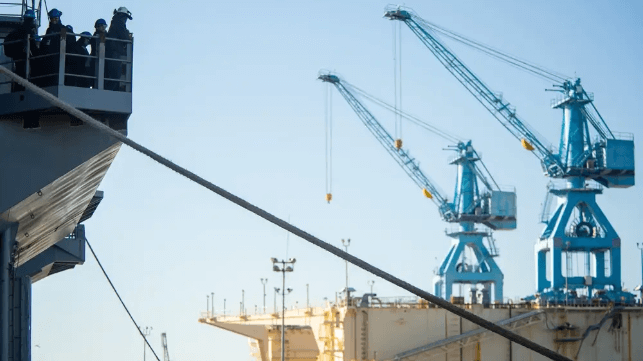
A carrier in drydock at HII Newport News Shipyard (USN file image)

Published Jul 3, 2025 4:27 PM by The Maritime Executive


On Thursday, just ahead of the White House's July 4 deadline request, the U.S. House of Representatives passed the One Big Beautiful Bill Act, a massive budget reconciliation package carefully tailored to bypass a Senate filibuster. The bill's provisions have been pored over at length by analysts and partisans, and will continue to be scrutinized for years to come - but overlooked in the popular debate, the bill also contains $5 billion for naval shipbuilding initiatives. 

The funding is tightly focused on pressing U.S. Navy needs. The service's shipbuilding programs are all behind schedule, and its repair activities are also challenged. Workforce and supply chain issues are the leading causes.

Among the larger line-items, the bill includes:

  • $250 million more for accelerated training for the defense manufacturing workforce; 
  • $750 million for supplier development in the naval shipbuilding supply chain, plus another $250 million for naval supply chain advanced manufacturing processes
  • half a billion dollars for additive manufacturing, not generally used by private sector shipbuilders; 
  • $400 million for a collaborative campus for naval shipbuilding;
  • and half a billion dollars to apply AI to naval shipbuilding, a new area of focus.

Some of the provisions might have secondary benefits for commercial shipbuilders, including:

  • half a billion dollars for advanced manufacturing in the shipbuilding industrial base; 
  • half a billion for advanced shipbuilding techniques; 
  • and half a billion for maritime industrial workforce training.

The funding is especially remarkable because of its tradeoffs: some traditional acquisitions did not get funded at all, notably the next Constellation-class frigate hull, which was zeroed-out in the Navy's FY2026 budget request and absent from the One Big Beautiful Bill. Instead of the frigate, Congress paid for new initiatives that were (until recently) somewhat controversial: $1.8 billion for the Marine Corps' long-awaited Landing Ship Medium and $2.1 billion to develop and buy the Medium Unmanned Surface Vessel (MUSV). 


Tsuneishi Buys Mitsui E&S Shipbuilding to Consolidate Japanese Shipbuilding
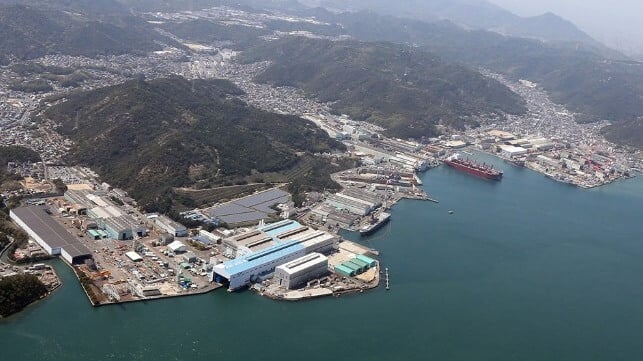
Japanese shipyard
Mitsui began exiting shipbuilding in 2021 selling its Tamano Works to MHI (Mitsui photo)

Published Jul 3, 2025 6:23 PM by The Maritime Executive


In a further move to consolidate the Japanese shipbuilding and repair businesses, Tsuneishi Shipbuilding reports it acquired its former joint venture with Mitsui E&S Shipbuilding. It is part of a broader reorganization and rebranding of all Tsuneishi’s operations as the Japanese shipbuilding sector works to respond to competition and a changing market.

Mitsui E&S Shipbuilding, which traces its origins back 110 years to 1917, had been one of Japan’s leading shipbuilders. The company’s focus had shifted to commercial ships such as dry bulk carriers and government work, including construction and repair work for auxiliary ships, such as supply ships and oceanographic survey ships for Japan’s Ministry of Defense. It had also been actively developing new technologies incorporated into autonomous underwater vehicles (AUV) and autonomous surface vehicles (ASV), before in 2021 announcing plans to exit the shipbuilding sector. 

Mitsubishi Heavy Industries took over the naval and governmental ship business of Mitsui E&S Shipbuilding Co., including the construction and repair work at the Tamano Works. Separately, Mitsui and Tsuneishi formed a joint venture for the commercial shipbuilding operations, expanding on a cooperation that had been launched in 2018. Tsuneishi owned 49 percent of the joint company, while Mitsui E&S Shipbuilding shifted to engineering services as well as its operations in machinery and IT services. Mitsui E&S’s last commercial newbuilding was delivered four years ago in July 2021.

Tsuneishi acquired the remaining ships in the joint venture and has renamed the operation Tsuneishi Solutions Tokyobay. The operation will focus on engineering services, engineering for alternative fuel and gas-related equipment, monitoring, and technical support, while Mitsui E&S will complete its transformation to focus on marine engines, port cranes, and industrial machinery.

Since entering into the alliance in October 2021, Tsuneishi highlights that the two operations have “collaborated to leverage the synergies of cost competitiveness and technological expertise. In light of the need for further integration to ensure sustainable growth and enhanced competitiveness in the future, Tsuneishi Shipbuilding has decided to proceed with the full acquisition. Moving forward, both companies will continue to maximize their respective strengths and strive to further enhance corporate value.”

Tsuneishi announced at the end of June that it was rebranding all its shipyards, which include four locations in addition to the former Mitsui yard, to a unified Tsuneishi brand. 

“These changes follow a strategic review of the capital structure within the segment and form part of broader efforts to respond to the fast-changing maritime landscape while pursuing sustainable growth,” wrote Tuneshi. Its operation includes a total of nine domestic companies in the shipbuilding segment, and it said the rebranding was being undertaken to strengthen unity and cohesion across the group.

Faced with stiff competition from South Korea and now China, Japan has slipped to a distant third in shipbuilding output. Once having as much as a 50 percent market share, Japan has seen its shipbuilding business decline by 30 percent in the past five years, and today it has under 10 percent of the total market.

The country’s largest builder, Imabari Shipbuilding, last week announced that it would consolidate JMU (Japan Marine United) to become a fully-controlled subsidiary. They called it a strategic step to realize further economies of scale in design and material costs. They pointed to the potential cost savings for purchases, including steel and engines. Combined, the operation will be the fourth-largest shipbuilder based on current order volume.

Japan's conservative Liberal Democratic Party recently put forward a new proposal to address the rebuilding of the Japanese shipbuilding industry. It is calling for a $7 billion shipyard investment used to modernize the yards and adopt technologies such as automation and robots. Japan is also reported to have approached the Trump administration presenting its capabilities as a tool to reduce China’s dominance in shipbuilding and expand U.S. capacity.


MSC Invests in Grand Bahama Shipyard with Carnival and Royal Caribbean
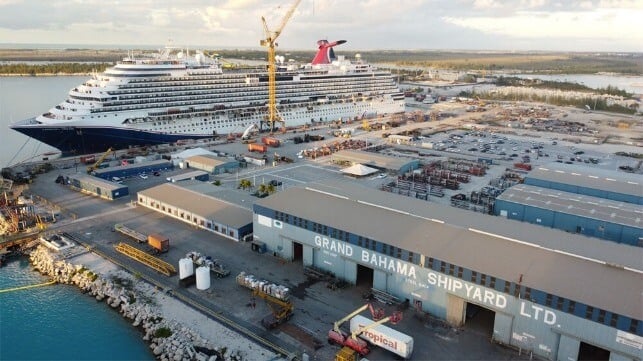
Brand Bahama Shipyard
Grand Bahama Shipyard is a base for cruise ship repairs and is expanding with two of the largest dry docks in the Western Hemisphere (GBS)

Published Jul 3, 2025 8:54 PM by The Maritime Executive


MSC Cruises is set to become a third investor in the Grand Bahama Shipyard as the yard prepares to relaunch full services in 2026 with two new dry docks, which will be among the largest in the Western Hemisphere. It comes as the shipping giant has also expressed interest in a European shipbuilder and looks to continue to grow its cruise operations.

Terms of the investment were not announced, but the Minister for Grand Bahama, Ginger Moxey, announced the deal on July 1 with MSC becoming a shareholder alongside Carnival Corporation and Royal Caribbean Group. The two cruise corporations invested in the company in 2000 to start the shipyard as a near-shore repair facility for the cruise industry. They each own 40 percent of the shares with the Bahamas through the Ports Group holding the remaining 20 percent.

The investment is being called a major milestone for the Bahamas, which has been anxious to see the yard restored to full operations for its economic contribution to the Bahamas. In 2020, Carnival and Royal Caribbean agreed to an investment that is now reported at $665 million to transform the yard, including building two very large dry docks in China. The yard has been limited in its capacity since its large dry dock broke in 2019 when it was attempting a partial lift of the 225,000 gross ton 1,120-foot-long Oasis of the Seas. The dry dock was sold, and a shortened version operates in Texas, but it left Grand Bahama with limited lift capacity.

Currently, the largest cruise ships have been forced to travel to Europe for their overhauls, maintenance, and regulatory inspections. The cruise corporations have scrambled to find capacity and adjust schedules. Recently, Carnival Cruise Line was forced to pull one of its ships from a yard in Spain due to a strike, which caused it to delay the vessel’s return and cancel a cruise. The cruise line is reportedly seeking compensation from the shipyard after the cruise ship was moved to a dry dock in France.

The first of Grand Bahama’s new docks, named East End, is 357 meters (1,171 feet) long and can lift 93,500 tons. It will have four state-of-the-art cranes and is due to reach the Bahamas by November. It will be ready for operations in January 2026 and will be joined by a second, larger dry dock, to be named Lucayan. The yard is also extending its pier, and once both dry docks are commissioned, Grand Bahama will have the capability to lift the largest cruise ships currently in service.
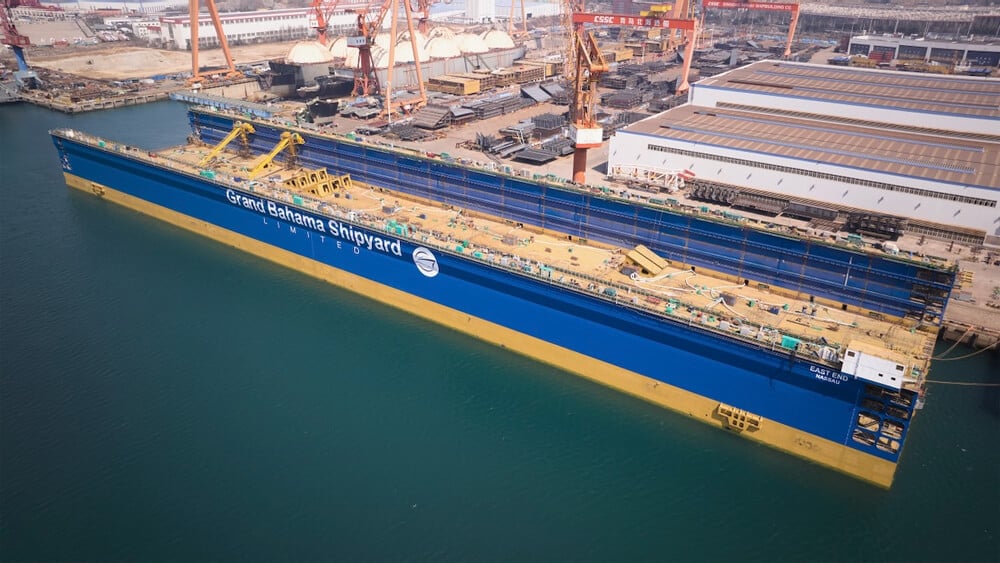
 

New East End dry dock completed in China and preparing for shipment to the Bahamas (GBS)


When the yard is at full capacity, it has performed 85 to 100 drydockings a year. It also expanded its operations to manage larger overhauls and refurbishment projects with its wet dock and storage capabilities. With the cruise industry continuing its rapid growth, they expect to surpass the yard’s previous performance. During the off-season for cruises, the yard also performs work for the commercial shipping industry as well as emergency repairs.

Leading the relaunch and expansion of the shipyard will be Grand Bahama Shipyard’s new CEO, retired Rear Admiral from the Royal Canadian Navy, Chris Earl. His appointment was announced in May as David Skentelbery retired after being CEO of the yard for the past eight years. In addition to 35 years with the Royal Canadian Navy, Earl had led all Naval ship and submarine repair programs, commercial ship repair, and shipbuilding in Vancouver for Seaspan Shipyard.

MSC Shipping Group, according to media reports, has also recently proposed taking over the operations of Romania’s Mangalia Shipyard. The government is looking for a new partner after the yard lapsed into bankruptcy, and an agreement was terminated with Damen Group. MSC says it is looking to diversify shipbuilding capabilities away from Asia and could also use the yard for repairs. Longer-term, it has suggested it could look to build cruise ships, ropax, and tugboats in Romania.

 

HMM Plans Expansion of Algeciras Terminal as Transshipment Hub

Spain Algeciras
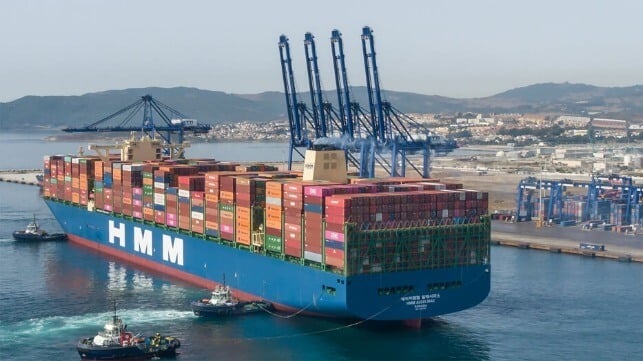
HMM Algeciras' docking at Spain's Algeciras Terminal (HMM)

Published Jul 2, 2025 4:38 PM by The Maritime Executive


HMM, citing the growing influence of investment companies and carriers in terminals, reports it is looking to expand its role, starting with Spain’s Algeciras. It cites the port’s role as a transshipment hub, which has increased as vessels diverted away from the Red Sea in 2024 and other European ports continue to experience congestion.

HMM acquired the Algeciras Container Terminal (TTIA) in 2017 and owned 100 percent of the operation until selling a half stake to CMA CGM in 2020. At the time, it cited the value of the strategic alliance with the French carrier.

“The Algeciras terminal is a major transshipment hub in Southern Europe and a gateway for Spain’s imports and exports and will play a major role in generating terminal revenue as well as enhancing competitiveness on European routes,” HMM said announcing its development proposal. It confirmed that it plans to “actively invest in and develop overseas terminals in the future.”

HMM submitted a letter of intent to the Port Authority of Algeciras on June 30 promoting the first phase of a planned expansion of the terminal. The plan calls for investing a total of €150 million ($177 million), with HMM providing €35 million ($41 million). The remaining amount will be contributed by CMA CGM and external borrowings.

TTIA is a modern semi-automated terminal with a total area of 300,000 square meters and an annual handling capacity of 1.6 million TEU. The Phase 1 expansion calls for increasing the total area to 460,000 square meters and an annual handling capacity of 2.1 million TEU by 2028. After the Phase 2 development is completed, TTIA will be able to handle 2.8 million TEU per year. The plan also calls for extending the terminal operation period by 22 years from 2043 to 2065.

HMM has outlined terminal investments as part of its growth strategy. Company executives told the Korean media that they are considering additional investments to secure space around the world. According to the media reports, the company is exploring investments in ports ranging from Los Angeles and Long Beach to the Port of New York and New Jersey. It also cites the planned bidding for the new terminal in Santos, Brazil, as an opportunity.

The carrier has announced a strategy to expand its core business in containers to a capacity of 1.5 million TEU with 130 vessels by 2030. Currently, it has a capacity of approximately 938,000 TEU with 86 vessels. HMM’s executives have highlighted the need to respond to the reorganization of global shipping alliances in the container business and to strengthen the competitiveness of core businesses. The company is taking an increased role in the new Premier Alliance with Ocean Network Express (ONE) and Yang Ming after Hapag-Lloyd left the former The Alliance agreement.

MARAD Receives Proposal for Floating Offshore LNG Export Terminal off Texas

floating LNG terminal
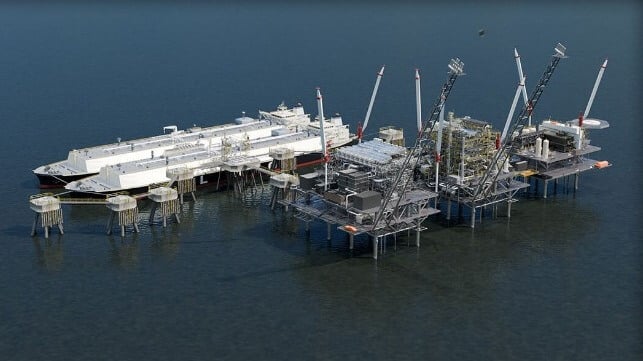
Rendering of ST LNG's proposed floating terminal

Published Jul 4, 2025 3:03 PM by The Maritime Executive


With the rush to expand the U.S. LNG export business and strong support from the Trump administration for the energy sector, a developer has filed a novel proposal with the Maritime Administration (MARAD) and the U.S. Coast Guard. In a notice to be published on Monday, July 7, in the Federal Register, MARAD and USCG report that the application is sufficiently complete to start processing the proposal from the company called ST LNG for the ST LNG Deepwater Port Development Project.

The application was filed on June 9 and seeks to take advantage of the U.S.’s Deepwater Port Act of 1974. The act provides for a public hearing to be conducted within 240 days after publication of the notice and a decision on the application not later than 90 days after the final public hearing.

The new company is being led by an entrepreneur and businessman, Sharad Tak, who has built a range of successful companies and is CEO of ST LNG. Bringing experience in the energy sector is Alap Shah, who is president of ST LNG and previously was Managing Director of FLNG Development at New Fortress Energy. ST reports that Alap conceptualized and executed the FAST LNG program involving multiple liquefaction trains on various marine infrastructures from 2021-2024. Before this project, he was involved in the Golar Hilli and Golar Gimi FLNG projects through Black & Veatch.

The new terminal would be located approximately 10.4 nautical miles offshore Matagorda, Texas. When fully realized, the application reports that the project would involve four 2.1 million tonnes per annum (MTPA) liquefaction systems installed in the Brazos Outer Continental Shelf Lease Block 476, in approximately 65 to 72 feet of water. The proposed ST LNG deepwater port would export LNG up to 8.4 MTPA. The LNG would be loaded onto standard LNG carriers with cargo capacities between 125,000 and 180,000 cubic meters.

The proposed ST LNG deepwater port would consist of fixed and floating components. These components would include a 5.5-mile, 30-inch pipeline lateral with a connection hub, four feeder lines to the connection hub, four gas treatment platforms, four liquefaction platforms, four accommodation and utility platforms, four LNG transfer platforms, thirty-six mooring dolphins, four converted LNG carriers, and three tugs.

The project would be completed in four phases. Phase 1 construction would include three large platforms (a gas treatment platform, an LNG liquefaction platform, and an accommodations and utility platform), one LNG transfer platform, nine mooring dolphins, one floating storage unit (FSU), and interconnected lateral pipelines. Each phase would produce 2.1 MTPA of LNG.

The company highlights that the project would largely be built in the United States, creating good-paying jobs, and once in service, would offer a cost-competitive approach.

While this proposal uses the floating approach, other companies are also seeking to leverage the Trump administration's support. Applications and proposals are appearing for new and expanded LNG terminals along the Gulf Coast as demand for LNG energy is expected to grow rapidly over the remainder of this decade.


Dockworkers Killed and Crew Injured as Russian Missile Strikes Odesa Port

Odesa Ukraine
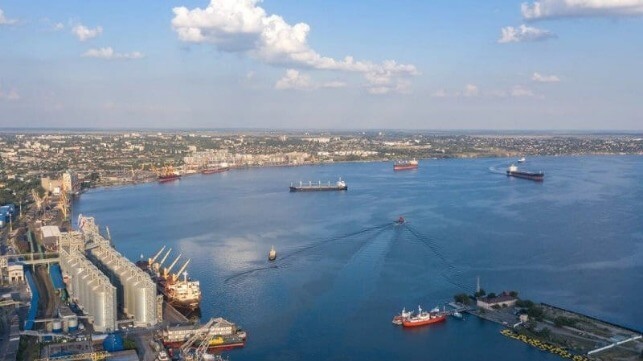
Russian missile damaged port infrastrucuture and killed and injured workers in the Odesa region (file photo from before the war)

Published Jul 3, 2025 3:54 PM by The Maritime Executive


Ukrainian officials are speaking out calling today’s, July 3, missile strike in the Odesa port region a deliberate attack on civilian infrastructure and part of a Russian campaign against Ukraine’s economy and agriculture. Two dockworkers were killed and six others, including two Syrian crewmembers from a cargo ship in the port were injured.

An Iskander missile hit the port area on Thursday afternoon local time. According to the report, an unidentified cargo ship registered in São Tomé and Príncipe was on dock unloading metal. A longshore worker and a truck driver were killed in the attack, and six others were injured. At least one of the injured was a driver in the port, and the two crewmembers from the ship.

Other missile strikes were reported in parts of the city. Officials posted pictures of fires in a high-rise apartment building reported to have been struck in the early morning hours.

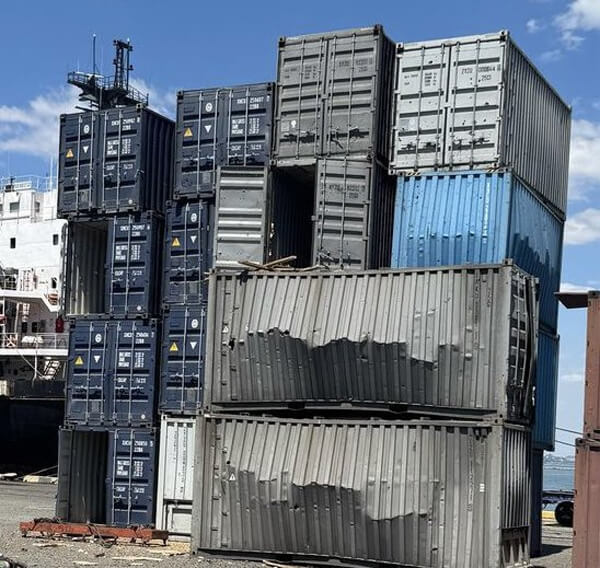
They also reported damage to port infrastructure. They said gantry cranes, equipment, and warehouses were damaged. Pictures posted online shows damaged containers and a truck.


Containers damaged in the Port of Odesa (Andrii Sybiha on Telegram)


“Russia has been shelling our ports for the fourth year in a row. It is hitting the infrastructure that connects Ukraine with the world,” said Oleksiy Kuleba, Vice Prime Minister for the Reconstruction of Ukraine, in a posting on social media. “This attack is yet another example of Russia’s deliberate attempt to destroy our transportation hubs, our export capabilities, and the lives of our civilians. Free and safe navigation must be the norm, not the exception.”

Kuleba contended in October 2024 that Russia attacked Ukraine’s port infrastructure 60 times in three months, damaging 300 port facilities, 177 vehicles, and 22 civilian vessels. He said 79 employees of ports, logistics companies, and ship crews were killed.

Ukraine’s Minister of Foreign Affairs, Andrii Sybiha, also spoke out today, July 3, calling for an international response. He noted that they had recently toured Germany’s Foreign Minister, Johann Wadephul, through Odesa and showed him the damage in the city and port region.  He asserted that Moscow has only escalated the terror and rejected all attempts to achieve a ceasefire and advance peace. He said further international pressure is needed without delay.


Ukraine Now Has a Drone Boat That Launches Bomber Drones

Ukraine MOD bomb drop
Courtesy Ukrainian MOD

Published Jul 3, 2025 9:24 PM by The Maritime Executive


Ukraine's drone boats have set another operational milestone: they can now be used to launch bomber drones, the heavyweight quadcopters that Ukrainian forces use to drop mortar shells and other explosives. 

In a statement, Ukraine's defense ministry said that its forces carried out a long-distance mission to destroy a Nebo-M radar system in Russian-occupied Crimea. The Nebo-M is a high-spec multiband radar that has anti-stealth and hypersonic detection capabilities, and is accompanied by one to three giant truck-mounted radar arrays. They are a priority target for Ukraine because they are capable of detecting and tracking a wide array of incoming munitions. The radar command posts are also capable of interfacing with the S-300/S-400 missile systems to provide guidance. 

Overnight July 1-2, a Ukrainian drone boat approached the coast of Crimea, carrying a heavy drone bomber on deck. It launched the drone, and the boat's satellite uplink provided a comms relay for the drone pilot to stay in contact with the UAV as it flew over the coastline. The drone pilot located the target at a parking depot and destroyed three truck-mounted components - an RLM-M VHF radar, an RLM-D AESA L-band radar, and a command post truck. 


This capability adds to Ukraine's fast-developing portfolio of unmanned strike drone systems. With American assistance and satellite comms technology, Ukraine developed a series of increasingly sophisticated bomb boats, then used them (along with antiship missiles) to drive the Russian Navy out of the western Black Sea. In the process, it sank or damaged about one third of the Black Sea Fleet's vessels, using swarm tactics to overwhelm the target's defenses and hit vulnerable areas. 


The most mature of these systems, the Magura V5, has been adapted to perform additional roles. A missile-equipped Magura shot down at least one helicopter in the Black Sea in December, the first antiaircraft strike by an unmanned boat ever recorded in combat. In May, another Magura targeted and shot down a Russian Su-30 fighter, the first time that a fast jet had ever been shot down by an unmanned boat. 

The drone wars go both ways. Russia has used its larger Orion unmanned combat aerial vehicle (UCAV) to find and destroy Ukraine's drone boats under way, before they can reach target. 


Indonesia Searches for Missing and Dead After Interisland Ferry Sinks

Indonesia ferry
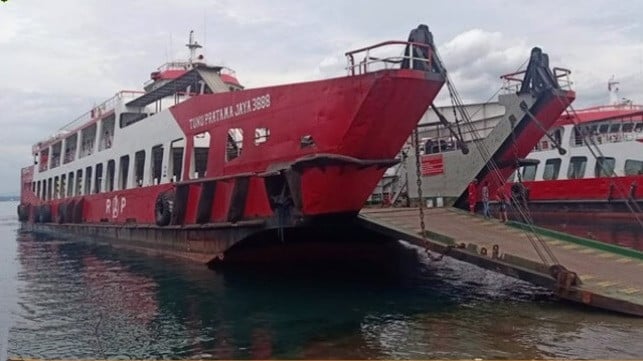
Interisland ferry sink off Bali with at least six dead and 30 ore more missing with 29 survivors at least count (Basarnas)

Published Jul 3, 2025 2:29 PM by The Maritime Executive


Indonesian maritime services and the police are leading a search operation after an interisland ferry sank as it was approaching the resort island of Bali around midnight on Thursday, July 3. Air and sea teams were deployed, but the efforts were being hampered by darkness, high seas, and expected strong currents and winds.

Exact numbers have not been confirmed in the still evolving situation, but in a briefing late on Thursday, the authorities confirmed that six bodies have been recovered and 29 survivors. As many as 30 people are still believed to be unaccounted for, with the police fearing that some went down with the vessel.

The ferry named KMP Tunu Pratama Jaya (734 GT) was approaching Bali when witnesses say it appeared to be tilting. Media reports said an officer at the port attempted to contact the ferry but could not reach it by radio. Another of the company’s vessels was also attempting to contact the ferry.

Survivors told the media that the ferry appeared to be taking on water in its engine room. It began listing and very quickly went down. Survivors reported clinging to life jackets and other debris.

The authorities said that a preliminary manifest shows there were 53 passengers and 12 crew aboard. The vessel was also carrying a total of 22 vehicles, including 14 trucks. Many of the people who were pulled from the water were reported to be unconscious and were being rushed to a hospital. A temporary medical facility was also set up on shore to treat the survivors.

Authorities are reporting that a SAR helicopter and a police helicopter were searching with at least 15 boats. They have also deployed a thermal drone in the search. Local fishermen were also asked to be on the lookout as well as individuals on the shoreline.

They were encountering strong waves up to 6.5 feet, which were expected to increase to over eight feet. The authorities said Friday’s operation would require larger boats due to the weather conditions.

Indonesia has a large fleet of ferries traveling among its more than 17,000 islands. Many are old and poorly maintained, leading to a poor safety record. The Tuna Pratama Jaya was built in 2010 and registered in Indonesia. It was 207 feet (63 meters) in length. It is resting on the bottom of the bay, fully submerged. KMP Tunu Pratama Jaya had sailed from the neighboring Ketapang Port and was crossing the Bali Strait to Gilimanuk Port. The distance is reported to be just over three miles between the two port


Singapore Prosecutes Master and Crew of Chemical Tanker for Death of Sailor

Singapore
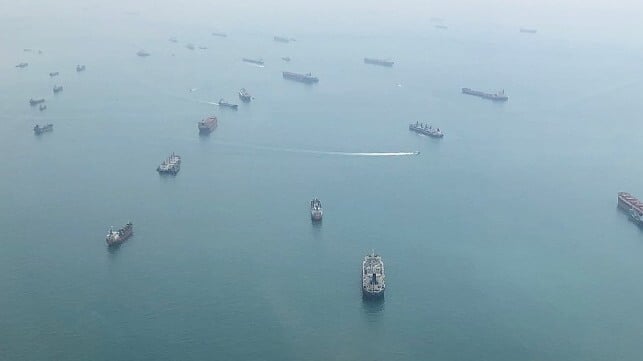
Crewmember died after entering a tank that had not received the proper safety checks (Singapore anchorage)

Published Jul 3, 2025 4:37 PM by The Maritime Executive


The Public Prosecutor in Singapore is proceeding with a case against the master, chief officer, and the pump master of a Vietnamese chemical tanker after a crewmember died after entering a tank that had not been properly vented and inspected. The Straits Times newspaper reports that the pump master pleaded guilty on July 2 to one count of acts endangering the life of his fellow crewmember.

The charges stem from an incident aboard the chemical tanker GT Win (15,000 dwt), which had arrived in Singapore on May 11, 2024, transporting a cargo of naphtha. The vessel, which is registered in Vietnam, offloaded its cargo and moved into the anchorage.

While it was in the anchorage, the chief officer, Dao Tien Manh, ordered three crewmembers to clean the emptied tanks, although according to prosecutors, he had failed to check the oxygen levels and the necessary safety checks. Further, he instructed the pump master, Le Thanh Dung, to make modifications to the mask of the breathing apparatus. He connected the mask’s hose to an air bottle on deck, which prosecutors called “impractical,” noting space constraints at a staircase, according to the Straits Times’ report.

One of the seafarers, Hoang Van Chau, became unconscious while working in one of the tanks. The crew attempted CPR and requested emergency medical assistance from shore. Chau was pronounced deceased at a local hospital, dying from exposure to volatile hydrocarbons, the newspaper reports.

The pump master told investigators that Chau was found unconscious inside tank 6 instead of tank 4, which had not been declared gas-free before he entered the tank. Dung later admitted to the false information in two written statements provided to investigators.

He further told investigators that he showed the modified mask to the vessel’s master, Nguyen Duc Nghi. He contends the master threw the mask into the sea, reports the Straits Times, and told the crew to lie about it to the police. The master reportedly said that they needed to do this so that Chau’s family would get the insurance money.

Dung, the pump master, was sentenced to three months and two weeks in jail after his guilty plea. The cases against the master and chief officer for their role in the death are still pending in the Singapore courts.


“Get Out of Here,” Yells French Mayor as Royal Caribbean Ignores Port Ban

mayor yelling at cruise ship
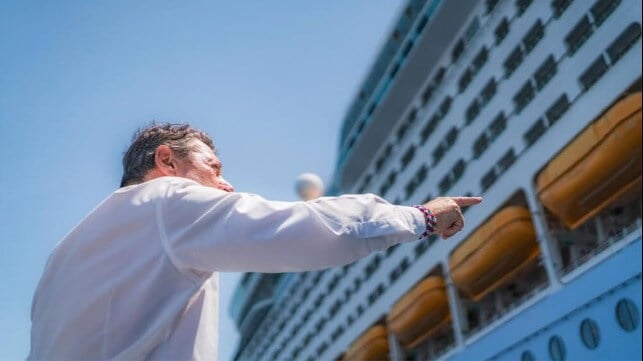
Mayor Estrosi angrily yelling at the ship for ignoring the ban saying he was making Royal Caribbean an example (Estrosi on X)

Published Jul 4, 2025 1:10 PM by The Maritime Executive


The outspoken Mayor of Nice and President of the region took to the water to personally confront the master and an officer of Royal Caribbean International’s Voyager of the Seas for breaking the region’s new ban on large cruise ships. Aboard a police boat with a television news crew, Mayor Christian Estrosi was denied boarding and ignored by the officers, prompting him to yell “Get lost,” “Get out of here,” and “You are nobody,” at the ship.

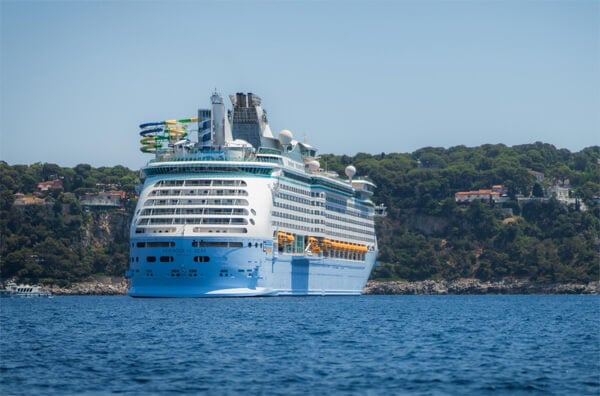
Royal Caribbean International’s massive 137,276 gross ton cruise ship, Voyager of the Seas, once one of the largest in the world with capacity for 3,600 passengers, anchored off Villefranche at 0630 on July 3. Port officials highlighted that the ship was on a scheduled and approved port call, but for the mayor, it was a test of the ban imposed on large cruise ships. 

Effective July 1, Villefranche and Nice instituted a ban prohibiting cruise ships with a capacity of over 2,500 passengers from disembarking in the bay. Estrosi highlights that the Voyager of the Seas arrived with 3,114 passengers aboard (plus approximately 1,200 crew according to Royal Caribbean’s fact sheet). Villefrance-sur-Mer says it is restricting cruise ships to one a day and a maximum of 65 port calls a year, while Nice imposed a limit on ships with more than 450 passengers.

Estrosi traveled to the anchored cruise ship with a formal letter notifying the master of the violation. The letter demands that passengers not disembark and that the cruise ship “organize, without delay,” its departure from territorial waters. 


The video shows the angry mayor being ignored by an officer on the landing platform, and motioned to go away. Estrosi said he asked for permission to deliver the letter to the master of the cruise ship, but was denied boarding, and the officer on the gangway refused to take the notification. Estrosi can be heard yelling, “Where is the captain?” He later said the ship had “flouted the rules,” refused to listen, and called the ship and its crew “arrogant.”

Returning to shore, Estrosi posted the confrontation on social media and talked to local news reporters. He said he was contacting officials from the prefects and the Minister for Ecological Transition, asking them to take action. 

“I will not give up. I call on all relevant authorities to take the utmost firmness on this issue. I intend to strictly enforce the decision,” he said. The ban Estrosi contends is to fight maritime pollution, preserve air quality, and protect residents’ living conditions.


Voyager of the Seas arrived with over 3,100 passengers despite the ban which caps cruise ships at 2,500 passengers (Estrosi on X)


Estrosi, in January 2025, had called for a ban on cruise ships and signed an order limiting the ships to under 690 feet (190 meters) in length and less than 900 passengers. He later compromised on the 2,500-passenger capacity limit while saying mega ships would have to go to Cannes or Marseille. Cannes has now adopted a rule limiting cruise ships to 1,000 passengers starting in January 2026.

The trade group Cruise Lines International Association (CLIA) is calling for the involvement of the French federal government. It described the “apparent illegality” of Mayor Estrosi’s behavior and called it a contradiction of its Sustainable Cruises Charter for the Mediterranean, signed by member cruise lines in June.

Voyager of the Seas departed Villefranche as scheduled on Thursday evening. The ship continued its cruise and is now in Ajaccio, France, on the island of Corsica. The published itineraries for the ship show additional port calls scheduled for Nice on September 20 and September 25, as well as other trips visiting Cannes or Marseille. 


Uni-Tanker’s Financial Liability Limited in 2022 Anchor Dragging Incident

product tanker
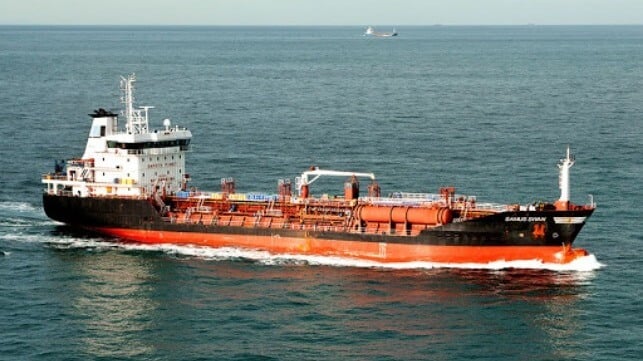
Court limits Uni-Tankers' financial responsibility for a 2022 anchor dragging incident which damaged a pwoer cable (Uni-Tankers)

Published Jul 4, 2025 11:45 AM by The Maritime Executive


A Danish court has found that although the master of a tanker acted with negligence in an anchor-dragging incident that severed a subsea power cable, the shipping company’s liability is limited. The case, which dates to February 2022, comes as the issue of anchor dragging and intent and awareness of the situation has been raised after similar incidents in the Baltic that are under legal review.

This case stems from February 26, 2022, when the island of Bornholm was plunged into darkness with Swedish energy company Energinet quickly determining that one of its undersea power cables had been severely damaged. Power was restored within a few hours with a reserve generation station on the island while it would take over a month to repair the cable.

The product tanker Samus Swan was quickly identified as the likely cause of the power failure. Tracking showed the 5,700 dwt vessel, which is registered in Denmark, had been in the channel offshore but initially denied responsibility. Danish shipping company Uni-Tankers, which operates the vessel, later admitted responsibility but said it was an accident due in part to heavy weather.

Energinet sued in 2023 reporting that it had cost the company nearly $8 million to repair the cable. The process took till March 2022, with the company reporting more than 2.5 miles of cable had to be replaced.

The judges on Denmark’s Maritime and Commercial Court issued a ruling on July 4 finding that while they agreed the captain showed negligence, they do not believe it rose to the level of gross negligence because there was no knowledge of the likelihood of damage to the cable. Media reports are citing details from the verdict that say the crew did not recognize that the anchor had dropped. The report says that when the vessel started to lose speed, the captain focused on the engines. Two of the experts on the panel believed the captain’s behavior was negligent, while a third said it was gross negligence. 

The court’s decision permits Uni-Tanker to limit the level of liability to a maximum of approximately $4.3 million (DKK 27.2 million). Energinet had been suing for approximately $6 million (DKK 38 million).

The power company released a statement saying it was saddened by the decision. It is reviewing the verdict and by law, has the right to appeal to the High Court.

The decision was released the same day another master was brought into court on similar charges. Reuters reports the Chinese master of the containership NewNew Polar Bear made his first appearance in a Hong Kong Court after being charged by the Chinese maritime authority with having caused “criminal damage” after the vessel was determined to have dragged its anchor across a natural gas pipeline and communication cables in the Baltic. Again, at issue is the intent or if it was reckless behavior that caused the damage.

Swedish prosecutors in February 2025 released a Navibulgar vessel finding that it was an accidental release of the anchor. They said the crew was unaware of the dragging incident and determined it was poor seamanship and damaged equipment that caused the incident.

Finish authorities have been investigating the case of the NewNew Polar Bear and others in the Baltic but have yet to reach a decision if they will file charges.  The utility companies Fingrid and Elering initially detained the shadow fleet tanker Eagle S in the most recent incident but released the vessel while seeking compensation in the courts. Finish prosecutors are said to be reviewing the details of the Eagle S case while the captain and the first and second officers of the Eagle S remain under suspicion and have been ordered not to leave Finland. A decision to prosecute is expected by September.


Video: Fire Breaks Out on Controversial Tanker at Turkish Scrapyard

fire at Turkish scrapyard
Fire aboard the partially dismantled FSO tanker (Turkish TV)

Published Jul 4, 2025 5:16 PM by The Maritime Executive


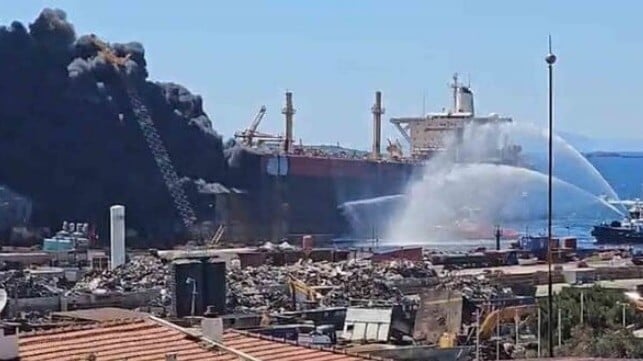
A supertanker, which for many years had been used as a storage platform off Libya, is once again causing controversy after a fire broke out aboard the vessel. The tanker known as Sloug (251,500 dwt) is at a Turkish yard being dismantled.

A fire call was issued around 1100 on July 3 at the Simsekler yard in the Aliaga region of Izmir, Turkey. Reports indicate the partially dismantled tanker was evacuated without injury, but due to concerns, other parts of the yard were also evacuated as the black smoke billowed from the hulk. 

The local fire department responded with units from land and six fireboats were also brought in for an effort to contain the fire and cool the hull. Reports indicate aerial firefighting was not being permitted for fear of explosions from the tanker. The fire continued to burn through the night with reports suggesting it could take days to fully control the inferno.

It is the latest in a series of controversies around the tanker, which was built in Italy in 1973. It was in commercial service for 16 years, but in 1989 converted for floating storage off Libya. It continued as the FSO Sloug before finally being decommissioned in 2017. It was said that the vessel, which is 349 meters (1,145 feet) in length, had become unusable, with some reports suggesting it was structurally compromised.


Turkish interests reportedly acquired the vessel for dismantling, but before they could retrieve it, it arrived in Egypt. There, it was met with environmental protests and forced to leave the country. It finally arrived in Turkey in February 2023, but additional protests followed. 

Environmentalists claimed the ship had been used to store waste, and they said there was as much as 6,000 tons of chemical waste still aboard. The recyclers responded by saying that it was not correct that it was an oil storage unit. Papers were released purporting to come from the former owner, who claimed the tanks had not been vented, and there could be a buildup of dangerous vapors. They estimated there were 50 tons of residual oil still on the vessel.

Turkey’s Ministry of Environment responded to parliamentary questions saying it had inspected the vessel. It contended that there was no large quantity of hazardous material aboard other than the essential parts.


Pictures show that the forward section of the vessel has already been removed, and large portions appear opened. The stern section is still largely intact. However, the concerns over possible residuals aboard and dangerous vapors were limiting the firefighting efforts to ensure the crews remained safe and away from any possible explosions.

A union group issued a statement demanding an investigation. It said dismantling had been permitted to start earlier this year after it was “supposedly cleaned out.” They are demanding that all work remain stopped at the yard until the environment is safe.