Saturday, July 12, 2025


By 

The US President Donald Trump has created mayhem by his unconventional decisions and launching a massive tariff war, thereby disrupting the world trading system. There are serious questions if such an approach and policy shall help him in his Make American Great Again (MAGA) initiative. In all probability, contrary would be the case.


Asia has emerged a major target of Trump’s tariff as he sent letters to 14 countries in Asia, including US allies, informing them higher import tariffs will come into effect on 1 August unless they reach a deal with the US. Key US allies Japan and South Korea would be hit with 25 per cent tariffs. Other countries including Indonesia, Bangladesh, Thailand, South Africa and Malaysia were slapped duties from 25 per cent to 40 per cent. 

While announcing levies on the 14 countries, Trump hinted for additional negotiations, while at the same time warning that any reprisal steps would be met with a like-for-like response. Interestingly, Singapore was not among the 14 countries to which Trump sent letters. Currently Singapore is subject to the baseline tariff rate of 10 per cent. In May 2025, the US offered to discuss concessions for Singapore on pharmaceutical exports, which make up 10 per cent of the country’s exports to the US. Pharmaceutical goods are currently exempt from the baseline tariff rate on imports to the US. Trump has hinted to review this too. 

Trump’s tariff war with the Asian countries is going to hit the domestic consumers as many items imported from Asia shall either vanish from the shelves or become prohibitively expensive. There is a growing Asian-American population. This segment of the US population is a ready-made customer base for Asian grocery. And, this is growing but would now receive a setback. Ethnic grocery stores and supermarkets in the US generated around $ 55 billion in revenue in 2024. Trump’s tariff threat now threatens to stem their growth. In particular, smaller players would be hit hard. There shall be a price escalation on most of the products sourced from Asia once tariffs kick in. The impact would be direct on the consumers. On Trump’s tariff threat, the Asian community has been stocking up on Asian goods buying rice, cereals, soya sauce etc. The question that arises is: how long such stocks shall last? 

Impact of Trump’s tariff threat on Vietnam                

During the recent BRIC summit in Brazil, Vietnamese Prime Minister Pham Ming Chinh and China’s Premier Li Qiang agreed to boost trade and investment ties between the two countries. Both Vietnam and China are communist countries with similar economic models. The initiative between the two prime ministers was triggered by Trump’s threats to BRICS grouping with an additional 10 per cent tariff if they adopt “anti-American” policies.  

Separately, Vietnam has struck a deal with the US, including lower-than-promised 20 per cent levies on Vietnamese goods. But trans-shipments from third countries through Vietnam will still face a 40 per cent levy as part of the trade deal. Details on the trans-shipment tariffs are yet to be made public, but analysts believe the clause is primarily aimed at components and materials originating from China and then labelled “Made in Vietnam” to skirt US tariffs.


As regards India, Trump has said a mini trade deal is expected to be signed soon. That would be an interim one. In April, Trump announced a 26 per cent retaliatory tariff on Indian goods before pausing implementation pending negotiation. If the deal goes through, lower levies will put New Delhi in an advantageous position as manufacturing could move away from nearby countries with high tariffs like Cambodia, Indonesia and Bangladesh, and into India. Though New Delhi and Washington have been pushing to finalise the deal, disagreements over dairy and agriculture are sticking points. 

The agricultural sector employs half of India’s workforce and contributes to about 18 per cent of the country’s GDP. There are fears that if American farm produce starts flooding the Indian market, vulnerable local farming businesses may perish.

Trump said on 8 July that the US would impose 25 per cent tariffs on Tunisia, Malaysia and Kazakhastan, 30 per cent on South Africa, Bosnia and Herzegovina, 32 per cent on Indonesia, 35 per cent on Serbia and Bangladesh, 36 per cent on Cambodia and Thailand and 40 per cent on Laos and Myanmar. The higher tariffs take effect on August 1and notably will not combine with previously announced sector tariffs such as those on automobiles, steel and aluminium.     

Most countries have been under pressure to conclude deals with the US after Trump in April 1 unleashed a global trade war that has roiled financial markets and sent policymakers scrambling to protect their economies. The temporary reprieve was later extended till August 1, leaving room for negotiations. At times, Trump has remained inconsistent and seems firm on his decision to increase tariffs. He has kept much of the world guessing on the outcome of months of talks with countries hoping to avoid the hefty tariff hikes he has threatened.  

Bangladesh that was embroiled in domestic political turmoil in mid-2024 rushed a team to Washington to have trade talks with Washington. The US is the main export market for Bangladesh’s readymade garments industry, which accounts for more than 80 per cent of its export earnings and employs 4 million people. No wonder, the president of Bangladesh Garment Manufacturers and Exporters Association Mahmud Hasan Khan expressed shock and fears that the increased tariffs would hurt the industry badly.  

Bangladesh has emerged as the world’s second-largest garment manufacturer. The 35 per cent tariffs on Bangladesh would badly hit the country’s textile sector. US companies that source products from Bangladesh range from Levi Strauss to VF Corp. whose brands include Vans, Timberland and The North Face. The office of the United States Trade Representative sent a second draft document for review. The new tariff is more than the 16 per cent already placed on cotton products. It is however, a two percentage point dip from the initial 37 per cent Trump had previously announced in April. The industry has already been hit hard by a student-led revolution that toppled the government in 2024.  

Similarly, South African President Cyril Ramaphosa said the 30 per cent US tariff rate was unjustified, given that 77 per cent of US goods enter South Africa with no tariffs. China has until August 12 to reach a deal with the White House to prevent Trump from reinstating additional import curbs after Washington and Beijing agreed in June on a tariff framework. In the meantime, China warned the US against reinstating tariffs on its goods, and said it could retaliate against countries striking deals with the US to cut China out of supply chains. 

As regards the European Union, Trump was rather circumspect and did not send a letter setting out higher tariffs. Though Trump had a “good exchange” with the EC President Ursula von der Leyen, it was not clear if there was a breakthrough in talks to stave off tariff hikes on the US’ largest trading partner. The EU was torn over whether to push for a quick and light trade deal or leverage its economic clout to negotiate a better outcome. Trump indicated that he could impose a 17 per cent tariff on EU food and agriculture exports. He also threatened leaders of developing nations in the BRICS group, who were meeting in Brazil, with an additional 10 per cent if they adopt “anti-American” policies.     

As regards Indonesia, it sent its top negotiator to Washington as it planned to increase its agricultural and energy imports from the US. Indonesia’s palm oil exports to the US may fall due to the threatened 32 per cent levies. Palm oil is among the country’s top exports to the US. If implemented, the tariff could lead to a 15 per cent to 20 per cent drop in palm oil shipments to the US. The competitiveness of palm oil will decline against other vegetable oils such as soybean oil and rapeseed oil, especially if countries exporting these vegetable oils receive lower tariffs. Indonesian palm oil products, which account for 85 per cent of US palm imports, may also lose market share to Malaysian palm oil, which faces a lower tariff.

What does one read from Trump’s tariff war and his bargaining strategy since he has extended the timeline? In all probability, one can decipher that negotiations are likely not to have reached the White House’s desired outcome. The delays also could suggest that Trump does not quite have the amount of leverage that he thought he had. If this is so, the trade partners of the US need not unnecessarily panic. If the White House does not get the expected result, another extension announcement by Trump would not be a surprise.          

 Japan and South Korea face the heat 

The most unfortunate part of Trump’s tariff war was that he increased tariffs for two of the closest US allies, though he left room for breakthrough in negotiations. As regards South Korea, the rate remained the same as Trump initially announced, while the rate for Japan is 1 point higher than first announced on April 2. Both Japan and South Korea are powerhouse suppliers and now face sharply higher triff6s from August 1, marking a new phase in the trade war that Trump launched. The imposition of the 25 per cent levy on US importers of all goods from key Asian allies – Japan and South Korea – rattled Wall Street. With elections scheduled for the Upper House on July 20, Japanese Prime Minister Shigeru Ishiba is under pressure. He said that some progress had been made on avoiding higher tariffs of up to 35 per cent that Trump had suggested. However, Ishiba’s strategy on negotiations remains unclear. 

In Japan, Ishiba reacted by saying Trump’s letter was “genuinely regrettable”. The US has criticised Japan for not opening its market to American rice and vehicles enough. Ishiba promised to “actively seek” an agreement that benefits both countries, while protecting Japan’s national interest.  

In South Korea, the Trade and Industry Minister Yeo Han-koo said he planned to step up trade talks with the US, and that exemptions or reductions in auto and steel tariffs must be included in any trade deal. He expected a “mutually beneficial result”, while using this as a chance to improve domestic systems and regulations to resolve the trade deficit. South Korea is one of the world’s biggest shipbuilders. Yeo Han-koo wanted that exemptions or cuts in auto and steel tariffs must be included in a trade deal with the US. Trump announced that he would impose 25 per cent tariffs on South Korea from August 1. South Korea is keen to use the extended period to improve domestic systems and regulations to resolve the trade deficit that is a major interest of the US, and advance key industries through a manufacturing renaissance partnership between the two countries.   

South Korea earned a record surplus of $55.6 billion from trade with the US in 2024, up 25% from 2023, led by rising car exports. Trump therefore reminded the new South Korean President Lee Jae Myung that the relationship has been far from reciprocal. He invited South Korea to present a proposal to open its closed trading markets and eliminate tariff and non-tariff barriers. South Korea’s top trade envoy rushed to Washington for trade and defense talks as Asia’s fourth-largest economy raced to seek an exemption from Trump’s threatened tariffs. As negotiations with partner countries continue, the world waits to hear what would be Trump’s final position on the tariff war that he has unleashed with a large number of countries once the deadline expires.   

In a further move to intensify his tariff war, Trump targeted smaller trade partners and sent letters on 10 July 2025 to the leaders of seven other nations. None of them – the Philippines, Brunei, Moldova, Algeria, Libya, Iraq and Sri Lanka – is a major industrial rival to the US. Most economic analyses say the tariffs will worsen inflationary pressures and subtract from economic growth, but Trump has used the taxes as a way to assert the diplomatic and financial power of the US on both rivals and allies. His administration is promising that the taxes on imports will lower trade imbalances, offset some of the cost of the tax cuts he signed into law and cause factory jobs to return to the US.

According to the Census Bureau of the US, in 2024 the US ran a trade imbalance on goods of $1.4 billion with Algeria, $5.9 billion with Iraq, $900 million with Libya, $4.9 billion with the Philippines, $2.6 billion with Sri Lanka, $111 million with Brunei and $85 million with Moldova. The imbalance represents the difference between what the US exported to those countries and what it imported. Taken together, the trade imbalances with those seven countries are essentially a rounding error in a US economy with a gross domestic product of $30 trillion. Trump threatened additional tariffs on any country that attempts to retaliate.

For Trump, trade can be used as a diplomatic tool; a foundation for him to settle disputes between India and Pakistan, as well as Kosovo and Serbia. As mentioned in his letters, tariff rates were based on “common sense” and trade imbalances. But his letter to Brazil indicated otherwise. Trump singled out Brazil for import taxes of 50 per cent for its treatment of its former president Jair Bolsonaro, showing that personal grudges rather than simple economics are a driving force in Trump’s use of tariffs. Trump cited ‘witch hunt’ trial against the country’s former president for his drastic step. 

Trump avoided his standard form letter with Brazil, specifically tying his tariffs to the trial of Bolsonaro, who is charged with trying to overturn his 2022 election loss. Earlier, Trump had described Bolsonaro as a friend and hosted him at his Mar-a-Lago resort when both were in power in 2020. Trump addressed his tariff letter to Brazilian President Luiz Inacio Lula da Silva, who bested Bolsonaro in 2022. 

The US-Brazil relations are looking ugly at the moment as Lula responded in a forceful statement saying Trump’s tariffs would trigger the country’s economic reciprocity law, which allows trade, investment and intellectual property agreements to be suspended against countries that harm Brazil’s competitiveness. For record, the US has had a trade surplus of more than $410 billion with Brazil over the past 15 years. Therefore, Lula’s assertion seems credible. But for Trump, personal relations and economic fundamentals weigh similarly. The tariffs starting August 1 would be a dramatic increase from the 10 per cent that Trump levied on Brazil. In addition to oil, Brazil sells orange juice, coffee, iron and steel to the US, among other products. The US ran a $6.8 billion trade surplus with Brazil in 2025. The rationale of Trump’s argument to justify economic emergency that the US was at risk because of persistent trade imbalances seems therefore flawed when applied to Brazil. Moreover, linking tariffs to the Bolsonaro trial and US exporting more to Brazil than it imports is poor diplomacy and thus Trump has erred.   


Dr. Rajaram Panda

Dr. Rajaram Panda is former Senior Fellow at Pradhanmantri Memorial Museum and Library (PMML). Earlier Dr Panda was Senior Fellow at MP-IDSA and ICCR Chair Professor at Reitaku University, JAPAN. His latest book "India and Japan: Past, Present and Future" was published in 2024 by Knowledge World. E-mail: rajaram.panda@gmail.com
GUNRUNNER IN CHIEF

US is selling weapons to NATO allies to give to Ukraine, Trump says

The United States is selling weapons to its NATO allies in Europe so they can provide them to Ukraine as it struggles to fend off a recent escalation in Russia’s drone and missile attacks, President Donald Trump and his chief diplomat said.


(FILES) In this handout photograph taken and released by the Ukrainian Presidential Press Service on June 25, 2025, Ukraine's President Volodymyr Zelensky (L) meets with US President Donald Trump on the sideline of the North Atlantic Treaty Organization (NATO) summit in The Hague.(AFP)

]July 12, 2025
Haberin Devamı

“We’re sending weapons to NATO, and NATO is paying for those weapons, 100%,” Trump said in an interview with NBC News late Thursday. “So what we’re doing is, the weapons that are going out are going to NATO, and then NATO is going to be giving those weapons (to Ukraine), and NATO is paying for those weapons."

Secretary of State Marco Rubio said Friday that some of the U.S.-made weapons that Ukraine is seeking are deployed with NATO allies in Europe. Those weapons could be transferred to Ukraine, with European countries buying replacements from the U.S., he said.

“It’s a lot faster to move something, for example, from Germany to Ukraine than it is to order it from a (U.S.) factory and get it there,” Rubio told reporters during a visit to Kuala Lumpur, Malaysia .

Ukraine badly needs more U.S.-made Patriot air defense systems to stop Russian ballistic and cruise missiles. The Trump administration has gone back and forth about providing more vital military aid to Ukraine more than three years into Russia's invasion.

After a brief pause in some weapons shipments , Trump said he would keep sending defensive weapons to Ukraine. U.S. officials said this week that some were on their way .

Details still are being worked out on Trump's plan

NATO itself doesn't send weapons to Ukraine or otherwise own or handle arms — that is done by its 32 member nations — but it does coordinate the deliveries of weapons to a logistics hub in Poland, bordering Ukraine. The alliance itself ships items like medical supplies and fuel.

“Allies continue to work to ensure that Ukraine has the support they need to defend themselves against Russia’s aggression," NATO spokesperson Allison Hart said. "This includes urgent efforts to procure key supplies from the United States, including air defense and ammunition.”

Germany, Spain and other European countries possess Patriot missile systems, and some have placed orders for more, Rubio said.

The U.S. is encouraging its NATO allies to provide "the defensive systems that Ukraine seeks … since they have them in their stocks, and then we can enter into financial agreements with them, with us, where they can purchase the replacements,” Rubio said.

A senior NATO military official said Trump spoke to NATO Secretary-General Mark Rutte about the plan but noted that the details were “still being worked out.”

U.S. weapons already in Europe could be transferred to Ukraine under Trump’s proposal, as could American-made weapons previously purchased by allies.

“NATO has effective mechanisms in place to make something like this possible,” the official said.

A senior European defense official said it was their understanding that European nations would purchase U.S. weapons for Ukraine under the plan.

The officials spoke on condition of anonymity to discuss sensitive matters.

Ukraine is seeking more coveted Patriot air defense systems

Russia has recently sought to overwhelm Ukraine’s air defenses by launching major aerial attacks. This week, Russia fired more than 700 attack and decoy drones at Ukraine, topping previous barrages for the third time in two weeks.

Ukraine has asked other countries to supply it with an additional 10 Patriot systems and missiles, President Volodymyr Zelensky said Thursday. Germany is ready to provide two systems, and Norway has agreed to supply one, he said.

German Chancellor Friedrich Merz said Thursday that officials “stand ready to acquire additional Patriot systems from the U.S. and make them available to Ukraine.”

Asked how many Patriot systems Germany is interested in buying, Merz didn’t give a number. But he said he spoke to Trump a week ago “and asked him to deliver these systems.”

In addition to the Patriots, the weaponry that could be sold to NATO members includes advanced medium-range air-to-air missiles, shorter-range missiles and Howitzer rounds, according to a person familiar with the internal White House debate. The person spoke on condition of anonymity to discuss private discussions.

The White House did not immediately respond to a request for comment seeking more details.

Republican Sen. Lindsey Graham of South Carolina, who has been in touch with Trump in recent days, said it’s in U.S. national security interests to sell weapons to Ukraine, and “Europe can pay for them.”

“We have the best weapons. They sure as hell know how to use them,” Graham said in an AP interview in Rome while attending a meeting on the sidelines of a Ukraine recovery conference.

Allies purchasing U.S. weapons for Ukraine would get around a possible stalemate in funding for Kiev once an aid package approved last year runs out. Even with broad support in Congress for backing Ukraine, it’s unclear if more funding would be approved.

Trump's evolving stance on Putin

Trump's efforts to facilitate Ukraine's weapon supply come as he has signaled his displeasure with Russian President Vladimir Putin. At a Cabinet meeting this week, he said he was “not happy” with Putin over a conflict that was “killing a lot of people” on both sides.

Russia’s bigger army is pressing hard on parts of the 620-mile (1,000-kilometer) front line, where thousands of soldiers on both sides have died since the Kremlin ordered the invasion in February 2022.

Graham says Trump has given him the go-ahead to push forward with a bill he’s co-sponsoring that calls, in part, for a 500% tariff on goods imported from countries that continue to buy Russian oil. Trump said Tuesday that he’s “looking at it very strongly.”

In the NBC News interview, Trump teased that he will make a major announcement on Russia next week.

The U.S. president also has had a tumultuous relationship with Zelensky, which reached a low point during an Oval Office blowup in February when Trump berated him for being “disrespectful.” The relationship has since shown signs of rebounding.

The two leaders spoke by phone last week about Ukraine's air defenses. Zelensky said Thursday that talks with Trump have been “very constructive.”

Impact of the latest Russian attacks

In the latest attacks, a Russian drone barrage targeted the center of Kharkiv just before dawn Friday, injuring nine people and damaging a maternity hospital in Ukraine’s second-largest city, officials said.

“There is no silence in Ukraine,” Zelensky said. A daytime drone attack on the southern city of Odesa also injured nine.

Kiev, the Ukrainian capital, has endured repeated and intensifying drone attacks in recent weeks, as have many other regions of the country, mostly at night.

Zelensky urged Ukraine’s Western partners to quickly follow through on pledges they made at the international meeting in Rome on Thursday. Ukraine needs more interceptor drones to bring down Russian-made Shahed drones , he said.

Authorities said Friday that they're establishing a comprehensive drone interception system under a project called Clear Sky. It includes a $6.2 million investment in interceptor drones, operator training and new mobile response units, the Kiev Military Administration said.

“We found a solution. ... That’s the key,” Zelensky said. “We need financing. And then, we will intercept.”

Trump says Ukraine's Nato allies to pick up arms bill from now on

Trump says Ukraine's Nato allies to pick up arms bill from now on
Trump is effectively taking the US out of Ukraine war, announcing that European Nato allies have agreed to pick up the bill for weapon supplies and that all US supplies will now be "100% paid for." / bne IntelliNews


By Ben Aris in Berlin July 11, 2025

US allies have agreed to pick up the bill for arming Ukraine from now on, US President Donald Trump said in an interview with NBC News on July 11.

"We’re sending weapons to Nato, and Nato is paying for those weapons, 100%. So, what we’re doing is the weapons that are going out are going to Nato, and then Nato is going to be giving those weapons [to Ukraine], and Nato is paying for those weapons," he said in an interview with NBC News.

He added that the deal was reached at a Nato summit last month.

Trump’s announcement effectively takes the US out of the war in Ukraine and drops the responsibility for supplying Kyiv into Europe’s lap. Last week, the Pentagon announced that it was halting all new weapons deliveries, a decision that Trump reversed this week but so far he has committed a mere 10 Patriot interceptor rockets to Ukraine, not enough to protect a single Ukrainian city from even one day of Russian missile attacks. And Russia has launched an intensifying missile war on Ukraine since the devastating missile barrage began in May, a day after a phone call between Trump and Russian President Vladimir Putin, where the US president said “no progress” had been made on ending the conflict.

In recent days, Trump has expressed frustration with Putin over the lack of progress towards ending the war and made some of his most pro-Ukraine and anti-Russia comments, since taking office in January.

Nevertheless, Trump has flip-flopped on restarting weapons deliveries to Ukraine. This week he said that deliveries would resume, but details on when and how many missiles will be sent remain vague.

So far, the only concrete report by Axios says Trump has ordered the delivery of a mere ten Patriot interceptor missiles, not batteries, to Ukraine and he is pressuring Germany to sell one of its Patriot batteries to Ukraine.

Typically, it takes two Patriot rockets to bring down one Russian missile. Zelenskiy said that on July 9, Russia fired a total of 18 missiles at Ukraine. Ten interceptor rockets are enough to bring down only a third of the missiles Russia is firing on a single day of the conflict over just one city.

For Kyiv, the bottom line has become that its wealthiest and most powerful military and economic sponsor is pulling out of the conflict and leading Kyiv to go it alone. Despite Europe’s promises of money and European Commission President Ursula von der Leyen’s ReArm speech to ramp up European defence production, currently only the US can provide key high-tech weaponry such as Patriots and HIMARS rocket artillery.

What Trump decides to do and how the weapons purchase deals by the EU are implemented will be crucial to Ukraine’s war effort. Any lengthy delays will leave Ukraine’s skies open just as a major Russian summer offensive gets under way.

“It was a temporary pause for review, not a policy decision to stop aid to Ukraine. The Pentagon evaluates stockpiles, especially after events like in the Middle East. Aid continues, but some shipments were briefly delayed during the review — not cancelled,” said Secretary of State Marco Rubio speaking at an ASEAN summit in Malaysia on July 10.

“Most US military aid to Ukraine continues on schedule. The real issue is limited production in the West. Ukraine needs more Patriot batteries, but EU countries with unused systems aren’t sharing. If Ukraine’s a priority, that must change,” said Rubio.

Currently, Ukraine is receiving arms from commitments made under the outgoing Biden administration, but these allocations are expected to run out in the summer. Trump has made no new commitments since taking over.

EU picking up the bill

Zelenskiy identified Germany and Norway as taking the lead on picking up the US arms bill, mentioning specifically they will buy three Patriot air defence systems for Ukraine from a US manufacturer, up for the previously mooted two European-supplied systems mentioned by German Chancellor Friedrich Merz earlier this month.

"We are having a concrete dialogue with the US. Germany is ready – we have an agreement that they will buy two systems for Ukraine. As for Norway, I have a bilateral agreement – they will pay for one system," Zelenskiy said speaking at the Ukraine Recovery Conference (URC2025) event in Rome on July 10.

Zelenskiy said that Ukraine needs a minimum of ten Patriot systems and his team is currently working to secure funding for the remaining ones. Previously Bankova has called for a total of 22 Patriot systems to fully protect all of Ukraine’s main cities from Russian missile attack.

What remains unclear is when the new systems will be delivered. US production capacity is limited and demand for Patriot interceptor ammunition is currently extremely high. Merz announced that the two batteries it is sending to Ukraine are actually a redirection of Patriots it ordered earlier that are due for delivery in early 2026. To replace them Germany has put in a new order for Patriots, but these won’t be delivered until 2028, according to reports.

Zelenskiy was unclear when the three new EU-sponsored Patriot systems will be available, but made it clear it was an order for new systems.

"Once the manufacturer provides details on possible delivery timelines, I believe other partners will join in as well,” Zelenskiy said.

Rubio said at a press conference after his meeting with Russian Foreign Minister Sergey Lavrov the same day that the US would try to persuade Nato allies to transfer Patriot air defence systems to Ukraine.

Europe to pick up the bill

Zelenskiy has said that during talks within the coalition of the willing held in the parallel Ukraine Recovery Conference (UKR2025) being held in Rome, the possibility of purchasing additional weapons for Ukraine was discussed.

“Four months have passed since Ukraine agreed to a full, unconditional ceasefire. In this time, Russia has intensified attacks on Ukraine's civilian population, killing more than 700 and injuring over 3,500 in the most intense air strikes of the invasion to date. The Leaders called on Russia to end attacks against civilians, and to commit to a full and unconditional ceasefire in order to negotiate a just and lasting settlement,” the coalition said in a joint statement.

The coalition reaffirmed the agreement to provide at least €40bn in military support to Ukraine in 2025 to bolster the Security and Defence Forces of Ukraine – matching the commitment made by the Nato Alliance in 2024.

Ukraine will allocate nearly $50bn to defence and security in 2025, amounting to 26% of the country's GDP, but it’s going to need $40bn of external funding this year, Prime Minister Denys Shmyhal said at the same event. Shmyhal said the Ukrainian government had submitted amendments to the state budget law at the end of June to increase defence spending by almost $10bn.

"We discussed with our partners the possibility of purchasing the necessary weapons packages in Europe and primarily in the US. We’re talking about air defence systems, ammunition, and so on,” Zelenskiy said. We have provided our partners with a list of what we need. We will move forward in this direction.”

Zelenskiy also presented Trump with a wish list during the Nato summit in the Hague earlier this month, which Trump said the Pentagon was studying.

Zelenskiy also reported that Germany is holding "intensive negotiations" with the US regarding the provision of Patriot air defence systems to Ukraine.

“It’s time to assess the interim results of our ‘special diplomatic operation’. There have now been six presidential phone calls, several rounds of talks between foreign ministers and national security aides, and sustained contact at other levels. The most obvious positive outcome is the restoration of dialogue between Russia and the United States – a process that had been severed under the Biden administration,” said Dmitry Trenin, a research professor at the Higher School of Economics and a lead research fellow at the Institute of World Economy and International Relations.

“On the military front, Trump will deliver the remaining aid packages approved under Biden, and perhaps supplement them with modest contributions of his own. But going forward, it will be Western Europe – especially Germany – that supplies Ukraine, often by buying US-made systems and re-exporting them,” Trenin added.

Lack of production

In the drone war, Kyiv is going much better. During the URC2025 Zelenskiy warned that Russia was getting ready to send 1,000 drones a day against Ukraine during the current campaign, but added that after Ukraine ramped up its own drone production by a million units a year in the last year, Kyiv was “ready” to counter the onslaught.

"Russia wants to launch 1,000 drones. But we will intercept them all. There are solutions – interceptor drones. If our partners take in everything I’ve shared and funding is allocated accordingly, we will be able to do it,” Zelenskiy said at URC2025, reports Ukrainska Pravda.

Zelenskyy stated several manufacturers have already confirmed that they possess effective technology capable of countering Shahed drones.

"We have found a solution – we as a country. There are four Ukrainian companies and one US-Ukrainian company that produce the necessary drones. What we need now is to scale up production,” he said.

While Ukraine has managed to keep pace with Russia’s investment into drone manufacturing, it remains hopelessly behind in missile production – a function of the 70-year-long Cold War nuclear arms race. Ukraine now produces a handful of missiles such as the sea-launched Neptune that was used to devastating effect to sink Russia's Black Sea Fleet flagship the Moskva in the first year of the war, but has little in its arsenal other than that.

According to recent reports, Russia produced 1,200 missiles last year, enough to fire three a day, after Putin put the whole Russian economy on a war footing in the first year of the war. Neither Ukraine or Europe produce the crucial Patriot systems that are the only defence against Russia’s increasingly sophisticated and powerful missile arsenal. Patriots is made exclusively by Raytheon Technologies, now operating under RTX Corporation, which is headquartered in Arlington, Virginia in the US.

But even the US production of Patriots is limited. American promises have been outrunning American supply lines for all the munitions it has been supplying its allies. At the start of the war in 2022, the US sent one million artillery shells to Ukraine, but its annual production was only 100,000 a year, which has been increased since then, but not the levels needed by Ukraine. In late 2023, the US redirected tens of thousands of 155-millimeter artillery shells allocated for Ukraine to Israel. And in early June during the 12-day war, 20,000 anti-drone missiles (APKWS) were diverted to the Middle East to protect US troops from potential Iranian retaliation. Now the US has run down its stock of air defence ammo to only 25% of its strategic needs, according to The Guardian, after resupplying Israel following its recent conflict with Iran. US Secretary for Defence Pete Hegseth’s assessment that US stocks of weapons are running too low appears to be correct.

“The American military-industrial base is simply not producing fast enough, and the consequences for American policy — and American allies — are serious.,” says Michael Brendan Dougherty is a senior writer at National Review and the William F Buckley senior scholar at the Intercollegiate Studies Institute in an opinion piece in UnHerd.


Trump nominates ‘alpha male’ influencer as envoy to Malaysia

Steak-loving, Bible-quoting former Australian politician Nick Adams has history of Islamophobic remarks


PUBLISHED : 12 Jul 2025 
WRITER: The New York Times
Once a local politician in Australia, Nick Adams was pushed out of the Liberal Party for conduct “likely to embarrass or cause damage to the reputation” of the party. He later emigrated to the United States and has become a “manosphere” celebrity. (Photo: Nick Adams Substack page)

WASHINGTON — US President Donald Trump has nominated a fiery right-wing influencer known for his machismo and professed love for steaks and Hooters to be the ambassador to Malaysia.

Nick Adams, an Australian-American who immigrated to the United States and became an early, fawning supporter of Trump, has amassed a conservative following with his over-the-top “alpha male” persona.

He is part of an unruly world of online content that primarily appeals to young men, known as the “manosphere” — many of whom have aligned with Trump or been sympathetic to his policies.

In a video shared on social media — lacking the incendiary rhetoric and vulgar humour that elevated him to political prominence — Adams thanked Trump “for the honour of a lifetime,” adding, “In your America, all dreams come true.”

Adams, whose nomination to be the top diplomat to a Muslim-majority country of 35 million was sent to the Senate on Wednesday, has a history of Islamophobic remarks in his online commentary, denigrating Trump’s political rivals as supporters of Islam and railing against purported efforts to “teach Islam in schools”.

As a surrogate in Trump’s 2024 campaign, he shifted to promote the views of Muslim Trump supporters, part of an effort to drive a wedge in the Democratic voter base over the war in the Gaza Strip.

Online, Adams has gleefully indulged in crass jokes and other forms of internet trolling. He posts frequently about stereotypical symbols of masculinity, like eating steak and frequenting Hooters — the chain restaurant famous for its half-naked waitresses.

In February, he wrote that Hooters’ planned bankruptcy was caused by “Bidenflation, combined with the woke un-Americanism of the Democrats”.

He continued, “I personally volunteer myself to lead a Presidential Taskforce For The Preservation of Hooters.”

Trump wrote the foreword to Adams’ most-recently published book promoting macho ideology, Alpha Kings, praising him as “one of my favourite authors and also one of my favorite speakers”.

He continued, “Like me, I know that Nick appreciates the power of humour, when it comes to making a point.”

Once a local politician in Australia, Adams was pushed out of the centre-right Liberal Party there for conduct “likely to embarrass or cause damage to the reputation” of the party.

In 2017, Trump promoted another of his books, Green Card Warrior: My Quest for Legal Immigration in an Illegals’ System, which was published soon after he arrived in the United States. Adams became a naturalised US citizen in 2021.This article originally appeared in The New York Times

Trump’s pick for Singapore envoy chided for lack of knowledge

‘You haven’t even done your homework’: Thai-born senator roasts physician Anjani Sinha


PUBLISHED : 10 Jul 2025 
WRITER: Bloomberg News

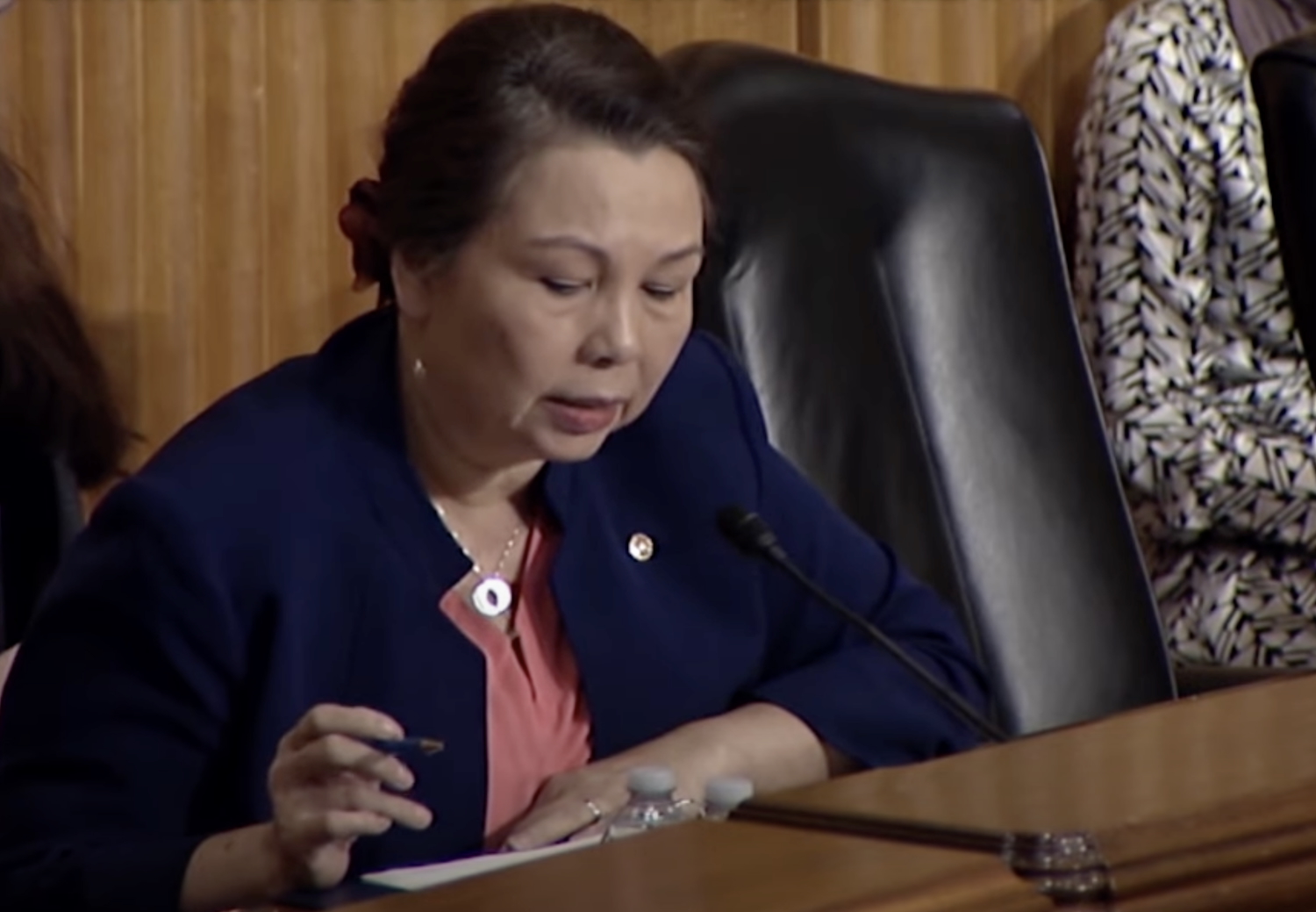
Thai-born Democratic Senator Tammy Duckworth of Illinois questions Anjani Sinha, the nominee for ambassador to Singapore, at a Senate confirmation hearing in Washington on Wednesday. (Photo: Captured from Bloomberg TV)

WASHINGTON - US President Donald Trump’s pick to serve as US ambassador to Singapore had a contentious Senate confirmation hearing in which he struggled to answer inquiries about the city-state and its ties to Washington.

Physician Anjani Sinha was pressed by Thai-born Democratic Senator Tammy Duckworth of Illinois over issues such as trade with the US and Singapore’s priorities when it assumes the chair of the Association of Southeast Asian Nations in 2027.

When asked about the size of the US trade surplus with Singapore in 2024, Sinha initially said it was $80 billion, then quickly revised it to copy8 billion. The actual surplus was $2.8 billion, according to the Office of the US Trade Representative.

The responses prompted Duckworth to say: “I am trying to help you here but you have not even done your homework.” She added that Sinha was “not prepared for this posting.”

Duckworth also questioned him about issues that would be important to Singapore, its upcoming chairmanship of Asean, and the US Navy’s presence in the city-state.

Sinha either did not know the answers or stumbled in his responses.

At the end of the exchange Ms Duckworth appeared exasperated and said: “I just feel you are not taking this seriously.

“You think this is a glamour posting, that you’re going to live a nice life in Singapore, when what we need is someone who can actually do the work.”

Videos of the exchange (see below) have gone viral in Southeast Asia.

Asked if he supported Trump’s 10% tariff on imports from Singapore, Sinha said, “I believe in the president’s decision of free trade with any nation in the world and he’s resetting the trade numbers with each country and he’s open for discussion and dialogue with each country.”

Despite the pushback from Duckworth, Republicans hold the majority in the Senate and have enough votes to approve the nomination.

The post of ambassador to Singapore has been a fraught issue since the first Trump term, when his initial nominee for the role failed to advance to the confirmation stage.

Then, during the Biden administration, Ambassador Jonathan Kaplan was accused in an inspector-general’s report last year of threatening staff, wasting money and poorly promoting US interests.

Kaplan, who left his post in January, said in a statement at the time that he took “full responsibility for quickly addressing the concerns and recommendations found in the report”.

Sinha appeared alongside four other ambassadorial nominees, including Kimberly Guilfoyle, the fiancee of Donald Trump Jr, who has been nominated to serve in Greece.

The oprthopaedic surgeon and founder of a chain of clinics was introduced by South Carolina Senator Lindsey Graham, who cited Singapore’s medical tourism sector as an area Sinha could help develop.

“He knows the region and he knows the issues,” Graham said.


US Federal judge halts immigration raids over racial profiling


2025-07-12 
Shafaq News – California

A US federal judge has blocked immigration raids in seven California counties, including Los Angeles, after civil rights groups accused the Trump administration of using racially targeted enforcement tactics.

Citing a “mountain of evidence” that federal agents were violating constitutional rights, Judge Maame E. Frimpong issued an emergency injunction from a Los Angeles district court, barring the Department of Homeland Security (DHS) from making arrests based on race, conducting warrantless operations, or denying detainees access to legal counsel.

The lawsuit—filed by the American Civil Liberties Union (ACLU) and immigrant advocacy organizations—centers on the detention of three laborers and two US citizens. One plaintiff was allegedly held despite presenting valid identification.

Raids targeted car washes, swap meets, Home Depot parking lots, and other public spaces across Southern California, sparking mass protests. Demonstrations intensified following the deployment of National Guard units and US Marines to assist in enforcement efforts.

The injunction also extends to Ventura County, where agents on Thursday detained dozens of workers at a cannabis farm. The operation triggered clashes with demonstrators and left multiple people injured.

Court filings accuse DHS of enforcing an “arbitrary arrest quota” and engaging in racial profiling. The ACLU cited cases of agents arresting individuals solely for “looking Hispanic,” including day laborers in construction gear.

One incident involved Brian Gavidia, a Latino US citizen allegedly assaulted and detained at a tow yard in a predominantly Latin American neighborhood. ACLU attorney Mohammad Tajsar questioned why non-Latino individuals were consistently overlooked during the sweeps.

The Trump administration quickly denounced the ruling. White House spokesperson Abigail Jackson insisted immigration enforcement is an executive power. “No federal judge has the authority to dictate immigration policy,” she stated, predicting the decision will be overturned on appeal.

DHS officials also pushed back. Assistant Secretary Tricia McLaughlin dismissed the racial bias allegations as “disgusting and categorically FALSE,” claiming operations were lawful and based on credible intelligence.

In court, government attorney Sean Skedzielewski defended DHS practices, asserting arrests relied on a “totality of the circumstances,” including prior surveillance and known activity—not race alone. He emphasized that internal protocols and training ensure compliance with Fourth Amendment protections


DOGE cuts are now a Trump loyalty test


By Bryan Metzger
BUSINESS INSIDER
Jul 12, 2025


The push to pass DOGE cuts through Congress only became more dramatic this week.

Trump says anyone who doesn't support cuts to NPR and PBS won't have his support in the future.

Meanwhile, lawmakers are warning that the cuts threaten the bipartisan government funding process.

Senators still have questions about the $9.4 billion in cuts to foreign aid and public broadcasting funding. Some are warning that passing the cuts, known as a "rescission," could upend bipartisan government funding negotiations.

And now, President Donald Trump is turning the cuts, at least those that would affect PBS and NPR, into a political litmus test.

"It is very important that all Republicans adhere to my Recissions Bill and, in particular, DEFUND THE CORPORATION FOR PUBLIC BROADCASTING (PBS and NPR)," Trump wrote on Truth Social on Thursday night. "Any Republican that votes to allow this monstrosity to continue broadcasting will not have my support or Endorsement."

The package, which includes $1.1 billion in cuts for public broadcasting and $8.3 billion in foreign aid cuts, narrowly passed the House in June on a party-line vote.


But multiple GOP senators have expressed concerns about the rescissions, which will impact HIV/AIDS prevention programs and could affect rural public radio stations.

Senators may seek to amend the package when it comes up for a vote next week. A White House official, granted anonymity to discuss sensitive matters, told BI that the administration wants senators to pass the rescission package in its current form.

If the package is amended before passing the Senate, then it would need to pass the House again.

And if no bill is approved by the end of the day on July 18, the administration will be required by law to spend all of that money.

'Absurd for them to expect Democrats to act as business as usual'

In addition to pressure from Trump, GOP senators will have to weigh an ultimatum from Senate Democrats.

In a letter to colleagues this week, Senate Minority Leader Chuck Schumer argued that making the DOGE cuts on a party-line basis undermines efforts to fund the government for the next fiscal year.

Because of the Senate's filibuster rule, it takes 60 votes to clear most bills through the upper chamber. That means that government funding bills are typically negotiated with significant input from both parties, with the minority often able to secure priorities that the majority party otherwise wouldn't support to ensure passage.

But rescissions only take 51 votes, and the administration has said that this could be the first of several. That raises the possibility that Republicans could move to unilaterally defund Democratic priorities after government funding bills are passed in the future.

"It is absurd for them to expect Democrats to act as business as usual and engage in a bipartisan appropriations process to fund the government, while they concurrently plot to pass a purely partisan rescissions bill to defund those same programs negotiated on a bipartisan basis behind the scenes," Schumer said in the letter.

If lawmakers can't agree on how to fund the government in the coming fiscal year by September 30, a government shutdown would take place.

Some Republican senators have acknowledged the validity of Democratic senators' argument.

"If we get to the point where the Democrats look at this and say, 'We can put it in the bill, but they're not going to fund it, or they're not going to use it,' then there's no reason for them to work with us to get to 60 votes," Sen. Mike Rounds of South Dakota told BI last month.

However, not every Republican is worried about the integrity of the current appropriations process, particularly those who remain concerned about high government spending.

"The appropriations process should be undermined," Sen. Ron Johnson of Wisconsin told BI, saying the current process is "bankrupting" the country. "That needs to be busted up."
Pakistan court suspends order seeking YouTube ban on government critics

Last updated: July 12, 2025 | 

YouTube move comes after Islamabad court sought ban; Channels at risk include main opposition party, former PM Imran Khan, journalists critical of government.

A Pakistani court on Friday suspended an order seeking to ban the YouTube channels of more than two dozen critics of the government including former Prime Minister Imran Khan, a defence lawyer said.

Alphabet-owned YouTube this week told 27 content creators that it could block their channels - including those of journalists and Khan and his opposition party Pakistan Tehreek-e-Insaf - if they failed to comply with a judicial magistrate court order seeking to ban them.

A regional communication manager for YouTube did not respond to a Reuters request for a comment.

The judicial magistrate court in Islamabad had said it was seeking the ban after the National Cyber Crime Investigation Agency criticised the channels in a June 2 report for "sharing highly intimidating, provocative and derogatory contents against state institutions and officials of the state of Pakistan."

The decision to suspend the order was taken by an additional sessions judge, said Imaan Mazari, the lawyer for two of the YouTube content creators.

In Pakistan, an additional sessions judge is a judicial officer who presides over a sessions court, handling both civil and criminal cases.

"Our submission is that the order has no legal basis. It was a one-sided decision without giving defence a chance to be heard," Mazari said.

She also said the magistrate court had no jurisdiction over the matter.

The next hearing in the sessions court is on July 21.

In Pakistan's judicial system, cases start at civil and judicial magistrate courts and appeals are heard in high courts and the Supreme Court.

Digital rights campaigners say that any ban would further undermine free speech in Pakistan, where the authorities are accused of stifling newspapers and television, and social media is seen as one of the few outlets for dissent.

Reuters
Deal struck to create new state of New Caledonia

French Prime Minister François Bayrou hailed the agreement for a “unique organization” enshrined in France’s constitution.


French Prime Minister François Bayrou called it “an agreement of historic significance” in a post on X. | Pool photo by Ludovic Marin/EPA

July 12, 2025
By Karl Mathiesen

Rival political movements debating the future of New Caledonia announced a deal Saturday morning to create a new state — but one not fully independent from France.

The pro- and anti- independence factions in the French territory concluded talks in Bougival, on the outskirts of Paris, with a compromise that would grant New Caledonia new autonomy — potentially giving the territory a chance to move forward from violent upheavals last year.

French Prime Minister François Bayrou called it “an agreement of historic significance” in a post on X. He hailed the agreement for a “unique organization” of a new state of New Caledonia inside France’s “national framework” and enshrined in the French constitution.

Residents of the Pacific archipelago and former French penal colony have long been divided over its future. French descendants want Paris to maintain power, while the indigenous Kanak people seek self-determination.

In May last year, unrest broke out after the French parliament proposed a change to the electoral role that would weaken the political power of the pro-independence movement.

Les Nouvelles Calédoniennes reported that the deal — the text of which had not been released at the time of publication — allowed for the creation of a New Caledonian nationality, which would mean islanders could become dual nationals, and for the transfer to New Caledonia of the competence for international relations.

The deal now faces a referendum in New Caledonia and a vote in the French parliament.

In a statement, French loyalist groups noted the deal involved “concessions from all parties.” They said it would create “a New Caledonian nationality inseparable from French nationality.”

The deal also includes commitments from France to assist in economic development, notably in the country’s strategically important nickel sector, the loyalists noted.

French Justice Minister Gérald Darmanin said on X that the deal would give New Caledonia “expanded powers, an unfrozen electorate, and possible international recognition.”

Sonia Backes, the leader of the majority loyalist South Province of New Caledonia, said: “This New Caledonian nationality takes nothing away from us: neither from our belonging to the Republic nor from our French nationality.”