Wednesday, July 16, 2025


Houthis Purloin Crude Oil From UN-Funded Floating Storage Tanker
Yemen tanker
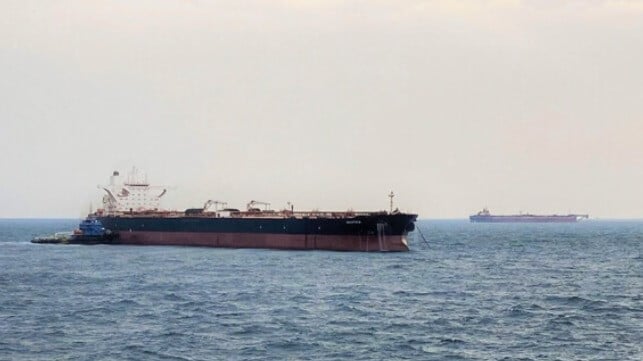
Storage tanker Yemen, ex name Nautica (UN file image)

Published Jul 15, 2025 12:47 PM by The Maritime Executive


In a story broken by Lloyds List and Yemeni journalists, evidence has emerged that the Houthi administration in Yemen is siphoning off crude oil from an oil storage facility maintained by the United Nations off Ras Isa. The story comes as no surprise to observers of Yemen, who have long admired the Houthi’s capacity to leverage UN-funded aid programs to their own economic and political advantage.

The oil that the Houthis have purloined came originally from Yemen’s Marib oilfield, and had been stored in the FSO Safer (IMO 7376472), a floating oil storage facility moored off Ras Isa. This infrastructure fell into disuse when the Houthis captured the coastal area around Ras Isa and Hodeidah in 2015, and the Safer Exploration and Production Operations Company (SEPOC) stopped pumping their Marib crude, as they could no longer sell it.

At this point, the FSO Safer was left holding 1.14 million barrels of oil, today worth nearly $80 million. Holding the oil but unable to sell it, the Houthis also prevented maintenance of the FSO Safer, whose cargo became progressively more volatile as the condition of the ship deteriorated, threatening an explosion and an environmental catastrophe.

In 2022, the Houthis finally agreed to a deal with the UN, whereby the oil aboard the Safer was transferred to VLCC Yemen (IMO 9323948), a tanker that was acquired for the specific purpose. There was no further agreement to proceed either with the removal and salvage of the FSO Safer, or with the disposal of the crude oil now transferred to the Yemen, whose ownership was disputed between by the Houthis and SEPOC. Thus for the last two years, FSO Safer has remained in position, with VLCC Yemen moored close by and still fully loaded. In the meantime, ownership of the Yemen has been transferred gratis to SEPOC, although the UN has also continued to pay directly for the maintenance crew on board the ship.

Since the recent Israeli attacks on the docks and oil facilities at Hodeidah, Ras Isa and Salim, the oil on board the VLCC Yemen has acquired a scarcity value. Even though modern refining facilities and transshipment facilities have been destroyed, locals still have the capacity to "cook" crude oil into poorly distilled products, for which - despite the poor quality - there is a hungry local market.
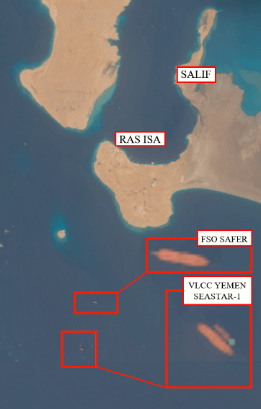
Left: Safer, Yemen and Seastar-1 off Ras Isa, June 8 (Sentinel-2/CJRC)

Hence on June 8, the coastal tanker Seastar-1 (IMO 9163283) was seen alongside the Yemen, transferring oil, and was later seen offloading in Ras Isa. Lloyd’s List reported that prior to June 8, Yemen had also taken on board ship-to-ship transfers of Russian petroleum products.

The UN has lodged a protest over the oil transfers, which must have been made with the aid of the Yemen’s UN-sponsored but presumably press-ganged crew. It would also be feasible for crude oil to be barged the short distance into Ras Isa using lighters. Given that the VLCC Yemen now has a UN-paid crew, and the vessel itself is owned by the Yemeni government’s SEPOC, it may be difficult to curb future siphoning of crude that is much needed by the Houthis.


Food preferences, stigma among reasons students don’t eat free school meals


A study of California and Maine foodservice directors identified top barriers to student use of the universal meal program during the Covid pandemic


New York University


During the Covid-19 pandemic, the federal government enabled schools to provide all children, regardless of need, with free meals to address nutrition and food insecurity. While program participation increased, many students declined the free meals, missing out on potential health and academic benefits.

A new study by nutrition researchers identifies several barriers cited by foodservice directors—the leaders who run school food programs—to student participation, including student preferences for home-cooked meals or fast food, and concerns about how healthy the meals are.

“Even when school meals are free, students don’t always take and eat them. This tells us that cost isn’t the only barrier,” says Deborah Olarte, the study's lead author and assistant professor of nutrition at NYU Steinhardt School of Culture, Education, and Human Development. “From the perspective of school foodservice directors, who are key stakeholders in providing school meals to children, it’s important to understand what other barriers exist, so school meals can be more accessible, appealing, and supportive of student well-being.”

The researchers used previously collected 2021-2022 survey data from 599 foodservice directors in California and Maine by the California Department of Education and the Maine nonprofit, Full Plates, Full Potential, respectively. They then conducted follow-up interviews with a subset of 49 survey participants.

Using data from both the surveys and interviews, the researchers found three statistically significant barriers to students eating school meals: 1) students or parents don’t think the food is healthy, 2) they prefer to eat at home or elsewhere (e.g., fast-food restaurants), and 3) students and parents think that only lower-income students eat school breakfast and don’t want the associated stigma.

“As states consider universal free school meal policies, the next step is making the already healthy meals more appealing and accessible to students. This could be investing in scratch cooking, incorporating student feedback, and extending lunch periods to ensure meals are available without logistical barriers or stigma,” says Olarte

Their findings are published in Journal of School Health.

This study was funded by California General Fund SB 170 and Share Our Strength.

OFF GRID

Pakistan’s quiet solar rush puts pressure on national grid


By AFP
July 16, 2025


Pakistanis are increasingly ditching the national grid in favour of solar power, prompting a boom in rooftop panels - Copyright AFP Asif HASSAN

Zain Zaman JANJUA

Pakistanis are increasingly ditching the national grid in favour of solar power, prompting a boom in rooftop panels and spooking a government weighed down by billions of dollars of power sector debt.

The quiet energy revolution has spread from wealthy neighbourhoods to middle- and lower-income households as customers look to escape soaring electricity bills and prolonged power cuts.

Down a cramped alley in Pakistan’s megacity of Karachi, residents fighting the sweltering summer heat gather in Fareeda Saleem’s modest home for something they never experienced before — uninterrupted power.

“Solar makes life easier, but it’s a hard choice for people like us,” she says of the installation cost.

Saleem was cut from the grid last year for refusing to pay her bills in protest over enduring 18-hour power cuts.

A widow and mother of two disabled children, she sold her jewellery — a prized possession for women in Pakistan — and borrowed money from relatives to buy two solar panels, a solar inverter and battery to store energy, for 180,000 rupees ($630).

As temperatures pass 40 degrees Celsius (104 degrees Fahrenheit), children duck under Saleem’s door and gather around the breeze of her fan.

Mounted on poles above homes, solar panels have become a common sight across the country of 240 million people, with the installation cost typically recovered within two to five years.

Making up less than two percent of the energy mix in 2020, solar power reached 10.3 percent in 2024, according to the global energy think tank Ember.

But in a remarkable acceleration, it more than doubled to 24 percent in the first five months of 2025, becoming the largest source of energy production for the first time.

It has edged past gas, coal and nuclear electricity sources, as well as hydropower which has seen hundreds of millions of dollars of investment over the past decades.

As a result, Pakistan has unexpectedly surged towards its target of renewable energy, making up 60 percent of its energy mix by 2030.

Dave Jones, chief analyst at Ember, told AFP that Pakistan was “a leader in rooftop solar”.

– ‘The great Solar rush’ –

Soaring fuel costs globally, coupled with demands from the International Monetary Fund to slash government subsidies, led successive administrations to repeatedly hike electricity costs.

Prices have fluctuated since 2022 but peaked at a 155-percent increase and power bills sometimes outweigh the cost of rent.

“The great solar rush is not the result of any government’s policy push,” Muhammad Basit Ghauri, an energy transition expert at Renewables First, told AFP.

“Residents have taken the decision out of clear frustration over our classical power system, which is essentially based on a lot of inefficiencies.”

Pakistan sources most of its solar equipment from neighbouring China, where prices have dropped sharply, largely driven by overproduction and tech advancements.

But the fall in national grid consumers has crept up on an unprepared government burdened by $8 billion of power sector debt, analysts say.

Pakistan depends heavily on costly gas imports, which it sells at a loss to national energy providers.

It is also tied into lengthy contracts with independent power producers, including some owned by China, for which it pays a fixed amount regardless of actual demand.

A government report in March said the solar power increase has created a “disproportionate financial burden onto grid consumers, contributing to higher electricity tariffs and undermining the sustainability of the energy sector”.

Electricity sales dropped 2.8 percent year-on-year in June, marking a second consecutive year of decline.

Last month, the government imposed a new 10-percent tax on all imported solar, while the energy ministry has proposed slashing the rate at which it buys excess solar energy from consumers.

– ‘Disconnected from the public –


“The household solar boom was a response to a crisis, not the cause of it,” said analyst Jones, warning of “substantial problems for the grid” including a surge during evenings when solar users who cannot store energy return to traditional power.

The national grid is losing paying customers like businessman Arsalan Arif.

A third of his income was spent on electricity bills at his Karachi home until he bought a 10-kilowatt solar panel for around 1.4 million rupees (around $4,900).

“Before, I didn’t follow a timetable. I was always disrupted by the power outages,” he told AFP.

Now he has “freedom and certainty” to continue his catering business.

In the eastern city of Sialkot, safety wear manufacturer Hammad Noor switched to solar power in 2023, calling it his “best business decision”, breaking even in 18 months and now saving 1 million rupees every month.

The cost of converting Noor’s second factory has now risen by nearly 1.5 million rupees under the new government tax.

“The tax imposed is unfair and gives an advantage to big businesses over smaller ones,” he said.

“Policymakers seem completely disconnected from the public and business community.”
Tackling debt ‘curse’, France wants to slash holidays

NOUS VOULONS PLUS DE VACANCES, PAS MOINS !

WE WANT MORE HOLIDAYS NOT LESS!


By AFP
July 15, 2025


The Eiffel Tower in Paris. — © AFP Ludovic MARIN


Anne RENAUT and Jurgen HECKER

France’s Prime Minister Francois Bayrou said Tuesday he wanted to reduce the number of public holidays as part of an urgent plan to tackle what he called the “curse” of his country’s debt.

Presenting his outline 2026 budget plan, Bayrou said two holidays out of France’s total of 11 could go, suggesting Easter Monday as well as and May 8, a day that commemorates the end of World War II in Europe.

After years of overspending, France is on notice to bring its public deficit back under control, and cut its sprawling debt, as required under EU rules.

Bayrou said France had to borrow each month to pay pensions or the salaries of civil servants, a state of affairs he called “a curse with no way out”.

Bayrou had said previously that France’s budgetary position needed to be improved by 40 billion euros ($46.5 billion) next year.

But this figure has now risen after President Emmanuel Macron said at the weekend he hoped for additional military spending of 3.5 billion euros next year to help France cope with international tensions.

France has a defence budget of 50.5 billion euros for 2025.

Bayrou said the budget deficit would be cut to 4.6 percent next year, from an estimated 5.4 percent this year, and would fall below the three percent required by EU rules by 2029.

To achieve this, other measures would include a freeze on spending increases across the board — including on pensions and health spending — except for debt servicing and the defence sector, Bayrou said.

“We have become addicted to public spending,” Bayrou said, adding that “we are at a critical juncture in our history”.

– Remember Greece –

The prime minister even held up Greece as a cautionary tale, an EU member whose spiralling debt and deficits pushed it to the brink of dropping out of the eurozone in the wake of the 2008 financial crisis.

“We must never forget the story of Greece,” he said.

France’s debt currently stands at 114 percent of GDP — compared to 60 percent allowed under EU rules — the biggest debt mountain in the EU after Greece and Italy.

The government hopes to cut the number of civil servants by 3,000 next year, and close down “unproductive agencies working on behalf of the state”, the premier said.

Bayrou said that wealthy residents would be made contribute to the financial effort.

“The nation’s effort must be equitable,” Bayrou said. “We will ask little of those who have little, and more of those who have more.”

Losing two public holidays, meanwhile, would add “several billions of euros” to the state’s coffers, Bayrou said.

But the proposed measure sparked an immediate response from Jordan Bardella, leader of the far-right National Rally.

He said abolishing two holidays, “especially ones as filled with meaning as Easter Monday and May 8 is a direct attack on our history, our roots and on labour in France”.

Leftist firebrand Jean-Luc Melenchon of the France Unbowed party meanwhile called for Bayrou’s resignation, saying “these injustices cannot be tolerated any longer”.

burs-jh/giv
US consumer inflation accelerates as tariff scrutiny grows


By AFP
July 15, 2025


The US consumer price index was up 2.7 percent from a year ago in June, accelerating from the figure in May, government data showed - Copyright AFP/File Patrick T. Fallon

Beiyi SEOW

US consumer inflation picked up in line with analyst expectations last month, government data showed Tuesday, as policymakers try to gauge how President Donald Trump’s ever-growing list of tariffs is affecting the economy.

Observers are expecting to learn more about the effects of Trump’s duties over the summer months, meaning June’s data marks the start in a series of closely-watched figures — particularly as officials mull changes to interest rates as well.

The consumer price index (CPI) was up 2.7 percent from a year ago in June, rising from the 2.4 percent figure in May as energy costs rose, said the Department of Labor.

Other areas that saw cost increases included household furnishings and apparel, both segments that experts are eyeing for signs of cost hikes after Trump’s sweeping tariffs this year.

While Trump imposed a 10 percent tariff on almost all trading partners in April and separately slapped steeper duties on imports of steel, aluminum and autos, US officials have pushed back against warnings that these could spark price increases.

Economists caution that tariff hikes could fuel inflation and weigh on economic growth, but US Treasury Secretary Scott Bessent has labeled such expectations “tariff derangement syndrome.”

CPI rose 0.3 percent in June from the previous month, an uptick from the 0.1 percent increase in May as well.

Excluding the volatile food and energy segments, CPI climbed 0.2 percent on-month, picking up from May too.

Compared with a year ago, “core” CPI was up 2.9 percent in June.


Even if headline inflation figures show no “meaningful” surge because of tariffs alone, Nationwide economist Oren Klachkin warned it may be too soon to see their full impact just yet.

Businesses have been trying to hold off consumer price hikes through a range of actions, from eating into their own margins to trying to share costs with their suppliers, he said.

But it remains to be seen how long they can do this.

There could be a bigger impact over the summer, Klachkin added.

For now, he is looking “under the surface” at components most exposed to Trump’s tariffs, such as furnishings, recreational goods and cellphones, to discern their effects.

Besides steep tariffs that have already taken effect, Trump has also threatened even higher levels on dozens of key trading partners including the European Union, India, Japan and South Korea if they do not strike deals to avert these elevated levels.

He has also opened doors to further levies on sector-specific imports ranging from semiconductors to pharmaceuticals, injecting more uncertainty in the global economy and worries of supply chain snags.


Op-Ed: Imbecility in slow motion — Tariffs drive inflation


By Paul Wallis
July 16, 2025
DIGITAL JOURNAL


Tariffs on metal imposed by US President Donald Trump are hitting small businesses like Independent Can very hard - Copyright AFP RYAN COLLERD

When discussing the dumbest, most unnecessary economic situation in modern history, sometimes you have to tell the tale like a story for kids. Think Henny Penny for Hedge Funds.

Far too often, upon a time in a little country called They’ve Forgotten Who They Are, the technically insolvent citizens and corporations conscientiously decided to send themselves broke.

They figured out innovative ways of charging themselves far more money than they will ever have for everything. Irresponsible people told them this was wrong for years.

Fearlessly, they continued to send themselves broke. Rents, food, healthcare, housing, you name it; they bankrupted the next two generations just in case there was a risk of prosperity.

Then a great Light of Reason, a dazzling orange-hued Sacred Ignoramus, found the formula for success.

It was amazing:

Base everything you do on a single sentence, non-existent ideology.

Destroy your own credibility just in case someone thinks you know what you’re doing or why you’re doing it.

Ensure that nobody in the country is on speaking terms with anyone else in the country.

Fire everybody who knows what they’re doing.

Sabotage all businesses at all levels.

Make sure nobody has any money and pay yourself a fortune which you then lose.

Ignore the cost of living.

Borrow to the point of absurdity and beyond.

Refuse to admit there’s a tomorrow, let alone a next week.

Then trash any hope of doing business with anyone else on a sane basis by infuriating everyone with whom you do business.

The quaint little extremely broke country of They’ve Forgotten Who They Are also had the luxury of a net 3-digit drop in average IQ in six months. With expectations lowered, everything was great.

It’s nice to occasionally write something motivational.

Now, let’s talk about US inflation. The tariffs are starting to bite, as everyone said they would. Increased prices for imports mean that the volume of imports must go down proportionally.

This is real inflation. That real money comes out of your assets, and it’s not coming back. Unlike the more cosmetic forms of theoretical inflation, this is where profit margins go to die. America’s been living from paycheck to paycheck for years. Massive gouging is destroying real wealth faster than it can be created.

Now, the invulnerable big money is seriously vulnerable.

The real value of your money is what it can buy.

If your billions are suddenly worth peanuts, is that good or bad?

You’d expect an academically underachieving house brick to understand this, wouldn’t you?

The US importers don’t really have a choice. Nor does the distribution network. They have to cover the cost of tariffs.

Their profit margins have been assassinated by tariff rates. You don’t just tack on 20% to your prices and expect nothing to happen. Your sales volumes must go down.

For Main Street, where you pay bills and eat and breathe, it’s worse. Say your personal net wealth went down by 30%. You had a budget that more or less worked. Now, you’ve got an ongoing 30% hole in your budget across the board.

This isn’t “capitalism”, “free enterprise”, or “the survival of the fittest”.

It’s sure as hell and acne not democracy, either.

It’s suicide.

There are no excuses.

You were, as usual, told what would happen, and as usual, it’s happening. Do some sales and margins projections for once in your severely undereducated lives.

What are your book values for 2Q 2025? How about 3Q 2025? Why didn’t you shut this down before it started?

You’ve just flunked Economic Reality 101.

__________________________________________________
Disclaimer
The opinions expressed in this Op-Ed are those of the author. They do not purport to reflect the opinions or views of the Digital Journal or its members.
Indonesia hails ‘new era’ with US after Trump trade pact

But experts said the deal appeared to be one-sided.

“The 19 percent tariff on Indonesian exports to the US, while the US can enjoy 0 percent actually poses a significant risk to Indonesia’s trade balance. Do not be too reliant on exports to the US, because the result of the tariff negotiation is still detrimental to Indonesia’s position.”

By AFP
July 16, 2025


Indonesia's President Prabowo Subianto said he had a 'very good' call with Trump - Copyright AFP/File Yasuyoshi CHIBA

Marchio GORBIANO

Indonesia’s leader on Wednesday hailed a “new era” of trade relations with the United States, after Donald Trump said he slashed the tariff rate faced by Southeast Asia’s biggest economy from 32 percent to 19 percent.

The Trump administration has been under pressure to wrap up trade pacts after promising a flurry of deals recently, as countries sought talks with Washington to avoid the US president’s threatened tariffs announced in April but delayed until August.

“I had a very good call with President Donald Trump. Together, we agreed and concluded to take trade relations between Indonesia and the United States into a new era of mutual benefit,” President Prabowo Subianto wrote in an Instagram post.

Prabowo, a populist former general, posted pictures of himself laughing on the phone with Trump but did not give any specifics of the deal.

However Prabowo’s presidential spokesman confirmed the new 19 percent rate and said it took place after direct negotiations between the Indonesian leader and Trump.

“It is an extraordinary negotiation conducted directly by our president with President Donald Trump,” Hasan Nasbi said, adding that the deal was “progress that cannot be called small”.

Prabowo was set to land back in Indonesia on Wednesday afternoon from a trip to Europe, before giving a statement, Nasbi said.

Trump said Tuesday he had struck the pact in return for significant purchase commitments from Jakarta following negotiations, including a pledge to buy 50 Boeing jets.

In return for a lower tariff, Indonesia has committed to spending billions to increase energy, agriculture and merchandise imports from the United States.

Trump and Prabowo have developed a warm relationship since the US leader first clinched the presidency in late 2016.

His first administration dropped a de facto US visa ban for Prabowo over alleged crimes committed under late dictator Suharto, inviting him to Washington in 2020 when he was Indonesian defence minister.

– ‘Significant risk’ –

Prabowo had sent his top economic minister to Washington and his administration secured a better deal than the 20 percent that Trump said he had given to Southeast Asian neighbour Vietnam.

Both Indonesia and Vietnam are key markets for the transshipment of Chinese goods. Trump said the deal with Indonesia would include a penalty for goods transiting Indonesia from China.

Prabowo had suggested after the initial tariff threat in April that Trump was maybe helping Jakarta by causing it to re-think its trade surplus with the world’s top economy.

Data from the US Trade Representative office shows Washington’s goods trade deficit with Indonesia was $17.9 billion in 2024, up 5.4 percent from the year before.

But experts said the deal appeared to be one-sided.

“The 19 percent tariff on Indonesian exports to the US, while the US can enjoy 0 percent actually poses a significant risk to Indonesia’s trade balance,” said Bhima Yudhistira Adhinegara, executive director of the Center of Economic and Law Studies.

“Do not be too reliant on exports to the US, because the result of the tariff negotiation is still detrimental to Indonesia’s position.”

Indonesian shoemakers fear Trump tariffs despite lower levy


By AFP
July 16, 2025


Tegep Boots has many dedicated customers in the United States and Europe - Copyright AFP Timur MATAHARI

Yuli Krisna

At a leather boot shop in the Indonesian city of Bandung, workers handle an order from Texas but owner Etnawati Melani says she fears such business will dwindle when Donald Trump’s tariffs hit exports.

The United States is Indonesia’s biggest market for footwear exports and the American president announced Tuesday he would impose 19 percent tolls on top of a baseline 10 percent for Southeast Asia’s biggest economy.

The measure was lower than the initial extra 32 percent Trump threatened in April, and better than the 20 percent he imposed on Vietnam.

But Etnawati, who had plans to expand her business to the United States, said her focus would now shift to other markets.

“I have to develop a new strategy. Perhaps we have to diversify our markets, products, and so on. If it’s possible to enter (the US market), but… not in large quantities at first, that’s it,” she told AFP.

“We can’t rely solely on the US. There’s still many markets in the world. We can still shift.

“I plan to shift focus to Japan and Russian partners.”

In return for a lower tariff, Indonesia pledged billions to increase energy, agriculture and merchandise imports from the US and Trump said Jakarta had pledged to buy 50 Boeing jets.

It remains unclear when the new tariff rate Trump announced will come into effect and reaction from Indonesian officials has been muted while President Prabowo Subianto travels home from a Europe visit.

But chief negotiator Airlangga Hartarto, after meeting top US officials in Washington, said last week that the talks had been “positive”.

Prabowo suggested after the initial tariff threat in April that Trump was maybe helping Jakarta by causing it to re-think its trade surplus with the world’s top economy.

Data from the US Trade Representative office shows Washington’s goods trade deficit with Indonesia was $17.9 billion in 2024, up 5.4 percent from the year before.


– ‘I’m worried’ –


Indonesia is the third-largest footwear exporter to the US behind China and Vietnam, according to the Observatory of Economic Complexity.

So any new tariff was likely to damage business — particularly in Bandung, where its shoe scene is well-known internationally for beautifully hand-crafted quality leather boots.

Economists in Indonesia hit out at the deal with Washington, which Trump says would get tariff-free access in return.

“This is not an agreement. It’s… a one-sided agreement,” Jakarta-based Centre for Strategic and International Studies (CSIS) executive director Yose Rizal Damuri told AFP on Wednesday.

But he predicted American consumers would likely bear the costs more than Indonesian businesses, with Trump’s tariffs sweeping across many countries.

“The United States itself will be the one more affected. Prices will rise,” he said.

Data on Tuesday showed US inflation spiked in June as the tolls kicked on.

The shop’s more seasoned workers such as Jajang — who goes by one name — have already experienced the ups and downs of business, with the Covid-19 pandemic hitting sales, and seeing dozens of colleagues laid off and several dying.

“I don’t know about that issue, the important thing is that I work here,” said the 53-year-old when asked about Trump’s levies.

Others aware of the Trump threat to Indonesian exports were more concerned.

One of Etnawati’s workers, Lili Suja’i, chipped away at a new set of boots for the three-pair Texan order — riding boots, medium casual boots and loafers — in a workshop adjacent to the store.

He said he feared US customers would be put off by higher costs, with the shop his main income for his family of three.

But the shoemakers are ready to fulfil any orders from Americans willing to pay the extra price.

“I’m worried, yes, but before placing an order, we negotiate the shipping costs and prices with the customer,” the 38-year-old said.

“So, we’ve already made a deal. If they’re OK with it, we’ll do it.”

Indonesia looking at coal export levy to boost state coffers

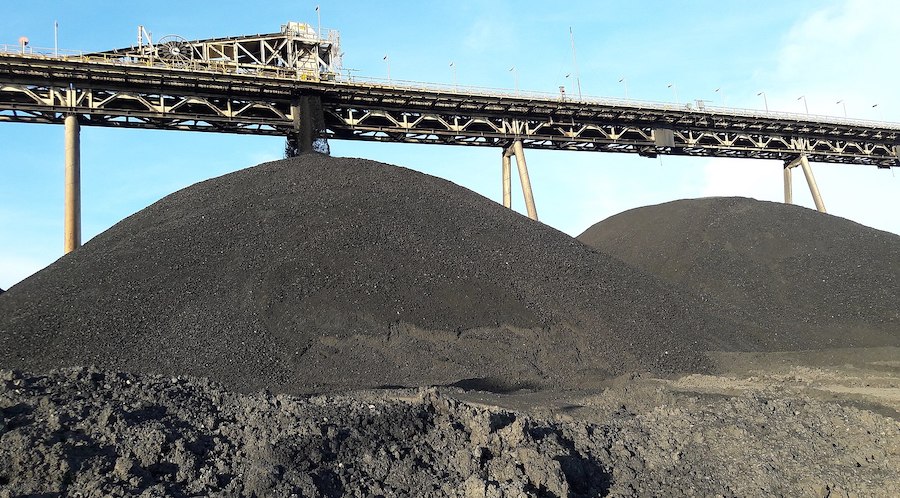
Coal mining in East Kutai, Indonesia. (Reference image by Consigliere Ivan, Wikimedia Commons.)

Indonesia, the world’s biggest coal exporter, is considering imposing an export levy on the fossil fuel to boost state revenues, a senior government official said.

The tariff would be collected from miners only when coal prices are high, with authorities potentially including it in the 2026 budget plan, Energy and Mineral Resources Deputy Minister Yuliot Tanjung told reporters in Jakarta on Tuesday.

President Prabowo Subianto’s administration has been rolling out an array of revenue-boosting measures to fund big-ticket spending plans, which include free meals for school children, and public housing. The mining industry, which is critical to Indonesia’s economy, has faced particular pressure.

The sprawling archipelago is the world’s biggest thermal coal exporter, and firms there have been hit by higher royalties and an obligation to keep earnings in local banks for a year. An export levy would add to the pressure on the sector, which is already dealing with a recent plunge in prices.

Energy and Mineral Resources Minister Bahlil Lahadalia confirmed on Monday that regulators were moving forward with the levy, which started as a proposal from parliament. A similar charge on gold exports was being considered.

“If prices are good, then they should share some of those earnings with the state,” he was quoted as saying by multiple news outlets. “But if prices aren’t economic, then we shouldn’t burden businesses.”

The government needs to study the plan further, and consider the sustainability of business and national energy security, along with the potential revenue increase, said Gita Mahyarani, acting executive director of the Indonesian Coal Mining Association. The association is seeking further clarity on the proposed levy, she said.

Shares of some Indonesian coal miners fell on Tuesday as the Jakarta Composite Index rose. PT Indika Energy and PT Bukit Asam both closed down 0.8%.

The plan creates uncertainty for local miners, and could add to refinancing risks for high-yield companies with limited liquidity and diversification, Mary Ellen Olson, a Bloomberg Intelligence analyst, said in a note. Indika Energy, PT Medco Energi Internasional, PT Mineral Industri Indonesia and PT Freeport Indonesia are potentially most at risk, she said.

(By Eko Listiyorini and Norman Harsono)


Indonesian Police Bust Pirate Gang in Riau Islands

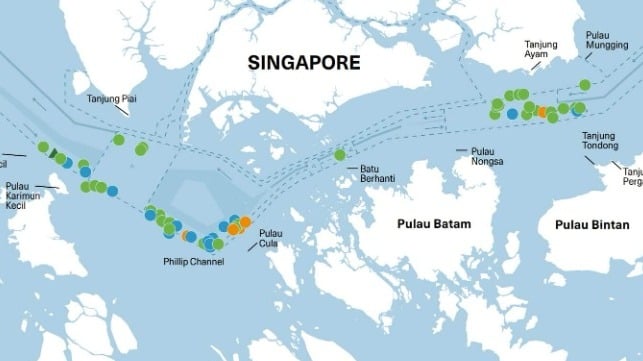
High activity areas for piracy in the Phillip Channel, Strait of Malacca and Singapore Strait (ReCAAP file image)

Published Jul 15, 2025 8:28 PM by The Maritime Executive


Police in Indonesia's Riau Islands have broken up a ring of pirates who were allegedly engaged in serial armed robberies in the Phillips Channel, a notorious hotspot for criminal activity. 

Acting on tips from the public and from Singapore's International Maritime Bureau (IMB), the Directorate of Water and Air Police in the Riau Islands launched a patrol in piracy-prone areas of the strait. The tip was accurate, and the authorities busted a gang of eight male suspects in the act of stealing stores from a vessel, identified as the "MT Thom Elisabeth." (No ship by this name exists in international databases; it is possible that it is a coastal vessel.)

The police told local Batam News Asia that the suspects have been active since 2017. The gang was allegedly in the practice of using methamphetamine before each of their heists, and the substance was found in the possession of one of the suspects during the bust. The drugs fueled their intimidation tactics and enabled risk-taking, "even jumping into the sea if threatened," agency director Kombes Handono Subiakto told Batam News. 

To select targets, the suspects allegedly used standard online ship-tracking tools to hone in on ships that would slow down to five knots or less while passing through the narrow strait. Then they would board these vulnerable targets at night, taking spare engine parts that could be resold for a profit in Jakarta. Their maximum earnings from a heist came to about $6,000 per boarding.

While unarmed at the time of capture, the gang was allegedly in possession of an airgun that they had used to threaten crewmembers; the police also believe that they had homemade firearms as well, but not in their possession at the time of arrest. 

The bust is significant, as it comes amidst a major resurgence of maritime crime in the Strait of Malacca. According to the IMB ICC, the area saw 57 incidents of maritime armed robbery in the first half of 2025, up from just 15 in the same period last year. At least three more criminal gangs are still believed to be operating in the same region, so the threat - which has waxed and waned for years - is still far from over.  

Phillips Channel is just south of Jurong Island, where ships make the turn between the Strait of Malacca and the Strait of Singapore. The turn forces vessels to slow down, making them more vulnerable to boarding by criminal gangs, who often threaten the crew and make off with valuable stores. 

THE NEXT COLD WAR

Trump unveils investments to power AI boom


By AFP
July 16, 2025


Image: © AFP Josep LAGO

US President Donald Trump went to Pennsylvania on Tuesday to announce $92 billion in energy and infrastructure deals intended to meet big tech’s soaring demand for electricity to fuel the AI boom.

Trump made the announcement at the inaugural Pennsylvania Energy and Innovation Summit at Carnegie Mellon University, with much of the talk about beating China in the global AI race.

“Today’s commitments are ensuring that the future is going to be designed, built and made right here in Pennsylvania and right here in Pittsburgh, and I have to say, right here in the United States of America,” Trump said at the event.

The tech world has fully embraced generative AI as the next wave of technology, but fears are growing that its massive electricity needs cannot be met by current infrastructure, particularly in the United States.

Generative AI requires enormous computing power, mainly to run the energy-hungry processors from Nvidia, the California-based company that has become the world’s most valuable company by market capitalization.

Officials expect that by 2028, tech companies will need as much as five gigawatts of power for AI — enough electricity to power roughly five million homes.

Top executives from Palantir, Anthropic, Exxon and Chevron attended the event.

The funding will cover new data centers, power generation, grid infrastructure, AI training, and apprenticeship programs.

– Race to beat China –

Among investments, Google committed $25 billion to build AI-ready data centers in Pennsylvania and surrounding regions.


US President Donald Trump attends the Pennsylvania Energy and Innovation Summit on the campus of Carnegie Mellon University in Pittsburgh – Copyright AFP ANDREW CABALLERO-REYNOLDS

“We support President Trump’s clear and urgent direction that our nation invest in AI… so that America can continue to lead in AI,” said Ruth Porat, Google’s president and chief investment officer.

The search engine giant also announced a partnership with Brookfield Asset Management to modernize two hydropower facilities in Pennsylvania, representing 670 MW of capacity on the regional grid.

Investment group Blackstone pledged more than $25 billion to fund new data centers and energy infrastructure.

US Senator David McCormick, from Pennsylvania, said the investments “are of enormous consequence to Pennsylvania, but they are also crucial to the future of the nation.”

His comments reflect the growing sentiment in Washington that the United States must not lose ground to China in the race to develop AI.

“We are way ahead of China and the plants are starting up, the construction is starting up,” Trump said.

The US president launched the “Stargate” project in January, aimed at investing up to $500 billion in US AI infrastructure — primarily in response to growing competition with China.

Japanese tech investor SoftBank, ChatGPT-maker OpenAI, and Oracle are investing $100 billion in the initial phase.

Trump has also reversed many policies adopted by the previous Biden administration that imposed checks on developing powerful AI algorithms and limits on exports of advanced technology to certain allied countries.

He is expected to outline his own blueprint for AI advancement later this month.