Tuesday, July 29, 2025

Trump’s tariffs could squeeze U.S. factories and boost costs by up to 4.5%, a new analysis finds

By The Associated Press
 July 29, 2025 

President Donald Trump talks to workers as he tours U.S. Steel Corporation's Mon Valley Works-Irvin plant, Friday, May 30, 2025, in West Mifflin, Pa. (AP Photo/Julia Demaree Nikhinson, File)

WASHINGTON — As U.S. President Donald Trump prepares to announce new tariff increases, the costs of his policies are starting to come into focus for a domestic manufacturing sector that depends on global supply chains, with a new analysis suggesting factory costs could increase by roughly two to 4.5 per cent.

“There’s going to be a cash squeeze for a lot of these firms,” said Chris Bangert-Drowns, the researcher at the Washington Center for Equitable Growth who conducted the analysis. Those seemingly small changes at factories with slim profit margins, Bangert-Drowns said, “could lead to stagnation of wages, if not layoffs and closures of plants” if the costs are untenable.

The analysis, released Tuesday, points to the challenges Trump might face in trying to sell his tariffs to the public as a broader political and economic win and not just as evidence his negotiating style gets other nations to back down. The success of Trump’s policies ultimately depends on whether everyday Americans become wealthier and factory towns experience revivals, a goal outside economists say his Republican administration is unlikely to meet with tariffs.

Trump has announced new frameworks with the European Union, Japan, the Philippines, Indonesia and Britain that would each raise the import taxes charged by the United States. He’s prepared to levy tariffs against goods from dozens of other countries starting on Friday in the stated range of 15 to 50 per cent.

The U.S. stock market has shown relief the tariff rates aren’t as high as Trump initially threatened in April and hope for a sense of stability going forward. Trump maintains the tariff revenues will whittle down the budget deficit and help whip up domestic factory jobs, all while playing down the risks of higher prices.


“We’ve wiped out inflation,” Trump said last Friday before boarding Marine One while on his way to Scotland.

But there’s the possibility of backlash in the form of higher prices and slower growth once tariffs flow more fully through the world economy.

A June survey by the Atlanta Federal Reserve suggested companies would on average pass half of their tariff costs onto U.S. consumers through higher prices. Labor Department data shows America lost 14,000 manufacturing jobs after Trump rolled out his April tariffs, putting a lot of pressure as to whether a rebound starts in the June employment report coming out Friday.
With new tariffs in place, there are new costs for factories

The Washington Center for Equitable Growth analysis shows how Trump’s devotion to tariffs carries potential economic and political costs for his agenda. In the swing states of Michigan and Wisconsin, more than one in five jobs are in the critical sectors of manufacturing, construction, mining and oil drilling and maintenance that have high exposures to his import taxes.

The artificial intelligence sector Trump last week touted as the future of the economy is dependent on imports. More than 20 per cent of the inputs for computer and electronics manufacturing are imported, so the tariffs could ultimately magnify a hefty multitrillion-dollar price tag for building out the technology in the U.S.

The White House argues American businesses will access new markets because of the trade frameworks, saying companies will ultimately benefit as a result.

“The ‘Made in USA’ label is set to resume its global dominance under President Trump,” White House spokesman Kush Desai said.

Still lots of uncertainty, but world economy faces a new toll

There are limits to the analysis. Trump’s tariff rates have been a moving target, and the analysis looks only at additional costs, not how those costs will be absorbed among foreign producers, domestic manufacturers and consumers. Also, the legal basis of the tariffs as an “emergency” act goes before a U.S. appeals court on Thursday.

U.S. Treasury Secretary Scott Bessent said in an interview last week on Fox Business Network’s “Kudlow” show countries were essentially accepting the tariffs to maintain access to the U.S. market. “Everyone is willing to pay a toll,” he said.


But what Bessent didn’t say is U.S. manufacturers are also paying much of that toll.

“We’re getting squeezed from all sides,’’ said Justin Johnson, president of Jordan Manufacturing Co. in Belding, Michigan, northeast of Grand Rapids. His grandfather founded the company in 1949.

The company, which makes parts used by Amazon warehouses, auto companies and aerospace firms, has seen the price of a key raw material — steel coil — rise five to 10 per cent this year.

Trump has imposed 50 per cent tariffs on imported steel and aluminum. Jordan Manufacturing doesn’t buy foreign steel. But by crippling foreign competition, Trump’s tariffs have allowed domestic U.S. steelmakers to hike prices.

Johnson doesn’t blame them. “There’s no red-blooded capitalist who isn’t going to raise his prices’’ under those circumstances, he said.

Trump says no inflation from tariffs, but businesses see higher prices

The Trump White House insists inflation is not surfacing in the economy, issuing a report through the Council of Economic Advisers this month saying the price of imported goods fell between December of last year and this past May. “These findings contradict claims that tariffs or tariff-fears would lead to an acceleration of inflation,” the report concludes.

Ernie Tedeschi, director of economics at the Budget Lab at Yale University, said that the more accurate measure would be to compare the trends in import prices with themselves in the past and that the CEA’s own numbers show “import prices have accelerated in recent months.”

The latest estimate from the Budget Lab at Yale is the tariffs would cause the average household to have US$2,400 less than it would otherwise have.
Keeping the economy on a knife’s edge

Josh Smith, founder and president of Montana Knife Co., called himself a Trump voter but said he sees the tariffs on foreign steel and other goods as threatening his business.

For instance, Smith just ordered a $515,000 machine from Germany that grinds his knife blades to a sharp edge. Trump had imposed a 10% tax on products from the EU that is set to rise to 15% under the trade framework he announced Sunday. So Trump’s tax on the machine comes to $77,250 — about enough for Smith to hire an entry-level worker.

Smith would happily buy the bevel-grinding machines from an American supplier. But there aren’t any. “There’s only two companies in the world that make them, and they’re both in Germany,’’ Smith said.

Then there’s imported steel, which Trump is taxing at 50 per cent. Until this year, Montana Knife bought the powdered steel it needs from Crucible Industries in Syracuse, New York. But Crucible declared bankruptcy last December, and its assets were purchased by a Swedish firm, Erasteel, which moved production to Sweden.

Smith beat the tariffs by buying a year’s worth of the steel in advance. But starting in 2026, the specialty steel he’ll be importing from Sweden is set to be hit with a 50 per cent duty.

“The average American is not sitting in the position I am, looking at the numbers I am and making the decisions each day, like, ‘Hey, we cannot hire those extra few people because we might have to pay this tariff on this steel or this tariff on this grinder,’'’ he said. “I want to buy more equipment and hire more people. That’s what I want to do.”

Josh Boak And Paul Wiseman, The Associated Press
Provincial deficits to narrow in coming years despite trade war: report

The Conference Board of Canada expects provincial budgets to trim their deficits in the coming years.

By The Canadian Press
Published: July 29, 2025 
 Ontario Premier Doug Ford, top centre, speaks during the meeting of Canada’s premiers in Huntsville, Ont., on Wednesday, July 23, 2025. 
THE CANADIAN PRESS/Nathan Denette

OTTAWA — Under pressure from the U.S. trade war and a slowing economy, Canada’s provinces are all expected to run fiscal deficits this year — but a Conference Board of Canada report predicts those deficits will narrow in the coming years.

The report released Tuesday paints a picture of provinces struggling to balance their books.

Not long after emerging from a pandemic that caused deficits to balloon, Canada’s provinces are now staring down the barrel of a trade war.

Most provinces have put up contingency funds in this year’s budgets to support workers and critical industries through the tariff dispute.

Many are also aligning with the federal government to push forward major infrastructure projects in the coming years, putting pressure on capital spending.


Just as provinces are drawing down their coffers, they’re also bracing for a hit to the economy.

“When we see a slowdown in economic activity, that leads to less job creation, less spending, less incomes and less corporate profits,” said Richard Forbes, principal economist at the Conference Board.

“And these are … major drivers of provincial revenues.”

Also hampering provincial revenues is a slowdown in population growth as Ottawa tamps down on the flow of immigration.

Many provinces are also facing demographic woes due to an aging population and baby boomers exiting the workforce — another drag on income tax revenue. A growing number of retirees also drives up demand for health-care spending.

Forbes said that with the federal government’s new immigration caps, population growth is likely to hit a wall in the coming years. That would limit any relief newcomers offer the labour market as older Canadians exit the workforce.

The Conference Board report cites the example of Newfoundland and Labrador, which it says is expected to see its population shrink by 10,000 over the next five years. Quebec and most of the Maritimes are also expected to feel the “sting” of an aging population, the report said.

Prince Edward Island, meanwhile, is experiencing the strongest population growth of any province in recent years. A 25-per cent increase in population over 10 years has helped to lower P.E.I.’s median age by 2.6 years, the report said.

The Conference Board’s forecast assumes the economy contracted in the second quarter of the year as tariffs and uncertainty sank manufacturing activity. The think tank predicts a modest return to growth through the rest of the year.

At the tail end of the provinces’ planning horizons, the Conference Board report sees governments reining in spending, which is expected to narrow those deficits by the end of the decade.

The federal government has announced plans to balance the operating side of its budget over the next three years. Forbes said he expects to see similar trimming by the provinces in areas such as public administration.


“Speaking broadly, of course, we are seeing provinces showing more prudence when it comes to their spending plans over the last couple of years,” he said.

Some provinces, including Saskatchewan and Alberta, are forecast to return to annual budget surpluses before 2030. The Conference Board says Canada’s Prairie provinces are in relatively secure fiscal positions, thanks in part to younger demographics and some insulation from tariffs.

Provinces like Alberta, Saskatchewan and Newfoundland and Labrador are expected to pivot their economies towards renewable energy in the years ahead, but Forbes noted that prospects for the oil and gas sector will continue to weigh heavily on the fiscal outlooks in those provinces.

Ontario is also expected to see a balanced budget by the end of the decade. The Conference Board says accelerated infrastructure spending will drive up debt in the short term but planned moderation in health care and education expenditures will support deficit elimination.

Quebec is in a “difficult position,” the report says, with the province particularly penned in by weak demographic momentum, heightened economic uncertainty and growing demand for health-care and education spending.

But the Conference Board says Quebec can find its way back to a modest surplus by 2029 if the province can deliver on spending restraint.

British Columbia also faces a steep deficit, the Conference Board says, but a slowdown in spending and rising natural gas royalties are expected to help it climb out of that fiscal hole in the coming years.

The federal government’s infrastructure agenda could also be a boon for the province, the report notes.

While New Brunswick is praised in the report for its displays of fiscal restraint in recent years, the Conference Board points to an aging population and the forestry industry’s tariff exposure as serious revenue challenges.

Nova Scotia is also expected to face challenges tied to a slowing economy, particularly as a lack of private sector investment and housing activity weigh on growth.

Forbes said that while the Conference Board’s forecast assumes trade uncertainty will diminish next year, the provinces’ fiscal pictures could deteriorate further if Canada’s tariff dispute with the United States persists.

Part of the value of the Conference Board’s exercise is that it puts all provincial budget plans through a uniform scenario, he said — unlike the various hypotheticals that underpin each individual province’s spending plan.

This report by The Canadian Press was first published July 29, 2025.

Craig Lord, The Canadian Press


Air Canada reports Q2 earnings of $186 million in ‘challenging environment


By The Canadian Press
Published: July 29, 2025 

Air Canada head offices are seen in Montreal, Friday, Sept. 13, 2024. THE CANADIAN PRESS/Christinne Muschi (Christinne Muschi/The Canadian Press)

MONTREAL — Air Canada says it had a net income of $186 million in the second quarter, down from $410 million in the same quarter last year, in what it characterized as a “challenging environment.”

The airline says it’s working to navigate macroeconomic uncertainty and geopolitical tensions and has strategically redirected capacity to high-demand markets.

Air Canada says that on an adjusted basis, it had a net income of $207 million in the quarter compared to $369 million in the same quarter last year.

Adjusted earnings worked out to 60 cents per diluted share in the quarter, compared to 98 cents per share last year.

Analysts on average had expected an adjusted profit of 72 cents per diluted share according to LSEG Data & Analytics.

Despite the challenges, the airline reaffirmed its financial guidance for the year that it issued in May.

This report by The Canadian Press was first published July 29, 2025.
Free trade carveouts key in potential deal between U.S. and Canada: business groups

By The Canadian Press
July 29, 2025 

Business leaders and academics say they hope to see Canada and the U.S. maintain free trade protections for most goods once an agreement is reached, even if the negotiations can’t stave off certain sectoral tariffs.

It’s unclear if the two countries will stick to the Aug. 1 deadline for wrapping up talks, as Prime Minister Mark Carney said Monday negotiations were in an “intense phase” but U.S. President Donald Trump told reporters last week that Canada wasn’t a priority for his administration.

Whether a deal is announced Friday or later, Canadian Federation of Independent Business president Dan Kelly says his organization’s members feel “a good chunk” of trade must remain tariff-free in order for talks to be considered successful.

He says it wouldn’t be a win for Canada if the trade agreement ends up looking similar to the deal struck by the U.S. with the European Union on Sunday.

That framework imposes a 15 per cent tariff on most goods imported into the U.S., including European automobiles, and no carveouts for key products like pharmaceuticals and steel.


Kelly says Canadian business leaders will also be watching to find out what levies will remain on imports from the U.S., noting Canada’s ongoing retaliatory tariffs “are really crippling small businesses even more than the U.S. tariffs.”

This report by The Canadian Press was first published July 29, 2025.

Sammy Hudes, The Canadian Press
George Weston reports $258 million Q2 profit, announces stock split


By The Canadian Press
 July 29, 2025

A Loblaws grocery store is shown at a Bowmanville, Ont. shopping centre on Tuesday Feb. 28, 2023. THE CANADIAN PRESS/Doug Ives

TORONTO — George Weston Ltd. says its second-quarter profit available to common shareholders amounted to $258 million, down from $400 million in the same quarter last year.

The company, which holds large interests in Loblaw Cos. Ltd. and Choice Properties REIT, says the drop in profit from last year came in part because of a fair value adjustment of a trust unit liability.

On an adjusted basis, the company says it earned $401 million or $3.06 per diluted share for the quarter, up from an adjusted profit of $394 million or $2.93 per diluted share a year ago.

Analysts on average had expected an adjusted profit of $3.37 per diluted share, according to LSEG Data & Analytics.

Revenue for the quarter totalled $14.82 billion, up from $14.09 billion in the same quarter last year.

George Weston, whose shares stand at around $260 each, also announced a three-for-one stock split in a move it says will ensure common shares remain accessible to retail investors and employees, and to improve liquidity.

This report by The Canadian Press was first published July 29, 2025.


Spotify forecasts profit below estimates on higher taxes, shares sink


By Reuters
July 29, 2025 

A trading post sports the Spotify logo on the floor of the New York Stock Exchange. (AP Photo/Richard Drew, File)

Spotify forecast third-quarter profit below Street estimates on Tuesday as higher taxes related to employee salaries outweigh upbeat demand for its premium music-streaming plans.

The company’s shares, which have risen around 57 per cent so far this year, fell nearly nine per cent in premarket trading.

Investors are closely monitoring the Swedish company’s profitability after price hikes, cost cuts and subscriber gains in recent years helped it achieve its first annual profit in 2024.

Spotify said it expects operating income of 485 million euros (US$561.05 million) in the current quarter, below an estimate of 562 million euros, according to data compiled by LSEG.

Its third-quarter monthly active users (MAU) forecast of 710 million was in line with estimates, while its prediction for a 5 million increase in premium subscribers to 281 million was above a Visible Alpha estimate of 279 million.


Its board has approved a $1 billion increase to its share repurchase program, raising the total authorization to $2 billion, with $1.9 billion available for buybacks through April 2026.

Tough competition in music streaming and podcasts from rivals from Apple and Amazon has also prompted Spotify to increase marketing, which contributed to an eight per cent increase in operating expenses in the April-to-June quarter.

Premium subscribers rose 12 per cent to 276 million in the second quarter, compared with a Visible Alpha estimate of 273 million. Its MAU net additions of 18 million brought the total to 696 million, exceeding expectations.

Second-quarter revenue rose 10 per cent to 4.19 billion euros ($4.85 billion), but fell short of an estimate of 4.26 billion euros. Spotify said unfavorable currency movements reduced year-over-year total revenue growth by about 440 basis points in the reported quarter.

It forecast third-quarter revenue of 4.2 billion euros, below the estimate of 4.48 billion euros.

(Reporting by Jaspreet Singh in Bengaluru; Editing by Pooja Desai)
Candy giant Mars to invest US$2 billion more in U.S. manufacturing through 2026

By Reuters
 July 29, 2025 

Chocolate bars from Mars are pictured in a store in Gelsenkirchen, Germany.
 (AP / Martin Meissner)

Candy and snacks giant Mars on Tuesday announced plans to invest US$2 billion more in its U.S. operations through next year to bolster the company’s ongoing efforts to expand manufacturing in the country.

The Twix and MilkyWay chocolate maker has already invested more than $6 billion in U.S. manufacturing in the last five years and the new funding will support a $240 million facility for Nature’s Bakery in Salt Lake City, Utah.

The new facility, opening on Wednesday, will create over 230 new jobs in the region and have the capacity to produce about one billion candy bars every year, Mars said.

“The U.S. is our biggest and most important market, and a key engine of growth for the long term – not only through our legacy manufacturing footprint but also through the expansion of strategic acquisitions like Nature’s Bakery, which is already scaling quickly," said Mars CFO Claus Aagaard.

Many companies are doubling down on their U.S. production capabilities after the Trump administration imposed sweeping import tariffs aimed at narrowing the trade deficit and prompting multinational firms to bring manufacturing back to America.


About 94 per cents of Mars products sold in the U.S. are produced locally.

The company announced a $36 billion deal to buy Pringles maker Kellanova K.N in August, and has received approval from U.S. antitrust regulators while EU counterparts opened a full-scale investigation last month.

(Reporting by Anuja Bharat Mistry in Bengaluru; Editing by Devika Syamnath)

Union Pacific to buy Norfolk in US$85-billion mega U.S. railroad deal

By Reuters
Updated: July 29, 2025

A
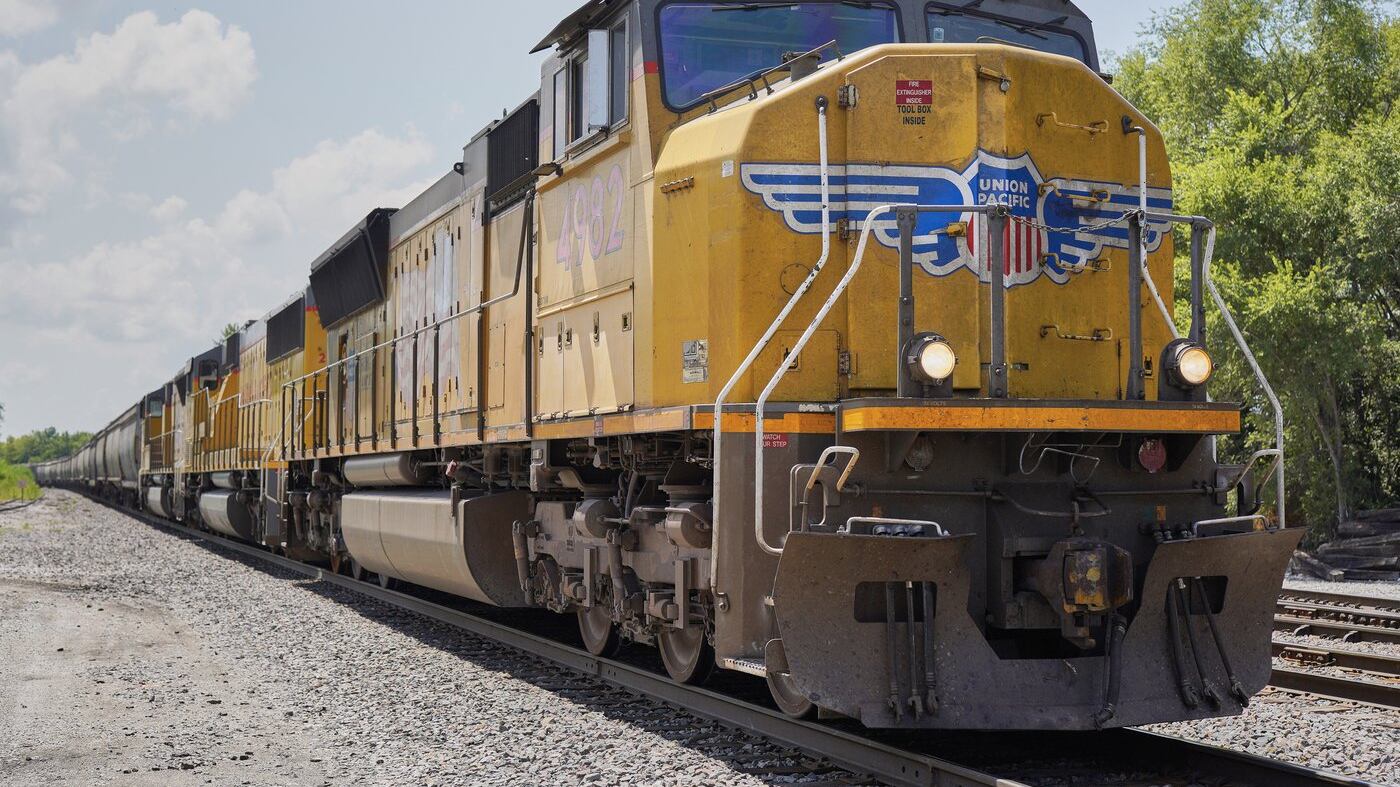
 Union Pacific train travels through Union, Neb., July 31, 2018. (AP Photo/Nati Harnik, File)

Union Pacific said on Tuesday it would buy smaller rival Norfolk Southern in an US$85-billion deal to create the country’s first coast-to-coast freight rail operator and reshape the movement of goods from grains to autos across the U.S.

If approved, the deal would be the largest-ever buyout in the sector and combine Union Pacific’s stronghold in the western two-thirds of the United States with Norfolk’s 19,500-mile network that primarily spans 22 eastern states.

The two railroads are expected to have a combined enterprise value of $250 billion and would unlock about $2.75 billion in annualized synergies, the companies said.

The $320 per share price implies a premium of 18.6 per cent for Norfolk from its close on July 17, when reports of the merger first emerged.

The companies said on Thursday they were in advanced discussions for a possible merger.

The deal will face lengthy regulatory scrutiny amid union concerns over potential rate increases, service disruptions and job losses. The 1996 merger of Union Pacific and Southern Pacific had temporarily led to severe congestion and delays across the Southwest.

The deal reflects a shift in antitrust enforcement under U.S. President Donald Trump’s administration. Executive orders aimed at removing barriers to consolidation have opened the door to mergers that were previously considered unlikely.

Surface Transportation Board Chairman Patrick Fuchs, appointed in January, has advocated for faster preliminary reviews and a more flexible approach to merger conditions.

Even under an expedited process, the review could take from 19 to 22 months, according to a person involved in the discussions.

Major railroad unions have long opposed consolidation, arguing that such mergers threaten jobs and risk disrupting rail service.

“We will weigh in with the STB (regulator) and with the Trump administration in every way possible,” said Jeremy Ferguson, president of the SMART-TD union’s transport division, after the two companies said they were in advanced talks last week.

“This merger is not good for labor, the rail shipper/customer or the public at large,” he said.

The companies said they expect to file their application with the STB within six months.

The SMART-TD union’s transport division is North America’s largest railroad operating union with more than 1,800 railroad yardmasters.

The North American rail industry has been grappling with volatile freight volumes, rising labour and fuel costs and growing pressure from shippers over service reliability, factors that could further complicate the merger.

Union Pacific’s shares rose as much as two per cent in premarket trading, while Norfolk fell 2.45 per cent.

Consolidation

The proposed deal had also prompted competitors BNSF, owned by Berkshire Hathaway, and CSX, to explore merger options, people familiar with the matter said.

Agents at the STB are already conducting preparatory work, anticipating they could soon receive not just one, but two megamerger proposals, a person close to the discussions told Reuters on Thursday.

If both mergers are approved, the number of Class I railroads in North America would shrink to four from six, consolidating major freight routes and boosting pricing power for the industry.

The last major deal in the industry was the $31-billion merger of Canadian Pacific CP.TO and Kansas City Southern that created the first and only single-line rail network connecting Canada, the U.S. and Mexico.

That deal, finalized in 2023, faced heavy regulatory resistance over fears it would curb competition, cut jobs and disrupt service, but was ultimately approved.

Union Pacific is valued at nearly $136 billion, while Norfolk Southern has a market capitalization of about $65 billion, according to data from LSEG.

(Reporting by Shivansh Tiwary and Sabrina Valle, additional reporting by Abhinav Parmar, Nathan Gomes and Mariam Sunny. Editing by Sriraj Kalluvila, Pooja Desai, Dawn Kopecki and Cynthia Osterma)
Colonial violence in Namibia

Sunday 27 July 2025, by Paul Martial


Germany’s colonial conquests were carried out late, the construction of the German nation having itself come late. Chancellor Bismarck was not very interested in colonial adventures, preferring to use energy and money in the consolidation of the country. In addition, the constitution of an empire required an efficient navy that the country did not yet possess. Finally, all the territories that could have been easily conquered were already occupied by other European powers.

Treaty of Berlin


From 1880 onwards, industrialists and major merchants in search of new outlets put pressure on Germany to embark on the “colonial adventure”. It was with the Treaty of Berlin of 1885, which formalized the African possessions of European countries, that Bismarck succeeded in taking over some territories. Thus, current countries such as Togo, Cameroon, Rwanda, Burundi, Tanzania and Namibia fell into the German fold. Like other European countries, German settlers evicted the inhabitants from their land, requisitioned their livestock and used violence against the population.

A repressed revolt


In Namibia, a Herero revolt broke out in 1904, led by Samuel Maharero, then joined by another population, the Nama. Historically, these two pastoralist communities have often competed for access to pasture. The warriors attacked the colonists but spared women and children.

The German authorities, for their part, sent Lothar von Trotha, an officer specializing in colonial repression who had distinguished himself in the repression of the Boxer rebellion in China. Thanks to naval infantry, the revolt was crushed and a terrible repression ensued.

Desire for extermination


The soldiers of the military unit of the African colonies of the Schutztruppe received an extermination order: “Within the German borders, every Herero, with or without weapons, with or without cattle, will be slaughtered. I no longer accept women or children; they will be taken back to their people - or shot. Thus, the people were pushed towards the Kalahari desert, the wells were poisoned and a large majority died of thirst and hunger.

Those who surrendered were transported by train to the concentration camps, where most died of disease or exhaustion from forced labour. Some were victims of “medical” experiments carried out by a certain Eugene Fischer, who would later have the sinister Josef Mengele as his assistant.

Members of other communities were also massacred, such as the Damara and the San. This genocide was clearly assumed by Von Trotha, boasting of having the support of Emperor Wilhelm II. He declared: “I destroy the insurgent tribes in rivers of blood and money. It is only on such soil that the seed can take, that something can grow.” It is believed that 80% of the Herero population and 50% of the Nama were exterminated between 1904 and 1908.

Controversy over genocide recognition and reparations

Germany’s recognition of the Herero and Nama genocide has been a lengthy process and remains marred by controversy over the issue of reparations. During his trip to Namibia in 1995, Chancellor Helmut Kohl avoided the representatives of the Herero. Federal President Roman Herzog in 1998 spoke only of a “dark chapter”. Foreign minister Joschka Fischer said in October 2003: “We are fully aware of our historical responsibility, but we are not hostages of history”. It was not until 2004 that Germany finally recognised the genocide through the development minister, Heidemarie Wieczorek-Zeul, while rejecting a policy of reparations. Only $20 million will be offered for communities that were victims of the genocide.

The demand for redress


This rejection of reparation, presented at the time by Germany as a principle, was not very convincing. It had set a precedent in 1890 by demanding reparations of 12,000 cows from the Herero who had fought against colonization. The other argument put forward, that of the impossibility of attaching a legal qualification dating from 1948 to previous facts, suffers from inconsistency with the Bundestag’s recognition of the Armenian genocide perpetrated in 1915.

The Namibian government, in its desire to maintain good relations with Germany, which remains the country’s largest donor, was reluctant to lead this fight. Reinforced by a concern that the Herero and Nama, benefiting from financial support, would compete with the power held by the members of the country’s ethnic majority, the Ovambo.

The situation gradually changed with the mobilizations of the Herero and Nama, who kept challenging the German and Namibian governments and to take legal action. Added to this was the parliamentary mobilization of the radical left. In response to a question from Die Linke, the government began to evolve by considering that the 1948 Convention “can serve as a reference criterion for a non-legal assessment of a historical event to qualify it as genocide”.

Thus, the German and Namibian governments signed an agreement at the beginning of June recognising the genocide with a payment spread over thirty years of a sum of 1,050 million euros.

Recovering the stolen land


This agreement has been criticized because the Herero and Nama peoples were not involved in the negotiations, thus violating the United Nations Declaration on the Rights of Indigenous Peoples. Article 18 states: “Indigenous peoples have the right to participate in decision-making on matters affecting their rights, through representatives chosen by them in accordance with their own procedures.” The Damara and San communities, who also suffered colonial violence, are not mentioned.

This agreement turned its back on the main demand: the recovery of the plundered land with the demand that the German government buy back the land holdings held by the German-speaking community. A measure allowing the Herero and Nama to get out of the poverty in which they have been plunged for a century.

But current events also impact this agreement. While Israel is conducting genocide in Gaza, Germany has intervened as a third party to support the genocidal government at the International Court of Justice. As the former Namibian president said: “The German government has not yet fully expiated the genocide it committed on Namibian soil...Germany cannot morally express its commitment to the UN Convention against Genocide, including the expiation of the genocide in Namibia, while supporting the equivalent of a holocaust and genocide in Gaza.”

16 July 2025

Translated by International Viewpoint from l’Anticapitaliste and l’Anticapitaliste.

Attached documentscolonial-violence-in-namibia_a9103.pdf (PDF - 911.4 KiB)
Extraction PDF [->article9103]

Namibia
Will Africa Be the Last Oil Frontier?
A radical introduction to Namibia’s unequal territory

Paul Martial is a correspondent for International Viewpoint. He is editor of Afriques en Lutte and a member of the Fourth International in France.

International Viewpoint is published under the responsibility of the Bureau of the Fourth International. Signed articles do not necessarily reflect editorial policy. Articles can be reprinted with acknowledgement, and a live link if possible.

The wheels are falling off the system

Trump NATO

First published at Arguing for Socialism.

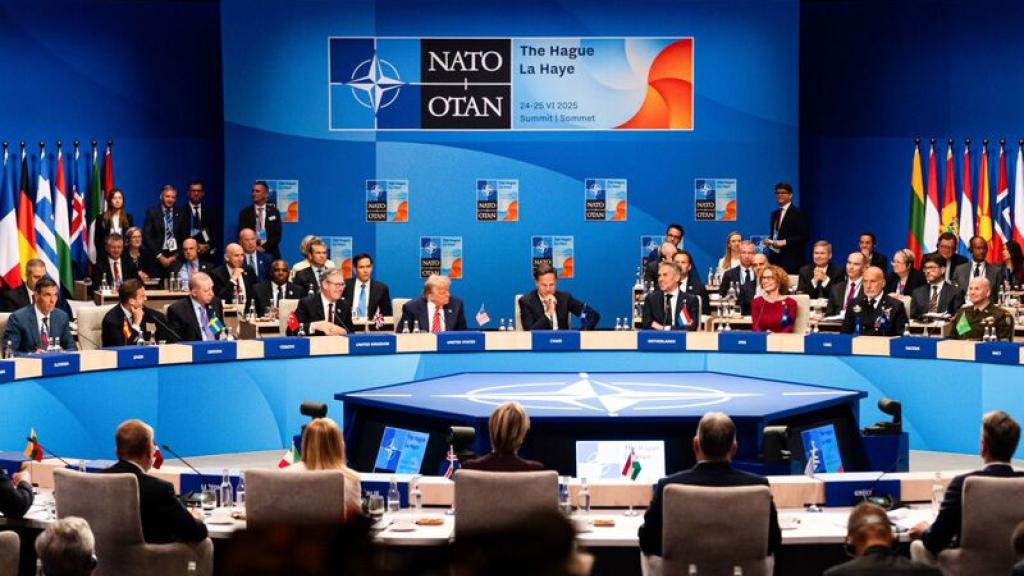
Under intense pressure from the Trump administration, at its June 25 meeting NATO agreed to massively boost “defence” (I.e., military) spending. Along with the turn to war, an intense Russophobia has gripped the European political elite. To justify its existence NATO needs enemies and Russia fits the bill. Fear and loathing of Russia is both cause and consequence of the NATO countries’ plans to dramatically increase military budgets. The failure of the West’s proxy war in Ukraine has stoked anti-Russia sentiment to unprecedented levels.

However, the arms build-up will have dire consequences for the wellbeing of the mass of ordinary people of Europe as they face fast onrushing climate change. Instead of an all-out emergency mobilisation of society to deal with the consequences of global warming (the need for sustainable energy production, healthcare, public housing, ensuring food production, and so on), the NATO countries (with a few exceptions) are committed to a huge boost in military spending.

NATO to massively boost military spending

A recent Age article reported:

That means each member of the alliance has committed to spending 5% of their GDP on defence, up from a current target of 2%. An analysis of NATO’s published figures suggests that would mean an extra $2.52 trillion a year, up from the $1.85 trillion a year that its member states – including the US – spend now.

That amount is roughly equal to the entire GDP of Spain, a member of the alliance that is known for spending little on defence and refusing the target.

Of that target, 3.5% will be dedicated to core defence spending and 1.5% to broader resilience and security. However, only 22 of NATO’s 32 members have met the current 2% target, raising questions about whether the bloc will reach the new threshold.

The Age provided a dramatic (albeit hypothetical) list illustrating the new equipment this increased spending could buy: 19,842 F-35A fighter jets ($127 million each); 812 B-2 bombers ($3.1 billion each); 34,520 Black Hawk helicopters ($73 million each); 65,116 M1A2 Abrams tanks ($38.7 million each) and 590,163,923 EF88 Austeyr rifles ($4270 each).

This gigantic projected increase in military spending will give a big boost to arms manufacturers like Germany’s Rheinmetall but from the standpoint of human society it is batshit crazy.

UK spending priorities

The UK has its own militarisation agenda including £15 billion for modernising the nuclear warheads carried by Trident submarines, 12 new nuclear-powered attack subs, 7000 long-range weapons including missiles and drones, and £1.5 billion on new factories for military production.

It’s also worth noting that Britain has so far sent £18.3 billion in military and other aid to Ukraine to further the West’s war against Russia. Furthermore, UK military and security services have played an outsized role in planing and executing Ukrainian attacks on Crimea and deep into Russia.

The UK’s military plans are alarming but there is a big question mark over them. Can they actually be achieved?

One hopeful sign is that the Starmer government was recently forced to largely abandon its harsh assault on welfare in the face of a massive revolt by its own MPs. Clearly any plan to put “guns before butter” will face intense popular opposition.

Another heartening indicator is that young people in Britain are decidedly unenthusiastic about joining the military. A September 2024 YouGov survey of 18-27 year-olds found that only 11% would fight for their country if called on to do so. A further 37% would fight only if they agreed with the reasons for the conflict. 44% said they would not fight under any circumstances they could think of.

Russophobia

An April 4 ABC News article captures the Russophobic madness gripping European political circles:

Poland is planning to train every adult male for war, Norway is restoring old military bunkers, and Germany has unlocked billions for a historic boost to defence spending.

As fears grow about the reliability of the United States as an ally, countries across the EU are scrambling to prepare for a possible war with Russia.

Danish and German intelligence have warned that NATO should brace for a potential attack in as little as five years.

Many countries are already telling citizens to prepare survival kits in case of a major crisis.

But the increased Russia threat was brewing long before its full-scale invasion of Ukraine and Donald Trump's return to the White House, according to analysts.

The article goes on:

Europe is taking the security shift seriously.

Norway is bringing back a requirement for all new buildings over a certain size to include bomb shelters, in a practice halted in 1998.

And Cold War military bunkers, sitting inside a mountain, that have been deactivated for 40 years are reportedly being restored.

Poland, Lithuania, Latvia and Estonia last month announced they were withdrawing from the Ottawa convention banning anti-personnel landmines.

The countries, which all border Russia, said they were planning to start stockpiling and using landmines again, arguing it was “paramount” to give their troops “flexibility and freedom of choice” to defend NATO's eastern flank.

Poland, Lithuania and Latvia also share borders with Moscow's ally Belarus.

Poland, which spent almost two centuries as a colony of Moscow, is preparing citizens for combat.

The country of 38 million people has started work to ensure all men undergo military training, with the aim to boost its army to 500,000 troops.

Reading this stuff and the various Russophobic “experts” cited brings to mind such characters as Dr Strangelove and General Jack D. Ripper in the celebrated 1964 antiwar movie Dr Stangelove or How I learned to Stop Worrying and Love the Bomb.

A Russian invasion of Western Europe?

However, claims that Russia may or will invade Western Europe are without any factual basis. Furthermore, they are politically illogical.

1. Russia does not even want to occupy all of Ukraine. It aims there have always been clear: A neutral, demilitarised, non-NATO Ukraine; a purging of the far right from their strongholds in the power ministries (army and security services); and respect for the Russian language and culture (the Russian Orthodox Church, for instance, has been banned). Now it also wants recognition of its annexation of the Russia-oriented provinces in the south.

2. Confronting Ukrainian forces that have been preparing for war since 2014 and backed to the hilt by the West, Russian progress has been slow and costly in both human and material terms. Russia is clearly winning the conflict but to suggest that it has the capacity — let alone the desire — to launch an invasion of Europe is simply crazy.

3. The Russophobic madness actually inverts reality. In actual fact, Russia has never threatened Europe. Whatever one thinks of them, the few wars Russia has fought since the breakup of the old Soviet Union have all been connected with its “near abroad”. Rather than threatening the NATO countries, Russia has itself been threatened by the remorseless eastward expansion of NATO.

And in 2014 the US organised a regime change operation in Ukraine, bringing to power anti-Russia, pro-West forces backed by the far right. Ukraine's military was built up by the West and the country became a de facto member of NATO. The regime waged an eight-year long civil war against ethnic Russians in the Donbas region. NATO technology and personnel have been behind the military strikes deep into Russia.

What does the West want here? It wants to crush Russia, to dominate it, to break it up into smaller pieces. Like China, Russia is capitalist but it values its independence and is thus a threat to Western hegemony. Ukraine is just a means — a proxy — in the West's war against Russia. Ukraine is being destroyed in this war but that is of no consequence to its US-NATO masters.

That is the reality. To obscure this reality we have political leaders, the media and all sorts of pundits screaming non-stop about the Russian threat to Europe …

4. A corollary of the West's Russophobia is Putinophobia. Vladimir Putin is routinely portrayed as a Hitleresque figure, a veritable devil, someone uniquely evil. We have no desire to polish Putin's image. He is the political leader of Russia's capitalist oligarchy. He presides over an authoritarian, undemocratic system. But is he really any worse, morally or politically, than imperialist politicians like Trump, Starmer, Merz or Macron? I think that would be a very hard claim to substantiate.

Austerity: 1.1 million preventable deaths

June 30 article by the EU news service Eurostat contains some startling data about the health situation across the EU.

In 2022, 1.1 million deaths among people under the age of 75 in the EU … were considered avoidable by early treatment or prevention of diseases. This figure includes 386,710 deaths from diseases that are treatable, which could have been avoided through high-quality healthcare, as well as 725,625 deaths from diseases that are preventable, which could have been avoided through effective public health interventions …

The most common cause of death from treatable diseases and conditions was ischaemic heart disease with 77,704 deaths … followed by colorectal cancer with 57,476 and breast cancer in women with 40,970 deaths.

For preventable diseases, the most common causes of death were lung cancer with 136,199, ischaemic heart disease with 77,704 deaths … and COVID-19 with 71,919 deaths …

Of course, some countries do better than others. But overall we are talking about Europe here, not Africa, Asia or Latin America. There is also a huge shortage of healthcare workers. According to a November 2024 OECD report:

The European health workforce faces a severe crisis. Twenty EU countries reported a shortage of doctors in 2022 and 2023, while 15 countries reported a shortage of nurses. Based on minimum staffing thresholds for universal health coverage, EU countries had an estimated shortage of approximately 1.2 million doctors, nurses and midwives in 2022.

Instead of spending astronomical sums on militarism, EU countries should spend it instead on healthcare, dealing with climate change, public housing and so on — as well as serious aid to the Third World.

Climate change

Climate change resulting from global warming is the existential challenge facing the human race. But the way our imperialist political leaders are going we are likely to be facing war against Russia and China — while the cyclones howl, the bushfires rage, the floods inundate, heatwaves scorch us and rising sea levels swallow up coastal areas.

In early July Europe was gripped by an unprecedented heat wave. Soaring temperatures led to wildfires in many places. A Lancet study cited by the Guardian put the yearly death toll from heat and cold in Europe at 407,000! This is an enormous figure but it is just a portent of what is to come; it will only get worse.

And in the United States, home of Trump and MAGA, just this year we have seen the Los Angeles mega fire and the recent Texas floods (which killed some 200 people). And the Colorado River basin, on which so many states depend, is drying up as the snow melt reduces and cities in the area keep growing. Furthermore, extremely destructive cyclones are now a regular occurrence.

Change the system

Clearly we can’t go on like this. The wheels are falling off the world capitalist system. If we don’t effect a drastic change of direction, the human race faces decimation if not complete annihilation.

The Israeli-US genocide in Palestine and the refusal of Western governments to decisively break with Israel has shown millions of people around the world the utter depravity of our political leaders.

We need to resist the imperialist war drive against Russia and China. Military expenditure needs to be cut to the bone.

We also need drastic and urgent action on climate change. People are resisting but it is clear that there can be no solution under capitalism. To save our world and its people we need public ownership and control of all the key elements of the economy. We cannot move forward while the huge corporations control the means of production, distribution and exchange upon which we all depend. They must be removed as economic (and political) actors.