Tuesday, August 05, 2025


Ukraine Uncovers Major Corruption Scheme In Drone Procurement
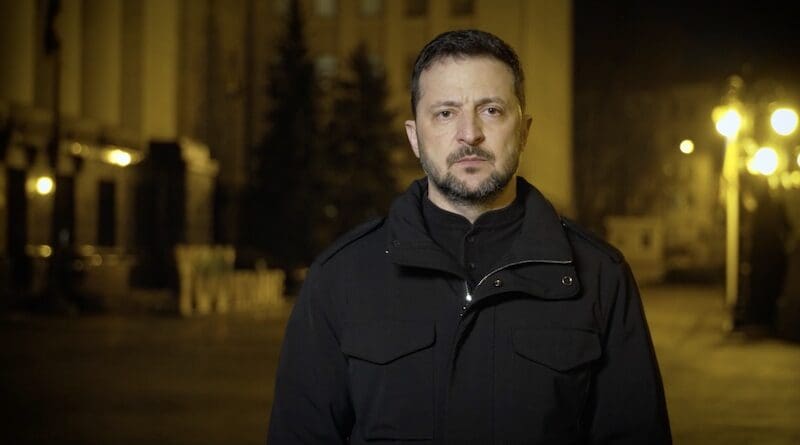
Ukrainian President Volodymyr Zelenskyy. Photo Credit: Ukraine Presidential Press Service

By 

By Jeremias Lin


(EurActiv) — Ukraine’s anti-corruption agencies have arrested a lawmaker and former officials over an alleged defence procurement kickback scheme, just days after parliament restored the independence of key anti-graft bodies.

Kyiv’s National Anti-Corruption Bureau (NABU) and the Specialised Anti-Corruption Prosecutor’s Office (SAPO) have unveiled a scheme involving inflated contracts for military  drones and signal-jamming systems. 

According to media reports, kickbacks were reportedly up to 30% of contract costs, involving a corruption network connected to a sitting lawmaker, two local officials, and several National Guard personnel. 

Four arrests have been made so far, including MP Oleksii Kuznetsov, a member of Zelenskyy’s Servant of the People party. Other exposed officials include Serhii Haidai (former Luhansk governor) and Andrii Yurchenko (head of Luhansk Oblast’s Rubizhne district), Ukrainska Pravda reported, citing law enforcement sources. 

The bribery scheme allegedly diverted funds intended for the procurement of drones and electronic warfare equipment, NABU said


The arrests come at a politically delicate moment. Just days earlier, parliament reversed a controversial reform that had placed NABU and SAPO under the control of the prosecutor general – a post appointed by the president.

The move had sparked Ukraine’s largest protests since the start of Russia’s invasion and drew swift criticism from EU leaders. The independence of anti-corruption institutions is a key requirement for EU accession candidate status, which Kyiv was granted in June 2022.

After the arrests, Zelenskyy wrote on Telegram that he was “grateful to the anti-corruption bodies for their work,” adding that the new law ensures they can “work independently” with “all the opportunities for a real fight against corruption.”


Ukrainian Customs Chief’s Lavish Lifestyle Sparks Corruption Concerns – Analysis
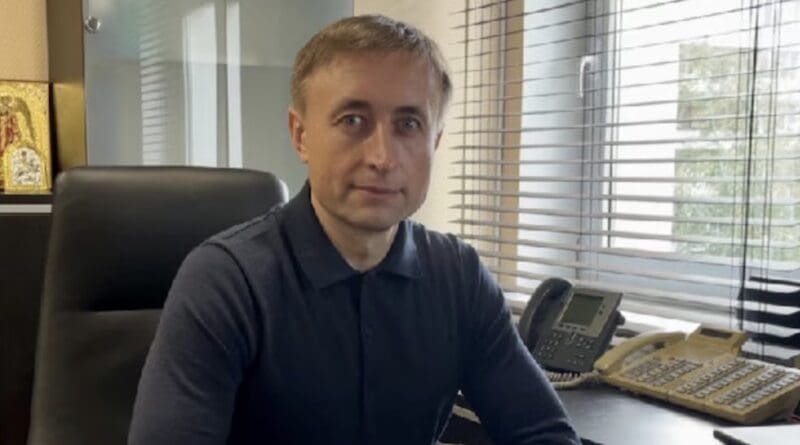
Anatoliy Komar at work, in a photo posted on the Ukrainian Customs Service Facebook page. Credit: RFE/RL

By 

By Heorhiy Shabayev, Schemes and Ray Furlong


(RFE/RL) — An RFE/RL investigation has revealed that the family of a senior Ukrainian customs chief has a portfolio of luxury  real estate and cars while also enjoying a luxury lifestyle amid concerns over corruption that have sparked Ukraine’s biggest protests since Russia’s full-scale invasion in 2022.

The findings come in a report by Schemes, the investigations unit of RFE/RL’s Ukrainian Service, raising questions about the lifestyle of 44-year-old Anatoliy Komar and his family, as well as how it was all paid for.

The case also underlines why ordinary Ukrainians and Western governments have pushed Ukraine’s president, Volodymyr Zelenskyy, to reverse a law that took away the independence of the country’s leading anti-corruption bodies.

Komar became head of the Customs Service department that levies duties on imports and exports of oil, gas, and other energy in February 2022, just before Moscow’s all-out invasion.

Soon after, he was also tasked with preventing prohibited Russian fuel entering the Ukrainian market. Prior to working at the Customs Service, he had a 20-year career at Ukraine’s Security Service (SBU) and a spell at a private energy company.


In addition to Komar’s monthly salary of about $2,000, the family’s main income comes from his wife, Maria, who works as a tour guide and offers online courses. Her declared income is much higher, at around $8,000 per month.

But a detailed look at the family outgoings suggests a much higher income would be required to support their lifestyle.

For example, the couple have officially declared that their daughter lives in Ukraine, but this does not appear to be the case.

In May 2023, she posted a photo on social media showing her graduation from the Pascal English School Larnaka on the Mediterranean island of Cyprus, which had annual fees for education and accommodation of nearly $30,000.

Her social media feed also shows her at a Van Gogh exhibition in London, jet skiing in Albania, and enjoying visits to Venice, Dublin, and Montreux. This year, she appears to be studying at King’s College London, where undergraduate tuition fees for non-UK students alone are nearly $35,000 per year.

‘Wealthy Godfather’

Asked to explain how this was financed, Komar told RFE/RL that he would not comment on personal matters. When pressed, he said it was paid for by a “godfather” who was a “fairly wealthy person,” but did not elaborate.

Komar has a different explanation for the Mercedes he drives. His official property declaration states that his wife rents it. When RFE/RL asked how much this cost, Komar refused to say.

He’s been using the car since 2021. Three car-rental companies told RFE/RL that the S-class would have cost $6,000 a month back in 2018.

This alone would be a huge expense, but here the plot thickens.

The car is registered to a renewable energy firm called the Primorskiy Energy Generating Company. Its tax reports show it has earned some $14,000 over the last three years from renting out vehicles.

It has three cars, but even if it only rented out Komar’s, this would make just $360 per month, some 16 times less than the market price.

The director of the company, Roman Vorabel, told RFE/RL that hiring its cars would be “expensive” before saying he needed to speak to a lawyer before answering any further questions. He then stopped answering the phone.

Komar’s wife, Maria, said she would answer questions in writing, but has not done so.

Meanwhile, the family’s property portfolio also raises question marks.

In 2021, Komar became the owner of an apartment in a Kyiv residential complex worth some $90,000.

But the family do not live there. In 2020, they moved into another apartment purchased by Maria’s father, Serhiy Hladkov.

Indeed, the family claims to have received various types of support from relatives, including nearly $50,000 from Maria’s mother, Lidia, in 2021, and nearly $70,000 from her grandmother.

But 69-year-old Serhiy Hladkov’s role stands out.

In February 2025, he completed construction of a sprawling 450-square-meter house on land in the village of Vyshenky, near Kyiv.

The value of the home, which includes a swimming pool, two kitchens, and space for staff, is estimated at more than $1 million. This is without costs of appliances, furniture, or plumbing, according to architects interviewed by RFE/RL.

Hladkov also spends money on cars, including a 2024 Volvo XC90 worth nearly $50,000.

Math Doesn’t Add Up

Komar told RFE/RL he did not know where Hladkov got his money from. Hladkov told RFE/RL he had earned the money and then hung up.

According to information that RFE/RL obtained from sources with access to income tax data, Hladkov worked at a state-owned metalworking plant in Chernivtsi from 1998 to 2009, having an official salary of less than $200 per month.

Later, in 2019, aged 63, he became self-employed and recorded a rapid increase in earnings, making a total of nearly $400,000 by March 2025.

Hladkov’s wife, Lidia Hladkova, has a similar story.

After a modest salary during her entire working life, she became self-employed and made a total of nearly $180,000. The couple were registered as organizers of congresses and trade fairs.

Lidia Hladkova declined to comment.

Even if they had not spent any money in their entire lives, these earnings would not have been enough for the villa in Vyshenky. Yet the couple were also able to purchase the apartment where Komar lives, and another one nearby, as well as allegedly provide the gifted cash to Komar’s family.

As well as finding that the math doesn’t add up, RFE/RL’s investigation also uncovered another association of Komar that raised questions.

Komar is president of an amateur soccer team in his home town, Rokyta, in the Poltava region. It is sponsored by a company, VM Groupe, which imports petroleum products. Ukrainian law enforcement is investigating it for multimillion dollar tax evasion. The SBU is investigating it for the suspected import of Russian raw materials.

Anti-corruption campaigner Serhiy Mytkalyk told RFE/RL that Komar could be in conflict of interest, given that he heads a state body that oversees taxes on energy imports and exports.

“It is necessary to check all the decisions that [Komar] made in favor of this company,” he said. “Law enforcement officers can even check for illegal benefits.”

Komar told RFE/RL he had in no way assisted VM Groupe or its owner.

  • Heorhiy Shabayev is a journalist with Schemes (Skhemy), an investigative news project run by RFE/RL’s Ukrainian Service. He is a graduate of the Institute of Journalism at Taras Shevchenko National University of Kyiv and the author of a dozen investigations into corruption in the government, the construction industry, and in large state-owned enterprises.
  • Schemes (Skhemy) is the award-winning investigative project of RFE/RL’s Ukrainian Service. Launched in 2014, it has exposed high-level corruption and abuse of power for over a decade. Following Russia’s full-scale invasion in February 2022, the project expanded to uncovering Russian war crimes.
  • Ray Furlong is a Senior International Correspondent for RFE/RL. He has reported for RFE/RL from the Balkans, Kazakhstan, Georgia, and elsewhere since joining the company in 2014. He previously worked for 17 years for the BBC as a foreign correspondent in Prague and Berlin, and as a roving international reporter across Europe and the former Soviet Union.


RFE RL

RFE/RL journalists report the news in 21 countries where a free press is banned by the government or not fully established.


Turkmen Migrants Face Deportations As Russia Escalates Crackdown

airplane landing takeoff

By 

By Sadokat Jalolova


(TCA) — Russian authorities are intensifying their deportation of foreign nationals under a sweeping crackdown on irregular migration, with Turkmen citizens increasingly targeted, according to Turkmen News.

Deportation Without Trial

Under new rules introduced in February 2025, Russian police and migration officials can summarily expel foreign nationals without awaiting court decisions. The measures coincide with a significant uptick in Turkmen migration: nearly 90,000 Turkmen citizens entered Russia in 2023, triple the number recorded in 2022.

Now, reports of deportations are mounting. In July alone, media outlets across several Russian regions reported hundreds of foreigners, many of them from Turkmenistan, being forcibly removed. Key figures include:

  • Astrakhan Region: 200 people
  • Nizhny Novgorod Region: 518 people
  • Republic of Dagestan: 260 people
  • Stavropol Krai: 127 people

Raids have also been carried out in other areas, though officials often refrain from disclosing detainees’ nationalities. For example, in early July, Moscow police raided hostels and prayer houses, detaining over 500 foreigners. More than 30 were later expelled for immigration violations, according to Kommersant.

A recent case in Saratov Region highlighted the situation. On July 30, the Federal Bailiff Service (FSSP) announced the deportation of three Turkmen citizens for violating migration laws. Among them: a 27-year-old former student who overstayed his registration in Kazan, a 55-year-old man whose legal stay had expired in 2024, and a 47-year-old businessman who failed to obtain a work permit. All three cited lack of funds to return home. They were escorted to a Moscow-area airport and deported, receiving five-year re-entry bans. According to Turkmen News, they will also be placed on a “no-exit” list upon return, barring them from leaving Turkmenistan in the near future.


Tougher Migration Regulations

Millions of Central Asians live and work in Russia, forming the backbone of the country’s migrant labor force. Official figures indicate that nearly 4 million citizens of Kazakhstan, Kyrgyzstan, Uzbekistan, Tajikistan, and Turkmenistan currently reside in Russia. An additional 670,000 foreigners are believed to be in the country without legal status.

Uzbekistan and Tajikistan account for the largest share of migrant laborers. In 2023, over one million Tajik citizens entered Russia for work. However, the overall number of Central Asian migrants has been declining, driven by tighter restrictions, growing xenophobia, and fears of forced conscription. In 2024 alone, Russian authorities expelled around 15In 2025, Moscow introduced a new set of migration regulations aimed at curbing irregular migration. These measures authorize law enforcement to carry out deportations without judicial review, establish a centralized registry of undocumented foreigners, and set a deadline of September 10, 2025, for migrants to legalize their status. Those who fail to comply will face deportation and multi-year bans on re-entry.

These efforts build on previous policies, including mandatory fingerprinting and photographing of all incoming migrant workers, reducing visa-free stays from 180 days to 90, and expanding the list of deportable offenses.

The crackdown intensified following the March 2024 terrorist attack at Crocus City Hall in Moscow, which was allegedly carried out by suspects of Central Asian origin. The incident sparked a wave of anti-migrant sentiment and led to a flurry of legislative activity. Since then, the government has reportedly passed at least 15 new laws aimed at “combating illegal migration.”

  • About the author: Sadokat Jalolova has worked as a reporter for some time in local newspapers and websites in Uzbekistan, and has enriched her knowledge in the field of journalism through courses at the University of Michigan, Johns Hopkins University, and the University of Amsterdam on the Coursera platform.

TCA

TCA is The Times of Central Asia. Founded in Bishkek in 1999 by Giorgio Fiacconi, who served as the First Honorary Consul of Italy to Kyrgyzstan for fifteen years, The Times of Central Asia was the first English language regional publication on the region. Building upon its extensive archive of stories, today the Times of Central Asia continues to cover politics, economics, culture, social issues, justice and foreign affairs across Eurasia.

 elderly russia man

Another Nail In The Coffin Of Russian Villages: Rural Post Offices Closing Across The Country – OpEd


By 

There has long been a debate about what closures in rural areas mark the approaching death of towns and villages. Most point to the absence of jobs and the flight of the young, but many focus on the consolidation of schools and the closing of medical facilities. There is no doubt, however, that the closing of post offices is a clear sign of approaching death.


In the US, many rural residents fight as hard as they can not to lose their post office or at least their area codes. They don’t always win, but rural America is filled with places where the only “business” still in at least limited operation is the post office, something people look to as a sign that their town has not yet died.

But in rural areas of the Russian Federation, especially in recent years as a result of Putin’s optimization programs to save money by consolidating health care and other public services to have money for his war in Ukraine, post offices are now closing, being given expanded areas of responsibility without new funds and workers, or operating on reduced hours.

And the accelerated death of villages in rural Russia, one brought on by this trend, will further depress Russia’s birthrate which has been much higher in rural areas than in cities. That means that one Putin goal, this time increased fertility, is being undercut by another Putin policy, the destruction of Russia’s postal system.

An investigation by The Replica portal concludes that in most of the country, the postal system is in a near death crisis. Many postal workers are quitting because of low wages or expanded duties without additional funding. And post offices that used to be open normal business hours now function only a few hours a week (thereplica.io/post/pochta-rossii-crisis).

The situation east of the Urals is especially dire. In the Altai Republic, 19 of what had been 99 post offices have closed. In Krasnoyarsk Kray, only a third of what had been 800 postal stations still function. And in the Transbaikal Kray, 87 percent of the positions in the postal system are not being filled.


Observers say that even in the troubled 1990s, the situation with the postal system was not so bad as it has become since Putin launched his expanded war in Ukraine. And they add that the approaching death of postal service in rural areas will have especially serious consequences because in Russia, the postal service has performed more services than in other countries. 

Many rural Russians rely on the post for banking, the receipt of pensions, and other financial transactions. When the post office is close to where they live, this helps them to live their lives; but when the only postal office is dozens or even more kilometers away, they suffer – yet another consequence of Putin’s war. 


Paul Goble

Paul Goble is a longtime specialist on ethnic and religious questions in Eurasia. Most recently, he was director of research and publications at the Azerbaijan Diplomatic Academy. Earlier, he served as vice dean for the social sciences and humanities at Audentes University in Tallinn and a senior research associate at the EuroCollege of the University of Tartu in Estonia. He has served in various capacities in the U.S. State Department, the Central Intelligence Agency and the International Broadcasting Bureau as well as at the Voice of America and Radio Free Europe/Radio Liberty and at the Carnegie Endowment for International Peace. Mr. Goble maintains the Window on Eurasia blog and can be contacted directly at paul.goble@gmail.com .


Transnational Repression, A Growing Threat To UK Says Parliamentary Committee – Analysis

Patriotism Woman Flag People Pride United Kingdom

By 

The report accuses nations including Russia, China, Iran, and India of perpetrating Transnational Repression on UK soil but India says report is biased   


Transnational Repression (TNR) represents a troubling challenge to human rights in the United Kingdom, as outlined in a recent UK parliamentary committee report.

Defined as actions by foreign governments to harass, intimidate, or harm individuals beyond their borders, TNR undermines fundamental freedoms of expression, safety, and movement. 

The report accuses nations including Russia, China, Iran, and India of perpetrating TNR on UK soil, highlighting a 48% surge in MI5 state-threat investigations and over 20 Iran-related threat-to-life cases since 2022. 

The report explores the nature, impact, and proposed responses to TNR, emphasizing its profound implications for individuals and communities.

Forms of TNR

TNR manifests in diverse forms, from online disinformation and surveillance to physical violence and assassination attempts. These tactics violate internationally recognized rights, including freedom from inhuman treatment and the right to life. 


The report notes specific examples: China employs surveillance, harassment, and bounties, such as the $HK1 million reward on activist Chloe Cheung, alongside alleged “police stations” in the UK to monitor diaspora. 

Russia uses INTERPOL Red Notices, lawsuits, and high-profile attacks, like the Salisbury nerve agent incident, to silence critics. Iran poses significant kidnap and assassination risks, targeting journalists and diaspora with gendered abuse and surveillance through “cultural centres.” 

India is accused by Canada for killing of Sikh separatist Hardeep Singh Nijjar and the US says that India was plotting to assassinate Gurpatwant Singh Pannun a supporter of Sikh separatism in New York 

On August 1, India’s Ministry of External Affairs rejected the UK report saying that it was “baseless,” “biased” and based on  “unverified sources.”

Wide Impact of TNR

The impact of TNR extends beyond recorded cases, creating a “chilling effect” that suppresses political discourse across entire communities.

Under-reporting, due to fear and the covert nature of TNR, masks its true scale. Personal accounts reveal profound effects: a targeted Chinese individual described pervasive suspicion of strangers, fearing they may be agents of the Chinese government. Such fear discourages public participation and dissent, achieving perpetrators’ goals without widespread overt action.

The report criticizes the misuse of INTERPOL Red Notices by authoritarian states to target critics, urging reforms and UK mechanisms to alert individuals about politically motivated notices. 

UK’s Steps

To counter TNR, the UK introduced the Foreign Influence Registration Scheme (FIRS) under the National Security Act 2023, mandating registration of foreign-directed political activities, with penalties up to five years’ imprisonment. 

However, the exclusion of China from FIRS’s enhanced tier has sparked criticism, suggesting a cautious UK approach to Beijing despite its documented TNR activities.

Call for Global Cooperation

Internationally, the report calls for UK’s leadership in addressing TNR, including prioritizing it at the UN and supporting G7 initiatives like the 2024 Leaders’ Statement and Digital TNR Detection Academy. 

These efforts aim to foster coordinated action among democracies to counter TNR’s global rise.

Thus, TNR poses a serious threat to UK human rights, with Russia, China, and Iran as prominent perpetrators, while allegations against India remain contentious due to limited evidence and India’s rebuttal. 

The UK’s strategic framework and international cooperation signal progress, but gaps in enforcement, such as China’s exclusion, highlight challenges in balancing security and diplomacy. 

Robust action is essential to protect individuals and preserve democratic freedoms against TNR’s insidious reach, the report said.


P. K. Balachandran

P. K. Balachandran is a senior Indian journalist working in Sri Lanka for local and international media and has been writing on South Asian issues for the past 21 years.