Friday, September 26, 2025


US plans to use emergency powers to save more coal plants

Stock image.

The Trump administration plans to continue using emergency authority to stop coal-fired power plants from retiring, according to people familiar with the matter.

The Energy Department has already issued emergency orders to halt the retirement of two fossil fuel-fired plants, and plans to use the same process to keep others operating, said the people, who asked not to be named discussing internal matters.

Although such orders are typically reserved for natural disasters or war, the agency used them to save a Michigan coal-fired power plant owned by Consumers Energy and a Pennsylvania oil-and-gas generator owned by Constellation Energy Corp.

“This administration’s policy is going to be to stop the closure of coal plants,” Energy Secretary Chris Wright said Wednesday during an event held by the New York Times. Shutting down coal-fired power plants “that are working today” would drive up electricity prices, and hinder efforts to reindustrialize the US economy, he said.

A total of 27 gigawatts of coal-power generating capacity, or about 16% of the US total, is scheduled to retire by the end of 2028, according to the Energy Information Administration.

The Trump administration has prioritized expanding the use of a coal and argued that closing fossil fuel-powered plants threatens the grid as AI drives up demand. At the same time, the White House has halted wind projects and rolled out policies that disadvantage solar and other renewable energy sources.

“On day one of this administration, President Trump declared an energy emergency,” Energy Department spokesman Ben Dietderich said. “Secretary Wright and the Trump administration remain committed to exploring all options necessary to ensure affordable, reliable and secure energy access for the American people.”

Using emergency powers to save coal plants has drawn criticism from regulators and environmentalists who said no emergency exists and that such orders would increase consumer electricity costs.

“Despite Americans’ concern about rising bills, the Trump Administration wants to force electricity customers across the country to bail out a dying coal industry,” said Michael Lenoff, a senior attorney for Earthjustice, said in a statement. “The marketplace is dictating coal plants’ retirement because they are frequently broken, dirty and expensive.”

(By Ari Natter)


Trump wants piece of company in charge of America’s biggest lithium mine


The Trump administration is seeking an equity stake of as much as 10% in Lithium Americas as it renegotiates terms of the company’s $2.26 billion Energy Department loan for its Thacker Pass lithium project with General Motors, two people familiar with the discussions told Reuters.

The proposed stake is the latest example of the Trump administration intervening directly in the American economy as it has in taking stakes in Intel, MP Materials and other US tech and minerals firms to promote industries it sees as critical to national security.

Slated to become the Western Hemisphere’s largest source of lithium when it opens in 2028, the Thacker Pass mine has been under construction for nearly a year with more than 600 contractors at the site roughly 25 miles (40 km) south of Nevada’s border with Oregon.

Thacker Pass is seen as a linchpin in building a domestic supply chain part of Washington’s long-standing drive to boost US production of lithium, a metal used to make batteries for electric vehicles and other electronics.

“President Trump supports this project. He wants it to succeed and also be fair to taxpayers,” a White House official told Reuters. “But there’s no such thing as free money.”

Shares of Lithium Americas rose by roughly 80%, from around $3 a share to $5.54 a share, in aftermarket trading following the news.

The project has long been touted by both Republicans and Democrats as a key way to boost US critical minerals production and cut reliance on China, the world’s largest lithium processor.

The US produces less than 5,000 metric tons of lithium at a Nevada facility owned by Albemarle. Thacker Pass’s first phase is expected to produce 40,000 metric tons of battery-quality lithium carbonate per year, enough for up to 800,000 EVs.

China plays a dominant role in the global lithium supply chain, producing more than 40,000 metric tons each year, making it the third-largest producer after Australia and Chile. China’s influence is far greater in refining, where it processes over 75% of the world’s lithium into battery-grade material.

The $2.93 billion Thacker Pass project was approved by Trump at the end of his first term. The loan from the Department of Energy’s Loan Programs Office (LPO) was closed last year by Biden administration officials.

The loan has a 24-year term, with interest rates based on the US Treasury rate as each tranche is drawn.

Lithium Americas was slated to make its first draw on the loan earlier this month but Trump officials sought to renegotiate terms amid concerns about the company’s ability to repay the loan given low lithium prices due to Chinese overproduction, according to the sources.

Discussions over the loan’s potential reevaluation were first reported by the Washington Free Beacon. The administration’s request for an equity stake has not been previously reported.

GM, which invested $625 million in the mine last year for a 38% stake, has the right to buy all of the project’s lithium from its first phase and a portion from the second phase for 20 years, although Trump officials are now seeking a guarantee that GM will buy the metal, according to the sources.

The equity request came during discussions in recent months over the loan’s amortization schedule, with Lithium Americas proposing to shift when part of the loan’s principle would be repaid although not the repayment timeline itself or the total interest the Loan Programs Office would receive, according to one of the sources.

In response to that request and in order to close the loan and secure the funding, Lithium Americas earlier this week offered the government no-cost warrants that would equate to 5% to 10% of its common shares, as well as funds to cover any fees incurred by changing the amortization schedule, according to one of the sources.

Trump officials also are pushing to have GM relinquish its control over parts of the project and transfer them to Washington, according to one of the sources.

GM, which is relying on Thacker Pass to supply much of its lithium needs for its electrification push called the loan a “necessary part of the financing to commercialize this important national resource” and noted that Trump “strongly supported” the mine in his first term.

“We’re confident in the project, which supports the administration’s goals,” a GM spokesperson told Reuters.

Lithium Americas declined to comment on the ongoing negotiations, but said: “We respect the LPO’s decision to pursue a restructure and remain in active discussions with the (Department of Energy) and our partner, GM, and will provide an update at the appropriate time.”

Washington has safeguards in place to protect its investment as part of the original loan terms, including several clauses that give the government the option to take over the project if it is delayed or faces major cost overruns.

Lithium Americas, which has a market value of roughly $750 million, is one of several companies – including ioneer, Exxon Mobil, Standard Lithium and others – developing US lithium projects.

(By Ernest Scheyder and Jarrett Renshaw; Editing by Veronica Brown and Michael Learmonth)


A PIECE OF THE ACTION  STAR TREK
 

US rare earths champion says Pentagon deal not easily replicable


STATE MONOPOLY CAPITALI$M BY ANY OTHER NAME

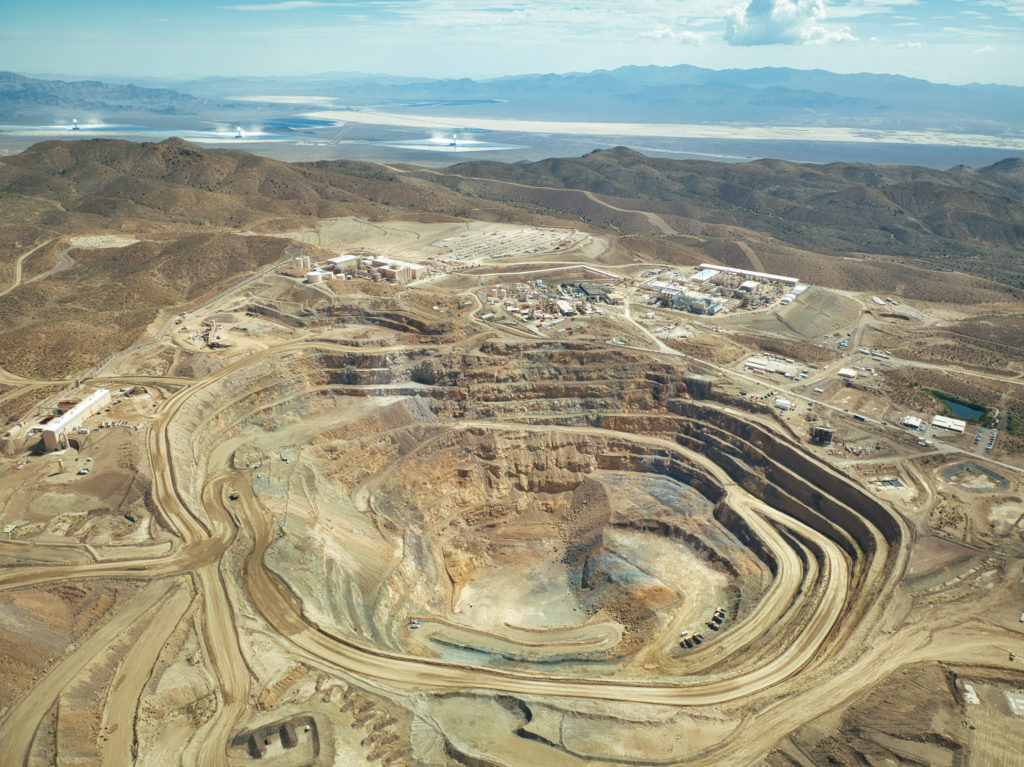
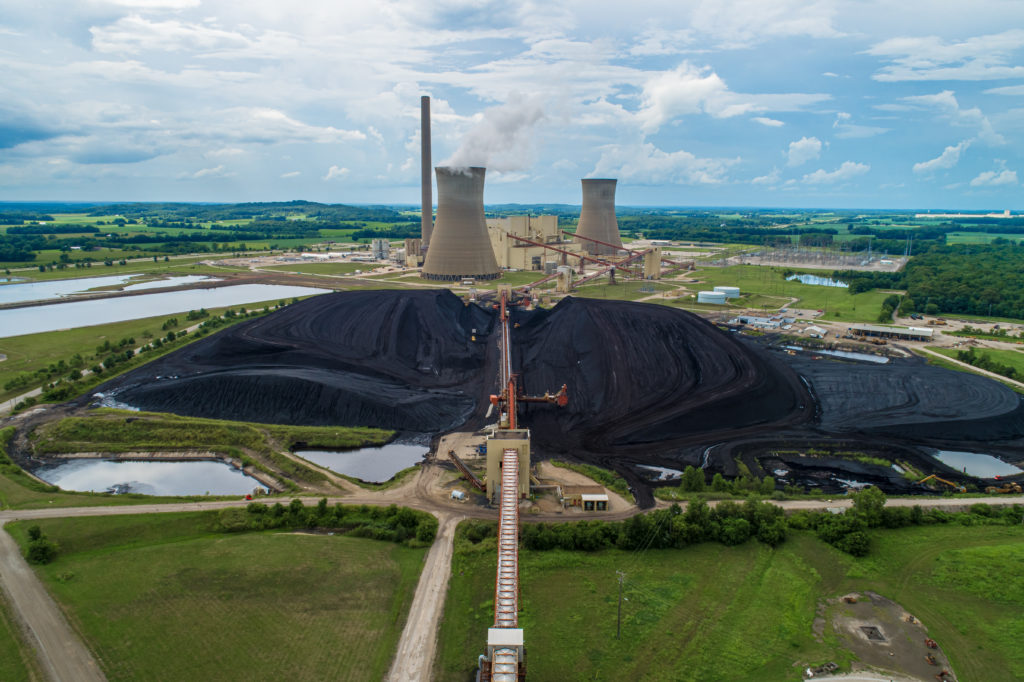
MP Materials’ Mountain Pass rare earths mine in southern California is the only rare earths producer in the United States. Credit: MP Materials

MP Materials Corp., the US rare earths producer that’s received government investment to support construction of domestic capacity, is warning the unprecedented move won’t be easily repeated for other companies.

The Pentagon agreed to a $400 million preferred equity investment in MP in July, not long after the US faced the threat of industrial shutdowns triggered by China’s curbs on exports of rare earth magnets. The deal — also including a supply agreement with a guaranteed floor price — was seen as a transformative moment for an industry plagued by cycles of boom and bust even before this year’s crisis.

The move also triggered widespread discussion about how much support could be extended to other companies, both inside and outside the US. Chief executive officer James Litinsky, who co-founded MP in 2017 to resurrect a dormant Californian mine, said the company’s spectrum of assets — from mines to magnet plants — was one key to the deal.

“One unique thing that we offered is that we’re the only company in the world that’s fully vertically integrated, and if the government is going to support a solution, they need to make sure that the solution works,” Litinsky said in an interview on the sidelines of a rare earths event in Toronto. “You really have to have a full supply chain offering before you go to the US government” for support, he added.

The Pentagon deal was put together after Beijing’s grip on global supply of rare earth magnets proved pivotal in fighting a trade war with Washington. It also constituted a major government intervention to ensure future supply of a strategic product on national security grounds, and it meant the Trump administration has effectively created a national champion.

MP Materials’ shares have more than doubled since the Pentagon investment was unveiled, and rare earth stocks worldwide have soared as prices for the critical materials rally. The Australian government is also considering a floor price for rare earths, and there’s growing expectation for a bifurcated global market in which producers outside China have more protection against volatile prices.

Litinsky said America’s interventionist tack should ultimately create “normal” market pricing for ex-China producers. “The Chinese are going to come to a realization that it’s a fool’s errand to attack this industry,” he said on a conference panel earlier.

Another major talking point at the Toronto event was just how quickly the US is ramping up its own capacity, partly as a result of earlier investments and partly in response to the China shock this year. Adamas Intelligence, the consultancy and organizer of the Toronto event, sees domestic US magnets capacity briefly matched with demand in 2028 before demand from sectors like robotics, drones and electric vehicles takes off.


Sandvik fleet to drive efficiency at Zimplats’ Ngezi underground mines

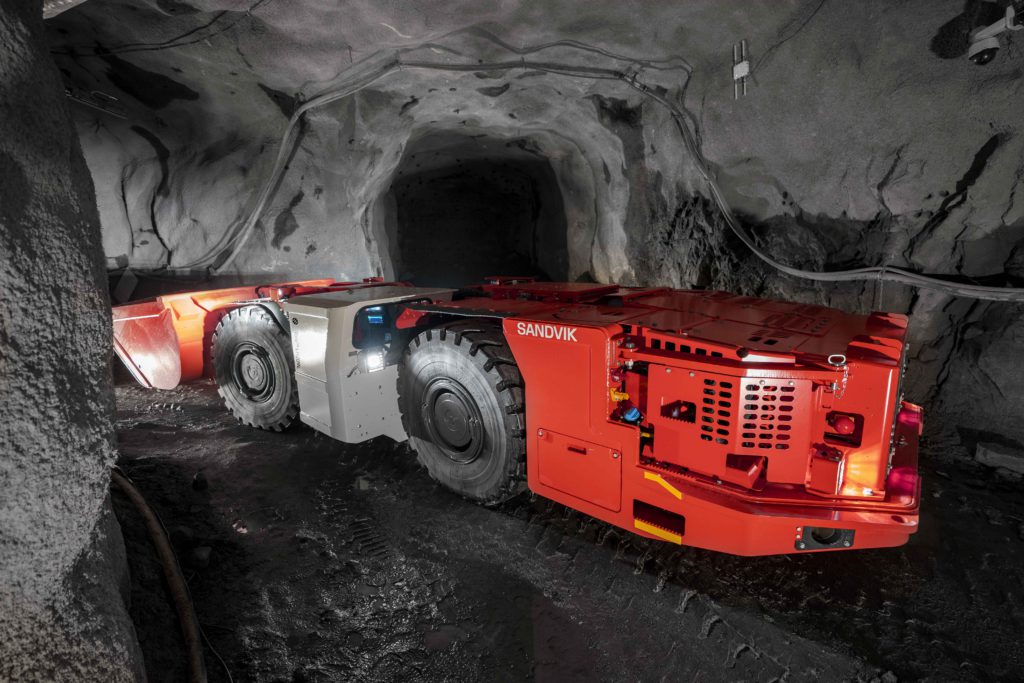
Toro LH209L loader. Image supplied by Sandvik.

Zimplats, the largest platinum group metals producer in Zimbabwe, has selected Sandvik to supply 28 pieces of underground equipment for its Ngezi mines.

The order, to be booked in the third quarter of 2025, includes 12 Toro LH209L loaders, six Sandvik DD211L development jumbos, five Sandvik DS211L-V bolters, three Toro TH545i trucks and two Sandvik TH430L trucks. Deliveries are scheduled between the third quarter of 2025 and the second quarter of 2026. The agreement also covers parts and services kits to support long-term equipment performance.

Located in the Hartley Geological Complex on the Zimbabwean Great Dyke, the Ngezi complex is a major platinum group metals (PGM) operation that has transitioned from open-pit to underground mining. The new Sandvik fleet will further strengthen Zimplats’ underground expansion and operational efficiency initiatives.

“We are proud to partner with Zimplats on this significant investment in the Ngezi underground operations,” said Mats Eriksson, president of Sandvik Mining. “This order reflects our strong commitment to providing reliable, fit-for-purpose equipment and services that help our customers achieve their productivity, safety and sustainability targets.”

Zimplats, 87% owned by Impala Platinum Holdings Limited (Implats), owns and operates the Ngezi underground mines. The company continues to invest heavily in expanding underground mining capacity at Ngezi, including the development of new mines and concentrators.

“This new Sandvik fleet is a strategic step in enhancing our underground capabilities and ensuring we continue to operate safely, efficiently and sustainably,” said Alexander Mhembere, CEO of Zimplats. “Partnering with Sandvik gives us the confidence that our operations will be supported by proven equipment and dependable service.”


Congo seeks to tap more gold with new mines amid soaring prices

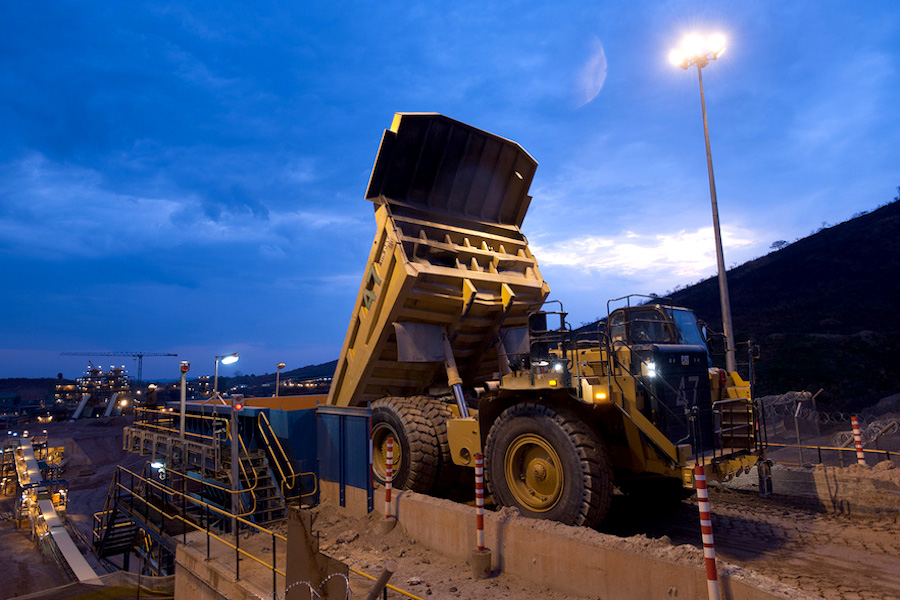
Barrick’s Kibali mine, Democratic Republic of Congo. Image from Rangold Resources.

Democratic Republic of Congo says it loses 60 tons of gold a year to smuggling. The new mines minister wants the country to build new sites to recapture that wealth.

Louis Watum, who became minister last month, previously developed Africa’s biggest gold mine at Kibali, now owned by Barrick Mining Corp. He sees more projects like it on the horizon.

“There’s a lot of talks in the pipeline and a few deals might be announced in the near future,” Watum told Bloomberg in an interview in New York Wednesday. “We are talking with not only existing big mining houses like Barrick. We open again space for newcomers as well.”

Despite the success of Kibali, Congo has struggled to develop gold assets in its conflict-ridden east. Traffickers and armed groups dominate the trade, much of which transits through neighboring Uganda and Rwanda to the United Arab Emirates. With the gold price near record highs, 60 tons of gold could be worth more than $7 billion, a transformative revenue source for a poor country.

Watum, who also developed Ivanhoe Mines Ltd.’s copper and zinc projects in Congo, is in talks with the US over a forthcoming minerals, infrastructure and security deal, which he said are “quite advanced.”

“Once we’ve agreed on that framework, it’s going to be a lot more” business-to-business discussions with US companies, he said. “We’re trying to put as much as we can on the table for them.”

He said he is also looking to resolve longstanding disputes with some of the country’s biggest copper and cobalt miners, including Glencore Plc., Eurasian Resources Group and China’s CMOC Group Ltd.

Earlier this month Watum flew to Kazakhstan with Congolese President Felix Tshisekedi and held talks with ERG, which was in danger of losing at least one of its several projects in the country.

“I don’t think expropriating assets from their operators is a right signal to send to the world,” he said. “They also need to discharge on their obligations, and if they don’t, then we’re going to have also again a conversation to see how we take things forward.”

Watum has also talked to Glencore’s management about outstanding payments, he said.

In response to questions, a Glencore spokesperson said, “We continue to engage with the government.”

Cyrille Mutombo, Barrick’s Congo country manager, said in a message Thursday the company “is ready to invest in future growth in both the north eastern DRC and the copper belt.”

ERG did not immediately respond to messages requesting comment.

Watum said he also has started discussions with CMOC — the world’s biggest cobalt producer — over a new cobalt export quota, and is pushing for development of Congo’s lithium assets with other interested miners.

China’s Zijin Mining Group Co., Australia’s AVZ Minerals Ltd. and the US mining explorer KoBold Metals Co. are all hoping to develop projects in the country.

“When you have an economically viable deposit,” Watum said. “it doesn’t matter who’s going to mine it. It’s going to be mined sooner or later.”

(By Michael J. Kavanagh)

Smackover reports highest lithium-in-brine grades in North America at Texas project  

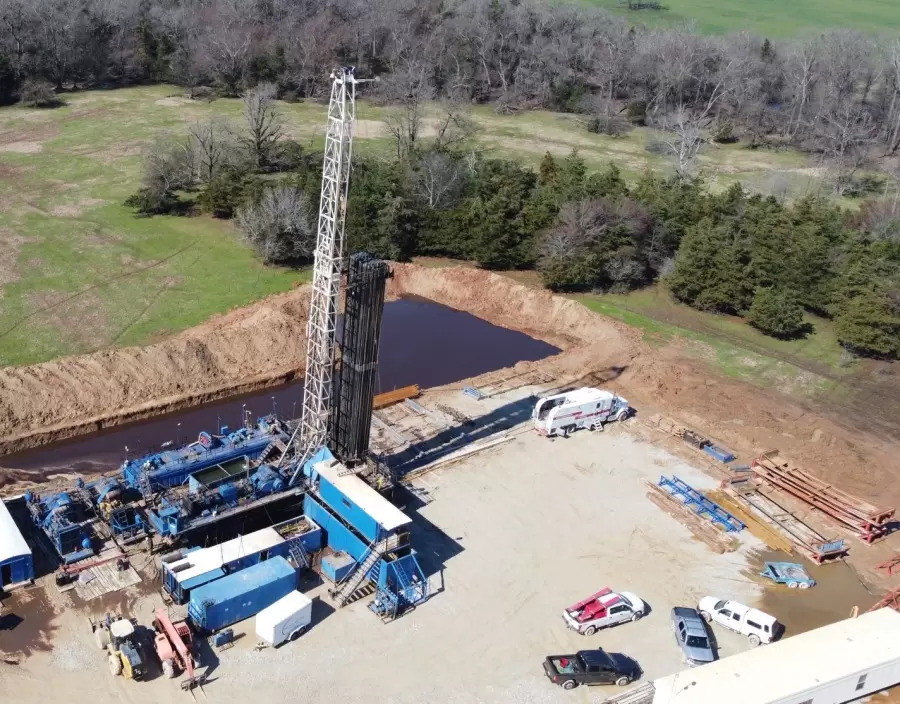
Drill rig at the new borehole/well location in East Texas. Credit: Standard Lithium

Smackover Lithium, a joint venture between Standard Lithium (TSXV: SLI) (NYSE.A: SLI) and Norway’s state-owned petroleum company Equinor (NYSE: EQNR), announced a maiden inferred resource for its Franklin project in the northeast region of Texas. 

The report for the JV’s first project in the East Texas region of the Smackover Formation highlights the size and quality of its brine position, the company said.  

Analysts estimate that the Smackover Formation could host more than 4 million tonnes of lithium, enough to power millions of electric vehicles and other electronic devices. 

Smackover said the project contains the highest reported lithium-in-brine grades in North America and marks a key step towards the ultimate goal of reaching production of over 100,000 tonnes of lithium chemicals per year in Texas through multiple phases.  

The JV is planning to develop two additional projects in East Texas that roughly triples the size of the portfolio area in the state, it said.  

Maiden inferred resource highlights 

Brine mineral leasing has been ongoing since 2022 in the approximate 80,000 acre project area Over 46,000 acres have been leased to support the inferred resource. 

Seismic, historic oil and gas well core and logging information, including completing three exploration wells in 2023, were used to assess the aquifer characteristics and brine chemistry. The highest reported North American lithium brine concentration to date of 806 mg/L was measured from the Pine Forest 1 well, the company said. 

The maiden resource report includes 2,159,000 metric tonnes of lithium carbonate equivalent, 15,414,000 tonnes of potash (as potassium chloride) – a newly added mineral to the U.S. Geological Survey 2025 Draft Critical Mineral List – and 2,638,000 tonnes of bromide (ionized form of the commercial product bromine), contained within 0.61 km3 of brine volume underlying Smackover Lithium’s gross leased acreage at the Inferred Resource category.  

“Our team has been working diligently for the past four years to identify the most attractive areas to secure sizeable, high-quality brine resources in North America, and the Franklin Project provides a strong foundation for future, much larger production in the Smackover that will complement our South West Arkansas project,” Standard Lithium president Dr. Andy Robinson said in a news release.   

“We believe East Texas to be a meaningfully underappreciated part of our total asset portfolio and expect this report to be a key initial step towards achieving more appropriate recognition for this world-class asset.” 

Smackover Lithium is also developing a greenfield lithium extraction and chemicals production facility in the southwestern region of Arkansas. In January, the JV received a $225 million grant from the US Department of Energy to support the construction of Phase 1 of the project. 

Standard Lithium shares were up 9.2% by market close in New York. The company has a C$1.02 billion ($73million) market capitalization.  


Barclays warns mining earnings could fall 25% from nature-related risks

Image: BHP

Mining companies could see earnings drop by as much as 25% over five years due to nature degradation, Barclays said in a new report.

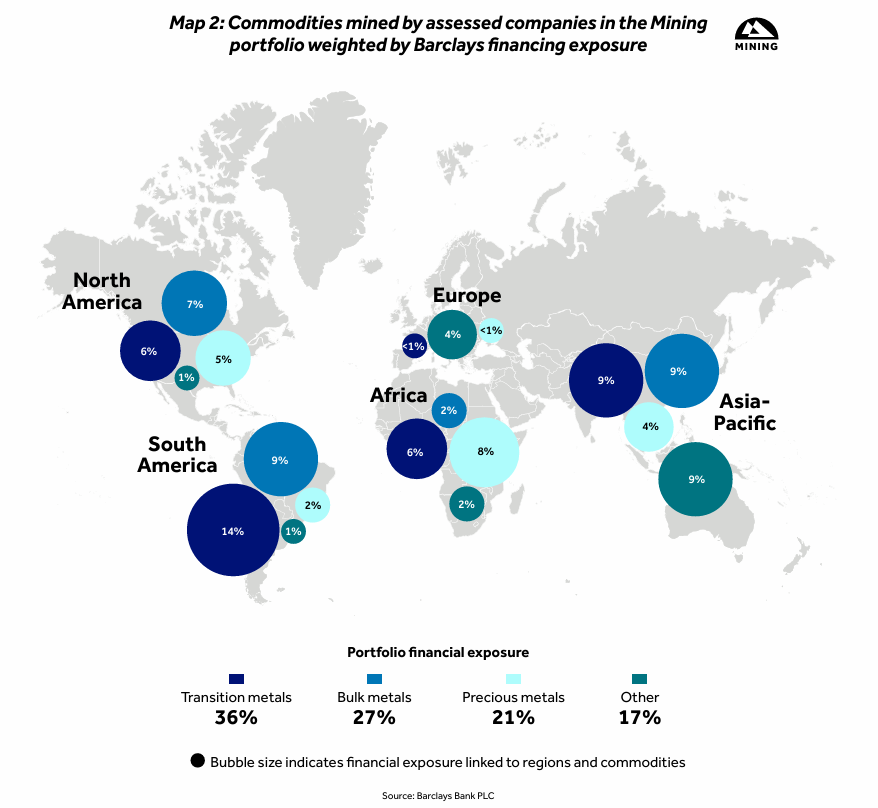
The bank’s stress test, published in Navigating Nature Risk: Applying the TNFD’s LEAP Framework, analysed 250 mines linked to 30 companies and about 9,000 European power facilities. It found that transition risks such as higher water prices, stricter pollution rules, expansion of protected areas and increased minerals recycling pose the greatest threat to miners.

Power companies faced smaller potential earnings declines of around 10%, mainly due to physical risks such as droughts and floods.

The World Economic Forum estimates that adopting nature-positive practices could unlock over $430 billion in cost savings and new revenue across the mining and metals value chain by 2030. Yet nearly three-quarters of mining assets overlap with sensitive locations, most commonly areas of high physical water risk. Copper mines, concentrated in water-stressed countries such as Australia, South Africa and Chile, were the most exposed.

Barclays said biodiversity loss and ecosystem degradation are emerging as systemic financial risks. “These risks are increasingly materialising across our clients’ operations,” head of sustainability Marie Freier said.

The bank said data gaps limit analysis but stressed enough information is available for action, with opportunities also arising from biodiversity financing, which faces a $700 billion annual shortfall.


Zijin becomes world’s No. 3 miner after reaching $100B valuation

La Arena copper-gold mine in Peru. (Image courtesy of Zijin Mining.)

China’s Zijin Mining Group (HKG: 2899) has become the world’s third-largest mining company by value after surpassing $100 billion in market capitalization for the first time at Thursday’s close.

The milestone places Zijin alongside global heavyweights BHP (ASX: BHP) and Rio Tinto (ASX: RIO), which closed Thursday with market values of A$212 billion ($140 billion) and A$169 billion ($111 billion), respectively.

On Thursday, Zijin’s Shanghai shares hit a record high, lifting its market capitalization to 732 billion yuan ($103 billion). With this, it took the No. 3 spot globally from Glencore (LON: GLEN), which has a market capitalization of £39.76 billion ($53 billion).

The surge comes amid record gold prices and copper’s strongest year on record, which together generated 77% of Zijin’s first-half revenue. The stock has more than doubled in 2025, with gold setting fresh records and copper on track for its best year ever in terms of average prices.

From one mine to global player

Founded in the 1980s by geologist and current chairman Chen Jinghe, Zijin grew from a small gold mine in southeastern China into a sprawling global player. The company now controls or holds majority stakes in hundreds of operations worldwide. In the past year alone, it added Serbia’s largest copper mine, Kazakhstan’s Raygorodok gold mine, and Ghana’s Akyem gold mine to its portfolio.

The company is also preparing a Hong Kong listing for its international gold business, Zijin Gold International Co., which holds all its gold mines outside China. The IPO, scheduled for next week, aims to raise $3.2 billion and would be the world’s second-largest this year.

Zijin expects the spin-off to expand its financing channels and improve capital efficiency.

(With files from Bloomberg)


ABS Plans to Test Out a Humanoid Robot for Classification

Persona AI
Illustration courtesy Persona AI

Published Sep 23, 2025 6:28 PM by The Maritime Executive


Houston-based class society ABS has announced a new collaboration with robotics company Persona AI to develop a humanoid robot for shipyard uses. Robotic systems offer a way to perform the same task with fewer workers, freeing up scarce personnel for other jobs.

ABS' plan for this new technology is to use robotically-collected data for classification during ship construction, enabling remote survey techniques. The trial will help develop new class standards for the type and quality of data collected by robots. 

"This marks a defining moment for the shipbuilding industry,” said Nic Radford, CEO and Co-Founder of Persona AI. “Partnering with ABS, the global authority on maritime standards, demonstrates that humanoid robotics are no longer a distant concept but on a path toward certified reality."

A shipyard is a challenging work environment, and doubly so for robots. As projects ebb and flow, the layout of the yard changes dynamically: staging areas and workspaces are constantly shifting as materials and partially completed blocks are moved through the facility. This bears little resemblance to assembly-line industries like auto manufacturing, where robotic arms and welders can be programmed to work on the same objects in the same sequence day after day. 

Robotic work in shipbuilding tends towards repeatable tasks, like CNC cutting and robotic panel welding. Humanoid robot applications are fewer, but are gaining traction - notably in Korea, where automation is a key part of the business model. HD Hyundai Samho is working with a German-made humanoid robot, Neura's 4NE1, an AI-powered system built to step in "when skilled workers are hard to find" for industrial environments. Neura says that it is a "cognitive robot" that can learn from its surroundings and navigate complex situations. 

Earlier in the year, HD KSOE announced a partnership Vazil Company and Persona AI - the same firm working with ABS - to create a humanoid welding robot. The first prototypes are due at the end of 2026, with plans for field testing and full commercial deployment in 2027.