Monday, September 29, 2025

UK Household energy debt surges to £4.43 billion

SEPTEMBER 29, 2025

New Ofgem figures reveal that household energy debt has soared to £4.43 billion in the second quarter of 2025 – more than triple pre-energy crisis levels and three-quarters of a billion pounds more than this time last year – leaving millions of families trapped in arrears they cannot escape.

The latest data show:

  • £1.45bn in debt and arrears at the end of 2020 (pre-crisis)
  • £3.69bn last year (Q2 2024)
  • £4.43bn in Q2 2025 (latest figures)

The regulator also reports that 1,133,683 electricity customers and 926,545 gas customers are now in debt without any repayment arrangement in place. Many households may owe on both accounts, meaning over a million households are struggling in energy debt.

The burden of this energy debt is shared by all bill-payers, with households facing up to an extra £145 a year on their bills to cover the collective cost of debt.

At the same time, new analysis from the Common Wealth think tank shows that around 24% of every household energy bill is taken as profit by the energy industry.

The regulator and ministers are due to launch a new Debt Relief Scheme in the coming months, but while this is supported by members of the End Fuel Poverty Coalition, campaigners have warned it must be simple to understand and accessible.

Debt experts have advised that it must include automatic eligibility for people on means-tested benefits, clear rules on what debt is covered, and flexibility in how households can apply. Experts have also stressed that suppliers should work with debt advice charities to ensure fair and consistent outcomes when implementing the scheme.

The End Fuel Poverty Coalition is calling for urgent reform to tackle the energy debt crisis, including:

  • A Debt Relief Scheme with automatic eligibility for households on means-tested benefits and no arbitrary debt thresholds or forced customer contributions.
  • An end to punitive late fees, additional charges and rigid repayment plans that push people deeper into hardship.
  • Guaranteed protection for customers on prepayment meters, with relief available to those forced onto PPMs due to debt.
  • Longer-term action to cut bills and prevent debt recurring, including a national social tariff, fairer standing charges and pricing structures and a major programme of home energy efficiency upgrades and homegrown renewables.

Simon Francis, Coordinator of the End Fuel Poverty Coalition, commented: “Energy debt is now driving people into dangerous financial positions as we approach the fifth winter of the energy bills crisis. Previous research has found that almost one in five households in energy debt have turned to illegal money lenders, with households waking each morning fearful of what using electricity or gas might cost them.

“We must urgently write off arrears and reform the system so fewer households are powerless to pay off their debts.”

Independent Age Policy Manager, David Southgate, said: “Older people on low incomes are increasingly bed-bound by the cold – forced to turn in early in hats, gloves, scarves, and extra blankets during the winter to stay warm. Many have fallen into debt in a bid to keep the heating on. With yet another difficult winter just around the corner, they need immediate support.

“We are calling on the UK Government to tackle this mountain of debt with a properly funded and targeted debt relief scheme, alongside wider affordability reform, including a national energy social tariff, to ensure everyone can afford to heat and power their homes.”

Frazer Scott, Chief Executive of Energy Action Scotland, said: “The latest Ofgem figures show that there has been inadequate debt relief – and there is nothing in the pipeline to make energy genuinely affordable for the households that quite clearly cannot pay. 

“The number of accounts in debt continues to rise, with average debts growing as well. Over £580 million in debt has been added in just the first six months of 2025. Without urgent intervention, this crisis will only deepen.”

Robert Palmer, deputy director of Uplift, commented: “This is a saddening debt crisis for too many people in the UK  and is driven in part by obscene profits. It’s just plain wrong that nearly a quarter of every household bill is taken as profit by the energy industry. What’s more, the UK’s heavy reliance on expensive gas added an average of  £3,000 per household during the energy bills crisis.

“Yet again while shareholders are celebrating rising prices and huge profits, people are facing stark choices of how to ration their energy. Only by supporting struggling households now, improving energy efficiency and getting us off expensive gas through homegrown renewable energy will ministers be able to get a grip on the situation.”

Jonathan Bean from Fuel Poverty Action, added:”Energy debt will continue to grow whilst the Government fails to deliver its promised £300 bill reduction, with energy prices 70% higher than five years ago.”

Toby Murray, Policy and Campaigns Manager of Debt Justice, said: “These figures are a shocking indictment of the government and Ofgem’s failure to act on the energy debt crisis. Record energy debts are leaving millions trapped in arrears for a basic essential, bringing stress and hardship to households already struggling to get by. 

“Yet almost a year after Ofgem announced they were looking into a debt relief scheme, not a single household has seen their debts reduced. The government must act now and write off unpayable energy debt.” 

Pensioners are particularly hard- hit by rising energy bills. Food inflation and rising water bills mean that many cannot afford to turn on their central heating this winter. 128,000 people each year die in fuel poverty; 110,000 of them are pensioners.

Image: https://pix4free.org/photo/4956/consumer-debt.html Consumer debt by Nick Youngson CC BY-SA 3.0 Pix4free Licence: Attribution-ShareAlike 3.0 Unported CC BY-SA 3.0 Deed

Daisy Cooper MP announces Lib Dem energy loan policy funded by windfall tax on banks

21 September, 2025
Left Foot Forward

'We can help people take control of their energy security and bring down energy bills permanently.'
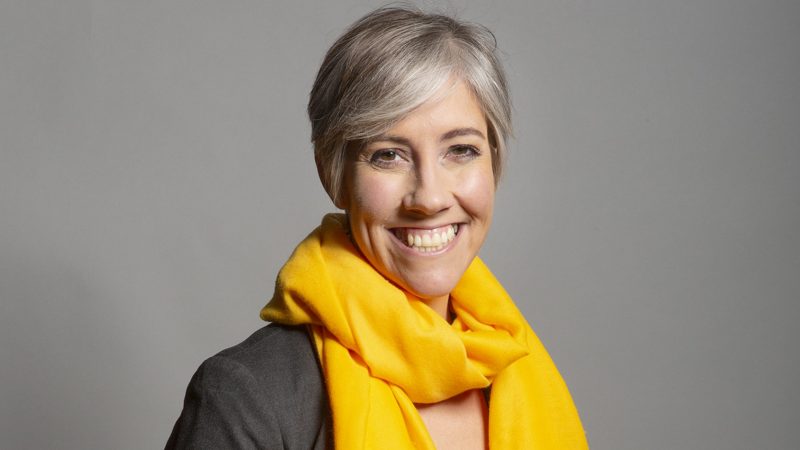


Deputy leader of the Lib Dems Daisy Cooper MP has announced a new household energy efficiency loan scheme that the party says it would fund through a windfall tax on banks.

Cooper said the Lib Dems are calling for the creation of a new “energy security bank”, which would provide homeowners and small businesses with loans to invest in energy efficiency initiatives.

The St Albans MP also said that the Lib Dems would create dedicated lending schemes to install solar panels in supermarket car parks, which she claimed could power entire cities such as Bristol or Nottingham.

Cooper delivered a scathing critique of the Conservatives for scrapping climate initiatives while they were in government, such as solar panel subsidies, the requirement for all new homes to be Net Zero and selling off the Green Investment Bank.

The policy would provide up to £10 billion in energy efficiency loans. Cooper said the loans would pay for themselves, but require £2 billion to be put aside to provide government-backed guarantees.

Homeowners could borrow up to £20,000, while businesses could access loans of up to £50,000.

Cooper said the Lib Dems would pay for this through a windfall tax on banks, arguing they have reaped huge profits from the interest generated by quantitative easing.

She said that with this policy: “We can help people take control of their energy security and bring down energy bills permanently.”

Labour’s Warm Homes Plan will invest £6 billion over ten years in grants and low-interest loans for insulation, solar panels, batteries and low-carbon heating to help cut bills.

She condemned them for being “shamelessly locked in a race to the bottom with Reform UK”, with Kemi Badenoch wanting “to go all in on oil and gas production”.

Cooper said “we must call out Nigel Farage, who falsely claims that renewables drive up prices when it’s renewables that bring them down.”

She added: “We must call out those who peddle climate myths and would have us left at the mercy of global gas markets.”

The Lib Dems will also call on the chancellor to extend the VAT exemption on all energy-saving materials, which will end on 1 April 2027, for another 3 years.

Olivia Barber is a reporter at Left Foot Forward


Pippa Heylings MP says Labour must work more closely with unions to deliver ‘Just Transition’

21 September, 2025
Left Foot Forward

The Lib Dem energy spokesperson told Left Foot Forward she doesn’t think Labour is doing enough for oil and gas workers
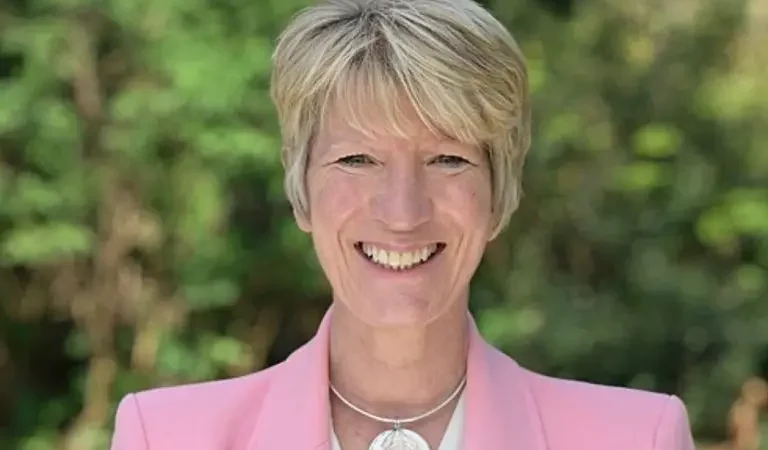


Pippa Heylings MP, the Lib Dem spokesperson for energy security and net zero, said Labour needs to work quickly to deliver the ‘just transition’ and avoid losing ‘highly skilled’ oil and gas workers.

Speaking with Left Foot Forward at Lib Dem conference, she said Labour is “not doing a good enough job” to deliver a “just transition” for oil and gas workers.

Heylings said that currently “highly skilled” oil and gas workers are being told they have to re-qualify to work in the renewable sector. She said “It is just ridiculous, we should make it incentivising”.

The South Cambridgeshire MP told Left Foot Forward that the Lib Dems would work more closely with trade unions and create a skills passport, so workers don’t have to retrain from scratch.
‘Labour thinking about the economy not workers’

Pressed on whether Labour isn’t already working with trade unions, she said the party isn’t doing enough.

“They’re thinking about what we do with the economy and oil and gas companies, they’re not doing enough for oil and gas workers,” she added.

Heylings said that as a result, the UK is losing these “highly skilled workers”. “They’re going to the Gulf of Mexico, right now,” she warned, adding that 75,000 oil and gas workers lost their jobs under the Conservatives.
North Sea oil and gas licences

When asked how she would respond if Labour allows new oil and gas licences next to existing North Sea sites, as has been mooted, she didn’t criticise the plan, but said “they’ve got to shift other things to keep within the carbon budget”.

Labour pledged not to allow any new oil and gas licences, and would need to ‘water down’ this pledge if they allow more drilling in the North Sea.

Heyling added that in the North Sea, “We are marching towards a mature basin that is not economically viable to do any more exploitation in. The market is going to sort that out as long as we’re not sending the wrong signals.”

SEE 
THE COINCIDENTAL BIRTH OF THE NEW DEMOCRATS 
AND THE OIL INDUSTRY IN ALBERTA


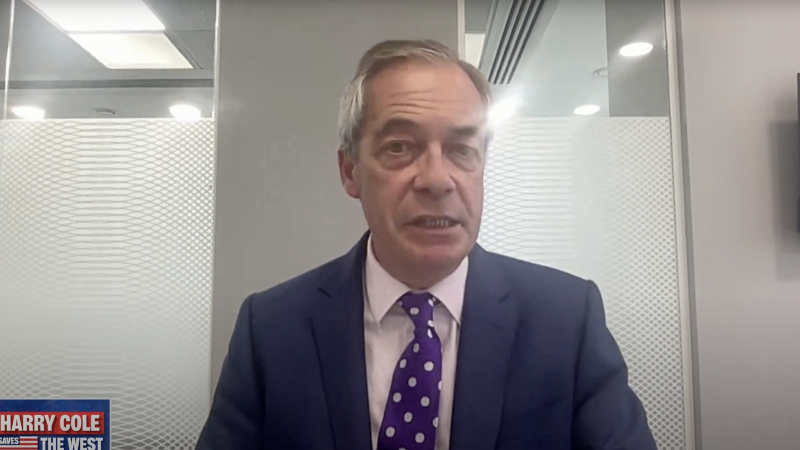
Nigel Farage claims migrants are eating swans and carp from Royal Parks

IN THE US IT WAS HAITIANS IN UK IT'S POLES

Basit Mahmood 
24 September, 2025
Left Foot Forward

As always, Farage failed to provide any evidence for his ludicrous claim.


Nigel Farage has come up with another bizarre claim in his bid to whip up a moral panic about migrants, this time claiming, without presenting evidence, that migrants are eating swans from Royal Parks.

He made the ridiculous claim that Eastern European migrants are stealing and eating swans and carp from Royal Parks during an appearance on LBC radio, where he was also asked by presenter Nick Ferrari over whether he condemned Donald Trump’s recent comments linking paracetamol to autism.

The Reform UK leader refused to condemn Trump’s remarks despite there being no evidence of a link between pregnant mothers taking paracetamol and the birth of a child with autism or other neurodevelopmental disorders such as ADHD.

Rather than speak the truth, Farage went on to defend the President’s previous claim that illegal immigrants from Haiti were eating domestic cats and dogs in Ohio.

Farage went on to add: “If I said to you that swans were being eaten in royal parks and carps were being taken out of ponds and eaten in this country from people with different cultures. Would you agree that is happening?”

Ferrari asked, ‘who are taking the carp and the swans?’, to which Farage replied: “People who come from countries where that’s quite acceptable.”

After being asked by Ferrari to clarify if he meant “eastern Europeans,” Farage said: “So I believe. I’m not saying that, I am putting it back as an argument.”

As always, Farage failed to provide any evidence for his ludicrous claim.

Basit Mahmood is editor of Left Foot Forward
Influential ‘theo-bros’ unite in the US – but will they gain ground in the UK?


Right-Wing Watch
20 September, 2025 
Left Foot Forward


Are we witnessing the beginnings of a Christian nationalist movement in Britain - one inspired by a distinctly American form of evangelicalism, rooted not just in belief, but in an aggressive pursuit of power?


By chance or calculation, Tommy Robinson’s far-right march in London took place on the same weekend that Christians were marking the Feast of the Exaltation of the Holy Cross, which honours Christ’s sacrifice through the cross. And the ‘Unite the Kingdom’ gathering was no ordinary Robinson rally. It was saturated in Christian symbolism: gospel rock blared from loudspeakers, crosses were hoisted like banners, and images of the late Charlie Kirk, the Trump ally, conservative influencer and ‘Christian martyr’ as US evangelical circles are hailing him, made their way through the sea of Union Jacks and flags of St George.

Robinson, who claims to have found Christ while in prison, has, it seems, begun fusing religious themes into his nationalist, far-right messaging. Whether his conversion to Christianity is genuine or not, it raises a pressing question: are we witnessing the beginnings of a Christian nationalist movement in Britain — one inspired by a distinctly American form of evangelicalism, rooted not just in belief, but in an aggressive pursuit of power?

In the US, this ideology has already taken hold. Charlie Kirk may have started as a political influencer, but in recent years, he came to symbolise a broader shift within American conservatism. Once a champion of secular politics and the separation of church and state, Kirk had, by the 2024 presidential election, rebranded himself as one of Donald Trump’s most vocal evangelical surrogates.

Addressing megachurch congregations and campaign rallies, Kirk increasingly portrayed politics as a form of spiritual warfare, declaring Democrats “stand for everything God hates,” and framing elections not as civic exercises, but as battles between good and evil.

His influence extended beyond US borders. Last week, the European Parliament briefly descended into chaos as far-right MEPs demanded a minute’s silence in Kirk’s honour. Hungary’s Christian nationalist prime minister, Viktor Orbán, claimed Kirk’s murder was “the result of the international hate campaign by the progressive-liberal left.”

Yet Kirk is just one figure in a much wider and increasingly powerful movement.

Pete Hegseth and the weaponisation of faith

At the heart of this movement is the entanglement of religion and state. Under Trump, a new ‘faith office’ has been created within the White House, tasked with recommending changes to federal policy to combat what it describes as “antisemitic, anti-Christian, and other forms of anti-religious bias.” A subsequent executive order established a federal task force to investigate so-called “anti-Christian bias” in government agencies.

One of the key architects of this agenda is Pete Hegseth, Trump’s Secretary of Defence. A former Fox News host and army veteran, Hegseth has emerged as a leading voice in the mainstreaming of Christian nationalist ideas within the highest ranks of government.

Earlier this month, Trump announced plans to rename the Department of Defense as the “Department of War.” “It just sounds better,” he explained, pointing to its use during the World Wars. But as The Atlantic observed, the rebranding also reflects how Trump, and Hegseth, view themselves: not as defenders, but as warriors, engaged in spiritual and ideological combat.

Hegseth, who has often described America as a Christian nation under threat, recently came under fire for promoting a video featuring pastors claiming women should not be allowed to vote or hold leadership positions in the military. He reposted the video with the caption: “All of Christ for All of Life.”

Critics were quick to condemn the post. Doug Pagitt, a progressive evangelical pastor and executive director of Vote Common Good, called the views “very disturbing” and “deeply fringe.”

Still, a Pentagon spokesperson defended Hegseth, describing him as a “proud member” of the Communion of Reformed Evangelical Churches (CREC)-affiliated church.

Yet Hegseth’s personal conduct appears to contradict the values he publicly champions. The LA Times reports that by the age of 45, he had already been married three times. His first marriage ended after he admitted to multiple extramarital affairs. He later paid off a woman who accused him of sexual assault, an allegation he denies. Even his own mother once accused him of being “an abuser of women,” though she later retracted the claim during his Senate confirmation process.


Then came a serious breach of national security. In March, Hegseth shared classified information about an impending US airstrike in Yemen via an unsecured Signal group chat, which included his wife and, accidentally, a journalist from The Atlantic.

As the LA Times put it, Hegseth, may be the “least serious man ever to lead this nation’s armed forces.”

In the wake of Charlie Kirk’s assassination, Hegseth issued a warning to all military and civilian personnel, stating that the Pentagon was now “tracking” any government employee who mocked or celebrated the killing.

Douglas Wilson


Then there’s the Pastor Douglas Wilson, a controversial and influential figure within the American Christian right. Earlier this month, Wilson shared a stage with members of the Trump administration at an event in Washington.

“This is the first time we’ve had connections with as many people in national government as we do now,” he told the Associated Press.

Wilson and his acolytes within the CREC espouse views that are unapologetically patriarchal, authoritarian and regressive. They teach that empathy can be a sin, that the United States is a Christian nation, and that giving women the right to vote was a bad idea.

Hegseth recently reposted an interview with Douglas Wilson, in which the pastor elaborated on his worldview: women, he claimed, should serve as “chief executive of the home” and should not have the right to vote, as their husbands can do that for them. He called for the criminalisation of gay sex and same-sex marriage. “We know that sodomy is worse than slavery by how God responds to it,” he told CNN.

While he insists that slavery is “unbiblical,” he has also defended it. In a 1990 pamphlet, Wilson bizarrely claimed that slavery in the American South produced “a genuine affection between the races” unmatched in any nation before or since the Civil War.

And Wilson’s influence is growing. His Christ Church, based in Moscow, Idaho, opened a new branch just blocks from the US Capitol this summer. Pete Hegseth, who’s a member of a CREC church in Tennessee, was present at the opening.

Together, Wilson and Hegseth represent a new front in American politics. Under the banner of Christian nationalism, they seek to reshape American democracy around explicitly religious, often authoritarian principles.

What about in Britain?


As this ideology gains ground in the US, echoes are being felt in the UK, where discussions around the rise of Christian nationalism are emerging.

Writing for the Young Fabians, Ryan Rodrigues, who was a Parish Priest in East London and now works as a researcher in Parliament, says the deliberate co-opting of Christian imagery to stoke division and fear is emerging in British politics.

Rodrigues notes how from Diane Abbott to Sadiq Khan, high profile people-of-colour have long been the targets of abuse, with issues of race and migration fuelling the hate. “But increasingly today, that hostility is often cloaked in Christian language and symbolism.”

Abroad, figures like JD Vance have defended hardline immigration policies as a “very Christian concept, turning ideas of “loving your neighbour” on its head.”

“This is more than just rhetoric – it’s a calculated effort to use the language of Christianity as a tool to divide.”

Rodrigues notes how the Labour Party itself was founded on the values of Christian Socialism, whose co-founder, Keir Hardie – of whom Keir Starmer is named after – was himself a devoted believer.

“I wonder whether the version of Christianity promoted by some of these figures today would be recognisable to Hardie,” he writes.

Turning to the recent flag-waving spectacle across the UK, Rodrigues argues that it’s ironic that what has become the symbol of English nationalism is the cross of a Christian saint, St. George, itself a reference to the cross of Jesus.

“With the nationalist agenda being popularised, the growing resurgence of movements such as Blue Labour, which call for a renewal of local faith communities such as Churches, must prompt us to examine what it really means to incorporate the values of faith into public life?” he continues.

But while some argue that a US-style religious right is emerging in Britain, others remain sceptical. In a paper entitled Is there a ‘Religious Right’ Emerging in Britain?, the religion and society think-tank Theos contends that although there is increasing coordination among Christian groups with strong socially conservative views, particularly on issues like sexuality, marriage, family life, and religious freedom, it is misleading to describe this as a US-style religious right.

“There is no sign of the kind of tight-knit, symbiotic relationship between a right of-centre political party and a unified Christian constituency emerging in Britain as it did in the last quarter of a century in the US,” the report states.

The key difference, it argues, is structural. In the US, the religious right transformed politics by aligning with the Republican Party. Britain, by contrast, lacks a similar alliance between a religious voting bloc and any major political force.

What about Farage?

Yet some moments challenge that conclusion.

Farage’s populist brand of politics may rarely make reference to the Christian faith, but in 2024, he stood on stage in Blackpool declaring that “Judeo-Christian values” lie at the heart of everything British. Earlier that year, at a US right-wing conference, he bizarrely claimed that pro-Gaza protests across Western cities threatened these very values.


According to MEND, a charity that supports British Muslims in media and politics, Farage’s invocation of ‘Judeo-Christian values’ serves to marginalise Muslims. Sadly, it works for some though in that the Tory MP and noted evangelical Christian Danny Kruger, and former MP Maria Caulfield, a practising Roman Catholic opposed to abortion rights and defender of ‘family values, both joined Reform this week. Farage might be all about division but bringing an evangelical and a Catholic together shows that for a small number of people, Christian nationalism has political potency.

Pro-life march in London fuelled by US Christian ‘hate group’

And if we thought the influence of US evangelical Christianity hadn’t reached the UK, we should think again.

Earlier this month, a major anti-abortion march took place in London, heavily influenced by the US-based Christian right group, Alliance Defending Freedom (ADF). Headquartered in Arizona, ADF is a legal advocacy organisation designated by the Southern Poverty Law Center as an anti-LGBTQ+ hate group.

The Good Law Project reported that more than half of the speakers at the 2025 ‘March for Life’ event in London had direct ties to ADF, including Northern Irish MP Carla Lockhart.

ADF played a key role in the 2022 US Supreme Court decision that overturned federal abortion rights, and it actively supports state-level bans on gender-affirming care for minors in the US.

Among the UK religious leaders present was Andrea Williams, co-founder of Christian Concern, a group that opposes banning LGBTQ+ conversion therapy and has worked closely with ADF.

Perhaps the most unsettling development is the growing role of religion in Tommy Robinson’s activism. One has to suspect that ‘born again’ Tommy is being opportunistic, but the overt use of Christian symbols at a highly charged political event that was mired in violence and intimidation, suggests a troubling trend, that a faith centred on compassion is being reframed as a tool of division and dominance. Moral high ground matters in politics and it is ground that the far-right, with its message of hate, has always struggled to command. Co-opting Christianity provides a readymade, off the shelf suit of clothes in which to dress pernicious policies. It’s all a long way from those trade union marchers a century ago with their banners proclaiming Christ the Carpenter.

To end on a personal note, my grandad was a vicar. He embodied the values I’ve always associated with Christianity: humility, compassion, forgiveness, and selfless care. These stand in stark contrast to the division, hostility, and disdain for democratic institutions that figures like Robinson, Trump and his allies push under the guise of ‘Christianity.’

Gabrielle Pickard-Whitehead is author of Right-Wing Watch. and Editor at large for 

Sunday, September 28, 2025


Keir Starmer urges Labour Party unity to fend off Nigel Farage's Reform UK threat
Copyright Danny Lawson/APBy  Malek FoudaPublished on 28/09/2025 - EURONEWS

Starmer appealed to his Labour Party colleagues to have more trust in the government and display a united house, warning them to prepare for the “fight of our lives” amid Nigel Farage’s poll-topping Reform UK party threat.

UK Prime Minister Keir Starmer urged his Labour Party to stop “navel gazing” and display unity amid threats from Nigel Farage’s Reform UK party, which has been consistently topping British polls for weeks.

The British premier told his party members as they gathered for their annual conference in Liverpool to unite for the “fight of our lives” and stand for British values amid Reform’s threat, which he said is guided by a “racist policy”.

His government has struggled to ease growing divisions over immigration, fuelled in part by the arrival of thousands of migrants in small boats across the English Channel.

More than 30,000 people have made the dangerous crossing from France so far this year despite efforts by authorities in the UK, France and other countries to crack down on people-smuggling gangs.

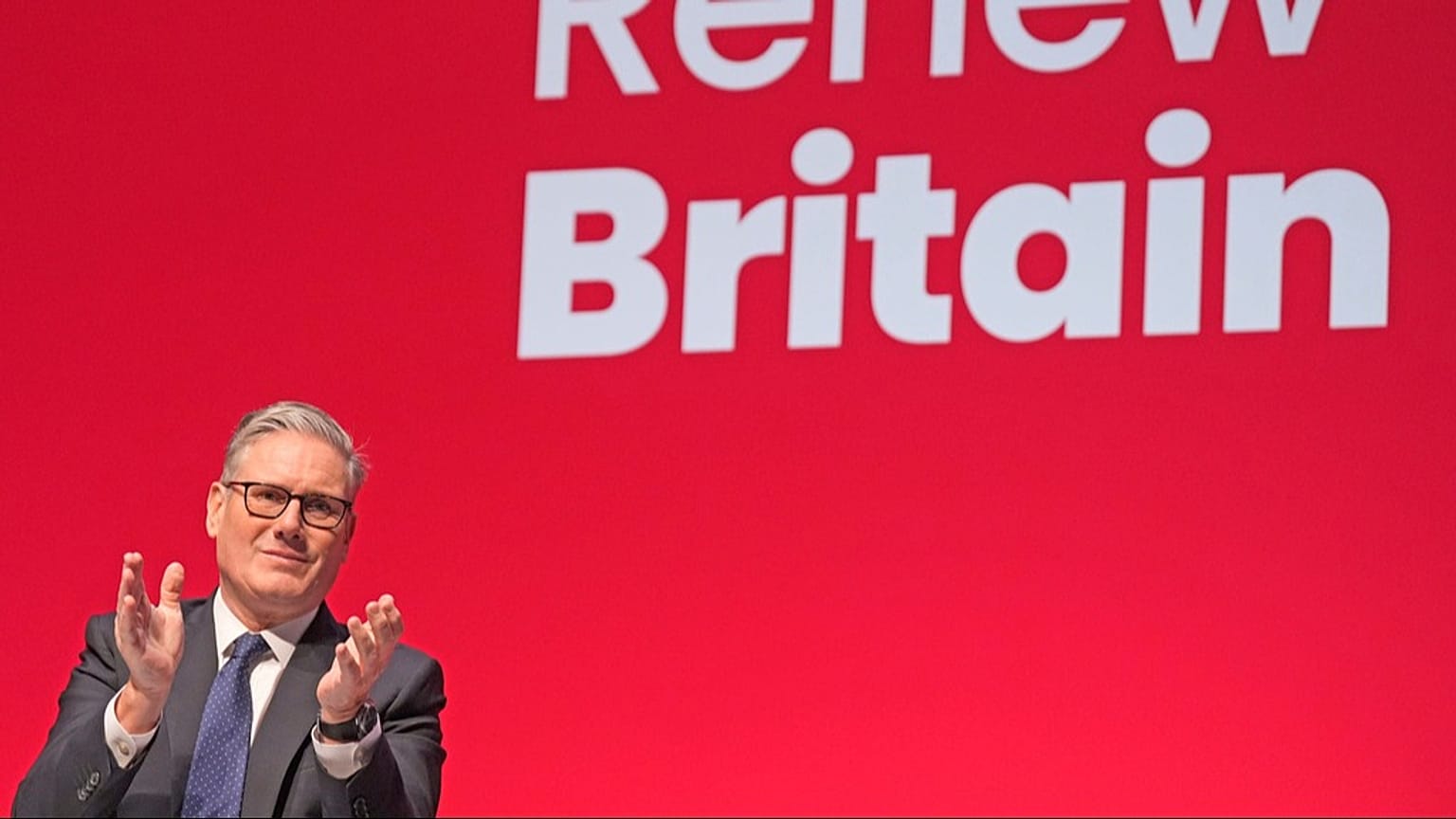
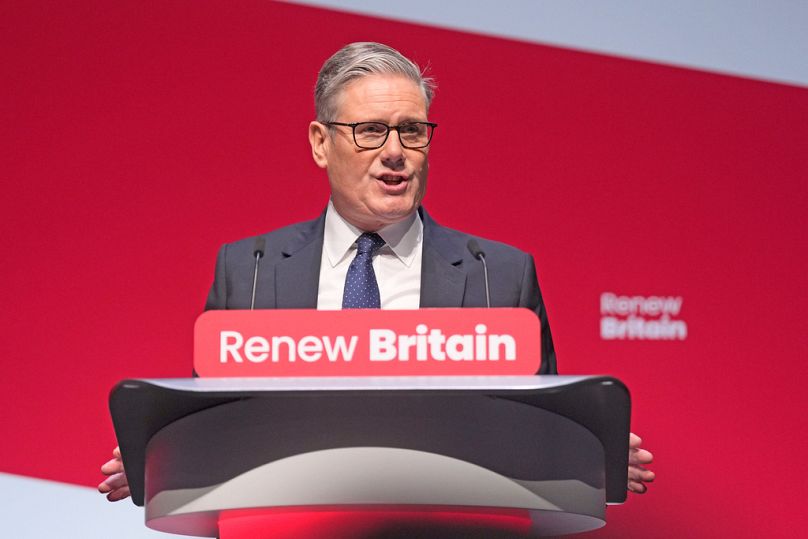
Britain's Prime Minister Keir Starmer speaks during the Labour Party Conference in Liverpool, England, Sunday Sept. 28, 2025 Danny Lawson/AP

Starmer’s government has only been in office for little more than a year, and in recent weeks, has faced many turbulences, leading public opinion of him, and support from within his own party to wane.

The next election is as much as four years away, but as thousands of Labour Party members gathered beside the river Mersey, lawmakers are growing anxious. A potential leadership rival has emerged in Andy Burnham, the ambitious mayor of Manchester.

“Business as usual … ain’t gonna do it. The plan has to change quite radically,” Burnham said. He added that “it’s the plan that matters most, rather than me,” but acknowledged some lawmakers had approached him about a potential leadership bid.

Speaking to UK media, Starmer downplayed the discontent, saying “in politics, there are always going to be comments about leaders and leadership” and insisting the government had “achieved great things in the first year.”

British Prime Minister Keir Starmer speaks on the BBC 1 current affairs programme, Sunday, Sept. 28, 2025, with Laura Kuenssberg in Liverpool Stefan Rousseau/The Press Association

Burnham replacing Starmer could be some way off though as the former shadow home secretary turned big city mayor is not currently a member of British Parliament.

The PM appealed to his colleagues to maintain trust in him and allow his government to weather the storm.

“I just need the space to get on and do what we need to do,” said Starmer.

Since ending 14 years of Conservative rule with his July 2024 election victory, the Labour party leader has struggled to deliver the economic growth he promised.

Inflation remains stubbornly high and the economic outlook subdued, disrupting efforts to repair inefficient public services and ease the burden of a worsening cost of living crisis.

In recent weeks Starmer has lost his deputy prime minister, Angela Rayner, who resigned over a tax error on a home purchase, and fired the Washington Ambassador Peter Mandelson, after news surfaced about his past friendship with convicted sex offender Jeffrey Epstein.

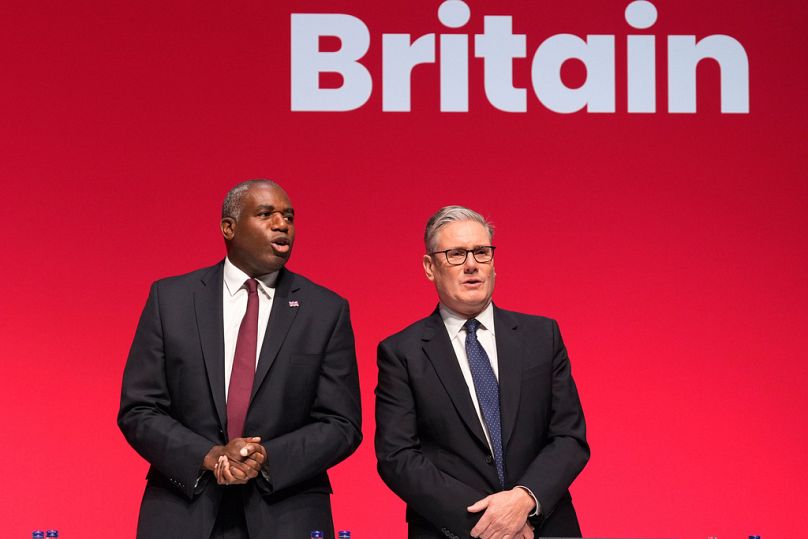
UK Prime Minister Keir Starmer and Deputy Prime Minister and Justice Secretary David Lammy attend the Labour Party Conference in Liverpool, England, Sunday Sept. 28, 2025 Danny Lawson/AP

There have also been several exits from his backroom team, adding to a sense of disarray and creating an environment of uncertainty over the future of this government.

And though the UK managed to secure a trade deal with the US easing import duties on some goods, the autumn budget statement in November looks set to be a grim choice between tax increases and spending cuts — or maybe both.

“They’ve only been in government a year and they’ve got a big majority, but most voters seem to be quite disappointed and disillusioned with the government," said Tim Bale, professor of politics at Queen Mary University of London.

Bale added that even though the public’s opinion of Keir Starmer is currently “very low”, he believes that the premier’s best move, for now, is to “keep calm and carry on”.

The government does not have to call an election until 2029, but pressure will mount on Starmer if, as many predict, Labour does badly in local and regional elections in May.


Billy Bragg mocks Nigel Farage’s hopes of


being PM on BBC Question Time


26 September, 2025 
Left Foot Forward

'To demonise, particularly the Muslims, this is the sort of thing why we worry about Reform.'


Reform UK leader Nigel Farage was brutally mocked on BBC Question Time over his hopes of becoming Prime Minister by musician and activist Billy Bragg.

Farage has continued to make the headlines this week, seeking to whip up a moral panic over migrants and Muslims, without providing proof for any of his ludicrous claims.

Appearing on LBC earlier this week, he refused to condemn President Trump’s claims linking the use of paracetamol to autism.

There is no evidence of a link between pregnant mothers taking paracetamol and the birth of a child with autism or other neurodevelopmental disorders such as ADHD.

Rather than speak the truth, Farage went on to defend the President’s previous claim that illegal immigrants from Haiti were eating domestic cats and dogs in Ohio. Farage is a Trump supporter and the President was also condemned this week for his false and Islamophobic claims about the Mayor of London Sadiq Khan, where he told the UN that Khan was a ‘terrible Mayor’ and that he wanted to bring Sharia law into London.

During the LBC interview, Farage said he believed Sharia Law was being introduced to the UK because he had been told so by a taxi driver.

Bragg told the Question Time audience: “After giving the impression he doesn’t trust scientists, he later said in the interview when he was asked by Nick Ferrari, why he believed that Sharia Law was coming to Britain, he said he’d been told by a taxi driver.

“So he was willing to believe a Muslim taxi driver in Buckinghamshire rather than believe the scientific establishment. This guy wants to be prime minister? You must be joking”, leading to much applause.

Reform deputy leader Richard Tice interrupted, and told him: “Billy, there are over 80 Sharia courts in the United Kingdom. Are you aware of that?”

The singer hit back: “Yeah I am, but there are also Jewish courts and that is part of their religion and we, as a tolerant nation, accept that.

“To demonise, particularly the Muslims, this is the sort of thing why we worry about Reform.”

Keir Starmer says Donald Trump’s claim Sadiq Khan wants to bring in Sharia Law is ‘nonsense’

26 September, 2025 
Left Foot Forward


Prime Minister Keir Starmer has defended the Mayor of London Sadiq Khan against Trump’s attacks, calling his claim that Khan wanted to bring in Sharia law ‘nonsense’.

Trump took aim at Khan during a speech at the UN, where he falsely claimed that London wanted to “go to sharia law” under its “terrible mayor”.

In a rambling speech at the UN, the President launched a scathing attack on the global body, where he called for countries to close their borders and expel foreigners as well as calling climate change a ‘con job’.

He then took aim at London’s Muslim mayor, saying: “I look at London, where you have a terrible mayor, terrible, terrible mayor, and it’s been changed, it’s been so changed. Now they want to go to sharia law. But you are in a different country, you can’t do that.”

His comments were condemned by a number of Labour MPs, with Khan himself calling Trump ‘racist, sexist and Islamophobic’.

The Prime Minister has called Trump’s comments ‘nonsense’.

Sir Keir said: “I’m not going to get drawn into a war of words, but what I will say is this, because it is important.

“You saw from the state visit last week that there are plenty of things on which the president and I agree, and we are working together.

“There are some issues on which we disagree, and what the president said about the mayor, who’s doing a really good job, in fact driving down serious crime, what he said about the introduction of Sharia law was ridiculous nonsense.

“I support our mayor, I’m really proud of the fact we have a Muslim mayor of a very diverse city.

“We do work with the Americans on a huge number of issues. On this issue I disagree, and I stand with our mayor.”


Sadiq Khan rips into Trump after President’s Islamophobic comments: ‘He Is Racist, Sexist and Islamophobic’


24 September, 2025 
Left Foot Forward

Speaking to Sky News, Khan said he appeared to be living rent free in Trump’s head.


The Mayor of London Sadiq Khan has hit out at Donald Trump after the U.S. President once more targeted him with false claims, in what is his strongest rebuke yet of the Republican.

Trump took aim at Khan during a speech at the UN, where he falsely claimed that London wanted to “go to sharia law” under its “terrible mayor”.

In a rambling speech at the UN, the President launched a scathing attack on the global body, where he called for countries to close their borders and expel foreigners as well as calling climate change a ‘con job’.

He then took aim at London’s Muslim mayor, saying: “I look at London, where you have a terrible mayor, terrible, terrible mayor, and it’s been changed, it’s been so changed. Now they want to go to sharia law. But you are in a different country, you can’t do that.”

His comments were condemned by a number of Labour MPs and now Khan has responded himself calling Trump ‘racist, sexist and Islamophobic’.

Speaking to Sky News, Khan said he appeared to be living rent free in Trump’s head.

He said: “People are wondering what it is about this Muslim mayor who leads a liberal, multicultural, progressive, successful city that means I appear to be living rent free inside Donald Trump’s head.”

Asked if he thought the comments were Islamophobic, Khan replied: “I think President Trump has shown he is racist, he is sexist, he is misogynistic and he is Islamophobic”.

On Trump’s accusations that he is a “terrible mayor”, Khan just said he was “thankful” there were rising numbers of Americans relocating to London.

Basit Mahmood is editor of Left Foot Forward
UK

If the government wants economic growth it must bring essential industries into public ownership

26 September, 2025


Successive governments clobber households and small busi
nesses by hiking interest rates to manage inflation, but don’t inconvenience corporations.


The latest economic forecast for the UK by the Organization for Economic Co-operation and Development (OECD) makes uncomfortable reading. The UK is expected to have inflation rate of 3.5% across 2025, the highest amongst G7 countries. Economic growth, a key plank of the government’s policy, is expected to ease from 1.4% in 2025 to 1% in 2026.

Such problems are caused by obsession with neoliberal policies. The rate of inflation can’t be blamed on excessive cash sloshing around in low/middle income households. The average real wage of employees has hardly moved since 2008. The median pre-tax employee wage of £30,816 means that around 50% of workers are struggling to survive. A single person needs to earn £30,500 a year to reach a minimum acceptable standard of living. A couple with 2 children needs to earn £74,000 a year between them. Even with both parents working and earning a median wage, a typical family is unlikely to attain a minimal standard of living. Around 16m people in the UK are living in families in poverty. Millions rely upon food banks and charity.

The main cause of inflation is profiteering. The cost of energy, water, rent, food and transport continues to exceed the rate of inflation. Household energy debt has hit record £4.43bn. Some 128,000 people a year die in fuel poverty, but no government or major political party has shown any inclination to curb profiteering.

A report by Unite noted that since the pandemic, corporate profit margins have jumped by an average of over 30%. Electricity generation companies almost trebled their margins, up by 198%. Electricity and Gas supply companies increased their profit margins by 363%. Shipping companies’ profit margins have soared to 650-times their pre-pandemic levels. Companies engaged in health and social work increased their margins by 118%. Wholesale and retail trade increased its profit margins by 36%. Profiteering is a key driver of inflation and has resulted in real transfer of wealth from households to companies and their shareholders. This inevitably leaves people with less to spend on goods and services and limits their ability to stimulate the economy.

Successive governments clobber households and small businesses by hiking interest rates to manage inflation, but don’t inconvenience corporations. They seem to think that somehow markets will take corrective action even though too many sectors are dominated by monopolies and oligopolies.

For example, there is no competition in the water industry and none is possible. There is hardly any competition in the energy industry. Sectors such as mobile phones, internet, banking, housebuilding, supermarkets are controlled by a handful of companies. In recent months a cartel of pharmaceutical companies has ganged up on the UK government, demanding higher drugs prices to boost their profits. They have not been shy of fleecing the public purse which results in higher costs for the National Health Service and higher taxes. For example, cancer drug lenalidomide had a profit mark-up of 23,000%. Suppliers of hydrocortisone tablets increased prices by over 10,000% and the price of phenytoin sodium increased by 2,300% to 2,600%. Governments can break-up monopolies and empower people to check profiteering, but they don’t. Regulators are now expected to promote growth of industries, which will make them even ore toothless.

The government wants economic growth but it can’t be delivered as millions do not have the required purchasing power. The economic growth model chosen by successive governments is also problematical. Governments have deregulated, weakened consumer and employment rights, and cut real wages in the hope of attracting foreign direct investment (FDI) to provide jobs and new investment, but that hasn’t always delivered. The value of inward FDI in 2023 was £1.3bn, down from £22.9bn in 2022. The exclusion of a large proportion of population from consumption combined with the effects of Brexit and uncertainties of Trump tariffs does not make the UK an attractive FDI destination.

There are two kinds of investment flows. Firstly, there is investment in productive assets which increase the stock of productive capital. The UK invests around 18.2% of GDP in productive assets, compared to 23% average for OECD countries. Secondly, there is ‘fictitious capital’ which does not increase the productive capacity. Everyday billions of Pounds are spent on buying/selling previously issued shares i.e. A buys shares from B. None of the money goes directly into productive assets. Increasingly, stock market functions as a cash extraction machine rather than a provider of new capital. Last year, companies listed on the London Stock Exchange (not all are UK-based) raised £25.3bn in new shares; paid out £92.1bn in dividends and another £57.1bn in share buybacks.

The FDI may provide jobs and investment, but it also brings problems of cash extraction, and investor returns which escape UK taxation. Since the 1980s, governments have privatised swathes of industries in the hope of securing private sector investment. That hasn’t always been the case. The privatised water sector has been starved of investment and companies dump raw sewage into rivers; lakes and seas. Since privatisation, companies chose to pay £88.4bn in dividends. The returns extracted by shareholders have had a detrimental effect on the UK economy.

Since privatisation, shareholders of water, rail, bus, energy and mail services have received around £200bn in dividends. Total extraction is probably significantly higher as companies engage in share buybacks and shift profits through spurious intragroup transactions, loans, interest payments, royalty and management fees. Large parts of the returns have gone abroad and have not lubricated the UK economy. No UK tax is paid on dividends paid to foreign investors.

Around 90% of England’s water companies are owned by foreign investors and states, including entities controlled from Australia, Bermuda, Canada, Cayman Islands, China, Hong Kong, Qatar, Singapore and the US. Since privatisation around £88.4bn has been paid in dividends, and a vast amount of cash went abroad.

A large part of the energy infrastructure and supply is owned by investors and state entities located in France, Germany and Spain. Around 40% of North Sea oil and gas licences are owned by investors from Canada, France, Israel, Italy, Korea, Norway, Spain, the United Arab Emirates and the US. 82.2% of offshore wind capacity is foreign-owned. Since 2020 alone, top 20 energy companies have made operating profits of £514bn.

Though train passenger services are currently being brought into public ownership again, at the height of privatisation over 61% of rail journeys were completed on franchises operated by foreign companies. These include entities controlled by the governments of France, Germany, Hong Kong, Italy, Japan and the Netherlands. Between 1996 and 2019, train operating companies and rolling stock companies paid over £8.3bn in dividends. Another report noted that £2bn was paid out between 2015 and 2023.

The government is not nationalising rail rolling stock companies (ROSCOs) It will operate passenger services by leasing carriages from ROSCOs. Around 87% of the rolling stock is controlled by three companies registered in Luxembourg, with an average profit margin of 41.6%. ROSCOs paid £409m dividends in 2021/22, £542m in 2022/23 and £331m in 2023/24, mostly to foreign investors.

It isn’t just privatised companies, a large part of the UK infrastructure is owned from abroad. For example, London Heathrow airport is owned by private and state investors from Australia, China, France, Qatar, Saudi Arabia, Singapore and Spain. Similar patterns apply steel, auto, ports, shipbuilding, banking, insurance, care homes, hospitals, GP surgeries, veterinary services and other industries. The temptation is to sweat assets and maximise cash extraction.

Successive governments have used blunt tools for managing inflation. Instead of selective taxes on the rich to withdraw surplus cash from the economy, governments have used austerity, real wage and benefit cuts, and higher interest rates. Profiteering must be curbed but political parties funded by corporations are unwilling or unable to do so. This exacerbates poverty and economic exclusion and in turn is a barrier to investment in productive economy.

The UK is a major financial centre, but the finance industry has been unwilling to finance productive investment as the City of London has little appetite for long-term investment and risks. Swathes of essential industries are owned from abroad, resulting in huge cash extractions which do not lubricate the UK economy and are not taxed in the UK. To control inflation and stimulate growth the government must acquire more economic policy options by bringing essential industries into public ownership but are hampered by self-imposed arbitrary fiscal rules. The government could also levy a withholding tax on dividends, interest and other payments to foreign investors but has chosen not to. Without major policy changes, the UK is unlikely to turn a new leaf on its economic problems.


Prem Sikka is an Emeritus Professor of Accounting at the University of Essex and the University of Sheffield, a Labour member of the House of Lords, and Contributing Editor at Left Foot Forward.

UK

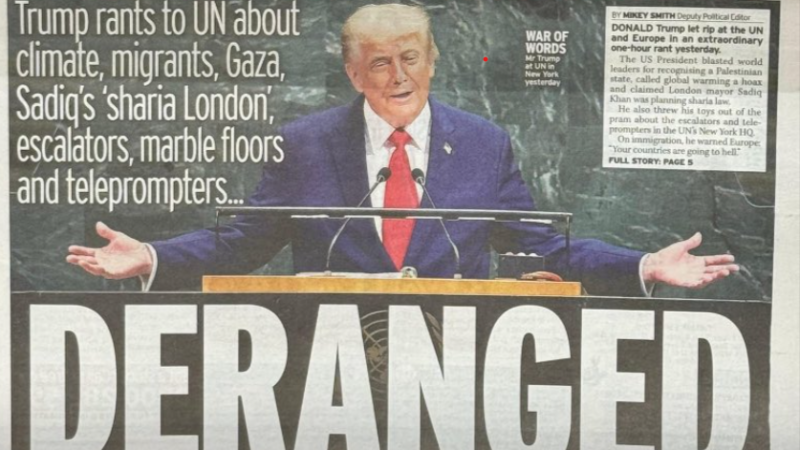
“Nailed it!”: Mirror praised for ‘Trump deranged’ front page


Gabrielle Pickard-Whitehead 
Yesterday
Left Foot Forward


Only the Mirror gave the speech the front-page treatment it deserved.


Despite being one of the most unhinged and nonsensical rants in recent political history, riddled with falsehoods, juvenile digs, and inflammatory vitriol, most newspapers played it safe in their coverage of Donald Trump’s cringe-inducing address to the United Nations General Assembly on September 22.

The Times, Daily Mail, Daily Express, and the Sun all omitted the speech from their front pages the next day.

The Daily Telegraph focused on Trump’s claim that the West is “going to hell over migration,” while the Financial Times referred to a “Trump tirade” and noted his accusation that the UN is “funding an assault on the West.” The Guardian highlighted his remark: “Your countries are going to hell.”

Only the Mirror gave the speech the front-page treatment it deserved.

“World’s most powerful man-baby – DARANGED,” splashed the headline, mocking Trump’s rambling UN address, which covered everything from climate change and migrants to escalators, marble floors, Sadiq Khan’s “sharia London,” and even his distaste for teleprompters.

The Mirror’s truthful cover was widely praised on social media.

“Well done Daily Mirror,” read one comment on X.

“The Mirror nailed it: ‘World’s most powerful man-baby,’” wrote another.

Another said: “Don’t it make ya feel proud.”

It wasn’t the first time the Mirror had skewered the President. During his recent state visit to the UK, their front page headline read: “The Ego Has Landed,” referencing the wave of protests that greeted his arrival.

But this week was especially unhinged, even by Trump’s standards.

His nearly hour-long speech at the UN drew audible gasps from diplomats and attendees. He claimed to have ended “seven wars,” without the UN’s help, saying the only thing they’d ever given him was “a broken escalator.”

Among the most jaw-dropping moments was his declaration that climate change is “the greatest con job ever perpetrated on the world.”

The climate crisis was a frequent target of his ire. Trump derided renewable energy, attacked wind farms and solar panels, and once again falsely claimed that coal is “clean and beautiful,” repeating thoroughly debunked talking points.

Trump even used his tirade against green energy to big up his own merchandise. “If you don’t get away from this green scam, your country is going to fail. And I’m really good at predicting things, you know?” he said. “They actually said during the campaign, they had a hat: the best-selling hat, ‘Trump was right about everything.’ And I don’t say that in a braggadocious way, but it’s true. I’ve been right about everything.”

“When are the men in the white coats coming for him?” one X user asked.


Deepening Revolutionary Theory in a Time of Genocidal War and the Threat of Fascism


Now Online: Recording of talks at the online IMHO mini-conference on Saturday, September 13, 2025


Panel 1

Watch recording hereOn the 100th Anniversary of Frantz Fanon’s Birth: Why His New Humanism Matters Now More Than Ever - YouTube (60 minutes)

Speakers:

  • Ndindi Kitonga, Kenyan-American revolutionary educator and activist in Los Angeles
  • Peter Hudis, Oakton College, author of Frantz Fanon: Philosopher of the Barricades
  • Alex Adamson, organizer in the Greater Boston area, writes on queer, trans, and feminist decolonial philosophy and Marxism
  • Annie Olaloku-Teriba, is a columnist, podcast host and independent scholar of ‘Race’ and Imperialism


Panel 2

Watch Recording here: The Late Marx: Gender, Colonialism, Indigeneity - YouTube (46 minutes)

Speakers:

  • Kevin B. Anderson, UC-Santa Barbara, author of The Late Marx’s Revolutionary Roads
  • Melda Yaman, Istanbul University, feminist philosopher, author of Pathways from the Grundrisse to Capital
  • Wayne Wapeemukwa, University of British Columbia, writer on non-Western/Indigenous philosophy and Marxism


Panel 3

Watch recording hereMarx’s "Critique of the Gotha Program" 150 Years Later, and Today’s Organizational Challenges - YouTube (30 minutes)

Speakers:

  • Heather A. Brown, Westfield State University, author of Marx on Gender and the Family
  • Tomas MacAilpein, Scottish libertarian communist


*****

Sponsored by the:
International Marxist-Humanist Organization

More information:
arise@imhojournal.org  https://www.facebook.com/groups/imhorg/

Consider a donation to the IMHO to support our work:
bit.ly/IMHO-DONATE

Indigenous knowledge steers new protections for the high seas

For centuries prior to modern conservation efforts, indigenous communities cared for the oceans with a fundamentally different philosophy – treating marine environments as family rather than a commodity. With the UN High Seas Treaty set to come into force in January, their knowledge is being formally recognised in the governance of international waters for the first time.


Issued on: 28/09/2025 - RFI

The view from Air Force One, with Barack Obama on board, as it approaches Midway Atoll in the Papahanaumokuakea Marine National Monument in the Pacific Ocean, September 2016. AFP - SAUL LOEB

By:Amanda Morrow

Sixty ratifications pushed the treaty over the line, with Morocco’s kick-starting the 120-day countdown to 17 January.

The treaty offers a tool for nations to create marine protected areas (MPAs) – central to the goal of safeguarding 30 percent of the ocean by 2030.

It also recognises indigenous knowledge, and requires "free, prior and informed consent" – in other words, clear permission in advance – for the use of marine resources linked to that knowledge.

From the sacred waters of Papahanaumokuakea in Hawaii to the hand-built islands of the Solomons, indigenous communities say culture and conservation work hand in hand.

Culture steers conservation

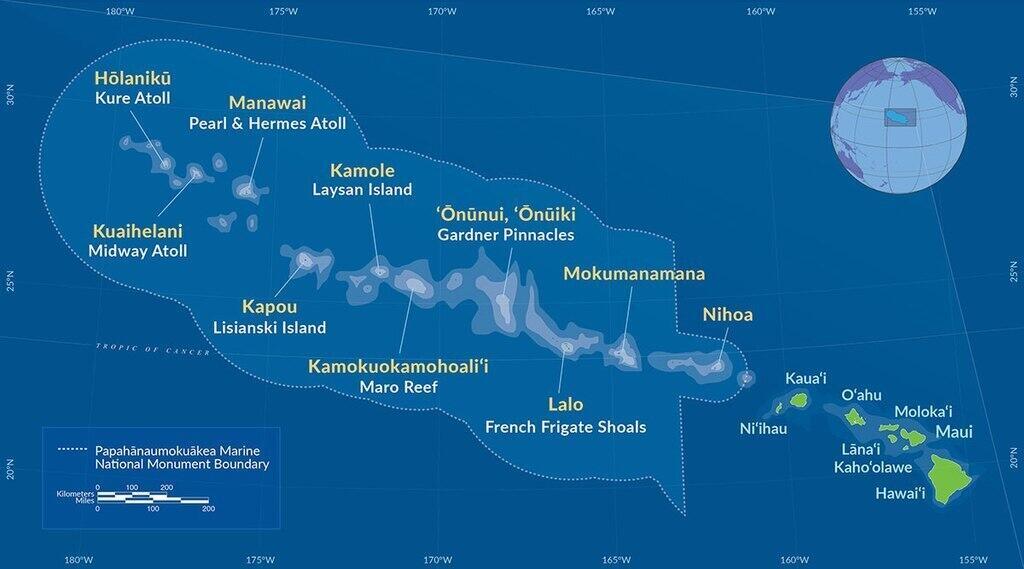
Stretching northwest from Kauai across roughly 1,500 kilometres of ocean – about the same distance from Paris to Rome – Papahanaumokuakea is one of the world’s largest fully protected MPAs.

It covers around 1.51 million square kilometres, larger than all the national parks in the United States combined, and shelters more than 7,000 marine species, many found nowhere else on earth.

The area is vital for endangered Hawaiian monk seals, green turtles and millions of seabirds.

For native Hawaiians it is also a sacred realm – a place tied to creation stories and ancestral routes at sea.


A map of the Papahanaumokuākea Marine National Monument. 
© Wikimedia Commons / NOAA

“I've been involved for more than half my life in protecting a place that we now call Papahanaumokuakea,” Aulani Wilhelm, a native Hawaiian conservationist who played a central role in creating the marine monument, told RFI.

“It was a movement started by native Hawaiian fishermen who partnered with conservationists to protect the coral reefs and endangered species.”

Wilhelm, who also heads the non-profit organisation Nia Tero, said elders had pushed for a refuge rooted in local principles and direct community engagement.

In her words, “not just another model of Western conservation” – but instead protection anchored in values and participation.

Stewardship, not ownership

Papahanaumokuakea is co-managed by four entities: native Hawaiian leaders, the US Federal Government, the state of Hawaii and the Office of Hawaiian Affairs.

Joint decisions cover both nature and culture, and include protecting reefs and endangered species, safeguarding creation stories and traditional navigation routes, and setting rules for access and research.

Instead of talking about “managing” a resource, Wilhelm describes a relationship of care.

“People used to call me the manager of Papahanaumokuakea,” she said. “And I said, I don’t manage anything. You don’t manage your grandmother. You don’t manage your elder cousins. This is a relationship. You ‘care for’ instead.”

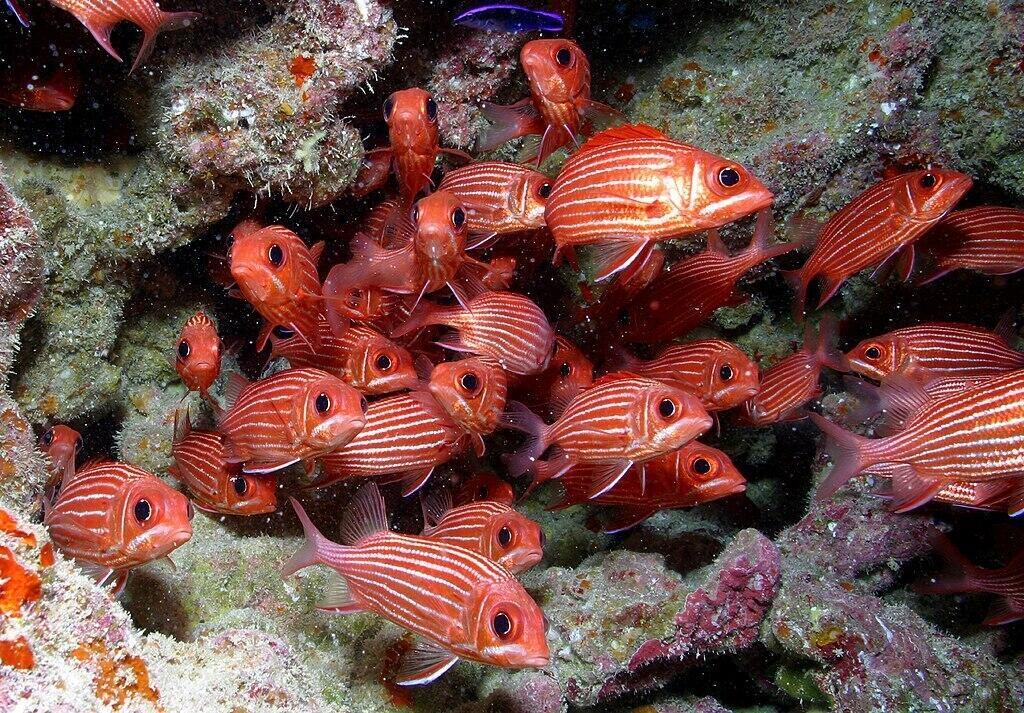
A school of Hawaiian squirrelfish at French Frigate Shoals in the Papahanaumokuakea Marine National Monument. © Wikimedia Commons / James Watt


From sanctuary to survival

Indigenous people manage around a quarter of the world’s land and many of those places hold rich biodiversity. Advocates say the lesson is simple – when communities have a say, nature often fares better.

In the Solomon Islands the stakes are high. In lagoons such as Langa Langa and Lau, some families still live on artificial islands first built centuries ago. They now face rising seas, chaotic weather and stronger storm surges that push water into their homes.

Lysa Wini, a researcher from the Solomon Islands who works with Nia Tero, told RFI that communities are using what they know and are asking for resources so that guardianship can continue.

“That would be not just merely putting indigenous knowledge or wisdom into text, but actually into practice," she said.


Next steps


Once the treaty takes effect – and once the first Conference of the Parties (Cop) is held – countries can file formal proposals for MPAs under the new global system. The first Cop must meet within one year of the treaty coming into force.

States will agree basic rules, set up a secretariat, create a science panel and open an information hub to share data. Decisions are taken by consensus where possible, or by a three-quarters majority.

Each proposal must say where the area is, why it should be protected, which measures will apply, how long they will last and how progress will be checked.

Wilhelm told RFI the planet will need 53 more protected areas the size of Papahanaumokuakea in order to meet global targets.