Saturday, October 11, 2025


NUS-SCELSE researchers uncover hidden plant–microbe strategy that boosts crop growth under nutrient stress


National University of Singapore
NUS-SCELSE researchers uncover hidden plant–microbe strategy that boosts crop growth under nutrient stress 

image: 

The researchers found that soil microbes competing with each other release glutathione which  enhances plant growth under sulphur-deficient conditions.

view more 

Credit: SCELSE


Scientists from SCELSE – a biofilm & microbiome research centre and the National University of Singapore (NUS), have uncovered a surprising strategy plants use to thrive when an essential nutrient — sulphur — is in short supply.

The team discovered that when soil microbes compete with each other in the rhizosphere (the soil surrounding plant roots), they release a well-known compound called glutathione. This compound enhances plant growth under sulphur-deficient conditions. The catch: while plants benefit, some microbes lose out in their own growth.

The researchers call this balancing act a “trans-kingdom fitness trade-off” — where one kingdom of life (microbes) sacrifices part of its growth, while another (plants) gains resilience.

The global problem: declining sulphur in soils

Sulphur (S) is essential for plant growth, just like nitrogen and phosphorus. It supports protein synthesis, vitamin production, and stress resistance.

Historically, sulphur pollution from industrial emissions replenished soils worldwide. But with cleaner energy and stricter air-quality regulations, atmospheric sulphur levels have dropped. While good for air quality and human health, this has unintentionally reduced natural sulphur deposits in agricultural soils.

Over time, crops have drawn down existing soil sulphur, leaving soils deficient. To compensate, farmers increasingly apply synthetic sulphur-based fertilisers. These short-term fixes come with costs: runoff from farmlands contaminates rivers, lakes, and ecosystems, exacerbating environmental degradation.

The new discovery: a microbial boost

The SCELSE-led study, published in Cell Host & Microbe on 26 September 2025, provides a novel mechanistic explanation of how plants and microbes jointly navigate nutrient stress. The researchers found that when soil bacteria compete for nutrients, they release glutathione — a compound that boosts plant growth under sulphur-deficient conditions, even though it reduces bacterial growth.

This improvement in plant fitness came at the cost of bacterial fitness — a biological trade-off across kingdoms of life.

“This work introduces the concept of a trans-kingdom fitness trade-off and provides a mechanistic explanation for it,” said first author Arijit Mukherjee, who was a PhD student at SCELSE and the NUS Department of Biological Sciences when the study was conducted. “Plant fitness isn’t just about the plant itself — it’s about the whole community of microbes around it. Understanding these trade-offs helps us design better microbial solutions for resilient crops.”

Why it matters

Such trade-offs are likely widespread across host–microbe systems, not just in plants, and may represent hidden strategies by which holobionts (hosts and their associated microbes) adapt collectively to environmental cues.

For agriculture, this insight is powerful: instead of relying on chemical fertilisers, researchers can design microbial consortia (or “cocktails”) that naturally boost crop health under nutrient stress. This nature-based solution can reduce fertiliser use, improve soil health, and contribute to global food security.

Assoc Prof Sanjay Swarup, Principal Investigator at SCELSE, explained: “This study provides a blueprint for sustainable agriculture. By tapping into natural plant–microbe partnerships, we can reduce fertiliser use, protect ecosystems, and still secure global food supplies.”

From discovery to application: patent filed

To translate this breakthrough into practice, the team has filed a patent covering applications of this plant–microbe mechanism in agriculture. This will enable the development of bio-based products that support crops in sulphur-deficient soils, reducing reliance on chemical inputs.

“By considering not only microbial functions but also their interactions, we can design more effective microbial consortia for agriculture,” added Assoc Prof Swarup, who is also the Deputy Director for NUS Environmental Research Institute (NERI) and a faculty member of the NUS Department of Biological Sciences. “This is the path toward resilient, climate-ready farming.”


How did the East Asian summer monsoon shape the genomic evolution of Engelhardia?


KeAi Communications Co., Ltd.
MAIN RESULT AND FIGURE. IDENTIFICATION OF THE TERPENE SYNTHASE (TPS) GENE FAMILY IN ENGELHARDIA AND THE POTENTIAL EFFECTS OF CLIMATE CHANGE ON TERPENOID BIOSYNTHESIS IN E. FENZELII. 

image: 

MAIN RESULT AND FIGURE. IDENTIFICATION OF THE TERPENE SYNTHASE (TPS) GENE FAMILY IN ENGELHARDIA AND THE POTENTIAL EFFECTS OF CLIMATE CHANGE ON TERPENOID BIOSYNTHESIS IN E. FENZELII.

view more 

Credit: LI ET AL, 2025, PLANT DIVERSITY


The East Asian Summer Monsoon (EASM) is a key climatic driver shaping ecosystems in East Asia by regulating water and heat patterns. Its fluctuations over geological times have influenced vegetation types and species adaptation. In particular, subtropical evergreen broad-leaved forests (EBLFs) have expanded significantly due to the EASM, contributing to biodiversity and providing vital ecological services. However, the genomic mechanisms behind plant adaptation to the EASM remain largely unexplored. Understanding these mechanisms is essential for uncovering how plant species have historically responded to monsoon-driven climate shifts and how they continue to adapt to ongoing environmental changes.

To investigate this, Dr. Hong-Hu Meng and colleagues from the Xishuangbanna Tropical Botanical Garden, Chinese Academy of Sciences, focused on the genus Engelhardia, a common and characteristic component of China's EBLFs, which spans multiple ecological zones from tropical rainforests to subtropical forests.

The team's findings were published as a cover article in the KeAi journal Plant Diversity under the title of "Genome analyses provide insights into Engelhardia’s adaptation to East Asia Summer Monsoon".

This work started with the sequencing of genomes of five Engelhardia species and the closely related Rhoiptelea chiliantha using PacBio HiFi and Hi-C. The resulting high-quality assemblies revealed substantial variation in genome size (414.56–985.85 Mb) and gene number (31,000–53,000).

“Phylogenomic analyses estimate the divergence between the evergreen lineages (E. fenzelii, E. roxburghiana) and the deciduous lineage (E. spicata) at approximately 52 Mya,” shares Meng. “A subsequent separation between E. fenzelii and E. roxburghiana occurred around 25 Mya, coinciding with the intensification of the EASM, which likely drove the transition from deciduous to evergreen forest ecosystems in Asia.”

Gene family analyses further support this divergence, revealing functional differentiation between the lineages. “Evergreen species have expanded genes related to photosynthesis, hormone signaling, and redox processes, whereas deciduous species have prioritized genes involved in drought response,” says Meng.

Notably, E. fenzelii exhibits a significant expansion of the TPS gene family, which likely contributes to its enhanced survival in humid, competitive environments. “Additionally, transposable elements play a key role in the larger genome size of E. fenzelii, further facilitating its adaptation to the moist, monsoonal climate,” adds Meng.

###

Contact the author: Contact the author: Hong-Hu Meng, menghonghu@xtbg.ac.cn

The publisher KeAi was established by Elsevier and China Science Publishing & Media Ltd to unfold quality research globally. In 2013, our focus shifted to open access publishing. We now proudly publish more than 200 world-class, open access, English language journals, spanning all scientific disciplines. Many of these are titles we publish in partnership with prestigious societies and academic institutions, such as the National Natural Science Foundation of China (NSFC).


UK

Half-way point in rail nationalisation as Greater Anglia returns to public hands

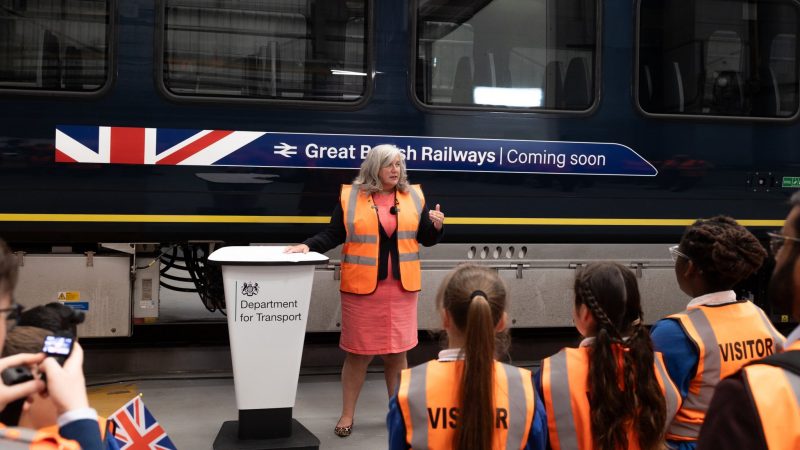
Train services operated by Greater Anglia will be brought into public ownership this weekend, marking the half-way point in the nationalisation of the nation’s rail network.

Public ownership of the railways was one of the key pledges Labour made upon its return to office last year, with promises to improve services and drive down fares.

As Greater Anglia services transfer into public ownership on Sunday, almost half of rail passenger journeys that Great British Railways will ultimately be responsible for will be operated by publicly owned companies.

The rail operator, which covers routes across the East of England and parts of London, boasts being the country’s most punctual service.

Transport Secretary Heidi Alexander said: “From this Sunday, passengers commuting into Norwich or heading for a day out in Cambridge will be travelling on services that are owned by the public, and run with their interests front of mind.

“We’re reforming a fragmented system and laying the foundations for a more reliable, efficient and accountable railway – one that puts passengers first and delivers the high standards they rightly expect.”

Subscribe here to our daily newsletter roundup of Labour news, analysis and comment– and follow us on BlueskyWhatsAppX and Facebook.

It comes after South Western Railways and c2c were both returned to public ownership earlier in the year. West Midland Trains and Govia Thameslink Railway are expected to follow suit in 2026, meaning that eight out of ten passenger rail journeys will be on publicly owned services by the middle of next year.

Martin Beable, managing director for Greater Anglia, said: “I am very proud of what we have achieved here in East Anglia over the past thirteen years, significantly improving standards, investing in a complete fleet of new trains, and working closely with the local community.

“Moving into public ownership is an exciting opportunity to build on this success. By working more closely with the wider family of publicly owned operators, we can share expertise, drive innovation, and deliver even better journeys for our passengers across the Anglia region.

“This transition also brings us one step closer to Great British Railways – a simpler, more unified network that puts passengers at its heart. Together, we can create a railway that drives growth, sustainability, and pride for the communities we serve and right across the UK.”

High fares hurt working Londoners and students, and exacerbate social isolation – new briefing

OCTOBER 5, 2O25

London’s high public transport fares obstruct access to employment opportunities, education and reasonable living standards, a briefing published today by Fare Free London shows. 

Working Londoners spend many extra hours a week – and, in some cases, many extra hours a day – commuting, to avoid expensive trains and use cheaper but slower buses. 

Students tangle with trade-offs between housing costs, which are lower outside the capital, and travel costs that are much higher.  

London’s tube and train fares are among the world’s highest. They exacerbate social isolation and mental illness among the most vulnerable Londoners. They obstruct people’s ability to socialise, to take their children places, and to access London’s cultural treats. 

The briefing, Fares Unfair: London public transport and the cost of living crisis, is based on the results of a survey conducted over the summer by volunteer researchers. 

Pearl Ahrens of Fare Free London said: “We did not have the intention, or capacity, to survey a demographically representative group of Londoners. We focused on the way that the relatively high cost of public transport in London affects lower-income households, whose views are often least heard.

“Nearly half of our respondents said they worry about costs every time they use public transport. More than half said they use cheaper modes of transport because better ones are too expensive. This often meant people taking long journeys by bus instead of tube.”

Respondents’ quotes in the survey are a stark reminder of the yawning gap between London’s wealthiest and poorest households.

One takes a journey from Lewisham to the Royal Docks using three buses and the Woolwich Ferry, “to save the money I would have to spend if I took the Underground or the DLR”. Another takes an hour’s journey to school by bus, double the time it would take by train.

A single man told one of our researchers of how he had had a cleaning job in Zone 1. To start work at 7.0 am, he caught a bus from SE18 at 5.0 am, got off in Zone 2 and walked the rest of the way.

A single mother of two daughters explained how she takes three buses to work, from SE9 to Piccadilly. She described herself as “struggling to make ends meet – doing a balancing act”, and having to limit her daughters’ weekend outings due to travel costs.

Another respondent commented: “Every time I step out of the house, I spend more money on travel than even groceries. It disconnects me from seeing my family as well as my friends.”

The briefing urges the Greater London Authority and the Mayor’s office to consider how the impact of high fares affects policy goals including those in the Mayor’s Transport Strategy and policies on tackling social inequality.

It urges that these issues are included in discussions about the funding basis of Transport for London, to “consider how this can be changed, to reduce and eventually abolish reliance on fares income.” 

More information at farefreelondon.org.

Image: 1967 Stock train at Finsbury Park in 2010. Creator: Tom Page  Copyright: Creative Commons Attribution-Share Alike 2.0 Generic


A catalogue of Tory disasters – but how much is changing under Labour?


 October 2, 2025

Mike Phipps reviews What Went Wrong with Britain?: An Audit of Tory Failure, edited by Steven Kettell, Peter Kerr and Daniela Tepe, published by Manchester University Press.

The sense of frustration and despair about the state of modern Britain shared among the editors of this book was such that they originally thought of calling it WTF is Wrong with Britain? The publisher persuaded them otherwise, but the premise retains its urgency.

Everything you would expect is here and quite a bit more. Matthew Watson charts the collapse of the Conservative Party – under Johnson of course, but also his successors – into populist crowing about British exceptionalism to mask governmental  incompetence, most infamously during the Covid pandemic.

James Morrison catalogues the years of denial about the UK’s structural and ever-widening levels of inequality, rooted in “moralising neoliberal narratives that individualise responsibility for poverty.” Claire Thompson, Dianna Smith and Laura Hamilton highlight Britain’s food poverty – among the worst in Europe.

The chapter on the NHS is particularly telling.  Allyson Pollock, James Lancater and Louisa Harding-Edgar highlight how the Covid-19 Inquiry showed how services for managing communicable diseases were undermined by the abolition of the Public Health Laboratory Service, a loss of public health expertise and the fragmentation and part-privatisation of services. The closure of 100,000 beds in the last fifteen years alone, leaving the NHS with a quarter of the number it had when it was founded, meant the service was completely unprepared when Covid hit. This led to the Government spending £220 million on Nightingale hospitals and awarding contracts worth £2 billion to private healthcare companies.

Neil Carter examines years of dismal under-achievement on climate policy. Leaving aside the unexpected improvement in air quality resulting from Covid lockdowns and the more long-term benefits of increased working from home, the issue has been largely neglected by successive Tory governments reeling from one crisis to the next.  The author describes their approach to energy efficiency in buildings, for example, as “calamitous”. At the root of the failures was a reliance on market-led solutions and the influence on policy of corporate interests.

Johnna Montgomerie argues that the politics of debt is a key aspect of the neoliberal state. As the 2008 crisis showed, when markets panic, the state uses public debt freely to restore ‘confidence’, whereupon financial institutions use their new liquidity to pass on debt to private households. Global asset markets benefit at the expense of the rest of us and the crisis continues, fuelled  – as other authors argue here -by worsening inequality.

It should not be forgotten that there was real opposition to this catalogue of disasters. David J. Bailey reminds  us of the anti-fees protests, the direct action of UK Uncut, the growth of independent unions, anti-fracking protests, civil liberties and rent campaigns – movements which fed into the rise of Jeremy Corbyn to the Labour leadership.

The book covers the impact on women and minoritised communities. Yet there are also some curious omissions: nothing on Britian’s failing education system or the impact of national decline on young people.

Can Labour do better?

It may have been too early, when this book went to press, to speculate whether the incoming Labour government could turn the tide, but most contributors were not optimistic. Here are Frankie Rogan and Emma Foster who wrote a chapter on gender relations: “The inability of Starmer’s Labour to produce even the illusion of sustained hope and optimism in the UK is indicative of the long-standing consequences of austerity and permacrisis, and the inability of most politicians to imagine a world beyond it.”

The authors of the chapter on health agree: “The incoming Labour government has given us little cause for hope.” Likewise on social care, Juanita Elias, Ruth Pearson and Shirin M. Rai doubt whether the new Labour government have either “the capacity or willingness [to] bring about significant reforms to the sector that might end decades of policy drift.”

Most alarmingly, the author of the chapter on debt believes that the incoming Labour government has no coherent economic plan or strategy, adding, with some foresight: “Starmer and the new Chancellor, Rachel Reeves, will repackage austerity measures and urgent and necessary interventions to the large public debt caused by austerity – a circular argument.”

The Government’s defenders would refute these interim verdicts. They would point to some significant successes: the Employment Rights Bill, the return of the railways to public ownership, private schools now paying VAT on fees, free school meals for 500,000 more children and increased NHS spending.

But it’s the big stuff on which the Government is failing and which explains its dire poll ratings.  A recent poll placed Keir Starmer as the most unpopular Prime Minister in history, with a lower approval rating than even Liz Truss. It’s not just that he has failed to spell out a coherent vision: just 16% of people polled by YouGov think Labour have a clear sense of purpose.

It’s working within a self-imposed fiscal straitjacket, which has resulted in some deeply unpopular policy choices – from the winter fuel payments fiasco, through a refusal to abolish the two child-benefit cap, despite clear evidence that doing so is an easy way to reduce child poverty, to disability benefit cuts.

In their zeal to reassure investors and the bond market, Starmer and Reeves seem “prepared to hurt poorer people while apparently leaving the wealthy largely untouched,” noted one commentator recently.

Meanwhile, too many people still feel squeezed by soaring energy bills, supermarket price gouging and housing costs. The Chancellor’s tax and spend plans look like tinkering, rather than the radical change promised, and with no bold moves on wealth taxes, amid rising inequality and patchy growth, her whole approach smacks of maintaining managed decline. The complacent reliance on ‘market-led solutions’ to the housing crisis, the problems engulfing the NHS and even natural monopolies like the water industry underline that this Government, like its predecessors, is putting failed ideology before practical solutions.

These are deep-rooted failings, not just weaknesses in messaging or spin. If Keir Starmer does not change course, inexorable pressure will mount on his leadership -sooner than many might imagine.

Such scenarios are beyond the scope of this book, whose great strength is in charting how we got here. But, despite last year’s election promises, there’s little sign that Starmer’s leadership is going to get us out of this mess.


Speeches from the dock by Russia’s political prisoners


A new book published this week showcases ten people who were jailed for opposing Putin’s war on Ukraine.

 October 5, 2025

Voices Against Putin’s War: Protesters’ defiant speeches in Russian courts, edited by SImon Pirani and published this week by Resistance Books, brings the spirit of anti-war resistance to an international audience.

The book includes speeches in court by ten people who opposed Russia’s war of aggression in Ukraine, and were arrested, tried and handed long jail sentences for doing so. Two protesters who appeared in court, and made statements outside court, are also featured.

One of the protesters, Ruslan Siddiqi, derailed a train carrying munitions to the Russian army in Ukraine. Three firebombed military recruitment centres or security services offices (out of hours with no danger to persons). Others did no more than criticise the war, and the Russian government, on social media – or, in the case of the youngest protagonist, 19-year old Darya Kozyreva, laid flowers at a statue to Ukraine’s national poet, Taras Shevchenko.

Voices Against Putin’s War also includes a summary of 17 other anti-war protesters’ speeches in Russian courts; letters and interviews by the protagonists; and a survey of political repression in Russia, Belarus and the occupied territories of Ukraine, of which these jailings are part.

John McDonnell MP writes in his Foreword: “This stubborn refusal to be silenced is what brings down dictatorships, secures human rights and gives us all the hope that freedoms can be won. For that we all owe these courageous advocates for justice a depth of gratitude.”

The European Network for Solidarity With Ukraine is supporting the book’s publication as a way of strengthening its campaign for the withdrawal of Russian troops from Ukraine and an end to the illegal occupation of Ukrainian territory.

Any proceeds will be donated to Memorial: Support Political Prisoners, Russia’s largest organisation – now based abroad – that gives legal and practical support to political prisoners.

The book has received endorsement both from prominent Russian opponents of Putin’s criminal invasion of Ukraine, such as Darya Serenko, coordinator of the underground network Feminist Anti-War Resistance, and from Oksana Dutchak, co-editor of the leading Ukrainian progressive journal Commons.

Simon Pirani, honorary professor at the University of Durham, who edited the book, said: “There are now more political prisoners in Russia than at any time since the post-Stalin ‘thaw’ of the 1950s. And the war has turbocharged the repressive machine.

“These protesters who used their ‘final word’ in court to denounce the dictatorship stand in a tradition that goes back to the populists who defied tsarist autocracy in the 1870s.”

The statements in Voices Against Putin’s War are by Alexei Gorinov, Igor Paskar, Bohdan Ziza, Mikhail Kriger, Andrei Trofimov, Sasha Skochilenko, Aleksandr Skobov, Darya Kozyreva, Alexei Rozhkov, Ruslan Siddiqi, Kirill Butylin and Savelii Morozov.

A launch event for Voices Against Putin’s War will be held in London on Thursday 20th November, at Pelican House, Cambridge Heath Road, at 7pm, featuring “Try Me For Treason”, a semi-staged reading by actors of excerpts from prisoners’ speeches.

Copies of the book can be ordered from Resistance Books here. It will also be available soon as a free-to-download pdf.