Sunday, October 19, 2025

Putin's meeting with Trump in Budapest is a slap in the face for the EU
Putin's meeting with Trump in Budapest is a slap in the face for the EU
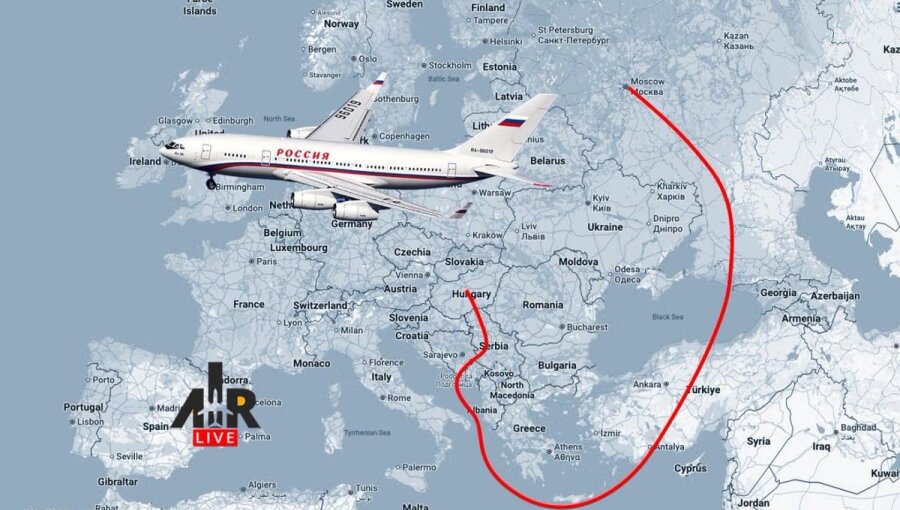
With sanctions on Russian planes entering EU airspace, exactly how will Russian president Putin get to Budapest to meet Trump? / AirLine
By Ben Aris in Berlin October 19, 2025

As preparations get underway for a highly anticipated summit between Russian President Vladimir Putin and US President Donald Trump in Budapest, attention is turning to an unusual but politically sensitive detail: how will Putin actually reach the Hungarian capital without violating European airspace restrictions or international law?

The meeting, hosted in an EU country and a Nato member state, is a slap in the face for Brussels, which will not participate in any way in the meeting and will be in defiance of EU sanctions on Russia.

In theory Putin can fly to Budapest and visit the Hungarian capital as he is not personally on any sanctions list. There is an arrest warrant for Putin’s arrest, who is charged with kidnapping children from Ukraine, issued by the International Criminal Court (ICC) for kidnapping Ukrainian children, but Hungary withdrew from the Rome Statutes in April this year.

Hungarian Prime Minister Viktor Orban nixed the Rome Statutes so that he could host Israeli Prime Minister Benjamin Netanyahu in April, who is also wanted by the ICC on war crime charges.

However, despite nixing the treaty, legally the statute will still be in force until June 2, 2026 and so technically the arrest warrant is still in force in Hungary and authorities should arrest Putin on his arrival. But given that Netanyahu successfully visited Hungary with impunity, an arrest seems highly unlikely.

A second problem makes the trip difficult: after the invasion of Ukraine in 2022 all Russian airline permissions to enter European airspace have been rescinded.

However, an exception to this rule was recently made for the first time when, on July 28, the plane of the grand dame of Russian politics, Valentina Matviyenko, Chairwoman of Russia's Federation Council, was permitted to fly through EU airspace to attend the World Conference of Speakers of Parliament in Geneva, Switzerland.

Matviyenko is a close Putin ally who has been under EU sanctions since 2014, but her trip marked the first such overflight by a senior sanctioned Russian official since 2022. As it was, the decision backfired as most of the delegates at the conference walked out as soon as she got on stage.

Matviyenko's Russian government plane (also an Il-96) entered EU airspace via Italy after crossing from Turkey over the Mediterranean, then proceeded to Geneva. It returned on July 30 via French and Italian airspace, avoiding the full EU ban through special exemptions.

According to AirLine, Putin’s aircraft is expected to minimise the need for permissions by taking a long southern detour, bypassing EU airspace almost entirely. The route would take the plane via Turkey and the southern Balkans, which have all refused to join the sanctions regime.

It is expected to be escorted by Turkish and Russian fighter jets along the full distance to mitigate the risk of drone or missile attacks by Ukraine or anyone else.

The flight, which would ordinarily cover 1,500 km, could stretch to 5,000 km, adding as much as three hours to the journey. While Russia’s presidential aircraft is technically capable of such range, the detour will require careful coordination with Turkish, Serbian and possibly Bosnian air traffic control, and create additional risks due to regional military activity, especially over the Black Sea.

In February 2022, the European Union closed its airspace to all Russian aircraft, including state and presidential flights, in response to the invasion of Ukraine.

The Kremlin has not confirmed the final route. “Putin’s flight route to meet with President Trump in Hungary is, of course, still unclear,” said Kremlin spokesman Dmitry Peskov, adding that Orbán had initiated a call with Putin to express Hungary’s willingness to host the summit.

“Viktor Orbán expressed his readiness to provide conditions for the organisation of a possible Russian-American summit in Budapest,” Peskov said. “Putin informed the Hungarian prime minister about the content of his telephone conversation with Donald Trump.” Orbán, who has maintained warm relations with both Putin and Trump, hailed the summit as a breakthrough.

“The planned meeting between the American and Russian presidents is great news for the peace-loving people of the world,” he posted on X. “We are ready!” Trump echoed the sentiment in a detailed statement following what he called a “very productive” phone call with Putin last week.

“At the conclusion of the call, we agreed that there will be a meeting of our High Level Advisors next week,” he wrote, naming Secretary of State Marco Rubio to lead the US delegation.

Trump added: “President Putin and I will then meet in an agreed upon location, Budapest, Hungary, to see if we can bring this ‘inglorious’ war, between Russia and Ukraine, to an end.”

The proposed summit will be closely watched, not just for its diplomatic implications, but for its legal and symbolic resonance.
 

Zelenskiy leaves Washington empty handed, Trump and Putin head to Budapest to talk business

Zelenskiy leaves Washington empty handed, Trump and Putin head to Budapest to talk business
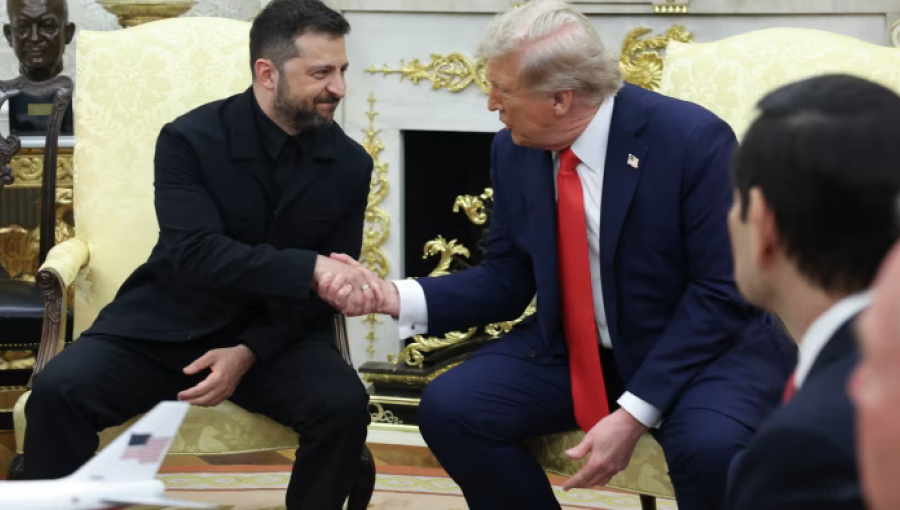
Ukraine President Zelenskiy left a White House meeting empty handed, as Presidents Trump and Putin head to Budapest to talk business. / bne IntelliNews
By Ben Aris in Berlin October 19, 2025

Ukrainian President Volodymyr Zelenskiy went into a White House meeting with US President Donald Trump on October 17 hoping for a big arms deal, trading Ukraine’s advanced drone technology for US Tomahawk cruise missiles, and a tightening of the sanctions noose around Russia’s neck. He came out of the meeting empty handed.

“Ukrainian hopes had been built by the apparent Trump 180 on Russia a few weeks back with tweets around his UNGA appearance and suggesting that Ukraine actually had a path to victory. Ukraine has also been upping the ante with its campaign of deep strike drone attacks on Russian oil refineries. There was a growing sense here that Russia was looking increasingly vulnerable,” Timothy Ash, the senior sovereign strategist at BlueBay Asset Management in London said in a blogpost.

Trump has pivoted back to Putin, lured by Putin’s offer of yet another summit in Budapest and Tomahawks are off the agenda again. Trump went further to say that the time was “not perfect” to consider fresh sanctions on Russia.

Ukraine has changed strategy this summer and has started targeting Russian energy assets inside the country in the hope of cutting the Kremlin from its main source of income, with some success. While estimates vary, Russia’s oil refining output is down by 10%-30%, sparking a fuel crisis. However, despite improvements, Ukraine’s drones can only do limited damage. The powerful Tomahawks could flatten refineries and to bring the point home a Kyiv Post reporter captured the moment the Ukrainian delegation carried maps into the White House detailing the “pain points” of Russia's defence industry that these missiles could be used to destroy.

Trump was not buying it. After meeting with Zelenskiy, Trump said on social media that their talks were "very interesting, and cordial, but I told him, as I likewise strongly suggested to President Putin, that it is time to stop the killing, and make a DEAL!"

Axios, citing Ukrainian sources familiar with the discussions, reported that the two-and-a-half hour meeting was tense, at times getting "emotional." "Nobody shouted, but Trump was tough," one source described the meeting to Axios.

"You know, we need Tomahawks and we need a lot of other weapons that we're sending to Ukraine... Hopefully, we'll be able to get the war over without thinking about Tomahawks," Trump said after the meeting with Zelenskiy.

Since taking office Trump has sent no money to Ukraine, imposed no sanctions, and more recently US-supplies of weapons, paid for by Europe under the new PURL (Prioritized Ukraine Requirements List) initiative, have fallen dramatically.

Business talks

As bne IntelliNews has reported, Trump’s foreign policy is driven by minerals diplomacy, where he has tried to cut some sort of minerals deal in each of the conflicts he has become involved with, starting with Ukraine’s minerals deal signed on April 30.

Russia remains the big prize as it is home to a cornucopia of critical minerals and rare earth metals (REMs). Trump has made it clear from the start that he is interested in doing business with Russia and both presidents have recently admitted that they talked about more than Ukraine at the recent Alaska summit on August 15.

However, details of these business discussions remain vague. Amongst the items that have been mentioned is ExxonMobil return to the Sakhalin-1 oil project; lifting of aviation sanctions to allow Boeing to resume business in Russia in exchange for access to Russia’s titanium monopoly; and the exploitation of REM deposits in Russia and Alaska. bne IntelliNews sources in Washington have also confirmed a business agenda is being actively discussed, but details remain obscure.

Most recently, a “Runnel” was proposed – a tunnel linking Northwest Russia to Alaska connecting the two continents. Kirill Dmitriev, the head of Russia’s sovereign wealth fund and in charge of the parallel business talks, admitted in a post on social media that his fund already commissioned a feasibility study for the Runnel six months ago, which suggests the tunnel project has been on the discussion agenda since the talks kicked off in Riyadh on February 18.

The public appearance of the Runnel project adds a new significance to the surprising, but still symbolic, choice of Alaska as the venue for the first Trump-Putin meeting given its Russian heritage.

By the same logic, the choice of Hungary as the venue for a second meeting is also a surprising move. It is also symbolic as it is a clear slap in the face for Brussels, which will not be involved in the meeting at all, despite the fact that Hungary is both an EU and Nato member.

Brussels is now “scrambling for a seat” at the upcoming Putin–Trump summit, desperate to counter what EU officials call “Putin’s influence over Trump.” One senior EU source even floated that Finnish President Alexander Stubb should “somehow be present”, Bloomberg reports.

But at the same time, there is also a raw materials connection between Russia and Hungary, which continues to import significant amounts of oil and gas from Russia in defiance of an EU drive to ban all Russian imports by the start of 2027.

It may be another deal being discussed is the change of ownership of the European sections of the Druzhba pipeline to facilitate these imports. In recent comments, Trump has said that India must reduce the import of Russian oil but called Hungary’s case a “tricky problem.” He went on to say that it has “only one pipeline” and that it is “far from the sea”, suggesting that the White House would not support Brussels’ drive to end the imports of Russian oil and gas.

“Trump likes strong leaders - Xi, Putin, Erdogan, Kim, leaders who get their way, by hook or crook, as he aspires for the same “unchained rule”,” says Ash. “I also tend to explain away Trump’s relationship with Putin in the same way - Putin is a typical mafia boss that Trump might have come across in his NYC real estate dealings, and he might have learned there that you don’t cross them. Or you cross them at your personal peril.”

There is a precedent for a change of ownership of this pipeline. US investor and a veteran of the Russian market Stephen Lynch has already applied for permission to take the Nord Stream pipeline over, which currently belongs to Germany. The EU has attempted to block this move in its nineteenth sanctions package, but that package is stuck in committee due to vetoes from Hungary and a few other EU member states.

Donbas sticking point

Business deals involving Russo-US joint mineral ventures on each other’s territory will be very difficult to do in the current geopolitical environment, let alone changing the ownership of major energy infrastructure pipelines. However, the most serious logjam in talks appears to be political.

Over the weekend, the Washington Post reported that during his call with Trump on October 16 just before the US president met with Zelenskiy, Putin once again insisted that Ukraine cede control to Russia of the entire Donbas region. As bne IntelliNews has opined, Trump is uninterested in Ukraine and sees it only as leverage in his negotiates with Putin, trading threats of military support for concessions from the Russian leader. While the talks with Putin are ongoing those threats are unlikely to materialise.

This is a red line for Ukraine and Trump has backed Zelenskiy no-go on this point, which also came up in Alaska. Putin offered to concede the parts of the other two regions the Armed Forces of Russia (AFR) does not control as part of the bargain, which some analysts say was “progress”.

Kyiv will never agree to this, mainly as it has invested heavily into an extensive defensive line in Donbas that military analysts say will be extremely difficult for AFR forces to overcome. Bankova worries that giving this way would open the way for a rapid and largely unresisted advance for the AFR towards western Ukraine all the way up to the Dnipro River that cuts the country in half.

As Ukraine is once again running out of men, money and materiel Putin appears to have dug his heels in and believes that he can win eventual victory on the battlefield, not necessarily with superior military force, but simply by waiting for Ukraine’s mounting manpower and funding crises to peak, which could happen sooner than later as detailed by bne IntelliNews recently in a side-by-side comparison of the Ukrainian and Russian budgets.

The IMF recently announced it had underestimated Ukraine’s need for funding to continue the war. The government is already short between $8bn and $19bn (depending on war costs) to get to the end of this year and the IMF says it needs $65bn to get to the end of 2026.

Given that the US has de facto totally withdrawn from supporting Ukraine this sum entirely falls on Brussels, as bne IntelliNews reported Europe can’t afford to take over the burden of supporting Ukraine, as most EU countries are either in recession or approaching a crisis.

That leaves confiscating the frozen $300bn of Central Bank of Russia (CBR) funds using the so-called Reparation Loans, as the only way to bail Ukraine out, but that decision is fraught with problems and subject to disunity amongst the EU members.

German Chancellor Friedrich Merz said following Zelenskiy's meeting in the US that his trip turned out “tougher than expected” and “failed to deliver the results he counted on.”

“The visit didn’t go as Zelensky hoped,” Merz said, adding that only a strong Ukrainian army can bring peace, and surrender is not an option — because if Ukraine falls, Russia will strike another European country next.

“Back in September the EC made clear that Ukraine’s financing numbers no longer added up, a fact now reaffirmed by the IMF. The Fund has suggested its EFF for Ukraine faces a $65 billion shortfall. And actually Europe, Japan and Canada, are on the hook now for the full $100 billion annual Ukraine financing bill, for years to come,” says Ash.

“The cupboard is kind of bare now when it comes to funding Ukraine. There is no plan B, aside from the [Reparation Loans]. And without a plan b, and if the RL is not rolled out, then Ukraine is underfunded, risks losing the war, which would be a catastrophic blow to Europe,” says Ash.

Can Putin, under sanctions and an arrest warrant, enter the European Union?
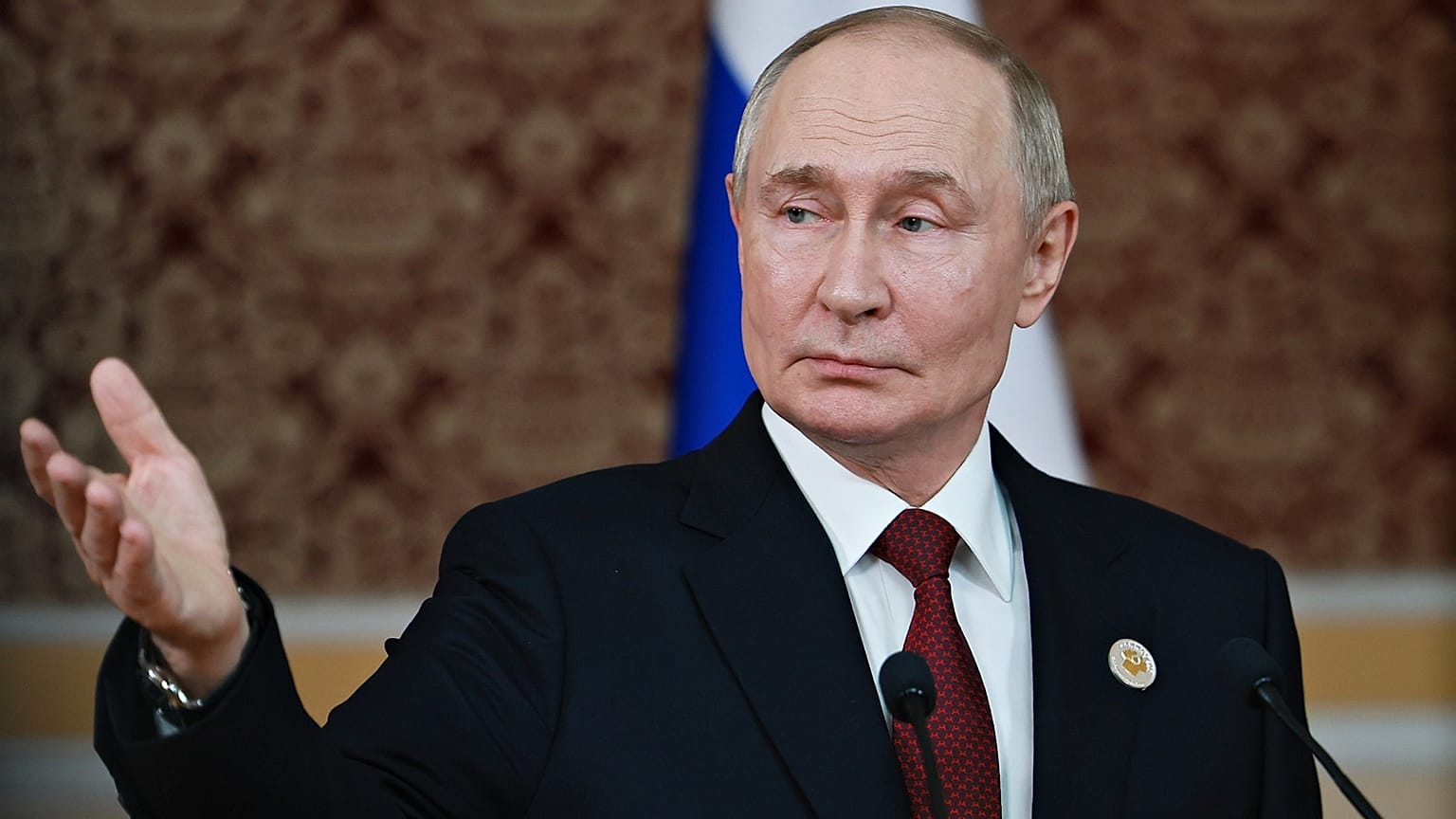
Vladimir Putin is currently under EU sanctions.
Copyright Vladimir Smirnov/Sputnik

By Jorge Liboreiro & Estelle Nilsson-Julien
Published on 

Applicable EU sanctions and an outstanding arrest warrant cast doubt over Vladimir Putin's ability to fly to Budapest and meet Donald Trump.

Vladimir Putin is coming to Budapest. At least, that is what the invitation says.

After a lengthy phone call with Donald Trump on Thursday, the leaders of the United States and Russia tentatively agreed to meet in the EU and NATO capital sometime in the near future to discuss a possible end to the full-scale invasion of Ukraine.

Whether that tête-à-tête happens is still unclear, but the news itself sent shockwaves across capitals, as the trip could mark Putin's first intrusion into the European Union's territory since early 2020 and further undercut the Western effort to isolate him.

But beyond the geopolitics driving the initiative, and the complex logistics that go into setting up a summit of this magnitude and consequence, one basic question emerges: Can Putin actually enter the European Union?

There are at least two different dimensions to consider.

The EU sanctions

Immediately after Russian troops broke through Ukraine's borders and marched to Kyiv, the EU rushed to apply a variety of sanctions to weaken the Kremlin's war machine.

Among the plethora of decisions, member states sanctioned hundreds of high-level Russian officials responsible for planning and overseeing the invasion. The blacklist entailed a prohibition on travel to the bloc and the freezing of personal assets.

Putin and his foreign minister, Sergei Lavrov, were also targeted, but with a caveat: only their assets were frozen, a symbolic measure given the obscurity around Putin's wealth. A travel ban was not introduced to maintain a minimum of diplomatic contacts.

According to then-High Representative Josep Borrell, Putin was the third world leader to be personally sanctioned by the bloc, following Belarusian President Alexander Lukashenko and then-Syrian President Bashar al-Assad.

This means that, on that front, Putin would be allowed to land in Hungary.

However, there is an additional obstacle: the EU has effectively closed its airspace to Russian planes as part of its sweeping sanctions regime.

According to the European Union Aviation Safety Agency (EASA), the flight prohibition applies to aircraft operated by a Russian air carrier, registered in Russia and owned or chartered by any Russian person or entity, as well as to "non-scheduled" flights that can transport Russian citizens to business meetings or holiday destinations in the EU.

There are several exceptions to the rules, such as emergency landings or humanitarian purposes. Additionally, member states may grant case-by-case derogations.

Vladimir Putin travels in his presidential aircraft. Sputnik via AP.

Last year, Sergei Lavrov travelled to Malta for a meeting of the Organisation for Security and Cooperation in Europe (OSCE) that proved highly controversial. The minister was forced to undertake a seven-hour detour to avoid European airspace until he arrived on the island, which permitted him to land due to diplomatic reasons.

By contrast, his spokesperson, Maria Zakharova, who is under a travel ban and an asset freeze, was denied an exemption after several capitals raised objections.

Putin could have two options: either he embarks on a long-winded detour to enter Hungary through the EU candidates in the Western Balkans, or he secures derogations from the EU members along the shorter route: Poland, which could prove tricky, and Slovakia, which would likely be easy.

Another option could entail flying through the Black Sea and Romania, a staunch ally of Kyiv that hosts a multinational NATO contingent.

The European Commission, which oversees the implementation of sanctions, has welcomed "any steps that lead to a just and lasting peace for Ukraine" while refraining from committing to facilitating the prospective summit.

It remains to be seen what levers Trump will exert to ensure the meeting goes ahead and whether this aspect had already been settled when the Budapest option was discussed between the American and Russian presidents.

Putin stepping on European soil again will, by itself, score a victory for the Russian leader after years of isolation and mark a daunting moment for the bloc as its leaders watch on as the Russian and American presidents meet in an EU member that has consistently tried to derail collective support for Ukraine.

But refusing Putin's travel to Budapest risks being exploited by the Kremlin to underline its narrative that it is the EU itself that seeks confrontation with Russia instead of peace. Kyiv's position on the summit may help influence the resolution of this controversy.

The ICC arrest warrant

Besides EU sanctions, which are directly enforceable, Putin is under an arrest warrant by the International Criminal Court (ICC), based in The Hague.

Putin and Maria Alekseyevna Lvova-Belova, Children's Rights Commissioner, are accused of being responsible for the deportation and transfer of tens of thousands of Ukrainian children from occupied areas to Russia, which constitutes a war crime.

Neither Russia nor the US is a party to the ICC and therefore does not recognise its jurisdiction. (The Kremlin has issued a warrant for the court's general prosecutor.)

Meanwhile, all EU countries have signed up to the Rome Statute and are, by default, expected to aid in its global fight against impunity.

Earlier this year, Hungary became the first member of the bloc to announce its intention to withdraw from the court in response to the arrest warrant placed on Israeli Prime Minister Benjamin Netanyahu, which Hungary, like the US, had contested.

The decision was made public shortly after Hungarian Prime Minister Viktor Orbán received Netanyahu in Budapest and openly flouted the obligation to detain him.

But Hungary's withdrawal will not take effect until June 2026, one year after it filed the notification. In the interim period, the country remains bound by the tribunal.

"A withdrawal does not impact ongoing proceedings or any matter which was already under consideration by the Court prior to the date on which the withdrawal became effective," an ICC spokesperson told Euronews.

"When states have concerns in cooperating with the Court, they may consult the Court in a timely and efficient manner. However, it is not for states to unilaterally determine the soundness of the Court's legal decisions."

The ICC is based in the Hague, the Netherlands. Copyright 2025 The Associated Press. All rights reserved.

Critically, the ICC lacks the means to enforce its warrants: it relies exclusively on the goodwill of individual governments. Last year, Mongolia, a party to the ICC, faced European recriminations after it hosted Putin for a state visit without any consequences.

A similar scenario unfolded when Orbán welcomed Netanyahu in April.

"If Putin lands (in Budapest), the arrest should be the logical consequence," said a senior EU diplomat, speaking on condition of anonymity.

"Nobody will be surprised if the Hungarians don't arrest Putin. It's not the first time that Hungary violates its (ICC) obligations. So yes, it's problematic."

The ICC often runs into the obstacle of diplomatic immunity.

On the one hand, Article 27 of the Rome Statute says the rules apply to all persons "without any distinction based on official capacity", including heads of state and government. On the other hand, Article 98 says that countries "may not proceed" with a warrant if it breaches their obligation to respect the immunity of a non-party state.

"If a country's domestic laws say that they cannot arrest a head of state, that a head of state has immunity, then arguably that applies," Mahmoud Abuwasel, Vice-President of the Hague Institute for International Justice, told Euronews in April.

"However, it's not up to that particular state to make that determination on its own. It has to consult with the ICC (and) the ICC may find that immunity does not apply for whatever reason."

France, while defending the tribunal, said it cannot arrest Netanyahu because Israel has never signed up to the Rome Statute. Hungary could now invoke a similar argument. In fact, the country has already promised safe passage for Putin.



Native Survival Depends on Protecting Both Tribal and US Citizenship Rights

Trump’s attacks on Native sovereignty and citizenship are a deliberate effort to undermine the rights of tribal nations.

October 13, 2025
Native American protesters march at the front of a "No Kings Day" demonstration in a city that has been the focus of protests against Trump's immigration raids on June 14, 2025 in Los Angeles, California.
Spencer Platt / Getty Images

LONG READ


Indigenous Peoples’ Day has always been an act of celebration, resistance, and truth. When we gather and organize for Indigenous Peoples’ Day, we affirm that we are still here. It is a reminder that our stories did not begin with Columbus, and they do not end with the myth of American exceptionalism and conquest. But today, it carries an urgency we can’t ignore. In the current political climate, that affirmation takes on new meaning as questions about the legitimacy of our U.S. citizenship are raised in efforts to end birthright citizenship and erase the political existence of Native nations.

On October 9, 2025, Trump issued the 2025 Columbus Day Proclamation, declaring Christopher Columbus “a visionary who paved the way for the founding of our great Nation.” He urged Americans to honor “the values of courage, faith, and discovery that built Western civilization.”

In the proclamation, Trump made no mention of Indigenous people, unless you count the mention of a “vicious and merciless campaign to erase our history, slander our heroes, and attack our heritage.” The wording of Trump’s phrase echoes a similar line in the Declaration of Independence, which accuses King George III of acting against the colonists who opposed British rule by colluding with “the merciless Indian Savages, whose known Rule of Warfare, is an undistinguished Destruction, of all Ages, Sexes and Conditions.” Instead of taking the opportunity to acknowledge Indigenous Peoples’ Day, Trump doubled down on a myth of discovery that glorifies genocide and rebrands colonization as destiny.

This same worldview underpins Trump’s renewed effort to end birthright citizenship, a move that threatens not only immigrants but also the very foundation of Native existence. In one of the administration’s own legal arguments, officials claimed, “The United States’ connection with the children of illegal aliens and temporary visitors is weaker than its connection with members of Indian tribes. If the latter link is insufficient for birthright citizenship, the former certainly is.”

This suggests that tribal citizenship, the political relationship that predates the United States itself, is somehow incompatible with being American. It echoes the logic used to justify centuries of termination policies, removal, and forced dependency.

Related Story

With Wounded Knee Medals, Trump Admin Suggests There’s Valor in Genocide
The call to rescind those medals is not about erasing history, but about refusing to let lies and conquest define it. By Johnnie Jae , Truthout September 30, 2025


The Trump administration’s attacks on birthright citizenship do not just threaten immigrant communities. They strike at the very heart of Indigenous sovereignty. They threaten to bring back an era of termination and removal, creating the conditions for Native people to once again be treated as wards of the state, stripped of rights, and relocated to lands or countries we have never set foot in.

Recent reports from the Oregon Capital Chronicle describe how Navajo citizens were detained in immigration sweeps across border states, raising alarm among tribal leaders who warn that racial profiling and the refusal to recognize tribal identification put Indigenous people in the same danger as undocumented immigrants.


Indigenous Peoples’ Day has never been just a celebration. It is a call to action against the ongoing assault on our sovereignty and existence

The American Immigration Council has also warned that the Supreme Court’s refusal to restrict racial profiling in immigration raids has encouraged law enforcement to target anyone who looks “foreign,” a pattern that puts Indigenous people at particular risk because our identities and documents are not consistently recognized or treated as valid government documents.

Tribal Nations have alerted their citizens to this threat, suggesting they carry their tribal IDs, Certificate of Indian Blood (CIB), passports, and other photo IDs to help reduce the risk of detainment in the event of ICE raids.

The Indian Law Resource Center also reminds us that many of those being deported are Indigenous people themselves. The center has raised concern over the planned deportation of more than 600 Guatemalan children, at least 90 percent of whom are Maya, stressing that these children are Indigenous and have rights under both U.S. and international law.

Indigenous Peoples’ Day has never been just a celebration. It is a call to action against the ongoing assault on our sovereignty and existence — and an assertion that, despite these threats, we will not be erased, silenced, or eradicated.
Sovereignty and Citizenship

Indigenous Peoples’ Day stands in defiance of a nation that has always treated Native sovereignty as an obstacle to overcome in upholding the myth of Manifest Destiny. In 1871, the Indian Appropriations Act ended the recognition of tribes as sovereign nations. With that single act, Congress declared that no tribe would be acknowledged as an independent power capable of making treaties. Our nations were reduced to wards of the state, entirely dependent on the same government that had stolen our lands.

The Dawes Act of 1887 went further. It divided tribal lands into individual allotments and stripped millions of acres from Native control. It was designed to assimilate Natives into mainstream society and dismantle tribal sovereignty, breaking apart communities and leaving many Natives impoverished and landless. The act also tied land allotments to U.S. citizenship, granting it to those who accepted allotments, severed their tribal affiliations, and left reservations, making citizenship a tool of assimilation rather than recognition of rights.

With the 1934 passage of the Indian Reorganization Act, also known as the Wheeler-Howard Act, tribes regained a measure of sovereignty. The Indian Reorganization Act allowed tribes to re-establish governments and manage their own lands, but the recognition came with heavy federal oversight. Yet even within those restrictions, our nations rebuilt and strengthened the scope and boundaries of our sovereignty.
Dual Citizenship

As Native peoples, we are citizens of the United States, but we are also citizens of our tribal nations. The Indian Citizenship Act of 1924 extended U.S. citizenship to all Native Americans without requiring them to sever their tribal affiliations, as was previously necessary. The Act created a dual framework, where we not only have the right to self-determination but also hold rights and responsibilities in two nations simultaneously.

This reality is fragile, and not all Native nations share the same protection. As Teen Vogue reported, nearly 400 tribes in the United States lack federal recognition, which means they do not share the same nation-to-nation relationship that federally recognized tribes have with the U.S. government. This also leaves their people without the legal rights, resources, or protections guaranteed to federally recognized tribes. For these communities, the lack of recognition means they exist in a legal limbo when federal policy turns hostile.

As Dina Gilio-Whitaker, author and professor of American Indian studies and lecturer at the California Indian Culture and Sovereignty Center, explained to Truthout:


Tribal sovereignty as a legal principle and self-determination as tribal autonomy has always been what’s at stake for tribal nations. Throughout U.S. history it has never been unassailable in U.S. law because of underlying logics of Euro-Christian superiority; that is what the doctrine of discovery is.

History has shown that while our sovereignty is an organic, inalienable right, it is not a fixed or guaranteed right in relation to the U.S. government. Indigenous nations must continually nurture the nation-to-nation relationship that we have and defend our sovereignty against political systems designed to limit or erase it.

If tribal sovereignty were ever dissolved as it was in 1871 with the Indian Appropriations Act, recognition of our tribal citizenship would disappear with it. If our U.S. citizenship were also revoked, we would be left stateless in our own homelands. That is the depth of what is at stake when sovereignty is undermined. Native identity, rights, and futures are tied to the recognition of both forms of citizenship, to the survival of our nations as sovereign powers, and to the protection of the land and water that sustain us.
Contemporary Threats to Citizenship and Sovereignty

The Trump administration’s attacks on Native sovereignty and citizenship are not isolated incidents. They are part of a consistent effort to undermine the rights of tribal nations and the people who belong to them. Treaty obligations are dismissed whenever they conflict with corporate interests. Sacred lands such as Bears Ears and Oak Flat are stripped of federal protection and opened to mining and drilling. Pipelines are forced through Native territories without consultation or consent. Federal funding for housing, health care, and education — already limited in many communities — is repeatedly threatened, further weakening the foundations of Native life.

Native children face a direct threat to their connection to their nations through attacks on the Indian Child Welfare Act, which has been challenged in multiple cases in state and federal courts. Native tribes and organizations successfully defended and even expanded this law.

Passed in 1978 to stop the mass removal of Native children from their families and communities, the Indian Child Welfare Act protects the right of children to remain with their families, in their communities, and connected to their cultures.


The survival of our nations, our families, and our children hinges on protecting both our tribal and U.S. citizenship.

Despite ongoing challenges, the law remains one of the most important protections for tribal sovereignty and Native families. In June 2023, the U.S. Supreme Court upheld the Indian Child Welfare Act’s constitutionality in a 7–2 decision in Haaland v. Brackeen, rejecting all challenges to the law.

More recently, in August 2024, the California Supreme Court strengthened the Indian Child Welfare Act by requiring child welfare agencies to investigate a child’s potential Native ancestry before separating families. But around the same time, the rejection of the Truth and Healing Commission on Indian Boarding School Policies Act denied survivors of cultural genocide a path to justice. The proposed commission would have investigated the legacy of Indian boarding schools and given survivors a chance to tell their stories and seek accountability.

Attacks on the Indian Child Welfare Act, birthright citizenship, and tribal sovereignty are interconnected. Each is a threat to the dual citizenship Native people hold. Undermining either form of citizenship puts Native people at risk of legal limbo, statelessness, and social and economic marginalization. The survival of our nations, our families, and our children hinges on protecting both our tribal and U.S. citizenship.
Refusing to Surrender

Despite continued threats to our sovereignty, Native nations, communities, and organizations use every means available, from the courts to direct action, to defend our rights and existence. The victories won and even the losses show that even in the face of systemic erasure and violence, Native people refuse to disappear, refuse to surrender.

The fight to protect Oak Flat in Arizona is a current example of this. Oak Flat, a sacred Apache site, is threatened by a copper mine authorized through a congressional land swap pushed by the Trump administration. Tribal leaders, activists, and allies organized to defend Oak Flat, arguing in court and mobilizing to ensure that sacred land is not exchanged and destroyed for foreign private profit.

As of October 2025, the U.S. Supreme Court has declined to hear further appeals, supporting lower court rulings that allow the transfer to proceed. However, a federal appeals court issued an emergency injunction blocking the transfer and delaying the mine’s advance while legal challenges are considered.

At Standing Rock, hundreds of tribes and tens of thousands of allies gathered and occupied land near the Cannonball River in North Dakota to stop the Dakota Access Pipeline to protect treaty lands and water. Although the pipeline was completed, the resistance led to widespread awareness of Indigenous rights and environmental justice.

Standing Rock sparked solidarity actions around the world, inspired divestment campaigns targeting banks that financed the pipeline, and brought issues such as broken treaties, environmental racism, and missing and murdered Indigenous women into global conversations. It also resulted in ongoing legal challenges and inspired a new generation of Native activists who understand that sovereignty is not negotiable.

These interventions, whether through the courts or activism, are not symbolic but the literal defense of rights that are supposed to be guaranteed under tribal and U.S. law. It is the refusal to accept marginalization, neglect, erasure, and defeat. Indigenous Peoples’ Day is both a reflection of these struggles and a call to continue the fight.
Indigenous Peoples’ Day as Resistance

In this political landscape, Indigenous Peoples’ Day reminds the public that the survival of Native nations is inseparable from Native sovereignty. When birthright citizenship is questioned, when sacred lands are desecrated, when funding for essential programs is threatened, and when cultural institutions are ignored or attacked, the very survival of our communities is at stake.

In an interview with Truthout, Dina Gilio-Whitaker explained:

Tribes will always be a threat to a certain segment of the American population (currently coded as Republican) because the doctrine of tribal sovereignty erects a system of guardrails to protect the rights that hundreds of treaties guaranteed, and the small amount of land that tribes still control. Those lands hold coveted resources that tribes have the power to choose to develop or keep in the ground.

Indigenous Peoples’ Day calls on everyone to honor our survival and acknowledge the ongoing struggle against colonization and genocide. Our struggles are not isolated; they echo in other parts of the world, from the defense of our homelands here to the fight for survival in Gaza, where people continue to resist displacement and violence. It is a reminder that what happens to Native nations today is a glimpse of what can happen to any community when power goes unchecked and rights are violated. Indigenous Peoples’ Day reminds us that defending our sovereignty is defending justice for all.


This article is licensed under Creative Commons (CC BY-NC-ND 4.0), and you are free to share and republish under the terms of the license.

Johnnie Jae (Otoe-Missouria and Choctaw) is a writer, speaker, and founder of Red POP! News and the late A Tribe Called Geek. Known for her journalism, mental health advocacy, and digital activism, she is dedicated to amplifying Native voices through storytelling, media, and art. You can find her in the Bluesky and Instagram.
From 1920s Italy to 1930s Palestine to 1980s Ska Scenes, Antifa Has Many Faces

A historian discusses past anti-fascist organizations and practices in light of Trump’s effort to criminalize “antifa.”

October 15, 2025

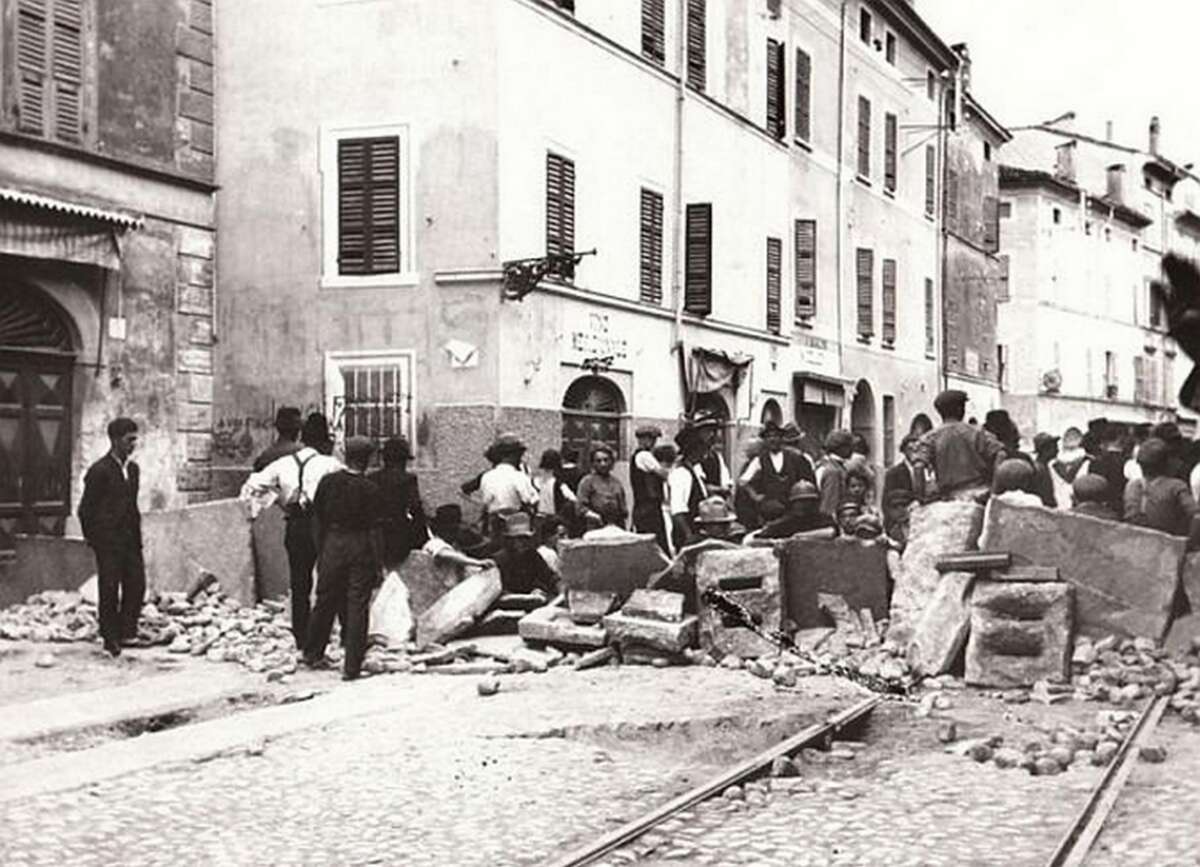
Members of the Arditi del Popolo — a groundbreaking cross-factional anti-fascist organization that emerged in Italy in 1921 — defended the city of Parma against a force of 20,000 fascists in August 1922
.Universal History Archive / Universal Images Group via Getty Images

The United States is lurching toward neo-fascism with alarming speed, courtesy of President Donald Trump, who is using all the resources of the repressive apparatus of the U.S. state to stifle dissent and crush opposition to his extreme agenda. He is so keen on imposing his dystopian vision on the country that he has sought to criminalize anti-fascist struggle itself.

How do we fight back? In the interview that follows, Princeton University historian Joseph Fronczak and author of Everything Is Possible: Antifascism and the Left in the Age of Fascism, talks about the global history of “antifa” and the lessons we can draw from the early struggles of the anti-fascist movements in the fight against neo-fascism today.

C. J. Polychroniou: Antifa, short for “anti-fascist,” refers not to a unified, defined group but to a decentralized, leaderless network of individuals and groups that self-identify as people who confront and combat fascism and racism. The antifa concept originated in Europe in the 1960s, but its roots can be traced to the anti-fascist movements of the 1920s and 1930s. In fact, the early postwar antifa movements in Europe drew inspiration from the Arditi del Popolo movement, an Italian anti-fascist group that was founded in 1921 for the purpose of defending working-class people and institutions from the assault of Mussolini’s blackshirts. Shockingly enough, though hardly surprising given his innate proclivity for authoritarianism, Donald Trump has designated Antifa as a “major terrorist organization,” which suggests that he considers fascism to be a good thing. Can you discuss briefly the emergence of anti-fascism during the interwar period? Was it the threat of fascism that shaped the left as a “global collectivity?”

Joseph Fronczak: Let’s start with the Arditi del Popolo, which was very much the first anti-fascist organization in world history. In a lot of ways, the Arditi set the general form for anti-fascist politics since, and yet there’s not much of a historical consciousness of the Arditi today, certainly not outside Italy. As you said, the Arditi del Popolo organized themselves to defend working-class people from the violence of the fascist blackshirts. They first got organized in Rome in the summer of 1921, and right away their central idea was that they were willing to stand up to Mussolini’s squadristi; they committed themselves to militant confrontation, to a physical defiance of the blackshirts.

They did so always collectively, relying on strength in numbers. When they first got organized, it was still well before the March on Rome in October 1922, when fascism wasn’t yet a state form, when, rather, it was simply a political movement. It was a very violent political movement, carrying out a sprawling campaign of terrorism. Yet — it’s worth pointing out, not only because you brought up Trump’s “terrorist” designation — the Arditi del Popolo didn’t respond to terrorism with terrorism. They always remained, rather, committed to a very disciplined collective practice of working-class defense. They mobilized to fend off fascist domination, and they did so without mirroring the fascists’ terror tactics or countering them with terrorist violence in kind.

Related Story

Trump’s ICE Has Started Targeting Activists, Not Just Immigrants
ICE demanded Meta hand over personal information attached to Instagram accounts that track immigration raids. By Mike Ludwig , Truthout October 1, 2025


That discipline, though, wasn’t imposed on members from above. The Arditi del Popolo was a radically egalitarian, horizontally organized group. Members were empowered to take on ethical responsibility. You can get a sense of that ethic from the group’s name: “Arditi” is a word in the plural form, meaning the “daring ones.” To speak of just one member would be to speak of an “ardito,” with an “o” at the end. But, tellingly, the Arditi del Popolo as a rule simply didn’t do this. Instead, they were always conjuring themselves in the form of the collective. The name of the group also got across the message that there was no fundamental distinction among the members; their common identity, Arditi, spoke to their fundamental equality within the group. The rest of the name, “del Popolo,” means “of the People.” This communicated the Arditi’s deeply felt populism. They understood themselves as the people’s front line of defense, or even the shield of the popular will.

The Arditi del Popolo also prefigured the anti-fascist politics to come in a lot of other simple but significant ways. They were cross-ideological, composed of anarchists, communists, socialists, radical republicans: very much a big-tent group, with no one constituent part dominating. It followed that the group’s members belonged to a number of Italian political parties — even though the leaderships of those parties were hostile to the Arditi del Popolo. Despite that, the Arditi del Popolo quickly became a powerful movement, in part because as a group, whenever they mobilized, they cut such a charismatic collective figure. They understood well the power of political aesthetics, the potential for drama in politics’ performative enactment. They marched to demonstrations with a highly stylized performativity; they sang songs and wore vivid colors; their public appearances were full of dramatic gesture and heroic posture. That is to say, they didn’t just defend working-class meetings and neighborhoods from fascists; they did so dramatically, cinematically.

When the fascists took state power in Italy in 1922, the new government quickly moved to suppress the Arditi del Popolo. So it was a short-lived group. But for one reason or another, all their qualities I’ve mentioned became meaningful parts of anti-fascist politics in the years that followed — most centrally, the commitment to direct, collective, often physically courageous confrontation with fascism.

In the 1930s, anti-fascism became a global cause. The global anti-fascism that announced itself with its immense mobilization during the Spanish Civil War had a lot of qualities in common with the Arditi del Popolo — some of the Italian anti-fascists who had been in the Arditi del Popolo back in 1921 and 1922 went to Spain to fight world fascism there in 1936 and 1937.

The anti-fascist movements of the interwar period suffered from ideological and political divisions, which turned out to be quite detrimental in the fight against fascism and Nazism. For instance, a united front against Nazism was needed in Germany, but both the Communists (KPD) and the Social Democrats (SPD) refused to create one. The KPD founded Antifaschistische Aktion (Antifascist Action) whose purpose was to organize resistance against the Nazi movement, while the SPD had the Eiserne Front (Iron Front). The anti-fascist movement in Spain during the Spanish Civil War also suffered from similar problems. Do you think that these ideological and political divisions, which continue to plague the left to this day, impact on the mission of anti-fascism as a transnational movement?

No doubt. But I don’t think leftists should go on endlessly performing ritual mass self-flagellation over this. The left’s full of sectarianism, betrayals, grudges, and philosophical divisions. OK, let’s get over it. Transnational movements are hard to pull off, and multi-ideological political blocs, comprised of people from rival parties, are hard to pull off. The people who have built the left over the decades have had real differences of material interest, social identity, and philosophical passions. To my mind, the surprise isn’t that the left has divisions; to my mind, the surprise — the conceptual miracle — is that there’s still this notion of the left, of a shared political home, in spite of the many, real differences. And not just still a notion of the left; there’s still a shared persistent underlying commitment to the notion.


A bi-national Antifa movement also sprung up in Palestine in the 1930s, mainly in order to counter right-wing Jewish organizations and to advocate for a shared future between Arabs and Jews. What happened to that movement?

That movement got swallowed up by history. I said there’s very little historical consciousness of the Arditi del Popolo today. But Antifa of Palestine is much, much more obscure to us. There’s a lot to learn, though, by thinking through the history of this small militant collectivity.

It was maybe the first group outside Europe ever to describe itself as Antifa. You mentioned Antifaschistische Aktion in Weimar Germany — that group was created in Berlin in 1932. So the comparisons to the Arditi del Popolo are obvious: a fierce, aesthetically brilliant, and physically courageous anti-fascist group created one year before fascists took state power. And then just as the Arditi del Popolo were quickly smashed in Mussolini’s Italy of 1922 so too was Antifaschistische Aktion quickly smashed in Hitler’s Germany of 1933. During its lifespan, though, unlike the Arditi del Popolo, Antifaschistische Aktion was firmly controlled by one political party, the German Communist Party, which used the group as a weapon for raiding the membership of its main rival, the German Social Democratic Party. All the same, Antifaschistische Aktion was genuinely committed to collective defense against fascism; and the group went by the nickname Antifa. Talk of “antifa” as a shorthand for antifascism — and even signifying a certain sort of antifascism — began in Weimar-era Germany.

Then, in 1934, when Arab and Jewish social revolutionaries in Palestine got organized to work together against fascism and imperialism and toward a shared social revolution of Palestine’s Arab and Jewish peoples, they called themselves Antifa of Palestine. The group sought to liberate Palestine from the British Empire; Antifa’s members accused Britain of intentionally dividing Arab and Jewish people in Palestine so better to rule them. They interpreted fascism as a snare laid by empire: It was a politics of race hatred and national chauvinism that prevented what was truly dangerous to the empire: a politics of interracial, international solidarity. Antifa of Palestine was intent on warning Jewish workers against Zionism, Arab workers against Arab nationalism: to subscribe to any form of nationalism was to follow fascist logic.

Likewise, to fall into political violence was to follow fascist logic. Antifa of Palestine sought a social revolution but stressed that the revolution had to be peaceful or it would be no true revolution at all. Fascism produced violence; violence produced fascism. Antifa of Palestine stressed peaceful grassroots political organizing as the practical form of anti-fascism — fascism’s inverse.

The force of events in the late 1930s broke Antifa of Palestine. Whereas I think the Arditi del Popolo have this immense unrecognized legacy, I think the deeper value of learning about the history of Antifa of Palestine has to do with making sense of a bold, pacifistic, social revolutionary vision that was snuffed out before it could burn bright, before it could generate a big brilliant legacy. Other pasts could have happened, other worlds are possible.

When did Antifa reach the United States? What was its primary mission and what impact did it have?

Well, with Antifa of Palestine in mind, it’s only fair to point out that I think they were the first to carry antifa to the United States. In 1937, two anti-fascists from Palestine, one Jewish and one Arab (Morris Efrom of Tel Aviv and Najib Yusuf of Jaffa, respectively), came to New York and tried to cultivate some long-distance solidarity with their cause.

But the more direct link to the sort of politics that people know today as antifa took form in the United States in the 1980s, when anti-fascist skinhead youths organized groups like Anti-Racist Action in the Twin Cities and SHARP — Skinheads Against Racial Prejudice — in New York City. This was part of a global movement of skinhead anti-fascism — youths who were part of punk and ska and Oi! music scenes organizing antifa politics. They started the work of piecing together what antifa politics looks like today: a sort of stripped-down anti-fascist politics, even a back-to-basics anti-fascism fiercely protective of core anti-fascist principles.

In your book Everything Is Possible: Antifascism and the Left in the Age of Fascism, you argue that the anti-fascist solidarity in the 1930s created the left as we know it today. Can you elaborate on the connection between the anti-fascist left of the 1930s and the left of today?

Anti-fascist principles have been sticky for the left, like a glue, holding things together. This relates to what I said before — yes, the left is full of divisions, but the simple idea of the left — the idea that there is this big global collectivity of people who share an expectation of solidarity with each other in causes of equality and emancipation — this is a tremendously valuable political resource. It shouldn’t be taken for granted. And in the book, I try to piece together the historical making of that political resource. Before the anti-fascist left of the 1930s, there wasn’t a concept available for conjuring a world-spanning political bloc anything like what we now think of as the left. Sometimes historians write about “the nineteenth-century left” or something like that, but at the time nobody had such a notion. That lack impeded things. Imagining the left into form was something that happened in the fight against fascism in the years leading up to and culminating in the Second World War.

Fascism is on the rise again. How do we combat fascism today? And what impact do you think that Trump’s designation of Antifa as a “terrorist” organization might have on the fight against the emerging dictatorial regime in Washington, D.C., and of fascism in general?

When Trump does something like designate Antifa a terrorist organization, I don’t think he’s interested in asserting the specific claim that the syntax of his words would suggest. I think he’s wedging words and phrases together to achieve a general effect; what he’s doing is more of a brutish semiotic act than an utterance of ideas organized into a reasoned sequence of claims.


We fight fascism by sticking up for people who are targeted by the right and the powers that be.

He’s even throwing together different discourses. He’s drawing on the discourse of the “global war on terror” — with the premise of an official designation of a group as terrorist and with the line, in the executive order, that “Antifa” “recruits, trains, and radicalizes young Americans” — and he’s drawing on the generic discourse of federal legal prosecution — the premise that antifa is an “enterprise,” as it’s termed in the executive order, as if he were framing RICO charges or something like that.

Trump jams together the jargon of these discourses to make a blunt political point. It’s an abuse of power. Of a sort that’s very common with him. What’s the impact? I think he solidifies in the minds of his supporters an image of antifa kids as the nation’s enemy within.

As for “How do we combat fascism today?” The way you put the question is helpful for answering it. The “we” is the hardest part. Who’s “we?” Getting that clear in your head puts a lot in motion. I think we fight fascism today by sticking together with the people who show up to fight fascism, and I think we fight fascism by sticking up for people who are targeted by the right and the powers that be. Sometimes you’re one of the targeted, sometimes maybe you’re not. The “we” ought to include both.

But sticking together with people who have in mind a different endgame from the one in your head and sticking up for the scapegoated and the targeted are hard things to do. Studying history, though, has a way of clarifying elements of practice. Learn from the examples of people who have done things in the past that you admire; learn too from the examples of people who have messed up.


Trump’s Department of Labor Is Trying to Slash Protections for Home Health Workers

Families and workers are waiting to hear whether a rule killing minimum wage and overtime protections will take effect.
October 16, 2025

United HomeCare Services home health aide Wendy Cerrato massages the fingers of Olga Socarras during a visit  in Miami, Florida.Joe Raedle / Getty Images

Thirty-two-year-old Long Island resident Kathleen Downes, creator of The Squeaky Wheelchair blog, is a licensed social worker who is involved in a host of local and national advocacy efforts.

As someone with quadriplegic cerebral palsy, she needs help getting in and out of bed, bathing, dressing, doing her hair, and preparing meals. Thankfully, she says, she receives a small amount of help through a New York State Medicaid Program called CDPAP, the Consumer Directed Personal Assistance Program.

“I live with my parents,” Downes told Truthout, “because, even with my diagnosis, the state only authorizes care for 35 hours a week. It’s shameful since I need 24-hour assistance. Right now, my 62-year-old mother is the only person on my payroll. She makes $19.80 an hour and has to rely on my father’s employer health plan because the job does not provide benefits.

But as inadequate as this is, Downes says the situation may soon get worse: A rule promulgated by the Department of Labor (DOL) in May could decimate the home care industry by removing minimum wage and overtime protections that in-home health care workers like her mom have been entitled to since 2015.

“The DOL rule change reflects a viewpoint that undervalues home health workers and the work they do, but it also reflects an undervaluing of people, like me, who are cared for,” Downes says. “Those lawmakers who support the rules change don’t see our lives as worthwhile, and they seem hellbent on moving us backwards.”

Related Story

Labor Laws Have Largely Excluded Domestic Workers. A Movement Is Changing That.
Activists in California are celebrating a historic legislative victory for domestic workers and vow to push for more.   By Magally A. Miranda Alcázar , Truthout   October 2, 2024


According to PHI, a national organization that focuses on improving care for people with disabilities and the elderly, the DOL proposal reinstates a 1938 Fair Labor Standards Act exemption for home care workers, personal care assistants, and home health aides and will “reverse a decade of progress and perpetuate historically rooted views about whose labor deserves to be valued and whose does not.”


“Removing minimum wage and overtime protections puts these workers back in the shadows.”

“We are headed toward disaster,” Reena Arora, director of care policy at the National Domestic Workers Alliance, told Truthout. “The rule seems very disconnected from reality. Removing minimum wage and overtime protections puts these workers back in the shadows.”

Under the original Fair Labor Standards Act — a law that many consider the centerpiece of the New Deal — home care workers were deemed “companions” rather than workers, and were thus excluded from wage and hour laws. Agricultural workers, maids, and other domestic workers were also exempted.

The American Civil Liberties Union calls this “a legacy of the original American sin of slavery.”

And it is. In fact, when the Fair Labor Standards Act was initially passed 87 years ago, this carve-out pleased the Southern segregationists then serving in Congress, assuring them that the majority of jobs once performed by enslaved people would not be bound by labor protections.

It took 75 years, until 2013, for the law to finally mandate minimum wage and overtime protections for those who had been excluded. But even then, there were roadblocks, and despite being announced in 2013, it took until October 13, 2015, for the change to take effect.

A decade later, 2.9 million personal care and home health workers — 85 percent of them female and 64 percent of them immigrants — assist millions of U.S. residents in their homes.

This number is expected to skyrocket over the next few decades.

Indeed, experts estimate that 738,100 new jobs in home care will be needed by 2032, making home care the fastest-growing occupational sector in the country.

“The proposed rule comes at a time when demand for home care is expected to rapidly increase due to a growing aging population relying on the industry to receive critical services and support,” staff at the National Employment Law Project wrote in a 12-page letter opposing the proposed change.

Calling the proposal “arbitrary and capricious,” the National Employment Law Project underscored the fact that home care is big business, noting that the industry is expected to grow in value from $107.7 billion in 2025 to $176.3 billion by 2037. At the same time, the organization reports that the work itself remains low-paid, with a quarter of health aides living below the federal poverty line and half receiving Supplemental Nutrition Assistance Program (SNAP) benefits in 2023. What’s more, they write that the current median wage is $16.13 an hour, or $21,889 annually. Worse, the letter adds, wage theft is endemic; in 2024 alone, the DOL collected $735,762 in back wages and damages from five industry employers. This benefited 173 workers who had been denied the pay they’d earned. “Rescinding the 2013 rule would embolden unscrupulous employers to continue to take advantage of workers, underpay them, and result in increased turnover and shortages,” the letter concludes.


“Rescinding the 2013 rule would embolden unscrupulous employers to continue to take advantage of workers.”

Mimi Whittaker, the Frank H.T. Rhodes Law Fellow at the National Employment Law Project, told Truthout that 5,553 comments were submitted to the Department of Labor in response to the proposed rule change. “DOL is supposed to review the comments, carefully consider them, and then issue a final rule,” she said. “In some cases, this can take years, but in this case, we’re guessing the final rule will be issued in a few months.”

Moreover, she adds that the fact that this change was announced following massive cuts to Medicaid and SNAP adds insult to injury.

“This impacts a drastically underpaid workforce that is doing essential work,” Whittaker says. “There are already large shortages in home care because these jobs are so underpaid. In some places, the turnover rate is 80 percent because the quality of the jobs is so poor. These jobs need to provide a living wage to workers, but some of the agencies that hire home health workers line their pockets with Medicaid dollars. This is extremely frustrating for workers who are doing a difficult job and who know that they can make the same money, or more, doing an easier, but less gratifying, job.”

Loven Williams, a personal care assistant from Virginia, submitted a public comment to the Department of Labor echoing this sentiment. “Home care workers are just as important as a nurse in a hospital,” she wrote in opposition to the rule change. “We allow clients to be able to stay in the comfort of their homes when their health starts declining.” Her client, she wrote, needs her to assist with bathing, feeding, medication and toileting. “I make sure all her appointments and needs are met every single day,” she wrote. “Since my client is bedridden, I have to make sure she gets her exercise. It’s physically demanding.”

Similarly, Irma Martinez, a home health aide in Texas, told the Department of Labor that “as it is right now, I can’t take a day off because I need every day of work. My income pays for groceries, rent and other expenses. I love the work I do, but if minimum wage and overtime are cut, I may need to find a job in retail or fast food in order to have a higher wage.”

Both Martinez and Williams note that while the federal minimum wage of $7.25 an hour has remained unchanged since 2009, five states have no state minimum wage whatsoever (Alabama, Louisiana, Mississippi, South Carolina, and Tennessee); three have minimums below $7.25 (Georgia, Oklahoma, and Wyoming); and another 18 have been stuck at $7.25 for 16 years.

Ruth Martin, chief workplace justice officer and senior vice president of MomsRising, told Truthout that the proposed rule has galvanized opposition from a wide cross-section of people, something she attributes to the fact that approximately 8.6 million older adults and people with disabilities currently need in-home help with the activities of daily living.

“I was heartened by the flood of responses to this awfulness,” she said. “The need for home care impacted me personally when my mom was diagnosed with cancer. I am part of the 23 percent of U.S. adults in the so-called ‘sandwich generation’ who are expected to care for aging relatives as well as children. My mom lived in rural Jane Lew, West Virginia, and had little access to home care. We had to rely on a network of church ladies to help. I lived in another state, but I was the only person in my family who had access to paid family and medical leave — I live in one of the 13 states that provide this — so I eventually had to step in.”

Martin adds that she sees the rollback as an extension of the Trump administration’s plan to “deregulate everything” and says she is particularly incensed by groups like the right-wing Independent Women’s Forum that see ending worker protections as a viable way for seniors and the disabled to “reap the benefits of a more workable and affordable structure of fellowship and care.” For Martin, this argument trivializes care work by minimizing what it involves.

That said, care is expensive and while most care recipients are covered by Medicaid — people typically “spend down” their savings to reach the $2,000 asset limit (homes, cars, and wedding and engagement rings are exempted) — most people have no choice but to exhaust their savings because, unlike Medicaid, Medicare only covers home care for a short time and only when a person is transitioning from a hospital to their home.

For some families with resources, long-term care insurance comes into play when in-home care is necessary.

Laura J., a Brooklyn resident whose 92-year-old parents have two home health aides, pays for their care — $30 per hour — out of pocket and then submits invoices to their long-term care insurer for reimbursement. But this option does not come cheap: Care insurance runs Laura’s parents more than $9,000 a year. And even then, a lifetime cap of approximately $300,000 per person controls how much can be spent. Should they live long enough, they, too, will have to “spend down” their savings to become Medicaid eligible.

“I’ve now figured out the paperwork and the bureaucracy of it,” Laura told Truthout. “I fill out the invoices, get the right signatures, and do all the follow-up. It takes vigilance and time because I have to keep an eye out for things that might go wrong. The simplest way to manage this is through an agency, because they do all the paperwork. But I’m trying to help my parents manage without an intermediary. This makes me the glue that keeps things running.”


“Cutbacks to home care are deeply unpopular across party lines. We’re mobilizing, organizing, educating, and doing mutual aid to remind people about what government can be and do.”

Keeping things running, says Smart Ass Cripple blogger, journalist, and activist Mike Ervin, a 69-year-old Illinois resident with spinal muscular atrophy, means managing six Medicaid-funded home care workers a week. Some of his workers, he told Truthout, work from 8:00 am to noon; others work in the afternoon; and a final shift works from 8:00 pm until midnight. “Everything I do in a day happens because someone showed up and helped me get dressed and organized,” he said. “This country seems to be going in a backward direction, and I dread the possibility that I could lose this support.”

The National Employment Law Project, MomsRising, the National Domestic Workers Alliance, and a wide array of unions, disability justice, immigrant rights, women’s and elder advocacy groups are working hard to make sure that this does not happen.

“MomsRising is part of the Care Can’t Wait Coalition, and we’re organizing to change the political climate,” Ruth Martin told Truthout. “Polling shows that cutbacks to home care are deeply unpopular across party lines. We’re mobilizing, organizing, educating, and doing mutual aid to remind people about what government can be and do. We’re in an uphill battle, but we know that we can — and must — create a government that works for the majority of people.”