Thursday, November 06, 2025


Trust and fairness are Brazil’s most powerful climate tools, finds new Earth4All analysis ahead of COP30


The Club of Rome


Ahead of the critical climate summit in Belém, a new report from Earth4All argues that Brazil’s greatest assets in tackling the climate crisis are not only its vast forests and renewable energy potential, but the power of trust and social cohesion. 

The study, Earth4All: Brazil, identifies possible future scenarios for the country and shows that policies promoting fairness, inclusion and institutional trust are decisive for accelerating decarbonisation and building resilience. Without them, progress risks stalling in the face of inequality and social division. 

“Our analysis shows that when trust and fairness increase, public resistance to change falls,” said Sandrine Dixson-Declève, executive chair of Earth4All. “This enables faster reforms and ultimately delivers stronger climate outcomes.” 

Drawing on system dynamics modelling and input from a commission of national and international experts, the report explores how coordinated reforms or “extraordinary turnarounds” across five areas - poverty, inequality, empowerment, food, and energy - can deliver both climate stability and shared prosperity. It concludes that ambitious domestic action, aligned with global efforts, could eradicate poverty in Brazil before 2040, expand renewable energy, and strengthen Brazil’s capacity to withstand future shocks. 

Its findings align with those of the global Earth4All analysis, published in Earth for All: A Survival Guide for Humanity in 2022, and subsequent national analyses showing that ambitious action targeted to specific geographical challenges can deliver economic wellbeing and resilience to future shocks and stresses. 

The report includes data from a major global survey, conducted for Earth4All by Ipsos which included Brazil, that reveals a powerful mandate for change: 81% of Brazilians say major action is needed this decade to protect the climate and nature, yet only 35% believe their government is doing enough. 76% agree that there is too much inequality in the country. The report recommends policies such as progressive wealth and ecological taxes, a climate-poverty sovereign wealth fund co-governed by marginalised communities, and conditional rural credit tied to verified sustainability criteria. 

The “Giant Leap” scenario identified by the report - featuring strong national and global action - shows Brazil transforming into a renewable energy powerhouse, restoring degraded lands, and reducing inequality through inclusive governance. The “Too Little Too Late” scenario of incremental action, by contrast, would lock in higher emissions, deepen social tensions, and weaken democratic trust. 

The study also calls on Brazil to champion a Global Climate and Nature Council to coordinate global responses to ecological tipping points, aligning with the COP30 Presidency’s push for integrated climate–nature governance. 

“We asked: if we know the solutions, why are we not making progress on climate? Our analysis across the globe increasingly shows that trust and fairness are not peripheral to climate policy - they are the foundations of it,” said Dixson-Declève. “By implementing five extraordinary turnarounds adapted to Brazil’s needs, Brazil can build a model of inclusive transition that unites environmental ambition with social justice and inspire other countries. COP30 is a decisive moment for setting the course of long-term action and Brazil can use this opportunity to show real leadership on the interlinked issues of climate, social equity and wellbeing.” 

Carlos Nobre, co-chair of the Science Panel for the Amazon and chair of the Earth4All Brazil Transformational Economics and Planetary Sciences Commission, said: “The findings of this report are refreshingly straightforward: climate stability, social cohesion and shared prosperity rise or fall together. Push one without the others and progress stalls. Advance them together and Brazil can unlock a step-change in emissions reduction, environmental protection to avoid biomes' tipping points, economic competitiveness, fiscal stability and human flourishing.”

COP30

Lula Signs Law Temporarily Designating Belém As Brazil’s Capital


November 6, 2025
By ABr


On Tuesday (Nov. 4), President Luiz Inácio Lula da Silva signed into law a bill temporarily transferring Brazil’s capital from Brasília to Belém, in the state of Pará. The change will be in effect during the 30th United Nations Climate Change Conference (COP30), from November 11 to 21, 2025. The proposal was approved by the National Congress, and Law 15,251 was published in the Federal Official Gazette.

According to the government, the temporary transfer is symbolic and political in nature, and “reinforces the relevance of the Amazon on the international environmental agenda,” while also highlighting the country’s commitment to global climate issues.

All acts and orders issued during this period, including those of the President of Brazil and his ministers, will be registered in the capital of Pará. During this time, the Executive, Legislative, and Judicial branches may establish themselves in the city of Belém to carry out their institutional and governmental activities.

A similar case occurred in 1992, when the federal capital was temporarily transferred to Rio de Janeiro during the United Nations Conference on Environment and Development (Rio-92).

ABr
Agência Brasil (ABr) is the national public news agency, run by the Brazilian government. It is a part of the public media corporation Empresa Brasil de Comunicação (EBC), created in 2007 to unite two government media enterprises Radiobrás and TVE (Televisão Educativa).


COP30: Host city Belem is 'at the heart of the issues' and a gateway to the Amazon

ANALYSIS


Brazil's port city of Belem will open its doors to 50,000 participants for the COP30 conference on climate change from November 10-21. While President Luiz Inacio Lula da Silva intentionally picked the location to be “as close as possible to the heart of the issues” discussed at the climate conference, his choice came with its own set of challenges.


Issued on: 06/11/2025 - FRANCE24
By:  Cyrielle CABOT


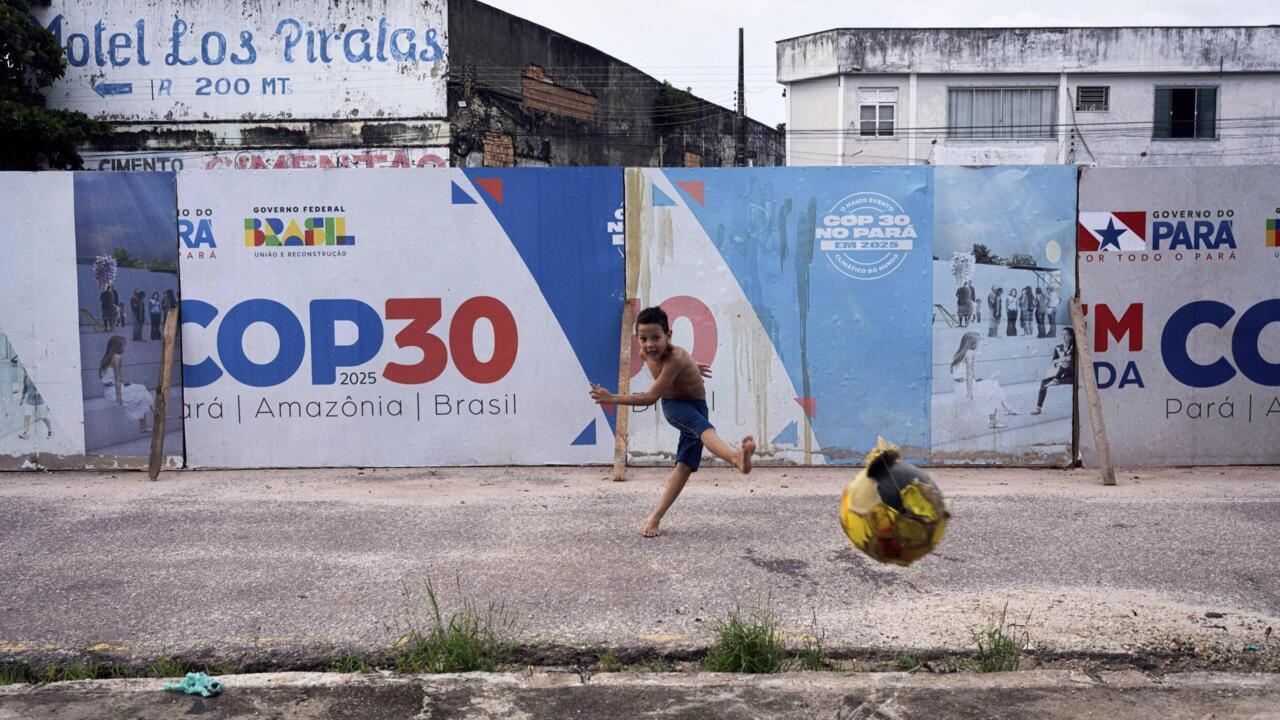
A boy kicks a football near a COP30 sign in Belem, Brazil, on March 23, 2025. © Jorge Saenz, AP


It is easy to lose track of all the COP climate conferences that have taken place in big urban metropolises: Paris in 2015, Dubai in 2023 and Lima in 2020, just to name a few. And each year, the drill is the same. Over the span of about 10 days, world leaders, diplomats, business owners, scientists and activists swarm a large conference centre, going from meeting to meeting, before returning to their accommodations at the end of the day. In turn, host cities and countries take advantage of the attention to showcase what they have done to combat climate change.


But when Brazilian President Luiz Inacio Lula da Silva, known as Lula, announced in 2023 that he wanted to host COP30 in Belem, the capital of the state of Para, it was clear things would look a little different this time around. This climate conference will bring tens of thousands of participants to a city that lies at the mouth of the Amazon River and at the edge of the rainforest considered the lungs of the planet.

A strategic location


A gateway to the northeastern tip of the Amazon rainforest, Belem lies on the delta formed by the Guama and Acara rivers. Its destiny has always been inextricably linked to its position at a crossroads between the Amazon and the Atlantic Ocean. Which is why the choice to host COP30 there is both “symbolic and political”, according to David Dumoulin, who teaches sociology at the Latin America institute of the Sorbonne University in Paris.

“In choosing Belem, Lula is trying to ensure that the Amazon rainforest and the challenges it is facing as an ecosystem are at the heart of the COP30 discussions,” he says.

Belem's strategic location was quickly recognised by early colonists. “The Portuguese colonised Belem in 1616 so they could control access to the Amazon River and protect themselves from newcomers arriving from the ocean,” explains Ana Claudia Cardoso, associate professor of architecture and urbanism at the Federal University of Para.

The colonists quickly capitalised on the forest's resources. “The first settlers exploited the land by setting up plantations, but quickly realised it was easier to sell products from the Amazon rainforest just as the indigenous population had been doing,” Cardoso says. Indigenous populations at the time introduced a range of products to European colonisers, including spices, cereal, fruits, oils, rubber, fish, oil and cacao.

“That is how Belem became the largest and most important city in the Amazon region for hundreds of years. All forest products would be brought to local markets and then transported to other regions of Brazil, the Caribbean or Europe,” Cardoso explains.

When a vast road network was established in 1950, the industry boomed and transformed Belem into an Amazonian trade hub.

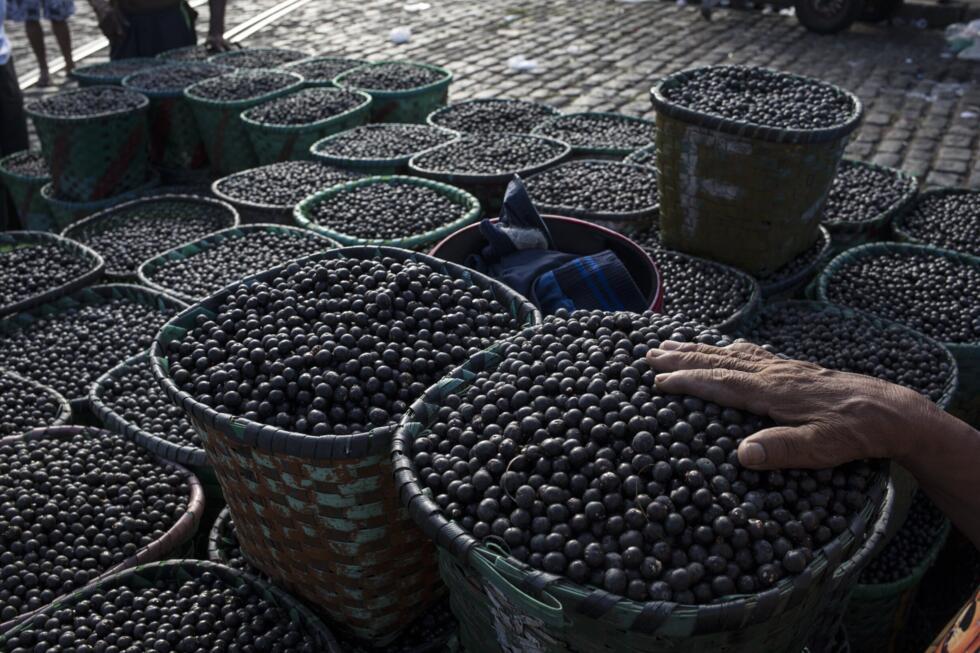
Remnants of the that period in Belem’s history are still visible today. Ver-o-Peso – one of Latin America’s biggest open-air markets, where acai berries, fried fish, fruit and nuts from the Amazon are sold – is one of the main tourist attractions in the region and a cornerstone of the city’s economy.


A market vendor places his hand on acai berries at the Ver-o-Peso market in Belem, Brazil. © Rodrigo Abd, AP

Indigenous representation


“The city also has a significant indigenous population,” Dumoulin notes, which helps Lula fulfil his ambition of making this year’s conference “the people’s COP”.

According to Sonia Guajajara, Brazil's minister of Indigenous peoples, COP30 will see the largest share of indigenous participants ever recorded in 30 years of climate negotiations.

“For two weeks, Lula will be able to showcase the history of the region and rely on indigenous representation to hammer home his message about the importance of the Amazon,” says Dumoulin. As part of these efforts, a grand boat parade along Belem port has been planned to kick off the event.

“It will be interesting to see whether participants will be able to truly experience the Amazon or Belem," Dumoulin says. "Or will the organisation of the event be confined to [a small part] of the urban setting?”

For her part, Cardoso is optimistic. “Our university campus alone will be hosting 3,000 indigenous representatives and social movements from across the world. There will be demonstrations by boat, in the streets and a range of cultural activities. Belem is a wonderful place with good food and a rich music culture. I think all these elements will encourage interaction.”
Demonstrating the effects of climate change

Often described as a “poor capital city”, Belem faces a barrage of challenges that are exacerbated year after year by the effects of climate change.

Nearly half of its 1.4 million inhabitants live in slums with “informal housing, zero vegetation and a dense population”, Cardoso says. And these areas are being hit more frequently by severe flooding, a phenomenon scientists say is becoming increasingly intense and recurrent because of global warming. Whenever there are heavy rains, the streets turn into rivers and the rush of water engulfs entire neighbourhoods of shacks made of tin sheets. At the same time, the city at large contends with infrastructure delays and security issues.

Lula explained his decision to host COP30 in Belem by explaining that it is a city directly affected by many of the issues at stake in the climate negotiations. His hope is that world leaders will gain a concrete understanding of what is at stake.

“What better way to tackle a problem than facing it head on, however uncomfortable,” COP30's president, André Corrêa do Lago, told AP in July.

“When people will go to Belem, you are going to see a developing country and city with considerable infrastructure issues, still with, in relative terms, a high percentage of poverty,” do Lago said. For him, it is an opportunity to show how the fight against climate change and more climate justice could improve the daily lives of communities, especially the most vulnerable.

Logistical nightmare


Organising COP30 in a city already grappling with its own issues was challenging. For months, there were doubts as to whether the event would take place at all. A lack of infrastructure meant that the price of accommodation skyrocketed, sometimes reaching €4,000 per night for a single hotel room and even more in some higher-end establishments.

Organisers had to find creative solutions. Two massive transatlantic cruise ships moored in Belem's north will house some participants while others will sleep in army barracks, schools or even “love motels” that have been refurbished for the occasion. The iconic Vila da Barca shanty town, which sits on stilts on Guajara Bay north of Belem, will host 200 young people from around the world in a free, community-based accommodation centre.

With just a few days to go before the event begins, it seems those solutions have worked. Some 159 countries have managed to find accommodation and have confirmed they will be attending the conference, exceeding the minimum number of representatives required to pass a decision.

Local anger


But there is also the ever-recurring question of what will be left behind for the city's inhabitants. For the past two years, Belem has looked like a huge construction site. The federal government allocated some 4.8 billion reais (€776 million) to improve infrastructure. In early August, the committee charged with the organisation of COP30 announced in a press release that eight major projects had been completed, including the renovation of the Ver-o-Peso market, 90 kilometres of road reparations and the construction of two parks and sewage treatment plants.

But there is mounting criticism from locals, who say the improvements in infrastructure only benefit the most privileged communities. An investigation carried out by Brazilian media outlet Sumauma found that a wastewater pumping station built near Vila da Barca will only serve the affluent next-door neighbourhood of Umarizal, and that two parks built in the north of the city will also only benefit wealthy areas, which already have more trees than most of Belem.

“As with all global events, whether it is the COP conferences or the Olympic Games, there is always an intention to build infrastructure that lasts,” says Dumoulin. “But above all, the goal of these events is not to bring about social justice, it is to bring the cities that host them up to international standards.”

This article has been translated from the original in French by Lara Bullens.


Fair trade in the Amazon rainforest


 06/11/2025 - RFI

This year’s UN Climate Conference, COP30, is being held in Brazil, home to the Amazon rainforest, and will focus on the immense challenge of protecting it. Some 28 million people live beneath the forest canopy and across urban areas, with more than a third living in poverty. How to strengthen economic activities without resorting to deforestation? Find out more in this first episode of our series, Showing the Way to a Sustainable Amazon.


Amazon: How climate change is impacting indigenous communities


Issued on: 05/11/2025 - RFI

This year’s UN Climate Conference, COP30, is being held in Brazil, home to the Amazon rainforest, and will focus on the immense challenge of protecting it. Last year, for the first time, record drought destroyed the Amazon's Brazil nut harvest – the basis of the traditional diet of indigenous communities and a vital source of income for thousands of small producers. Find out more in this second episode of our series, Showing the Way to a Sustainable Amazon.


Brazilian Authorities Dismantle Hundreds Of Illegal Dredges In Major Anti-Mining Operation


Brazilian authorities dismantle hundreds of illegal dredges in major anti-mining operation. Photo Credit: INTERPOL


November 6, 2025 0 Comments

By Eurasia Review


INTERPOL supported the first operation coordinated by the Amazon International Police Cooperation Centre (CCPI Amazônia) in Brazil against illegal gold mining in the Amazon Basin.


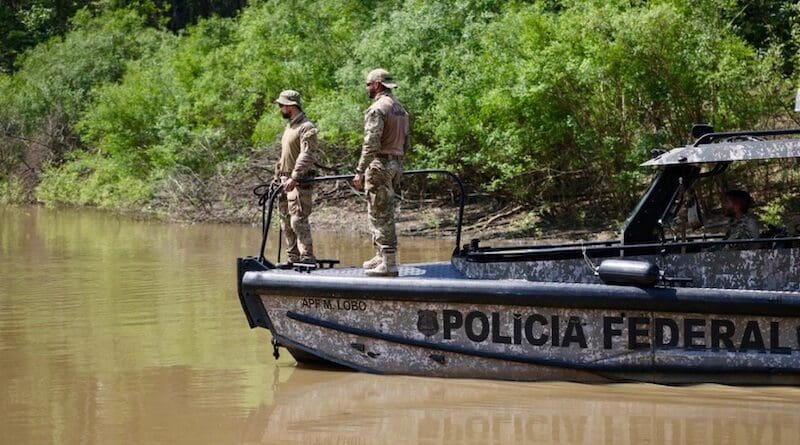
In a significant blow to criminal organizations, law enforcement disabled 277 dredges used in illegal gold extraction along the Madeira River, worth an estimated USD 6.8 million.

When factoring in equipment losses, recent gold extraction, environmental and social damages, as well as disrupted profits, the total economic impact on criminal organizations is estimated at approximately USD 193 million.

Importantly, the operation provided authorities with valuable intelligence to identify and dismantle the financial and logistical networks behind illegal mining. This is crucial to disrupting the criminal organizations, rather than individual workers, who are often vulnerable and subject to exploitation.

Led by the Brazilian Federal Police, the operation brought together more than 100 officers across operational, tactical and analytical roles, working in close collaboration with national and international authorities.

Using intelligence and satellite data, authorities mapped over 400 square kilometres of river and forest territory heavily impacted by illegal mining.

INTERPOL supported the operation with real-time database checks and analysis while facilitating information sharing and communication to strengthen trust and collaboration.

An INTERPOL Purple Notice, warning of the detection of a new modus operandi to facilitate transnational gold-smuggling, was published as a direct result of field activities.

INTERPOL Secretary General Valdecy Urquiza said:

“This operation marks a new chapter in our collective effort to protect the Amazon, and is a clear signal that international cooperation via CCPI Amazônia is not just a concept, it is concrete action.”

“United, we can confront the criminal networks that threaten communities and our environment, and INTERPOL remains a steadfast partner in this fight.”

Humberto Freire de Barros, Director of Amazon and Environment Protection of the Brazilian Federal Police said:

“This operation, the first coordinated by the CCPI Amazônia, demonstrates the Centre’s capacity to aggregate the efforts of various institutions responsible for combating crime in the Pan-Amazon region. This coordinated work aims not only to disrupt criminal activities but also to enhance investigations and ensure that those involved in the illegal chain are brought to justice.”

During the operation, samples of sand, fabric, and other materials used in gold extraction were collected and submitted for forensic analysis to identify their composition, detect hazardous substances such as mercury and cyanide, and trace their origin. A forensic expert also obtained biological samples from residents to evaluate mercury exposure and assess the potential impact of illegal mining on their health.

INTERPOL continues to support follow-up investigations and any additional joint actions.


Eurasia Review

Eurasia Review is an independent Journal that provides a venue for analysts and experts to publish content on a wide-range of subjects that are often overlooked or under-represented by Western dominated media.


Breath of relief as EU commits to CO2 reduction climate goal ahead of COP30

Charlie Riedel
Copyright Charlie Riedel/Copyright 2025 The AP. All rights reserved

By Marta Pacheco
Published on 

After months of political impasse, EU environment ministers backed the revision of the EU's climate law, paving the way for a decision on the global 2035 climate target to be presented next week at COP30.

The EU's environment ministers agreed on Wednesday on the bloc's domestic climate target to cut CO2 emissions by 2040, after intense political pressure to deliver on climate commitments and maintain Brussels' role as a climate action leader at next week's COP30 UN climate summit.

The EU27 agreed on a range to set a 2035 climate target to reduce net greenhouse gas (GHG) emissions by 66.25–72.5% below 1990 levels, covering all sectors of the economy and all GHGs, including methane.

The range takes into account the 2040 climate target, setting the path to cut emissions by 90% and will be submitted to the United Nations Framework Convention on Climate Change (UNFCCC).

"We are sending a strong signal ahead of COP30 that we remain fully committed to keeping the goals of the Paris Agreement. It enables us to push for more global climate action when we meet the rest of the world at COP30," said Lars Aagaard, Denmark's minister for climate.

Nationally determined contributions or NDCs are a key outcome of the Paris Agreement, which requires each party to the convention to update its climate plans every five years. They set out the efforts each country has made to reduce national emissions and adapt to the impacts of climate change.

Currently, there is a significant lack of NDCs. Around 70 parties have submitted them, while close to 200 have not.

EU officials want to make sure COP30 in the Brazilian city of Belém sends the signal that the clean transition is irreversible, a senior official at the European Commission said, adding that this year's COP is about ambition for implementation and how to close the gap in emissions reduction.

"We want to reinforce the importance and value of multilateralism. We want to show the Paris Agreement is working and delivering," the Commission official added.

This year's climate summit is also expected to pledge more finance to struggling nations, namely those mostly affected by climate change, such as islands and countries in the global south.

In 2024, the EU and its 27 member states contributed €31.7 billion in climate finance from public sources. An additional €11 billion in private finance was mobilised to support developing countries in reducing their GHG emissions and adapting to the impacts of climate change, according to the Commission.

Carbon pricing

One way to reduce GHG emissions is through carbon pricing, the Commission's official said, describing it as "one of the big priorities" of the EU going to Belém.

The EU uses its own emissions trading system (ETS) as one of the main key financial revenues for the bloc. The EU's carbon border tax will also raise funds, starting in January 2026, to be channelled into the green transition.

Last year, carbon pricing generated around €40 billion, which was reinvested in the economy, the EU official said, adding that while investments in clean energy have doubled, the pace remains "too slow".

"We need to make sure the world economy and investors understand there is only one way to invest in the future," the EU official said in reference to clean technologies.

Maja Pozvek, senior EU affairs manager at the Clean Air Task Force think tank, regretted the lack of ambition of the 2040 climate target, noting it will be reflected in the EU's contribution at COP30.

"If the EU is serious about decarbonisation as part of its growth strategy it must champion clean technologies and seize opportunities for first-mover advantage, not settle for the lowest common denominator," Pozvek said.


EU ministers agree weakened climate target to take to Brazil summit

European Union environment ministers have agreed on a diluted 2040 climate target after all-night talks in Brussels, and were due to finalise the deal on Wednesday – days before the UN Cop30 summit opens in Brazil.


Issued on: 05/11/2025 - RFI

EU ministers agreed a weakened 2040 climate target after 18 hours of talks, keeping the 90 percent emissions cut headline but letting countries outsource through foreign carbon credits and delaying key measures. AP - Rick Bowmer

The agreement keeps the EU’s headline goal of cutting greenhouse-gas emissions by 90 percent by 2040 compared with 1990 levels, but adds loopholes that allow countries to meet part of the target through foreign carbon credits and postpone some climate policies.

After more than 18 hours of negotiations that stretched past midnight, a majority of the bloc’s 27 member states gave preliminary backing to the compromise.

Ministers were to reconvene on Wednesday to give it formal approval.

“We believe we have the basis for a political deal. We expect to formally conclude a deal when we resume in a few hours,” said a spokesperson for Denmark, which holds the EU’s rotating presidency and chaired the talks.

Loopholes and offsets

Under the agreement, countries may count international carbon credits towards up to 10 percent of their 2040 target, effectively reducing the domestic cuts required from European industries to 80 percent.

The European Commission had originally proposed a 90 percent cut with only 3 percent of those reductions coming from foreign credits.

France and Portugal supported the higher flexibility, while Spain and the Netherlands opposed it, warning it would weaken Europe’s climate credibility.

Environmental groups said the loopholes undermine the EU’s claim to leadership on climate action by diverting investments away from cleaner industries at home.

Political divide

Behind only China, the United States and India in emissions, the EU has been the most committed of the major polluters to climate action, already cutting emissions by 37 percent since 1990.

But the bloc’s politics have shifted to the right, and climate priorities now compete with defence and economic pressures.

Countries including PolandItalyHungary and the Czech Republic opposed the original 90 percent plan, warning it would harm industries struggling with high energy costs and competition from cheaper imports.

“We don’t want to destroy the economy. We don’t want to destroy the climate. We want to save both at the same time,” said Polish Deputy Climate Minister Krzysztof Bolesta on Tuesday.

France sought guarantees that its nuclear sector would not lose out under green transition plans, while Spain, Germany and the Nordic nations pushed for stronger targets.

Others, such as the Netherlands and Sweden, cited worsening extreme weather and the need to catch up with China in manufacturing green technologies as reasons for ambitious goals.

Delayed carbon market

To win over sceptical countries, ministers agreed to delay the launch of the EU’s new carbon market for transport and heating fuels by one year, to 2028.

Poland and the Czech Republic had demanded the change, saying the measure could raise fuel prices.

The agreement also calls for extending free pollution permits for heavy industry and keeping low-carbon fuels in road transport, a nod to concerns about the planned 2035 combustion engine phaseout. The 2040 target will also be reassessed every two years.

Spanish Environment Minister Sara Aagesen said Europe’s credibility was on the line.

“We have a lot at stake. We are risking our international leadership, which is fundamental in this extraordinarily complicated context,” she said to reporters on Tuesday.

Ministers also reached agreement on a 2035 emissions target, known as a Nationally Determined Contribution, which Paris Agreement signatories are expected to present at Cop30.

The target was set at between 66.25 and 72.5 percent.

EU officials said the compromise ensures the bloc will not arrive in Brazil empty-handed, even if the result is less ambitious than many had hoped.

They insist Europe remains committed to reaching net zero by 2050 while balancing environmental and economic concerns.

The EU said it mobilised 31.7 billion euros in public climate finance in 2024, making it the world’s largest donor.

(with newswires)
World leaders face Amazon reckoning on a decade of climate promises

World leaders arrive in the Brazilian Amazon on Thursday for a high-stakes test of global climate promises, with vulnerable nations demanding far greater financial support and scientists warning the world is still veering off track.


Issued on: 06/11/2025 - RFI

Mist rises over the Carajas National Forest in Para, Brazil, where the mining industry and rainforest coexist uneasily ahead of Cop30 in the Amazon. REUTERS - Jorge Silva

By: Amanda Morrow


The two-day Belem Climate Summit takes place in the humid port city at the mouth of the Amazon River – a symbolic prelude to the UN’s Cop30 conference that begins there next week. Together they mark 10 years since the Paris Agreement and bring global attention back to the planet’s most vital carbon sink.

For Brazil, it is a moment to show that protecting forests and reducing poverty can go hand in hand. For much of the world, it is a chance to prove that promises made in Paris can still deliver results.

“We have to somehow manage to convey that there is progress on this agenda, because we are facing a phase in which most of the public think that this agenda is losing ground,” Cop30 president Andre Correa do Lago said.

But the talks open amid sobering news. Around two-thirds of the 195 countries that signed the Paris accord missed the February deadline to submit updated climate plans for 2035.

By early November, only about 65 countries had submitted new national climate plans for 2035, and most failed to impress. China’s target fell well below expectations, while India has yet to finalise its pledge.

The European Union agreed on Wednesday to a weakened 2040 climate goal after all-night talks in Brussels, keeping its 90 percent emissions cut headline but allowing countries to offset up to 10 percent of that target through foreign carbon credits and delay key measures.

Environmental groups warned the compromise undermines Europe’s credibility as a climate leader, while several member states argued it was needed to protect industries struggling with high energy costs and competition from cheaper imports.

Europe’s climate progress overshadowed by worsening loss of nature
The billion-dollar gap

The battle over money will dominate both the Belem summit and Cop30, which runs from 10 to 21 November. Wealthy nations are under pressure to explain how they will help poorer ones cope with rising seas, extreme heat and mounting climate losses.

Last year’s Cop29 in Baku ended with developed countries agreeing to provide $300 billion a year in climate finance by 2035 – far below what developing nations say is needed. Governments also set a vaguer goal of mobilising $1.3 trillion a year from public and private sources but offered little detail on how to achieve it.

A UN Adaptation Gap Report last week found the world will need to spend about $310 billion a year by 2035 to prepare for worsening floods, droughts and heatwaves – roughly 12 times current spending levels.

“More than ever, the general public, governments in general, cities in general, want resources for adaptation,” Correa do Lago said.

Belém readies for Cop30, where world leaders will meet in the heart of the Amazon to test whether a decade of climate promises still stand. AP - Eraldo Peres

CARE International, which campaigns for climate justice and humanitarian relief, warned that the shortfall is already leaving millions exposed, especially women and girls.

“The need for adaptation finance is immense, up to $300 billion per year, yet current funding barely scratches the surface,” said Marlene Achoki, CARE’s global climate justice policy lead. “Cop30 will be successful, and truly a people’s Cop, when sufficient adaptation finance is provided to drive real action and implementation on the ground.”

Senior adviser John Nordbo described climate finance as “the fault line of global climate action”, saying many rich countries inflate figures and repackage loans as aid.

“Much of this so-called support comes as loans, not grants, and repayments often flow quietly back to donors,” he said.


Brazil's forest gamble

Holding the leaders’ summit in Belem brings the focus back to the rainforest’s central role in stabilising the planet’s climate.

The Brazilian government will use the event to launch the Tropical Forests Forever Facility – a new global fund that will reward countries with high tropical forest cover for keeping trees standing instead of cutting them down.

The facility aims to raise $25 billion from donor governments and another $100 billion from private investors, with Brazil already pledging $1 billion.

The fund “could be a step forward in protecting tropical forests” if paired with firm commitments to end deforestation by 2030, said Clement Helary, a forests campaigner with Greenpeace.

Tropical primary forest loss hit a record high in 2024 – the equivalent of 18 football fields a minute, driven largely by fires.

Hosting the conference in the Amazon makes it “the perfect opportunity to ramp up action to end deforestation”, the WWF has said, noting that global pledges from Cop26 to halt forest loss by 2030 have stalled.


From talk to action

Cop30 will test whether the world can finally move from ambition to action.

Under the Paris Agreement, countries must strengthen their emissions targets every five years, but the latest round of 2035 plans still falls well short of what is needed to limit warming to 1.5C.

What is needed now is “a step change” – moving from setting targets to delivering them, said the World Resources Institute.

The first global stocktake at Cop28 showed the world is “significantly off track”, while the UN Secretary-General has said overshooting the 1.5C goal is “inevitable” unless countries “change course”.

When the Paris Agreement was signed, the planet was on track for roughly 4C of warming by 2100. Later pledges have cut that to around 3C, and if all net-zero promises were fully met, the rise could fall closer to 1.9C.

Deeper emissions cuts and large-scale ecosystem restoration, scientists say, could still bring temperatures back below 1.5C later this century.

Last year was the first time the 1.5C threshold was breached for an entire year, with extreme weather causing more than $300 billion in damage. Renewable energy and electric vehicles, while already saving lives and creating jobs, is not happening fast enough, experts warn.


Can trust survive?

Unlike earlier climate summits, Cop30 has no single grand deal in sight.

Organisers are calling it the “Cop of Implementation”, focused on turning words into measurable progress.

“The Brazilian Presidency’s central challenge is to turn promises into real-world action – bridging divides between developed and developing countries, ambition and equity, mitigation and adaptation,” said Karen Silverwood-Cope from WRI Brazil.

The political mood adds to the challenge. US President Donald Trump has dismissed climate change as a “con job” and is sending no senior officials to Belem, deepening fears that global climate diplomacy is losing momentum.

Still, Brazil hopes the Amazon setting can help restore it. President Luiz Inacio Lula da Silva has been in Belem since the weekend, meeting local communities and overseeing preparations ahead of the summit.

He is expected to stay through the opening of Cop30 on Monday, as world leaders gather in the heart of the Amazon – a symbolic setting for a conference that will test whether a decade of promises can finally turn into action.

World leaders rally in support of climate action before COP30 summit


UN Secretary-General Antonio Guterres on Thursday tore into nations for their failure to limit warming to 1.5 degrees Celsius as Brazil hosted world leaders for a summit ahead of the COP30 climate conference. Almost every nation is participating aside from the United States, with US President Donald Trump having branded climate science a "con job".

Issued on: 06/11/2025 
By: FRANCE 24

UN chief Antonio Guterres on Thursday said nations must confront the "moral failure and deadly negligence" of missing the 1.5C climate target as leaders gathered in the Brazilian Amazon ahead of next week's COP30 talks.

Dozens of heads of state and government are in the rainforest city of Belem in northern Brazil for the UN climate summit, which come after scientists confirmed the core goal of the Paris Agreement would be missed.

"We have failed to ensure we remain below 1.5 degrees", Guterres told the gathering of leaders in the Amazon city.

"This is moral failure – and deadly negligence" but that did not mean all hope was lost, he added.

Major economies are not cutting planet-warming pollution fast enough to avoid dangerous levels of global warming this century, the UN said this week, but could still speed up action to protect against the worst impacts.

The UN's weather and climate agency on Thursday said 2025 would be among the hottest years ever recorded.

© France 24
09:27

Brazil hopes COP30 demonstrates that climate change remains a top global priority, even as crucial targets are missed and progress falters.

In his opening address, President Luiz Inacio Lula da Silva of COP30 said the window to prevent calamitous climate change was "closing rapidly" and blasted the "extremist forces" condemning future generations.

UK Prime Minister Keir Starmer and French President Emmanuel Macron are expected in Belem but other major economies, including China and India, are sending deputies or climate ministers.

The United States is not participating, with President Donald Trump branding climate science a "con job".

Uphill battle

The choice of Belem, a city of 1.4 million people, half of whom live in working-class neighborhoods known as favelas, has been controversial due to its limited infrastructure, with sky-high hotel fees complicating the participation of small delegations and NGOs.

Nonetheless, Karol Farias, 34, a makeup artist who came to shop at the newly spruced up Ver-o-Peso market told AFP: "The COP is bringing Belem the recognition it deserves."

The US absence will linger awkwardly during the summit, as will Brazil's recent approval of oil drilling near the mouth of the Amazon River.

So, too, will the unanswered call for a wave of ambitious new climate pledges ahead of COP30.


Climate action in a fractured world: Is there a will 'to cooperate in a world full of conflict'?
© France 24
07:24


Brazil has acknowledged the uphill battle it faces rallying climate action at a time of wars and tariff disputes, tight budgets, and a populist backlash against green policies.

In a sobering reminder of the task at hand, a closely watched vote last month to reduce pollution from global shipping was rejected under intense pressure from the United States.

Leaders gathered in Belem "need to deliver a clear mandate to the COP to be ambitious and to close the gap and to address the issues that are burning," Greenpeace Brazil executive director Carolina Pasquali told AFP aboard the organization's Rainbow Warrior flagship, docked in the city.
'Enough talk'

Rather than producing a slew of new commitments, Brazil has cast the summit as an opportunity for accountability.

Brazil is launching a new rainforest conservation fund and put emphasis on adaptation, a key demand of countries which cannot afford to build defenses against climate disasters.

"This is not a charity, but a necessity," Evans Njewa, a Malawian diplomat and chair of the Least Developed Countries bloc, told AFP.

These countries want concrete detail on how climate finance can be substantially boosted to $1.3 trillion a year by 2035 -- the estimated need in the developing world.

The hosts are also under pressure to marshal a response to the 1.5C failure. Even if all commitments are enacted in full, global warming is still set to reach 2.5C by century's end.

"For many of our countries, we won't be able to adapt our way out of something that overshoots over two degrees," Ilana Seid, a diplomat from Palau and chair of the Alliance of Small Island States, told AFP in October.

They, among others, want to tackle fossil fuels and push for deeper cuts to greenhouse gas emissions.

(FRANCE 24 with AFP, Reuters)


What's on the agenda for COP30?


Issued on: 06/11/2025 - FRANCE24

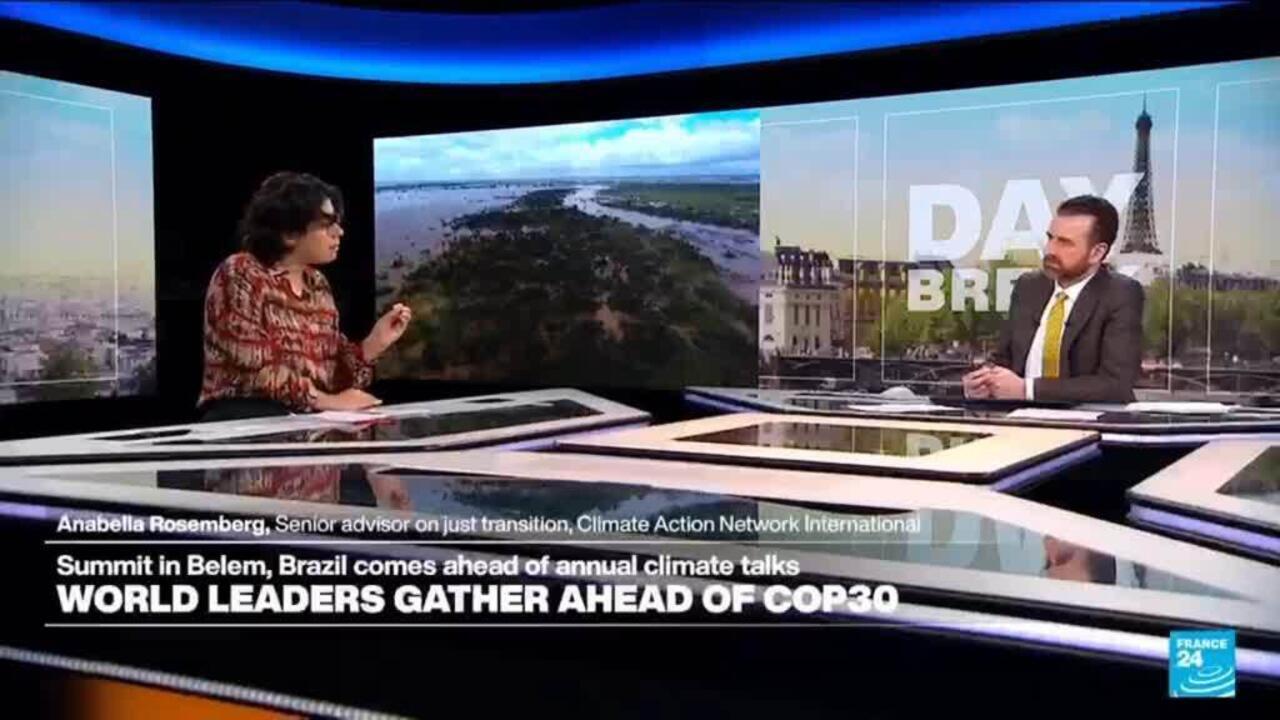
With COP30 opening on November 10, what's on the agenda for world leaders? Aside from marking ten years since the Paris Agreement's ambitious targets - which the world is on track to miss -, the summit should also be looking into Brazilian President's ambitious project for a Tropical Forests Forever Fund. FRANCE 24's Valérie Dekimpe breaks it down for us.

Video by: Valérie DEKIMPE


French interior minister admits concern over police actions during eco protest

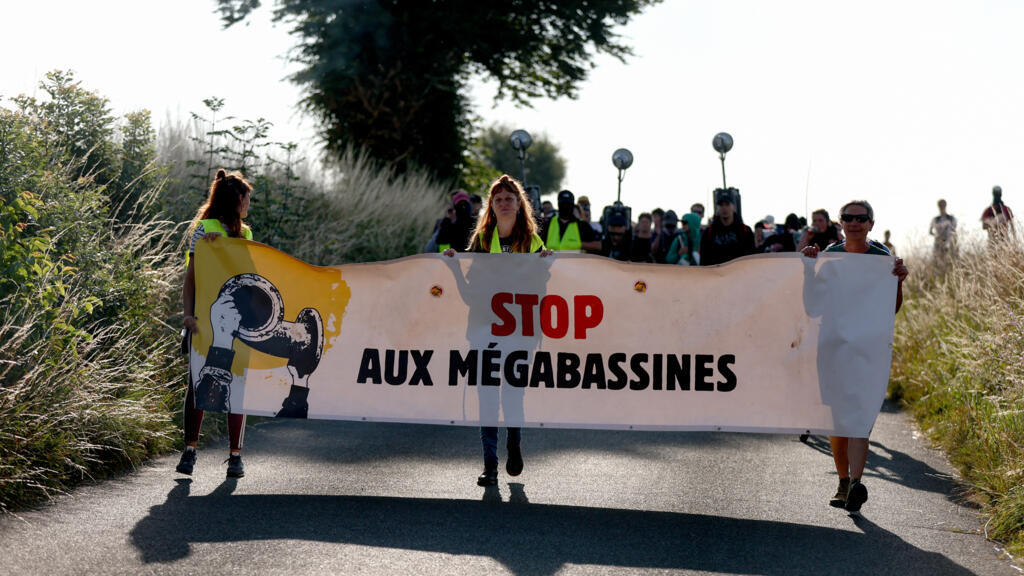
France's Interior Minister Laurent Nunez on Thursday admitted that he was unhappy with the behaviour of police officers seen in video footage during a protest against a giant reservoir in Sainte-Soline, south-western France, in March 2023.


Issued on: 06/11/2025 - RFI

A demonstration against a giant reservoir in Sainte-Soline, south-western France, turned violent in March 2023. AFP - ROMAIN PERROCHEAU

The 84 hours of images from cameras mounted on police body armour published by the newspaper Libération and the investigative website Mediapart show officers insulting demonstrators and boasting about the number of injuries they have inflicted.

"I always remind people of the context: this was an illegal demonstration, where there was a great deal of serious violence against the police," Nunez tod French broadcaster France Inter on Thursday.

He continued: "The comments made are unacceptable, and there are actions that are clearly not in line with regulations. Obviously, I am not at all happy with the comments I heard or the actions I saw."

French police disperse demonstrators from port blockade over reservoir construction


On Wednesday, following the emergence of the footage, Nunez ordered an inquiry into the policing of the demonstration which left more than 40 officers and 100 protesters injured.

"I will never allow criticism of the internal security forces," sadi Nunez. "And you know very well that this kind of incident, which I agree is serious, allows some people to criticise the police or gendarmerie in general."

Just after the protests, Gérald Darmanin, then interior minister, said police had displayed a proportionate use of force.

"He [Darmanin] was not in denial, he was absolutely right," said Nunez. "The gendarmerie's action was carried out in response to extremely violent acts, including against vehicles, against people, against our gendarmerie officers, and the response was proportionate.

Police rape case investigators confirm video of sex act in Paris courthouse cell

He added: "But there are acts revealed by these videos that are clearly not proportionate. But there was a level of violence that reached an unprecedented level that day, and there was a response that was overwhelmingly proportionate.

"If, in this particular case, there was indeed a use of force that was in part disproportionate, there will be an investigation to establish this, and there will obviously be sanctions."

The protest, which was banned, degenerated as police fired more than 5,000 tear gas and explosive grenades in response to a hail of stones, Molotov cocktails and fireworks.

Following complaints from demonstrators, the Rennes public prosecutor's office opened an investigation.
OLD FASHIONED ANTI-SEMITISM

Bulgarian MPs To Form Commission To Investigate George Soros’s Influence


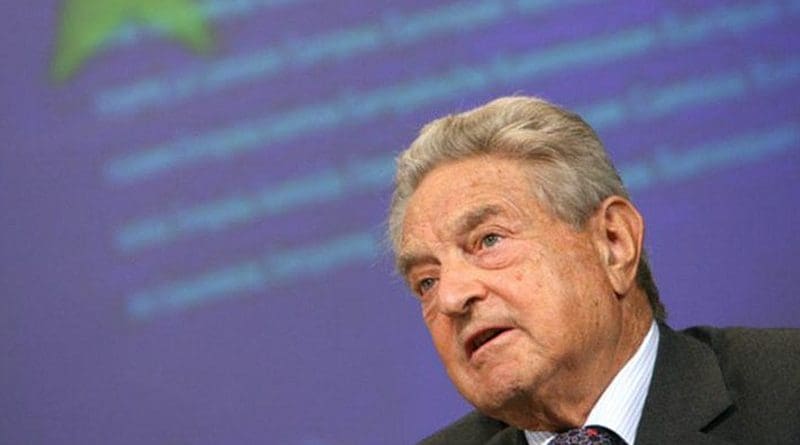
George Soros. Photo credit: European Commission

November 6, 2025 
Balkan Insight

The parliamentary probe based on conspiracy theories about the philanthropist’s alleged meddling is backed by Bulgaria’s main pro-Russi
an and nationalist parties as well as by tycoon Delyan Peevski’s growing party.


By Svetoslav Todorov


Bulgaria’s parliament voted on Wednesday to establish a commission to investigate alleged meddling by NGOs and companies affiliated to the liberal American-Hungarian investor and philanthropist George Soros and his son Alexander.

The move was initiated by the Movement for Rights and Freedoms – New Beginning, a political vehicle for the oligarch and MP Delyan Peevski, by the nationalist parties There’s Such a People and Union, Moral and Honour, as well as by the pro-Kremlin forces Revival and the Bulgarian Socialist Party. Members of the governing party GERB abstained, or voted against.

Despite presenting a pro-Western image, Peevski has been relying on populist anti-Soros conspiracy theories to attack political opponents and media critical of his influence.

Such rhetoric is often aired by pro-Russian propaganda groups in the country, and in most other Eastern and Central European countries; it led to the Soros-backed Central European University relocating from Budapest to Vienna following a legal push by Viktor Orban’s government to drive it out of Hungary.

Last September, Peevski claimed that Soros-affiliated entities had been involved in “replacing values with gender ideology” and in “powerful lobbyist structures”.

The parliamentary commission’s goal is to establish Soros’s “connections with political parties, magistrates, educational institutions, media, business structures and state authorities”.

Revival’s call for the commission to investigate specific NGOs, such as Open Society, America for Bulgaria and the Friedrich Ebert, Hanns Seidel and Konrad Adenauer foundations was not accepted.

Despite this, New Beginning member Yordan Tsonev named the Open Society Foundation, a grant-giving organisation started by Soros in 1993 to help media, culture and educational initiatives – as a source of unregulated influence in Bulgaria.

The Bulgarian Helsinki Committee, a human rights NGO, condemned the move to establish the committee. “The targeting of Soros-funded civil society organisations stems from their work promoting democracy, fair elections, and the fight against endemic corruption. Members of organised crime, now entangled with political parties, are displeased with these activities,” it said in a statement.

The development comes after a controversial privacy bill that could have threatened journalists’ ability to investigate people in power but was eventually dropped after a wave of criticism.

NGOs and media that have benefited from Soros-affiliated financing have also been the target of a draft law filed by the far-right party Revival that would see them designated as ‘foreign agents”. Repeated attempts to pass the legislation, most recently in 2024, have been unsuccessful, however.

However, in 2024, nationalist and pro-Russian forces managed to impose a Kremlin-style legal amendment banning LGBTQ+ “propaganda” and “gender ideology” in schools.

Also on Wednesday, GERB leader Boyko Borissov said he was working on getting sanctions imposed under the US Global Magnitsky Act lifted from Bulgarian politicians, among them Peevski. Borissov hinted at this move back in April, calling the corruption allegations inconsistent.


Balkan Insight

The Balkan Insight (formerly the Balkin Investigative Reporting Network, BIRN) is a close group of editors and trainers that enables journalists in the region to produce in-depth analytical and investigative journalism on complex political, economic and social themes. BIRN emerged from the Balkan programme of the Institute for War & Peace Reporting, IWPR, in 2005. The original IWPR Balkans team was mandated to localise that programme and make it sustainable, in light of changing realities in the region and the maturity of the IWPR intervention. Since then, its work in publishing, media training and public debate activities has become synonymous with quality, reliability and impartiality. A fully-independent and local network, it is now developing as an efficient and self-sustainable regional institution to enhance the capacity for journalism that pushes for public debate on European-oriented political and economic reform.


Australian political storm: Is wearing a Joy Division t-shirt antisemitic?

Is wearing a Joy Division t-shirt controversial?
Copyright Factory Records - Amazon / TikTok Nine News screenshot


By David Mouriquand
Published on 

When Australian Prime Minister Anthony Albanese stepped off a plane wearing a Joy Division t-shirt, he triggered a political storm. A minor one, but one that has us asking: Is wearing a Joy Division shirt controversial or antisemitic?

A “profound failure of judgement.”

That’s how Australian opposition leader Sussan Ley described the actions of Prime Minister Anthony Albanese when he returned from the United States.

On 23 October, the leader of the centre-left Labor party stepped off the plane in casual attire, wearing a t-shirt emblazoned with the name of influential British post-punk band Joy Division and the cover of their seminal 1979 debut studio album ‘Unknown Pleasures’.

It’s an iconic tee, featuring Peter Saville’s image of radio waves from pulsar CP 1919 from The Cambridge Encyclopaedia of Astronomy. You'll find it sold everywhere from H&M to Hot Topic, and worn by both die-hard Ian Curtis fans and try-hard hipsters wishing to rack up credibility points in a desperate plea to seem edgy despite the fact they’ve only heard ‘Love Will Tear Us Apart’.

We don’t know where Albanese falls on that spectrum, but it’s a cracking album by a legendary band nonetheless.

Still, the sartorial choice wasn’t to everyone’s liking. Five days after the picture was taken, Ley, leader of the Liberal Party, decided to criticise Albanese’s shirt.

In a speech before parliament, Ley accused Albanese of making a “profound failure of judgment”, described the choice of t-shirt as "an insult to all", and insinuated that the band were antisemitic for being named after “a wing of a Nazi concentration camp where Jewish women were forced into sexual slavery.”

“At a time when Jewish Australians are facing a rise in antisemitism, when families are asking for reassurance and unity, the Prime Minister chose to parade an image derived from hatred and suffering,” she said, adding that the PM should “apologise immediately and explain why he thought this was acceptable.”

Have countless music fans been proudly vaunting an antisemitic reference all these years?

Short answer: No.

Long answer: No, the band Joy Division were not antisemitic. They were named Warsaw before changing their name to Joy Division, which is a reference to the 1953 novella “House Of Dolls” by Jewish writer and Holocaust survivor Yehiel De-Nur (also known as Ka-Tsetnik 135633). The book describes “Joy Divisions”, which were groups of women imprisoned in concentration camps during World War II, kept for the sexual pleasure of other inmates. As a spokesperson for the Auschwitz-Birkenau State Museum told the Guardian: “As far as we know, there is no historical records of any ‘wing’ of a concentration camp where Jewish women were forced into sexual slavery.” The spokesperson emphasised that while brothels and sexual servitude in the camps did exist, most of the women forced to work “were German social misfit prisoners imprisoned in Auschwitz for prostitution.”

Sensitivity towards the Jewish community is important, especially at a time when members of said community are routinely conflated with the atrocities committed by Benjamin Netanyahu’s government. However, Sussan Ley’s barrel-scraping attempt to score political points problematically undermines the very cause she purports to defend. Indeed, her reactionary and fearmongering tactic reduces the ills of actual antisemitism, and says more about her desperation than anything else. To say nothing of how her comments reveal a certain level of cultural illiteracy, as affirming that a Joy Division t-shirt is an affront is equivalent to blurting out that members of Spandau Ballet were Nazi sympathisers because their name morbidly refers to the final jerking moments of the bodies of prisoners hung in Spandau Prison.

To those with an affinity towards band tees, you’re safe with both bands.

Joy Division - Unknown Pleasures
Joy Division - Unknown Pleasures Factory Records - Amazon


Albanese has not apologised for wearing the t-shirt and Australian Jewish groups have not condemned the PM. His fellow Labor official Pat Gorman has defended him, citing the widespread popularity of the band and the image, telling the Guardian: “It’s a T-shirt of a band he’s a fan of … their music has been around for a few decades... There’s big issues in the world, I don’t think T-shirts of mainstream bands is one of them.”

As for Nationals senator Bridget McKenzie, she added: “There’s a lot to legitimately criticise the prime minister about: trillion-dollar debt, skyrocketing house prices, and job losses in our heavy industrial sector. Wearing a T-shirt isn’t one of them.”

We’d also add that Ley should look into Joy Division – and maybe start with the track ‘She’s Lost Control’. It's a song about the fragility of life as Curtis (himself an epileptic) recounts seeing a colleague suffering a seizure. It features the somewhat appropriate lyrics:

“Confusion in her eyes that says it all,

She’s lost control,

And she’s clinging to the nearest passer-by,

She’s lost control.”