Sunday, November 23, 2025


New study looks at (rainforest) tea leaves to predict fate of tropical forests


Northern Arizona University


Researchers at Northern Arizona University and the Smithsonian found an unconventional method to understand how rainforests will survive with climate change—making tea with living leaves at the top of the rainforest canopy. 

The results, published this week in JGR Biogeosciences, are encouraging: The researchers learned that tropical forests may be less sensitive to climate change than originally feared. 

“Experiments like these will help us improve the models that predict not only how tropical forests will respond to future warming, but also what Earth’s climate will look like in the future—even here in Arizona,” said Ben Wiebe, a doctoral student in ecoinformatics at NAU and second author on the study. 

Reading the tea leaves 

The study, led by Chris Doughty, an ecoinformatics professor at NAU, built on prior work in Nature that found some leaves in tropical forests could become hot enough to die under future climate change. Widespread leaf death in tropical forests could be accelerated if, when one leaf dies, it heats up the living leaves around it. However, no one had tested this at the top of a rainforest canopy before.  

To test this hypothesis, the researchers submerged living canopy top leaves from a Panamanian rainforest in boiling water while the leaves were still attached to the trees. In collaboration with the Smithsonian Tropical Research Institute, the researchers used a canopy crane to access to the uppermost canopy leaves of multiple tree species. Submerging the leaves in boiling water was the quickest, easiest way to kill them from heat death, which replicates future climate change-driven heat death. They then monitored the surrounding leaves.  

Over time, the researchers saw that dead leaves did heat nearby leaves but less than expected because when leaves died, they also got much brighter. Dead leaves will not cool themselves by evaporating water, but they cool themselves by reflecting more of the sun’s energy away. 

“This unexpected result is good news because it means that upon death, leaves do not heat up surrounding leaves as much as we thought, so tropical forests may be less sensitive to climate change,” Doughty said. “While boiling leaves at the top of the canopy may sound unconventional, this method of reading the tea leaves delivered insights that bring us closer to understanding the future of tropical forests.” 

While at the top of the canopy, the researchers studied what happens if leaves get darker.  In prior work, members of the team found that climate change might lead to thinner, darker leaves. The team tested this by artificially darkening canopy top leaves with charcoal. A darker leaf would either evaporate more water to maintain its temperature or get hotter, but it was unclear which outcome would happen. The team found that the leaves mainly evaporate more water, but this is different from predictions by Earth System models. This simple difference could lead to different future climates predictions.   

“It may seem silly to boil leaves at the top of a rainforest, but it actually led to some results that can help us to understand the future fate of these bastions of carbon and biodiversity,” said Smithsonian Tropical Forest Researcher Martijn Slot. 


When trade routes shift, so do clouds: Florida State University researchers uncover ripple effects of new global shipping regulations


Florida State University
Diamond 

image: 

Michael Diamond is an assistant professor in Florida State University’s Department of Earth, Ocean and Atmospheric Science

view more 

Credit: Devin Bittner/FSU College of Arts and Sciences


When militia attacks disrupted shipping lanes in the Red Sea, few imagined the ripple effects would reach the clouds over the South Atlantic. But for Florida State University atmospheric scientist Michael Diamond, the rerouting of cargo ships offered a rare opportunity to clarify a pressing climate question — How much do cleaner fuels change how clouds form? 

In research published in Atmospheric Chemistry and Physics, Diamond and FSU Department of Earth, Ocean, and Atmospheric Science graduate student Lilli Boss showed that new fuel regulations that cut sulfur by about 80 percent also lowered cloud droplet formation by about 67 percent compared with earlier, dirtier fuels.

“The unexpected rerouting of global shipping gave us a unique opportunity to quantify aerosol-cloud interactions, reducing the largest source of uncertainty in global climate projections,” said Diamond. “When your ‘laboratory’ is the atmosphere, it’s not every day you can run experiments like this one. It was an invaluable opportunity to get a more accurate picture of what’s happening on Earth.” 

The findings could help refine global climate models, offering policymakers and scientists more accurate climate predictions and insight into how environmental policy can protect human health. 

CLEANER FUEL, FEWER CLOUDS
In January 2020, the International Maritime Organization (IMO) mandated a major reduction in sulfur content in marine fuels to decrease air pollution. Aerosols from ship emissions, especially sulfate, influence cloud formation and brightness, which in turn affect Earth’s energy balance. Referred to as aerosol-cloud interactions, these particles cause clouds to form with smaller, more numerous droplets, making them brighter and thus more reflective of sunlight. This creates a cooling effect, which has historically masked about one-third of the warming caused by greenhouse gases.  

But air pollution’s effects are marked by huge uncertainty and variability. Unlike long-lived greenhouse gases such as carbon dioxide, or CO2, which linger in the atmosphere for centuries, aerosols stay only for days or weeks. This short lifespan, coupled with the unpredictable nature of clouds, makes aerosol-cloud interactions the single largest source of uncertainty in global climate projections. 

Diamond’s previous research had shown that clouds in major shipping corridors were forming with larger and less numerous droplets after IMO 2020. Scientists are currently debating what role the resulting increase in sunlight absorbed over the ocean played in the 2023 and 2024 marine heatwaves in the Atlantic Ocean. Different groups also disagree about how much cloudiness declined after IMO 2020, with estimates ranging from a relatively small 10% change to a massive 80% decrease. 

A ‘NATURAL’ EXPERIMENT
Beginning in November 2023, attacks in the Bab al-Mandab Strait caused a sharp decline in Red Sea traffic and a surge in shipping around the Cape of Good Hope. As a result, the South Atlantic region — which is highly susceptible to ship emissions because of its persistent, low-lying clouds — experienced a sudden, massive increase in ship volume. 

Because the rerouting was driven by conflict rather than weather or policy, researchers could observe how clouds changed in direct response to ship emissions alone. Such clear cause-and-effect situations are almost impossible to create in controlled experiments, making this a valuable natural test case. 

Satellite data revealed a clear increase in nitrogen dioxide, or NO2, over the southeastern Atlantic Ocean. NO2, a gas emitted by ship engines that was unaffected by the 2020 IMO fuel regulations, served as a reliable indicator of increased ship activity, confirming a surge in traffic through the region and allowing scientists to directly compare pre- and post-regulation conditions under heavy ship traffic.

KEY FINDINGS
With roughly twice as many ships in operation during 2024, the overall impact on cloud droplet formation was only slightly weaker than before IMO 2020. However, by comparing NO2, which was unaffected by the sulfur-reducing regulations, with cloud droplet number, which is sensitive to sulfur, Diamond and Boss found a 67% reduction  in ships’ cloud-altering abilities after the IMO regulations went into effect. Their result provides further strong evidence that cleaner fuels have reduced shipping’s influence on cloud formation and helps to quantify the relationship between pollution and cloud response, which is an important constraint for improving climate simulations. 

WHY IT MATTERS
Quantifying how clouds respond to changes in aerosols remains one of the biggest challenges in studying the climate. 

This research helps reduce the error bars that currently limit estimates of Earth’s energy balance. By narrowing this uncertainty, policymakers can make better-informed decisions about balancing environmental regulations with long-term climate goals. These findings also highlight the complex trade-offs in air-quality policy, showing how actions aimed at protecting human health can simultaneously reshape the planet’s climate response. 

Although these aerosols temporarily cool the planet, this comes at the cost of human health. Exposure to sulfur particles, potent air pollutants, is linked to respiratory and cardiovascular diseases. The IMO regulation is estimated to have already prevented tens of thousands of premature deaths.

Corruption, lack of accountability helps organised crime to thrive across Africa

Organised crime has steadily gained ground across Africa since 2019, while efforts to combat it have weakened, according to the 2025 Africa Organised Crime Index. The new analysis found that corruption, disregard for law and lack of accountability are helping criminal networks to proliferate in several regions across the continent.

PRIMITIVE ACCUMULATION OF CAPITAL

Issued on: 23/11/2025 - RFI

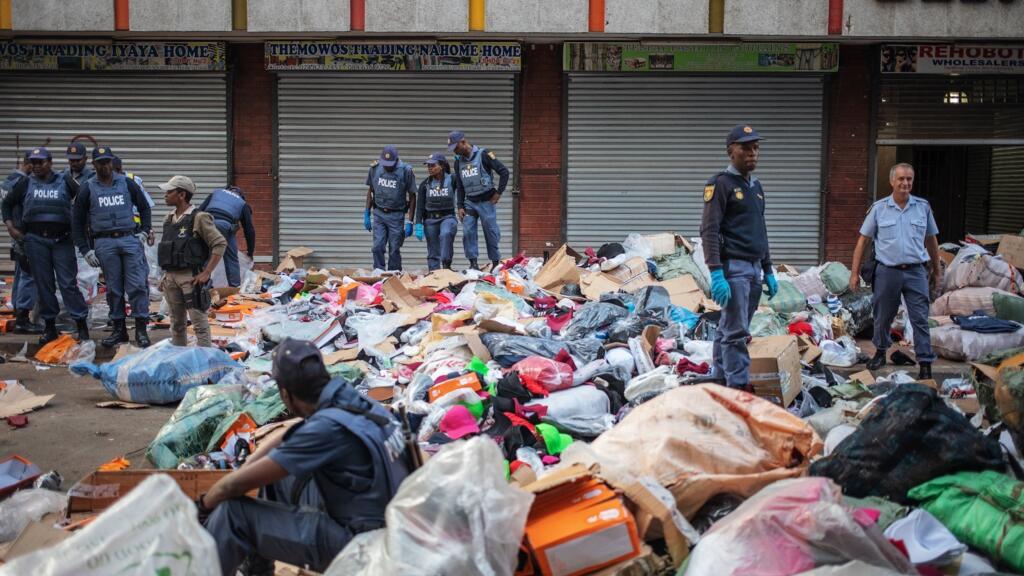
South African police officers seize sacks of allegedly counterfeit goods in central Johannesburg on 7 August 2019. Trade in counterfeit goods is one of the fastest-growing criminal markets across Africa, according to new analysis. © Michele Spatari / AFP

By:Zeenat Hansrod


Africa has become deeply embedded in the global criminal economy, serving as a source, transit hub and destination for various illicit markets – often in overlapping roles.

The 2025 Africa Organised Crime Index – released this week by Enact (Enhancing Africa's Response to Transnational Organised Crime), an EU-funded project that analyses transnational organised crime in Africa – indicates that criminality has increased steadily since 2019, while resilience to crime has declined.

Based on experts' assessment of the scale of criminal markets, influence of criminal actors and effectiveness of resilience, the country with the highest overall criminality ranking is the Democratic Republic of Congo, followed by South Africa, Nigeria, Kenya and Libya.

The index identifies the most pervasive criminal activities as financial crimes, human trafficking, non-renewable resource crimes, the trade in counterfeit goods and arms trafficking.

“What is the motivation and driver behind organised crime? It’s money, big money and quick money for these gangs and these syndicates in order to move forward,” said Willem Els, senior training coordinator for the Enact project at the Institute for Security Studies (ISS).

“One of the target areas for that, especially in Africa, is counterfeit goods.”

Cancer of corruption

The counterfeit trade and financial crimes are the two fastest growing sectors, the report says, a pattern that matches international trends.

Els added that counterfeit goods find a way into African countries because of misconduct that makes borders “porous”.

“It is not because the borders are not patrolled or fenced or well manned,” he explained. “The main reason for porous borders is corruption. State-embedded actors are compromised by these gangs in order to facilitate the transfer of illicit goods into the countries.”

According to the report, state-embedded actors, or corrupt government officials, have increased their influence and drive criminality in Africa.

“It goes from top to bottom. Corruption is like a cancer, once it starts to infiltrate, it just seems to snowball and snowball,” said Els.

“It starts, in many cases, with some of your most senior politicians down to custom officials. It trickles through police, national prosecution authorities, and in some cases, even the bench [judiciary].”

Financial hubs a target

Measures aimed at driving economic development and increasing trade between Africa and the rest of the world have also provided opportunities for criminal organisations.

“Organised crime syndicates thrive in financial hubs where they've got the opportunity and financial systems to operate,” Els told RFI.

“Three of the countries where criminality levels are very high are also financial hubs targeted by these gangs.

“Nigeria is the financial hub for West Africa. South Africa is the financial hub for Southern Africa. And Kenya is a financial giant for East Africa.”

Beyond these patterns, criminal markets show considerable diversity across the continent.

East Africa stands out for high human trafficking, arms trafficking and human smuggling. North Africa leads globally in cannabis trade and ranks second for financial crimes.

Non-renewable resource crimes dominate Central Africa, cocaine trade dominates West Africa, and wildlife trade is most prevalent in Southern Africa.

Consequences are key


Els insists that political will to enforce good governance is of vital importance in strengthening Africa’s capacity to push back organised crime.

“If you do not have political will and leadership, we are going to sit here in five years or 10 years' time and we are going to have the same discussion,” he said.

“It starts with good governance. It also starts with consequences.”

For Els, criminals must face the consequences of their crime whether they are in a gang, a government official, a white-collar criminal or in the private sector.

“That comes with effective policing and investigation, the legislation in place, effective prosecution in courts that are free from corruption,” he added.

“The bottom line, when it comes to fighting crime, is a country’s capacity to apply consequences when crimes are perpetrated.

“If they are not prosecuted, if they don’t face the music, then there will not be a change. It will just be business as usual.”

Els cited the example of the ongoing Madlanga Commission in South Africa, a judicial inquiry into whether criminal syndicates have infiltrated law enforcement and other parts of the criminal justice system, as well as whether senior officials may have aided illicit activity.

South African President Cyril Ramaphosa ordered the probe following allegations that the country's police minister had shielded allies with ties to the criminal underworld.
FREE OUR COUSINS

France’s primate research drive sparks backlash from animal rights groups

Plans to expand one of France’s primate research centres are facing resistance from animal rights groups and growing national debate over Europe’s animal testing future.


Issued on: 23/11/2025 - RFI

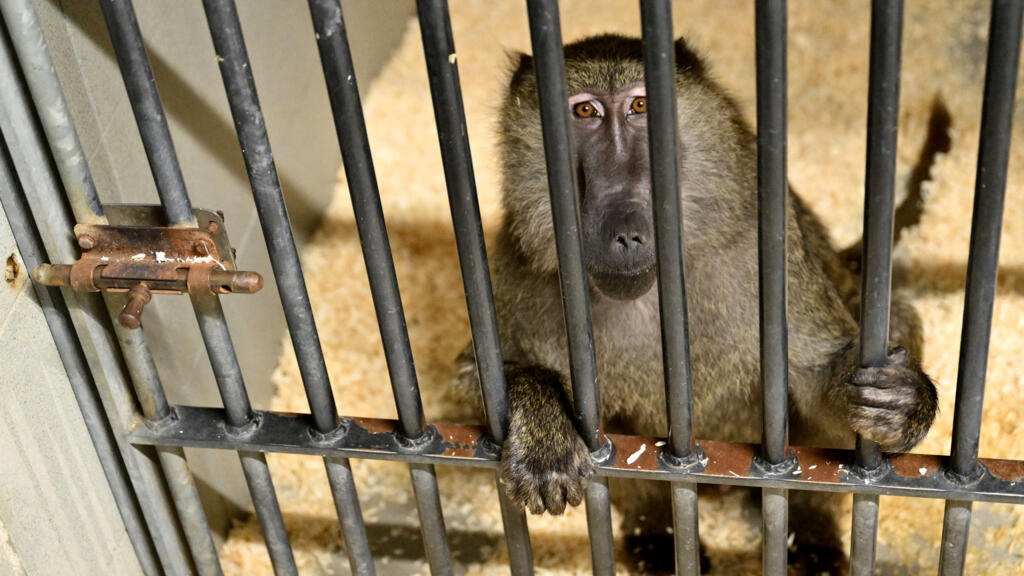
An Anubis baboon at the CNRS primatology centre in Rousset, where various monkey species are raised for the French scientific community, 6 November, 2025. 
AFP - CHRISTOPHE SIMON


The National Centre for Scientific Research (CNRS) site at Rousset in Provence – which has spent decades breeding primates for scientific experiments – aims to triple its population to 1,800 animals by 2029.

Rights groups have criticised the move, warning it runs counter to the European Union's push to phase out animal testing.

The CNRS, backed by the French government, insists the expansion is necessary to reduce reliance on costly imports and improve welfare.

When Covid-19 disrupted animal shipments from China and Africa, the cost of a single lab-bred primate soared to between €15,000 and €20,000 – a price public research institutions struggled to meet.

The CNRS has framed the project as a matter of “France’s research sovereignty”.

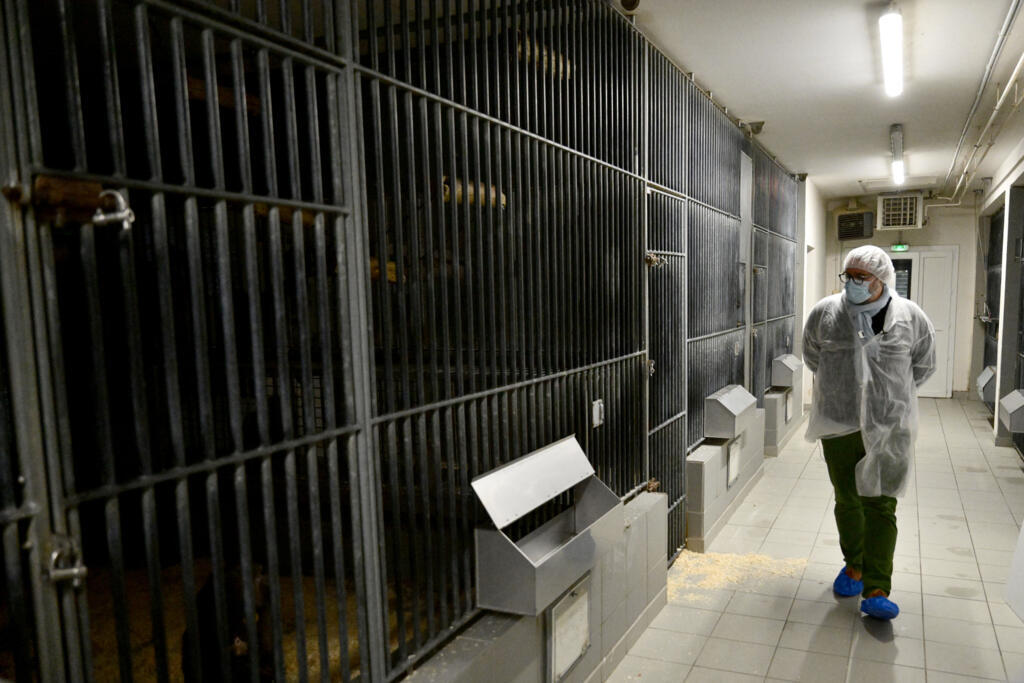
A vet pictured at the CNRS primatology centre in Rousset, south-eastern France. 
AFP - CHRISTOPHE SIMON


However, One Voice, a prominent French animal rights group, says the plan goes “against the course of history”.

Although the EU has pledged to gradually move away from animal testing – and banned the practice for cosmetics in 2013 – it has not set firm deadlines.

The debate in France has intensified such that the Rousset centre opened its doors this month to allow a rare visit by journalists.

Behind barbed wire and discreet signage, enclosures spread across seven hectares of pine forest house 300 Anubis baboons, 60 Guinea baboons, 130 rhesus macaques and 120 marmosets, all born in captivity.


Academic research

The site – soon to be renamed the National Primate Centre (CNP) – has been allocated €31 million in public funds to support its expansion.

Claire Duliere, who leads One Voice’s anti-testing campaign, argues the project is ultimately about “profitability, because it will be necessary to justify this use of public funds”.

But Ivan Balansard, head of ethics and animal research models at CNRS, counters that the plan is “anything but profit-driven: it is the public funding the public”.

Keeping the facility in France, he says, ensures better monitoring of living conditions and animal welfare. Each primate is expected to have 1.49 square metres of space on average – above EU requirements.

Founded in 1978, the centre is one of three public facilities in France breeding monkeys for research. Its primates are used only in academic work, Balansard says, including projects at Inserm and the Pasteur Institute, with only limited private sector involvement.

In 2023, around 3,500 monkeys were used for scientific research purposes in France, mostly in the fields of neuroscience and immunology. Most were ultimately euthanised to prevent prolonged suffering.

It is unclear how many came from Rousset, but the centre hopes to eventually supply 30 percent of the primates used in French research.

In comparison, the United States uses around 60,000 monkeys a year for testing, while China used 240,000 in 2021, bred across 57 centres, according to CNRS figures.


Developing alternatives

Public opinion in France appears to be hardening against animal experimentation. A 2023 Ipsos poll commissioned by One Voice found that 74 percent of people opposed it.

Technological advances – including new modelling tools and artificial intelligence – contributed to a 3.8 percent drop in the number of animals used in French research between 2022 and 2023, bringing the total to around 2 million – mostly mice.

But for now, the technology falls short of offering a complete solution.

Substitution models “cannot encapsulate the complexity of a living organism” for certain fields, particularly oncology, the national academies of medicine, sciences, pharmacy and veterinary sciences warned in 2021.

Monkeys have played a key role in the development of vaccines and treatments for diseases including polio, Ebola, HIV and Parkinson’s – a scientific legacy that continues to fuel the debate over Rousset’s future.

(with AFP)

Quake shakes Dhaka, three dead, more deaths expected

Quake shakes Dhaka, three dead, more deaths expected
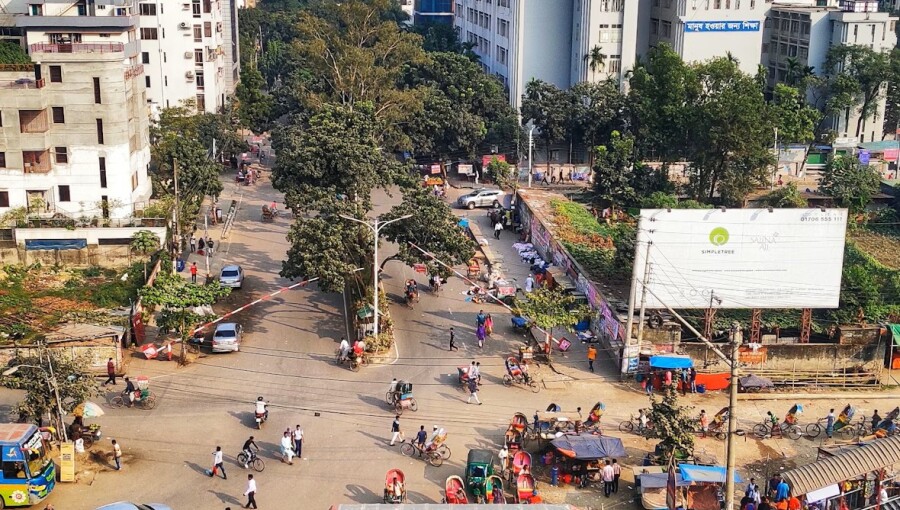
/ Sazzad Aryan - Unsplash
By bno - Kolkata Office November 21, 2025

An earthquake measuring 5.7 on the Richter Scale struck parts of Bangladesh at 10.38 am on November 21, triggering a series of safety alarms, minor structural failures and small fires across Dhaka and surrounding districts, though authorities reported no large-scale casualties.

According to the local Dhaka Tribune, emergency teams from the Fire Service and Civil Defence were dispatched throughout the capital as reports emerged of falling debris, suspected building damage and residential blazes. Officials said the incidents were contained quickly, with only isolated injuries and localised property losses confirmed.

In the Bongshal neighbourhood of Dhaka, three pedestrians were killed when a railing on a five-storey building gave way during the tremor. Police said the victims were walking along the roadside when the structure collapsed without warning.

Elsewhere in the capital, an eight-storey building in Armanitola prompted concerns of an imminent collapse, drawing units from nearby stations. Initial assessments found the structure largely sound, although pieces of plaster and brick had fallen according to the Tribune. No injuries were recorded.

In Khilgaon, one person was hurt after a brick from a construction site struck a nearby building. Residents provided immediate assistance, and officials determined that no further action was necessary.

A residential fire in Baridhara required two fire units, with investigators yet to determine whether the blaze was linked to the seismic jolt. In Sutrapur’s Swamibagh area, residents reported a leaning building, prompting fresh structural checks, while a similar alarm in Kolabagan was later attributed to public anxiety rather than actual damage.

Separately, a house fire in Munshiganj drew additional emergency crews, with details of any casualties still pending.

Authorities said inspections would continue across affected districts, but early indications suggested the earthquake caused only limited structural disruption.


Iran air pollution reaches hazardous levels, Danish embassy reports

Iran air pollution reaches hazardous levels, Danish embassy reports
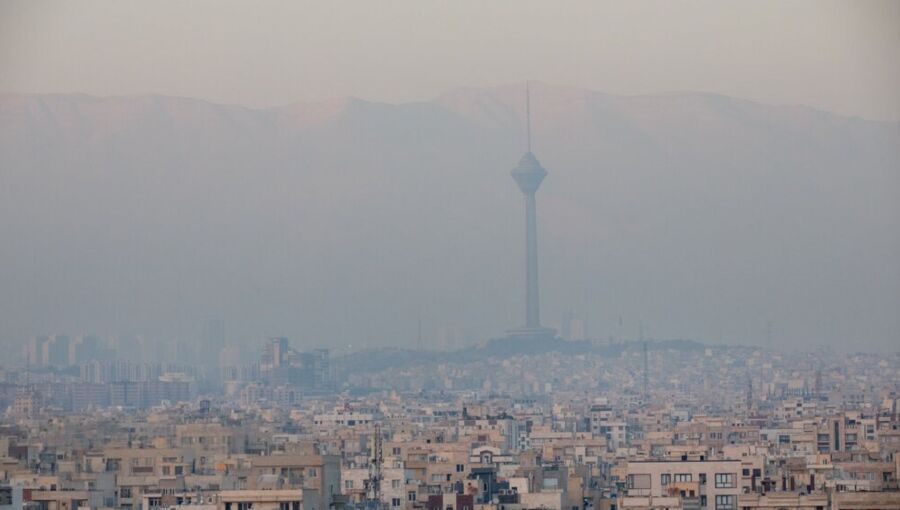
Smog blankets Iran's capital Tehran. / CC: ISNA Hadi Zand
By Newsbase REM November 23, 2025

Air pollution in Tehran reached hazardous levels on November 23, prompting authorities to move schools online and implement emergency measures across the province, Newsbase has learnt.

Tehran's chronic air pollution stems from a combination of geographic and industrial factors, with the city's location in a valley surrounded by mountains creating an atmospheric inversion effect that traps pollutants close to ground level due to cold weather. During winter months, the inversion layer intensifies as cold air becomes trapped beneath warmer air above, preventing pollutants from dispersing and creating hazardous conditions.

Monitoring at the Royal Danish Embassy in northern Tehran on November 23 showed a US Air Quality Index reading of 189 at 1:30pm local time, with PM2.5 levels of 109 microgrammes per cubic metre, categorising conditions as "unhealthy." Earlier reports from the embassy monitoring stations showed a peak of more than 220 PM2.5 levels on November 22.

Online social media in Iran has become increasingly critical of government pollution readings, fearing that monitoring stations have been either switched off or producing metered-down readings.  

According to the Iran National Air Quality Monitoring System represented on another website, all government monitoring stations in the capital city appear to have been turned off or are malfunctioning, IntellIiNews notes.

Government pollution readings appear switched off

Hassan Abbasnajad, secretary of the emergency air pollution working group, said the decisions were taken following a meeting chaired by Tehran Governor Mohammad Sadegh Motamadian to manage the worsening air quality crisis.

Classes for primary school pupils across Tehran province, except Firoozkooh district in the Alborz mountains behind the city, will be held remotely on November 25 and 26.

Pre-schools, primary schools and nurseries in cities where pollution has reached unhealthy levels for all groups will be closed.

Female civil servants with primary school-age children will be permitted to work from home.

Abbasnajad attributed the majority of air pollution to vehicles and said the municipality and traffic police are required to prevent polluting vehicles from operating, enforce traffic schemes regularly and monitor terminals and buses that remain idling overnight.

The capital's air quality crisis is exacerbated by the widespread use of low-quality fuel in vehicles and heating systems, emissions from ageing factories within and around the metropolitan area, and the concentration of millions of vehicles on congested roads.

 The measures, which have become increasingly common in recent years. Local power companies have been forced to implement periodic shutdowns across the capital and other regions, with outages lasting several hours as much of the electricity for the city comes from oil and coal powerplants.

The school shutdown comes amid ongoing concerns about water shortages in Tehran due to the ongoing drought, which coincides with widespread pollution. Areas of the capital have begun experiencing water shortages as the local water company starts rationing its water supplies. 


International aid rushed to battle wildfires in Iran’s ancient Hyrcanian forests

International aid rushed to battle wildfires in Iran’s ancient Hyrcanian forests
/ bne IntelliNews
By bnm Tehran bureau November 22, 2025

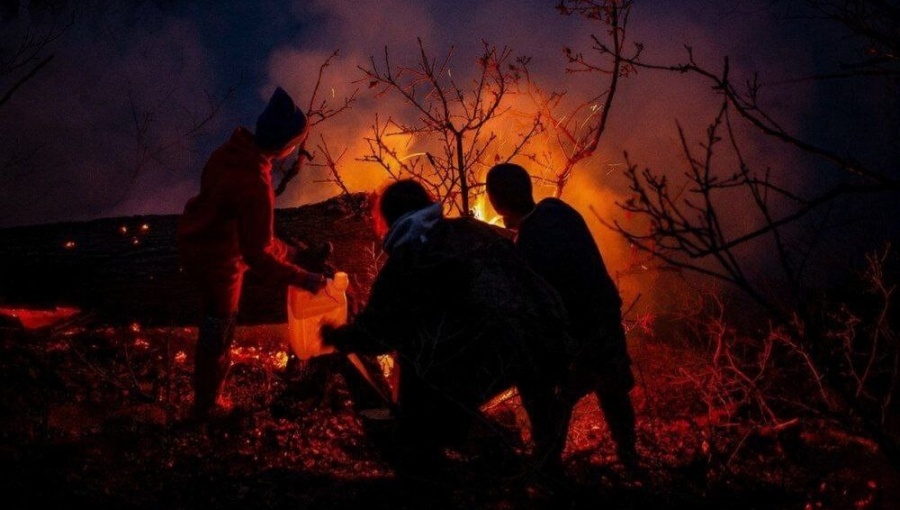
A massive wildfire has scorched more than ten hectares of the Hyrcanian forests in northern Iran, with international assistance arriving on November 22 to help contain the blaze, IRNA reported.

Shina Ansari, head of Iran’s Department of Environment, said field inspections showed the fires continued in scattered patches and intensified with strong winds. “Domestic agencies and international teams have been mobilised to tackle this crisis,” she told reporters.

Two Ilyushin water‑bombing aircraft operated by the Islamic Revolutionary Guard Corps (IRGC) were dispatched to the Elit region of Mazandaran Province, completing one sortie early in the morning and preparing for a second. Six helicopters were also deployed to fight the spot fires, she said.

Ansari added that around 400 personnel, including local volunteers, park rangers, forestry staff, crisis management units and Red Crescent teams, were stationed in the area. “With the cooperation of the Foreign Ministry, two firefighting planes from Turkey, accompanied by a helicopter and eight specialists, are joining operations today. Russia has also declared readiness to provide support if required,” she said.

Each aircraft can conduct two water drops daily, carrying up to 40 tonnes of water per mission. Turkish planes, being smaller, are able to fly at lower altitudes, according to Ansari, while additional specialist crews from the Zagros forests in Kohgiluyeh and Boyer Ahmad Province have been dispatched to reinforce efforts.

The Elit woodlands near Marzanabad have suffered two major outbreaks this month. The first began on  November 1 and was contained after several days; the second reignited on November 15 and continues to burn.

Natural resources experts believe human activity is the likely cause, citing careless hunters or abandoned campfires left by tourists. Mazandaran’s governor, Mehdi Younesi Rostami, said the origin of the blaze was “most likely human.”

High temperatures, rugged terrain and accumulated dry leaves and timber have fuelled repeated flare‑ups in the Chalous forests. More than ten hectares have been damaged, with young saplings, shrubs and fertile soil layers worst affected. Specialists caution that full recovery may take years. Even after containment, the threat persists, as hidden embers can smoulder beneath the soil for weeks and reignite with the slightest gust of wind, requiring constant vigilance from emergency teams.

The crisis has underscored the pressing need for advanced firefighting technology, local community training and early warning systems in Iran. The Hyrcanian forests, stretching along the southern Caspian Sea and believed to be between 25 and 50 million years old,  were added to UNESCO’s World Heritage list in 2019 for their exceptional biodiversity and geological significance.

Kaveh Madani, an environmental expert, lamented on his X account, saying: “We are losing a natural heritage that predates ancient Iranian civilisation.”