Monday, November 24, 2025


Campaigners come together to challenge Britain’s nuclear expansion


“End the war drive and invest in improving people’s lives, not destroying them.”

By the Campaign for Nuclear Disarmament (CND)

On Monday, 17 November, MPs, trade unionists and civil society figures handed in a letter to Downing Street calling on the Prime Minister, Keir Starmer, to rethink his decision to purchase 12 nuclear-capable F-35A jets, to be stationed at RAF Marham. The jets have been designed to launch deadly US nuclear bombs, now very likely deployed across Europe and in Britain. 

This comes amidst increasing nuclear threats and breaches of international disarmament treaties. In the letter, signatories argue, “[f]ar from protecting the British population, your decision to buy US nuclear capable fighter jets, that can launch US B61-12 nuclear bombs, ties Britain even closer to the dangerous leadership of US President Donald Trump” and “increases the risk of such weapons being used in war.” 

It goes on to state, “[w]e see this nuclear expansion as part of the war drive which is draining public funds away from essential public services and making the population poorer.” 

The letter hand-in follows a report by the Public Accounts Committee (PAC) that has exposed the chaos and spiralling costs already associated with government’s decision to buy nuclear-capable fighter jets from the Trump administration. The Committee’s report reveals that the Ministry of Defence had little understanding of the technical and financial implications of Britain joining NATO’s nuclear mission when Starmer announced the purchase at the NATO summit in June. PAC Chair described the MoD’s spending forecasts as “unrealistic.” The National Audit Office now calculates the full programme of 138 fighter jets could cost at least £71 billion, with even more – as yet unknown – costs involved in joining NATO’s nuclear missions. 

The letter states, “[g]iven the grave consequences of this expansion, including Britain’s breach of international law, it is also deeply concerning that no opportunity was given for parliament to debate or vote on this decision before it was announced.”

The letter concludes by urging that “[i]nstead of pouring hundreds of billions into lethal weapons, action needs to be focused on tackling the underlying causes threatening our human security. This means reversing the devastating poverty, deprivation and crumbling public services that mark our communities, investing in sustainable homes, rebuilding our health and education systems, and funding a just transition through green jobs, skills and infrastructure.”

CND will be bringing together a powerful alliance of campaigners, trade unionists, student activists, environmentalists, and more this Saturday, 22 November, to discuss the next steps for the campaign to halt this disastrous nuclear expansionism.

Independent MP and Chair of Parliamentary CND Jeremy Corbyn said: 
“At a time of growing international tensions, Britain should be leading efforts to de-escalate conflict, not fuelling an arms race. Expanding its nuclear arsenal only makes the world more dangerous. We need a foreign policy rooted in peace, diplomacy, and cooperation — one that addresses the causes of war, not its symptoms.”

Labour MP and Parliamentary CND Vice-Chair Bell Ribeiro-Addy said: 
“It’s deeply worrying that such a major decision — one that expands Britain’s nuclear capability and binds us further to US military policy — has been taken without any parliamentary scrutiny or public debate. The British people deserve transparency on matters that carry such enormous moral, legal, and security implications.”

Ellie Chowns, MP and Green Party Spokesperson for Defence, said: 
“When millions are struggling with the cost of living and our public services are under immense pressure, it is indefensible to spend billions on new nuclear-capable fighter jets. True security comes from investing in climate action, green jobs, and resilient communities — not in weapons that threaten both people and the planet.”

PCS General Secretary Fran Heathcote said:
“The F-35 purchase is a boon for US arms companies and their shareholders, not British workers. Ahead of the budget, we’re calling on them to prioritise our public services and investing in a new economy that puts people and the climate first.”

CND General Secretary Sophie Bolt said:  
“Given how fast the nuclear threats are rising, it is no surprise that opposition to nuclear weapons –  and their obscene costs – is growing. Expanding Britain’s nuclear weapons won’t make us safer. On the contrary, it will put us at much greater risk of these weapons being used. With the economy in turmoil and people getting poorer, the government is faced with a clear solution to this problem: end the war drive and invest in improving people’s lives, not destroying them.”

Convenor of Stop the War Coalition Lindsey German said: 
“Buying nuclear-capable F-35s to please Donald Trump and his belligerent foreign policy puts everyone in Britain at risk of being on the frontline of a nuclear war.”

Journalist Victoria Brittain said:
“80 years on from the horrendous atomic bombings of Japan, the priority must be on limiting the amount of nuclear weapons in the world, not starting a new nuclear arms race that risks nuclear war.”

Chief Executive of Pax Christi England and Wales Andrew Jackson said:
“At a time when we’re seeing global suffering due to war and climate breakdown, we’re calling on the government to put peace, not militarism, at the heart of its defence and foreign policymaking.”

Public Affairs and Media Manager at Quakers in Britain Grace Da Costa said:
“Investing in more nuclear weapons will not help the poorest and most vulnerable in our society and will only contribute to further climate breakdown and conflict.”


Featured image: No US Nukes in Britain, Campaign for Nuclear Disarmament banner. Photo credit: CND

 UK

TSSA members to take industrial action at TransPennine Express

TSSA flag outside parliament


“The company must now move at pace to make an improved and reasonable offer which meets the aspirations of our members.”

By the Transport Salaried Staffs’ Association (TSSA)

TSSA rail union members working at TransPennine Express (TPE) as Operations Managers have voted unanimously in favour of both strike action and action short of strike, in a dispute over on call working arrangements.  
  
To date, TPE has refused to offer an acceptable on-call, overtime and compensatory time off in lieu (TOIL) package to staff in the roles of Driver Managers, Operational Development Managers and Driver Operations Managers.   
  
Several dozen members at TPE responsible for safety issues and operational problems around the clock were balloted – and of those choosing to vote, 100 percent were in favour of strike action and action short of a strike. 
  
Reacting, TSSA General Secretary, Maryam Eslamdoust, said: “This is a decisive mandate from our members that is bound to send a strong message to TransPennine.  
  
“The company must now move at pace to make an improved and reasonable offer which meets the aspirations of our members. Our members work extremely hard to keep rail services running safely and efficiently. Their commitment often means giving up family and personal time, taking on additional responsibilities, and adapting to challenging conditions.   
  
“They deserve fair recompense for the impact that their on call duties have on their home lives. Multiple times a year, whilst on call, they are expected to be available 24 hours a day, responding to what are often traumatic situations.  
  
“Our union takes industrial action only as a last resort and clearly our members in TPE are united and ready to act.”   
  
*TSSA has set a number of dates for action short of a strike –beginning from 00:01 on Tuesday, 25th November 2025. (See Notes below for full details)  
  
Two notices of Action short of strike have been issued so far: 
 
1 – The action short of a strike will be continuous and will take place on the intended dates set out below: 
 From 00:01 on Tuesday, 25th November 2025 
 
The types of industrial action short of a strike that will be taken are: 

*Ban on covering vacant on-call lines 
*Ban on out-of-hours work communication 
*Ban on undertaking contingency duties arising from industrial action 
*No mentoring of colleagues, including new starters 
*No training of colleagues, including new starters 
*No double desking (no carrying out work of absent colleagues and vacancies) 
*Ban on any cross-cover for any other Grade.
*Ban on any Driver Linking (Roster) processes
  
2 – The action short of a strike will be discontinuous and will take place on the intended dates set out below: 
  
From 
*17:01 on Friday 28th November 2025 to 07:59 on Monday 1st December 2025 
*17:01 on Friday 5th December 2025 to 07:59 on Monday 8th December 2025 
*17:01 on Friday 12th December 2025 to 07:59 on Monday 15th December 2025  
  
The types of industrial action short of a strike that will be taken are: 
 
Ban on on-call activities – 
This results in the removal of on call over three weekends in a row. 


*Overview – The cohort of workers involved in the action being taken work on safety and operational matters and are charged with responding immediately to any such problems, supporting staff on the ground and working with emergency services when needed.  
 
From 09:00 Thursday to Thursday, they are always on call – ready to respond at a moment’s notice – which means putting family life, hobbies, and personal plans on hold to keep everything moving safe.


UK

‘Sixteen days, ten years, one promise: Labour must stick to its mission to halve violence against women and girls’


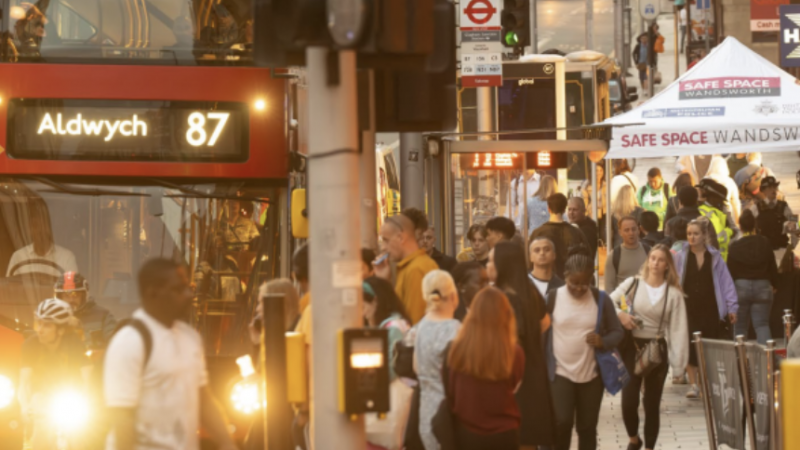
Safe Space Wandsworth

Exactly three years ago, I sat across a table from Keir Starmer MP, then the Leader of the Opposition, in a room with survivors of domestic abuse. He was on a visit facilitated by Women’s Aid where I worked, to a women’s refuge just outside of Birmingham.

I watched as he carefully listened to each of their stories. For many of the women, it had taken up to a decade to feel that they could flee to safety. I could tell at that moment that this had moved him deeply.

A few months later, the Labour Party made a commitment to halve Violence Against Women and Girls (VAWG) as part of their flagship Five Missions. Their manifesto stated “our landmark mission to halve violence against women and girls in a decade will require a national effort”. I, along with so many others, saw it as a once in a lifetime opportunity to consign all forms of gender based violence to the history books.

It is an issue that has dominated media headlines with countless deaths and assaults of women and girls up and down the country.More recently, we’ve seen this issue penetrate the minds of our young people, with the rise of toxic influencers on every social mediaplatform, whilst creating no spaces for young people to talk about these issues.

From Tuesday until 10 December, it is the 16 Days of Activism against Violence Against Women and Girls. We are a long way from where we need to be. Domestic abuse and sexual violence services up and down the country are struggling, some having to close, and we are failing to have the right conversations in schools with young people about these issues. 

The women’s refuge that Keir visited, along with many others, relies on a combination of voluntary sector and local government funding alongside national grants. 

Before working at Women’s Aid, I thought there was a nationally funded safety net for women and girls fleeing abuse. There is not.  Refuges provide what is essentially an emergency service, and must fundraise just to stay operational. Recent Women’s Aid research has found that 1 in 4 women were unable to secure a suitable refuge vacancy when fleeing domestic abuse.

Councils can make a real difference, and the May elections next year are our chance to prove it. I was elected as a Councillor in Wandsworth in 2022, turning Wandsworth Labour for the first time in 44 years. I can say, with pride, that we ran on a platform of delivering real change on VAWG and we have delivered. 

I had countless conversations with young women on the doorstep who felt listened to for the first time in local politics, they felt that the council could change something they really cared about. 

In Wandsworth, we have doubled investment in VAWG and crucially, had unwavering support from our leader and cabinet. With that political will, we’ve embedded a domestic abuse specialist in housing, stabilised local services, and invested in prevention like our Safe Space in Clapham Junction. Women say the improved advocacy service means they can breathe again.

Even without additional funding, there is so much we can do, tackling this issue takes a whole community. Over autumn, I led Wandsworth’s first in-depth review of VAWG prevention, speaking to young people, teachers, parents, carers and frontline workers. We found that our prevention work is not driven by or for young people, and we are going to change that.

As part of the review, I spoke with a boys’ football team who had never talked about domestic abuse before. We had an inspiring and challenging conversation. Yes, they had covered one hour of healthy relationships in PSHE, but they had never spoken with each other about the real-life impacts of misogynistic language. In that short conversation, you could see their views developing. How can we expect to prevent VAWG if we aren’t willing to have these conversations with young people?

So where do we go from here?

As a minimum, the Labour Government must honour the pledge to halve VAWG by 2034. In the long-term, we need multi-year funding for all domestic abuse services. 

On prevention, we need to get serious on creating spaces for young people to talk about VAWG.  We need training for teachers, parents and young people as peers to hold space for these conversations. They are up for it. We can’t be afraid of it. 

At a local level, every council leader must make VAWG support and prevention central to their manifestos and delivery plans, especially those going into the May elections next year. The Government has already signalled their intention to move power away from the centre, back into communities, and this is the perfect opportunity to put that into practice. 

By the time you read this article, one woman or girl will have been killed as a result of domestic abuse. One in four women will experience domestic abuse across their lifetime. It is very likely someone you know has been in an abusive relationship. 

Share your thoughts. Contribute on this story or tell your own by writing to our Editor. The best letters every week will be published on the site. Find out how to get your letter published.

The current scale of VAWG can leave us feeling powerless, our work in Wandsworth is proof that change can happen at a local level. 

Three years ago, in a refuge in Birmingham, Keir Starmer made a commitment to survivors of domestic abuse. Their stories cannot be told in vain. 

With Labour in government and Labour councils across the country, we now have the chance to turn that promise into real change. We must take it.


‘Big Tech sexism must end’


©Shutterstock

The technology, the method, may be new, but the issue, sadly, is not. 

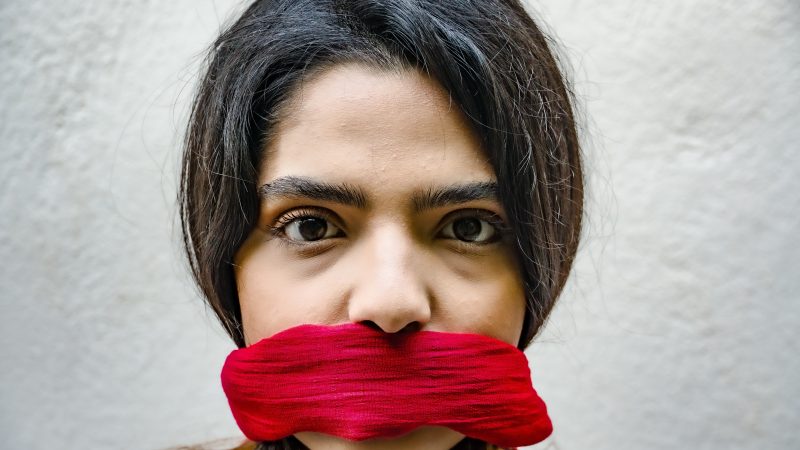
Women’s health has always been marginalised, questioned, deprioritised. Victorian doctors dismissed women’s distress as ‘the vapours’ leaving space for quacks to prescribe dangerous remedies. Today, Big Tech firms see fit to ‘downrank’ content related to female health on the weird and spurious grounds that it uses anatomically correct terms. Again, leaving the way clear for grifters and scammers to take advantage of, and even endanger, women.

This shadow banning is nothing shy of Big Tech sexism. It has to be addressed.

This week I brought together activists and parliamentarians to understand the scale of this new iteration of an age-old problem and to seek solutions. The Big Tech companies – TikTok, Meta which owns Facebook and Instagram, Google and X – are all aware of this issue. We must make them understand the damage it is doing and urge them to fix it. They have the money and the expertise, they only lack the will.

And it is a clear and growing problem. 

Earlier this year Essity – owners of period product brands like Bodyform and ModiBodi – surveyed 4000 adults on the issue. Nearly two thirds of all respondents said they look online for health advice, and half cited social media as an important source of health and wellbeing education. 

The same study revealed many find it difficult to source information on women’s health topics in the places they are active. The highest proportion was among the youngest – 34% of 18-24-year-olds said it was difficult to source information on women’s health topics via social media. 

They found that 77 % of 18–34-year-olds were aware of “shadow banning”, defined as posts being restricted, hidden or de-prioritised without explanation. That practice is impeding their approach to health and wellbeing.
When women’s health terms such as “periods”, “menopause”, “vagina” or “endometriosis” are used, posts may be mis-flagged as adult or sexual content and thereby receive dramatically lower reach. (This speaks to another age-old problem – the default sexualisation of women’s anatomy). 

Users don’t want this. Eight in 10 adults (77 per cent) said words like ‘vagina’ or ‘periods’ should not be restricted on social media when used in an educational context. If the platforms want to be responsive to their customers’ wants and expectations they ought to take note. If their algorithms are unable to spot context they need rewriting and upgrading.

The issue also impacts charities and women’s health businesses, both of which rely on the modern world for reach via social media. 

Campaigners CensHERship have found that 95% of women’s health content creators, educators, charities, and brands, had experienced censorship of women’s health content over the past year. This has serious consequences. 

Female-led businesses and femtech innovators report major financial losses, some of up to £500,000 a year, due to blocked campaigns. Charities say their ability to reach women with vital health information has been severely curtailed. This form of online censorship prevents women and girls from accessing reliable information about their own bodies.

And it’s biased against women. One study found a 66% drop in non-follower views and 69% fewer comments for women’s-health posts compared with men’s-health posts.

Women’s health is being censored by the algorithms. It has to stop.

We need the government to force platforms to come to the table. Big Tech must publicly explain themselves and their processes; listen to the concerns of women and girls; understand the damage that is being done; and recognise and remedy that. 

We are still up against the historic tendency to diminish and dismiss women and their wellbeing. But we have the knowledge and the power now. There is no excuse for this invisible filtering and algorithmic bias and for Big Tech to continue to fail women.

The Political, the Personal and the Polemical: Eric Foner on Freedom


 November 20, 2025

Photograph by Nathaniel St. Clair

“The past is the key to the present and the mirror of the future.”

—  Robert G. Fitzgerald (1840-1919), free African American and a founder of the Freedom Bureau’s schools in North Carolina quoted in Foner’s Our Fragile Freedoms.

“We’re all fighting over what it means to be an American right now,” Oscar-winning actress and Hollywood producer Jennifer Lawrence, the star of The Hunger Games and Winter’s Bone, recently observed. If Lawrence sees it, who doesn’t? It’s everywhere. The fight she has in mind—call it a chapter in the ongoing culture wars — has been waged in the streets of LA and Chicago, in courtrooms, classrooms, the workplace, homes and in the pages of newspapers and magazines.

How will it end? That’s not clear. It might end with more democratic socialists elected to public office, or it might end with a conflagration engineered by Trump & Co. We the people will have a say in how it plays out.

Not many American historians have joined the fray with more gusto and integrity than Eric Foner, a professor emeritus at Columbia University—which recently knuckled under to Trump and mangled the cause and the practice of academic freedom.

Foner is the author of more than two-dozen books, including biographies of Tom Paine, Nat Turner and Abraham Lincoln, as well as comprehensive studies of Reconstruction, the Civil War, the underground railroad and two aptly titled volumes, Who Owns History? Rethinking the Past in a Changing World and Battles for Freedom: The Use and Abuse of American History. A student of historiography and the study of history, as well as history itself, Foner would like yet another American Revolution, one which would fulfill the promise of Reconstruction when Blacks held public office and the nation made strides toward equality until a counterrevolution came along and installed Jim Crow.

Our Fragile Freedoms, Foner’s latest book, brings together topical and timely essays reprinted from The Nation, The London Review of Books and the New York Review of Books. They originally appeared in print from 1992 to 2024, many of them from the second decade of the twenty-first century. They are still fresh.

Insights and electrifying observations abound. In the introduction, Foner echoes and endorses a quotation from Thomas Wentworth Higgginson—the commander of a unit of African American soldiers in the Civil War. “Revolutions may go backward,” Wentworth wisely observed. Foner explains that Americans suffer from “amnesia” as well as ignorance about the past. He reminds readers that contrary to popular belief, “segregation was not enshrined in law until the 1890s.” That’s useful to know.

The first essay, chronologically speaking, is about Richard Hofstadter, the author of the classic, The American Political Tradition, a longtime Columbia Professor and, along with James P. Shenton, one of Foner’s mentors.

Foner explains that Hofstadter joined the American Communist Party in 1938, remained a member briefly, then abandoned the left in 1939 and withdrew from all active politics in 1952 when Adlai Stevenson lost the race for the White House to Eisenhower. “I can no longer describe myself as a radical, though I don’t consider myself to be a conservative either,” Hofstadter told his brother-in-law, the lefty novelist Harvey Swados, the author of Out Went the CandleStanding Fast and a collection of stories titled Nights in the Gardens of Brooklyn. Other lefties took the path Hofstadter took and helped to purge radicals and radicalism from academia.

In his essay on C. Van Woodward— the author of The Strange Case of Jim Crow, who aimed to prevent the historian and Communist Party member Herbert Aptheker from teaching at Yale— Foner notes that “most historians are not very introspective and lead uneventful lives, making things difficult for the aspiring biographer.” As long as I have known Foner, which goes back to the late 1950s, when we were both undergraduates at Columbia, Foner has mostly not been introspective.

But it would not be fair to say that he has led an uneventful life. In 1960, he and I created a campus political party called Action, which was meant to lift students out of apathy. We campaigned against the House Un-American Activities Committee, sponsored a concert by Pete Seeger, who was then blacklisted, and hosted a talk at Columbia by Benjamin Davis, an African American and a member of the American Communist Party, who was banned from speaking at City College.

We also lampooned Governor Rockefeller’s fallout shelter program, a real boondoggle that would have done little or nothing to protect citizens in a nuclear war.

Foner was, and still is in some ways, a child of the early 1960s, the era of the Civil Rights Movement and before the advent of Black Power. At the very end of an essay titled “Chicago, 1968,” in which he mentions my biography of Abbie Hoffman (Foner wrote the introduction to that volume), he asks, “When did the decade of the Sixties end? Did it end at all?” He adds, “We sometimes seem to be reliving those years that did so much to shape the world we live in.”

It’s characteristic that he asks a question about the Sixties and doesn’t make a blanket assertion one way or another about the era, and that he offers the phrase “sometimes seem” rather than state something more definitive. I think I understand where he’s coming from. After all, when the Chinese Communist leader, Zhou Enlai, was asked for his opinion about the French Revolution, he apparently said, “It’s too early to tell.” Indeed, it is, and in some ways it’s too early to make a definitive statement about the Sixties. That era continues to shape our world.

Foner knows that our views of history are continually shifting, that today’s events frame our perspectives on the past, and that a study of the past can illuminate the present and shed light on the future.

No, there’s no autobiographical section in Our Fragile Freedoms, but there are isolated bits and pieces of valuable information about the author himself. In an essay titled “Du Bois,” he explains that he met the founder of the NAACP and the author of The Souls of Black Folk in Brooklyn in 1960 and that Du Bois was a friend of his parents, Jack and Liza, and that earlier that day same he and his brother, Tommy Foner had picketed a Woolworth store in New York to protest against segregation and to “demonstrate solidarity with the sit-ins taking place in the South.”

Du Bois, then 92, explained that he wanted to join the protests, but that his wife, Shirley Graham, wouldn’t let him. Foner adds, “Age had not dimmed his passion for political action or social change.” I would suggest that age has not dimmed Foner’s passion for political action and social change, though he has not ventured into the streets. There is more than one way to express passion for political action.

Foner has expressed his passion by writing and teaching and mentoring dozens of students who have earned doctorates, found teaching positions in academia and who have aimed to explore in the classroom and their writings controversial chapters in American history, including slavery, the Civil War and Reconstruction, now all under assault by Trump, the MAGA folks and Republicans.

On the subject of the past, one might quote the Southern novelist, William Faulkner, author of The Sound and the Fury and Light in August, who noted famously, “The past is never dead. It’s not even past.” Perhaps that comment has never been truer than right now with the Trumpers rewriting history, censoring textbooks, outlawing the teaching of subjects like racism, and bringing back statues of Confederate generals.

It might be that given the family history, Foner has been somewhat reluctant to join causes. In the introduction to Our Fragile Freedom, he explains that “In 1942, during a purge of ‘subversive’ instructors at the City University of New York, his father and uncle lost their teaching positions,” and that his mother was “dismissed from her job as a high school art teacher.”

Foner observes that their experience taught him an “important historical lesson…the fragility of civil liberties” and that “freedom of speech and the right to dissent” are not “ingrained in the American system.” Today, citizens are learning that lesson all over again, the hard way, by losing their jobs, their civil rights and even their citizenship.

Foner is fearless when he writes about history, historians and contemporary political figures. In a long trenchant essay about Barack Obama titled “The First Black President,” he writes that Obama rejected idealism and became a “pragmatist,” that he rejected the suggestions of Black activists who wanted him to be braver and more outspoken than he was, and that, like Bush and Trump, he misled the American public about the war in Afghanistan.

“Obama characteristically sought a middle ground,” Foner writes, “laying out the historical basis for Black grievances, while suggesting that white fears and resentments also had legitimate roots.” By fueling white fears and resentments, Obama might have helped to pave the way for Trump. Foner does not reach that conclusion, but it seems a strong possibility.

Our Fragile Freedoms is probably Foner’s last book. It is also the capstone to a long and illustrious career as a courageous and dedicated American historian who has celebrated John Brown, Eugene Victor Debs, Frederick Douglass and Rosa Parks, and who has exposed racism and the enslavement of African Americans as a blight on our national identity as a land or freedom and democracy. He has carried on the work of his father, Jack, his mother, Liza, and his uncle Phil. Three cheers for the Foners.

Jonah Raskin is the author of Beat Blues, San Francisco, 1955.