It’s possible that I shall make an ass of myself. But in that case one can always get out of it with a little dialectic. I have, of course, so worded my proposition as to be right either way (K.Marx, Letter to F.Engels on the Indian Mutiny)
Tuesday, November 25, 2025
FEMICIDE AT SEA
Teen's Death on Carnival Cruise Ship Ruled a Homicide
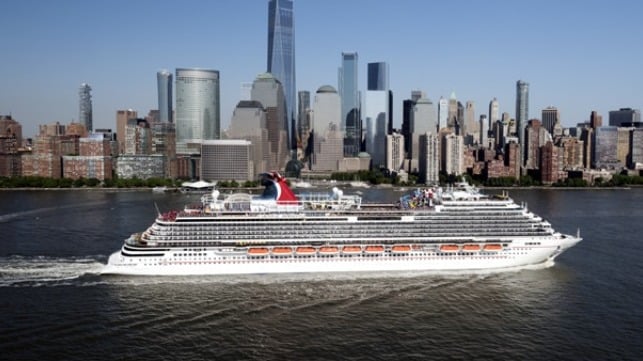
The teenager who died under mysterious circumstances on cruise ship Carnival Horizon earlier this month was killed by asphyxiation, and her death has been ruled a homicide, according to a death certificate released by her family. A medical examiner in Miami concluded that Anna Kepner, 18, "was mechanically asphyxiated by other person(s)" at about 1117 hours on November 7. The document confirms previously-reported preliminary conclusions of FBI investigators.
Kepner was a straight-A student, a varsity cheerleader, and had planned to enlist in the military after graduation, according to her family.
A security source has informed ABC News that Kepner's body was discovered underneath a bed, concealed with a blanket and life vests. The body was discovered on November 7 by a crewmember who was cleaning Kepner's cabin, Florida Today reported.
The FBI is investigating the case under "special maritime jurisdiction," which applies when specific criteria about the vessel, the victim or the voyage are met. Carnival Cruise Line is fully cooperating in the inquiry.
Kepner's stepbrother - who was co-occupying the cabin with her, Kepner's grandmother told ABC - could face charges in connection with the death, according to court documents from an unrelated child-custody case. No arrests or charges have yet been made.
In a memorial earlier this month, Kepner's friends and associates remembered her for her positive outlook and her involvement in her community. "When she walked into a room, she would light it up. If you were sad, she’d make you laugh. She would joke around and be the funniest little person in school," Kepner's parents told ABC News.
Climate Group Uses Superyacht as a Billboard for Tax Messages
In a direct action on London's Canary Wharf last week, activist group Climate Resistance lit up the side of a luxurious superyacht with messages promoting taxation and climate action.
The laser-light text snippets were projected onto the starboard side of the superyacht Lady Christine, a 2010-built vessel that was custom-made by Feadship for Scottish businessman Lord Irvine Laidlaw. While the light messages did no damage to the vessel, they were unflattering to the superyacht community at large, including slogans like "wealth tax now," "abolish billionaires," and "seize me," among others.
Lord Laidlaw is a former industry-conference and real estate entrepreneur, and he resides in Monaco and South Africa. He is well known as a philanthropist, a race-car collector, and an offshore racing enthusiast, with more than a dozen large sailing yachts to his name over the decades. In 2010, he was one of five foreign-resident members of the House of Lords who stepped down after the passage of legislation that would have required them to register in the UK and pay British taxes; all five were allowed to retain their titles.
The 68-meter, $70 million Lady Christine is named after Lord Laidlaw's wife, Lady Christine Laidlaw. The couple had owned a previous yacht bearing the same name, and together they were "intrinsically involved in every step of the project," according to the shipyard - even down to the level of minor interior details "such as door sensors for their dogs."
The yacht underwent a six-month, multimillion-dollar refit involving 200 workers in Australia in 2021. It was wrapped in plastic for the massive job, the largest such wrap in Australian history, yard manager Con Beldie told local media at the time.
Climate Resistance has objections to this form of economic activity; if the group's position wasn't clear enough from the Canary Wharf action, an accompanying message on social media elaborated on the brief text.
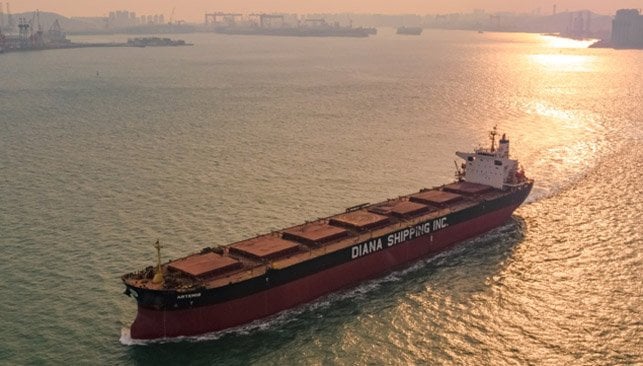
Dania Shipping, which bills itself as a leader in the dry bulk sector, is seeking to continue the market consolidation as it finally made a move to acquire US-based Genco Shipping & Trading. Genco bills itself as the largest U.S.-headquartered dry bulk shipowner, and combined, they would have a fleet of approximately 80 vessels with approximately 9 million dwt.
Diana’s Chief Executive Officer, Semiramis Paliou, highlighted that the offer, which came in the form of a non-binding indicative proposal, is in keeping with “what we consider to be an opportune time of the cycle” for the dry bulk sector. He said the combination would use Diana’s operating platform and increase the scale and flexibility of the fleet while enhancing leverage to the market.
The letter sent to the board of Genco proposes $20.60 per share or a total valuation of approximately $890 million for the stock. Diana has already acquired 14.8 percent of the stock outstanding, making it the largest shareholder in the company, since July 2025. It points out that the offer is “in line with the 10-year-high price for Genco’s shares.” It is a 15 percent premium to the recent share price, a 21 percent premium to July when Diana disclosed it had bought shares of Genco, and a 23 percent premium to the 30 and 890 day trading averages.
Diana highlights that it would provide Genco shareholders with a means to realize immediate value in cash at a premium price. The valuation appears to be in keeping with other recent deals.
The sector has already seen two major consolidations recently. Star Bulk completed its merger with Eagle Bulk in April 2024. This year, CMB.TECH acquired Golden Ocean in a merger completed in August 2025.
Genco issued a brief statement acknowledging its board has “just received” Diana’s non-binding indicative proposal and has not made any decisions. Genco’s Board of Directors said in consultation with its financial and legal advisors, it will carefully review and evaluate the non-binding indicative proposal to determine the course of action.
Two weeks ago, Genco reported its board had amended its shareholder rights plan. They said the purpose was to reduce the likelihood that, through open-market accumulation or other tactics, there could be a change of control in the company. The plan was extended to September 30, 2026.
Both companies have emphasized the opportunities they see emerging in the dry bulk sector. Genco last week announced it was spending $145.5 million to acquire two 2020-built 208,000 dwt scrubber-fitted Newcastlemax vessels. It emphasized its view of the opportunities, especially for Capesize and Newcastlemax sectors. Genco currently has a fleet of 45 vessels, with an average age of 12.5 years and a total capacity of just over 5 million dwt, including the recent acquisitions.
Dania highlights that it currently has approximately 4.1 million dwt with a weighted average age of 12 years for its fleet. It has 36 vessels plus two Kamsarmax methanol dual-fuel vessels on order. Both companies operate with a broad range of commodities, including iron ore, coal, grain, steel products, bauxite, cement, nickel ore, and other commodities. Dania, however, said it would seek to optimize the combined fleet and balance sheet with selective asset divestments if the deal is completed.
While the investment community had speculated that an offer might be in the works, it was still pleased with the news. Shares of Dania were up nearly 6 percent while Genco’s share price rose more than 7 percent, but closed at $19.19, below the $20.60 per share indicated in the letter.
Dania said it hopes to engage with the board of Genco to expeditiously complete the transaction.
South Korea Seeks Arrest of Master as Probe into Ferry Grounding Widens
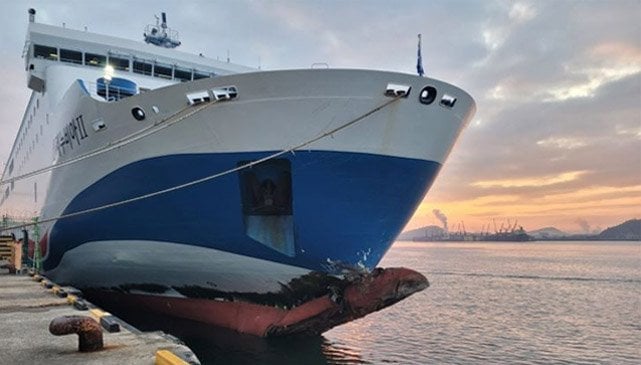
Queen Jenuvia II tied up showing the bow damage as the investigation into the grounding expands (Mokpo Coast Guard)
South Korea’s Coast Guard is moving aggressively with its investigation into the grounding last week of the ferry Queen Jenuvia II with 246 passengers and 21 crewmembers aboard. The Mokpo Coast Guard has sought an arrest warrant for the master of the vessel after it arrested the first officer who was on watch, as well as the helmsman, each on charges of gross negligence causing harm to the passengers, and the investigation is widening.
The Coast Guard reports it interviewed seven crewmembers from the vessel as witnesses after its interrogation of the first officer and the helmsman. According to the media reports, the Coast Guard found that the captain had never been on the bridge of the vessel, supervising navigation in the tight, busy channel leading into the port at Mokpo. They said the unnamed individual had not been on the bridge in the more than 1,000 times the ferry made the approach to port, which is being considered a dereliction of duty and the responsibility for the safe navigation of the vessel. Media reports are saying the captain was resting in his cabin.
The 26,000 gross ton ferry was traveling at a normal speed of approximately 20 knots as it was nearing Mokpo after the four-hour trip from the popular tourist destination Jeju Island. The first officer at first blamed a failure of the steering mechanism, but later admitted he was distracted, reading the news on his cellphone. The ship overshot a critical turn and hit an uninhabited island. The latest count from the Coast Guard says 78 people, including a pregnant woman, received medical treatment at hospitals after the incident.
Further investigations also confirmed that the helmsman was also distracted. He says he was looking at the gyrocompass. The vessel, however, had been left on its autopilot, although it was required to be on manual navigation while in the confirmed and busy shipping lane near the port.
The Coast Guard says it is also reviewing a broad range of information, including the regular inspection checklists, operational management regulations, the safety management system, and crew training practices. However, it said the investigation of the safety management officer has been delayed while the individual met with legal counsel.
The Coast Guard is also investigating the Mokpo Regional Vessel Traffic Control Center, responsible for supervising all vessel traffic around the port. The media is reporting that the Coast Guard wants to know why the controller failed to detect that the vessel was not on its normal course. The VTS monitors for vessel speed and course.
Media reports are saying the controller was focusing on another large vessel that was also out of the normal lane. Busy with that vessel, the controller failed to notice the Queen Jenuvia II was out of its lane. The media is reporting that the VTS center had turned off alarms, saying small fishing boats, less than 20 meters in length, frequently triggered the alarms even though they were not required to follow specific traffic lanes.
The shipping company that operates the ferry, SeaWorld Express Ferry, posted an apology online. The company suspended service till the end of the year and reports it is also conducting a full safety review.
HD Hyundai Confirms HMM Order, Pushes to Highest Boxship Orders in 18 Years
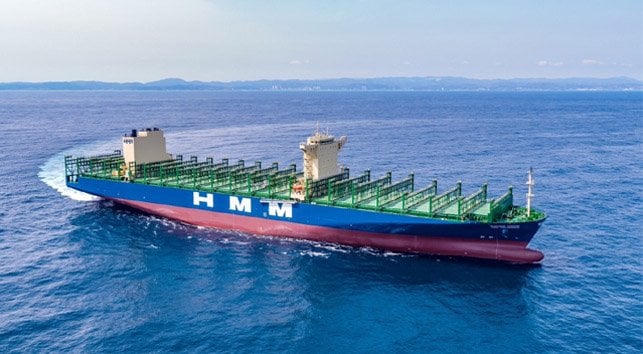
HMM continues it expansion adding this vessel in October at it went past the 1 million TEU capacity mark (HD Hyundai)
HD Korea Shipbuilding, the holding company for the Hyundai shipbuilding yards, reports it has now booked the highest number of containership orders in 18 years. It said the recently announced order from HMM has driven the company to a new peak last seen in the supercycle in 2007.
HMM had announced in October that it was ordering large containerships and tankers as part of its modernization and expansion efforts. The shipping company said the deals, valued at approximately $2.8 billion, were being split between HD Hyundai and Hanwha Ocean. It came as HMM also achieved a critical milestone of surpassing a capacity of 1 million TEU.
Hyundai provided a few additional details, reporting the new vessels will be dual-fuel LNG and designed to maximize efficiency. They will be 337 meters (1,105 feet) with a capacity for 13,400 TEU. The order valued at $1.46 billion is for a total of eight vessels, with six to be built at the Samho yard and two at HHI. Deliveries will be through the first half of 2029. Hanwha Ocean will build four additional containerships with a similar capacity.
They report that a unique feature of the vessels will be a 50 percent larger fuel tank. HHI says it will improve operating efficiency for the vessels. The company highlights that the strength of its technology was a key factor in winning the order.
With this order confirmed, HD Hyundai says it has now booked a total of 69 container vessels with a total capacity of 720,000 TEU. During the 2007 supercycle, it reports it booked 793,473 TEU in orders.
The strength of the containership orderbook is important as the yard looks to compete against the lower-cost Chinese rivals. HD Hyundai looks to use its technology, such as HiNAS Control, an automation navigation assistance system, to help it compete. HiNAS, it says, provides navigation support and RPM optimization, delivering a 15 percent reduction in carbon emissions and equal improvement in fuel efficiency.
HD KSOE recently announced the plan to combine HD Hyundai Heavy Industries and HD Hyundai Samho into a single operating company. The effort is to improve management efficiency for the two yards.
Despite forecasts of a decline in shipbuilding orders and a loss of market share to China, Korea and HD Hyundai has been reporting a strong year. The company says in total it has achieved 90 percent of its annual target for $18.05 billion in orders this year. So far, it has booked 116 ships worth $16.22 billion.
Study: Starlink Could Be Jammed Using Hundreds of Drone Aircraft
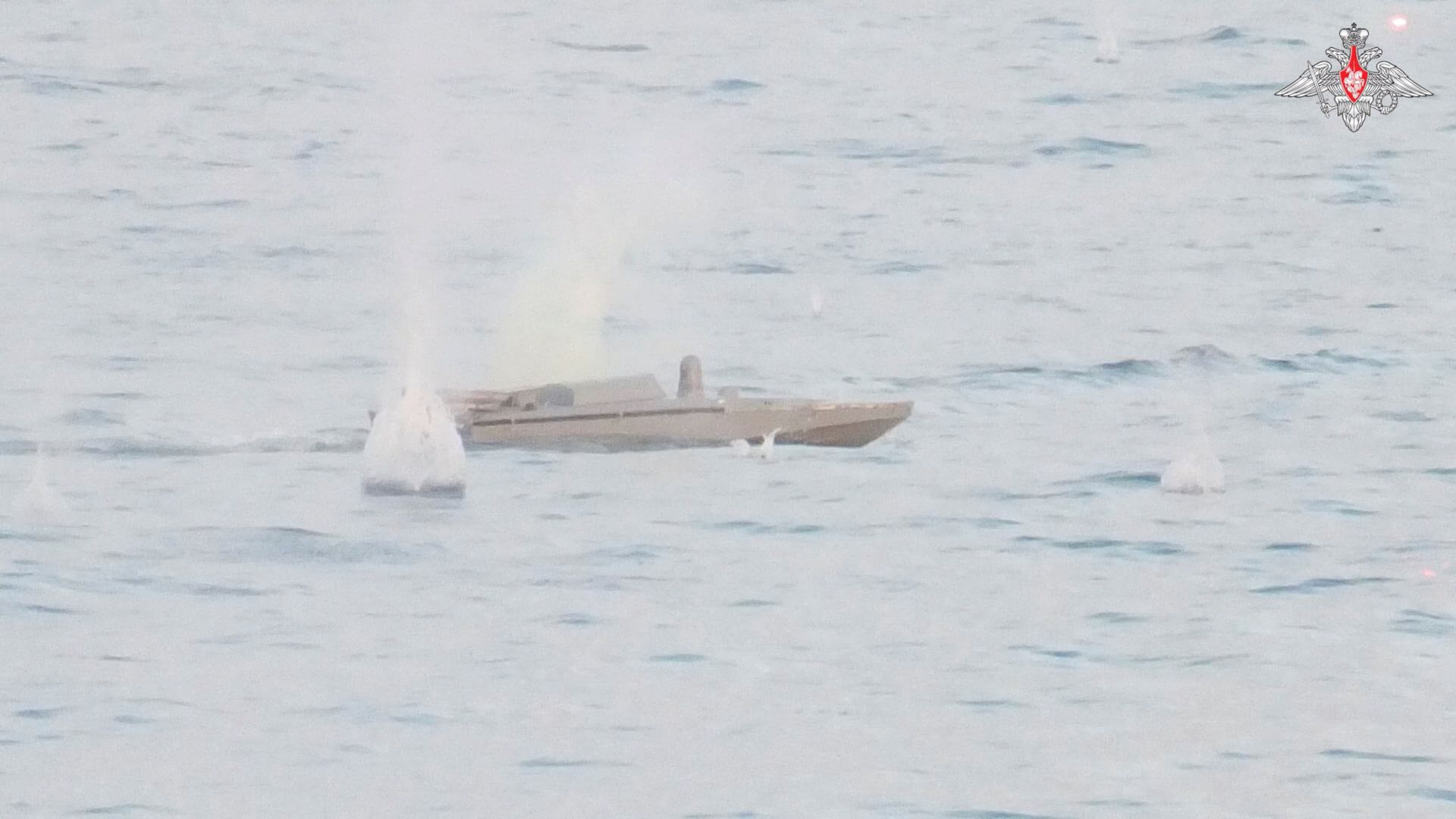
The flat Starlink panel on the stern of a Ukrainian drone boat provides the connection for remote-control (Russian MOD file image)
One of Ukraine's key advantages in the defense against Russia is the "unjammable" over-the-horizon communication service provided by Starlink, the low earth orbit satcom service provided by Elon Musk's SpaceX. Among other applications, the service has powered Ukraine's long-range drone boats, enabling Ukrainian special forces to dominate the battle for the Black Sea. All major naval powers are developing similar concepts for unmanned, autonomous, remote-controlled and networked drone vessels, and that means a long-term demand for resilient satcom - as well as the means to defeat it.
For an adversary, the 10,000-strong Starlink satellite fleet is a tough nut to crack. The satellites move in and out of view quickly in low earth orbit, and the user terminal hops just as quickly from one satellite to the next. The orbits and the number of satellites in range change constantly and unpredictably. This creates a problem for would-be jammers, which would have to switch just as quickly to match the user terminal's adjustments. So far, Russian forces have yet to find a permanent way to defeat Starlink, despite many attempts and a powerful incentive to succeed: to block Starlink would deprive Ukraine of a key weapon.
However, a team of researchers at the Beijing Institute of Technology (BIT) believes that they may have a solution to this arms race. The team proposes to mount the jammers on high-flying aircraft - lots of them - and target the terminals with narrow-beam antennas. They estimated that with jammer drones flying at about 60,000 feet, coverage per drone would be about 15 square miles.
At this rate of coverage, jamming an area the size of Taiwan - the relevant scenario for Chinese war planners - would take upwards of 900 drones. Even more would be required to add coverage of the Taiwan Strait and Strait of Luzon.
In the event of a conflict, jamming via aircraft would require air superiority and extensive resources, but it could be a more palatable alternative to eliminating or disabling Starlink satellites in space. "Hard kill" destruction of a satellite releases a cloud of debris, with unpredictable effects for everything else in that orbit; even if such strikes were pursued, the constellation is huge and has extremely high redundancy. Chinese defense researchers have publicly discussed the challenge of building anti-satellite capabilities to target the Starlink fleet, responding to evidence of the constellation's military potential and its resiliency.
"As a distributed space system, the Starlink mega-satellite constellation lacks a clear functional center; the failure of a few nodes does not affect its overall functionality," wrote a Beijing-based research team in an article for Modern Defense Technology in 2022. "It is necessary to further develop related technologies and establish response capabilities, strengthen space strategic planning, vigorously research and develop countermeasures, and employ a combination of soft-kill and hard-kill methods to disable some Starlink satellites and disrupt the constellation's operational system."
Flag Registry Strains the Cook Islands' Relations With New Zealand
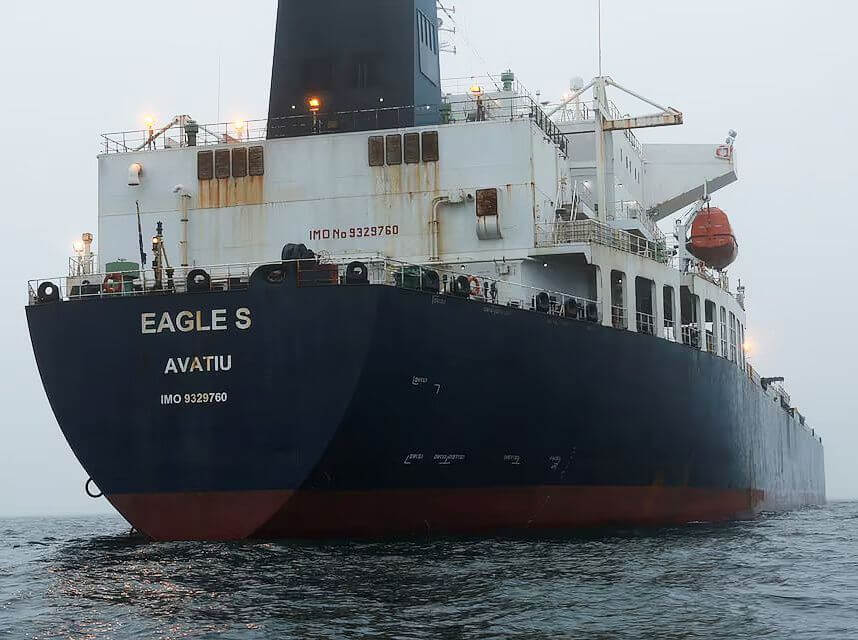
The Russia-facing tanker Eagle S under detention after a suspicious subsea cable damage incident off Finland, 2024. The vessel was flagged in Cook Islands (Finnish Border Guard)
The government of New Zealand is displeased with a semi-independent territory, the Cook Islands, which has outsourced its maritime registry to a private firm and ruffled diplomatic feathers. Maritime Cook Islands, a for-profit flag based in Rarotonga, attracted attention for the shadow fleet tankers accumulating on its registry last year - and Auckland has yet to forgive it. Thanks to this dispute, plus the Cook Islands' increasingly close relationship with China, New Zealand has paused foreign aid and de facto suspended high-level diplomatic contacts with its government, the New Zealand Herald reports.
The concerns began after a spurt of explosive growth at the registry. In the first half of 2024, Maritime Cook Islands (MCI) expanded its fleet by 140 percent, putting it in the top thirty flag registries by tonnage worldwide - largely by adding older tankers, allegedly including some in the shadow fleet. As early as November 2024, New Zealand's diplomats raised "deep concerns" about an apparent pattern of sanctions evasion among certain Cook Islands-flagged tankers.
In or around May 2025, MCI was removed from the Registry Information Sharing Compact (RISC), an international database designed to help registry administrators identify sanctions-busting ships and shipowners. RISC's managers alleged that MCI had violated certain terms of service - much to MCI's dismay. The registry has vigorously denied any wrongdoing.
As of October 2025, the Cook Islands-flagged fleet no longer includes tankers that call at Russian ports, and its flagged tanker fleet is a third of its peak size in 2024, maritime intelligence firm Starboard told the Herald.
But for the government of New Zealand, MCI's past services for Russia-serving shipowners remain a cause for concern.
"It was both alarming and infuriating to discover that the Cook Islands’ shipping registry was effectively undermining international efforts to cut off funding to Russia’s war machine by providing the Cook Islands flag to vessels that form part of Russia’s shadow fleet," Foreign Minister Winston Peters told the New Zealand Herald last week. "This is a completely unacceptable and untenable foreign policy divergence."
IMO has also shown a certain level of interest in the Cook Islands registry, though it has not expressed any form of criticism. Secretary-General Arsenio Dominguez flew to the island nation in August to discuss topics of mutual interest with MCI and with Cook Islands' prime minister, the first time that any IMO secretary-general had visited the Cook Islands. Dominguez has prioritized the implementation of IMO conventions for his first term, and he was in the region to mark the opening of a regional presence office in Fiji. The office provides Pacific Island member states with capacity-building support and compliance auditing - a boost for a region with several growing registries.
New Zealand Gov't Blames Consultants for Ferry Program's Cost Blowout
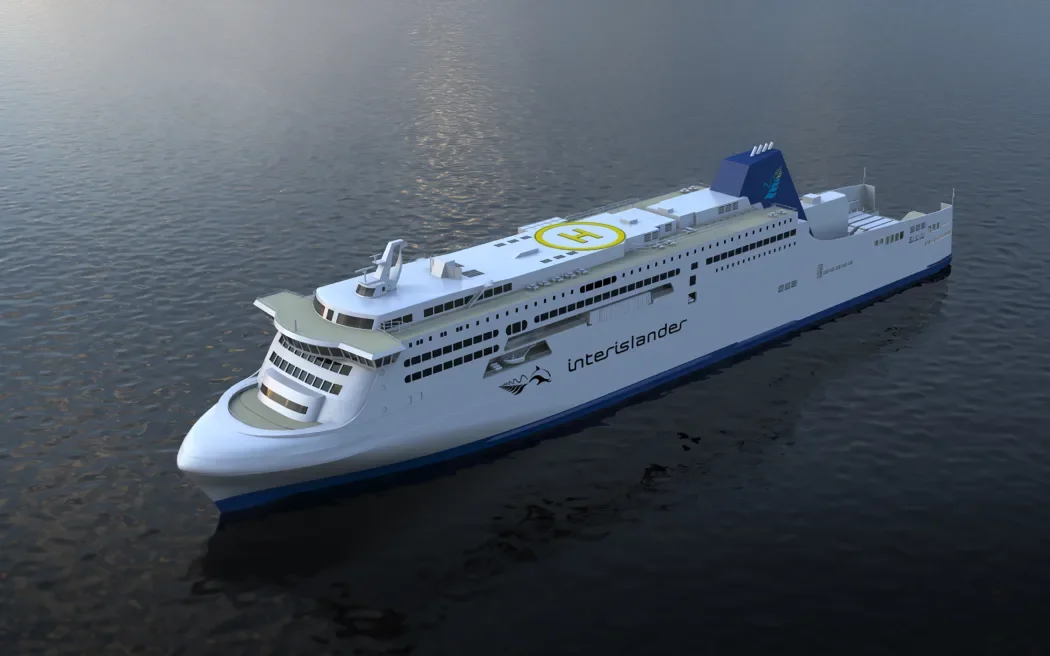
The now-canceled iReX ferry design (InterIslander)
The controversy that has surrounded the procurement of two interisland ferries in New Zealand appears to have come to an end after the government announced that a new design will be built at a fixed price of US$335 million and will enter service in 2029.
In what has been described as a “no-nonsense solution” to the Cook Strait ferry replacement program, authorities are hailing the decision to do away with expensive consultants who - they claim - had “hijacked” the project, resulting in skyrocketing costs. Construction of the two ferries is now set to commence following the securing of the fixed price agreement with China’s Guangzhou Shipyard International (GSI).
Rail Minister Winston Peters said that the ferry deal, along with infrastructure upgrades that are being undertaken in Picton and Wellington to fit the new ferries, will cost about US$1.1 billion with taxpayers’ contribution in the range of US$950 million.
Considering that the country’s Treasury had warned that total cost for the entire project risked ballooning to US$2.2 billion, the government contends that it has managed to save US$1.2 billion after dismissing its consultants.
Early this year, the government established Ferry Holdings to oversee the project with the main aim of reducing costs and ensuring the timely delivery of the new ferries, following the cancellation of project iReX, which was responsible for the rising costs.
KiwiRail decided to terminate the contract for two large ferries that had been awarded to Korea’s Hyundai Mipo Shipyard in 2021 after the government decided not to provide funding to the iReX project. That cancellation was finalized in August 2025 at a total cost of about US$125 million. When including consulting fees and other expenses, the sunk cost for the iReX program came to a total of US$375 million.
Since its establishment in March, the new Ferry Holdings has been working closely with KiwiRail, CentrePort, Port Marlborough, and government agencies to ensure the program delivers better value for money.
The new ferries will transport passengers, cars, trucks and rail wagons across the Cook Strait for the next 30 years. They will be 200 metres long and will have a capacity for 1,530 passengers and 70 crews each, and 2,400 meters on each ferry of lanes for trucks, cars and 40 railcars.
The new ferries will be operated by KiwiRail and will replace aging vessels, including the retired Aratere. The ferry was removed from service in August and has since been sold for scrap.
“Spending less than NZ$1.7 billion means the taxpayer has saved NZ$2.3 billion while still getting the ferries and infrastructure they want, because we have done away with the expensive consultants who hijacked the project by adding more and more infrastructure until Treasury warned the project would cost NZ$4 billion,” said Peters.
Apart from the two ferries, the government is also determined to deliver “fit-for-purpose” infrastructure upgrades that include the building of new wharves and linkspans in Picton and modifying and strengthening the existing wharf in Wellington to suit the new ferries.
“We are delivering the infrastructure New Zealand needs—by reusing what works and upgrading only what’s essential. It’s a smart, sustainable approach that puts public value first,” said Chris Mackenzie, Ferry Holdings Chair.
German Researchers Build a Grapple Mini-Sub to Remove Trash
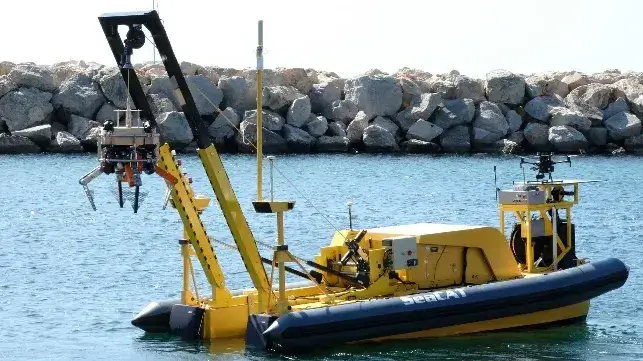
Ocean litter tech projects generally focus on visible, floating trash that drifts on the surface and washes up on shore. But a team with Technical University Munich (TUM) has taken a different tack and devised an unmanned grapple robot to pick up trash from the bottom, where pollution may be out of sight but not out of the ecosystem.
In harbors and along busy waterfronts, the seabed typically contains an abundance of sunken trash. In one study in the port of Dubrovnik, researchers counted up 1,000 pieces of manmade debris in an area of just over 1,000 square feet. Cleanup currently depends on professional divers, if it is attempted at all, and there are fiscal and practical limits to how much by-hand waste disposal on the bottom can accomplish.
In a bid to address this problem, the TUM team devised a robotic surface vessel that supports a miniature ROV, which can maneuver underwater and grab objects with a four-pronged grapple mounted beneath it. When it grabs something with this grip, the surface vessel hoists the submersible up, and the object is deposited in a second, accompanying autonomous skiff.
The idea is to make the process autonomous and self-driving so that the team of robots can clean up a harbor without much human input. That means training a neural network (AI model), which requires lots of example images of the target - in this case, underwater trash, which is not often photographed intentionally. To build a database, the researchers hand-tagged about 7,000 images and used it to train up an AI model to run the operation. It is capable of creating a 3D model of trash on the bottom and determining where best to grab hold of it, according to Dr. Stefan Sosnowski, Chair of Information Technology Control at TUM.
The grapple itself is capable of lifting more than 500 pounds in one hoist, and is equipped with sensors to determine the limits of the force it applies. This helps it pick up more fragile debris (like glass) without crushing it. The whole assembly is interconnected with a power and data cable in order to give the ROV grapple a meaningful amount of runtime; the cable also doubles as the hoisting line for ROV deployment and recovery. Other applications for this system can be readily envisioned, from shipwreck debris removal to explosive ordnance disposal.
JUST CAN'T GET A BREAK
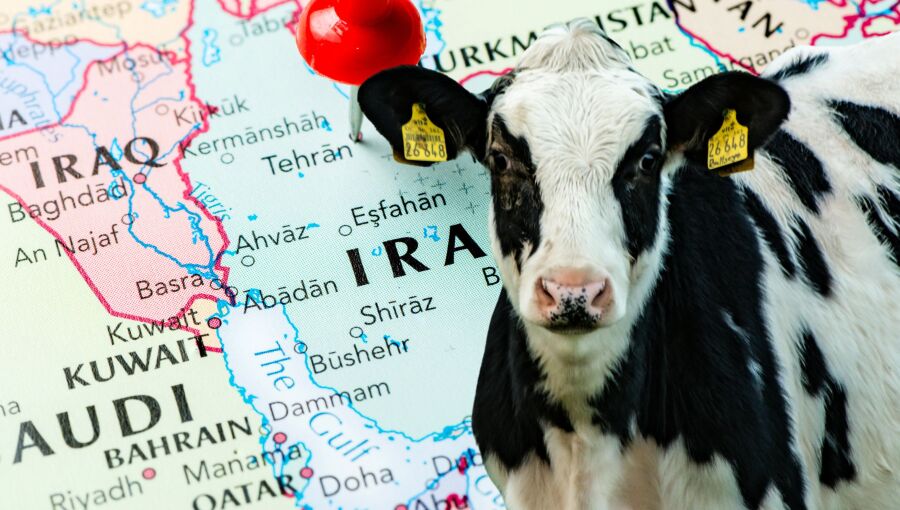
Foot-and-mouth disease outbreak threatens to destroy Iran's livestock sector
A severe outbreak of foot-and-mouth disease is affecting livestock across several Iranian provinces, with some farms reporting mortality rates of up to 80% among breeding cattle, threatening the country's food security and dairy production.
The outbreak, caused by the SAT1 strain that spread from Africa, has affected Tehran, Alborz, Qom, Qazvin, Markazi and several northwestern provinces, state-linked Tasnim reported on November 25.
Iran maintains seven to 8mn head of heavy livestock. The outbreak threatens widespread bankruptcy among farmers who have invested their life savings in their herds with imports now having to make up the bulk of meat.
Reports from cattle farmers' unions indicate some large Tehran dairy farms have lost up to 80% of their breeding cattle, whilst calf mortality has reached 50% in affected herds. Milk production has declined by 80% in infected animals.
Of the 16mn vaccine doses needed for two rounds of vaccination across Iran's heavy livestock population, only a small quantity has been imported. Domestic vaccines are only effective against local strains and have no efficacy against SAT1.
Hossein Emami-Rad, a member of parliament representing Chenaran, Torqabeh-Shandiz and Golbahar constituencies, stated in a commentary that despite warnings from the (Iran) Food and Agriculture Organisation (FAO) and the World Organisation for Animal Health, Iranian authorities failed to respond appropriately.
The MP wrote that the crisis stems from multiple failures, including a lack of operational planning, inadequate communication with farmers, imports of live cattle from infected countries, delayed procurement of specialised vaccines, and weak border quarantine measures.
Emami-Rad outlined 10 urgent measures, including forming a special crisis headquarters with judiciary and law enforcement participation, immediately halting livestock imports from infected countries, securing effective vaccines through international channels, implementing strict biosecurity protocols, and allocating emergency budgets for vaccines and farmer compensation.
Before the decline of the Iranian rial, Iran experienced a significant drop in annual meat consumption in recent years. Current estimates indicate that per capita consumption of red meat is now between 7 to 9 kg per year, a steep decrease from previous averages of 18 kg, according to local sales data.
Combined estimates for all meat types (red meat, poultry, fish) put total per capita consumption around 34–36 kg per year as of 2024, mostly used for kebabs which are a national staple.
Iran's Health Ministry had earlier confirmed that foot-and-mouth disease affecting livestock cannot be transmitted to humans, and infected animal products will not enter the food chain due to strict veterinary oversight. The head of the Zoonotic Diseases Department at the Health Ministry Mohammad Zeinali stated that the disease is not a zoonotic illness and poses no risk to human health, ISNA reported on November 5.
The official explained that infected livestock products should not enter the food supply chain due to stringent veterinary controls.
Africa's solar power revolution is finally happening
Chinese solar equipment has been flooding African markets, partly as a ripple effect of the US-China trade war. It's one of several factors helping the continent gain traction with electrification.
An aerial view of the 100 MW solar thermal power project built by a Chinese company in South Africa's Northern Cape Province
Image: Zhang Yudong/Xinhua/picture alliance
Solar power is widely recognized as an excellent solution for Africa. Sunlight is abundant, economies crave reliable power sources, and the technology is becoming massively cheap.
According to 2024 data from the International Renewable Energy Agency (IRENA), solar ranks among the cheapest energy sources worldwide, costing just $0.044 cents per kilowatt-hour (kWh) after prices for solar photovoltaic (PV) modules dropped by 90% in only 13 years.
Africa has so far been a small solar power player. The entire continent accounts for little more than 18 gigawatts (GW) in installed capacity, which translates to just 1% of global solar PV. This is in part due to a lack of investment capital and preexisting grid infrastructure.
Now, the tides appear to be finally turning. A huge influx of Chinese solar panels
An analysis of Chinese export data by British renewable energy think tank Ember indicates a massive influx of solar equipment in Africa. Over just 12 months, China shipped solar panels with an overall capacity of 15 GW to the continent.
"Everybody seems to be very bullish about solar in Africa," John van Zuylen, CEO of the Africa Solar Industry Association (AFSIA), a pan-African lobby group, told DW.
Based on historical export data, AFSIA estimates Africa's total installed solar capacity at around 75 GW since 2000, significantly higher than IRENA's figure. According to van Zuylen, many small-scale and off-grid applications rarely appear in official statistics.
"But even if you take that 75 GW number, 75 over 25 years compared to 15 GW in just 12 months, that gives you an idea of the momentum that is happening in Africa right now."
A large share (about 3 GW) comes from a major project in Algeria. But van Zuylen says several countries in sub-Saharan Africa are also gaining traction, including Zambia, Rwanda, Senegal, Cote d'Ivoire and Nigeria.
"Nigeria is growing very strongly. And, I believe that there is a chance that Nigeria is soon going to become the number one solar opportunity in Africa, going above South Africa, because Nigeria has been running on diesel for many years — the diesel price was subsidized and artificially low," van Zuylen said. Solar, according to the AFSIA executive, is now the cheapest option for many Nigerians.
New countries are pushing into the solar market. Liberia, for example, is seeking to diversify its clean energy portfolio, which has relied mostly on hydropower so far. On the sidelines of the COP30 climate conference in Brazil, Emmanuel K. Urey Yarkpawolo, the executive director of Liberia's Environmental Protection Agency, said the country's first solar park is nearing completion.
"We have about 20 megawatts that will be coming online maybe towards the end of this [year], maybe early next year. It's going very fast, and there's a lot coming up in the pipeline," Yarkpawolo told DW.
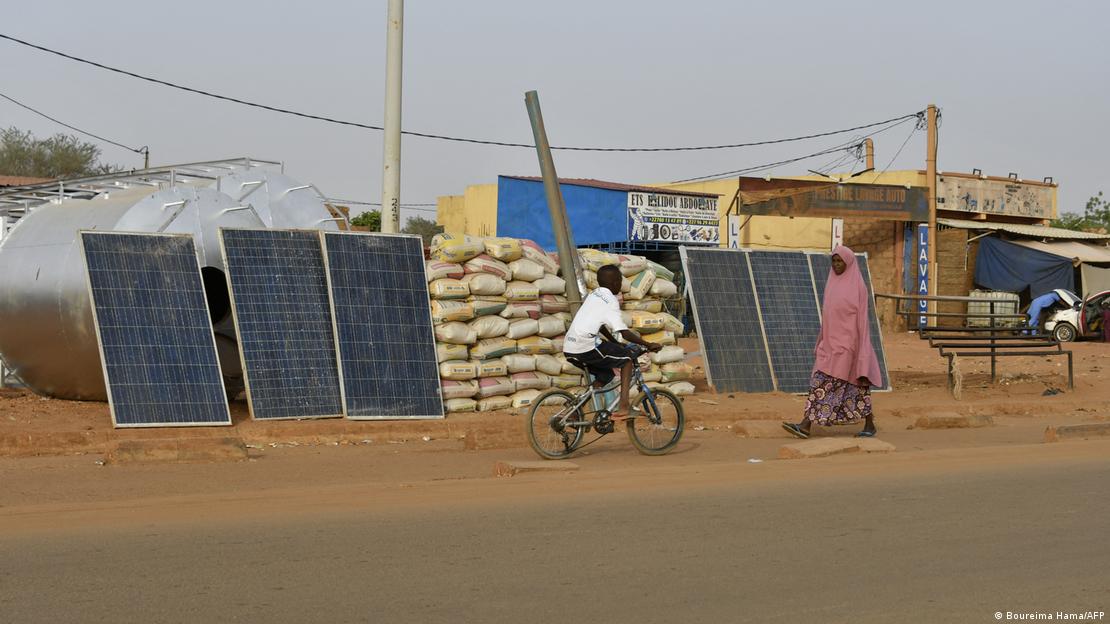
Niger has seen a solar boom since neighboring Nigeria energy deliveries were suspended as part of sanctions imposed by the ECOWAS bloc
Image: Boureima Hama/AFP
Is there more to it than the US-China trade war?
Van Zuylen says there's a combination of factors behind the uptick, while some commentators argue that the export boom from China is at least in part a consequence of the tariff standoff between China and the United States. At some point, US President Donald Trump administration even threatened to impose a 3,521% rate on Southeast Asia solar panels.
"The cost of equipment went down when the trade war started. The Chinese were desperate to offload," Fawen Nyakudya, Managing Director of Zimbabwe-based PFN Solar Systems, told DW. "I will say it's in the positive for us. The Chinese don't have any option other than to treat us well because they know if they treat us badly again, the next thing is we are not going to buy from them."
Zimbabwean solar installers also felt the price effects of the US-China trade war
Image: Privilege Musvanhiri/DW
According to World Bank figures from 2023, 565 million people in sub-Saharan Africa still lack access to electricity. There is much need for imported technology, according to Kenyan economist James Shikwati.
"Whether it is coming from China, the US or Europe, I think Africans will be saying, this is great. And so I would say indirectly that the tariff war then creates possibilities for Africans to access cheap energy," Shikwati told DW.
India is also among Africa's solar equipment suppliers, but importers prefer China because of lower prices.
Nyakudya believes that Chinese vendors are already adapting to a new market reality and holding back produce to uphold profitability.
"There is a serious shortage, especially when you are looking at panels and lithium batteries. So many dealers and importers say they don't have panels at the moment. Offloading was done just for a short space of time, but now there is a serious shortage," Nyakudya said.
Storage and net metering are making solar more profitable
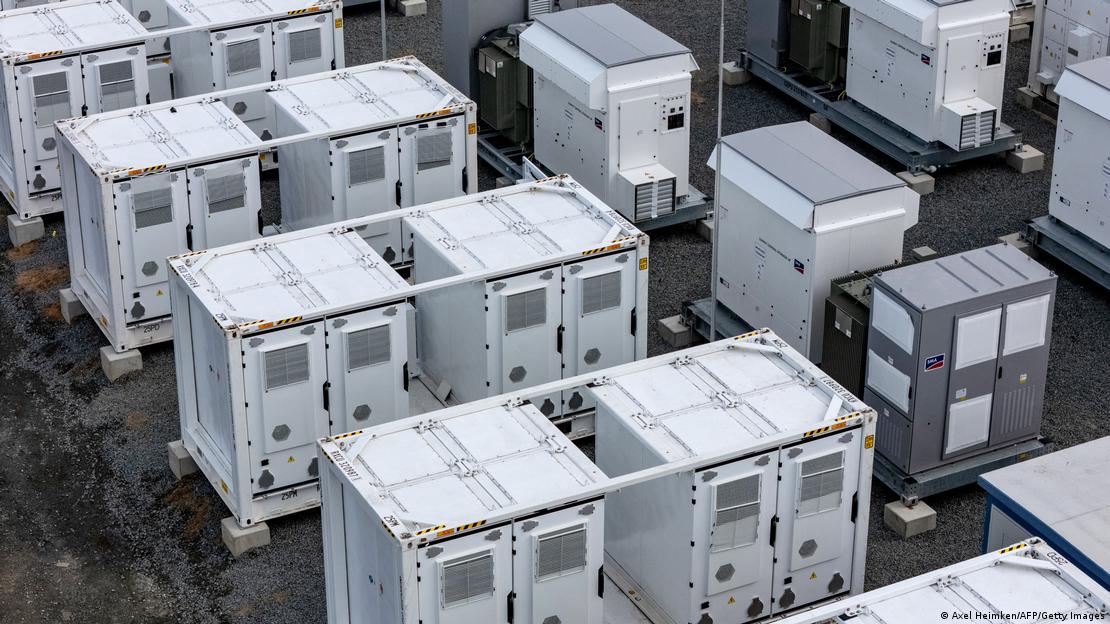
Lithium batteries have become affordable for private households and utility-level operators alike. Thanks to battery storage solutions, solar power can be stored and used during the evening peak hours.
Net metering, where households with rooftop panels feed unused surplus energy back into the grid in exchange for a refund on their electricity bills, is also paying off.
This can multiply profitability by five, AFSIA CEO van Zuylen said. "If you need to consume your solar electricity whenever it is being produced, then generally you can only cover around 20% of your total electricity consumption. But if you have a net metering system, then suddenly you can install panels for the equivalent of 100% of your consumption."
Countries like Kenya,Namibia and Zimbabwe have already implemented the system that has long been in place in many European countries.
Green energy storage containers like these built in Germany are becoming more and more affordable
Image: Axel Heimken/AFP/Getty Images
What about the red tape and hidden costs?
In some instances, shipping costs and import taxes are still significantly lowering profit margins.
"If I'm going to be charged 15%, obviously, I'm going to charge my customer as well," said Nyakudya.
Countries such as Zambia have zero-rated import taxes for solar products to encourage the uptake of renewable energy. "For a shipment that you could import into Zimbabwe and pay VAT of up to $20,000, you only pay $26 in Zambia," he told DW.
Import tariffs are often designed to protect domestic industries from cheaper imports. However, that is not the case for Zimbabwe.
"If we were manufacturing solar products ourselves, then we would say it's important to put taxes so that we promote the local companies. But we are not manufacturing, so why make it difficult for your own people?" Nyakudya said.
Added costs and bureaucracy might continue to thwart solar expansion to some extent. But van Zuylen believes that the economics of solar will continue to push for investment. He told DW about a recent project in Mauritius that combines solar panels and storage for just $0.07 per kWh.
"When you start reaching those kind of price points, you know, you make things happen. It becomes like a no-brainer. You need electricity, you need it at a decent price — yes, you go for it."