It’s possible that I shall make an ass of myself. But in that case one can always get out of it with a little dialectic. I have, of course, so worded my proposition as to be right either way (K.Marx, Letter to F.Engels on the Indian Mutiny)
Tuesday, December 09, 2025
AMERIKAN STATE CAPITALI$M
U.S. Army Looks to Build Small Refineries for Critical Minerals
he U.S. Army will develop small-scale refineries to ensure domestic supply of critical minerals for defense and military purposes as the United States and the Western allies look to reduce their dependence on China.
“We ?need to come up with a way to make our own (critical minerals) domestically that we can actually monitor and control within our borders,” Mark Mezger, a munitions procurement adviser for the U.S. Army, told Reuters.
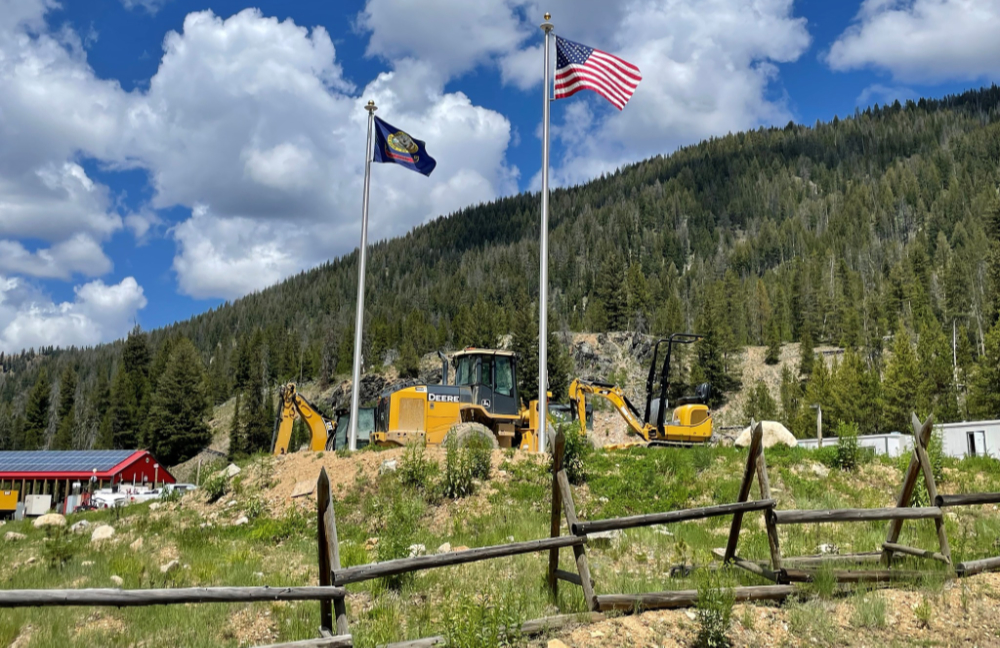
The Army is currently developing a project with the Idaho National Laboratory and gold mining company Perpetua Resources to process antimony.
In September, the U.S. Army’s Joint Program Executive Office Armaments and Ammunition (JPEO A&A) joined Perpetua Resources Inc. to launch the Stibnite Gold Project in central Idaho. The project seeks to redevelop an abandoned mine site in Stibnite for gold and antimony sulfide, a critical component used in ammunition production. The U.S. previously obtained antimony sulfide from foreign sources until 2021 when that supply ended. “The Stibnite project currently holds the largest identified reserve of antimony in the U.S. At an estimated 148 million lbs., it is one of the largest antimony reserves outside of foreign control,” said Maj. Gen. John T. Reim, Joint Program Executive Officer Armaments & Ammunition and Picatinny Arsenal Commanding General.
The project is “in keeping with the Army’s ongoing ‘Ground-to-Round’ assured munitions strategy to locate and engage with domestic sources for critical materials as we modernize and fortify the Arsenal of Democracy,” Reim added.
The Trump Administration is ensuring funding through buying minority stakes in North American rare earth and lithium companies and projects, while companies in the U.S. and Europe are setting up alliances with miners and refiners to have magnet supply chains outside and independent of China.
The global rare earth supply chain is among the most highly concentrated across all stages of the value chain, analysts at the International Energy Agency (IEA) wrote in a commentary in October.
The US government plans to take more equity stakes in critical minerals companies, a White House official said Thursday, calling the once-rare move necessary to counter China’s dominance in the raw materials used in everything from semiconductors to MRI machines.
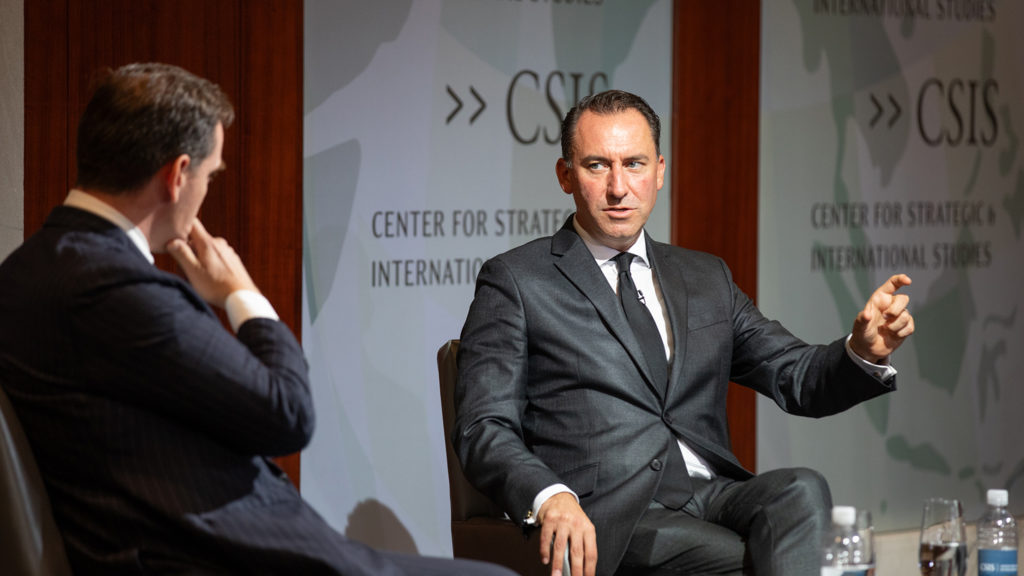
“I think they’re the norm from our perspective,” said Jarrod Agen, executive director of the National Energy Dominance Council, speaking at a forum in Washington. “There is a broad scope of different companies who are coming to us. They’re making the right case.”
Critical minerals such as gallium and cobalt are used in products ranging from iPhones to industrial magnets. They’re also vital for defense systems including missile guidance, radar and jet engines, as well as batteries and other technologies needed to cut carbon pollution. Over the past year, the Trump administration has spent over $1 billion to take stakes in critical minerals and mining companies, often sending the company’s stock prices soaring.
Agen, in a brief interview, declined to specify what company could be next.
The strategy of investing taxpayer dollars in companies the administration has deemed essential to national security comes as the US’ reliance on China for the crucial materials has become a flash point in the trade war. Beijing responded to US export restrictions by curbing shipments of rare earth elements, a move that briefly disrupted global supplies before China eased the limits after Washington lifted its countermeasures.
“We’re literally buying equity, getting equity in companies to give the backing of the US, because that’s the only way we’re going to catch up with China on these things,” Agen said in his remarks at the American Growth Summit, which was sponsored by companies such as Citigroup Inc. and NVIDIA Corporation. “They know the government is backing us. No one wants to mess with President Trump, and so we can actually get the materials.”
(By Ari Natter)
Serra Verde cuts short China offtake deals, approached by Western firms
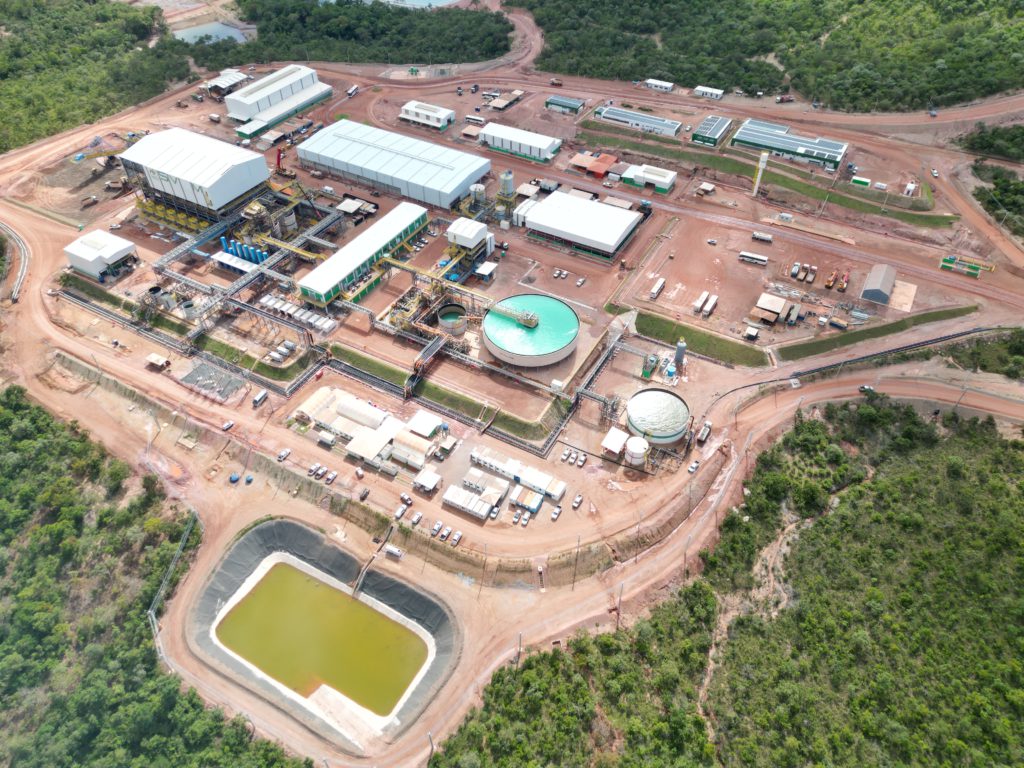
Serra Verde is expected to produce 5,000 tonnes per year of rare earth oxide. (Image: Serra Verde)
Brazilian rare earths miner Serra Verde has slashed the contract periods of its Chinese processing deals, opening up the potential to supply Western companies when their separation capacity becomes available in coming years, its CEO said.
The West has been racing to develop alternative sources of rare earths, vital for defence, electronics, electric vehicles and wind turbines, since China controls 90% of processed global supply
When Serra Verde’s mine was being developed, it agreed 10-year offtake deals with Chinese companies to buy its concentrate for processing since no other options were available.
The Serra Verde mine is rich in heavy rare earths, unlike many other Western deposits, but only now are plants gearing up in the West to process them.
“In a couple of years we’ll have some options to separate the heavies outside of China,” CEO Thras Moraitis told Reuters.
Privately-held Serra Verde renegotiated the Chinese deals and now they conclude at the end of next year, giving the company multiple options to diversify its customer base, Moraitis said.
“The Chinese, the Americans, the Japanese, the Europeans, the Canadians all have approached us, given that we are the only supplier of heavy rare earths, at least for the foreseeable future.”
Forecast shortages of heavy rare earths dysprosium and terbium could be a stumbling block in the West’s drive to create domestic supply chains of rare earths and permanent magnets.
Price floor essential
Moraitis, formerly an executive of Xstrata, which was acquired by commodity group Glencore, said a price floor guaranteed by governments was key for the development of the rare earths sector outside of China.
The US provided a guaranteed minimum price to rare earths group MP Materials in July as part of a multibillion-dollar investment by the Pentagon and sources told Reuters the mechanism would likely be extended to other firms
Serra Verde’s Brazilian mine is an ionic clay mine deposit. The standard extraction technique for such deposits in China and Myanmar has involved flushing the deposit with chemicals, which has caused contamination of water supplies and deforestation.
Serra Verde has spent several hundred million dollars building a plant that does not discharge toxic waste.
The company launched commercial production in early 2024, but has been optimizing output so it has not yet hit full output, which is expected to be about 6,500 metric tons of total rare earth oxides a year by 2027.
Serra Verde is owned by private equity groups Denham Capital, Energy and Minerals Group and Vision Blue, which is led by the former head of Xstrata, Mick Davis.
(By Eric Onstad; Editing by Mark Potter)
US vows over $1 billion for Congo critical minerals supply chain
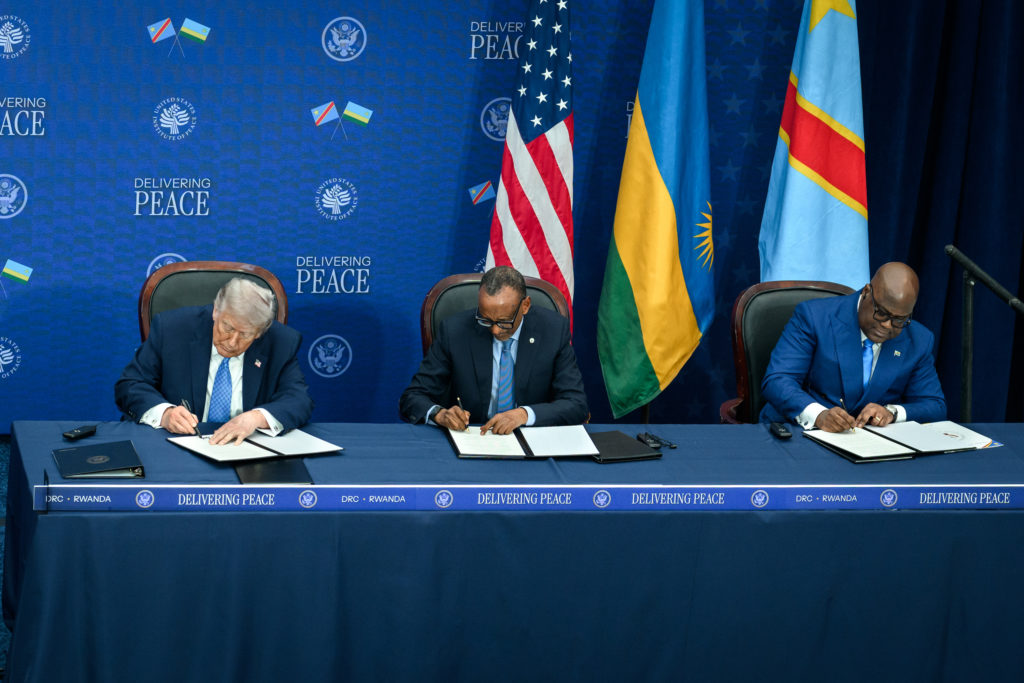
President Trump joins President Kagame of Rwanda and President Tshisekedi of the Democratic Republic of the Congo as they sign the Washington Accords. Credit: The White House | X
The US is in talks to provide more than $1 billion for two critical minerals and railway projects in central Africa as it seeks to secure supplies deemed crucial for national security.
The US International Development Finance Corp. plans to support a new copper and cobalt venture between the Democratic Republic of Congo’s Gecamines SA and Mercuria Energy Trading, as well as a rail project linking Congo and other central and southern African nations to Angola’s coast.
“These projects will help to secure vital supply chains, expand private sector opportunity, and strengthen America’s global competitiveness, while supporting peace, prosperity, and dignity in central Africa,” DFC chief executive officer Ben Black said in a statement.
President Donald Trump has made securing minerals that are crucial for military and high-tech applications one of his priorities, with several deals with African countries emerging. Chinese companies dominate the mining and processing of many of these metals, and Washington is looking to loosen the Asian powerhouse’s stranglehold over the trade.
“The partnership would grant US end users a right of first refusal, providing US industries with access to critical minerals essential for economic growth and competitiveness,” Gecamines said about the possible DFC investment in an emailed statement.
Under the US-Congo strategic partnership, Congo has committed to shipping more of its minerals west toward the Atlantic Ocean over Angola’s Lobito railway corridor. Currently most of Congo’s exports move south or east along the road or railway.
The DFC is proposing up to $1 billion in financing to Portugal’s Mota Engil SGPS for “the rehabilitation, operation, and transfer of the Dilolo–Sakania railway line” in Congo, which would connect to the Lobito corridor.
(By Michael J. Kavanagh)
US, Congo eye minerals pact amid peace deal with Rwanda
The Democratic Republic of Congo aims to sign a minerals and infrastructure partnership with the Trump administration on Thursday as part of a series of deals targeted at ending a long-running conflict in the eastern part of the resource-rich African nation.
President Donald Trump is scheduled to meet with the presidents of Congo and Rwanda in Washington on Thursday to oversee the signature of a peace accord between the two countries.
The three-decade-long conflict is one of several that Trump has claimed to end as part of his global dealmaking, despite ongoing fighting between the Congolese army and Rwanda-backed fighters.
The central African nations will also sign an economic agreement, while the US and the Congo are expected to ink their own partnership.
Through the deal with the US, “the DRC will become a continental energy hub, a kind of logistical, strategic hub, but also an indispensable player in the critical mineral supply chains,” Tina Salama, a spokesperson for Congolese President Felix Tshisekedi, told reporters in Washington on Wednesday.
The US has been targeting Congo’s minerals to secure key inputs for technology, energy and defense and as a way of diminishing China’s dominance over the trade.
Congo is the biggest nation by landmass in sub-Saharan Africa and rich in strategic metals including cobalt, copper, tantalum, lithium and gold.
The deal with the US will support local mineral production and job creation, and offer US companies the chance to invest in resource, energy and infrastructure projects, Salama said.
This will include the development of a $1.8 billion connection to Angola’s Lobito railway corridor to the Atlantic Ocean and the Grand Inga dam, which would be the biggest hydropower plant in the world, she said.
But the investments will only move forward if Rwanda stops supporting rebel groups in Congo’s east, Salama said.
Rwanda-backed M23 rebels have occupied the region’s two biggest cities since early this year. In recent days, M23 has clashed with the Congolese army in South Kivu province.
“It’s a proof that Rwanda doesn’t want peace,” Congolese government spokesman Patrick Muyaya said alongside Salama in Washington. “Peace for us means withdrawal of Rwandan troops.”
Rwanda denies supporting the M23 and says its troops have only been taking “defensive measures” to secure its borders, in particular against a rebel group with ties to the perpetrators of the 1994 Rwandan genocide against Tutsis.
Congo has agreed to “neutralize” the group, known as the FDLR, as part of the US-backed peace agreement.
“It’s up to the DRC to show how much and how quickly they want peace,” Rwandan government spokesperson Yolande Makolo told Bloomberg Wednesday.
“Achieving peace is tied to the DRC ending all state support to the FDLR as well as other forces hostile to Rwanda, which will allow us to relax our defensive measures, but this hasn’t happened yet,” she said.
(By Michael J. Kavanagh
US minerals projects seek ‘industrial vision’ from Washington to compete with China
Washington must move even faster to bolster critical minerals projects and offset Beijing’s grip on the world’s supply of the building blocks for electronics, weapons and a range of other goods, three US mining and refining executives said on Thursday.
The push underscores how Washington’s surging support this year for the sector – including taking stakes in mining companies and guaranteeing a price floor for the only US rare earths mine – is falling short of what industry leaders say is needed amid intense Chinese competition.
Executives from Perpetua Resources, American Rare Earths and Westwin Elements told the Reuters NEXT conference in New York that the US government should release a comprehensive minerals plan, pressure Indonesia to trim nickel production, and speed up the time for the US Export-Import Bank and other agencies to approve loan funding, among other steps.
“We need an industrial vision,” said Melissa Sanderson, a director at American Rare Earths, which is working to build a rare earths mine in Wyoming.
“What we need is an integrated plan for building the critical minerals supply chain with all of the myriad inputs, antimony, nickel, copper, rare earths and how that flows through to the battery makers, to the magnet manufacturers, to the various end-users.”
KaLeigh Long, CEO of privately held Westwin, which is building the only US nickel refinery, is asking the Trump administration to pressure Indonesia to limit its nickel output, which has surged in the past two years to roughly 60% of global supply and dragged down nickel prices nearly 50% as a result.
That forced BHP and others to shutter their operations and has posed a challenge for Westwin as it aims to secure financing to refine 34,000 metric tons of nickel per year in Oklahoma by 2030.
“I’m really urging the US government to think simple,” Long said. “In terms of nickel, let’s get a quota on Indonesian production. You do that, and I can almost promise you that overnight you will see a cure in the nickel price.”
Long said a price floor for nickel from Washington would be impractical given the large size of the market for that metal and pushed for limits on Indonesia’s output instead.
“A price floor is kind of a waste of our energy right now,” she said. “I don’t see that being a stable solution or a near-term solution.”
Rare earths, though, are a much smaller market than nickel and price supports are key until there is more transparent pricing, said Sanderson, a former US diplomat and executive at copper miner Freeport-McMoRan.
The London Metal Exchange, for example, trades nickel but not rare earths, a market that China also dominates.
“The LME has shown no interest so far in trying to develop a rare earths market and part of that is because it’s currently a narrow spectrum of an already narrow market,” Sanderson said. “It would be helpful if LME were to develop a pricing mechanism for rare earths, but the question becomes, ‘Would China actually honor it?'”
Speed up financing review
Mckinsey Lyon of Perpetua, which is building an antimony and gold mine in Idaho with support from JPMorgan Chase’s $1.5 trillion investment fund for US national security, said Washington’s recent moves reflect a “frantic scramble” to understand what can be a confusing web of federal agencies and programs, each with priorities that sometimes conflict.
“Companies are getting some solutions, but what’s not happening right now is a comprehensive strategy or road map,” said Lyon.
Both Perpetua and Westwin have applied for funding from the US Export-Import Bank (EXIM), which acts as the US government’s export credit agency.
Long said Washington must move faster to approve those loans, which often have terms more attractive than with private lenders and at higher amounts. Perpetua, for instance, has asked for $1.8 billion in government loans.
“EXIM debt could allow us to execute on our commercial expansion, but the underwriting needs to speed up,” Long said. “They just simply need more processability and more people, basically.”
(By Ernest Scheyder and Shariq Khan; Editing by Franklin Paul and Matthew Lewis)
British Columbia court rules Indigenous rights legally enforceable in mineral claims staking
Banks Island, British Columbia. Credit: Gitxaala Territorial Management Agency
The British Columbia Court of Appeal (BCCA) determined in a new ruling on Friday that the province’s Declaration on the Rights of Indigenous Peoples Act (DRIPA) incorporates the United Nations Declaration on the Rights of Indigenous Peoples (UNDRIP) and creates legally enforceable obligations.
The BCCA case, Gitxaala v. British Columbia (Chief Gold Commissioner), was a partial appeal by the Gitxaala and Ehattesaht First Nations, following a 2023 BC Supreme Court (BCSC) decision that ruled the province’s automatic online mineral claim system breached its constitutional duty to consult, but had limited interpretation of DRIPA.
The Gitxaala Nation filed a legal challenge in 2021 in Supreme Court seeking to overturn the province’s granting of multiple mineral claims from 2018 to 2020 on Banks Island, in their territory. The issue centered around whether the Mineral Tenure Act is consistent with UNDRIP.
In September 2023, BCSC declared that automatic staking of mineral claims without First Nations consultation breached the Crown’s constitutional obligations. A judicial review ruled that the government of British Columbia owes a duty to consult indigenous peoples with asserted rights and title when granting mineral claims.
The lower court, however, found that DRIPA was not justiciable (enforceable).
Friday’s decision overturns the lower court’s finding and marks the first time an appellate court has ruled on the enforceability of DRIPA.
Within a panel of judges, the BCCA majority held that the BCSC judge erred in finding that DRIPA did not implement UNDRIP into domestic law or create legally enforceable rights. The BCCA stated that all BC laws and regulations must now be construed as being consistent with UNDRIP.
The court concluded that the lack of an opportunity to consult prior to granting mineral claims means that the legislative scheme is not consistent with UNDRIP.
In 2024, The Association for Mineral Exploration (AME) formally applied for intervener status in the ongoing appeal of Gitxaala Nation v. British Columbia. The Gitxaala Nation and Ehattesaht First Nation had brought the case against BC’s online mineral claim-staking system.
In a statement on Friday, AME CEO Todd Stone said the Association “is proud to have brought the voices of our members to the table in such an important venue.”
“As we review the decision and the likelihood of future appeals, we will carefully consider our approach,” Stone said.
Gitxaała Chief Councillor Linda Innes issued a statement in response to Friday’s decision.
“This is an exciting victory not only for Gitxaała but for all Nations. Justice is catching up to the truth with today’s BC Court of Appeal decision,” Innes said.
“We have said all along that BC’s out-of-date, colonial mineral tenure regime violates Canada’s own laws, the UN Declaration on the Rights of Indigenous Peoples and our Gitxaała laws. Now BC’s highest court has agreed.”
Eye on Energy: The IEA Struggles With Its Mandate
Should the International Energy Agency base its forecasts on energy security or climate change scenarios?
(Article originally published in Sept/Oct 2025 edition.)
The 1973 Arab oil embargo significantly altered the global energy market.
No longer were the Seven Sisters (the Anglo-American fraternity of major oil companies) in charge. Decisions about oil production and supply were to be made by the Organization of the Petroleum Exporting Countries (OPEC), an alliance established in 1960 in response to pressure from Western oil companies on oil prices and, consequently, the profits of the exporting countries.
In retaliation for Western governments' support of Israel's defense against a surprise attack by Egypt and Syria that spawned the 1973 Yom Kippur War, the Arab members of OPEC, led by King Faisal of Saudi Arabia, agreed to a total embargo against Canada, Japan, the Netherlands, the U.K. and the U.S. Later it added Portugal, Rhodesia (now Zimbabwe) and South Africa.
Suddenly, major Western countries faced significant oil shortages, which would cripple their economies. Drastic actions were called for.
In response, the International Energy Agency was established to advise and help manage the limited oil supplies among Western country members. The IEA's mandate was to help countries meet their energy security needs – critical to their economies and ultimately their national defense. A coordinated effort to shift global supplies proved to be the answer.
Change In Focus
Over the years, the IEA's agenda expanded beyond energy security, and eventually it became the arbiter of which forms of energy countries should use. The agenda broadened during the 1990s as climate change and its purported link to the burning of fossil fuels emerged as a global social movement.
The IEA began modeling what the future world would look like if specific climate policies were adopted that dictated fuel use. This agenda gave the IEA the license to present scenarios based on the assumption that governments would enact future energy policies in response to climate change fears.
Scenarios were created based on the need for dramatic changes in the world's energy fuel mix. That meant replacing fossil fuels with renewable energy to reduce carbon emissions. Less carbon dioxide would slow the increase in the world's average temperature, a goal of the Paris Agreement adopted by the U.N. Climate Change Conference in December 2015. The legally-binding agreement's goal is to hold “the increase in the global average temperature to well below 2°C above pre-industrial levels" and pursue efforts "to limit the temperature increase to 1.5°C above pre-industrial levels.”
Climate activists focused exclusively on the 1.5°? goal, although these numbers were picked out of thin air and had no basis in climate science. Influenced by its European members, the IEA embraced this goal and developed a net-zero emissions scenario. In reports and presentations, the NZE model became the focus of the IEA.
New Scenarios
In 2020, with the NZE scenario dominating the discussion, the IEA ended its Current Policies Scenario, which assumed that the current energy policies in response to climate change remain in place. It was the "business as usual" model. Clearly, it would not get you to net zero emissions,
Therefore, CPS was replaced by two scenarios, STEPS ("Stated Policies Scenario") – what countries were actually doing – and APS ("Announced Pledges Scenario"), which included what countries pledged to do in the future. In effect, these scenarios were NZE-light, in an attempt to suggest that business-as-usual scenarios would fail the world.
These scenarios led the IEA to project a peak in coal consumption in 2022 and an oil demand peak by 2030. However, the peak coal call has been revised every year since 2019. Likewise, oil consumption has grown more than the IEA expected. Nevertheless, it continued to claim that the switch to electric vehicles would curb oil consumption growth by 2028, leaving only aviation, shipping and petrochemical feedstocks as sources of oil use growth to 2040. Thereafter, all uses of oil would decline.
Reality Intervenes
Leading coal and oil companies questioned those projections. Their management was constantly assessing the markets and discussing clients' future demand needs. Managers' future business plans essentially countered the IEA's projections.
The Biden Administration's exit and the Trump Administration's arrival altered the political landscape of U.S. energy policy and climate science, as well as its voice in the global debate. The Trump Administration established energy security as its guiding principle for energy and climate policies. This represented a radically different approach from the Biden Administration, which had elevated climate concerns and positioned renewable energy at the center of its energy policy.
The Biden Administration's policies resulted in a 39 percent increase in household energy costs, as reflected in the average price per kilowatt-hour, during its tenure in office. The price increased from $0.19 to $0.26/kWh, representing a 6.8 percent annual rise.
With an overall inflation rate of 4.4 percent, American household electricity bills were increasing at a rate more than 50 percent faster than the overall inflation rate.
Moreover, the incidents of blackouts was increasing because electricity grids require power every second of every hour of the day. Since renewable energy – solar and wind – is weather-dependent, the grid must maintain a backup power system to deliver electricity when the sun doesn't shine and the wind doesn't blow. This backup power, along with the need for additional transmission investments to connect remote renewable energy supplies to the grid, is what drove up U.S. electricity prices.
Under pressure from the Trump Administration, the IEA is reintroducing its Current Policies Scenario in place of the STEPS and APS scenarios. The World Energy Outlook 2025 draft report is being circulated for comments, but people who have seen it have noted a significantly different outlook for the world's energy mix in 2050. The IEA is now projecting the world will need 114 million barrels a day in 2050 under the CPS. The revised estimate represents a nearly 10 percent increase from the previous estimate of 104 million barrels of oil used daily.
Compared to last year's scenarios, the new 2050 oil consumption projection is 22.5 percent higher than STEPS and more than double the amount under APS. The IEA reaffirms its belief that oil consumption will grow primarily in aviation and shipping as well as in petrochemical feedstocks.
The IEA doesn't hide its disdain for the energy/climate policies of the Trump Administration. In discussing the oil market, it's projecting that sales of electric vehicles will increase dramatically in China and the E.U. However, it has reportedly been written in the draft report that “EV adoption stalls in regions lacking strong policy support,” specifically targeting the U.S., where EV subsidies are set to end on September 30.
We suspect the IEA also thinks the U.S.’s abandoning subsidies for wind and solar projects is another terrible move. It must be experiencing a problem with the lack of bids in several European government solar and wind lease sales, which have no subsidies attached.
Has the IEA connected the low or no bids in these lease auctions with the reality that, in the absence of that assured money, these technologies are not profitable? Furthermore, it's worth noting that the U.K. has significantly increased its renewable energy subsidies to attract developers as it continues to strive for net-zero emissions.
Seeking A Balance
A former IEA official told us he has noted an increased use in op-eds, articles and speeches of the phrase, "energy security,” by agency leaders. He believes this further demonstrates that the IEA is coming to grips with the reality that it has strayed from its original mandate with limited success in impacting global energy use.
Producing repeatedly inaccurate forecasts diminishes the agency's reputation and ability to influence the energy/climate policies of its member governments. To preserve the organization's relevance and keep their positions, IEA leaders are beginning to accept the realities of renewable energy.
Renewable energy has benefits, but also shortcomings. It's contributing to the increase in electricity prices, which is detrimental to people's budgets. Higher costs with little appreciable environmental impact, combined with more frequent blackouts, have angered people.
Perhaps, with the IEA recognizing energy security as its primary mandate, future energy models will offer a clearer vision of the energy policies that governments should implement. – MarEx
This article originally appeared in the September-October 2025 issue of The Maritime Executive. You can read the full issue online.
The opinions expressed herein are the author's and not necessarily those of The Maritime Executive.
Renewed Speculation of Potential Bidders to Acquire HMM
Media reports indicate another possible attempt to privatize HMM (HMM file photo)
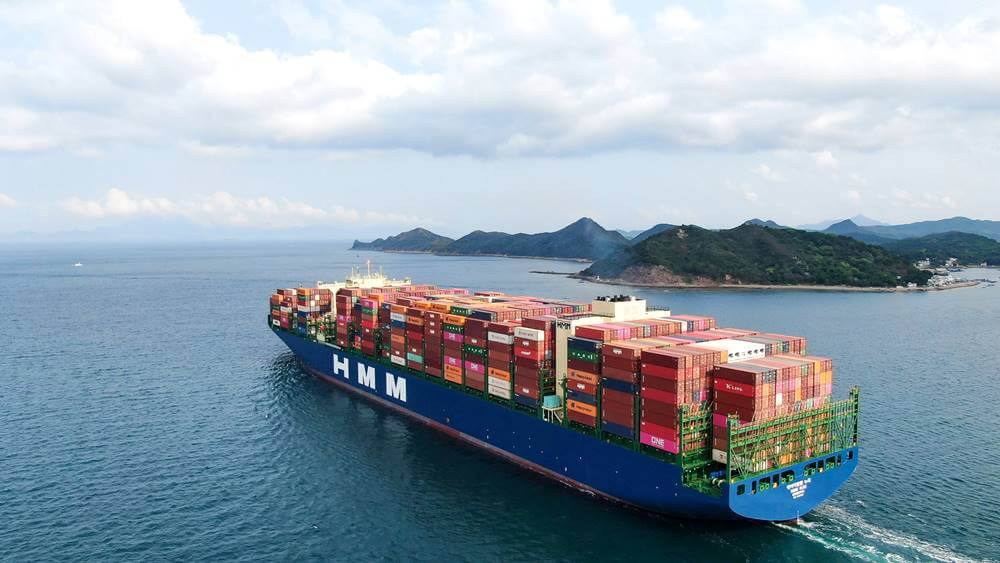
Korean media reports suggest that there continues to be exploration over the possible privatization of container carrier HMM, nearly two years after a prior attempt collapsed. According to Korea’s Maeil Business Newspaper group, the food and logistics giant Dongwon Group has decided to renew its exploration to formulate an offer for the company.
Next year will mark a decade since the government stepped in to rescue Hyundai Merchant Marine. It took majority ownership through the Korea Development Bank and Korea Ocean Business Corporation. With the company having returned to profitability and begun a new expansion program, bank officials have repeatedly discussed the belief that the government’s investments could be better spent on other projects.
The banks finally launched a bidding process in 2022, and Dongwong was one of the companies that entered the fray. The Government said that it wanted ownership control of HMM to remain with a Korean company, excluding Hapag-Lloyd, which expressed interest.
According to the media reports, Dongwong was second in the competition, offering approximately $4.2 billion, but $100 million behind a group made up of Harim and JKL Partners. After months of negotiations, the sale collapsed with reports that there was a deadlock over the management structure and role of the banks.
Dongwon, according to the reports, has decided to start a new exploratory group. The company wants to explore the acquisition to form an integrated logistics business. Dongwon got its start in the food business and also owns a small logistics company and operates a port terminal in Pusan.
The news report writes, “Dongwon Group is said to have internally advanced the formation of an organization to review related materials and discuss acquisition structure and financial simulations.”
A few months ago, it was widely reported that Korean steel company POSCO was also considering a bid to take ownership of HMM. The current news report notes that the company’s value has increased, meaning that a sale would likely be valued between $5.4 and $6.8 billion.
The banks have not commented on their plans after the failed 2023 negotiations. No timing has been set for resuming the sale process.
HMM continues to pursue its expansion and diversification efforts. The company recently placed large value orders for containerships after having passed the 1 million TEU threshold. It also ordered VLCCs and remains interested in the dry bulk sector. It failed in its own attempt at an acquisition and is now reported to be buying dry bulkers in the secondhand market.
Saronic Invests $300M to Expand Louisiana Shipyard to Accelerate ASVs
Saronic is building its first two ASVs as it moves to expand capacity with a major shipyard expansion (Saronic)
A U.S. defense tech startup specializing in autonomous ships is pushing to enhance its competitiveness in the fast-growing market with a $300 million investment to expand its production facility. Texas-based Saronic Technologies wants to deliver autonomous ships at speed and scale with the massive investment to expand its Franklin, Louisiana, shipyard.
The firm, which began operations in April this year with the ambitions of redefining the building of unmanned surface vehicles, reports that the expanded facility will enable it to increase the production of autonomous surface vessels (ASVs) while significantly growing its workforce. The expansion project will add more than 300,000 square feet of new production capacity and create 1,500 new jobs.
The new facility, which is expected to strengthen the Gulf Coast’s role in the future of U.S. maritime innovation, is slated for completion by the end of 2026, with expanded operations coming online a year later. The project will encompass the construction of three new slips, warehouse expansion, and the development of a dedicated production line for large-vessel assembly, namely Marauder, the firm’s 180-foot autonomous ship.
Saronic is currently constructing two Marauder vessels at the Franklin facility, having progressed from initial design to full vessel development in just six months. At 150 feet, Marauder is a large ASV that has a payload capacity of up to 40 metric tonnes and can travel up to 3,500 nautical miles or loiter for more than 30 days. The vessel is designed to support a range of missions for the U.S. Navy, its allies, and commercial customers. The firm expects that construction of the first vessel will be complete by the end of the year.
In recent months, Saronic has managed to improve the vessel’s design to 180 feet, enhancing its payload capacity and operational range. The updated vessel is capable of hosting up to four 40-foot or eight 20-foot containers, providing unmatched modularity for logistics, payload delivery, and sustained operations at sea. The new design comes with a cruise speed of 12 knots and a top speed of 25 knots, a 150-metric-ton payload capacity, and a range of up to 5,400 nautical miles.
The firm, which earlier this year acquired Louisiana-based shipbuilder Gulf Craft to accelerate its growth into autonomous shipbuilding, contends the expanded facility is critical to its growth ambitions. In the coming years, it plans to create about 1,500 new jobs ranging from welding to fabrication, engineering, and systems integration.
“Our expanded shipyard will enable us to deliver autonomous ships at unprecedented speed and scale. Together with our next-generation Port Alpha shipyard, we’re establishing the modern blueprint for American shipbuilding, an integrated ecosystem that connects autonomy innovation with large-scale production capacity to strengthen and sustain America’s maritime leadership for generations to come,” said Dino Mavrookas, Saronic Co-founder and CEO.
The Franklin facility is expected to complement Saronic’s plans for Port Alpha, which the company has touted as the largest and most advanced shipyard in the U.S., designed to produce large autonomous ships at speed and scale.
Kongsberg Maritime Secures LARS Contract with Sea1 Offshore
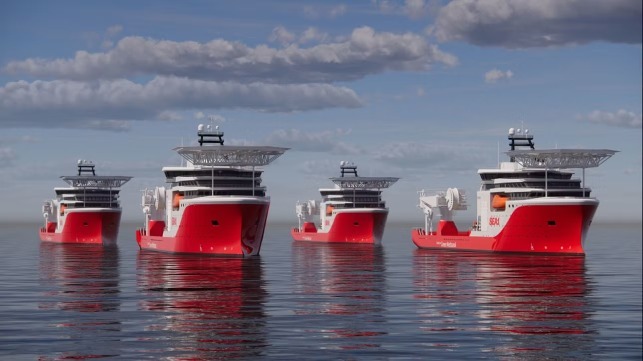
Sea1 Offshore’s new offshore construction vessels will be equipped with two Kongsberg Maritime Launch and Recovery Systems
Kongsberg Maritime has signed a major contract with Sea1 Offshore to deliver Launch and Recovery Systems (LARS) for the company’s four new offshore construction vessels. Each vessel will be equipped with two advanced LARS units, supporting subsea construction and ROV operations.
The scope of supply per vessel includes two telescopic A-frames, fully electrical umbilical winches, energy efficient hydraulic power units, and a dedicated control system. Each system offers a safe working load of 15 tonnes (vehicle dry weight) and winch cable capacity of 4,500 metres, ensuring robust performance for deep-water operations.
Kongsberg Maritime is a trusted partner for offshore handling solutions, with decades of experience delivering reliable and efficient systems to the global market. This contract reinforces the company’s position as a leading provider of technology that ensures safe and sustainable operations for demanding offshore environments.
“The award of this contract demonstrates our renewed commitment to delivering world-class handling solutions for the offshore industry,” said Ingar Hovden, Sales Manager, Kongsberg Maritime. “Our LARS technology combines proven engineering with modern efficiency features, helping operators achieve safe and sustainable operations.”
Andreas Kjøl, CCO of Sea1 Offshore, added: “We are confident those state-of-the-art WROV Launch and Recovery Systems will give us market leading operability in harsh environment operations with the equipment fully integrated to the vessels’ power electric and energy storage systems.”
Kongsberg Maritime’s LARS solutions deliver a wide range of benefits that enhance operational safety and efficiency. They provide controlled launch and recovery even in challenging sea states, reducing risk and improving reliability.
The systems are designed with a compact and modular approach, making them easy to integrate on different vessel types while maintaining high durability and minimising downtime. Operators benefit from optimised handling for ROVs and subsea equipment, ensuring smooth and efficient missions.
Environmental performance is also a key advantage. The inclusion of hydraulic power units with frequency control reduces emissions and energy consumption, supporting sustainability goals without compromising operational capability. Advanced control systems provide precise and responsive handling, enabling safe and accurate operations for complex subsea tasks.
The products and services herein described in this press release are not endorsed by The Maritime Executive.
MarinePALS Joins RightShip's Zero Harm Innovation Partners Programs
MarinePALS has joined RightShip as a new member of the Zero Harm Innovation Partners Program.
With a shared commitment to improving safety outcomes and strengthening operational excellence, this partnership brings together RightShip’s global safety mission and MarinePALS’ innovative approach to digital maritime training.
MarinePALS is a modern maritime EdTech company that blends microlearning, gamification, virtual reality and competency systems with deep seafaring expertise. Designed by maritime professionals and tested onboard, its offerings mirror real shipboard conditions, ensuring that learning is practical, engaging and directly relevant to day-to-day operations.
The suite of products includes Marine Flix (onboard-shot microlearning videos and CBTs), Marine Games (gamified PSC inspection training), Marine VR (immersive shipboard familiarisation via VR and mobile), Marine Cadets (digital record books for structured cadet development), Assignment Engine (a comprehensive testing and analytics platform), and an OCIMF-aligned competency tracking system.
There is also Marine Mentors (a structured platform for guided mentorship), mobile-accessible SMS hosting, and functions such as Circulars, a tracking system which ensure seafarers have received and read key updates, and Surveys which allows mobile-enabled surveys with analytics. Lastly, is an industry-first AI assistant for managing regulations and loss prevention information. All tools are delivered through a cloud-based platform with mobile access and offline capability for low-bandwidth vessels.
MarinePALS’ solutions have been developed to respond directly to long-standing industry challenges identified through collaboration with ship managers, training superintendents and seafarers. These challenges include low engagement with traditional training, limited practical familiarity and scenario-based learning onboard, inconsistent and subjective competency evaluation, gaps in inspection readiness and defect awareness, and fragmented training systems across fleets. By unifying videos, VR modules, assessments, analytics and record books in a single platform, MarinePALS helps fleets build stronger competencies and reinforce safer behaviours across operations.
MarinePALS joined the Zero Harm Innovation Partners Program to contribute to the maritime sector’s collective effort to reduce incidents and enhance operational safety culture. Its modern, high-engagement training methods complement RightShip’s focus on improving behaviour-driven safety outcomes, with participation in the program allowing MarinePALS to align its tools with recognised global frameworks and collaborate with organisations committed to developing more effective, future-ready safety practices.
The partnership also enables MarinePALS to ensure its methods continue to evolve in line with emerging expectations around competency, risk awareness and behaviour-based safety, while collaboration with other innovation partners will allow the exchange of insights and best practices to benefit fleets throughout the industry.
MarinePALS also hopes to expand the reach of next-generation learning tools so that more seafarers, regardless of fleet size, geography or connectivity limitations, have access to high-impact training that strengthens capability and confidence and supports RightShip’s vision of a Zero Harm maritime industry, thereby reducing incidents and building a safer future for all who work at sea.
The products and services herein described in this press release are not endorsed by The Maritime Executive.
Maersk is Proceeding with Ethanol Tests After First Successful Trial
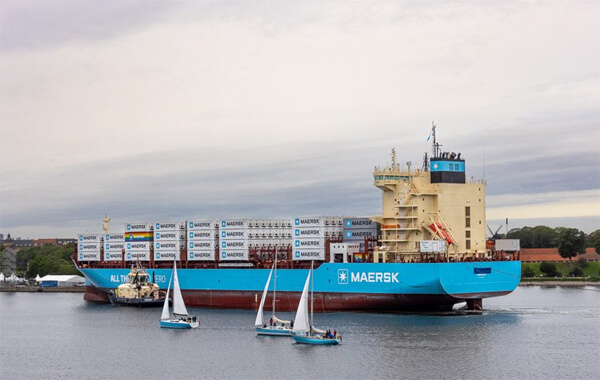
Dual-fuel feeder ship Laura Maersk provides a testing ground for the new fuels (Maersk)
Maersk reports it completed a first, successful trial of blending ethanol into methanol to create an alternative fuel for its vessels. It plans to proceed with increased levels of ethanol and 100 percent ethanol tests as it explores steps to enlarge the availability and sourcing pool for alternative fuels for its dual-fuel vessels.
One of the challenges Maersk and other shipowners have pointed to is the availability of methanol and other alternative fuels and the ability of suppliers to expand production to meet the potential needs of the shipping industry. Maersk looks to run trials that could develop alternatives that can continue to supply the company as it moves forward with its decarbonization efforts.
The mixing of ethanol and methanol is possible because they are both alcohols, and there is a longstanding history dating back to the 1970s when ethanol was first used to extend gasoline supplies. Many countries use a 10 percent ethanol mix for cars, while the United States and Brazil supply approximately 80 percent of the ethanol.
Maersk launched its dual-fuel feeder vessel Laura Maersk (32,600 dwt) in 2023 for operations in the Baltic region. It has provided a test bed for methanol, which the company points out has been used for three years with no issues.
The first trial with E10, a 10 percent ethanol–90 percent methanol blend, began in October and supplied the Laura Maersk with fuel for a month to a month and a half. They report that performance was not compromised and confirmed that ethanol can be safely and effectively integrated into the fuel mix. Among the issues they were monitoring were ignition quality, the way the fuel was burning, corrosion, and the impact on emissions. They monitored for changes in NOx emissions.
Based on the confirmation in the first test, Maersk now plans to test E50, a 50-50 blend of ethanol and methanol. In addition, beyond the E50 trials, the company plans to conduct a trial using 100 percent ethanol.
Maersk currently has 19 dual-fuel vessels operating and more scheduled for delivery. It will also begin in 2027 using time-chartered dual-fuel LNG vessels. The company highlights that it is expanding its low-emission fuel options, including bio- and e-methanol, biodiesel, and with the LNG vessels liquified biomethane.
Med Marine Delivers Two Med-A3200 Series Tugboats To Noatum Maritime
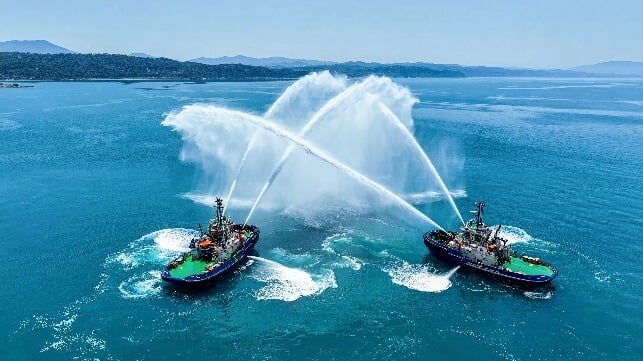
MED MARINE proudly announces the successful delivery of two advanced MED-A3200 series tugboats — ALNOUF and ALYASAT 1 — to its esteemed client NOATUM MARITIME. Following the successful closing of the deal in mid-August, the vessels were delivered simultaneously from MED MARINE’s EREGLI SHIPYARD. These state-of-the-art vessels are set to reinforce the client’s capabilities with enhanced power, safety, and adaptability tailored for the high-stakes demands of terminal escort operations.
Crafted as LNG-compatible Terminal Escort Tugs, both vessels exemplify MED MARINE’s commitment to delivering not only performance but purpose-driven design. Each 32-meter tug is engineered to produce an impressive bollard pull of 80 tonnes, meeting Class FIFI-1 firefighting standards and outfitted for multi-purpose tasks such as towing, escorting, pushing, mooring, and firefighting.
What sets these vessels apart is their specialized configuration for operations in high- security environments, including LNG terminals. Throughout the construction phase, MED MARINE implemented critical safety enhancements, ranging from fire-risk mitigation systems to emergency crew evacuation protocols, ensuring these tugs are ready to operate in some of the world’s most sensitive and regulated maritime zones. At the heart of both ALNOUF and ALYASAT 1 lies an azimuth stern drive propulsion system, powered by twin diesel engines connected to Z-drive units. The combination of fixed-pitch propellers and high-efficiency nozzles delivers not only high bollard pull but also the precise manoeuvrability demanded by challenging port conditions.
This dual delivery underscores the strength of the ongoing collaboration between NOATUM MARITIME and MED MARINE, a partnership defined by mutual trust, precision engineering, and a shared commitment to maritime excellence. By combining cutting-edge shipbuilding with deep operational insight, MED MARINE continues to serve as a trusted partner for global operators seeking tailor-made, future-proof marine solutions.
Technical specifications of the tugboat: Length: 31,80 m Draft: 5,75 m Depth: 5,57 m Breadth: 13,20 m Bollard Pull: 80 tons Speed: 12,5 knots Crew: 10 persons
The products and services herein described in this press release are not endorsed by The Maritime Executive.
 Jarrod Agen. Credit: Center for Strategic and International Studies


 Serra Verde is expected to produce 5,000 tonnes per year of rare earth oxide. (Image: Serra Verde)