Friday, December 12, 2025

Research suggests autonomous vehicles will be safer and more reliable


By Dr. Tim Sandle
SCIENCE EDITOR
DIGITAL JOURNAL
December 10, 2025


With an ageing population in need of transport, Japan is betting on autonomous cars — © AFP Kazuhiro NOGI

Imagine sliding into the driver’s seat or perhaps not needing one at all and still arriving safely at your destination. This possibility – of self-driving vehicles – could be edging closer. In terms of development, analysis by Omega Law Group, finds that fully autonomous vehicles logged over 25.3 million miles and delivered an astonishing 88 % fewer potential property‑damage claims and 92 % fewer potential bodily‑injury claims compared with traditional human‑driven vehicles.

These numbers reflect real‑world operations across Phoenix, San Francisco, Los Angeles, and Austin, and they raise key questions about how law, policy, and insurance must evolve to keep pace.


The main findings are captured in the following data table:
 

MetricValueContext / Insight
Property‑damage claims reduction88%Waymo vs human driver benchmark (25.3 miles)
Bodily injury claims reduction92%Same dataset
Injury‑involving intersection crash reduction≈ 96% (87‑99% CI)Rider‑Only Waymo is comparing 56.7 miles to the human benchmark
Manufacturer exemption cap (Part 555)Up to 2,500 vehicles/yearNHTSA’s limit for non‑compliant AVs
Consumer trust is willing to ride AVs~13% of U.S. drivers (2025)Indicates public hesitancy despite safety gains

The 88% reduction in property‑damage claims and 92% reduction in bodily‑injury claims derive from a large‑scale dataset of 25.3 million driver‑only miles recorded by Waymo in partnership with Swiss Re.  In real terms, the dataset included just nine property‑damage claims and two bodily‑injury claims over that distance, compared to an expected 78 and 26, respectively, for human drivers. 


Unlike generic comparisons, the human baseline was calibrated using over 500,000 claims and more than 200 billion miles of exposure, ensuring geographic and operational alignment. 

The study further indicates Waymo outperformed even the latest human‑driven vehicles equipped with advanced driver assistance systems (ADAS): 86% fewer property‑damage claims and 90% fewer bodily‑injury claims.Waymo robotaxis in San Francisco. Photo: Mliu92 Courtesy of Wikipedia Commons. CC BY-SA 3.0

On crash‑type specificity, a separate peer‑reviewed study of 56.7 million Rider‑Only (RO) miles through January 2025 found statistically significant reductions across all crash types when compared to human benchmarks.

In particular, injury‑involving intersection (vehicle‑to‑vehicle) crash events dropped by 96% (87‑99% confidence interval) and airbag‑deployment intersection events declined by 91% (76‑98% CI). Furthermore, vulnerable‑road‑user outcomes also improved: pedestrian injury crashes fell by ≈92%, cyclist crashes by 82%, and motorcyclist crashes by 82% in the Waymo RO metrics.

Importantly, no crash‑type group showed statistically worse performance for the AV fleet, meaning no identified scenario in the dataset where the AV rate exceeded the human benchmark.

The policy metrics layered into the table reveal complementary dimensions: the 2,500-vehicle/year cap in the Part 555 exemption rule signals a cautious regulatory rollout, while the extended 5-day incident-reporting requirement marks a change in oversight structures. These changes align with the operational expansion of AVs while drawing attention to transparency and liability oversight during transition.

Taken together, these data paint a layered story: specifically, in geofenced urban operational domains, AVs are achieving major safety‑performance improvements over human driving. However, the data also highlight that this is still an early‑stage dataset. The scope remains limited in geography and volume compared to the trillions of human‑driven miles annually.

It should be noted that, in terms of current status for autonomous vehicles, rollout remains limited, reserves remain in place, and consumer trust is still at single‑digit percentage levels.
Microsoft’s $19-billion Canadian AI investment stokes digital sovereignty debate


ByDavid Potter
DIGITAL JOURNAL
December 10, 2025


Prime Minister Mark Carney and Brad Smith, vice chair and president of Microsoft, during a meeting in Ottawa. - Photo courtesy Microsoft

This week, Microsoft announced a $19-billion plan to expand its AI and cloud infrastructure in Canada, including new data centre projects scheduled to come online in 2026, increased compute capacity across the country, and a five-point initiative focused on digital sovereignty.

Government leaders positioned the investment as a significant development for Canada’s digital economy at a time when demand for compute capacity is rising across every sector.

But the announcement has also stoked the debate about how Canada secures and controls the digital systems it depends on.

Canada needs more AI infrastructure to stay competitive, yet much of that capability is supplied by foreign-owned cloud providers that are subject to external legal regimes.

The investment promises faster access to advanced tools, but it also raises questions about jurisdiction, long-term dependency, and who ultimately governs the infrastructure supporting Canada’s public and private sectors.
What the investment delivers

Canada has faced persistent constraints in access to high-performance compute for researchers and smaller firms, prompting the federal government to create the AI Compute Access Fund in 2025 to expand affordable access for researchers and small- and medium-sized enterprises.

New infrastructure is expected to reduce barriers to experimentation, improve access to advanced tools, and strengthen the ability of Canadian firms to build and deploy AI systems.

“Canada is scaling homegrown companies while also working with international partners to build the advanced infrastructure our innovators require,” said Evan Solomon, Canada’s minister of artificial intelligence and digital innovation, in a media release. “Microsoft employs 5,300 Canadians, and their new major commitment shows continued belief in Canada’s talent, economy and AI ecosystem.”

Microsoft’s five-point plan includes commitments around transparency, security, data residency options, responsible AI, and operational practices intended to strengthen trust in its cloud services. These measures are designed to give Canadian organizations more reliable access to the compute capacity required for AI development.
Why concerns are growing

Industry leaders and policy experts argue that the value of new infrastructure depends on who ultimately controls it. Their concerns centre on legal jurisdiction and economic dependency, particularly in sectors where sensitive data and critical systems rely on platforms headquartered outside Canada.

A key point of contention is the difference between where data resides and whose laws apply to it.

Under the United States CLOUD Act, U.S. authorities can compel American companies to provide access to data they control, even when that data is stored in another country. Critics say this raises fundamental questions about whether Canada can exercise full sovereignty over data and systems managed by U.S. cloud providers.

John Ruffolo, a longtime technology investor and founder of Maverix Private Equity, says the sovereignty risk comes down to how foreign laws apply to foreign-owned platforms. His concern centres on the idea that Canada cannot assume that data stored in domestic facilities is fully insulated from foreign legal orders if the provider is headquartered in the United States.

“It is specifically to the existence of the U.S. Cloud Act,” Ruffolo told Digital Journal. “If you read it, it grants the U.S. government an extraterritorial right to override Canadian or any other country for that matter, to access the data hosted by any U.S. based cloud provider no matter which country the data center is located. It does not need to notify the infringed party nor the government whose sovereignty is breached.”

Microsoft has stated that it will challenge inappropriate requests for Canadian customer data.

“We contract with our Canadian customers and one of the things we promise to them is that we will use every diplomatic and legal means at our disposal, including in other countries, including going to court, if that is what it takes to protect the sovereignty of Canada,” Brad Smith, vice chair and president of Microsoft, told CBC’s Power and Politics.

Concerns extend beyond legal jurisdiction to the economic structure that emerges when critical infrastructure and intellectual property are owned abroad.

We’ve covered this issue before, when Microsoft France’s Director of Public and Legal Affairs, Anton Carniaux, was asked if he could guarantee that data from French citizens could not be transmitted to United States authorities without the explicit authorization of French authorities. In a senate hearing in that country this August, Carniaux said he could not offer that guarantee.

Critics warn that foreign-led infrastructure can mirror past patterns in which Canada serves as a market and talent base while long-term economic value accrues elsewhere.

Ruffolo says the concern is not foreign investment itself, but foreign ownership of critical industries. He says that Canada benefits when international capital helps domestic firms grow, but loses long-term economic value when foreign investors end up owning the entire company or sector.

“Would we like foreign capital to help support our Canadian companies? Sure why not,” he said. “Do I want all the capital to account for 100% of the capital of that Canadian company. No.’

Ruffolo adds that the issue becomes more serious in sectors that shape Canada’s future.

“When we talk about sovereign industries in which we give up control over our future, are you ok in accepting some dollars and some jobs to sell out Canada for generations? Are you happy to be a branch plant economy not capturing the wealth from these IP based businesses?”

In a statement issued today, the Council of Canadian Innovators (CCI) underscored the broader strategic implications in a response to the new United States National Security Strategy.

CCI argues that sovereignty, prosperity, and national security now depend on Canada’s ability to “build, scale and retain Canadian companies that generate value at home, strengthen our supply and value chains, and give Canada strategic leverage and sovereign capability,” the statement reads.

“The United States is saying clearly: sovereignty in the 21st century will be defined by who controls the standards, the IP, the AI and data, the cloud, and the dual-use technologies that nations rely on,” said CCI’s incoming CEO Patrick Searle. “America intends to build, export and control those systems at scale. Canada needs to decide whether we will be strategic participants or a vassal state to global tech giants,” says Patrick Searle, incoming CEO of the Council of Canadian Innovators.
The decisions ahead

For many Canadian organizations, access to hyperscale cloud platforms can accelerate product development and support more ambitious digital strategies.

For institutions handling sensitive information or operating in regulated sectors, cloud adoption also requires careful evaluation of jurisdiction, data governance, and exposure to foreign legal environments.

Technical safeguards such as customer-controlled encryption keys and external key management can reduce some risks but cannot alter the legal obligations that accompany foreign ownership.

Microsoft’s investment in Canada is part of a broader global expansion, including a $17.5 billion (USD) initiative in India, a $10 billion (USD) plan for Portugal, and $15 billion (USD) earmarked for the United Arab Emirates. Each project is framed as strengthening local digital infrastructure while supporting Microsoft’s broader AI strategy.

The scale and pace of these investments reflect rising global demand for compute capacity rather than a singular bet on Canada.

Microsoft’s investment highlights the scale of opportunity that greater compute capacity can create. As Evan Solomon noted, expanded infrastructure can help firms move faster, compete more effectively, and bring new ideas to market. Those gains matter in an economy where AI is becoming embedded in everything from business operations to public service delivery.

The debate surrounding the announcement shows that there is more to consider than capacity alone. As cloud systems take on a larger role in managing sensitive data and critical processes, questions about jurisdiction, ownership, and long-term control become part of the conversation.

These issues do not diminish the potential benefits, but they add important context for how Canada evaluates major technology investments.

The decisions ahead will shape how the country balances the advantages of global platforms with the responsibilities of safeguarding economic and digital autonomy.

How Canada navigates that balance will determine whether new infrastructure strengthens both innovation and sovereignty, or leaves unresolved questions that cannot be addressed by investment alone.
Final shotsInvestments of this scale help close Canada’s compute gap, but they also highlight how much of the country’s digital future may depend on foreign owned systems.
Sovereignty debates will move from technical circles to executive tables as AI adoption accelerates and more data shifts into cloud environments.
Canada’s response to this moment will signal whether it intends to shape the rules of its digital economy or adapt to frameworks set elsewhere.
The value of foreign investment will increasingly be measured not only by activity and jobs, but by how much capacity, ownership, and strategic control remain in Canada.


Written ByDavid Potter


David Potter is Editor-at-Large and Head of Client Success & Operations at Digital Journal. He brings years of experience in tech marketing, where he’s honed the ability to make complex digital ideas easy to understand and actionable. At Digital Journal, David combines his interest in innovation and storytelling with a focus on building strong client relationships and ensuring smooth operations behind the scenes. David is a member of Digital Journal's Insight Forum.
OpenAI beefs up GPT models in AI race with Google


By AFP
December 12, 2025


A ChatGPT adult mode that OpenAI is aiming to make available early next year is expected to allow for erotic conversations between users and the chatbot - Copyright AFP VALERIE MACON

OpenAI released its latest artificial intelligence models on Thursday, shrugging off worries about how it will cash in on massive spending in its technology race with Google.

The San Francisco-based AI superstar touted GPT-5.2 Pro and GPT-5.2 Thinking as its best models yet for handling math or science work.

“Strong mathematical reasoning is a foundation for reliability in scientific and technical work,” OpenAI said in a blog post.

“These capabilities are also closely tied to progress toward general intelligence.”

Artificial general intelligence has become a holy grail of sorts in the tech world, seen as a threshold where machines think the way people do or even better.

The release comes on the heels of OpenAI chief executive Sam Altman urging his team to strive to keep up with Google, the search engine juggernaut that has been relentlessly innovating in AI.

While Google can tap into its massive online ad revenue to invest in AI, OpenAI has been committing tens of billions of dollars to computing infrastructure while having yet to turn a profit.

“We are confident we can continue to drive the revenue growth to meet” the investments in computing power, Altman said Thursday in a CNBC interview.

Without the infrastructure investments, “of course, we can’t drive the revenue growth, but we see way more reasons to be optimistic than reasons to be pessimistic.”

OpenAI chief of applications Fidji Simo told reporters during a briefing about the new models that she expects a ChatGPT “adult mode” to debut early next year, noting that the company wants to improve detection of user age before making it available.

Altman earlier this year announced plans to ease restrictions to allow adult users to engage in erotic conversations with ChatGPT.

OpenAI also faces a series of lawsuits from families accusing the startup of allowing teenagers to have dangerous interactions with its AI chatbots that in some cases led to suicide.

Simo confirmed that a “red alert” about Google sprinting ahead had been issued at OpenAI, but refuted the notion it has sped up the release of new GPT models.

Google last month debuted its latest Gemini AI model, capping a dramatic turnaround since it was caught off guard by ChatGPT’s launch three years ago and mocked for early blunders in its chase of OpenAI.
Trump administration has EU scrambling as 'uncertainty' of US is 'just too high'

Ewan Gleadow
December 10, 2025 
RAW STORY


President Donald Trump and First Lady Melania Trump participate in the annual ceremony to pardon the national Thanksgiving turkeys, Tuesday, November 25, 2025, in the White House Rose Garden. (Official White House Photo by Daniel Torok)

The European Union is fast-tracking plans to preserve peace without the aid of the United States following comments from Donald Trump's administration.

A defense official representing a European country told Politico that "awkward" conversations over America's involvement in the continent were now being prioritized as the "uncertainty" of how the US would react to global conflicts is "just too high". The preparation comes following the release of the Trump administration's National Security Strategy.

Though the administration has played a part in peace talks between Ukraine and Russia, the National Security Strategy makes it clear the US will no longer prop up "the entire world order". Such comments have caused uncertainty in European nations, some of which are now fast-tracking plans for a continent without America's influence.

The strategy published by Trump's administration reads, "The days of the United States propping up the entire world order like Atlas are over. Wealthy, sophisticated nations ... must assume primary responsibility for their regions."

Trump's discontent was made clear in an interview earlier this week where he said world leaders in Europe "don't know what to do" and that the continent is "decaying".

Experts had warned earlier this week that Trump's disinterest in Europe would be a "brutal lose-lose" for everyone involved. Analysis from Georg Riekeles and Varg Folkman saw the pair warn a deprioritization of European stability would be "remarkably abstruse."

They wrote, "hina, they argue, is the decisive theatre, not Europe, and US attention and assets must shift accordingly. Washington has signalled some version of this pivot for more than a decade. Yet European governments have found the idea that the US might actually deprioritise the continent’s security remarkably abstruse."

"The war in Ukraine has intensified this tension: Europe’s thinking is that a US withdrawal or an imposed, unequal peace would produce chaos in Ukraine and instability across Europe." Riekeles and Folkman believe this is part of a larger plan from the US government to shape European politics in a Trump-friendly system.

They wrote, "Because it is clear that as Washington draws back militarily, it will pull even harder on its other levers: financial power, diplomatic pressure, export controls, trade measures and secondary sanctions. These instruments will increasingly be used to steer Europe in the political direction the US wants."
Trump issues ominous warning NYT committed 'treasonous' acts for reporting on his health

Robert Davis
December 9, 2025 
RAW ST0RY


President Donald Trump speaks during a cabinet meeting at the White House in Washington, D.C. on Dec. 2, 2025. REUTERS/Brian Snyder

President Donald Trump attacked The New York Times in a new Truth Social post on Tuesday night, suggesting the paper's reporting on his health may be "seditious" and that reporters for the outlet may have committed treason.

Trump issued the screed after he delivered a speech in Monroe County, Pennsylvania, that was supposed to focus on affordability, but meandered through old talking points about immigration and the wonderful job his cabinet secretaries are doing.

In the post, Trump claimed he is the hardest-working president in history and that his "results are among the best."

"Despite all of this, the time and work involved, The New York Times, and some others, like to pretend that I am 'slowing up,' am maybe not as sharp as I once was, or am in poor physical health, knowing that it is not true, and knowing that I work very hard, probably harder than I have ever worked before," Trump wrote in the post. "I will know when I am 'slowing up,' but it’s not now!"

"After all of the work I have done with Medical Exams, Cognitive Exams, and everything else, I actually believe it’s seditious, perhaps even treasonous, for The New York Times, and others, to consistently do FAKE reports in order to libel and demean 'THE PRESIDENT OF THE UNITED STATES,'" he added. "They are true Enemies of the People, and we should do something about it. They have inaccurately reported on all of my Election Results and, in fact, were forced to apologize on much of what they wrote."

"The best thing that could happen to this Country would be if The New York Times would cease publication because they are a horrible, biased, and untruthful 'source' of information," he continued.

Trump's health has been called into question recently after the president admitted to taking a cognitive test and getting an MRI. Some psychological experts suggested that Trump may be experiencing early signs of dementia.

Other medical experts have pointed to the bandage on his hand and the swelling of his ankles as evidence of his physical decline.


Trump's eugenic horror is about to get the green light — and that's just the beginning


Jordan Liz
Common Dreams
December 9, 2025 


Official White House photo by Andrea Hanks


The Supreme Court has agreed to hear a lawsuit regarding the constitutionality of President Donald Trump’s executive order to restrict the right to birthright citizenship. If the Supreme Court rules in Trump’s favor, then children born in the US would be denied citizenship if their parents are undocumented or residing in the country under temporary legal status.

Let’s not mince words here: Trump’s executive order is cruel and xenophobic. Children born of undocumented immigrants or visa holders have committed no crimes. They are not responsible for the circumstances of their birth. There is also no legitimate legal basis. The 14th Amendment is clear:

“All persons born or naturalized in the United States, and subject to the jurisdiction thereof, are citizens of the United States and of the State wherein they reside.”

None of these facts matter to Trump. His administration would readily tear families apart and see children born into a second-class status simply because their births were not to his liking.

This is only the beginning of the cruelty that his birthright ban would unleash. If the Supreme Court rules in his favor, it would pave the way for any president (or wannabe monarch) to redefine citizenship at their discretion. After all, if simply being born in the US is not enough to guarantee citizenship, then what is? Where do we draw the line?

Well, if you’re Trump, then it’s the color line. For the Trump administration, not all babies are created equal. Restricting birthright citizenship is their way of preventing “hundreds of thousands of unqualified people” from acquiring the “privilege of American citizenship.” It is about dissuading the wrong kinds of people from having the wrong kinds of babies.

Sound far-fetched? Well, consider this: Trump, the self-proclaimed “fertilization president” (gross!), has sought to expand access to in vitro fertilization (IVF). As Trump puts it, we want “beautiful babies in this country, we want you to have your beautiful, beautiful, perfect baby. We want those babies, and we need them.”

Mehmet Oz, the administrator for the Centers for Medicare and Medicaid Services, champions the future of “Trump babies.” Vice President JD Vance literally says he wants “more babies in the United States of America.” The Trump White House insists that they need “growing numbers of strong, traditional families that raise healthy children.”

But, if that’s true, then what is the purpose of Trump’s executive order? If they want more babies to be born in this country, then why push to deny babies their legitimate birthright? It’s because Trump is pro-baby so long as it’s the right kind of baby.

Beautiful, healthy, strong and perfect — those are the babies Trump wants. And those are the babies that, in his view, migrants do not have.

Trump has explicitly said that migrants have “bad genes” that cause them to commit crimes. That they are “not humans, they’re animals.” He has said that migrants from South America, Africa, and Asia are “poisoning the blood of our country” — a view that parallels Hitler’s rhetoric about “blood poisoning” and race mixing. Trump calls Somalis “garbage” and says that “I don’t want them in our country, I’ll be honest with you … their country is no good for a reason.”

He believes this about migrants, and he believes it extends to their children. This pseudoscientific eugenic drivel is at the core of his executive order.

That is the real danger of Trump’s birthright ban. As it stands, birthright citizenship provides a clear-cut metric. Aside from two niche exceptions, if you were born here, you are from here. There’s no loophole to exploit. There’s no definition to reevaluate and abuse. There’s no place for prejudice, discrimination, or bigoted understandings of what it means to be an American. There’s no ambiguity regarding who belongs. The simplicity of birthright is precisely its strength.

It’s also precisely why the Trump administration wants to undo it. Birthright citizenship is a strong barrier against the administration’s most fascist impulses to recreate “the meaning and value of American citizenship.” As he said on the campaign trail, “If I win, the American people will be the rulers of this country again. The United States is now an occupied country.” His current administration similarly claims that Europe faces “civilizational erasure” if it does not restrict migration and preserve its “Western identity.”

If Trump’s mission is, as he explicitly says, to liberate the US and protect Western values threatened by migration, then he won’t stop with the children of undocumented immigrants. Trump cannot be allowed to define who is a citizen. For the good of the nation and for future generations, we cannot let him succeed.


Jordan Liz is an Associate Professor of Philosophy at San José State University. He specializes in issues of race, immigration and the politics of belonging.

Thursday, December 11, 2025

Trump admin eyes yanking visas of Musk critics: report


Nicole Charky-Chami
December 11, 2025 
RAW STORY

The Trump administration has considered revoking visas of two prominent critics of billionaire Elon Musk — a once close ally of President Donald Trump — and his X social platform, according to a new Zeteo report on Thursday.

New documentation viewed by Zeteo indicated that high-level talks were underway among top government officials to decide whether to make the decision.

"Per a draft for an action memo outlining options for Secretary of State Marco Rubio, the administration is weighing a move to revoke the visas of former European Union Commissioner Thierry Breton and Imran Ahmed, CEO and founder of the Center for Countering Digital Hate," according to the outlet.

It could be the first attempt for the Trump administration to revoke visas of people it deems are censoring Americans.

"Just last week, the State Department reportedly directed officials to screen out applicants for skilled worker visas who have previously worked to combat online misinformation and disinformation," Zeteo reported.

The news comes as the Trump administration on Wednesday signaled it would begin a new Department of Homeland Security policy that would require visitors to undergo social media inspections. Under the new rule, international travelers would have to provide their social media history over the last five years.
This sinister pattern shows how Nazis will deploy AI

The Conversation
December 7, 2025 


A neo-Nazi protest in Harvard Square. Pic: Screengrab


By Michelle Lynn Kahn, Associate Professor of History, University of Richmond

How can society police the global spread of online far-right extremism while still protecting free speech? That’s a question policymakers and watchdog organizations confronted as early as the 1980s and 90s — and it hasn’t gone away.

Decades before artificial intelligence, Telegram and white nationalist Nick Fuentes’ livestreams, far-right extremists embraced the early days of home computing and the internet. These new technologies offered them a bastion of free speech and a global platform. They could share propaganda, spew hatred, incite violence and gain international followers like never before.

Before the digital era, far-right extremists radicalized each other primarily using print propaganda. They wrote their own newsletters and reprinted far-right tracts such as Adolf Hitler’s Mein Kampf and American neo-Nazi William Pierce’s The Turner Diaries, a dystopian work of fiction describing a race war. Then, they mailed this propaganda to supporters at home and abroad.

I’m a historian who studies neo-Nazis and far-right extremism. As my research shows, most of the neo-Nazi propaganda confiscated in Germany from the 1970s through the 1990s came from the United States. American neo-Nazis exploited their free speech under the First Amendment to bypass German censorship laws. German neo-Nazis then picked up this print propaganda and distributed it throughout the country.


This strategy wasn’t foolproof, however. Print propaganda could get lost in the mail or be confiscated, especially when crossing into Germany. Producing and shipping it was also expensive and time-consuming, and far-right organizations were chronically understaffed and strapped for cash.

Going digital

Computers, which entered the mass market in 1977, promised to help resolve these problems. In 1981, Matt Koehl, head of the National Socialist White People’s Party in the United States, solicited donations to “Help the Party Enter The Computer Age.” The American neo-Nazi Harold Covington begged for a printer, scanner and “serious PC” that could run WordPerfect word processing software. “Our multifarious enemies already possess this technology,” he noted, referring to Jews and government officials.

Soon, far-right extremists figured out how to connect their computers to one another. They did so by using online bulletin board systems, or BBSes, a precursor to the internet. A BBS was hosted on a personal computer, and other computers could dial in to the BBS using a modem and a terminal software program, allowing users to exchange messages, documents and software.

With BBSes, anyone interested in accessing far-right propaganda could simply turn on their computer and dial in to an organization’s advertised phone number. Once connected, they could read the organization’s public posts, exchange messages and upload and download files.

The first far-right bulletin board system, the Aryan Nations Liberty Net, was established in 1984 by Louis Beam, a high-ranking member of the Ku Klux Klan and Aryan Nations.

Beam explained: “Imagine, if you can, a single computer to which all leaders and strategists of the patriotic movement are connected. Imagine further that any patriot in the country is able to tap into this computer at will in order to reap the benefit of all accumulative knowledge and wisdom of the leaders. ‘Someday,’ you may say? How about today?”

Then came violent neo-Nazi computer games. Neo-Nazis in the United States and elsewhere could upload and download these games via bulletin board systems, copy them onto disks and distribute them widely, especially to schoolchildren.

In the German computer game KZ Manager, players role-played as a commandant in a Nazi concentration camp that murdered Jews, Sinti and Roma, and Turkish immigrants. An early 1990s poll revealed that 39 percent of Austrian high schoolers knew of such games and 22% had seen them.
Arrival of the web

By the mid-1990s, with the introduction of the more user-friendly World Wide Web, bulletin boards fell out of favor. The first major racial hate website on the internet, Stormfront, was founded in 1995 by the American white supremacist Don Black. The civil rights organization Southern Poverty Law Center found that almost 100 murders were linked to Stormfront.

By 2000, the German government had discovered, and banned, over 300 German websites with right-wing content — a tenfold increase within just four years.

In response, American white supremacists again exploited their free speech rights to bypass German censorship bans. They gave international far-right extremists the opportunity to host their websites safely and anonymously on unregulated American servers — a strategy that continues today.

Up next: AI

The next frontier for far-right extremists is AI. They are using AI tools to create targeted propaganda, manipulate images, audio and videos, and evade detection. The far-right social network Gab created a Hitler chatbot that users can talk to.

AI chatbots are also adopting the far-right views of social media users. Grok, the chatbot on Elon Musk’s X, recently called itself “MechaHitler,” spewed antisemitic hate speech and denied the Holocaust.

Countering extremism

Combating online hate is a global imperative. It requires comprehensive international cooperation among governments, nongovernmental organizations, watchdog organizations, communities and tech corporations.

Far-right extremists have long pioneered innovative ways to exploit technological progress and free speech. Efforts to counter this radicalization are challenged to stay one step ahead of the far right’s technological advances.


Trump makes wild claim about 6G networks: 'Gives you a deeper view into somebody’s skin'


David Edwards
December 10, 2025 
RAW STORY


President Donald Trump made the bizarre suggestion that 6G cellular networks allow seeing "a little bit deeper view into somebody's skin.

During a Wednesday meeting with business leaders, Qualcomm CEO Cristiano Amon told Trump that 6G networks were on the horizon.

"I was a leader on 5G, getting that down," Trump volunteered. "And now they're up to six. Let's do it again. What does that do? Give you a little bit deeper view into somebody's skin? See how perfect it is. I like the cameras from the old days. So they just had a nice feature.

"Now they cover every little..." the president added without finishing his remarks.

'Amateur hour’: Trump official says antifa is major US threat — but can't say what it is


December 11, 2025 


A top FBI official struggled on Thursday to answer basic questions about antifa, a loosely organized collective of anti-fascist activists that he labeled the top terrorist threat facing the US.

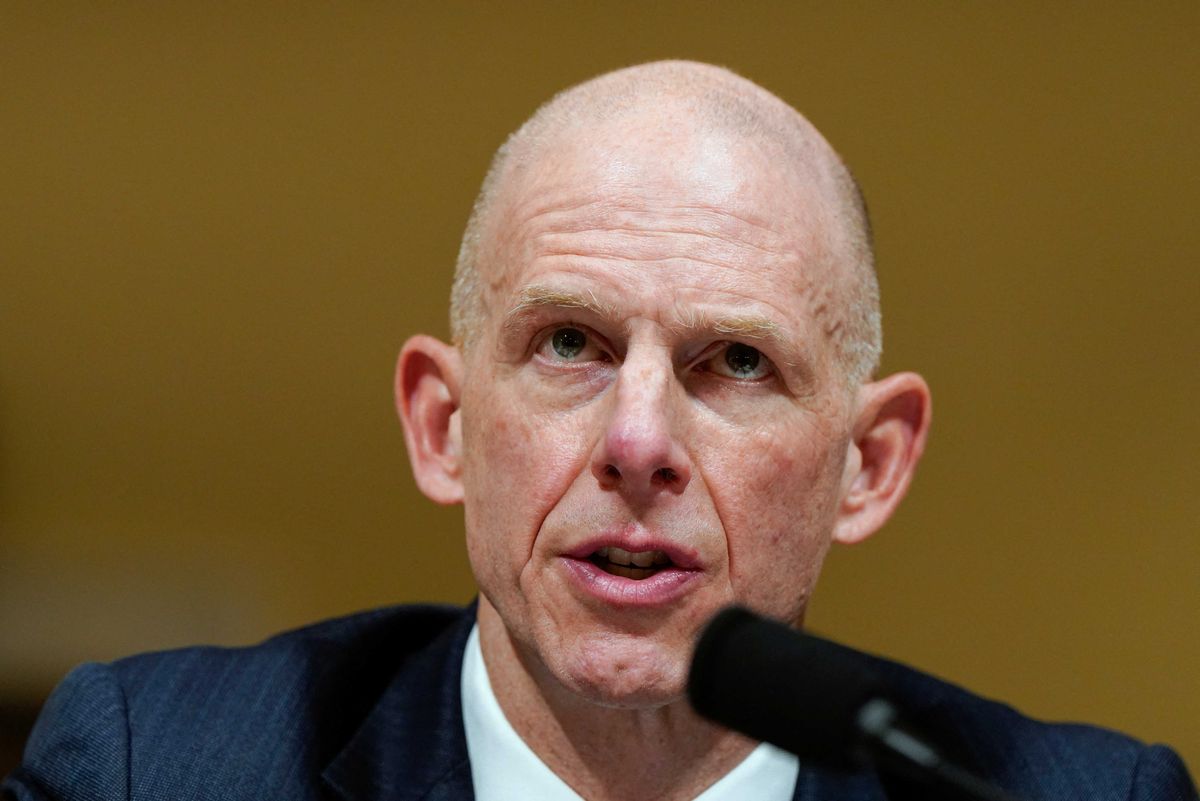
Michael Glasheen, operations director of the FBI’s National Security Branch, testified before the US House Committee on Homeland Security that antifa was “the most immediate violent threat” facing Americans today when it comes to domestic terrorism.

But when Rep. Bennie Thompson (D-Miss.), ranking member of the Homeland Security Committee, asked Glasheen for specifics about this purportedly dire threat, he mostly came up empty.

“So where is antifa headquarters?” Thompson asked him.

Glasheen paused for several seconds and then said, “What we’re doing right now with the organization...” before Thompson interrupted him.

“Where in the United States does antifa exist?” asked Thompson.

“We are building out the infrastructure right now,” Glasheen replied.

“So what does that mean?” asked a bewildered Thompson. “I’m just, we’re trying to get information. You said antifa is a terrorist organization. Tell us, as a committee, how did you come to that? Whether they exist, how many members do they have in the United States as of right now?”

“Well, that’s very fluid,” Glasheen said. “It’s ongoing for us to understand that... no different from al-Qaeda and ISIS.”


Thompson again interrupted and tried to make Glasheen answer his original question.

“If you said antifa is the No. 1 domestic terrorist organization operating in the United States,” he said, “I just need to know where they are, how many people. I don’t want a name, I don’t want anything like that. Just, how many people have you identified, with the FBI, that antifa is made of?”

“Well, the investigations are active...” Glasheen said.

Thompson then became incredulous.

“Sir, you wouldn’t come to this committee and say something you can’t prove,” he said. “I know you wouldn’t do that. But you did.”

Many observers were stunned that Glasheen appeared to know so little about what he proclaimed to be the top domestic terrorist threat facing the US.

“Total amateur hour in US law enforcement,” remarked Democracy Docket news editor Matthew Kupfer, “where the No. 1 terror threat is an organization that does not formally exist and a career FBI official is dancing around before a congressional committee trying to make the Trump strategy sound legit.”

Zeteo editor-in-chief Mehdi Hasan argued that Glasheen’s testimony was proof that the administration was simply concocting domestic terrorism threats with zero basis in reality.

“Wow,” Hasan marveled. “Just a complete admission here that the entire ‘antifa’ threat narrative is totally manufactured by this administration.”

Fred Wellman, a Democratic congressional candidate in Missouri, wondered how many actual dangerous criminals are running free while the FBI focuses on taking down an organization that it apparently knows nothing about.

“This would be comical if there wasn’t real world impact from this idiocy,” Wellman wrote. “We have real crimes and real threats and they are chasing a fake ‘organization’ for politics.”

Democrats on the House Homeland Security Committee also piled on Glasheen, citing his testimony as evidence that the Trump administration is completely unserious about law enforcement.

“If your ‘top threat’ has no headquarters, no organization, and no definition then it’s not a top threat,” they posted on social media. “The Trump administration is ignoring real threats, and the American people see right through it.”

CANADIAN GRANDDADDY OF ANTI-FA


Top FBI official accused of making up terror threat by lawmaker

David Badash
December 11, 2025 
RAW STORY


Operations Director of the FBI's National Security Branch Michael Glasheen speaks during a House Homeland Security hearing entitled "Worldwide Threats to the Homeland," on Capitol Hill in Washington, D.C., U.S. December 11, 2025. REUTERS/Elizabeth Frantz

A top FBI official struggled to explain his claim that Antifa is the “most immediate violent threat” America is facing, as he was challenged to provide details.

Former Trump FBI Director Christopher Wray stated in 2020 congressional testimony that Antifa is “not a group or an organization. It’s a movement or an ideology.” The BBC has explained that Antifa is “a loosely organized, leftist movement that opposes far-right, racist and fascist groups.”

“Antifa is short for anti-fascist,” the BBC added. “It is a loose, leaderless affiliation of mostly far-left activists.”

House Homeland Security Committee Ranking Member Bennie Thompson on Thursday asked Michael Glasheen, FBI national security operations director, to describe “organizations that pose, on the domestic side,” the number one and number two threats to the homeland.

Glasheen asked for clarification.

“Any domestic terrorist organizations that poses a threat to the homeland as we speak,” Thompson replied.

Pointing to President Donald Trump’s designation of Antifa as a domestic terrorist organization, Glasheen said, “That’s our primary concern right now.”

He described Antifa as “the most immediate violent threat that we’re facing on the domestic side.”

“So, where is the Antifa headquartered?” Thompson pressed.

After a pause, Glasheen said: “What we’re doing right now —” before Thompson cut him off.

“Where, in the United States, does Antifa exist?” he asked. “If it’s a terrorist organization — and you’ve identified it as number one.”

“We are building out the infrastructure right now,” Glasheen responded.


“So what does that mean?” Thompson pressed. “Where do they exist? How many members do they have in the United States as of right now?”

“Well, that’s very fluid,” Glasheen said, describing it as “ongoing,” before comparing the situation to Al Qaeda and ISIS.

“I asked one question, sir,” Thompson replied. “I just want you to tell us. If you said Antifa is the number one domestic terrorist organization, operating in the United States, I just need to know where they are, how many people. I don’t want a name. I don’t want anything like that. Just, how many people have you identified with the FBI, that Antifa is made of?”

“Well, the investigations are active,” Glasheen replied.

“Sir, you wouldn’t come to this committee and say something you can’t prove. I know. I knew you wouldn’t do that. But you did.”