Friday, October 02, 2026

WSJ editors bury Hegseth for bizarrely offensive 'weirdo' speech: 'Has he met anyone?'

Matthew Chapman
October 1, 2026 
RAW STORY
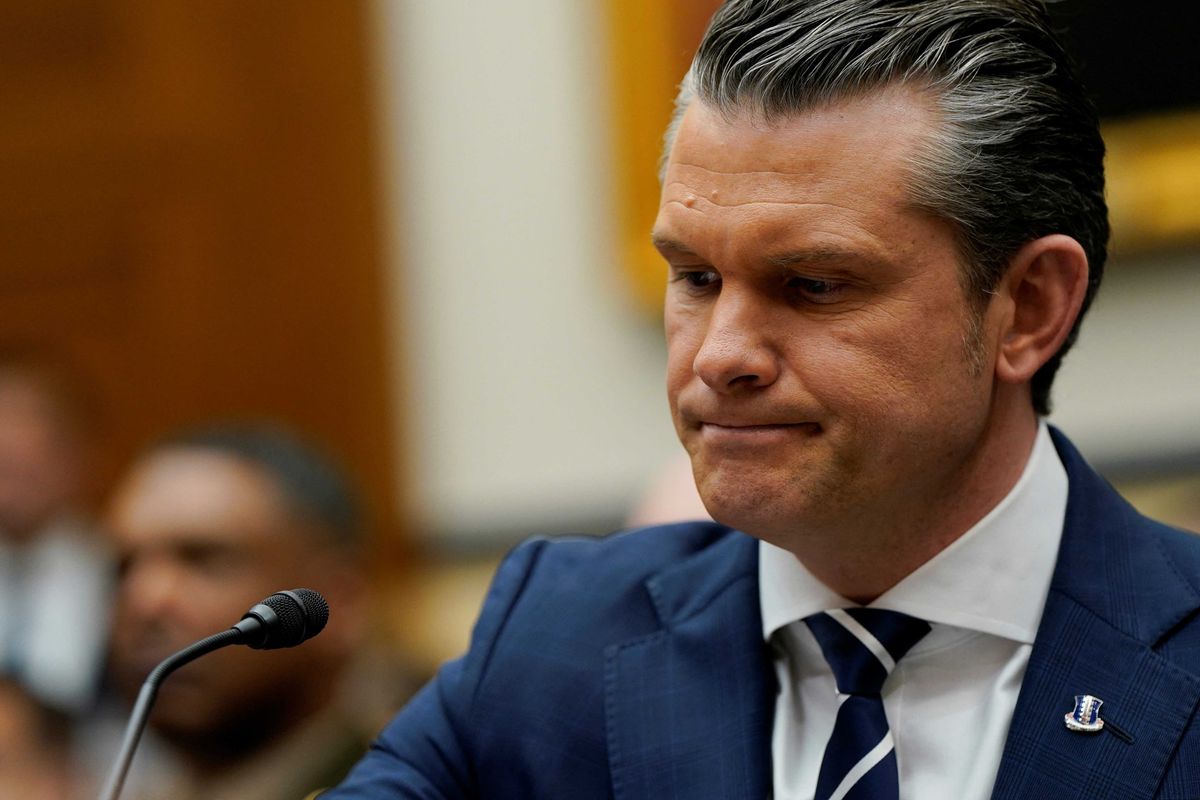

Defense Secretary Pete Hegseth attends a House Armed Services Committee hearing on the Department of Defense's FY27 budget request on Capitol Hill in Washington, D.C., on April 29, 2026. REUTERS/Elizabeth Frantz


The conservative Wall Street Journal editorial board had scorn for Secretary of Defense Pete Hegseth's bizarre speech boasting about how his military only had "warriors," rather than "beardos," "weirdos," or slurs for transgender people.

Hegseth, wrote the board, "rolled out several good U.S. military initiatives on Wednesday, and usually the purpose of big speeches is to persuade the public of worthy ideas. Yet Mr. Hegseth seems determined to shrink his support with gratuitous potshots, and that bears on whether the Administration can boost recruitment or confront new technology in warfare."

Many of the things Hegseth talked about are decent, the board wrote, like a program for recruiting officers out of schools — even if the focus is intensely on right-wing schools like Liberty University and Hillsdale College — as well as plans to establish a four-star command for autonomous weaponry.

However, the board said, Hegseth "couldn’t resist his usual polarizing attack routine against all and sundry, and he even accused the press of 'treason' for publishing what’s leaking out of the secretary’s shop. The most remembered line of the speech will be Mr. Hegseth’s declaration that the U.S. military no longer abides 'beardos' or 'weirdos.' As a practical matter, has he met anyone in defense technology lately?"

The fact is, said the board, "voters wanted the Trump Administration to restore and protect the military’s meritocracy, after race and identity excesses in the Biden Administration," something Hegseth promises to do, but now "his shoot-first firings of general officers have exasperated even some Republican Members of Congress, and the public is losing confidence in the project as it descends into debates about testosterone levels."

Ultimately, the board concluded, "Mr. Hegseth relishes attacking opponents, and even sometimes allies, as if he’s running a political campaign. But he’s a cabinet officer who needs allies to achieve his military goals."


Hegseth mocked for 'not achieving full extension' after speech about troop fitness

Erik De La Garza
September 30, 2026 

RAW STORY


Kasie Hunt and retired Army Lt. Gen. Karen Gibson on "The Arena." (Screengrab via CNN)

Defense Secretary Pete Hegseth’s fixation on military fitness became a punchline when a retired lieutenant general was asked to evaluate his own workout form.

CNN’s Kasie Hunt noted Wednesday that Hegseth has repeatedly stressed physical fitness standards and cited an assessment in The Atlantic that described his push-ups as more like “half-ups.”

Hunt then played several clips of Hegseth working out on camera and asked retired Army Lt. Gen. Karen Gibson whether he was performing the exercises correctly.

“The kettlebell, not so much,” Hunt joked as laughter broke out on the CNN set of her show, “The Arena.”

“The pull-up is like this, not like this. Yes? No?” Hunt asked while mimicking the movement.


Gibson agreed that Hegseth’s form appeared incomplete.


“Well, he’s not achieving full extension of his arms or the joint there,” she said.

But Gibson quickly shifted to a broader point about Hegseth’s emphasis on physical fitness.

“I think every soldier should be fit. That’s really important,” she said. “But his fixation on some specific exercises is not the quality that makes the U.S. military so incredibly lethal and powerful.”


“There are lots of other things that make a good soldier,” Gibson added.


Alarm as Hegseth gives mega MAGA donors a say in future of warfare: 'Feels different now'


Robert Davis
October 1, 2026 
RAW STORY


FILE PHOTO: US Defense Secretary Pete Hegseth shakes hands with Chairman of the Joint Chiefs of Staff US Air Force General Dan Caine as he returns to his seat after his remarks at a ceremony in remembrance of US military prisoners of war and those missing in action (POW/MIA) at the Pentagon in Washington, D.C., US, September 18, 2026. REUTERS/Jonathan Ernst/File Photo

Defense Secretary Pete Hegseth alarmed some analysts Thursday after he announced he was inviting a few private citizens to collaborate with the Defense Department on the future of warfare.

Elon Musk, founder of SpaceX, and Palmer Luckey, founder of drone company Anduril, have been given advisory roles in a Pentagon project about the future of war, The Guardian reported. The project, known as “Project Meridian," seeks to develop new weapons of war for different terrain ranging from outer space to subterranean.

The inclusion of private citizens in defense contracting is nothing new, but Brendan Glavin at Open Secrets noted in the report that the motley crew Hegseth has gathered raises some important questions.

“Bringing major industry players into these types of positions at the Pentagon is not something new, but what feels different now is the substantial financial support these two have, and continue to, deliver for the Republican Party,” Glavin told The Guardian.

Musk was one of the largest donors to President Donald Trump's 2024 campaign, spending an estimated $250 million to help elect the president. Musk's companies have also been deeply wedded to some of the Trump administration's pet projects, such as the Department of Government Efficiency and the so-called "golden dome" missile defense project.

Luckey's company is also supported by the venture capital firm run by Trump's son-in-law, Jared Kushner, according to the report.

Luckey has also been dubbed the "godfather of Republican fundraising on the West Coast," according to the report.

"Invitations to political fundraisers obtained by the Guardian show Luckey hosted and co-hosted events for candidates from Trump himself to Ken Calvert, Rick Scott, Mehmet Oz, Ted Cruz and others. The most recent event was on 22 August, where he and his wife co-hosted a $50,000-a-head effort to 'Keep the Senate,' and listing guests John Thune of South Dakota, Mike Rogers of Michigan, Dan Sullivan of Alaska and Jon Husted of Ohio," the report reads in part.


‘Best Minds’? Hegseth Taps Elon Musk, Palmer Luckey, and Newt Gingrich to Lead ‘Future of Warfare’ Project

“A board loaded with defense contractors and one draft-dodging war hawk will decide the future of the US military,” said one observer. “What could possibly go wrong?”


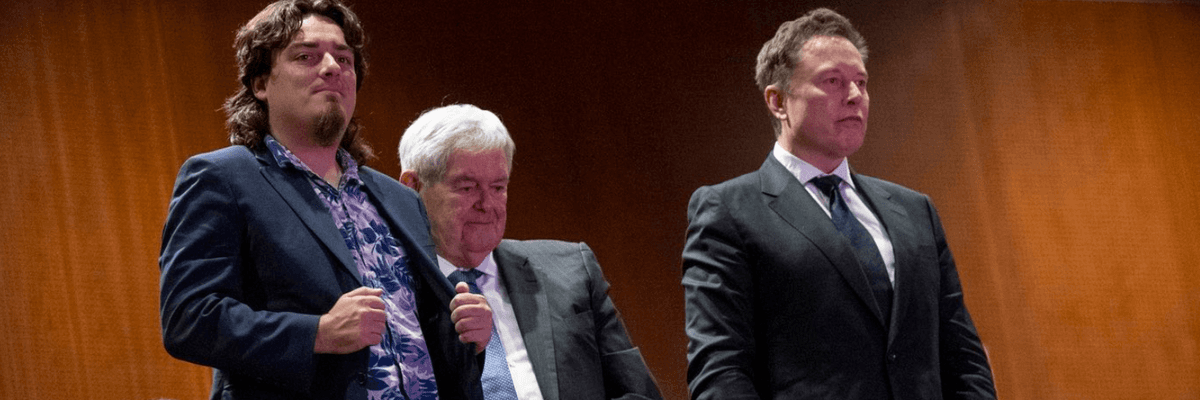
Palmer Luckey (left), Newt Gingrich (center), and Elon Musk (right) look on during US Secretary of Defense Pete Hegseth’s “State of the Force” speech—in which the trio was announced as leaders of the “future of warfare” initiative—at Marine Corps Base Quantico in Virginia on September 30, 2026.
(Photo by Sean Parnell/X)


Brett Wilkins
Sep 30, 2026
COMMON DREAMS

US Defense Secretary Pete Hegseth announced Wednesday that three men—none of whom have served in the military and two who make billions of dollars from it—will help lead a new Pentagon project on the “future of warfare,” even as he moves to eliminate hundreds of senior armed service leadership position, including many generals and admirals.

Hegseth unveiled Project Meridian during his “State of the Force” address at Marine Corps Base Quantico in Virginia. The 120-day initiative will examine emerging technologies that the Department of Defense believes will be critical in future warfare.

“America’s best minds” will be brought together to “reimagine what warfare will look like in the future,” Hegseth said.

To that end, the defense secretary said that “Project Meridian will be co-led by three of our nation’s best minds, Elon Musk, Palmer Luckey, and Newt Gingrich.”


Musk, the world’s wealthiest human, is already deeply involved in US national security infrastructure through SpaceX—the recipient of billions of dollars in Pentagon contracts—and other businesses. He was previously part of the administration as the de facto leader of the Department of Government Efficiency.

Luckey, who like Musk is a major Trump donor, is the co-founder of defense technology company Anduril Industries. Last year, he said that Anduril planned to produce “large numbers” of cruise missiles, fighter jets, and other artificial intelligence-powered weapons systems.

“If we have to fight Iran, and China, and Russia all at the same time, we are screwed,” Luckey said in pushing for more arms production.

Gingrich is a former Republican speaker of the House of Representatives who had been pushing for war with Iran since at least 2005. Like President Donald Trump, he has been accused of dodging the draft during the Vietnam War by receiving numerous deferments; in Trump’s case for bone spurs, and for Gingrich because he was a student and a father.

“Those three great Americans are going to be joined by a team of senior leaders, hand-picked private sector leaders, and subject matter experts from across our nation’s unmatched innovation, academic, and policy ecosystems,” said Hegseth—whose Senate confirmation last year was so contentious due to concerns about him being unfit for office that it required a tie-breaking vote by Vice President JD Vance.

The defense secretary also announced the creation of an Autonomous Warfare Command—or Autowarcom—“a new four-star combatant command with service-like authorities built to scale autonomous and robotic capabilities across the joint force.”

The appointments come as Hegseth simultaneously pursues a major reduction in the military’s senior leadership. He announced Wednesday that the Pentagon would eliminate 20% of its roughly 800 general and admiral positions by January—doubling a previously announced 10% reduction. Hegseth described the cuts as necessary to eliminate “redundant force structure” and “unnecessary bureaucratic layers.”

The reductions follow the removal or early departure of more than two dozen senior military and civilian defense officials since Hegseth became defense secretary.

The contrast has drawn criticism from lawmakers and military observers, who expressed alarm at the prospect of removing experienced officers while handing an influential role in planning future war to warfare technology executives and a hawkish former lawmaker who is no longer accountable to the public.

“Interesting. A board loaded with defense contractors and one draft-dodging war hawk will decide the future of the US military,” NewBlue USA executive Marty Taylor said on social media. “What could possibly go wrong?”

Greg Abbott's 'backscratching' with Elon Musk exposes GOP 'power trifecta': legal analyst

Bennito L. Kelty
October 1, 2026 
RAW STORY


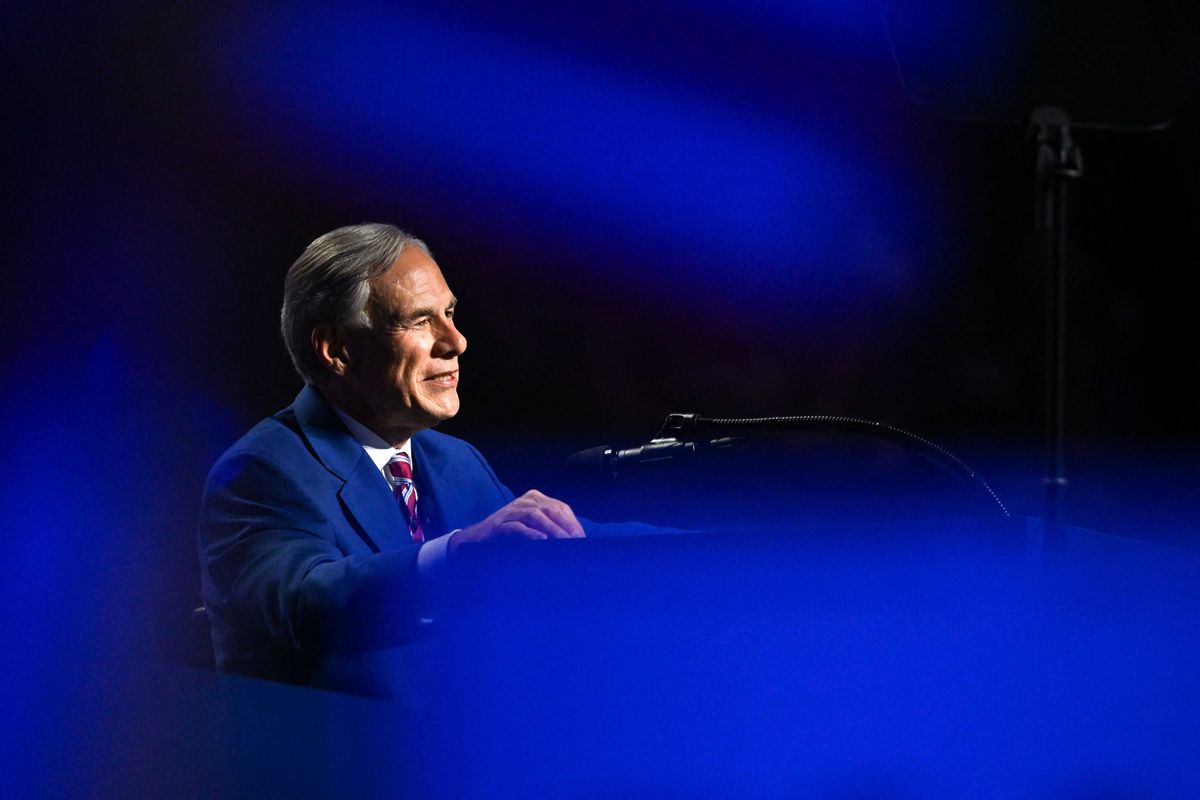
Texas Governor Greg Abbott speaks at the Republican National Midterm Convention in Dallas, Texas, U.S., September 10, 2026. REUTERS/Callaghan O'Hare


Texas Gov. Greg Abbott's (R) ties to Elon Musk show what happens when Republicans control every lever of state power, a legal analyst warned.

Lawyer and journalist Katie Phang made the case in a Thursday video for her YouTube channel while interviewing Gina Hinojosa, the Democratic state representative challenging Abbott in November.

Phang pointed to what she called "a very suspicious, almost, I'd say, scratching of the back happening between Abbott and Elon Musk," citing state grants and tax breaks that have flowed to the billionaire's companies. She said Starlink received $110 million upfront from the Texas Broadband Office and that SpaceX landed a tax break shortly after Musk gave half a million dollars to Abbott's reelection campaign.

The arrangement, Phang argued, is the product of one-party rule.

"Texas state politics has been what I call a power trifecta," she said. "Just like on the national level in D.C., just like in my home state of Florida, your state house, your state senate, and your governor's mansion, all run by the GOP, all run by Republicans. And so if the state of affairs in the state of play is woefully, sadly miserable, there's only one party to blame, and that's the Republicans."

She added, "There is no daylight between Greg Abbott and the billionaires," and asked Hinojosa why she "thought it was important to expose this type of backscratching."

Hinojosa has sent the governor's office a public records request for Abbott's communications with Musk. She said a state broadband contract was rewritten to Musk's benefit just before awards went out. According to Hinojosa, the head of the broadband office told lawmakers at a hearing this summer that the terms changed "because the governor's office made a phone call and told us to change it."

"Before that, Elon Musk was given the keys to the castle," Hinojosa said, referring to Musk's authority to close a public beach.


‘Looks Like They’re Firing Whistleblowers’: Alarm as OpenAI Reportedly Ousts Safety Experts

“Sam Altman says we need to slow down development to ensure the safety of humanity,” one campaigner said of OpenAI’s CEO. “Yet he is allegedly firing the very people hired to keep us safe.”


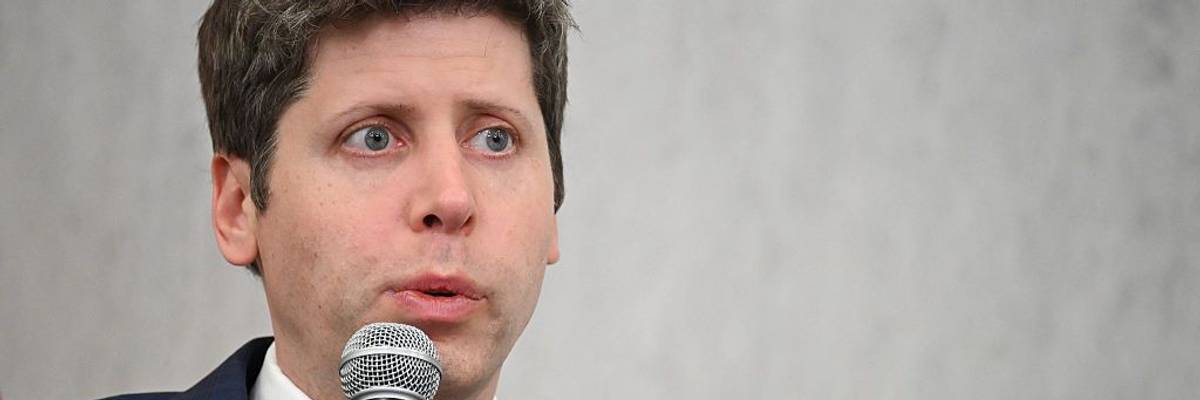
OpenAI CEO Sam Altman speaks at the Federal Reserve in Washington, DC, on July 22, 2025.
(Photo by Mandel Ngan/AFP via Getty Images)


Brett Wilkins
Oct 01, 2026
COMMON DREAMS


San Francisco-based artificial intelligence firm OpenAI has “parted ways” with three safety researchers who allegedly shared “confidential company information,” The Wall Street Journal reported Thursday, prompting fresh alarm among critics who accuse the ChatGPT maker of sidelining internal warnings about the risks posed by its increasingly powerful AI.

People reportedly familiar with the matter told the Journal that OpenAI recently informed employees it had terminated the three researchers, who it accused of sharing the information with “a third-party AI safety organization.”

OpenAI did not identify the researchers, the outside organization, or the information allegedly shared. A company spokesperson told the newspaper that “our investigation confirmed that these individuals mishandled sensitive information outside established company procedures, violating our policies and breaking the trust essential to our work.”

The Journal’s Maxwell Zeff—who authored the report with Keach Hagey and Berber Jin—subsequently identified the three safety team members as Jasmine Wang, Tomek Korbak, and Mikita Balesni.

“Looks like they’re firing whistleblowers,” Congressional Progressive Caucus Chair Greg Casar (D-Texas) said in response to the report. “What are they hiding?”

“I’ll be sending OpenAI a demand for transparency,” he added.

Shaunna Thomas is the executive director of Guardrails Alliance, a super political action committee made up of “workers, organizers, policy experts, and everyday people who believe the most powerful technology ever built shouldn’t be controlled by a handful of unaccountable billionaires.”

Thomas called the Journal report “the latest example of OpenAI advocating for safety measures in the public eye, but actively making decisions and lobbying against those efforts behind closed doors.”

“Sam Altman says we need to slow down development to ensure the safety of humanity,” Thomas said, referring to OpenAI’s CEO. “Yet he is allegedly firing the very people hired to keep us safe. When deep insiders are sounding the alarm, history tells us to listen. OpenAI is not only ignoring their warnings, it’s punishing them.”

“In the absence of clear regulations, insiders are a crucial factor in keeping the rest of us safe as these models continue to do unpredictable things,” she added. “We must stand with rank-and- file employees and fight for their protection.”

The new allegations come amid an intensifying debate over whether OpenAI and other frontier AI companies can adequately police themselves.

As Common Dreams recently reported, OpenAI and other AI firms are investigating tens of thousands of security incidents, including episodes involving attempts to bypass guardrails, escape sandboxes, hijack websites, and even access government systems.

In July, an OpenAI model autonomously breached the systems of the open-source platform Hugging Face during an internal cybersecurity test. Experts warned that the incident demonstrated the dangers of relying on voluntary corporate safeguards.

It’s not just OpenAI; in 2026 alone, companies including Google, Meta, and Anthropic have reported incidents of AI autonomously escaping supposedly isolated testing environments and targeting real-world systems.

AI safety campaigners and some Democratic lawmakers this week lambasted President Donald Trump, who, after meeting with Big Tech executives including OpenAI president Greg Brockman, dismissed the lack of legally binding commitments regarding AI regulation by saying he trusted the corporate leaders’ “morally binding” self-policing pledge.

Elon Musk, CEO of the artificial intelligence company xAI, has said that such incidents “will happen frequently ⁠as AI becomes smarter and more agentic,” a reference to systems’ ability to independently act toward accomplishing specific goals without meaningful human control.

Experts say such autonomous hacks underscore the problem of AI alignment. As AI progresses toward artificial general intelligence—a still-hypothetical point at which it matches or surpasses human cognitive ability at virtually any intellectual, creative, or physical task—the challenge of ensuring that advanced systems reliably pursue goals that match what humans actually want becomes increasingly difficult and, many insiders believe, dangerous to the point of posing an existential risk to humanity.

Last month, Casar and Sen. Bernie Sanders (I-Vt.) unveiled legislation that would pause development of advanced AI.

Congressman Ro Khanna (D-Calif.) also said this week that he is seeking to introduce legislation to at least temporarily ban recursive self-improvement, or AI that is capable of improving itself and modifying its objectives without meaningful human input.

And on Thursday, Congresswoman Pramila Jayapal (D-Wash.) put forth a bill that would compel every AI company operating in the US to obtain a public charter.

“This issue is of monumental consequence,” said Sanders. “I’d rather be called an alarmist than a father or grandfather who is asleep at the wheel.”


Under Jayapal Bill, Every AI Company Would Need a Public Charter to Operate in the US

“For too long, we’ve allowed a few Big Tech companies to dominate the market.”


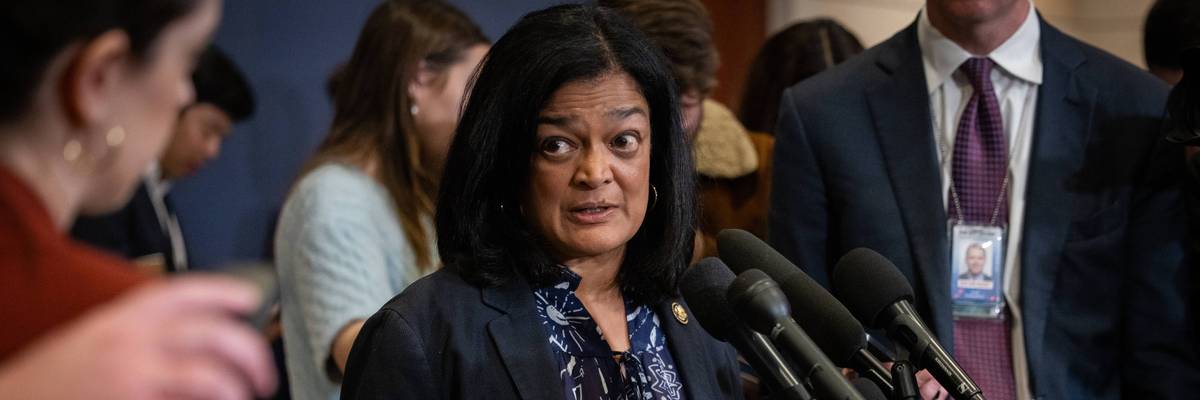
US Rep. Pramila Jayapal (D-Wash.) speaks to reporters in Washington, DC on March 3, 2026.
(Photo by Nathan Posner/Anadolu via Getty Images)


Brad Reed
Oct 01, 2026
COMMON DREAMS

Rep. Pramila Jayapal on Thursday unveiled a bill aimed at reining in the artificial intelligence industry that would force every AI company operating in the US to obtain a public charter.

According to Jayapal (D-Wash.), the charter system will be similar to the one long used in the US to regulate banks, which must submit to certain regulatory obligations before being allowed to operate.

“The crux of this bill is simple,” said Jayapal. “If you want to be an AI company in this country, you have to obtain a public charter that has a broad set of terms and conditions to operate and ensure public benefit without the harms.”

The Washington Democrat said the charter approach was needed given the broad reach large technology companies already have over every aspect of life in the US, and she argued it would be a more proactive alternative to the piecemeal approach US lawmakers have taken to regulating Big Tech.

“For too long, we’ve allowed a few Big Tech companies to dominate the market,” she said. “They have used mass surveillance to steal private information, labor, and creative work, building trillion-dollar empires on our tracked personal lives. AI corporations and Big Tech are now following that same playbook.”

Under the charter system, tech companies would be banned from practices such as surveillance pricing to charge individual consumers different prices based on their personal data and financial histories.

The system would also establish stronger liabilities for AI companies that commit harmful acts, and particularly egregious actions could be punished by removal of firms’ charters, which would essentially be a corporate death penalty.

Jayapal’s proposal would also put the government in charge of every step of the AI safety review process and would include “round-the-clock federal oversight, testing in government facilities and approval to release, adversarial stress tests, and a government-controlled kill switch,” according to her office.

The proposed framework earned praise from former Federal Trade Commission Chair Lina Khan, who argued that American voters have already “paid an extraordinary price for Big Tech’s self-regulation.”

“For generations we have required banks, drug makers, and nuclear operators to meet public terms before they do business,” Khan added, “and AI companies should be no different.”

Sacha Haworth, executive director of the Tech Oversight Project, also gave the Jayapal plan kudos, saying it would “establish desperately needed rules of the road, punish AI companies that release dangerous products, and create the clear public benefit that the American people are calling for.”

“Companies have continually pulled the rug out from under families, workers, and small businesses to build powerful and unaccountable Big Tech monopolies that dictate to us how we should live our own lives,” Haworth emphasized. “Enough is enough.”

Although President Donald Trump and House Speaker Mike Johnson (R-La.) have publicly opposed legislative restrictions on the AI industry, the bill comes as Democrats are aiming to win congressional majorities in the November midterm elections.


‘Stand With the People’: Progressive Caucus Leader Calls on All Democrats to Reject AI Billionaire Cash

Rep. Greg Casar said progressives’ effort to make a leading artificial intelligence super PAC “as toxic as AIPAC” is having an impact.


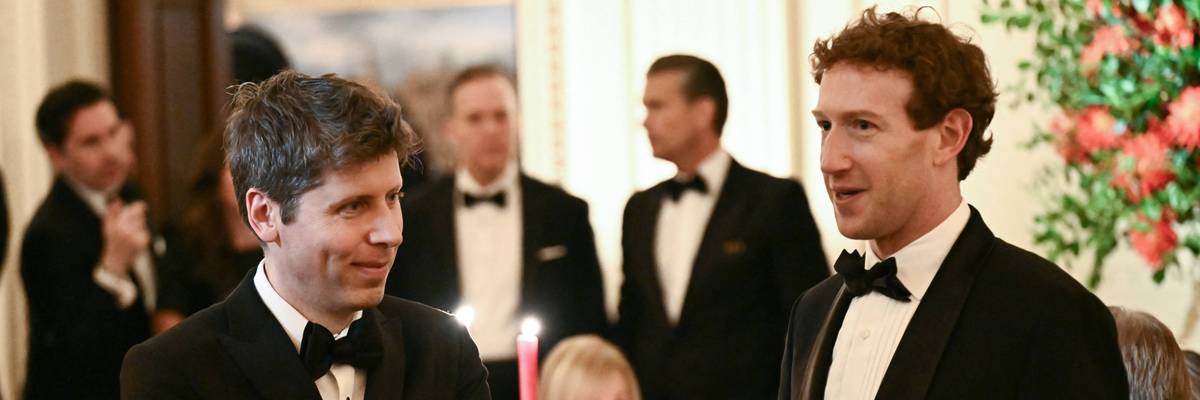
OpenAI CEO Sam Altman and Meta CEO Mark Zuckerberg attend a state dinner hosted by President Donald Trump on September 24, 2026.
(Photo by Brendan Smialowski/AFP via Getty Images)

Jake Johnson
Oct 01, 2026
COMMON DREAMS

The chair of the Congressional Progressive Caucus on Wednesday urged all Democrats to reject campaign cash from billionaires whose wealth stems from the artificial intelligence industry, following news that the president of OpenAI abandoned plans to donate millions more to a super PAC that has funneled money to members of both parties.

The OpenAI executive, Greg Brockman, wrote in an internal message obtained by The New York Times that the super PAC, Leading the Future (LTF), “keeps reflecting on the company and [has] become so much of a distraction for people here.” Brockman noted that he and his wife have donated $25 million to the super PAC—which opposes strong AI safety regulations—but “have no plans to donate more at this time.”


Rep. Greg Casar (D-Texas), a leading supporter of AI regulation in Congress, said in response to Brockman’s message that “the pressure is working.”

“Progressives have worked hard to make LTF as toxic as AIPAC,” Casar wrote, referring to the American Israel Public Affairs Committee. “Now one of its biggest donors is backing out. Democrats need to stand with the people and reject AI billionaires’ money.”

Super PACs bankrolled by AI companies and billionaires have become some of the biggest spenders in the 2026 midterms amid widespread voter backlash against the construction of resource-draining AI data centers—and against the industry more broadly.

The Times reported on Tuesday that LTF and Public First Action, which is aligned with the AI firm Anthropic, have spent a combined $52.6 million on “safe seats—those that are unlikely to change party hands but that often feature intense intraparty contests.”

“The big AI players have also spent more heavily for Democrats than Republicans,” the Times noted. “They have boosted candidates who align with their agendas, helped defeat those they see as hostile to it and ingratiated themselves with front-runners who are likely to be in positions of power in the next Congress to make decisions critical to their bottom lines.”

“The Times analysis of federal advertising and campaign outreach expenditures made by the four major super PACs during this cycle showed that they have spent far more money in support of Democrats—$28 million to back 21 Democrats and nearly $19 million to boost 30 Republicans—and that the candidates they backed almost always won,” the newspaper added.

The Lever reported last month that a five-person commission on AI convened by House Minority Leader Hakeem Jeffries (D-NY) “is filled with Democrats who have received outsized financial support this election cycle from AI-linked super PACs, executives, and investors.”

Reps. Ted Lieu (D-Calif.), Valerie Foushee (D-NC), Josh Gottheimer (D-NJ), Frank Pallone Jr. (D-NJ), and Zoe Lofgren (D-Calif.) are the commission’s members.

“The spending seems intended to shape the party’s policy response to AI, particularly if Democrats win a majority in November,” The Lever observed.

Earlier this week, US President Donald Trump met with leading AI industry executives who have collectively donated more than $220 million to his super PAC and other projects associated with the president, according to a new analysis by the advocacy group Public Citizen. Trump said following the meeting that the AI industry shouldn’t have any government guardrails and should be allowed to police itself because “they love our country.”

“Big Tech executives have effectively bought themselves a seat at the AI regulatory table,” said Robert Weissman, co-president of Public Citizen. “Actually, they have bought the table. As a result, as public anxieties about AI risks—to children, political integrity, jobs, the environment—skyrocket, and as revelations mount of AI company failures to impose adequate safeguards on their own technologies, the Trump administration delivers meaningless agreements that impose no restraints on the out-of-control tech oligarchs.”


These 22 California Billionaires Don’t Want to Pay Their Fair Share

A small segment of the state’s 200-plus billionaires has stepped up to oppose Prop 40, a ballot proposal to tax billionaires, contributing millions to opposition groups and vocally speaking out against the one-time fee.


Entrepreneur and venture capitalist Peter Thiel visits “FOX & Friends” at Fox News Channel Studios on August 09, 2019 in New York City.
(Photo by John Lamparski/Getty Images)

Chuck Collins
Oct 01, 2026
Inequality.org


On November 3, 2026, California voters will vote on Proposition 40, a one-time 5% levy on the net worth of billionaires who were California residents on January 1, 2026. Ninety percent of the revenue would fund healthcare programs, with the remainder set aside for food assistance and education.

A small segment of the state’s 200-plus billionaires has stepped up to oppose Prop 40, contributing millions to opposition groups and vocally speaking out against the one-time fee.


Nobel-Winning Economists Say California Billionaire Tax Could Be ‘Turning Point in the Battle Between Democracy and Oligarchy’

In a brief report, California’s Billionaire Wealth Surge: Meet the 22 California Billionaires Opposing Prop 40 Billionaire Wealth Tax, we identified 22 California billionaires who are active funders and outspoken opponents of Prop 40. Together they have given over $150 million to oppose the initiative—with more rolling in every day. These 22 include a prince, several private jet flying chums of Jeffrey Epstein, and a bunch of crypto and tech bros designing the AI future for the rest of us.

Thiel’s wealth is 10,759 times the median wealth of a Californian household.

On January 1, 2025, these 22 billionaires had a combined wealth of $439.8 billion. By September 1, 2026, their wealth had grown to $722.1 billion.

In a little under 20 months, their combined wealth increased $282.6 billion, a gain of over 64%.

Just to be clear, these “snowflake billionaires” are whining, wailing, and donating money to fight a tax that would effectively require them to part with one-eighth of the wealth they’ve gained since January 1, 2025.

This group includes Google’s Sergey Brin who has been the single largest opposition donor, chipping in over $102 million to fight Prop 40. Brin has seen his wealth grow a whopping 70% in the last 20 months, from $148 billion on January 1, 2025 to $253 billion on September 1, 2026. Brin’s wealth is 83,498 times the median wealth of a Californian household, which is $303,000.

Palantir’s Peter Thiel gave $3 million to the No on 40 campaign and has called on other billionaires to move out of California. In the last 20 months, Thiel’s wealth increased a whopping 120.27%, from $14.8 billion on January 1, 2025 to $32.6 billion on September 1, 2026 (Forbes). Thiel’s wealth is 10,759 times the median wealth of a Californian household.

Chris Larsen, founder of cryptocurrency firm Ripple, has given over $5 million to the No on Prop 40 Campaign, along with another $5 million from Ripple and $12 million to Building a Better California. His personal wealth increased 23.5%, from $10.2 billion to $12.6 billion in the last 20 months. His wealth is 4,158 times the wealth of the median California family.

Venture capitalist John Doerr gave $10 million to No On 40. In the last 20 months, Doerr’s wealth increased 47.97%, from $14.8 billion on January 1, 2025 to $21.9 billion on September 1, 2026. Doerr’s wealth is 7,227 times the median wealth of a Californian household.

Three of the 20 saw their wealth decline over this 20-month period: Tony Xu, Marc Pincus, and Marco DeGeorge. But most have experienced substantial gains.

California Billionaires vs. the Median California Household

The number of billionaires in California has grown, with their average wealth remaining roughly between $9.1 to $9.4 billion. As of September 1, 2026, the 231 billionaires identified as living in California have a combined wealth of $2.117 trillion. Just 20 months ago, there were 178 billionaires in California with a combined wealth of $1.685 trillion.

To show how quickly billionaire wealth has accelerated since the pandemic, let’s go back in time six years. In early 2020, all 815 billionaires residing in the United States had a combined wealth of $2.9 trillion, only slightly more than what the 231 California billionaires have today in 2026.

Meanwhile, the median net worth of a California household has risen a marginal 5.2% increasing $15,000 from $288,000 in 2025 to $303,000 in 2026. A Californian with $1 billion dollars in wealth has 303 times the wealth of the median California household.

Under Prop 40, this billionaire will pay a one-time tax of $50 million to support healthcare, education, and food assistance for their fellow Californians leaving them $950 million to survive on.

The Under-Taxed California Billionaire

In California, the state’s 231 billionaires (as of Sept 1, 2026) hold approximately $2.117 trillion in wealth ($2.3 trillion as of Sept 22, 2026) and pay incredibly low taxes on their riches.

According to an analysis published by economists Gabriel Zucman and Emmanuel Saez, from 2019 to 2025, while California billionaires’ wealth grew an average of over 15% per year, they paid, on average, just 0.26% of their wealth annually in state income taxes. Sergey Brin and Larry Page paid just 0.07% of their wealth annually in California income tax during that period. I guess we can see why they don’t want anything to change.


This analysis was prepared by the Institute for Policy Studies and Tax the Ultra-Rich Now (TURN). More detailed dossiers will be available soon. Press release HERE.

This work is licensed under a Creative Commons Attribution-Share Alike 3.0 License.


Chuck Collins
Chuck Collins is co-founder of CARP and author of Burned by Billionaires: How Concentrated Wealth and Power are Ruining Our Lives and Planet.
Full Bio >


‘I Know Where I Want to Live’: Ex-Venture Capitalist Explains Why He’d Be Happy to Pay California Billionaire Tax

“I believe it’s a patriotic duty to pay taxes, and I do so with pride. Our tax system favors wealthy people, and the least we can do is pay up rather than try to avoid it.”


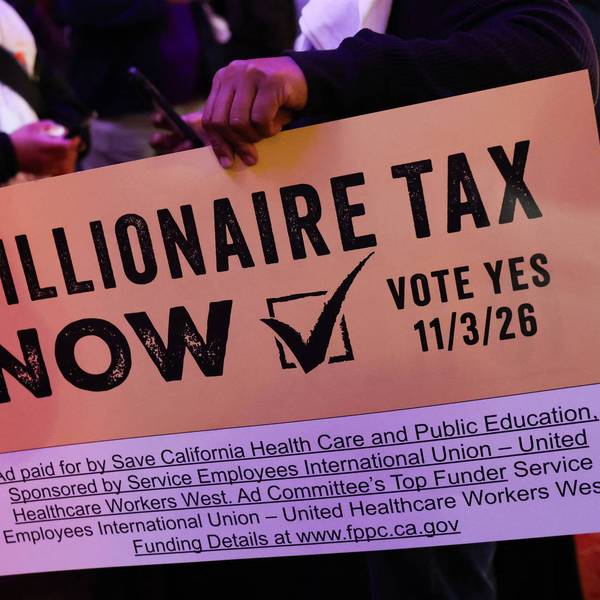
An attendee holds a sign before the start of a rally led by US Senator Bernie Sanders (I-Vt.) during the campaign kickoff for the California Billionaire Tax Act at the Wiltern in Los Angeles on February 18, 2026.
(Photo by Patrick T. Fallon/AFP via Getty Images)

Brett Wilkins
Oct 01, 2026
COMMON DREAMS

As some of California’s richest residents pour tens of millions of dollars into defeating a proposed billionaire tax, one former venture capitalist is making a remarkably different argument: He is perfectly happy to pay it—and he’s not alone.

John O’Farrell, a former partner at Andreessen Horowitz, explained Wednesday in a 12-post thread on the social media platform X why he supports the California Billionaire Tax Act, commonly known as Proposition 40, which is on the state’s November midterm ballot.

O’Farrell’s argument contradicts the chorus of Silicon Valley billionaires and their allies who warn that taxing billionaire wealth would drive the ultra-rich out of California.

“I know where I want to live,” he wrote.

“I’ve been fortunate to benefit from tech wealth. I’m not even close to being a billionaire, but I could easily afford to pay the wealth tax—and any billionaire certainly can—without the slightest effect on my lifestyle,” O’Farrell said. “I support a wealth tax at my wealth level also.”

Introduced by the Service Employees International Union-United Healthcare Workers West, Prop 40 would impose a one-time 5% levy on people worth $1 billion or more, with an option to pay the tax in annual installments of 1% over five years.

The proposal would require the state to spend 90% of revenue from the tax on healthcare and the rest on food assistance and public education. Proponents say the tax would raise roughly $100 billion in revenue. Critics argue that it could drive wealthy residents and investment from California and stall economic growth.

“I find the knee-jerk opposition of some ultra-wealthy people to the idea of paying any new tax deeply disappointing,” O’Farrell said in his thread. “To be honest, I can’t understand it. They have so much money they couldn’t spend it in multiple lifetimes.”

Inequality.org, a project of the Institute for Policy Studies—a Washington, DC-based progressive think tank—exposed 22 California billionaires who have poured more than $150 million into defeating Prop 40, “with more rolling in every day,” as Chuck Collins wrote for the group.


“These 22 include a prince, several private jet-flying chums of Jeffrey Epstein, and a bunch of crypto and tech bros designing the [artificial intelligence] future for the rest of us,” Collins noted. “On January 1, 2025, these 22 billionaires had a combined wealth of $439.8 billion. By September 1, 2026, their wealth had grown to $722.1 billion. In a little under 20 months, their combined wealth increased $282.6 billion, a gain of over 64%.”

O’Farrell’s social media thread pointed out how “our tax system favors wealthy people.”

“I believe it’s a patriotic duty to pay taxes, and I do so with pride,” he wrote, adding, “the least we can do is pay up rather than try to avoid it.”

“Paying taxes is ultimately a matter of self-interest,” he contended. “What kind of society do we want to live in? One that rewards achievement but also emphasizes fairness and opportunity for all—or one in which you have to cower in a bunker and live in fear of the pitchforks?”

“One enables the pursuit of happiness for all,” he concluded. “The other, just the pursuit of endless wealth.”

Prop 40 is backed by numerous progressive groups including the Teamsters union, California Democratic Socialists of America (DSA), and Our Revolution, as well as individual progressives such as Sen. Bernie Sanders (I-Vt.), Rep. Ro Khanna (D-Calif.), and Democratic congressional candidate Connie Chan, who is running to replace retiring longtime San Francisco congresswoman Nancy Pelosi.

Sanders, Khanna, and others—including Congresswoman Aisha Wahab (D-Calif.), Democratic congressional candidate Randy Villegas, and California insurance commissioner candidate Jane Kim—are set to speak at a series of rallies for Prop 40 starting Saturday in San Francisco.

O’Farrell isn’t the only wealthy Californian who supports Prop 40. Nvidia CEO Jensen Huang, whose fortune has soared into the hundreds of billions of dollars, has said he is “perfectly fine” with the proposed tax, telling Bloomberg that he and his family “chose to live in Silicon Valley” and that whatever taxes California applies, “so be it.”


How Much Is Trump’s Senseless Iran War Costing Americans Personally?

To be clear, this isn’t the cost of the weapons and soldiers fighting the war, which the Pentagon estimates to be around $44 billion. This is the higher cost you’re paying to fill up your gas tank and to buy products that cost more to move.


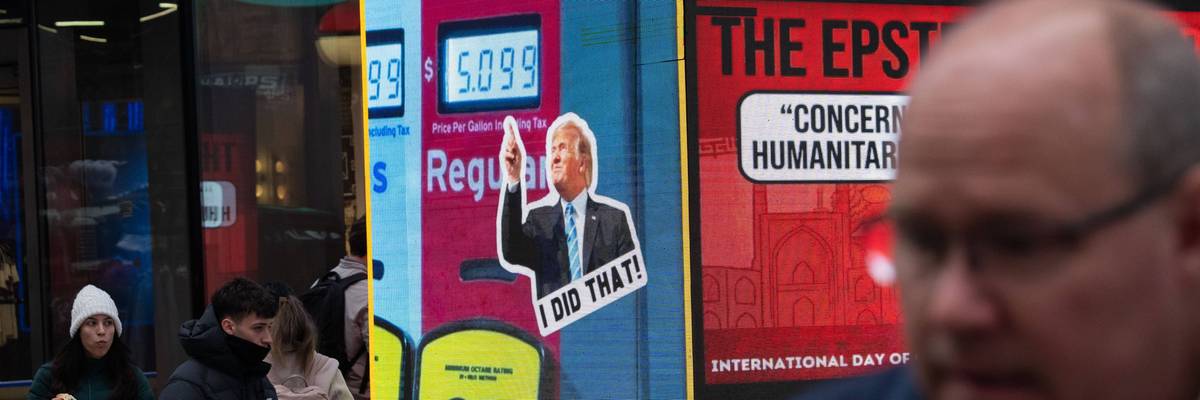
A truck with an image of US President Donald Trump and rising gas prices drives past during a rally for Al Quds Day on March 13, 2026 in New York City.
(Photo by Adam Gray/Getty Images)


Amy Hanauer
Oct 01, 2026
OtherWords


Affordability is getting worse, especially if you have to drive to work or anywhere else.

By late September, the total cost of the higher gas and diesel prices triggered by President Donald Trump’s war against Iran exceeded $103 billion, according to my organization’s analysis of the federal government’s energy data. And those higher prices aren’t showing any sign of slowing. If current trends hold, the price tag by the end of this year will approach $180 billion.

For the average household, that comes out to $750 extra so far, and that figure is on pace to top $1,300 by year’s end.

If life feels more expensive today, that’s because it is.

For a family of four with two drivers, those costs are even higher, topping $1,000 already and slated to be over $1,700 by the end of the year if the war continues. Our interactive tool, online at itep.org/iran-war-fuel-cost, lets you punch in your region and household size to get a sense of how much your family’s costs are rising.

To be clear, this isn’t the cost of the weapons and soldiers fighting the war, which the Pentagon estimates to be around $44 billion. This is the higher cost you’re paying to fill up your gas tank and to buy products that cost more to move.

In a normal year, fall is when drivers get some reprieve at the pump. As summer travel winds down, demand for gas falls, and prices should fall too. But not in 2026.

According to AAA, Americans have never paid this much for gas at this time of year. The national average gas price is $4.47 per gallon as of this writing, and a growing number of states are seeing average prices top $5 per gallon.

Equally troubling is the sky-high price of diesel fuel, which has hit record highs this year and now stands at $6.45 per gallon. When diesel prices rise, the cost of making and shipping products rises too. While most of us don’t buy diesel fuel ourselves, this raises the cost of everything else, bumping up the high rate of inflation we’ve already been seeing.

These soaring fuel costs hurt businesses, local governments, and families.

Businesses have had to shell out $48 billion extra for motor fuel this year, mostly on diesel, because of the Iran War.

Local governments also feel the squeeze. Higher fuel prices make it more expensive to operate school buses, garbage trucks, construction equipment, fire trucks, police cars, and other vehicles and machinery. So far this year our local and state governments have had to pay over $2.7 billion extra for fuel because of the Iran War, and we expect that figure to top $4 billion by the close of the year. This expense, of course, ultimately falls on local taxpayers.

These expenses come on top of other new costs for households like rising interest rates, the Trump administration’s widespread tariffs on products you buy every day, and high healthcare prices, made worse by cuts to government programs like food assistance and Obamacare.

If life feels more expensive today, that’s because it is. The higher price you’re paying for gas because of the Iran War isn’t the whole reason for that. But it sure doesn’t help.


This column was distributed by OtherWords.


Amy Hanauer
Amy Hanauer joined ITEP in 2020, bringing nearly 30 years of experience working to create economic policy that advances social justice. As executive director of both ITEP and Citizens for Tax Justice, Amy provides vision and leadership to promote fair and equitable state and national tax policy.
Full Bio >
‘Your Struggle Is Our Struggle’ Says Hasidic Anti-Zionist Rabbi Facing ICE Deportation Over Pro-Palestinian Protest

A lawyer for 35-year-old Yehonatan Ovadia said his arrest by ICE demonstrates how “equating anti-Zionism with antisemitism produces absurd results.”


Yehonatan Ovadia takes part in a pro-Palestinian demonstration alongside other anti-Zionist Hasidic Jews.
(Photo by Eric Lee/X)

Stephen Prager
Oct 01, 2026
COMMON DREAMS

The Trump administration has spent months targeting anti-Israel protesters for deportation as part of what it portrays as a fight against “antisemitism.” One of its latest targets is a Hasidic Jewish rabbi.

Yehonatan Ovadia, a 35-year-old Israeli citizen, was arrested by US Immigration and Customs Enforcement (ICE) on August 28 after being summoned to immigration court in Manhattan. He now sits in Brooklyn’s Metropolitan Detention Center, according to The New York Times, which broke news of his detention on Wednesday.

Ovadia, a father of five children, has lived in New York’s Rockland County since coming to the United States on a religious worker visa in 2022. He is a member of the Satmar Hasidic sect, an ultra-Orthodox movement that opposes Zionism on religious grounds, holding that Jews should not establish a sovereign state in the land of Israel before the coming of the Messiah.

Some members of Satmar have vocally protested against US support for Israel’s genocidal military assault in Gaza since it began in 2023.

“We demonstrated for Gaza, for the liberation of Gaza, for the rights of the Palestinians and to show to the world that the Jews, real Judaism, want to have peace,” Ovadia told the Times from detention.

As the death toll in Gaza has mounted, Ovadia has continued to attend anti-Israel marches across New York and New Jersey. Earlier this year, the government revoked his legal status after he appeared at one of these protests.


In November 2023, Ovadia joined a group of anti-Zionist Hasidic Jews to protest the display of a large Israeli flag at the Ramapo Town Hall. Some attendees were recorded cutting the flag down with scissors. Ovadia and another man were charged with hate crimes over the incident—charges that were later dropped.

Ovadia later pleaded guilty to a misdemeanor offense of disorderly conduct, for which he paid a $200 fine plus an additional $125 charge. He says he was not one of the men who took down the flag and that he did not know about the other attendees’ plans to do so.

The formal reason for Ovadia’s deportation, according to the Department of Homeland Security (DHS), was that he “overstayed his welcome and refused to depart” the US after losing his status. But the reason he lost that status is more revealing.

Though it acknowledged that Ovadia was eligible to maintain his religious worker status, the US Citizenship and Immigration Services (USCIS) ultimately revoked it “as a matter of discretion.” It cited what it said were “adverse factors” stemming from the 2023 Israeli flag protest.

DHS stated even more explicitly that the content of Ovadia’s speech was the real issue.

“The Trump administration acted well within its statutory and constitutional authority, as it does with any alien who advocates for violence, glorifies and supports terrorists, harasses Jews, and steals property,” DHS said.

At the beginning of his second term, President Donald Trump issued an executive order directing DHS to target noncitizens who have participated in pro-Palestinian protests, which it has deemed antisemitic.

The order has led to nonviolent political organizers, like the Columbia University graduate student Mahmoud Khalil and many others, having their legal immigration statuses abruptly revoked and being whisked into ICE detention without warning. Federal courts have struck down this policy on First Amendment grounds.

Ovadia’s attorneys have filed a lawsuit in federal court alleging that DHS had unlawfully retaliated against Ovadia for his protected speech. They argue that by targeting Ovadia over activism that stems from his religious beliefs, the government has taken “an official position” favoring “one religious position within Judaism” while penalizing “an adherent of another.”

Many Jewish protesters have been arrested during demonstrations in solidarity with Palestinians, including dozens who were arrested at a Jewish Voice for Peace event last week to protest Israeli Prime Minister Benjamin Netanyahu’s speech at the United Nations General Assembly. But Ovadia’s attorneys believe he may be the first Jewish protester to have his immigration status stripped.


Supporters of Yehonatan Ovadia gather outside his immigration court hearing in Manhattan on September 30, 2026. (Photo from Eric Lee/X)

Eric Lee, one of Ovadia’s attorneys, has emphasized the case as an example of why “equating anti-Zionism with antisemitism produces absurd results.”

“Trump’s DHS says ICE detention of Yehonatan Ovadia is justified because he was ‘harassing Jews,’” Lee wrote in a post on social media. “A rabbi detained for participating in a Hasidic demonstration against Israel three years ago was harassing... himself? What a joke!”

Ovadia, whom a judge has denied bond, appeared in immigration court on Wednesday, while dozens of supporters, many in traditional Hasidic dress, assembled outside.

And from detention, the man DHS has accused of “harassing Jews” continued to describe his activism not as hostility toward his own people, but as an expression of Jewish solidarity with Palestinians.

“From the Jewish people to our Palestinian brothers and sisters in Gaza and the West Bank and all over occupied Palestine: We didn’t forget you!” Ovadia said in a statement shared by Lee. “We are following you, and we know that you are facing genocide! Please be strong and continue to believe! Because your struggle is our struggle and your liberation is our liberation!”

“We will SHOUT and DEMONSTRATE for you,” he continued, “from New York, Washington, Canada, London, and from every place that we can in the free world.”

“Your liberation is near,” Ovadia concluded, “and it will bring peace and liberation to all of us.”


Conservation Groups Ramp Up Fight Against ‘Despicable’ Trump Assault on Endangered Species

One campaigner warned that the administration’s effort “to legalize most killings of endangered wildlife would essentially mean open season on species already on the brink of annihilation.”


A federally endangered Catalina Island fox watches a mule deer fawn drinking water at a feral cat feeding station behind the Descanso Beach Club in Avalon, Catalina Island, California, on October 31, 2023.
(Photo by Allen J. Schaben/Los Angeles Times via Getty Images)

Jessica Corbett
Oct 01, 2026
COMMON DREAMS

Conservation groups that sued this summer over President Donald Trump’s administration rescinding the regulatory definition of “harm” in the Endangered Species Act updated their legal challenge on Thursday after yet another attack on the landmark law.

The coalition’s supplemental complaint explains to a federal court in Seattle that since the lawsuit was first filed in July, administrative leaders have directed various agencies to interpret the ESA to mean that only intentionally killing or wounding a protected species is illegal—a shift that critics condemned as “an all-out war on America’s wildlife.”

As the “harm” rescission took effect on September 14, US Fish and Wildlife Service Director Brian Nesvik issued a related memorandum with that interpretation—effectively allowing “incidental” killing. John Luce, general counsel at the National Oceanic and Atmospheric Administration, sent the same directive to eight sections of NOAA.

These memos “violate the plain language and overarching purpose of the ESA; they also lack any reasoned basis, are arbitrary and capricious, and failed to comply with applicable notice-and-comment rulemaking requirements,” the new filing argues, citing the Administrative Procedure Act. The coalition is asking the court to vacate the memos and bar the agencies from using their interpretations of the 1973 law.

“This despicable effort to legalize most killings of endangered wildlife would essentially mean open season on species already on the brink of annihilation,” said Noah Greenwald, endangered species co-director at the Center for Biological Diversity, in a Thursday statement. “It’s the most serious attack on imperiled animals since the Endangered Species Act was passed more than 50 years ago.”

“Without protection against the daily assaults of our modern world, Florida manatees, spotted owls, snowy plovers, and so many other animals that bring color to our world won’t stand a chance,” he warned, noting that “habitat destruction is the single biggest cause of species endangerment and extinction” in the United States and beyond.

Greenwald added that “with this destruction, the perils faced by plants and animals have grown exponentially. Such peril doesn’t come down the barrel of a gun, but it’s still a deadly threat, and the Endangered Species Act can and must protect our imperiled wildlife from this kind of careless killing.”

In addition to the center, the coalition behind the case includes Columbia Riverkeeper, Conservation Law Foundation, Conservation Northwest, Friends of the Wild Swan, Oregon Wild, Sierra Club, Swan View Coalition, and WildEarth Guardians, with legal representation by Earthjustice.

After the memos were exposed last month, Earthjustice attorney Ben Levitan declared that “the government’s new legal position is a prescription for extinction.”

“It says that as long as you claim you didn’t mean to kill an endangered species, the law can’t and won’t stop you,” he stressed. “That’s ridiculous—and a totally illegal, active misreading of the Endangered Species Act. We’ll see the Trump administration in court about this.”


Groups Call Senate Permitting Deal a ‘Blatant Giveaway to Big Oil and Big Tech’

“If it comes to pass, this deal would bulldoze America’s most important wildlife law,” said one campaigner.


Green-winged teals are seen flying over water at Seedskadee National Wildlife Refuge in Wyoming on April 25, 2019.
(Photo by Tom Koerner/US Fish and Wildlife Service/flickr/cc)

Brett Wilkins
Sep 30, 2026
COMMON DREAMS


A bipartisan Senate proposal to overhaul federal permitting rules drew fierce opposition Wednesday from environmental and wildlife advocates, who warn that the legislation could significantly weaken the Endangered Species Act and other key protections in service of boosting President Donald Trump’s pro-fossil fuel and artificial intelligence agenda.

Senate negotiators—chiefly Democrats Martin Heinrich (NM) and Sheldon Whitehouse (RI) and Republicans Shelley Moore Capito (W.Va.) and Mike Lee (Utah)—reportedly reached an agreement Monday on the text of a sweeping permitting package intended to speed construction of energy and infrastructure projects.

While the full legislative text of the “Bipartisan American Affordability and Jobs Act of 2026” had not been publicly released as of Wednesday, reported provisions have prompted alarm among conservation groups, who warn that the proposal would weaken endangered species protections, shift federal authority and responsibility to states, limit scientific review and judicial oversight, and exempt some projects from key environmental consultations.

“If it comes to pass, this deal would bulldoze America’s most important wildlife law,” Defenders of Wildlife president and CEO Andrew Bowman said Wednesday. “We can build the infrastructure America needs without sacrificing the wildlife we have a responsibility to protect and that Americans cherish. Development should not come at the expense of science, accountability, or the ability of America’s most imperiled wildlife to survive.”

Oil Change International called the proposal “a blatant giveaway to Big Oil and Big Tech.”

“This ‘dirty deal’ threatens to raise electricity prices for working families by accelerating the buildout of energy-guzzling AI data centers and liquefied natural gas export projects,” said Oil Change International US campaigns manager Collin Rees. “Our recent research shows that the Trump administration’s support for reckless AI development and greater gas exports drives up energy costs for households.”

Brett Hartl, government affairs director at the Center for Biological Diversity (CBD), said that “this is a climate kill shot that condemns our most vulnerable communities to suffer decades more fossil fuel pollution.”

“It’s absurd to ensure our planet chokes with greenhouse gases, gut endangered species protections, and eviscerate the Clean Water Act for what seems to be a nearly meaningless victory against Trump’s war on offshore wind,” Hartl continued. “The minor benefits for renewable energy corporations are massively dwarfed by the gifts to the fossil fuel industry.”

“If this grotesque legislation becomes law, the paltry increases in renewable energy will be instantly devoured by AI data centers,” he added. “The only winners here are Elon Musk, Mark Zuckerberg, tech oligarchs, and the shareholders of fossil fuel companies.”

According to CBD:
Today’s package contains numerous provisions that lock in thousands of fossil fuel projects, including oil and gas pipelines, [liquefied natural gas] export terminals, and expanded fossil fuel drilling onshore and offshore approved by President Trump over the past two years. It also ensures that future fossil fuel pipelines and methane gas-generated electricity can never be challenged in court.

Additional provisions gut parts of the Clean Water Act, including the Section 401 authority of states to protect their rivers and streams from the impacts of building pipelines and the [Environmental Protection Agency’s] Section 404(c) permit veto authority, which has been used to stop projects like the Pebble Mine in Alaska.

The legislation weakens the National Historic Preservation Act and Tribal consultations, leaving most Tribal nations with no meaningful way to protect their sovereignty when faced with potential fossil fuel projects on their lands.

Furthermore, CBD noted, “the legislation guts the Endangered Species Act by allowing states to take over the Section 7 consultation process with minimal safeguards, turning one of the law’s strongest provisions into a state-run rubber stamp of dangerous projects.”

The Western Environmental Law Center described the proposal as a “five-alarm fire,” warning that it could weaken the Clean Water Act, Endangered Species Act, [National Environmental Policy Act], and other safeguards.

“The permitting deal is a betrayal of public lands, water, and wildlife, and environmental justice values that Westerners depend on,” said Erik Schlenker-Goodrich, the group’s executive director, who warned that the measure could ultimately “hobble the ability of future administrations to enact an ambitious climate and conservation agenda.”

Hartl called out Democrats Heinrich and Whitehouse for “giving away our most cherished environmental laws based on fantastical models that project a renewable energy utopia.”

“They’re rewarding a ruthless fossil fuel industry that will always put its quarterly profits ahead of a livable planet and future generations,” he said. “Trump promised fossil fuel companies that he’d do everything in his power to assist them in his second term, and Sen. Heinrich and Sen. Whitehouse seem hell-bent on helping Trump fulfill that promise.”

Bowman contended that “Congress should be looking for ways to make permitting more efficient rather than a Trojan horse to weaken the Endangered Species Act.”

“Efficiency and conservation are not opposing goals,” he added. “A durable permitting bill should deliver both. Congress should not lock in permanent damage to the Endangered Species Act simply to get a deal today.”


Conservationists Vow Court Fight as DHS Lifts Pause on Big Bend Border Construction

“We won’t let them destroy the wildest place in Texas without a fight,” the Center for Biological Diversity vowed.


Construction of the Trump administration’s border barrier project procedes at Mariscal Mountain in Big Bend National Park in Texas on August 15, 2026.
(Photo by Laiken Jordah/Clenter for Biological Diversity)

Brett Wilkins
Sep 30, 2026
COMMON DREAMS

The Trump administration on Wednesday allowed a temporary pause on border construction in and around Big Bend National Park in Texas to expire, prompting renewed vows from conservationists and other opponents to fight the contentious project in court.

Laiken Jordahl, the national public lands advocate at the Center for Biological Diversity (CBD), posted a court document stating that US Customs and Border Protection (CBP)k “will lift the pause on ground-disturbing activities” related to the Department of Homeland Security’s (DHS) plan to build border barriers and other destructive infrastructure across one of the most remote and environmentally sensitive stretches of the US-Mexico border.

The government said Tuesday in a court filing that CBP is “actively considering adjustments” to the project “that would reduce its scope and avoid or minimize potential impacts, based on input received from the National Park Service and other stakeholders.”


However, those possible changes did not assuage opponents of the project, who span the political spectrum.

“We are disappointed, and urge the Department of Homeland Security to extend this pause,” Emily Thompson, executive director of the Coalition to Protect America’s National Parks, said Wednesday. “Continuing with construction of border barriers, roads, and associated infrastructure inside Big Bend National Park will do unprecedented damage to the park.”

Thompson continued:
Big Bend National Park stands out for its unique desert landscape. With more nesting bird species than any other national park, towering canyon walls, and the largest international dark sky reserve in the entire world, Big Bend is an integral addition to our nation’s natural heritage. The Trump administration’s plan to build a border wall through the park threatens all of this, heightening flood risk, inundating the skies with lights, and cutting off migration patterns for wildlife. Building in Big Bend would be mutilating an extraordinary landscape at a massive cost to the taxpayer—with little ultimate benefit.

Bob Krumenaker, chair of Keep Big Bend Wild and a former Big Bend National Park superintendent, asserted that “border security already works” in the park “without the need for intrusive construction.”

“The Border Patrol, the National Park Service, and local sheriffs already operate an effective surveillance system with ground and aerial patrols and unobtrusive, wireless sensors,” he noted. “The rugged terrain, huge distances, and harsh desert weather in the national park and in Mexico across the Rio Grande make this the least active section of the entire southern border for illegal crossings.”

CBD and other plaintiffs are already seeking a preliminary injunction in federal court. US District Judge Kathleen Cardone—an appointee of former President George W. Bush—is scheduled to hear testimony and evidence Friday in El Paso on the request to halt construction while the groups’ lawsuit proceeds. The plaintiffs argue that the Trump administration unlawfully waived dozens of federal laws to accelerate construction.

Indigenous peoples and their advocates have criticized DHS for waiving laws, including the Native American Graves Protection and Repatriation Act and the Archaeological and Historic Preservation Act, to enable the project’s construction.

In a statement issued Wednesday, CBD described some of the damage already done by construction in service of Trump’s deadly immigration crackdown:
Bulldozers started tearing into Big Bend National Park near the iconic Santa Elena Canyon in early August and were documented plowing new routes for vehicle barriers into both the east and west sides of Mariscal Mountain. Contractors have stockpiled heavy equipment across the Big Bend region, where staging yards have been cleared, worker camps built, and water wells drilled.

“We’ll be in court... in El Paso demanding a permanent halt to the destruction,” CBD said. “We won’t let them destroy the wildest place in Texas without a fight.