Showing posts sorted by relevance for query SLAVE TRADE. Sort by date Show all posts

Monday, February 03, 2025

Rereading Rembrandt: how the slave trade helped establish the golden age of Dutch painting


Sailko/The Mauritshuis/Wikimedia Commons, CC BY
Detail from Rembrandt van Rijn’s painting Two African Men.

February 01, 2025

The so-called golden age of Dutch painting in the 1600s coincided with an economic boom that had a lot to do with the transatlantic slave trade. But how did the slave trade shape the art market in the Netherlands? And how is it reflected in the paintings of the time?

This is the subject of a new book called Slavery and the Invention of Dutch Art by art historian Caroline Fowler. We asked about her study.


What was Dutch art about before slavery and what was the golden age?

The earliest paintings that would be called Dutch were predominantly religious. They were made for Christian devotion. In the 1500s, major divisions in the church led to a fragmentation of Christianity called the Reformation.

In this new religious climate, artists began to create new types of paintings, studying the world around them. They included landscapes, seascapes, still lifes, and interior scenes of their homes. Instead of working for the church, many painters began to work within an art market. There was a rising middle class that could afford to buy paintings.

Historically, this period in Dutch economic prosperity has been called the “golden age”. This is when many of the most famous Dutch painters worked, such as Rembrandt van Rijn and Johannes Vermeer.

Their work was made possible by a strong Dutch economy built on global trade networks. This included the transatlantic slave trade and the rise of the middle class. Although artists did not directly paint the transatlantic slave trade, in my book I argue that it is central to understanding the paintings produced in the 1600s as it made the economic market possible.

In turn, many of the types of painting that developed, like maritime scenes and interior scenes, are often obliquely or directly about international trade. The slave trade is a haunting presence in these images.


How did this play out within Dutch colonialism?


The new “middle class” consisted of economically prosperous merchants, artisans, lawyers and doctors. For many of the wealthiest merchants, their prosperity was fuelled by their investments in trade overseas. In land and plantations, and also commodities such as sugar, salt, mace and nutmeg.

Slavery was illegal within the boundaries of the Dutch Republic on the European continent. But it was widely practised within Dutch colonies around the world. Slavery was central to their trade overseas – from the inter-Asian slave network that made possible their domination in the export of nutmeg, to the use of enslaved labour on plantations in the Americas. It also contributed in less visible ways to Dutch economic prosperity, like the development of maritime insurance.
What was the relationship between artists and Dutch colonies?

In the new school of painting, artists would sometimes travel to the Dutch colonies. For example, Frans Post travelled to Dutch Brazil and painted the sugar plantations and mills. Another artist named Maria Sibylla Merian went to Dutch Suriname, where she studied butterflies and plants on the Dutch sugar plantations.

Both depict landscapes and the natural world but don’t directly engage with the profound dehumanisation of slavery, and an economic system dependent on enslaved labour. But this doesn’t mean that it’s absent in their sanitised renditions.

Among the sources that I used to think about the presence of the transatlantic slave trade in a culture that did not overtly depict it were inventories of paintings and early museum collections. Often the language in these sources differed from the painting in important ways. They demonstrate how the violence of the system emerges in unexpected places.

One inventory that describes paintings by Frans Post, for example, also narrates the physical punishment meted out if the enslaved tried to run away from the Dutch sugar plantations. This isn’t depicted in the painting, but it is part of the inventory that travelled beside the painting.

These moments reveal the profound presence of this system within Dutch painting, and point to the ways in which artists negotiated making this structure invisible in their paintings although they were not able to completely erase its presence.

How do you discuss Rembrandt’s paintings in your book?

Historically, studies of the transatlantic slave trade in early modern painting (about 1400-1700) have looked at paintings that directly depict either enslaved or Black individuals.

One of the points of this book is that this limits our understanding of the transatlantic slave trade in Dutch painting. A focus on blackness, for example, precludes understanding how whiteness is constructed at the same time. It fails to recognise the ways in which artists sought to diminish the presence of the slave trade in their sanitised rendition of Dutch society.

One painting that I use to think about this is Rembrandt van Rijn’s very famous work called Syndics of the Draper’s Guild. It’s a group portrait of wealthy, white merchants gathered around a table looking at a book of fabric samples.

Although there aren’t enslaved or black individuals depicted, this painting would be impossible without the transatlantic slave trade. Cloth from the Netherlands was often exchanged for enslaved people in west Africa, for example.

In my book, I draw attention to these understudied histories to understand how certain assumptions around whiteness, privilege, and wealth developed in tandem with an emerging visual vocabulary around blackn
ess and the transformation of individual lives into chattel property.

What do you hope readers will take away from the book?

I hope that readers will think about how many of our ideas about freedom, the middle class, art markets, and economic prosperity began in the 17th-century Dutch Republic. As this book demonstrates, a central part of this narrative that has been overlooked was the transatlantic slave trade in building this fantasy.

This is in many ways an invention that traces back to the paintings of overt consumption and wealth produced in the Dutch Republic – like Vermeer’s interiors of Dutch homes.

My aim with this book is to present not only a more complex view of Dutch painting but also a reconsideration of certain dogmas today around prosperity and the art market. The rise of our current financial system, art markets and visible celebration of landscapes, seascapes and interior scenes are all inseparable from the transformation of individual lives into property. We live with this legacy today in our systems built on racial, economic and gendered inequalities.

Caroline Fowler, Starr Director of the Research and Academic Program, Clark Art Institute, and lecturer in Art History, Williams College

This article is republished from The Conversation under a Creative Commons license. Read the original article.


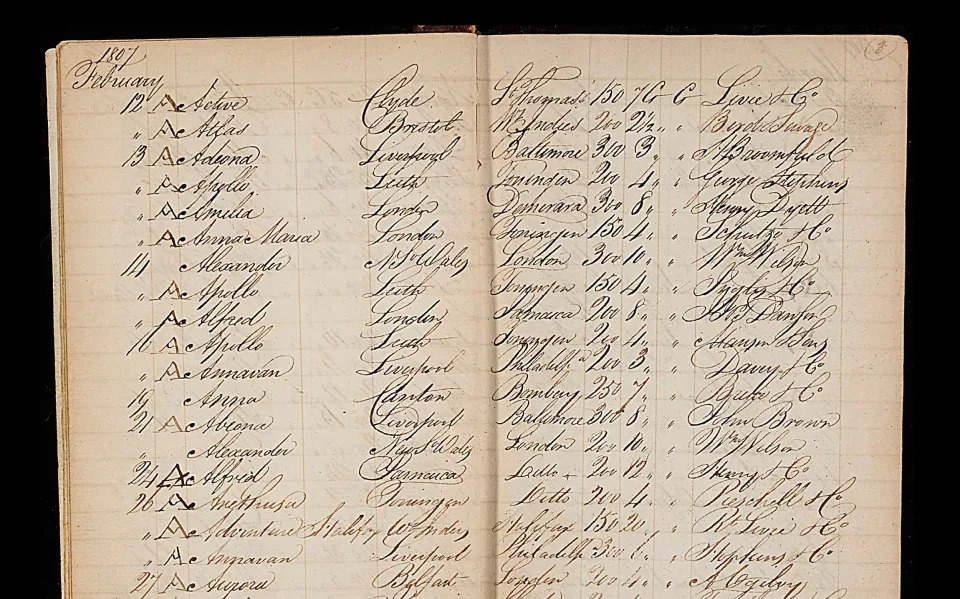
slavery and the slave trade in providing the capital which financed the ... ERIC WILLIAMS. CHAPTER. I. 2. 7. Preface. CONTENTS. The Origin of Negro ...


Michiel de Ruyter, Dutch with English subtitles


Dutch Golden Age: Johan de Witt speech from the film Michiel de Ruyter, Dutch with English subtitles

Monday, July 06, 2020

THE SLAVE TRADE IS THE ORIGIN OF CAPITALISM
Some Facts About London’s Role in Insuring the Slave Trade

By Guy Faulconbridge | June 19, 2020 INSURANCE JOURNAL


London is facing up to its role in insuring the slave trade as part of a sweeping global reassessment of history and racism.

This reappraisal was triggered by the death of George Floyd, a black man who died after a Minneapolis police officer knelt on his neck for nearly nine minutes while detaining him.

For centuries, London has maintained a pre-eminent role in financing global trade and on Thursday the Lloyd’s of London insurance market apologized for its “shameful” role in the 18th and 19th Century Atlantic slave trade.

About 17 million African men, women and children were torn from their homes and shackled into one of the world’s most brutal globalized trades between the 15th and 19th centuries. Many died in merciless conditions.

By the late 18th Century, Britain was the leading slaver nation, carrying about 40% of Africans transported between 1761 and the abolition of the trade in 1807.

Update: Lloyd’s of London Apologizes for Its ‘Shameful’ Role in Atlantic Slave Trade

Lloyd’s grew to dominate the shipping insurance market, a key element of Europe’s global scramble for empire, treasure and slaves, who were usually in the 18th Century included in insurance policies in the general rate for ship cargo.


Other major traders were Portugal/Brazil, with about 32% of the market, and France, with about 17%. American and Dutch ships were also involved, with around 6% and 3% respectively.


How important was slavery to British maritime insurance?

There is a lack of documentary evidence from the time, but historians have estimated that the slave and West India trades combined accounted for 41% of British marine insurance in the 1790s.

(For more information: Insuring the Transatlantic Slave Trade.)

“Between a third and 40 percent of London marine insurance in the 18th Century was accounted for by the slave trade and by the movement of slave grown produce across the Atlantic,” said Nick Draper, former director of the Centre for the Study of the Legacies of British Slave-ownership.

“Those ships bringing sugar to Britain had a valuable cargo and the ships themselves were valuable and often coming through enemy waters because Britain was at war for long periods.”


Who were the big players?

There were three main marine insurers in the 18th Century: London Assurance, Royal Exchange and Lloyd’s of London.

“Lloyd’s had the dominant insurance business – probably had 80-90 percent of the market,” said Draper.

“By 1807 when the slave-trade was abolished, it was relatively unimportant to marine insurance and by the 1830s when slavery was abolished the sugar economy in turn had become less important. We were shipping then huge amounts of raw slave-grown cotton, for example, back to the UK from the American south.”
How did it work?

Slaves were seen as cargo by the insurance market of the time and generally included in the general insurance rate.

Often slaves were termed as a “parcel” whose value was determined by ethnicity, size, height, age, gender and health.

Slaves were also classified by underwriters as “perishable goods,” alongside cattle. Underwriters and courts dealt with slave losses arising from revolt as the equivalent of damage and losses caused by livestock panicking during a tempest.

“Most insurance policies for the slave trade excluded the death of enslaved people from disease or insurrection – they were insuring the ship against the perils of the sea,” said Draper. “But they were not insuring so that people were disembarked at the other end in a healthy condition.”

(Reporting by Guy Faulconbridge; editing by Alexander Smith)

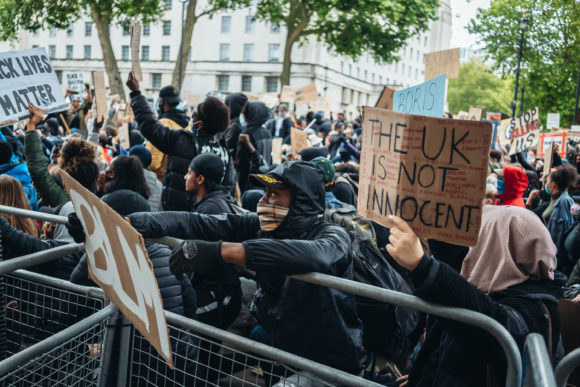
Photograph: Black Lives Matter protest in London on June 6, 2020 during the coronavirus lockdown.

Related:
Update: Lloyd’s of London Apologizes for Its ‘Shameful’ Role in Atlantic Slave Trade


Copyright 2020 Reuters. Click for restrictions.

Friday, January 24, 2020

It Could Be Your Daughter: White Slaves to Baby Prostitutes

Abstract
Human trafficking is one of the most pressing issues of our time, impacting diverse communities in multifaceted ways in every country across the globe. Despite this level of priority and complexity, the popular discourse around human trafficking remains focused on a single narrative. This focus has narrowed our understanding of the issue and stifled our ability to combat it. This paper seeks to analyze the rhetoric on human trafficking in the United States as both cultural myth and propaganda. Through the review of both documentary and fictional media representations of the human trafficking narrative, we create a composite “perfect victim” over three distinct eras. As with any persistent cultural myth, the details of this narrative shift with evolving cultural fears while the ultimate moral of the story remains the same. By unpacking these details, we can better understand the cultural fears of each era and explore why each story captivated the media. Also explored are the advocacy groups which promulgate these narratives,and with them their legislative agendas, which have consistently done more to hinder female migration and further criminalize “sexual immorality” than end exploitation.

BEYOND TRAFFICKING AND SLAVERY
'White slavery': the origins of the anti-trafficking movement
A nineteenth century drive to protect the morality of white women created the concept of ‘human trafficking’, and its legacies live on in border control systems and slavery-based campaigning.
Laura Lammasniemi


Lammasniemi_460.jpg
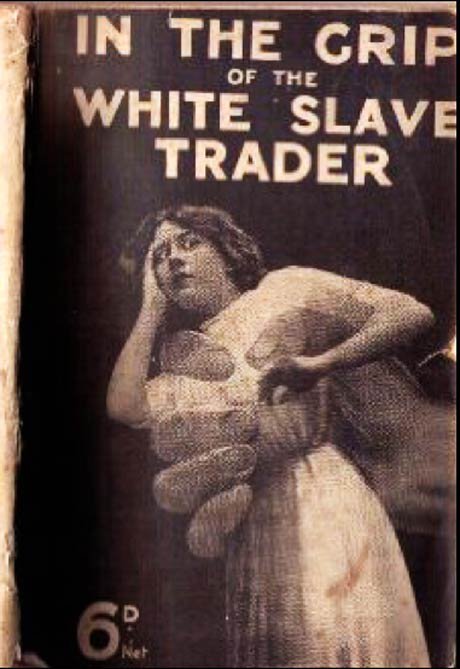
In the Grip of a White Slave Trader by the National Vigilance Association, 1911. Provided by author.
Anti-white slavery associations, such as International Bureau for the Suppression of the White Slave Traffic, stemmed from anti-white slavery organisations in England and were also active in continental Europe. Their campaigns resulted in the Agreement for the Suppression of the ‘White Slave Traffic’ 1904 (the 1904 Agreement) and later, the International Convention for the Suppression of the White Slave Traffic 1910.

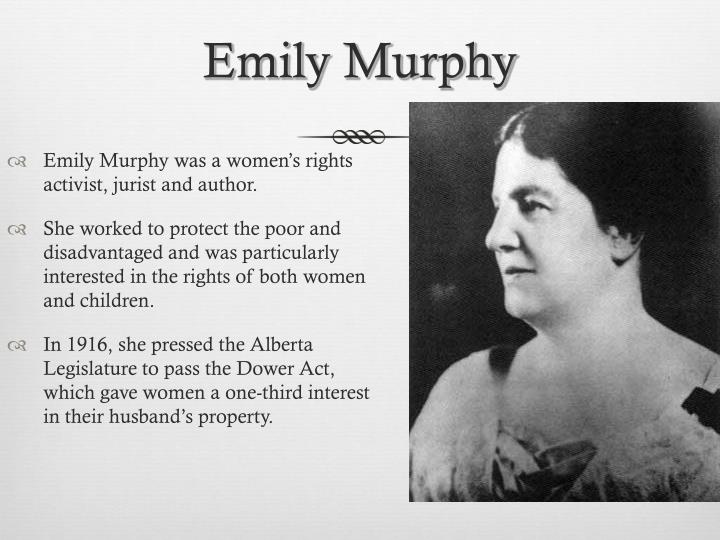
Are The Famous Five Heroes ?. Elu Valentine Elbow Park School 
October 7, 2009. The Persons Case. The Famous Five refers to five 
women from Alberta: Emily Murphy, Nellie McClung, Louise McKinney, 
Henrietta Muir Edwards and Irene Parley.
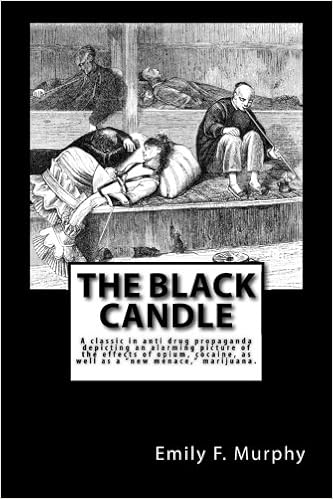
EMILY MURPHY WROTE AN ANTI DRUG ANTI WHITE SLAVE TRADE
BOOK THE BLACK CANDLE, NOTE THE CHINESE OPIUM PIPE
A COMMON TROPE TO COVER DRUG USE IN THOSE DAYS

Image result for the black candle emily murphy

  Anti-Chinese Policies
Probably no immigrant group has been as heavily managed as the Chinese. Sought out as cheap contract labour, they were recruited to meet finite economic and infrastructural goals. While some Chinese arrivals saw themselves as  — temporary immigrants who would return to their country of origin once they’d amassed some money  many more were in for the long haul. This was not part of Ottawa’s plan and so steps were taken to limit immigration and thus encourage return migration.
The  was the main instrument used by Ottawa to regulate Chinese arrivals down to 1923. Some 81,000 people found the wherewithal to pay this fee before it was abolished, even though it rose from $50 in 1885 to $500 in 1903. In this respect, the Head Tax initiative was a failed attempt to stop Chinese immigration. It was, however, a money-maker: It is reckoned that the Head Tax pulled in $22 million for Ottawa, which equates to more than $300 million in 2015 dollars. Not everyone in the Euro-Canadian community supported the Head Tax, though for reasons that we might now consider discomfiting. A group of Euro-Canadian women argued that reducing the Head Tax would attract more immigrants, some of whom could be employed as houseboys and cooks. The Lib-Lab Member of the BC legislature, Ralph Smith, supported this idea and one local newspaper chided him that he was worried that “his gallant wife should have to roast her comely face over the kitchen fire every day because the Chinese Head Tax makes it impossible for him to get a Chinese cook.”[7] The rate of Chinese immigration varied because of the tax and global events and, like much human movement during World War I, numbers fell. After the war, immigration resumed. By this time, however, there was growing fear among the White community of the opium trade and allegations that young Euro-Canadian women were being lured into the sex trade, what was called at the time “White slavery.” Emily Murphy  a leading figure in first wave feminism, the suffrage movement, and counted among the Famous Five  wrote a series of highly popular pieces on the drug trade and its connections with Chinatown. The Black Candle (as it appeared in book form) was one of several diatribes against the Chinese community, one that catalyzed a revision of immigration legislation.
The 1923 Chinese Immigration Act terminated legal Chinese immigration and remained on the books until 1947. This complete ban on arrivals from a specified country was uniquely and exclusively applied to the Chinese. Prejudice might stand in the way of other groups but no others were treated this way in law. What immigration occurred between 1923-1947 was illegal and much of it involved reuniting spouses and family members. The 1923 Act, introduced on the 1st of July and thus coinciding with Dominion Day, was commemorated in the Chinese community as Humiliation Day in the years that followed. (For more on this topic, see Section 5.12.)
Limits on immigration is one thing; limits on immigrants is another. Chinese populations were contained (sometimes by choice but usually by civic regulations) to small urban areas  Chinatowns. They were forbidden, in Vancouver, from purchasing homes and opening stores outside of a few blocks of the city core. Like members of some other ethnic/racial/visible groups, they were also forbidden for years from attending post-secondary institutions and specifically from pursuing degrees through the University of British Columbia School of Pharmacy, a restriction that echoed  associations between the Chinese community and drug trafficking. Many of these constraints would survive into the 1970s and early 1980s.

Related image
https://search-bcarchives.royalbcmuseum.bc.ca/heathen-chinee-in-british-columbia-amor-de-cosmos-and-caricature-of-chinese-man
Related image
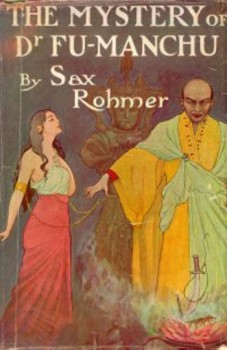
https://www.blackgate.com/2016/05/12/blogging-sax-rohmers-the-insidious-doctor-fu-manchu-part-seven-karamaneh/
 Image result for WHITE SLAVE TRADE emily murphy


Image result for WHITE SLAVE TRADE emily murphy


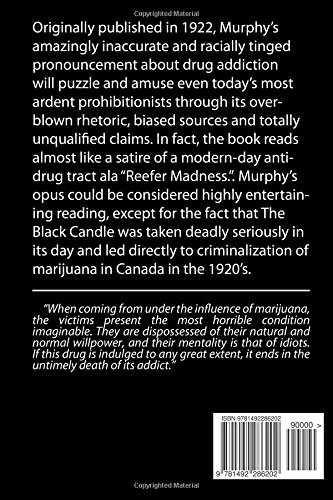
MURPHY ACCUSING ASIANS OF PROMOTING DRUG USE CONFUSING
OPIUM WITH POT, LEADING TO THIS
Image result for the black candle emily murphy

IMMIGRATION WAS THE CONTRADICTION 
MEN NEEDED WIVES BUT WOMEN WHO WENT WEST WERE THEN CONSIDERED WOMEN OF LOOSE MORALS LEADING THEM TO FALL VICTIM OF THE WHITE SLAVE TRADE


Trafficked White Slaves and Misleading Marriages 
in the Campaigns Against Sex Trafficking, 1885-1927
Federal History, 2019


Image result for WHITE SLAVE TRADE

Image result for WHITE SLAVE TRADE
Related image
Related image
https://www.tate.org.uk/art/artworks/kitaj-44-fighting-the-traffic-in-young-girls-p04495

AND WHO POPULARIZED THE MYTH OF THE WHITE SLAVE TRADE NONE OTHER THAN THE SALVATION ARMY 

... Fighting the traffic in young girls; or, War on the white slave trade; a complete and detailed account of the shameless traffic in young girls ..

https://archive.org/details/fightingtraffici00bell/page/n5/mode/2up


MODERNIST ISLAMOPHOBIA BEGAN WITH THE MYTH OF THE WHITE SLAVE TRADE WHICH FINDS ECHO'S TODAY IN WAR ON CHRISTIANITY CONSPIRACY THEORIES 
Image result for WHITE SLAVE TRADE
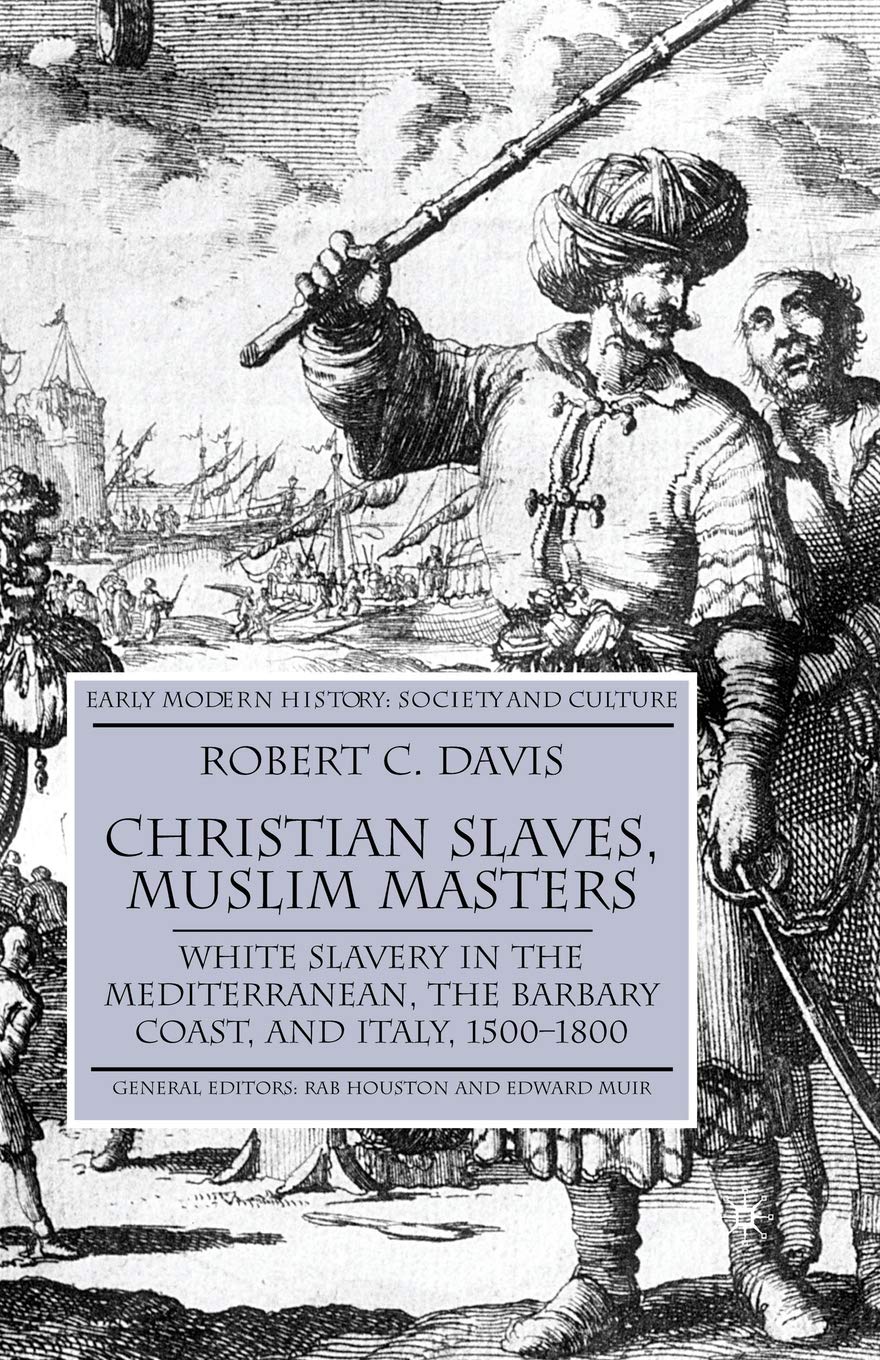
IT WAS THE REASON THOMAS JEFFERSON WENT TO WAR WITH THE BARBARY PIRATES DESPITE HIS AVOWED PRINCIPLE OF NON INTERVENTION BY AMERICA OR ITS NAVY
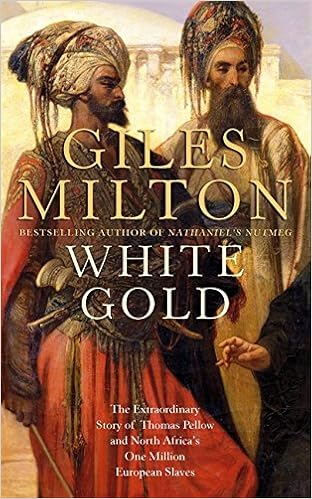
https://www.amazon.com/White-Gold-Forgotten-Africas-European/dp/0340895098
In the summer of 1716, a Cornish cabin boy named Thomas Pellow and 52 of his comrades were captured at sea by the Barbary corsairs. Their captors - fanatical Islamic slave traders - had declared war on the whole of Christendom. Thousands of Europeans had been snatched from their homes and taken in chains to the great slave markets of Algiers, Tunis and Sale in Morocco to be sold to the highest bidder. Pellow was bought by the tyrannical sultan of Morocco, who bragged that his white slaves enabled him to hold all of Europe to ransom. The sultan was constructing an imperial pleasure palace of enormous scale and grandeur, built entirely by Christian slave labour. Thomas Pellow was selected to be a personal slave of the sultan and he would witness first-hand the barbaric splendour of the imperial Moroccan court, as well as experience of daily terror. For 23 years, he would dream of his home, his family and freedom. He was one of the fortunate few who survived to tell his told. Drawn from unpublished letters and manuscripts written by slaves and by the padres and ambassadors sent to free them, this shocking and extraordinary story reveals a disturbing and forgotten chapter of our history.

Image result for WHITE SLAVE TRADE

MEANWHILE THE IMAGE OF WHITE SLAVERY REMAINS IN THE POPULAR IMAGINATION AS HETEROSEXUAL MALE SEX FANTASY THE EXACT SAME IMAGERY THAT HAS EXCITED ANTI WHITE SLAVE TRADE ABOLITIONISTS AS WELL
Image result for WHITE SLAVE TRADE
JEWS PLAN TO FIGHT WHITE SLAVE TRADE; NYT 1910
 Sadie American Explains at London Convention Work Done to Check Evil. 
GATHERING A NOTABLE ONE
 Chief Rabbi Adler, Lord Swaythling, 
Leopold do Rothschild, and Claude Montefiore Among Those Present.
Special Cable to THE NEW YORK TIMES.
April 10, 1910


Credit...The New York Times Archives
See the article in its original context from
April 10, 1910, Section S, Page 4
LONDON, April 9 -- Miss Sadie American, the President of the Council of Jewish Women of New York, was present at the three days' convention of the Jewish International Conference held in London this week under the Chairmanship of Claude Montefiore. Others present included Chief Rabbi Adler, Lord and Lady Swaythling, Lady Battersea, and Leopold de Rothschild. VIEW FULL ARTICLE IN TIMESMACHINE »


Image result for WHITE SLAVE TRADE
This book recounts the events involving Raquel Liberman, an impoverished immigrant to Argentina that was forced by circumstances into prostitution, and the powerful Zwi Migdal, which controlled the recruitment and deployment of Jewish prostitutes in Argentina while maintaining mutually profitable relations with corrupt politicians and policemen. Liberman's story is presented as an example of individual courage and determination in the face of the violence and corruption of the prostitution business. Her struggle with the Zwi Migdal and triumphant public victory over her oppressors was widely publicized in newspapers and magazines, and was a political cause celebre in its time. This book gives readers an intimate view of how the affair caught the public imagination, and was interpreted and transformed by the artistic imagination.


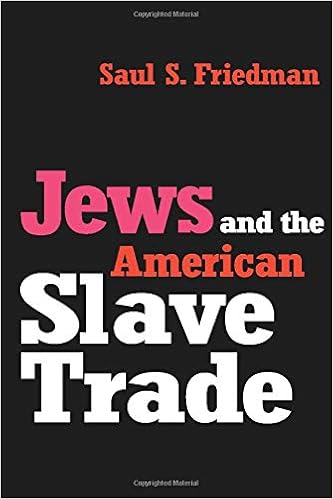
The Nation of Islam's Secret Relationship between Blacks and Jews has been called one of the most serious anti-Semitic manuscripts published in years. This work of so-called scholars received great celebrity from individuals like Louis Farrakhan, Leonard Jeffries, and Khalid Abdul Muhammed who used the document to claim that Jews dominated both transatlantic and antebellum South slave trades. As Saul Friedman definitively documents in Jews and the American Slave Trade, historical evidence suggests that Jews played a minimal role in the transatlantic, South American, Caribbean, and antebellum slave trades.Jews and the American Slave Trade dissects the questionable historical technique employed in Secret Relationship, offers a detailed response to Farrakhan's charges, and analyzes the impetus behind these charges. He begins with in-depth discussion of the attitudes of ancient peoples, Africans, Arabs, and Jews toward slavery and explores the Jewish role hi colonial European economic life from the Age of Discovery tp Napoleon. His state-by-state analyses describe in detail the institution of slavery in North America from colonial New England to Louisiana. Friedman elucidates the role of American Jews toward the great nineteenth-century moral debate, the positions they took, and explains what shattered the alliance between these two vulnerable minority groups in America.Rooted in incontrovertible historical evidence, provocative without being incendiary, Jews and the American Slave Trade demonstrates that the anti-slavery tradition rooted in the Old Testament translated into powerful prohibitions with respect to any involvement in the slave trade. This brilliant exploration will be of interest to scholars of modern Jewish history, African-American studies, American Jewish history, U.S. history, and minority studies.
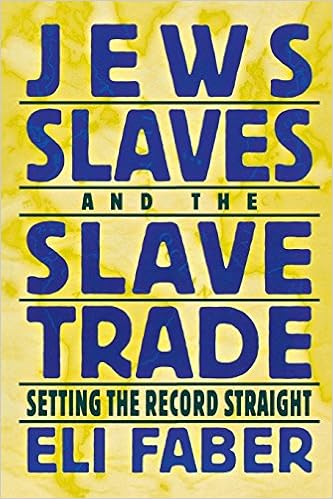
https://www.amazon.com/Jews-Slaves-Slave-Trade-Perspectives/dp/0814726399/ref=pd_sbs_14_img_0/133-5071818-3219929?_encoding=UTF8&pd_rd_i=0814726399&pd_rd_r=0a893419-a663-4387-9be1-714b586ca23b&pd_rd_w=IIgUD&pd_rd_wg=cJYog&pf_rd_p=5cfcfe89-300f-47d2-b1ad-a4e27203a02a&pf_rd_r=TCC2VST4MVHRPV0F40WE&psc=1&refRID=TCC2VST4MVHRPV0F40WE
In the wake of the civil rights movement, a great divide has opened up between African American and Jewish communities. What was historically a harmonious and supportive relationship has suffered from a powerful and oft-repeated legend, that Jews controlled and masterminded the slave trade and owned slaves on a large scale, well in excess of their own proportion in the population.
In this groundbreaking book, likely to stand as the definitive word on the subject, Eli Faber cuts through this cloud of mystification to recapture an important chapter in both Jewish and African diasporic history.
Focusing on the British empire, Faber assesses the extent to which Jews participated in the institution of slavery through investment in slave trading companies, ownership of slave ships, commercial activity as merchants who sold slaves upon their arrival from Africa, and direct ownership of slaves. His unprecedented original research utilizing shipping and tax records, stock-transfer ledgers, censuses, slave registers, and synagogue records reveals, once and for all, the minimal nature of Jews' involvement in the subjugation of Africans in the Americas.
A crucial corrective, Jews, Slaves, and the Slave Trade lays to rest one of the most contested historical controversies of our time.

SEE https://plawiuk.blogspot.com/2020/01/the-universal-cause-history-of.html


' WHITE SLAVE' TRADE IS NOT ORGANIZEDSo Says the Rockefeller Grand Jury's Presentment, at Last Filed with the Court. NYT ARCHIVE June 29, 1910


Thursday, November 09, 2023

Lloyd's of London to invest $65 million following slavery report


Wed, November 8, 2023

Lloyd's of London logo at City of London financial district


By Carolyn Cohn

LONDON (Reuters) -Lloyd's of London will invest 40 million pounds ($49.6 million) in regions affected by the transatlantic slave trade, it said on Wednesday, after a report showed the commercial insurance market had strong links to the trade.

Lloyd's will also spend around 12 million pounds on a programme to improve recruitment and progression for Black and other ethnic minority employees in the commercial insurance market, including bursaries for Black university students, it said in a statement.

Lloyd's formed part of a sophisticated network of financial interests that made the slave trade possible, according to research published by Black Beyond Data, based at Johns Hopkins University.

The research was funded by the Mellon Foundation, and Lloyd's said it had no editorial control over the findings.

The 335-year old insurance market apologised in 2020 for its role in the 18th and 19th century slave trade.

"We've asked ourselves how we could have the greatest impact," Lloyd's Chairman Bruce Carnegie-Brown told Reuters. "We can't change the wrongs of the past, but we can make a difference today."

Lloyd's said its Central Fund will invest $25 million in a bond administered by the African Development Bank and $25 million in a bond administered by the Inter-American Development Bank. The bonds will support the UN Sustainable Development Goal of "reduced inequality".

The Lloyd's market is made up of nearly 50,000 people, and Lloyd's wants one in three new hires to come from ethnic minorities. The figure was 17% in 2022.

Historians estimate between one and two-thirds of the British marine insurance market was based on the slave trade in the 18th century.

Alexandre White, assistant professor at Johns Hopkins University, said the Black Beyond Data team had examined material from the Lloyd's archive, including ledgers where insurers recorded policies for ships leaving Liverpool as part of the trade.

"Lloyd's played a central role in the underwriting of marine insurance pertaining to the slave trade," he said.

The Black Beyond Data research showed at least one third of all slaving voyages leaving Britain in 1807, for example, came through Lloyd’s for the underwriting of particular legs or the whole voyage.

The research also showed that Joseph Marryat, Lloyd's of London chairman from 1811 to 1824, had enslaved people, White added.

"There's no way to compensate for the damage that has been done - too much has happened," said Junior Garba, co-founder of Equity, which provides recruitment and mentoring services for minority groups in the insurance sector. Garba added that Lloyd's initiatives were "a good starting point".

The Church of England earlier this year committed 100 million pounds to address the "shameful" wrongs of its links to slavery.

The United Nations has said countries should consider financial reparations among measures to compensate for the enslavement of people of African descent.

African and Caribbean entities have called for reparations, and the European Union has hinted at them. Some U.S. senators also support reparations.

($1 = 0.8135 pounds)

(Reporting by Carolyn Cohn; editing by Sinead Cruise, Jan Harvey, Elaine Hardcastle)

Why Lloyd’s of London’s slavery reckoning is just the start for the City

Adam Mawardi
Wed, 8 November 2023 

Lloyd's Building in the City of London

More than 300 years ago, auction-goers gathered around a candle in Edward Lloyd’s Coffee House, a popular meeting place for sailors, merchants and ship owners near the banks of the River Thames.

Up for sale was a 220 tonne ship with 12 guns, named James and Frances. Bidding began once the candle was lit and stopped after it had burnt an inch.

In 1701, the James and Frances embarked on its voyage, from London to Africa and then on to Jamaica. It was carrying 162 enslaved Africans – 32 of whom died during the journey.

The candle auction is just one of many examples of the deep involvement that the institution now known as Lloyd’s of London had in the transatlantic slave trade between the 17th and 19th centuries.

The insurance marketplace, one of the City’s most historic institutions, was involved in auctioning or insuring ships that ferried hundreds of thousands of enslaved people.

The true scale of this historic stain on its reputation has been unearthed by researchers at John Hopkins University, the first to be given access to the 300-year-old institution’s huge archive of letters, newspaper adverts, certificates and other documents.

Lloyd’s had already apologised for its historical links to the slave trade in 2020, when outrage over the death of George Floyd prompted a public reckoning about the treatment of black people past and present by major institutions.

However, the John Hopkins research lays bare just how intimately involved the institution was in the slave trade.

Slavery was “critical to the members” of Lloyd’s as a major source of insurance business, researchers found. Senior figures from the past were also enslavers and absentee owners of slave plantations themselves.

Historical documents provided by Lloyd's to researchers at John Hopkins University have revealed the extent to which the institution was involved in the slave trade

“Insurance was an important innovation, mostly in the late 17th and 18th centuries, and it allowed slave traders to manage risk in a very efficient way,” says Sean Kelley, a transatlantic slave trade expert and professor at the University of Essex.

“If that insurance had not been available – and it wasn’t, after it became illegal in 1807 – slave traders would have had to devise other ways of managing risk that were less efficient.”

Bruce Carnegie-Brown, Lloyds of London’s chairman, apologised again on Wednesday as John Hopkins published its findings.

In an effort to atone for its links to slavery Lloyd’s – a marketplace that handles more than £46bn worth of premiums per year – has promised to spend £52m on racial equality initiatives, including plans to support black and other ethnic minority people in work and education.

“I don’t think we can undo the wrongs of the past, but we can take action to address the impacts which are still seen today,” Carnegie-Brown said in a statement.

But rather than resolving the matter, the seven-figure sums threaten to reignite the issue of the City’s links to slavery, raising questions about which institutions will be next and whether they are prepared to pay for the past.

Lloyd’s is not alone: many other British institutions played a part in the slave trade, although the links are not always straightforward.


Bruce Carnegie-Brown, Lloyds of London’s chairman, said institutions with link to slavery can ‘take action to address the impacts which are still seen today’ - Paul Grover

Although Barclays takes its name from David Barclay – a Quaker who campaigned for the abolition of slavery in the late 18th century – the bank became linked with the Colonial Bank in 1918 and Martins Bank in 1969, institutions that both had links to slavery.

Directors of banks that went on to become part of Royal Bank of Scotland – today known as NatWest Group – also owned slaves and provided loans to plantation owners, according to a database maintained by University College London.

Manuel Barcia, professor of global history at the University of Leeds, puts it simply: “Almost any institution that goes back hundreds of years is likely to have some kind of involvement.”

“You have decisions that were being taken in European capitals that lead to the death and enslavement of hundreds of thousands, if not millions, of people.”

Preparing a single slave ship for voyage would often have involved a range of different parties, including banks who had extended credit to the merchants, lawyers who drew up the contracts and, of course, the captain and crew.

“You get a sense of this by just looking at the accounts that some of these slave traders kept,” Kelley explains. “There’s a major spread effect that flows out from all this.”

Many British companies were quick to offer their apologies for historical links to slave trade at the height of the Black Lives Matter movement.

Greene King, one of the UK’s largest pub chains, promised to make a “substantial investment” in ethnic minority groups in 2020 in recognition of the fact that its founders profited from slavery and argued against its abolition in the 1800s. It has since renamed pubs with racist connotations, including the Black Boy.

Meanwhile, London-based magic circle law firm Freshfields Bruckhaus Deringer said it was taking a deeper look into its past, having repeatedly expressed “regret” that one of its founding members acted as a trustee for several slave-owners in the West Indies.

A spokesman said: “We are working to understand our history so that we can acknowledge and learn from it, in addition to the independent historical research we are funding on the role of the City of London and its ecosystem in relation to the transatlantic slave trade.”

Both Barcia and Kelley say one of the most important things businesses can do to help is be fully transparent.

Barcia argues companies should also speak to the descendants of slavery to understand how it has impacted them – and then try to make a tangible difference, perhaps through scholarships and other initiatives aimed at boosting opportunity.

In this vein, Lloyd’s says it will fund diversity initiatives and charities supporting disadvantaged black people and ethnic minorities. It promises to help provide them with more opportunities for employment and places to study at university.

Mark Lomas, head of culture at Lloyd’s, says: “We’re aware that no one can properly atone for the past.

“But what we have done is set out a framework that we believe will make sustainable change over a long term period.”

Lloyd’s will be hoping its initiatives can help it move on from its shameful past. But the proposals have been met with criticism in some quarters.

“This is PR: giving an apology, making some commitments, but this is not serious,” says Kehinde Andrews, a professor of black studies at Birmingham City University.

“You’re talking about massive amounts of wealth that they owe back to people.”

Laura Trevelyan donated £100,000 to the island of Grenada in recognition of her family’s historic links to the slave trade there
- David Levenson

Calls for direct reparations to the descendants of slaves have been growing, given impetus by BBC journalist Laura Trevelyan’s decision to donate £100,000 to the island of Grenada in recognition of her family’s historic links to the slave trade there.

Lloyd’s has so far resisted calls from Caribbean nations to pay direct reparations to the descendants of slaves, arguing that a lack of documentation makes it “impossible” to identify all those affected.

But the disagreement underscores how difficult these issues are and how hard it is to move on from the past.

British ships just like the James and Frances carried hundreds of thousands of slaves to the Americas and the wounds from this abhorrent practice are still visible hundreds of years on.

Ultimately, money alone is unlikely to solve the problem.

“It is a matter of levelling the field and listening to the descendants of these people,” Barcia says. “That is the most important thing we need to do.”

slave planter, in the picturesque nomenclature of the South, is a "land-killer." This serious defect of slavery can be counter- balanced and postponed for a ...


Friday, March 27, 2026

UN resolution fuels global slavery reparations debate

DW
27/03/2026 - 

A landmark UN resoultion has intensified the debate over reparations for the transatlantic slave trade, with supporters arguing that recognition, apologies and structural reforms are long overdue.


At least 12.5 million Africans were kidnapped and trafficked to the Americas during the transatlantic slave trade
Image: The Print Collector/Heritage Images/picture alliance

The United Nations General Assembly this week adopted a landmark resolution declaring the transatlantic slave trade "the gravest crime against humanity."

It also calls on UN member nations to engage in talks "on reparatory justice, including a full and formal apology, measures of restitution, compensation, rehabilitation, satisfaction, guarantees of non-repetition and changes to laws, programs and services to address racism and systemic discrimination."


While not legally binding, the resolution is widely seen as a significant political milestone.

"It is a very important decision… it recognizes the fact that the transatlantic slave trade was a grave injustice to humanity," said Isa Sanusi, Amnesty International's executive director in Nigeria.

"This recognition alone, even though symbolic, will go a long way in opening the way for addressing that injustice," Sanusi told DW.

For many Africans and members of the diaspora, the vote signals a shift from symbolic recognition toward a more substantive global conversation about accountability.
From historical memory to global policy

Along Ghana's coastline, the push for reparations is often linked to historical sites where the legacy of the trade remains visible.


Elmina Castle, built in 1482, stands as one of the most prominent reminders of the transatlantic slave trade. Behind its walls, enslaved Africans were held in cramped dungeons before being forced onto ships bound for the Americas.

Today, visitors pass through those same spaces, confronting a past that many visitors describe as deeply personal.

"I can only imagine what they went through … this is worse than any story can ever tell you," said Charles Preston Britton, an ancestral seeker visiting the site. "There is no compensation you can do, but it is a start."

The sense of taking a first step is mirrored on the global stage, where calls for accountability are gaining new momentum.

"An apology is a sign of recognition that yes, we did it, and we acknowledge that it happened," said cultural heritage curator Michael Kunke. "It's a first step towards the other things … talk of reparations and all of that."

Michael Ndimancho, a political analyst at the University of Douala in Cameroon, agrees, describing acknowledgment as the foundation of any meaningful process.

"Apology is very, very important … everything starts with saying I'm sorry," he said. "When there is this regret, now we look for a way forward."

Sanusi also links historical injustice directly to present-day inequalities.

"The injustices we are facing across the world are connected to the injustices in the past," he said. "These things have a long-lasting impact … they do not just happen in a vacuum."
What form should reparations take?

While the call for reparations is gaining momentum, there is no consensus on what they should look like.


Ndimancho argues that focusing solely on financial compensation risks oversimplifying a complex historical injustice.

"Who are we compensating?" he asked. "If you want to estimate it in terms of money, how much would they pay, and what are the parameters?"

Instead, he suggests a more structural approach that addresses long-term development challenges across the continent.

"African countries should ask for the cancellation of their debt … assistance in terms of education, development, cultural and social development."

Amnesty's Sanusi also emphasized that reparations are an essential component of justice, "whether it takes the form of financial reward or other remedies, what matters is that injustice is recognized and addressed."

A contested history

The debate over reparations is further complicated by questions about African involvement in the slave trade.

Ndimancho acknowledges that some African leaders participated in the trade but stresses the broader context in which this occurred.

"It was a period whereby Africans only had to get involved … through coercion, through force," he said. "They came with intimidation."

He suggests that the focus should remain on the systemic nature of the transatlantic slave trade, which historians widely attribute to the economic interests of European imperial powers.

"The victims of the transatlantic slave trade are in their millions and are scattered all over the world," he told DW. "Many were disconnected from their roots … and families are still traumatized."


The cost of slavery

Historians estimate that at least 12.5 million Africans were forcibly taken during the transatlantic slave trade, with millions more dying during capture and transport. The long-term impact, analysts say, extends far beyond those numbers.

For Ndimancho, the removal of millions of people represented a profound loss of labor and development potential.

"We are talking here about 13 million Africans … this is quite some labor force that was taken out of Africa," he said.

Ndimancho describes this as a "development historic cost" — a factor he believes continues to shape the continent's economic trajectory, which he says has contributed to structural inequalities that persist today.

Sanusi argues that these consequences remain visible across societies.

"Many people are still facing exclusion, racism and discrimination … this is not just history — it is something we are still living with."

For some members of the diaspora, the consequences are equally significant.

"We have been double-robbed, double-lied to," said Dr. Lilieth Johnson Whittaker, an ancestral seeker. "And it's time to pay up."

For many, the UN resolution marks not closure, but the beginning of a long-delayed conversation about justice.


Edited by: Keith Walker


Mimi Mefo Newuh Mimi is an award-winning Cameroonian-born journalist.


Capitalism and Slavery by Eric Williams. Profile image of Ahmed Badran Ahmed Badran. visibility … description. 148 pages. descriptionSee full PDF