The president’s attempt to control the commission “is particularly troublesome” given the financial stakes that he, his family, and his supporters have in products the agency regulates, said dozens of groups.

As then-former President Donald Trump campaigned for a second term on June 9, 2024 in Las Vegas, Nevada, an attendee displayed a pair of gold sneakers he sold to supporters.
(Photo by Eric Thayer for The Washington Post via Getty Images)
Jessica Corbett
Jul 21, 2026
COMMON DREAMS
Nearly a month after the US Supreme Court overturned almost a century of precedent to give President Donald Trump king-like power to purge independent agencies, consumer groups on Tuesday sounded the alarm over his nominees to the Consumer Product Safety Commission.
Before the high court’s recent ruling, Trump last year fired the three Democratic commissioners appointed by his predecessor—hamstringing the CPSC, which needs at least three members to conduct official business, but currently only has acting Chair Peter Feldman.
Trump nominated Karen Sessions as a commissioner in February and Brien Lorenze, the agency’s executive director, in early June. Later last month, the GOP-controlled Senate began considering the nominees, but has not yet confirmed them.
In a Tuesday letter to Sens. Ted Cruz (R-Texas) and Maria Cantwell (D-Wash.)—respectively, the chair and ranking member of the Senate Committee on Commerce, Science, and Transportation—dozens of consumer groups detailed their concerns.
Led by the Consumer Federation of America and National Consumers League, the coalition urged the senators “to protect the independence and nonpartisanship” of “the nation’s chief household product safety regulator,” stressing that “hazards have no partisan leanings, and neither should the commission tasked with addressing them.”
The letter highlights that the agency, created by Congress over five decades ago, cannot have more than three commissioners affiliated with the same political party, and the law bars all of them “from owning stock or bonds of substantial value in a company that sells or manufactures consumer products, or from being in ‘any other manner pecuniarily interested in such a person.’”
“Historically, the agency’s independence has buffered the commissioners from political pressure from the White House and large donors. This has ensured that the agency has acted with transparency and a diversity of views, which has benefited the American people,” the groups wrote. “Further, the presence of minority commissioners provided a layer of oversight and accountability on CPSC actions.”
“With this independent and nonpartisan structure, the CPSC has had a lifesaving effect,” the coalition emphasized, pointing to drops in residential fires, child poisonings, bicycle and pool injuries, and deaths from cribs, garage door incidents, and refrigerator entrapments.
The organizations stressed their concern that Trump ousted “the three Democratic, Senate-confirmed CPSC commissioners” without cause, and then “nominated two individuals of his own political party, threatening to further undermine the independence and nonpartisanship of the CPSC.”
“Silencing the voices of subject matter experts with whom the president politically disagrees or who may not serve his financial interests can have a chilling effect on the CPSC’s functions,” they argued. “The president’s assertion of control over CPSC commissioners has eliminated the transparency provided by minority commissioners and the independence of those who remain.”
“This is particularly troublesome given the conflict of interest created by the president’s financial stake and those of his family and supporters in consumer products the CPSC is entrusted to regulate,” the groups noted.
Specifically, as the letter lays out:
President Trump financially benefits from the distribution of a vast array of consumer products, including Trump Watches, Trump Sneakers, and “45” Guitars. The president also has substantial financial interests in major manufacturers, retailers, and online marketplaces, including Whirlpool Corp., Newell Rubbermaid, Macy’s Retail Holdings, and Amazon.com Inc. The Trump Organization, helmed by Donald Trump Jr. and Eric Trump, sells a wide variety of consumer products, including toys and children’s products; apparel, footwear, and accessories; sporting goods; pet products; and household goods such as drinkware, kitchenware, linens, candles, and home décor. First Lady Melania Trump, through MelaniaTrump.com, is associated with the sales of jewelry and Christmas ornaments. Lara Trump and Kai Trump sell apparel through their respective online stores. Secretary of Education Linda McMahon maintains a significant financial stake in TKO Group Holdings, which has lucrative licensing deals for World Wrestling Entertainment toys, apparel, and accessories. Mike Lindell, a prominent supporter of the president, is the founder of MyPillow, which sells bedding and apparel. Former special government employee Elon Musk profits from sales of Tesla’s Powerwall systems and the Tesla Cyberquad for children. Political ally and Ultimate Fighting Championship (UFC) CEO Dana White profits from UFC’s sale of apparel, combat-sport equipment, and collectibles.
“These extensive financial and familial interests heighten concerns that the president could use his authority to influence CPSC enforcement decisions in ways that protect his and his associates’ interests, as the administration has done in matters before other federal agencies,” the letter warns, citing various actions involving the US Department of Justice and Securities and Exchange Commission.
In addition to those actions—from the attempt to create an “Anti-Weaponization Fund” to pay off Trump allies, to dropping investigations into his backers—the president has blatantly cashed in on his return to the White House, pocketing at least $2.2 billion, according to recently released annual financial disclosures.
“We are concerned that without balanced representation at the CPSC, this small agency with a big mission will be unable to independently carry out its congressionally mandated duties and provide the public with the transparency it deserves,” the coalition told Cruz and Cantwell. “The CPSC is no place for political favoritism. We therefore urge you to oppose reporting favorably the nominations of Brien Lorenze and Karen Sessions to serve as CPSC commissioners.”
Nearly a month after the US Supreme Court overturned almost a century of precedent to give President Donald Trump king-like power to purge independent agencies, consumer groups on Tuesday sounded the alarm over his nominees to the Consumer Product Safety Commission.
Before the high court’s recent ruling, Trump last year fired the three Democratic commissioners appointed by his predecessor—hamstringing the CPSC, which needs at least three members to conduct official business, but currently only has acting Chair Peter Feldman.
Trump nominated Karen Sessions as a commissioner in February and Brien Lorenze, the agency’s executive director, in early June. Later last month, the GOP-controlled Senate began considering the nominees, but has not yet confirmed them.
In a Tuesday letter to Sens. Ted Cruz (R-Texas) and Maria Cantwell (D-Wash.)—respectively, the chair and ranking member of the Senate Committee on Commerce, Science, and Transportation—dozens of consumer groups detailed their concerns.
Led by the Consumer Federation of America and National Consumers League, the coalition urged the senators “to protect the independence and nonpartisanship” of “the nation’s chief household product safety regulator,” stressing that “hazards have no partisan leanings, and neither should the commission tasked with addressing them.”
The letter highlights that the agency, created by Congress over five decades ago, cannot have more than three commissioners affiliated with the same political party, and the law bars all of them “from owning stock or bonds of substantial value in a company that sells or manufactures consumer products, or from being in ‘any other manner pecuniarily interested in such a person.’”
“Historically, the agency’s independence has buffered the commissioners from political pressure from the White House and large donors. This has ensured that the agency has acted with transparency and a diversity of views, which has benefited the American people,” the groups wrote. “Further, the presence of minority commissioners provided a layer of oversight and accountability on CPSC actions.”
“With this independent and nonpartisan structure, the CPSC has had a lifesaving effect,” the coalition emphasized, pointing to drops in residential fires, child poisonings, bicycle and pool injuries, and deaths from cribs, garage door incidents, and refrigerator entrapments.
The organizations stressed their concern that Trump ousted “the three Democratic, Senate-confirmed CPSC commissioners” without cause, and then “nominated two individuals of his own political party, threatening to further undermine the independence and nonpartisanship of the CPSC.”
“Silencing the voices of subject matter experts with whom the president politically disagrees or who may not serve his financial interests can have a chilling effect on the CPSC’s functions,” they argued. “The president’s assertion of control over CPSC commissioners has eliminated the transparency provided by minority commissioners and the independence of those who remain.”
“This is particularly troublesome given the conflict of interest created by the president’s financial stake and those of his family and supporters in consumer products the CPSC is entrusted to regulate,” the groups noted.
Specifically, as the letter lays out:
President Trump financially benefits from the distribution of a vast array of consumer products, including Trump Watches, Trump Sneakers, and “45” Guitars. The president also has substantial financial interests in major manufacturers, retailers, and online marketplaces, including Whirlpool Corp., Newell Rubbermaid, Macy’s Retail Holdings, and Amazon.com Inc. The Trump Organization, helmed by Donald Trump Jr. and Eric Trump, sells a wide variety of consumer products, including toys and children’s products; apparel, footwear, and accessories; sporting goods; pet products; and household goods such as drinkware, kitchenware, linens, candles, and home décor. First Lady Melania Trump, through MelaniaTrump.com, is associated with the sales of jewelry and Christmas ornaments. Lara Trump and Kai Trump sell apparel through their respective online stores. Secretary of Education Linda McMahon maintains a significant financial stake in TKO Group Holdings, which has lucrative licensing deals for World Wrestling Entertainment toys, apparel, and accessories. Mike Lindell, a prominent supporter of the president, is the founder of MyPillow, which sells bedding and apparel. Former special government employee Elon Musk profits from sales of Tesla’s Powerwall systems and the Tesla Cyberquad for children. Political ally and Ultimate Fighting Championship (UFC) CEO Dana White profits from UFC’s sale of apparel, combat-sport equipment, and collectibles.
“These extensive financial and familial interests heighten concerns that the president could use his authority to influence CPSC enforcement decisions in ways that protect his and his associates’ interests, as the administration has done in matters before other federal agencies,” the letter warns, citing various actions involving the US Department of Justice and Securities and Exchange Commission.
In addition to those actions—from the attempt to create an “Anti-Weaponization Fund” to pay off Trump allies, to dropping investigations into his backers—the president has blatantly cashed in on his return to the White House, pocketing at least $2.2 billion, according to recently released annual financial disclosures.
“We are concerned that without balanced representation at the CPSC, this small agency with a big mission will be unable to independently carry out its congressionally mandated duties and provide the public with the transparency it deserves,” the coalition told Cruz and Cantwell. “The CPSC is no place for political favoritism. We therefore urge you to oppose reporting favorably the nominations of Brien Lorenze and Karen Sessions to serve as CPSC commissioners.”
Letting Fraudsters Run Wild, Trump Justice Department Abandons Corporate Crime Enforcement
“The Trump DOJ’s grotesque retreat from corporate crime enforcement leaves Americans increasingly vulnerable to tainted food, workplace exploitation, environmental destruction, widespread ripoffs, and all-around illegal corporate predation.”
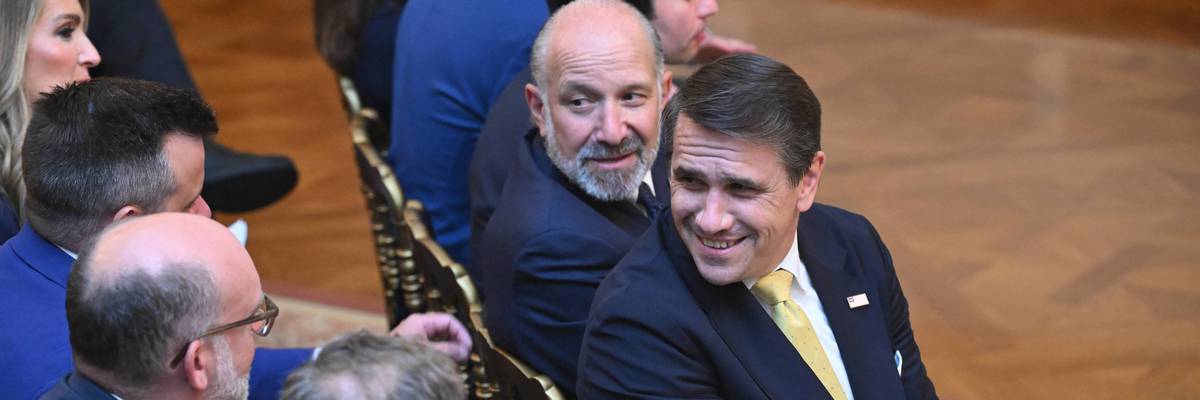
Acting US Attorney General Todd Blanche attends an address to the nation by President Donald Trump on July 16, 2026.
(Photo by Saul Loeb/Pool/Getty Images)
Jake Johnson
Jul 20, 2026
COMMON DREAMS
US President Donald Trump’s Justice Department is systematically taking a softer approach to corporate crime, letting companies and executives that have admitted to wrongdoing off the hook with no charges.
The Wall Street Journal reported over the weekend that “so far this year, 12 companies have pleaded guilty to federal criminal charges. At least six companies have reached deferred prosecution agreements, including refiner Phillips 66 and medical-waste specialist Stericycle, acquired by Waste Management in 2024.” The Journal added that while Acting US Attorney General Todd Blanche and other officials have signaled that the Justice Department is “focusing on prosecuting employees rather than companies, it has also granted leniency or dropped charges against people it accused of wrongdoing.”
“The Trump DOJ’s grotesque retreat from corporate crime enforcement leaves Americans increasingly vulnerable to tainted food, workplace exploitation, environmental destruction, widespread ripoffs, and all-around illegal corporate predation,” said Rick Claypool, a researcher at the consumer advocacy group Public Citizen who has been tracking the fall of corporate enforcement during Trump’s second White House term—which has been rife with corruption and profiteering at the very top.
Claypool called the Trump Justice Department’s lenient approach to corporate criminals “an absolute outrage” and that the trend is “going from bad to worse.”
The Journal lays out several examples of the Justice Department abandoning enforcement efforts against prominent companies. “In matters involving Alibaba, EagleBank, and Abbott Laboratories, the department declined to charge companies even when prosecutors thought executives or managers were involved in the wrongdoing,” the newspaper reported. “In those cases, the department didn’t charge any individuals.”
“The Justice Department this year dropped its long-running prosecution of Turkish state-owned lender Halkbank for allegedly evading US sanctions on Iran,” the Journal added. “And last year, the Trump administration dropped charges against Boeing. The aerospace giant had been set to plead guilty to misleading air-safety regulators but instead paid a $243 million fine and received a nonprosecution agreement. That is the same form of leniency that prosecutors granted to Alibaba and EagleBank, which requires them to admit wrongdoing but spares them from being charged.”
Trump’s DOJ has also shown lenience toward corporate executives. “The department in January gave a deferred prosecution agreement to the chief executive of a technology contractor who had been charged with defrauding the Securities and Exchange Commission,” the Journal reported.
Bloomberg reported last week that the Justice Department plans to drop charges against “alleged mastermind of a cryptocurrency Ponzi scheme that prosecutors said defrauded investors of $722 million.”
According to Public Citizen’s tracker, the second Trump administration has canceled or frozen enforcement actions against more than 170 US corporations so far—including dozens of companies that donated to the president’s inaugural fund.
“The Trump administration is canceling accountability for corporate predators that cheat consumers, exploit workers, and illegally abuse their power at home and abroad,” Claypool said earlier this year. “The ‘law enforcement’ claims the White House uses as pretext for authoritarian anti-immigrant crackdowns, city occupations, and imperial resource seizures abroad lose all credibility when cast against the lawlessness Trump allows for the pursuit of corporate profits.”
“The Trump DOJ’s grotesque retreat from corporate crime enforcement leaves Americans increasingly vulnerable to tainted food, workplace exploitation, environmental destruction, widespread ripoffs, and all-around illegal corporate predation.”
Acting US Attorney General Todd Blanche attends an address to the nation by President Donald Trump on July 16, 2026.
(Photo by Saul Loeb/Pool/Getty Images)
Jake Johnson
Jul 20, 2026
COMMON DREAMS
US President Donald Trump’s Justice Department is systematically taking a softer approach to corporate crime, letting companies and executives that have admitted to wrongdoing off the hook with no charges.
The Wall Street Journal reported over the weekend that “so far this year, 12 companies have pleaded guilty to federal criminal charges. At least six companies have reached deferred prosecution agreements, including refiner Phillips 66 and medical-waste specialist Stericycle, acquired by Waste Management in 2024.” The Journal added that while Acting US Attorney General Todd Blanche and other officials have signaled that the Justice Department is “focusing on prosecuting employees rather than companies, it has also granted leniency or dropped charges against people it accused of wrongdoing.”
“The Trump DOJ’s grotesque retreat from corporate crime enforcement leaves Americans increasingly vulnerable to tainted food, workplace exploitation, environmental destruction, widespread ripoffs, and all-around illegal corporate predation,” said Rick Claypool, a researcher at the consumer advocacy group Public Citizen who has been tracking the fall of corporate enforcement during Trump’s second White House term—which has been rife with corruption and profiteering at the very top.
Claypool called the Trump Justice Department’s lenient approach to corporate criminals “an absolute outrage” and that the trend is “going from bad to worse.”
The Journal lays out several examples of the Justice Department abandoning enforcement efforts against prominent companies. “In matters involving Alibaba, EagleBank, and Abbott Laboratories, the department declined to charge companies even when prosecutors thought executives or managers were involved in the wrongdoing,” the newspaper reported. “In those cases, the department didn’t charge any individuals.”
“The Justice Department this year dropped its long-running prosecution of Turkish state-owned lender Halkbank for allegedly evading US sanctions on Iran,” the Journal added. “And last year, the Trump administration dropped charges against Boeing. The aerospace giant had been set to plead guilty to misleading air-safety regulators but instead paid a $243 million fine and received a nonprosecution agreement. That is the same form of leniency that prosecutors granted to Alibaba and EagleBank, which requires them to admit wrongdoing but spares them from being charged.”
Trump’s DOJ has also shown lenience toward corporate executives. “The department in January gave a deferred prosecution agreement to the chief executive of a technology contractor who had been charged with defrauding the Securities and Exchange Commission,” the Journal reported.
Bloomberg reported last week that the Justice Department plans to drop charges against “alleged mastermind of a cryptocurrency Ponzi scheme that prosecutors said defrauded investors of $722 million.”
According to Public Citizen’s tracker, the second Trump administration has canceled or frozen enforcement actions against more than 170 US corporations so far—including dozens of companies that donated to the president’s inaugural fund.
“The Trump administration is canceling accountability for corporate predators that cheat consumers, exploit workers, and illegally abuse their power at home and abroad,” Claypool said earlier this year. “The ‘law enforcement’ claims the White House uses as pretext for authoritarian anti-immigrant crackdowns, city occupations, and imperial resource seizures abroad lose all credibility when cast against the lawlessness Trump allows for the pursuit of corporate profits.”
‘Another Giveaway to Wall Street’: Advocates Sound Alarm on GOP Bank Deregulation Bill
The Republican legislative package “would leave the financial system dramatically weaker and make future bank failures and publicly financed bailouts more likely,” warned one advocacy group.
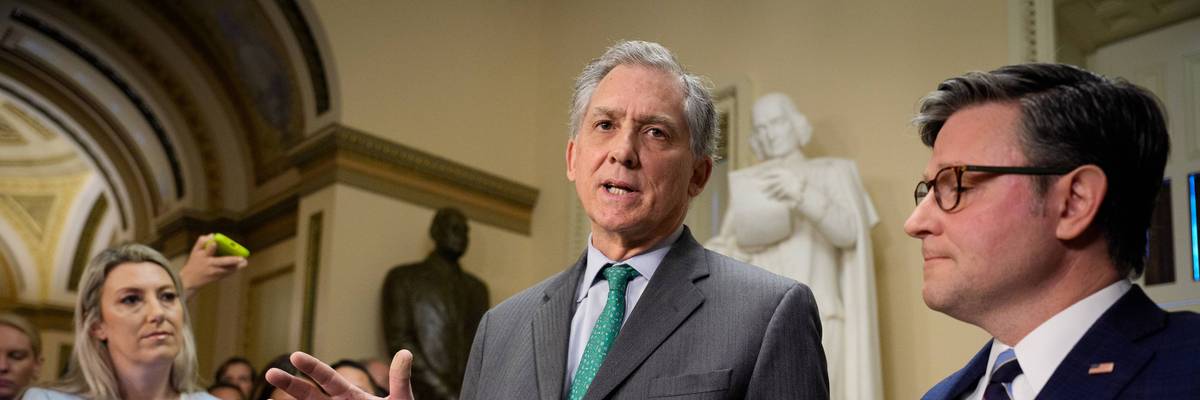
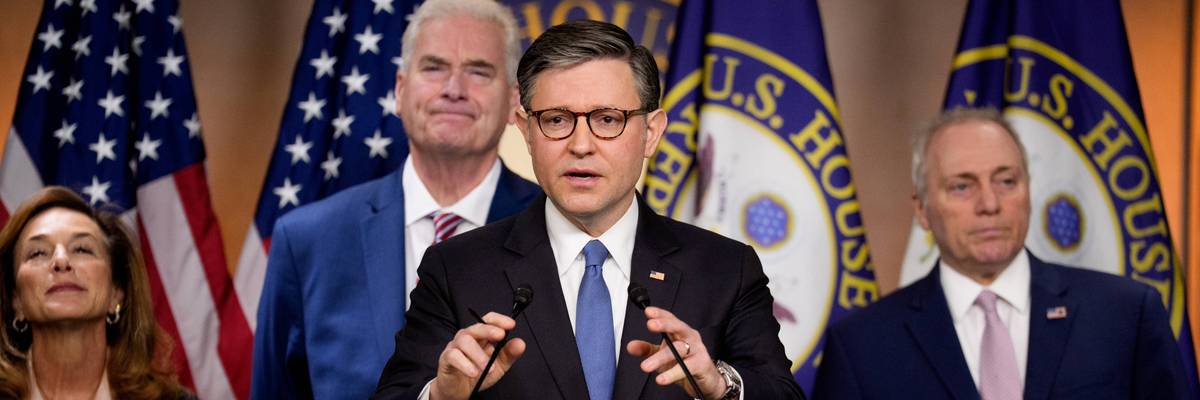
House Financial Services Committee Chair Rep. French Hill (R-Ark.), accompanied by House Speaker Mike Johnson (R-La.), speaks with members of the media on Capitol Hill on May 15, 2026.
(Photo by Andrew Harnik/Getty Images)
Jake Johnson
Jul 21, 2026
COMMON DREAMS
A broad coalition of advocacy organizations and labor unions warned Tuesday that Republican legislation currently moving through the US House of Representatives would deregulate Wall Street giants and increase the risk of another financial disaster under the guise of aiding community banks.
“This dangerous bank deregulation package would undermine core safeguards and supervision, push risk into the shadows, and make the next publicly financed bailout more likely,” an alliance of 28 advocacy groups wrote in a letter to members of Congress. “Further deregulation is especially alarming at a time when financial regulatory agencies are under political attack, pursuing industry-friendly agendas, and starved of resources, and when there is effectively no oversight of financial markets.”
Proponents of the GOP’s Main Street Capital Access Act (HR 6955), which is backed by major bank lobbying organizations and some Democratic lawmakers, characterize the bill as an effort to bolster small financial institutions by reducing their regulatory burdens. Oscar Valdés Viera, senior policy analyst for private equity and capital markets at Americans for Financial Reform, said that’s a ruse.
“Instead of providing meaningful relief from sky high credit card interest rates and late fees, this bill just lets big banks off the hook by weakening oversight, enacting carve-outs and exemptions from banking laws, and creating a pathway for banks to block commonsense regulatory safeguards that could reduce the likelihood and severity of financial crises,” said Valdés Viera. “HR 6955 would automatically raise major regulatory thresholds, weaken bank examiners tools, create new avenues to contest supervisory and enforcement decisions, reduce meaningful competition review for many bank mergers, and expand merchant banking arrangements that blur the line between banking and commerce.”
“The House majority is pushing a package of risky bank deregulation that is just another giveaway to Wall Street banks when the Congress should be laser focused on the affordability crisis,” Valdés Viera said.
The advocacy coalition’s letter urging lawmakers to block the legislative package—which could receive a vote in the House as early as Tuesday afternoon—points specifically to Sections 201-204 of the measure. The language in those sections, the coalition warned, “would raise statutory thresholds, extend ‘tailoring’ well beyond genuinely small and simple banks, and hard-wire automatic future threshold increases.”
“As a result, fewer institutions, activities, and risks would remain within baseline guardrails even as the financial system grows more complex and interconnected,” the coalition wrote. “The combined effect would be higher leverage and risk-taking, thinner cushions against losses, and weaker prudential standards. It would return the financial system to a pre-2008 pattern in which risk migrates out of view, problems build for years at midsize and large institutions, and the public is left holding the bag when those institutions fail.”
The Main Street Capital Access Act, sponsored by Rep. French Hill (R-Ark.)—a major beneficiary of finance industry campaign cash—cleared the House Rules Committee on Monday. Punchbowl reported that Rep. Bill Foster (D-Ill.), the ranking member of the House Financial Services Committee’s subcommittee on financial institutions, is urging his Democratic colleagues to support the legislation, despite opposition from the top Democrat on the committee, Rep. Maxine Waters (D-Calif.).
“HR 6955 is Wall Street deregulation hiding as a community bank bill,” Waters said in her testimony before the House Rules Committee on Monday. “This bill lets even more of these large banks escape critical safeguards risking more failures. In fact, the sponsors of this bill were so zealous to raise thresholds, they increased one threshold that will aid bad actors who commit fraud against a bank.”
“Instead of letting Wall Street put Americans and our economy at risk again,” said Waters, “we should be working together to address the affordability crisis caused by Trump’s failed economic policies and endless war with Iran.”
The Republican legislative package “would leave the financial system dramatically weaker and make future bank failures and publicly financed bailouts more likely,” warned one advocacy group.
House Financial Services Committee Chair Rep. French Hill (R-Ark.), accompanied by House Speaker Mike Johnson (R-La.), speaks with members of the media on Capitol Hill on May 15, 2026.
(Photo by Andrew Harnik/Getty Images)
Jake Johnson
Jul 21, 2026
COMMON DREAMS
A broad coalition of advocacy organizations and labor unions warned Tuesday that Republican legislation currently moving through the US House of Representatives would deregulate Wall Street giants and increase the risk of another financial disaster under the guise of aiding community banks.
“This dangerous bank deregulation package would undermine core safeguards and supervision, push risk into the shadows, and make the next publicly financed bailout more likely,” an alliance of 28 advocacy groups wrote in a letter to members of Congress. “Further deregulation is especially alarming at a time when financial regulatory agencies are under political attack, pursuing industry-friendly agendas, and starved of resources, and when there is effectively no oversight of financial markets.”
Proponents of the GOP’s Main Street Capital Access Act (HR 6955), which is backed by major bank lobbying organizations and some Democratic lawmakers, characterize the bill as an effort to bolster small financial institutions by reducing their regulatory burdens. Oscar Valdés Viera, senior policy analyst for private equity and capital markets at Americans for Financial Reform, said that’s a ruse.
“Instead of providing meaningful relief from sky high credit card interest rates and late fees, this bill just lets big banks off the hook by weakening oversight, enacting carve-outs and exemptions from banking laws, and creating a pathway for banks to block commonsense regulatory safeguards that could reduce the likelihood and severity of financial crises,” said Valdés Viera. “HR 6955 would automatically raise major regulatory thresholds, weaken bank examiners tools, create new avenues to contest supervisory and enforcement decisions, reduce meaningful competition review for many bank mergers, and expand merchant banking arrangements that blur the line between banking and commerce.”
“The House majority is pushing a package of risky bank deregulation that is just another giveaway to Wall Street banks when the Congress should be laser focused on the affordability crisis,” Valdés Viera said.
The advocacy coalition’s letter urging lawmakers to block the legislative package—which could receive a vote in the House as early as Tuesday afternoon—points specifically to Sections 201-204 of the measure. The language in those sections, the coalition warned, “would raise statutory thresholds, extend ‘tailoring’ well beyond genuinely small and simple banks, and hard-wire automatic future threshold increases.”
“As a result, fewer institutions, activities, and risks would remain within baseline guardrails even as the financial system grows more complex and interconnected,” the coalition wrote. “The combined effect would be higher leverage and risk-taking, thinner cushions against losses, and weaker prudential standards. It would return the financial system to a pre-2008 pattern in which risk migrates out of view, problems build for years at midsize and large institutions, and the public is left holding the bag when those institutions fail.”
The Main Street Capital Access Act, sponsored by Rep. French Hill (R-Ark.)—a major beneficiary of finance industry campaign cash—cleared the House Rules Committee on Monday. Punchbowl reported that Rep. Bill Foster (D-Ill.), the ranking member of the House Financial Services Committee’s subcommittee on financial institutions, is urging his Democratic colleagues to support the legislation, despite opposition from the top Democrat on the committee, Rep. Maxine Waters (D-Calif.).
“HR 6955 is Wall Street deregulation hiding as a community bank bill,” Waters said in her testimony before the House Rules Committee on Monday. “This bill lets even more of these large banks escape critical safeguards risking more failures. In fact, the sponsors of this bill were so zealous to raise thresholds, they increased one threshold that will aid bad actors who commit fraud against a bank.”
“Instead of letting Wall Street put Americans and our economy at risk again,” said Waters, “we should be working together to address the affordability crisis caused by Trump’s failed economic policies and endless war with Iran.”