Our Support for the Open Letter: To Iran’s political prisoners, trapped ‘between two blades of a scissors’
Friday 28 August 2026, by Collective
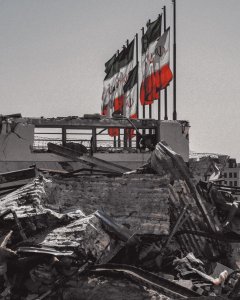
The following open letter has been published online in Overland literary journal. To endorse, and add your name, collective or political group as a signatory, fill the form below or email anticolonialiran@proton.me or anticolonialiran@gmail.com The form contains our statement of support in both English and Spanish. A German translation of our letter can be found here. The names of signatories are at the very end of this text and will be updated as more names are added. If you have a language that you’d like to add to this form, email us!
Please share the form widely with individuals, collectives and political parties who support the sentiment of this letter. Also note, the below text is not the final version as it still requires copy editing and hyperlinks.
Our Support for the Open Letter: To Iran’s political prisoners
As migrants and refugees in diaspora and in exile from Iran, who have our loved ones suffering in the Iranian state’s prisons and facing its gallows, we salute the signatories of the open letter to “Iran’s political prisoners, trapped ‘between two blades of a scissors’”, published in The Guardian on 20 August 2026. With us stand comrades and organisations from across the world who see this struggle as bound up with their own.
The open letter was signed by a number of current and formerly incarcerated political prisoners, political organisers and scholars, including Angela Davis, Ruth Wilson Gilmore, Mumia Abu-Jamal, Yasin al-Haj Saleh, Ricardo Jiménez, Michael Löwy, and Walden Bello, among others, who wrote to incarcerated people in Iran, “we stand in solidarity with you”. In response to the letter, some on the left have since called on signatories to withdraw, describing the letter as “imperialist-sympathetic”, and three names have been removed. We wanted to respond with an open letter, demonstrating the widespread support from people across the world for those who stand unapologetically with the incarcerated and formerly incarcerated political prisoners of Iran.
As collectives and individuals who have for years organised against western and zionist imperialist wars and occupations, as well as against the Islamic Republic’s state violence inside and outside Iran’s borders, we know how difficult it is to step outside mainstream geopolitical framings, familiar but dehumanising, and stand in solidarity with communities whose reality and struggle do not fit the binaries of “good vs evil”, “us vs them”, “west vs the rest”. Yet the communities across the globe who are oppressed by multiple local-global forces at once cannot afford the privilege of choosing between their oppressors as the “lesser evil”.
At a time when the historical struggle for collective liberation across Iran is besieged by the US imperialist zionist war and the Iranian government’s mass executions on one side, and pro-war Iranian monarchist zionism led by Reza Pahlavi on the other, the international solidarity articulated by the statement has brought an unexpected fresh breeze of hope and opened new horizons of liberation beyond borders, especially coming from current and formerly incarcerated political prisoners like Mumia Abu-Jamal, Yasin al-Haj Saleh and Ricardo Jiménez, among others.
As is to be expected, the open letter has led to a wave of condemnations from vanguards and gate keepers of “anti-imperialism” who have long abandoned the very basic principles of the anti-imperialist tradition: international solidarity in support of lives crushed under the hammer of global capitalism, colonialism and imperialism. Instead of calling for the abolition of capital punishment, these vanguards justify the mass imprisonment, torture and executions of our people.
In the midst of US military and economic war on Iran, the Iranian state has been intensifying the execution of prisoners as a matter of “national security”, by framing the imprisoned protestors as “foreign agents” and “spies” without providing any evidence except forced confessions under torture.
Meanwhile the real “foreign agents” and collaborators have been operating from within the top layers of the IRGC ruling class, providing US and Israel with intelligence regarding the location of assassinated officials and their meetings. This is not a conspiracy, it has been admitted publicly by high ranking officials such as Araghchi who framed it as an ongoing "security breach" within the system. In other words, in a classic scenario scripted by ruling classes, the wretched of the earth in Iran are being scapegoated and sacrificed as “foreign agents”, so a new arrangement of power in the region could be built on the blood of the oppressed and the colonised.
The minoritised communities in Iran bear the heaviest brunt of Iranian carceral and border violence. Nearly two million Afghan migrants and refugees have been deported from Iran since the 12-day zionist war on Iran. The government used the zionist war as a pretext to intensify the racist and xenophobic campaign of mass deportation against Afghans, committing to the ethnic cleansing of a people who have lived and moved on these lands long before the establishment of the Iranian nation-state and its borders.
While the prison system in Iran affects the poor and marginalised from all communities, prisoners from minoritised, racialised and internally colonised regions such as Kurdistan, Balochistan, Ahwaz, and Lurestan, are disproportionally targeted by the Iranian state’s system of mass incarceration and executions. In a manner that is not dissimilar to the US where Black, Latinx, Muslim and Indigenous communities are targeted disproportionally by the white supremacist settler colonial patriarchal dual system of mass incarceration and racial capitalism.
While our position against US imperialism and IRI executions may seem unusual to some, it is in fact a common position among labor unions, student collectives, feminist, racialised and minoritised groups inside Iran and in exile. The most recent statement by the Syndicate of Workers of Tehran and Suburbs Bus Company reads as follows:
Today, as our country struggles under the weight of devastating economic crises, runaway inflation, the collapse of rial, U.S. and Israeli military attacks, the continuation of a devastating war, economic sanctions, widespread and severe repression, and warmongering policies, the authorities are once again responding to people’s demands for bread, work, justice, freedom, and human dignity, with the most brutal instruments of terror and intimidation: the gallows.
The statement ends by declaring:
The death penalty must be abolished immediately! Political prisoners must be released! No to war, intervention, military aggression, and warmongering policies! The path forward for workers and the toiling people is unity and organisation.
A day doesn’t pass without the families and supporters of prisoners on death row risking safety to gather in front of prisons pleading to stop the execution of their loved ones. Mostly to no avail.
Between 13 to 28 July 2026, as US bombs were falling on the already racialised and marginalised southern regions of Iran, over 1,500 brave prisoners from Ghezelhesar prison held a mass hunger strike against executions of their fellow prisoners. This happened alongside the weekly prisoner strikes of the “No-To-Execution Tuesdays” campaign, which has been ongoing for 134 weeks across more than 60 prisons, demanding an end to all executions.
On 28 July, the site of public execution in Isfahan turned into a spontaneous popular protest by people who had gathered to prevent the execution. The protest was suppressed and the execution took place. Even though the executions have continued, the prisoner’s hunger strike together with the families brave resistance and spontaneous protests in Isfahan have empowered a fast growing movement for the abolition of the death sentence, as a unifying demand among different social and political movements inside and outside Iran even as US bombs fall.
The confidential information published by The Intercept regarding ICE and Iranian state collaboration on deportation in the midst of the war, reveals how police-states work together, and hold diplomatic talks behind closed doors to coordinate mass deportations of migrants and refugees, even as they wage war against each other. The same point holds for recent normalisations of relations between European powers and the Taliban and Al-Sharaa regimes, with the aim of deportations of Afghans and Syrians from fortress Europe.
Lastly we want to affirm the simple and universal truth that the collective liberation of all war torn, occupied and colonised communities of the MENA/SWANA region and beyond are interconnected.
From the Palestinian liberation struggle against genocidal Israeli settler-colonialism backed by western and US imperialism, to the Sudanese revolutionary struggle against the RSF’s genocidal and SAF’s counter-revolutionary war, backed by different regional and global imperial powers, to the Afghan liberation struggle against the Taliban put back in power by the US after 20 years of “war on terror”, to the Kurdish anti-colonial struggle for self-determination, to the Baloch anti-colonial struggle against Pakistani and Iranian colonial occupations, to the Ahwazi Arab anti-colonial struggle for self-determination, to Congo’s struggle against Rwanda’s military invasion and imperial extractivism, to Haiti’s historical struggle against slavery, debt, and terror backed by western colonialism and imperialism, to Venezuela’s struggle against US neocolonialism and state authoritarianism, to the Zapatista struggle against Mexican mal gobierno (bad government) and US imperialism, to Lebanon and Syria’s struggle against Israeli colonial expansion and sectarian political elites, to West Papua’s struggle against Indonesian colonialism backed by imperial powers, to the Saharawi struggle against Moroccan colonialism backed by Israel, to the Uyghur struggle against the Chinese state’s mass incarceration and surveillance, to the Rohingya struggle against Myanmar’s military genocide, to the Kashmiri struggle for self-determination against Indian and Pakistani military states, to the Ukrainian struggle against Russian imperialism and invasion, European self-serving hypocrisy, and the Ukrainian state’s anti-worker policies; these and all other struggles for collective liberation are inherently interconnected.
For us the popular slogan “Nobody’s free until everybody’s free” means forging, articulating and building solidarities that may seem to some confusing or unusual in a world where hegemonic and normative politics is defined by a multipolar, (neo)colonial and patriarchal capitalist nation-state system and its borders, borders that have been, and continue fragmenting, dividing, conquering, hierarchising the lands and the peoples of our planet.
Fannie Lou Hamer’s statement “Nobody’s free until everybody’s free” means rejecting hierarchies of liberation and selective solidarities, even when violent binaries present themselves as common sense. A new world requires new solidarities, rooted in revolutionary imagination and radical love beyond borders and prison walls!
We take up the demands of the Tehran Bus Drivers and of prisoners organising across Iran: an immediate end to the war and to sanctions, the abolition of the death penalty, and the release of every political prisoner. Each demand needs the other.
Long live peoples’ struggles everywhere against imperialism, colonialism, statism, capitalism, patriarchy and militarism of all colours!
Freedom for all prisoners facing tortures and executions in the prisons of Iran, Israel, US, China, Syria, Egypt, and Saudi Arabia!
Freedom for Mumia Abu Jamal, Fred “Muhammad” Burton, Veronza Bowers and all other Black and Indigenous prisoners in Turtle Island!
Freedom for Varisheh Moradi, Pakhshan Azizi, Zeinab Jalalian and all imprisoned revolutionary Kurdish women!
Freedom for Mahrang Baloch and other revolutionary Baloch prisoners in the colonial prisons of Pakistan and Iran!
Freedom for Dr Hussam Abu Safiya, Khalida Jarrar, Marwan Barghouti and all other Palestinian prisoners fighting for liberation from inside colonial zionist prisons!
Freedom for Saadia Mosbah and all other prisoners in Tunisia fighting against the Tunisian state’s anti-Black and anti-migrant policies dictated by European extractivism and border imperialism!
Freedom for all South Asian & Filipino migrant and domestic workers affected by the war in the region!
No to war! No to genocide!
No to executions! No to prisons!
No to militarism! No to imperialism!
No to zionism! No to patriarchy!
No to campism! No to statism!
No to imperialist regime change, yes to revolution from below!
Yes to international solidarity!
Yes to collective liberation!
Yes to peace, justice and self-determination for all colonised, oppressed and exploited people globally!
Yes to Land Back!
Jin Jiyan Azadi!
Further readings and statements against US zionist imperialism and Iran’s militarised authoritarianism
* EZLN statement on Iran and US imperialism
* Ward. Gaza. Queer
* Mobadara
* Sudanese Anarchists Gathering
* Priscillia Kounkou Hoveyda, Collective for Black Iranians, published on Africa is a Country
anti colonial iran
The above statement was written by anti colonial iran, a collective that seeks to translate, publish and circulate statements and political actions taken by marginalised, currently, and formerly incarcerated, colonised and revolutionary voices from inside Iran. These are voices which have been historically erased, censored and sidelined, internally by the Iranian state (first Pahlavist and later Khomeinist), and externally by the diaspora elite, as well as Western state and corporate media.
Our aims are to internationalise voices from below which reject statism, militarism, reformism, racism, patriarchy, capitalism, colonialism and borders in all their forms.
Our project began with the Jina Amini uprising under the title of "Translators4Jina" and, after a short break, we resumed our project as anti colonial iran. Statements we have translated over the years from @collective98, Roja Collective, @Sarkhatism, and many more, can be found at https://anticolonialirancom.wordpress.com/
Our statement is supported by: (names will be updated as responses are submitted so there will be a time delay with when names appear.)
1. anti colonial iran
2. Kamran Matin, University of Sussex
3. Priscillia Kounkou Hoveyda, Collective for Black Iranians
4. Prof. Abbas Vali
5. Assoc Prof Maryam Saeedi, Carnegie Mellon University
6. Shahrzad Arshadi, filmmaker & playwright
7. Prof. Nayereh Tohidi, California State University, Northridge
8. Prof. Fatemeh Shams, Professor of Persian Studies & Intersectional Feminist Collective
9. Samira Rashti, Health Not Punishment Collective, UCLA
10. Naeimeh Doostdar, Women Revolutionary Council & Amsterdam Vrij University
11. Amir Ahmadi Arian, Binghamton University
12. Nazan Üstündağ, Alice Salomon Hochschule
13. Zhaleh Sahand, former political prisoner
14. آناهیتا رحمانی ، زندانی سیاسی سابق و فعال زنان و علیه اعدام / Anahita Rahmani, former political prisoner, women’s rights and anti-execution activist, Toronto
15. Shokoufeh Sakhi, Ph.D, Adjunct faculty, University of Toronto
16. Shahrzad Mojab, Professor Emerita, University of Toronto
17. Haideh Moghissi, Emerita Professor, York University
18. Fatemeh Haghighatjoo
19. Sina Zekavat
20. Prof. Saeed Rahnema, (rtd) York University, Canada
21. Farhad Nomani, Emeritus Professor of Economics, AUP, Paris
22. Dr Mohammad-Reza Nikfar, IranAcademia
23. Omid Shekari, University of Pittsburgh
24. Assoc Prof Manijeh Moradian, Barnard College, Columbia University
25. Darya Kharabi, Transnational Iranian Antifascist Collective
26. Azadeh Momeni, Toronto Metropolitan University
27. Fataneh Farahani, Professor in Ethnology, Stockholm University, Sweden
28. Dana Orkideh, Illustrator & Graphic Designer
29. Ozlem Goner, Central European University
30. Assist Prof Gulay Kilicaslan, Carleton University
31. Kazem Alamdari, California State University
32. Siyavash Shahabi, journalist and writer
33. Nima Sabouri
34. Sanaz Azimipour, Writer
35. Aso Javaheri, Simon Fraser University
36. Nastaran Saremy, Simon Fraser University
37. Gita Hashemi, Artist, T’karonto
38. Daria Jehani
39. Damoun Jehani, PhD Student and political activist
40. Nima Chalangar, "No To Execution Campaign”, Human Rights Activist
41. Babak Salari, Photographer, Montreal
42. Saeedeh Niktab Etaati, Curator, Canadian Museum of History
43. Arash Ghiassi
44. Muborak Sharif, Independent scholar
45. Mana Khosrowshahi, Development Studies PhD Candidate at University of Ottawa
46. Mina Mahmoudian
47. Suzan Karimi
48. Avishan Chanani
49. Yeganeh Khoie
50. Dr Maryam Palizban, Iméra – Institute for Advanced Study, Aix-Marseille Université, France
51. Mina Fakhravar, University of Ottawa
52. Elham Hoominfar, Northwestern University
53. Kiana Dashtbazi
54. Mona Hadisi, Iran Freedom Congress
55. Dr Mahdi Ghodsi, wiiw, WU, CMEG, Iran Freedom Congress
56. Dr Raha Sabet Sarvestany
57. Dr Zahra Khosroshahi, Lecturer in Film & Television Studies, University of Glasgow
58. Shahla Zendegani Feminist Social Activist
59. Negin Shiraghaei, Azadi Network
60. Hanieh Khosroshahi
61. Mitra Saffari, human rights activist
62. Shahrzad Roshan Zamir, student, School of Law, University of California, Berkeley
63. Ali Robaei
64. Mehrdad Samadzadeh, University of Toronto
65. Mahtab Mahboub, PhD candidate at Essen-Duisburg University
66. Hajar Moradi, Multidisciplinary Artist
67. Ashkan Hashemipour, University of Oxford
68. Dr Homa Fathi, PhD Candidate, McGill Faculty of Dental Medicine and Oral Health Sciences
69. Sepideh Shariati
70. Sahand Mehraeen, Vandad Educational Centre
71. Reza Akbari, Political Activist and Writer
72. Sedigheh Haj Mohsen, Political activist
73. Dr Azam Khatam, University of Toronto
74. Dr Ali Akbar Mahdi, Professor Emeritus, Ohio Wesleyan University, Retired Lecturer, California State University, Northridge
75. Negin Behkam, Women Revolutionary Council and journalist
76. Bahar Almasi, Independent Cultural Activist
77. Fouad Roueiha, Un Ponte Per, Rome, Italy
78. Ak-A
79. Prof. Homa Hoodfar, Emerita, Concordia University, Montreal
80. Prof. Azadeh Kian, Université Paris Cité, Paris, France
81. Houshang Sepehr, Solidarité Socialiste avec les Travailleurs d’Iran, France
82. Farkhondeh Ashena, former political prisoner
83. Nasrin Parvaz, writer and artist, former political prisoner, “One Woman’s Struggle in Iran, A Prison Memoir”
84. Roxanne Shalkouhi-Coutteure, Union Activist in the health sector, Gauche Anticapitaliste, Brussels, Belgium
85. Chowra Makaremi, researcher in Anthropology, CNRS Paris
86. Babak Kia, Solidarité Socialiste avec les Travailleurs d’Iran, France
87. Roya Rastegar, New Center for Research & Practice
88. Ali Sayyah, Simon Fraser University
89. Morteza Samanpour, Kingston University, CRMEP
90. Dr Roxana Khoshravesh (Toronto)
91. Mehran Esfandiari, Human Rights activist
92. M. Fard, Toronto-Canada Iranian Republican Association (TIRA)
93. Behnam Daraeizadeh, Journalist & Human Rights researcher, Ottawa, Canada
Collectives & organisations
1. No To Execution Campaign
2. Roud Collective
3. Voice of Iran Revolution
4. Osyan Women’s Collective
5. Kaargaah.net (تحریریهی کارگاه دیالکتیک)
6. هم یاری Iran Solidarity - Toronto
7. Transnational Iranian Anti-Fascist Collective (TIAC)
8. Javaneh Verein
9. Global Prison Abolition Coalition
10. Judíxs Antisionistas contra la Ocupación y el Apartheid, Chile
11. Flüchtlingscafé Göttingen / Refugee Café Göttingen
12. AK Asyl Göttingen
13. Solidarité Socialiste avec les Travailleurs d’Iran (S.S.T.I-France)
14. New Bloom 破土, Taiwan
15. Burmese Atheists
16. Solidarity US
17. Editorial Board, New Politics
Signatures in solidarity
1. Prof. Gary Foley, Aboriginal History Archive, Victoria University
2. Prof. Tony Birch, The University of Melbourne
3. Dr Carlos Eduardo Morreo, Victoria University
4. Dr Tasnim Mahmoud Sammak, Victoria University
5. Prof. Juan Tauri, The University of Melbourne
6. Dr Shakira Hussein, The University of Melbourne
7. Assoc Prof Amanda Porter, The University of Melbourne
8. AOM Debbie Kilroy, Sisters Inside & National Network of Incarcerated & Formerly Incarcerated Women and Girls
9. Rebecca Ruth Gould, Distinguished Professor of Comparative Poetics and Global Politics, SOAS, University of London
10. Peter Bohmer, former political prisoner, faculty emeritus in political economy, The Evergreen State College, Economics for Everyone, USA
11. Prof. Gilbert Achcar, SOAS, University of London
12. Prof. Sean Purdy, Universidade de São Paulo
13. Federico Fuentes
14. Karim Safieddine
15. Ammar Abboud, researcher, Lebanon
16. Sara Abbas, City University of New York
17. Curtis Levy, filmmaker
18. Tania Melnick, Judíxs Antisionistas contra la Ocupación y el Apartheid, Chile
19. Robin Yassin-Kassab, writer
20. Michael Albert, RevolutionZ, United States
21. Joseph Daher, Independant Academic and Researcher
22. Paul Le Blanc, member of Solidarity, Tempest Collective, Democratic Socialists of America, Pittsburgh
23. Olivier Besancenot, NPA-l’Anticapitaliste, France
24. Christine Poupin, NPA-l’Anticapitaliste, France
25. Michael Rodríguez-Muñiz, UC Berkeley
26. Shuddhabrata Sengupta, artist & curator, Raqs Media Collective, Delhi, India
27. Vicki Nguen
28. Nancy Holmstrom, prof emerita, Rutgers University, USA
29. Balasingham Skanthakumar, co-editor Polity magazine / director Social Scientists’ Association of Sri Lanka
30. Dr David Barkin, Universidad Autónoma Metropolitana, Mexico City, Mexico
31. Prof Ricardo Dominguez, UCSD, Visual Arts
32. Marco F. Navarro, Queens College, CUNY
33. Suraia Sahar
34. Howie Hawkins, Green Party, United States
35. Charles Post, City University of New York
36. David Finkel, managing editor of AGAINST THE CURRENT
37. Dr Aragorn Eloff, South Africa
38. Ashley Smith, Tempest Collective, United States
39. Stephen R. Shalom, Wm. Paterson University, USA
40. Mohammed Elnaiem
41. Gina Lee Robbins
42. Lazy Rosario, Musician & DJ
43. Ammu Abraham, Feminist & civil liberties, Forum against oppression of women
44. Mark LeVine, Department of History, UC irvine, California, USA
45. Rashmi Varma, University of Warwick
46. Armaan Singh
47. Brian B+ Cross, UCSD Vis Arts
48. Ceylan Hassan, PhD University of Kent, Decolonial Cypriot
49. Dr Scheherazade Bloul, Deakin University
50. Melissa Corbett, Socialist Alliance
51. Dr Benjamin H. Abbott, University of New Mexico
52. Juan Pachon, Latin American Solidarity Network (LASNET)
53. Joanna Wren, Archaeologist, Ireland
54. Wayne Heimbach
55. Doita Datta
56. Donovan Ward
57. Leila S. Taha, Human Rights Attorney
58. Hugo Le Gourrierec, director, assistant director cinéma, France
59. Dr Geoff Jordan
60. Sarah Sather, Assistant Editor, New York
61. Orla de Díez
62. Danisha, Sai University
63. Dr Christy Adeola Braham
64. Sam Wallman
65. Dr Elese Dowden
66. Marissa Walker
67. Jon Tjhia
68. Mitchell Plitnick, ReThinking Foreign Policy
69. Prof. Barbara Taylor, Queen Mary University of London
70. N Jayaram, People’s Union for Civil Liberties, India
71. Kerrigan Hayes
72. Dr Simone Jeger
73. Choo Chon Kai
74. Amina Ali, writer, New York, NY
75. Lea G
76. Simón Rodríguez, journalist, Venezuelanvoices.org
77. Dr Carolyn D’Cruz
78. Amaury Rodriguez, writer
79. John Michael Colón, Writer & Editor, Strange Matters Magazine
80. Dr S.N, UCL
81. Michael Karadjis, Western Sydney University
82. Nicholas Bray
83. Antonios Tiganis, Aarhus University
84. Wil Sahar Patrick, PhD Candidate, University of Victoria
85. Ian Parker, Anti-Capitalist Resistance Manchester
86. Simon Pearson, Anti Capitalist Musings & Anti Capitalist Resistance
87. Harald Etzbach, Journalist
88. Ian Townson, Anti Capitalist Resistance
89. Shaun Cohen, Leeds
90. George Gray, UCU
91. Prof. Matthew Klugman, Victoria University
92. Tori Ball, Durham University
93. María Paula Hernández, PhD Candidate, La Trobe University
94. Juan-Camilo Riano-Rodriguez, PhD Candidate, Victoria University
95. Imogen Lambert, University of Warwick
96. Caroline Carney Marxist Disability Network ACR
97. John Garvey, Brooklyn, NY
98. Clarice Kuhling, Wilfrid Laurier University
99. Michèle Hehn, Québec Solidaire, Montreal, Quebec
100. Andriy Movchan, International Network for Solidarity with Ukraine
101. Andy Richards - Anti Capitalist Resistance, England
102. Noémie Emmanuel, Sociologue, UCLouvain
103. Kelly Grotke, Writer
104. Vietnam Young Marxist, Ho Chi Minh City, Vietnam
105. Assoc Prof Lucia Sorbera, The University of Sydney, Australia
106. Traven Leyshon, Solidarity U.S., Bread & Roses DSA
107. Sam Friedman, AIDS researcher, USA
108. Ted Zuur
109. Richard “Rick” Sklader, Disability Activist
110. J. Talmadge Wright, Sociology Professor Emeritus, Loyola University Chicago
111. Sam R, Unison/Greater Manchester Tenants Union
112. M. Andre Doucet, Montreal, Canada
113. Steve Ongerth
114. Richard Hornsby, Tempest Collective, United States
115. Dr Müge Akpinar
116. Shivam Chadha, antiwar and decolonial activist, هم یاری Iran Solidarity - Toronto
117. Dennis Kortheuer, emeritus CSULB, United States
118. Michael Sideris, writer and teacher, Naarm/Melbourne
119. Rodrigo Oliveira Fonseca, Universidade Federal do Sul da Bahia, Brasil
120. Kavita Krishnan, New Delhi, India
ٖ121. Farooq Sulehria, Beaconhouse National University, Lahore
122. Phil Gasper, Professor Emeritus, Notre Dame de Namur University, USA
123. Eric Toussaint, PhD, University Paris 8 and Liège Belgium
124. Steve Leigh, Red Spark, Seattle Revolutionary Socialists
125. Ugo Palheta, University of Lille, France
126. Siân Vate, Victoria University
127. Alex de Jong, IIRE Amsterdam
128. Tassos Anastassiadis, journalist, Athens, Greece
129. Kit Wainer, United Federation of Teachers
130. Jordy Cummings, York University, Toronto, Canada
131. Bong Fenis, Alyansa ng mga Mamamayan para sa Karapatang Pantao, Philippines
132. Hari Prasad, Atlanta, Georgia, USA
133. Dr Ruth Marshall, Political Science, University of Toronto
134. Ethan Young, moderator, Global Left Midweek @ Portside.org, Brooklyn, USA
135. Hein Htet Kyaw (Abu Bakr), Director of Australasia, Atheist Alliance International
136. Alip Moose, writer, Malaysia
137. Harsh Kapoor, Editor, Mainstream Weekly
138. Keith Michael Estrada
139. Dr Katharine Hodgkin, London, UK
140. Anita Dube, artist, India
141. Penelope Duggan, Editor International Viewpoint
142. Béa Whitaker, militante anti-raciste altermondialiste, France
143. Prof. Martin Gallié, UQAM, Québec
144. Bill Balderston, delegate, Alameda Labor Council, Oakland, USA
145. Fabrizio Burattini (refrattario.link), Italy
146. Marianne Ligou, France
147. Claudine Duplissy IV internationale France
148. Jon Bekken, Anarcho-Syndicalist Review, Philadelphia USA
149. Dianne Feeley, UAW Local 235 retired, Detroit, MI, USA
150. Athena Moss Sypsa, artist, Greece
151. Greg Williams, LFI, France
152. Thomas Harrison
153. Pete Dolack, New York City
154. Criage Lynnette Althage
155. Marco Fonseca, Independent Scholar
156. Kristofer Petersen-Overton, Brook Farm Institute for Critical Studies
157. Allie Levin
158. Kim Scipes, Professor Emeritus of Sociology, Purdue University Northwest (affiliation listed for identification purposes only)
159. Guy Rundle, editor and writer
160. Peter Saxtrup Nielsen, Baker, Aarhus, Denmark
161. Dr Gerald Roche, La Trobe University
162. Joel Geier, Revolutionary Marxist, Evanston, Il, USA
163. Teacher, Ystads Municipality, Sweden
164. Elizabeth Lawrence, UCU activist and Anti-Capitalist Resistance, England
165. Tony Iltis, warehouse worker, Western Sydney
166. M. V. Ramana, University of British Columbia, Canada
167. Leigh Kendall, Asia Pacific Sub-Secretariat of the International Workers Association
168. Giannis Felekis, Greece
169. Elea Foster, Greece
170. Charlotte Valloe
171. Lily Fox, York
172. Franck Gaudichaud, Historian, Toulouse University, France
173. A.C. Bayran, Manila
174. Dr Simone Davis, retired, University of Toronto, Canada
175. Jason Pike, Poland
176. Dr Thomas Rieger, Historian, "Die Linke", Germany
177. Prof. Jean Batou, University of Lausanne
178. Stefanie Prezioso, former Swiss MP
179. Dan La Botz, Editorial Board member, New Politics
180. Wendy Thompson, retired former Pres., L. 235 UAW, Detroit, Michigan, USA
181. Helen Scott, Professor Emerita, University of Vermont, Burlington, VT, USA
182. David McCullough, DSA, Atlanta, USA
183. Eric Feinblatt, co-chair Sullivan County Organizing Committee/Democratic Socialists of America, USA
184. Michael Mersereau, artist, United States
185. Alex Chis, East Bay DSA, Union City, CA
186. Claudette Bégin, Teamsters Local 2010, retired, Union City, CA
187. Jason Dawsey, Historian, Arizona State University
188. Alex Larsen, Denmark
Currently 298 signatures (30 August 2026)