Wednesday, September 23, 2026

Europe’s Offshore Wind Slowdown Is Squeezing Manufacturers

  • Europe built factories for a much bigger offshore wind boom than it is currently getting, with monopile plants projected to be operating at just 19% of capacity in 2028.

  • That could weaken Europe’s wind supply chain, as years of low factory use may force manufacturers to cut investment or capacity.

  • Chinese suppliers could gain ground as lower costs give them room to compete in Europe even after shipping and carbon costs are added.

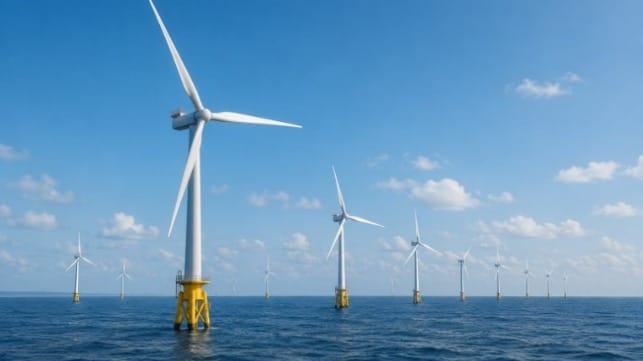
Europe’s offshore wind monopile market is moving from concerns over insufficient manufacturing capacity to a period of weak factory utilization coming from offshore wind projects skewing to the right on the timeline. European producers have invested heavily in larger facilities capable of supplying the XXL foundations required for the latest generation of offshore wind turbines, but project delays and slower investment decisions mean that demand is not arriving as quickly as the new capacity.

Rystad Energy estimates that European XXL+ monopile manufacturing capacity will rise from around 1.2 million tonnes in 2024 to 2.7 million tonnes by 2027. Factory utilization is expected to sit at around 32% in 2026 and 2027 before falling to just 19% in 2028. Loading improves later in the decade as more projects enter manufacturing, reaching close to 50% in 2031 under the current project pipeline.

The shift is already affecting contract economics. Manufacturing a representative monopile in Europe is around 38% more expensive than in March 2020, with modeled manufacturing cost rising from $2.50 million to $3.46 million per kilotonne. Selling prices, however, have moved lower from their 2022 peak as suppliers compete for future production slots. For a representative 1.6-kilotonne monopile, Rystad Energy estimates that the modeled European supplier margin has fallen from around $0.93 million in the 2024 reference case to about $0.20 million today, equivalent to roughly 3% of the selling price.

The change is particularly striking compared with the market in 2021 and 2022. When Ocean Winds reserved monopile capacity with China’s Dajin Heavy Industry for Moray West in December 2021, available production slots at established European suppliers were tight. Sif had signed Dogger Bank C only one month earlier and said the three Dogger Bank phases extended its order book well into 2024, while EEW was also carrying a substantial forward workload. Dajin described the market at the time as facing fabrication-capacity bottlenecks.

That environment helped justify a wave of European capacity investment. Sif, for example, subsequently more than doubled its annual capacity to around 500 kilotonnes through its Maasvlakte 2 expansion, adding the ability to manufacture substantially larger foundations. Similar investments across Europe have lifted technically relevant XXL+ capacity well ahead of near-term contracted demand.

Chinese suppliers are now competing under very different conditions. Rather than primarily filling gaps left by constrained European factories, they are bidding into a market where European suppliers themselves need additional orders. Rystad Energy estimates current Chinese monopile manufacturing cost at around $2.03 million per kilotonne, about 41% below the European reference.

That cost gap gives Chinese suppliers more flexibility to absorb freight, carbon costs and lower margins when targeting European projects. In Rystad Energy’s modeled 1.6-kilotonne reference case, a Chinese monopile can land in Europe at around $6.35 million even after including ocean freight and the EU Carbon Border Adjustment Mechanism, depending on the supplier margin and CBAM treatment. The comparable modeled European selling price is around $6.69 million. The analysis illustrates why higher trade and logistics costs can narrow China’s advantage without necessarily eliminating it.

The European market remains dominated by local manufacturers. Sif accounts for around 31% of firm contracted monopile tonnage in Rystad Energy’s current dataset and EEW around 22%, while Dajin represents roughly 12%. But monopiles are also more easily split between suppliers than offshore turbines, allowing developers to introduce additional manufacturers into tenders without awarding them an entire project.

The longer-term risk is that today’s surplus does not remain permanent. Monopile factories carry high fixed costs, and several recent investments were made on the expectation of rapid offshore wind growth and progressively larger foundations. If project delays keep European utilization low for several years, suppliers may defer further investment, mothball production lines or ultimately remove capacity from the market. Germany illustrates the uncertainty: 17.8 GW of offshore wind sites were awarded between 2023 and 2025, while projects representing around 16 GW could potentially fall within an industry-proposed voluntary site-return mechanism.

By Rystad Energy


Germany's Largest Offshore Wind Farm Inaugurated as Commissioning Proceeds
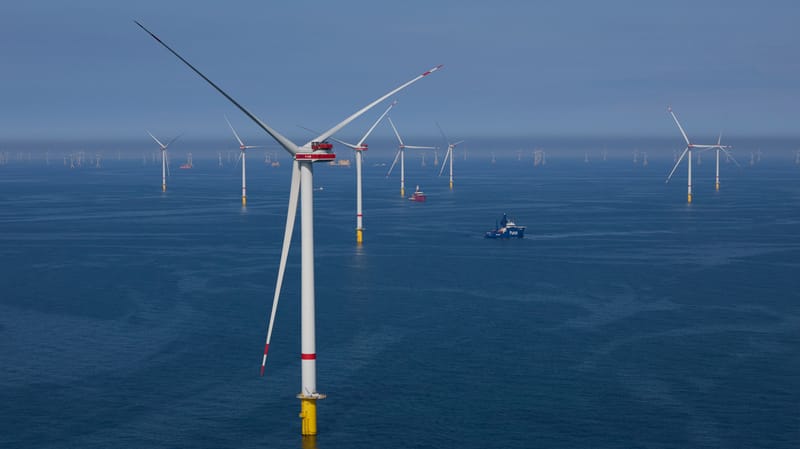
Germany's largest offshore wind farm
He Dreiht completed installation (Aerial photos by Rolf Otzipka courtesy of EnBW)

Published Sep 21, 2026 8:03 PM by The Maritime Executive


Germany’s largest offshore wind farm, He Dreiht, located in the North Sea, marked its inauguration last week as the project moves toward full commissioning. It comes as Germany continues to debate the form of its future offshore wind efforts and the role of government in the projects.

The project consists of 64 Vestas 15 MW wind turbines and is located just over 50 miles northwest of Borkum and is approximately 68 miles west of Heligoland. When fully commissioned, it will have a capacity to generate up to 960 MW.

“He Dreiht is the largest single investment made by EnBW in renewables,” said Georg Stamatelopoulos, Chairman of the Board of Management at EnBW. “We need more projects like He Dreiht, which deliver affordable, secure and clean electricity. At the same time, we have to gear Germany’s entire energy system toward these three aspects. And this will only be possible if we show courage combined with pragmatism.”

EnBW was awarded the contract back in 2017 for He Dreiht in the first round of auctions for offshore wind farms in Germany, with no entitlement to state funding. It was built without state funding and is being financed solely through long-term power purchase agreements. EnBW holds 50.1 percent of the shares through a project company. The remaining 49.9 percent are held by a consortium made up of Allianz Global Investors on behalf of Allianz entities, AIP Management and Norges Bank Investment Management. Around 2.4 billion euros were invested in developing the project.

The Long-term power purchase agreements (PPAs) signed for electricity production are designed to give companies long-term price stability and planning certainty. One key focus is the technology sector, where the project will help power the growth in digitalization and the growth of AI. Evonik, Google, the Telekom subsidiary PASM, Fraport, Bosch, Salzgitter, SHS Stahl-Holding Saar, Deutsche Bahn and DHL Group are among the contractual partners for He Dreiht.

Construction work on He Dreiht got underway in the middle of the North Sea in May 2024. At a hub height of 142 meters, the rotor with a diameter of 236 meters sweeps through an area of around 44,000 square meters per revolution – a single rotation of the rotor is enough to supply the equivalent of four households with electricity for a day. The network operator TenneT is responsible for connecting the wind farm to the electricity grid. The electricity reaches the coast via a platform in the sea and two submarine cables.

The task of transitioning He Dreiht into regular operation will be a gradual process that involves connecting the individual turbines to the grid one by one, testing them and starting them up. The first turbines are already feeding electricity into the grid, with the others set to follow. Based on current progress, the wind farm should be fully operational in the coming months.

EnBW highlights that the project is part of its overall strategy for expansion of renewable energies. The installed output is currently around eight gigawatts (GW), more than double the 2018 figure. Renewable energies account for over 70 percent of the total installed generation capacity.

At the same time, EnBW is already developing the next major offshore projects with Dreekant (1 GW) in the German North Sea and Morven (2.9 GW) in Scotland. By the end of 2030, around 80 percent of EnBW’s generation portfolio is set to consist of renewables. 

Germany has an operational offshore wind capacity of around 10.8 GW as of mid-2026, while the government has declared a long-term target of reaching 70 GW by 2045. The German Federal Cabinet recently adopted an updated amendment to the Offshore Wind Energy Act to recalibrate the build-out framework. The updated regulatory framework introduces two-way CfDs (Contracts for Difference) and extends the standard operating lifespan for new offshore installations from 25 to 35 years, but it has been met with criticism and calls to further revise the policy to support the required investments in renewable energy.

Vestas Unveils Larger-Rotor Turbine to Boost Onshore Wind Returns

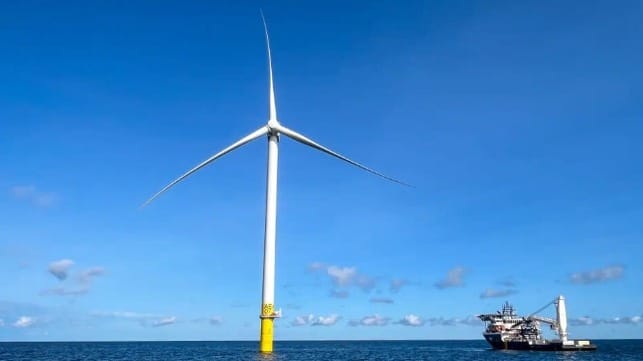
Vestas has unveiled a new onshore wind turbine that uses a larger rotor to increase electricity production without raising the turbine’s 7.2-MW rated capacity, as developers face growing pressure to improve wind project returns.

The Danish turbine manufacturer said its new V182-7.2 MW can deliver up to 6% more annual energy production than the V172-7.2 MW, depending on site conditions, while also reducing the levelized cost of electricity.

The key change is a 182-meter rotor paired with the same 7.2-MW rating as its predecessor. That gives the turbine a lower specific rating and allows it to generate more effectively during periods of lower wind speeds.

Vestas said the design can increase capacity factors by as much as 2% compared with the V172-7.2 MW. More importantly for project economics, the company estimates the turbine could improve electricity capture prices by as much as 3% because it can produce a greater share of its power during lower-wind periods when wholesale electricity prices may be higher.

That distinction is becoming increasingly important for wind developers. As renewable penetration rises, generating the maximum amount of electricity is not always the same as maximizing revenue. Projects increasingly need to account for grid congestion, periods of low or negative power prices and the timing of electricity production.

The V182-7.2 MW is aimed primarily at low- to medium-wind locations in Europe, Australia, South Africa and the Americas, although Vestas said the model is suitable for a wider range of global markets.

Rather than developing an entirely new turbine platform, Vestas has based the machine on its existing EnVentus architecture. The platform has more than 15 GW of installed capacity and is operating in more than 25 countries, giving the company an established technology base from which to increase rotor size and output.

The strategy reflects a broader push by turbine manufacturers to extract additional energy and improve economics from established platforms while limiting the development and execution risks associated with completely new turbine designs.

For wind developers and investors, the commercial proposition is straightforward: more generation from the same rated capacity could improve returns without requiring a corresponding increase in the turbine’s nameplate output.

By Charles Kennedy for Oilprice.com


RWE Speeds Up Offshore Turbine Servicing With Heavy-Lift Drone Deliveries

Ampelmann
Courtesy Ampelmann

Published Sep 21, 2026 5:21 PM by The Maritime Executive


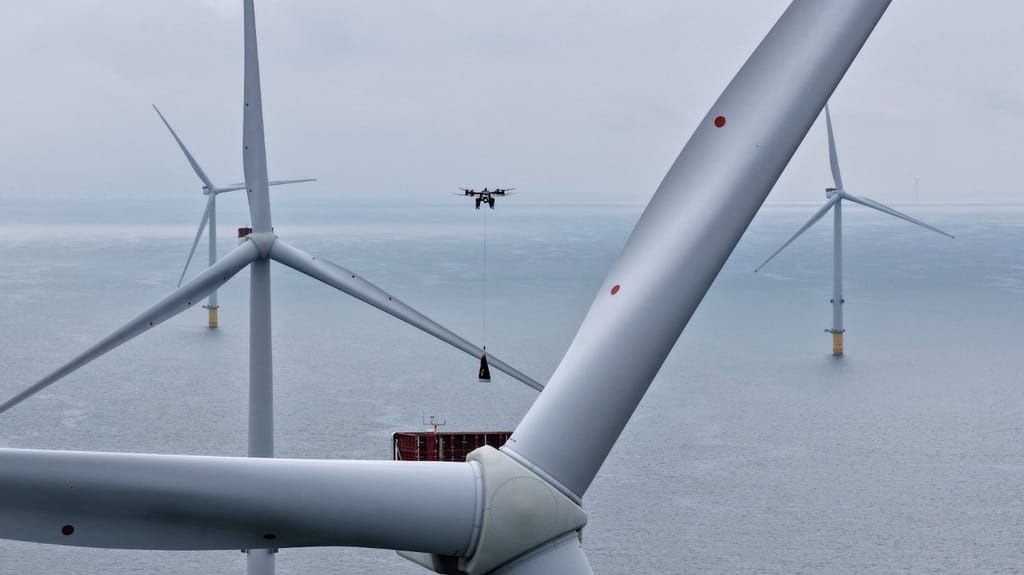
Heavy-lift drones have attracted widespread public attention in Ukraine, where they are a common platform for a variety of defense applications, but they are also making big inroads in the commercial market - including offshore wind. Dutch walk-to-work gangway firm Ampelmann has just finished up a maintenance project at RWE's Triton Knoll project, augmenting its traditional SOV equipment product line with a direct-to-nacelle drone lift service. 

Over the course of six weeks, Ampelmann's drone fleet moved more than nine tonnes of cargo from deck level to turbine-top at the Triton Knoll site, making a total of more than 250 flights at loads of up to 80 kilos each (175 pounds). Even before the SOV's tech teams arrived at the turbine to do their work, the drones pre-staged parts, safety gear and tools on landing areas on top. At the end of the job, the drones would come and pick up their gear.

The advantage is in taking the basic task of lifting logistics off of the SOV crew and simplifying it through drone delivery instead. The vessel doesn't have to be positioned, its crane doesn't have to be spotted over the loading zone, and the personnel on board don't have to focus on cargo ops. The work can even be done in the dark.

"By working into the night, we can turn vessel idle time directly into productive lifting work. We can also deliver and retrieve cargo remotely from operating turbines, allowing power generation to continue while we conduct our operations. In addition to reducing vessel movements, crane lifts and manual cargo handling, we increase the effective tool time of technicians by 15 to 20 percent," said Thijs van ’t Geloof, Business Developer at Ampelmann, in a statement. 

Most of the flight path is carried out autonomously, and contractor pilots handle any exceptions. RWE engineering manager Morten Christiansen added that his team is "delighted" at the results. 


Nine States Sue Trump Administration to Stop Offshore Wind Buybacks

offshore wind farm
Nine states are participating in the three lawsuits challenging the buyback of offshore wind leases (file photo)

Published Sep 22, 2026 4:38 PM by The Maritime Executive


California and a coalition of eight eastern states filed a total of three lawsuits on September 22, each seeking to block deals made by the Trump administration to buy back offshore wind leases in exchange for investments in fossil fuel projects. These suits follow earlier ones, in which they each allege the deals are illegal, violate several federal laws, and redirect renewable energy investments in Democratic-led states to other areas of the country.

New York is leading a coalition that includes New Jersey, Connecticut, Delaware, Maine, Massachusetts, Rhode Island, and Vermont, calling the deals with Bluepoint Wind and Invenergy illegal. The federal government committed to reimbursing $1.4 billion in exchange for canceling four wind leases. Bluepoint received $765 million to cancel a project offshore from New York in exchange for investing in LNG projects. Invenergy got a total of $653 million for three offshore wind leases in exchange for investments in natural gas plants in Indiana, Wisconsin, Iowa, Kansas, and Missouri and geothermal projects in the western United States.

In addition to the two suits filed today, the eastern states also sued in June, challenging the deal struck by the Department of the Interior to buy back offshore wind leases from TotalEnergies. 

“Americans are facing increasing energy costs because this administration would rather pay off energy companies than let us build the new power sources we need,” said New York State Attorney General Letitia James, who is a vocal critic of Donald Trump and faced a personal suit by the administration. “These illegal backroom deals take money that should have gone toward lowering New Yorkers' bills and hand it to fossil fuel projects in other states, all while our energy demand continues to grow.”

New York argues that the canceled projects were expected to bring more than $16 billion in investments into the state and hamper the state’s efforts to meet energy demands. It cites information from New York’s energy planners that project electricity demand will grow eight percent by 2030 and 24 percent by 2040, driven in part by economic development and new large loads such as data centers. The state alleges that the administration is misusing taxpayer money and sabotaging the state’s ability to meet growing energy needs.

“The Trump administration's unlawful pay-to-not-play scheme to pressure companies to forego planned offshore wind projects in America is an outrageous abuse of taxpayer dollars that hurts our ability to meet our energy needs,” said New York State Governor Kathy Hochul.

The eastern state coalition is asking the court to stop the deals. California filed a separate suit that alleges that the administration is bypassing Congress and illegally using a general fund set up by Congress to settle lawsuits to fund these buybacks. It has been pointed out previously that none of the wind development companies had sued the United States.

California Attorney General Rob Bonta and the California Energy Commission (CEC) suit is against the Trump administration and Invenergy over the deal to pay the company $111 million to cancel the Morro Bay Wind Energy Area off the Central California coast and redirect the investments away from California.

The California suit calls it a “sham settlement” and asserts that it violates numerous federal laws. It cites rules established by Congress that govern the offshore energy leasing program, including stakeholder participation rights for affected states like California and a cap on how much the government can pay to a developer when it cancels a lease.

California had previously filed a Notice of Intent to Sue, which gave 60 days for the Department of the Interior and Inverengy to “cure any violations.” California followed a similar process before suing Golden State Wind and the federal government at the end of August over the cancelation of that lease.

The attorney general and energy commission argue that offshore wind is part of a strategic plan that calls for the state to develop 25 gigawatts of offshore wind power by 2045, enough to power roughly 25 million homes and to provide about 13 percent of the state’s electricity supply. They contend it would accelerate California’s clean energy transition, create local manufacturing jobs, and drive economic development.

The administration has continued to make unspecified claims that offshore wind turbines pose a national security risk, despite the Department of Defense having reviewed the plans for each project. It asserts that the wind turbines could create radar interference. 

The eastern state coalition was victorious in court previously when it challenged the Trump administration’s stopping wind leasing for a review. The court found that the administration was violating federal process with an open-ended review and that the companies were entitled to a timely review of applications.


US Offshore Wind Project Revolution Wind Installs Last Turbine

offshore wind turbine installed
Revolution Wind installed its first turbine in September 2024 (Orsted)

Published Sep 18, 2026 6:51 PM by The Maritime Executive


One of the few large offshore wind projects proceeding in the United States, Revolution Wind completed the installation of its 65th and final wind turbine. The project began delivering power in March despite repeated opposition from the Trump administration and now expects to complete its commissioning by the end of the year.

Revolution Wind is being developed in a 50-50 partnership between Orsted and Global Infrastructure Partners’ Skyborn Renewables. Media reports indicate it represents an investment of $6.2 billion to develop and will become the third large, commercial-scale offshore wind farm in the United States to be completed. It is located in Rhode Island Sound, not too far from the Vineyard Wind and South Fork Wind projects, which have already been completed and commissioned.

The project received its final approvals in November 2023 after the companies noted more than nine years of planning and permitting. It has 20-year power purchase agreements to deliver 400 MW to Rhode Island and 304 MW to Connecticut.

The project started offshore construction in 2024, and by August 2025 it was reported to be nearly 80 percent complete. The first of its turbines was installed in September 2024, and by August 2025, Revolution Wind said 45 of the 65 Siemens Gamesa turbines were installed.

The Trump administration issued its first stop-work order to the project that same month, claiming irregularities in the permitting. The project went to court and, a month later, received a preliminary injunction against the Bureau of Ocean Energy Management from enforcing the order. Revolution Wind, however, was also included in the December 2025 move by the Department of the Interior, which ordered all five of the under-construction wind farms to stop work, this time citing undefined issues for potential interference from the turbines with radar and national security. Revolution Wind won a second injunction early in 2026 that permitted it to resume work again.

By March 2026, the project was reporting that it was more than 90 percent complete and that several key construction scopes were finished. By the middle of the month, it had begun delivering power to the grid, but the developers kept a lower profile after their two confrontations with the administration.

Rhode Island Governor Dan McKee issued a statement today calling the completion of the installation “another major milestone.” He commented, “We said we would see Revolution Wind through to the end,” while citing the promise for the state as it begins receiving power.

The full project is slated to generate 704 MW. An earlier analysis from the State of Connecticut’s Department of Energy and Environmental Protection found that Revolution Wind would save New England ratepayers as much as $500 million per year in wholesale energy costs, and that was before the recent increase in energy costs.

Orsted confirmed in a brief statement that this phase of construction had been completed. It said that commissioning would be continuing, with a target by the end of the year for full operations.

Revolution Wind is being followed by Coast Virginia Offshore Wind, being developed by Dominion Energy. It has also begun power generation and expects to complete construction by mid 2027. The only other offshore wind projects under construction in the United States, Empire Wind and Sunrise Wind, are also expected to complete construction in 2027.


UK Gas Prices Force Ineos to Idle Three Chemical Plants

INEOS is idling three of its plants in the UK as soaring natural gas prices in Europe make operations uncompetitive, the chemicals giant said on Tuesday, warning that with the idling of these plants, Europe is losing its last remaining world-scale Acetyls units.

The three plants which are being idled in Hull in the UK are Europe’s last remaining world-scale Acetyls units producing the raw material for a wide range of the Europe’s critical materials including pharmaceuticals, clothing, cosmetics, detergents, construction materials, and military explosives, INEOS said.

“I’m sure people will find it hard to believe that we are being forced to mothball some of the most efficient plants in Europe but with gas prices now 12 times the level in the US and 8 times that of China, we just cannot compete,” INEOS chairman, Sir Jim Ratcliffe, said.

While the U.S. benchmark Henry Hub price is about $2.83 per million British thermal units (MMBtu) this week, the front-month contract of the UK wholesale gas price is above $23 per MMBtu.

“Not only is the ridiculously high gas price destroying our manufacturing base and the jobs of hard-working people on Humberside, it is also massively increasing the environmental burden with replacement products supplied from the USA at double the carbon emissions and from China at 8 times the emission level,” said the billionaire owner of INEOS, who has criticized “Europe’s crippling energy and carbon policies” driving many industries, including the chemicals industry, to the brink of extinction.

“The European regulators need to wake up to the fact that the combination of high energy costs and the additional burden of unsustainable carbon taxes are destroying our European manufacturing base,” Ratcliffe said in today’s statement by INEOS.

“The net result of these current policies is to encourage coal-based production in China and the wholesale export of jobs to both China and the USA,” the executive said.

By Michael Kern for Oilprice.com

AI Data Centers Are Driving Southeast Asia's LNG Demand Through the Roof

  • Singapore already runs its grid on 95 percent natural gas, and AI-driven data center growth is pushing Malaysia, Thailand and Indonesia toward the same reliance.

  • The Iran war has disrupted roughly 80 percent of oil and 90 percent of natural gas once bound for Asian markets through the Strait of Hormuz.

  • Southeast Asian leaders at Gastech 2026 are backing an all-of-the-above strategy, pairing more gas imports with solar-plus-battery expansion rather than picking a side.

The artificial intelligence boom is sending Southeast Asia’s natural gas demand projections through the roof – but prolonged price hikes triggered by the war in Iran could turn the region toward renewable energies instead. What is more, these competing market forces are taking place against the backdrop of competing political forces as Southeast Asian leaders try to walk a tightrope between developing their economies through the increased growth of the tech sector as well as achieving their climate and decarbonization goals. These opposing factors are creating a lot of uncertainty for industry leaders and policymakers, who met in Bangkok this week to discuss the future of the region’s energy landscape at Gastech 2026.

“On the first day of Gastech 2026, one of the world’s largest energy conferences, policymakers implored pragmatism over net-zero targets and closer cooperation to ensure affordable LNG supplies, particularly among Southeast Asian neighbours whose industrial plans remain hooked on gas generation,” the South China Morning Post reported earlier this week.

Data center construction is off the charts in Asia, and therefore so is demand for liquefied natural gas, as combined-cycle gas turbines (CCGT) remain the most reliable source of round-the-clock energy production in Southeast Asia. Singapore is already running its grid on 95 percent natural gas, while demand from Malaysia, Thailand, and Indonesia is set to explode as industry leaders seek stable and predictable forms of energy production. “These are large, creditworthy off-takers with power needs that remain stable regardless of economic cycles. That does change the risk of calculus for new supply into Southeast Asia.”

“Malaysia and Thailand are at a turning point. Data centre investment is growing quickly just as domestic gas output peaks and declines.” Omarali went on to say. “New import infrastructure is being developed and the importer base is broadening. For LNG suppliers with volumes to place, this timing is important.”

However, solar-plus-battery systems offer another lifeline for Southeast Asia. While these systems are still nascent in the region, they are growing rapidly as the war in Iran catalyzes a pivot away from fossil fuel imports on a global scale. No region has been hit harder by the closure of the Strait of Hormuz. Of the roughly 20 million barrels of oil and oil products that passed through the strait each day before the United States and Israel began their military offensive in Iran back in February, about 80 percent of oil and 90 percent of natural gas were destined for Asian markets.

For cash-strapped emerging economies, that kind of market shock poses a critical threat to energy security at a time when grid capacities are already being pushed to their limit. In addition to the energy autonomy and independence afforded by solar energy, solar photovoltaics are now the cheapest form of energy on Earth by a wide margin, making a renewable revolution inevitable for countries like Indonesia and the Philippines who are already experiencing major disruptions to their imports and energy markets. The clean energy transition, in many ways, is no longer about the climate crisis – solar just makes good economic and political sense.

“For years, clean energy has been sold as a moral imperative. Now it is simply an economic and geopolitical necessity,” Forbes reported earlier this year. “It’s not about emissions. It’s about resilience and price stability.”

However, there are major hurdles that Southeast Asian nations will have to clear before they can dream of weaning themselves off imported liquefied natural gas. The region lacks critical grid and transmission infrastructure to pull off large-scale electrification. In the immediate term, the emerging strategy is an all-of-the-above approach to energy development that embraces both natural gas and solar expansion in order to maintain a resilient energy system as electricity demand skyrockets.

By Haley Zaremba for Oilprice.com 

New York’s $75 Billion Climate Liability Law Faces an Uncertain Future

  • New York’s Climate Change Superfund program sought a combined $75 billion from qualifying fossil fuel producers and refiners to fund climate-adaptation infrastructure.

  • On August 31, 2026, Chief Judge Brenda Sannes ruled that the law was preempted by federal law, including the Clean Air Act, and could not be enforced.

  • The legal battle is continuing: on September 14, New York and the challengers jointly requested entry of final judgment in a procedural move that would allow an immediate appeal to the Second Circuit.

In 2024, New York Governor Kathy Hochul signed a law requiring large fossil fuel polluters to pay up to $75 billion in damages. However, after two years, a federal judge has ruled that the law conflicts with federal law and cannot proceed. The law that Hochul signed in December 2024 would have required companies that contribute heavily to fossil fuel pollution to pay to repair damage caused by extreme weather events, which have become increasingly common as global warming intensifies.

The law focuses on pollution produced by the combustion of fossil fuels. A study published in 2025 in the journal Nature linked more than 200 severe heat waves directly to carbon pollution from the world’s largest fossil fuel producers.

The legislation, known as the Climate Change Superfund Act, mandated that firms responsible for most of the accumulation of carbon emissions between 2000 and 2024 would pay around $3 billion a year for 25 years. The legislation was based on the original Superfund law, established in 1980, which requires companies to pay for toxic waste cleanup activities following incidents such as oil and chemical spills.

Upon signing the law, Hochul stated, “With nearly every record rainfall, heat wave, and coastal storm, New Yorkers are increasingly burdened with billions of dollars in health, safety, and environmental consequences due to polluters that have historically harmed our environment.”

The aim of the law was to reduce the burden on taxpayers by addressing the challenges that big corporations, particularly oil and gas companies, have played a major role in creating, with these companies producing over 1 billion tons of greenhouse gas emissions globally over the 24-year period. The funds would contribute to restoring and protecting coastal wetlands; upgrading roads and bridges; improving stormwater drainage systems; elevating and retrofitting structures; and investing in recovery efforts from natural disasters. 

However, last month, a federal judge ruled that the New York law conflicted with federal law and therefore could not take effect. The chief judge of the US District Court for the Northern District of New York, Brenda Sannes, ruled that the state could not enforce its “climate superfund” law in a 63-page decision deeming the law “unusual and sweeping”. Sannes cited the Second Circuit’s 2021 decision in City of New York v. Chevron, a case in which New York sued oil companies seeking climate-change damages, as precedent. 

Cassidy DiPaola, communications director for organisation Make Polluters Pay, stressed, “This decision rests on contested precedent from a fundamentally different case, and Attorney General Tish James must appeal immediately.”

Meanwhile, State Senator Liz Krueger, a sponsor of the law, said the ruling was “unfortunate” and emphasised that Judge Sannes had not recognised a distinction between a claim like New York City’s and “a state legislature exercising its constitutional powers to raise revenues and protect its citizens.” Krueger added that she had expected “many rounds of legal wrangling” before the law could take effect.

However, several Republican states and business organisations have criticised the “climate superfund” law over the last two years, arguing that people benefited from the use of fossil fuels during the period in question, during which time renewable alternatives were not readily available. The U.S. Justice Department also argued in support of the lawsuit against the New York law last month, filing its own litigation against it in the Southern District of New York; a suit that is still pending.

JB McCuskey, the attorney general of West Virginia, whose office led the challenge against the New York law, stated, “This is a major victory in the fight against liberal states, trying to balance their budgets on the backs of our hard-working men and women in the coal, oil and gas industries.”

Hochul has not yet said whether New York state plans to appeal the decision. However, Ken Lovett, the senior communications adviser on energy and environment for Governor Hochul, said, “Taxpayers shouldn’t have to foot the bill for damages caused by polluters.” Lovett added, “We are reviewing the decision to determine possible next steps.”

Vermont is the only other state to have passed a climate superfund law, and it is now facing a similar lawsuit. While some other states have explored the introduction of a similar fund, no other state has yet announced a formal payment scheme against major emitters. The New York law was originally proposed following years of still-unresolved litigation by state and local governments against fossil fuel companies seeking damages. Many of the suits argue that the firms covered up what they knew about the dangers of global warming for decades.

The New York “Superfund” Law will not take effect any time soon, given the recent ruling, and it remains uncertain whether the state government will appeal the decision. Meanwhile, the results of the ongoing legal challenge to a similar law in Vermont could determine whether other states introduce similar legislation.

By Felicity Bradstock for Oilprice.com


Michigan Judge Tosses State's Antitrust Suit Against Big Oil

A district judge in Grand Rapids has dismissed a lawsuit brought against several oil supermajors that accused the companies of conspiring to interfere with competition in alternative energy and electric cars.

The lawsuit was filed by Michigan Attorney General Dan Nessel, alleging Exxon, Chevron, Shell, BP, and the American Petroleum Institute colluded to try to “restrain the emergence of electric vehicles and ‌renewable primary energy technologies in the United States,” as quoted by Reuters.

According to Judge Jane Beckering, however, antitrust legislation does not provide a remedy for such grievances, except one—an allegation that Big Oil overcharged Michigan citizens. Yet she dismissed the allegation of a concerted effort to overcharge Michiganders.

“The distance is too great between the alleged conspiracy and Michigan’s and its residents’ overcharges to find that the conspiracy proximately caused the overcharges,” Judge Beckering said. An attorney for Chevron had described the case as “baseless as demonstrated by multiple related court dismissals,” Reuters noted in its report on the news.

Climate litigation has in recent years become a favoured tactic by various environmentalist groups in a bid to punish the oil and gas industry for alleged violations based on climate science research, which has recently faced growing criticism and revisions; the IPCC itself admitted recently that its worst-case scenario about CO2 emissions was unrealistic.

However, while in some cases courts have sided with such plaintiffs, in others, the judges have ruled in favour of Big Oil, especially in the United States. In Europe, the most notable Big Oil case was the suit that environmentalists brought against Shell, where the court ruled in favor of the plaintiffs, ordering Shell to slash its emissions by 45% by 2030. Shell appealed. The case reached the Netherlands’ Supreme Court in May this year. The court is yet to announce its ruling.

By Irina Slav for Oilprice.com


India’s Russian Oil Imports Slide as Refiners Hunt for Alternatives

India’s imports of Russian crude fell 16.5% in August and are expected to decline again in September, just as a new U.S. sanctions law gives Washington authority to hit major Russian oil buyers with tariffs of up to 100%.

Russian shipments to India dropped to about 2.1 million barrels per day in August from July’s record levels, according to trade data cited by Reuters. Preliminary Kpler data puts September imports at 1.9 million bpd. Russia remains India’s largest crude supplier.

The August decline predates the new U.S. law, so calling it a sanctions retreat would be a stretch.

Indian refiners were already shifting barrels around as Middle Eastern supply routes improved. Purchases of Iraqi crude jumped roughly 25% to 171,000 bpd in August. Saudi imports rose 1.5% to 328,000 bpd. UAE shipments fell 5.4% to 620,000 bpd, although ADNOC has expanded its ability to move crude from inside Hormuz to export points outside the strait.

India’s total crude imports fell 8.8% in August to 4.44 million bpd.

October and November buying could tell a different story.

Indian refiners are tapping spot markets for replacement barrels as they weigh the risk attached to future Russian purchases. President Donald Trump signed the Lindsey O. Graham Sanctioning Russia and Iran Act on Friday, giving the administration authority to impose tariffs of up to 100% on goods from qualifying major buyers of Russian energy. The law does not automatically impose those tariffs.

India also has a very expensive reason to shop carefully.

Its crude import bill jumped 48.4% year over year to $74.8 billion between April and August even though import volumes slipped 0.4%. Higher crude prices and freight costs have eaten away at the savings India spent years extracting from discounted Russian barrels.

Russian crude still makes economic sense for Indian refiners, but the calculation gets considerably uglier if the discount on the oil comes attached to a potential tariff on everything else India sells to the United States.

By Julianne Geiger for Oilprice.com