Thursday, September 24, 2026

Critics Warn Trump-Backed Diesel Export Ban Could Further Drive US Economy Into the Ground

“The proposed diesel export ban is a short-sighted ‘America First’ response to a global crisis his reckless war helped create.”
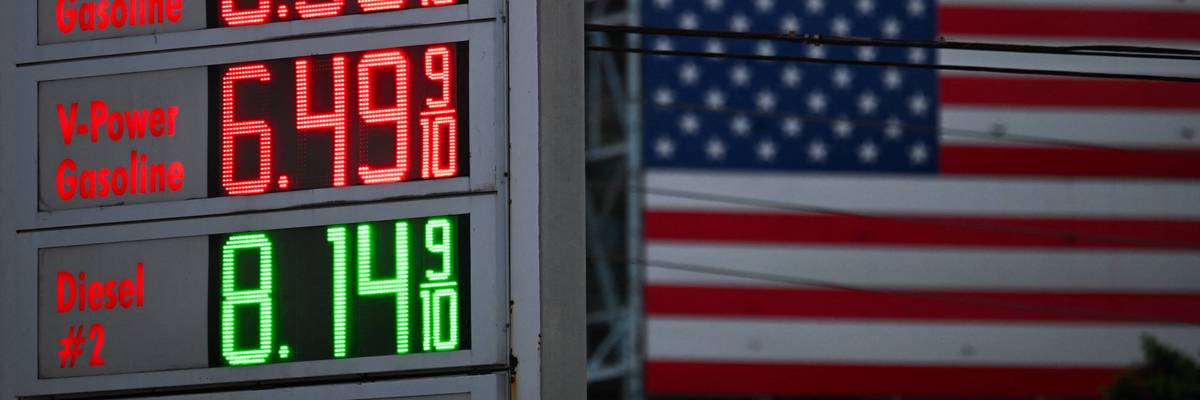


Gas prices at a Shell gas station above $6 a gallon for regular gasoline and $8 a gallon for diesel are displayed across from a US flag outside of the Marathon Petroleum Corp. Los Angeles Refinery in Carson, California on September 22, 2026.

(Photo by Patrick T. Fallon/AFP via Getty Images)


Stephen Prager
Sep 23, 2026
COMMON DREAMS

In an effort to blunt price hikes from his war with Iran, President Donald Trump is reportedly preparing a 90-day ban on diesel exports from the United States.

The cost of diesel—which is used to power semitrucks, trains, construction and farm equipment, and other large machines—has soared since Trump launched the war at the end of February, prompting Iran to restrict oil shipments through the critical Strait of Hormuz.

As of Wednesday, according to the American Automobile Association, average US diesel prices have jumped to $6.52 per gallon, a 77% increase from last year. Over the past month, as Trump has ramped up hostilities with Iran, prices have risen by 91 cents a gallon, a 16.2% increase.

Heightened diesel prices increase the cost of everything else—including food, transportation, and other energy sources. And while Trump claimed earlier this month to be bringing prices “way down, way, way down,” the latest federal data show consumer prices rising 0.4% in August—four times July’s monthly increase—and 3.4% over the past year.

With the midterms less than two months away and many voters blaming Trump for the strain on their pocketbooks, several GOP members of Congress, including some facing tough Senate races, such as Sen. Dan Sullivan (Alaska) and Rep. Ashley Hinson (Iowa), have cheered the idea.


During a press conference on Tuesday, Trump told reporters: “I’ve said let’s not send out the diesel. We make a lot of diesel. It could have a little bit of an effect on regular automobile gasoline because when you do that, you know, it’s a sort of a flow. It’s a balance. But no, I’ve called for it. I’ve called for it within my people. I’ve been talking about it.”

But while the plan may help to keep diesel prices down for long enough to help Republicans stop the bleeding before November, some economists are warning that it could make things much worse in the long term.

“The US Gulf Coast would get a temporary pump price dip, at the cost of likely higher coastal prices [elsewhere] and eventually, higher prices for everyone as investment gets scared away,” explained Bob McNally, president of Rapidan Energy Group and a former White House energy adviser under the administration of former President George W. Bush.

“You would get a short-term, abrupt collapse in pump prices” in some regions, McNally said, but “the US would shatter its reputation as a safe place to invest for a generation.”

Energy economist Philip Verleger said that a ban, even if temporary, “would have the same long-term effect as President [Richard] Nixon’s soybean embargo: the world would no longer view the United States as a dependable source.”

Speaking to Reuters, Verleger warned that in an already undersupplied market, removing US barrels could potentially double global prices.

But the short term seems to be all Trump and those around him pushing the ban are considering. An oil industry executive who discussed the proposed ban with White House officials told Politico that Trump viewed any fallout as “a December problem.”

He said that “cooler heads” in the White House have been “overpowered” by the “political camp” that has a “sky-is-falling, we-have-to-do-something concern about prices at the pump.”

Lorne Stockman, research director at Oil Change International, argued that there was a much simpler solution: ending the war that has caused oil prices to spike in the first place.

“The proposed diesel export ban is a short-sighted ‘America First’ response to a global crisis his reckless war helped create,” Stockman said. “The US exports about 5% of global diesel, and a ban risks turning a severe shortage into a global economic disaster.”

“It could send international prices soaring, drive up the cost of food, fertilizer, and essential goods, deepen hunger, and push already-struggling economies toward recession,” he continued. “At the same time, it would likely do nothing for people in the US, as refineries would cut production and gasoline prices would rise even further.”

He said, “Congress should use its constitutional powers to stop Trump’s war, tax the oil industry’s soaring windfall profits, and support farmers and other hard-hit sectors, and accelerate renewable energy and electrification, not hoard fuel and force the rest of the world to pay the price.”

Global diesel shortage likely to last into 2027 as storage tanks drain


Published:
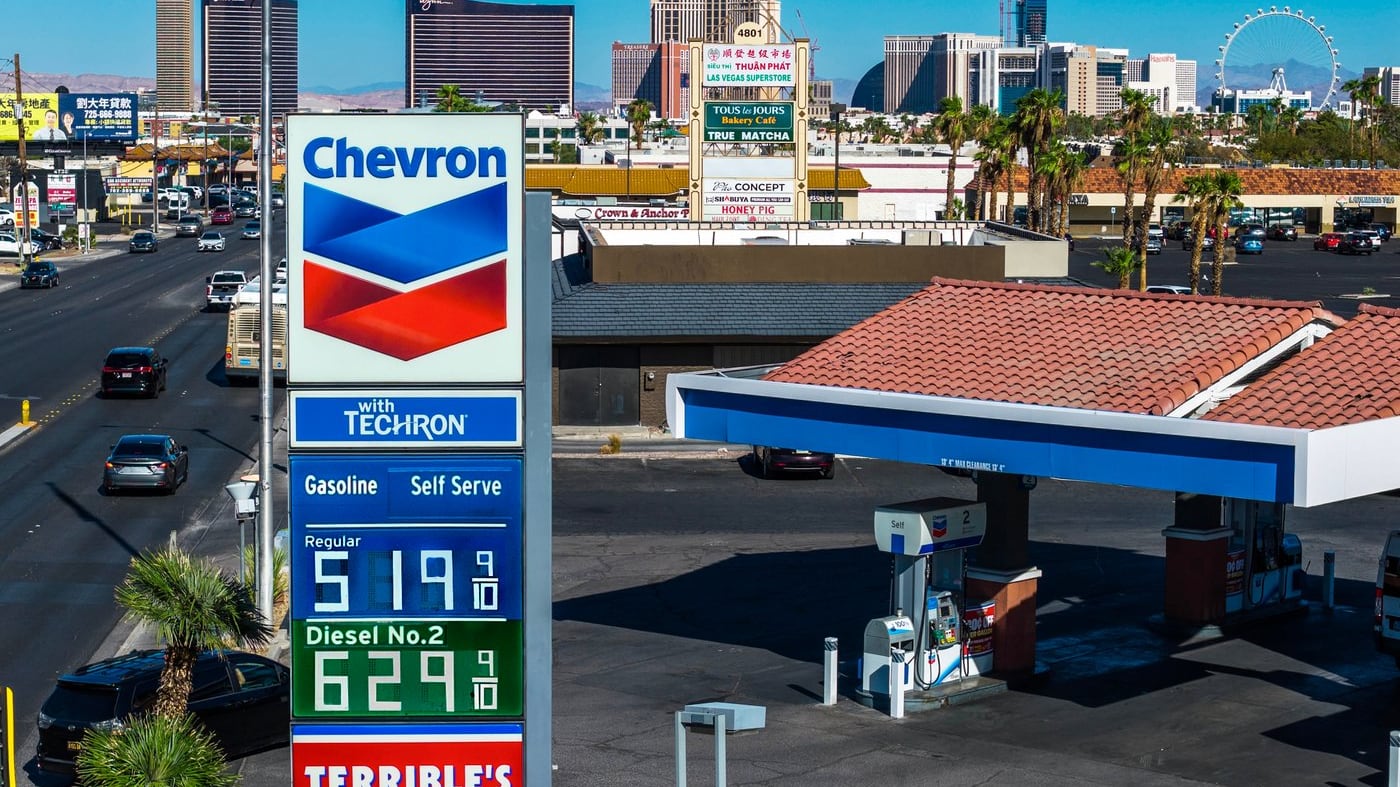
Chevron gas station prices are displayed in Las Vegas on Thursday, Sept. 3, 2026 (L.E. Baskow/Las Vegas Review-Journal via AP)

NEW YORK — A global diesel shortage fueled by wars in Iran and Ukraine is unlikely to ease before next year, according to storage market indicators and industry participants, extending a spike in fuel costs that is weighing on economies worldwide.

The wars have severely disrupted diesel supplies, stranding millions of barrels a day in the Middle East and Russia, draining inventories to historic lows and sending prices to record highs. The shortage has been a drag on economic activity, as diesel fuels agriculture, manufacturing, and heavy transportation.

In the United States, retail diesel prices topped $6 a gallon this month for the first time, squeezing farmers and truckers and stoking worries for President Donald Trump’s Republican Party ahead of the November midterm elections.

Another sign of persistent tightness is emerging in the storage market. Refiners and traders across North America are declining to renew diesel storage leases because there is little fuel available to store, data from storage broker The Tank Tiger showed.

Diesel storage capacity available for leasing in North America and the Caribbean Islands, a major trading hub, has climbed to a four-year high of 13 million barrels for October, from 11 million barrels in June, The Tank Tiger Chief Operating Officer Steven Barsamian told Reuters.

Total US diesel inventories declined to 107.9 million barrels by September 11, the lowest for this time of year since records began in 1982, according to the US Energy Information Administration.

The rapid draw of diesel from US storage indicates how tightly supplied the market has been in recent months, and the rising availability of tanks for lease underscores how long the tightness is expected to persist, Barsamian said.

The combination of falling inventories and rising storage availability suggests market participants expect supplies to remain tight into at least the first quarter of next year, Barsamian said. Storage tanks are typically leased for six months to a year.

“More storage is available for lease because no one wants to renew their existing contracts. Why would you pay for a storage tank when there is no diesel to store?” Barsamian said.

EcoBox Dumpsters, a U.S. waste management business, is limiting its rising fuel cost by using smaller trucks where possible, grouping deliveries and pickups in the same area, and confirming pickup schedules to avoid unnecessary trips.

“Each unnecessary truck movement now has a much greater cost,” said owner David Garrigus.

A GLOBAL CONCERN

The EIA also expects inventories to stay depleted.

“We forecast inventories of distillate fuel oil — often sold as diesel — in the United States to fall below 100 million barrels in September and remain below the five-year low through the end of 2026 and most of 2027,” the EIA said earlier this month.

European diesel inventories are also low. Stocks in the Amsterdam-Rotterdam-Antwerp storage, refining and trading hub were 16 per cent below the five-year average in July, according to the latest data available from Insights Global. In Singapore, total distillate inventory levels averaged about 8.2 million barrels over the past few weeks, similar to pre-Iran war levels, but below the 2025 average of 9.6 million.

“Various Asian emerging markets have been affected quite significantly,” said Andrea Pescatori, the International Monetary Fund’s Asia-Pacific deputy division chief, at the Asia Pacific Petroleum Conference in Singapore.

SOME SIGNS OF RELIEF

Industry executives expect global diesel supplies to stay tight through winter, particularly if Middle East tensions further disrupt fuel exports and Russia’s diesel export ban remains in force through October. Moscow will extend diesel export restrictions until ​the end of October, Russian business daily Vedomosti reported on Tuesday.

US diesel prices may rise further as US East Coast buyers purchase barrels ahead of the heating season, before peaking, said Alex Hodes, director of energy market strategy at StoneX.

Analysts also expect record diesel refining margins to encourage more production, limiting price increases.

The US diesel crack spread — the premium of ultra-low sulfur diesel futures HOc1 over US crude oil futures CLc1 — hit a record $118.62 a barrel on September 14.

Further relief could come from China, which has boosted exports steadily in recent months, energy economist Philip Verleger said this month.

Still, any escalation in the Iran or Russia-Ukraine wars, or a major refinery outage, could trigger fresh price spikes.

“Current fundamentals point to higher prices staying here for a while,” Hodes said.

(Reporting by Siddharth Cavale and Shariq Khan in New York: Additional reporting by Seher Dareen in London, Florence Tan and Sudarshan Varadhan in Singapore Editing by Liz Hampton and Rod Nickel)


COMMENT: Black Sea shipping war threatens Ukraine, global food supply

COMMENT: Black Sea shipping war threatens Ukraine, global food supply
Europe needs to recast its Ukraine policy around the African and Middle Eastern states that can press Putin into a Black Sea ceasefire, Carnegie Europe's Thomas de Waal argues. / bne IntelliNewsFacebook
By Ben Aris in Berlin September 24, 2026

Missile strikes on ships and ports in the Black Sea have hammered Ukraine's economy and now threaten world food supplies, making a truce urgent, Thomas de Waal argues in Carnegie Europe's Strategic Europe blog.

The sea was "shipping's deadliest theatre" in July, more dangerous than the Strait of Hormuz, according to Lloyd's List, and 23 sailors were killed that month, de Waal, a senior fellow at Carnegie Europe, wrote in the commentary published on September 22.

"It has been a long, hot, and dangerous summer in the Black Sea, where long-range missiles have delivered destruction to ships as well as Russian and Ukrainian towns and cities. And the longer it goes on, the more global food security is in the line of fire, too," he wrote.

Russia and Ukraine together have accounted for about 30% of the world's wheat exports and 12% of its corn exports in recent years, de Waal wrote. He said the air war had cut both countries' agricultural exports by two-thirds in August. The Ukrainian government source he cited gives a narrower measure: exports during August 1-26 were about one-third of potential volume, rather than recording a two-thirds decline over the full month. The disruption has coincided with a rise in world food prices to a 2022 high and reports of Russia's August wheat exports heading towards a decade low.

The missing grain puts several African countries at risk of famine, while world cereal prices, already driven up by the closure of the Strait of Hormuz, could rise higher still, he warned.

Ukrainian President Volodymyr Zelenskiy has offered a ceasefire at sea, Reuters reported on August 13, but Russian President Vladimir Putin has so far rejected the idea, and Moscow also turned down Turkey's plan for a shipping truce in August. London's marine insurers have since extended their "high risk" reporting area to the whole of the Black Sea.

"For Europeans, the conclusion must be that a new path to supporting Ukraine's economic resilience, now under heavy strain, lies in resetting Europe's relations with African and Middle Eastern countries - the same countries that both face the worst global food insecurity and can make the case to Putin that he must agree to a truce," he wrote.

Russia has been hit hard all summer by Ukrainian missiles in the Sea of Azov and in and around Novorossiysk, where all three grain terminals stopped loading after drone strikes. Yet Putin "evidently believes that Russia has greater strategic depth and a more compliant population and can endure this pain competition better than Ukraine," de Waal said.

"Russia's strategy is plain. It wants to fatally weaken Ukraine this fall and winter by decimating its port and energy infrastructure," he wrote, adding that the Kremlin also wants to sap Europe's will to fund Kyiv, especially in France and Poland, where far-right, Ukraine-sceptical parties may do well in elections next year.

Russia first tried to choke Odesa, Ukraine's economic lifeline, in 2022, then agreed to the UN-brokered Black Sea Grain Initiative after its Black Sea Fleet suffered heavy damage. When Moscow pulled out of the deal in 2023, Ukraine kept its maritime trade moving with help from Bulgaria, Romania and Turkey, and both sides mostly observed a de facto moratorium on hitting commercial shipping and the grain trade.

That changed in late June, when Kyiv launched a 40-day campaign that massively widened its range of targets in Russia. The campaign scored major successes, de Waal wrote, but intensified Russian air strikes more or less shut down Odesa's ports just before an unusually rich grain harvest. Kyiv has told the International Maritime Organization that Russia attacked 52 civilian ships in July and the first half of August, and the port closures could cost Ukraine 5.3% of GDP in 2027 under a prolonged, severe disruption scenario, according to Oxford Economics estimates reported by Bloomberg.

Harvested Ukrainian grain is leaving by alternative routes at greater expense. Low water constrained the Danube, although the government reported that it carried about 600,000 tonnes of agricultural exports during August 1-26. Russian attacks have destroyed up to 40% of Ukraine's storage facilities, according to an Odesa-based businessman cited by de Waal, leaving the country facing an 11mn-tonne storage shortfall this autumn, while alternative routes handle only about 40% of the volumes needed. The damage has already forced Kyiv to halve its 2026 growth forecast to 0.5%.

In the long run Odesa needs proper air defence, as does the rest of Ukraine, and farmers struggling to get this year's crop to market need sustained support to avoid knock-on damage to next year's harvest, de Waal argued. He also argued that they need a better source of fertiliser than Jordan and Morocco, currently two main suppliers whose products are expensive to buy and hazardous to transport.

Eventually that will mean a deal with Belarus, one of the world's three major potash producers, "but such a deal is probably politically impossible at the moment with a regime that is too close to Moscow," he wrote.

The crisis also leaves other conflict-wracked countries such as the Democratic Republic of the Congo, Somalia, Sudan and Yemen vulnerable to famine. "The closure of the Strait of Hormuz was one blow; next year's severe El Niño will be another," de Waal wrote, as forecasters put the coming El Niño at record strength.

Reopening Odesa's ports would help, but European governments have made matters worse with aid budget cuts that have further hollowed out an international humanitarian system already weakened by the 2025 closure of the US Agency for International Development, he said. Russia, meanwhile, stokes suggestions of double standards - that Europeans care only about the suffering of white people - to weaken the international coalition behind Ukraine.

In de Waal’s assessment, if Putin does commit to a ceasefire, Europe will not be the main actor. Neither Russia nor Ukraine wants to return to the complicated Black Sea Grain Initiative, and the UN Office for Project Services, the organisation's operational arm, stands ready to implement a truce together with Turkey, which has been pushing a new Black Sea grain deal.

"Putin will get to that ceasefire only when the leaders of countries such as Algeria, Egypt, and India pick up the phone to tell him that their food security is at risk," de Waal wrote, pointing to the high-level meetings at the UN General Assembly in New York as the venue for those conversations. "Europeans can do their part, but they need to reframe their own strategic thinking first."

PEOPLE'S CAPITALI$M

As Dangote IPO tests retail appetite, Nigeria takes public offers to WhatsApp with $4 minimum

As Dangote IPO tests retail appetite, Nigeria takes public offers to WhatsApp with $4 minimum
/ bne IntelliNewsFacebook
By bne IntelliNews September 24, 2026

Nigeria’s capital market is moving closer to the consumer technologies through which people increasingly manage the rest of their financial lives.

Nigerian Exchange Group Plc (NGX:NGXGROUP) has made WhatsApp an official entry point to NGX Invest, the stock exchange’s electronic public-offer platform. 

The move comes after the Dangote Petroleum Refinery and Petrochemicals FZE’s $1.6bn initial public offering (IPO), Africa’s largest-ever share sale, overwhelmed several of the country’s digital investment platforms as retail investors rush to participate.

Within 30 minutes of the offer opening on September 17, traffic on investment app Bamboo had risen to about 10 times normal levels, triggering outages that also affected some third-party providers. Cowrywise and InvestNaija users also reported difficulties accessing services and executing transactions.

Now, investors can send “Invest” to NGX Invest’s official WhatsApp number, +234 812 731 9521, view eligible offers and begin the subscription process without downloading a dedicated investment app. Applications are still routed through a stockbroker selected by the investor.

See: Nigeria's $1.6bn Dangote refinery IPO overwhelms fintech platforms as retail investors rush in

Dangote is offering 4.1bn new shares at NGN525 ($0.40) each, seeking NGN2.1525 trillion. The minimum application is 10 shares, costing NGN5,250 ($4), in a bid to boost retail investor involvement. 

For one of Nigeria’s most recognisable companies, that low entry threshold is significant. The offer is testing whether a familiar issuer, a small minimum investment and easier digital access via WhatsApp can draw a wider group of Nigerians into public equities.

Reuters reported on September 18 that prospective investors were joking on social media about becoming business partners with company founder Aliko Dangote and joining the board of “our refinery”.

The 4.1bn base-offer shares would represent about 3.3% of the refinery’s enlarged share capital if fully allotted, leaving existing shareholders with roughly 96.7% in aggregate before any additional shares issued under the offer’s oversubscription provision.

See also: Nigeria’s Dangote refinery IPO puts Africa’s refining shift in focus

From forms to phones

MTN Group’s 2021 sale of shares in MTN Nigeria was the first Nigerian public offer to use PrimaryOffer, a digital application platform administered by Nigerian Exchange Limited.

MTN Group said more than 74% of retail subscribers applied through PrimaryOffer. MTN Nigeria separately put the digital share at more than 89%. A total of 126,720 retail investors submitted valid applications and received full allotment, with institutional participation counted separately.

NGX Invest extended that model when it launched in 2024 as an electronic offering platform approved by Nigeria’s Securities and Exchange Commission. NGX says the system has since facilitated more than 23 primary-market transactions and supported more than NGN3 trillion in capital raising. Its API network, according to the group, connects to more than 100 distribution channels spanning stockbrokers, banks, fintech companies, mobile operators and other financial institutions.

Public offers can consequently reach investors through bank branches, websites, point-of-sale terminals, ATMs and, now, NGX’s official WhatsApp channel.

Much of the underlying process remains conventional. Brokers, identity checks, payments, registrars, settlement and allotment still sit behind the transaction. The change lies in how much of that infrastructure an investor has to confront directly. NGX’s move brings that interface into the exchange group’s own distribution architecture rather than leaving it to brokers or platforms as an auxiliary channel.

The shift towards easier digital access also raises questions about infrastructure resilience and investor protection. Bamboo co-founder and chief operating officer Yanmo Omorogbe described the Dangote IPO as a stress test for Nigeria’s financial infrastructure.

Reuters reported that the surge in retail interest could also expose investors to phishing, fake investment websites and impersonation, while Financial Derivatives Company chief executive Bismarck Rewane warned more generally: “Somebody can create all sorts of scams.”

The development follows a broader migration in Nigerian finance away from branches and paper forms towards services delivered through phones. Public securities are beginning to move through some of the same channels.

Dangote tests the retail market

Few issuers are likely to draw as broad an audience as Dangote.

The refinery combines unusual name recognition with a low minimum application for a transaction of its size. Reuters also reported disruption at investment platforms Cowrywise and InvestNaija after the offer opened.

Dangote has himself leaned into the accessibility of owning shares, declaring at the launch: “This is the IPO for the people.” Applicants, however, become shareholders only if shares are ultimately allotted. No current aggregate book figure had been publicly confirmed, but the strain on investment platforms nevertheless gives some indication of the audience that can emerge when a familiar company is paired with a low subscription threshold.

An opinion column published by BusinessDay on September 23 argued that strong early demand demonstrates investor appetite but does not by itself establish that the NGN525 offer price is attractive, with returns still dependent on refining margins, utilisation and other operating assumptions.

Dangote benefits from brand recognition that most issuers cannot replicate. Its founder is Africa’s richest man, while the refinery has spent years at the centre of Nigerian debate over fuel supply, imports, prices and industrial policy.

For prospective shareholders encountering equities for the first time, the company therefore requires less explanation than a little-known industrial or financial issuer.

A population already moving money by phone

EFInA’s 2026 Access to Financial Services survey found that 79% of Nigerian adults were financially included, up from 74% in 2023. Formal financial inclusion rose to 73% from 64%, while financial exclusion fell to 21% from 26%. Mobile-money use more than tripled to 38% from 12%.

Domestic investors already dominate turnover on Nigerian Exchange. They accounted for 89.8% of transaction value in the first eight months of 2026, although institutional investors continued to trade more than retail investors within the domestic market.

The potential expansion is therefore not simply a matter of replacing foreign capital with Nigerian capital. It concerns the composition of domestic participation: whether equities can extend further beyond institutions, professional investors and established brokerage clients.

Nigeria’s fintech industry has helped normalise transfers, digital wallets and app-based financial services. Equity investing remains a more demanding proposition. Payments solve an immediate transactional need; shares require disposable income, tolerance for losses and some ability to judge valuation.

What comes after Dangote

Dangote is an unusually favourable vehicle for introducing people to equities.

Its founder is one of the continent’s best-known businessmen. The refinery is among Nigeria’s most prominent industrial projects. At about NGN2.15 trillion ($1.6bn), the base offer has been described by Reuters and other market sources as Africa’s largest-ever IPO.

Most issuers will not combine that level of public familiarity with an NGN5,250 minimum application.

The more revealing test will come later. Investors who open accounts or navigate a public offer for the first time because they want 10 Dangote shares may be easier to reach when another company comes to market. Whether they participate again will depend on factors that brand recognition can temporarily obscure: valuation, trust, liquidity and the quality of the underlying investment case.

Nigeria has already shifted much of public-offer distribution from paper towards web platforms, investment apps and API-linked channels. NGX’s move on to WhatsApp takes that process further into the consumer mainstream.

If the result is a broader retail market, the evidence will appear not in the number of Nigerians willing to buy a small stake in Dangote, but in whether those investors return when the next issuer is less famous and the decision requires more than familiarity with the name.


EBRD cuts 2026 growth forecast as energy, water and trade pressures mount

EBRD cuts 2026 growth forecast as energy, water and trade pressures mountFacebook
By Clare Nuttall in Glasgow September 24, 2026

Economies across the European Bank for Reconstruction and Development's (EBRD) regions of operation have proved resilient but face mounting pressures from energy and food markets, drought, disrupted trade and higher borrowing costs, the EBRD said on September 24, cutting its 2026 growth forecast while raising its projection for next year.

The EBRD expects growth across its regions to slow to 2.5% in 2026 from its previous forecast of 3.1%, before accelerating to 4.0% in 2027. The 2026 forecast was cut by 0.6 percentage points from June, while the 2027 forecast was raised by 0.4 points.

"Our region has been resilient but pressures are mounting on multiple levels - from climate affecting water levels, through access to hydrocarbons, through the Black Sea blockade and food markets to the cost of borrowing," Beata Javorcik, the EBRD's chief economist, told IntelliNews.

The bank's latest Regional Economic Prospects report, ntitled "Running dry", said tighter financing conditions, drought and the disruption to Black Sea shipping were weighing on the outlook, alongside higher energy and food prices.

Javorcik said the disruption to Ukraine's exports had become particularly acute, with the Black Sea corridor almost closed as attacks on ports and vessels intensified.

"The eyes of the world are focussed on the Strait of Hormuz, but the Black Sea corridor is essentially almost closed, and the same tactic used in the Middle East of hitting ports and vessels is being employed," she said.

Ukraine's grain and oilseed exports fell by more than half in August, Javorcik said, while an alternative route through the Danube faced constraints.

"Exports worth $5bn-5.5bn may be affected, equivalent to 2.5% of Ukraine’s GDP," she said.

The EBRD said Russia and Ukraine together account for about a quarter of global wheat exports. Wheat prices have risen by more than a third and are expected to remain elevated through 2028, while higher fertiliser prices are likely to feed more fully into farm costs next year.

Low water levels on the Danube have further restricted Ukraine's ability to reroute exports. Drought has also hit central Europe and the Baltic states, with 38% of land at medium or high agricultural drought risk in 2026, compared with an average of 12% since 2010, the report said.

Javorcik also highlighted growing pressure on hydrocarbon supplies. In Europe, natural gas prices have risen as attacks on energy infrastructure in the Middle East have disrupted supplies, while U.S. gas prices have remained broadly flat.

"In Europe the main pressure point is prices of natural gas. The bombing of Qatari infrastructure means there has been an uptick in prices of natural gas paid by Europe, while American prices remained flat," she said.

Gas prices have risen more than 70% since February, according to the EBRD, while global seaborne liquefied natural gas exports have fallen 40% as Middle Eastern cargoes have largely stopped.

European Union gas storage was only 65% full in August, the lowest level for that month in 15 years, and the bank said inventories were unlikely to reach the 90% pre-winter target at the current rate of injections.

The impact of higher energy costs varies across the EBRD regions. Bosnia & Herzegovina, North Macedonia and Moldova face some of the largest increases in import bills because of their dependence on imported energy and indirect exposure to Middle Eastern oil-product supply chains.

Central Asian economies face a different vulnerability because of their dependence on Russian refined fuels. "In Central Asia, the Kyrgyz Republic, Mongolia and Tajikistan import more than 90% of their gasoline and diesel from Russia, so they are feeling the implications of Ukrainian attacks on Russian refineries," Javorcik said. "What’s unusual about these countries is that they are very reliant on road transport."

Oil prices rose from around $65 a barrel before the conflict in the Middle East to above $100 in April, the EBRD said. Prices remain 30% to 60% above their pre-conflict levels, while refined products such as diesel and jet fuel have recorded larger increases than crude.

The report also identified competition for global savings as a growing constraint on investment and government finances.

"Globally we have moved from a savings glut to a world of competition for funds, driven by the AI boom," Javorcik said. "One estimate for investments in AI data centres is $2.8 trillion by 2030, equivalent to Italian GDP this year."

She said US companies were competing with governments for available savings, while central banks were responding to persistent inflation with higher interest rates, increasing borrowing costs.

National saving rates in advanced economies have fallen, the EBRD said, while government deficits and corporate borrowing for artificial intelligence investment have pushed longer-term interest rates higher. Government bond yields across most EBRD economies have risen alongside those in advanced economies.

Average inflation in the EBRD regions has stabilised at around 6%, after reaching 6.7% in April, but remains about two percentage points above its pre-pandemic average.

The EBRD expects growth in Central Europe and the Baltic states to reach 2.9% this year before slowing to 2.5% in 2027, while growth in the Western Balkans is forecast at 3.0% and 3.5%, respectively.

Southeastern EU economies are expected to grow just 0.5% in 2026, before accelerating to 2.0% next year, with Romania's contraction weighing on the region. Central Asia is expected to remain the fastest-growing EBRD region, at 5.8% this year and 5.3% in 2027.

Growth in Eastern Europe and the Caucasus is forecast at 2.5% this year and 3.1% next year, while Turkey is expected to expand 3.0% and 4.0%, respectively.

The southern and eastern Mediterranean region is forecast to contract 0.7% this year before rebounding 7.1% in 2027, largely because of an expected recovery in Iraq's oil exports. Excluding Iraq, growth is projected at 3.9% in 2026 and 4.3% in 2027.

The EBRD said high energy costs were also weighing on European industry, with companies in the EU paying around 2.4 times US electricity prices, encouraging a shift away from energy-intensive production.

It said reducing dependence on gas would require further investment in renewable energy, storage and nuclear power, while strengthening water resilience would become increasingly important for agriculture, industry and energy generation.

Trade conditions have eased somewhat following changes to US tariffs in July, which reduced the average statutory tariff on imports from EBRD economies to 8.6% from 11.6%. But frequent changes to tariff regimes have kept trade-policy uncertainty elevated, the bank said.

Tsikhanouskaya warns Belarus could host new Russian attacks on Ukraine


By Ben Aris in Berlin September 24, 2026

Belarusian leader Alexander Lukashenko would welcome new Russian attacks on Ukraine from his territory, exiled opposition leader Sviatlana Tsikhanouskaya told Ukrinform in interviews published on September 23.

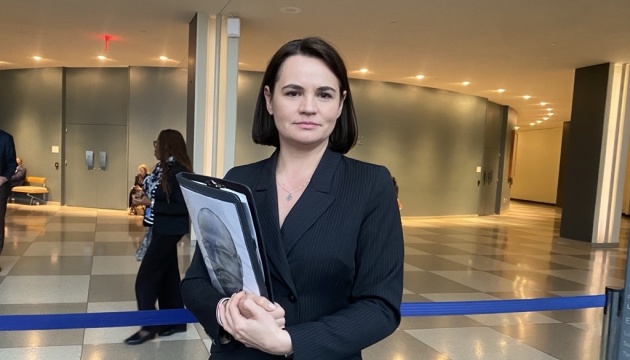
Sviatlana Tsikhanouskaya at the UN headquarters in New York during the General Assembly's high-level week. Photo: Volodymyr Ilchenko/Ukrinform

Tsikhanouskaya told Ukrinform that Lukashenko would "be very happy" to provide territory, logistics and infrastructure for such attacks. Speaking on the sidelines of the UN General Assembly in New York, she said the threat of Russian provocations from Belarusian soil was "a real possibility", and that Belarusian logistics and "antennas for directing drones" were already in use by Russia.

Her warning comes days after Kyiv said it had detected Russian drone signal relays operating inside Belarus for about a week, boosting communications for drones striking western Ukraine. Andrii Demchenko, spokesman for Ukraine's State Border Guard Service, said on September 19 that the activity had been "quite high" but that there was no build-up of Belarusian forces near the border large enough to mount an invasion. Ukrainian President Volodymyr Zelenskiy has previously demanded Lukashenko dismantle the relays guiding Russian strikes into Ukraine.

Tsikhanouskaya said the repeaters were being installed not only along the Ukrainian border but also along Belarus' borders with EU countries.

"So, the escalation or provocation may not only be against Ukraine but also against European countries. And, of course, we need to closely monitor what is happening in Belarus," she said.

Lithuania has faced a string of airspace incursions from Belarus in recent weeks, with an unidentified object travelling up to 70 km through Lithuanian airspace on September 14.

Tsikhanouskaya dismissed hopes in some Western capitals that Lukashenko can be prised away from the Kremlin. "It is impossible because they have this special symbiotic friendship; they use each other, and they need each other," she said.

Lukashenko is acting partly out of fear of Russian President Vladimir Putin, she said, but has let Russia penetrate Belarus' media, education, economy and defence industry, amounting to a quiet occupation of the country with intensive Russification carried out with his consent.

She accused Lukashenko of "making money from the blood of Ukrainians", saying 500-600 Belarusian enterprises make optics and microchips for Russia's military, buy components for it by circumventing sanctions and supply Russia with petroleum products. The regime is also building warehouses for Russian online marketplace Wildberries, she added.

A Ukrainian victory would be "a catastrophe for him personally, because a weakened Putin would mean less support for the regime in Belarus," Tsikhanouskaya said, adding that Lukashenko "would, of course, like Russia to win".

However, she doubted Belarusian troops would join any offensive, arguing in a second interview that Lukashenko would be afraid to give such an order because it could provoke discontent in the army. "There are no anti-Ukrainian sentiments among Belarusians," she said. "We have no enemies except the Russian occupation."

Even Lukashenko's own elite sees him as a "lame duck" dependent on Putin, she claimed.

"People in his circles are already talking about the post-Lukashenko era - what Belarus might look like without Lukashenko," Tsikhanouskaya said. "That is why he clings to Putin tooth and nail."

Tsikhanouskaya was in New York for a ministerial event hosted by Latvia and the EU on September 21 titled "Belarus: Accomplice in Russia's War Against Ukraine and a Threat to International Security". There she made five requests of Belarus' partners, according to a post on X: a strong resolution in the General Assembly's Third Committee on political prisoners, transnational repression and the regime's role in the war; an Arria-formula Security Council meeting on Belarus with former political prisoners and rights defenders; putting transnational repression on the international agenda with Interpol and UN experts; an internationally recognised solution for Belarusians who cannot safely renew their passports; and funding for the UN special rapporteur and the Group of Independent Experts on Belarus.

The passport issue affects Tsikhanouskaya herself, who was refused a Polish bank account in August because her Belarusian passport had expired. She also urged every leader speaking during the General Assembly's high-level week to mention Belarus, and called on the West to "give Ukraine everything it needs to defend itself and prevail".

Her appeal to keep Belarus on the UN agenda comes as Washington pursues separate talks with Minsk, which have seen Lukashenko release political prisoners in return for sanctions relief. In the latest round, the US agreed to lift sanctions on two Belarusian companies for the release of 25 prisoners, while pressing Lithuania to reopen potash transit through Klaipeda after a four-year halt.