Friday, September 25, 2026


Euronews explains: What would a US diesel export ban mean to European countries?
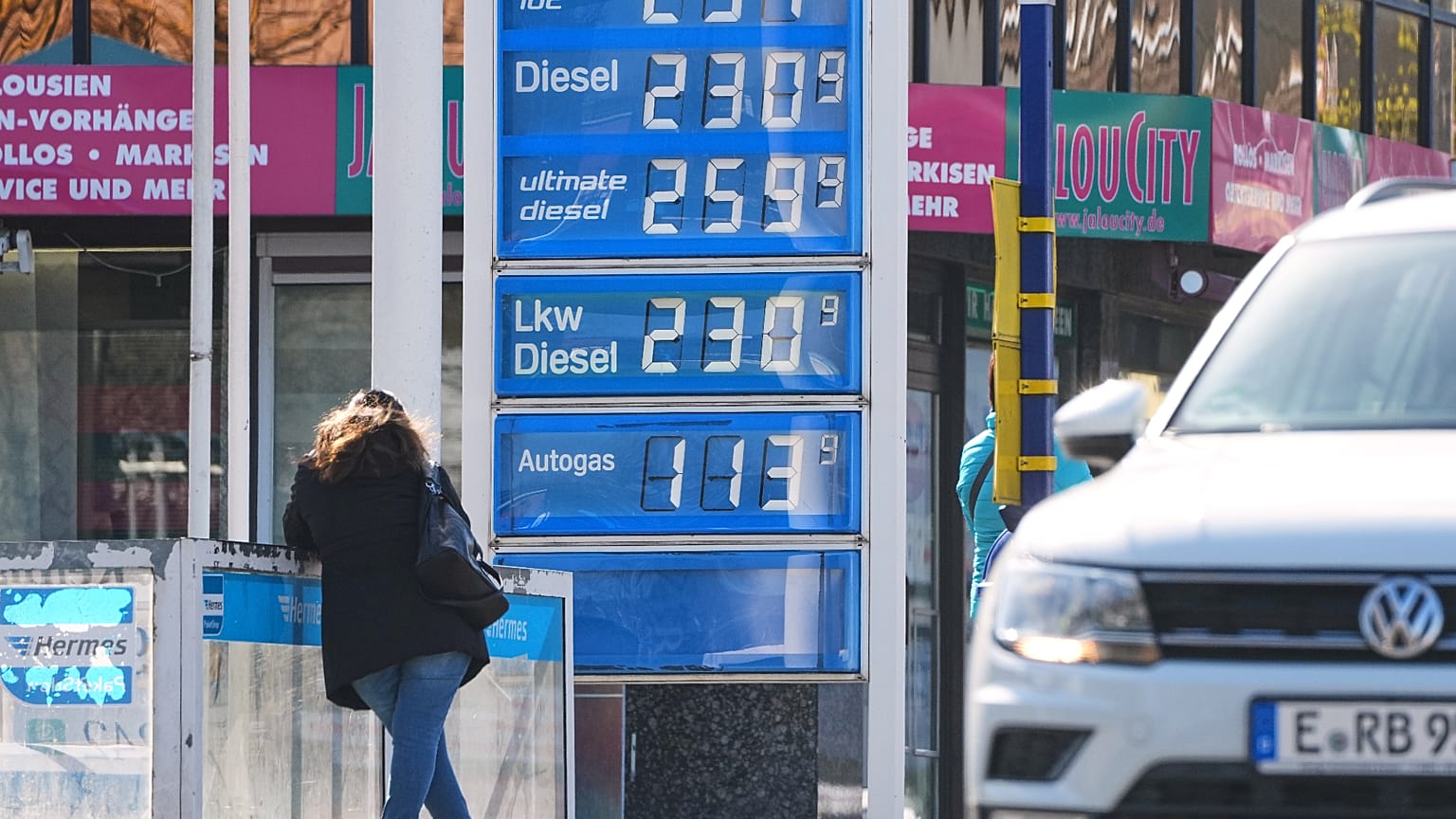
People wait for the bus at a fuel station in the City centre of Essen, Germany, that shows high fuel prices due to the war in Iran, Wednesday, April 1, 2026.
Copyright AP Photo / Martin Meissner

By Marta Pacheco
Published on

The EU has deepened energy ties with the US while seeking to reduce its exposure to geopolitical shocks. Yet US plans to limit diesel exports expose how quickly commercial dependence can become a strategic vulnerability.

A United States ban on diesel exports would not necessarily leave Europe’s fuel stations empty overnight, but it could push up prices, forcing European governments into another round of emergency intervention just as households, farmers and hauliers are feeling the effects of the wider energy crisis.

The prospect of Washington keeping those barrels at home is especially uncomfortable for Brussels, which acknowledged the bloc’s dependency on US diesel after ditching Russian energy. The Commission said the issue was being discussed with EU countries and the industry.

The bloc is already facing a fuel shortage after the war with Iran disrupted supplies from the Middle East, while Russia has also restricted diesel exports.

Meanwhile, European diesel prices have more than doubled since the beginning of the year and were about 38% higher year-on-year in mid-September, while refineries around the world are operating close to full capacity.

Analysts argue that a potential US ban would remove a crucial supply source from an already exceptionally tight global market.

“For Europe, the immediate effect is higher prices. North-West Europe would have to bid up to pull in replacement cargoes, and it would be bidding against the Mediterranean, Latin America and West Africa for the same limited pool of barrels,” Zameer Yusof, an energy analyst at market intelligence platform Kpler, told Euronews.

The EU has become far more reliant on US diesel since the loss of Russian supplies. The US has supplied around 180,000 barrels a day (b/d) of the EU’s roughly 580,000 b/d of extra-EU diesel imports this year — about 32%, up from 17% in 2025.

The dependence is even more striking in North-West Europe, where US supplies account for around 200,000 b/d out of 350,000 b/d from outside the region — roughly 57%, compared with 37% last year, according to Kpler figures.

That concentration means a partial US export ban could still have a sizeable impact on prices.

However, removing 30% of US supplies would not necessarily mean European diesel prices rise by 30%, or by a corresponding fraction, Kpler argues. Buyers would be forced to compete aggressively for replacement barrels, potentially pushing prices sharply higher.
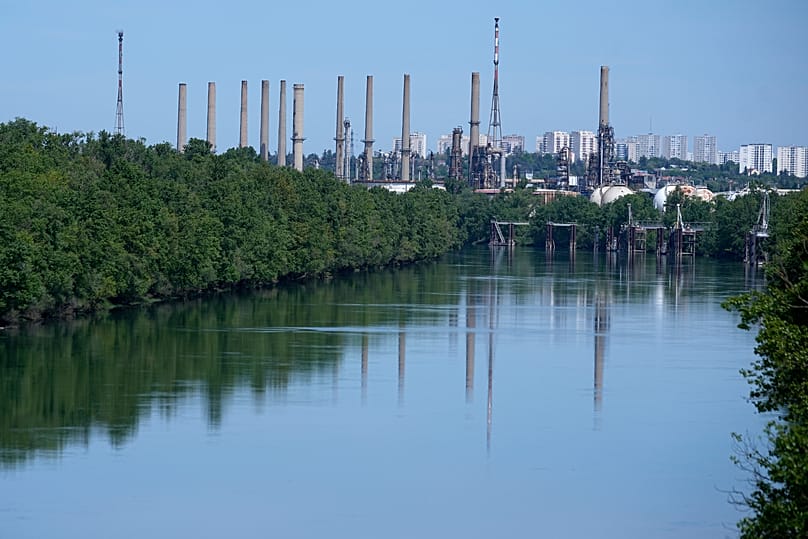
The Feyzin Total oil refinery is seen outside Lyon, France, Friday, April 17, 2026. AP Photo / Laurent Cipriani

France hit first

Within the EU, France appears to be the most vulnerable country. French President Emmanuel Macron said on Thursday that the proposed ban would be “catastrophic”. The country is heading to the polls in 2027, with the energy crisis fuelling far-right rhetoric.

Before the Trump administration touted a diesel ban, the French leader asked the Commission to temporarily relax fuel specifications so European refineries could produce more diesel and jet fuel. He also urged Brussels to coordinate a second release of emergency oil reserves.

A US export ban would strengthen that argument: if Europe cannot count on imported refined fuel, it needs to squeeze more output from its own refineries. However, European refineries cannot manufacture hundreds of thousands of additional barrels overnight.

Paris imported about 63,000 b/d of US diesel this year, around 36% of its diesel imports. Its dependence is compounded by refinery closures at Grandpuits and Donges, leaving the country structurally short of diesel, Kpler warned.

The UK is also heavily exposed, importing about 50,000 b/d from the US, or 26% of its diesel imports, Kpler said. The closure of the Grangemouth refinery has increased its reliance on imports.

However, there is one cushion. Diesel is among Europe’s most heavily stored oil products, meaning inventories could absorb at least part of an initial disruption. That could prevent an immediate shortage, although it would not eliminate the underlying price pressure if the ban were to last.

Southern European markets have somewhat more protection from domestic and Mediterranean refining. Italy gets only around 4% of its diesel imports from the US, while Spain gets about 19%. Portugal is barely exposed. Spain’s Cartagena, Bilbao and Huelva refineries provide an important domestic supply buffer.

Europe has few obvious replacements

The bigger problem is what happens after the initial stocks are used. Europe cannot simply replace American diesel with another major supplier.

“India is the only credible substitute, but its export availability has been affected sharply,” Yusof said.

Indian exports have already fallen sharply — from around 582,000 b/d last year to 352,000 b/d this year. Indian diesel shipments to Europe have declined even more dramatically, from about 163,000 b/d to roughly 50,000 b/d.

Indian refiners are instead finding better returns in East Africa and Southeast Asia, while questions over Russian crude used in some Indian refineries also complicate European trade.

China and South Korea cannot realistically fill the gap either. Their diesel shipments to Europe this year were tiny — roughly 1,000 b/d from China and 2,000 b/d from South Korea

China faces EU restrictions on products made from Russian crude, while South Korea’s exports are tied up by established contracts in Asian markets and its overall export availability has declined.
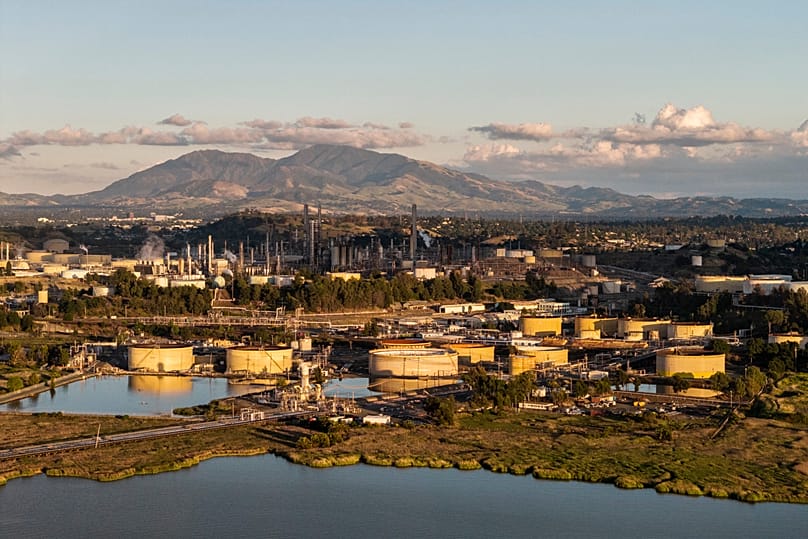
An aerial view of the Martinez Refining Company is seen during sunset in Martinez, Calif., Wednesday, April 22, 2026. AP Photo / Stephen Lam/San Francisco Chronicle

Time to rethink the definition of energy security

The diesel episode exposes a deeper weakness in Europe’s energy strategy.

The EU’s current predicament raises questions about whether the bloc needs larger strategic stocks of refined fuels, more resilient European refining capacity and stronger mechanisms for coordinating fuel supplies during a crisis.

Asked whether it was considering a second release of strategic oil reserves, the International Energy Agency had not responded at the time of publication.

The Commission’s decision to discuss the issue through its oil coordination group suggests Brussels is already treating it as an energy security question rather than a mere commercial dispute.

Meanwhile, the proposed US diesel ban appears to be driven in part by domestic political pressure. US diesel prices are nearly $7 a gallon, creating pressure on the Trump administration to demonstrate that it is doing something about the cost of living ahead of the November midterms.

US Energy Secretary Chris Wright has been sounding out refiners about a voluntary restriction on exports as an alternative to a blanket 90-day ban.

A briefing from the Energy Policy Research Foundation (EPRF) argued that a US diesel export ban would likely backfire, since refiners are already running at full capacity and cannot produce more without new capacity.

“Cut off from export markets, Gulf Coast refiners would see storage fill and margins fall, and many would reduce runs to catch up on maintenance postponed during the crisis. Because gasoline and diesel are produced together, the result would be less gasoline, diesel, and jet fuel, and higher pump prices,” the EPRF briefing said.

 

Indonesia’s wildfire disaster risks a banking-sector hangover

Indonesia’s wildfire disaster risks a banking-sector hangover
/ Malachi Brooks - UnsplashFacebook
By IntelliNews - Surabaya Bureau September 24, 2026

Indonesia's Financial Services Authority (OJK) has issued a formal warning regarding the systemic impact of environmental hazards on Indonesia's banking and economic sectors, the Indonesia Business Post reports. In an official statement from the body, OJK Chief Executive of Banking Supervision Dian Ediana Rae pointed to widespread forest and land fires across Kalimantan and Sumatra, amplified by the El Niño dry spell, as posing severe physical climate risks to financial institutions with high credit exposure in the affected regions.

At present, strong capital buffers help stabilise national credit metrics. However, the regulator emphasised that localised disruptions in climate-vulnerable sectors could impair borrowers' repayment capacities, potentially driving up non-performing loan (NPL) ratios.

Ecological and public health crisis

Driven by extreme drought, the independent forest monitoring platform Nusantara Atlas detected approximately 734,000 hotspots across Indonesia in mid-September, a figure over 30% higher than in the infamous 2019 season, the BBC reports. Since January, at least 895,657 hectares of land (nearly six times the size of Greater London) have been burnt. As of September 24, the physical impacts of the 2026 wildfire season have escalated into a major public health and environmental crisis.

As recorded in a Wildfire & Public Health Impact summary carried out from August to September 2026, the total number of respiratory illness cases have reached 175,000, including more than 40,000 toddlers, now suffering from pneumonia and bronchitis.

More than 54,000 personnel have been deployed as part of emergency operations with Indonesia receiving international support from Malaysia and Japan. Dozens of water-bombing aircraft have been deployed as have joint cloud-seeding operations alongside Japan's Self-Defence Forces to combat the fires across challenging peatland terrains.

Toxic smoke has also forced widespread school closures, and has caused disruption to local commerce while degrading air quality across Indonesia, as well as in the neighbouring countries of Malaysia (Sarawak), Singapore, and parts of the Philippines. The haze has devastated local biodiversity, highlighted by the death of a critically endangered orangutan rescued from a palm oil plantation in West Kalimantan. Reports also show protected proboscis monkeys or long-nose monkeys as being burned alive. In response, indigenous and civil society groups have filed a class-action lawsuit against central and regional government authorities, alleging negligence in preventing recurring wildfire disasters.

From real sector disruptions to NPL spillovers

OJK classifies these extreme weather events as physical climate risks that directly disrupt real-sector supply chains, operational costs, and corporate revenues. According to Dian Ediana Rae, the economic shock from land fires and prolonged El Niño dry spells spans multiple key industries, which includes vulnerable economic sectors. These can include agriculture, palm oil and forestry plantations, livestock, fisheries, food and beverage processing, trade, tourism, and education.

Commercial and retail borrowers are also experiencing diminished cash flow from production halts, rising operational expenses, school and business closures, and crop failures. This situation impairs their ability to service debt and spills over into the banking sector as asset quality deteriorates. Banks and rural banks (Bank Perekonomian Rakyat or BPRs) with concentrated lending portfolios in fire-prone or agrarian-dependent regions face higher NPL pressures than institutions with geographically diversified exposure.

Despite these localised pressures, OJK routinely conducts rigorous stress tests to evaluate banks' capital adequacy and liquidity reserves against environmental disasters. The latest results confirm that capital levels across commercial banks remain sufficient to absorb potential climate-induced losses.

The climate warning comes against the backdrop of solid overall banking performance. National credit quality remains within safe regulatory parameters, with the banking sector's gross NPL ratio standing at 2.09% in June 2026 (net NPL at 0.82%). Furthermore, overall bank lending in July 2026 accelerated to 13.58% year-on-year, reaching IDR9,135 trillion ($510.6bn), up from 12.67% growth in June.

However, growth in micro, small, and medium enterprise (MSME) lending remained subdued at just 1.62%, underscoring the acute vulnerability of smaller, agrarian-based borrowers who lack the financial buffers to weather severe climate events and health crises.

To safeguard regional financial institutions, particularly rural banks with balance sheets that are deeply tied to local agricultural economies, OJK is enforcing strict compliance under OJK Regulation (POJK) No. 9/2024. This regulatory framework seeks to mandate that institutions implement sustainable finance strategies, formulate Sustainable Finance Action Plans, and explicitly incorporate climate-related risk assessments into their core risk management and capital allocation strategies.

Economic loss all over the country

The broader economic fallout from the 2026 wildfire crisis, however, extends far beyond destroyed timber and physical land damage, Tempo reports. According to a recent impact study by the Center of Economic and Law Studies (Celios), total potential economic losses from January to August 2026 alone are estimated between IDR39.29 trillion ($2.2bn) and IDR123.1 trillion with the upper bound representing nearly half (49.1%) of Central Kalimantan’s projected regional GDP. Direct asset destruction and disrupted business operations in trade, agriculture, hospitality, and food services accounted for at least IDR29.54 trillion (roughly 0.23% of national GDP). While West Kalimantan suffered the highest nominal economic loss at IDR5.7 trillion, the crisis has expanded well beyond traditional fire hotspots in Kalimantan and Sumatra to hit eastern provinces like West Papua (IDR4.3 trillion) and East Nusa Tenggara (IDR2.8 trillion).

When incorporating the severe public health burden of toxic smoke exposure, the financial strain escalates dramatically. Celios projects that healthcare expenses for diagnosed acute respiratory infections (ARI) has already reached IDR9.75 trillion across 1.78mn patients.

However, under a broader epidemiological scenario accounting for an estimated 17.4mn individuals who have suffered symptoms but face financial or geographical barriers to medical care, health-related costs surge to IDR93.56 trillion, a staggering figure equivalent to 67.6% of Indonesia's total health allocation in the 2026 State Budget.

Driven by high population density rather than sheer burnt acreage, West Nusa Tenggara (IDR19.01 trillion), East Java (IDR13.65 trillion), and Riau (IDR10.31 trillion) absorbed the heaviest health-related financial losses, further tightening regional consumer spending and compounding long-term credit risks for the financial sector.


China installs 59% of world's new industrial robots

China installs 59% of world's new industrial robots
Global installations of factory robots hit a record in 2025 and the number in service passed 5mn for the first time. / bne IntelliNewsFacebook
By Ben Aris in Berlin September 25, 2026

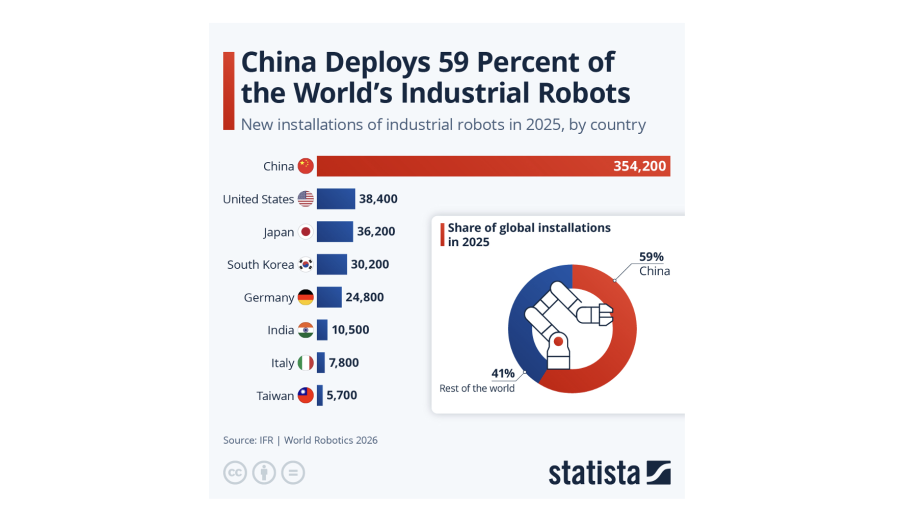
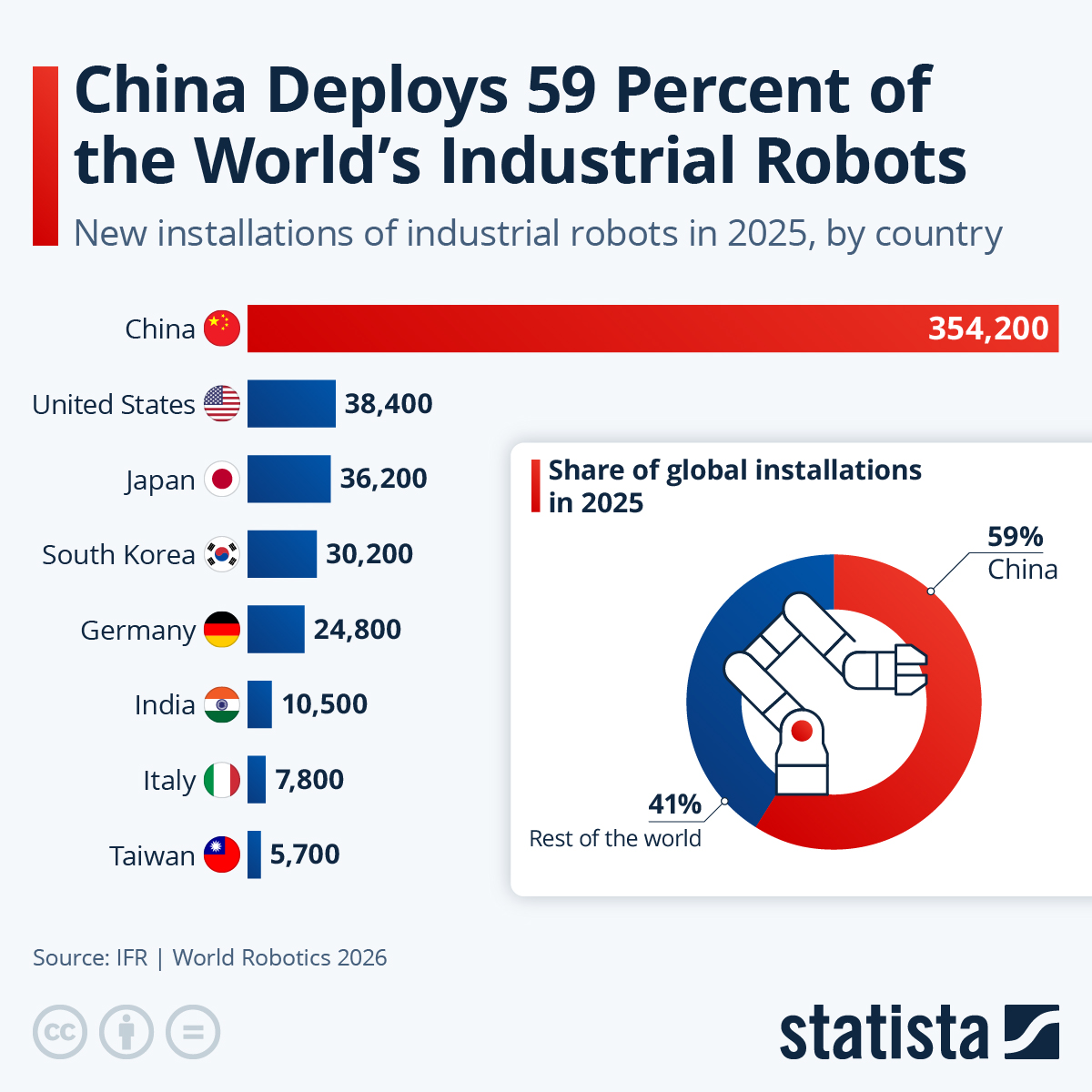
China installed 354,000 industrial robots in 2025, 59% of all new factory robots worldwide, the International Federation of Robotics (IFR) said on September 24 in its World Robotics 2026 report.

New installations of industrial robots in 2025 by country and China's share of the global total. Source: IFR World Robotics 2026, chart by Statista (CC BY-ND 3.0).

Chinese installations rose 20% y/y, helping lift global installations 11% to a record of around 603,000 units, according to the IFR data as charted by Statista. China put in more than nine times as many robots as the US, which moved into second place with 38,500 units, up 12%.

China's lead keeps widening. Its share of global installations has climbed from 32% in 2016 to 52% in 2022 and 54% in 2024, when it installed a then-record 295,000 units. The robot build-out feeds Beijing's drive to automate its manufacturing base, which already counts more than 43,000 smart factories. Chinese suppliers sold 195,000 of the robots installed at home last year, a 55% share of their domestic market, slightly below the 57% of 2024.

The other big industrial economies fell further behind. Japan's installations dropped 19% to 36,200 units, pushing it into third place, while South Korea installed 30,000 (down 1%) and Germany 25,000 (down 8%). India was the fastest-growing large market, up 15% to 10,500 units.

Europe had a weak year. Installations across the EU fell 11% to 60,500 units, with the car industry cutting its orders by a quarter, The Next Web reported, citing the IFR figures. Germany alone accounted for 41% of EU installations, while Italy fell 11% to 7,800 units, France 8% to 4,500 and Spain 15% to 4,300. Japan's Yaskawa has nonetheless been betting on the continent's east, opening its largest European robotics facility in Slovenia in June.

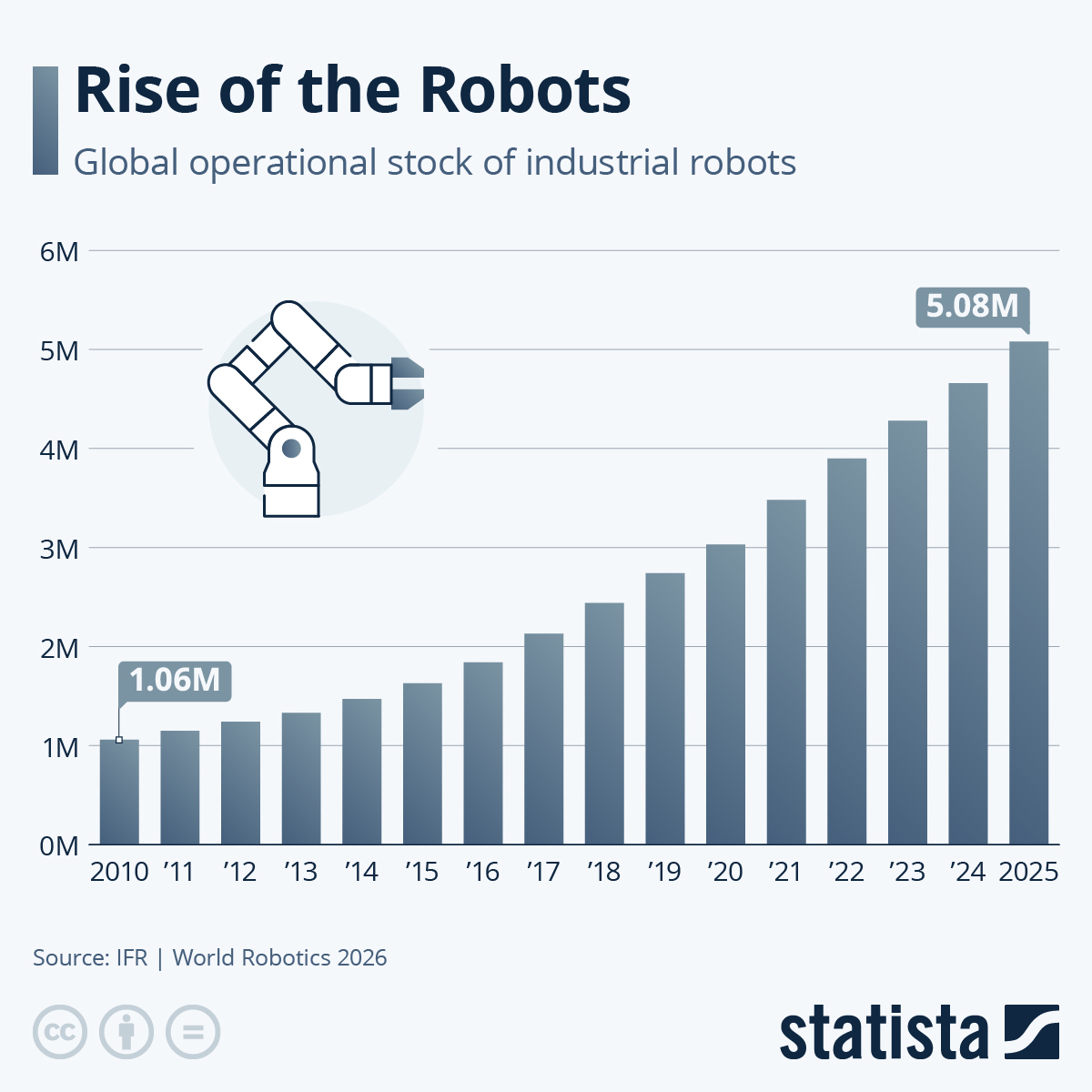
Global operational stock of industrial robots, 2010-2025. Source: IFR World Robotics 2026, chart by Statista (CC BY-ND 3.0).

The number of robots working in factories worldwide rose 9% to 5.08mn by the end of 2025, more than double the level of seven years earlier and almost five times the 1.06mn in service in 2010. Asia accounted for 76% of last year's installations.

"Industrial automation is progressing at high speed. The new mark of five million robots operational in factories worldwide is more than double the number seven years ago," Heffner said.

The IFR expects installations to grow 9% to 655,000 units in 2026 and reach 806,000 a year by 2029, citing supply-chain resilience, labour shortages driven by demographic change and advances in AI, machine vision and easier programming.


DP World signs draft deal on $7bn Nigerian port and industrial zone

DP World signs draft deal on $7bn Nigerian port and industrial zone
/ DP WorldFacebook
By bne IntelliNews September 25, 2026

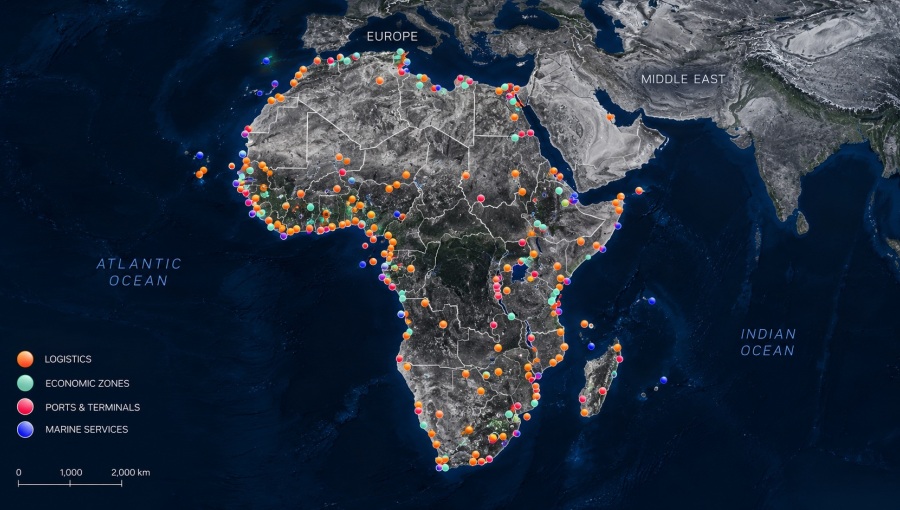
Nigeria's Ogun State has signed memoranda of understanding with DP World MEA FZE, the Middle East and Africa arm of Dubai-based ports and logistics operator DP World, to develop the proposed Gateway Deep Seaport and Ogun State Blue Marine Special Economic Zone.

The agreements envisage more than $7bn in initial investment and project more than 50,000 direct jobs if the projects reach full development, according to the Nigerian Presidency. The statement did not disclose how the investment would be divided between the projects, the amount DP World would contribute, or the eventual ownership, financing and operating structures.

The MoUs were signed in Paris on September 24 in the presence of President Bola Tinubu, Marine and Blue Economy Minister Adegboyega Oyetola and Nigerian Ports Authority Managing Director and Chief Executive Officer Abubakar Dantsoho.

The federal government would provide regulatory and institutional support to move the projects towards implementation, Tinubu said, urging Ogun State and the investors to proceed while complying with regulatory requirements. The statement did not announce final construction or financing agreements.

Governor Dapo Abiodun said Ogun's deep-seaport vision had remained largely unrealised for more than three decades. Tinubu credited Abiodun's administration with securing the land and structuring the investment framework for the projects.

The proposed Gateway Deep Seaport at Ogun Waterside would have a four-kilometre berth and an 18-metre draught, allowing it to accommodate larger, deeper-draught vessels. It is intended to ease pressure on Lagos's Apapa and Tin Can Island ports and reduce logistics costs and delays.

The proposed Blue Marine Special Economic Zone would cover 10,000 hectares and is intended to accommodate manufacturing, processing, logistics and export-oriented industries.

Tinubu said the integrated port-and-zone development was intended to allow imported inputs and Nigerian raw materials to be processed into finished products for domestic and export markets, including trade under the African Continental Free Trade Area.

He said the federal government would facilitate road, rail and power connections for the projects. The 28-kilometre Ogun section of the Lagos-Calabar Coastal Highway was scheduled for completion before the end of 2026 and would provide a transport link between the proposed port and industrial zone, Lagos and inland markets.

Abiodun said the development would form part of a wider multimodal network linking the Gateway International Airport, dry ports, the coastal highway and the deep seaport. Tinubu said the broader corridor would also include a proposed Nigerian Navy operating base and dockyard and the long-delayed Olokola, or OK LNG, project, which Nigerian National Petroleum Company Ltd (NNPCL) has been seeking to revive.

The corridor is also attracting separate port investment. IntelliNews reported in May that Dangote Industries had begun preliminary work on a separate deep-sea port at the Olokola Free Trade Zone in Ogun Waterside, intended to support its refining, fertiliser and other industrial exports.


Argentina and US launch $7bn infrastructure corridor linking Vaca Muerta to Atlantic ports

Argentina and US launch $7bn infrastructure corridor linking Vaca Muerta to Atlantic ports
The scheme is intended to link US investors with opportunities in Argentina’s energy, mining, infrastructure and technology sectors while strengthening supply chains for critical minerals and energy, including lithium, copper, oil and gas. / CC/SflexasFacebook
By IntelliNews Latam desk September 25, 2026

Argentina and the United States on September 23 launched the “Andes-Atlantic Infrastructure Corridor”, a framework that could mobilise up to $7bn in US financing through 2027 to connect Argentina’s mining regions and Vaca Muerta with Atlantic ports through railways, pipelines, energy projects, ports and digital infrastructure, La Nación reported.

The initiative was presented at a US-Argentina forum on supply chains, energy and infrastructure at the Argentine consulate in New York. Argentine Foreign Minister Pablo Quirno and US Deputy Secretary of State Christopher Landau represented the two governments at the announcement.

Washington described the corridor as its first partnership of this kind for global infrastructure and investment in the Western Hemisphere. The programme is intended to link US investors with opportunities in Argentina’s energy, mining, infrastructure and technology sectors while strengthening supply chains for critical minerals and energy, including lithium, copper, oil and gas.

The most concrete financing proposal involves Argentina LNG, the liquefied natural gas project led by YPF with Italy’s Eni and the United Arab Emirates’ XRG. The US Export-Import Bank, known as EXIM, has submitted an indicative, non-binding proposal for up to $6bn in long-term financing for the project.

The proposed EXIM financing would support the purchase of US goods and services needed to develop Argentina LNG. The proposal still requires final approval from EXIM's board and therefore does not yet represent an approved loan or disbursement.

Argentina LNG’s first phase calls for two floating liquefaction units off the coast of Río Negro with combined capacity of 12 million tonnes of LNG a year. Operations are projected to begin in 2031.

The project's partners estimate investment of $29bn through 2031, including about $24bn for pipelines, port facilities, processing plants and liquefaction units and another $5bn to develop the gas supply. Total investment over the project's lifetime is estimated at $51bn.

“Investing in Argentina is strengthening the economic security of the United States. The benefits are achieved by both countries. US machinery can expand our installed capacity and create skilled jobs in its country of origin,” Quirno said.

Landau said the administration of President Donald Trump was “very focused on economic diplomacy”, adding that EXIM was one of its most important tools and that Washington was using it “decisively”.

The announcement also highlighted a contract worth more than $1bn awarded to a consortium comprising US company Pumpco, Bonatti and Contreras Hermanos for the export pipeline system, although the contract remains subject to Argentina LNG's final investment decision.

The wider $7bn commitment is not a single loan. EXIM and Argentina signed a cooperation framework known as the US-Argentina Build the Future Framework to provide financing for projects supporting the corridor through 2027. The US Development Finance Corporation could also participate alongside private investors, while the document does not yet specify how the remaining funds will be allocated.

Potential projects listed under the corridor include the AMBA I high-voltage transmission line, estimated at $800mn and backed by an Inter-American Development Bank guarantee, freight railway projects involving the Belgrano, San Martín and Urquiza lines, freight connections between Vaca Muerta and Bahía Blanca, port works and projects linked to the Paraná waterway.

The framework also covers digital infrastructure, including a planned concession to expand and modernise Arsat's fibre-optic network, as well as possible investments in submarine cables, data centres and satellite connectivity.

The initiative is intended to reduce transport bottlenecks affecting exports of gas, oil, copper, lithium and other commodities. A US State Department delegation including officials from the department, EXIM and DFC is due to visit Buenos Aires, Jujuy and Salta in October to identify projects and advance potential transactions.

The US government said its financing tools and commercial network would support projects meeting international standards and using “trusted technology”. Effective disbursements will depend on individual projects completing contracts, financing conditions and final investment decisions.


Kazakhstan detains navy chief of staff after 14 sailors perish in Caspian Sea tragedy

Kazakhstan detains navy chief of staff after 14 sailors perish in Caspian Sea tragedy
Kazakh naval forces performed search and rescue operations on the evening of September 24 after the sailors were swept to sea during maritime exercises on the Caspian. Fourteen of 17 died. / Ministry of Defence, KazakhstanFacebook
By Ben Aris in Berlin September 25, 2026

Authorities in Kazakhstan on September 25 arrested five defence ministry officials including the first deputy ‌commander and chief of staff of the naval forces, one day after 14 of 17 servicemen who were swept out to sea died during a training exercise.

​The Interior Ministry announced the arrests, with those detained taken into custody on suspicion of negligence ​and violations of navigation rules.

Among the dead were a senior lieutenant, a sergeant and 12 conscript sailors, Meduza reported.

Military personnel who were ⁠disembarking from a patrol boat on ​the Caspian Sea coast in Mangystau Region got into difficulties in rough weather after a sudden deterioration in conditions, the authorities said. The three who survived were thrown into the water and were rescued.

Investigators are assessing the decisions taken ‌by ⁠those arrested and planned to examine the technical condition of the boat. They will look at whether there was adherence to safety rules and proper consideration of weather conditions.

President Kassym-Jomart Tokayev declared ⁠that September 25 would be a nationwide ​day of mourning.

Tokayev said a government commission would investigate the tragedy.

Others arrested included two military unit commanders, a marine infantry company commander and the commander of the Qaisar boat that the men were disembarking from, Trend reported.

“Those whose actions or inaction led to this tragedy will be held accountable to the fullest extent of the law,” Deputy Prime Minister Kanat Bozumbayev said, according to The Astana Times. The families of the dead will receive financial assistance on top of statutory payments.

The search for survivors, led by Defence Minister Dauren Kosanov, involved 252 personnel, 37 military divers, 14 vessels and more than 20 aircraft at its peak.

The servicemen were taking part in the "Defence of the Caspian-2026" exercise, which the Defence Ministry said on September 22 involved more than 500 servicemen, warships and coastal units.

Kazakhstan’s small navy amounts to around 3,000 personnel based on ​the Caspian Sea with patrol and ​missile ⁠boats, according to Reuters. The navy protects the country’s maritime border and offshore energy assets.


Kazakh billionaire Timur Turlov brings his chequebook to the battle for world chess

Kazakh billionaire Timur Turlov brings his chequebook to the battle for world chess
Kazakh billionaire is the front runner to take over as president of FIDE, the world chess federation, in a controversial and hard fought election. / bne IntelliNewsFacebook
By Leon Aris in Samarkand September 25, 2026

Three businessmen are battling to become the new president of the global chess federation, and Kazakh billionaire Timur Turlov is campaigning with his personal chequebook open. In Samarkand, the annual Chess Olympiad has doubled as backdrop to the end of the campaign trail.

With days to go before FIDE's (Fédération Internationale des Échecs) delegates vote for a new president, the candidates have been working the halls of the biggest Olympiad ever staged. Some 400 teams - 208 in the Open section and 192 in the Women's - have come to Samarkand, beating the record of 380 set in Budapest in 2024, and nearly 2,000 players, around 240 of them grandmasters, are competing in the first Olympiad ever held in Central Asia. Turlov has made himself unusually easy for the press to reach, squeezing interviews in between a lunch with delegates, commission meetings and a string of one-on-ones. "He doesn't shy away from interviews," said his media adviser, Milan Denic, adding that this is why Turlov likes to call himself his own campaign manager.

"We're feeling, frankly, ourselves extremely strong now in terms of position," he told journalists in Samarkand, the legendary city in the middle of the ancient Silk Road.

For the first time in FIDE's history, according to former president Arkady Dvorkovich, all three candidates come from business rather than from the chess world or politics. With three wealthy businessmen in the field, finances are playing a bigger role than in past FIDE races. And Turlov brings the largest business of the three front runners: he is chief executive of Nasdaq-listed brokerage Freedom Holding Corp and president of the Kazakhstan Chess Federation. His wealth is also where his rivals aim their fire, arguing that his bid blurs the line between a corporation and a sporting body.

The backstop

One of the central pillars of Turlov's plans for FIDE is a financial guarantee. He told IntelliNews he has committed at least $8.5mn to FIDE development funds over a four-year term and expects the final sum to pass $10mn.

The money breaks down into roughly $7mn of core development money plus a further $1.5mn earmarked for media. The core fund is meant to pay for open tournaments, coaching and arbiter training, and to subsidise travel for young talent from federations with less resources. Turlov called $8.5mn a floor rather than a ceiling. "I think it will be more than $10mn for sure," he said.

Asked whose money it would be, his own or Freedom's, he answered: "I think it's both. My personal guarantee is there at the end of the day, but I'm almost sure Freedom will also join me," he told IntelliNews in an exclusive interview, adding that he would, "persuade my board".

The weakness of a personal guarantee is that it is personal. When asked whether the money would walk out the door with him if he lost a re-election bid in 2030, Turlov conceded that "nobody knows what will happen in the next few years". He said he expected to remain wealthy enough to keep giving. He also said he would be happy to stay involved and help a new team run FIDE, as he had with Dvorkovich's administration, the outgoing FIDE president.

Freedom Holding has been actively sponsoring chess events long before Turlov’s bid for the presidency, such as organising a world blitz chess tournament on Wall Street in New York in December 2024 as well as the first chess open in Kazakhstan last year.

Making rock stars

The most concrete part of his programme is $1.5mn a year, for at least four years, to build media operations at member federations. It would fund training and dedicated staff, which Turlov says many smaller federations cannot afford. FIDE's own central media team would get a separate and bigger budget.

His logic is commercial. He described chess as a club of smart, wealthy and powerful people, and said governments and corporations will pay to be associated with it. He pointed to FIDE's recent sponsorship deal with Salesforce, which he called the largest single sponsorship contract in the organisation's history. The missing piece, he argued, is visibility.

"If we make our chess players real rock stars, if we make our events attractive and popular for the media, we will definitely achieve much better financial sustainability and independence for each member federation," he said.

The approach has already worked at home, where the Kazakhstan Chess Federation has become one of the country's most popular sports bodies.

Where Freedom ends

His critics' sharpest question is how to separate FIDE from Freedom. The group already has a hand in digital chess: its customers can earn mobile data by solving chess puzzles, and it owns the chess software company ChessBase. Meanwhile, Turlov wants FIDE to take a bigger role in regulating online play. That would leave a Freedom-owned platform operating under rules set by a body its chief executive runs.

The overlap sits exactly where FIDE's reformers want change. Dvorkovich told IntelliNews in an interview in Samarkand that digital transformation is one of the two things FIDE most needs.

"Most of our systems are still based on the previous generation of digital technology, if not an even older one, and that hurts," he said. "We are not using all the potential we have with such a massive base of players and chess lovers.”

Asked whether he would publish every contract between FIDE and Freedom and step back from those decisions, Turlov said he would recuse himself from any deal involving ChessBase and "make things as transparent as possible". He stopped short of committing to publish the contracts but said he did not expect there to be many.

Any such deal would also be vetted from both sides. On Freedom's side, it would count as a related-party transaction at a listed company, so it would have to be approved by an audit committee made up entirely of independent members. "The same would happen on the FIDE side," he said.

On the wider question of wearing both hats, as FIDE president and as Freedom's chief executive, Turlov did not see much of a problem. He pointed to Freedom's existing sponsorship of sport at home.

"I've never seen much conflict of interest between Freedom and a chess federation, or other non-profit activities, such as football in Kazakhstan," he said, adding that he would follow best practice on related-party deals.

He described Freedom as "a financial ecosystem" with no major potential interests in chess. Asked whether keeping the two apart would be hard, he was emphatic: "I'm sure it won't be difficult.”

Dvorkovich's man?

His rivals also cast him as the machine candidate: Dvorkovich's system with a new name on the door. A former Russian first Deputy Prime Minister, some have worried that Dvorkovich is representing the Kremlin’s interests, but he left government service in 2018 and has held no public position since, focusing all his attention on chess since then. Nevertheless, he was added to the EU sanctions list in July, triggering his immediate step down from acting as FIDE’s president, with Viswanathan Anand becoming interim president. The EU sanctioned him on the grounds that his actions supported policies undermining Ukraine’s territorial integrity – a characterisation Dvorkovich has disputed.

The former FIDE president doesn’t deny his support of Turlov’s bid and asked whether Turlov would get his vote, Dvorkovich said: "Yes, 100%.”

Dvorkovich said FIDE needs Turlov's commercial and digital skills, while the rest should change "evolutionarily, not revolutionarily". He also argued that Turlov's consumer-facing business suits a sport with a vast amateur following better than his rivals' work selling to other companies. His one caveat was that Turlov must surround himself with arbiters, grandmasters and trainers.

Turlov insists he is his own man. Asked to name one thing he would do completely differently from his predecessor, he pointed to presidential term limits, which were reversed under Dvorkovich.

"Yes, we'll consider reforming term limits in line with best practice in sports organisations," he said. It was a promise to look at the issue rather than a pledge to restore them.

He was firmer about who would be in charge. "I think I'm a strong leader with a strong reputation of my own. Regardless of what anyone wants, I'll build my own team and culture, and take a different approach to managing FIDE," he said.

Asked what that would mean in concrete terms, Turlov said he could not yet say, because he has never worked inside the organisation. "I know very well how I manage businesses, but I don't have a full understanding of how FIDE is managed," he said. "It's very difficult to judge an organisation if you've never been part of it.”

Once in, Turlov said, he would bring FIDE's culture into line with the one he runs at Freedom, and not everyone would survive the change.

"We'll start changing it to make it more like my management culture. Some people will fit; some won't," he said.

He said who stays would depend on how staff respond to his reforms, including the overhaul of the development funds, on relations and trust with member federations, and on how the team handles conflict. "These are natural management issues, not political ones," he said.

"I need an organisation that will allow me to run the programme I'm campaigning on now," he added. "I'm experienced enough to know that some things look different from the inside. I want to keep my commitments and reform FIDE effectively, but first I need to get inside.”

Rocks thrown

The race has been bruising. Well before the delegates gathered in Samarkand, the three camps were trading formal complaints to FIDE, calls for investigations and threats of legal action, World Chess reported in August. The contest was being fought through the federation's disciplinary machinery as much as on the campaign trail.

Turlov has been in the firing line. Buettner, the co-founder of Freestyle Chess who is running with British chess official Malcolm Pein, wrote to the FIDE Council in early August. His letter, headed "Cease and Desist", accused the federation of lending its staff and communication channels to Turlov's campaign and threatened legal consequences if it did not stop, according to the same report.

Dvorkovich, whose administration was the target of that complaint, called the campaign "very competitive" and, "in some aspects, unfortunately, dirty".

"I don't like it. Using all the tools to achieve the goal is not my style, at least," he said.

In public, Turlov has cast the fight as healthy. "We have a real competition in this election, which is also great," he told journalists in Samarkand. He argued that a hard race forces candidates to get to know the delegates and "start to trust each other".

Both men predicted a Turlov win, though Dvorkovich allowed that the race is close. The decision rests with FIDE's General Assembly, which votes on September 26. Each national federation gets one vote, cast by secret ballot.

"I truly believe we are now living in a moment of chess growth," Turlov said. "We see very strong support for our programme, and we're very confident in our ability to win.”