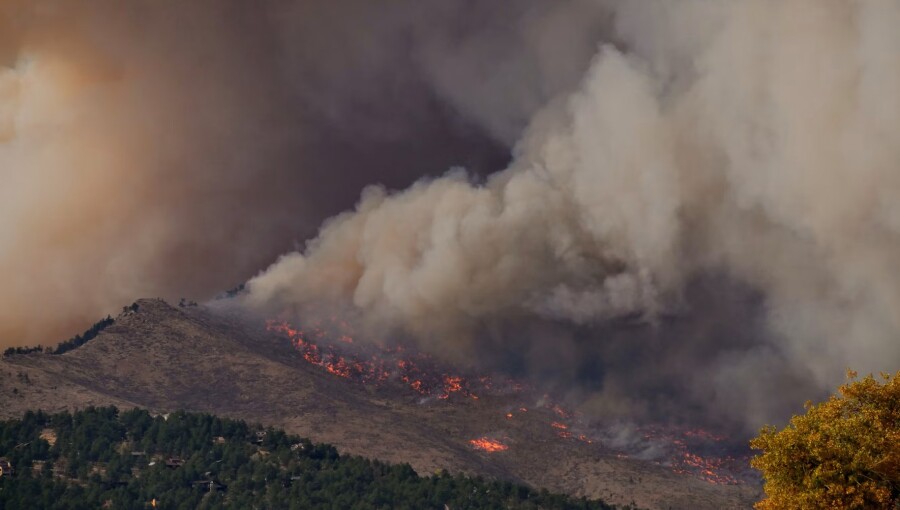
Indonesia's Financial Services Authority (OJK) has issued a formal warning regarding the systemic impact of environmental hazards on Indonesia's banking and economic sectors, the Indonesia Business Post reports. In an official statement from the body, OJK Chief Executive of Banking Supervision Dian Ediana Rae pointed to widespread forest and land fires across Kalimantan and Sumatra, amplified by the El Niño dry spell, as posing severe physical climate risks to financial institutions with high credit exposure in the affected regions.
At present, strong capital buffers help stabilise national credit metrics. However, the regulator emphasised that localised disruptions in climate-vulnerable sectors could impair borrowers' repayment capacities, potentially driving up non-performing loan (NPL) ratios.
Ecological and public health crisis
Driven by extreme drought, the independent forest monitoring platform Nusantara Atlas detected approximately 734,000 hotspots across Indonesia in mid-September, a figure over 30% higher than in the infamous 2019 season, the BBC reports. Since January, at least 895,657 hectares of land (nearly six times the size of Greater London) have been burnt. As of September 24, the physical impacts of the 2026 wildfire season have escalated into a major public health and environmental crisis.
As recorded in a Wildfire & Public Health Impact summary carried out from August to September 2026, the total number of respiratory illness cases have reached 175,000, including more than 40,000 toddlers, now suffering from pneumonia and bronchitis.
More than 54,000 personnel have been deployed as part of emergency operations with Indonesia receiving international support from Malaysia and Japan. Dozens of water-bombing aircraft have been deployed as have joint cloud-seeding operations alongside Japan's Self-Defence Forces to combat the fires across challenging peatland terrains.
Toxic smoke has also forced widespread school closures, and has caused disruption to local commerce while degrading air quality across Indonesia, as well as in the neighbouring countries of Malaysia (Sarawak), Singapore, and parts of the Philippines. The haze has devastated local biodiversity, highlighted by the death of a critically endangered orangutan rescued from a palm oil plantation in West Kalimantan. Reports also show protected proboscis monkeys or long-nose monkeys as being burned alive. In response, indigenous and civil society groups have filed a class-action lawsuit against central and regional government authorities, alleging negligence in preventing recurring wildfire disasters.
From real sector disruptions to NPL spillovers
OJK classifies these extreme weather events as physical climate risks that directly disrupt real-sector supply chains, operational costs, and corporate revenues. According to Dian Ediana Rae, the economic shock from land fires and prolonged El Niño dry spells spans multiple key industries, which includes vulnerable economic sectors. These can include agriculture, palm oil and forestry plantations, livestock, fisheries, food and beverage processing, trade, tourism, and education.
Commercial and retail borrowers are also experiencing diminished cash flow from production halts, rising operational expenses, school and business closures, and crop failures. This situation impairs their ability to service debt and spills over into the banking sector as asset quality deteriorates. Banks and rural banks (Bank Perekonomian Rakyat or BPRs) with concentrated lending portfolios in fire-prone or agrarian-dependent regions face higher NPL pressures than institutions with geographically diversified exposure.
Despite these localised pressures, OJK routinely conducts rigorous stress tests to evaluate banks' capital adequacy and liquidity reserves against environmental disasters. The latest results confirm that capital levels across commercial banks remain sufficient to absorb potential climate-induced losses.
The climate warning comes against the backdrop of solid overall banking performance. National credit quality remains within safe regulatory parameters, with the banking sector's gross NPL ratio standing at 2.09% in June 2026 (net NPL at 0.82%). Furthermore, overall bank lending in July 2026 accelerated to 13.58% year-on-year, reaching IDR9,135 trillion ($510.6bn), up from 12.67% growth in June.
However, growth in micro, small, and medium enterprise (MSME) lending remained subdued at just 1.62%, underscoring the acute vulnerability of smaller, agrarian-based borrowers who lack the financial buffers to weather severe climate events and health crises.
To safeguard regional financial institutions, particularly rural banks with balance sheets that are deeply tied to local agricultural economies, OJK is enforcing strict compliance under OJK Regulation (POJK) No. 9/2024. This regulatory framework seeks to mandate that institutions implement sustainable finance strategies, formulate Sustainable Finance Action Plans, and explicitly incorporate climate-related risk assessments into their core risk management and capital allocation strategies.
Economic loss all over the country
The broader economic fallout from the 2026 wildfire crisis, however, extends far beyond destroyed timber and physical land damage, Tempo reports. According to a recent impact study by the Center of Economic and Law Studies (Celios), total potential economic losses from January to August 2026 alone are estimated between IDR39.29 trillion ($2.2bn) and IDR123.1 trillion with the upper bound representing nearly half (49.1%) of Central Kalimantan’s projected regional GDP. Direct asset destruction and disrupted business operations in trade, agriculture, hospitality, and food services accounted for at least IDR29.54 trillion (roughly 0.23% of national GDP). While West Kalimantan suffered the highest nominal economic loss at IDR5.7 trillion, the crisis has expanded well beyond traditional fire hotspots in Kalimantan and Sumatra to hit eastern provinces like West Papua (IDR4.3 trillion) and East Nusa Tenggara (IDR2.8 trillion).
When incorporating the severe public health burden of toxic smoke exposure, the financial strain escalates dramatically. Celios projects that healthcare expenses for diagnosed acute respiratory infections (ARI) has already reached IDR9.75 trillion across 1.78mn patients.
However, under a broader epidemiological scenario accounting for an estimated 17.4mn individuals who have suffered symptoms but face financial or geographical barriers to medical care, health-related costs surge to IDR93.56 trillion, a staggering figure equivalent to 67.6% of Indonesia's total health allocation in the 2026 State Budget.
Driven by high population density rather than sheer burnt acreage, West Nusa Tenggara (IDR19.01 trillion), East Java (IDR13.65 trillion), and Riau (IDR10.31 trillion) absorbed the heaviest health-related financial losses, further tightening regional consumer spending and compounding long-term credit risks for the financial sector.

No comments:
Post a Comment