Sunday, September 27, 2026


Iran Says It Offered the US a New Proposal to Open the Strait of Hormuz

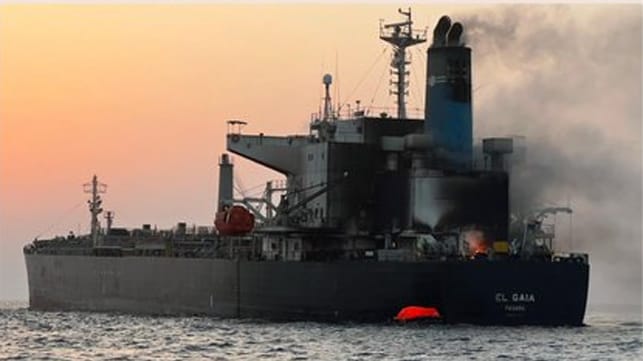
Tanker attacked in Strait of Hormuz
Iran reports it gave mediators a new proposal for open the Strait of Hormuz after a week in which it struck at least four vessels (Oman Maritime Security Center)

Published Sep 25, 2026 8:02 PM by The Maritime Executive


Iranian officials appearing at the United Nations on Friday, September 25, said they have offered a new proposal for opening the Strait of Hormuz in a week’s time. They said it all depends on the U.S. response to the proposal, which was reportedly conveyed by mediators from Qatar.

The core of the proposal appears little changed from the previous interim agreement and terms that have been repeatedly presented and then violated. Iran set as the key conditions the lifting of the U.S. naval blockade of Iranian ports and embargo on Iranian shipping, waiving the sanctions on Iranian oil sales, and observing a ceasefire with Iran that would also include Lebanon. 

The reports indicated that, as a “sweetener” or “enticement,” Iranian Foreign Minister Abbas Araghchi said Iran would restart talks with the U.S. on its military program, seven days after the agreement is accepted. Reuters, however, is quoting another “senior Iranian official” who it says indicated on Friday that Iran would show no flexibility over its nuclear program even if the United States accepts its proposal to reopen the Strait of Hormuz.

Today’s message came, Reuters reports, after Iranian President Masoud Pezeshkian told the media at the UN on Thursday that he hoped a deal to end the hostilities could be reached before the US midterm elections on November 3. Donald Trump has said in the past that he thinks a deal will be reached after the elections and that Iran was waiting to see the outcome of the vote.

There was no immediate response from the White House to the Iranian comments, but it said earlier in the week that U.S. officials had positive and constructive conversations with mediators on the Iran war. The Associated Press is citing Saudi Arabian officials who said they were “skeptical of the latest push for a deal.”

Trump had used harsh words after the collapse of the June deal, saying Iran did not respect its agreements and that he accused it of prolonging the discussions and wasting time. He has said he was skeptical that an agreement would be honored and, in his speech to the United Nations this week, threatened Iran with “annihilation.” 

The administration continues to insist the Strait of Hormuz is open despite at least four vessels being struck in the past few days. At least two were reported on fire and abandoned, with casualties among the crew. U.S. Central Command on Friday also reported that it has redirected 122 commercial vessels to ensure strict compliance with the blockade.

Exact numbers on the number of passages are hard to confirm, as most vessels are currently turning off AIS transmission for a “dark” passage. However, Reuters, citing data from Kpler, said crude oil flows out of the Strait of Hormuz so far this week reached 33.7 million barrels, versus a total of 49.2 million barrels of crude for the full period last week. It is also citing a consistent trickle of vessels, which remains below last year's levels. Bloomberg is also reporting that Qatar increased LNG shipments, reaching the highest tanker traffic through the Strait in more than two months.

Iran’s so-called Persian Gulf Strait Authority (PGSA) continues to assert that it is responsible for the safe, secure, efficient, and coordinated passage of vessels navigating through the Strait of Hormuz. It says vessels must seek its approval and that it is ensuring compliance with national and international maritime regulations. Although it did not announce it, its non-compliant list has been expanded to a total of 81 vessels that it says are violating Iranian protocols for the Strait of Hormuz and shall face restrictions on future passages, including fines, detention, or confiscation.

The International Maritime Organization now lists 85 confirmed incidents as of September 24. It says there are 24 confirmed seafarer fatalities, although there is no accurate count of the number of seafarers injured or who remain trapped in the Persian Gulf.


US Appears Set to Seize $600M in Iranian Crude Oil From Three Tankers

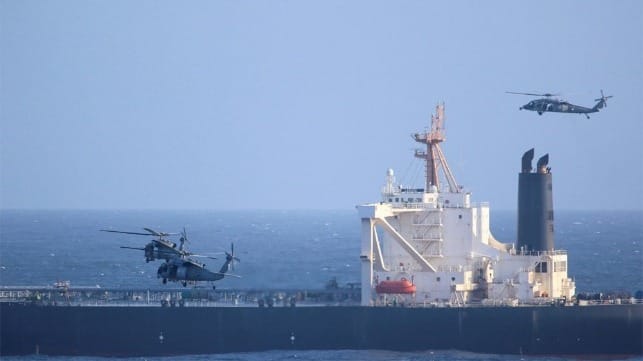
US seizing tanker linked to Iran
US forces stopping the VLCC Davina in the Indian Ocean (INDOPACOM)

Published Sep 25, 2026 5:51 PM by The Maritime Executive


Speculation is mounting after trackers revealed that three of the tankers stopped by U.S. forces as part of the economic blockade against Iran have been spotted on the move toward the United States. The U.S. has a history of pursuing forfeiture complaints, and the Trump administration has hinted at it as a step in the ongoing efforts to punish Iran.

The discussions began when TankerTrackers.com posted a brief message on Wednesday saying, “Nearly six million barrels (valued at nearly $600M) of seized Iranian crude oil are quietly crossing the Atlantic Ocean towards the United States of America.” It did not provide further details.

The ships, however, have now been identified using data from Kpler and others. Two of the VLCCs are the Tifani (IMO 9273337), a 300,000 dwt tanker falsely claiming registry in Botswana, stopped in April in the Indian Ocean, and the Majestic X (IMO 9198317), a 281,500 dwt tanker falsely claiming registry in Guyana, which was stopped two days after the first tanker, also in the Indian Ocean. Both of these vessels were detected sailing north along the coast of Brazil. Both were laden with Iranian crude and made it out of the Persian Gulf, likely heading for China, before the blockade was first imposed in April 2026.

The Pentagon asserted the vessels were stopped under the right of visit, inspecting sanctioned stateless vessels. The Department of Homeland Security later inspected the vessel, and reports said the US would seek seizure orders.

The third tanker drew some more speculation before it was identified as Davina (300,976 dwt), although most databases list the vessel as Lenore. It was claiming a false registry in Curacao and, before that, had also falsely claimed it was sailing under the flag of Palau. It was stopped in June off Sri Lanka. Kpler’s data said the vessel had sailed past Africa’s Cape of Good Hope, recently entering the Atlantic.

Combined, the three ships would be laden with approximately six million barrels of Iranian crude. That would be a value of roughly $600 million based on current market prices. Only the Majestic X, briefly in late July, showed a destination of the United States, according to Kpler’s data. Observers, however, are confident the ships are headed toward the United States, likely Texas, where the U.S. will enforce its forfeiture.

The Trump administration has spoken about the possibility of seizures. Further, at the end of August, reports said it had moved to reestablish the so-called prize court, a special-purpose tribunal that is used to determine the legality of the seizure and forfeiture of an enemy merchant vessel. 

In the past, the process has been drawn out as it worked through the courts. After seizing a tanker off Venezuela last year, government lawyers complained to the court about the cost of maintaining the tanker Skipper, saying it was reducing the value of the cargo.

The U.S. has achieved the seizures in the past, such as in the case of the Bella 1, aka Marinera (IMO 9230880), which it chased from Venezuela across the Atlantic. That vessel was empty, but the Trump administration won a court order to seize and sell the ship, with it ultimately going to a cash buyer for recycling.

The United States seized and sold oil products in 2020 from tankers that it stopped before they could reach Venezuela. In that case, it only went after the cargo and let a Greek owner retain the vessels. The same thing happened in 2023, when the U.S. seized the cargo aboard the Suez Rajan, which was interdicted in the Far East. The vessel was ultimately brought to the United States and offloaded before it was permitted to sail away under the new identity of St Nikolas.

In that case, Iran did not stand by when the oil was seized. It seized the St Nikolas in January 2024 when the vessel was in the Persian Gulf. It admitted it was retaliation, and it took the crude oil cargo from the vessel, saying it was sold as compensation. 

Iran is calling the U.S. seizure of its tankers and the ongoing blockade piracy. It has made dropping the blockade one of the conditions for reopening the Strait of Hormuz. U.S. Central Command, however, says the blockade is being enforced and posted on social media that, as of September 25, it has redirected 122 commercial vessels to ensure strict compliance.

Observers point out that the United States has stopped other tankers linked to Iran beyond the three. For example, the VLCC Skywave (IMO 9328716) is currently unaccounted for in the reports. The 302,481 dwt tanker was stopped in May between Malaysia and Sri Lanka, falsely claiming to be registered in Botswana.

Bloomberg points out that the VLCCs Majestic X and Tifani are likely just a few weeks away from the United States, setting the stage for a potential showdown. The Lenore will take longer to reach her destination. 


Somali Forces Free Third Ship Seized by Pirates

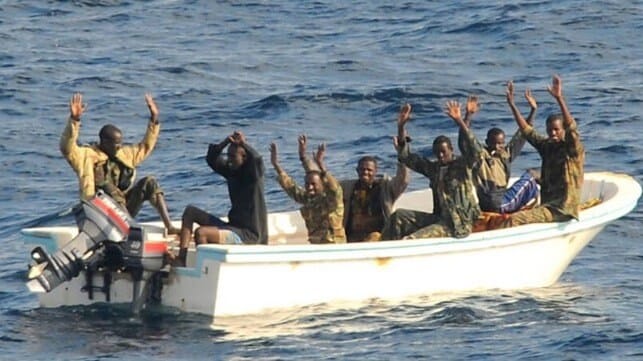
Somali pirates surrender
Forces in Puntland said the pirates were arrested while media reports indicates several people were killed (file photo)

Published Sep 25, 2026 1:45 PM by The Maritime Executive


Authorities in the Puntland region of Somalia are reporting that they freed another vessel being held by pirates. Somali pirates took control of six vessels between April and August this year, with three still believed to be under the control of pirates.

The Puntland Navy and Puntland Maritime Police Force only said that the product tanker Sibu 1 had been freed and the pirates were arrested. They reported it was a planned 48-hour operation, and they were continuing to follow up.

The local news outlet, the Daily Somalia, however, reports it was a violent clash between the Somali forces and the pirates. The unconfirmed story says the fight took place off the coast of Mudug and that three people were dead and several others injured. It did not specify whether it was all pirates or some of the crew from the ship. 

The Sibu 1 was transporting oil products when it was boarded on August 20 off the coast of Yemen, approximately 136 nautical miles east of Al Mukalla. UK Maritime Trade Operations was informed that six individuals had boarded the ship and directed it to the coast of Somalia. The crew appeared to hastily transmit a final message on AIS reading “PRIRATE ONBOARD HEL,” [sic] as the ship was being seized. The ship was reported to have a crew of 20, including 16 Indian nationals and four Arab crewmembers.

The 32,238 dwt product tanker, which was built in 2001 and also operating under the name Seamul, had a murky past and was sanctioned by the United States in December 2025 in an effort targeting an Egyptian businessman. OFAC asserted his companies were associated with multiple shadow fleet vessels, as well as several shipping companies, used to transport Iranian oil products. The Seamul was transferred to UAE management and also started using the name Sibu 1. It was claiming registry in Eritrea, which is considered false.

The rescue of the tanker followed the release of the small cargo ship Sward on September 11 after 138 days in captivity. The 8,500 dwt cargo ship, which is registered in St. Kitts and Nevis, was carrying a cargo of fertilizer bound for Mombasa, Kenya, when it was boarded on April 26. It had a crew of 17, made up of 15 Syrians and two Indians. Reports said an undisclosed amount of ransom had been paid.

Turkish commandos working with the Somali forces also freed another cargo ship, Lufut (1,400 dwt), at the end of August. The ship, which was operating under the flag of Cameroon, was carrying Turkish military equipment for a base in Africa when it was seized. Reports said it was a violent confrontation, and between four and six pirates were killed.

The last reported incident in the region near the Horn of Africa came on September 10 when pirates boarded the Glamor southwest of Yemen. The crew was able to secure itself, and EU forces conducted a show of force, which was believed to scare the pirates into disembarking the vessel.

The Maritime Security Center Indian Ocean (MSCIO), however, reports it is still tracking three other vessels whose crews were hijacked and remain off the coast of Somalia. They include the Honour 25, Eureka, and Asana, and while there have been reports of diplomatic efforts and possible negotiations, the crews remain in the custody of the pirates.

Crew Rescued After Abandoning Small MSC Boxship off Vietnam

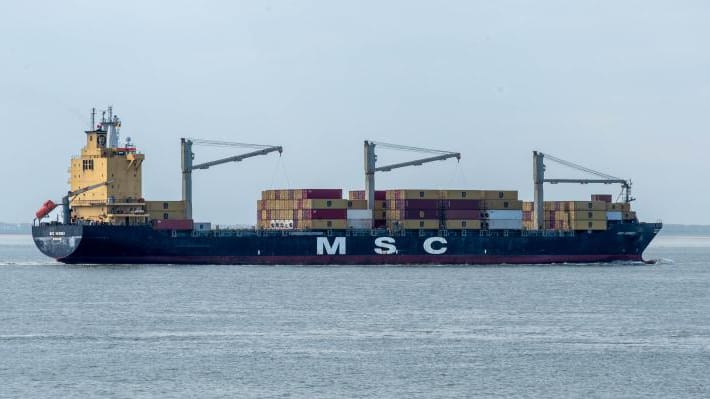
MSC containership
Crew of the MSC Hermes III abandoned the ship east of Vietnam (Martin Krombeen photo from 2025 courtesy of Vessel Finder)

Published Sep 22, 2026 11:48 AM by The Maritime Executive


Singapore’s Maritime Rescue Coordination Center is reporting that the crew of an MSC containership was rescued on September 22 after abandoning their vessel. The report indicates there were no injuries to the crew, but no details were provided on the circumstances that caused the crew to abandon ship.

The distress call was made around 08:45 local time in Singapore on September 22 from the MSC Hermes III. The 38,193 dwt vessel, which was built in 2006, was acquired by MSC in 2020. It is 212 meters (695 feet) in length with a capacity of 2,490 TEU. The ship had a crew of 25 aboard.

The ship had been sailing from Shanghai to Jakarta before returning to Singapore, according to MSC's onlien schedule. It was operating a regional feeder service.

The authorities in Singapore broadcast a request for nearby vessels to assist. The MSC Hermes III was in a busy shipping lane, approximately 160 nautical miles (300 km) east of Vietnam in a position north of Ho Chi Minh City. The Singapore MRCC said three vessels responded to the call, and the MSC Ruby, a larger 13,000 TEU vessel, was able to reach the area. 

The crew of MSC Hermes III had abandoned the vessel to its lifeboat. They were recovered by the MSC Ruby, and the Singapore MRCC says arrangements are being made with the Vietnamese MRCC to land the crew.

The MSC Hermes III showed no significant issues on recent Port State inspections. Last year it was cited mostly for paperwork issues during an inspection in Le Havre, but otherwise has not been cited for issues on several recent inspections.

AIS signals appear to indicate that the vessel has remained afloat on Tuesday, and the MSC Ruby appears to be standing by. At least two other MSC containerships had been in the vicinity as well. Later, a maritime warning was issued saying the vessel is derelict and adrift.

MSC has been contacted for a statement on the incident. It is unclear if a salvage effort is being launched.

There were several high-profile incidents with MSC vessels in 2025. The MSC Baltic III blacked out in February 2025 off Newfoundland, Canada, and the crew had to be airlifted off the ship. The vessel was driven ashore in a strong winter storm, and salvage efforts are still underway in Canada. Three months later, in May 2025, MSC Elsa 3 took on a list off the west coast of India. The crew was rescued from the vessel before it sank.


Top photo of MSC Hermes IIII in 2025 by Martin Krombeen, courtesy of VesselFinder 


Bulker Comes Free on High Tide After Being Aground for a Week off Australia

grounded bulker refloated
Cape Falcon came free on the morning tide after a week aground (Maritime Safety Queensland)

Published Sep 24, 2026 12:58 PM by The Maritime Executive


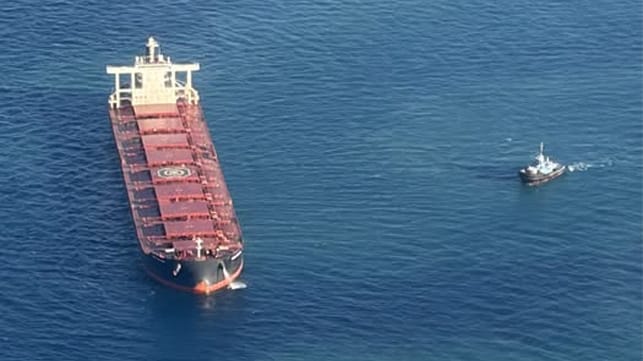
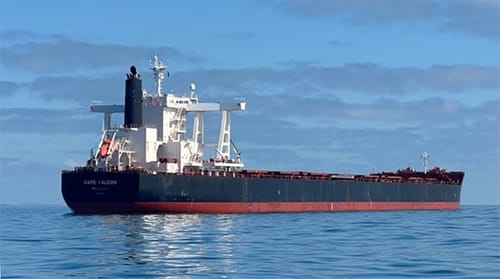
The grounded bulker Cape Falcon (182,066 dwt) came free Thursday morning, September 24, in an earlier-than-planned effort. A salvage attempt had been scheduled to start during the evening tide for the vessel, which grounded on September 18.

Maritime Safety Queensland (Australia) reported the vessel had been refloated on the morning high tide after several previous efforts over the past week had failed to free the Capesize bulker. The vessel is reported to be fully laden and was aground approximately six nautical miles off Gladstone, located in the northeast of Australia.

The Regional Harbour Master had approved a salvage plan yesterday. They said a refloating effort was planned for 1900 on Thursday local time when the high tide was expected to reach around 3.6 meters (nearly 12 feet). The effort was dependent on favorable weather conditions, the sea state, and tidal conditions.

Cape Falcon was maneuvering at slow speeds, according to Maritime Safety Queensland, while attempting to anchor in the bunkering anchorage off the Port of Gladstone. It was declared aground at 1524 local time on September 18. Maritime Safety Queensland was enforcing a one-nautical-mile exclusion zone around the vessel and said that while it was outside the port shipping channel, there would still be some impact to the shipping schedule. Tugs were being used from the port to support the recovery effort, but attempts to pull the vessel free over the weekend failed.


Cape Falcon grounded six nautical miles offshore while attempting to anchor for bunkering (Maritime Safety Queensland)

The ship, which was built in 2022 and is approximately 292 meters (958 feet) in length, is managed by Japan’s Shoei Kisen Kaisha and registered in Liberia. The Australian Transport Safety Bureau advises there are no reports of injury to the crew and no pollution reported, while media reports said it grounded near the edge of the dredge spoil ground.

Cape Falcon was directed after being refloated to anchor pending a further investigation. The Australian Maritime Safety Authority detained the ship to ensure all safety and regulatory requirements are met before the vessel resumes service. The Australian Transport Safety Bureau said it would launch a short investigation, including conducting interviews and collecting evidence and data, and it had ordered the ship’s voyage data recorder preserved. Investigators will be looking at the ship’s tracking data, weather, the crew and operator, and its maintenance records.

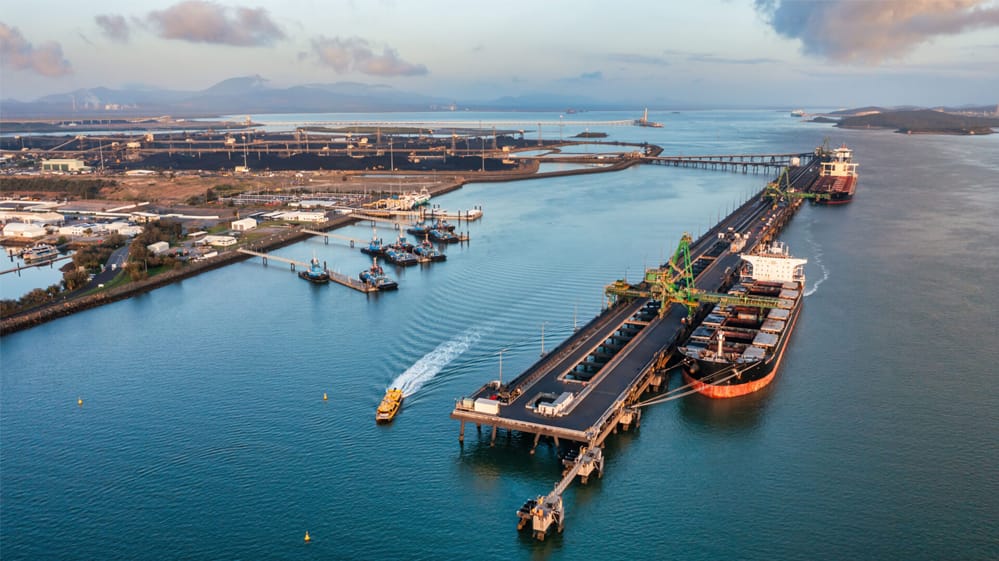
Gladstone is one of Australia’s large dry bulk ports and a major export location. Port officials note it handles more than 30 commodities, including coal and minerals.


Giant Japanese Bulker Remains Aground Off Australia After Four Days

Gladstone Australia
The Capesize bulker was offshore maneuvering into an anchorage for bunker when it grounded five days go (Port of Gladstone)

Published Sep 21, 2026 6:18 PM by The Maritime Executive


Efforts, so far, have been unsuccessful in pulling the large, Japanese-owned bulker free after it grounded last Friday (September 18) off the Gladstone port in Northeast Australia. Officials are monitoring the case and plan to start a full investigation just as soon as the ship is salvaged.

The Capesize dry bulk carrier Cape Falcon (182,066 dwt) was maneuvering at slow speeds, according to the Australian Broadcasting Corporation (ABC), when it went aground south of the bunkering anchorage off Gladstone. Reports place the ship about six nautical miles outside the port and say the ship, which is 292 meters (958 feet) in length, had been attempting to anchor for bunkering. It is near the edge of the dredge spoil ground.

The ship, which was built in 2022, is owned by Japan’s Shoei Kisen Kaisha and registered in Liberia. The Australian Transport Safety Bureau advises there are no reports of injury to the crew and no pollution reported at this point, but the ship remains stuck, possibly in the mud. Tugs went alongside on Saturday and attempted to pull the vessel free, and the media reports said there was a second attempt on Sunday. As of the beginning of Tuesday in Australia, the vessel’s AIS still reads “aground.”

The Australian Maritime Safety Authority says the ship will be detained when it is free. It will require a seaworthiness inspection before it will be permitted to depart. The tracking shows it had come from China and made stops in multiple Australian ports before grounding.

The Australian Transport Safety Bureau reports it will launch a full investigation, including conducting interviews and collecting evidence and data when it is appropriate. For now, it has ordered the ship’s voyage data recorder preserved. Investigators will be looking at the ship’s tracking data, weather, the crew and operator, and its maintenance records.

ABC reports the ship is outside the shipping channel. However, port operations have been impacted as the recovery efforts continue. They were waiting for news of the appointment of salvors, but the ATSB points out the salvage efforts are the responsibility of the owner and operator. ATSB says it is not involved in the recovery operations, but it is being closely monitored as part of the safety investigation.
 
Gladstone is one of Australia’s large dry bulk ports and a major export location. Port officials note it handles more than 30 commodities, including coal and minerals.


Video: Greek Cargo RoRo Abandoned After Fire Breaks Out Off Mykonos

cargo ship fire
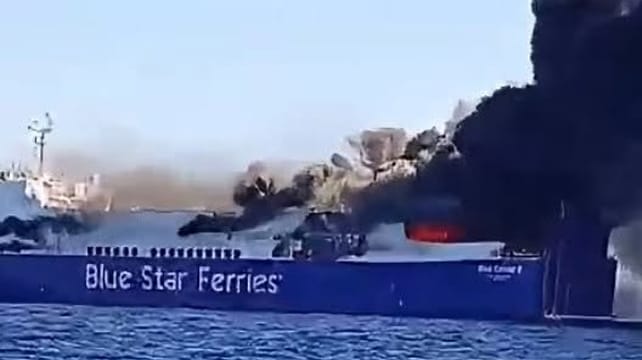
A RoRo cargo ferry is engulfed in fire north of Mykonos ( PENEN - Panhellenic Sailors' Union)

Published Sep 25, 2026 12:45 PM by The Maritime Executive


The crew and one truck driver aboard the Greek RoRo cargo ferry Blue Carrier 2 have been safely evacuated after a fire broke out on the ship Friday morning, September 25, north of Mykonos. Firefighting efforts are still underway, although it appears they have been able to place a towline on the 9,655-dwt RoRo.

The fire appears to have started on the deck of the ferry, possibly in one of the garages. The vessel was carrying 166 trucks and 29 cars. It was sailing from Syros to Samos. 


Built in 1997 in Japan, the ferry is 162 meters (531 feet) in length. It was acquired by Greece’s Attica Ferries in July 2023 from CLDN Ferries, which had been operating it as the Clementine for Cobelfret Ferries. The Blue Carrier 2 is registered in Greece.

Attica confirmed in a statement that the fire was reported at 08:57 this morning, and the crew attempted to fight it, but it has spread to large portions of the vessel. The crew and the one truck driver aboard abandoned the vessel and took to the lifeboats. They were later picked up by passing ships. The Hellenic Coast Guard reports there were no injuries, and everyone was taken to the neighboring island of Tinos.

At least two firefighting vessels as well as tugs responded to the vessel.  A salvage tug with firefighting capabilities has also reached the scene. Attica Ferries said that it has assigned a specialized company and that it is working with the authorities to manage the situation.
 

Saturday, September 26, 2026

Anti-migration measures: the EU Pact worsens an already hostile reality for exiles

Saturday 26 September 2026, by Aude Martenot


Last June, a new European Pact on Migration and Asylum came into force. It has been heavily criticised by asylum advocacy groups, which denounce it as a serious attack on both people and the right to move freely.

The shift is clear: rather than improving the protection of human rights and access to a fair examination of claims for protection, the new regulation aims to identify as early as possible applications that can be handled by other states, outsource asylum management, and increase controls in order to carry out deportations more rapidly.

The Schengen Area in crisis

This pact follows years of negotiations within the EU and represents an attempt to resolve the crisis of the Schengen Area. When it was established in the 1980s, Schengen sought to create a European area of free movement by removing internal borders, thereby meeting employers’ need for a mobile workforce. As a result, Europe’s external borders became the gateway into this area, especially as the determination to close access has become increasingly apparent, leading many to speak of a “Fortress Europe.”

The agency responsible for managing these borders is Frontex. It has repeatedly been criticised in recent years for violations of fundamental rights, yet states, including Switzerland, continue to fund it. Its budget has risen from €6 million in 2005 to €1.2 billion in 2026. In the Balkans, Frontex has been accused of illegally pushing people back across borders. In the Mediterranean, the agency is accused of passively standing by while boat engines are destroyed and people are abandoned at sea. In Switzerland and elsewhere, Frontex organises “special flights” to forcibly deport migrants, who are restrained and handcuffed, with little regard for their physical or mental health.

Within Europe, asylum applications were previously managed under the Dublin Regulation and are now governed by the Pact. The logic remains the same: a system of arbitrary allocation of people in exile. Based on the Eurodac database, which records asylum seekers’ fingerprints and identities, the system stipulates that a protection claim may be processed in only one country. If a person is registered in several states, they may be returned under the Dublin system to the first country of entry. The ways in which someone becomes registered in Eurodac are often opaque: through an asylum application, but also during hospitalisation, police arrest, transport checks, and other situations. As a result, migratory journeys can lead to family separation: spouses registered in different countries, or newly adult children unable to reunite with their families because they were “Dublin-registered” in another European country.

Another pitfall of this arrangement is that countries on Europe’s southern and external borders naturally receive far more arrivals than others. At the same time, many states, including Switzerland, have for years refused to accept asylum applications through their embassies, forcing people to undertake dangerous migration routes and present themselves in person, often illegally, to apply for asylum. Countries such as Greece, Italy, Spain and the Balkan states struggle to provide dignified reception conditions while also bearing the burden of Dublin returns from other European countries. This situation became so severe that Dublin transfers to Greece were suspended following a 2011 ruling of the European Court of Human Rights. Since June 2024, however, several countries, including Switzerland, have sought to revive such return practices.

Europe claims that stricter borders are intended to prevent irregular entry. In reality, the main consequence is to increase the very irregularity being condemned while making journeys more dangerous, exposing people to greater violence and reducing protection of their fundamental rights.

Violence, deaths and dehumanisation

Preventing migration flows is unrealistic, regardless of the methods used: outsourcing agreements (such as with Turkey), detention sites (such as the hotspots on the Greek island of Lesbos), pushbacks (illegal refusal to accept people whp had come to seek asylum in Europe, conducted by national police forces and Frontex), and other measures. But the increased repression and the measures to control migrants have a direct and undeniable consequence: to significantly heighten the risks faced by those on the move.
Between January and June 2026, at least 865 people died or went missing in the Mediterranean. This was the deadliest six-month period of the last decade, during which more than 34,000 deaths have been recorded. Crossings of the English Channel have not been as deadly, but fatalities remain frequent. In recent weeks, numerous makeshift boats have sunk in the waters between France and England. The Balkan routes are no safer.
These policies of sealing off Europe, rooted in neo-colonial relationships with countries around the Mediterranean, provoke legitimate reactions. The events that took place during the summer of 2026 in the Spanish enclave of Ceuta, located on Moroccan territory, are a direct consequence of Europe’s anti-asylum regime.

Two dynamics appear to have converged, leading nearly 60,000 people to cross the enclave’s border within a matter of hours. First, people fleeing poverty in their regions of origin, seeking a better life in Europe, probably received false information that the border would be open that day. Second, a spontaneous mass mobilisation developed against colonial-era borders that divide a country marked by severe income inequality and rising unemployment. The announcement of a possible crossing created a momentum that spread rapidly. Were governments of the Global South manipulating events in response to the latest decisions aiming to externalise the EU’s borders ? Quite possibly, and such tactics would not be unprecedented, as illustrated by the Belarus-Poland border situation in 2021.

The attention focused on a handful of lives struggling to survive ultimately benefits the far right, which readily speaks of a “migration crisis” based on reception difficulties that it has itself helped create. This narrative is reinforced by mainstream media, which all too rarely highlight the exploitation of highly vulnerable workers, for example in Europe’s tomato and strawberry plantations.

Against asylum and migration: the European Pact takes effect

The European Pact on Migration and Asylum entered into force on 12 June 2026. This reform of the Common European Asylum System (CEAS) consists of a set of regulations restructuring asylum procedures, controls at external borders, the Eurodac database, Dublin system rules, and solidarity mechanisms between member states.

Three major developments stand out: accelerated border procedures, increased externalisation of refugee protection, and reinforcement of a European deportation regime. In practice, people are confined at Europe’s external borders in large centres where they undergo screening procedures designed to rapidly categorise whether their applications are likely to be accepted or rejected. This restricts access to ordinary asylum procedures for many individuals, particularly the most vulnerable. It represents a further step away from individual examination of claims and towards the administrative management and selective filtering of migration flows.

A list of “safe third countries”, whether countries of origin or transit countries, will allow Europe to declare itself not responsible for processing many claims for protection and instead simply summarily send people to those countries. Furthermore, the externalisation of deportations and asylum processing is facilitated by this reform, as illustrated by projects such as Italy’s project with Albania or the United Kingdom’s plans for Rwanda.

This European reform closely resembles the revision of Switzerland’s asylum law implemented in 2019, which established federal asylum centres where applicants are concentrated upon arrival and where those who can quickly be expelled under Dublin procedures are identified. Declining to examine applications, declaring oneself “not competent,” closing files without reviewing them, and expel the claimants: Switzerland excels at this approach. The central mechanism for accelerating removals is isolation, confinement and control.

As a result, the very meaning of asylum is eroded, since the right to explain one’s need for protection effectively disappears, regardless of the consequences for those concerned.

Distress and resistance

In a capitalist world, population movements - a timeless reality - increasingly become mechanisms of survival. They are also the result of, and perhaps more troubling for capitalist technocrats, proof of the ongoing plundering of the Global South’s resources, the exploitation of bodies, the consequences of (neo)colonialisation and the beginnings of climate catastrophe. On the one hand, the northern powers and their allies pursue imperialist policies that extract wealth from southern countries, exploit poor workers, commit ecocide and fuel conflicts around the globe, all in the name of sacrosanct profit. On the other hand, they destroy the lives of people who legitimately flee this chaos.

In our own countries, we are witnessing a growing drift towards authoritarianism and the political right, accompanied by a steady deterioration in migrants’ rights over the past fifty years. At the same time, the neoliberal economic context has produced repeated budget cuts and a search for ever-cheaper ways to outsource dealing with applications for asylum to reliable countries, reducing even more the scope for meaningful social action

Since 12 June, organisations working on the ground across Europe have observed a further hardening of attitudes and of the policies which flow from that. These restrictive and criminalising measures cause irreversible harm. Long periods of uncertainty and pressure generate such severe psychological distress that medical emergencies and even acts of self-harm occur regularly.

In this context, hope comes from grassroots struggles. Across Europe, individuals and groups continue to resist and attempt to disrupt migration policies that crush lives, through both small and large acts of solidarity. Their voices are numerous and impossible to silence. They challenge the status quo, even if never enough, and they persist. In Switzerland, a major mobilisation is planned for 26 September in the capital: the demonstration “No borders between us”, organised by the association Solidarity Without Borders. Let us be thousands! We will not give up.

12 September 2026

Translated by International Viewpoint.